Budapest’s ruin bars have become a favorite place for visitors and locals to gather for drinks, food, and events. The majority are located in District VII, a historic area filled with cultural life and 20th-century tragedy.
Budapest’s District VII, or Erzsébetváros, was the center of Jewish life beginning in the 1800s. In 1944, the Nazis created a ghetto within a 0.1-square-mile area of the district, where 70,000 Jews were forced to live and try to survive (thousands did not). Following the January 1945 liberation of the ghetto, buildings were in ruins. The Communist government that took over wasn’t interested in spending money to repair these buildings or continue upkeep.
Following the 1989 fall of communism in Hungary, the city began building itself back up. As the area was previously known for its community of writers, musicians, poets, and artists, creatives began searching for places to gather. Enter Szimpla Kert, where, in 2002, four recent college graduates decided to open a pub for the community to gather. In 2004, it moved to its current location in District VII, a dilapidated area of former homes and a stove factory, which was set to be demolished.
Though Szimpla Kert established the reputation of ruin bars as party places, that description has now expanded to a variety of bars, coffee houses, and restaurants, housed in buildings with long histories. And, while District VII is still home to the majority of ruin bars, others have opened across the city.
Ruin Bars for Party People
Now that we’ve shared some of the history of ruin bars, let’s discuss the different types. We begin with the original theme: party places.
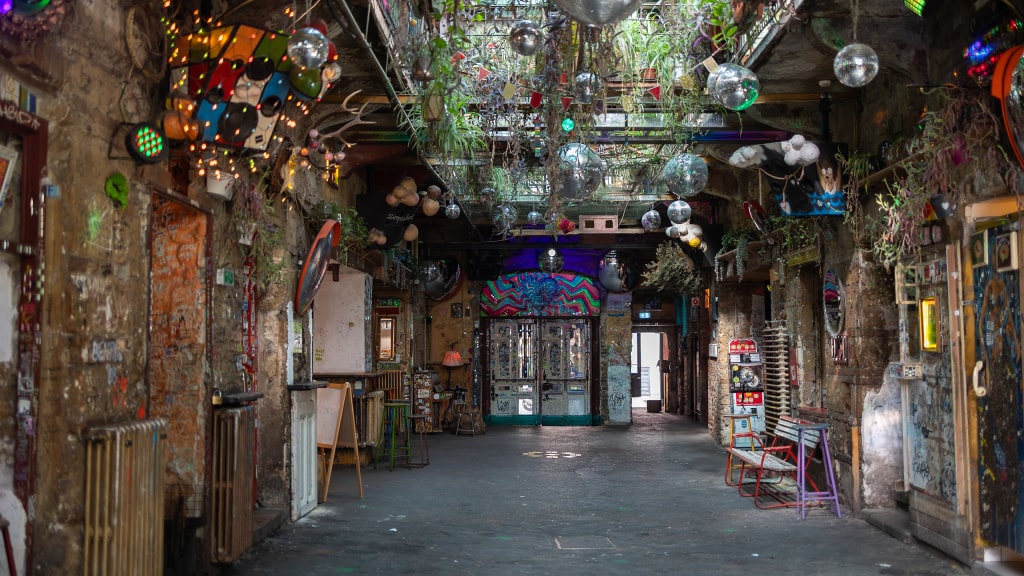
Eclectic vintage decor and hanging disco balls fill Budapest’s Szimpla Kert.
The original ruin bar houses nine bars within its two floors, surrounding an open-air courtyard (well, somewhat covered by a tarp). Fairy lights, mismatched furniture, eclectic artwork, graffiti, stickers, and pretty much anything else that can be hung on a wall decorate the place. You can even drink at a table in an old car in the courtyard.
During my first visit to the city, I enjoyed a very fun night at Szimpla Kert, spending hours sitting with other individual travelers — strangers when we arrived, friends when we left — drinking, chatting, watching black-and-white films projected on a wall, smoking from their shisha bar, and eating carrots (because they were walking around and selling individual raw carrots so, why not?). Yes, this place is quirky.
Though originally strictly a drinking establishment, it now serves as an artist community, hosting local bands, art exhibitions, and film screenings.
Stop by on Sunday morning for Szimpla Sunday Farmers Market, where you’ll find local growers, food makers, crafters, and artists selling their goods. Enjoy fresh bread and locally made jams, or purchase a freshly made dish from the NGO of the week. Now that I’ve lived in Budapest for some time, I can testify that you’ll find both locals and tourists enjoying their Sunday here.
Whether you visit day or night, this is a place visitors of any age should plan a stop.
Instant-Fogas
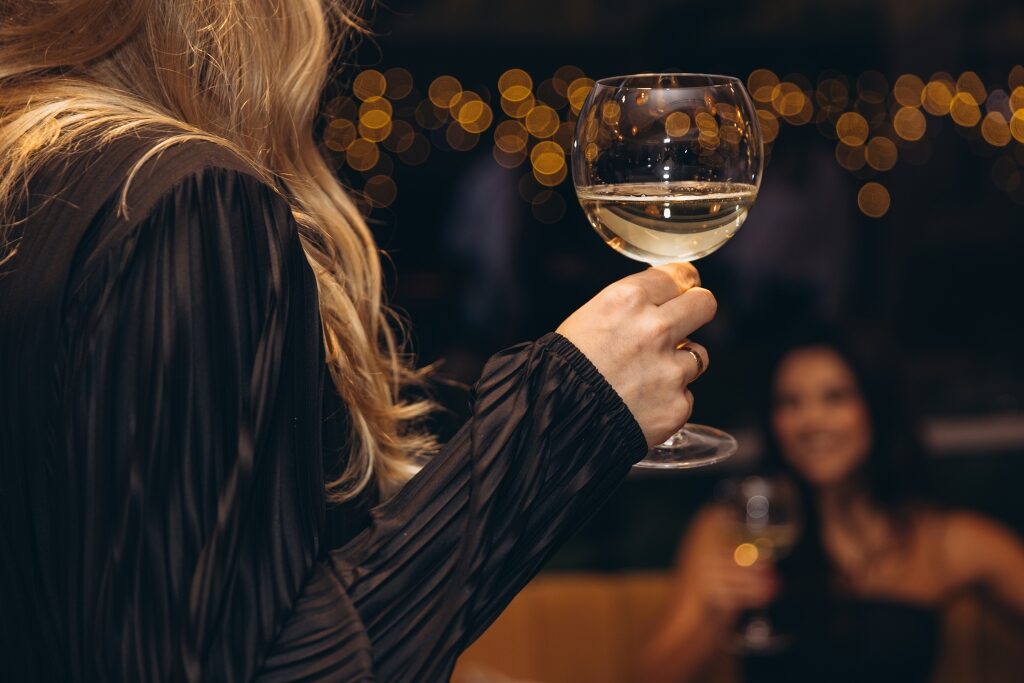
A woman holds up a glass of crisp white wine against a warm, twinkling backdrop of ambient lights in a cozy Budapest ruin bar.
With the bass echoing in your head and electronic music blaring in various rooms, this ruin bar could also be called a nightclub. Known for its younger crowd and boasting seven different clubs with dance floors, it advertises itself as Europe’s biggest ruin pub and party complex.
If you’re looking for a more serene spot, head up to the terrace bar, Liebling, for a glass of wine. Then again, if you want serenity, this place isn’t for you.
Quiet and Quirky Ruin Bars
With the popularity of ruin bars in Budapest, the variety continues to grow. Sure, there are the typical party places, but there are also quieter ruin bars, offering food and drinks in eclectic and calmer surroundings. These are great places to appreciate the uniqueness of the city known as the “Queen of the Danube.”
Csendes
The literal translation of Csendes is “quiet,” which suits this daytime cafe that morphs into a civilized bar at night.
Indoor decor consists of mannequins, old toys, and reclaimed lanterns and chandeliers. Once the weather warms, outdoor seating is available at the connected Csendes Társ, which sits just outside Károlyi-kert, the oldest garden in Budapest. I used to live around the corner, and it’s one of my favorite places to enjoy lunch and read a book.
Extra
If you’re looking for a more upscale, quieter place to enjoy a conversation with friends, accompanied by a tasty cocktail, Extra fits the bill. With a large selection of spirits and mixed drinks, they take pride in their creative concoctions.
In the warmer months, enjoy sitting outside under a covering of dozens of scarlet umbrellas, or inside where red lighting sets the tone, with huge, lightbulb-lined letters spelling out the venue’s name. Come for the atmosphere and drinks, but maybe head elsewhere for dinner as it isn’t known for its food quality.
DJs mix the music Thursdays through Saturdays.
Come for the Food, Stay for the Atmosphere
Ruin bars aren’t necessarily only about drinks and partying. Many concentrate on their gastronomical offerings. Remember, ruin bars are simply bars, and now cafes and restaurants, housed in repurposed derelict buildings. A river cruise to Budapest is a wonderful way to sample the cuisine both on and off the ship.
Kőleves

A white bowl of hearty Hungarian goulash soup brims with tender beef, diced vegetables, and fresh parsley beside a classic checkered napkin.
The restaurant takes its name from a European folk tale, which translates to “Stone Soup.” As the story goes, weary travelers arrived in a village carrying only a cooking pot. With villagers unwilling to share any food with them, the travelers filled their pot with water and dropped a stone in it. When villagers saw the steam from the pot and asked what they were cooking, they explained that it was stone soup, and they’d be happy to share it, but it was missing some ingredients. Villagers brought the extra ingredients from their homes, and a community meal was shared by all.
Like the folk tale, Kőleves is a place where people come together. Housed in a pre-war building used as a kosher meat-processing plant, the restaurant serves typical Hungarian dishes, including goulash soup, duck, and chicken with paprika. While the food is tasty, the décor is nothing special. It’s in the large beer garden that the colors and socializing happen.
Mazel Tov
Though not fancy, Mazel Tov, meaning “Congratulations” in Yiddish, feels more upscale than Kőleves. Housed in a disused tenement building and serving a fusion of Middle Eastern and Mediterranean foods, including shakshuka, falafel, and borscht, they also offer a tasty and varied cocktail menu of summer refreshments to cool you down and winter drinks to warm you from within.
Tables are spread throughout a spacious, covered, garden-like courtyard, with DJ and live music filling the restaurant on most nights, including weekly Jazz Tuesdays.
A Plan for a Full Night of Ruin Bars
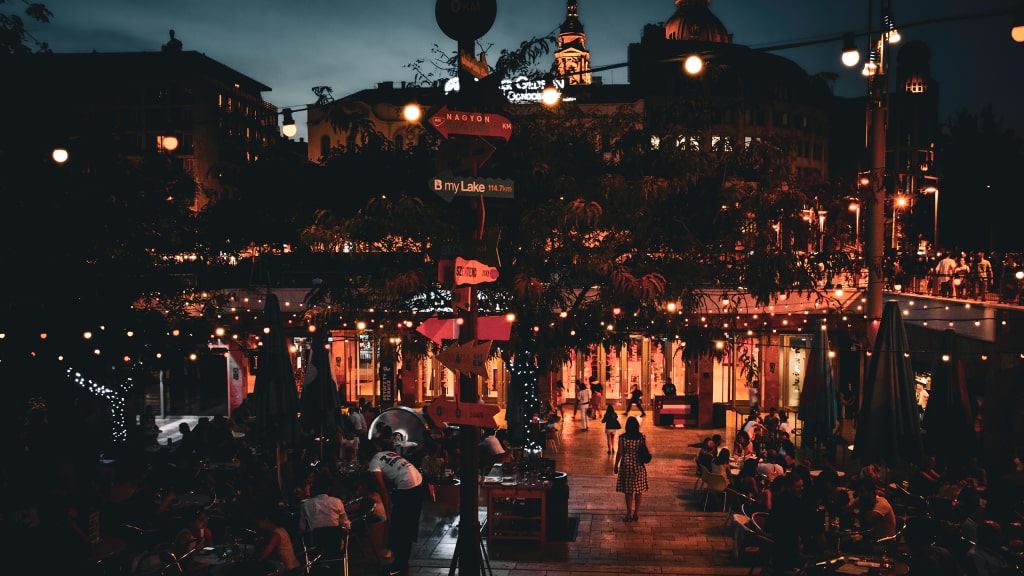
Warm string lights illuminate a lively open-air terrace in Budapest.
With many ruin bars in Budapest to choose from, you’ll have no problem finding the one that fits your mood. Here’s a quick selection of three that offer plenty of variety to fill one fun night out.
For the younger crowd, you don’t want to drink on an empty stomach, so start with a bite at Csendes. Move on to Szimpla Kert for the eclectic atmosphere and a huge selection of drinks. Dance the rest of the night away at Instant-Fogas.
For a fun yet calmer experience for those who have moved past their ‘party-all-night’ days, begin the evening with a nice meal at Mazel Tov. Head over to Szimpla Kert because, well, it’s an icon. End the evening with fancy cocktails at Extra.
FAQs
Do I need reservations for ruin bars?
Reservations aren’t needed for most ruin bars. But if you plan to eat a meal, it’s best to check their website to be sure.
Do Budapest ruin bars have dress codes?
Budapest is a pretty casual city, and most ruin bars aren’t too picky about what you’re wearing. Still, it can be fun to get dressed up for a night out on the town.
Do I need cash, or are credit cards accepted?
Credit cards are widely accepted in Budapest, so cash shouldn’t be necessary. You can even tip your bartenders with your card. Should you wish to pay with cash, remember, Hungary uses the forint.
Do ruin bars in Budapest have cover charges?
Rarely. Late-night dance clubs may charge a small entrance fee or require a ticket purchase for special events or live performances.
Is it safe to walk around the area at night?

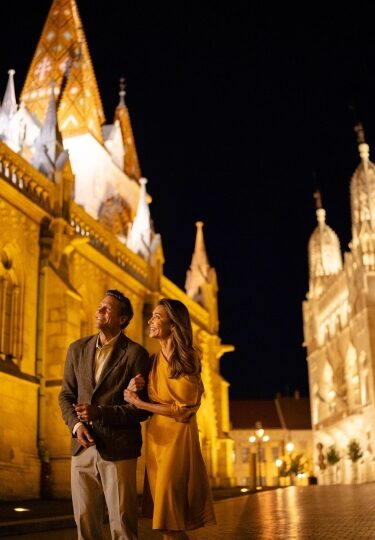
A couple descends the illuminated stone stairs of Budapest’s Fisherman’s Bastion.
Budapest is generally a safe city; however, as with any popular nightlife destination, travelers are advised to remain aware of their surroundings and exercise common-sense precautions. Always keep your eye on your wallet and drink.
Stay in Budapest Before or After Your River Cruise
If you’re embarking or disembarking a Danube River cruise in Budapest, it’s a great idea to stay for a few extra days and spend a night exploring ruin bars. With Celebrity River Cruises℠ Before and After Stays, guests can extend their journey with hotel accommodations, daily breakfast, transfers between the airport, hotel, and ship, and one daily excursion.
The package also includes insight from Destination Insiders℠ and Local Storytellers, giving you more time and context to explore Budapest’s neighborhoods, history, dining, and nightlife at a relaxed pace.
View upcoming cruises and experience Budapest’s ruin bars and so much more.