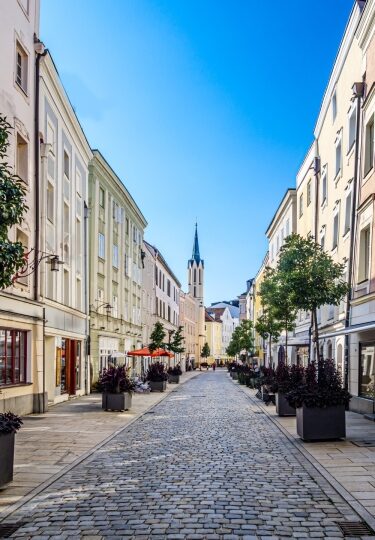
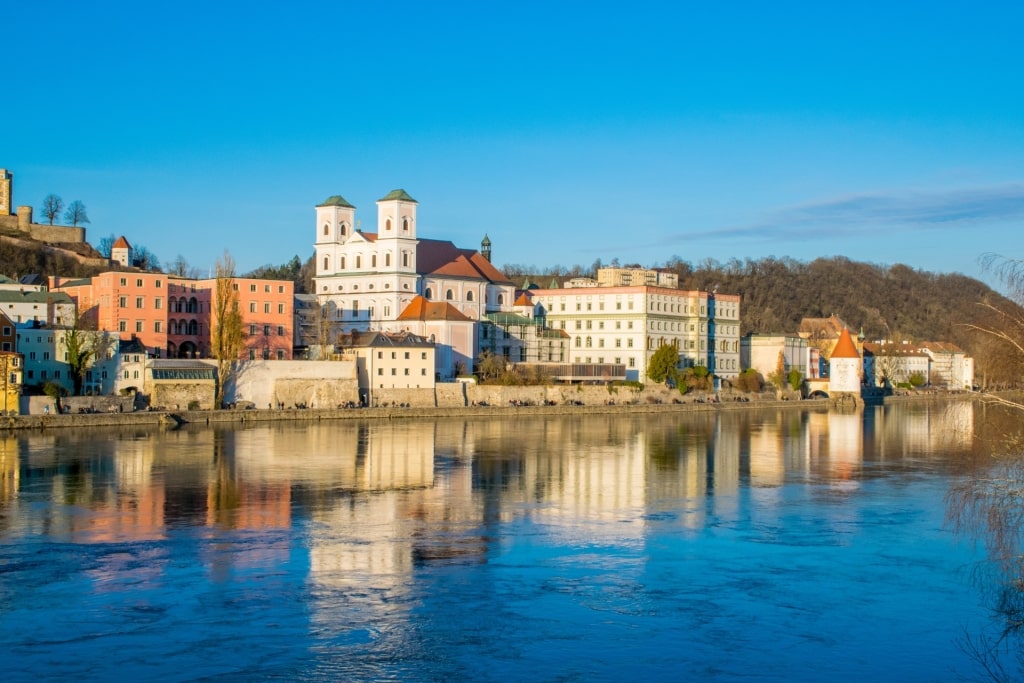
Variously nicknamed the “Bavarian Venice” and “City of Three Rivers”, Passau, Germany, occupies a unique location at the confluence of the Danube, Inn, and Ilz rivers. Surrounded by water on two sides, the city, which lies on a triangular, tapering piece of land, was extensively rebuilt and remodeled in the 17th century with flamboyant Italian Baroque architecture, following a devastating fire. This gives it a very distinctive and different ambiance compared with nearby towns along the Danube.
Passau today is dominated by a vast 17th-century cathedral but is also packed with fascinating museums, sunny beer gardens, and places to shop. Here’s what to see and do in this lovely Bavarian city.
Why Visit Passau?
Old Town
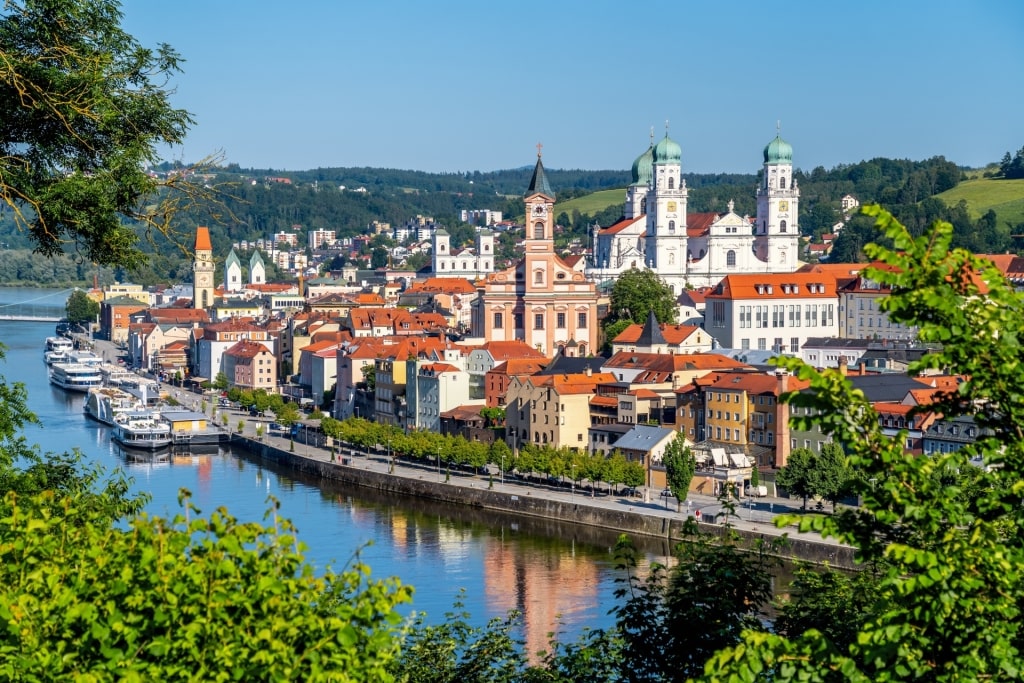
A mix of German and Austrian culture, with ornate Italian-style buildings that have elaborate facades, Passau has a very individual ambiance that’s unlike anywhere else on the Danube River. The cityscape is dominated by the three green, onion-domed towers and expansive red roof of St. Stephen’s Cathedral, which in turn is famous for having the world’s largest cathedral organ.
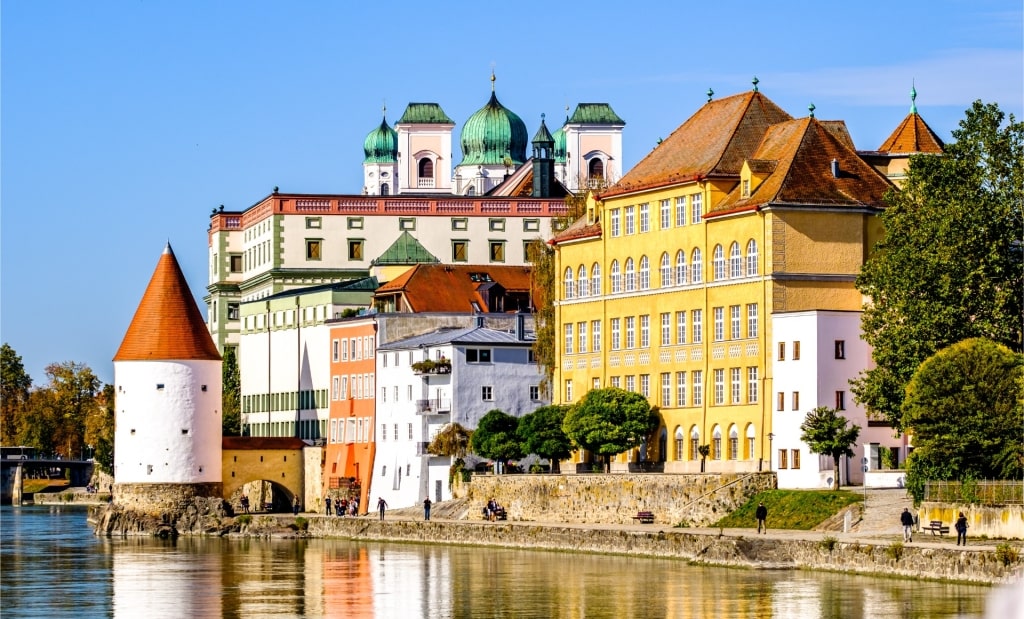
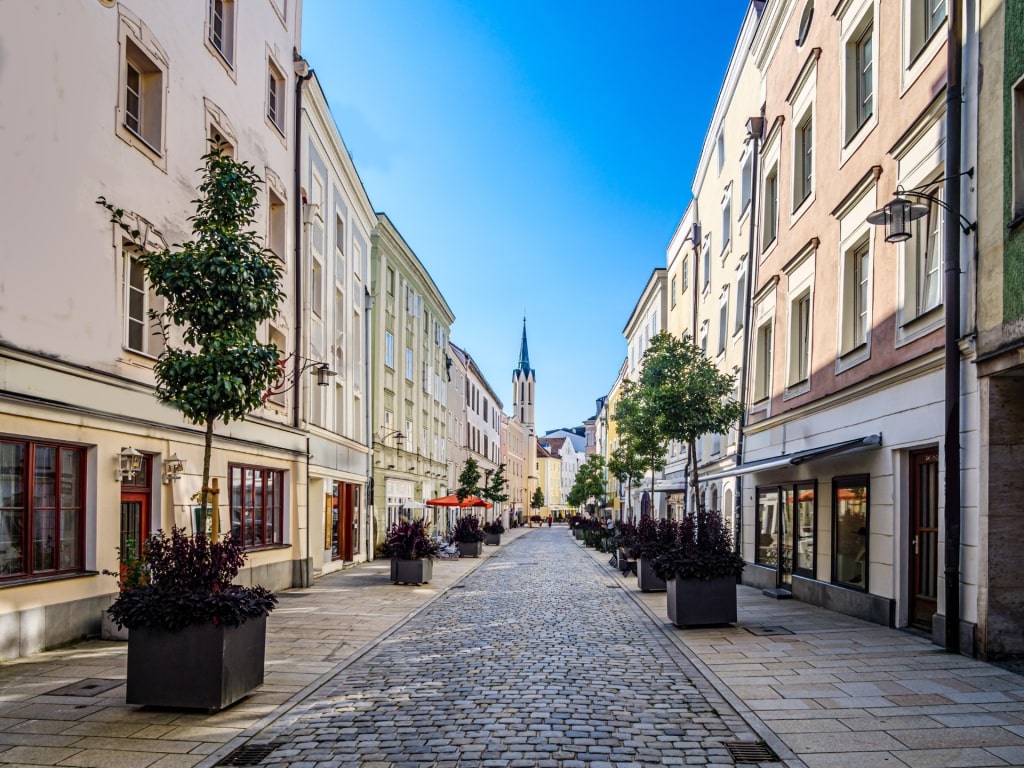
All the main sights are within easy walking distance, and a good place to start is the attractive waterfront lined with cafés, bars, and shops. Just behind is the large town square lined with impressive buildings, including the former homes of wealthy merchants. From here, it’s easy to wander down traffic-free cobbled streets, stopping off for a coffee or one of the refreshing Bavarian beers brewed in Passau.
Old Town
One of the best places to visit in Germany, Passau has a number of interesting museums and historic buildings that delve into the city’s past, and the city’s manageable size and attractions make them easy to visit.
History & Culture
Veste Oberhaus
Passau’s history stretches back more than 2,000 years. Like many cities along the Danube, it was originally a Celtic settlement and later the site of a Roman camp called Castra Batava.
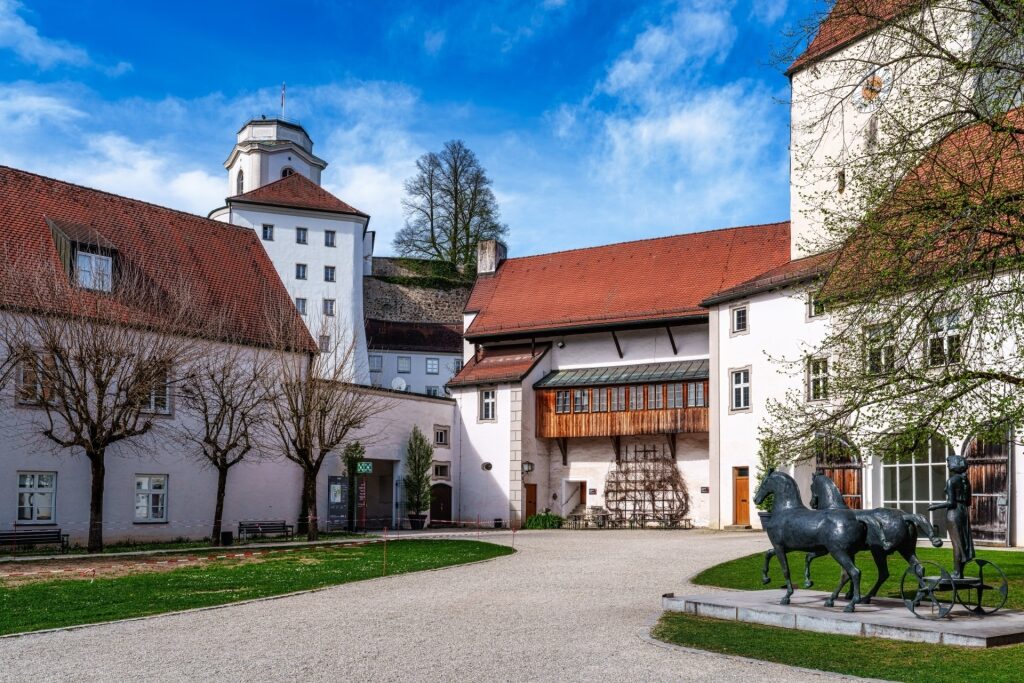
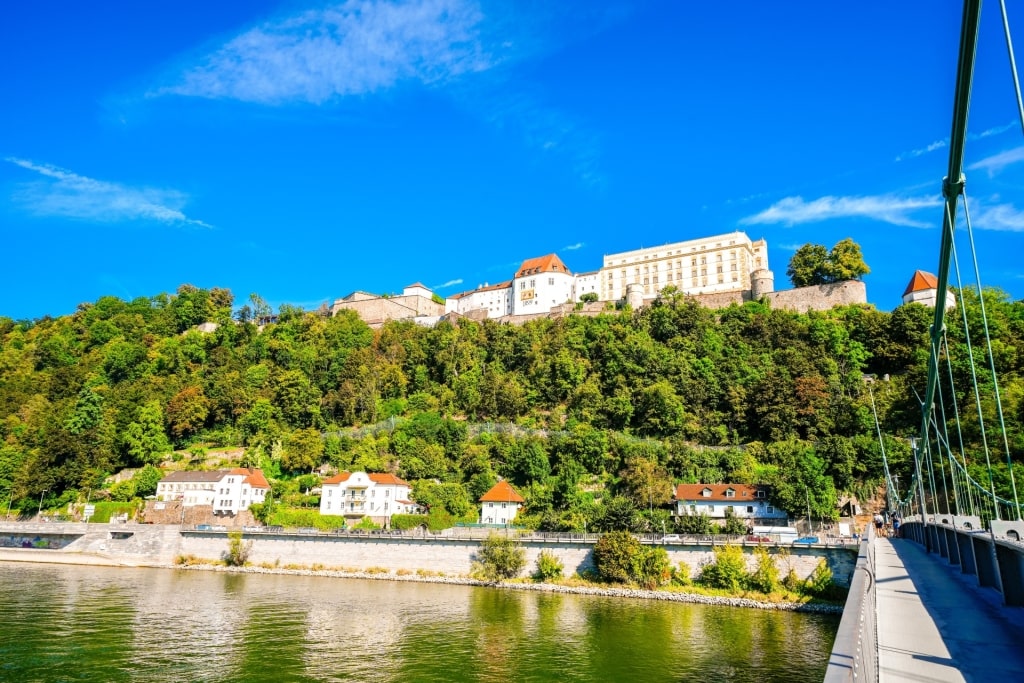
The city was later ruled by prince-bishops, who in 1219 built the lofty stronghold Veste Oberhaus, overlooking the meeting point of the three rivers. The powerful and controlling prince-bishops were not popular with the townsfolk who unsuccessfully attacked the fortress three times in an attempt to overthrow them.
Medieval Passau was an important commercial center, first building its wealth on the salt trade and later becoming renowned for its craft guilds whose skilled members produced swords and bladed weapons which were considered some of the best in Germany.
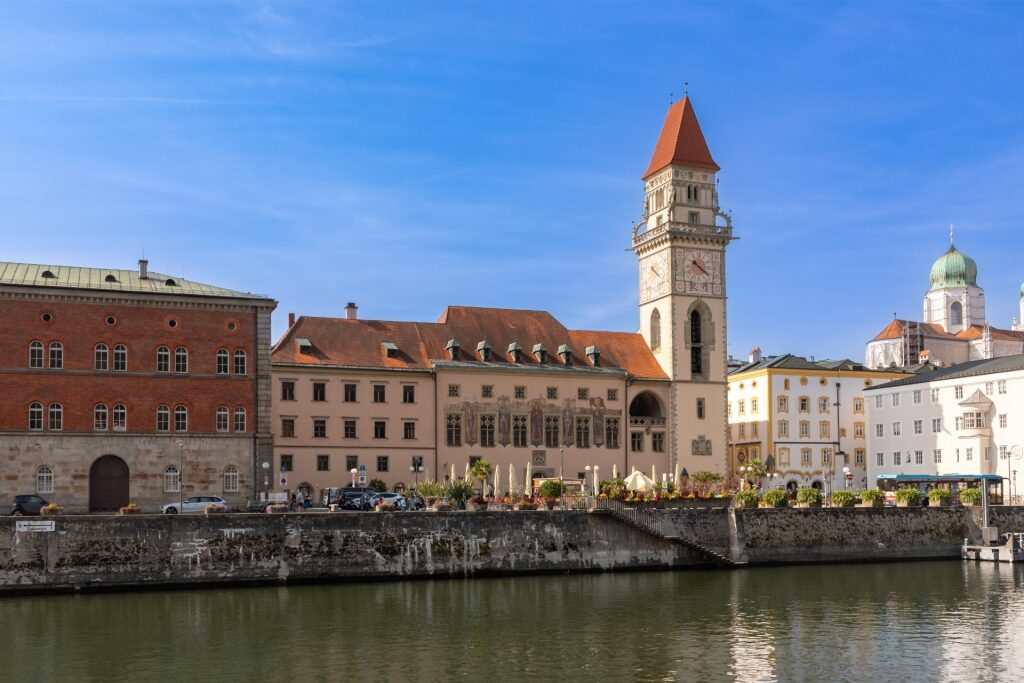
Passau Town Hall
A massive fire destroyed much of the city in 1662 and it was rebuilt by Italian architects commissioned by the prince-bishops, leading to the ornate and elaborate buildings you see today.
Fire was not the only force of nature that threatened the city. Passau’s location at the meeting point of three rivers has made it prone to flooding. Marks on the side of the town hall show that in 1954–the year of the “flood of the century”–water levels rose to 40 feet.
Wildlife & Nature
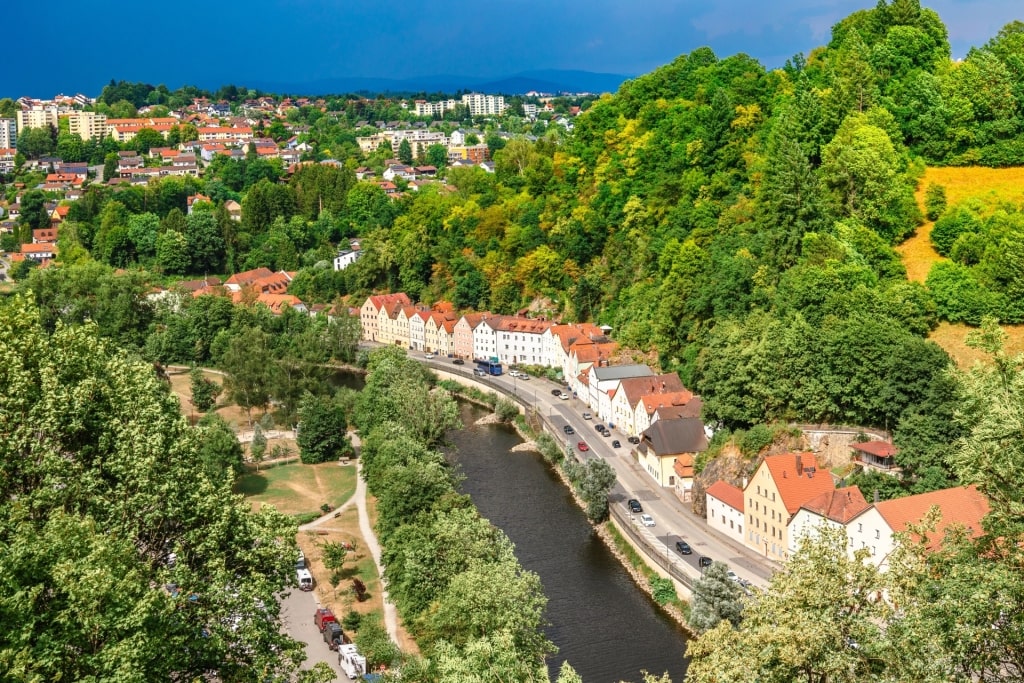
Old Town
If you enjoy a scenic hike then stretch your legs in the green area behind Veste Oberhaus, which is part of the Donauleiten nature reserve and spans 15 miles from Passau to Jochenstein. There are trails through verdant pine and oak forests towards the Ilz valley.
Another option, on flatter terrain, is to take a gentle walk along the peaceful river bank of the Ilz and look out for herons and other water birds.
Tips for Visiting Passau
Old Town
Passau, Germany, is a very walkable city. Nevertheless, bear in mind that many of the streets are cobbled and uneven, so wear flat, comfortable shoes, especially if you are going to hike on some of the surrounding hills, such as the trail to Veste Oberhaus.
Some of the streets are steep and there are steps leading down to the Inn river, which is often a stop on guided walking tours. However, even if you have mobility issues you can easily explore the German city. The Passau tourist office has produced a useful downloadable map of barrier-free routes and facilities for wheelchair users.
Old Town
If you plan to discover Passau on your own, it’s well worth purchasing a 24-hour Passau RegioCard which provides free or discounted admission to many museums and attractions. They are available from the Tourist Information office which is located in the historic town hall–the Altes Rathaus–on the main square.
Passau is part of the Danube Cycle Path and a day trip will allow plenty of time to explore the flat, scenic and well-marked tracks alongside the river. So, if you plan to cycle, pack suitable clothes.
Things to Do & Attractions
Visit St. Stephen’s Cathedral
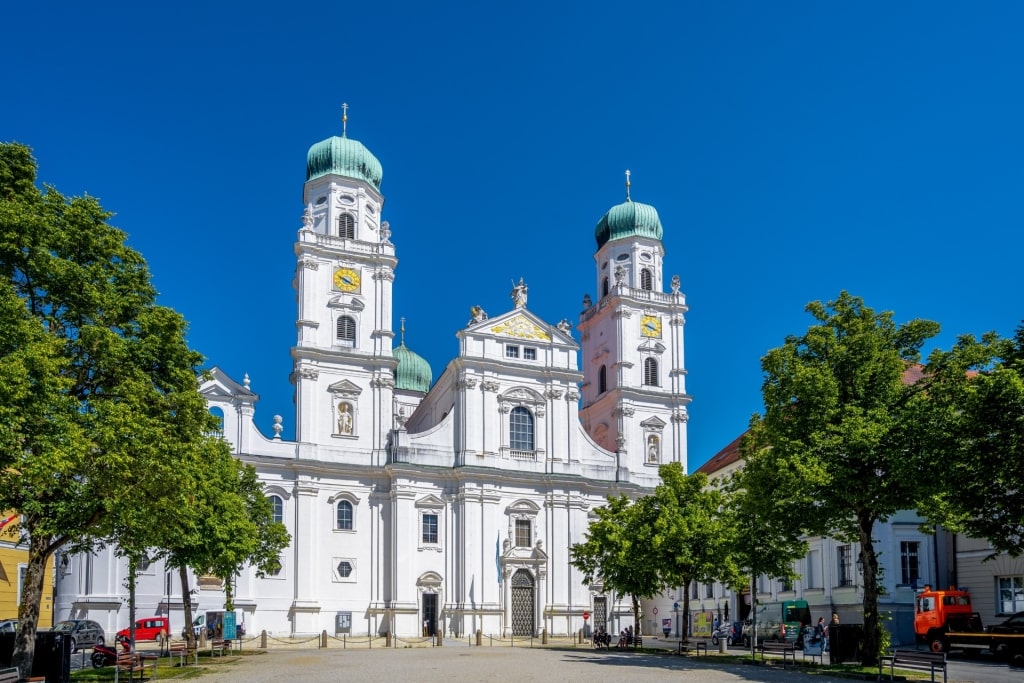
St. Stephens’s Cathedral
Passau’s most visible and audible draw is the cathedral built over a 25-year period from 1668. The tall, arched roof houses the biggest cathedral organ in the world, with 17,974 pipes and 233 registers. It’s put through its paces on weekdays with rousing recitals held at 12 noon. Get there if you can.
Learn About History in the Museum at the Cathedral
Delve into Passau’s past at this museum which is inside an 18th-century bishop’s palace close to the cathedral in the main square. It covers the Roman period to the present day and includes restored frescoes that were created for the prince-bishops, and early treasures from the cathedral.
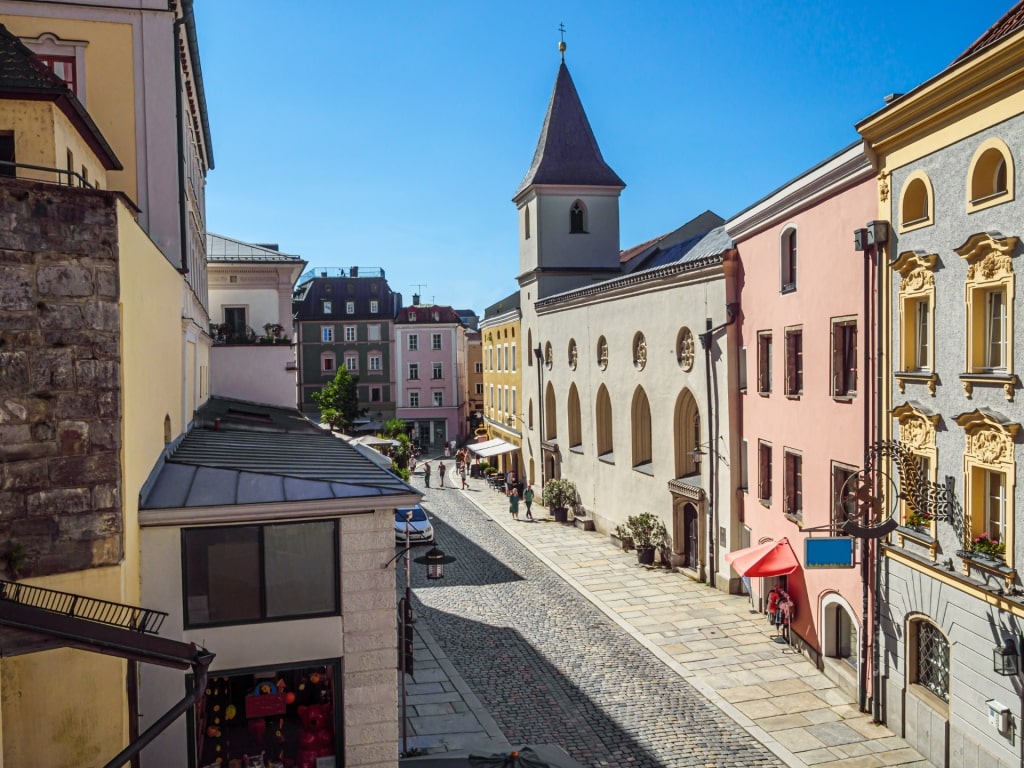
Stroll Höllgasse
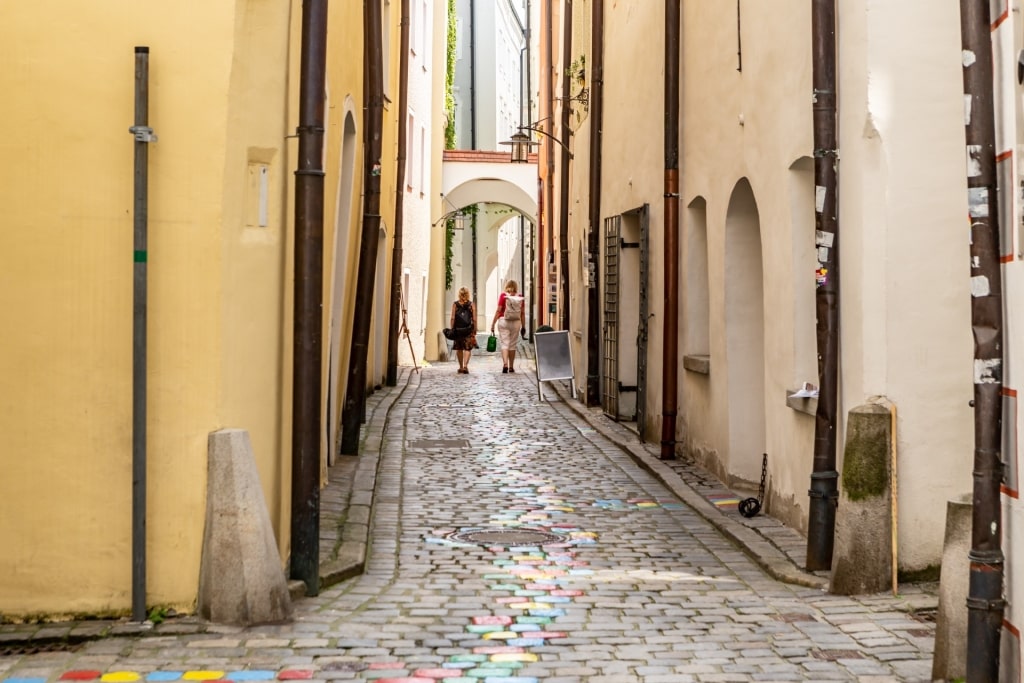
Old Town
Take a stroll down this old-world crooked cobbled street, where some of the brightly-colored medieval houses appear to lean inwards. It’s become a hub for artists, and you can watch painters, jewelry makers, and artisan craftspeople at work. Its charming appearance belies the literal translation of its name which is Hell Street, and so called because its proximity to the Danube means it has flooded many times over the centuries.
Admire the Town Hall
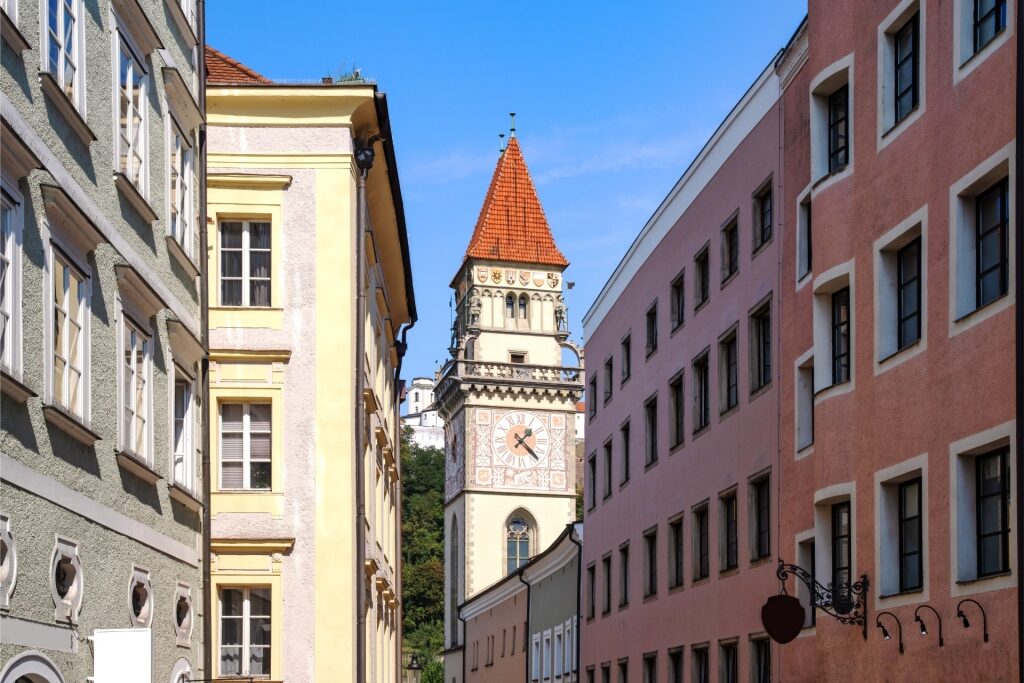
Passau Town Hall
Built in a highly decorative Venetian style, make sure to stop by the town hall, which is conveniently located next to the waterfront. You’ll find the tourist office on the ground floor and at the same time you can visit other rooms to admire huge wall and ceiling paintings depicting scenes from both the history of Passau and an epic German poem entitled Nibelungenlied.
Try to plan your visit at 11:30 a.m. or 2:30 p.m. as the town hall also has the largest glockenspiel clock in Bavaria and at these times it comes to life with melodious chimes and moving figures.
Pay Homage at the Pilgrimage Church Mariahilf
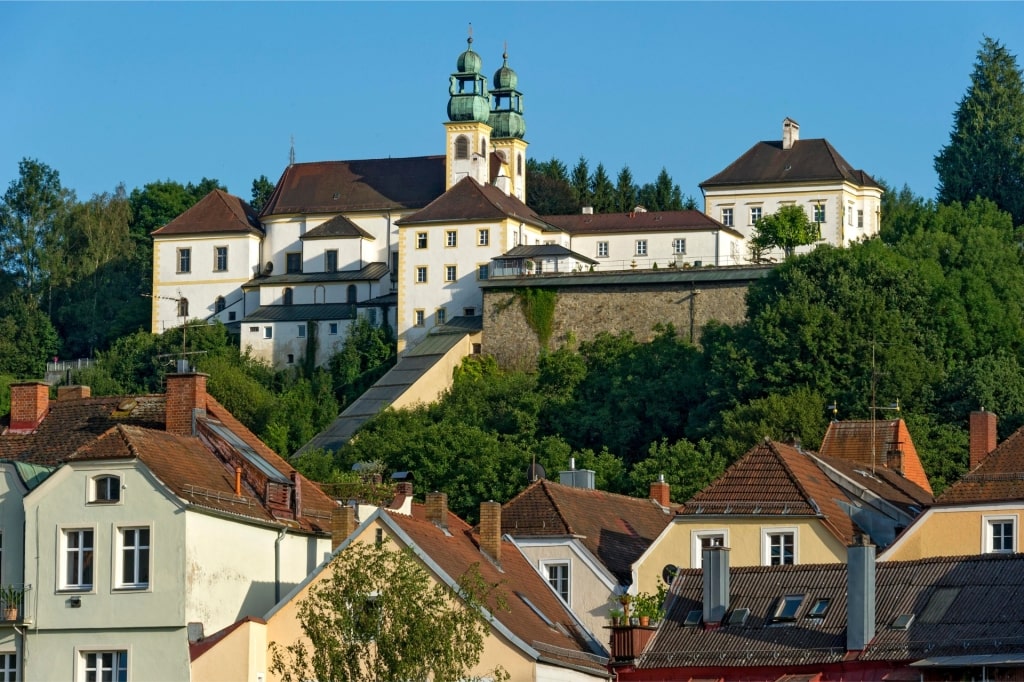
Pilgrimage Church Mariahilf
Rising above the river, across the bridge on the Inn bank of Passau, is this pilgrimage church with a venerated 17th-century image of the Virgin Mary. It is reached via the “heavenly ladder”, a covered staircase of 321 stone steps lined by religious images.
It is said that anyone who ascends the stairs on their knees will be rewarded with whatever they pray for as they complete the arduous climb. In 1663 Austrian emperor Leopold I fled to Passau with his family when the Turks tried to invade Vienna. He prayed for help, and the attack was defeated. While the interior of the church is simply decorated, there is a magnificent gold high altar.
Delve Into the Past at the Roman Museum Kastell Boiotro
Dig even deeper into Passau’s past at this museum which contains the remains of the Roman fort of the same name. It was only uncovered by workmen in 1974 and is now part of the UNESCO World Heritage site Donaulimes—or Danube Limes—which links a 1,500 mile chain of Roman forts running along the length of the Danube from Germany to the Black Sea.
Visitors can see the remains of original Roman walls and a watchtower and visit an interesting interactive museum, a reconstruction of the site, and artifacts unearthed by archaeologists, including pottery and helmets worn by Roman soldiers.
Shop for Souvenirs
Old Town
When you’re done with sightseeing, allow time to browse the small shops along the waterfront and in the old town. Fun mementos from Passau include recordings of the organ concerts at the cathedral, Passau chocolate, feathered Bavarian hats, and maybe even a pair of traditional lederhosen, the hard-wearing German leather pants held up with decorative suspenders.
Food & Drink
Spätzle
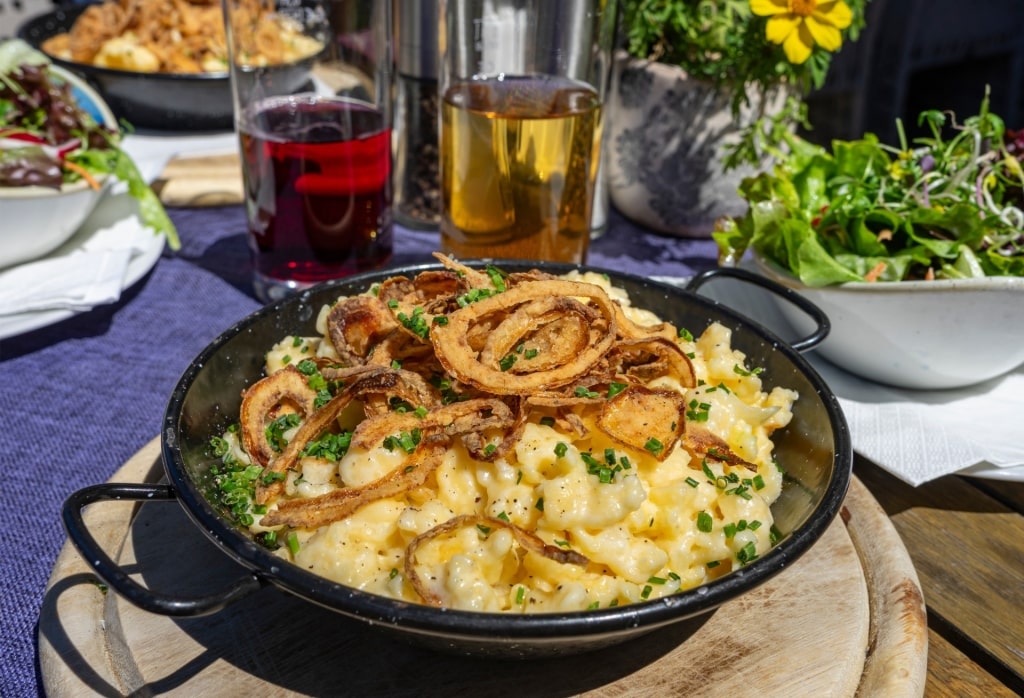
Thanks to the city’s location close to the Austrian border, food in Passau is a mix of Austrian and German cuisine. You’ll find plenty of eateries serving filling classics such as Wiener schnitzel, spätzle—an egg pasta served with different sauces—roast pork, sausages, and semmelknödel, bread dumplings which are a popular side with entrée dishes.
If you’ve got a sweet tooth, then you’re in luck. Chocolate pralines have been made in Passau for 200 years. The Goldhauben, or golden hoods, take their name and shape from the traditional hats worn by women in Bavaria. Ingredients include nuts and apricots soaked in liqueur, and some are even dusted with edible gold leaf. If you have the willpower to resist eating them before you get home, they’re a top souvenir to bring back from Passau.
German beer
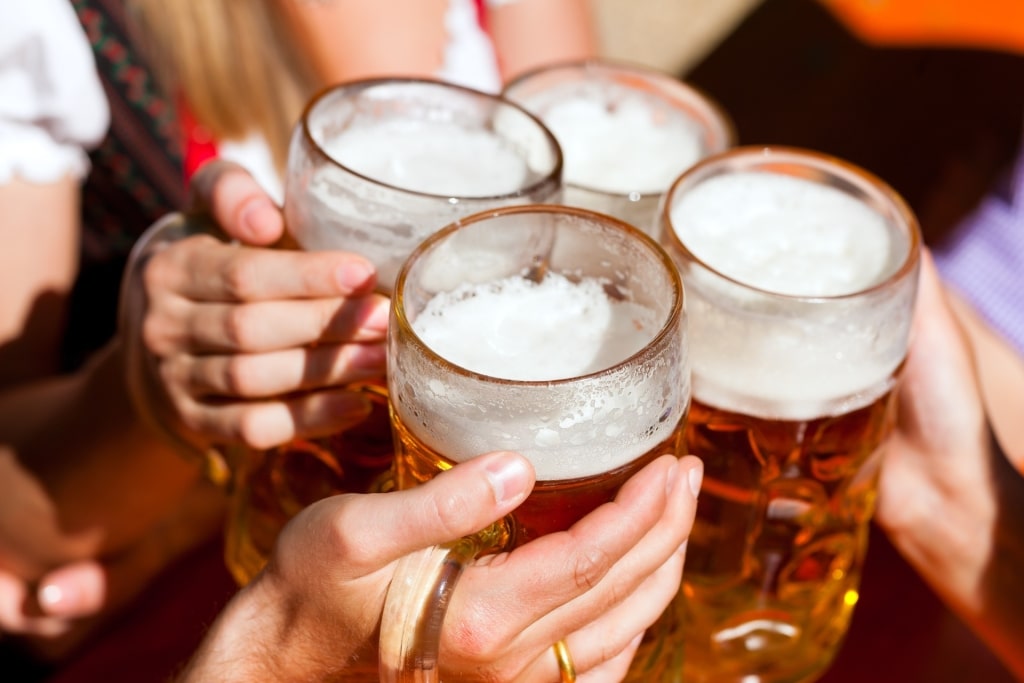
Bavaria is world-famous for its beer, which has been brewed in the region for more than 1,000 years. Around 25 percent of all German beer is produced in Bavaria. The Bavarian Weissbier—or wheat beer—has a very yeasty taste which has led to it being described as “liquid bread” and it’s not unusual to see it served at breakfast with a plate of Bavarian white sausages and sweet mustard.
Passau has five breweries, and the oldest is Peschl-Bräu, which has been operating on its original site since 1259. Others include Löwenbrauerei Passau, Innstadt-Bräu, and Brauerei Hacklberg. Beer gardens also originated in Bavaria in the 19th century, originally as an extension to breweries and a place to store fermenting beer during the summer months.
Wirtshaus Bayerischer Löwe Photo by High Contrast on Wikimedia Commons, licensed under CC BY 3.0 DE
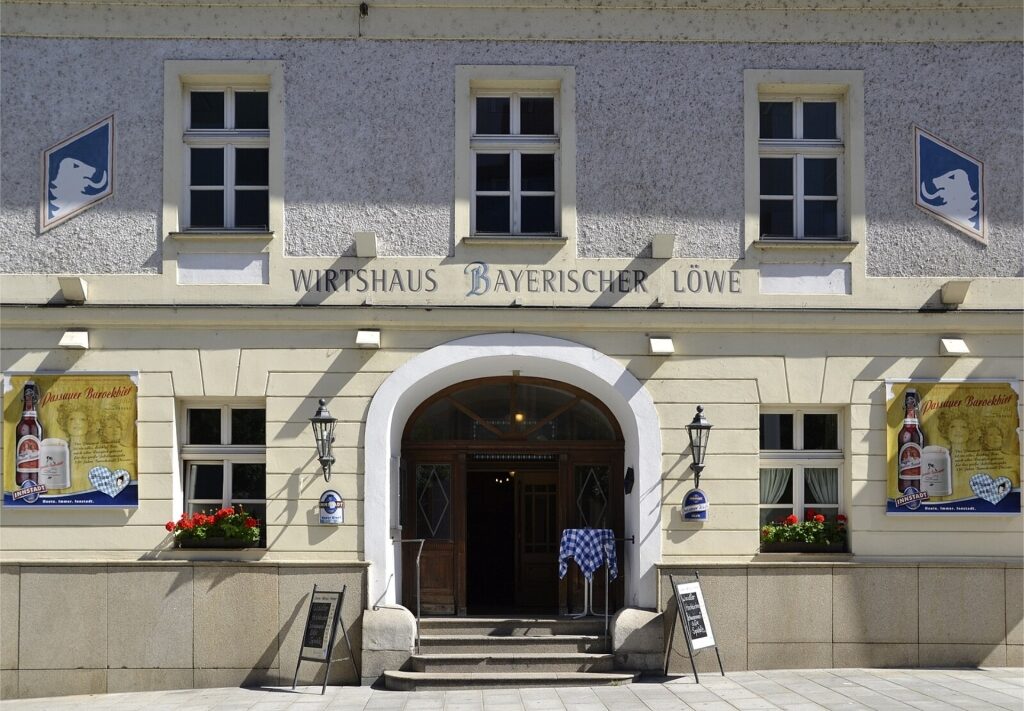
Nowadays, these leafy, shaded gardens are the perfect place to take a break and try some Passau beer, maybe with a large salty pretzel. Wirtshaus Bayerischer Löwe, in the center of town halfway between the Danube and Inn rivers, has been around for more than 200 years and has a large beer garden with seating for 200 people. On the opposite side of the Danube bank there’s another atmospheric garden which is next to the Hacklberg brewery.
Just be warned that the standard measure for beer served in beer gardens is the mighty one liter Mass—equivalent to 33.8 U.S. fluid oz—so unless you are really thirsty, try a halbe—a half—first.
Best Time to Visit
Old Town
Like the rest of the Danube, Passau is a year-round destination with the main season running from spring through fall. The time you visit is down to personal choice.
If you prefer cooler temperatures then consider visiting between March and May, or September onwards. The weather will be pleasant and comfortable for walking tours and you can also coincide your vacation to dovetail with springtime flowers or fall colors.
Whenever you choose to visit, be prepared for occasional rainfall. This area is renowned for its vineyards and they need rain to survive. However, most showers pass quickly.
Old Town
Explore Passau on a river cruise with Celebrity. Browse river cruises to Passau and book your unforgettable European vacation.