
There’s a reason so many people dream about sailing into Budapest on a river cruise. The Hungarian capital is one of the Danube’s most memorable cities, where grand Parliament buildings, hilltop castles, thermal baths, and glowing bridges line both sides of the river. River cruises to Budapest are multi-day itineraries along the Danube that either begin, end, or stop in the city as part of a broader journey through Central and Eastern Europe.
Having visited Budapest several times myself, including a Munich-to-Budapest river cruise, I can attest that arriving by river is far more beautiful than taking a train or an airport taxi. The first glimpse of the Hungarian Parliament illuminated at night from the river feels cinematic, while daytime is still impressive. The city never loses its impact on its visitors.
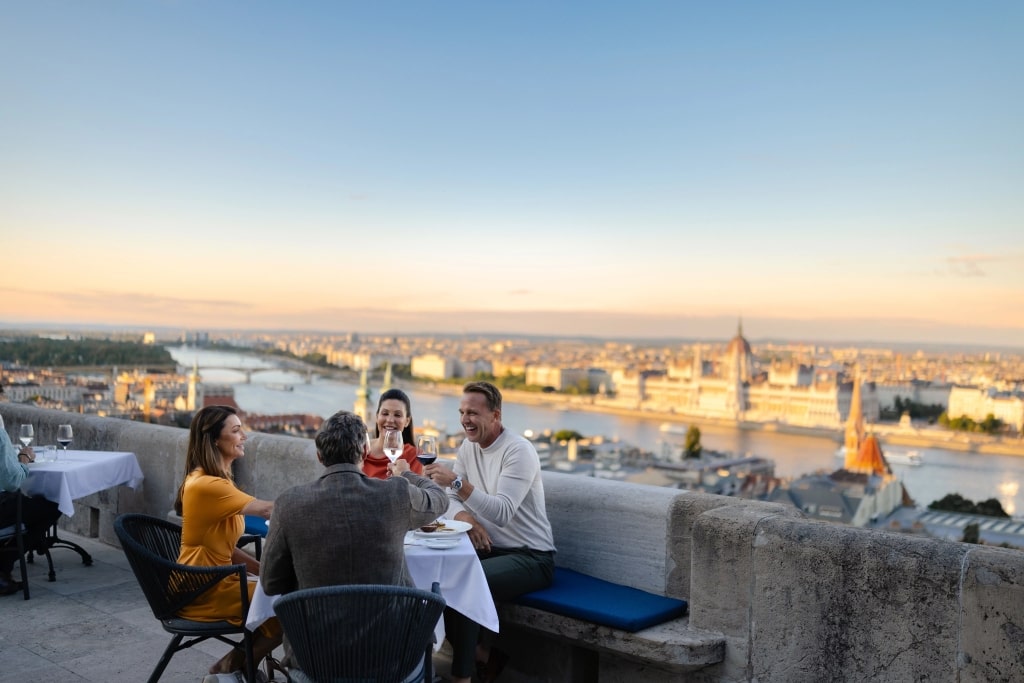
This picture shows a dining terrace located at the Fisherman’s Bastion Restaurant in Budapest, Hungary
Budapest and the Danube: One of Europe’s Great River Cruise Gateways
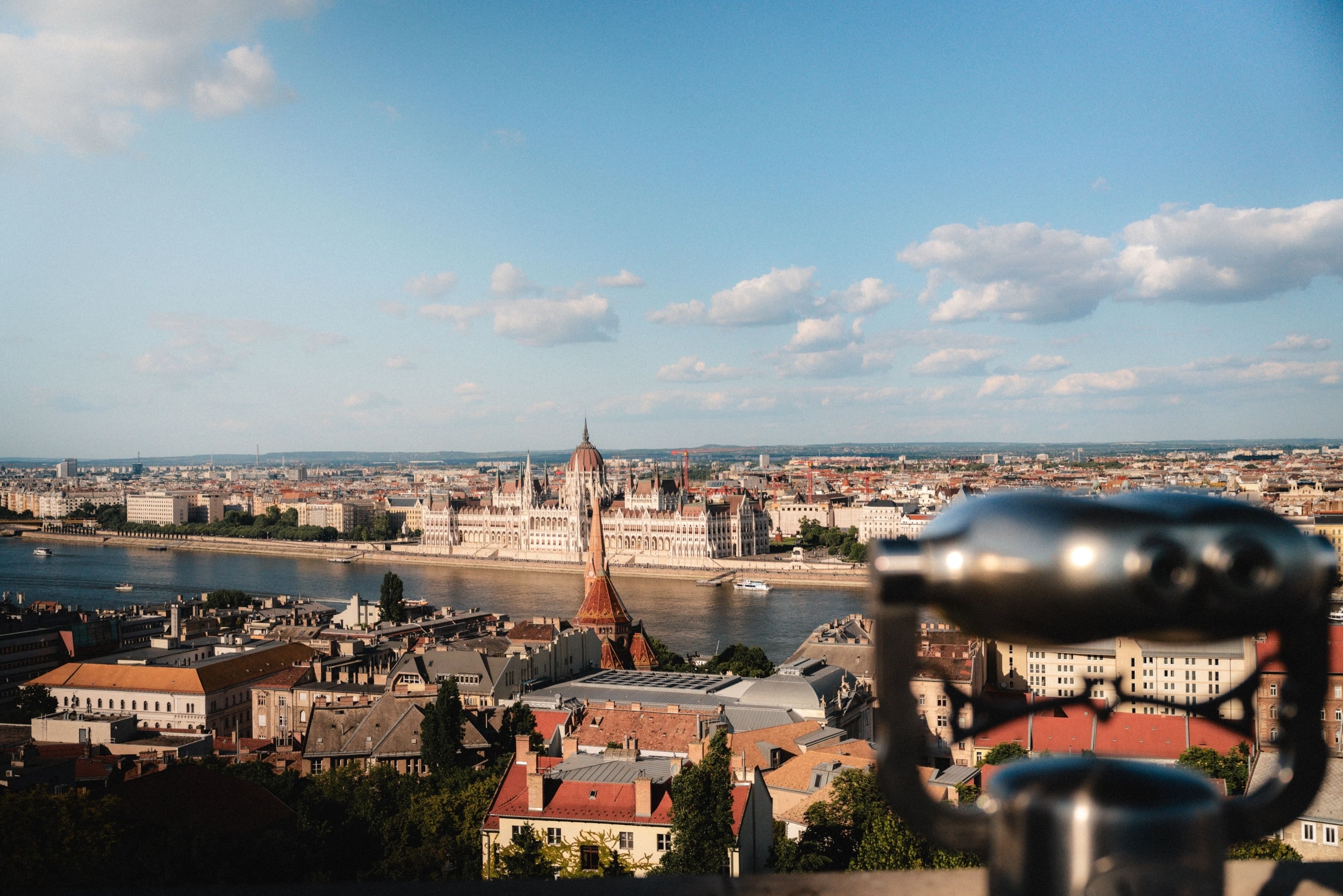
View of Danube River
The Danube is Europe’s second-longest river, connecting several countries and cultures through the heart of Central and Eastern Europe. Cruising on the Danube River takes travelers through Germany, Austria, Slovakia, and Hungary, though some extend farther east into the Balkans and Romania.
Because of its location along the river, Budapest appears on many itineraries, with the city consistently ranking among the destinations guests most look forward to visiting. Many of Budapest’s most recognizable landmarks sit directly along the waterfront, including the Hungarian Parliament Building, Buda Castle, Fisherman’s Bastion, and the Chain Bridge. Ships dock close to the city center, making it easy to walk straight into the heart of the city without lengthy transfers.
For those considering a European river cruise, Budapest is also a natural place to extend the journey before or after sailing. Celebrity’s Before and After Stays give guests more time to experience the city, with two- or three-day packages that include:
- A Premium stay at Kempinski Hotel Corvinus Budapest or an Ultra Premium stay at Al Habtoor Palace Budapest.
- Daily breakfast at your hotel before exploring the city.
- Seamless transfers between the hotel and the ship.
- One local storyteller-led excursion per day.
- Destination Insider experiences curated by local experts.
- Optional premium excursions and transfers for an additional cost.
This gives guests more time to experience Budapest at their own pace while keeping the transition to or from the ship simple, seamless, and thoughtfully planned.
Classic Danube Cruise Routes That Include Budapest
Many Budapest river cruises follow classic Danube routes through Central Europe. These combine major capitals with smaller riverside towns and sail past vineyards and historic abbeys. Modern river cruise ships are built smaller specifically for these routes so they can navigate narrow river locks and dock directly in city centers.
How long river cruises to Budapest last depends on the itinerary. Some focus on the core section of the Danube between Germany and Hungary, while others extend farther east or begin farther upstream. Here are the most popular routes.
Extended Danube Cruises to Budapest
Longer Danube River cruises often begin farther north in Germany. These itineraries last around 10 days and provide a slower-paced look at life along the river. Travelers may spend additional time in Bavaria, smaller Austrian villages, or lesser-visited stretches of the Danube that many shorter cruises skip.
Lower Danube Voyages Beyond Budapest
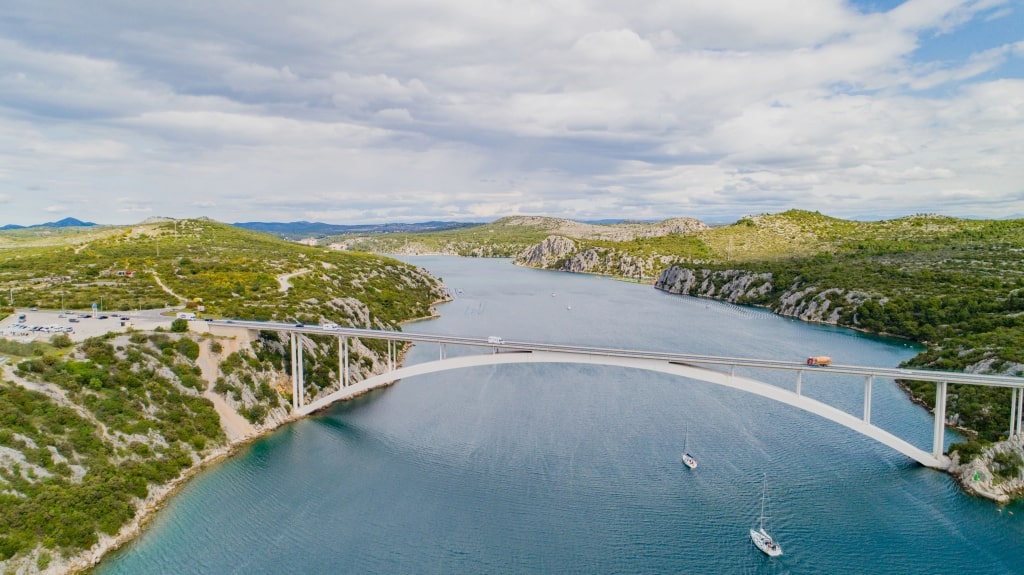
Šibenik Bridge, an iconic reinforced concrete arch bridge located near the city of Šibenik along the Adriatic Highway in Croatia.
Some cruises continue eastward beyond Budapest into countries such as Serbia, Croatia, Bulgaria, and Romania. These Lower Danube voyages typically range from 10 to 14 days and feature more rugged scenery and ports that focus on Ottoman, Balkan, and Eastern European history.
Places You’ll Visit Along the Danube
One reason the Danube River remains one of Europe’s most popular cruise routes is the variety of destinations packed into a relatively compact region. Here’s a look at places travelers may visit in addition to Budapest.
Vienna, Austria

A couple standing inside the stunning Great Gallery of the historic Schloss Schönbrunn located in Vienna, Austria
Vienna is one of the Danube’s signature stops, known for grand palaces and classical music. Many travelers spend time at Schönbrunn Palace, St. Stephen’s Cathedral, or the MuseumsQuartier before settling into one of the city’s traditional cafes for pastries and coffee. Vienna is also very walkable, particularly around the historic Innere Stadt district.
Bratislava, Slovakia
Located between Vienna and Budapest, Bratislava offers a smaller-scale capital city experience with a compact old town that’s easy to explore during a river cruise stop. The city’s hilltop castle overlooks the Danube and provides views across Slovakia, Austria, and even neighboring Hungary on clear days.
Passau, Germany
Passau is one of the Danube’s most common starting ports. Known as the “City of Three Rivers,” Passau sits where the Danube, Inn, and Ilz Rivers meet, each a different color colliding together like oil and vinegar. Many travelers arrive in the city before their cruise to explore and enjoy the atmosphere before boarding.
Wachau Valley, Austria
The UNESCO-listed Wachau Valley is a scenic stretch of the Danube known for vineyard-covered hillsides, castle ruins, and apricot orchards. As ships slowly sail through the valley, guests pass storybook towns such as Dürnstein, where the ruins of a hilltop castle overlook the river.
Vilshofen, Germany
While Vilshofen may not have the recognition of Vienna or Budapest, this small Bavarian town offers a glimpse into everyday life along the river. Traditional beer gardens and cafes line the streets near the waterfront, and Vilshofen’s smaller size allows guests to explore it comfortably on foot.
Linz, Austria
Many river cruises use Linz as a gateway to excursions into the surrounding countryside, including visits to Salzburg or smaller Austrian villages nearby. However, this small town has a surprisingly modern cultural scene and provides a different energy than the other stops along the Danube.
Melk, Austria
Best known for its spectacular abbey, Melk is a charming riverside town with narrow streets, cafes, and small shops clustered beneath the golden-yellow monastery that dominates the skyline. Inside, visitors find lavish halls, frescoed ceilings, marble corridors, and a library filled with ancient manuscripts.
Engelhartszell, Austria
One of the quieter stops along the upper Danube, Engelhartszell is surrounded by rolling hills and dense greenery. The town is best known for its own abbey, a Trappist monastery associated with beer brewing and liqueur production.
Hainburg and Tulln, Austria
Hainburg and Tulln also provide a glimpse into smaller Danube communities, where medieval architecture, riverside promenades, and a slower-paced daily life are central to the experience. Hainburg sits close to the Slovak border and still preserves sections of its medieval walls and gates. Tulln, meanwhile, is known for its peaceful gardens and public squares.
Life on the River: What To Expect on a Danube Cruise
A Danube River cruise feels very different from an ocean cruise. River ships are smaller and more intimate, carrying fewer guests than large ocean-going vessels. That small size creates a more relaxed atmosphere on board.
Another major advantage is location. River ships dock close to city centers, allowing guests to walk directly into destinations. Days on the Danube often combine guided tours with free time to explore independently.
One of my favorite parts of river cruising is the rhythm of it all. You unpack once, but every day feels completely different. One morning, you’re walking through imperial palaces in Vienna, and the next, you’re drinking wine next to castle ruins. Better yet, accommodations, dining, transportation between destinations, and many guided experiences are included on a river cruise.
River Cruises to Budapest FAQs
What Currency Is Used in Budapest, Hungary?
Hungary uses the Hungarian forint (HUF), though many hotels, restaurants, and tourist attractions in Budapest also accept major credit cards.
What Is the Best Time of Year to Take a River Cruise to Budapest?
Spring and fall are often considered best because of mild temperatures and fewer crowds. Summer brings longer daylight hours and lively outdoor dining, while winter cruises can include Christmas markets throughout the Danube region.
How Do You Choose the Right Danube River Cruise to Budapest?
The best itinerary depends on how much time you have and what regions interest you most. First-time river cruisers often choose classic Budapest-to-Passau routes, while longer Lower Danube itineraries appeal to those who are returning.
How Long Are River Cruises to Budapest?
Most Danube cruises to Budapest last between seven and 14 days.
Which River Cruise Goes to Budapest?
Many Danube River cruises include Budapest as either a starting or ending point, or a featured stop along the itinerary.
Can You Take a Prague to Budapest River Cruise on the Danube?
Prague is not actually located on the Danube River, but many cruise itineraries include Prague as a pre- or post-cruise land extension.
Planning Your Cruise to Budapest
Few cities make a stronger first impression from the water than Budapest, and a Danube cruise allows travelers to explore this beautiful capital city, as well as multiple countries and cultures all in one trip. For travelers considering their first European river cruise, Budapest remains one of the best places to begin.