Tiny Engelhartszell lies on the Danube in Upper Austria, hemmed in by steep, forested hills, facing the broad river and Bavaria in Germany on the opposite bank.
For such a small village, with a population of around 1,000, Engelhartszell packs quite the cultural punch. The ravishingly beautiful Engelszell Abbey, tended by Trappist monks, is the star attraction, but the state-of-the-art Schütz Art Museum deserves your attention, too. Then, there are bucolic riverside walks, scenic cycle rides, and welcoming restaurants where you can enjoy classic Austrian cuisine.
Why Visit Engelhartszell
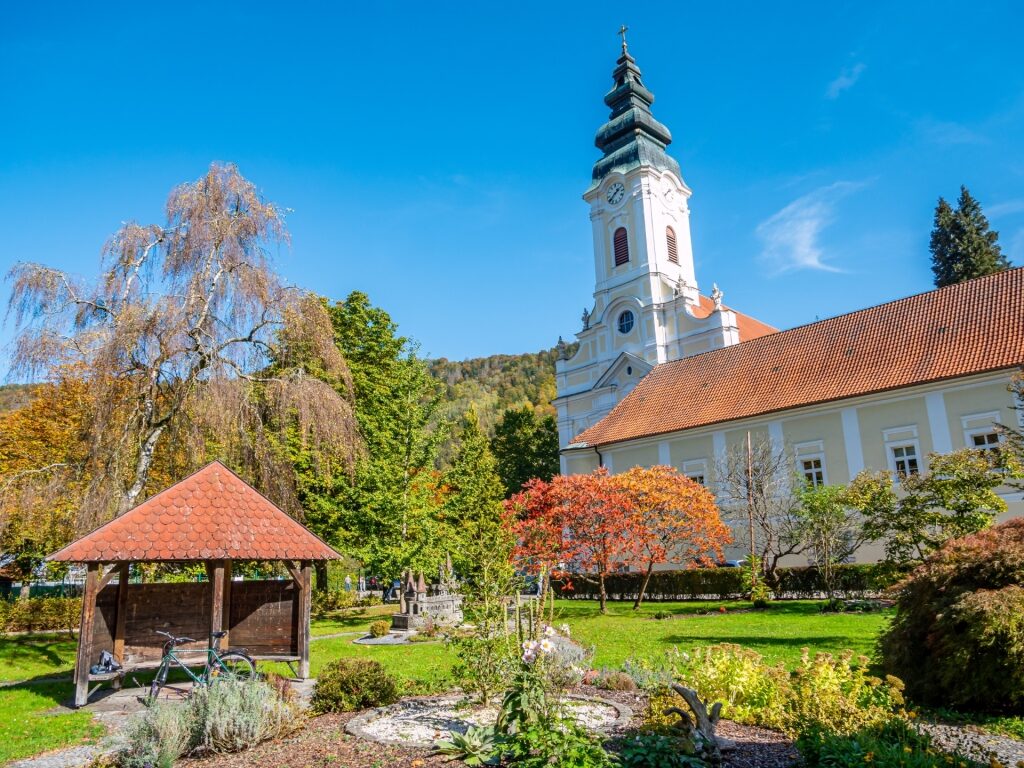
Stift Engelszell
A visit to Engelhartszell is a glimpse into Austria’s rural village life. The village itself is tiny—just a few blocks of pastel-colored, red-roofed houses clustered on the riverbank—but there’s a lot to see.
Outdoorsy types will love the local hiking trails in Sauwald Nature Park, while cyclists can combine exercise with sightseeing on well-marked riverside cycle paths.
Beer lovers can sample the rare brews created by the Trappist monks in the Engelszell Abbey, while kids will have hours of fun in the Mini-Danube playground.
History & Culture
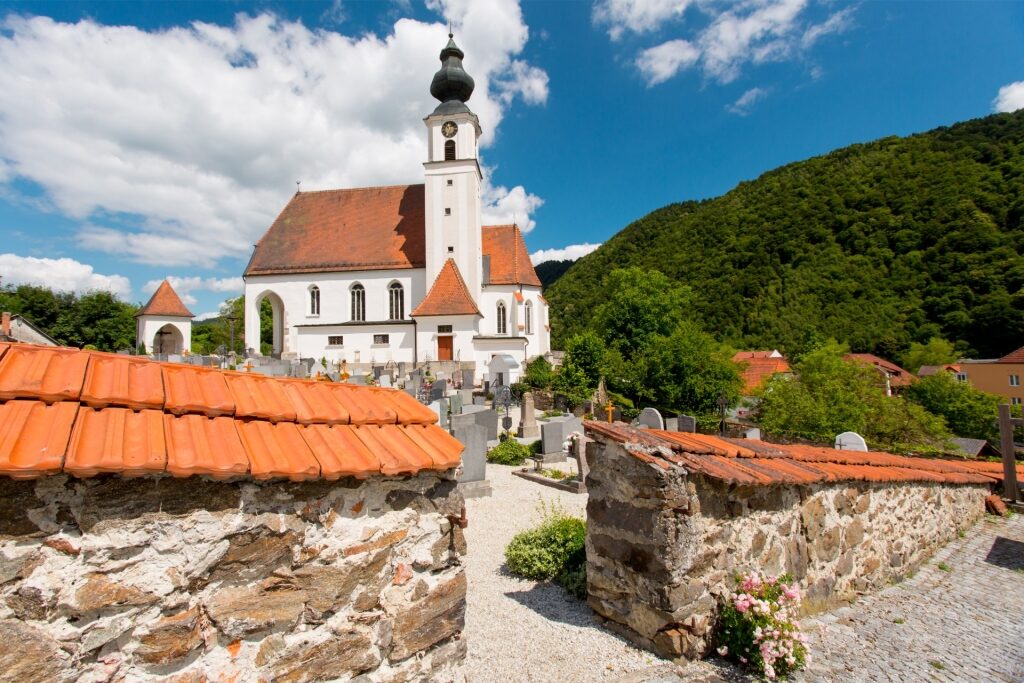
Engelhartszell
Engelhartszell is documented as early as 1194 as a toll station on the Danube, and, according to local records, as a market town in 1293. The main street is called Marktstrasse and would have been the location of the original market. Take time to look at the door panels and frames, and check out the old Toll House and the 400-year-old Blacksmith’s Museum.
The significance of the toll station increased in 1450. A chain stretched across the river meant that every ship had to stop in Engelhartszell, pay for a berth, and pay duty on whatever cargo it was carrying. These glory days brought wealth to this Austrian town, with inns, bakeries, and butchers thriving on the enforced stays of the ships and their crews. Eventually, though, the customs office was moved to much larger Passau, and Engelhartszell’s golden era was over.
The Engelszell Abbey was founded in 1293, although the monks here have had a rocky history. Their assets were confiscated in 1786 by the government under Holy Roman Emperor Joseph II, and again by the Gestapo in 1939, after which many of the monks were sent to concentration camps. After the war, in 1945, some of the monks were able to return to the village.
Today, Engelhartszell is a peaceful place, thriving mainly on tourism and agriculture. It’s a center for hiking and cycling, as well as pleasure cruises along the Danube.
Wildlife & Nature

Robin
The steep, rocky hills around Engelhartszell, clad with pine and oak forests, are home to a wide variety of fauna and flora. Look for robins, blackbirds, chaffinches, and jays in the trees. The sharp-eyed may even spot an eagle owl, the biggest owl species.
Mammals here include wild boar, red deer, and European ground squirrels, while the reptile world is represented by the green lizard, which grows to an impressive 12 inches long.
It’s interesting, too, to know what lurks beneath the muddy waters of the Danube. Carp and pike both reside here, as well as the sterlet, the only remaining representative of the sturgeon family. This prehistoric-looking fish is in danger of extinction, although conservationists are trying hard to maintain the population.
Visit the aquarium at the town’s Mini-Danube exhibit and learn about this impressive fish and the beluga sturgeon, its colossal relative, which used to thrive around the mouth of the Danube. You may not want to encounter one; mature adults live to 100 years and reach an astonishing 19 feet in length.
Tips for Visiting Engelhartszell
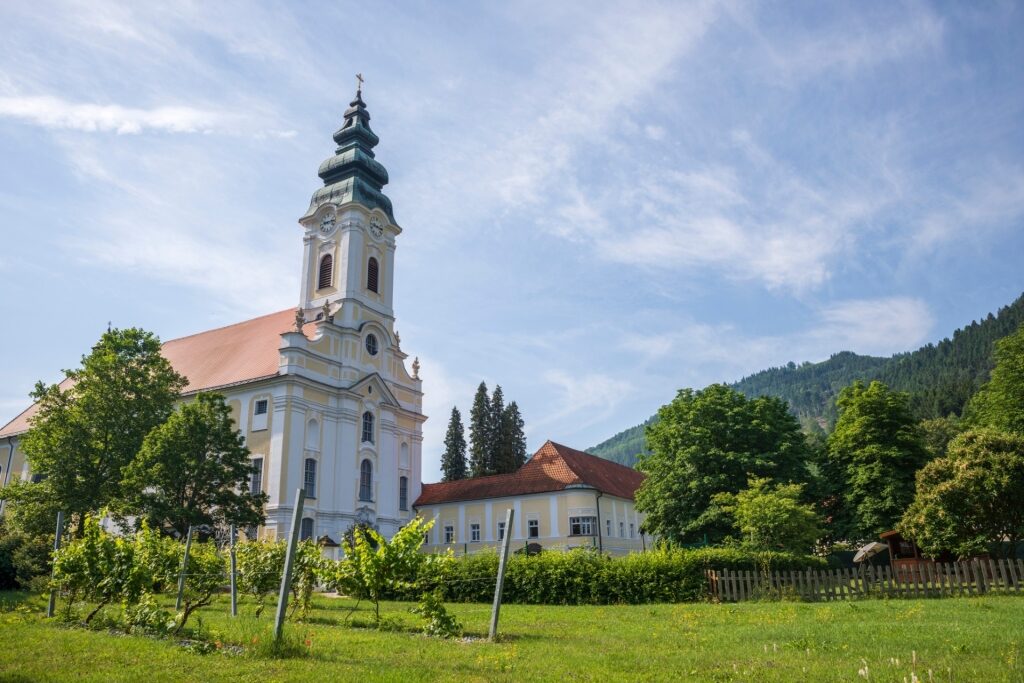
Stift Engelszell
The village is easily walkable, but if you’re tempted by the many hiking trails around here, decent hiking boots are essential.
Trail signs on hikes in Austria are marked on rocks, trees, and posts, and are color-coded, with distances clearly marked. As such, you shouldn’t get lost.
If you want to cross the river to the Bavarian side and cycle on the Danube path there, you’ll notice that there are no bridges here. There is, however, a ferry specifically for cyclists that departs from Engelhartszell and charges a nominal fee to carry cyclists and their bikes.
Things to Do & Attractions in Engelszell
Stift Engelszell
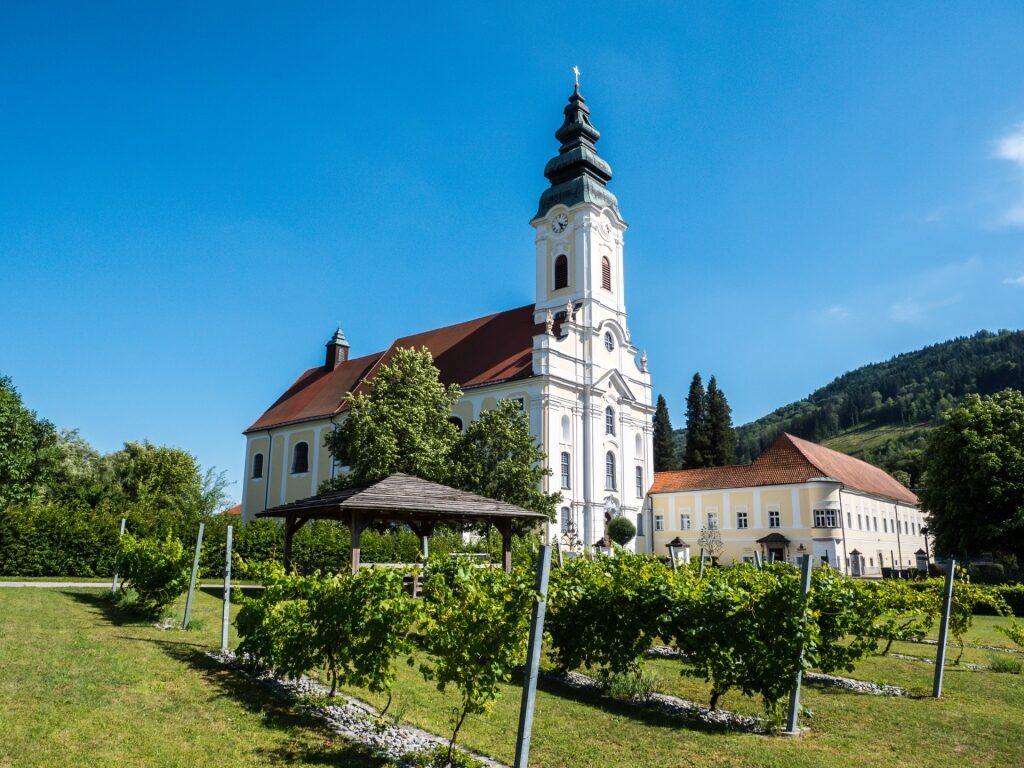
Stift Engelszell
Founded in 1293, the Engelszell Abbey is home to a small group of Trappist monks; in fact, it’s the only Trappist monastery in Austria. The monks are known for their pursuit of seclusion and contemplation, as well as their physical labor, the fruits of which help to sustain the monastery.
What does this mean? Delicious beers, from dark Gregorius to amber Benno and blonde Nivard. These Trappist beers are unique in that they can only be called “Trappist” if they’re produced by monks.
The brothers also make liqueurs from local herbs, cheeses, and fresh apple juice, all of which you can buy in the monastery shop.
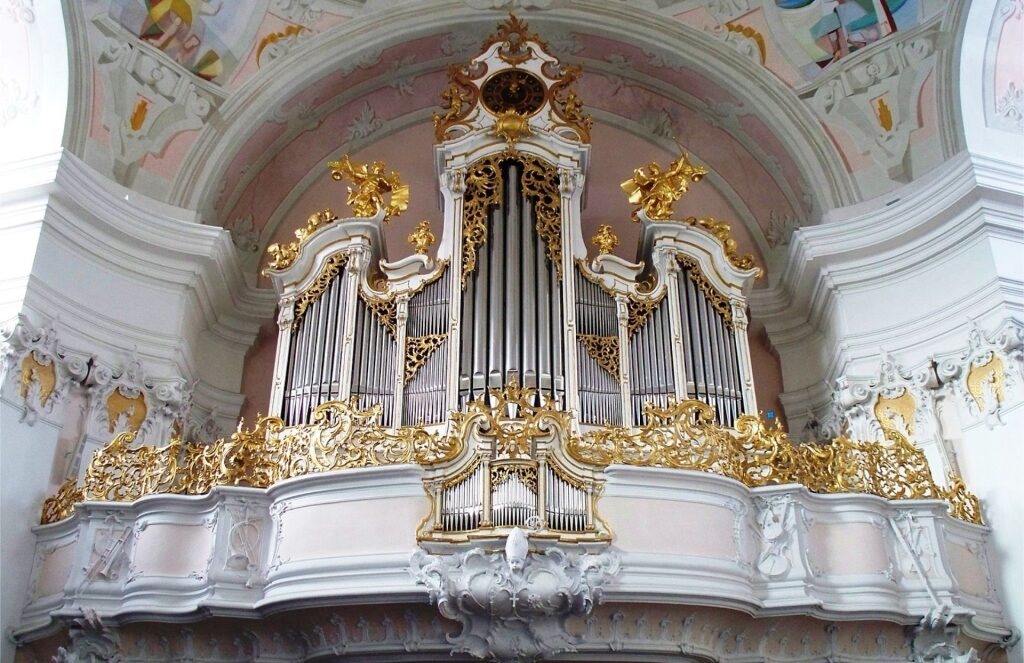
Stift Engelszell Photo by High Contrast on Wikimedia Commons, licensed under CC BY 3.0 DE
A highlight of any visit is the beautiful Rococo church, built between 1754 and 1764. It’s furnished with priceless works of art, statues carved from red marble, and frescoes by 18th-century artist Bartolomeo Altomonte.
There are a few surprises here. The ceiling fresco in the nave is visibly contemporary compared to Altomonte’s pieces. It dates back only to 1957, when it was redesigned after the ceiling was damaged, and painted by Professor Fritz Fröhlich.
More eye-catching still are the Catacomb Saints. You’d be forgiven for doing a double-take when you spot these; they’re human skeletons absolutely festooned with jewelry, lounging in louche positions in glass cases.
These skeletons were discovered in the catacombs of Rome in 1578, believed by some to be early Christian martyrs. They were disinterred, reassembled, and encrusted with jewels and gold, symbols of the riches of the afterlife.
Mini-Danube
In the monastery gardens, you’ll find yet more surprises. There’s a sensory herb garden, its produce used to flavor the liqueurs made on-site by the monks.
Mini-Danube, meanwhile, is a depiction of the course of the Danube in its various stages, from its source in Germany’s Black Forest to its mouth at the marshy Danube Delta. Kids will love some of the challenges here, not least hauling themselves across a stretch of shallow water on a raft.
There’s also an aquarium that teaches you about the fish that inhabit the Danube and, in an exhibit called “The Aliens are Coming,” the invasive species that threaten the river’s ecosystem.
The inhabitants of the tanks include the giant Beluga, which no longer exists in the Upper Danube Valley thanks to over-fishing and destruction of its migration routes. You can also see sterlet, the sturgeon-related fish that still lives in these waters, resembling small, prehistoric creatures from a lost world.
Schütz Art Museum
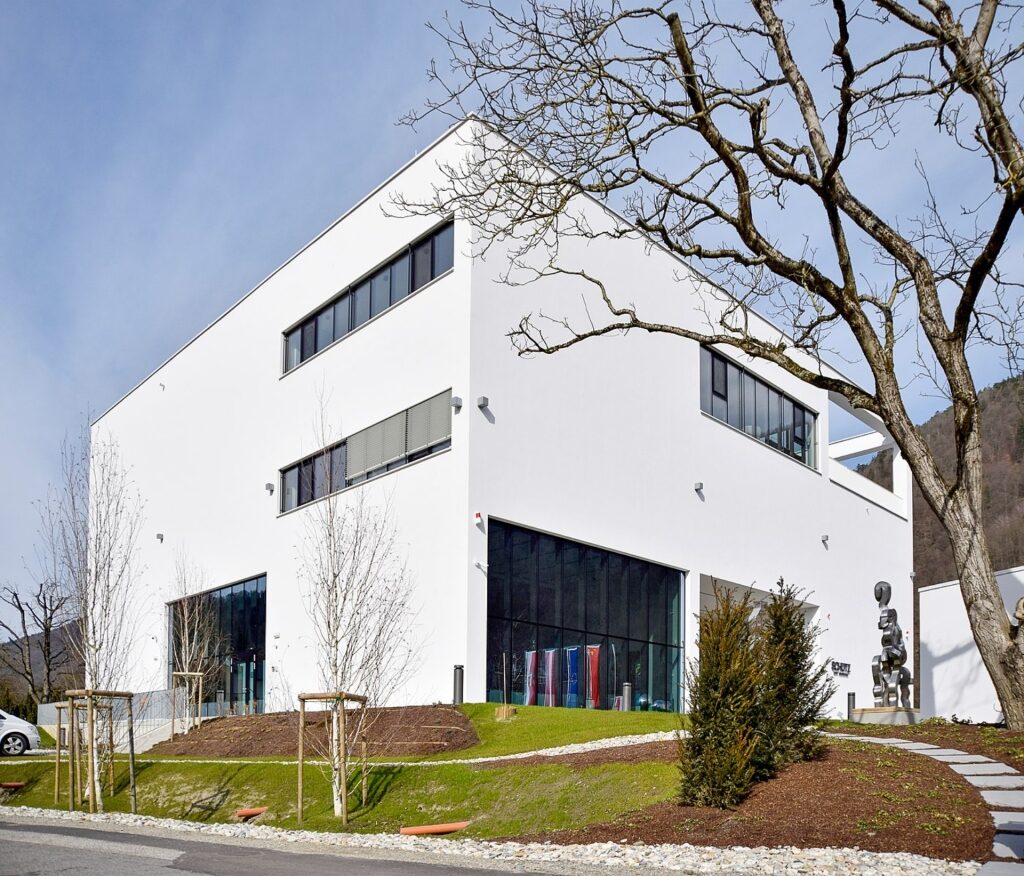
Schütz Art Museum Photo by Mosbatho on Wikimedia Commons, licensed under CC BY 4.0
A sleek, contemporary art gallery is probably the last thing you’d expect to find in a sleepy little village like Engelhartszell. But the Schütz Art Museum is a considerable addition to the village’s cultural attractions.
Founded by the Schütz family, it displays contemporary Austrian art from the 19th century through the Jugendstil and Classic Modern periods to the avant-garde. You’ll see work by painters including Klimt, Schiele, Kokoschka, Waldmüller, Schindler, and Wisinger-Florian. The cozy café is filled with paintings, too, and there’s an artist-in-residence program, so visitors can watch visiting artists at work.
The building itself is interesting, as it’s designed to be as close to carbon-neutral as possible, with heat pumps in the basement and solar panels on the roof. What’s more, the architects worked according to the ancient Asian principles of Feng Shui.
Cycle to the Schlögener Schlinge
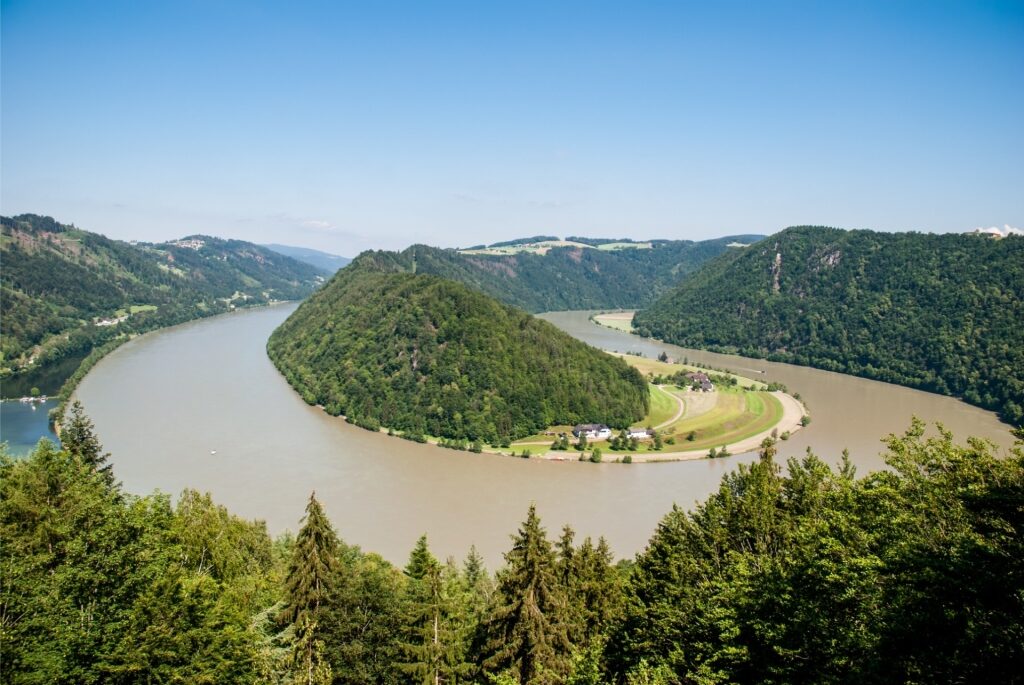
Schlögener Schlinge
The cycle ride to Schlögener Schlinge—a tongue-twister if there ever was one—should take under an hour. Your destination? One of the most scenic stretches of the Danube, where the river makes a full 180-degree turn in a sharp loop. Take a detour up the hill and you’ll have a fantastic photo opportunity.
Simply follow the Danube cycle path to the Jochenstein Danube power station, where you could stop for a look at the Haus am Strom exhibit, and then carry on toward Schlögen. Take the cycle ferry to the southern bank for the best views of the loop, surrounded by forest and hills. Cycle back to Engelhartszell on the opposite bank, following the Danube cycle trail.
Haus am Strom Water Museum
The wave-shaped Haus am Strom Water Museum is located next to the Jochenstein power station. This is where you can learn about the biodiversity of the Danube Valley, the power of water and how it’s harnessed, and conservation efforts along the river.
Pick up an audio guide to better understand the displays, and watch movies that bring the story of the river to life.
Food & Drink

Wienerschnitzel
The culinary offerings in Engelhartszell are typical Austrian dishes. You’ll find tasty Wienerschnitzel—the veal or chicken flattened, coated in breadcrumbs, and fried—served with a squeeze of lemon and a potato salad.
Hungry hikers and cyclists will love the rich goulash stew served with dumplings, not to mention Austrian desserts made from locally grown apples.
Food here adheres to the seasons. Around Easter, you’ll find a lot of lamb on local menus. Summer is a time for healthy salads, while in August, the first wild mushrooms appear on menus.
September brings the pumpkin harvest; look out for velvety soups and fragrant pumpkin oils. If you have time for a long, lazy lunch, try Zum Goldenen Schiff, which has sweeping river views.
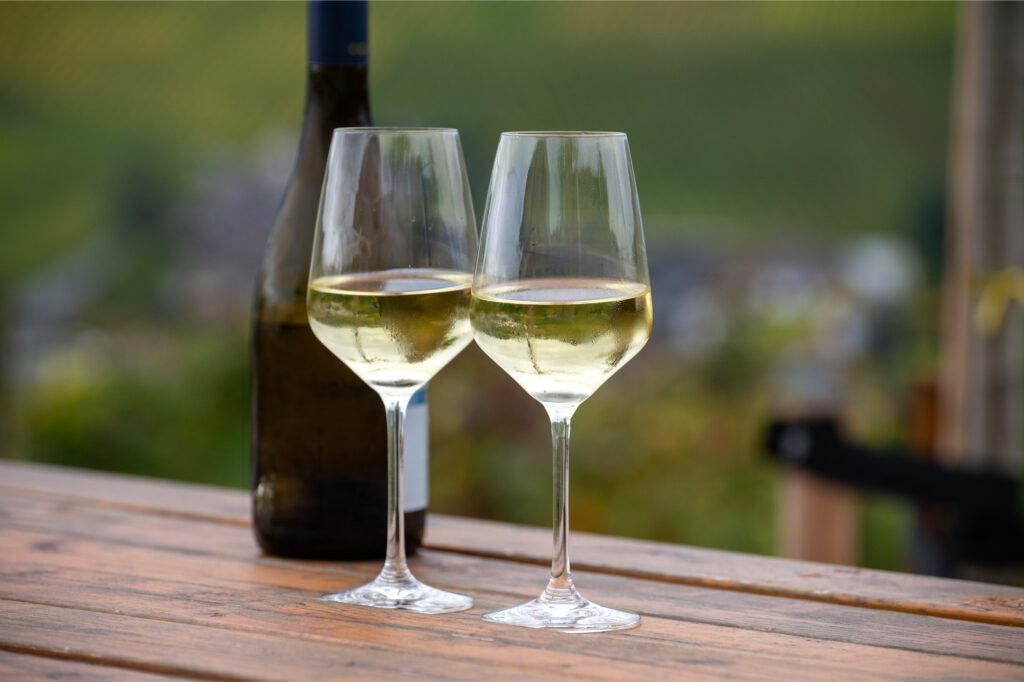
Riesling
This Austrian region is famed for its wines; fine Rieslings and Grüner Veltliners are produced in the Wachau, two hours’ drive downstream. It’s the perfect accompaniment to an al-fresco lunch overlooking the river.
Best Time to Visit Engelhartszell

Engelhartszell Photo by High Contrast on Wikimedia Commons, licensed under CC BY 3.0 DE
Engelhartszell is pretty at any time of year. Come in spring, when the meadows are carpeted with wildflowers and the vineyards are still a bright, fuzzy green. The summer months bring warm weather; expect the occasional thundery shower, which breaks the humidity.
Fall is a time of glorious color, the deciduous trees in the forest turning brilliant shades of orange, yellow, and scarlet. This is also the season of the wine harvest.
Winters here are cold, but the village looks all the more enchanting when its old houses are draped with snow.
FAQs
What is Engelhartszell famous for?
Engelhartszell is best known for its Trappist monastery, part of which is a Rococo church rich in art treasures.
Where is Engelhartszell located in Austria?
The tiny village of Engelhartszell lies on the bank of the Danube, southeast of Passau in Upper Austria, or Oberösterreich. The river itself forms the border with Germany.
What attractions can I visit in Engelhartszell?
There’s plenty to see here, from the monastery to the impressive Schütz Art Museum. Families will love Mini-Donau and the aquarium displaying fish that were, and are, native to the Danube.
What activities are available on the Danube River in Engelhartszell?
Engelhartszell is one of the best places to visit in Austria for hiking and cycling. You can cycle the flat riverside paths or hike the forested trails of the hills around the village.
Ready to discover this pretty village for yourself? Browse Celebrity’s river cruises to Engelhartszell and plan your dream vacation.