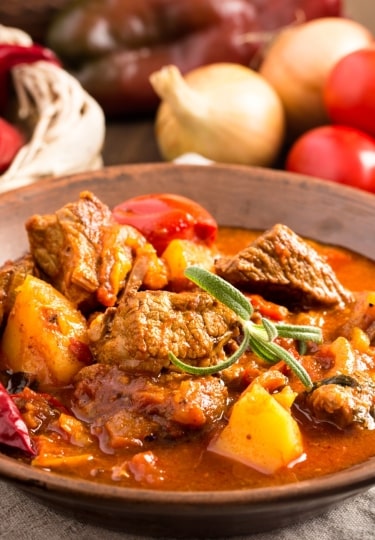
Looking for the most iconic Hungarian dishes to sample while visiting this Central European country rich with multicultural culinary traditions? You’ll never forget the flavor of creamy paprikash or the delicious texture of buttery nokedli, Hungary’s famous noodles.
Hungarian cuisine is hearty and often meaty, with imaginative use of herbs and a strong emphasis on using seasonal ingredients. Here is a guide to the best Hungarian food, from home-cooked classics to seasonal specialties incorporating typical Hungarian products, from sour cherries to chestnuts to, of course, paprika.
Chicken Paprikash, or Paprikás Csirke
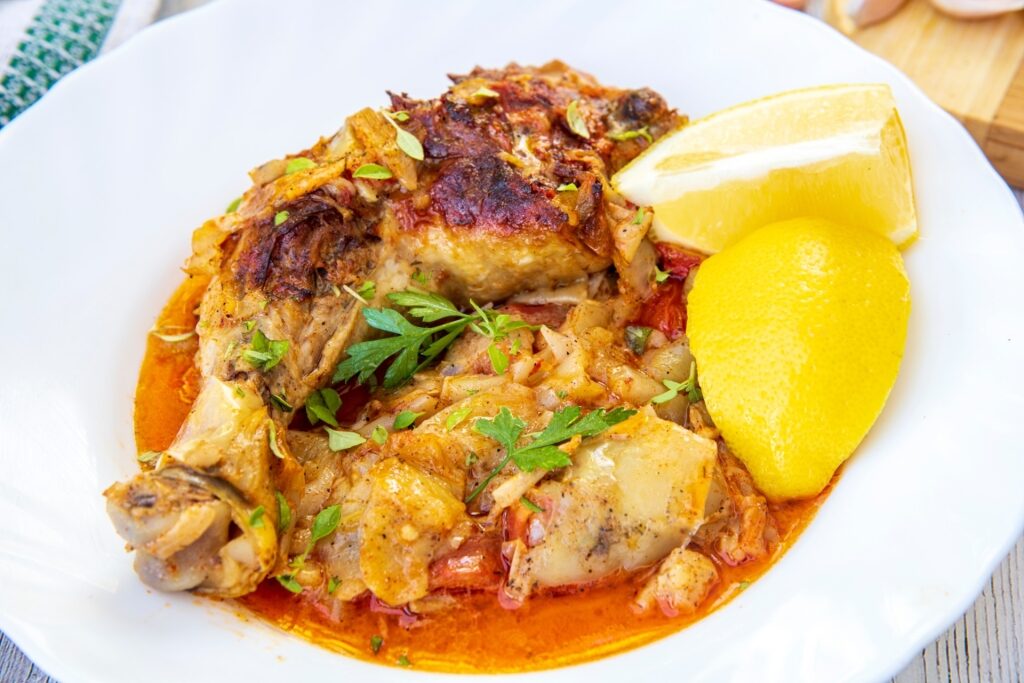
Paprikás csirke
This traditional dish spotlights an essential spice in Hungarian cooking: paprika. Available in both sweet and spicy variants, paprika adds a warm, earthy, peppery taste to the creamy sauce of this stew, which can be made with chicken, veal, beef, or other meat the chef has at hand.
The meat is browned, then simmered with onion, garlic, tomatoes, sour cream, and sometimes Hungarian bell peppers. It is commonly served with nokedli, dumpling-like noodles similar to the German spätzle, perfect for soaking up the velvety, marigold-colored sauce.
In Budapest, you can savor chicken paprikash at Pest-Buda Bistro, a modern yet rustic tavern in the Castle District serving homestyle cooking. Diners love the fall-off-the-bone chicken and buttered noodles.
Hungarian Beef and Onion Stew, or Pörkhölt
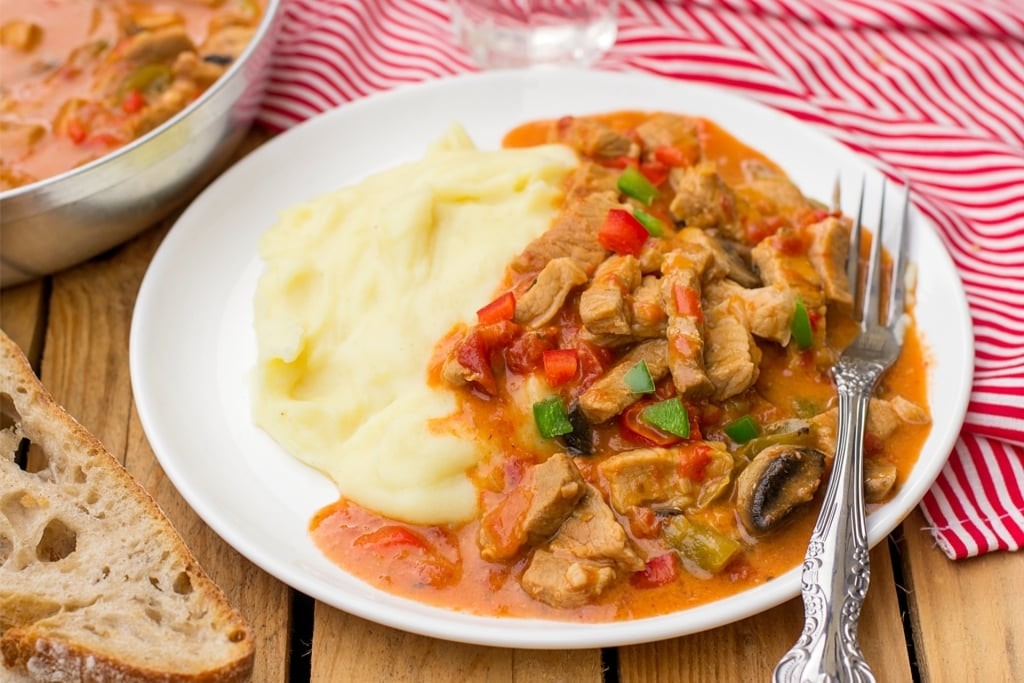
Pörkhölt
Not to be confused with the soupier goulash, pörkhölt is a stew commonly made with beef or pork with a base of onions cooked with lard. Brightened with green bell peppers, tomatoes, and just a dash of paprika, the stew is dense and rich, a family meal staple.
Locals recommend Gettó Gulyás in the old Jewish Quarter of Budapest, where pörkhölt is served with dozens of meat options and inspired by the chef’s grandmother’s recipes. If you make it to this trendy eatery, don’t miss their famous dessert: freshly-made cottage cheese dumplings—túrógombóc—in sweet sour cream.
Goulash, or Gulyás
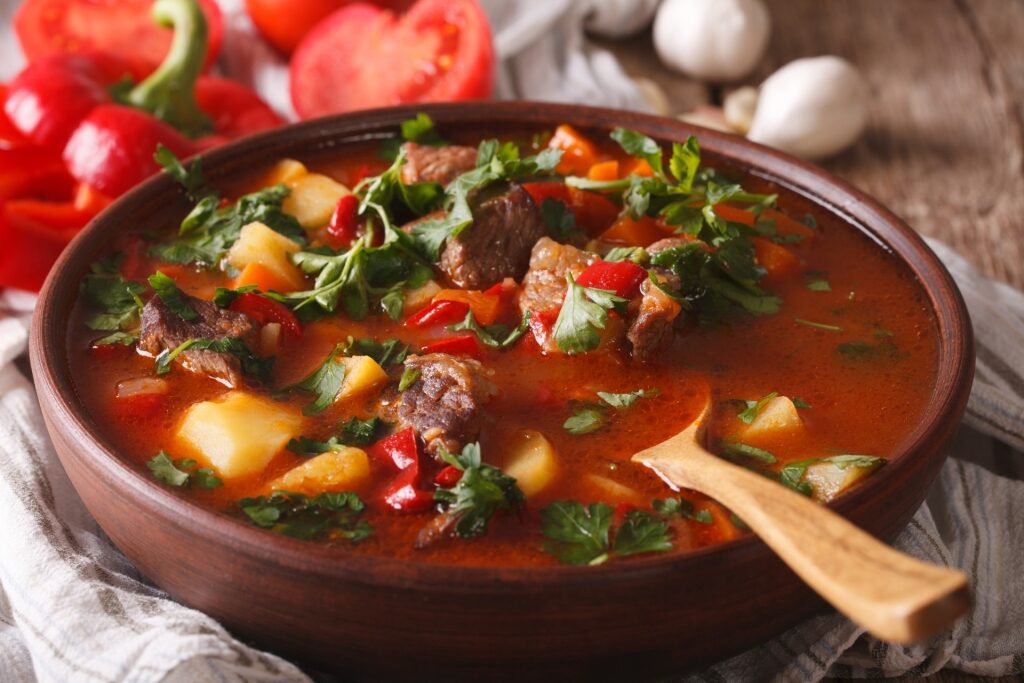
Gulyás
Completing the trifecta of Hungarian national dishes along with paprikás and pörkhölt, gulyás is a soup commonly known as goulash–a rich, nourishing serving of cubed beef, carrots, and potatoes simmered in broth with caraway seeds and generous amounts of paprika. The word gulyás also refers to herdsmen of the Hungarian plains, who made the dish as a staple as far back as medieval times by cooking it in a large cauldron over fire.
Topped with parsley and a dollop of sour cream, goulash is a staple in many Hungarian restaurants. Warm up over a steaming bowl of this crimson soup and make sure to sponge it all up with a hunk of rustic bread.
Fisherman’s Soup, or Halászlé
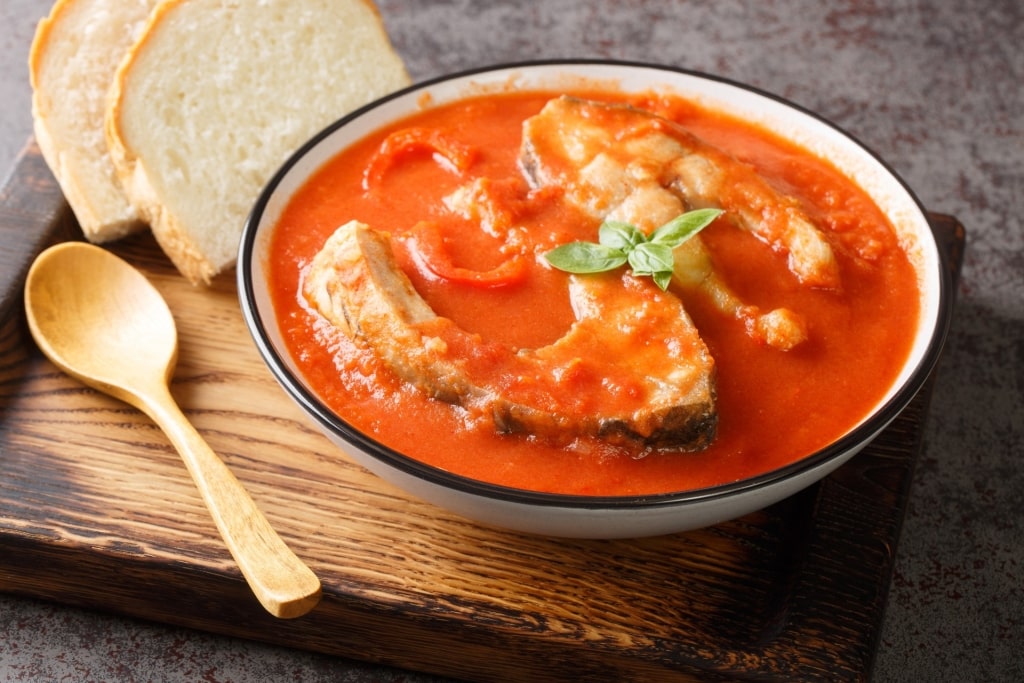
Halászlé
Although Hungary has no coastline, it is famous for this spicy fish soup made from freshwater catches such as carp, catfish, and pike. It’s a folksy recipe traditionally eaten for Christmas Eve dinner.
The flaky, tender fish is seasoned with ubiquitous hot paprika, bay leaf, onion, and peppers, then simmered in a flavorful stock. Popular in the Tisza and Danube river regions, the soup was traditionally simmered in kettles along the river banks by fishermen taking advantage of their fresh catch.
Served with toasted white bread, this fiery soup is often balanced with a crisp white wine such as riesling, or a local spritzer variant made with white wine and soda called fröccs.
Egg Noodle Dumplings, or Nokedli
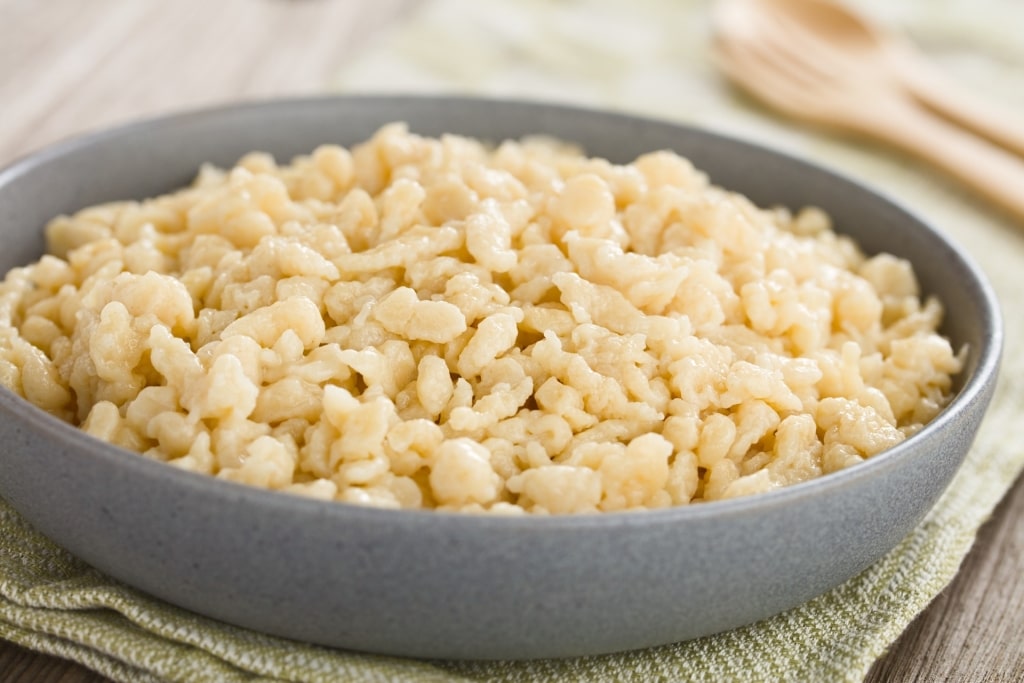
Nokedli
Though you’ll most often find them as accompaniments to meaty mains, these quintessential Hungarian noodles merit the spotlight in their own right. Rustic and surprisingly light, they are made with the simple ingredients of salt, eggs, flour, water, and vegetable oil, mixed into batter, then grated through a cheese grater or colander into their delicate form.
They are perfect on their own with butter, or coated to sponge up the rich sauces of stews, goulash, or creamy paprikash. In Budapest, the Nokedli Factory celebrates the dumpling as its star staple, and offers it with beef stew, tomato and garlic sauce, spinach cream sauce, and melted cheddar and bacon.
Stuffed Cabbage Rolls, or Töltött Káposzta
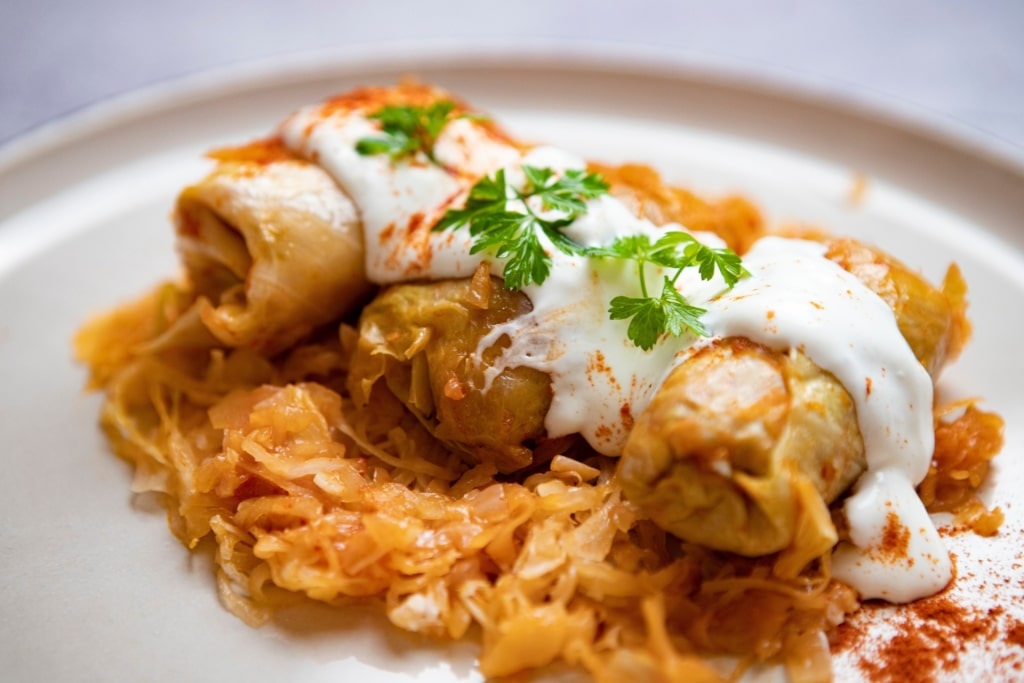
Töltött Káposzta
A winter comfort food and home-cooking classic, stuffed cabbage rolls are often found on Hungarian tables during Christmas and New Year, and are also available at many traditional restaurants. Cabbage leaves are filled with ground beef, onion, garlic, spices, and rice, then braised or baked in tomato broth for hours until fall-apart tender.
Though the recipe may sound deceptively simple, these cabbage rolls pack complex flavors: the Hungarian variation of this Eastern European classic is often made with fermented cabbage with the pickled taste of sauerkraut, and the tomato sauce can be enriched with bacon and other smoked meats.
Cucumber Salad with Sour Cream, or Uborkasaláta
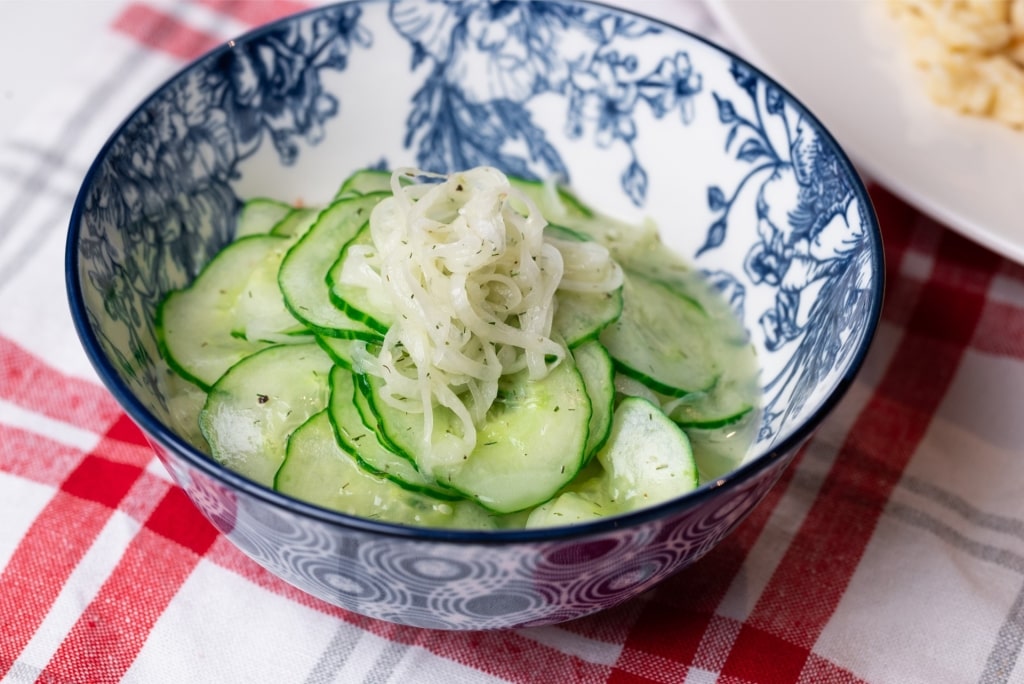
Uborkasaláta
The best meal compositions are always about balance of flavors, and this Hungarian cucumber salad is a side dish that adds freshness and zest to rich main courses. Thinly-sliced cucumbers are lightly pickled in vinegar, then mixed with sour cream and dill for a creamy, herby salad.
Even if listed in the salad section of a menu, this dish will most likely be brought out along with your entrée as an accompaniment. Offset the heaviness of a goulash or paprikash by alternating with bites of these tart cucumbers. You’ll most likely have the chef’s grandmother to thank for the recipe, which may come with a spin of crunchy onion or diced garlic, or lightened without sour cream.
Sour Cherry Soup, or Meggyleves
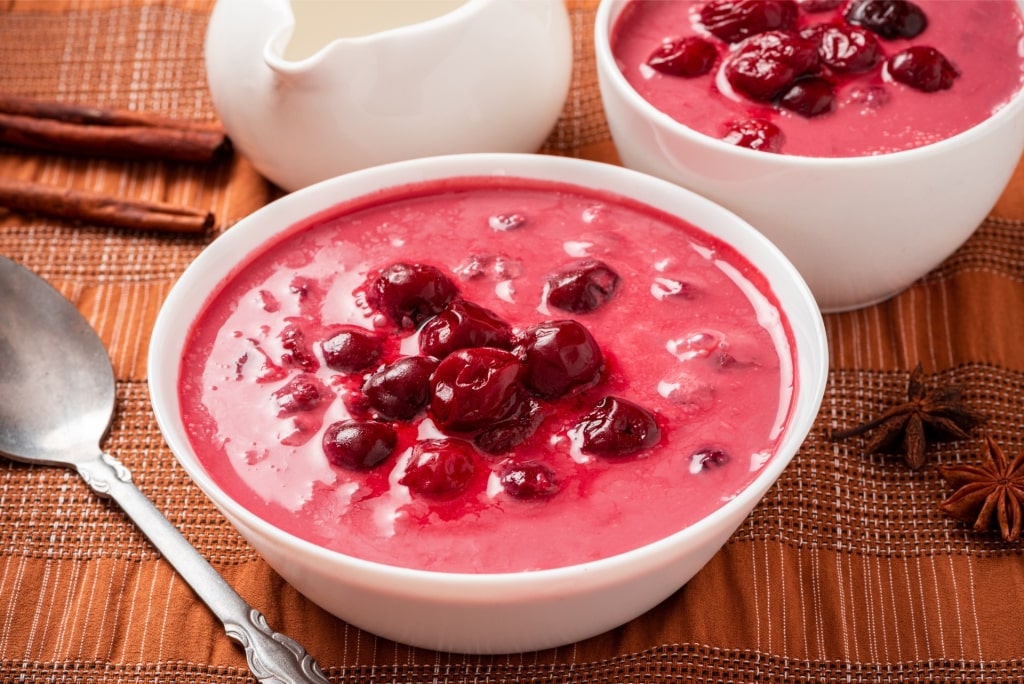
Meggyleves
Cruising down the Danube on an early summer day, what could be more refreshing than a bowl of bright pink sour cherry soup? This warm weather classic is beloved in Hungary–where the harvest of meggy, or sour cherries, is plentiful in late spring and early summer. The soup is served chilled as an appetizer, and its tartness and sweetness are enhanced by lemon, sour cream, cinnamon, and a pinch of salt.
This delicacy is an example of Eastern European cuisine fused with Central European fare, and you may find similar versions of chilled fruit soup made with other produce in season: apples, peaches, or even strawberries.
Vegetable Stew, or Főzelék
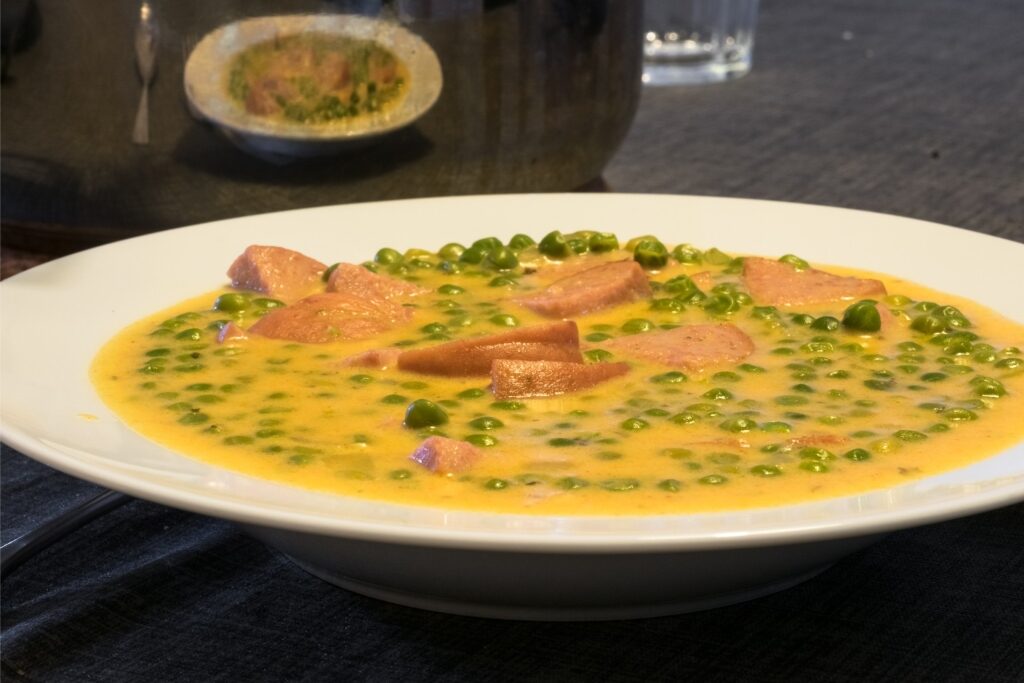
Főzelék
Fözelék roughly translates to “thick soup” and is a Hungarian vegetable stew that is made with in-season vegetables. Often, this means potatoes, split peas, yellow peas, lentils, or squash. The pottage is thickened with flour or sour cream, and can be eaten alone or topped with bacon and parsley, or a hearty ladle of pörkhölt, a popular beef and onion stew.
Popular at lunch canteens around Hungary, fözelék traces its origins to the 16th century and incorporates Germanic and Turkish influences. Vegetarian diners would be wise to ask the kitchen if the recipe uses lard, a common ingredient used to bring extra flavor to this hearty vegetable concoction.
Hungarian Garlic Meatballs, or Fasírt
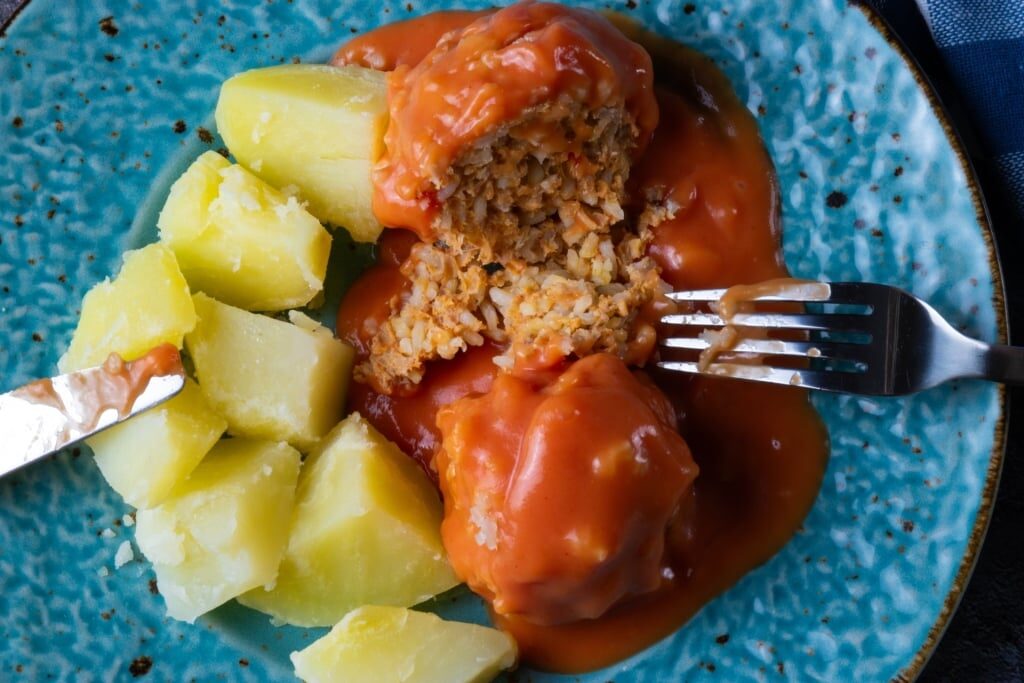
Fasírt
These meatballs or meat patties are often served as a topping to potato or vegetable pottage. Think of them as burger patties with the appearance of a falafel. Made with pork mince, soaked bread, marjoram, paprika, and garlic, the meatballs are seared or deep fried for a crispy exterior and juicy, succulent interior, and topped with minced parsley for a herby touch.
If the weather is too heavy for meatballs and mashed potatoes, fasírt also pairs well with a squash, dill, and sour cream salad, or any other fresh produce salad. But if the classic version has your heart, head to Café Kör near the St. Stephen’s Basilica in Budapest for a classic dish of fözelék and fasírt.
Kidney Bean and Barley Stew, or Sólet
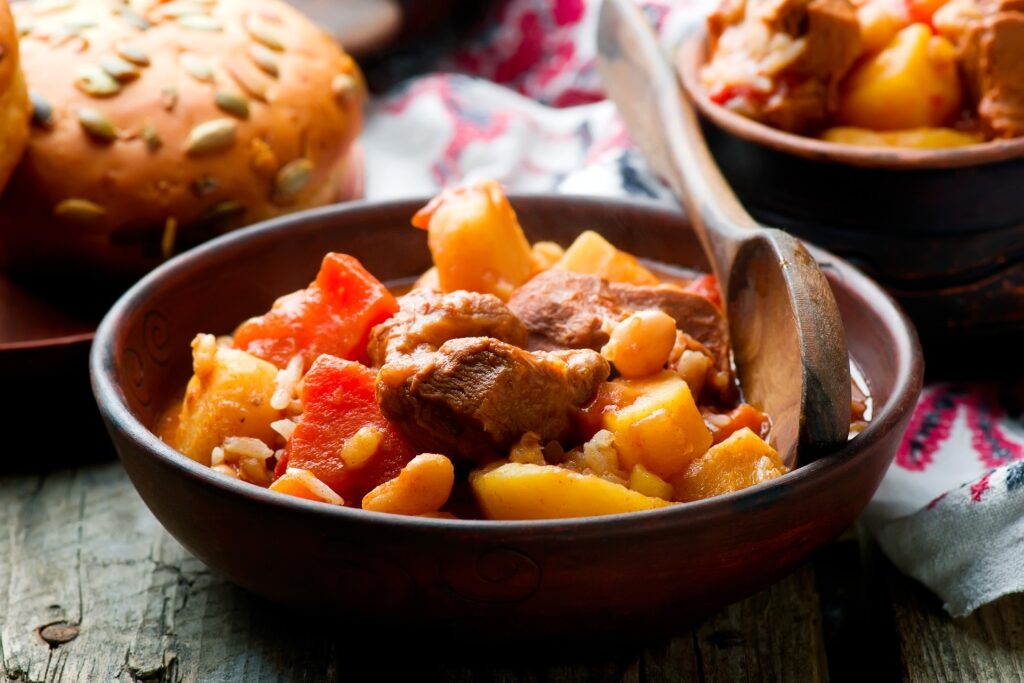
Sólet
A variant of the Jewish shabbat dish cholent, sólet is representative of the Jewish-Hungarian culinary tradition and is usually eaten on Saturday for lunch. It is a slow-cooked stew of kidney beans, barley, onion, and smoked meats such as goose or beef. The hearty stew often comes topped with a hard-boiled egg and generous hunks of meat.
In Budapest, head to Rosenstein for a beef brisket and goose neck sólet at this reputed Hungarian-Jewish restaurant with old-world charm, run by the father-son chef duo of Tibor and Róbert.
Fried Flatbread, or Lángos
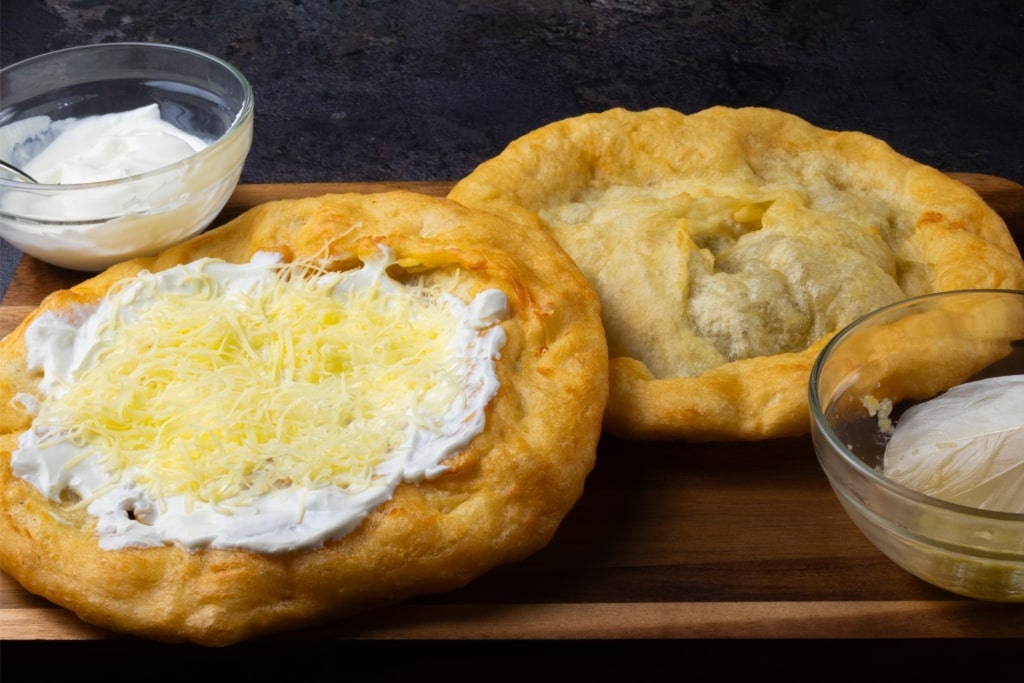
Lángos
Lángos, a popular Hungarian street food, is a fried flatbread with customizable toppings such as garlic oil, sour cream, cheese, kefir, eggs, sausage— anything you fancy available from the street cart, really. Lángos emerged from the custom of baking bread in communal ovens, and the bakers would tear off a piece of dough and save it for a fresh-out-of-the-oven breakfast in the morning.
Lángos is best eaten piping hot, with a crispy crust and a yeasty, soft interior sometimes mixed with mashed potatoes. At Karaván Street Food in Budapest, you can even sample a beef lángos burger with arugula, grilled paprika, and sheep cheese, or pork lángos burger with onion chutney.
Cottage Cheese Bundles, or Túrós Batyu
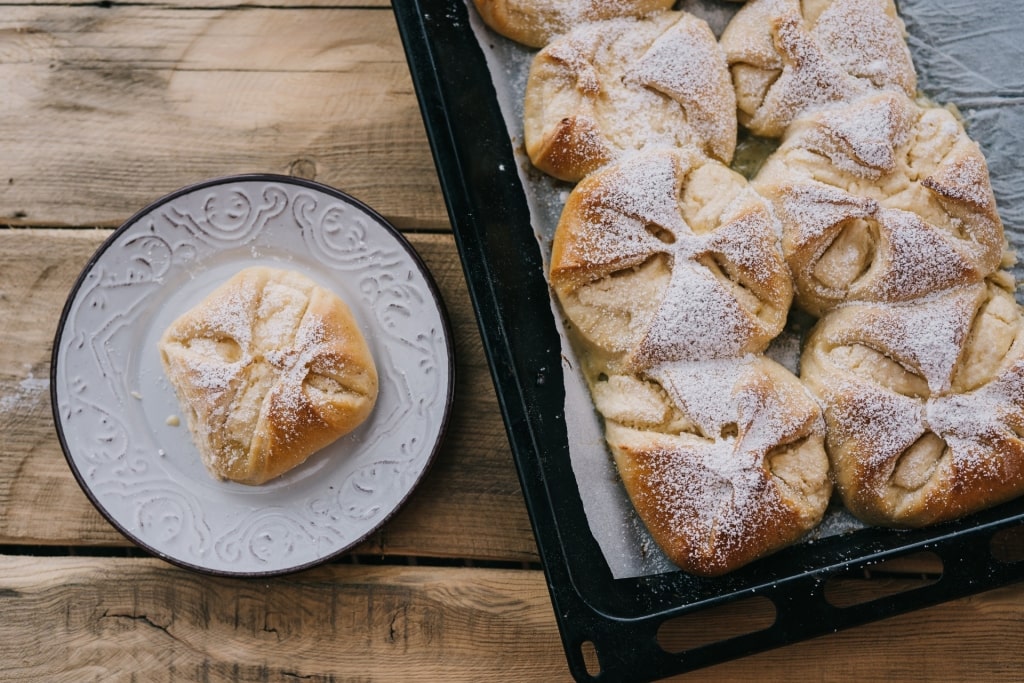
Túrós Batyu
The best Hungarian food for breakfast is arguably this staple of a small, parcel-shaped pastry filled with vanilla-infused sweet cheese curds. The cheese is mixed with egg yolk, semolina, lemon zest, raisins, or sultanas for extra flavor, then bundled and sealed with a pinch into a yeasty, fluffy dough parcel.
These pastries, traditionally made with farmer’s cheese and cow curds, are ubiquitous in Hungarian bakeries. Pick up a few to accompany your morning coffee or tea, and savor the freshness of these sugar-dusted bundles of dewy, milky cheese.
Cottage Cheese Dumplings, or Túrógombóc
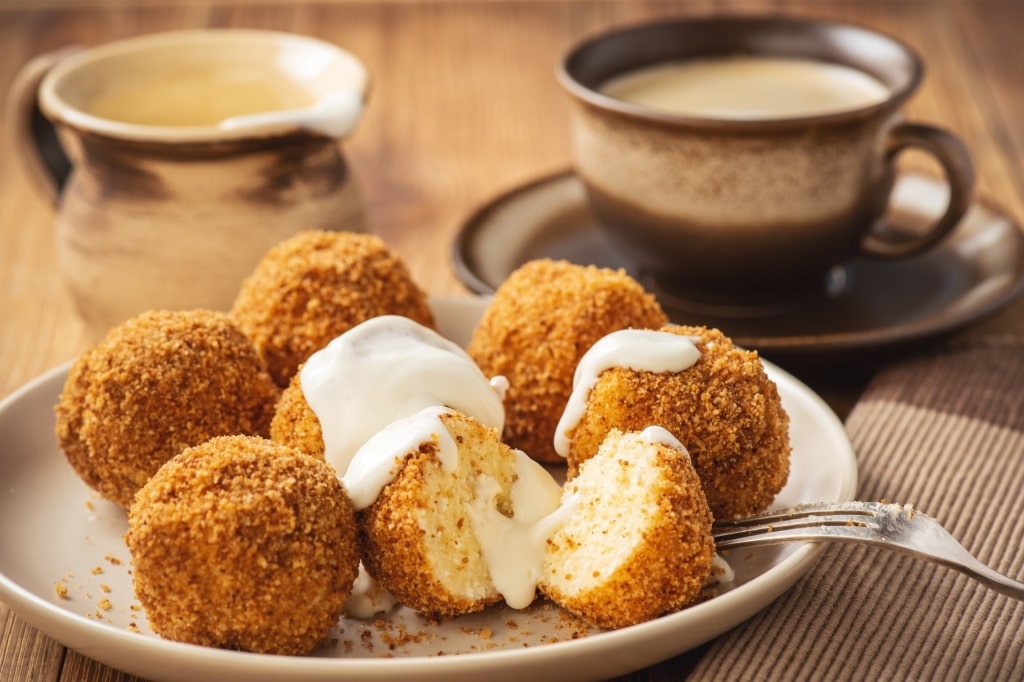
Túrógombóc
This classic dessert also spotlights farmer’s cheese—túró—as a star ingredient, as this sweet dairy product plays an important role in Hungarian cuisine. The cheese curds are smoothed into a ricotta-like texture, then blended into dough with butter, milk, eggs, and cream of wheat to form airy, round dumplings that are boiled, then rolled in breadcrumbs.
Túrógombóc is perfectly paired with a sour cherry jam, tart apricot jam, or sweetened sour cream. It is of Bohemian origin and also popular in Austria. A favorite among locals in Budapest is Gettó Gulyás.
Hungarian Crêpes, or Palacsinta
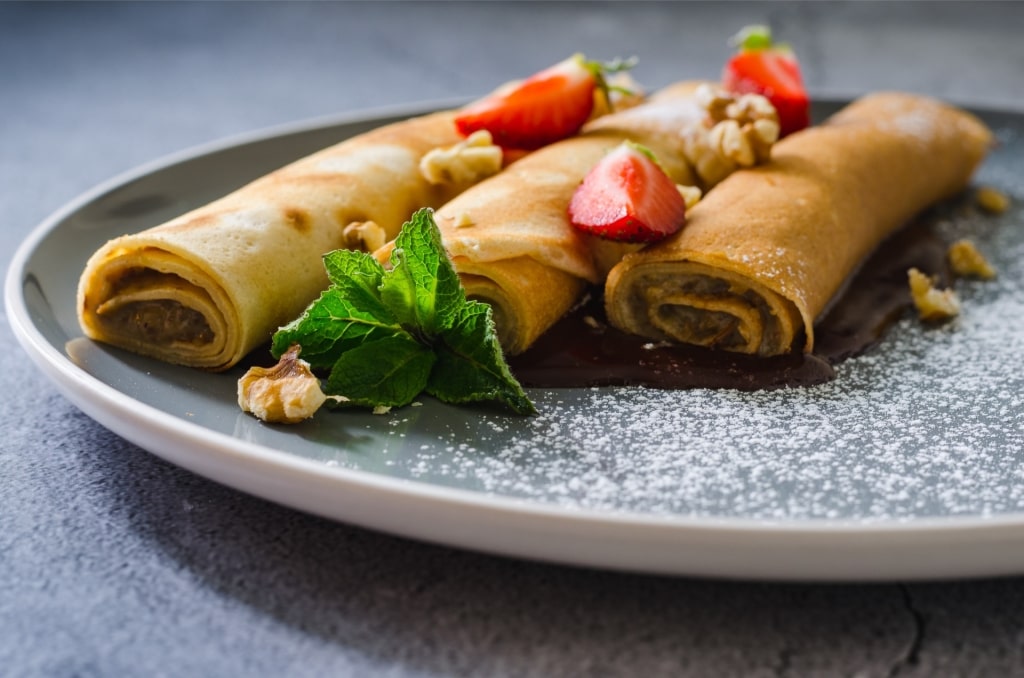
Palacsinta
These thin crêpes have a secret: they are made with milk, eggs, flour, and carbonated water that keeps them aerated and delicate. Served rolled as dessert, they can come filled with farmer’s cheese, lemon zest, and raisins, or a homemade jam like apricot or plum, or even ground walnut and almond. Savory versions come stuffed with cheese, ham, and mushrooms and can be served as a main course.
The most famous palacsinta is the crêpe served at Gundel restaurant in Budapest: it comes filled with walnut, raisins, candied orange peel, and rum, then topped with a dense chocolate sauce. Ask for it flambéed for extra effect.
Chestnut Purée, or Gesztenyepüré
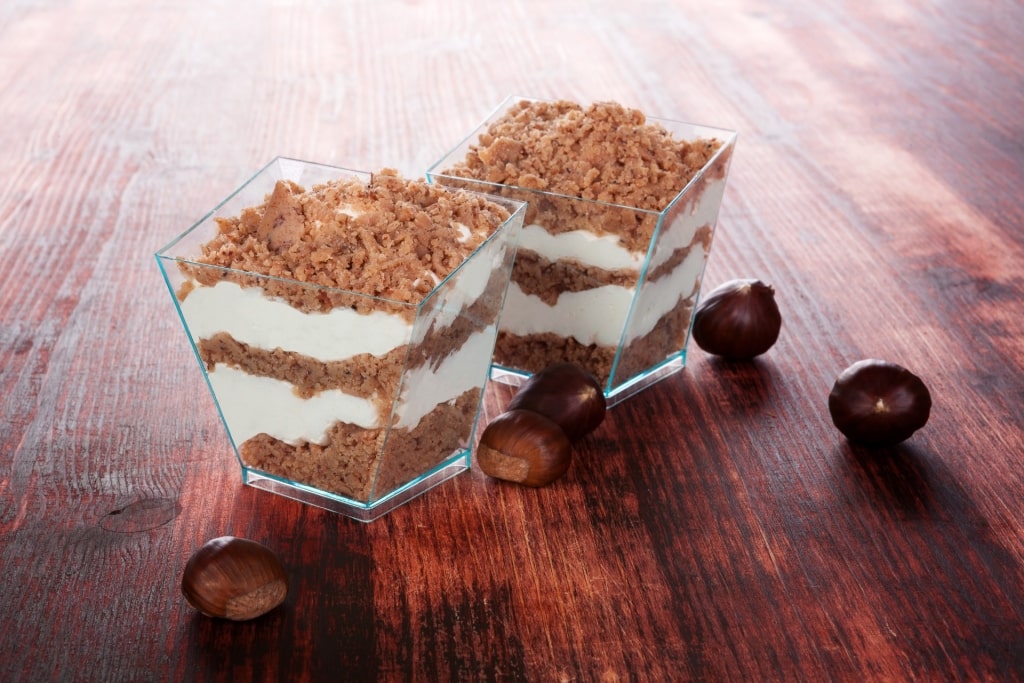
Gesztenyepüré
If you love the round, nutty richness of chestnuts, you’re in for a treat with Hungarian chestnut purée, a dessert similar to the French Mont Blanc and served under a mound of whipped cream.
Chestnuts are cooked until soft, then mixed with cream and confectioner’s sugar to form a purée, then often passed through a meat mincer or potato ricer to form spaghetti-like strands.
This chestnut dessert is best in autumn, when chestnuts are in season, but the purée is easily available year-round and even sold in bricks in supermarkets. It can be sliced and enjoyed as a snack.
Chimney Cake, or Kürtőskalács
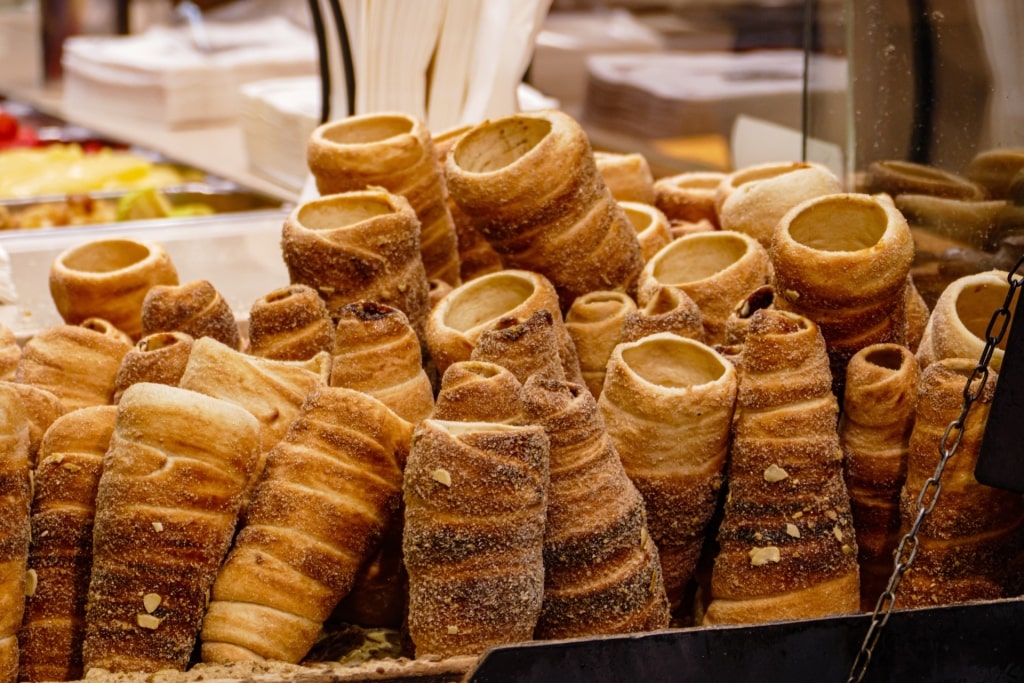
Kürtőskalács
This street food can be found roasting in kiosks at Christmas markets around Eastern and Central Europe, but has its origins in Transylvania, a Hungarian-speaking part of Romania. Hollow and shaped like a cylinder, made with a strand of pastry dough spun around a baking spit, this pastry is basted in butter and coated in granulated sugar, which forms a crispy, caramelized varnish around its exterior.
With a dusting of cinnamon and ground walnuts, this brioche-like cake can be unwound and torn into strips, perfect for sharing on a wintry city walk after watching the kürtőskalács roast over hot charcoal.
Read: The Ultimate Guide to Budapest’s Christmas Markets
Pálinka

Pálinka
Pálinka is a fruit brandy with protected designation of geographical origin that is made in Hungary and parts of Austria, most commonly with sour plums or apricots. The pale golden spirit, floral and fruity when young, becomes darker-hued with age and takes on complex notes that pair well with coffee or cigars.
Similar in flavor to Italian grappa or French eau de vie, Pálinka was first distilled with rosemary in the 14th century to cure Hungarian royals of arthritis. Now it is popular as an aperitif and digestif that can be home-brewed. It’s served at room temperature in a tulip-shaped glass.
Unicum

Unicum Photo by Sophie on Flickr, licensed under CC BY 2.0
The Hungarian herbal liqueur Unicum resembles amaro, and lore has it that when imperial physician Dr. Zwack presented the concoction to Holy Roman Emperor Joseph II in 1790, the latter exclaimed: “This is unique!”—giving the liquor its name. Inky, thick, and very bitter, the drink is made from a secret recipe of over 40 herbs that have been guarded by the Zwack family for generations.
Wash down a meal with a Unicum digestif sipped from a shot glass, or savor it at one of the many trendy cocktail bars in Budapest as a Hungarian riff on campari or fernet-based cocktails.

Budapest
Try some of these delicious Hungarian dishes for yourself. Browse Celebrity’s river cruises and plan your gourmet adventure.