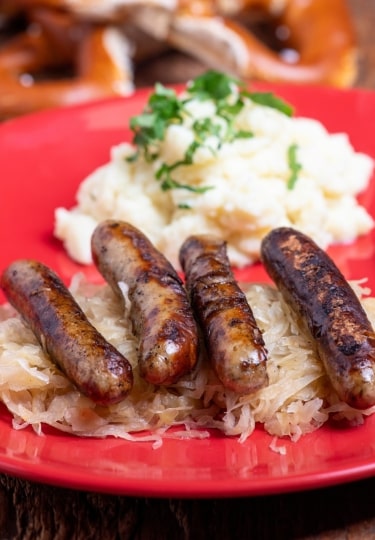
German Christmas market food is the best part of the Christmas market season, hands down. Christmas markets follow a traditional recipe, which has—as is the nature of tourism—become quite standardized in terms of ingredients over time. Christmas market food, however, is the secret sauce that sets cities and villages apart from each other. Dishes range greatly between regions and, ultimately, are what create unique experiences.
I’m guessing you know about bratwurst, pretzels, and gingerbread—although real German gingerbread is very different from the gingerbread I grew up with in Canada. These are some of the Christmas market foods you might not have heard about but should definitely try.
Printen
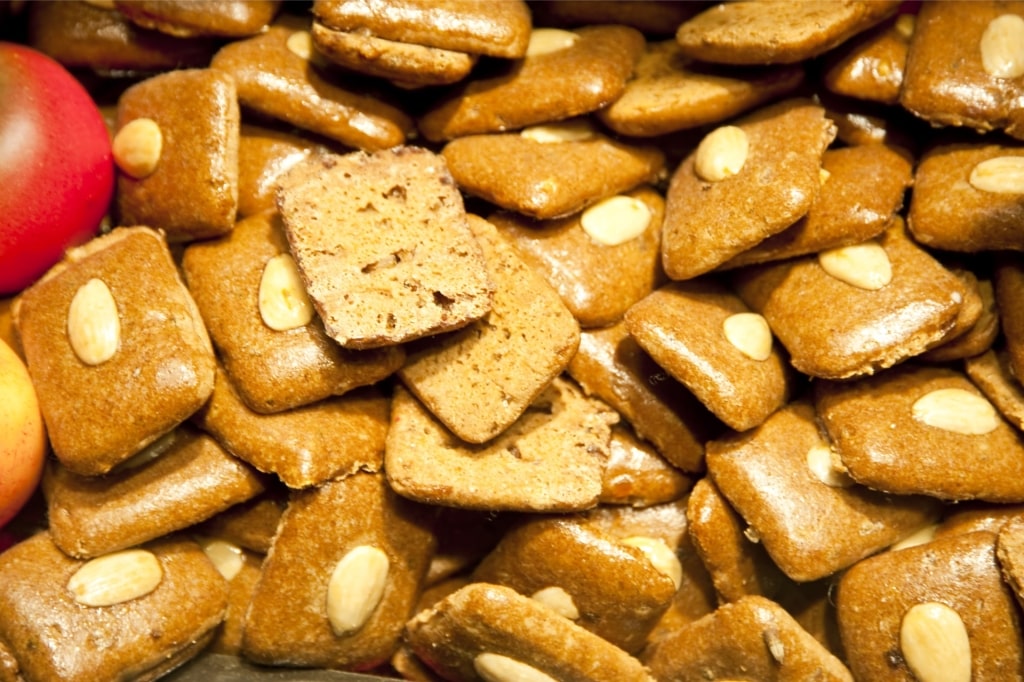
Printen
The Christmas market food in Aachen, close to the borders of the Netherlands and Belgium, and around an hour’s drive from the German city of Cologne, is very much influenced by regional neighbors. You’ll find dishes from both countries at the market here, but one seasonal food tradition that’s very much Aachen’s own is Printen.
Printen are like gingerbread cookies, but with a special local twist. Originating in the 15th century, Aachen’s traditional baked specialty is firm and brittle with a caramelized sweetness. The distinct texture of Printen comes from being baked with syrup from imported sugar beets, as honey was scarce at the time.
Overall, Printen are denser, crunchier, and less sweet than the gingerbread you might find elsewhere across Germany or even Europe. Exotic spices such as anise, cinnamon, and cloves—imported via Belgium—define their flavor. These days, modern variations are covered in nuts and a chocolate coating.
Nürnberger Lebkuchen
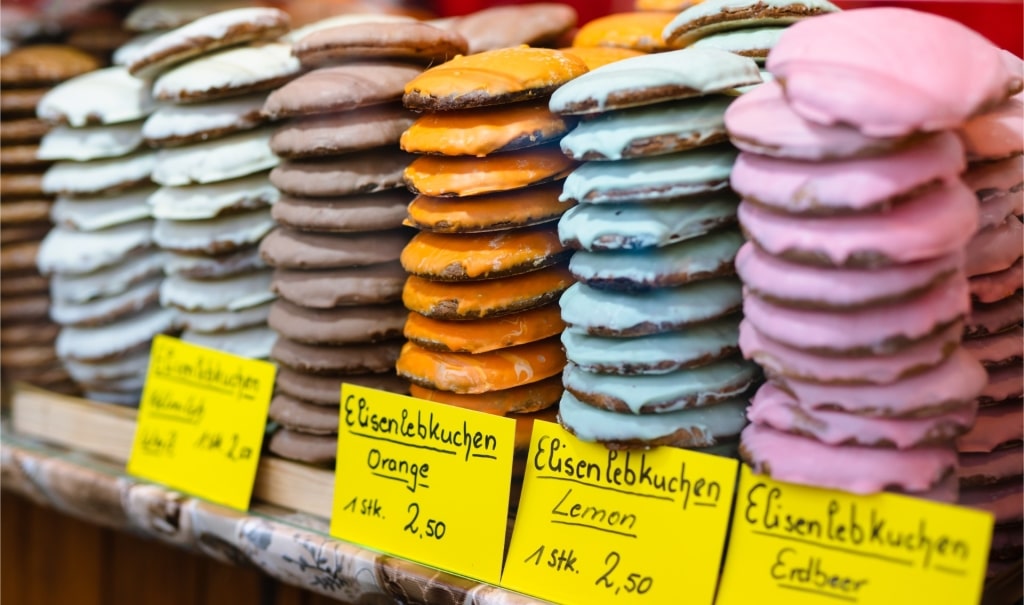
Nürnberger Lebkuchen
The Lebkuchen, or gingerbread, you’ll find in Nuremberg’s famous Christkindlesmarkt—some say Germany’s most iconic Christmas market—is also unique to the region. In Franconia, a region with one of Germany’s richest breadmaking and baking traditions, gingerbread is soft, moist, and cake-like.
This traditional taste emerged during the 14th century when Nuremberg bakers sourced products through Venice, many of which weren’t always available across what is today’s Germany, including cardamom, ginger, nutmeg, and honey.
Nürnberger Lebkuchen also goes heavy on ground almonds and hazelnuts. The delicacy’s recipe can be partly attributed to monks who had beehives and, of course, plenty of time and concentration to experiment with such ingredients. Nürnberger Lebkuchen is often baked on a thin wafer, which prevents it from sticking, and is glazed with sugar or chocolate as a final touch.
Nürnberger Rostbratwurst

Nürnberger Rostbratwurst
Another staple of the Christkindlesmarkt and other Christmas markets in Nuremberg is the Nürnberger Rostbratwurst. These finger-sized sausages are petite compared to other German Bratwurst, and are partially boiled and grilled over open flames.
Usually, they’re served three at a time in a crusty roll with mustard—locals call it a “Drei im Weckla.” A warm, smoky flavor comes from the grilling, but also from some special ingredients, including marjoram, which you won’t find in Bratwurst elsewhere in Germany.
Reibekuchen

Reibekuchen
In Cologne, the quintessential Christmas market dish is Kartoffelpuffer, or potato pancakes. The dish is uniquely known in the Cathedral City as Reibekuchen but will also appear on market boards as Rievkooche, which is the name in the local Kölsch dialect.
Thin, fried golden, and round, Reibekuchen are traditionally crispier and flatter than the Kartoffelpuffer of Central and Southern Germany. The difference is all in the name; Kartoffelpuffer translates to something like “potato cushion,” while the translation of Reibekuchen is “grated cake.”
This Rhineland delicacy, popularized by farm laborers during times of overflowing potato harvests as a quick, on-the-go snack, is, of course, perfect for the strolling atmosphere of the Christmas markets. Reibekuchen is served with a side of applesauce, which is also unique to the region.
Kartoffelklöße
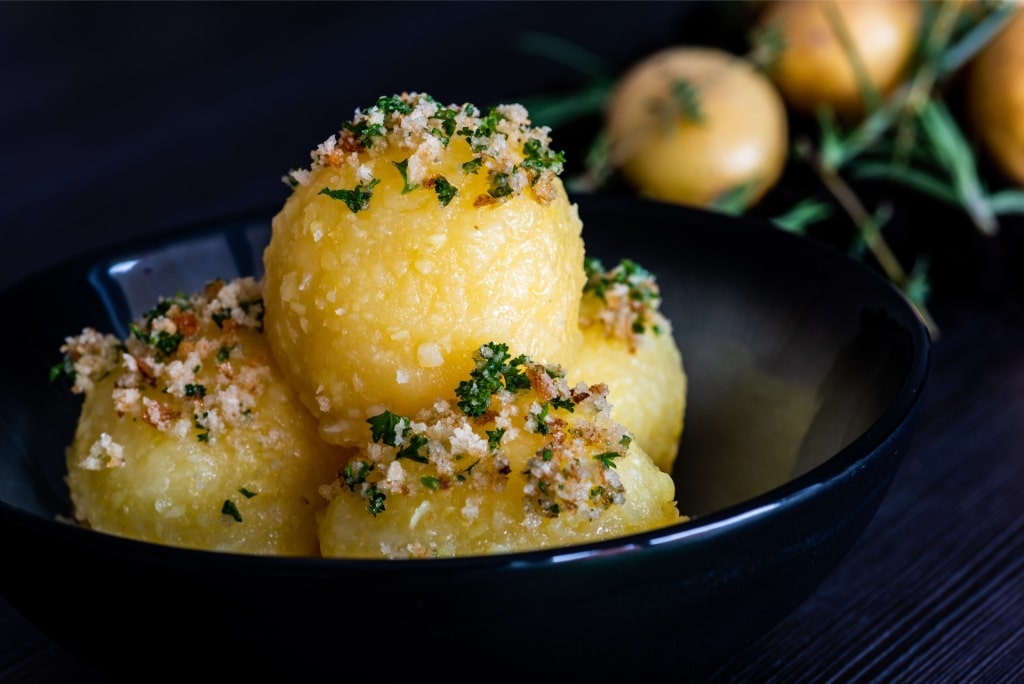
Kartoffelklöße
Kartoffelklöße, or potato dumplings, are a German Christmas market food you’ll find around Lower Bavaria, especially in Straubing and its surrounding villages. They grew popular over centuries as a beloved, hearty dish for Sunday feasts through which rural Catholic families could stretch sauces, gravies, and roasts on a dime.
Lower Bavarian dumplings are often made with a mix of raw and cooked potatoes, giving them a uniquely chewy, slightly sticky texture. At Christmas markets, you’ll see them prepared on special wooden boards uniquely developed in the region for this recipe, helping to press and shape them more easily.

Kartoffelklöße
Soft and airy, as opposed to the traditional doughiness you might expect from a dumpling, they’re perfect for soaking up rich sauces.
In Lower Bavaria, you might find Christmas Marktwirtshäuser—tiny, rustic restaurants built inside of Christmas markets for sit-down meals— pairing them with Gänsebraten. Another possible pairing is roast goose, or maybe roast pork and duck, usually with a side of red cabbage and a boatload of gravy.
Semmelknödel
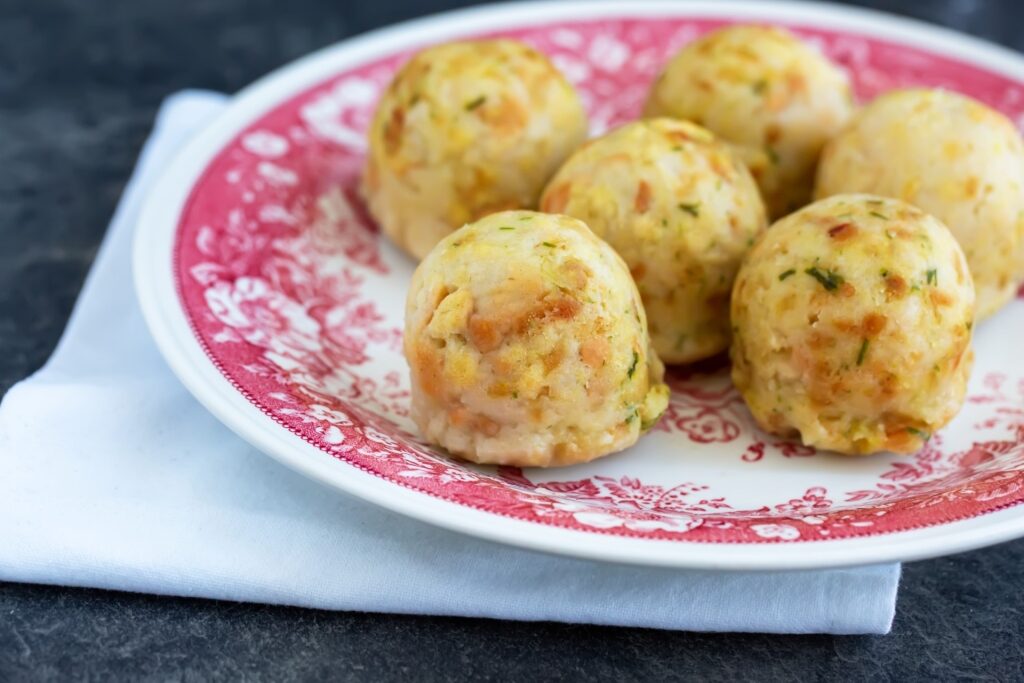
Semmelknödel
Meanwhile, in Munich and Upper Bavaria more broadly, the dumpling specialty is Semmelknödel, or bread dumplings. Potato dumplings appear on Christmas market vendors’ menus, too, but bread dumplings became a mainstay when Upper Bavaria didn’t have potato crops but abundant grain farming. You might even call them an original “zero-waste” dish—Semmelknödel were made using stale rolls soaked in milk, then mixed with eggs and onions, to avoid food waste.
Like Lower Bavaria’s potato dumplings, Semmelknödel are a class act in sopping up roast dishes swimming in sauce. You’ll also find bread dumplings are common in regional Christmas markets in Regensburg and around the Upper Palatinate and Baden-Württemberg villages such as Breisach.
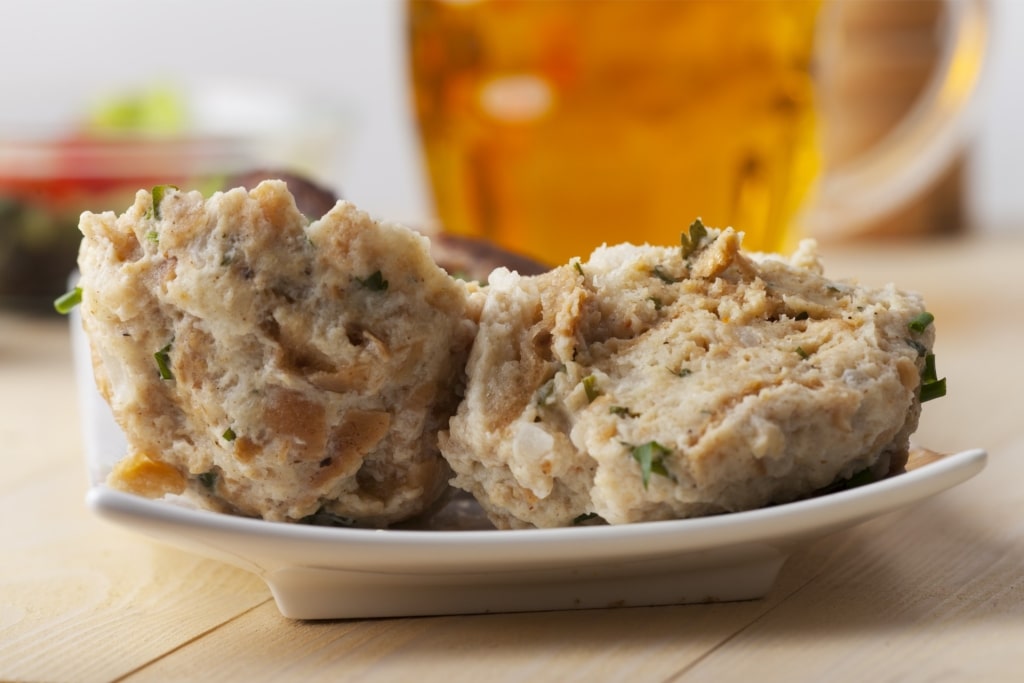
Semmelknödel
Upper Bavaria also has a sweet version for dessert. Zwetschgenknödel, or plum dumplings, are served with wooden picks in Alpine or Upper Bavarian areas. They’re made from a dough base of potatoes, quark, or curd cheese, and bread, sometimes sweetened with sugar, raisins, and marzipan.
Gooey reservoirs of fruit, such as plums, cherries, or apples, ooze out of the center as you dig in. Before serving, though, the dessert dumplings are boiled or steamed, rolled in buttered breadcrumbs, and served with sugar, cinnamon, or in a pool of vanilla sauce.
Germknödel
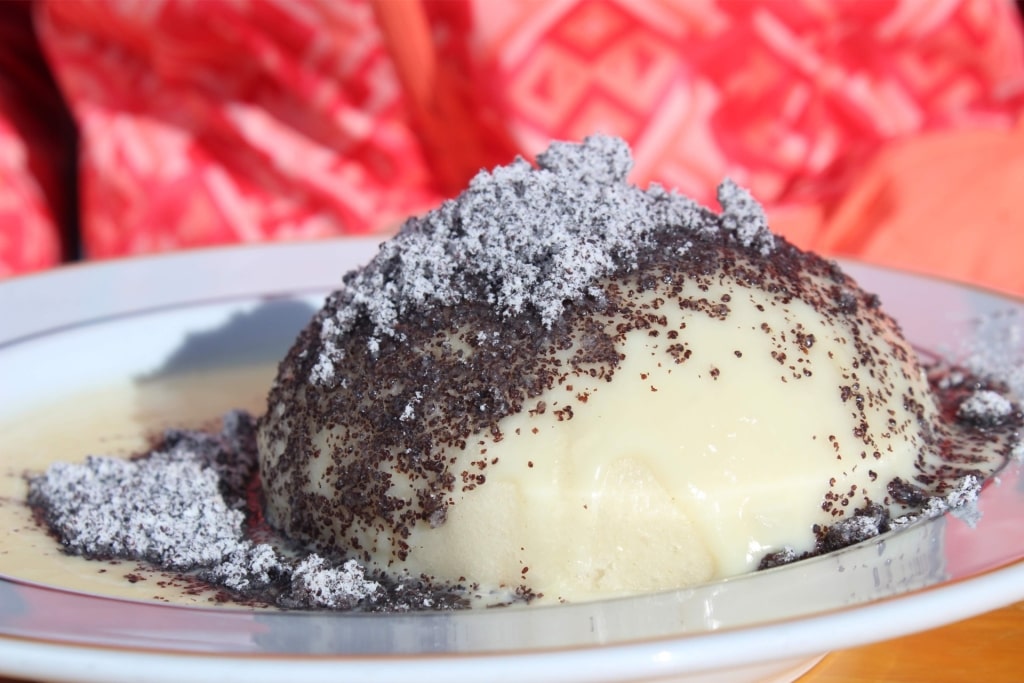
Germknödel
Wait, there’s one more dumpling—and it might even be the best one. Germknödel is another dessert version, also popular in Upper Bavaria and around the Alpine regions. In this one, yeast and steam are the star factors.
The fluffy yeast-based dumplings, steamed for a soft, airy texture, are reminiscent of bao buns and other Asian yeast-leavened buns you might find at dim sum or a modern market hall. Traditionally, Germknödel is filled with spiced plum jam and served warm, topped with melted butter—or, even better, vanilla sauce—and a mixture of powdered sugar and ground poppy seeds called Mohn-Zucker.
Kaiserschmarrn

Kaiserschmarrn
A classic of Après-Ski mountain huts and Munich’s legendary brewhouses, Kaiserschmarrn plays a big role in Bavarian Christmas markets, too. The dessert is a fluffy pancake, shredded and griddled in a pan, then sprinkled with powdered sugar, often served with plum compote or apple sauce. Sometimes, raisins are involved, too.
Dating back to the Austro-Hungarian Empire in the 19th century, it’s named after the Kaiser Emperor Franz Joseph I of Austria, whose sweet tooth regularly craved this treat.
Springerle and Other Cookies
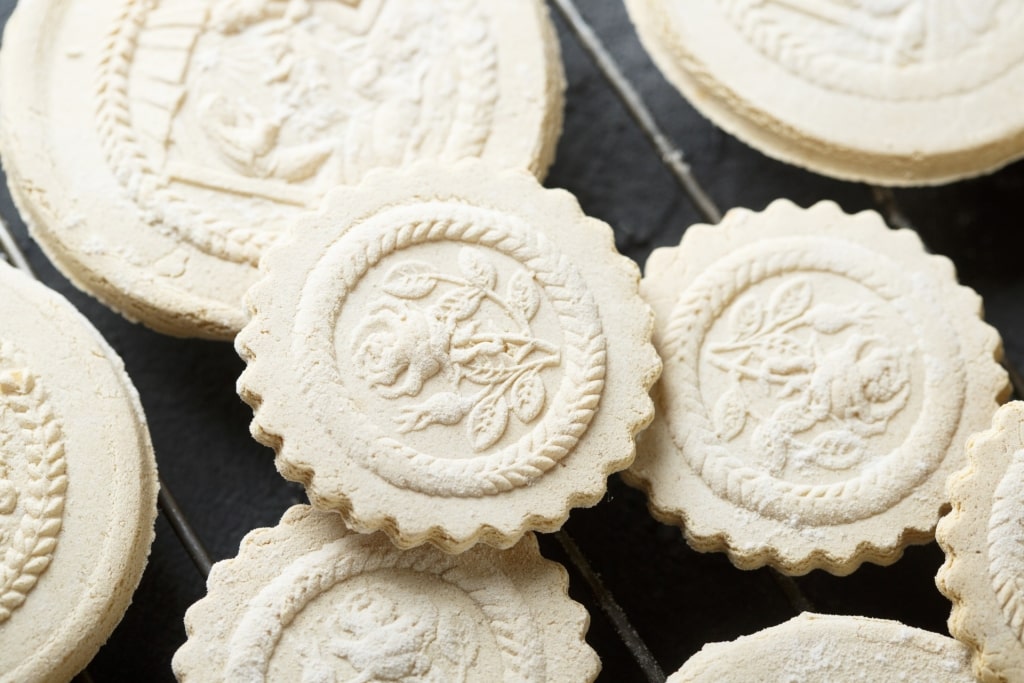
Springerle
Germany’s Christmas cookies are different from the soft sugar cookies you may have grown up with. There are endless varieties, but they’re all pretty hard and crunchy.
You’ll find Plätzchen at Christmas markets across Germany, most likely presented in presealed bags from delicatessen vendors rather than from food vendors. The best Plätzchen can be found in southern Germany, where there’s a specific specialty of them known as Springerle.

Rolling pin
Springerle equates to tiny pieces of baked art, pressed with intricately carved wooden molds of traditional motifs such as flowers, animals, and saints. Sometimes, the molds are also carved into a specialty rolling pin. Artisan molds are becoming a rarity, and in this part of Germany, they’re even passed down as family heirlooms.
Springerle are made from anise-flavored dough—a simple recipe of anise seeds, flour, baking powder, sugar, eggs, and vanilla—which is then pressed with the mold or carved rolling pin. The cookies are left to dry overnight, which preserves the patterns. Swabia is the true heartland of Springerle, though you might also find them at Christmas markets in rural Baden-Württemberg and Bavaria.

Zimtsterne
Other popular cookies are Zimtsterne, or “cinnamon stars”. These are made with ground almonds and often topped with a white meringue glaze. Vanilla Kipferl, meanwhile, are coconut macaroons or crescent-shaped “vanilla peaks” made with ground almonds or hazelnuts and dusted with vanilla sugar.
Sauerbraten
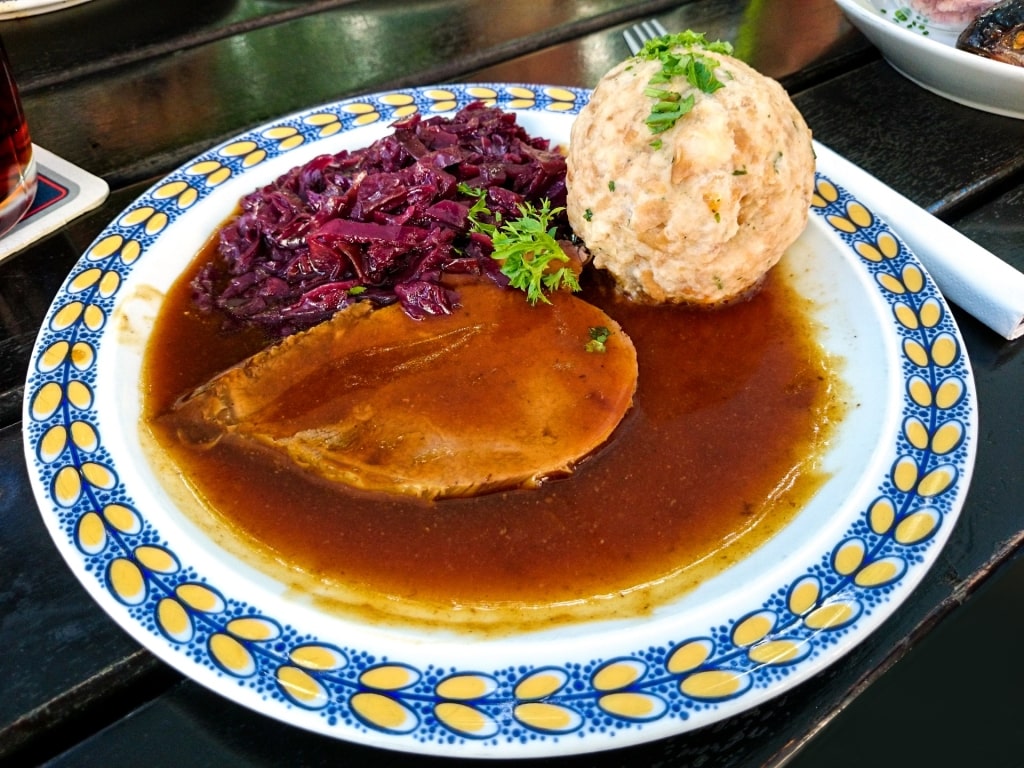
Sauerbraten
Germany’s vinegar-based pot roast Sauerbraten—widely regarded as Germany’s national dish—is popular at the restaurants in Christmas markets. Where you need to try Sauerbraten, though, is in the Rheinland, where the dish supposedly originated.
Christmas markets in Cologne, Koblenz, and Aachen, as well as villages along the Rhine, claim Sauerbraten as a local highlight.
Traditionally, the meat is soaked in a marinade of red wine vinegar, spices, and aromatics for a few hours or as long as a week. The result is a tender roast that braises up perfectly and keeps its sauce. Allegedly, the recipe emerged in the ninth century as Charlemagne’s favorite meal.
FAQs
What is the most popular German Christmas food?

Bratwurst
German Bratwurst sausages are probably the most widely found, but how they’re made and served varies widely from region to region. Spätzle, or squiggly egg noodles heaped in melted cheese, and Raclette—semi-hard cheese melted onto potatoes and rye bread—are traditionally southern German dishes. But these have become popular in Christmas markets nationwide, too.
What German desserts can I find at Christmas markets?

Lebkuchen
Lebkuchen, or gingerbread, is probably the most widely found Christmas market dessert across Germany, but its texture and flavor vastly vary from region to region. Candied almonds, chestnuts, marzipan, and diverse Plätzchen Christmas cookies are also market staples.
What German drinks can I find at Christmas markets?

Glühwein
Glühwein, hot mulled red wine infused with spices, is the primary drink at German Christmas markets. Kinderpunsch, or children’s punch, is a non-alcoholic version usually made with apple juice and the same spices as Glühwein, such as cinnamon, cloves, star anise, and sometimes orange peel.
Glühwein is always made with red wine, except in the Rhine Valley, where local Riesling vineyards are obviously the choice for mulled wine. Along the Rhine, drinking Glühwein in villages like Rüdesheim is a particularly special, authentic experience.
Feuerzangenbowle, mulled wine in a special glass where a rum-soaked sugar cube is set ablaze on top and drips into the mulled wine, is a special version that amps up the German Christmas spirit.

Mainz
Go on a festive tasting adventure on one of Celebrity’s river cruises to Germany. Browse itineraries and plan your dream vacation.