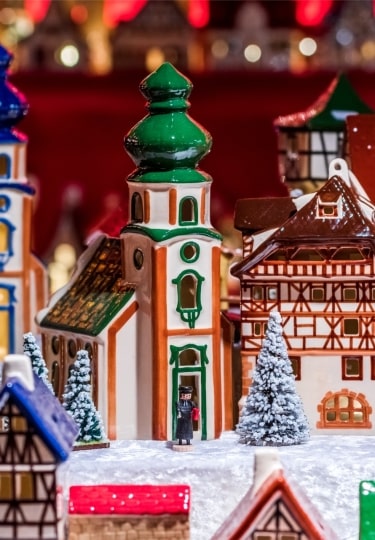
Nürnberger Christkindlesmarkt, literally translated to “Christ Child Market” but more commonly called Nuremberg Christmas Market, is one of Germany’s most magical, joyful, and significant festive season events. It’s no small achievement for the nation that invented Christmas markets.
Established around the 16th century, this is also one of the oldest. However, like many other holiday markets in Germany, its roots predate the Christmas markets we know today, evolving from the more traditional medieval winter fairs.
While many of Germany’s other cities host numerous Weihnachtsmärkte—usually named Christkindlmarkt in the south—Nuremberg Christmas Market focuses on quality over quantity. The principal market spreads its festive cheer over the Hauptmarkt, or Main Market Square, and two additional and enchanting offshoots, the International and Children’s Markets.
Attractions
Christkindlesmarkt
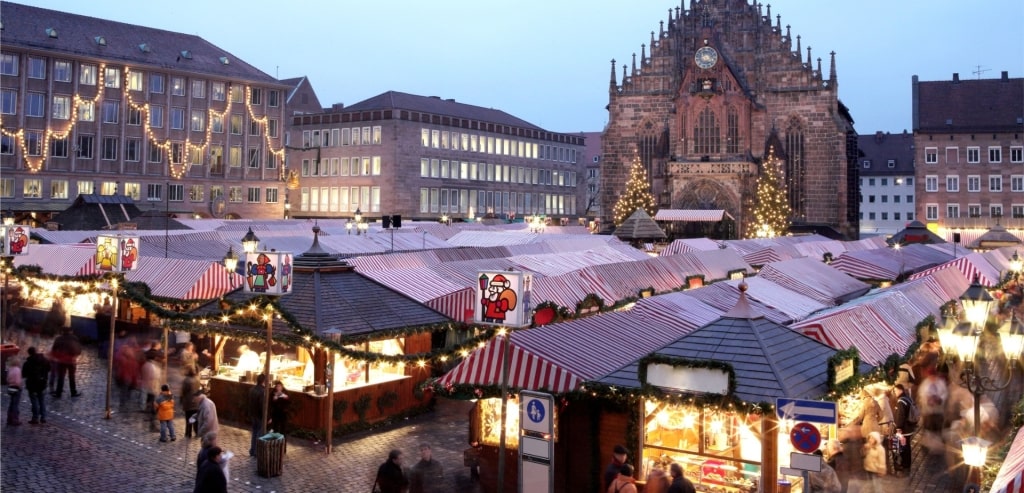
Christkindlesmarkt
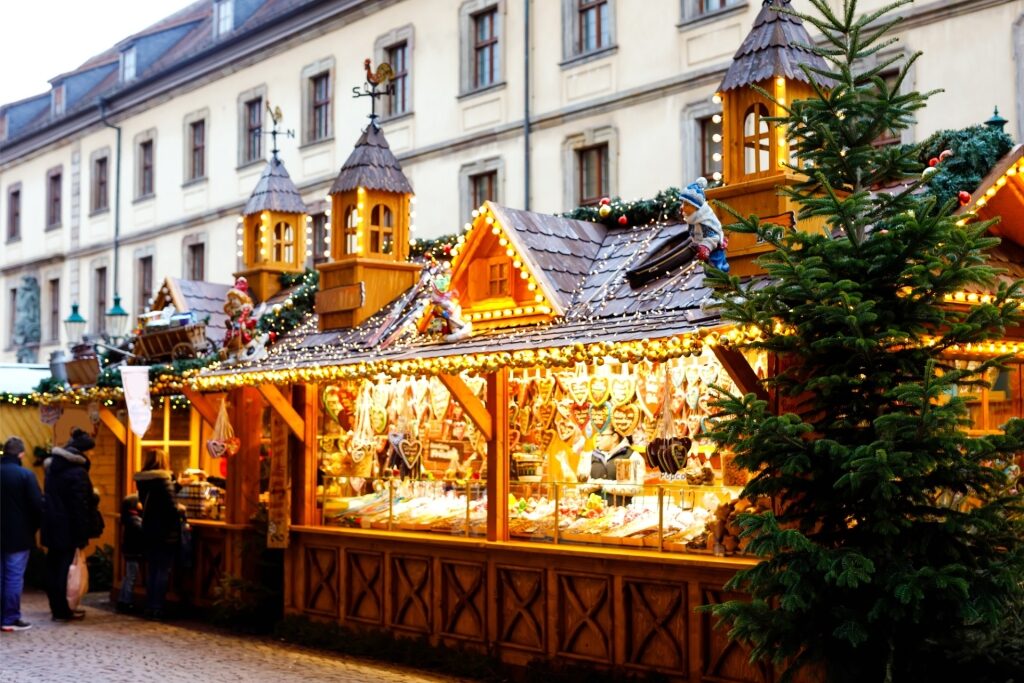
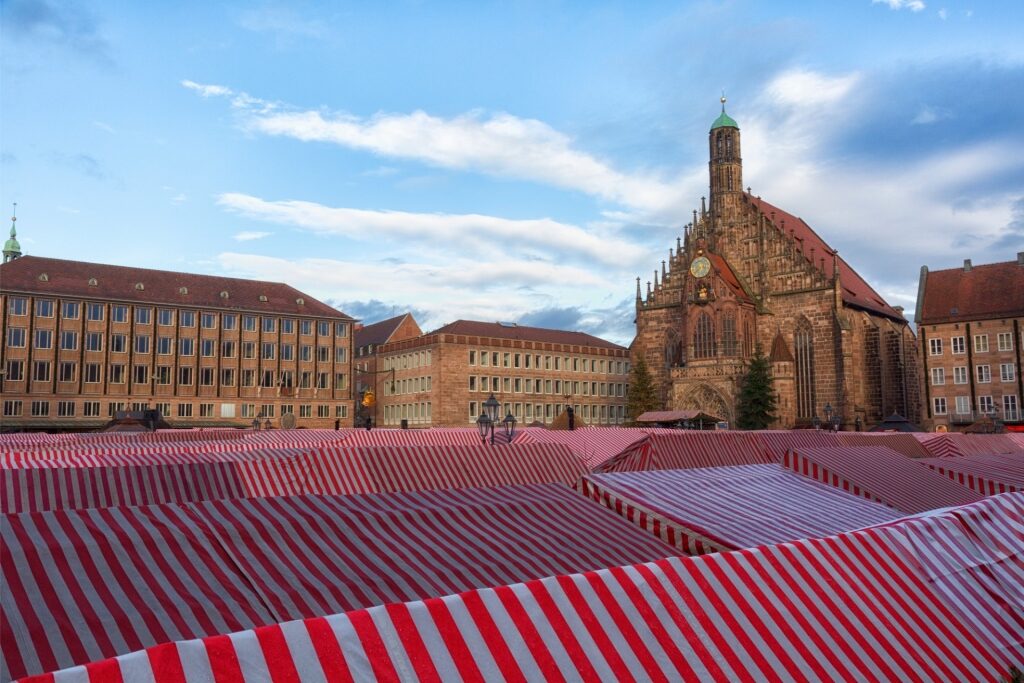
With over 160 wooden stalls topped with thatched or candy-cane-striped roofs, twinkling Christmas trees, and golden-hued lights, Nuremberg Christmas Market on Hauptmarkt is a Santa-ready spectacle.
The first mention of Nuremberg’s Advent markets dates back to 1530. However, an inscribed box from 1628 is the earliest proper documentation of a more formal Christkindlesmarkt in this location. Over the centuries, the market has found other temporary homes before returning to Hauptmarkt in 1933—and what a home it is.
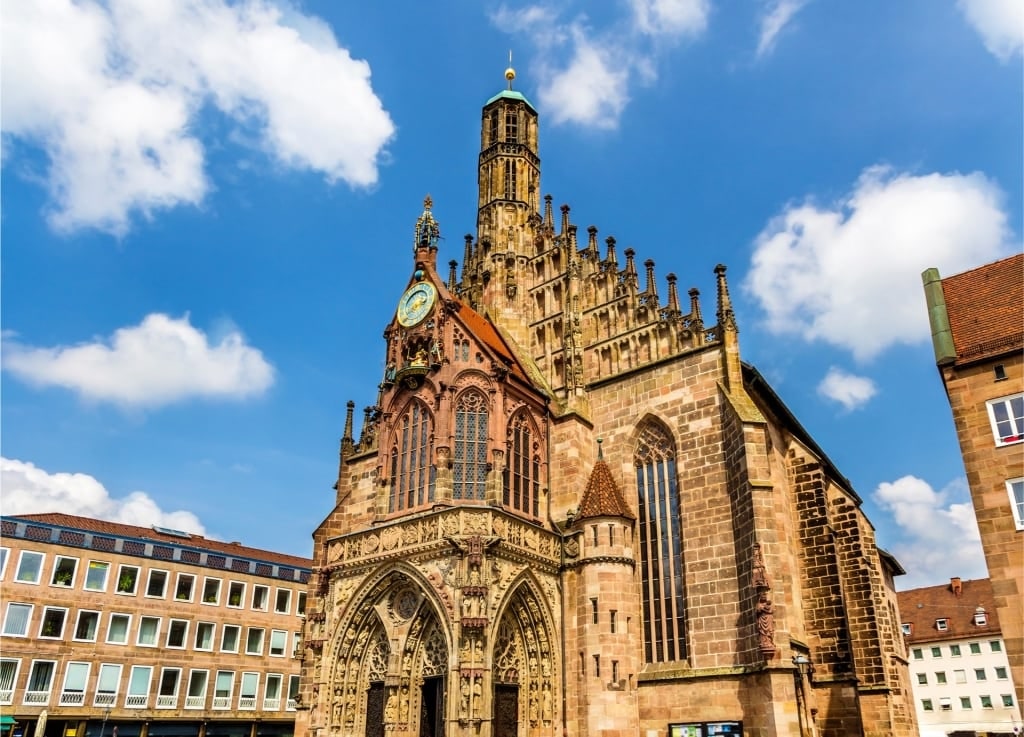
Frauenkirche
Adding to the atmosphere is the impressive backdrop of the reconstructed Frauenkirche, or Church of Our Lady, first built in the 14th century, and the Schöner Brunnen, or Beautiful Fountain. This Gothic spire-like German landmark is surrounded by booths every Christmas.
The Sister Cities’ Market
Paying homage to Nuremberg’s strong international trade links since the Middle Ages, and founded following the Second World War, the Market of the Sister Cities—located on Rathausplatz—welcomes merchants from Nuremberg’s twin cities.
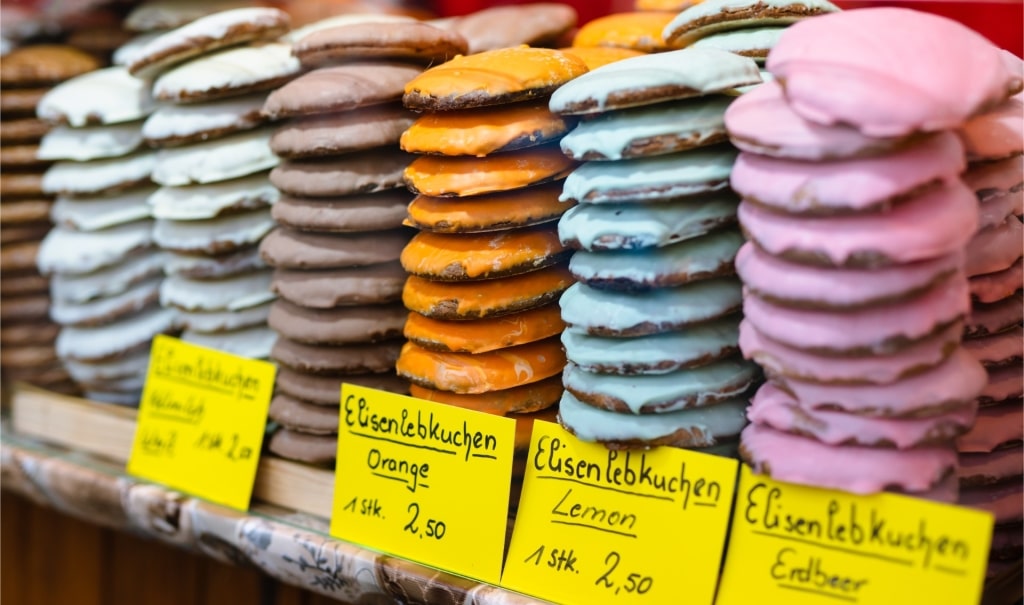
Lebkuchen
Here, you’ll find international gifts and festive foods from cities as diverse as Aného in Togo, San Carlos in Nicaragua, and Kharkiv in Ukraine. European Advent traditions are also well represented, with stalls from the Czech Republic, France, Scotland, and Italy all taking part.
Whether you wish to sample an Alpine mulled wine or an Atlantan hot apple cider, or pick up a handicraft present from Shenzhen or Skopje, it’s hard not to be fascinated by seeing so many global festive traditions on display concurrently.
The Kinderweihnacht
If you’re visiting the Nuremberg Christmas Market with kids or teens, don’t miss the Kinderweihnacht, or Children’s Christmas Market, on Hans-Sachs-Platz, just a few minutes east of Christkindlesmarkt.
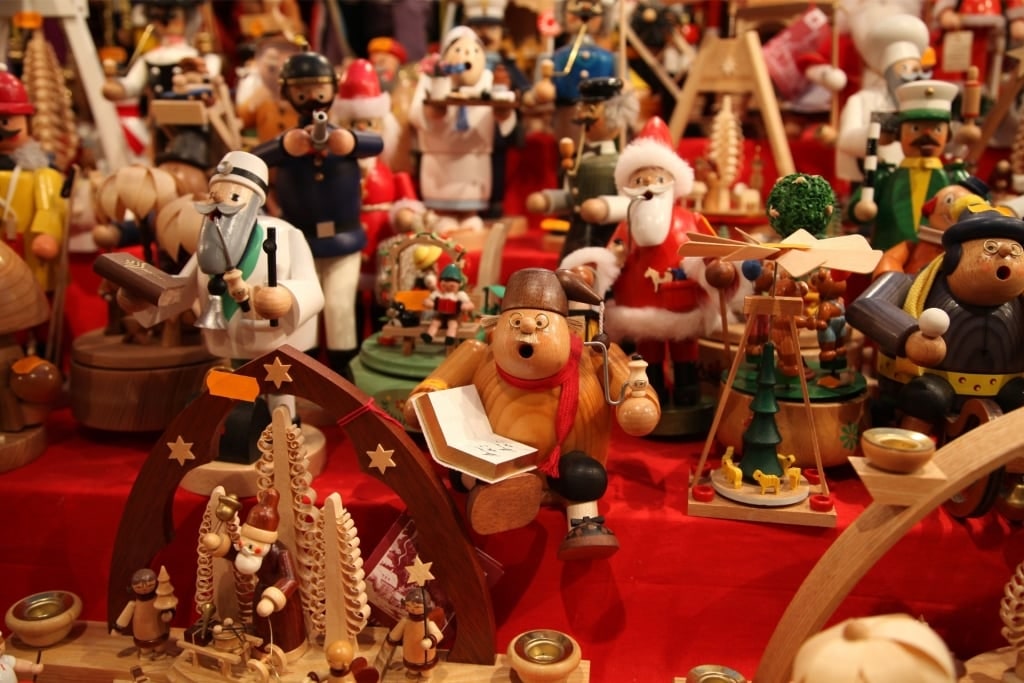
Christmas toys
Alongside kid-friendly stalls selling toys and gifts, there’s plenty to entertain. From a mini Ferris Wheel and a vintage merry-go-round to cookie decorating and candle-making workshops, the Kinderweihnacht caters to all ages. There’s even a daily entertainment schedule, including events and storybook readings in English.
The World’s Largest Feuerzangenbowle
One of Nuremberg Christmas Markets’ unique claims to fame is being home to the world’s largest Feuerzangenbowle, a giant cauldron used to prepare an alcoholic, festive punch.
Located on the riverside in the fittingly-named Feuerzangenbowle Village, Nuremberg’s Feuerzangenbowle, literally translated to mean “fire tongs punch”, can hold 9,000 liters of punch and stands high above its booth.
An interesting alternative to Glühwein, or mulled wine, the punch mixes red wine with rum, spices, and citrus zest, and, as the name suggests, involves tongs that support a rum-flaming sugar loaf, which drips its caramelized juices into the beverage.
The Handwerkerhof
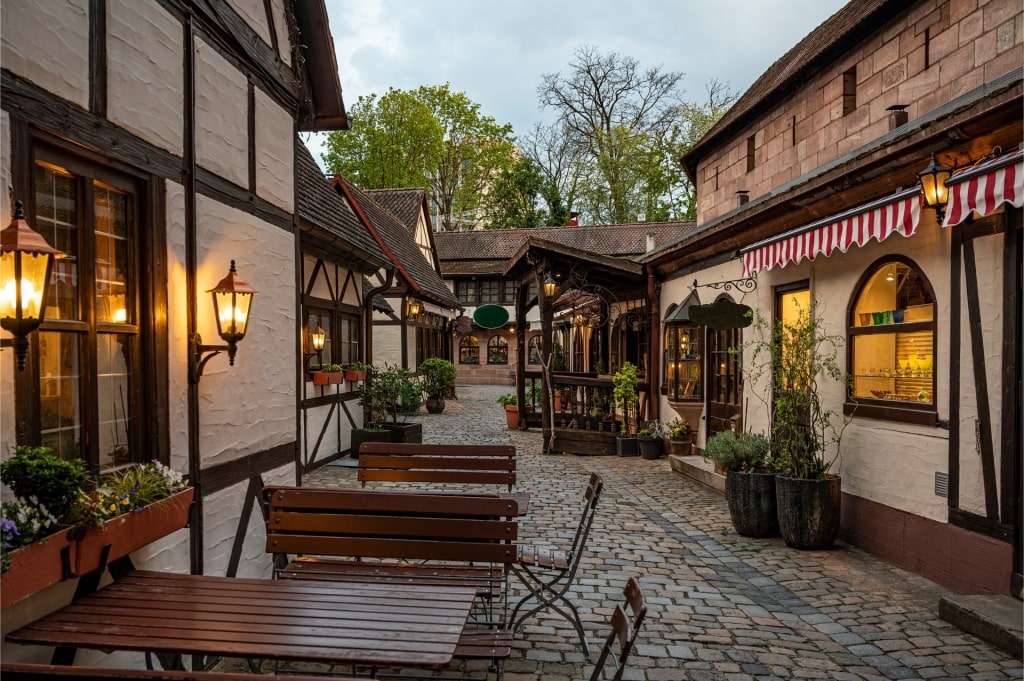
Handwerkerhof
While not technically part of the Nuremberg Christmas Market, the Handwerkerhof, or Craftsmen’s Courtyard, is an essential stop on any Advent visit to the city. Located near the train station, tucked just behind the historic town walls, this year-round artisan corner is one of Nuremberg’s most emblematic—especially when decorated for Christmas.
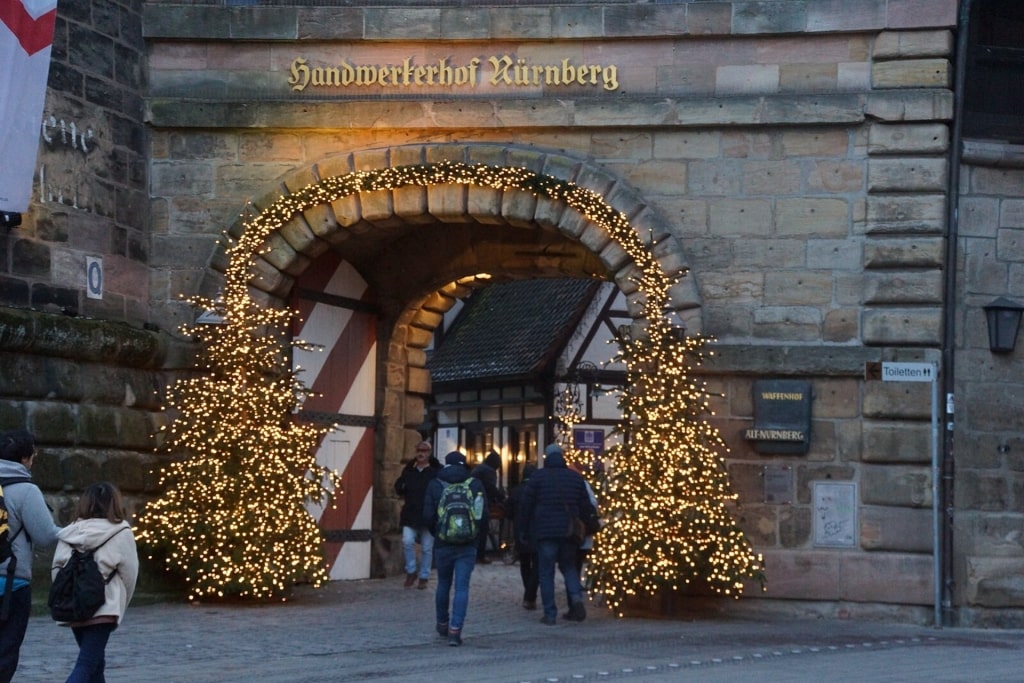
Handwerkerhof Photo by DALIBRI on Wikimedia Commons, licensed under CC BY-SA 4.0
Built in the 1970s on the site of the city’s medieval armory, the courtyard is a postcard-perfect setting of half-timbered houses and cobblestones. Packed with high-quality handicraft stores and workshops, in which it’s possible to witness ancestral crafts such as leather making and gingerbread baking, it’s an excellent alternative gift-buying location to the primary market.
The Winter Village
Located on Jakobsmarkt, in the shadow of the hulking, Neoclassical St. Elisabeth’s Church, a wander through Nuremberg’s Winter Village completes the tour of the city’s main Advent sites.
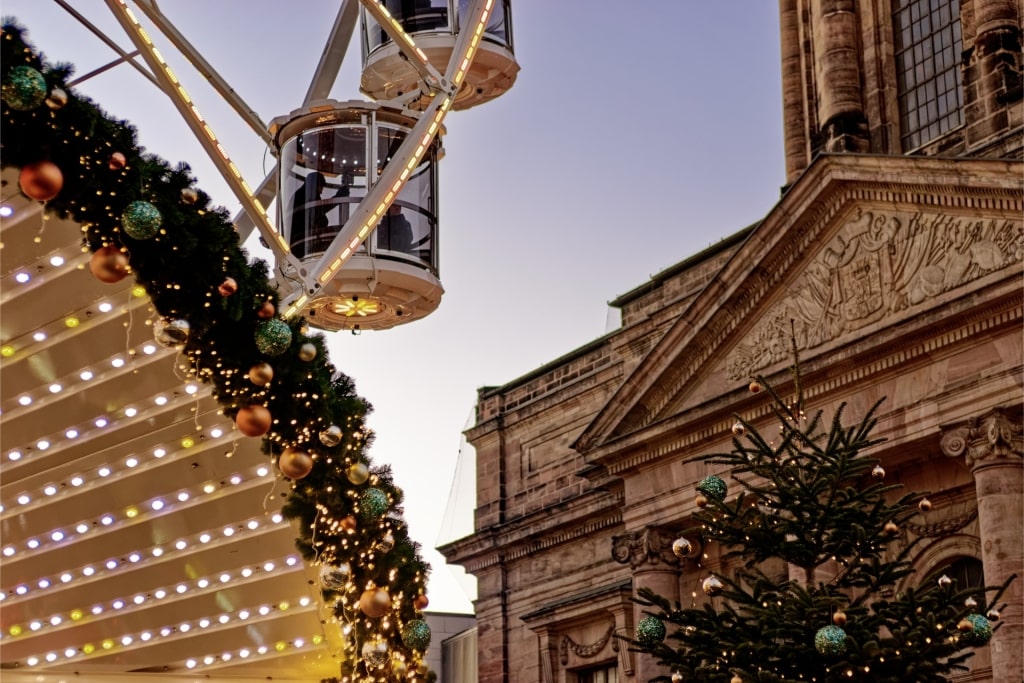
The Winter Village
Ride the Ferris Wheel for an impressive aerial view. Kids will squeal with delight on the vintage carousel. Enjoy the traditional German festive decorations, too, such as the large Christmas pyramid, an octagonal, figurine-adorned tower typical of the Ore Mountains, where the makers in the small town of Seiffen craft Christmas toys and decorations year-round.
Things to Do
Meet the Christkind
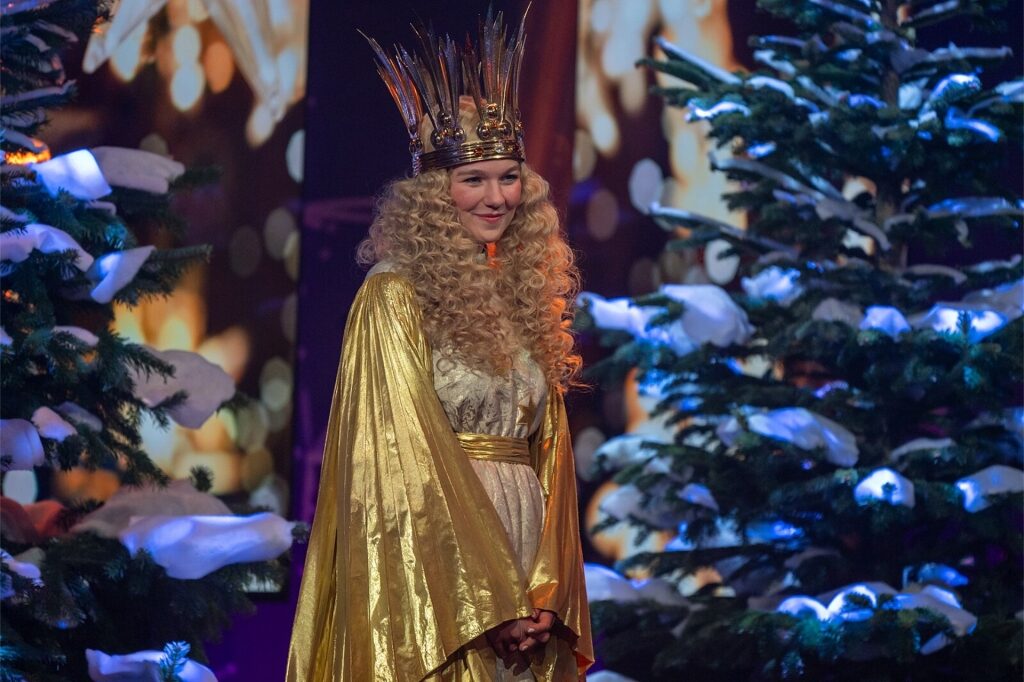
Christkind Photo by Stefan Brending on Wikimedia Commons, licensed under CC BY-SA 3.0 DE
Christkind is the protagonist for whom the Christkindlesmarkt is named. Translated to “Christ Child”, the angel-like character is essentially the face of Christmas in southern Germany and many other European nations, and the main gift-bringer, rather than Santa Claus.
In Nuremberg, the public elects a young woman as Christkind every two years. Christkind’s main ceremonial role is to officially open the Nuremberg Christmas Market, though she performs hundreds of engagements throughout Advent.
Keep your eyes peeled for a fairytale princess-like character with curls, an elaborate golden dress, and a crown, and don’t be afraid to say hello to the Christkind, especially if visiting with children.
Shop for Local Christmas Gifts and Souvenirs
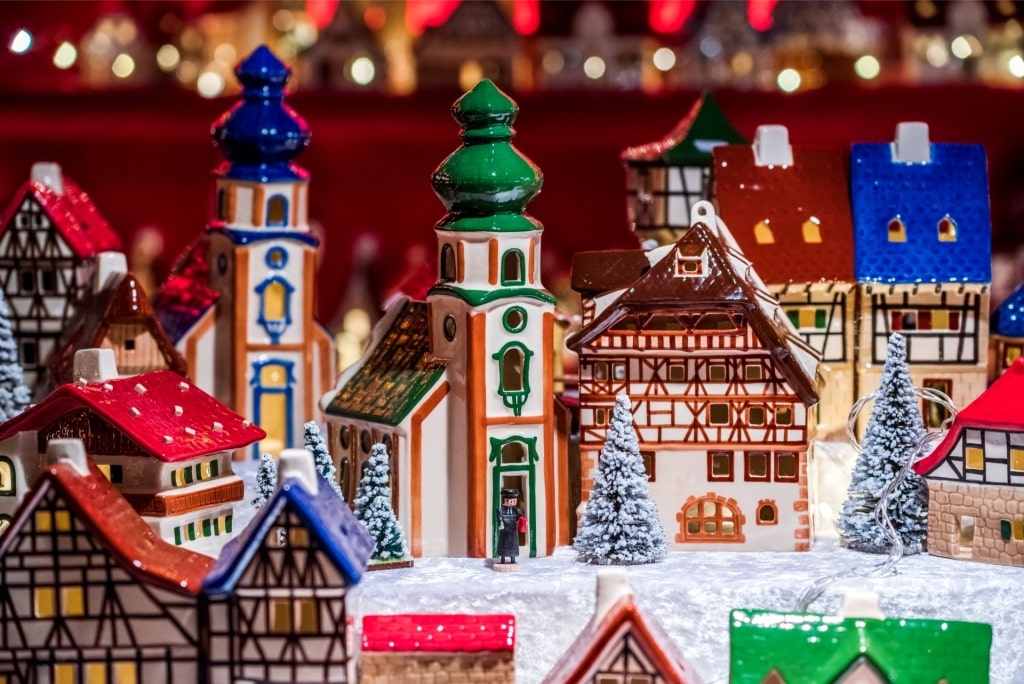
Christkindlesmarkt
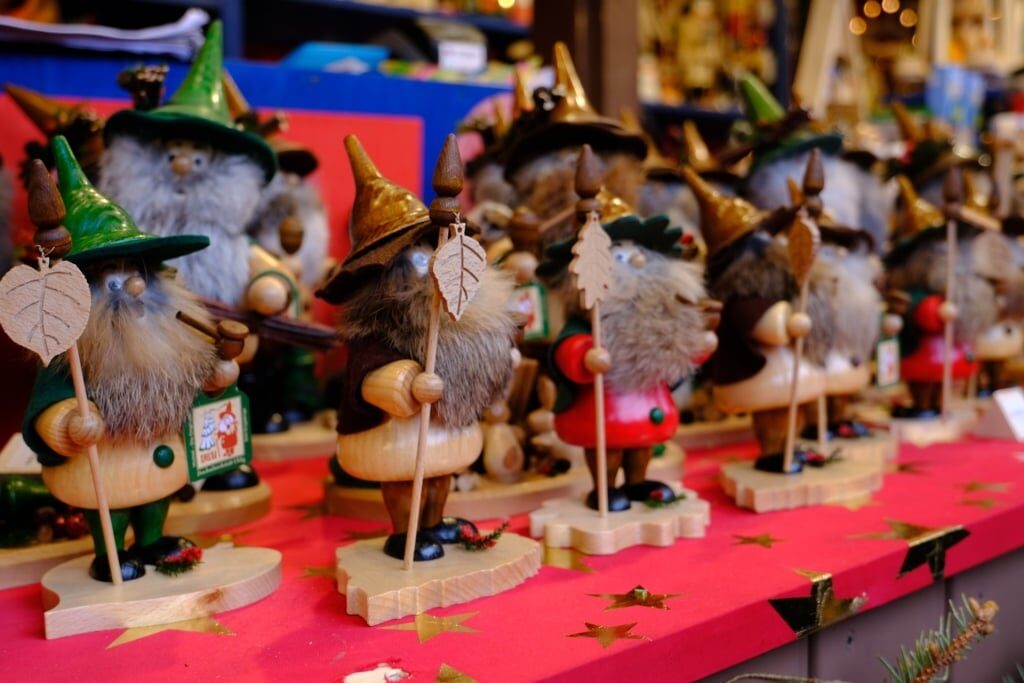
It’s impossible to walk away from the market empty-handed. Whether it’s wooden Advent decorations for your own home or adorable trinkets for loved ones, walking the rows of stalls is the ultimate festive retail therapy.
For the most local wares, look for stalls sporting the official Christkindlesmarkt logo, which denotes products unique to the Nuremberg Christmas Market. Excellent local shopping stops include the spiced candles found at stall 144 and the gingerbread-scented soaps sold at stall 131.
Some of Nuremberg’s most ubiquitous items include the Prune Men, figurines that represent various day-to-day people, which are crafted from dried prunes with a walnut head. They date back to the 18th century and you’ll find a handful of stalls dedicated solely to this Nuremberg tradition.
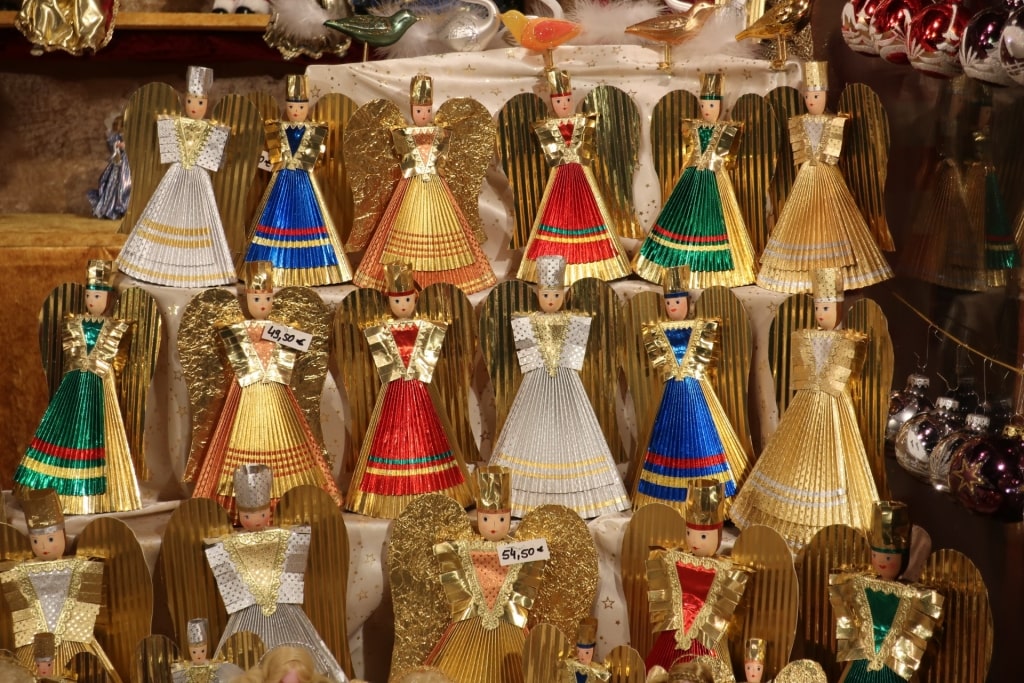
Rauschgoldengel
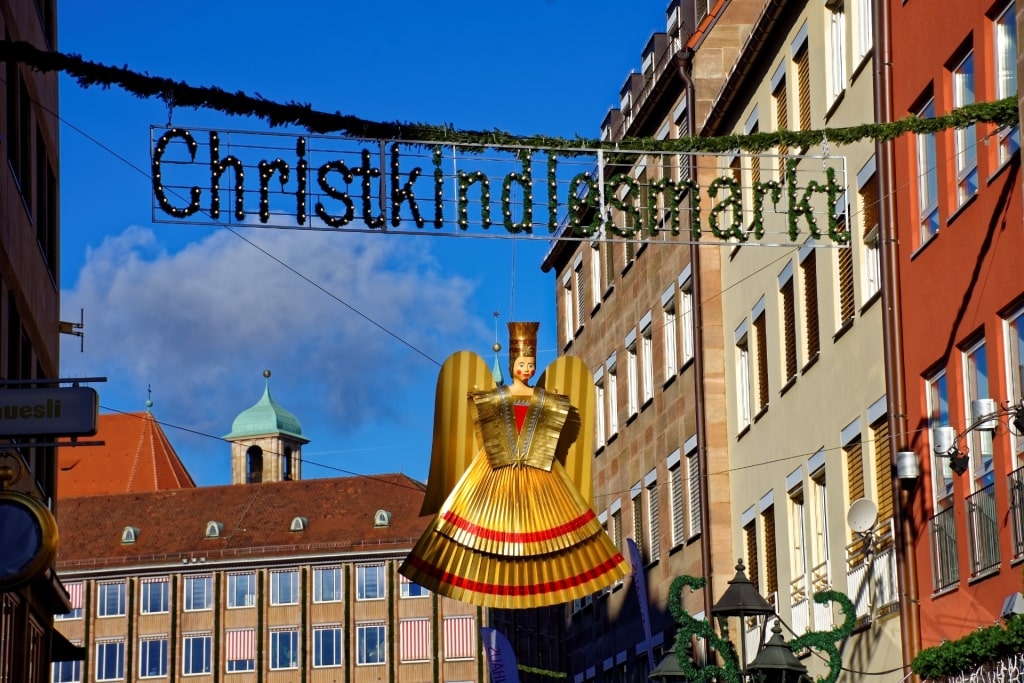
Older still are the Rauschgoldengel, the symbol of the Christkindlesmarkt. Originating in the 16th century, when Nuremberg was a key trading center for metals, including gold, the gold-foil angels wear typical Franconian outfits and are sold alongside tree decorations.
Ride the Christmas Stagecoach
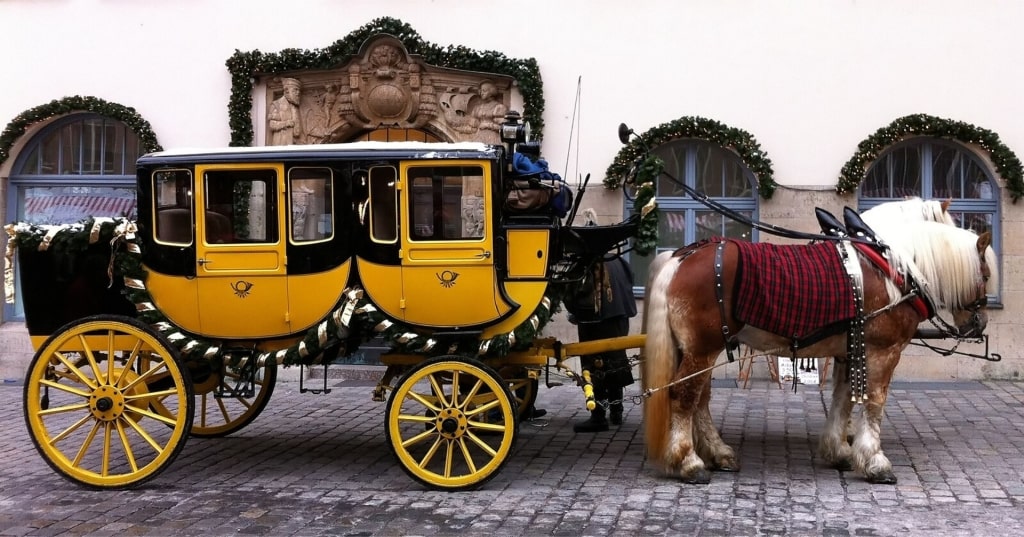
Christmas stagecoach Photo by Sir James on Wikimedia Commons, licensed under CC BY-SA 3.0
For a horse-drawn, bell-jangling, festive tour, ride the Christmas Stagecoach. Since the mid-1900s, the signature yellow wagon has been delighting visitors with a trundle around the markets. Today, over a dozen operate over Advent, providing a cozy carriage ride between locations.
Enjoy the Best Elevated Advent Views
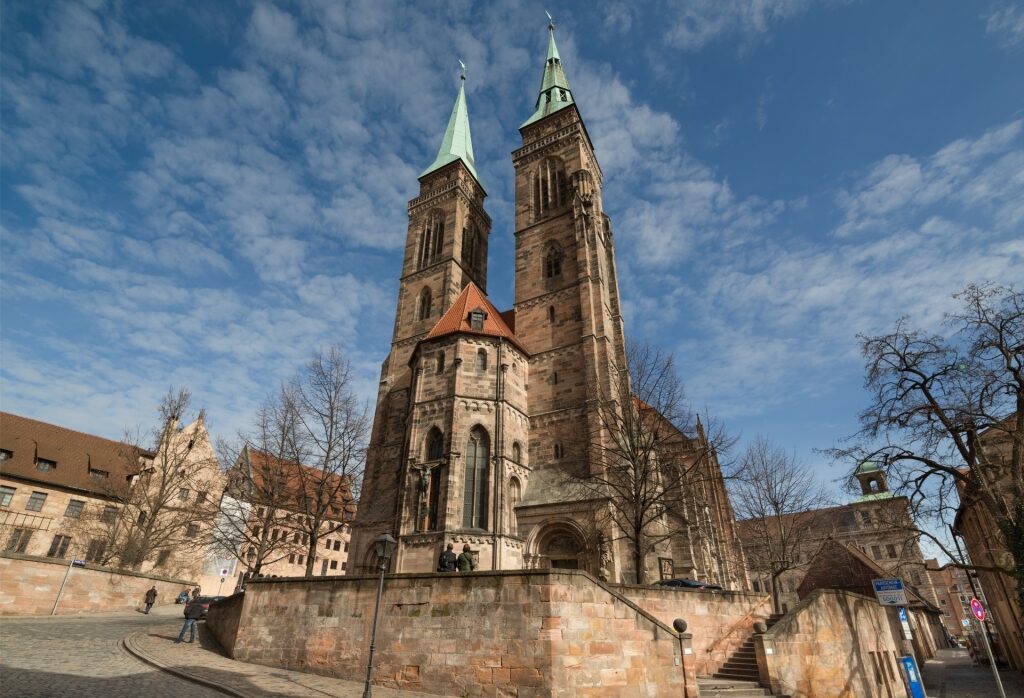
St. Sebald’s Church
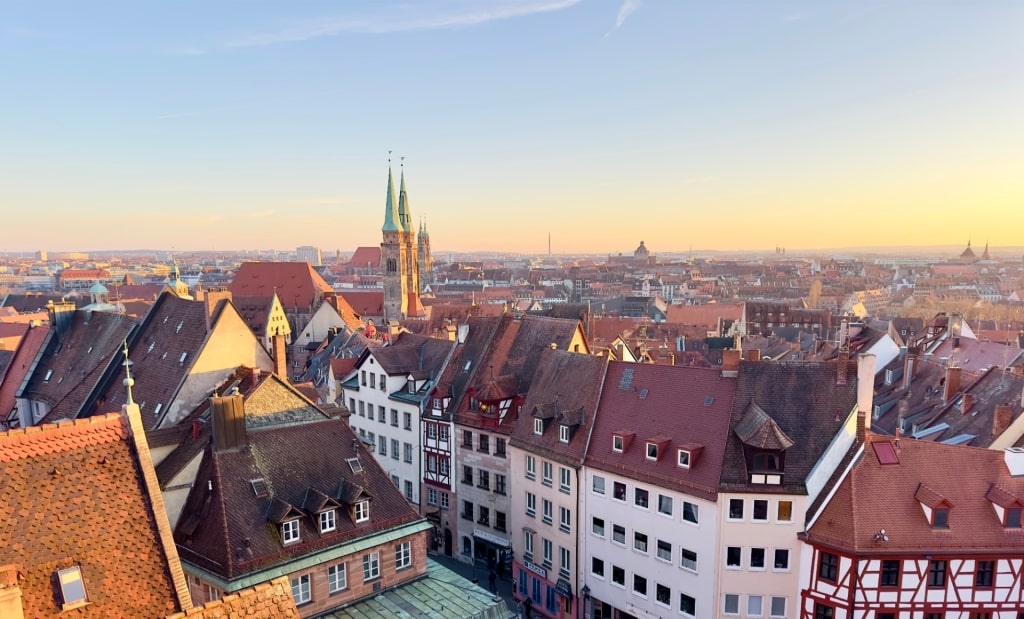
To appreciate all of Nuremberg’s festive atmosphere, head for an aerial panorama. The towers of both St. Sebald’s Church, the city’s oldest church, and St. Lawrence Church can be climbed.
From the top, you’ll enjoy sweeping views of Nuremberg’s landscapes and the candy-striped roofs of the market huts below, providing a postcard-worthy photo opportunity.
Walk the Way of Crèches
Nuremberg’s most famous crèche, or nativity scene, is located at the Christkindlesmarkt, inside a thatched hut in front of the Frauenkirche. It’s a delightfully detailed scene of wooden carvings, all adorned with traditional Franconian dress.
Just behind the German church, you’ll find the Way of Crèches, which lines the Spitalgasse linking the Christkindlesmarkt with the Kinderweihnacht. Peek inside the row of nativity scene booths as you walk between the two markets to admire the creations of local woodworkers, before visiting St. Egidien Church, where multiple historic nativity scenes are on display.
Get Your Own Glühwein Mug
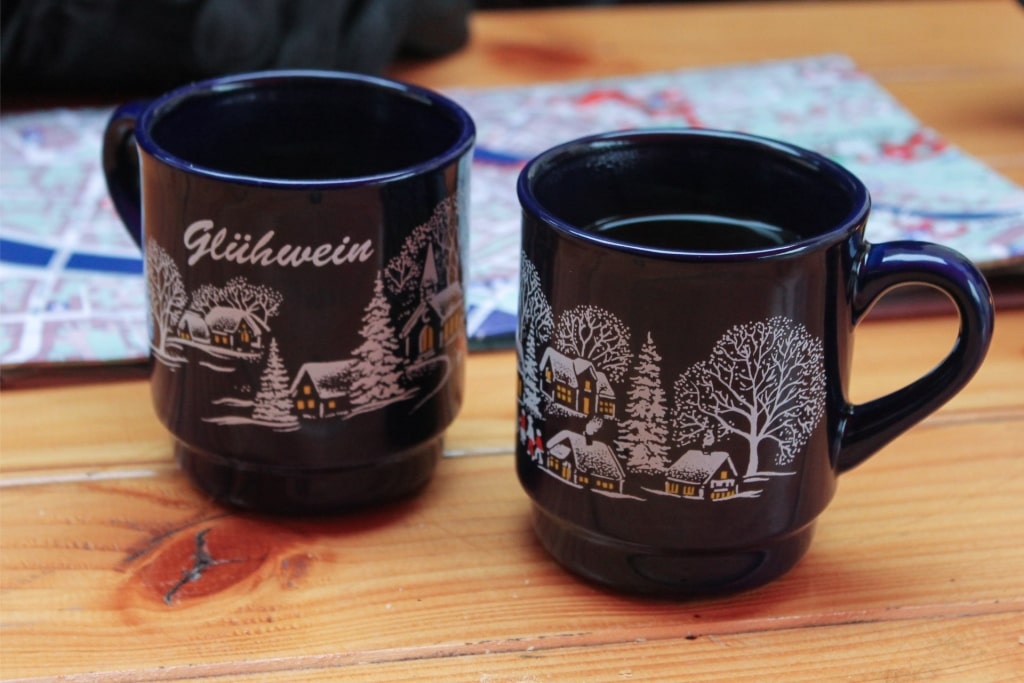
Glühwein mug
Advent isn’t Advent in Germany without a steaming, heart-warming mug of Glühwein. Even if you’re not a fan of mulled wine spiced with cinnamon, cloves, and star anise, it’s hard to resist ordering just to secure your own Nuremberg Glühwein Mug.
Each year, the market has a new, collectible ceramic mug designed to celebrate the season. Every booth uses the same mug, allowing you to move between the stalls and sample the different variations of mulled wine—the Sister Cities’ Market has some of the most interesting—and then either return the mug for your deposit, or keep it as a souvenir.
Be sure to sample the local Glühwein specialty, made with heidelbeeren, or blueberries. The berry flavor overpowers the bitterness of the tannins, making for a naturally sweeter sip—though sugar or honey is nearly always added for additional sweetness.
Food to Sample, Stalls, and Nearby Restaurants
Nuremberg Lebkuchen
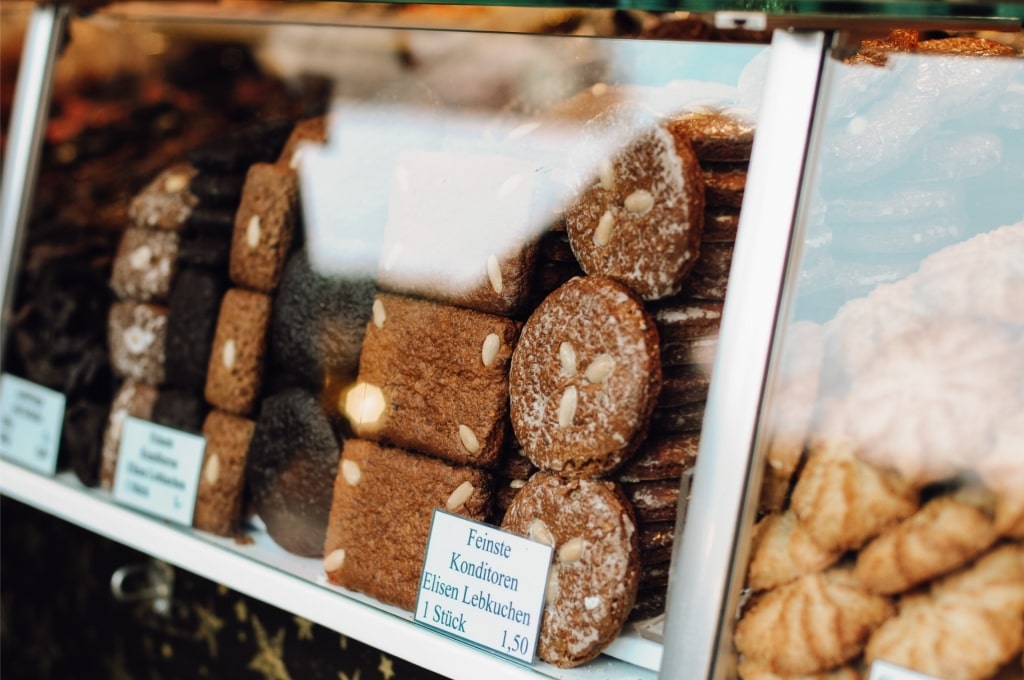
Lebkuchen
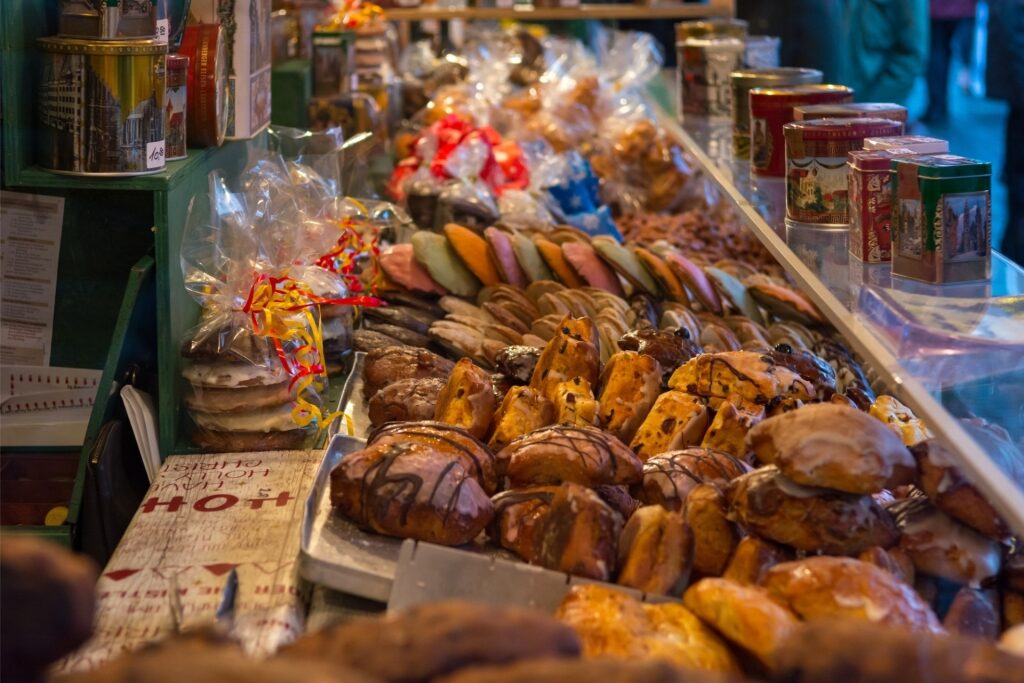
The most prominent festive flavor is Nuremberg Lebkuchen, the local gingerbread that dates back six centuries.
Sweetened by local forest honey, and prepared with cinnamon, ginger, and other spices that arrived thanks to Nuremberg’s global merchants, the city’s Lebkuchen and the trademarked Elisenlebkuchen—large, nut-heavy, flour-free gingerbread cookies—are celebrated the world over.
Local bakery Wolfgang Woitinek at Stand 104 is one of the most esteemed producers, and you can even see the process in the market’s thatched-roof gingerbread house. Just don’t get these high-quality products confused with the hanging, icing-decorated cookies, which are rarely as tasty, or of such high quality.
Nuremberg Bratwurst
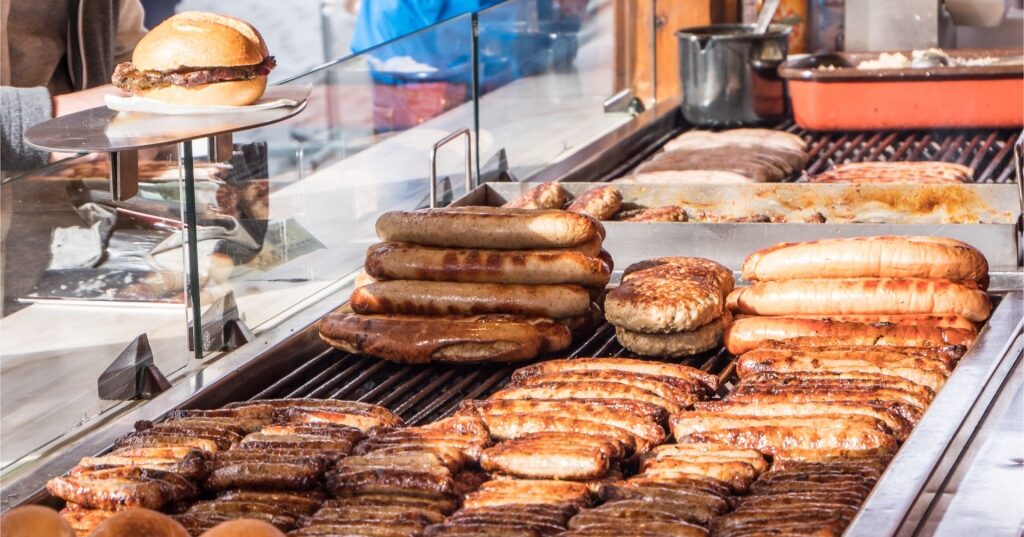
Bratwurst
Popular year-round, but a particularly perfect festive stall food, the city’s centuries-old Franconian sausages are the hot culinary star of Nuremberg Christmas Market.
Typically served from stalls three to a bun—order drei im weggla to be sure—rather than the usual six-plus plates, the flavor-packed pork sausages are smaller than most other bratwurst. While the size is anecdotally thought to be due to 16th-century “shrinkflation,” when rising costs led to smaller sausages being produced, thankfully, the quality never suffered.
Find one of the oldest recipes, dating back some 700 years, at Peter Lößel Booth 1, or visit one of the kitchen’s handful of designated bratwurst kitchens for a more hearty experience. Zum Gulden Stern is the city’s oldest, while the highly rated, wood-paneled Bratwursthäusle is only seconds from the market on Rathausplatz.
Franconian & Regional Specialties
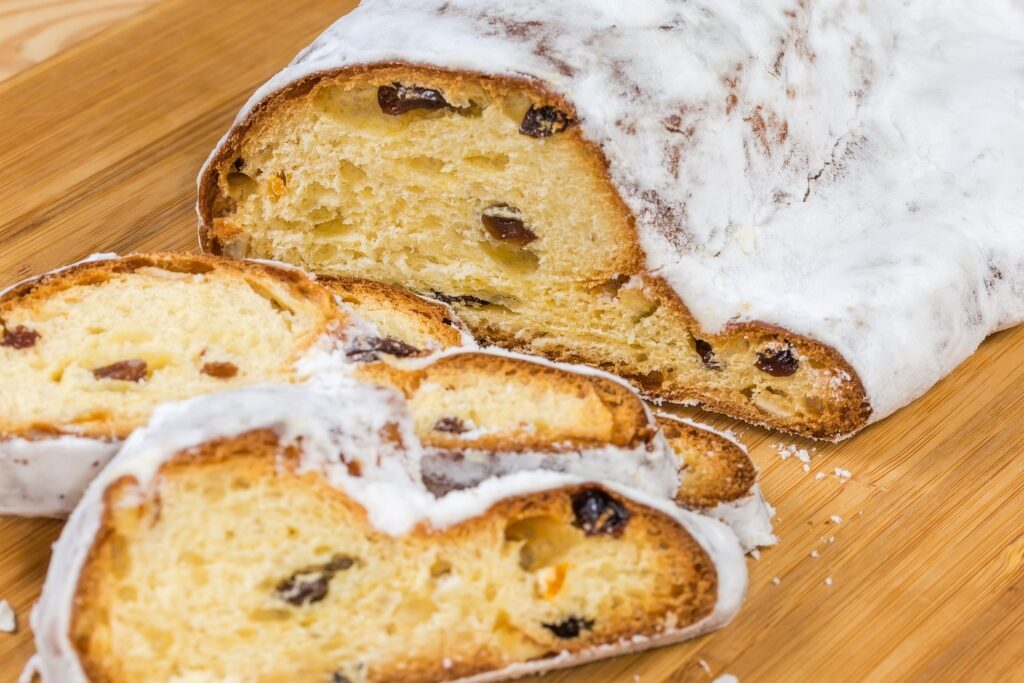
Stollen
Nuremberg’s location in both the State of Bavaria and the historic region of Franconia has influenced the city’s culinary scene, and these age-old recipes are well represented at the more than 50 food stalls at Nuremberg Christmas Market.
Throughout Advent, the market organizes various food walking tours, ranging from vegan routes to Franconian specialties. Still, it’s easy to stumble upon Nuremberg’s most famous flavors without a guide.
Some of the most tempting treats from elsewhere in Germany include Stollen, a Christmas nut and fruit bread originally from Dresden, and dampfnudel, a fluffy steamed bun, best enjoyed with vanilla custard.
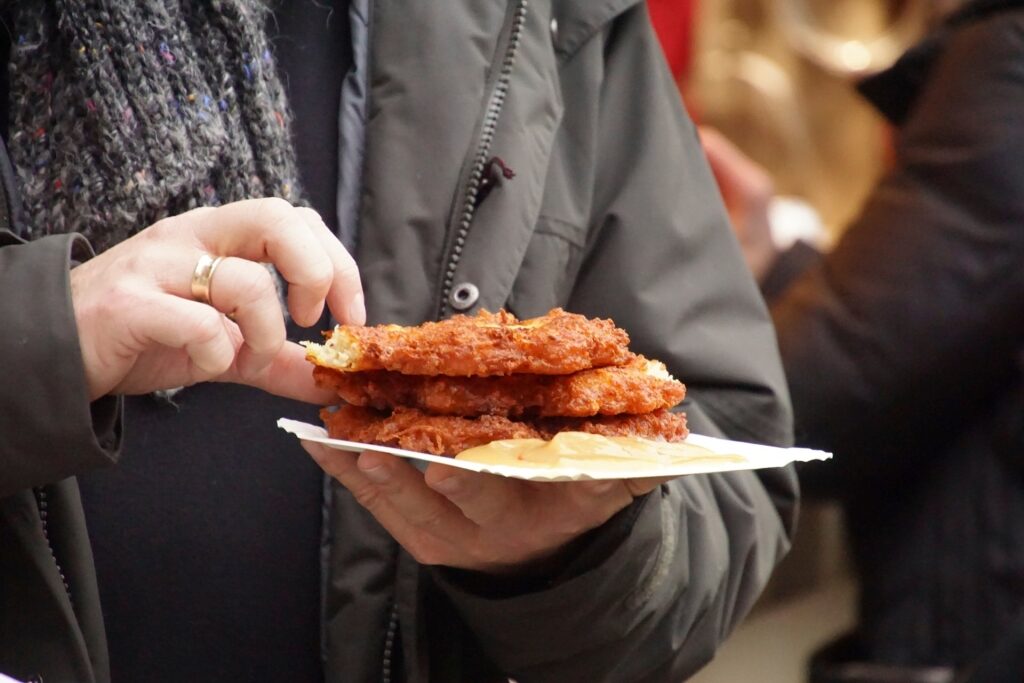
Kartoffelpuffer
For something more savory, try the Kartoffelpuffer, a type of potato-based pancake from stall 159. More international festive options can be enjoyed at The Sister Cities’ Market’s stalls, where traders from near and far serve up their regional and national festive flavors.
Travel Tips
Christkindlesmarkt
For souvenir shopping, plan to arrive earlier in the day at the Nuremberg Christmas Market. While the twinkling evening atmosphere is magical, it’s much easier to shop during the late afternoon while locals are still at work.
With sunset around 4 p.m. in December, you won’t have long to wait for the lights to sparkle. However, given that Nuremberg is one of Germany’s prettiest cities, it’s advisable to allow a full day to explore the Imperial and historic attractions before the market.
Christmas decorations
Cash is still king in much of Germany, and while some market stalls may accept card payments, it’s advisable to carry enough Euros to purchase snacks, drinks, and souvenirs. Bring a tote bag in your pocket for any purchases to keep your hands free for enjoying the food stalls.
You’ll also want cash due to the pfand system. This standard refundable charge is paid on reusable items, such as Glühwein mugs, which are then refunded to you on their return, though many prefer to buy the souvenir mug to keep instead.
Before arrival, review the market’s schedule and plan your day. Your visit might align with one of the larger events, such as the Lantern Procession, while market guided tours—many of which are themed, in costume, and some led by English guides—are regular throughout Advent.
Read: Christmas in Germany
FAQs
Is the Nuremberg Christmas market worth visiting?
Christkindlesmarkt
Absolutely. Nuremberg Christmas Market is one of the oldest, most loved, and world-famous Christmas markets in the world, and visiting is practically a December rite-of-passage for those spending the holiday season in Germany.
When does the Nuremberg Christmas market open?
Christkindlesmarkt
The Nuremberg Christmas Market opens with much fanfare in late November, usually on the last Saturday of the month, the day before Advent begins, and continues until Christmas Eve. The market is open daily from 10 a.m. to 9 p.m., though some specific experiences may have more restricted hours.
What food is famous at the Nuremberg Christmas Market?
Lebkuchen
Nuremberg Christmas Market serves many traditional local and national Christmas treats. Spiced Lebkuchen, or gingerbread, is one of the highlights, especially as a 1530 letter documenting the market makes note of buying spices. Nuremberg Bratwurst, small, grilled sausages, have been locally loved for seven centuries.
How crowded is the Nuremberg Christmas market?
Christmas market
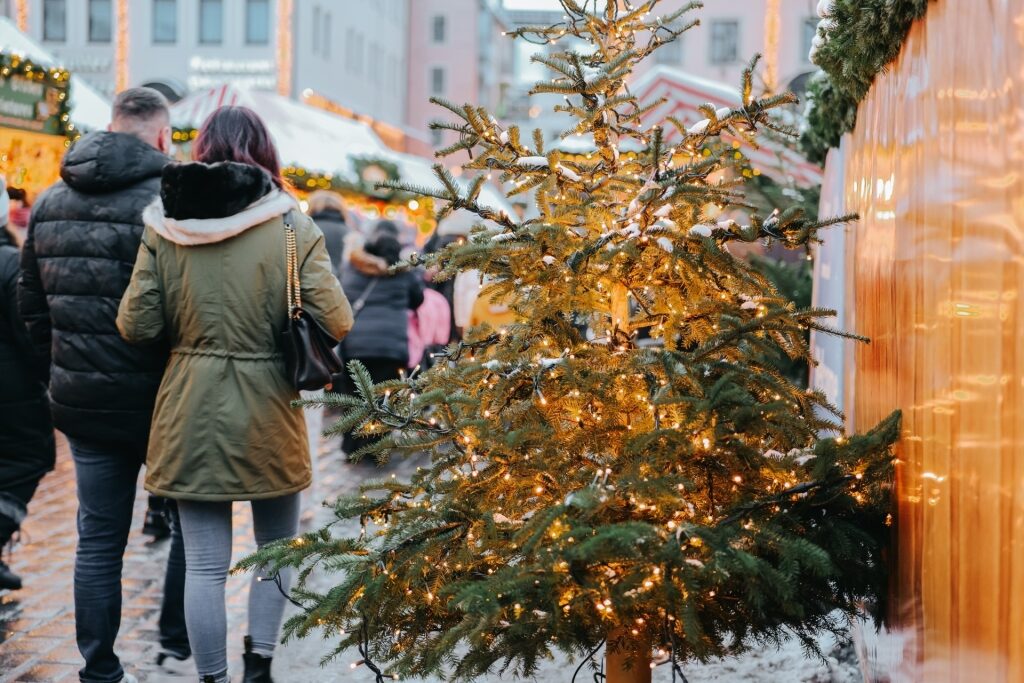
As one of the world’s most famous Advent celebrations, the Nuremberg Christmas Market can become crowded, especially on evenings and weekends. For a calmer experience, aim to visit the market midweek. It’s open daily from 10 a.m., and an earlier visit to shop for gifts and souvenirs is a great idea, so as crowds swell, you can simply soak up the atmosphere, Glühwein in hand.
Which Christmas market is better, Munich or Nuremberg?
Nuremberg
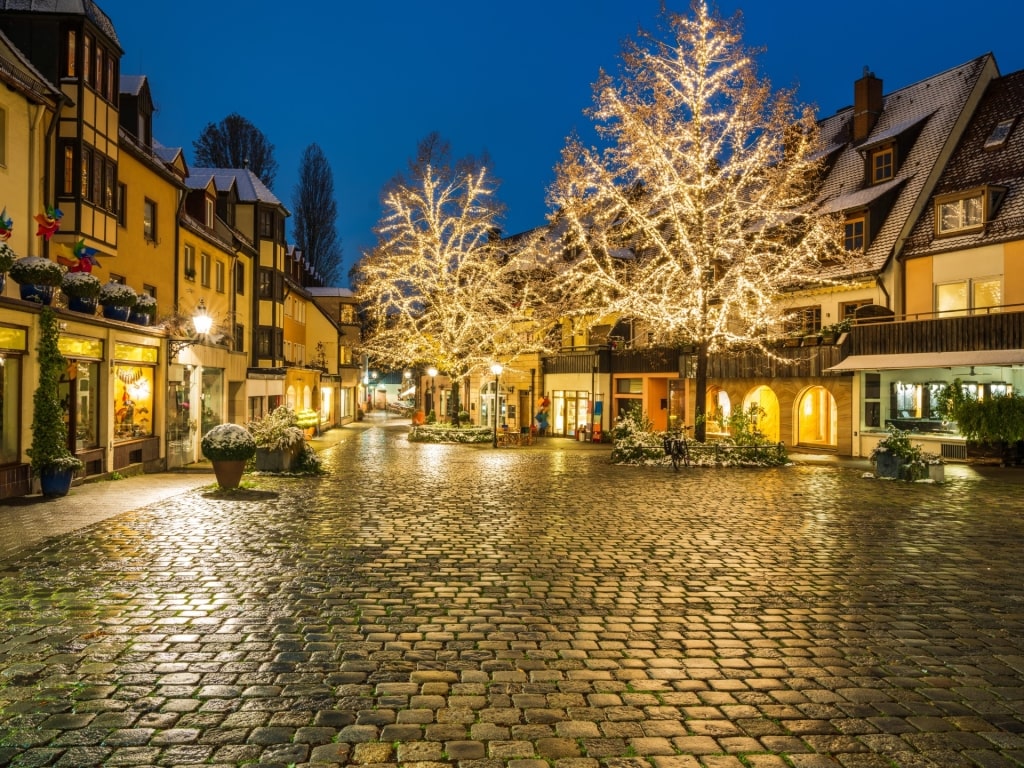
Both Munich and Nuremberg have magical Christmas markets, and neither will disappoint. Munich’s size, as the capital of Bavaria, gives it the edge on numbers, with nearly a dozen markets to visit. However, many would say that the Nuremberg Christmas Market’s more condensed nature and history give it a more magical atmosphere, with a focus on quality and experience, over touring multiple locations.
Nuremberg
Make your visit to Nuremberg Christmas Market even more special as part of a multi-country, river cruise. Browse Celebrity’s river cruises to Nuremberg to plan the perfect end-of-year, festive vacation.