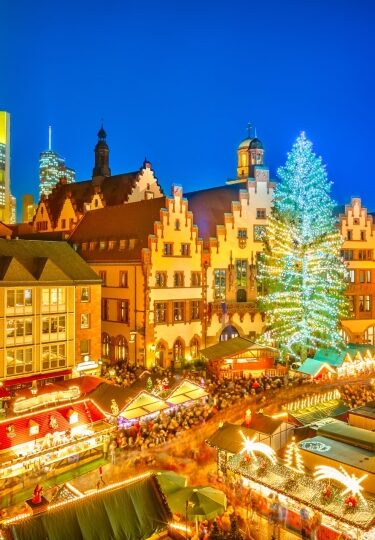
Christmas in Germany is a magical, traditional winter experience. As the birthplace of many Christmas customs we now take for granted, it’s also strangely familiar and heartwarming.
Germany’s beautiful old towns and cities provide a great winter backdrop. Half-timbered medieval buildings and cobblestone streets look straight out of a Christmas card.
A German Christmas is all about sharing and, even as a visitor, you’ll be able to embrace that seasonal spirit. It’s a very special blend of history, community, atmosphere, and heartwarming tradition. Here are some of the things you can expect.
Winter Weather
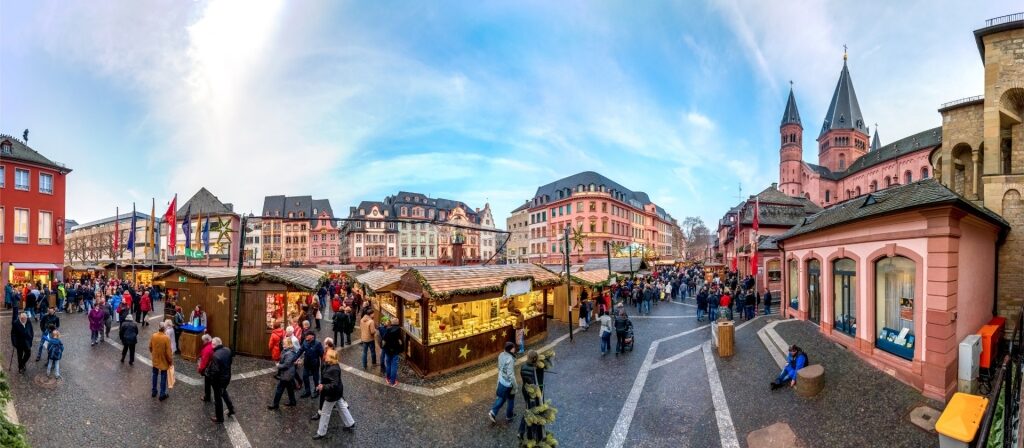
Christmas market in Mainz
December through February are the winter months in Germany, when snow is common in the alpine regions and south. In the Rhine region and cities such as Cologne, Koblenz, Mainz, and Rüdesheim, you are more likely to have cold, overcast conditions.
Along the Rhine, average daytime temperatures range from 35°F to 45°F, with short days and cold nights. There’s frequent light rain or drizzle, and occasional wet snow or flurries.
That’s perfect weather for wrapping up warm and enjoying a mulled wine in a cozy bar. The German Christmas decor, with twinkling lights and candlelit windows, is a great background.
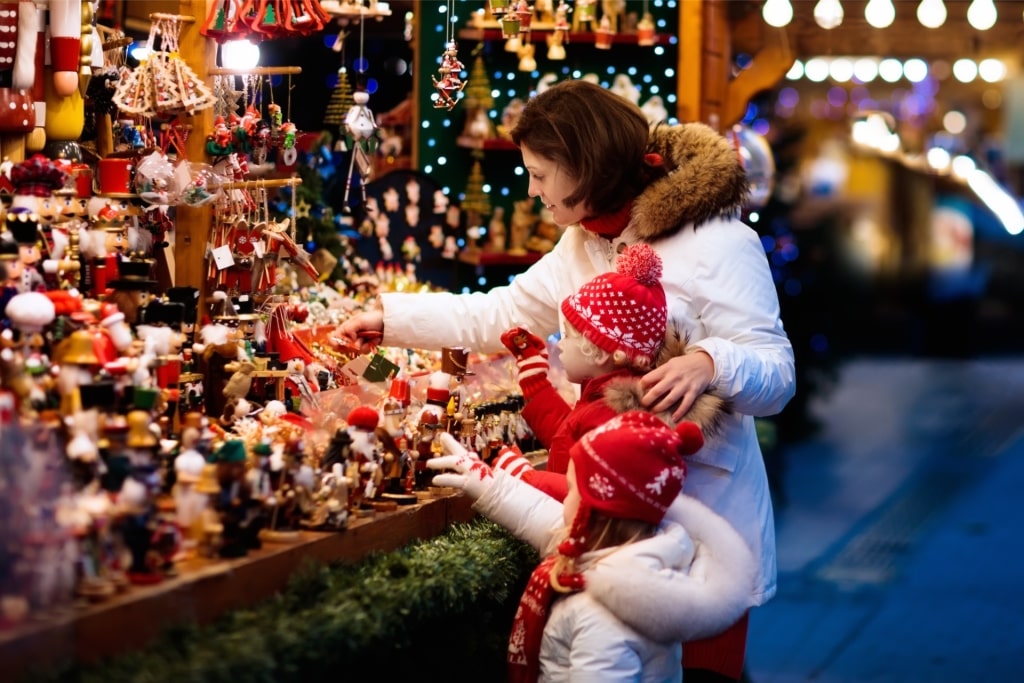
German Christmas market
Wear warm layers—thermals and woolens—and a waterproof coat. If you have a Christmas sweater, it really will come into its own in this weather.
A hat, gloves, scarf, and good walking shoes or boots will be good for exploring Christmas markets. Wet cobblestone streets will look lovely in your photos but might be less fun in the wrong footwear.
Christmas Traditions
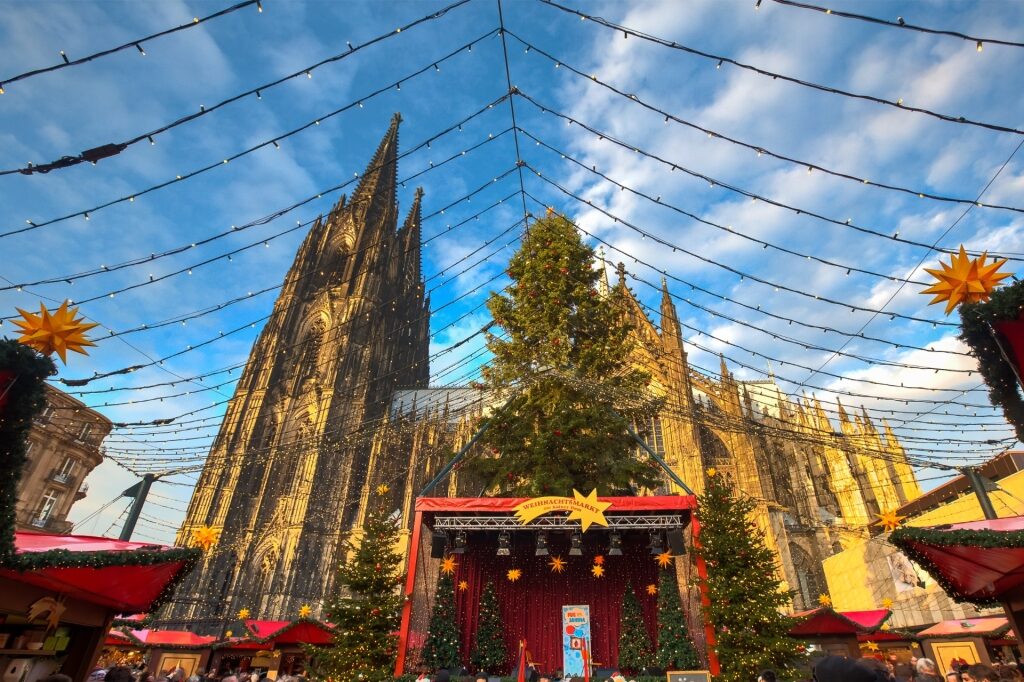
Cologne
Christmas in Germany is all about traditions, the most obvious of which are its many markets. However, the “real” Christmas is one celebrated quietly at home with families, or in close communities.
The Christmas season lasts from Advent Sunday, the fourth Sunday before Christmas Day, until Christmas Day. That time is marked by the Advent calendar, first printed in Germany in the early 1900s.
You’re no doubt used to paper Advent calendars with a window that opens to reveal a date or a chocolate treat. In Germany, you might also find whole buildings transformed into one, with crowds gathering to watch a real window lighting up.
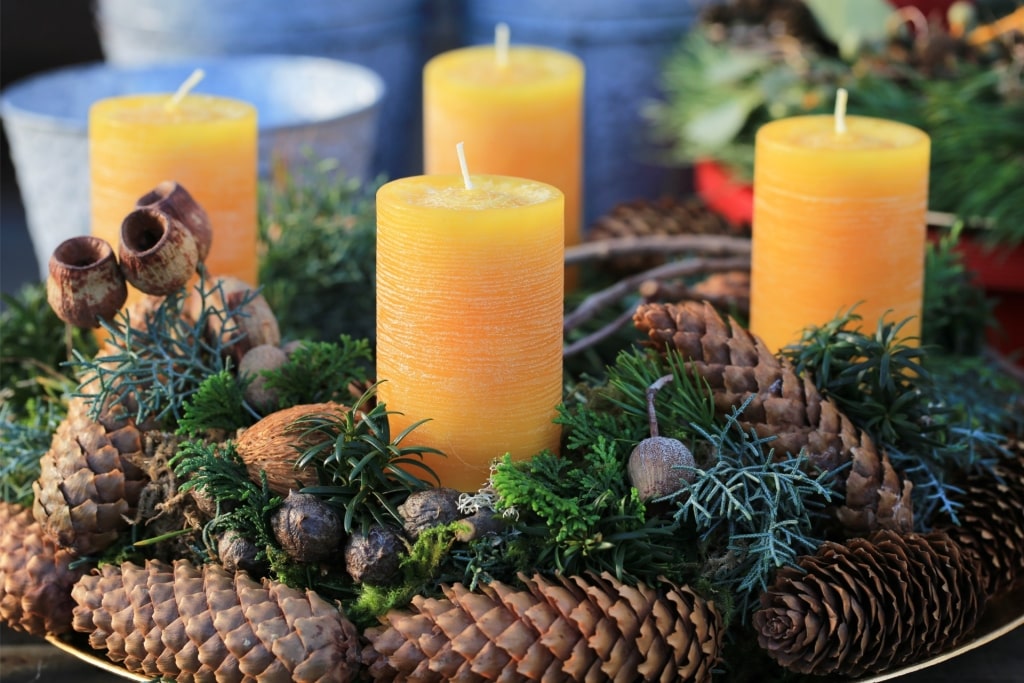
Advent wreath
Most homes will also have an Advent wreath, a circular wreath with four candles. One candle is lit on each of the four Sundays leading up to Christmas.
As well as the Advent calendar, another much older tradition Germany gave the world is the Christmas tree. The custom of cutting a pine tree, taking it indoors, and decorating it started in the 16th century.
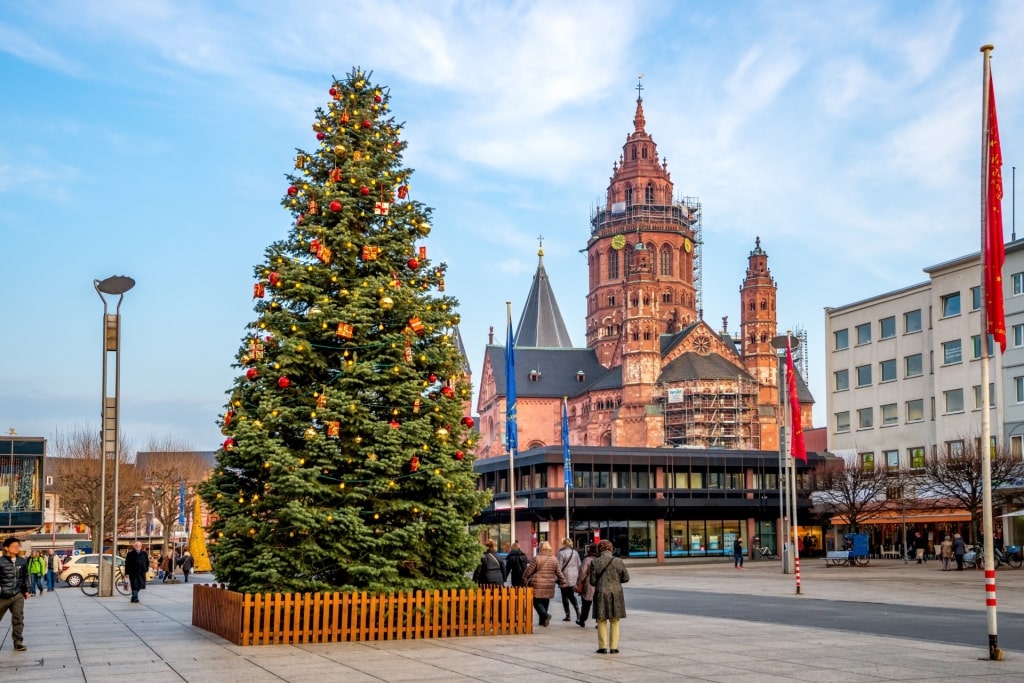
Mainz
Christmas trees go up in homes and public squares in early December. Martin Luther is said to have added candles to a tree to represent heavenly stars shining through the branches.
The first big date in the season—especially for children—is St. Nicholas Day on December 6. It’s traditional to leave a boot or shoe outside the door the night before to hopefully find it filled with treats.
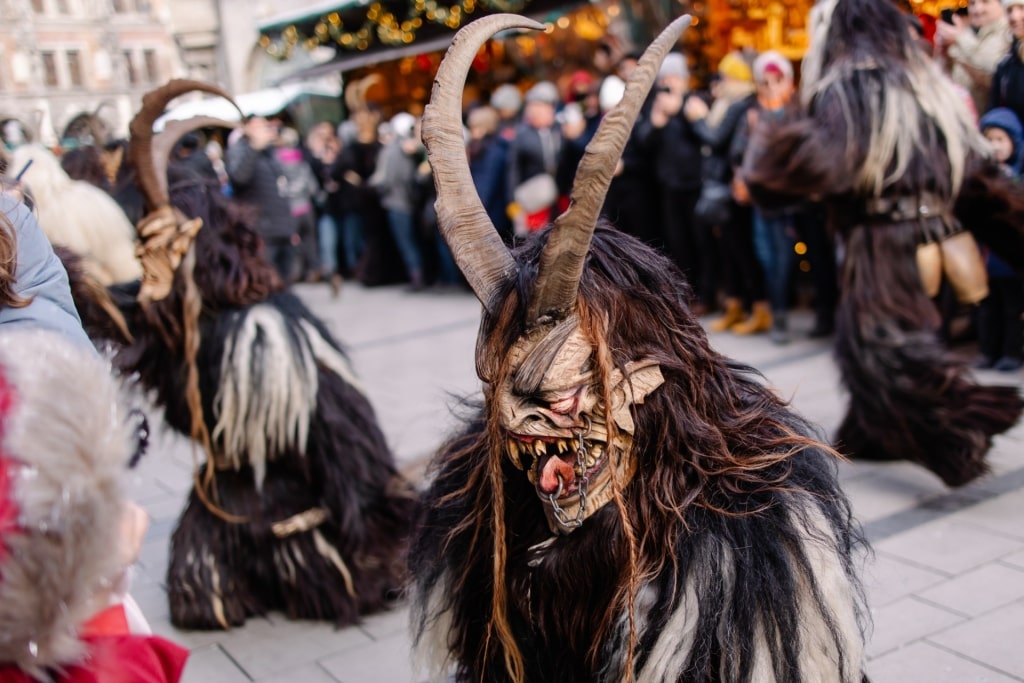
Krampus costume
A darker figure—the devil-like Krampus or Ruprecht—often accompanies St. Nicholas to scare naughty children. These children might find a stick or lump of coal rather than candies in their boots.
Christmas Eve is when families traditionally go to church and exchange gifts afterwards. It’s the Christkind, or Christ child, who brings presents here, not the Santa Claus you might be used to.
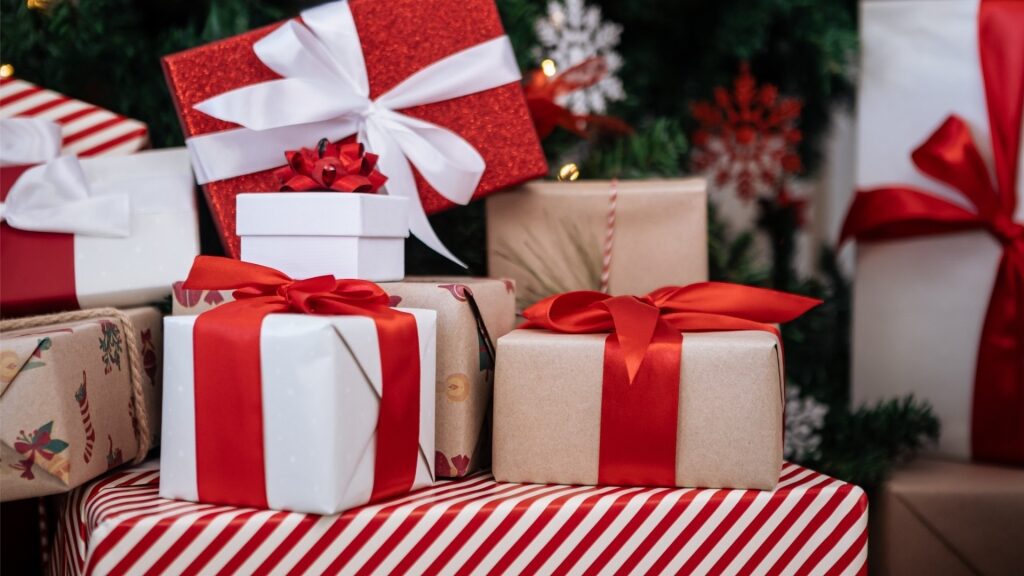
Christmas gifts
That’s not to say that Santa is not making inroads into German culture. Southern Germany is more traditional in this respect than the bigger, more cosmopolitan German cities of the north.
The season ends on January 6, Epiphany, when groups of children dressed as the Three Wise Men go door-to-door singing carols. They collect money for charity and in return bless the house for the year ahead.
You’ll know these “Sternsinger” have visited if you see “C+M+B” chalked near the doorway. That stands for Caspar, Melchior, and Balthasar—the Three Wise Men of legend.
The central feature of all these celebrations is a strong community feel. Neighbors, coworkers, and strangers share warm drinks, good food, and enjoy the true spirit of the season.
Christmas Markets
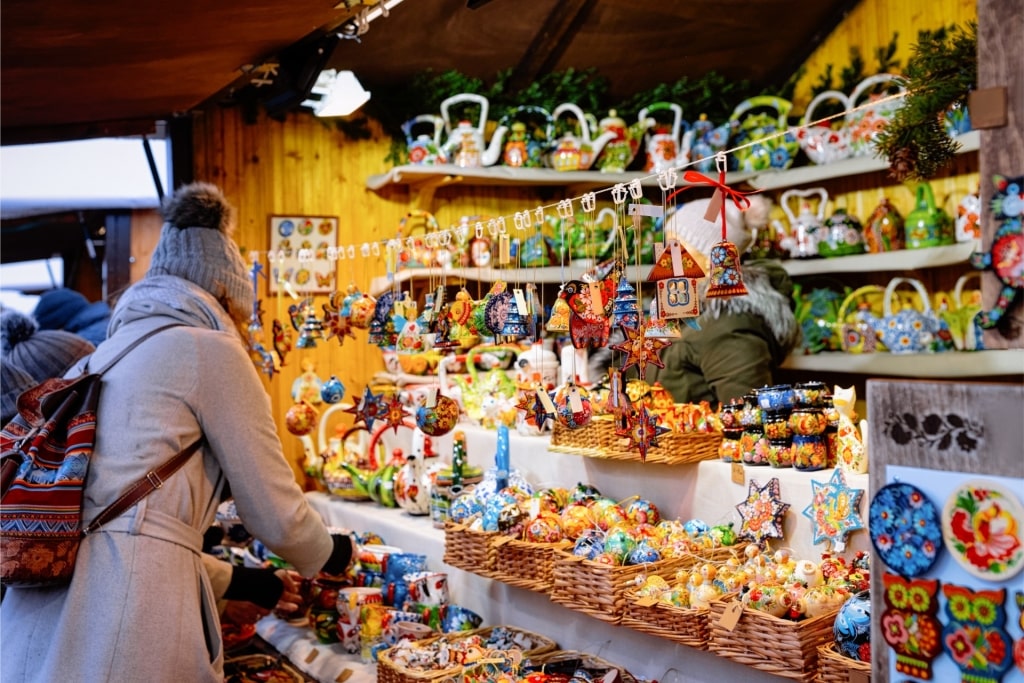
German Christmas market
The tradition of German Christmas markets dates back to at least the Middle Ages. Nuremberg Christkindlesmarkt, for example, began in the 16th century.
Running from late November through Christmas Eve, these markets transform main squares into festive wooden villages. They are a great place for everyone to socialize and do their Christmas shopping, with warming food and mulled wine.
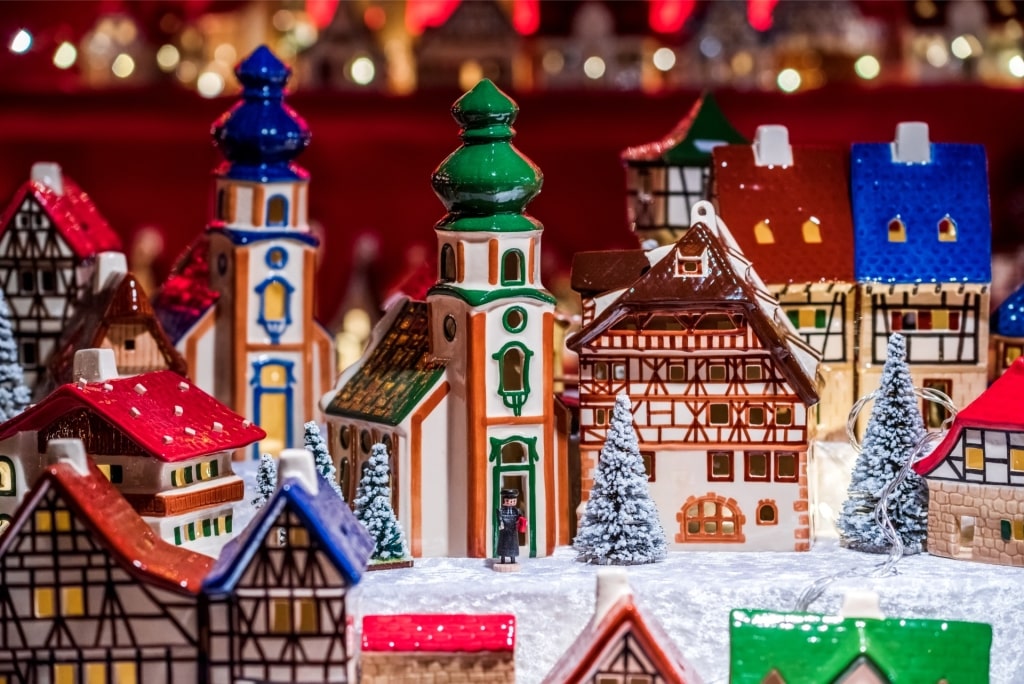
Christmas decors
Each city has its own style, with Nuremberg known for its traditional and handcrafted goods, and Munich for its Bavarian specialties, such as nativity figures.
Cologne is one of the best Christmas markets in Germany, helped by its wonderful setting in front of the awe-inspiring cathedral. That Dom market is only one of several varied markets that greatly add to Cologne’s quirky appeal.
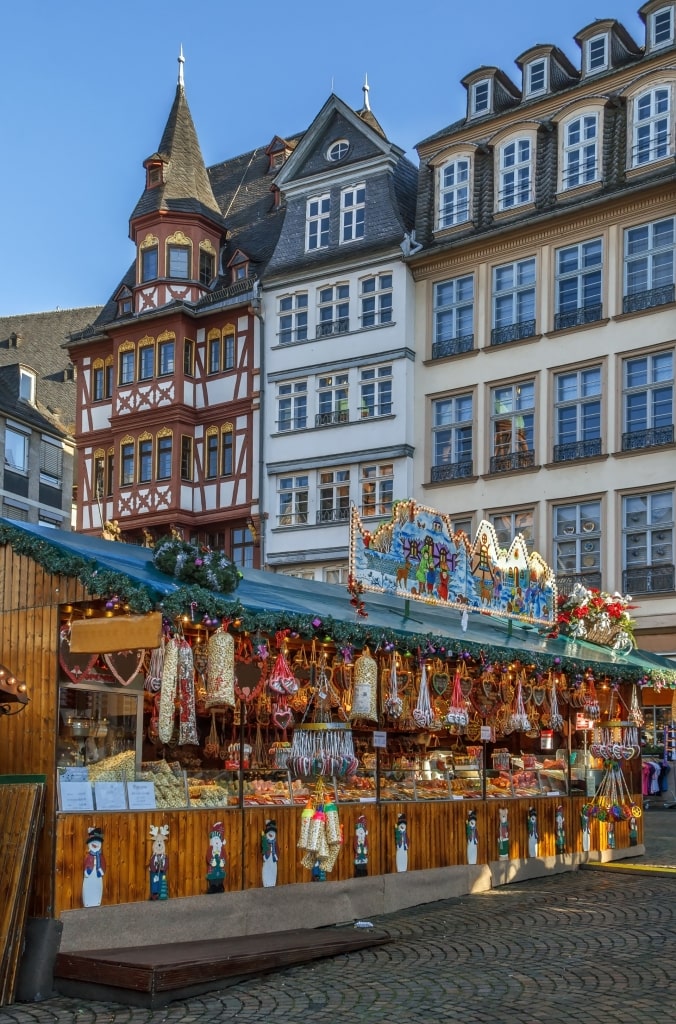
Frankfurter Weihnachtsmarkt
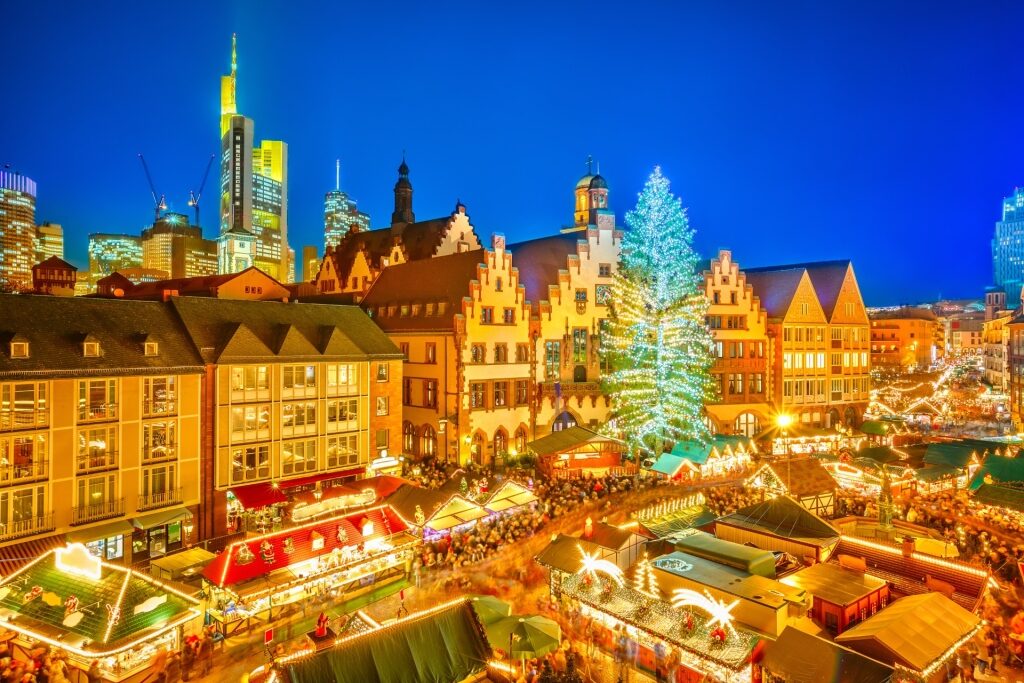
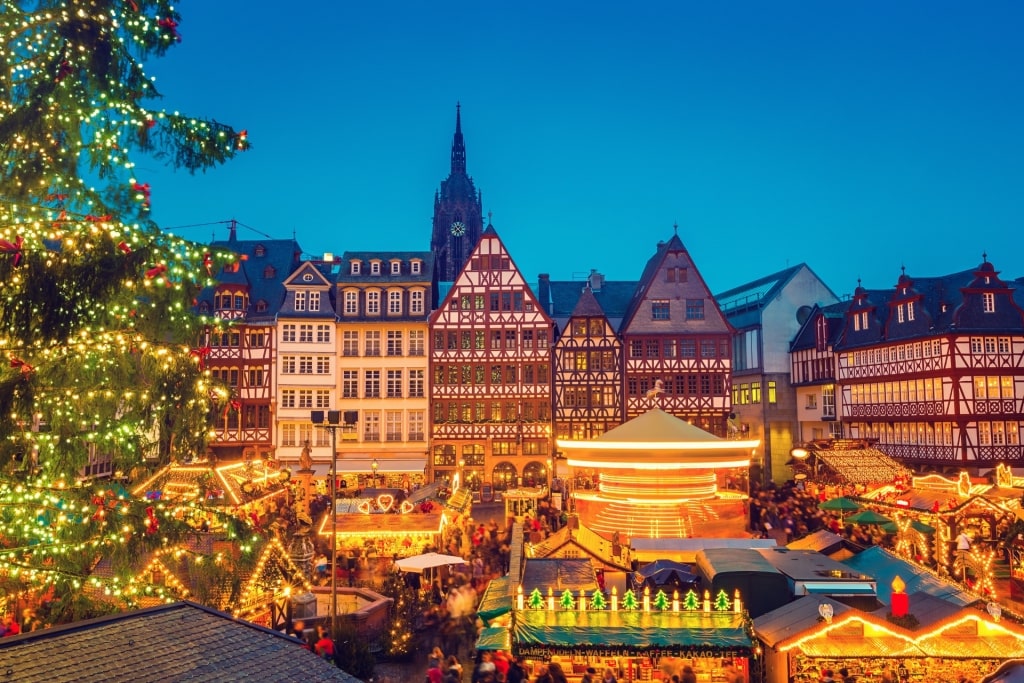
Frankfurter Weihnachtsmarkt dates back to 1393, making it one of Germany’s oldest. Set in the picturesque Römerberg square, it still feels very cozy and local.
That intimate feeling is naturally even stronger in some of the smaller towns. Rhine ports such as Mainz, Koblenz, and Regensburg all have excellent markets in historic settings.
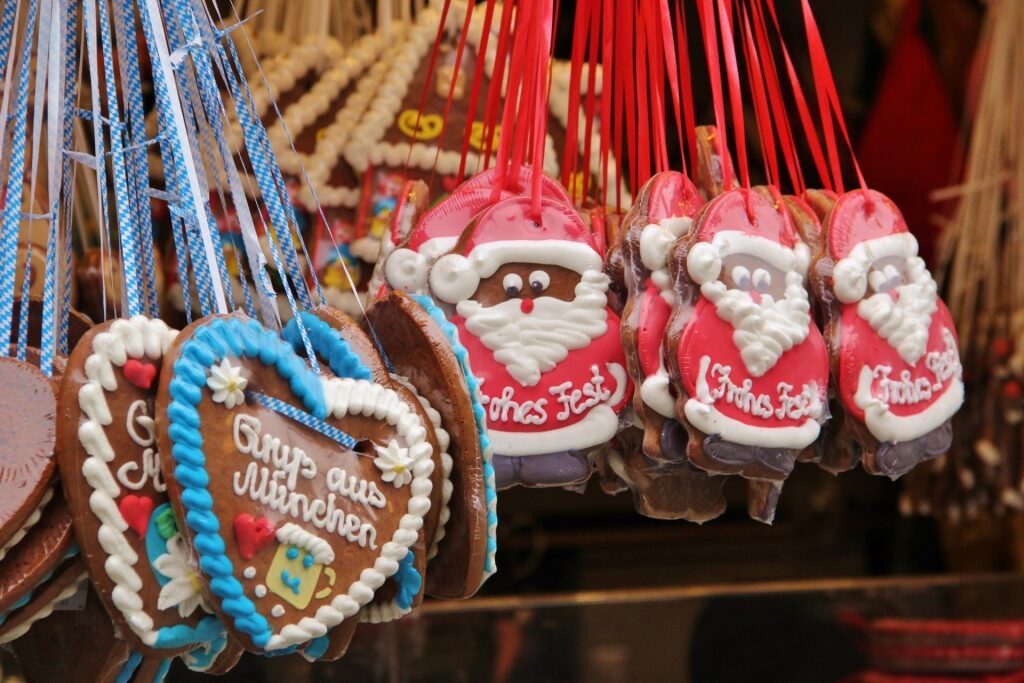
Gingerbread cookies
What all these German Christmas markets have in common is a great atmosphere, seasonal shopping, hearty food, and warming drinks. Walking around, browsing and grazing, is the whole point, so come prepared with good shoes and warm clothing.
Markets can be crowded on weekdays, and especially so nearer to Christmas. Visit mid-week if you can, and early in the month, for a quieter experience.
It’s worth bringing some cash in Euros for stalls that might not accept plastic. You will also need coins to use a public restroom—although bars and restaurants are an obvious alternative.
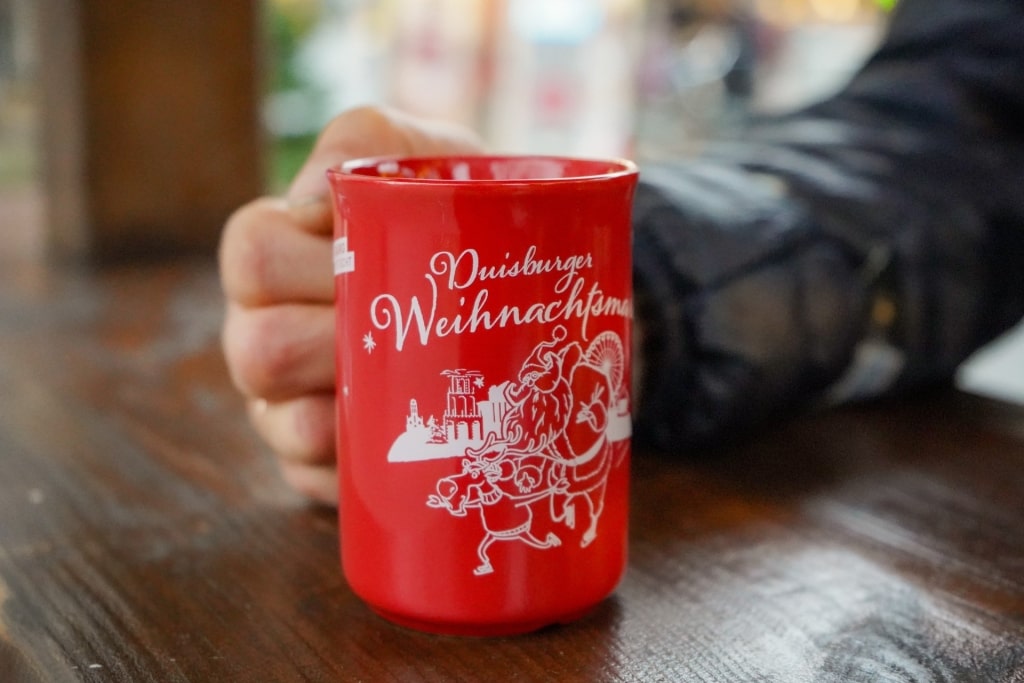
Glühwein mug
Every market has its own specific Glühwein mugs, for which you pay a small deposit—usually under €5—to encourage recycling. They also make great souvenirs and some people have built up quite a collection.
Christmas Food & Drink
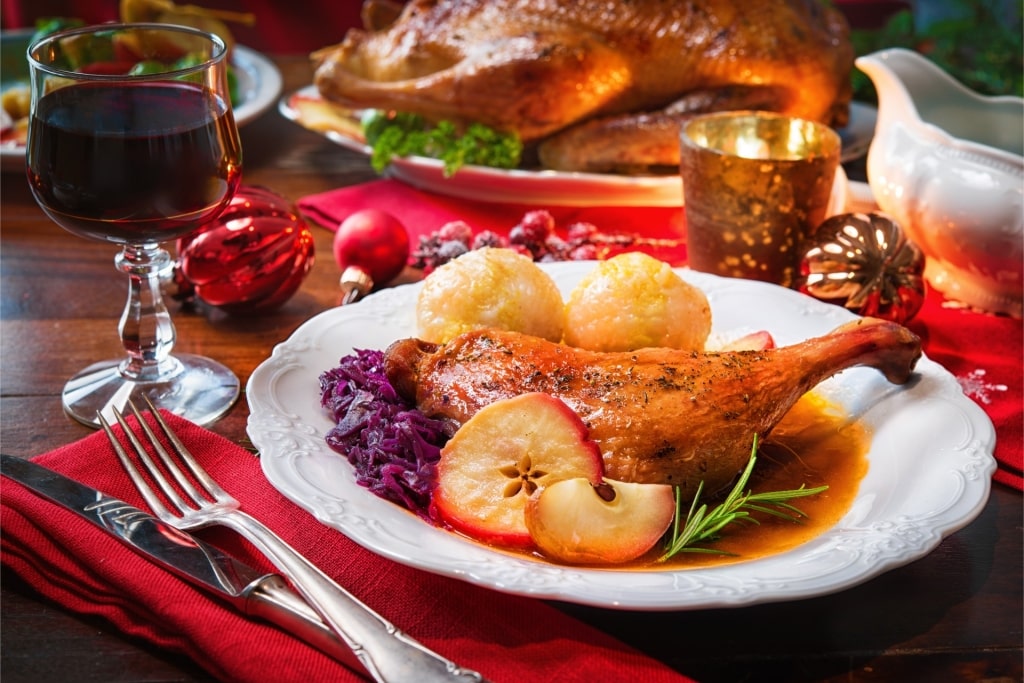
Roast duck
During the Christmas season there are plenty of seasonal treats to discover. Indeed, Christmas markets are as much about browsing the many warming German foods—and drinks—on offer as they are about shopping.
In terms of street food, visitors will smell Reibekuchen, or potato pancakes, from blocks away. These crisp, golden rounds are served up hot with apple sauce or even smoked salmon.
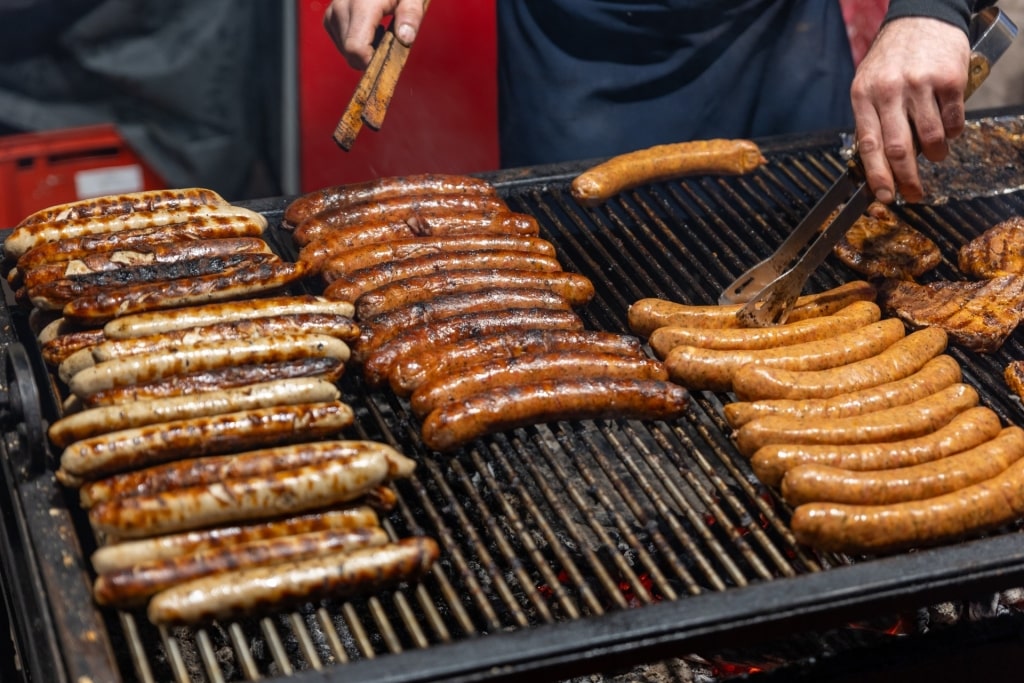
Bratwurst
Not just a Christmas treat, Bratwurst and other sausages are found everywhere. They are usually grilled and served in a crusty roll with mustard for a quick, hearty snack.
Geröstete/Gebrannte Mandeln—roasted/candied almonds—are another seasonal staple. Coated in sugar and spices, the sweet, nutty smell is very evocative of Christmas.
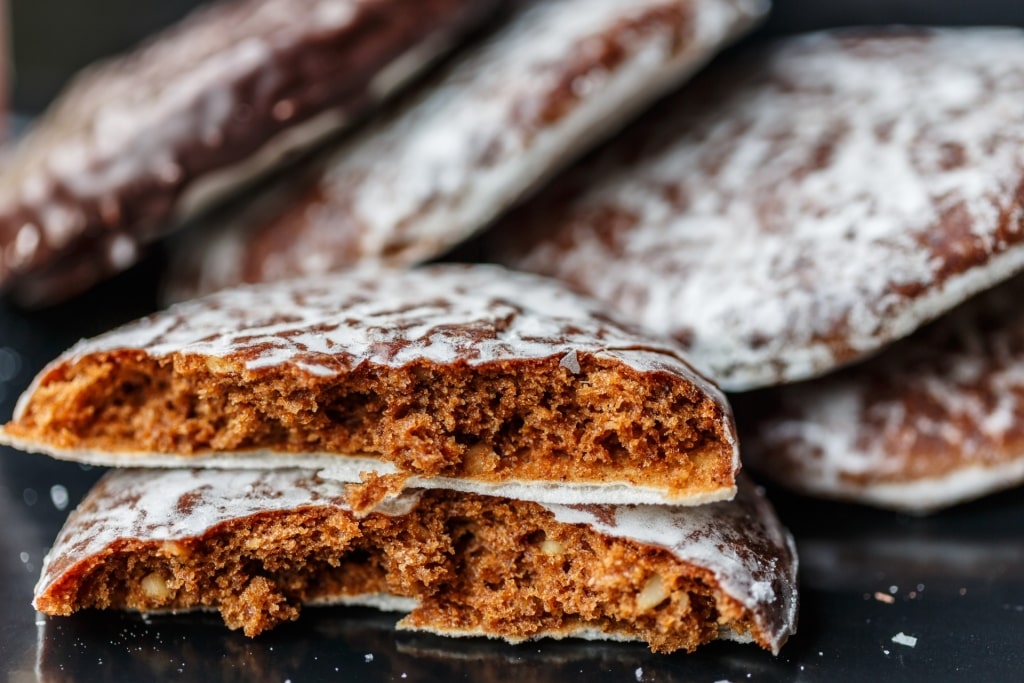
Lebkuchen
For something even sweeter, look for Lebkuchen—spiced gingerbread cookies with frosting. These Christmas delights range from simple heart-shaped designs to the most elaborate of decorated varieties.
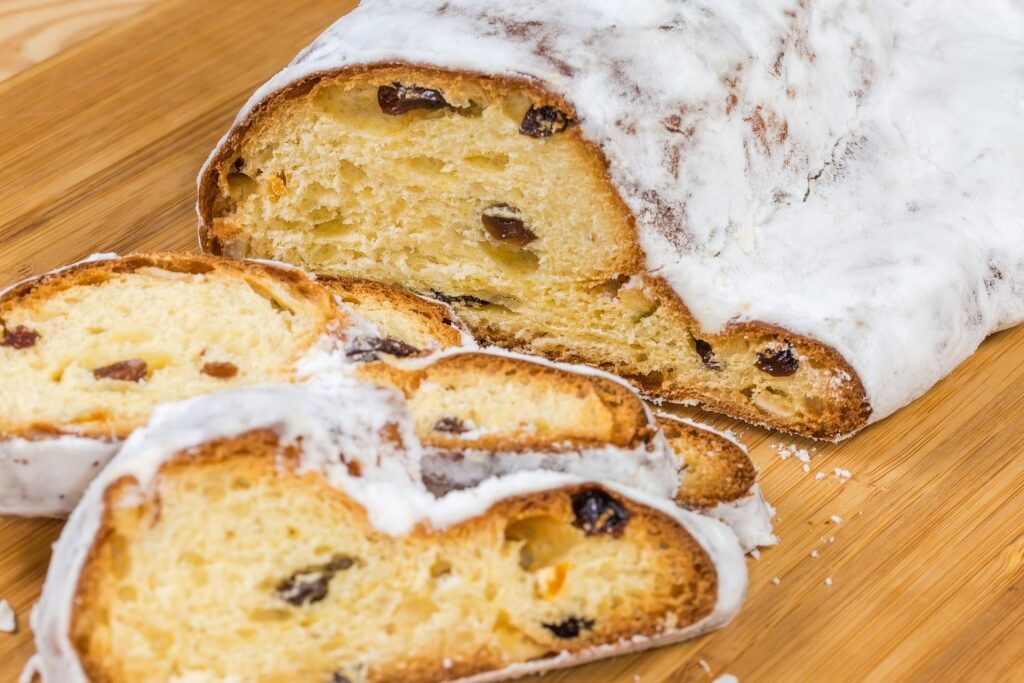
Stollen, that familiar fruit-filled Christmas bread dusted with powdered sugar, is originally from Dresden. However, you’ll now find it everywhere in Germany—and far beyond.
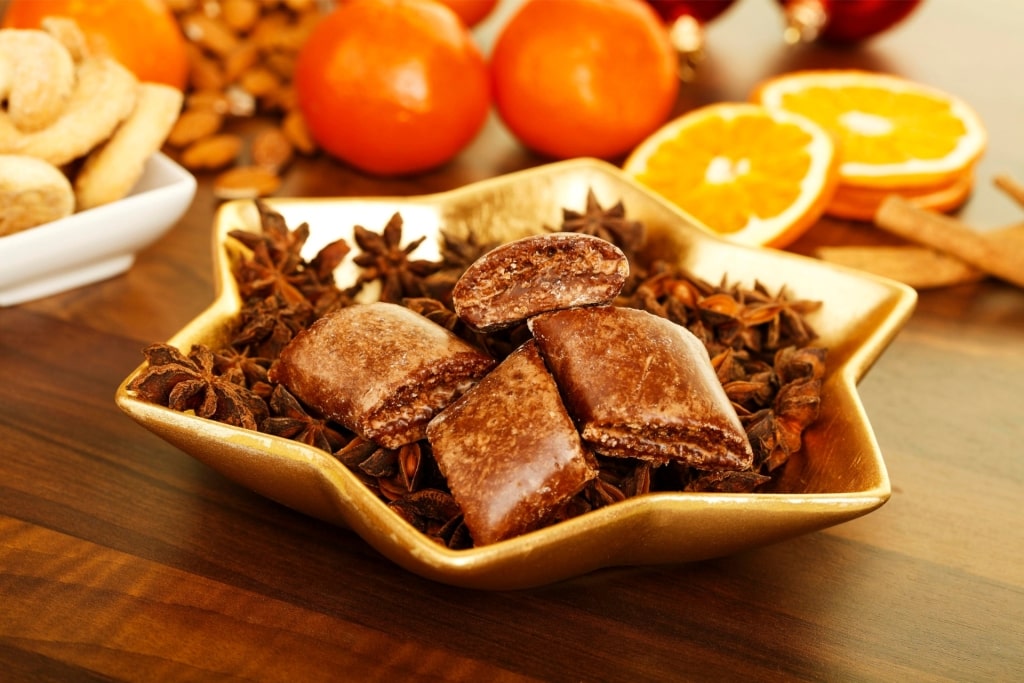
Magenbrot
Magenbrot—”stomach bread”—is a small, spiced cookie very similar to gingerbread. Originating in Switzerland, it’s now found throughout southern Germany as well.
There are plenty of other cookies, including Lebkuchen gingerbread in Nuremberg. A Frankfurt specialty is Bethmännchen, made with marzipan and almonds.
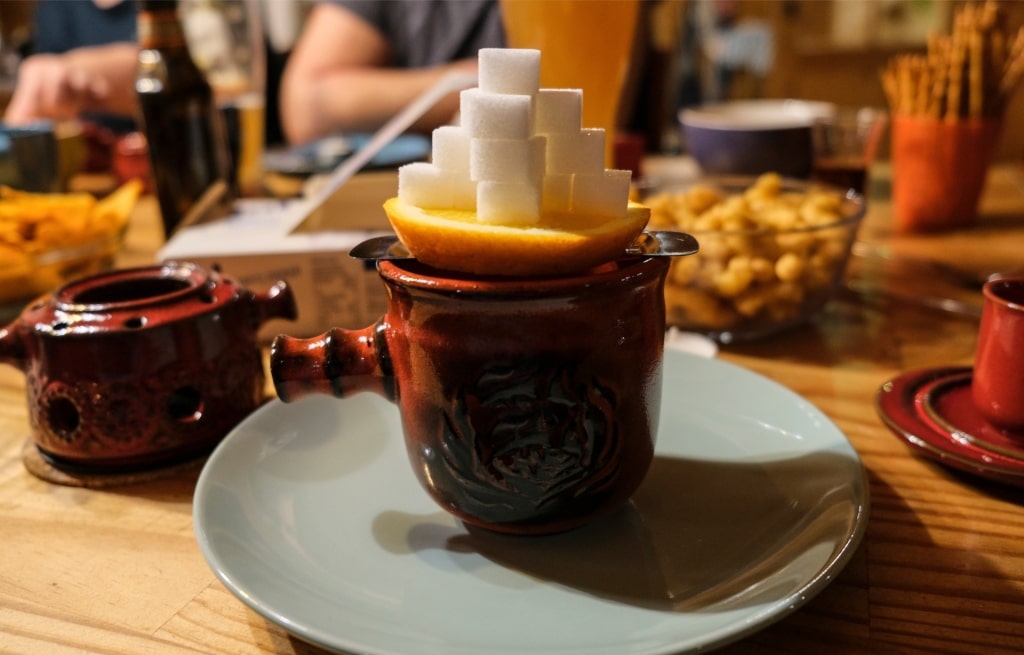
Feuerzangenbowle
Don’t miss Feuerzangenbowle: mulled wine with a sugar loaf set on fire and dripped into the drink. Regular mulled wine, the famous Glühwein, is warm red wine spiced with cinnamon, cloves, and orange peel.
Restaurants in this season might serve up Gänsebraten—roast goose—or Sauerbraten—marinated roast beef. Rheinischer Himmel un Ääd is a Rhineland specialty mixing mashed potatoes and apples with black pudding.
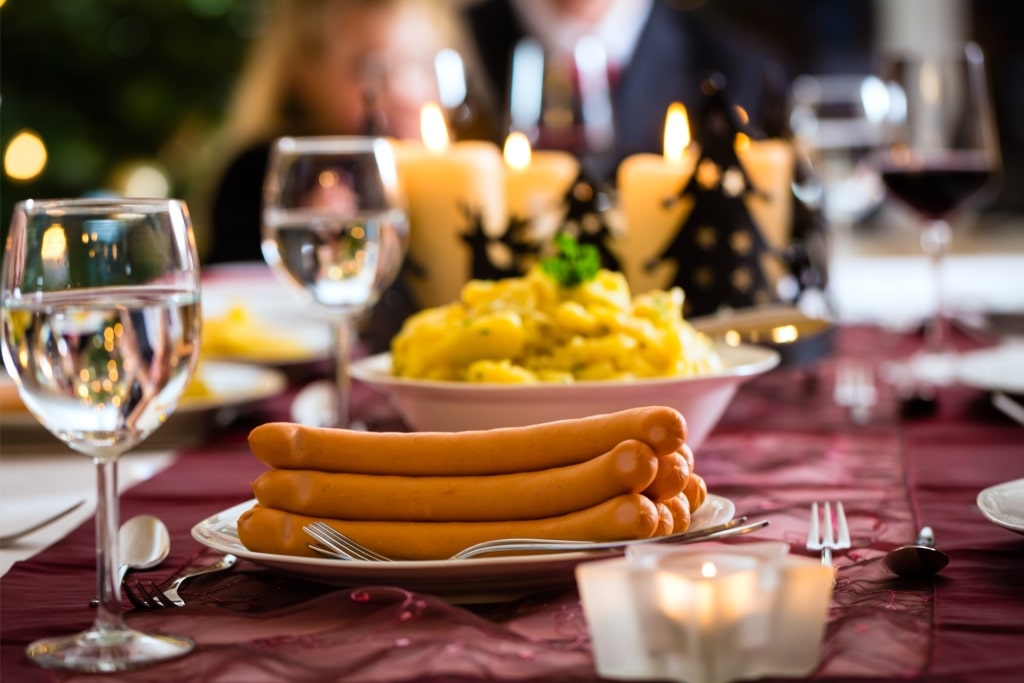
Würstchen mit Kartoffelsalat
At home, people will enjoy Christmas Eve or Christmas Day dinners of roast goose or duck, or a marinated beef roast. Würstchen mit Kartoffelsalat—sausages with potato salad—is a lighter Christmas Eve dish.
Christmas Presents
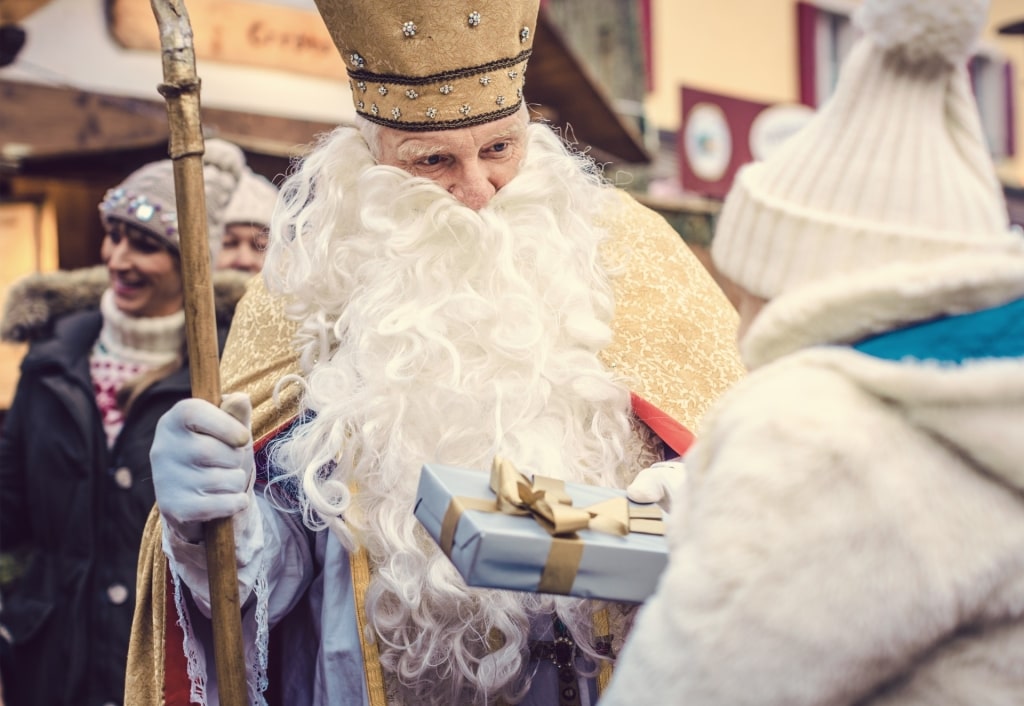
Gift giving
We mainly have German religious reformer Martin Luther to thank for the tradition of giving gifts on Christmas Eve. He, with other Protestant reformers, moved the tradition from December 6, St. Nicholas Day, to Christmas to rebel against the Catholic practice of honoring saints.
In the Netherlands, St. Nicholas’ Eve on December 5 is still the major time for Christmas presents. The good news for German children is that they now receive presents on both days, albeit with a smaller one on December 6.
For adults, Germans tend to prefer practical presents that will last a lifetime. That includes Christmas decorations that can be displayed for years and even generations.
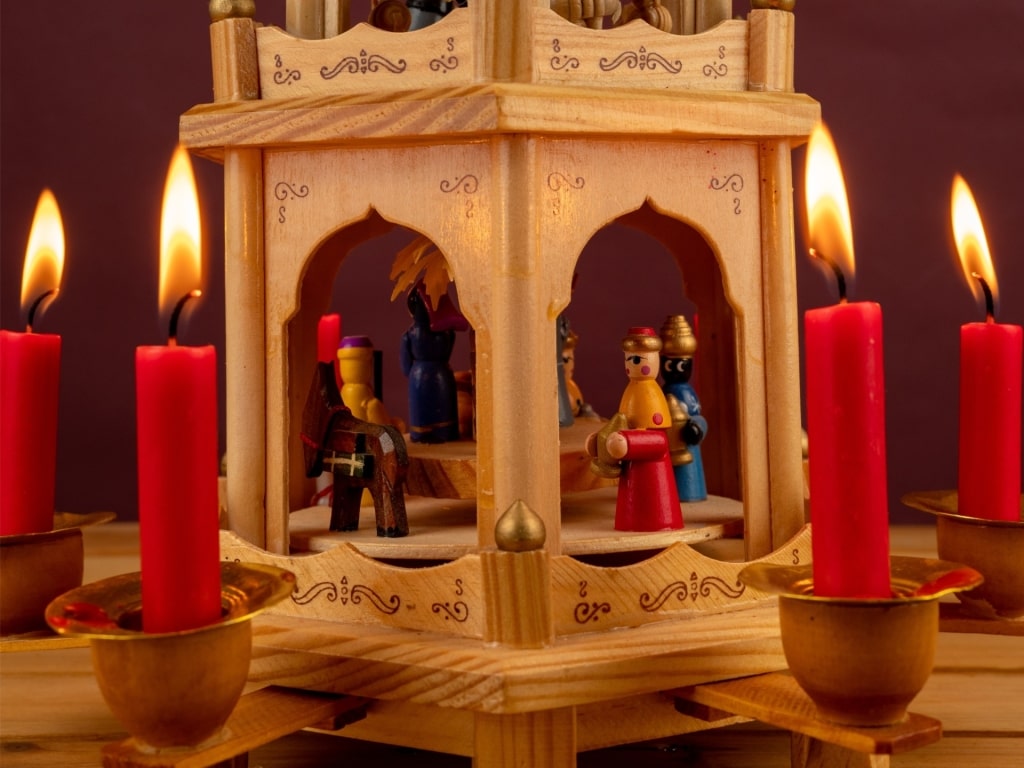
Christmas Pyramid
One common example is a Christmas Pyramid, a multi-tiered wooden carousel with tiny figures. The heat from a candle makes the intricate figures rotate.
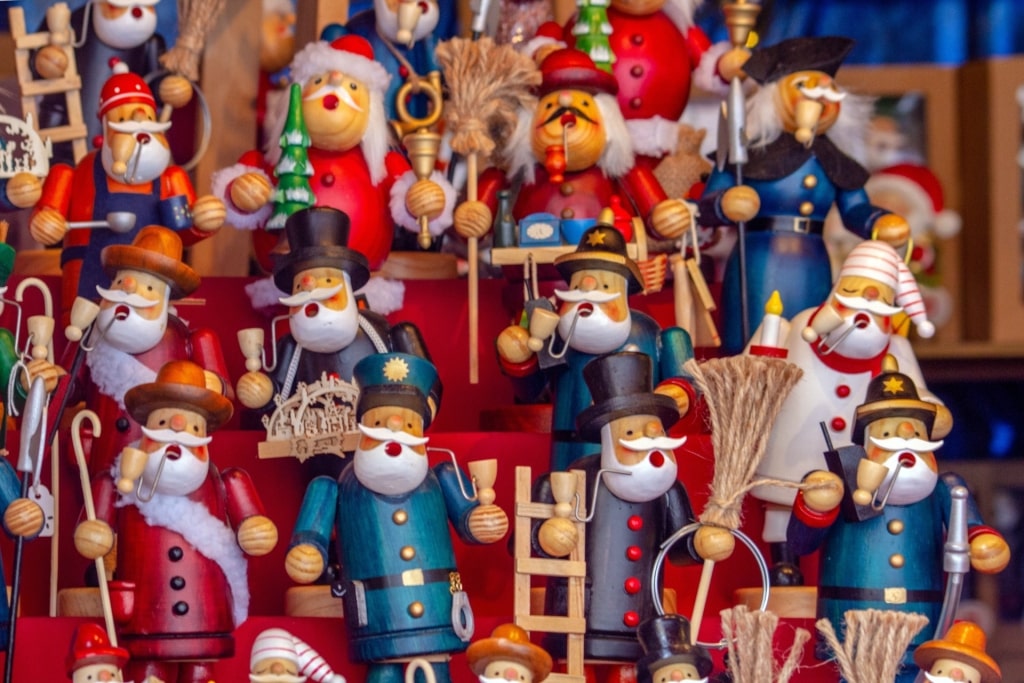
Räuchermänn
Another lovely Christmas souvenir is an incense smoker, or Räuchermänn. This is a small wooden figure with a removable top which you lift to insert an incense cone.
Look out too for nutcrackers, a decorative and very practical present. Elaborate hand-carved ones from the Erzgebirge region have become serious collector’s items.
Erzgebirge is also famous for its wooden toys—and what parent or grandparent can resist those? From toy soldiers or tractors, to dollhouse furniture and Nativity scenes, there’s a wide range.
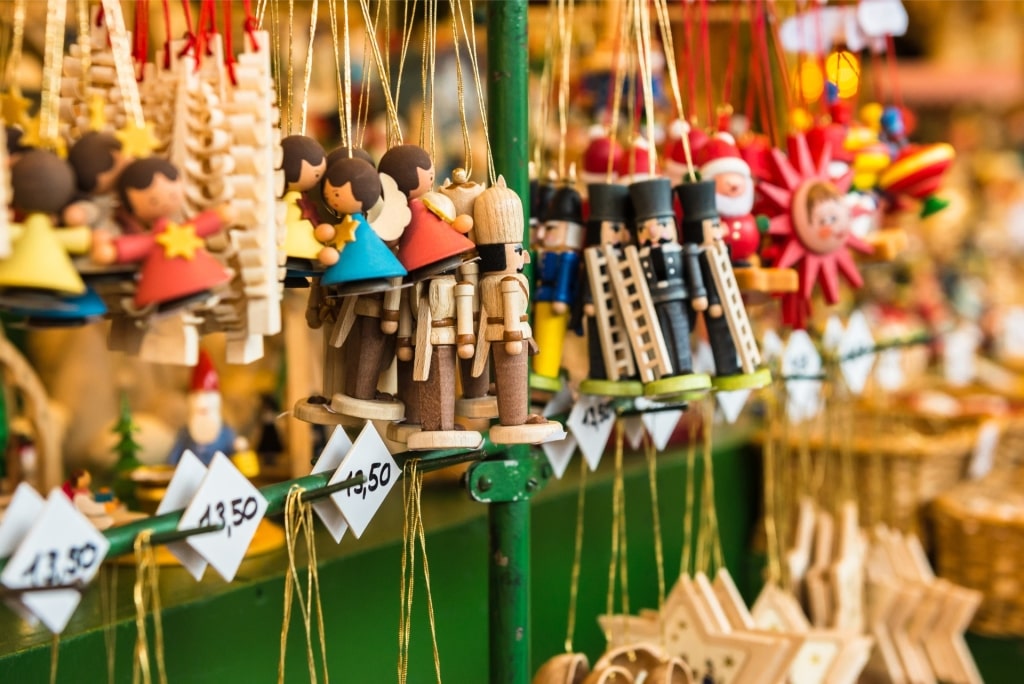
Wooden toys
As well as these gifts reflecting Germany’s deep woodworking traditions, you’ll also find beautiful glass ornaments. Lauscha—where Christmas tree ornaments were invented in 1848—still produces these handblown treasures.
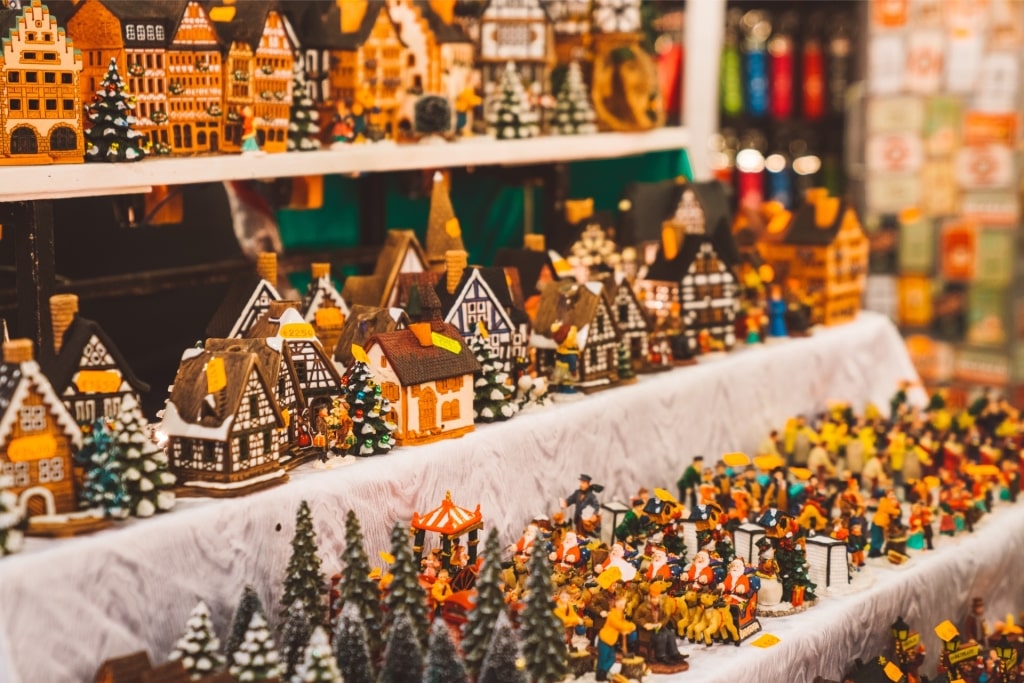
You’ll find stalls in Christmas markets offering all the above and more. Some of the cheaper souvenirs are now made in Asia, so be careful if you want the genuine German product.
FAQs
How does Germany celebrate Christmas?
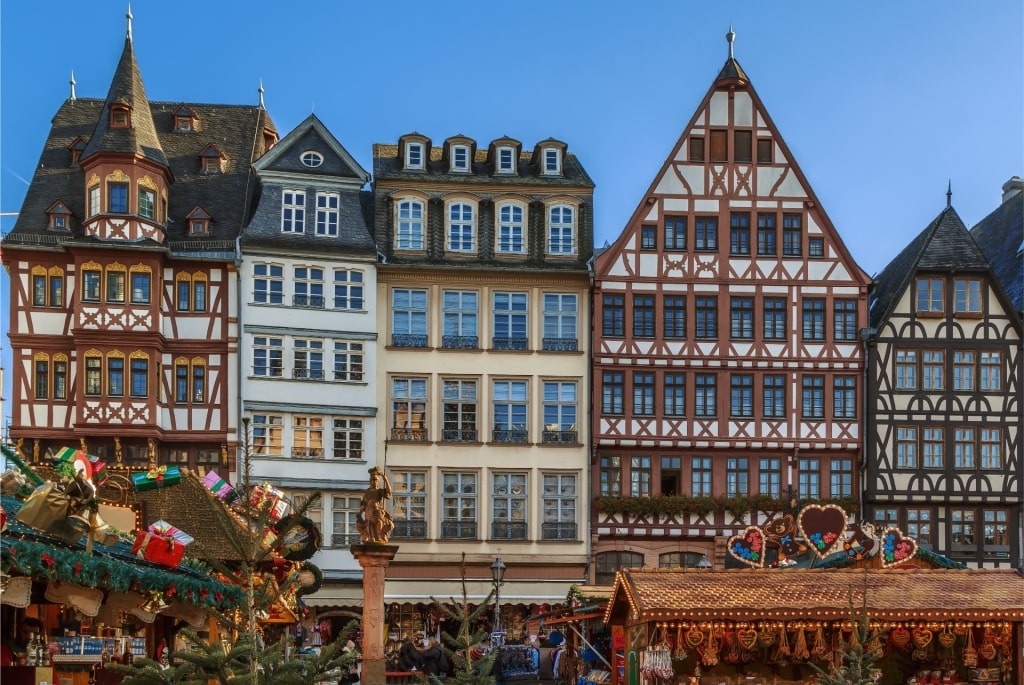
Frankfurt
Germany celebrates Christmas with traditional markets, family gatherings, and the exchange of gifts on Christmas Eve. The holiday season officially begins with Advent, and is counted down with wreaths holding four candles—one for each Sunday—and a daily calendar.
Is Germany a good place to spend Christmas?
Frankfurt
Germany is a great place to enjoy Christmas, especially if you love festive markets, traditional crafts, and a cozy winter atmosphere. The modern Christmas was practically invented here, so you’ll find authentic holiday traditions everywhere you go.
What are some fun facts about Germany’s Christmas?
Frankfurt
Germany gave the world the Christmas tree tradition, and the first glass Christmas ornaments were made there in the 1840s. There are 2,500 Christmas markets, with Frankfurter Weihnachtsmarkt being one of the oldest, dating back to 1393.
What are some unique German Christmas traditions?
Germans celebrate Heiligabend—“Holy Evening”—on December 24 as their main event, often going to church and opening presents that night. Another unique tradition is the Advent calendar, along with leaving shoes out for St. Nicholas on December 6.
What are traditional German Christmas foods?
Stollen
Stollen, a fruit-filled bread with powdered sugar, and Lebkuchen, spiced gingerbread, are Christmas staples. Roasted goose or duck are often served for the main Christmas meal, while Glühwein—mulled wine—and Feuerzangenbowle—a flaming punch—are real winter warmers.
Do shops and attractions stay open during Christmas in Germany?
Souvenirs
Most shops, restaurants, and attractions such as museums close on December 24, 25, and 26—which are all public holidays—while markets tend to end their season on Christmas Eve. Museums and tourist sites usually reopen by December 27, but it’s always good to check before visiting.
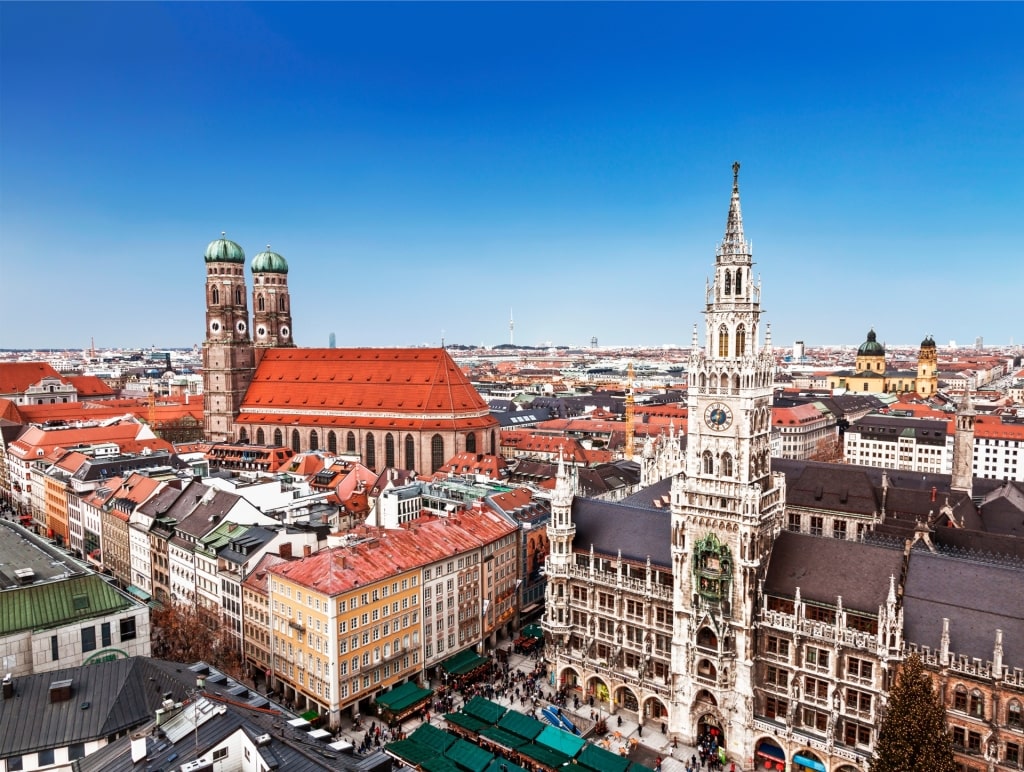
Munich
Are you ready to embrace the spirit of the season? Browse Celebrity’s river cruises and book your dream Christmas vacation.