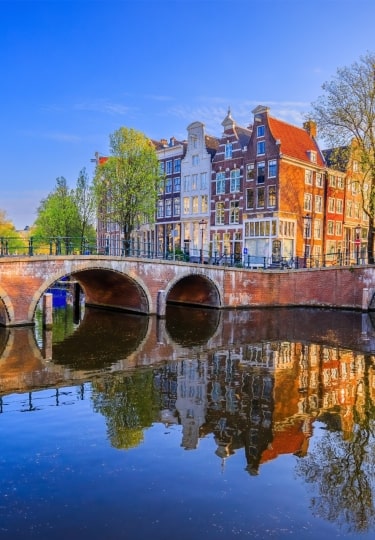
Amsterdam canals reflect the city’s cultural and historical evolution. Cruising, cycling, and strolling along canals in Amsterdam, medieval to modern, opens up diverse perspectives on urban expansion, innovation, maritime heritage and trading, colonialism, and much more.
The city’s famous canal network winds over 60 miles across the city. Here’s everything you need to know about the canals, from the most iconic architectural features to the best photo stops.
History of Amsterdam Canals
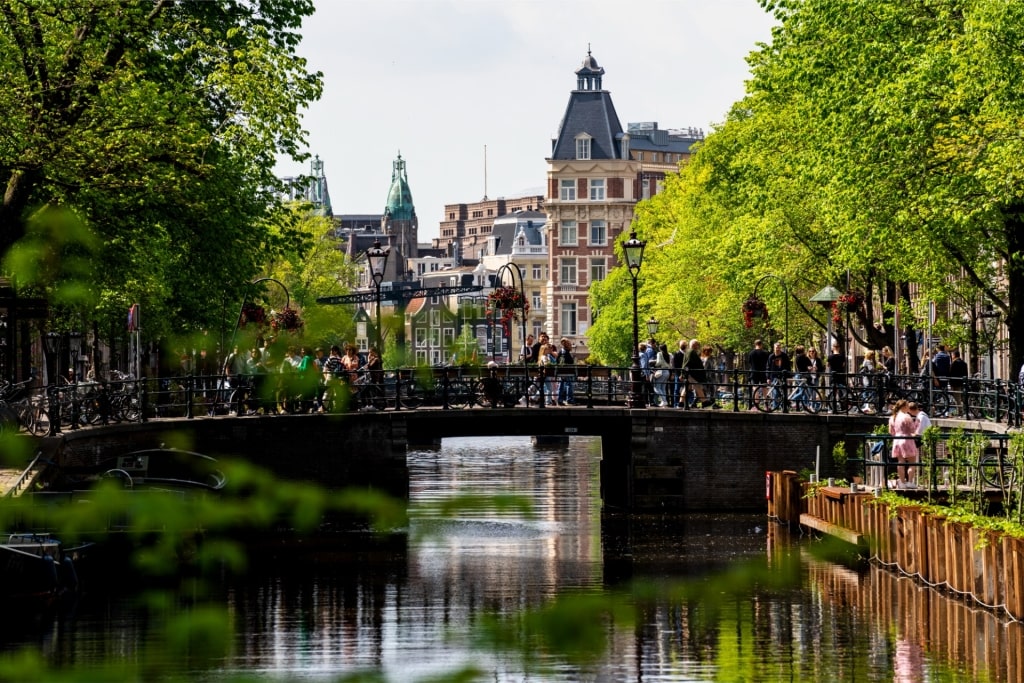
Amsterdam canal
Around the year 1200, Amsterdam was a swampy, lowland village on the Amstel River. Marshland farming was difficult, so fishing and trading emerged.
By 1600, ships from the newly formed Dutch Republic controlled maritime trade between England, France, Spain, and the Baltic Sea, leading to global trade through which immense wealth would emerge—what’s known controversially as the “Golden Age.”
Seventeenth-century prosperity fostered the rapid growth of Amsterdam’s population beyond the medieval walls and required smart urban engineering for drainage and making reclaimed land livable.
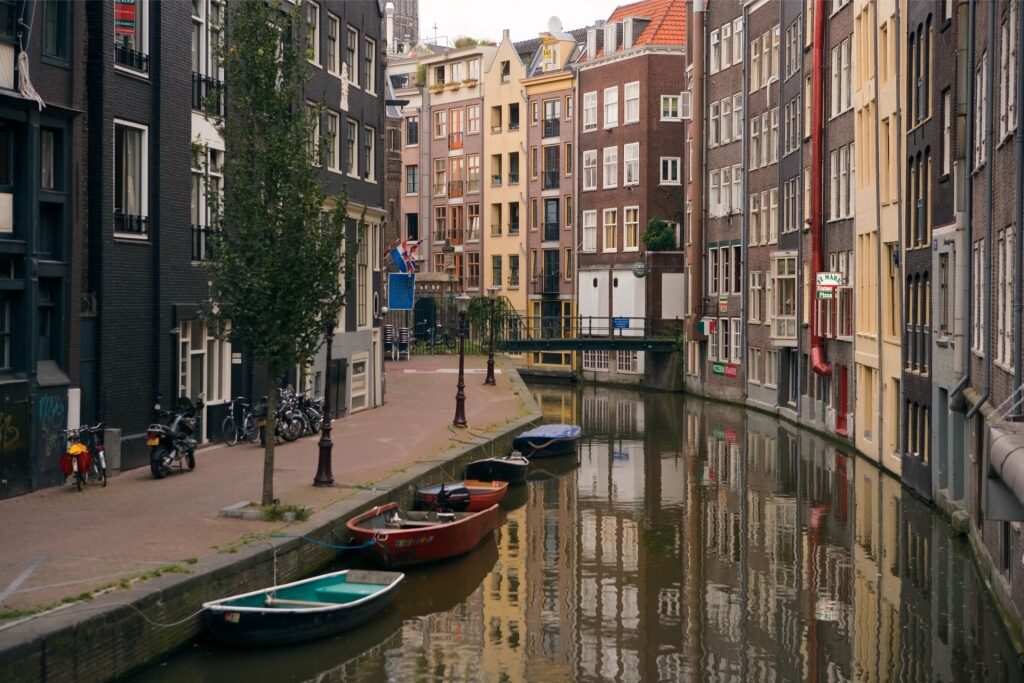
Amsterdam canal
Amsterdam’s so-called Grachtengordel, canal ring, was built through several phases of urban expansion and still has important functions for water management today. Recognized by UNESCO in 2010, Amsterdam’s canals are around 165 in number and, collectively, beat the canals of Venice in length.
The system effectively divides the Dutch capital into around 90 “mini-islands”, each with its own charm and sense of community.
Best Canals & Districts to Explore
Golden Bend
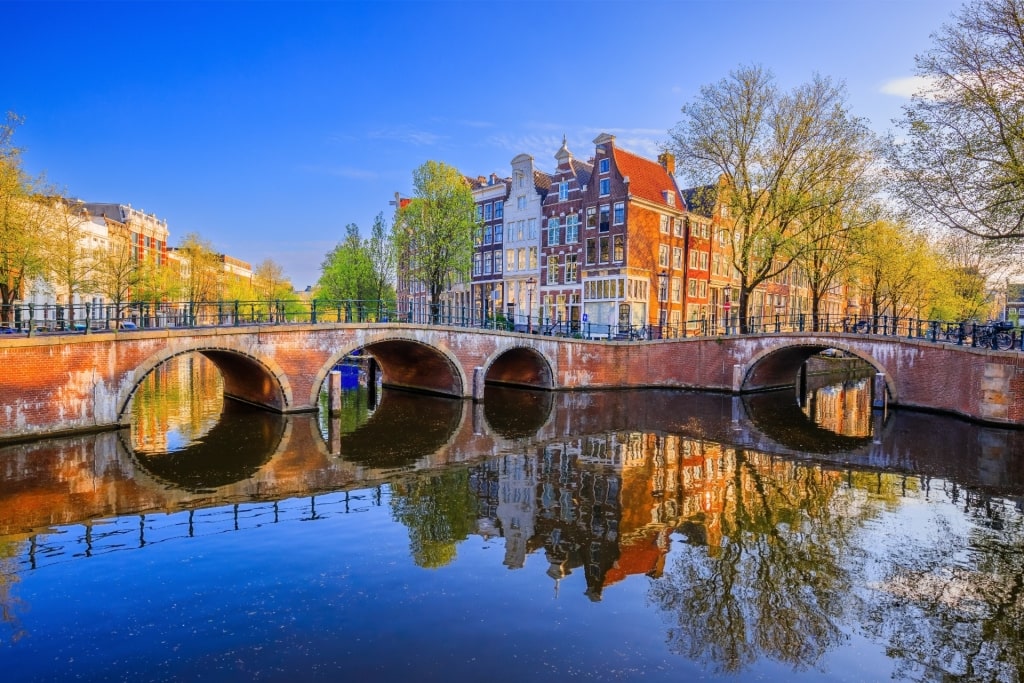
Keizersgracht
The canal houses along Herengracht, known as the Golden Bend, represent the most expensive constructions of the “Golden Age.” The opulent mansions here, once built by only the wealthiest—merchants, bankers, and regents, for example—are a must-see for their ornate exteriors, which also depict an interesting historical timeline. Herengracht, Prinsengracht, and Keizersgracht are arguably the most famous canals in Amsterdam.
Walking across the Golden Bend from Vijzelstraat, the early canal homes here are quite narrow, as families were only allowed to purchase single plots. Double- and triple-wide gables further down represent how building regulations later changed for the most affluent.
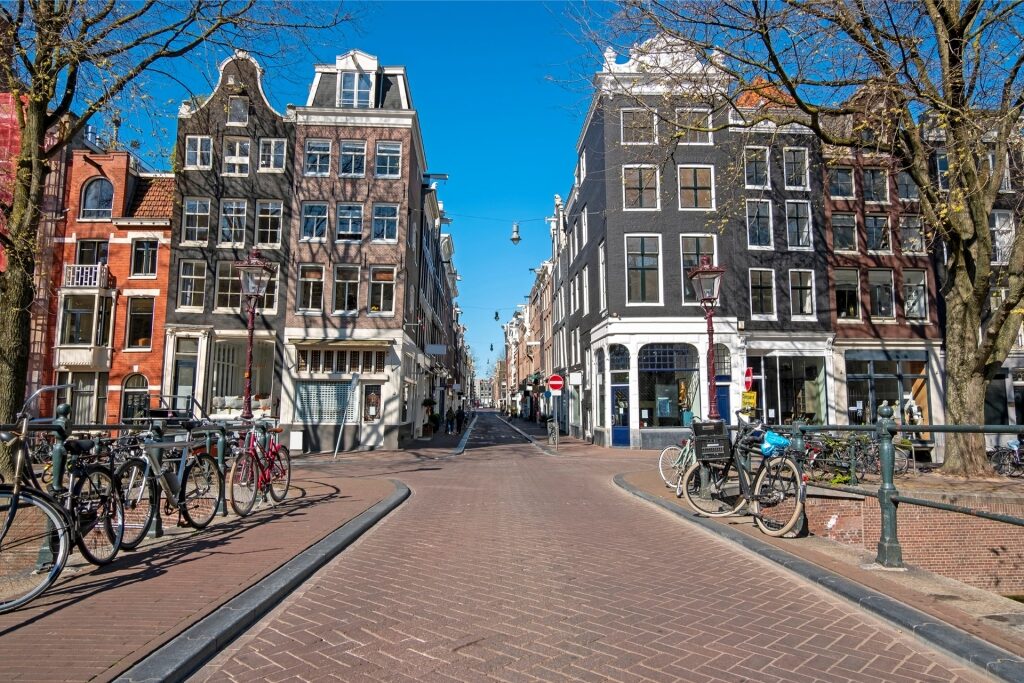
Herengracht
The real estate along the Golden Bend is no longer solely residential and now comprises business spaces and some private homes. The only building that’s publicly accessible is the quirky KattenKabinet at Herengracht 497. This eccentric, feline-themed art museum, founded by a wealthy Amsterdammer in memory of his late pet, houses paintings by Picasso, Rembrandt, and Toulouse-Lautrec, among others.
Spiegelkwartier
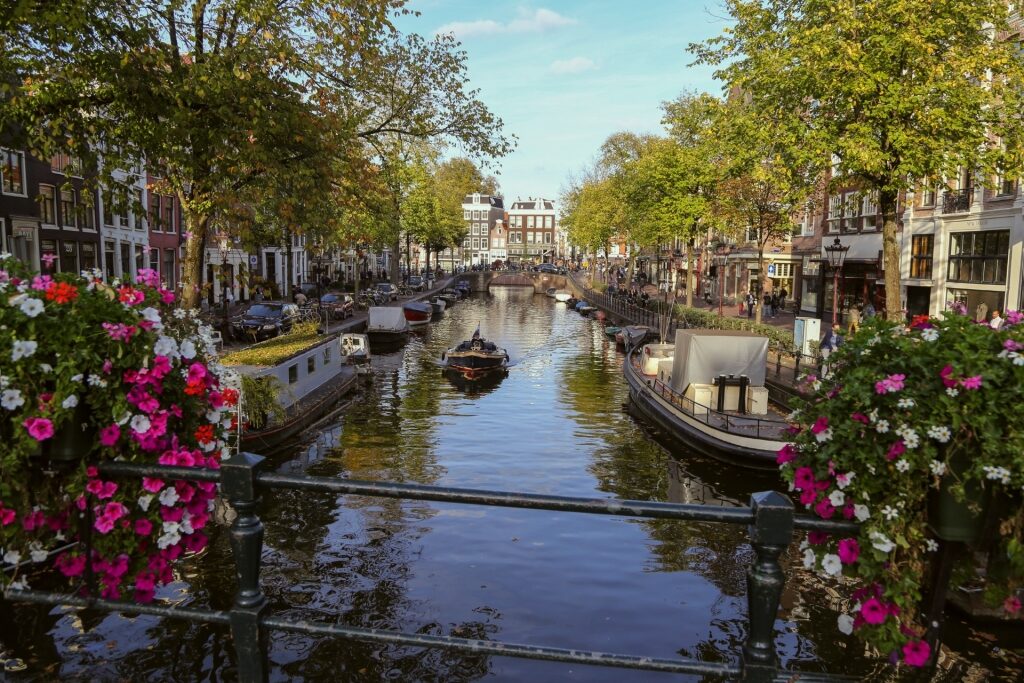
Spiegelgracht canal
The so-called Spiegelkwartier, located along the Spiegelgracht canal in Amsterdam, is the city’s art and antiques district. Strolling here is fantastic, peering into private modern art galleries and several antique stores displaying all kinds of curios in their shopfronts.
Most of the shops here are not very inviting for the non-antique collector, when it comes to pricing as well as service. One lovely exception, though, is Kramer Kunst & Antiek. The generations-old, family-run business on the corner of Spiegelgracht and Prinsengracht is a beautifully curated antique shop with much to “ooh” and “aah” over.
The Flower Market
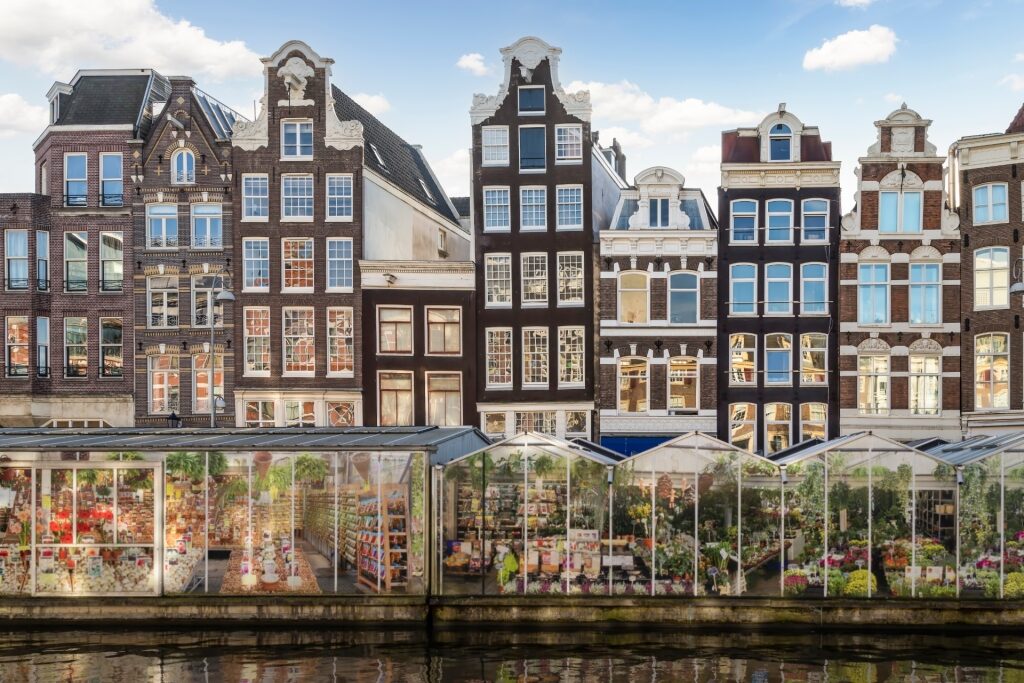
Flower Market
Amsterdam is known for its 1860-founded Bloemenmarkt, or Flower Market, where nurserymen and women once floated up the Amstel River to gather and sell their petaled wares. The market was once a waterlogged affair, but now it rests on piles.
The Flower Market is worth a stroll along the Singel canal for its historic value. It is somewhat touristy, but you can buy cut tulips in season and bulbs year-round from vendors.
Things to Do Along the Canals
Canal Cruises
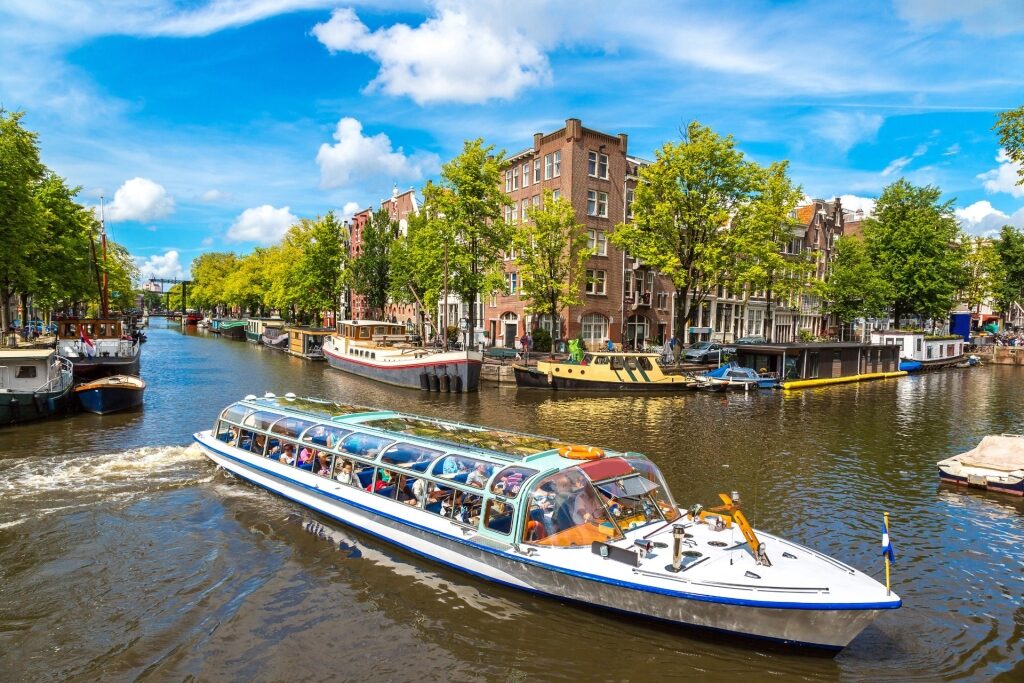
Canal cruise
Amsterdam canal tours are a most memorable way of exploring what these waters are about. If you’re taking a cruise, opt for a vessel with an open seating area as opposed to steamed-up windows. On a night tour, you’ll see the bridges lit up; tickets for these cost a bit extra.
The ultimate Amsterdam canal experiences, though, are those that allow you to hire a boat for a few hours and glide around landmarks at your own pace. This way, you can explore out-of-the-way areas, too. Neither a boat license nor prior experience is required, and you get a good intro from tour operators upon pickup.
For a unique and sustainable ride, check out the boat tours operated by Plastic Whale. The company offers “plastic fishing expeditions” on canals in Amsterdam during which you pick up litter with nets. The e-boats, made entirely from recycled plastics, round out a thoroughly eco-conscious tour experience.
Museums & Landmarks—Some Even Afloat
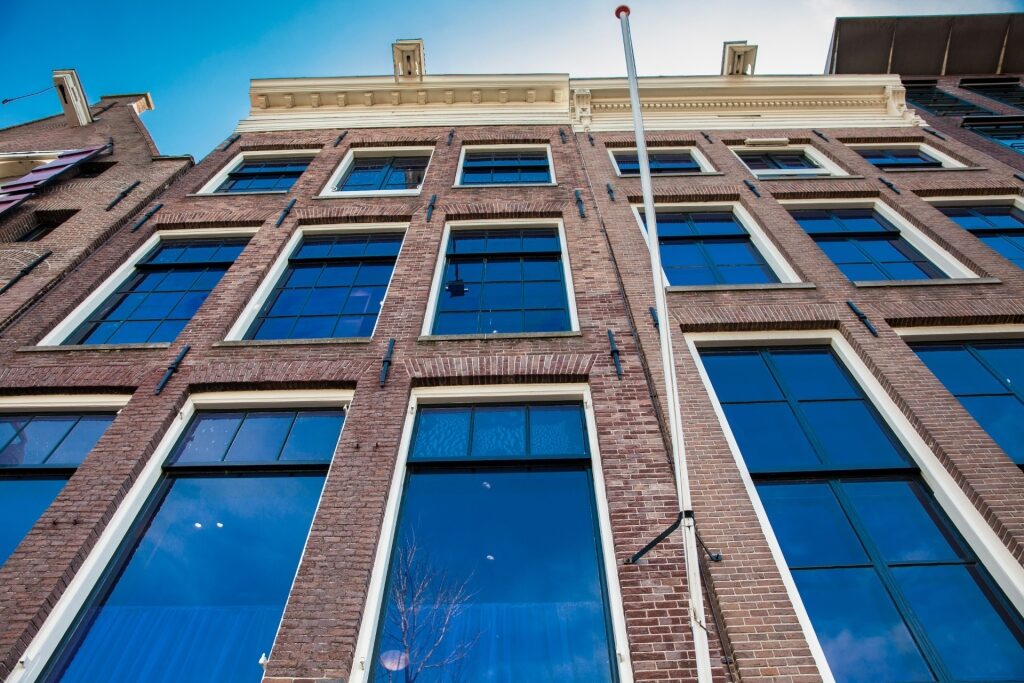
Anne Frank Huis
There are some 7,500 historic monuments around Amsterdam canals, from churches to museums. The Houseboat Museum, a 1914-built sailing barge on Prinsengracht, makes for an interesting visit to find out what “tiny living” is like for those who live aboard them. Though not floating, Het Grachtenhuis, or the Museum of the Canals, is the city’s most informative museum about the history of the waterways.
Some canal houses, now cultural attractions, are historical exhibits of their former residents, such as the Anne Frank Huis. Here, you can enter the attic where the Frank family went into hiding from the Nazis. At Het Rembrandthuis, you can poke around the legendary artist’s former home and studio. An honorable mention also goes to the Museum Van Loon, which has been preserved with the 17th-century furnishings of the noble patrician family who once dwelled inside.
Festivals & Events
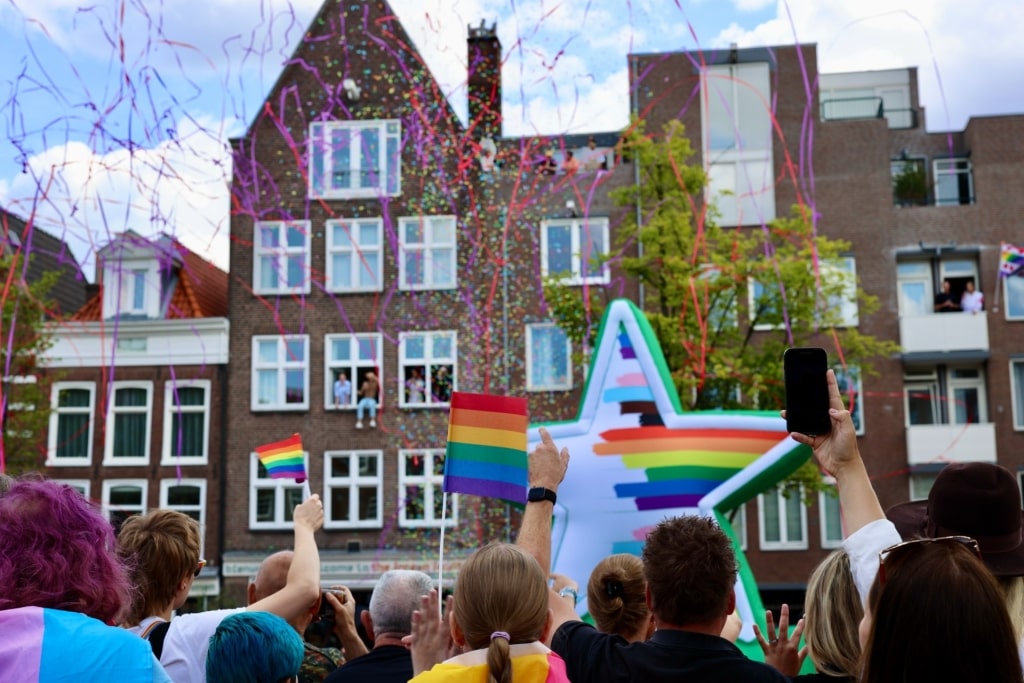
Amsterdam Pride
Celebrations take place on and along canals in Amsterdam on a year-round basis. The 10-day Grachtenfestival in August hosts a vibrant program of classical music performances, including open-air concerts along canals, but also in landmarks throughout the entire city.
Amsterdam Pride is the festival program’s pièce de résistance. In late July in Amsterdam, or sometimes early August, the Dutch capital’s LGBTQ+ Pride parade is the only one in the world that takes place on water. Joining huge crowds along the water to watch dozens of vibrantly decorated floats from local organizations and residents is an unforgettable, fun experience.
Best Canal Photo Stops
Reguliersgracht
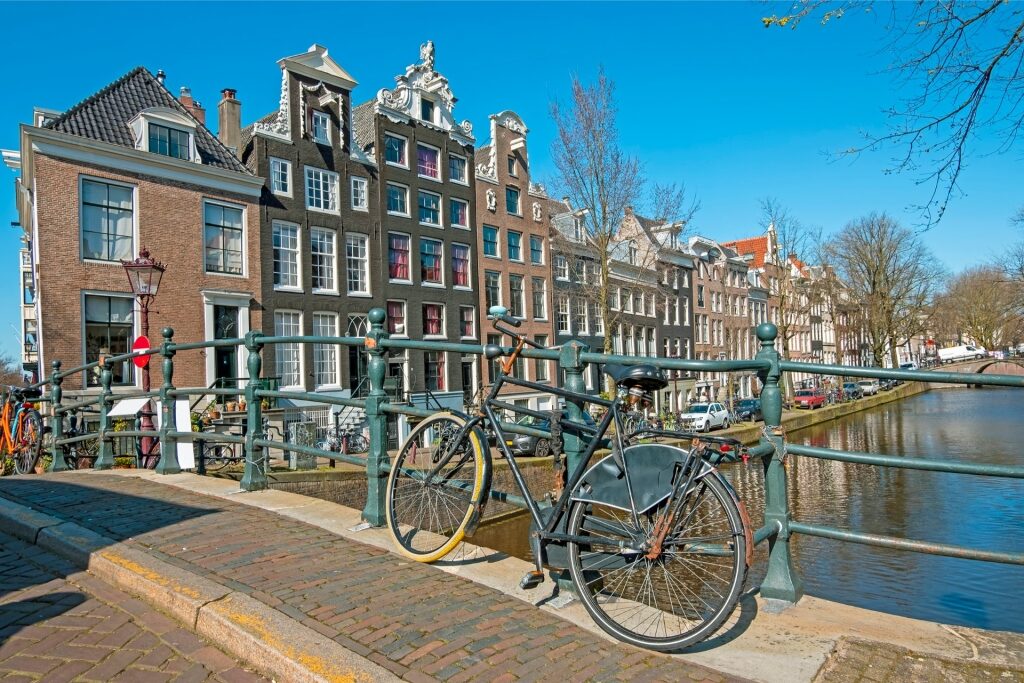
Reguliersgracht
Reguliersgracht is known as the “Canal of Seven Bridges” and sometimes, the “Necklace of Bridges” because of the way the canal perfectly aligns seven bridges in a single perspective.
The best view is from a boat passing through, but on land, you can also see the seven bridges line up if you look straight down off Reguliersgracht with your back to Thorbeckplein and Herengracht directly in front of you.
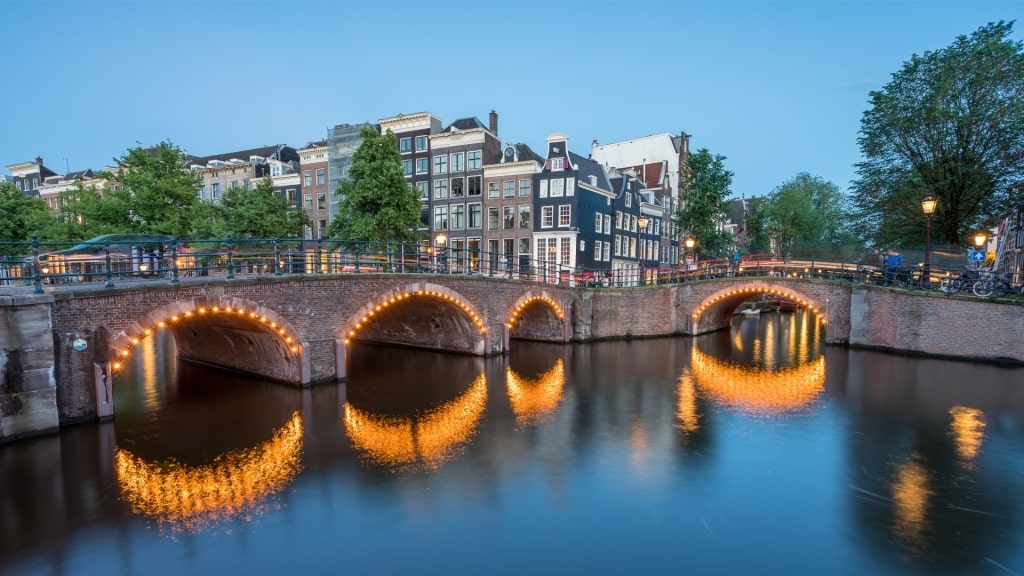
Reguliersgracht
The “Canal of Seven Bridges” is a popular stop for photos by day, but also at night, when the bridges are lit up with tiny glowing lights. The “necklace” view is most synonymous with Reguliersgracht as a feat of 17th-century Dutch engineering, yet it also has another impressive, yet lesser-known, panorama.
If you look down from where Keizersgracht and Reguliersgracht come together east-to-west and north-to-south, you can see a total of 15 bridges at once. They’re not perfectly aligned, but make for a wonderful photo nonetheless.
Museumbrug
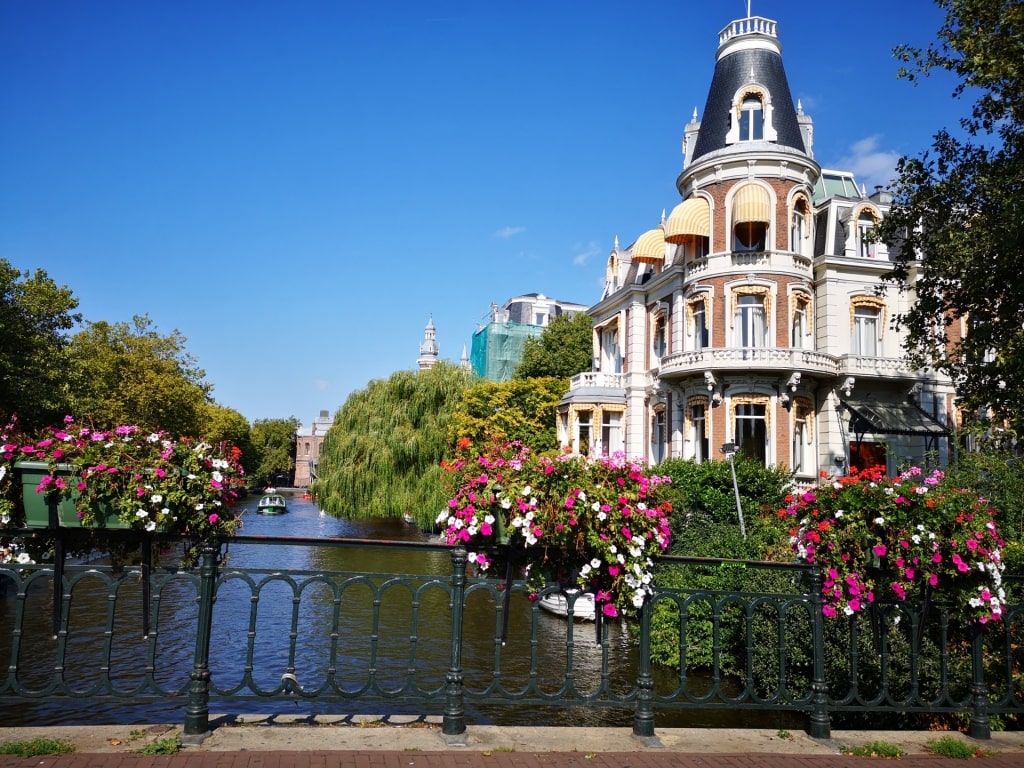
Museumbrug
Museumbrug, or Museum Bridge, effectively halfway between the Rijksmuseum and Spiegelkwartier, offers all the elements of a perfect canal photo. Facing towards the museum, the bridge’s right side brings together cobblestones, a flower-covered railing, and magnificent architecture reflecting off the canal waters.
The bridge stays busy, but if you ask politely, you can usually get a crowd-free shot—possibly also a kind soul to take the photo for you—without too much effort. If you’re taking the photo, the best perspective is a bit off the sidewalk, so watch out for any cyclists darting through.
Best Hidden Features of Amsterdam’s Canals
Canal Houses: Hoists & Gables
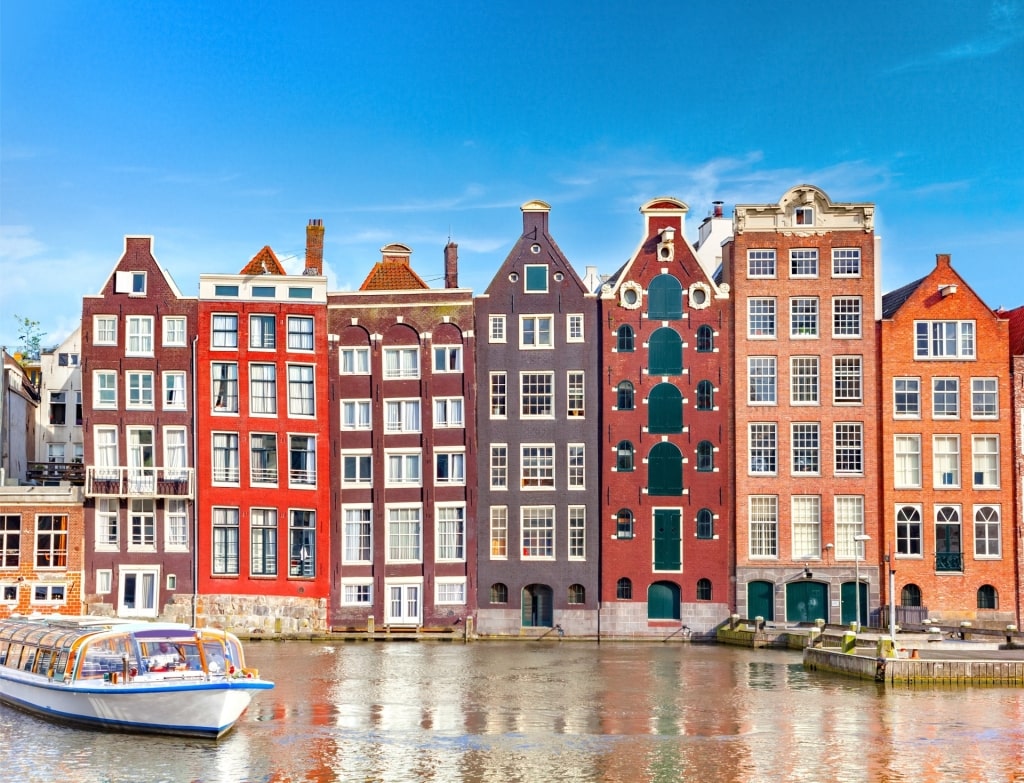
Canal houses
Look closely at canal houses to discover some of the fascinating hidden features of their gables. Back in the day, gables, or roof-level facades, were part of an architectural design to protect canal houses from public view. As wealth grew, it became fashionable to build gables bigger and with more decorative flourishes to symbolize status.
Also interesting is how many canal houses have been deliberately built to lean forward. Thanks to narrow staircases, owners once needed an easy way to move large goods and furniture onto their upper floors. Some gables were built with a hoist for lifting objects through windows without damaging facades.
Canal Bridges
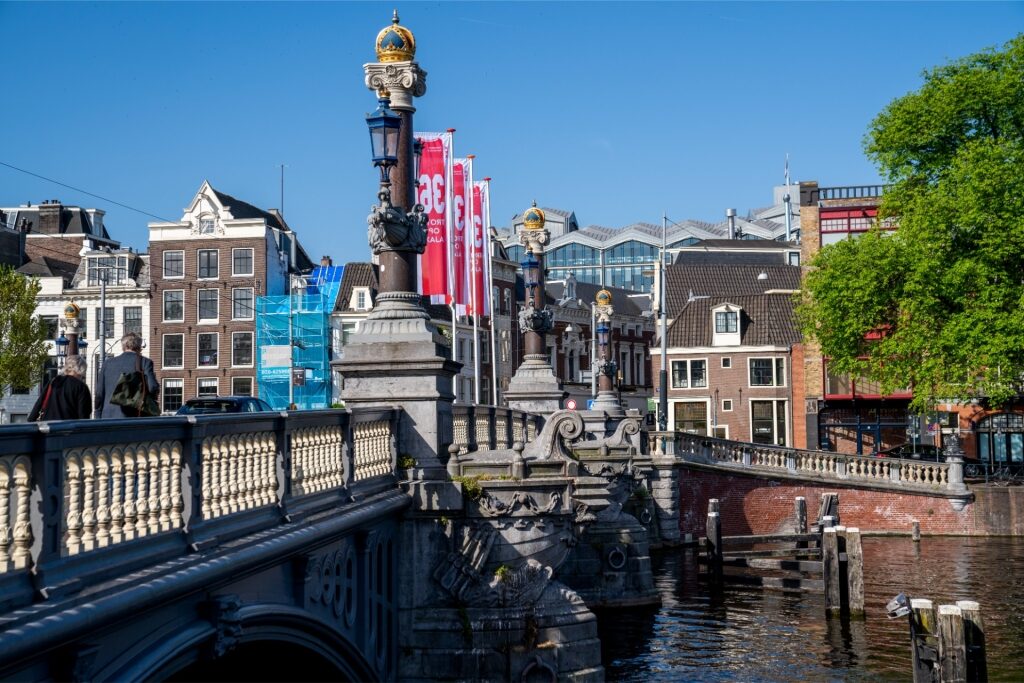
Blauwbrug
The canals in Amsterdam are interconnected by more than 1,700 bridges. Besides providing the obvious functionality of regulating water flow and urban traffic, some are truly magnificent architecturally.
On the Singel, the 1648-built Torensluis is the city’s oldest and widest bridge. Meanwhile, the Blauwbrug, or Blue Bridge, crossing the Amstel River, is often considered the most beautiful Amsterdam canal bridge. The Magere Bridge, or Skinny Bridge, has featured in several movies. All three are reachable within a mile-and-a-half walk.
Sluices
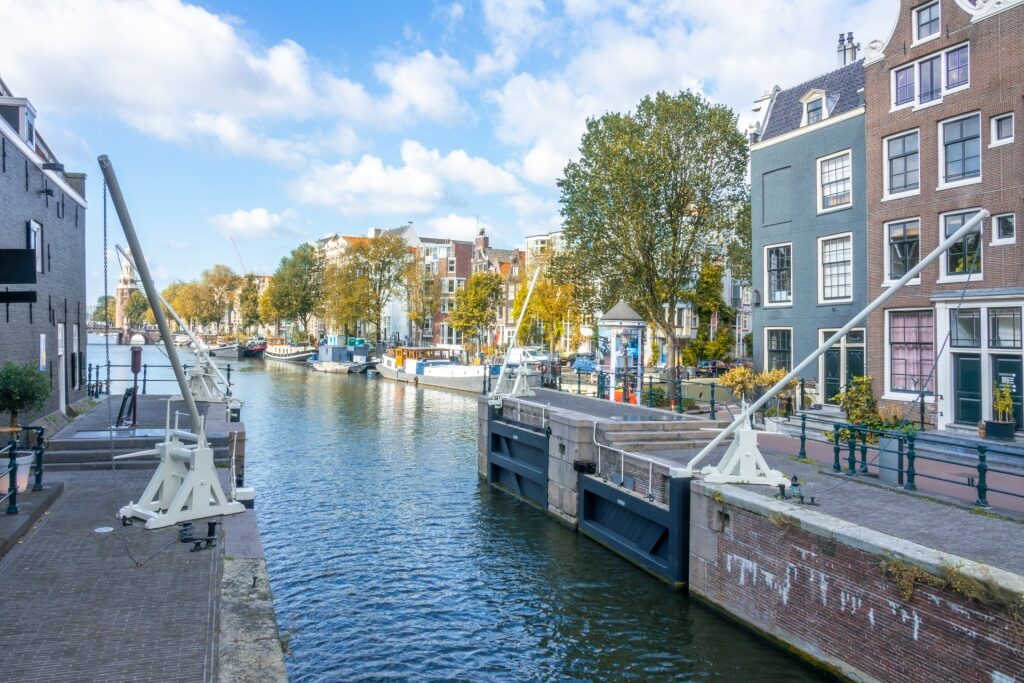
Amstelsluizen
Sluices, or locks, have existed since medieval times, but those built for Amsterdam canals throughout the 17th century required innovation with a special purpose. Their role was to exchange water to support the notion of living and working in compact urban canal areas, especially before modern sewerage was invented.
Sluices are everywhere, but one of the most important is the Amstelsluizen, or Amstel Locks. It’s worth a quick peek when you’re visiting the Skinny Bridge.
Honorable Mention: Pee Curls
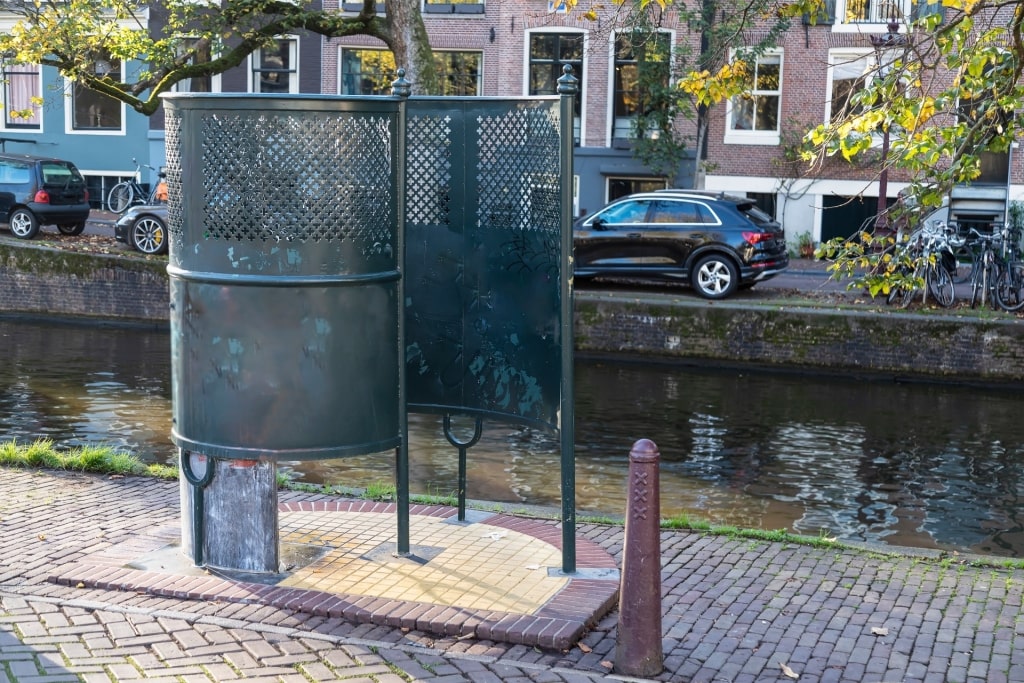
Plaskrul
Public urination into waterways has historically been a serious health and safety issue for a city where people live and work all around them. This has led to a fascinating innovation in Amsterdam called plaskrul, or pee curls.
These spiral-shaped steel men’s urinals are mostly found around the medieval center. The first was installed in 1870.
Tips for Visiting the Canals of Amsterdam
Look Out for Architectural Detailing
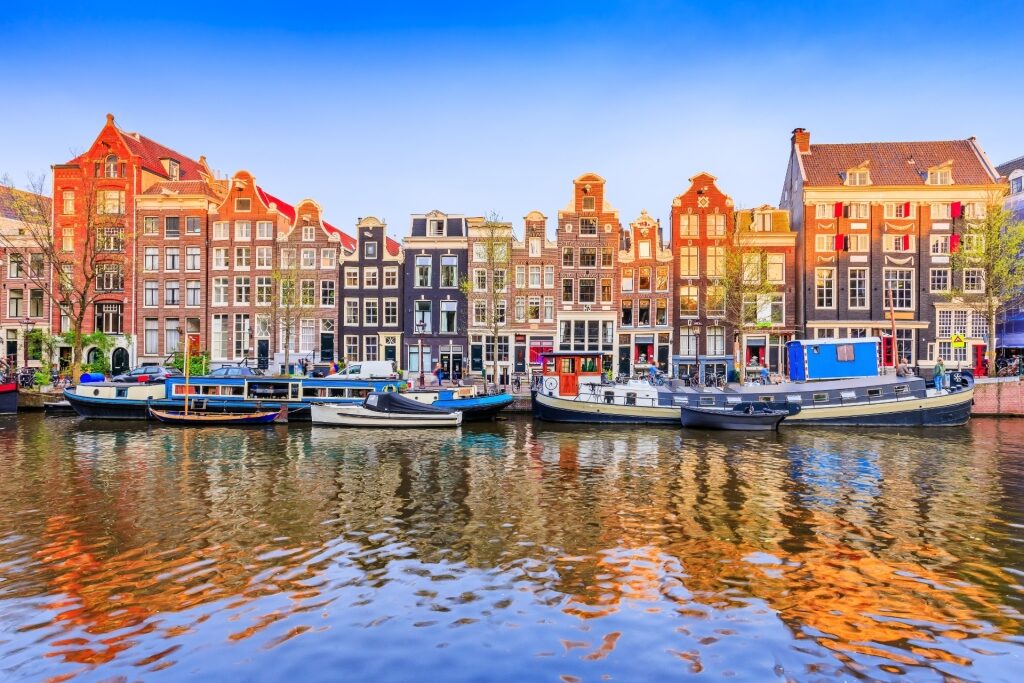
Singel
There are around 7,000 historical monument buildings tucked around the Amsterdam canal banks. Yes, canals in Amsterdam represent a panoramic sightseeing experience, but some of the most fun comes in discovering the small, interesting details across canal architecture.
On gables, I like to look out for decorations that might indicate the history and profession of who originally lived there. Over the years, I’ve spotted storks indicating midwives, scissors or spools for textile workers, and scales or anchors for merchants.
Pay Attention to Canal and Boat Safety
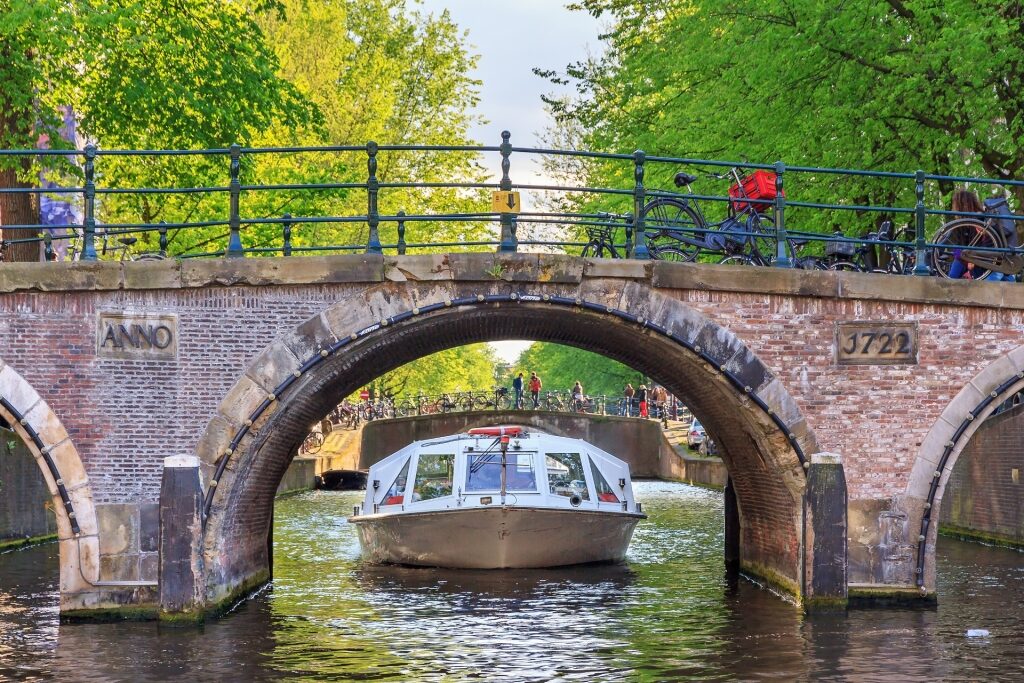
Canal cruise
Always watch where you’re walking; most Amsterdam canals have no fences or barriers, and falling in does happen. If you’re operating your own boat, always keep right as you progress along the canal. Docking is permitted anywhere in Amsterdam except beneath bridges, on narrow waterways, or in locations signposted as prohibited, such as at rescue steps. Remember to switch your lights on when dusk falls.
Read: Amsterdam Travel Tips
Amsterdam
Browse Celebrity river cruises to Amsterdam and book your dream voyage today.