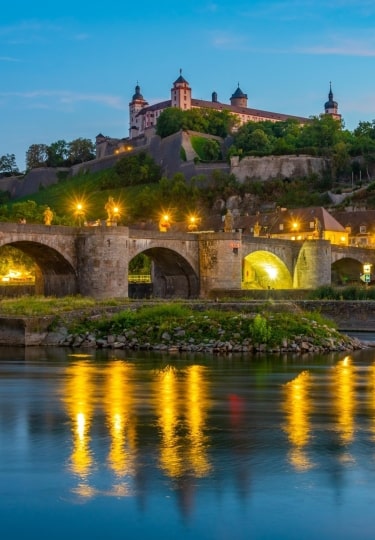
Most travelers know the Rhine and the Danube. Fewer know the river that connects them. The Main River—pronounced “mine”—winds 326 miles (525 kilometers) through Germany. It flows near various destinations, including Miltenberg, Wertheim, Würzburg, and the UNESCO World Heritage town of Bamberg.
You’ll know you’ve arrived when you see Germany’s half-timbered communities, medieval castles, and Romanesque churches. Wander through Franconian-style villages, vineyards, and historic old towns, or come for the holidays and see some of the region’s most scenic Christmas markets. The Rhine-Main-Danube Canal opens the door to lesser-known ports the larger waterways can’t reach on their own. Celebrity River Cruises℠ offers guests a multi-river itinerary for a chance to sail the Main.
Key Facts:
- Name: The Main River, pronounced “mine”
- Length: 326 miles (525 kilometers)
- Where it begins: Near Kulmbach, at the confluence of the Red Main and White Main
- Where it joins the Rhine: Near Mainz
- Connection: Linked to the Danube via the Rhine-Main-Danube Canal
The Ports Are the Main Event
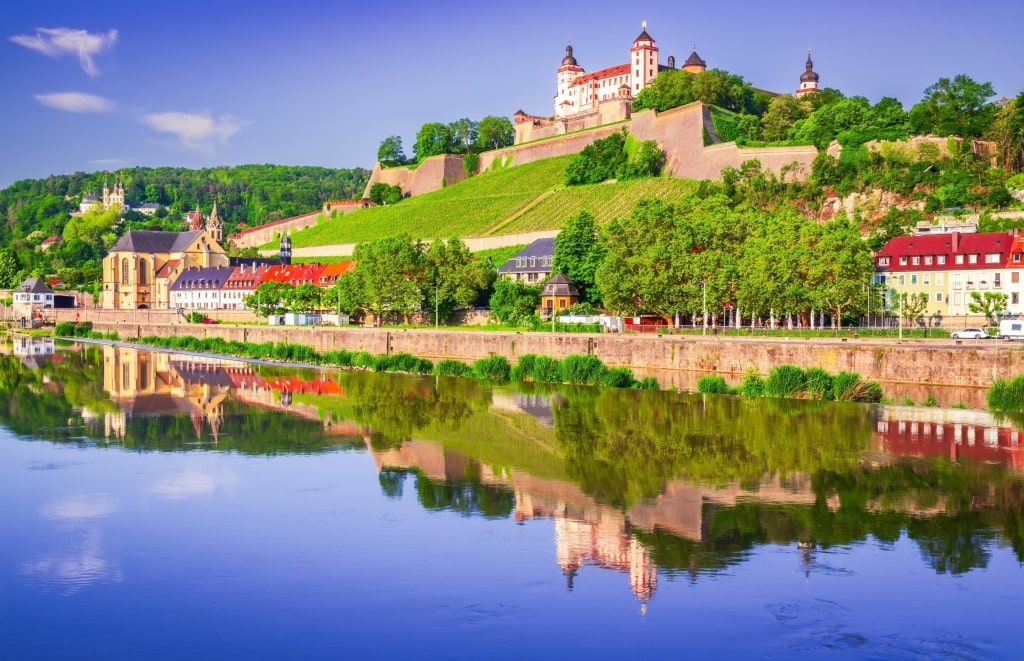
The Marienberg Fortress (Festung Marienberg) perched atop vineyard slopes, reflecting clearly on the calm waters of the Main River in Würzburg.
The Main River’s ports are what put the stream on the map—where the connection to the Rhine and Danube becomes the reason to go, not just the route to get there. The river zigzags just below central Germany, becoming a highlight of a greater Rhine itinerary. Sail to Miltenberg, Würzburg, Wertheim, and Bamberg, where Celebrity’s elevated ships make an elegant first impression that builds anticipation for a more intimate side of Germany.
While these destinations reveal a quieter atmosphere, they arrive with a loud personality. Miltenberg and Wertheim give a classic German-style vibe. Both towns have cobblestone plazas lined with half-timbered homes, while Würzburg and Bamberg look like something out of a Baroque-era period piece.
With a castle on a hilltop, a cathedral tower on the skyline, or a fountain in the middle of a market square, every stop feels like a film set—except it’s real.
At a Glance:
- Miltenberg: Half-timbered lanes and a hilltop castle view
- Würzburg: Baroque palace and Franconian wine culture
- Wertheim: A quieter castle town at the Main-Tauber confluence
- Bamberg: UNESCO old town split across the Regnitz River
Miltenberg
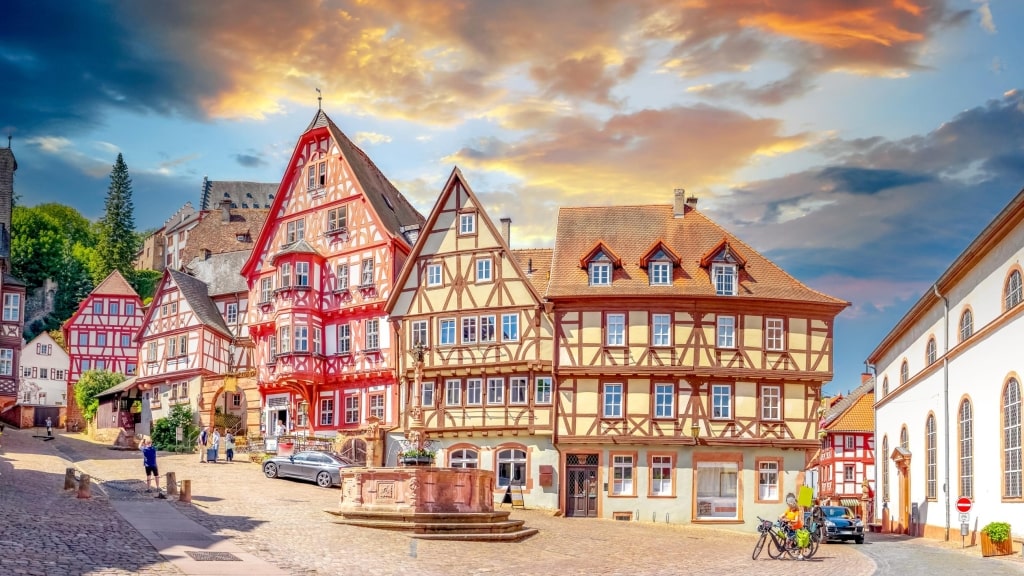
Historic half-timbered buildings and the Market Fountain in the town’s marketplace (Marktplatz) during golden hour.
150 half-timbered houses sit shoulder to shoulder along cobblestone streets, making Miltenberg feel like a time machine the minute you step into port. Its medieval gates set the tone for the city’s ambiance, as guests stroll into the main Marktplatz. The square is home to the Schnatterloch, an area known as the “gossip hole,” where a red sandstone fountain anchors the center and dates back to the late 1500s. That’s not the only preserved structure in town; guests can also climb to Burg Miltenberg, the hilltop castle, for a view over the rooftops and the river bend below.
Würzburg
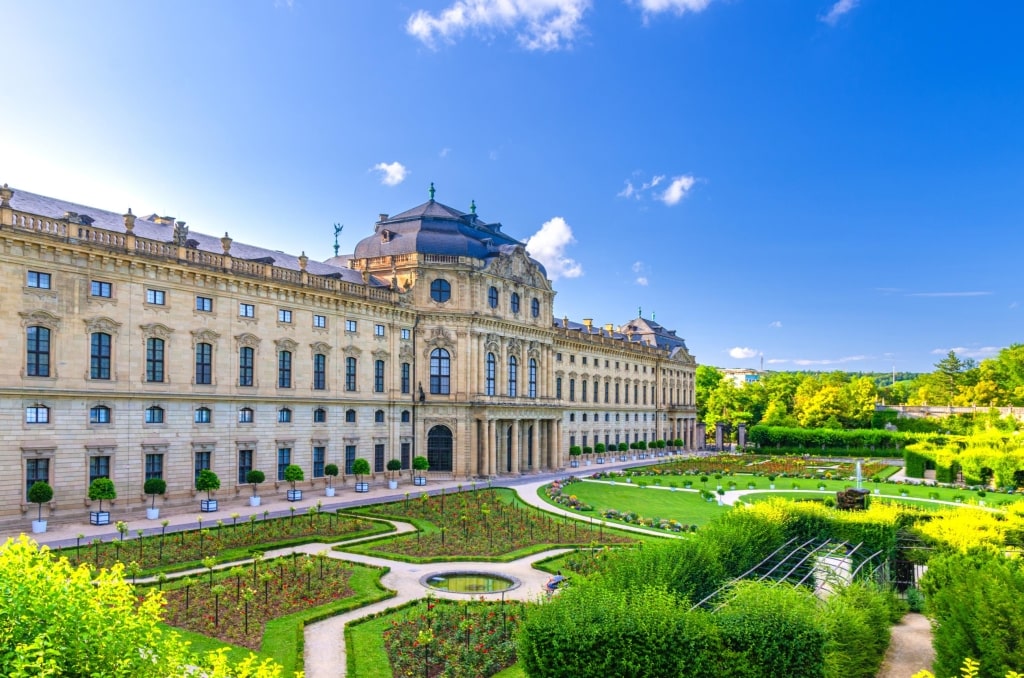
The grand Baroque facade of the Würzburg Residence and its meticulously manicured Court Garden (Hofgarten) under a clear blue sky.
In Würzburg, think wine, a UNESCO World Heritage site, and tall spires that rise above the skyline. The Bavarian town is known for its Baroque grandeur, as seen in the architecture of the Würzburg Residence—a UNESCO World Heritage palace with a ceiling fresco by Tiepolo painted over the Imperial Hall.
Würzburg continues to impress history buffs with St. Kilian’s Cathedral—Germany’s fourth-largest Romanesque church. Its twin spires are visible for miles. For a far-reaching view of the city, head up to Festung Marienberg, the hilltop fortress that once housed the prince-bishops, overlooking the same riverbank you sailed in on. Before heading back to the ship, taste a local Franconian blend from the wineries, wine bars, and cellars sprinkled throughout the city.
Wertheim
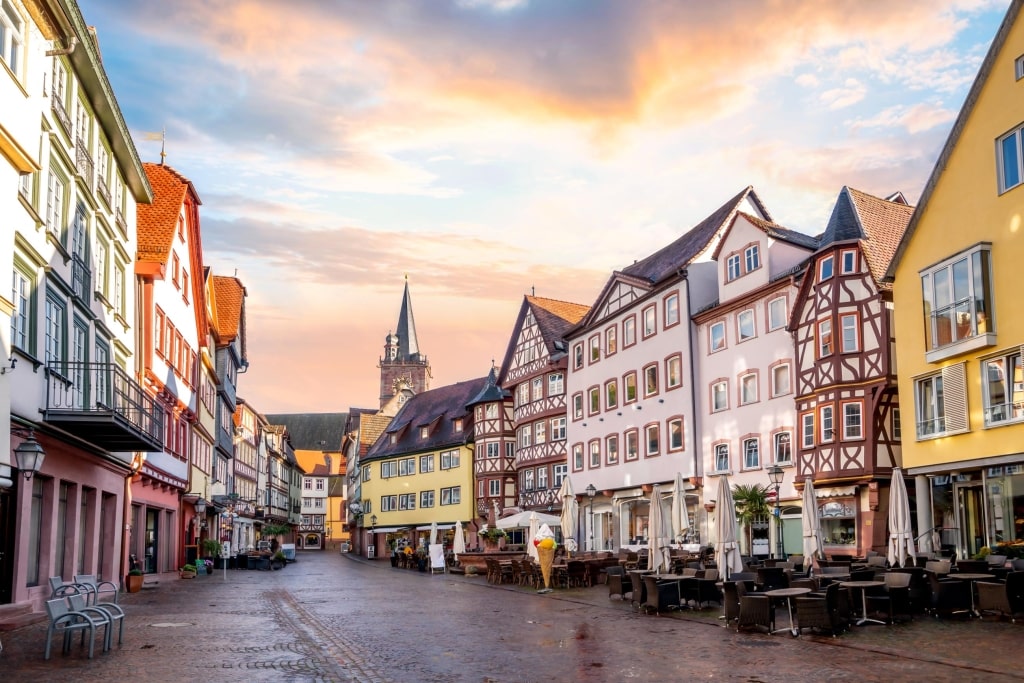
Historic half-timbered buildings surrounding the cobblestone Market Square (Marktplatz) at sunset, with the spire of the Stiftskirche in the background.
Wertheim’s whimsical quietness speaks volumes. Its hillside castle built into gorgeous greenery looks like a painted canvas. The climb up provides scenic lookout points over the Franconian-style small town—and those who reach the top can enjoy free time at the castle’s café. Its colorful market square at the ground level invites you to hang out a little longer and see the confluence where the Main River meets the Tauber River.
Bamberg
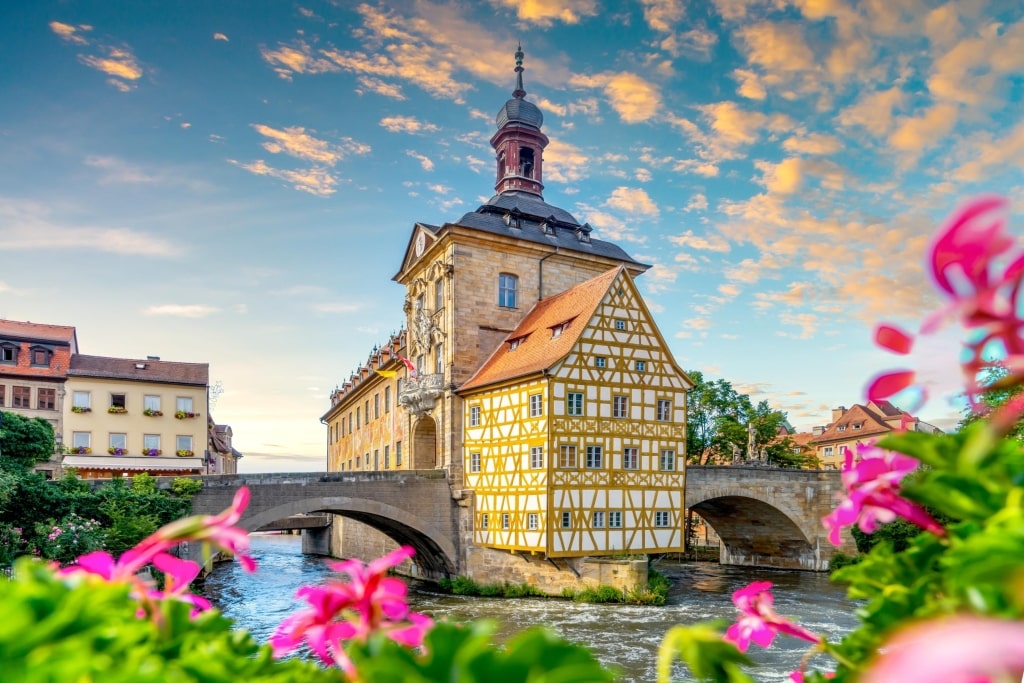
The iconic Old Town Hall (Altes Rathaus) with its timber-framed section built on an island in the middle of the Regnitz River.
Bamberg makes a Germany river cruise one of the best sailing options because the whole destination is a UNESCO World Heritage town. It was the center of the Enlightenment in 18th-century southern Germany. During this time, philosophers and writers used to walk the streets that guests do today.
One of the town’s most photographed spots is the Altes Rathaus, the Old Town Hall that juts out over the Regnitz River. It’s situated between two bridges, placed on its own island. You can get a closer look at the detailed facades with painted figures that appear to step outside their frames. Finally, end the day at Schlenkerla, the historic brewery known for its smoked beer, a Franconian specialty. It’s as much a local landmark as the architecture around it.
Germany’s Seasonal Tips
The best time to visit Germany depends on what you’re after. Tourist season is between May and September, when the weather is warm and draws the biggest crowds. However, the latter half of September through winter is an under-the-radar seasonal highlight—Oktoberfest, golden autumn hillsides, and Christmas markets. Fewer crowds travel during this time of year, making these smaller towns feel a bit more local and wondrous.
During the holiday season, souvenir stands and handmade ornaments fill the main Marktplatz, and string lights illuminate the surrounding castles and cathedrals. Even the smallest alleyways get their share of the glow.
From the Main River, guests can see sweeping views of the rolling hills, Baroque castles, and even a gossip hole in Miltenberg. No matter the season, they can visit the crisp UNESCO town of Bamberg in the spring or cozy up with mulled wine at a local Würzburg wine bar in the winter. Germany’s small riverside locations can be experienced year-round, but your favorite season makes your visit much more memorable.
What to Expect on a Main River Cruise
Sailing on a Main River cruise allows you to achieve the best of both worlds: Travel a bigger river system and experience smaller destinations most visitors overlook. When a typical port day begins, guests wake up to a breathtaking German skyline while sipping a hot cup of coffee. It’s a short walk to the town’s city center, where you can sightsee, partake in shore excursions, and try the authentic cuisine.
Stroll the Old Town in the mornings and find souvenirs before exploring some of Germany’s best-preserved buildings in the afternoon—cathedrals, castles, and town halls. End your tour with a smoked beer at a historic brewery or a Franconian varietal at a wine tasting. The scale of activities makes a Main sailing one of the best river cruises for first-timers.
Leaving a port you’ve just fallen for is never easy, but stepping back on board softens the transition. Celebrity’s river ships carry a fraction of the guests you’d find on an ocean sailing, offering a more boutique experience. The ships’ size allows them to dock close enough to town that the sense of place doesn’t end when you walk up the gangway. These effortless details reward travelers looking for things to do on a river cruise, even before and after their time on board.
Ready to find your own Main River sailing? See Celebrity’s full lineup of European river cruises.
Frequently Asked Questions
What is the Main River in Germany?
The Main River is a waterway that winds through Germany and connects the Rhine and Danube Rivers. It is pronounced “mine.” It stretches 326 miles (525 kilometers), joining the Rhine River near Mainz.
Why is the Main River important for cruise itinerary planning?
The Main River takes you to lesser-known German destinations on a bigger river-system itinerary.
Understanding the role it plays between the two main river systems that Celebrity sails will help avid cruisers and first-time river cruisers decide the best itinerary for them—including less crowded destinations with rich history and UNESCO World Heritage sites.
Which towns and ports might travelers see along the Main River?
Miltenberg, Wertheim, Würzburg, and Bamberg are the main ports along a typical Main-linked sailing, each offering a signature atmosphere. Explore half-timbered buildings, historic breweries, castles, and cobblestone plazas.
Which Celebrity cruise routes use the Main?
Celebrity’s river itineraries through Germany incorporate the Main as part of broader Rhine River sailings.
Not all itineraries are the same. Aside from Germany’s Main River cities—Miltenberg, Wertheim, Würzburg, and Bamberg—some ships also travel to Nuremberg, Mainz, Rüdesheim, and Breisach. Along these routes, you may start in the Netherlands or weave your way through France and Switzerland.
Ride the River
As a connecting water system, the Main almost feels like the Rhine River’s best-kept secret. Preparing for the river is a practical next step. Fall and winter itineraries call for layers, maybe even a heavier coat for chillier days. Spring and summer weather calls for more breathable clothing and maybe a light jacket for the early morning hours. Comfortable walking shoes are recommended for all seasons, as castle climbs and wineries provide varying terrain.
The packing list is the easy part—the harder decision is which port pulls you in first. Explore a European river cruise and find the Main-linked sailing that fits—one that turns a connecting route into the trip itself.