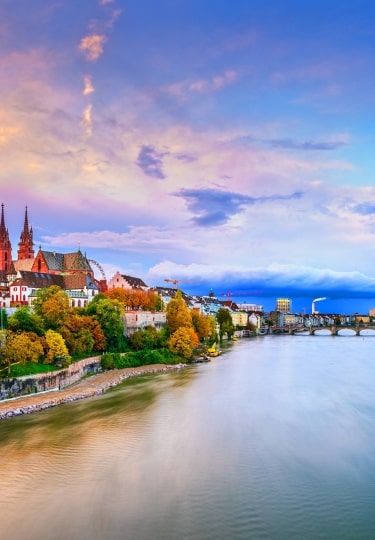
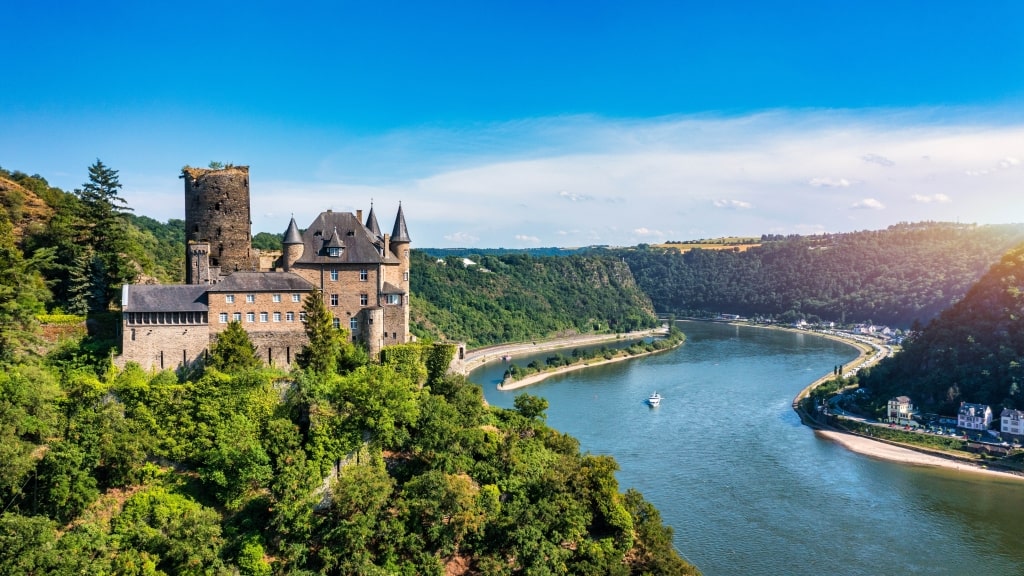
Katz Castle and Romantic Rhine in summer at sunset, Germany.
From hilltop castles and vineyard-covered valleys to storybook villages and bustling cities, the Rhine River in Europe showcases some of the continent’s most iconic scenery. Flowing from the Swiss Alps to the North Sea, the Rhine River passes through six countries and centuries of history, connecting cultures, landscapes, and traditions along the way.
For cruise guests considering a Rhine River sailing, the journey is as memorable as the destinations themselves. Throw back the curtains of a balcony stateroom in the morning and take in morning views of medieval fortresses rising above the mist. Then, spend the afternoon with a glass of German Riesling in hand, watching riverside villages pass by from a sundeck lounger. The scenery changes constantly, exposing a different side of Europe around nearly every bend.
The Rhine begins in Switzerland and flows along the borders of Liechtenstein, Austria, Germany, France, and the Netherlands before ending in the North Sea. Along the way, it passes through some of Europe’s most celebrated wine regions, UNESCO-recognized landscapes, and culturally rich cities.
Whether you’re planning your first river cruise or merely curious about Rhine River facts, this guide will help you better understand what makes this waterway one of Europe’s most rewarding river cruise destinations.
Geography and Landscapes of the Rhine
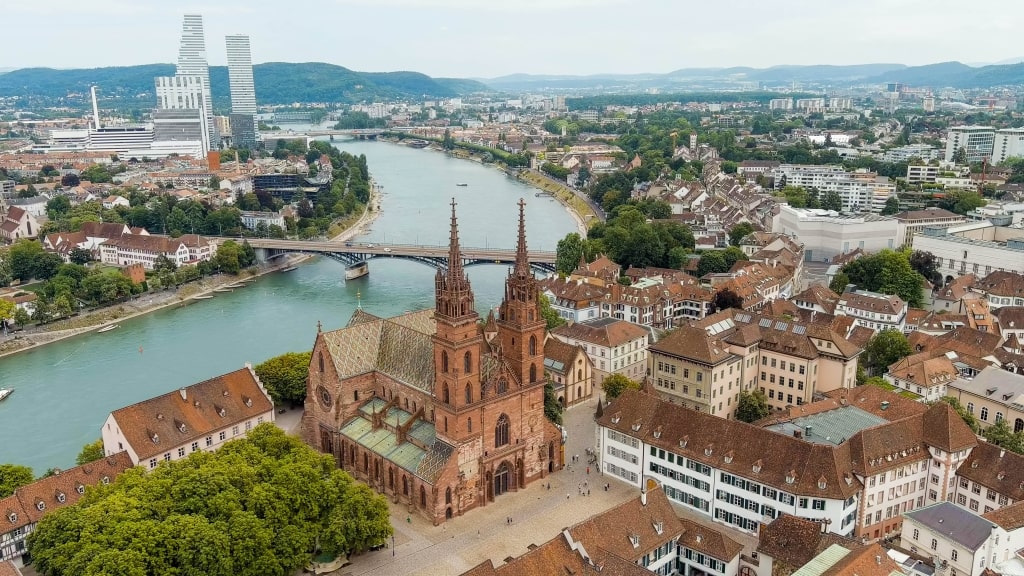
Basel Cathedral on Rhine in northwestern Switzerland.
One reason the Rhine remains one of Europe’s most popular river cruise destinations is the variety of landscapes found along its banks. From glacier-fed waterways in Switzerland to the canals of the Netherlands, the river changes dramatically as it moves across the continent. Understanding these regions helps explain why no two stretches of the Rhine feel quite the same.
1. The Rhine River Begins High in the Swiss Alps
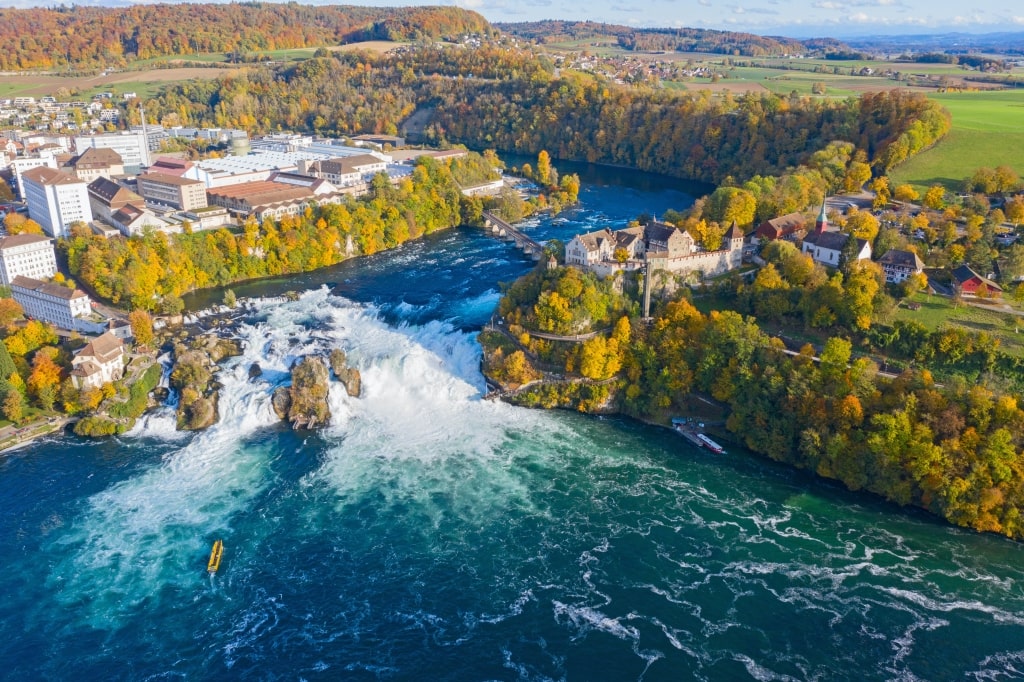
Aerial view over the Rhine Falls in autumn.
Long before the river winds past castles and vineyards, the Rhine starts as a collection of glacier-fed streams in Graubünden, Switzerland. The river’s headwaters are often traced to Lake Toma, also known as Rein da Tuma, which feeds the Anterior Rhine. Farther downstream, the Anterior Rhine meets the Posterior Rhine near Reichenau, forming the Alpine Rhine.
Travelers spending time in Switzerland before a cruise will discover a side of the Rhine that seems worlds away from the storybook scenery farther north. Nearby, the largest waterfall in Europe, Rhine Falls, offers another dramatic introduction to the river’s journey.
2. The Rhine Flows Through Six Different Countries
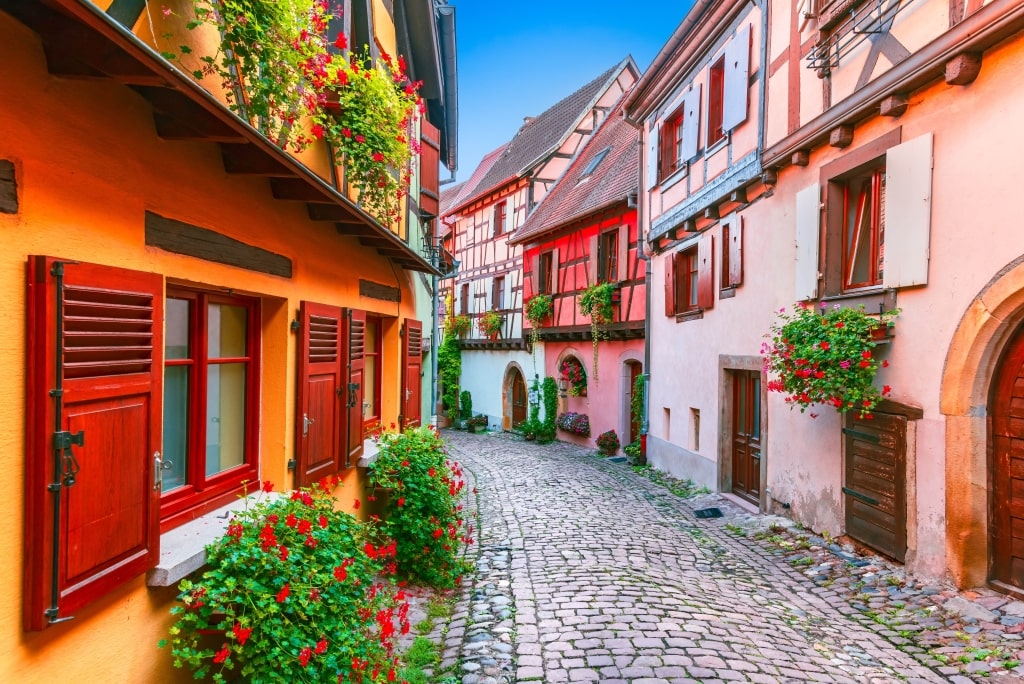
Charming Alsace village featuring colorful half-timbered houses, cobblestone streets, vineyards and medieval charm
Few rivers connect as many cultures as the Rhine. Flowing through or along the borders of Switzerland, Liechtenstein, Austria, Germany, France, and the Netherlands, the Rhine River links six countries with varied traditions, cuisines, and architectural styles.
That diversity is part of what makes a Rhine itinerary so rewarding. In the span of a single cruise, guests can experience Swiss mountain scenery, French-influenced towns in Alsace, German wine villages, and the canal-lined cities of the Netherlands.
3. The Rhine Empties Into the North Sea in the Netherlands
By the time the Rhine reaches the Netherlands, the river has changed significantly from its alpine beginnings. Here, it spreads into the Rhine Delta, a vast network of waterways, canals, and estuaries that eventually flow into the North Sea.
This region is closely tied to Amsterdam and Rotterdam, two cities formed by their relationship with water. It’s also where travelers see how centuries of Dutch engineering helped turn a low-lying region into one of Europe’s most prosperous regions.
4. The Rhine River Stretches Roughly 765 Miles Across Europe
At approximately 765 miles long, the Rhine is shorter than the Danube River and far shorter than Russia’s Volga. Its influence, however, reaches far beyond its length.
For centuries, the river served as one of Europe’s most important trade routes, linking inland communities with the North Sea. Today, that same route allows travelers to experience multiple regions, cultures, and landscapes during a single journey through Western Europe.
5. The Rhine Gorge Is a UNESCO World Heritage Site
Between the German towns of Bingen and Koblenz, the Rhine narrows into one of Europe’s most celebrated river landscapes. Known as the Upper Middle Rhine Valley, this stretch earned UNESCO World Heritage status for its exceptional blend of natural beauty, history, and cultural significance.
This part of the Middle Rhine is also known as the Rhine Gorge, where steep vineyard-covered hillsides rise above the water and medieval villages, historic towns, and centuries-old landmarks line the riverbanks.
History, Legends, and Culture Along the Rhine
The Rhine is more than a river, having served as a political boundary, a trade route, a source of inspiration, and a cultural crossroads for thousands of years. Understanding the Rhine’s history helps bring many of the destinations along the river to life.
6. The Middle Rhine Has One of Europe’s Highest Castle Concentrations
Nowhere is the Rhine’s storybook reputation more evident than in the Upper Middle Rhine Valley. More than 40 castles and fortresses overlook this relatively short section of the river.
Many were built during the Middle Ages by rulers who controlled trade along the river and collected tolls from passing ships. Their hilltop locations offered strategic views of the waterway, including key stretches near Koblenz, where the Rhine meets the Moselle River. Today, these numerous castles remain one of the defining sights of a Rhine cruise, appearing around bend after bend.
7. The Rhine Was Once the Roman Empire’s Frontier
Long before cruise ships traveled the Rhine, Roman soldiers patrolled its banks. For centuries, much of the river marked the northern boundary of the Roman Empire, separating Roman territory from lands farther east.
The Romans established forts, settlements, and military outposts along the frontier, many of which eventually grew into major cities. Traces of that history remain visible today in places like Cologne and Mainz, where museums and archaeological sites help tell the story of Rome’s presence along the Rhine.
8. The Lorelei Legend Still Shapes Rhine River Folklore
Few landmarks along the Rhine are as famous as Lorelei Rock. Rising above a narrow section of the river gorge, the cliff has inspired stories for generations.
According to legend, a beautiful maiden sat atop the rock singing enchanting songs that distracted sailors from the dangerous currents below. The tale became one of Germany’s best-known legends and inspired poems, paintings, and musical works throughout the 19th century. Today, Lorelei remains one of the most anticipated sights along the river.
9. The Rhine Helped Build Europe’s Wine Culture
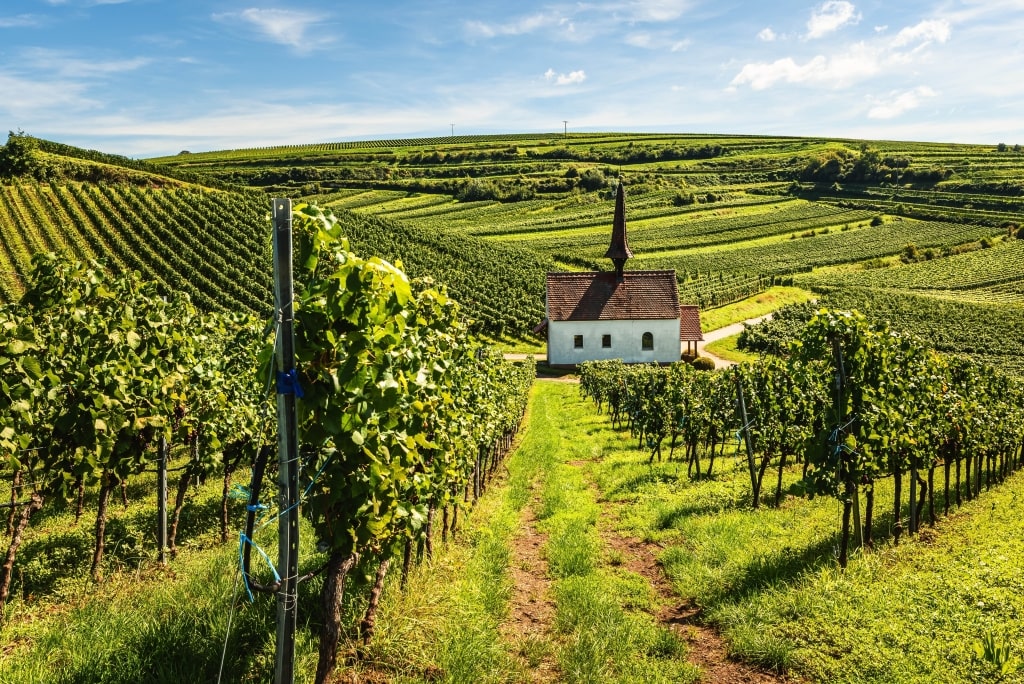
Vineyards and Eichert Kapelle in the Kaiserstuhl wine region, Jechtingen, Sasbach am Kaiserstuhl, Baden-Wuerttemberg, Germany.
Vineyards have formed the Rhine landscape for centuries, with sunny slopes, mineral-rich soil, and a good climate helping to establish some of Europe’s most respected wine regions.
Germany’s Rheingau and Middle Rhine wine regions are especially known for Riesling, while neighboring Alsace contributes another layer of wine heritage. For travelers, the result is a scene in which vineyard terraces climb the hillsides, creating some of the most memorable scenery along the Rhine.
10. Strasbourg Reflects Both French and German Influence
Located in France’s Alsace region near the German border, Strasbourg has moved between French and German control multiple times throughout its history. That heritage is reflected throughout the city today.
Half-timbered buildings line the picturesque canals, while cuisine blends French and German traditions. The city’s distinctive character makes it one of the most memorable cultural stops along the Rhine.
11. Cologne Cathedral Took More Than 600 Years To Complete
Towering above Cologne’s waterfront, Cologne Cathedral is one of the most recognizable landmarks on the Rhine. Construction began in 1248, but the Gothic masterpiece wasn’t completed until 1880, more than 600 years later.
Its twin spires dominate the skyline and can often be seen from the river before ships arrive in port. Today, the cathedral is a UNESCO World Heritage Site and one of Germany’s most visited attractions, welcoming visitors from around the world.
Rhine River Cruise Facts Every Cruise Guest Should Know
The Rhine’s history and scenery are major reasons people choose this river for a cruise, but there are also practical considerations that can shape your experience onboard.
12. The Rhine Is One of Europe’s Busiest Waterways
The Rhine may be known for its scenery, but it remains one of the world’s most important commercial rivers. Every year, millions of tons of cargo move along the Rhine on container ships, barges, and local traffic, all sharing the waterway with river cruise ships.
This working-river atmosphere is part of what makes the Rhine so fascinating. When guests sail along the Rhine, they witness modern ports, shipping terminals, and projects that demonstrate this waterway is still one of Europe’s most vital transportation corridors.
13. Rhine River Cruises Can Change With Water Levels
One of the unique aspects of river cruising is that nature always has a say in the itinerary. Like other European rivers, the Rhine experiences seasonal fluctuations in water level. Extended periods of drought can lower those levels, while significant rainfall or snowmelt in the Alps can occasionally cause sections of the river to rise.
When conditions call for adjustments, river cruises may modify sailing schedules, substitute bus transportation between ports, or adjust embarkation and disembarkation Rhine River locations. Most guests never experience notable disruptions, but flexibility is part of river travel.
14. Most Rhine Cruises Sail Between Amsterdam and Basel
Looking at a map of Rhine cruise itineraries will reveal Amsterdam and Basel, Switzerland, as the primary gateways for many sailings because they bookend some of the river’s most scenic and culturally rich sections.
Amsterdam offers world-famous museums and excellent international flight connections, while Basel sits at the intersection of Switzerland, France, and Germany. Many travelers choose to extend their journey by spending extra time in one or both cities to obtain a deeper appreciation of the regions connected by the river.
15. Christmas Market Cruises Are Among the Most Popular Sailings
If there is a season when the Rhine feels especially magical, it’s during the holidays. From late November through December, many cities along the river transform into festive winter destinations filled with lights, decorations, and traditional Christmas markets.
Some of the most beloved markets can be found in Cologne, Strasbourg, and Mainz. They are filled with wooden stalls lining historic squares, selling handcrafted gifts, seasonal treats, and warm beverages.
16. Many Rhine Itineraries Pair Naturally With the Moselle River
The Moselle River joins the Rhine at Koblenz and is frequently included on longer itineraries. This river offers a quieter, more intimate ambiance with its winding route passing through small wine villages and landscapes that feel almost preserved by time.
Some travelers find the Moselle’s slower pace and rural charm to be a perfect complement to the Rhine’s larger cities and busier river traffic. Together, the two rivers create a trip that showcases different sides of Europe.
17. Rhine River Cruises Feel Very Different From Ocean Cruises
Even experienced cruisers are often surprised by how different river cruising feels. Ships on the Rhine are much smaller than ocean-going ships, creating a more intimate atmosphere on board. Instead of spending long stretches at sea, guests sail within sight of towns, vineyards, and numerous castles, with many river ports located directly within city centers.
River cruises tend to emphasize destination immersion, and not only can travelers step off the ship and begin exploring almost immediately, but the scenery itself also becomes part of the experience.
18. The Season You Choose Can Completely Change the Rhine Experience
The Rhine looks different in every season, with spring bringing flowering blossoms and mild temperatures, summer offering long daylight hours and an animated atmosphere, autumn filled with vineyards in shades of gold, and winter transforming the river into a festive wonderland.
There’s no single best time to sail the Rhine. The ideal season depends on the scenery, activities, and atmosphere guests want to experience.
19. The Experience Is More About Atmosphere Than Famous Landmarks
Many travelers board a Rhine cruise expecting a checklist of major attractions. What often surprises them is that the river’s greatest appeal isn’t a single landmark but instead the atmosphere.
The Rhine rewards travelers who enjoy slowing down and appreciating the journey itself. While there are famous sights along the way, the landscapes, villages, and everyday scenes become just as meaningful as the attractions themselves.
20. Not All Rhine Cruises Are the Same Length or Route
Rhine cruises vary considerably in length, route, and focus. Some concentrate on the classic Amsterdam-to-Basel journey while others spend more time exploring wine regions. Longer itineraries may connect multiple waterways, giving broader perspectives on Europe’s rivers. The result is a river that rewards repeat visits with an entirely new side, depending on the route or season.
Explore Rhine River Cruises
From the Swiss Alps to the North Sea, the Rhine River offers one of Europe’s most varied and rewarding river journeys. Along the way, travelers discover UNESCO-listed landscapes, legendary castles, celebrated wine regions, historic cities, and centuries of culture.
Knowing these Rhine River facts helps explain why this legendary waterway remains one of Europe’s most unforgettable rivers.
Explore Rhine River cruises today.