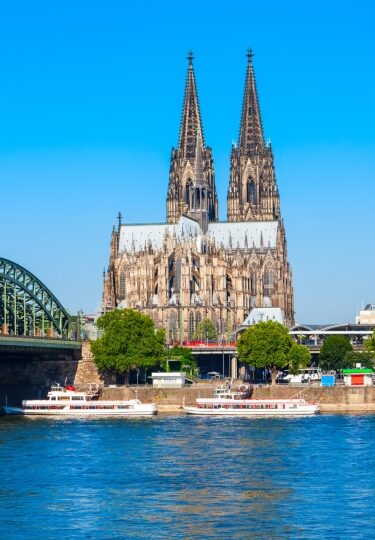
What is Cologne known for? Above all, letting the good times roll. The western German city is home to some of Europe’s most convivial celebratory street parties, including Carnival and Christopher Street Day. Both draw over a million revelers every year.
Both festivals aside, Cologne is known for its fun-loving, friendly locals and a high-spirited atmosphere at any time of year. Cologne’s beer halls and beer gardens are warm and inviting. The city also has one of the best scenes for live music and orchestra outside of the German capital Berlin.
Adding contrast, Cologne also has a serious standpoint, with a focus on history, culture and spirituality. You’ll find architecture ranging from Roman to medieval Gothic, display-packed art museums, and of course, the famous Cologne Cathedral.
Roman History
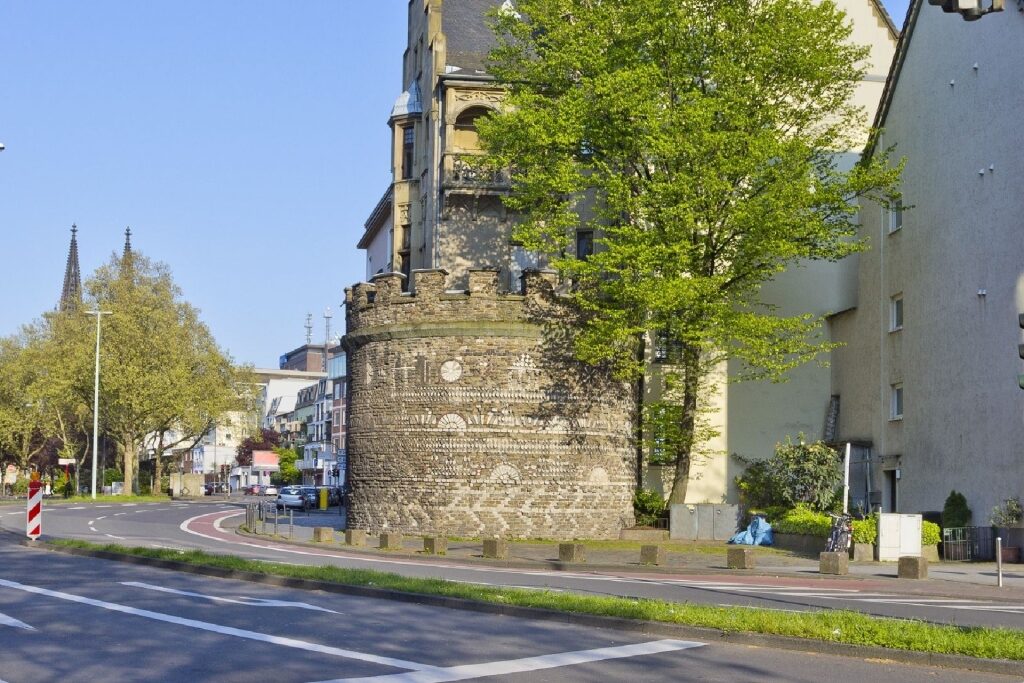
Roman Tower
Cologne is known for the impressive Roman Empire relics that are scattered across the city center. Outside the Cologne Cathedral, you’ll find the Roman Arch, once the ancient Colonia gateway. There are also the Roman Tower ruins which were once part of defensive fortifications.
The Romano-Germanic Museum is a European authority on Roman archeological heritage, and especially Cologne’s history within the Empire’s greater context. Come here to discover sculptures and ruins, and a whole treasure trove of excavated artifacts dating from prehistoric times to the early Middle Ages.
Everyday objects from toys to tweezers paint a close picture of how daily life was during Cologne’s days as a Roman colony. Surprisingly, some of these ancient objects are still quite close to their modern versions, showing that in some ways, our daily lives today may not even be so different.
Art Museums
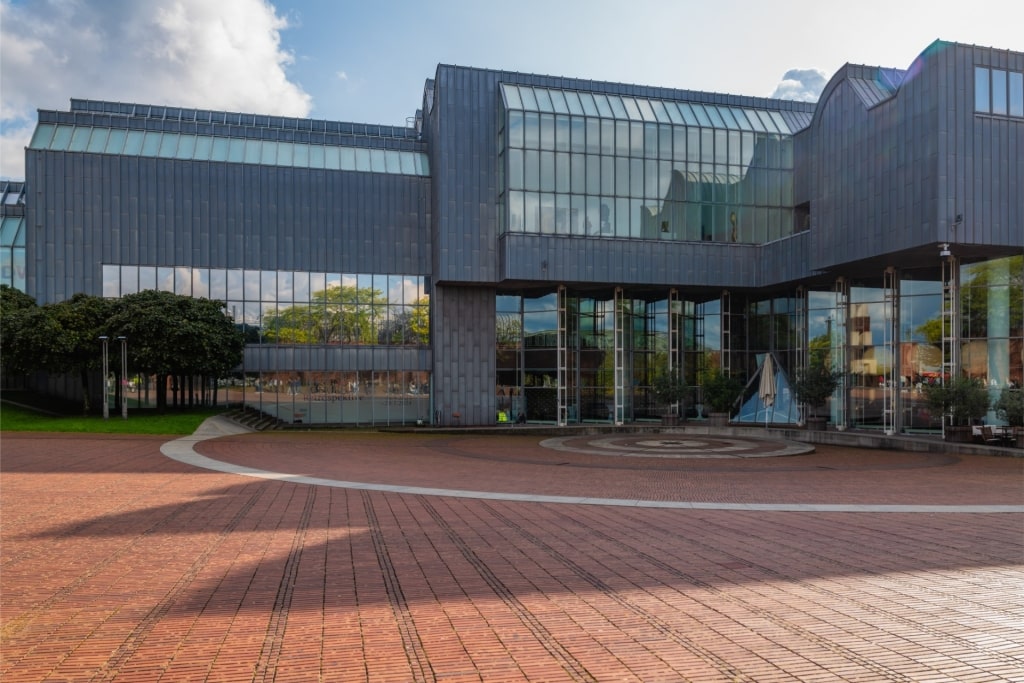
Museum Ludwig
Cologne’s art museums cover a wide range of genres. Museum Ludwig is a major contemporary art destination. Ludwig has one of the largest Picasso collections in Europe and also showcases a good range of German expressionism, American abstract and pop art. Works by Roy Lichtenstein, Andy Warhol, Jasper Johns, and Jackson Pollock are all shown here, as well as some Russian avant-garde by St Petersburg-born painter Alexander Rodchenko.
Cologne’s Wallraf-Richartz Museum displays classical works and historical art, while the Kolumba Museum is interesting in that it’s run by the Roman Catholic Archdiocese of Cologne. At Kolumba, religious artistry and Cologne’s Roman history come together across sculptures and paintings from the early days of Christianity and more recent artifacts, for example, from African communities.
Read: Famous German Artists & Where to See Their Work
Beer Gardens and Beer Halls
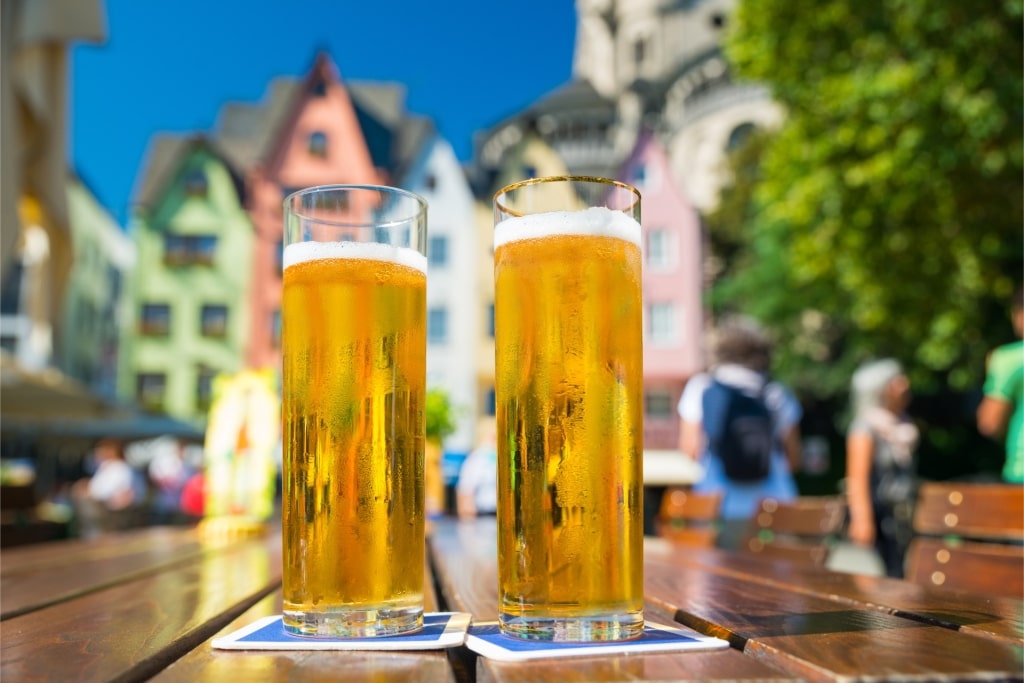
German beer
Cologne is famous for its Brauhaus, or brewery culture. Cologne is proud of its history, and especially its brewing heritage. The city’s traditional beer halls, brewpubs, and beer gardens offer a glimpse of the past and the culture’s present-day importance to the local identity.
Particularly in Cologne’s Altstadt, or Old Town, you will find some of the best beer halls. Beer gardens are spread out across parks and green oases around the city. Many brewhouses, for example Früh, Sion, and Gaffel, also have open-air courtyards that act like pint-sized beer gardens in warmer months.
Cologne’s old-world beer institutions are a great place to drink in local life. Expect shared tables, hearty German food, and a lot of laughs.
Carnival
Carnival
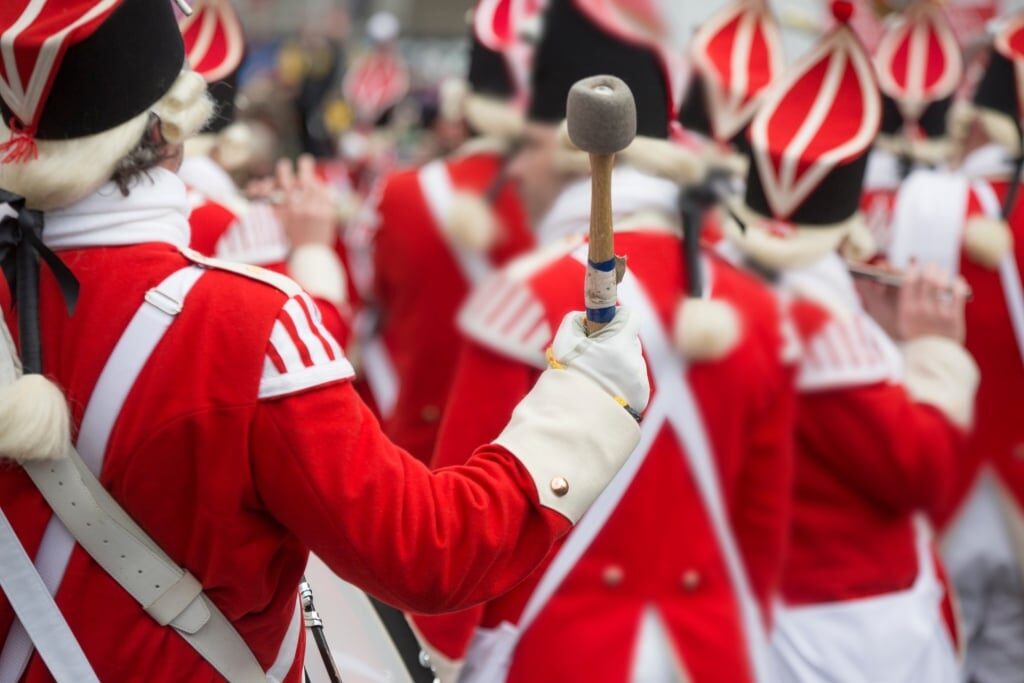
What is Cologne known for? Possibly more than anything else, in Germany, at least, its exuberant party scene. Every year before Lent, Cologne celebrates its “three crazy days” —which usually extends to six on the calendar—of Carnival by parading in ostentatious, inventively homemade floats, with people dressed as clowns, in one long street party.
With Carnival, Cologne hosts one of Europe’s best annual parties and puts its own inimitable local flair on the worldwide tradition of Carnival celebrations. Cologne’s rendition is all about singing German pop songs and banging bass drums, packing into breweries and pubs like sardines, drinking Kölsch beer, and roaring the Carnival greeting “Alaaf!”
Costumes are also massively important; the traditional attire is generally a “fool” or clown’s clothing, but like Halloween, anything really goes. The crazier and more colorful, the better.
Cologne Cathedral
Cologne Cathedral
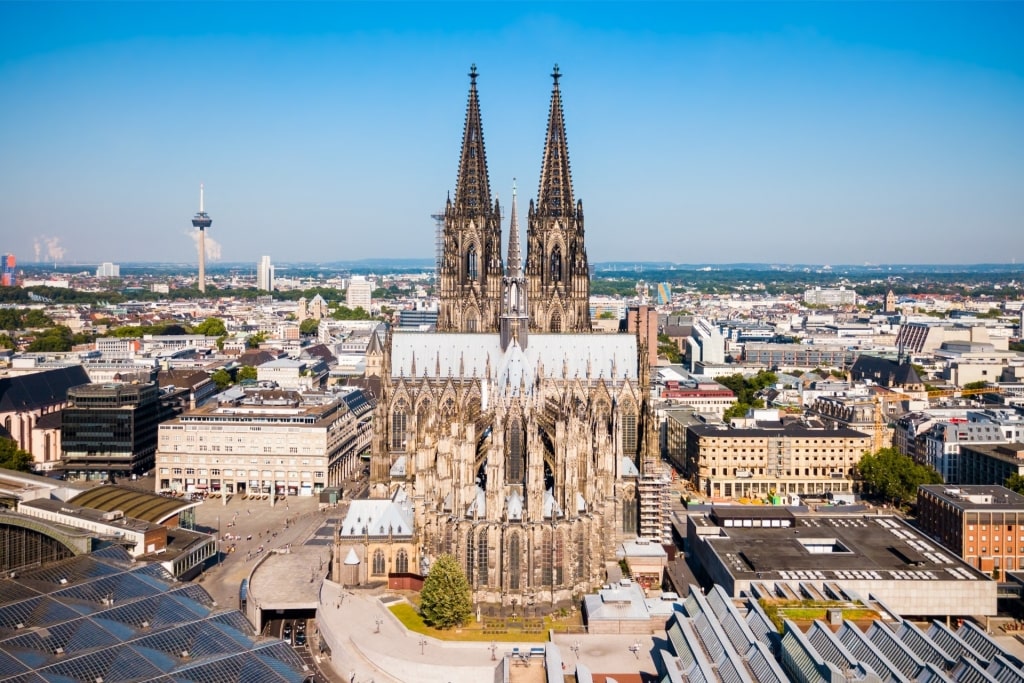
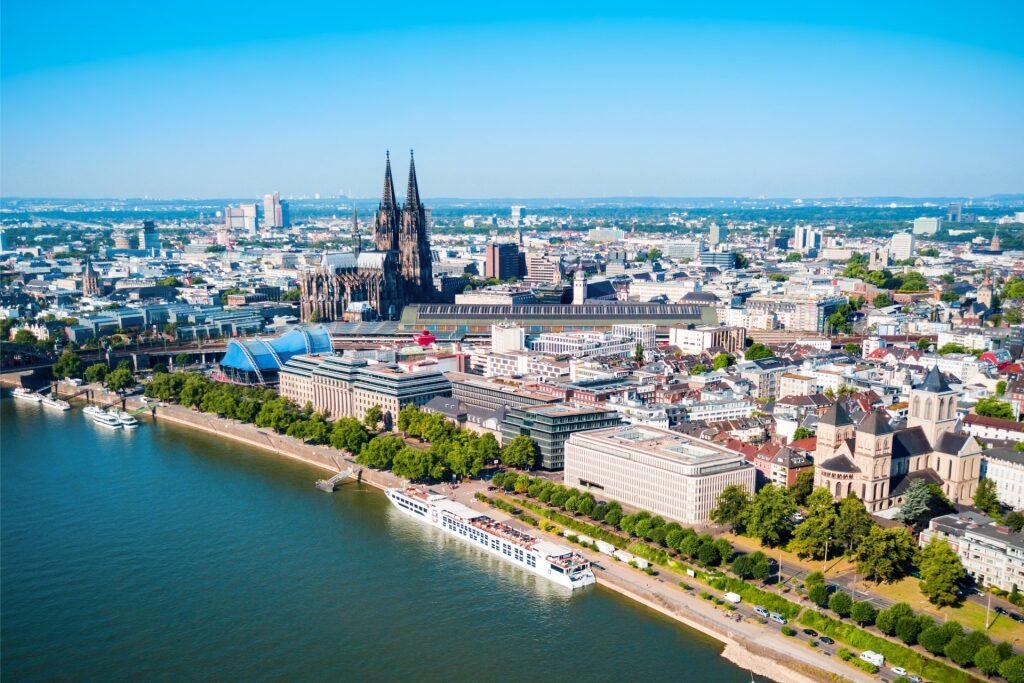
Cologne is famous for its cathedral—so much so that Cologne’s nickname is the Cathedral City.
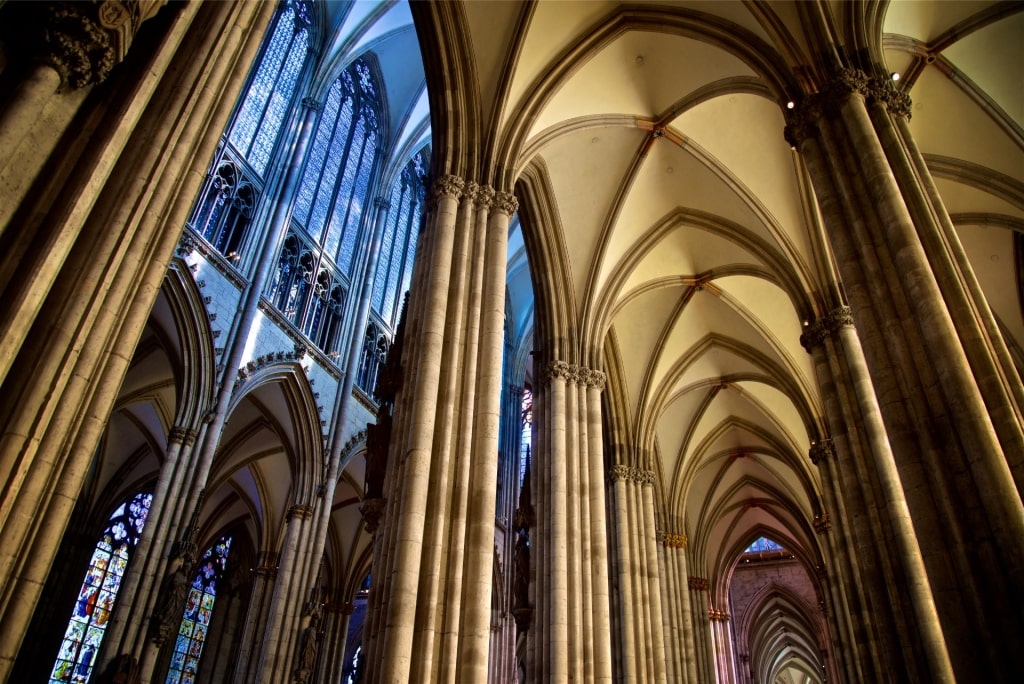
Cologne is the center of the Catholic Diocese of Cologne and the Kölner Dom—Cologne Cathedral—is a truly spectacular attraction. The Cathedral’s main draw is the Shrine of the Magi. The basilica-shaped sarcophagus is alleged to contain the remains of the three kings who followed the celestial star to Jesus’ birth in Bethlehem.
Cologne Cathedral
Beyond the Shrine, the Cathedral Treasury is replete with medieval reliquaries including some of Europe’s oldest existing liturgical objects. On a modern note, the Cathedral Window, unveiled in 2007, was designed specifically for the cathedral by Germany’s most important living artist, Cologne-based Gerhard Richter. The stained-glass masterpiece is inspired by Richter’s 4096 Colors abstract masterpiece, a mosaic of over 11,500 glass squares in 72 different shades.
One of the best things to do in Cologne is to climb the Cathedral’s southern tower for bird’s-eye views across the city and Rhine River. Up a narrow, 533-step stone staircase, a 300-foot high viewing platform reminds you of when Cologne Cathedral was briefly the world’s tallest building, before the Washington Monument was built. On the way up, admire the 24-ton St Peter’s Bell, the world’s largest free-swinging, still-functioning, bell.
Concerts
Cologne Philharmonie Photo by Robert Douglass on Wikimedia Commons, licensed under CC BY-SA 2.0
With two major orchestras, an opera house, and numerous theaters, live-music venues and electronic-music clubs, the German city has a terrific live-listening cultural scene spanning highbrow to underground.
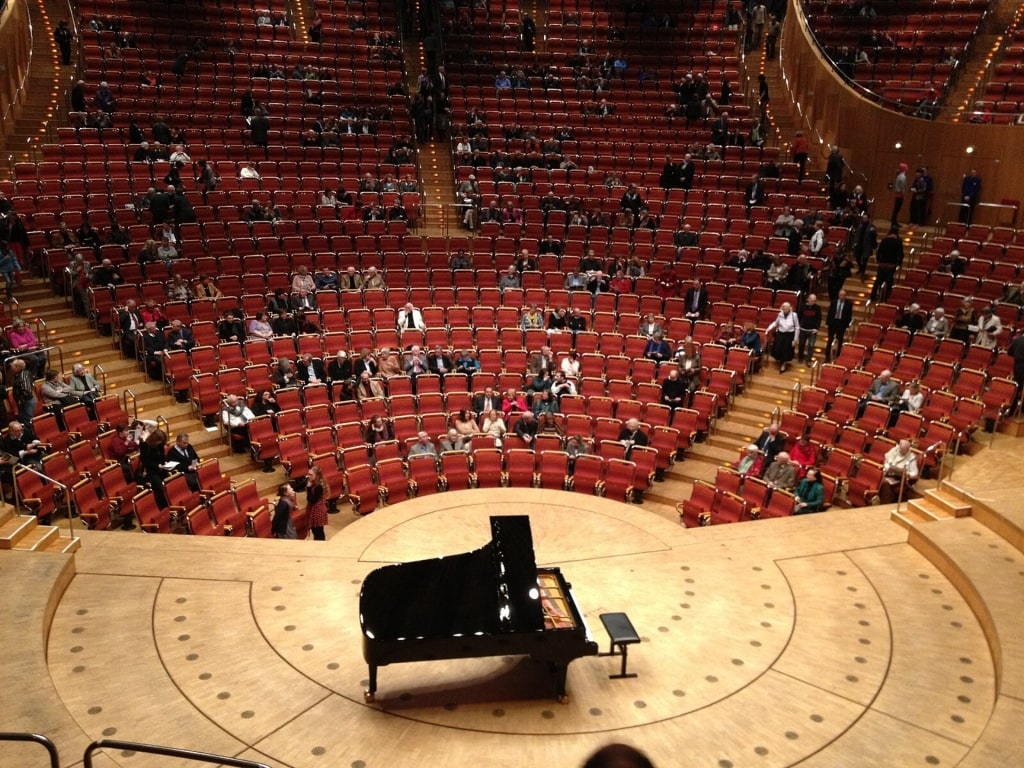
The Cologne Philharmonie, Cologne’s elegant concert hall, is at the pinnacle of the city’s musical programming. There is nowhere better to get a taste of what Cologne’s concert calendar is all about, with a diverse, packed program from classical to jazz, pop-choir to chansons.
In the Philharmonie’s state-of-the-art subterranean home, with amphitheater-style seating that’s a nod to the city’s Roman origins, you can catch two world-class orchestras, the Gürzenich Orchester and the WDR Sinfonieorchester. There are free lunchtime classical performances twice monthly.
For a sonic journey through the alternative, check out the schedule for the Odonien. This former Cologne railway site is now a creative lab, beer garden, concert venue, art center, alfresco cinema, and urban garden all in one. The brainchild of artist Odo Rumpf, this counterculture playground always has wide-ranging electronic music on different floors, plus live acts, too.
Christopher Street Day
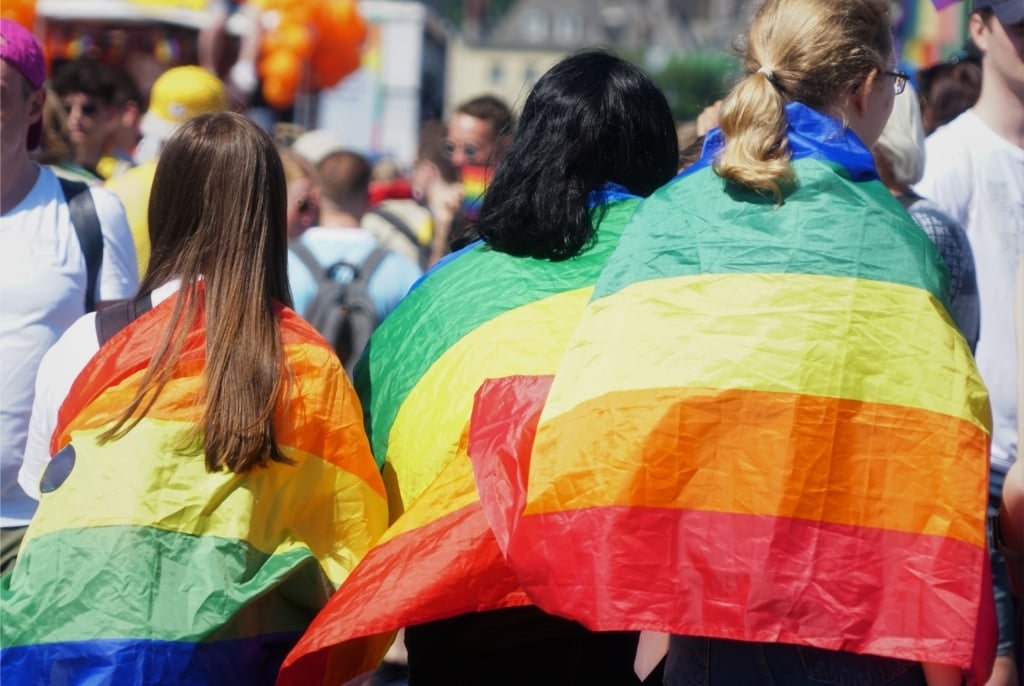
Christopher Street Day
The climax of the two-week-long Cologne Pride celebration and one of the top Pride events in Europe, Cologne’s Christopher Street Day in early July draws roughly a million people. It is Germany’s largest LGBTIQ+ celebration and one of the biggest in Europe.
The Christopher Street Day festival sees public squares across Cologne decked out in rainbow flags and holding performances and activities. The Pride Parade is a big highlight here.
Kölsch Beer
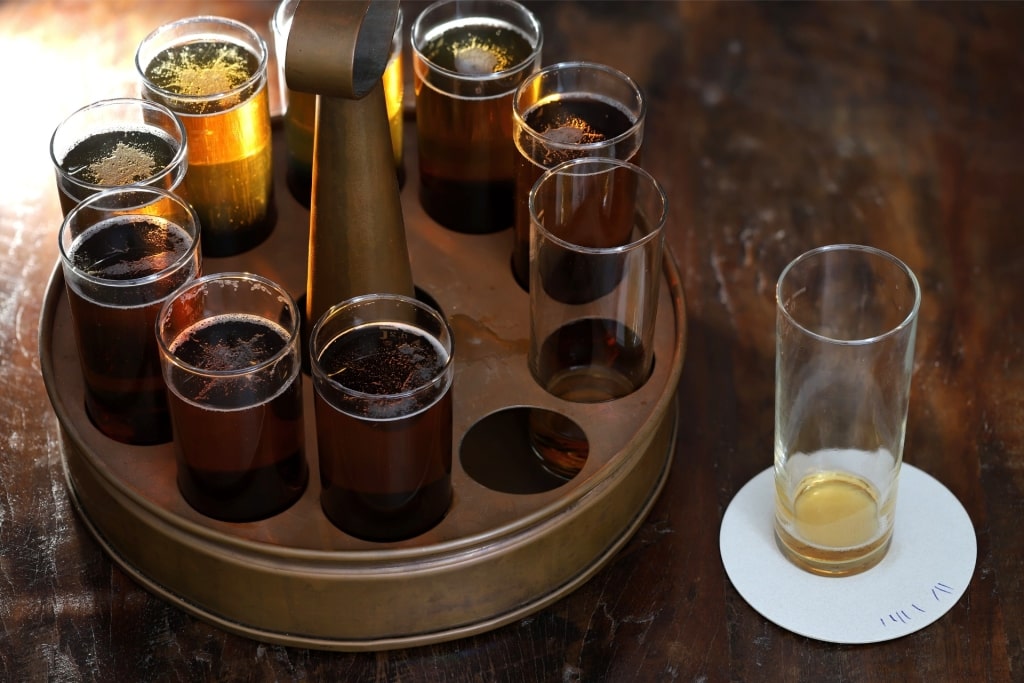
Kölsch beer
What is Cologne famous for? Close to the top of the list is beer. The city’s unique style of beer, Kölsch, is a local treasure. Locals are incredibly proud of the beer and how it can only be brewed in Cologne. Ordering anything but Kölsch at the beer garden will surely get you—somewhat—playfully scolded.
Kölsch is light, hoppy, slightly sweet and served cool in Stangen—skinny, straight glasses that only hold 0.2L. In traditional Cologne beer halls and brewpubs, drinking Kölsch is essentially free-flow. You don’t need to keep ordering beer; circulating waiters will keep dropping off small Stangen whenever your glass is empty—that is, until you stop ordering by placing a beer mat over your glass.
Lindt Chocolate Museum
Surprisingly, Lindt—the Swiss chocolatier and confectionery company making foil-wrapped Lindor truffles—has a famous museum dedicated to chocolate in Cologne. The attraction was opened by a local entrepreneur in his former chocolate factory and Lindt got involved as a partner in 2006.
Exhibits include a real tropical, climate-controlled greenhouse where lush cacao trees grow, a glass-walled miniature production facility where choco-bunnies come to life, and a 10-foot chocolate fountain filled with 440 pounds of liquid Lindt chocolate.
Love Locks
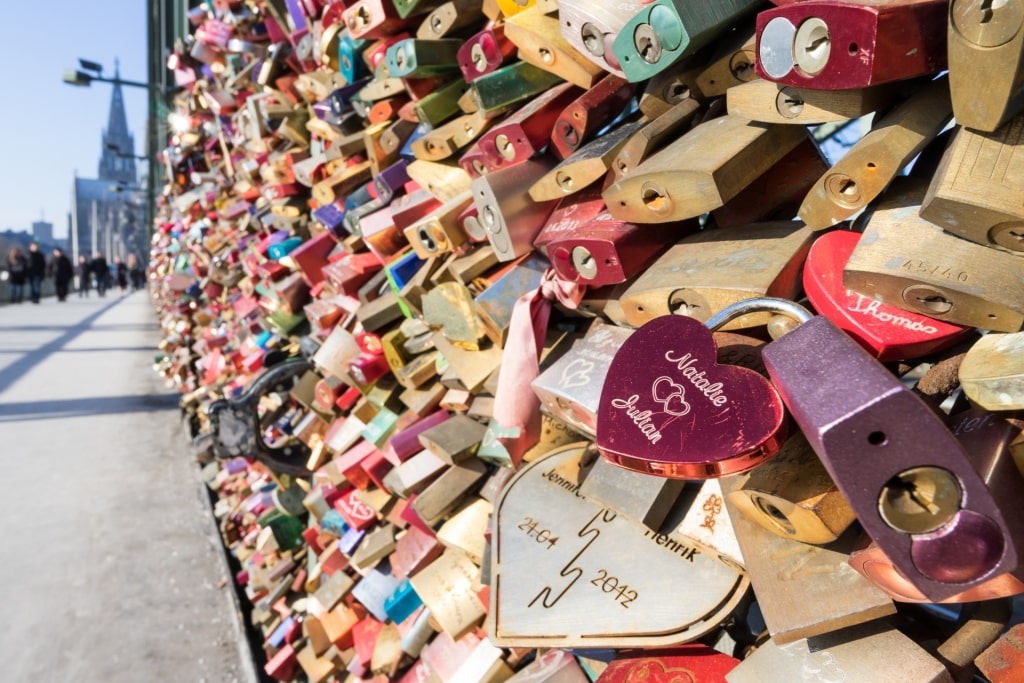
Hohenzollern Bridge
While bridges festooned with lovers’ locks can now be found across many European cities, in 2008, Cologne became one of the first. Love locks are now a de facto symbol associated with the Cathedral City’s romantic charm.
Crossing the Rhine River, the Hohenzollern railway bridge is adorned with tens of thousands of love locks, many engraved or inscribed with lovers’ names and sweet proclamations. Seeing lovers affixing a lock to the bridge and throwing the key into the river is quite a frequently-seen touching ritual.
Multicultural Dining
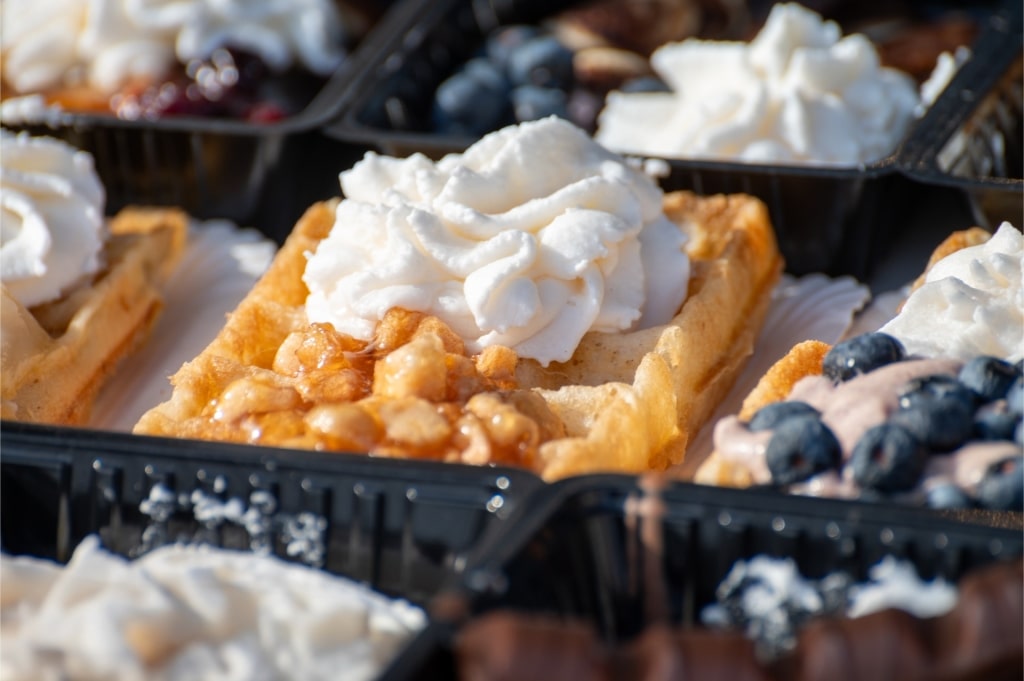
Waffles
Cologne has an exceptionally diverse restaurant scene thanks to its high immigrant population. In the Cathedral City, you can easily take a culinary journey around the world in just a few short days. Authentic Persian, Turkish, Polish, and Russian delicacies are well-represented due to their thriving communities.
Cologne’s food markets in particular can offer a global culinary tour in just a few short hours. The monthly Street Food Market has dozens of gourmet food trucks and stalls sprawled across the grounds of an old electric light factory.
Small plates span from Vietnamese rolls to empanadas, crêpes, and Belgian waffles, and much more. Build your own decadent “continental buffet” by trying as many as possible.
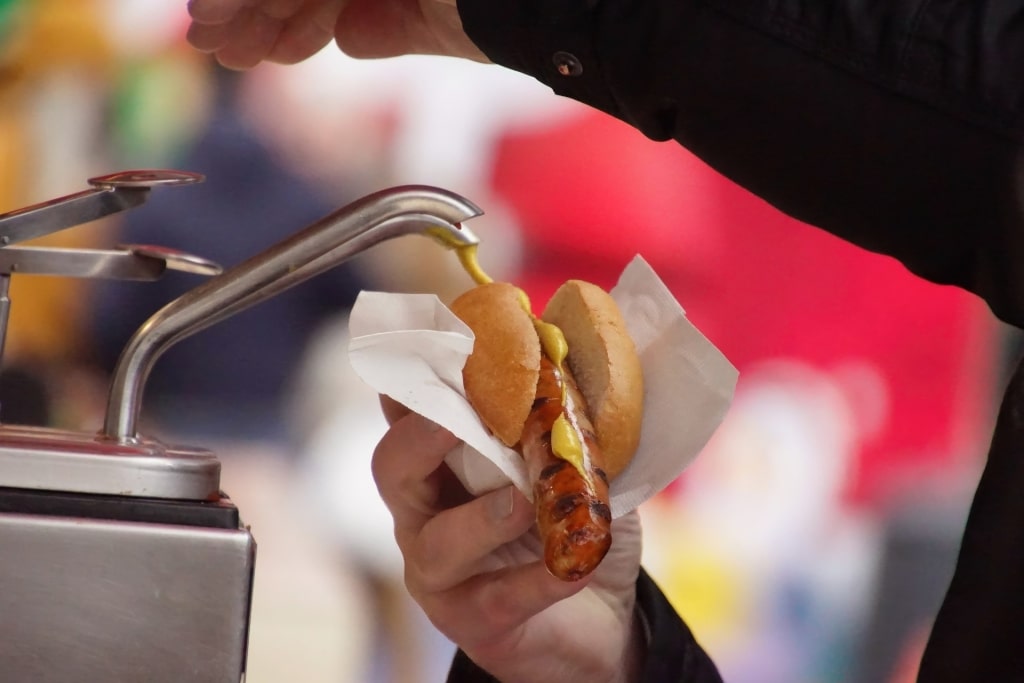
Sausage
Meanwhile, Cologne’s Thursday evening Meet & Eat is a combination of a farmers’ market and street-food fair. Locals come here to shop for fresh produce and also put together park picnics of homemade pesto, organic sausages, and cheeses, and various other artisanal products. You can also sit down at a covered table for a succulent burger or maybe a stir-fry, perhaps with a glass of white wine. Or better yet, how about a Kölsch?
Read: The Ultimate Guide to Cologne’s Christmas Markets
Regional German Cuisine
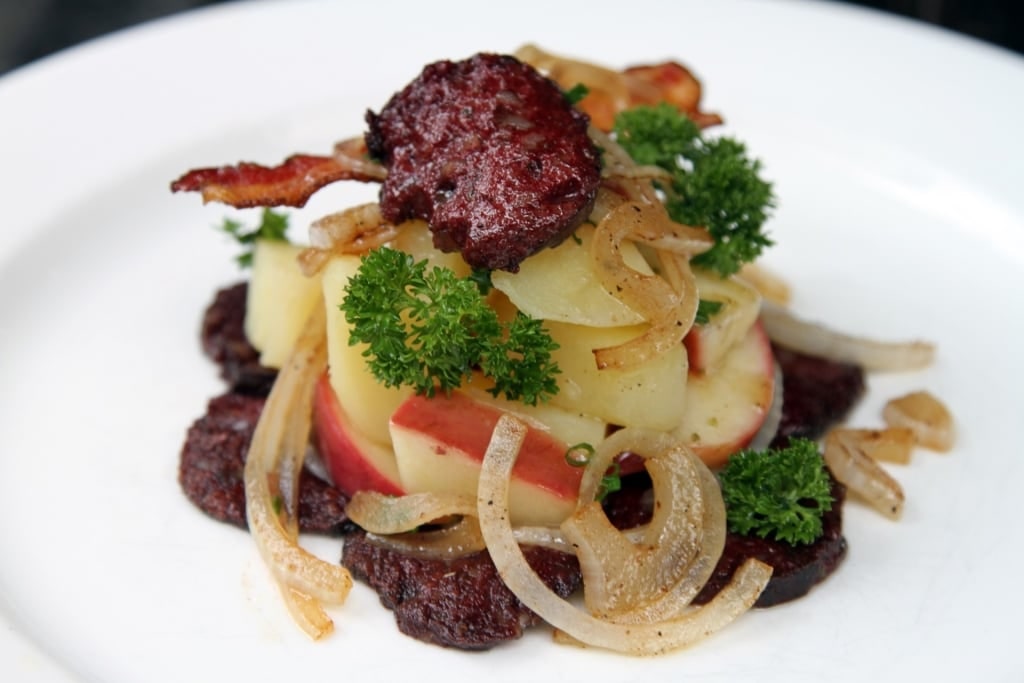
Himmel un Ääd
In Cologne, traditional Rhenish—of the Rhine River and its surrounding regions—dishes reign supreme. The classic of Cologne’s atmospheric beer halls is certainly Himmel un Ääd, or mashed potato with fried blood sausage—essentially, black pudding—and chunky apple purée. At beer gardens, local favorites include bratwurst sausage and Halver Hahn, a rye roll with slices of Gouda cheese and mustard.
Meanwhile, the more adventurous foodie might give Mettbrötchen a try: raw minced pork topped with onions on a bread roll. Obviously, all Rhenish regional dishes are best paired with a glass—or three—of Kölsch beer.
The Rhine River
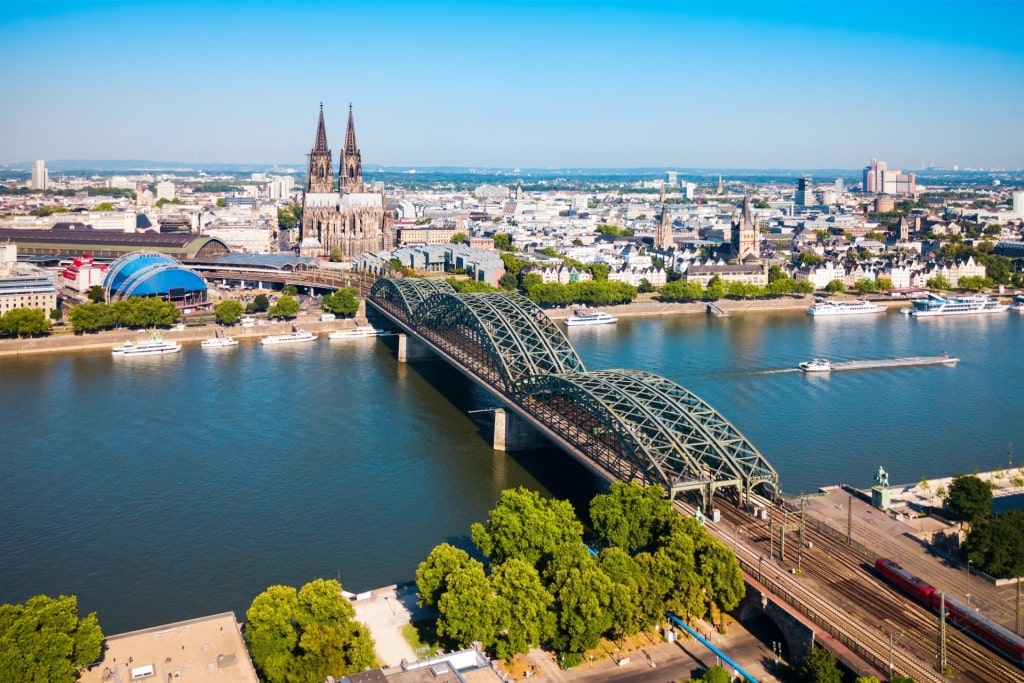
Rhine River
In 38 BC, Cologne was founded as the Roman outpost Colonia Claudia Ara Agrippinensium because of its strategic river position. Today, the Rhine remains a historical lifeline and economic engine for this inland city, which happens to also be one of the largest ports in Europe.
For Cologne residents, the Rhine is today synonymous with free time and leisure, as opposed to maritime days when it was associated with work and labor. There is no better spot to enjoy a Kölsch than at riverside pubs and restaurants. Some of Cologne’s best history and culture, including the Museum Ludwig and Romano-Germanic Museum, also offer prime Rhine River views.
Consider renting a bike for an afternoon of exploring the riverside scenery, stopping to take in leafy green nature and secluded spots along the way.
Vintage Shopping
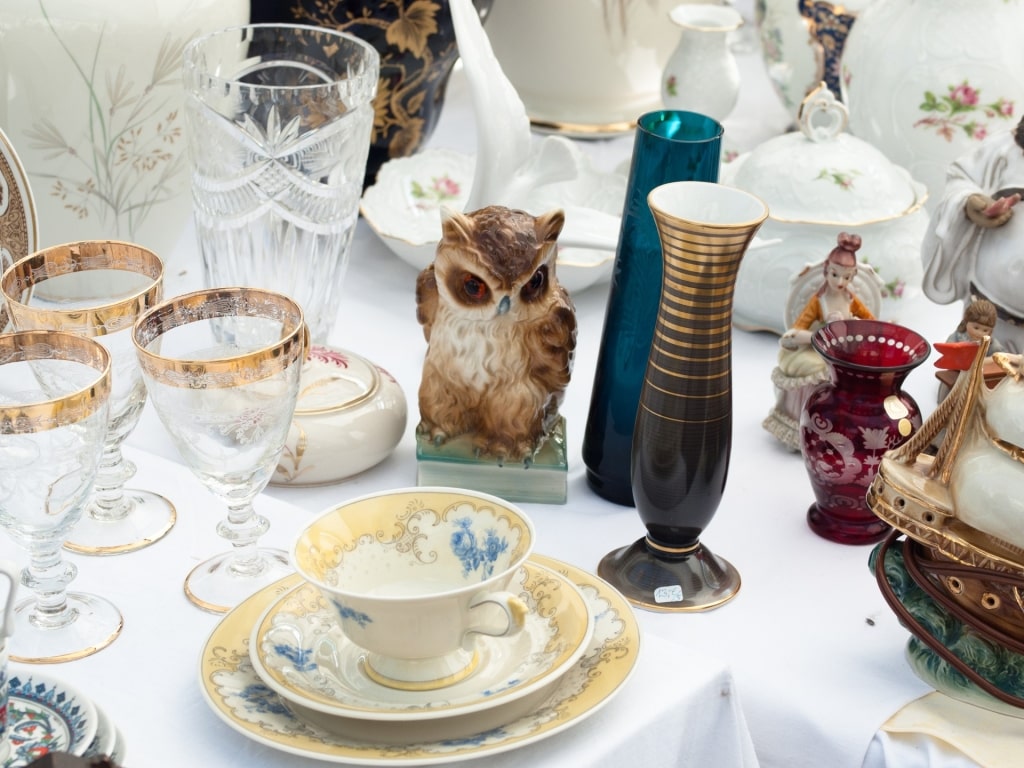
Flea market in Cologne
Cologne is an excellent place for thrifting and antiquing. Secondhand and vintage clothing shops abound in the hip Ehrenfeld district, especially on the streets around the Belgisches Viertel neighborhood.
Several great Flöhmarkte, or in English, flea markets, also pop up around Cologne, usually on a weekly basis. Often, stands comprise a mix of seasoned vendors and, sometimes, just students or sustainability-loving folks selling wares which they no longer need—much like a garage sale.
If you’re looking for home decor or unique knick-knacks, Cologne’s Galopprennbahn flea market—hosted at a horse racing track on Wednesdays, Fridays, and weekends—surely won’t disappoint. Market vendors have a strong focus on art, German antiques such as Meissen porcelain, wooden toys, vinyl records, and much more.
Cologne
Discover the city’s character for yourself on one of Celebrity’s river cruises to Cologne. Browse itineraries and set sail for this vibrant city.