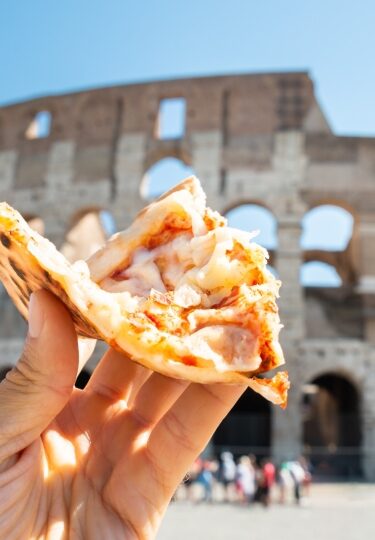
The Eternal City is a place of abundance. It overflows with life, culture, and mouthwatering Rome street food.
From the rustic delights of porchetta sandwiches to the elegant sophistication of fiori di zucca, these are seemingly endless portable spins on the flavors you’ll find in the capital’s trattorias. And, as with everything here, the street food of Rome can tell you a little bit about the history of this remarkable city, provided you eat enough of it.
Supplì
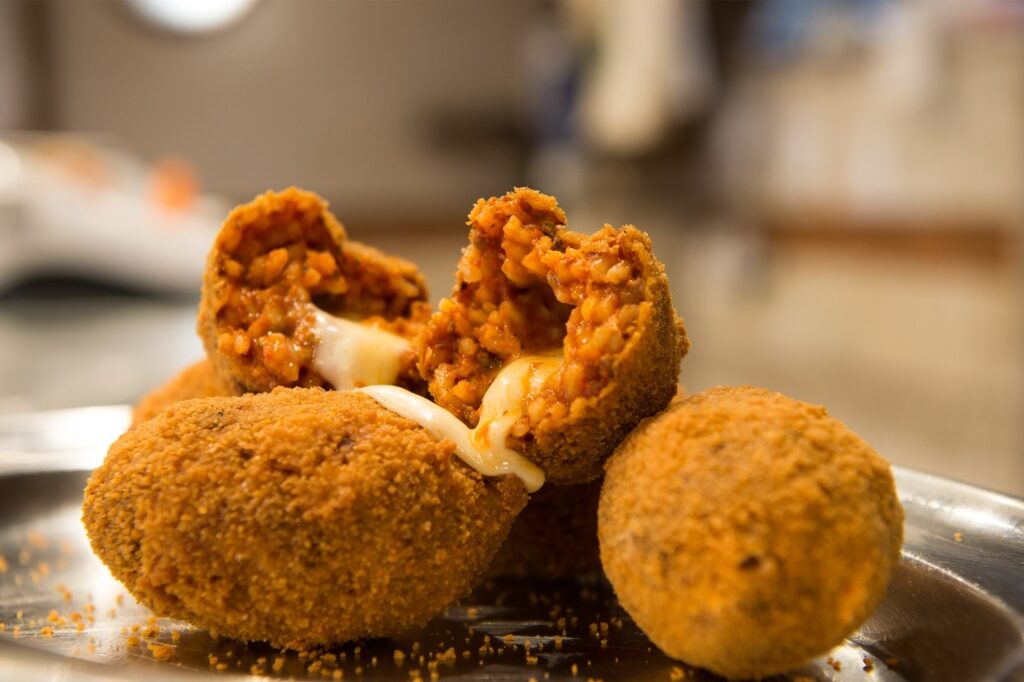
Supplì
Essentially, little Italian croquettes, supplì’s breadcrumbed exterior conceals a mix of soft arborio rice flavored with tomato sauce. As everything can be improved with cheese, there’s mozzarella at its core. It’s this string of stretchy cheese that appears, like an old-fashioned telephone cord, to give this delightful example of Rome street food its full name: supplì al telefono.
Pick some up in warm paper bags sourced from the city’s pizzerias or friggitorie, fried food shops. An older supplì recipe—supplì con rigaglie di pollo—adds a rich chicken giblet ragu. It’s harder to find, but if you’d like to try, a good place to start is Supplì Roma in the Trastevere neighborhood.
Pizza al Taglio
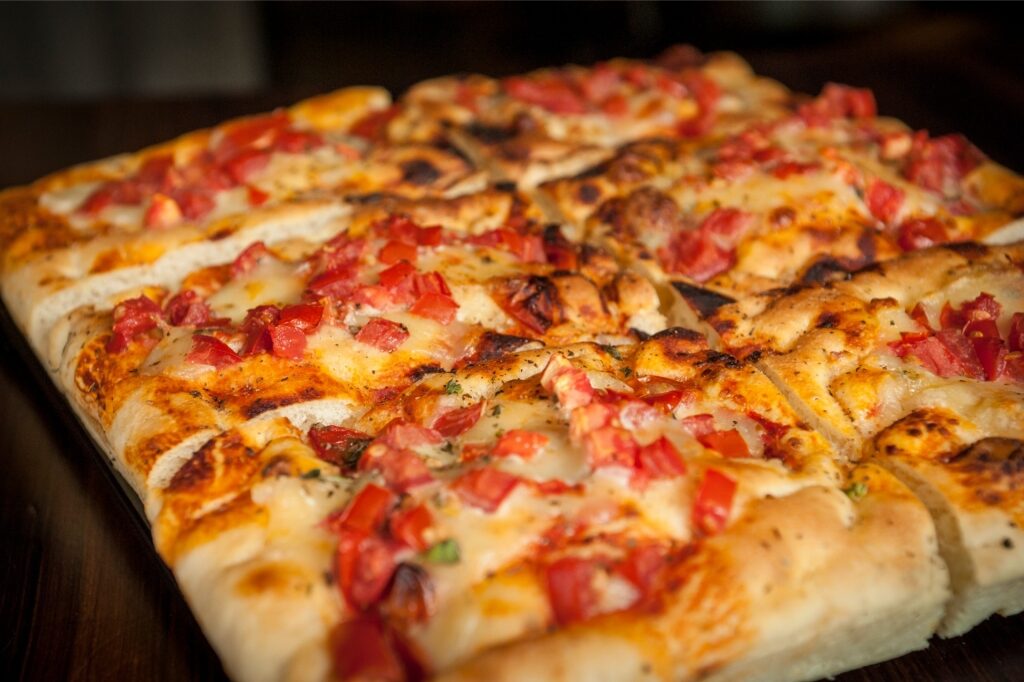
Pizza al taglio
Perhaps the street food item most instantly identified with Rome, pizza al taglio is the city’s famous “pizza by the slice.”
Since the 1950s, pizza al taglio in Rome has been crisp, fluffy, and, in more modern times, laden with toppings such as zucchini flowers, sliced potatoes, and shavings of aromatic truffle. Adding to the fun is that how much you pay is calculated by the weight of the square-cut pizza you select.
Trapizzino, or Pizza Pocket
The Italian take on the bread bowl was invented in the Testaccio neighborhood of Rome in 2008 by pizzaiolo Stefano Callegari. Taking a triangular envelope of slow-fermented bread dough, the trapizzino is then stuffed with delicious goodness.
What might lure you towards the trapizzino rather than just a straight slice of pizza Romana? The fillings. The trapizzino is often loaded up with hearty Italian classics—think oxtail stew or chicken cacciatore—which make this take-out favorite a true meal-on-the-go.
Porchetta Sandwich
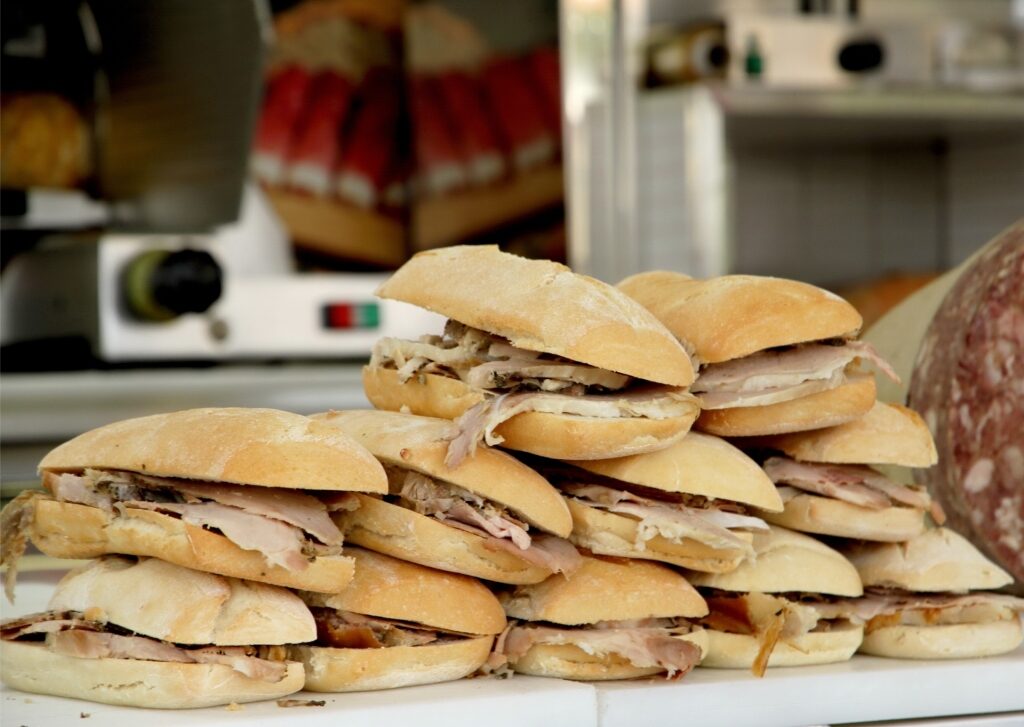
Porchetta sandwich
Porchetta is a totemic dish in the Italian food pantheon. Hailing from the Castelli Romani region, just south of the capital, its preparation involves a slow-cooked roll of pork loin and belly, the interior flavored with chopped garlic, fennel, and rosemary. It’s served in crisp, juicy, aromatic slabs.
In Rome, you have this magnificent main enclosed within a ciabatta. While this alone makes for a superb sandwich, it’s possible to amp up the flavor with toppings like salsa verde, grilled artichokes, and chicory.
Pizza Bianca
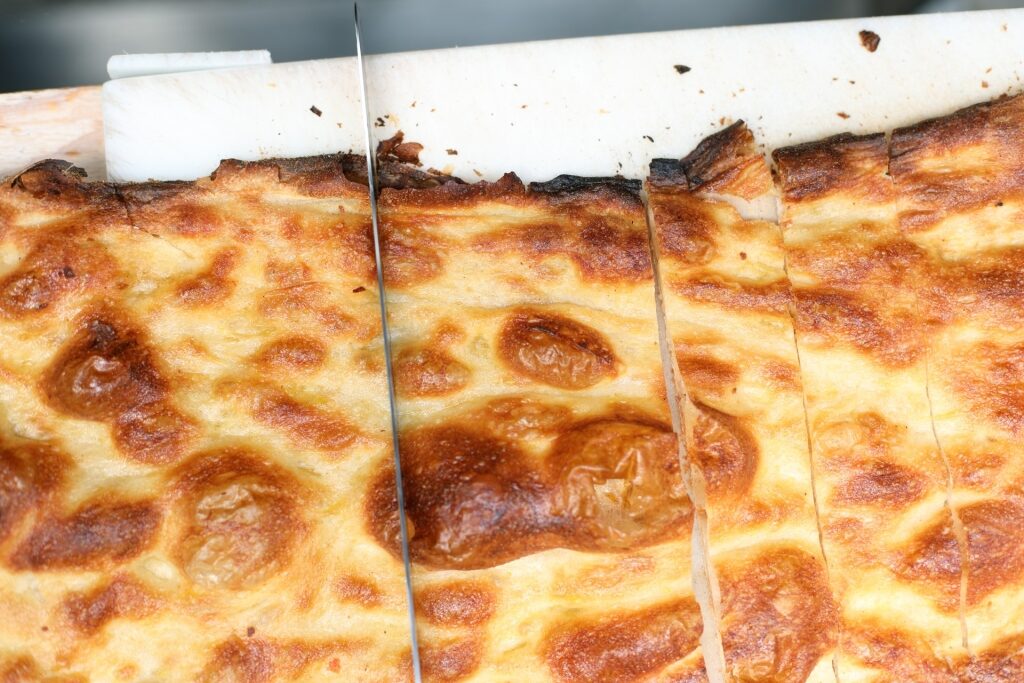
Pizza bianca
The pizza bianca is a mainstay of Rome street food, often the afternoon snack of choice to tide everyone over—from schoolkids to Colosseum tour guides—until dinner.
The Roman pizza bianca is not the tomato-free, white pizza bianca that is occasionally available on more liberated pizza menus. This version began its life as a simple rectangle of test dough, popped into the oven to ensure that the required temperature had been reached for the real baking to begin.

Pizza bianca
Perhaps the best way to think of this Roman dish is as the city’s focaccia. What makes it stand among the many intensely delicious breads available from Italy’s alpine north to its beachy heel is the fluffy interior found within that wonderfully crunchy crust.
It’s available flavored with rosemary or other toppings, but sometimes the plain simplicity of olive oil and salt really is the best.
Fiori di Zucca
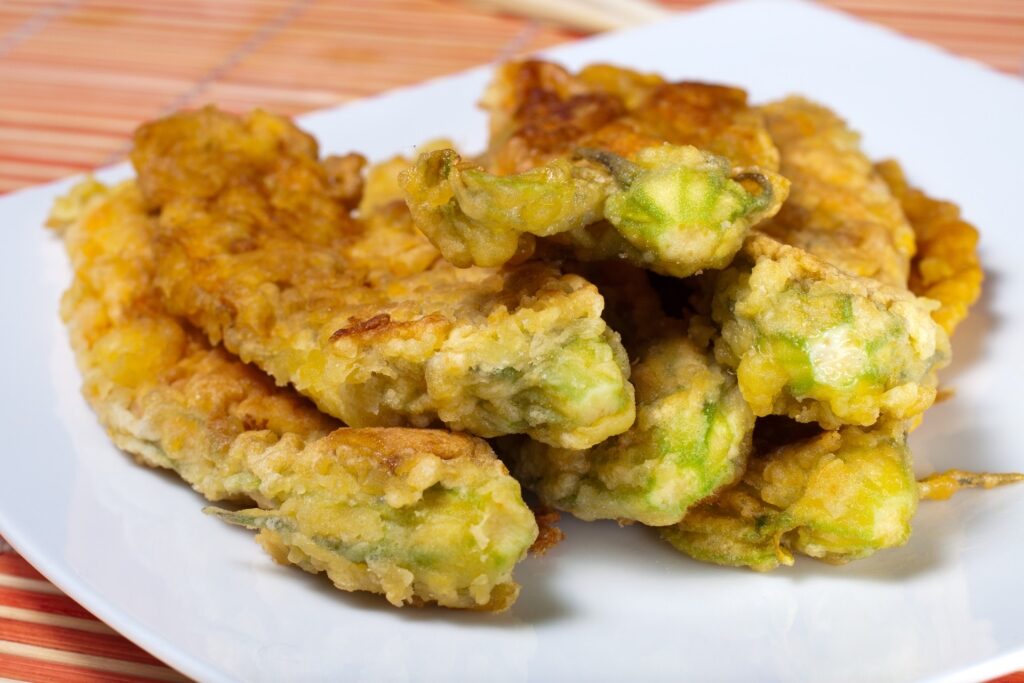
Fiori di Zucca
A recipe from the Rome street food canon that’s been much adapted elsewhere in Italy, a fiori di zucca is a fried, stuffed zucchini flower.
It’s a tasty emblem of Italy’s cucina povera, when the push for unusual ingredients came not while in pursuit of a Michelin star, but of working-class survival. Rome’s fiori di zucca are generally regarded as the original and, certainly for the discerning Romans, the absolute salty, creamy best.
The deep yellow-green blossoms are stuffed with a whisper of anchovy and a dollop of fiordilatte cheese, before being deep-fried to a light, golden crisp. They’re widely available from late spring into August—fresh blossoms are essential to the recipe’s success—and available from market stalls or the city’s fried food shops.
Carciofi alla Giudia
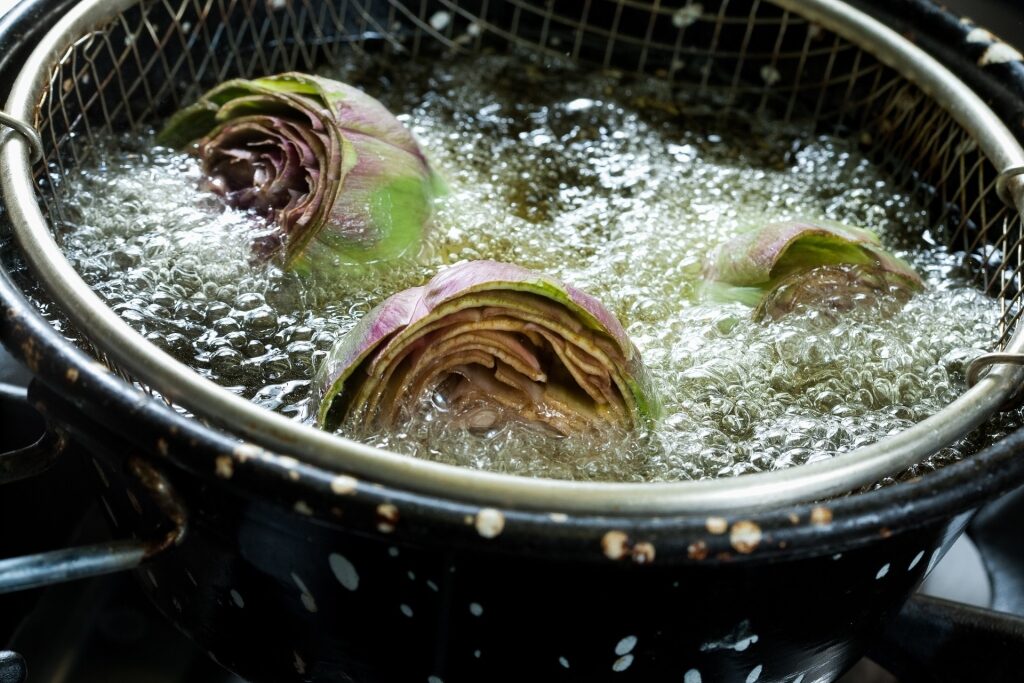
Artichoke
I’m always slightly bemused by how many delicious deep-fried treats the Italians regularly gorge upon, and yet how the nation always seems to come up trumps in international leagues rating a population’s longevity and heart health.
Perhaps it’s simply a question of moderation, but how is that achieved with dishes as addictively delicious as carciofi alla giudia?
Translating as “artichokes Jewish-style,” this 16th-century masterpiece was conceived in the Jewish ghetto located in the atmospheric heart of Rome’s centro storico. The preparation involves frying the artichokes twice in oil before you eat the entire and buttery flower in its entirety. Magnificent.
Carciofi alla Romana
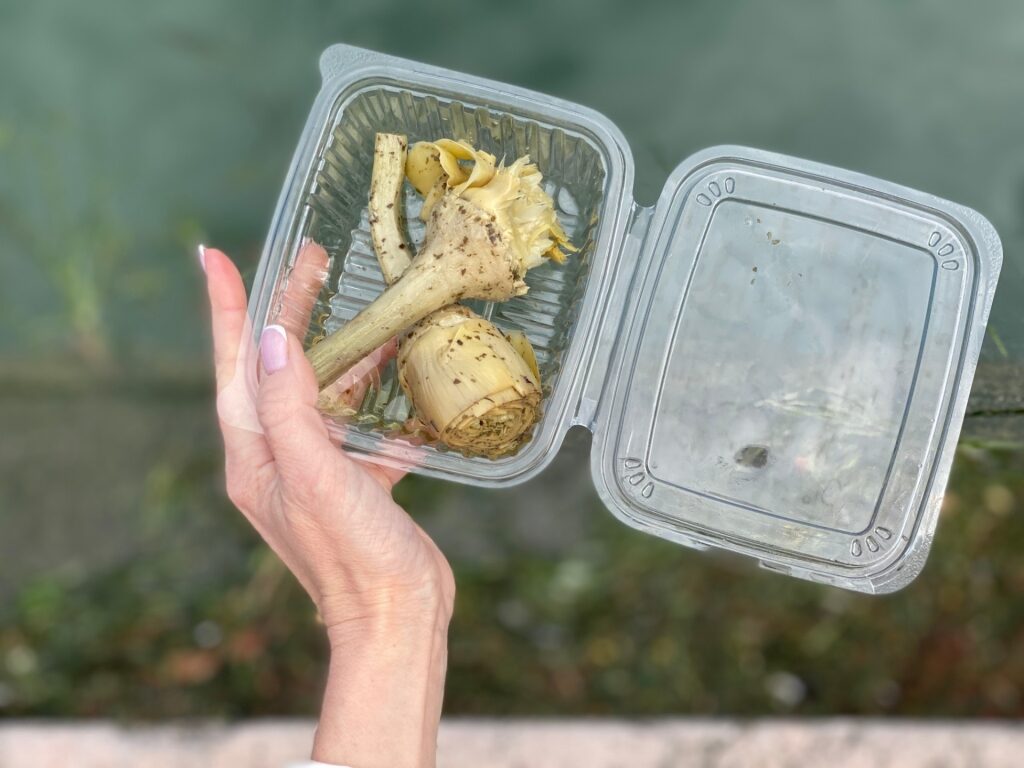
Carciofi alla Romana
Often overshadowed by the transmutation of vegetable to potato chip that is the carciofi alla giudia preparation, carciofi alla romana is nevertheless another delicious way to eat an artichoke, Roman style.
This traditional, rustic preparation has the artichokes braised. In doing so, the filling—comprising chopped mint, parsley, and garlic— infuses the entire flower head with flavor.
Filetti di Baccalà
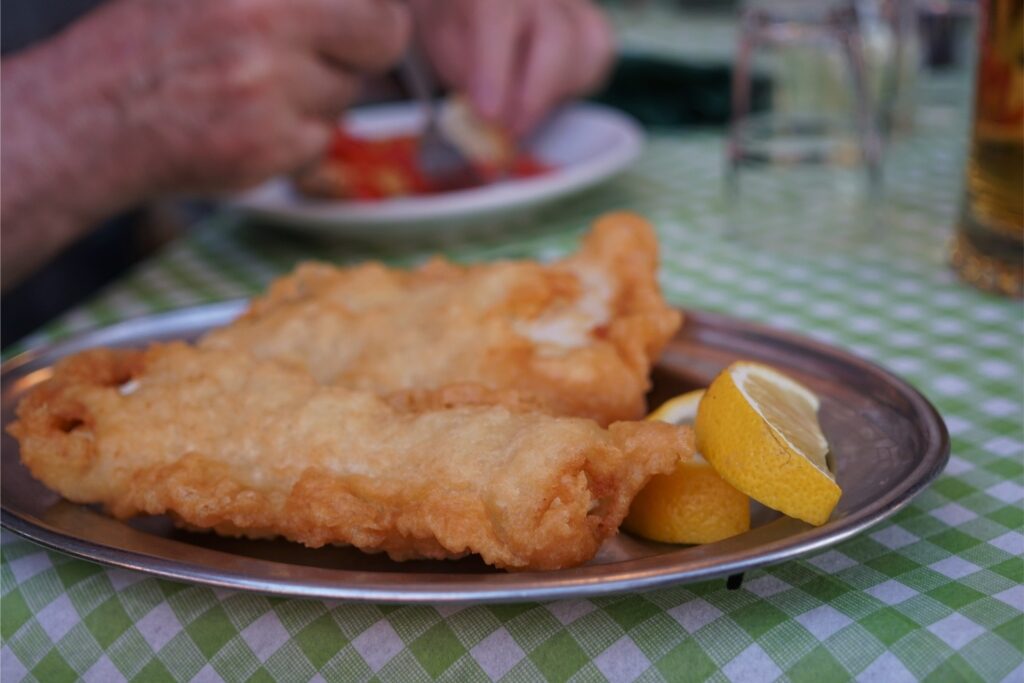
Filetti di Baccalà
Filetti di baccalà is a Roman street food classic. Salted cod strips are dipped in batter, fried, and eaten while you stroll the bougainvillea and Vespa-strewn streets of Rome. They’re never better than when purchased from the legendary Dar Filettaro a Santa Barbara, a couple of minutes’ walk from the Campo de’ Fiori market.
These crisp goujons can come served with a side of French fries, making them the Roman equivalent of the English “fish and chips.” The dish’s history is rooted in the country’s Catholic religion, when the eating of baccalà took place during Easter fasts, as cold-blooded fish are excluded from the list of meats prohibited during fasting.
Calzone

Calzone
Naples is only a few hours south of Rome, so when the calzone, that folded-over pizza/giant empanada, was invented in the south, it wasn’t long before news of this innovation was being traded across washing lines in the capital.
The Romans, in their typically imperious way, tinkered. The filling became less saucy, better for transporting in the hand. In place of the Campanian-favored salami and ricotta fillings, mozzarella and prosciutto were used. And just like that, a new Roman lunch staple was born. Stop into a Roman friggitoria, and you might find a deep-fried calzone fritto to try.
Maritozzo

Maritozzo
Maritozzo—a cream-filled brioche bun—is the Rome street food equivalent of the “breakfast of champions.”
They’re most common when populating the window displays of Rome’s forni, or bakeries, during the Easter period, when they sit alongside quaresimali almond biscuits as the special treats of this season. You can also find savory versions of maritozzi, usually featuring ricotta and tomato sauce in place of the cream.
In the sweet version, the cream is often mixed with lemon zest, and the brioche is elevated with the inclusion of pine nuts, candied peel, and sultanas. There’s a tradition, dating back to the 19th century, that if someone offers you a maritozzo on March 1, be sure to search the creamy filling for an engagement ring before biting in.
Bombe Dolci

Bombe dolci
A sweet treat often readily consumed by late-night club-goers in the trendy Testaccio neighborhood, bombe dolci are sugar-dusted donuts with custard, chantilly cream, or chocolate fillings.
Bombe dolci—and their plain, smaller cousins, the bombolini—are in evidence whenever there’s a good time, such as at festivals, as bar snacks, or during major religious events in the capital. More spherical than donuts in the U.S., these treats have their origins in the pastry traditions of Austria to the north.
You’ll find bombe dolci throughout Italy. Rome’s version, however, is typically renowned for the lightness of its dough.
Grattachecca

Grattachecca
The darling of Roman street food’s sweeter side, grattachecca sits somewhere between the slushie and the Sicilian granita. Its name derives from the verb to scrape, “grattare,” and the Romanesco dialect word for a block of ice, “checca.”
There’s a nostalgia around grattachecca, which is made by putting shaved ice into a cup before livening it up with flavored syrup—coconut, tamarind, and lemon are ever popular. The vivid cupful is then often topped with fresh berries.
It’s hard to pin down the precise origins of this simple and delicious formula, although historical accounts indicate the existence of an Italian prototype involving honey, fruit, and snow that used to be gathered from the higher elevations of the Abruzzo mountains.
Gelato

Gelato
While Italian gelato may have its origins in Renaissance Florence, there’s no question that a cone of this light, flavorful treat goes perfectly with strolling down Via Condotti beneath a cobalt blue sky.
With upward of 1,400 gelato shops in the capital, the choice is immense. And then there are the flavor options. Gleaming tubs of Italian classics, such as hazelnut, stracciatella, and pistacchio, can be found everywhere, but in some of the more daring gelaterie, like Otaleg in Trastevere, look out for scoops of fiordilatte with added grapefruit marmalade.
Read: Best Things to Do in Rome with Kids
Tiramisù To-Go
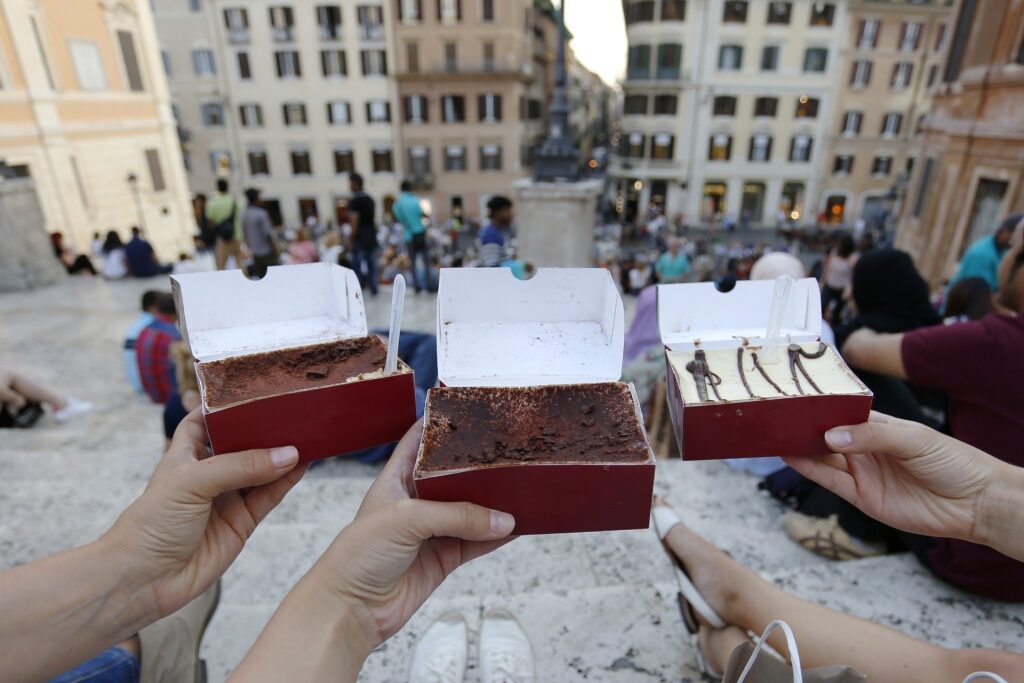
Tiramisu
You can imagine the sophisticated Venetians, the original creators of tiramisù, rolling their eyes in the 2000s when they’d heard that their heavenly concoction of espresso, mascarpone, and ladyfingers had become portable thanks to their over-caffeinated cousins to the south.
But it’s a natural step, the evolution of this ubiquitous dessert—the favored fanfare concluding a luxuriously long Italian meal—into a ubiquitous on-the-go item of Rome street food.
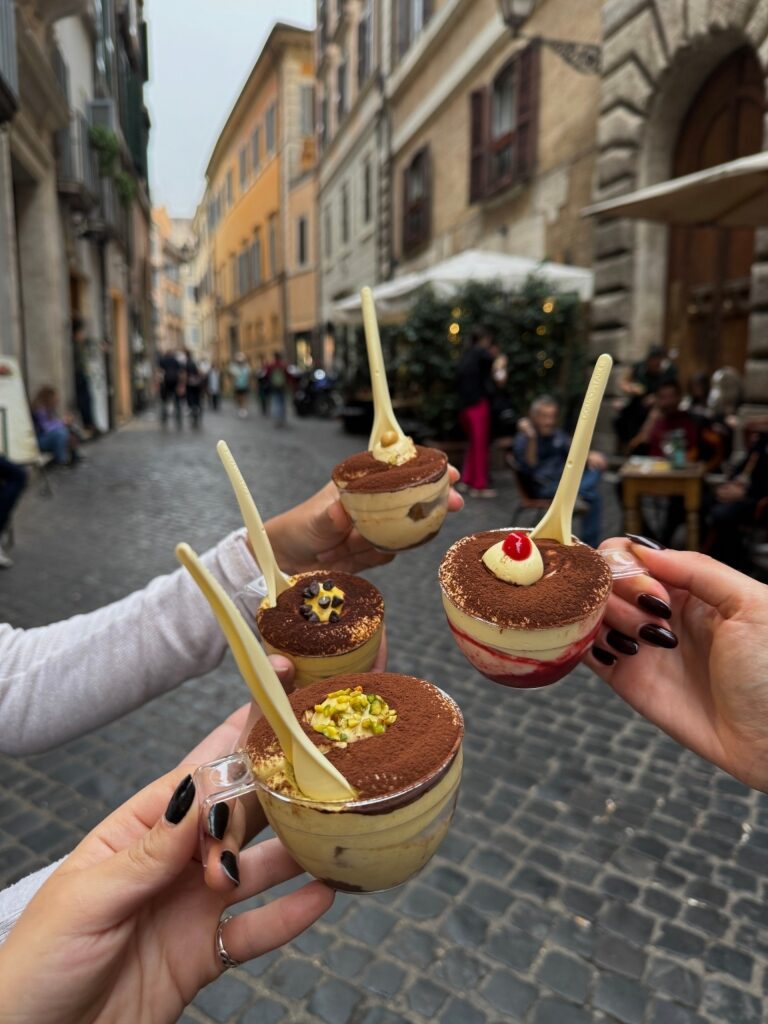
Tiramisu
As is the way, once the first step of sacrilege is completed, further steps tend to ensue. Roman twists on tiramisù include the addition of other flavors, such as caramel, to soften the bitterness of the coffee-soaked sponge.
Tiramisù To-Go is found in single-serve cups from gelato shops and bakeries throughout the city—and now even in Venice.
FAQs
What street food is Rome known for?
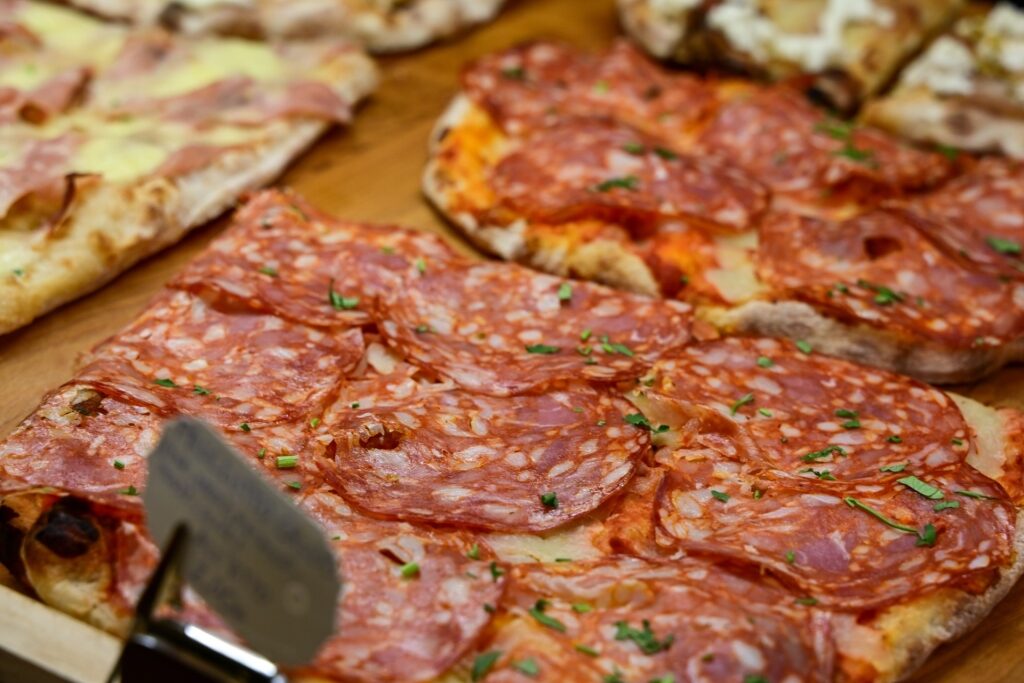
Pizza al taglio
The Rome street food scene is a delicious blend of tradition and convenience, rooted in recipes that have fed the city for generations. The classics are so good that they still far outweigh any newfangled innovations in popularity: think supplì, pizza al taglio, trapizzino, and porchetta sandwiches.
While these are generally year-round, there are also seasonal favorites, particularly carciofi alla giudia and, in summer, refreshing grattachecca.
Where can I find the best street food in Rome?
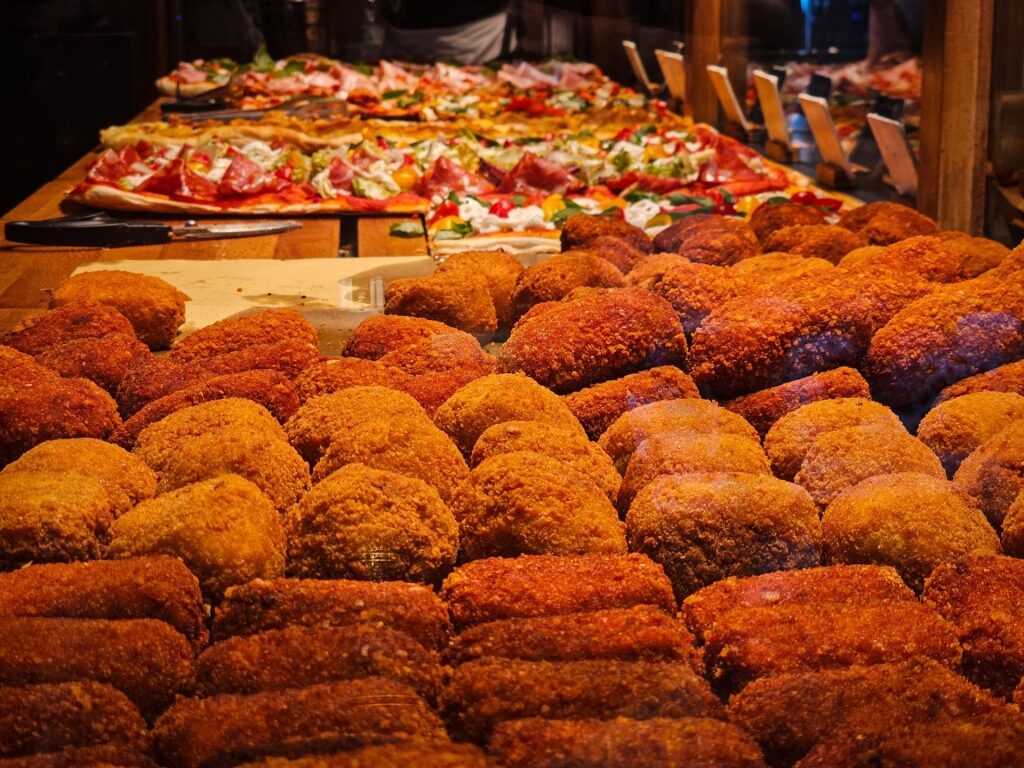
Street food in Rome
For the best street food, head to neighborhoods renowned for their local markets and indie shops. Testaccio is the mothership, and its market stalls deliver—between 11:30 a.m. to around 2:30 p.m.—superb supplì, pizza bianca, and other classics of Rome street food.
The atmospheric lanes of Trastevere and Monti are lined with bakeries, pizza-al-taglio counters, and street-food stalls with a more contemporary slant. Campo de’ Fiori is another good spot, with a mix of traditional and modern treats to go.
Is it safe to eat?
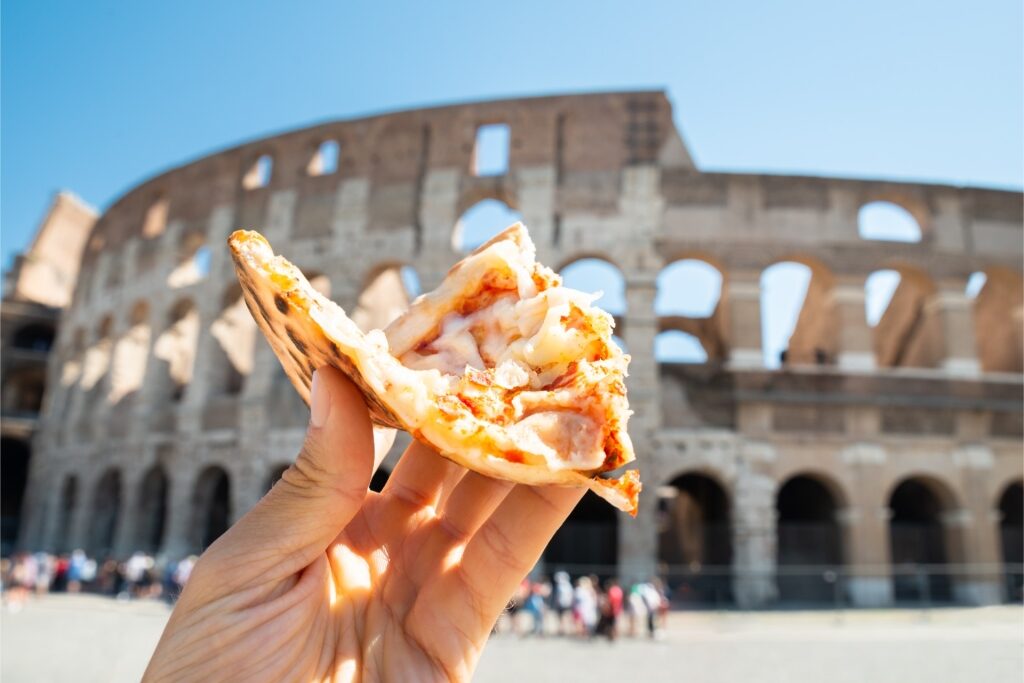
Pizza al taglio
Street food in Rome is generally very safe. If you’re nervous, be sure to scope out the stalls that have long lines, look clean and well-kept, and serve the food at a temperature that feels right.
Do I need cash?
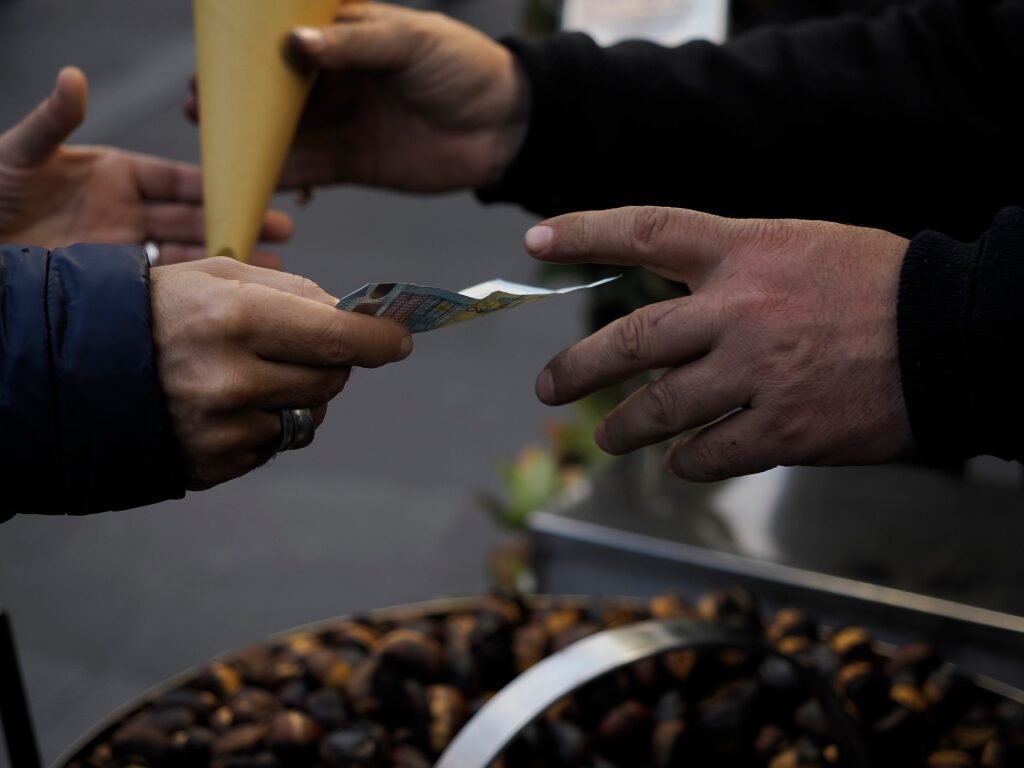
Rome
Generally, you’re all set with card payments nowadays, but it can’t hurt to carry some euros to decrease the risk of having to walk away from that street food stall empty-handed, hounded by its rich aromas.
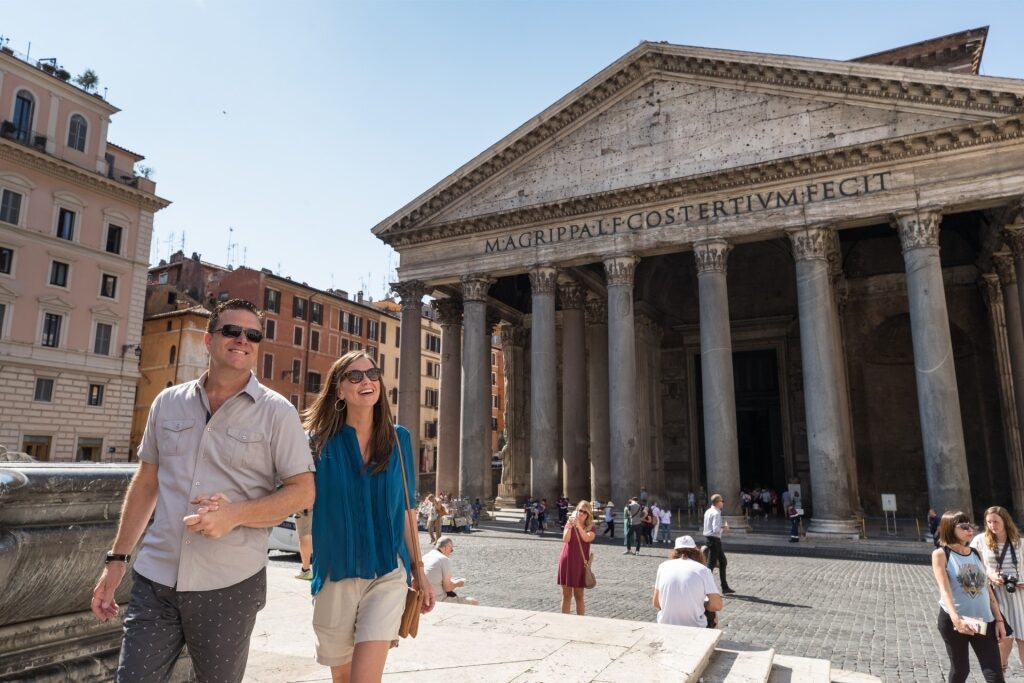
Rome
Explore the delicious street food in Rome—not to mention its countless side street trattorias—on a cruise to the Eternal City. Browse Celebrity’s cruises to Rome and book a vacation to this stunning country today.