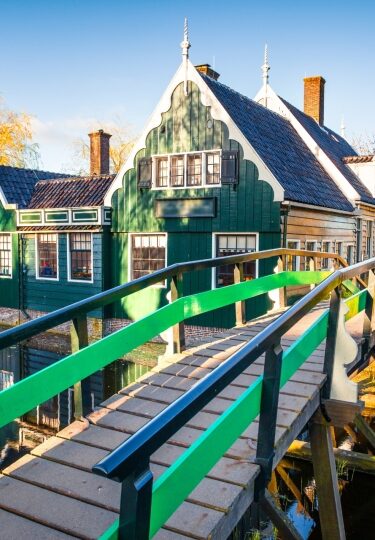
Zaandam is best known as the gateway to Zaanse Schans, one of the most popular and beloved heritage sites in the Netherlands. The world-famous Dutch open-air museum, situated just outside central Zaandam, might be the primary reason to visit this part of the Netherlands, but it certainly is not the only one.
In fact, Zaandam, Netherlands, is an excellent base for exploring North Holland—the most quintessentially Dutch province the country has to offer. Zaandam lies smack-dab in the middle of North Holland’s endless pastoral countryside. Think green farmland dotted with cows and sheep, wild flower fields, and verdant gardens, as well as bucolic “typically Dutch” polderland and sleepy harbor scenery.
Zaandam makes for a wonderful stop on any Netherlands itinerary. Here are the best expert tips for enjoying the area.
Why Visit Zaandam
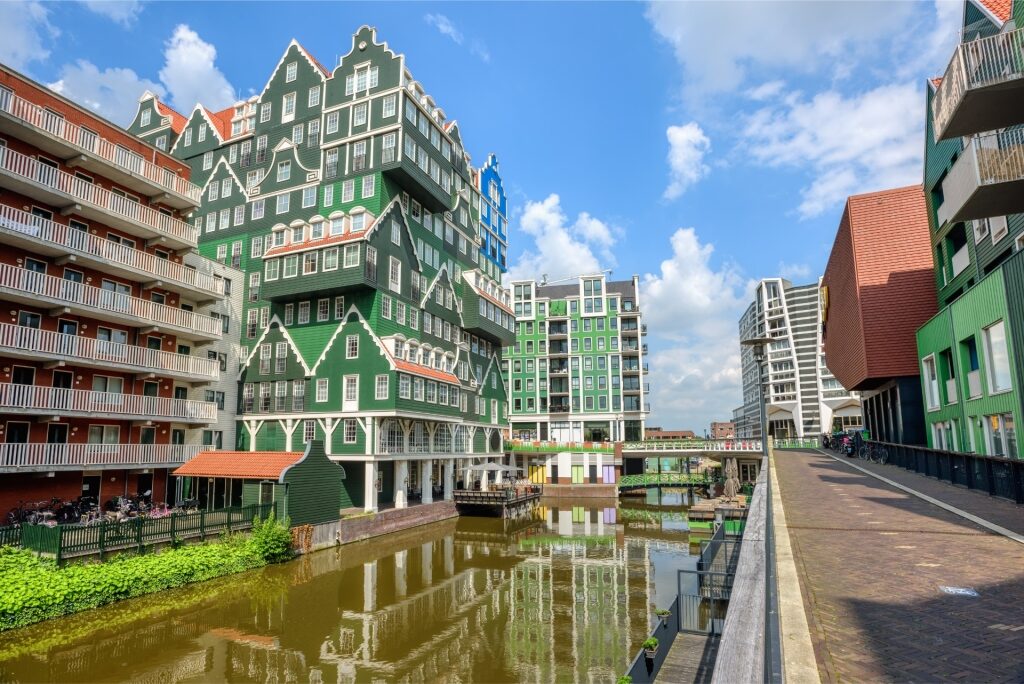
Zaandam Center
North of Amsterdam, Zaandam is home to the iconic Zaanse Schans open-air museum and its famous windmills. The city is also the gateway to the incredibly charming and scenic province of North Holland.
Noord-Holland, or North Holland, wraps around Amsterdam like a flower wreath. Across the region, industrial heritage centers mingle with flat, water-logged terrain. Branching out from the calming narrows of the Zaan River, which flows through the region, are canals, quays, and polders—dyke areas drained and artificially controlled over centuries.
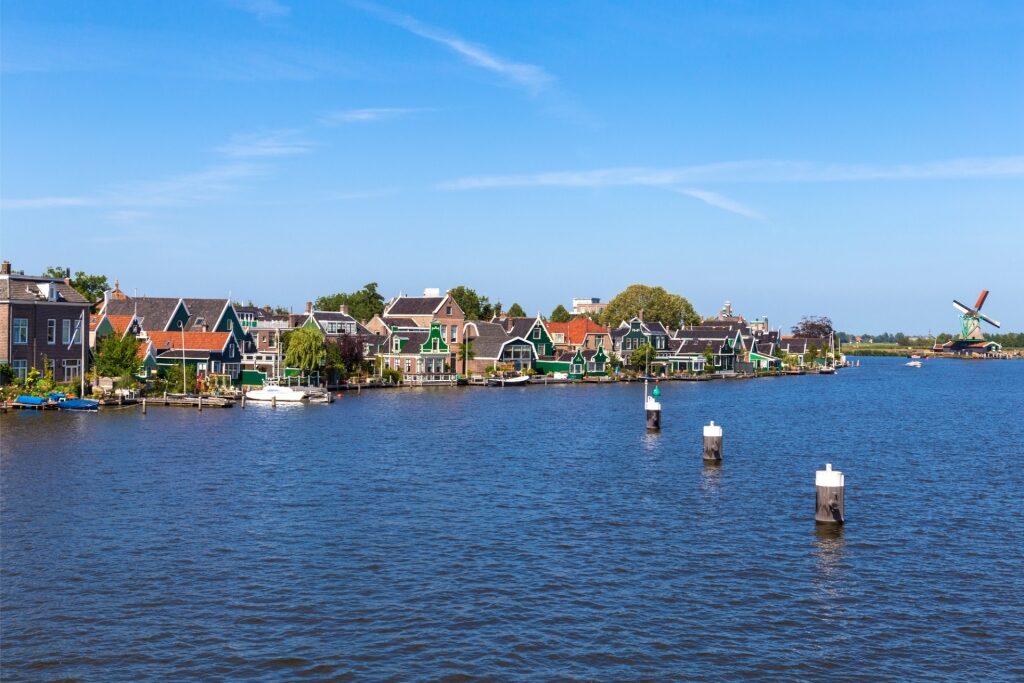
Zaanse Schans
Zaandam is the largest and main city of what’s known as the Zaan river region. Zaan is a last remaining vestige of the Netherlands’ 17th- and 18th-century industry boom, and holds the claim to fame of being one of Europe’s earliest industrial areas.
Along the river, you’ll find preserved landmarks that reveal the Dutch engineering and craftsmanship that once powered the Netherlands’ high trade. In Zaandam and this part of North Holland, you’ll find the beloved historic Dutch industrial windmills—many still turning today— jutting out everywhere across the rustic, storybook landscape.
Wildlife & Nature
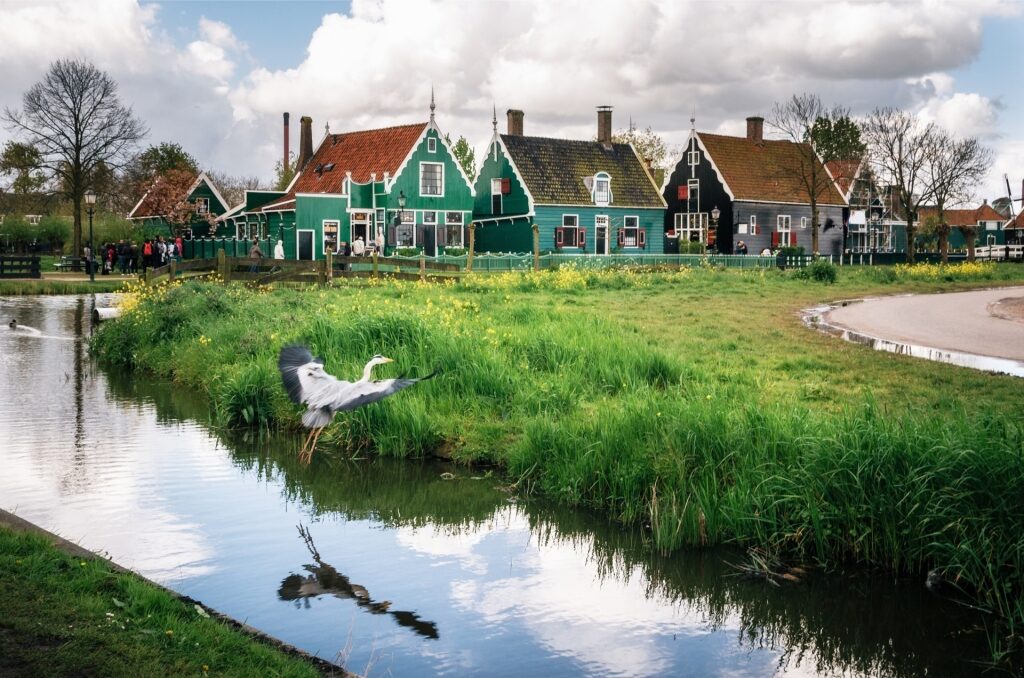
Zaanse Schans
Despite its close proximity to Amsterdam, Zaandam is a small, quiet city firmly grounded in the Zaan region’s polderland. The flat, fertile marshland here has shaped Dutch water management over generations. North Holland’s low-lying wetlands are a prime habitat for bird wildlife, and especially herons, seasonal migratory birds, as well as ducks and songbirds, which love to poke around reed beds and meadow grasses.
Thanks to water management, the reclaimed soil is also, perhaps unexpectedly, replete with flora treasures: aqua-loving wildflowers such as water buttercups, water mint, and marsh marigold, as well as pollarded willows and cattails rule the landscape. Polder walks are a lovely, relaxing activity during which you can take in every detail of the land’s flora and fauna.
History & Culture
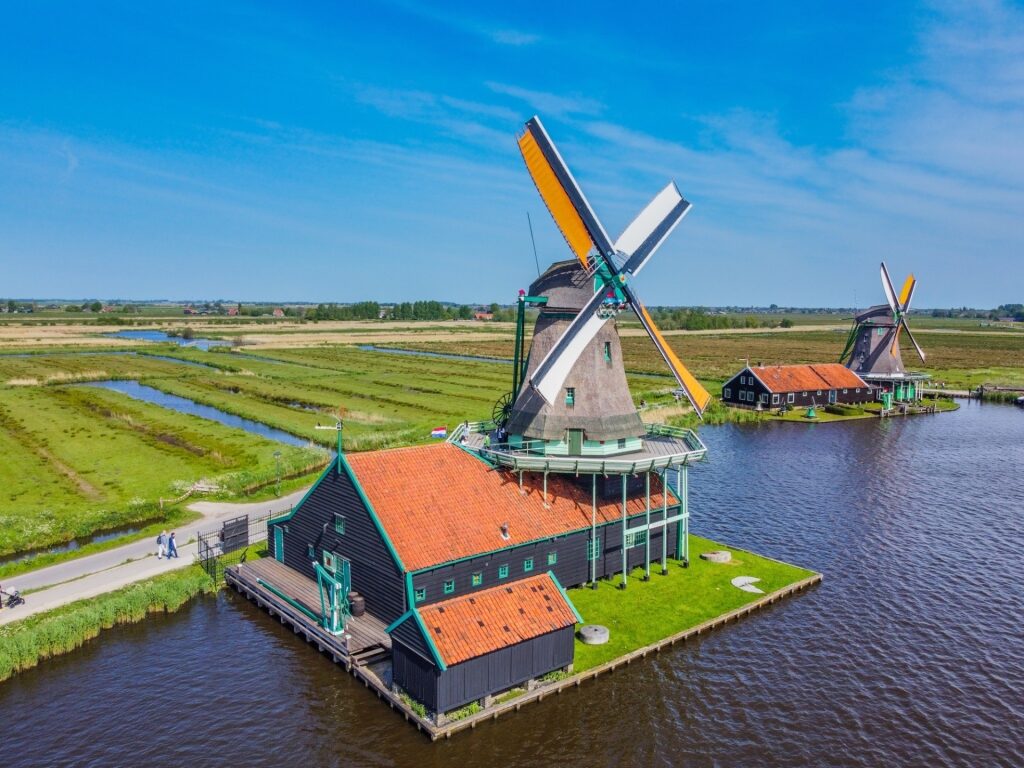
Zaanse Schans
Zaandam and its verdant, grassy surroundings have been shaped by centuries of Dutch industry and water management. The Zaan region has been inhabited since the early Middle Ages, despite historically rather precarious conditions of living here, as the land sits well below sea level. Maintaining and draining reclaimed land has been a generational struggle throughout the Netherlands, but especially in these parts.
Despite this, Zaan has a fierce reputation for being a Dutch manufacturing powerhouse and is one of the world’s oldest industrial areas. Today, countless polders, dikes, trenches, and waterways around Zaandam are a living testament to Dutch innovation.
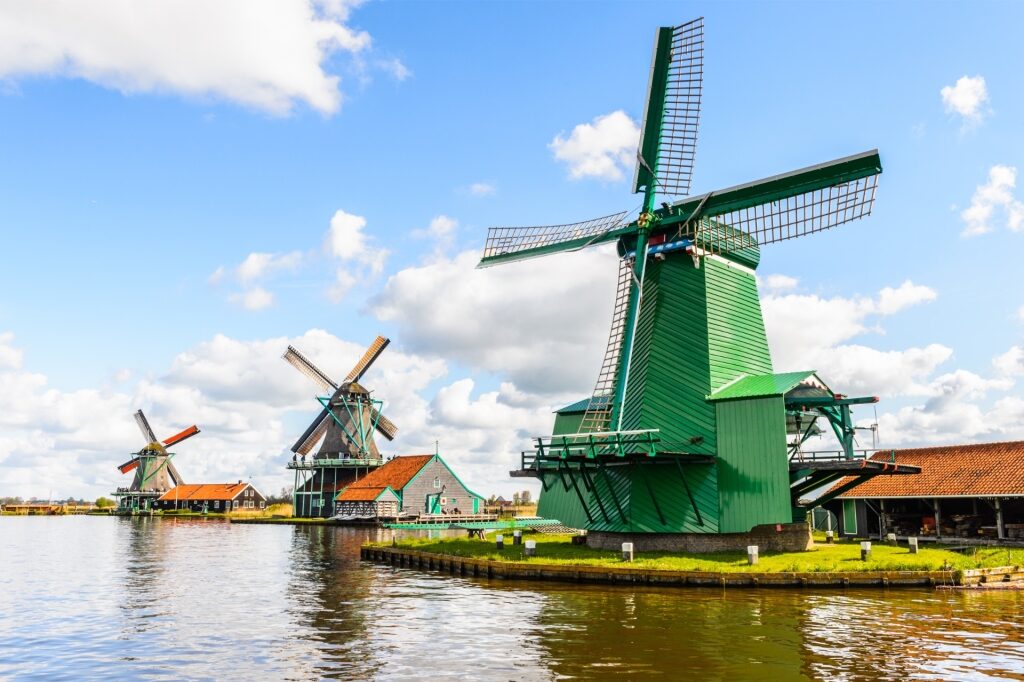
Zaanse Schans
The history of Zaan, one of Europe’s first industrial regions, centers upon wind-powered mills.
During its 17th- and 18th-century heyday, the Zaan region overcame many challenges to become an early European industrial powerhouse. During this time, it is estimated that there were more than 600 windmills employed to produce flour, timber, paints, and oil for the nearby city of Amsterdam, at the time the largest port in the world.
Through this shipping trade along the Zaan River, connecting North Holland to the IJ River and Amsterdam, industrial centers such as Zaandam became highly important in shaping Dutch history.
The Zaan region was home to the world’s largest timber port in the 16th and 17th centuries, and as a result, the paper industry flourished here as well. And here’s a fun aside: some believe that the United States´ Declaration of Independence was written on paper that originally came from the Zaan Region.
Tips for Visiting Zaandam
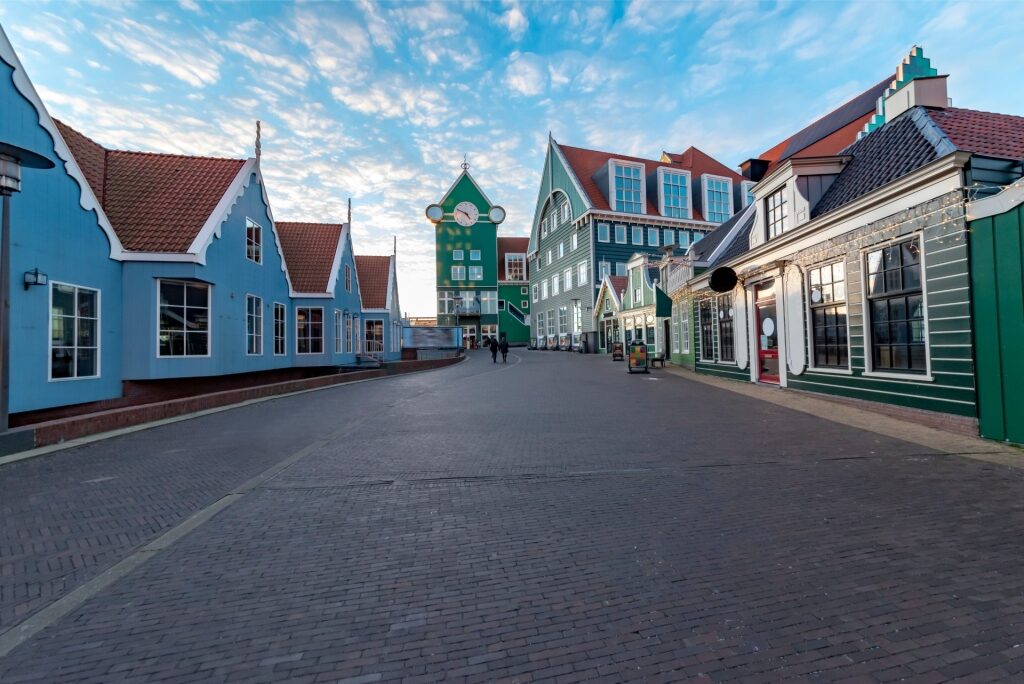
Zaandam Center
A bicycle is sure to be your best friend in Zaandam. While the city center is compact and walkable, you’ll need a set of wheels to get out of the city to visit Zaanse Schans and freely explore the region’s natural spoils.
Hiring a bike and pedaling from Amsterdam to Zaanse Schans is easy. The entire journey only takes about 90 minutes. Starting from Amsterdam Central Station, you take the ferry—it’s free of charge, including with a bicycle. The route, heading northwest through Amsterdam Noord, is a very pretty, flat 10-mile ride around charming countryside homes and green expanses.
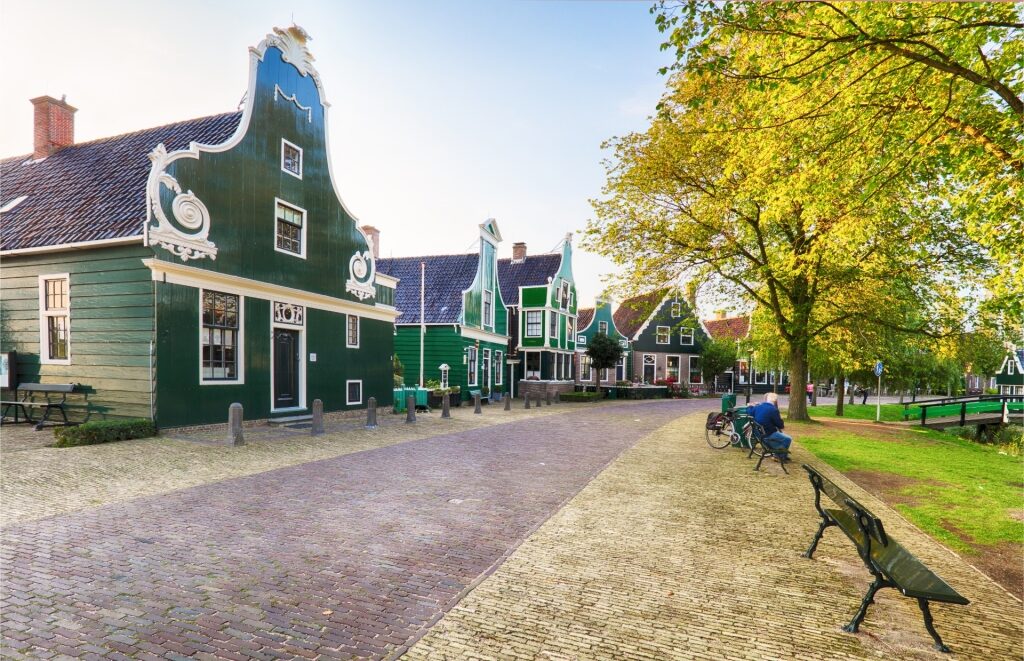
Zaanse Schans
Before heading to Zaandam, purchase the Zaanse Schans Card online. It offers excellent sightseeing value, including access to the Zaans Museum—a must-visit for understanding regional history—as well as the Weaver’s House, Museum Zaanse Tijd, Heritage Chambres Kalverringdijk, Windmill Museum, two mills of your choice, and the digital audio tour. Other landmarks are free to enter.
Consider staying overnight in Zaandam to avoid any time pressure. While most travelers initially plan to visit Zaanse Schans for a couple of hours, many wind up staying much longer. The busy attraction is a big hit on weekends, attracting many school excursions and tour groups.
Even more so, visiting Zaanse Schans takes time due to the large number of activities on offer—from exploring old windmills to watching craftspeople meticulously at work, losing yourself in this immersive “time travel” is essential to the experience.
Things to Do & Attractions
Zaanse Schans
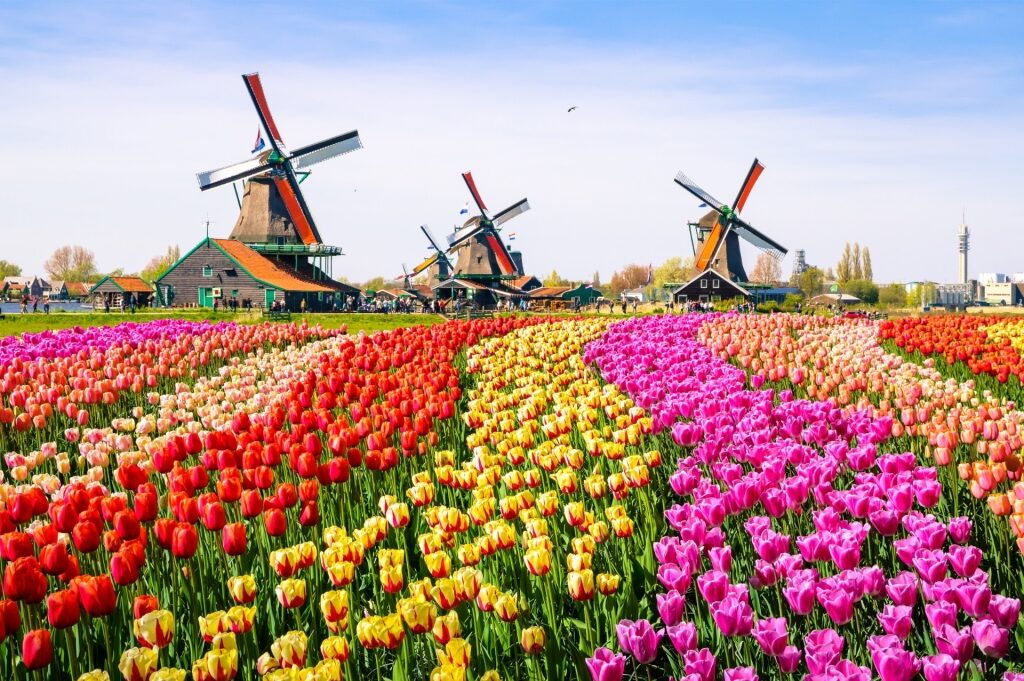
Zaanse Schans
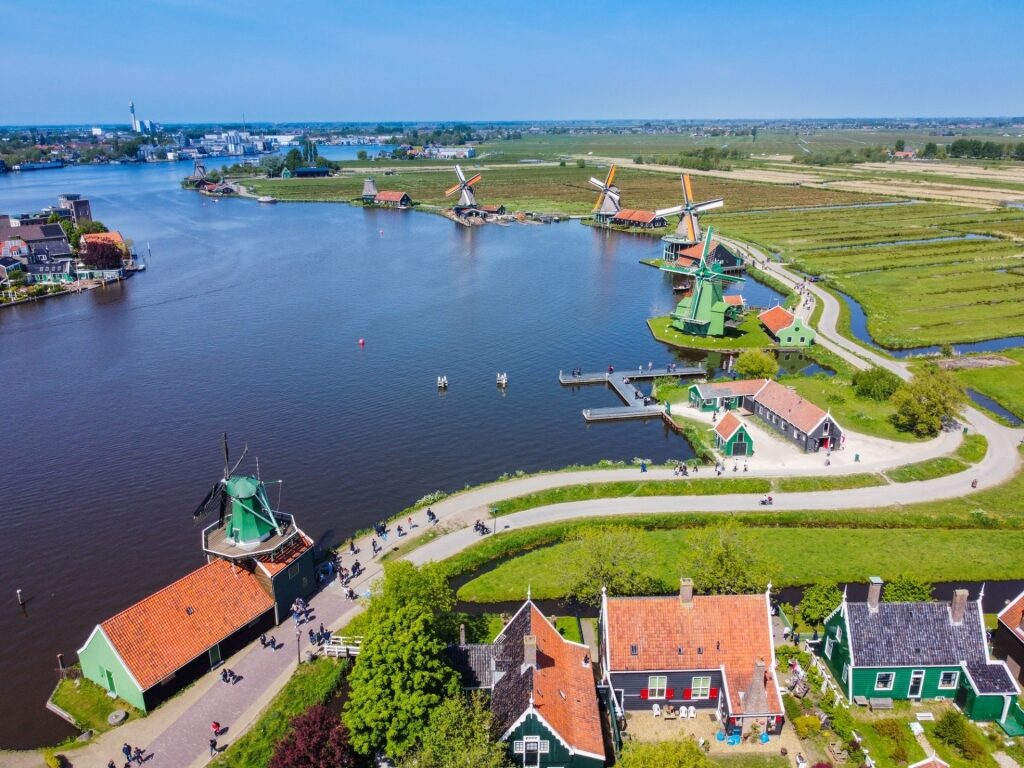
The fabulous open-air museum Zaanse Schans is the region’s claim to fame. On the Zaan riverbanks, next to Zaandam, the heritage site is a blast from the past, boasting traditional wooden houses, interactive workshops, and museums galore.
Seemingly endless activities include visiting a wooden clog factory, watching cheese-makers working in period costume, and admiring a pewter-smith. Most famously, though, Zaanse Schans is one of the best places to visit in the Netherlands to see twirling historic windmills in action and even go inside them.
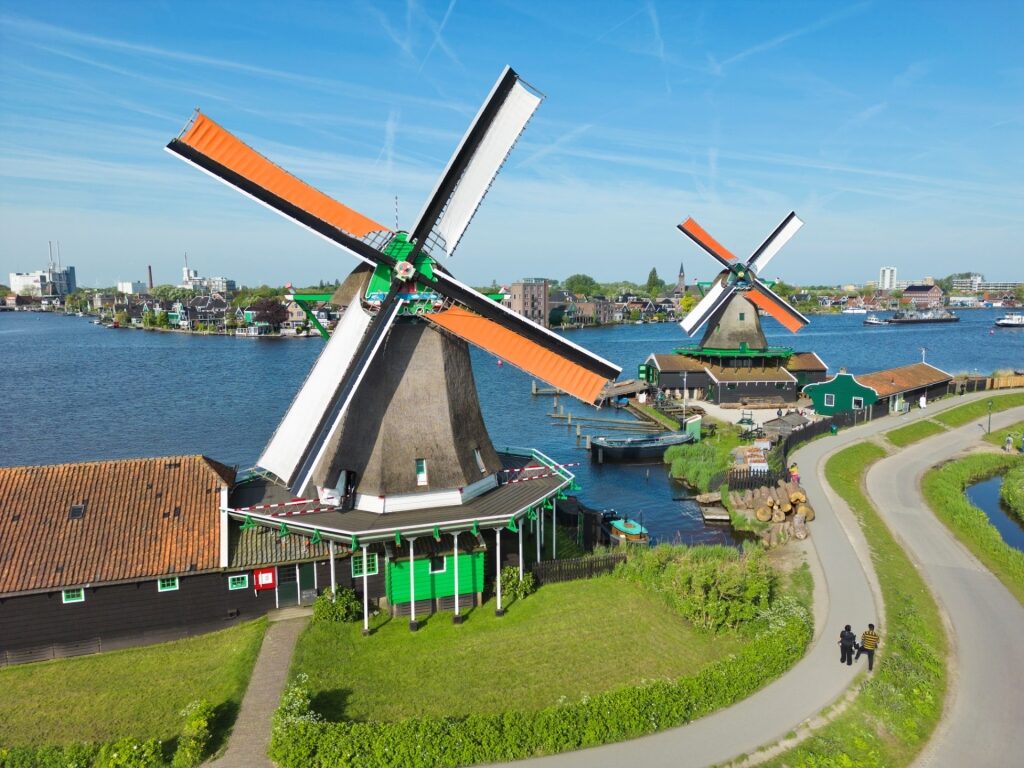
Zaanse Schans
In the 20th century, Zaanse Schans was born out of a local initiative to stop decommissioned windmills from being demolished. Today, the historic preservation area encompasses much more landmass as a recreated 17th-century village, which has been transported in from all corners of the Netherlands. The name “Zaanse Schans” derives from an older moniker, “Kalverschans,” reflecting when Zaan residents held off the Spanish here during the Eighty Years’ War.
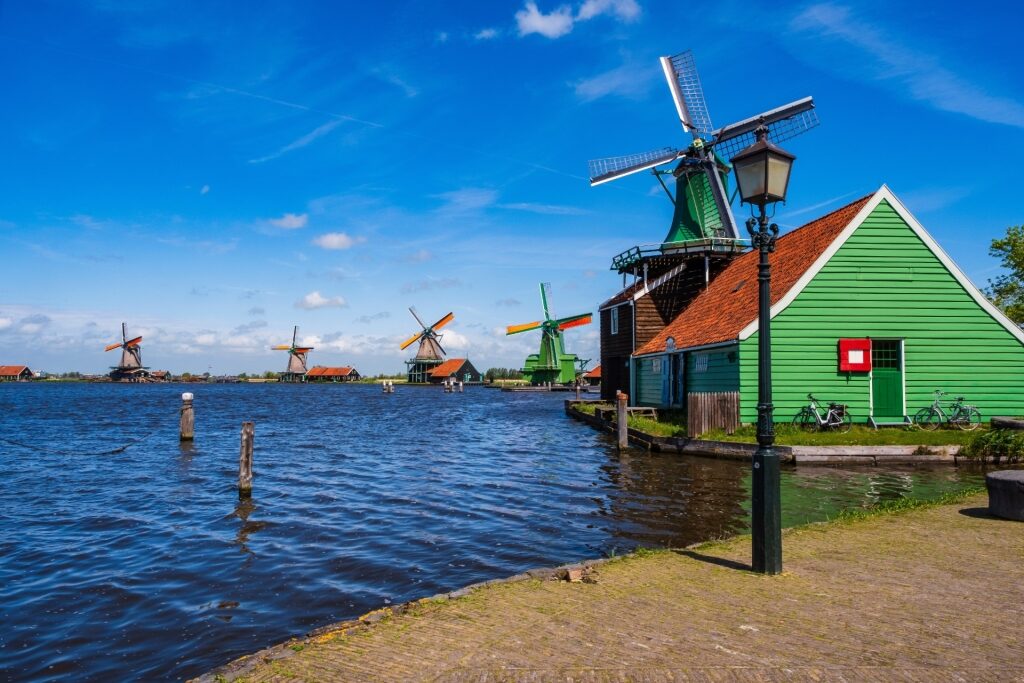
Despite being one of the Netherlands’ most popular attractions, Zaanse Schans still retains its rustic charm. Along the waterway, eight windmills are mostly still functioning. Zaanse Schans’ “windmill gallery” is tended to by enthusiastic local volunteers who happily explain the structures’ history. The best part of a visit to Zaanse Schans is exploring these authentic structures and discovering their vast inner workings firsthand.
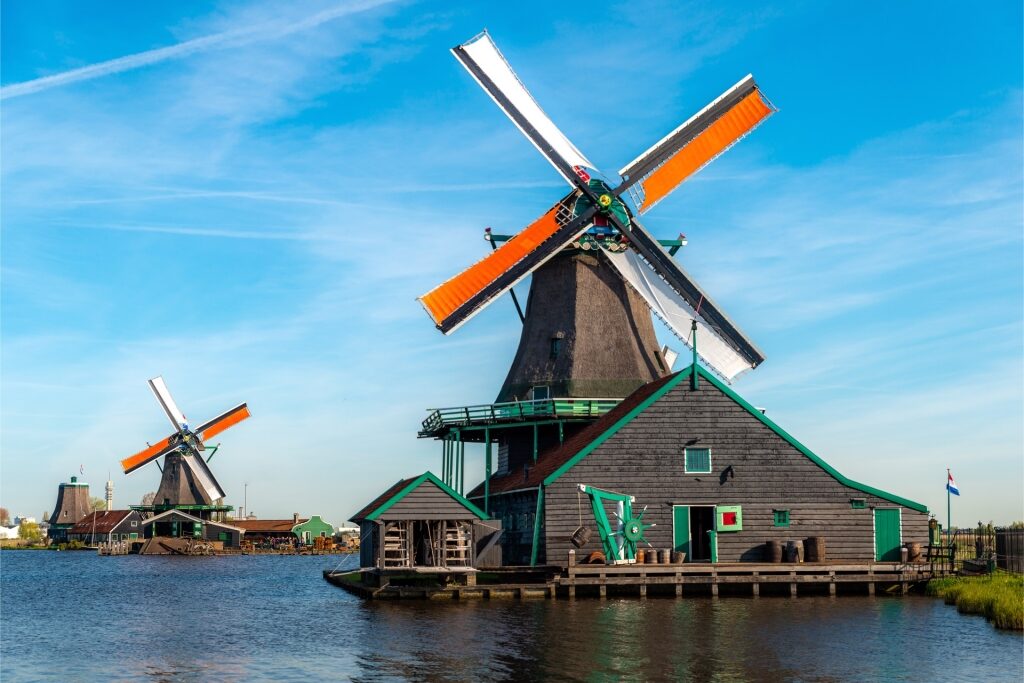
De Kat
Each windmill has its own characteristic history. De Kat is the most-visited mill, and still manufactures paint and pigment; you can climb up inside for a spectacular panoramic view. De Zoeker and De Bonte Hen are both oil mills, while De Huisman, a former spice mill, now makes a famous mustard.
The Bleeke Dood, or “Pale Death,” flour mill is currently closed, but you can still see it from outside. It’s the oldest windmill in the Netherlands. The sawmill Het Klaverblad is only open by appointment—if you’d like to go inside, reach out to Zaanse Schans ahead of time via its website.
Strolling Zaandam Center
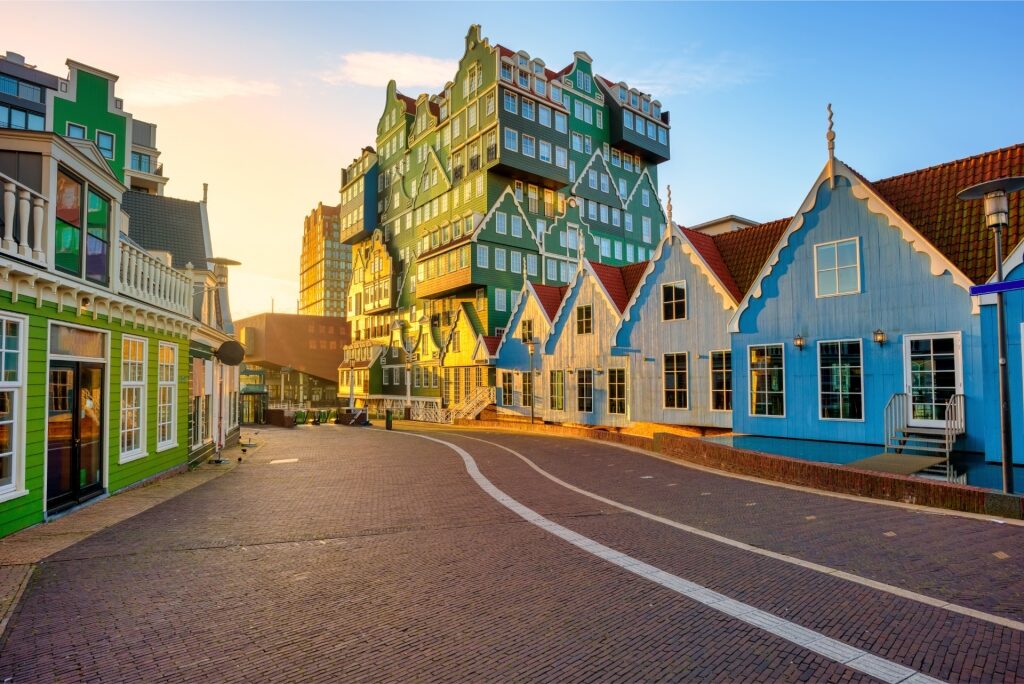
Zaandam Center
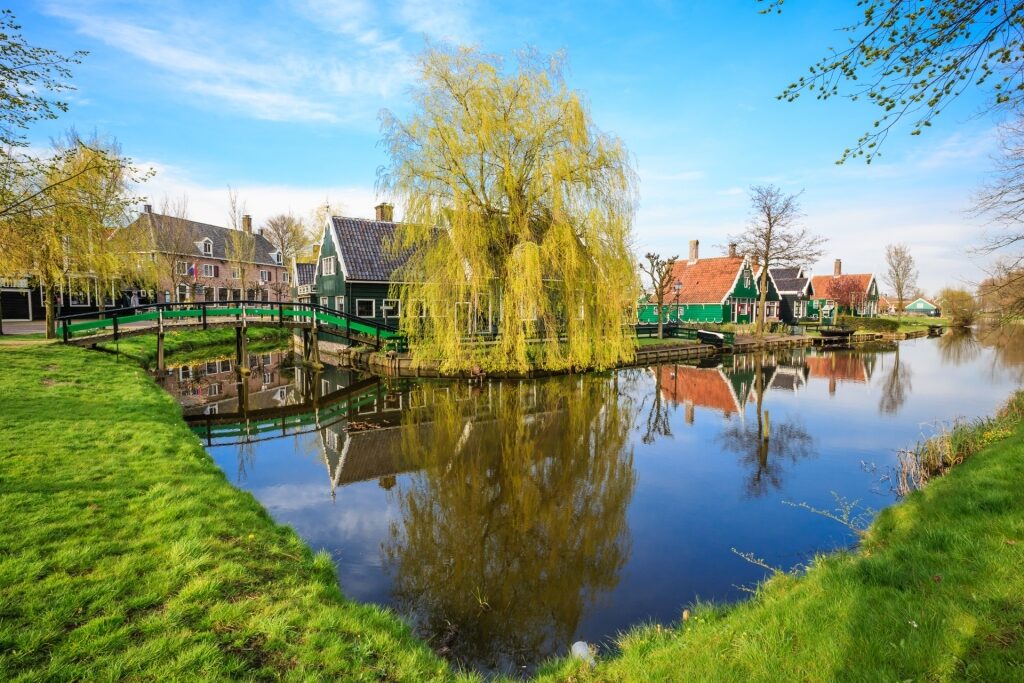
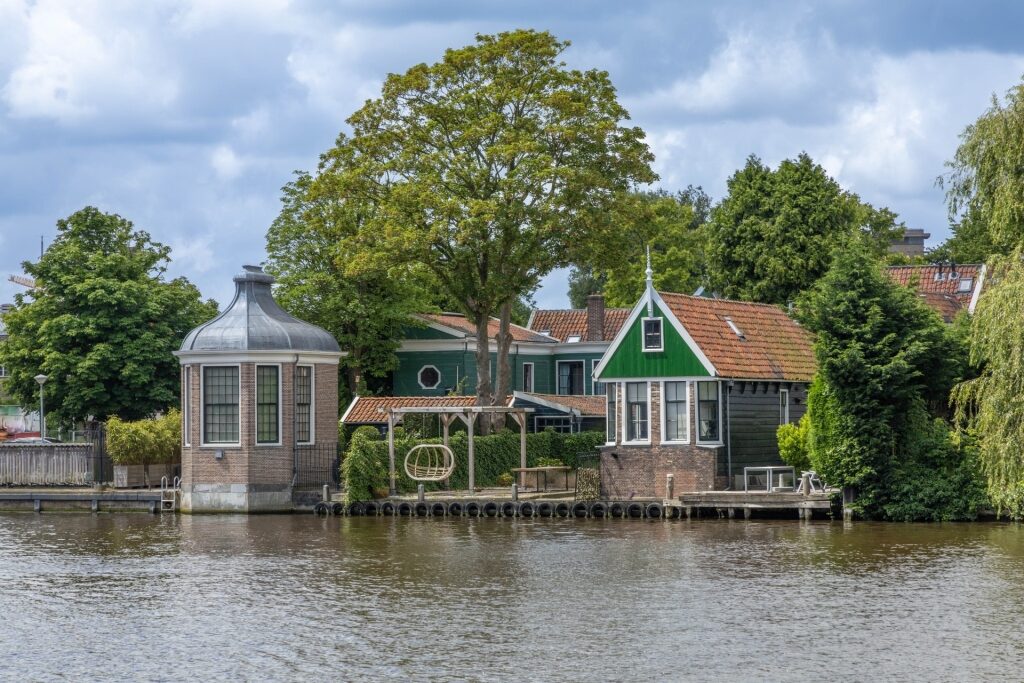
Zaandam’s small historic city center offers a lovely chance to stroll around and take in Zaan’s traditional architecture. Gabled, wooden homes painted in deep greens—once derived from cheap, locally made copper paint—are unique to this Dutch region.
Food & Drink
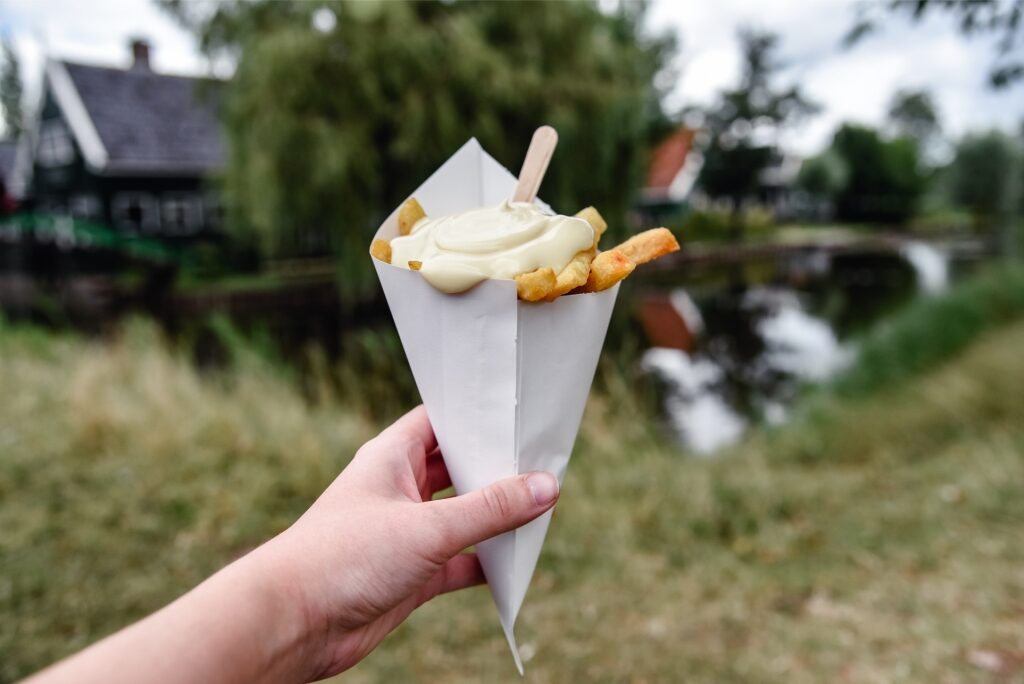
Dutch fries with Zaanse mayonnaise
Zaandam manufacturers have played an integral role in shaping the Netherlands’ food industry by processing imported goods in windmills and later factories. Today, the city is still known for producing condiments such as thick, tangy “Zaanse mayonnaise” and De Huisman’s famous coarse, grainy mustard produced and sold at Zaanse Schans. Some also say Zaandam smells like chocolate now and then, thanks to several cocoa factories roasting and grinding imported beans along the Zaan.
While in Zaandam, swing by a grocery store and pack a picnic lunch to enjoy around pastureland. Excellent takeaway restaurants are also a Zaandam specialty, including the sandwich shop Boer Geert and the Surinamese joint De Roti Loods.
Best Time to Visit
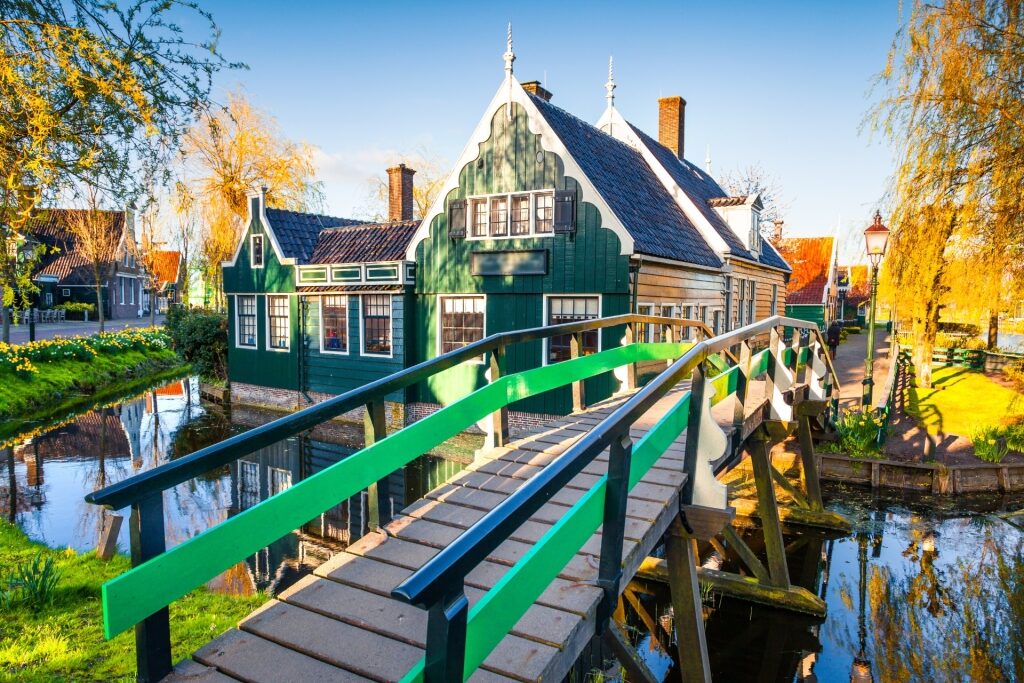
Zaanse Schans
Spring is the best time to visit Zaandam to see flower fields and meadows in bloom, as well as for birdwatching. During summer, you’ll see the region looking its greenest; while longer days are great for exploring the countryside, Zaanse Schans is very crowded at this time.
During autumn, Zaanse Schans is much less busy, and rusty foliage has a special charm. In winter, Zaandam is known for the cozy vibes of small Dutch pubs and eateries. At bakeries, festive treats such as fried dough balls and apple beignets are a highlight not only for Christmas, but also for Easter.
FAQs
Is Zaandam a walkable city?
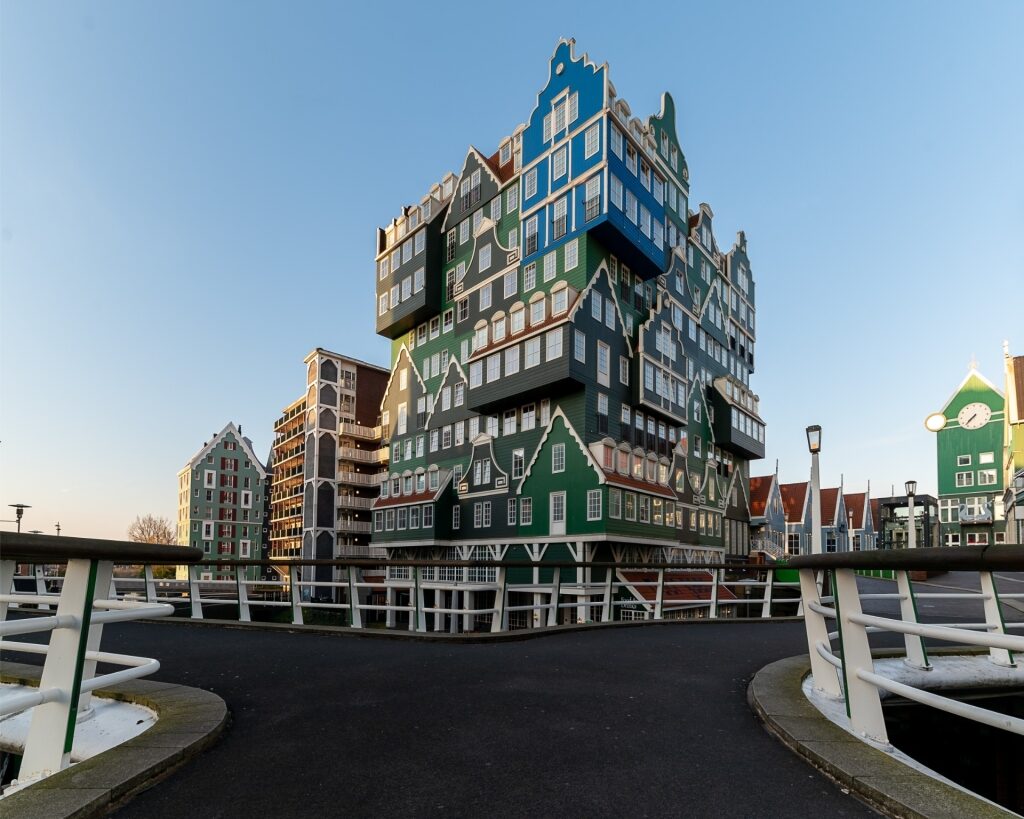
Zaandam Center
Zaandam center is quite walkable, but getting around the Zaan region—for example, from Zaandam to Zaanse Schans—requires a bicycle or vehicle. You can take public transport, but it does tend to be less frequent in the countryside. “Flat as a Dutch pancake” terrain makes riding on two wheels easy here, and you also get some fresh air while you’re at it.
What to do in Zaandam for a day?
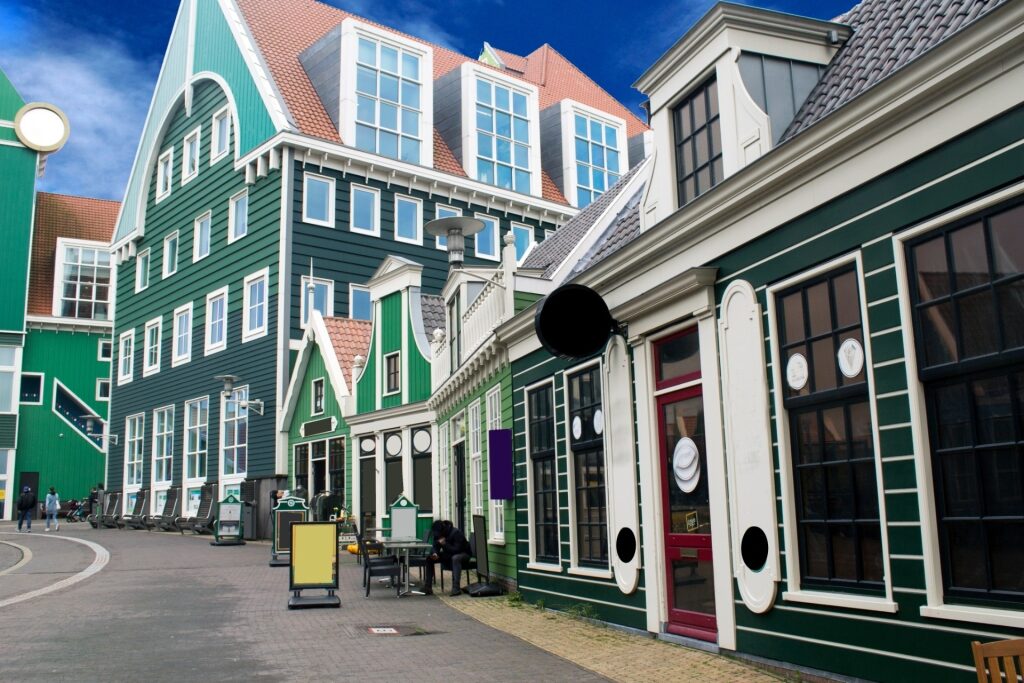
Zaandam Center
Zaandam, Netherlands, is the closest urban center to the Dutch heritage site known as Zaanse Schans. Most travelers will arrive or depart via Zaandam, and maybe spend a little time dining or walking around the historic center. Primarily, though, a visit to Zaanse Schans should be the main focus while visiting Zaandam.
Sightseers often plan to visit Zaanse Schans for an hour, but end up staying for several—there’s that much to see and do, including the iconic windmills the Netherlands is known for. Do budget more time as you’ll likely be tempted by the many opportunities to go inside the attractions in Zaanse Schans—visiting museums, watching interactive demonstrations of traditional Dutch craftspeople at work, and so much more.
What is Zaandam known for?
Zaanse Schans
Zaandam is known for having the Zaanse Schans open-air museum, one of the Netherlands’ most visited heritage sites, at its doorstep. Zaanse Schans, most famous for its collection of on-site, historic working windmills, preserves the Zaan region’s history as one of the world’s oldest large-scale industrial areas. Today, Zaandam is also known for its traditional, green-painted wooden houses, which are unique to the Zaan region.
What are the best things to do in Zaandam?
Zaanse Schans
Hire a bike—either in Amsterdam, which means you’ll transport it over the ferry, or in central Zaandam—and go for a spin around the surrounding countryside. The Zaan region’s picture-perfect, quintessentially Dutch landscape is flush with polderland, dairy farms, and wildflower fields.
Many traditional Dutch windmills, a reminder of Zaan’s industrial past, can be found just outside the city center. The most famous among them are located at the Zaanse Schans open-air museum, where several are still functioning today.
Is Zaandam good for a day trip from Amsterdam?
Zaandam
Zaandam, Netherlands, makes for an excellent day trip from the capital. Get here from Amsterdam by taking a free ferry from Central Station across the IJ River. A breezy, approximately eight-mile cycling route will take you through the quiet, residential Noord district, across farmland and reclaimed polderland into Zaandam.
Zaanse Schans
Now that you’re equipped with the perfect strategy for admiring windmills and picturesque landscapes just outside of Amsterdam, plan your travels by browsing Celebrity’s river cruises to Amsterdam.