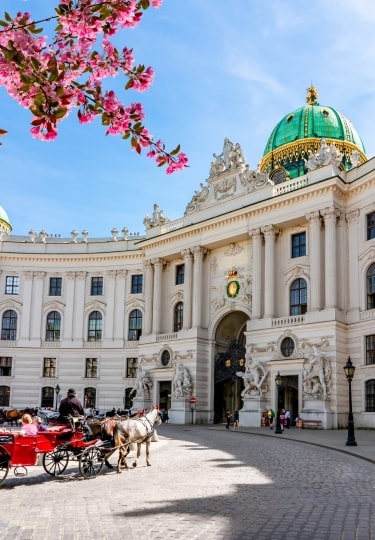
Famed for coffee, classical music, and Klimt, Vienna will capture your heart, as it did mine when I was growing up here. The enchanting Austrian capital combines grand Baroque architecture, world-class art museums, and leafy parks, all in one compact space, framed by the Danube to the east and the rolling hills of the Vienna Woods to the north and west.
I’ve revisited my childhood home countless times over the decades, and there’s always something new (or something old) to discover in this seductively beautiful city. For your first time, though, here are some of the best things to do in Vienna, Austria.
Admire Vienna’s Extraordinary Architecture
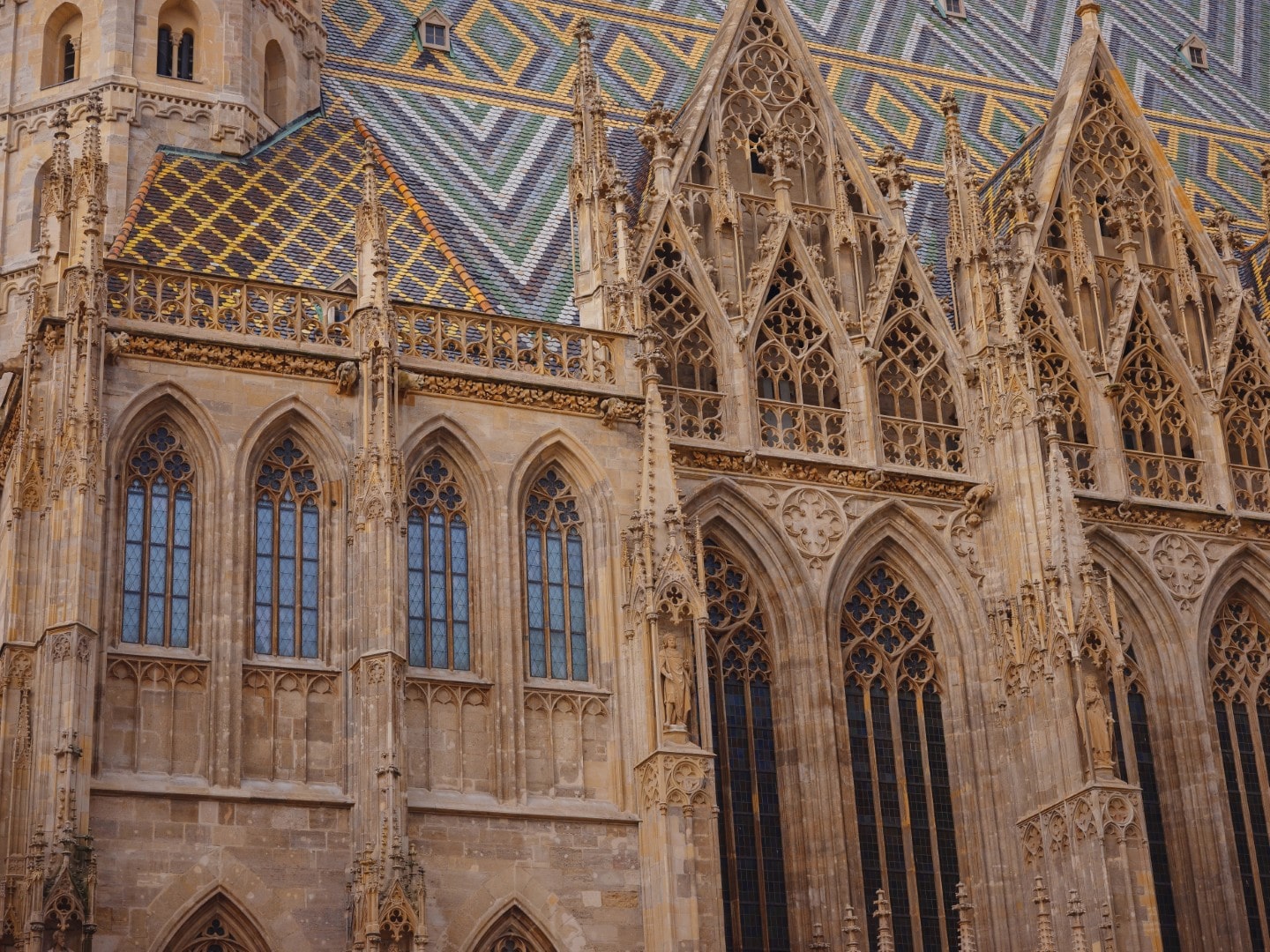
St. Stephen’s Cathedral on Stephansplatz square is a national symbol of Austria and the city of Vienna.
Opulent Baroque palaces and the Gothic St. Stephen’s Cathedral are a testament to the wealth and power of the Habsburg dynasty, which ruled for 600 years. Simply driving around the Ringstrasse, the stately boulevard encircling the Innere Stadt, or inner city, will leave you awe-struck at Vienna’s architectural riches.
These are three of the most important sights for which Vienna is known, each one an essential stop on your first visit.
The Hofburg Palace and the Spanish Riding School
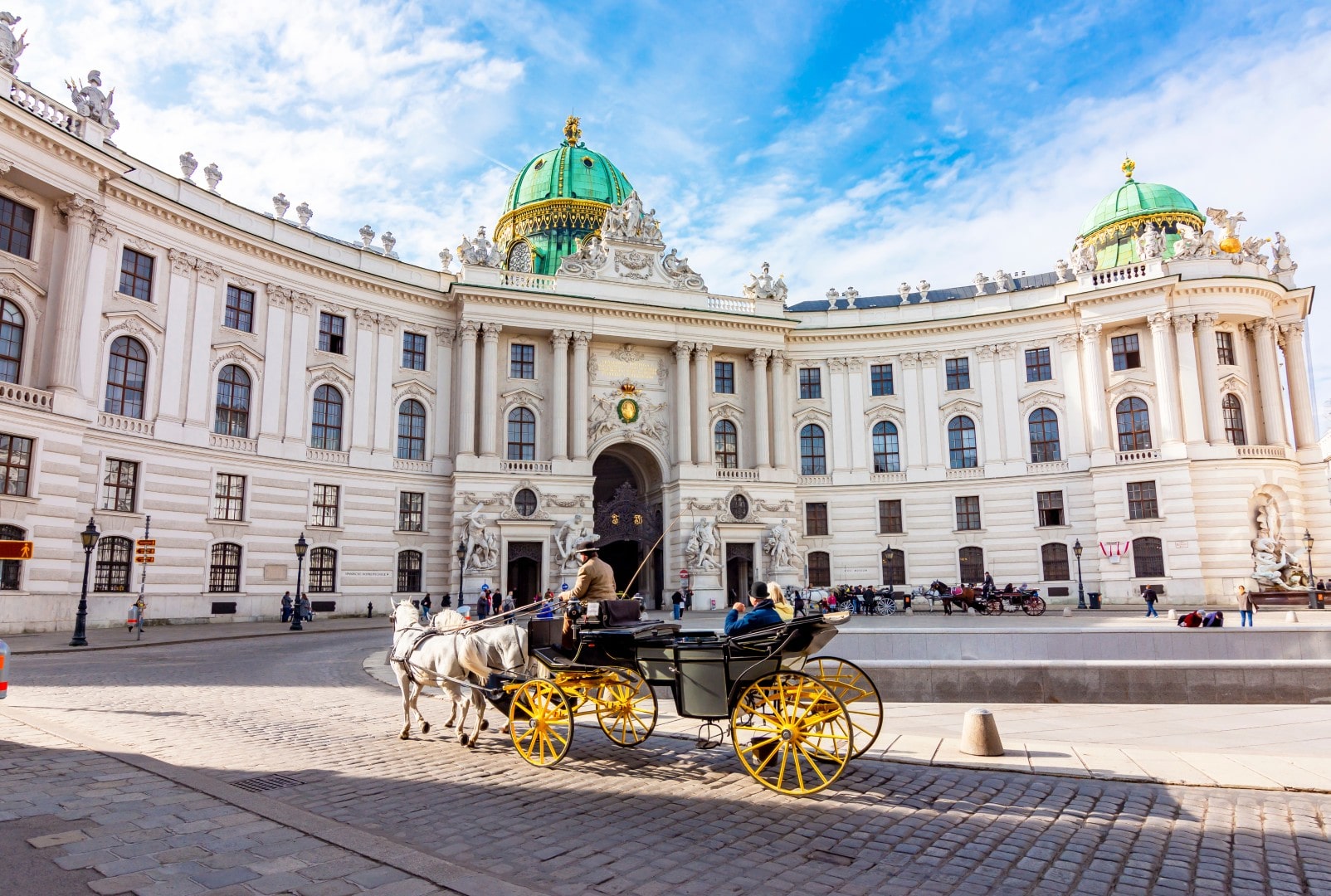
Traditional horse-drawn carriage (Fiaker) passing in front of the Michaelertrakt facade and dome of the Hofburg Palace at Michaelerplatz.
You can’t fail to be dazzled by the opulence of the Hofburg Palace, which lies on the Ringstrasse. Visit the Imperial Apartments of the spectacularly wealthy Habsburgs—this was their winter residence—and gaze at the priceless jewels in the Imperial Treasury. In summer, you can hear the famous Vienna Boys’ Choir sing Sunday mass in the Imperial Chapel.
The Hofburg is also home to the Spanish Riding School, famed for its dancing Lipizzaner horses. Get a ticket to a show if you can—but if that’s not possible, I’d recommend a stable visit to admire these magnificent stallions in their sumptuous stalls.
St. Stephen’s Cathedral
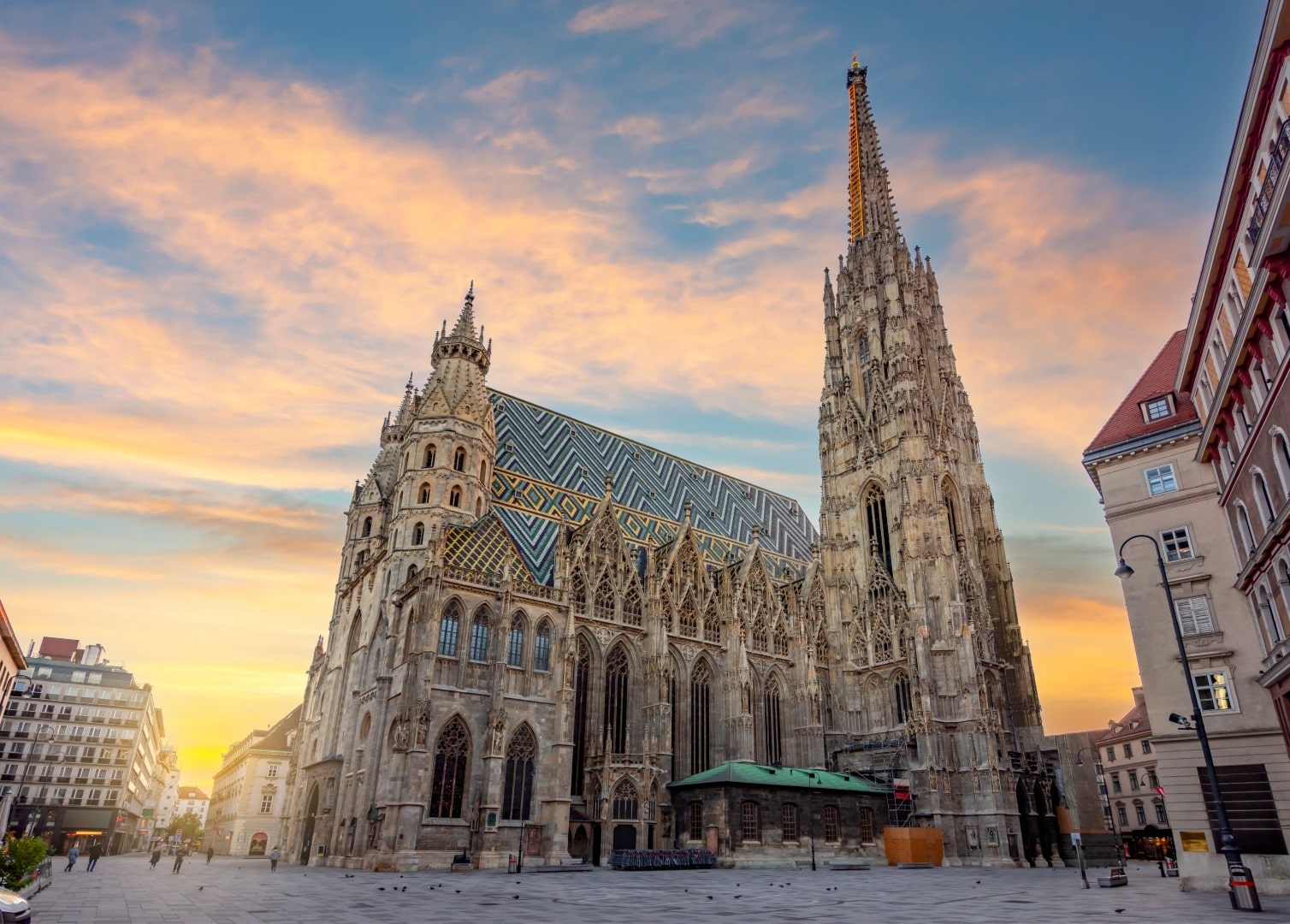
The Gothic Stephansdom (St. Stephen’s Cathedral) with its ornate tiled roof and soaring south tower against a warm sunrise sky.
Gothic St. Stephen’s dominates the skyline of the Innere Stadt and is distinguished by the colorful roof tiles, which depict a mosaic of the Habsburg eagle. Gaze up at the soaring ceilings inside, feel the eerie chill of the catacombs below, where the bones of 17th-century plague victims are stacked, or climb the south tower for sweeping views over the rooftops of the old city to the distant Vienna Woods.
Schönbrunn Palace
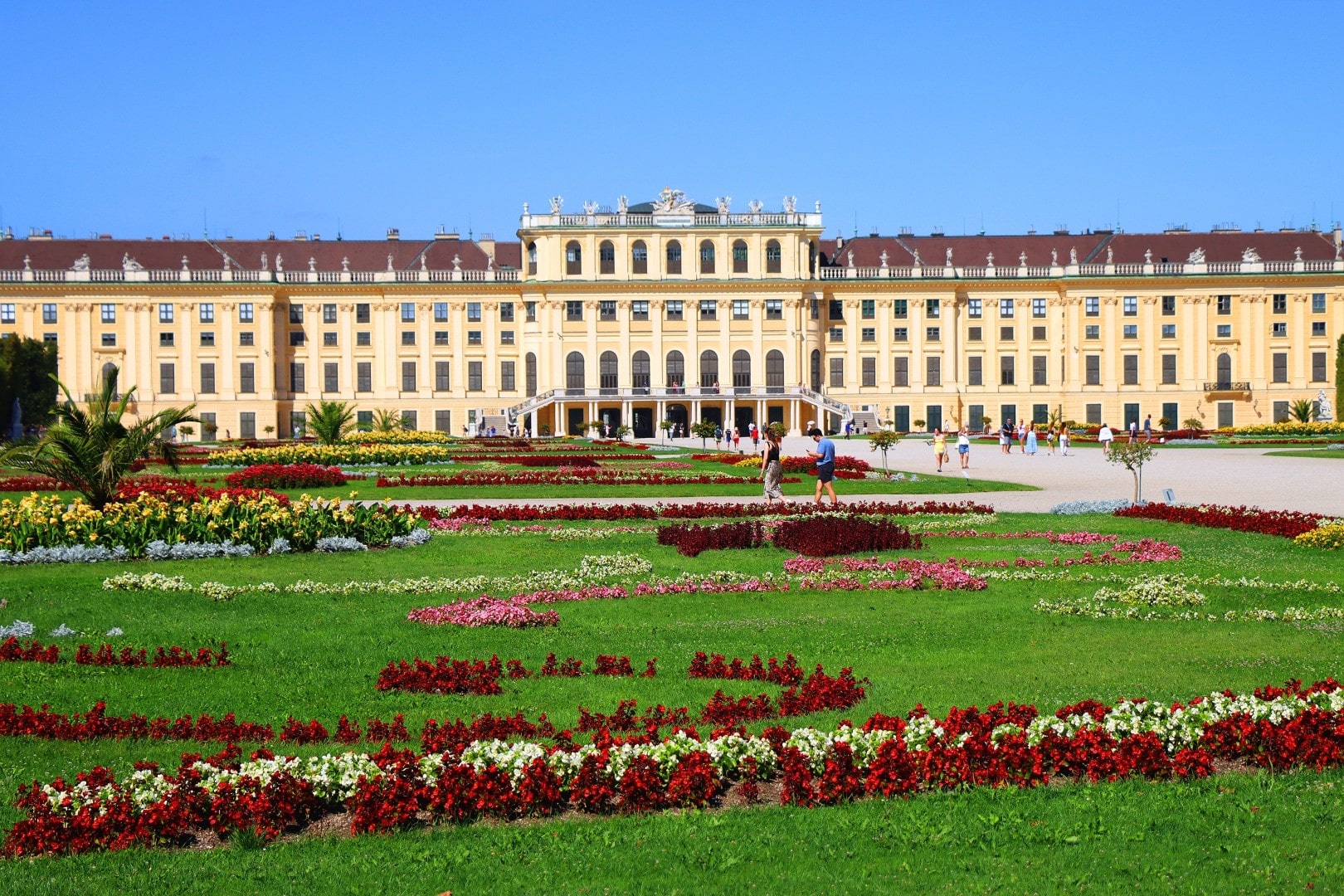
Famous Vienna landmark, Schönbrunn Palace (Schloss Schönbrunn), framed by colorful flowerbeds in the Great Parterre gardens.
Summers would find the Habsburgs at magnificent Schönbrunn, resplendent amid formal gardens to the west of the city center. This lavish rococo residence has more than 1,400 rooms, some of which you can tour, including the salon where Mozart performed for the Empress Maria Theresa at the tender age of six.
Immerse Yourself in Classical Music
Vienna is truly one of the best cities to visit on the Danube. Regarded as the world capital of classical music, it is inextricably linked to the great classical composers, from Beethoven to Mozart, Schubert, Brahms, Mahler, and the Strauss family. Here’s how to savor their legacy.
The Vienna State Opera
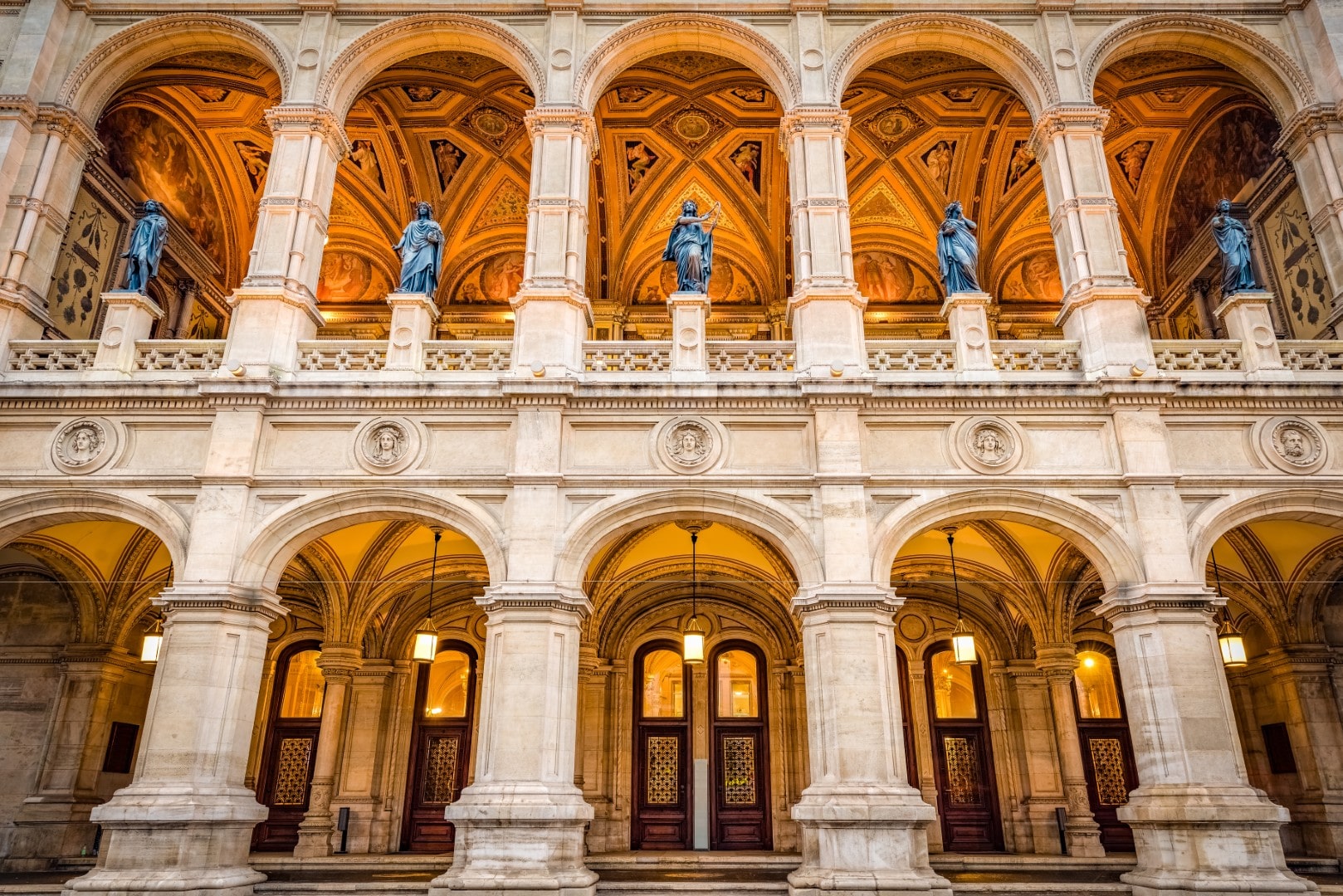
The grand Renaissance Revival facade loggia of the Vienna State Opera (Wiener Staatsoper), featuring illuminated stone arches and bronze statues representing the virtues.
The State Opera House lies on the Ringstrasse and is famed for attracting world-class performers and big-name conductors. Can’t get a ticket? Do as I did one sunny summer evening and watch for free; a massive LED screen to the side of the opera house live-streams performances in the warmer months.
The Musikverein
The Musikverein concert hall is home to the Vienna Philharmonic Orchestra, but the Vienna Mozart Orchestra also stages shorter concerts here. Join a guided tour and see the famous Golden Hall, where the New Year’s Day concert, broadcast all over the world, takes place.
The Haus der Musik
This multisensory, interactive music museum combines fun with education. My favorite part is the chance to play virtual conductor of the Vienna Philharmonic Orchestra on a large screen. Depending on your skill, the musicians may applaud you—or put down their instruments in mock outrage.
Visit World-Class Art Museums
Art is one of the most compelling of Vienna’s attractions. Whether you want to marvel at Old Masters or follow the trail of Gustav Klimt and his contemporaries, the city has an abundance of galleries and museums.
The Kunsthistorisches Museum
The art history museum, housed in a domed, neoclassical building on the Ringstrasse, contains works by Titian, Rembrandt, Vermeer, and Raphael, as well as antiquities from ancient Rome, Greece, and Egypt. It’s regarded as one of the finest collections in the world, but trying to do it all in one go could result in cultural overload, so pace yourself.
The MuseumsQuartier
This sprawling complex, known as the MQ, was opened in 2001 in what were the former royal stables of the Hofburg. Today, it’s a cluster of contemporary art museums around a courtyard bustling with restaurants and food trucks. My tip is to visit the Leopold Museum for 19th- and 20th-century Austrian art, try the MUMOK for everything from pop art to Picasso, and then enjoy hearty Viennese cuisine in the leafy garden of Glacis Beisl.
The Upper Belvedere Palace
You’ve seen Gustav Klimt’s sensual, shimmering The Kiss depicted all over the city on everything from mugs to fridge magnets. So don’t miss the real thing, which is housed in the Upper Belvedere Palace alongside many of his other pieces.
Discover Vienna’s Famous Coffee Culture
From the 17th century onward, Vienna’s gilded, wood-paneled coffee houses served as gathering places for politicians, philosophers, and writers. Try big names like Café Sacher, home of the famous glossy chocolate cake, and Demel for the Kaiserschmarrn, a shredded, sugared pancake with stewed plums.
Relax in Vienna’s Parks and Gardens
One reason why Vienna ranks among the world’s most livable cities is the abundance of parks and gardens dotted around the center. There are even beehives on the roof of the Opera House.
To see the famous gilded Johann Strauss statue, stroll around the Stadtpark, with its willow-draped duck ponds and sun-dappled trails. Relax in the Volksgarten and breathe in the scent of the 3,000 rose bushes.
Or try something completely different. I love to take the short trip to the Zentralfriedhof, the city’s main cemetery, laid out like a serene landscaped garden, with three million “residents.” You can see the graves of Beethoven, Schubert, the Strauss family, and more—and, this being Vienna, there’s a coffee house.
Ride the Ferris Wheel in the Prater Amusement Park
The Prater is one of the most recognizable amusement parks in the world thanks to the giant Ferris wheel, which has stood here since 1897. The park is the former hunting estate of the Habsburg emperors, but today it combines thrill rides with old-fashioned carousels.
Don’t miss the Christmas market in December, either, a chance to combine shopping and grazing with fairground attractions.
Indulge in Viennese Cuisine
Vienna’s cuisine is a happy mix of the multicultural and the steadfastly traditional. Enjoy dishes from all over the world at the Naschmarkt, a grazing market that’s packed with 120 stalls, restaurants, and cafés. You’ll find everything here from artisanal cheeses to gooey Turkish baklava, mezze platters, fresh oysters, and Käsekrainer, a melt-in-your-mouth Viennese sausage studded with cheese.
And Viennese classics, of course, not least Wienerschnitzel, tenderized veal coated in breadcrumbs and fried. Zur Eisernen Zeit is the best place in the market to try schnitzel, gulasch, and Tafelspitz (slow-cooked beef).
How To See Vienna in One Day
Vienna is a highlight of any Danube cruise. You’ll almost certainly be back for more, but if you only have one day, here’s how to see the highlights.
- In the morning, wander around the Innere Stadt and visit St. Stephen’s Cathedral. Then, tour the Hofburg’s imperial apartments.
- Grab lunch to go at the Bitzinger Würstelstand Albertina. This isn’t just fast food; Vienna’s sausage stand culture features on the UNESCO Intangible Cultural Heritage list.
- After lunch, head to either Schönbrunn Palace or, if you’re a Klimt fan, the Upper Belvedere.
- Finish your afternoon in a coffee house with a well-deserved melange, Vienna’s answer to cappuccino, and a slice of apple strudel topped with whipped cream.
Enjoy the Magic of Vienna in Winter
Vienna is simply magical in December, all the more so if the rooftops are dusted with snow. During the weeks leading up to Christmas, the whole city sparkles with Christmas markets, each with its own style. Check out the market at the Rathausplatz (the Town Hall Square), one of the biggest, and browse for handmade gifts at the Belvedere and Schönbrunn Palace.
I still have vivid childhood memories of skating on the seasonal ice rinks, snowflakes glittering in the frosty air. Nowadays, there’s a rink at the Rathausplatz and another at Schönbrunn.
Winter is also a wonderful time for enjoying the cozy atmosphere of the coffee houses and sharing the museums with fewer crowds, even if you visit outside the Advent season.
How To See Vienna at a Relaxed Pace
Vienna’s culture is delightfully laid-back, so let your visit reflect this. My tip would be to focus on a couple of major attractions, for example, the Kunsthistorisches Museum and the Hofburg Palace, which are close together, or St. Stephen’s combined with a stroll around the Innere Stadt.
Enjoy a relaxed lunch in the Brasserie Palmenhaus in the leafy Burggarten park, for classic Austrian dishes. If your stay includes an overnight, an evening performance at the Opera or Musikverein is a wonderful way to round off the day.
FAQs
What is Vienna famous for?
Vienna’s attractions are many, from Mozart and Strauss to Klimt, dancing horses, singing choirboys, Baroque architecture, coffee, cake, and the Blue Danube waltz.
Where do river cruise ships dock in Vienna?
River ships dock either at the Handelskai pier by the Reichsbrücke, to the east of the Innere Stadt (the Danube doesn’t actually flow through the city center), or further north at Nussdorf, both well connected to the center by the streetcar service and the U-Bahn, or subway trains. If you’re joining a Celebrity River Cruises℠ shore excursion, you will be picked up directly from the ship, of course.
Which attractions and events in Vienna do I need to book in advance?
If you have limited time in the city, consider booking Schönbrunn Palace, the Hofburg, and the Upper Belvedere in advance; these are the biggest-hitting sights.
Should I explore Vienna on my own or is a guided tour better?
You’ll always learn more on a tour led by a local expert. Having said that, Vienna is an easy city to explore on your own if you prefer, with a proactive and efficient city tourist board to provide maps, an app, and a Vienna City Card for discounts on popular sights and public transportation.
Plan the Perfect Trip to Vienna
Vienna is a captivating city to visit whether you have a day or a week, and whatever the season. A river cruise that begins or ends here is a perfect introduction to the Austrian capital.
Browse Celebrity’s Danube itineraries and plan your great river cruise vacation.