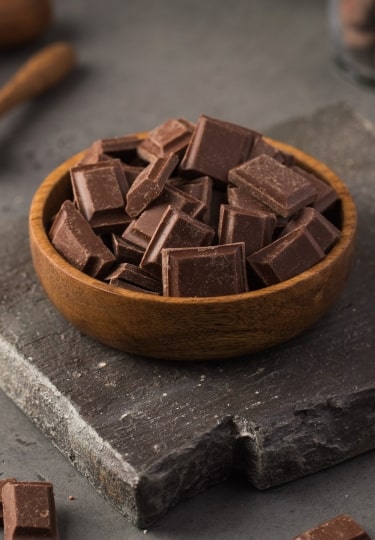
The best German chocolate is known for its silky texture, high cocoa content, and festive forms from truffles to marzipan. But did you know that Germany is the world’s leading exporter of chocolate, accounting for some 17% of global exports?
This is less surprising when you consider the country’s long history in chocolate confectionery, emphasis on quality cocoa sourcing, and craftsmanship in manufacturing techniques. Healthy competition with neighboring Switzerland and Belgium means chocolatiers from these countries have spent centuries outdoing one another in artisanship. This has led to a culture of chocolate obsession, perfect for visitors with a sweet tooth looking for the best chocolate in Germany.
Brief History of Chocolate in Europe
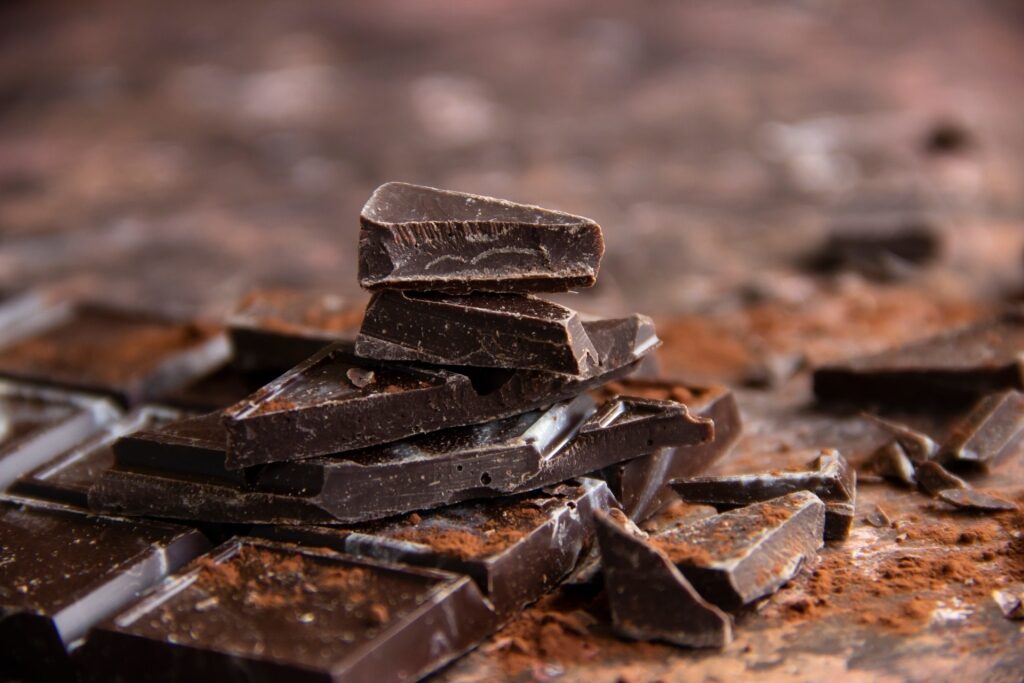
Dark chocolate
European colonialists first brought cocoa back from South America in the 1500s, and the thick, bitter drink quickly became all the rage among Spanish nobility, later expanding throughout Europe. The first place in Germany to offer chocolate, as early as 1673, was a Dutch-run coffee shop in Bremen.
Another early chocolate-maker in Germany was Prince Wilhelm of Lippe, who started creating chocolate in 1756 near the German city of Hanover, where the cocoa powder was made entirely by hand. The first factory, though, is regarded as Halloren, in Halle, founded in 1804.
The first chocolate bars began appearing in the UK in the 1800s after manufacturers there began experimenting with adding cocoa butter to the cocoa powder. Later, the Swiss chocolatier Lindt invented the conching machine, which allowed the cocoa mixture to be stirred for lengthy periods, resulting in a creamier texture.
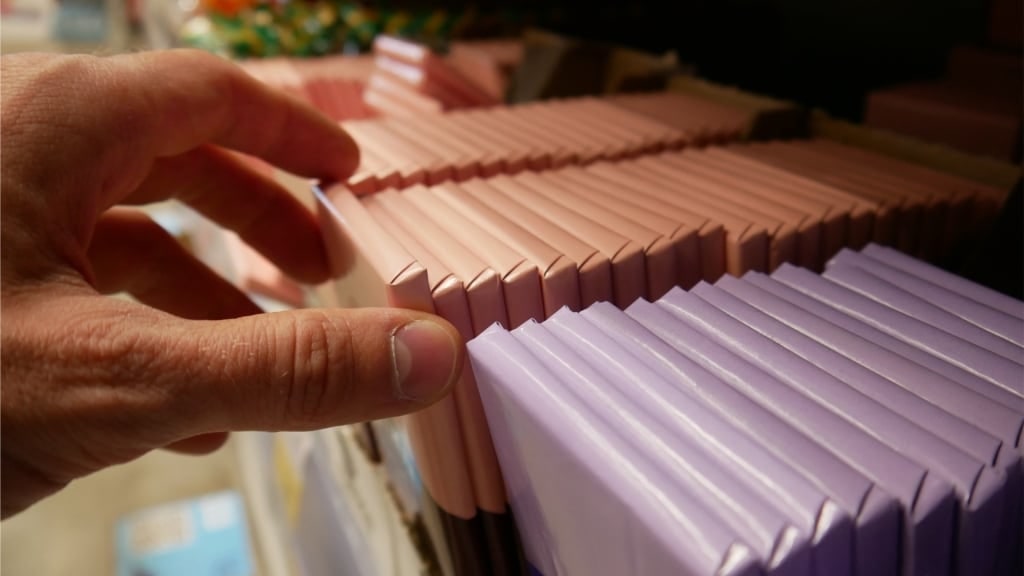
Chocolates
Germany claims to have invented milk chocolate in 1839 after the Dresden-based chocolate manufacturer Jordan & Timaeus added donkey milk to their chocolate mixture, though historical consensus is that this concoction was far off in taste from modern milk chocolate. The Swiss counterclaim that one of their countrymen, Daniel Peter, is the true inventor of milk chocolate. He added milk powder developed by Henri Nestlé to his chocolate recipe.
This is one of the many rivalries between German chocolate and Swiss and Belgian chocolate. Suffice it to say that all three countries are vying for recognition as the finest producer of chocolate in Europe, if not the world. To adjudicate this title, you may just have to go on a chocolate sampling journey and taste for yourself.
What Makes German Chocolate Unique?
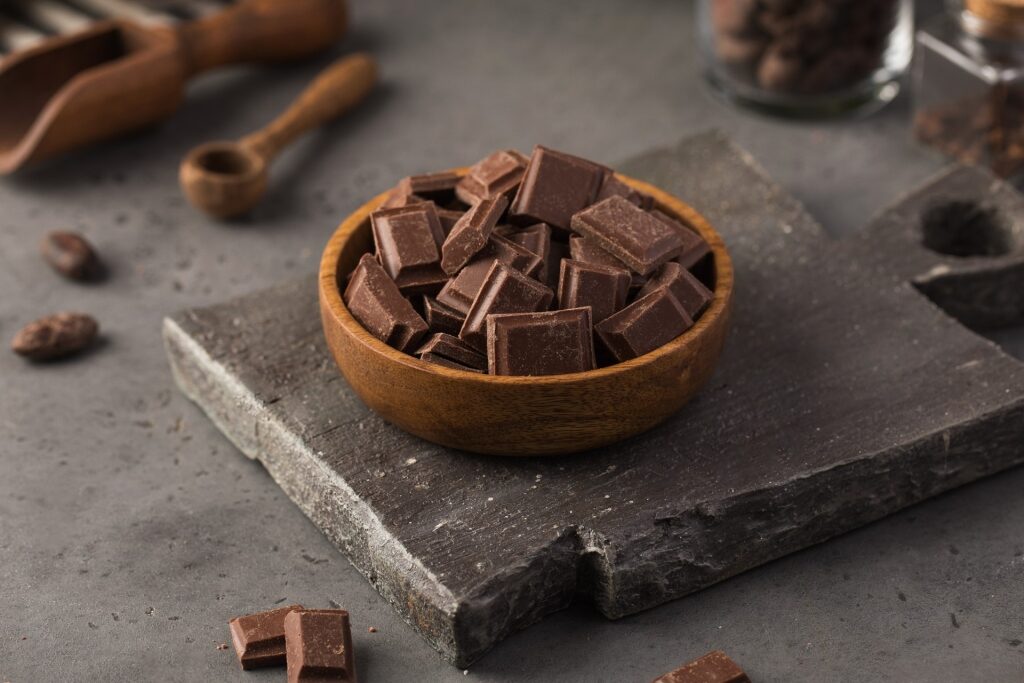
Milk chocolate
Quality has been an utmost concern throughout the history of German chocolate-making. The Association of German Chocolate Manufacturers was founded in 1877 to ensure that chocolate production wasn’t cut with starch or flour to lower costs. This emphasis on a higher proportion of cocoa solids persists today.
The EU also imposes stringent rules on ingredients authorized in products labeled as chocolate, including allowing only cocoa butter and a handful of approved substitutes, and not vegetable oils. The higher content of cocoa butter and solids means that German chocolate has a less sugary and more balanced taste between sweetness and cocoa flavor compared to most other chocolates.
German chocolatiers also utilize a conche machine in the chocolate-making process, meaning the chocolate is mixed at high heat for longer periods of time, resulting in finer particles and a silkier, smoother texture.
Popular Types of German Chocolate
Dark Chocolate
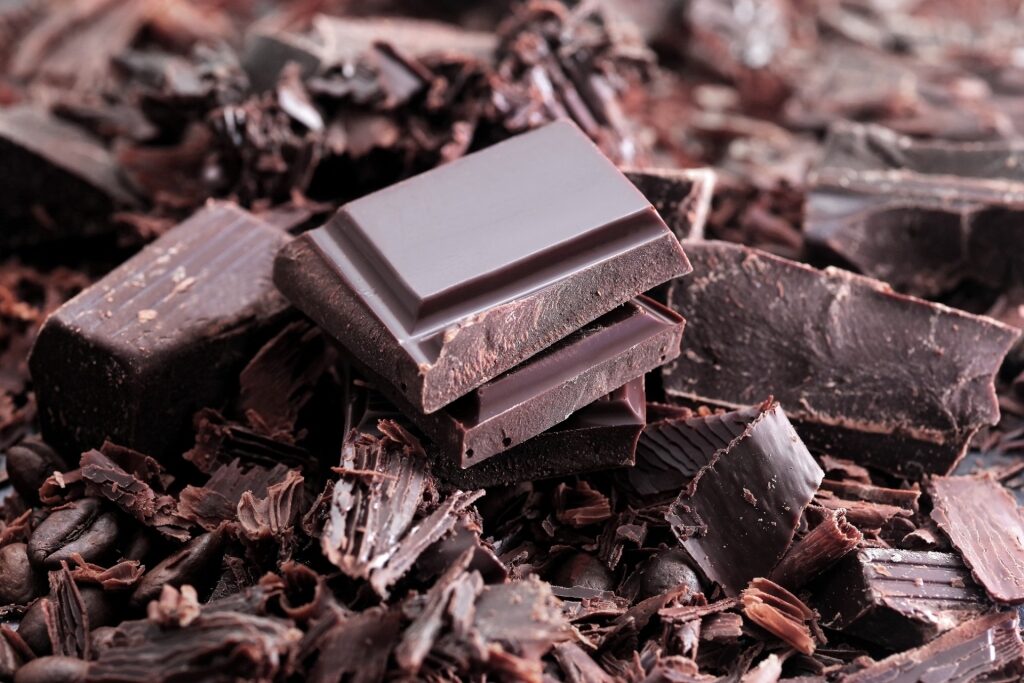
Dark chocolate
Compared to Swiss and Belgian chocolatiers, German chocolatiers tend to favor the production of dark chocolate, which has a higher ratio of cocoa content, resulting in a rich, more bitter cocoa taste and less sugar.
In recent years, Germany has increasingly emphasized sustainability and fair trade practices in its cocoa imports, meaning dark chocolate from Germany often comes from single-origin, ethically harvested cocoa subject to high-quality standards. For example, brands such as Coppeneur offer a 92% cocoa dark chocolate bar called Buena Vista, sourced from cocoa beans from the Dominican Republic.
Milk Chocolate
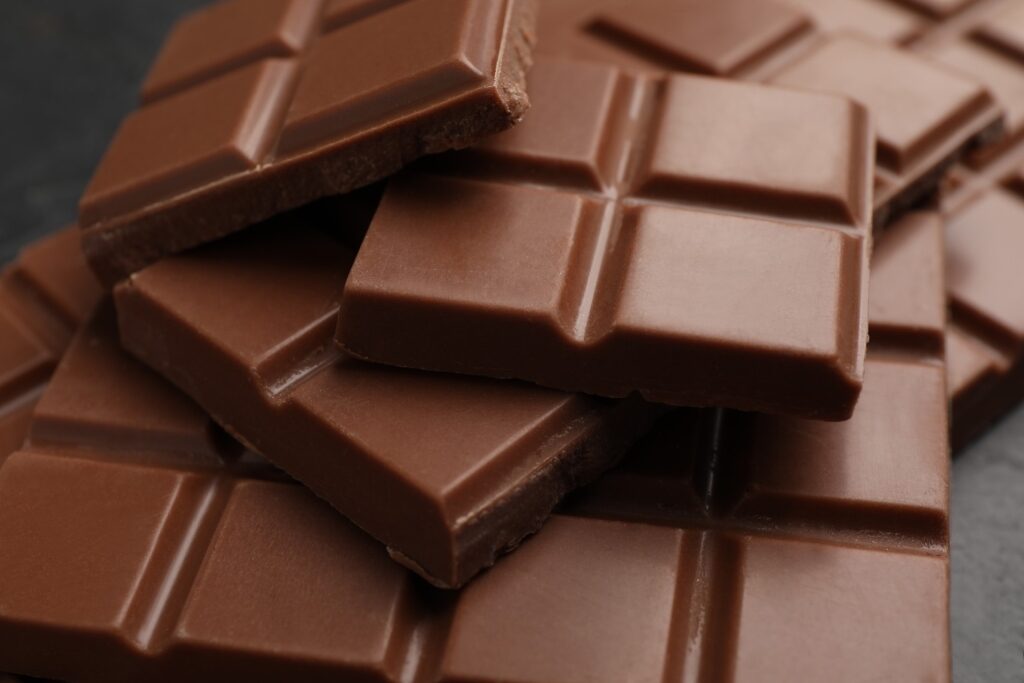
Milk chocolate
Milk chocolate contains a lower ratio of cocoa solids than dark chocolate, and a greater ratio of milk solids and sugar. Its creamy, sweet taste makes it especially popular among children.
Milka chocolate, originally made in Switzerland but now produced in Germany, is one of the most popular milk chocolate bars in the world, offering products with 30% cocoa content. Ritter Sport, a German brand, also offers a delicious milk chocolate variant called Alpine milk, made from milk solids harvested from cows grazing in alpine pastures.
Marzipan
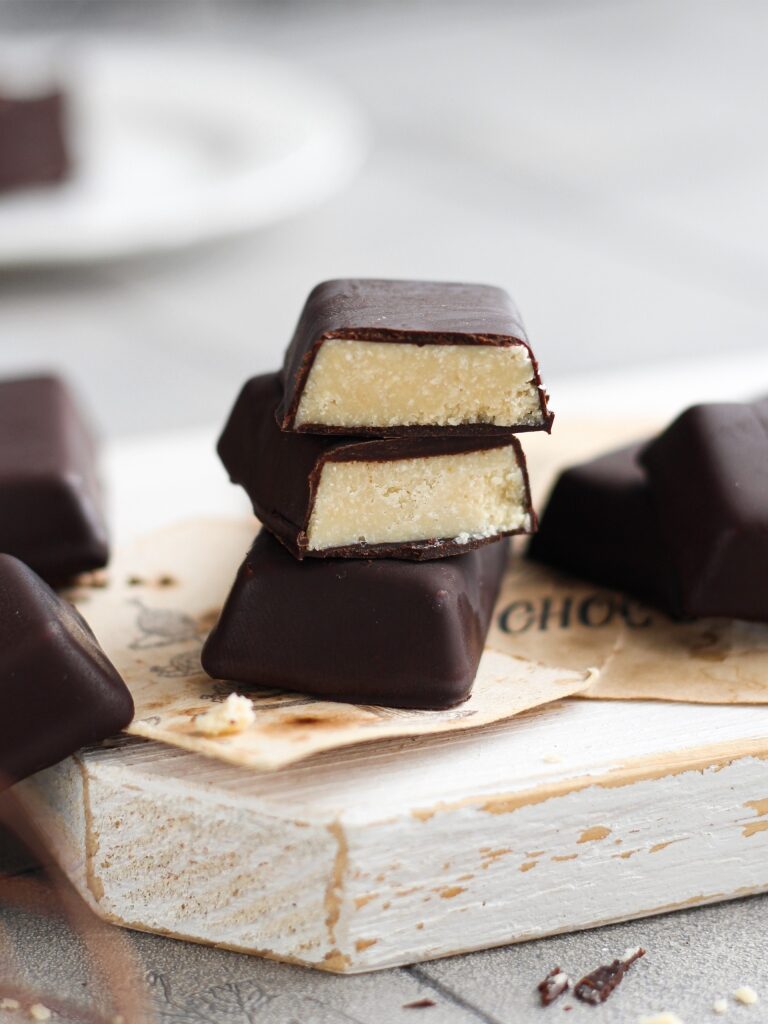
Marzipan
For many sweet enthusiasts, the best chocolate in Germany is actually the one that comes with marzipan. While marzipan in itself is not chocolate—it is a paste made from almonds and sugar, crumbly and pale yellow in color—it has become one of the most representative forms of chocolate products in Germany.
German marzipan often comes shaped into fruit, pigs, or a log, and coated with dark chocolate. Niederegger is a celebrated German producer of marzipan, which the brand seasons with a dash of rosewater before enrobing it in disc, log, or mini-log form in top-quality chocolate.
Famous German Chocolate Brands to Try
Ritter Sport
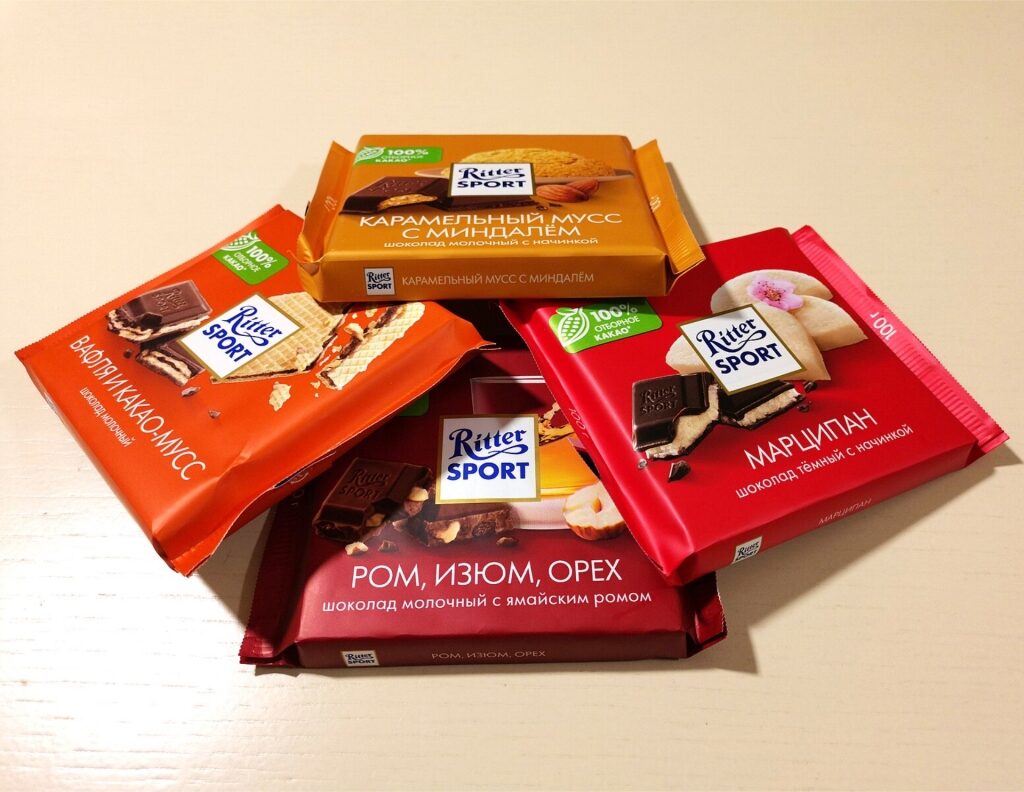
Ritter Sport Photo by Nord794ub on Wikimedia Commons, licensed under CC BY-SA 4.0
Iconic for their square shape, these German chocolate bars were created by Clara and Alfred Eugen Ritter in 1932 near the town of Stuttgart. The story behind the name and the shape of this famous chocolate traces back to Clara’s request for a chocolate bar that would easily fit into the pocket of her sports jacket without breaking.
Today, most of Ritter’s cocoa is sourced from Nicaragua, Peru, and Ghana. The 4×4 square bars come in over 40 flavors, including rum raisin, peppermint, hazelnut, marzipan, and even cornflakes!
Milka
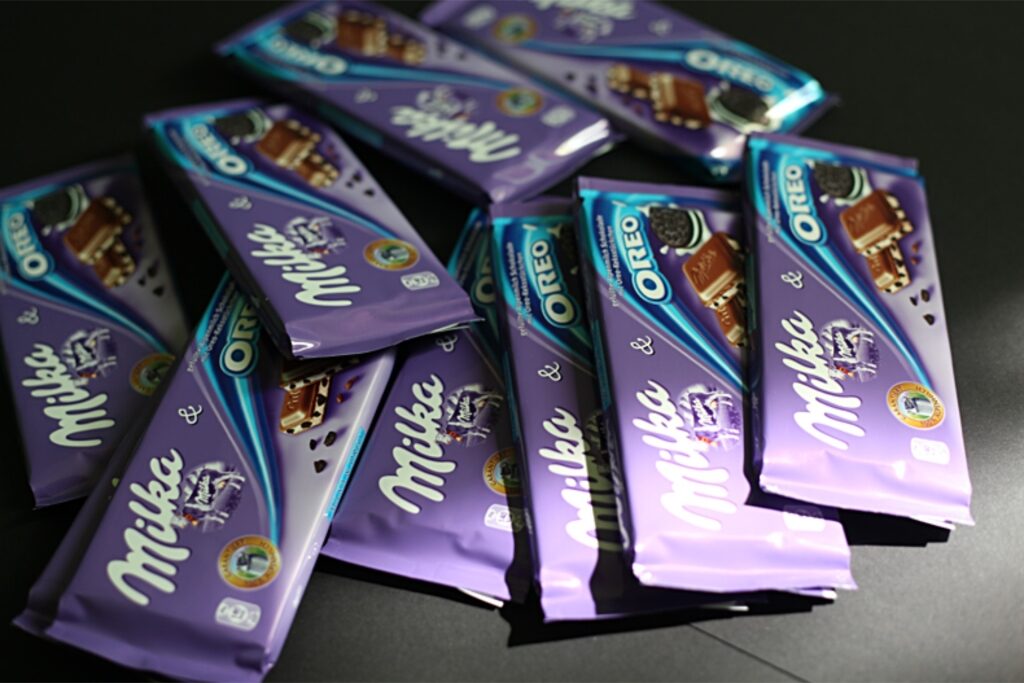
Milka Photo by
Abdel Toufali on Flickr, licensed under CC BY 2.0
A portmanteau of the German words Milch and Kakao—milk and cocoa—Milka is a brand first born in the Swiss Alps in 1901. Production quickly moved to Lörrach, Germany, in the same year, and the creamy lilac purple of Milka packages has grown into an easily recognized brand in the century since.
Milka is a wallet-friendly, mass-market chocolate easily found in grocery stores. Its chocolate-coated biscuits and cookies are especially appetizing, offering collaboration with popular brands such as chocolate-coated Chips Ahoy, Oreo, TUC, and more.
Milka chocolate tends to come in the sweeter milk chocolate form, jazzed up with fillings like raspberry creme, strawberry, and cocoa creme. The gold standard for a classic Milka bar, however, remains the Alpine Milk chocolate bar.
Moser-Roth
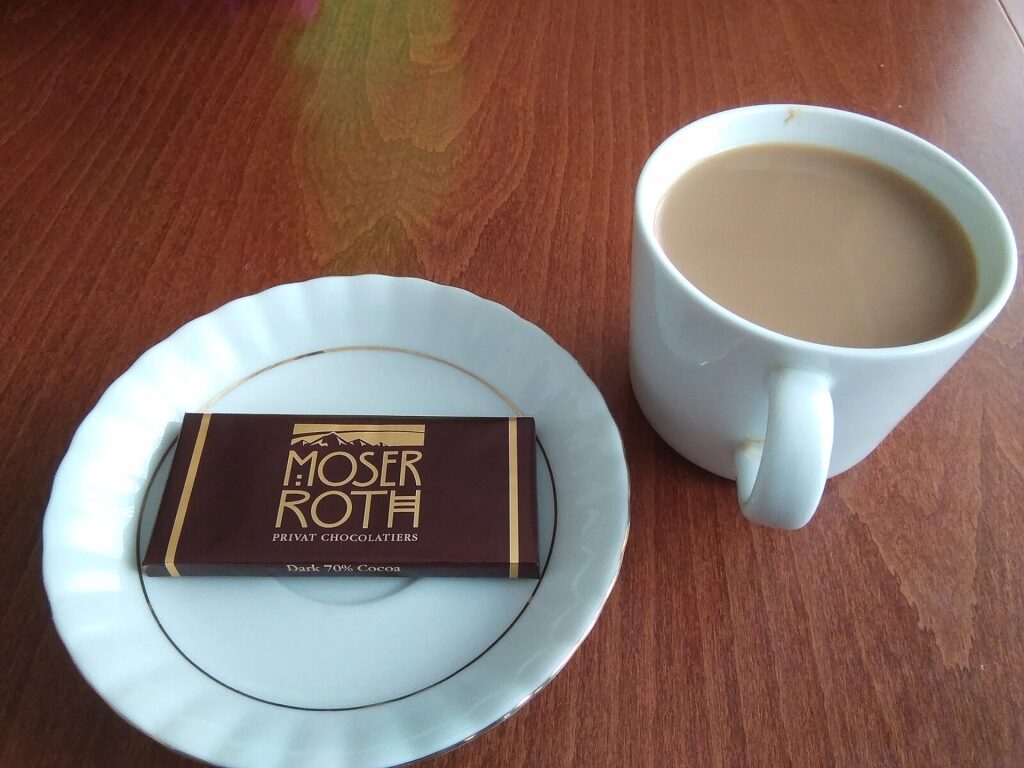
Moser-Roth Photo by Koefbac on Wikimedia Commons, licensed under CC BY-SA 4.0
Founded in 1841 in Stuttgart, Moser-Roth is one of the most historic chocolate confectioners in Germany. After the factory burned down during a WWII air raid, it was later acquired by Storck, another German brand, in the 1960s.
Since 2007, Storck has produced Moser-Roth exclusively as a top-quality chocolate product for the retailer Aldi. Despite mass distribution, strict emphasis on quality remains. Moser-Roth is made from cocoa butter and no other vegetable fat substitutes, and is sourced sustainably from South America, with most bars sold as single-origin products from Ghana, Peru, or the Dominican Republic.
Moser-Roth chocolate bars come in both milk chocolate and dark chocolate forms, and are in some variants infused with simple flavors and ingredients such as chili or sea salt.
Hachez
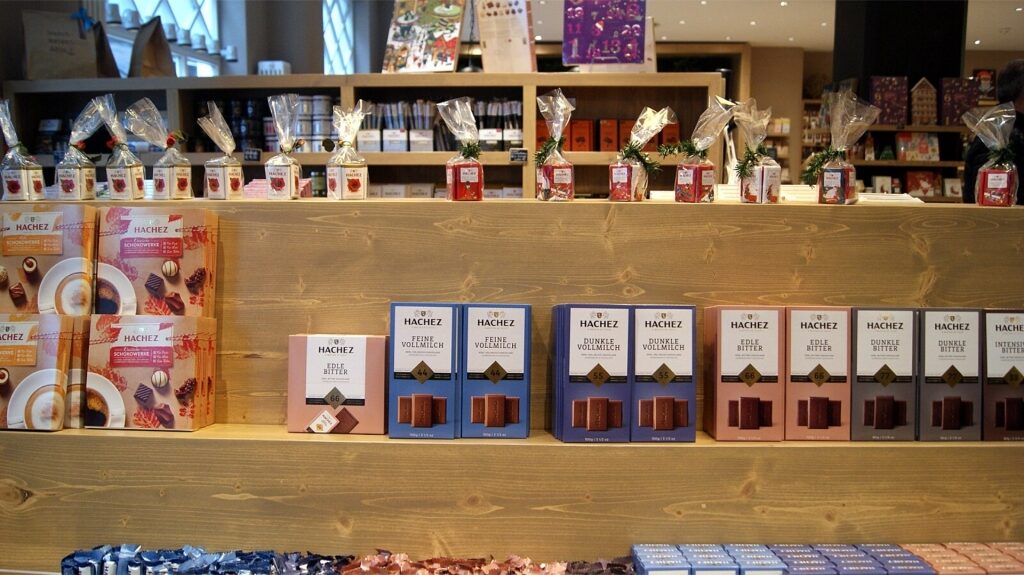
Hachez Photo by Armineaghayan on Wikimedia Commons, licensed under CC BY-SA 4.0
The Belgian chocolatier Joseph Emile Hachez created this eponymous chocolate brand in the German city of Bremen in 1890. Today, the modern iteration of the family-run confectioner is known to oversee every step of the chocolate-making process in its Bremen factory, from cocoa bean cleaning and roasting to melting, molding, and packaging. This persisted for most of the company’s history, although production relocated to Poland in the past decade.
Hachez is best known for its thin “brown leaves” chocolate, inspired by the founder’s autumn walk through a park in 1923. Today, Hachez focuses on retailing premium dark chocolate tablets such as the 88% cocoa Premier Cru Classic.
Where to Taste German Chocolate
Cologne Chocolate Museum
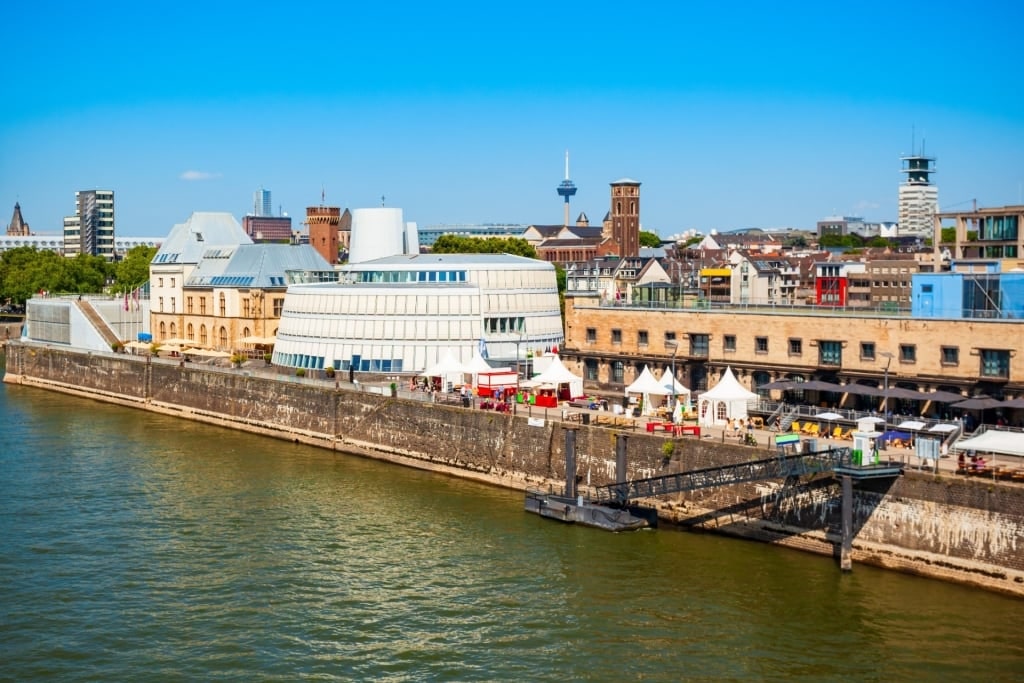
Cologne Chocolate Museum
What are the subtle differences in texture and melting points of mousse, praline, truffles, nougat, and marzipan? At the Lindt-affiliated Cologne Chocolate Museum, you can learn about the art of chocolate tasting from “chocolate sommeliers” through a 30-minute tasting program.
A state-of-the-art chocolate factory beside the Rhine allows the visitor a glimpse into the modern chocolate-making process, while also displaying important historical instruments such as the Lindt conche.
ChocolART Festival in Tübingen
Held every December in the Tübingen market square, this festival is a paradise for chocolate lovers and Christmas market enthusiasts.
Watch pastry chef apprentices compete for the best confections, learn about cocoa farming and harvesting in Latin America, and buy chocolate treats and products from the vendors filling the city’s historic square with festive stalls. You may just stumble upon the best chocolate in Germany by sampling a truffle from these small-batch artisans.
Best German Chocolate Souvenirs to Bring Home
Schaumküsse
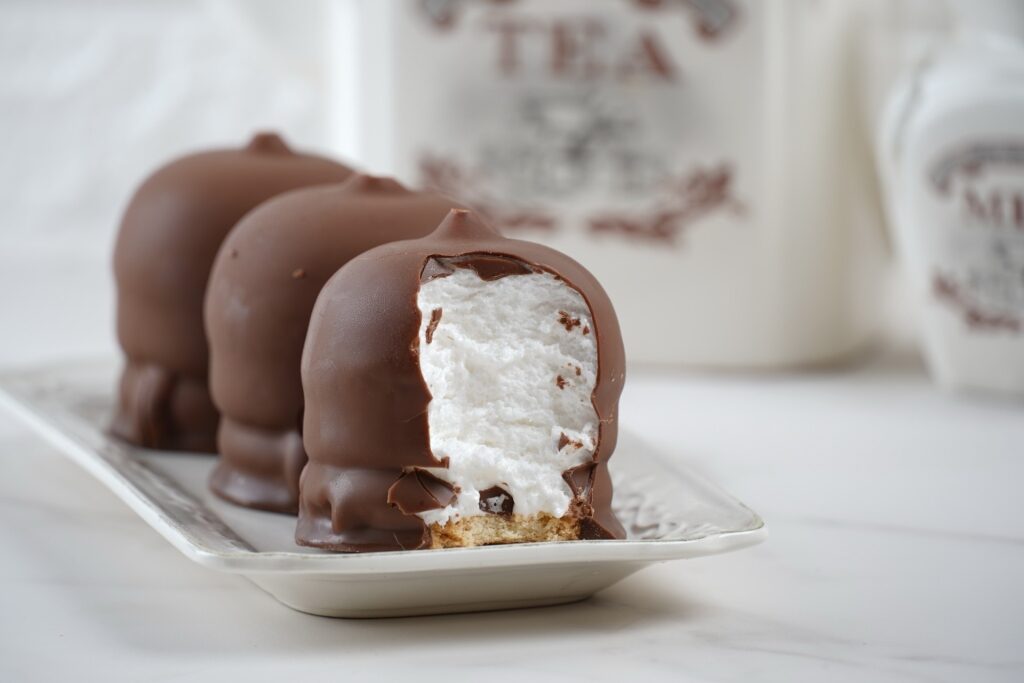
Schaumküsse
Also known as the Schokokuss, the Marshmallow kiss or Chocolate kiss consists of a waffle cookie base topped with marshmallow and enrobed by dark chocolate, reminiscent of a smore in candy form. Originating in Denmark, these treats are hugely popular among German adults and children alike.
Liquor-Filled Chocolates
A crackling fireplace, goosefeather snow outside the window, and a bite into a liqueur-filled chocolate after a satisfying meal…can you imagine a better holiday season treat?
Asbach is the most famous manufacturer of brandy-filled chocolate in Germany, with each chocolate shaped like a miniature brandy bottle and wrapped in gold foil.
Other great products include Laroshell by Halloren—brandy-filled beans shaped like crescents—and Trumpf, which offers a variety of pralines filled with brandy, vodka, gin, rum, and even cocktails such as mojitos and Cuba Libre.
Reber Mozart-Kugeln
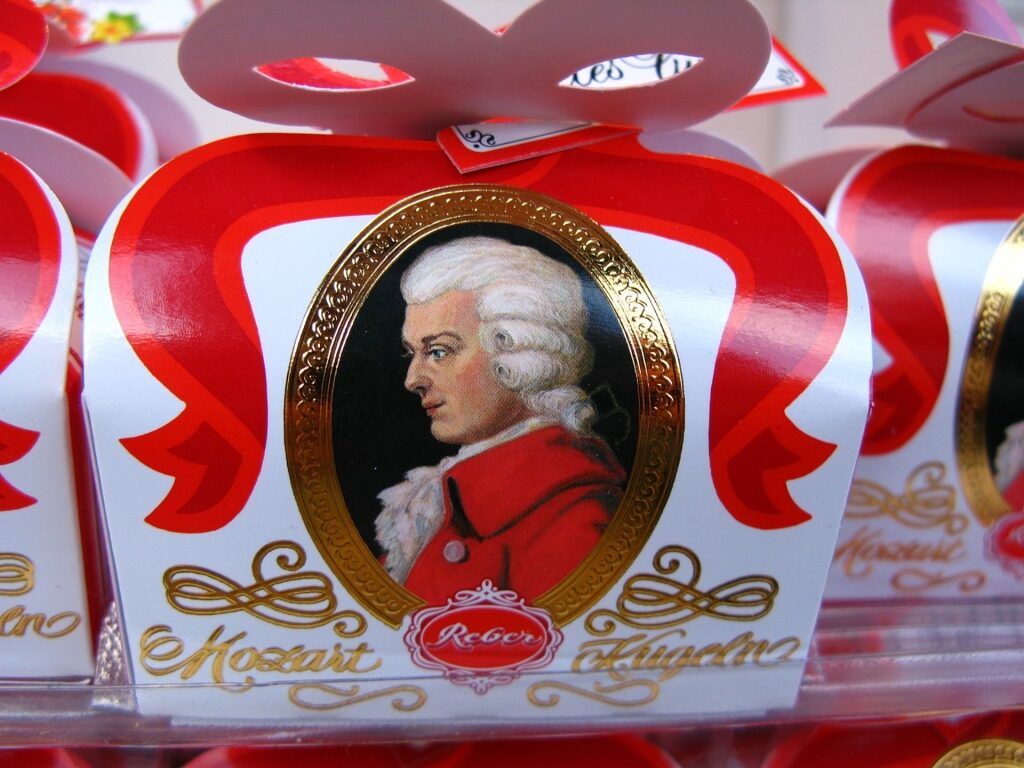
Reber Mozart-Kugeln Photo by PetarM on Wikimedia Commons, licensed under CC BY 3.0 RS
Mozart bonbons were first created in Salzburg, Austria, at the turn of the 20th century and named in honor of the famous Austrian composer. These round confections are made from a core of marzipan enrobed with pistachio paste, nougat, and finally, an outer layer of dark chocolate.
The label of “Mozartkugeln” is subject to many legal disputes over its controlled appellation among confectioners across Austria and Germany, but the Munich-based confectioner Reber is without a doubt Germany’s most recognized producer.
Reber’s Mozart-Kugeln are made with unctuous chocolate praline, fresh pistachio marzipan, and hazelnut nougat, and the foil-wrapped bonbons come printed with Mozart’s portrait and individually wrapped.
Read: The Ultimate Guide to German Food
German Chocolate FAQs
What is the most popular chocolate in Germany?
Chocolates
The most popular chocolate in Germany—known for its wallet-friendly prices and wide appeal—is Milka chocolate, recognizable by its iconic, lilac-colored packaging. Milka’s milk chocolate products tend to be sweeter than other German chocolates and come with a variety of crunchy fillings and fruity flavors. For a higher-end popular offering, opt for Ritter Sport.
Is German chocolate considered high quality?
German chocolates
German chocolate is considered premium quality because of strict regulations controlling cocoa content and ingredients, notably forbidding the use of vegetable oils as a substitute for cocoa butter. Many traditional German chocolate brands have been in operation for over a century and emphasize sustainable, fair-trade sourcing of their cocoa beans, which predominantly come from Latin America and West Africa.
What makes German chocolate special?
German chocolate usually has a higher cocoa content, less sugar, and a smoother texture thanks to an instrument called the conche, which melts and stirs the chocolate over long periods.
What types of chocolate are made in Germany?
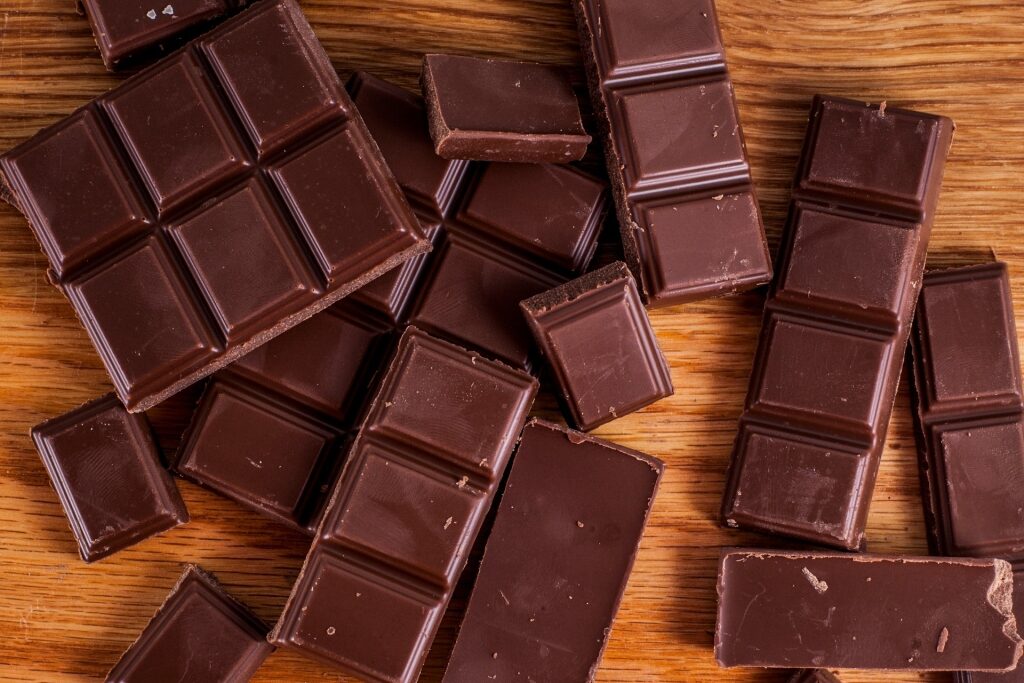
Milk chocolate
Milk chocolate and dark chocolate are two common types of chocolate made in Germany, but the country is also notable for its obsession with marzipan, an almond and sugar paste.
Besides chocolate bars, German confectioners also make refined chocolate products such as pralines, truffles, and kugeln, which are cream or marzipan-filled globes.
What is the oldest chocolate brand in Germany?
The oldest chocolate brand in Germany is Halloren, which was founded in Halle in 1804. Today, if your travels take you to the Saxony-Anhalt region, you can behold this history with a curated experience through the Halloren Chocolate Factory and its museum.
What city in Germany is most famous for chocolate?
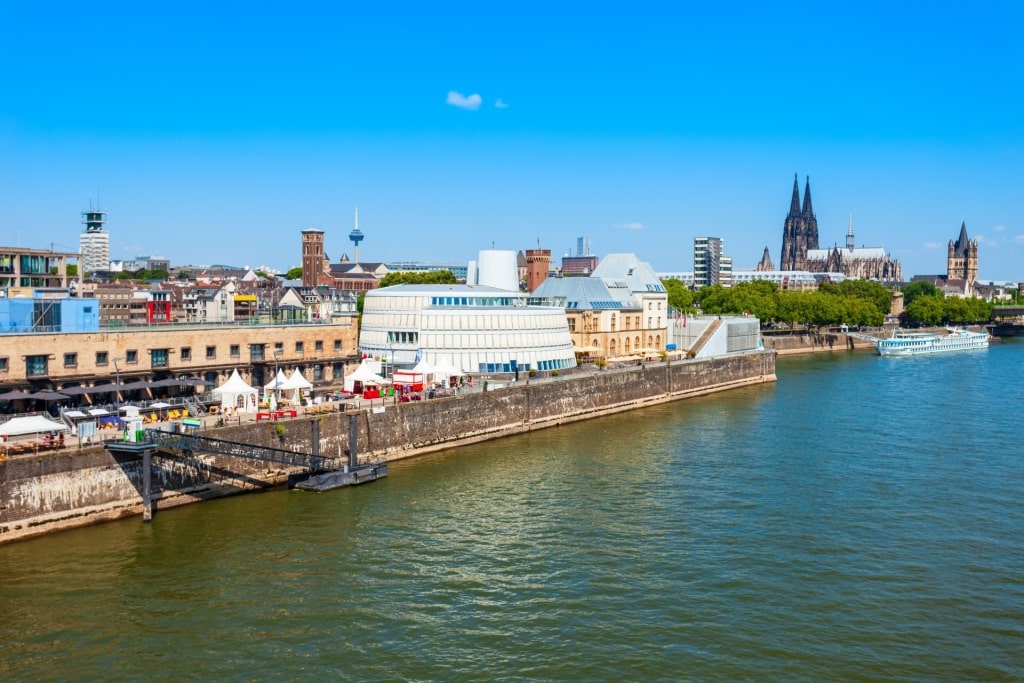
Cologne
Cologne is the German city at the heart of the country’s chocolate industry. Not only is it known as Germany’s “chocolate capital,” it is home to the Cologne Chocolate Museum and the annual ISM Trade Fair for manufacturers of sweets and chocolates.
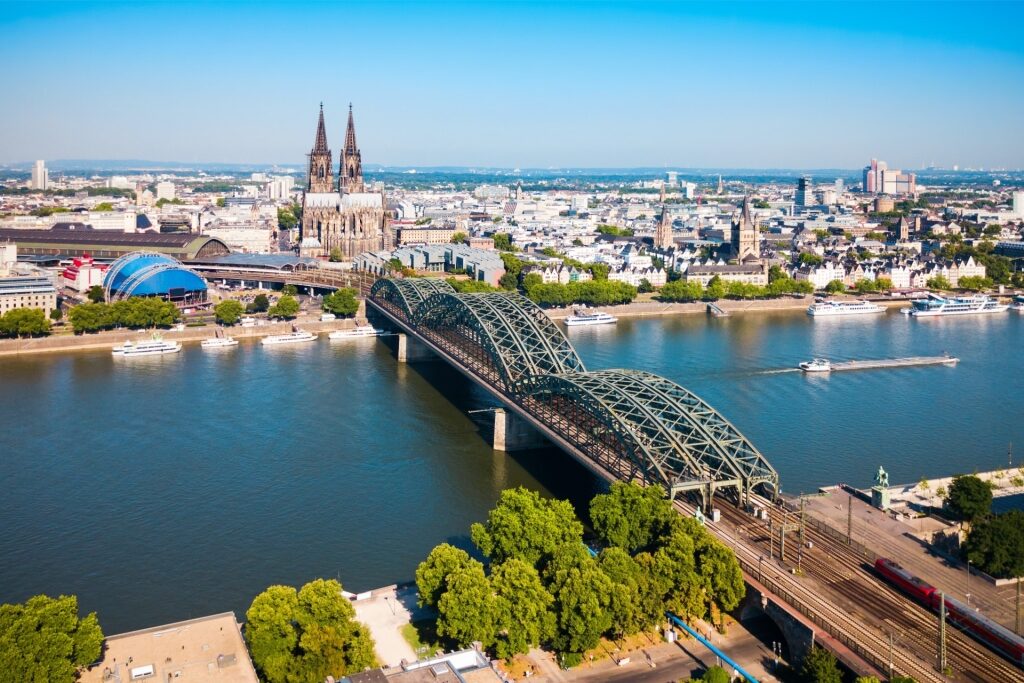
Cologne
Now that you’ve learned about Germany’s long-standing history as a top chocolate manufacturer and exporter, taste the goods for yourself. Browse Celebrity’s river cruises to Europe and book your gourmet adventure.