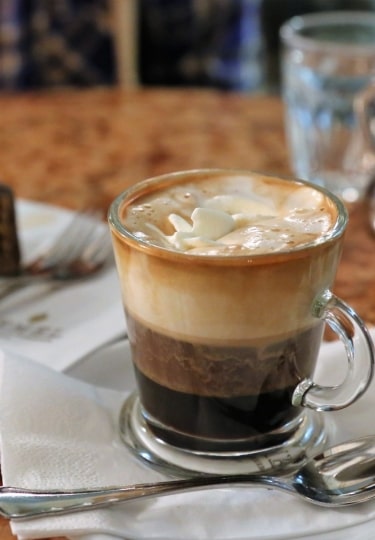
Visit Vienna’s coffee houses for the ambiance, hospitality, and, naturally, great coffee and pastries. During the day, sunlight fills these marble-and-velvet salons, which, over the years, have been famous meeting places for artists, philosophers, and everyday people.
In Vienna, coffee is more than just a caffeinated beverage. It’s a cultural institution with deep roots that has helped shape the national identity. That’s why, when visiting the capital, you’ll want to head out to a café for a cup—or three—of coffee during your stay.
The History of Vienna Coffeehouses
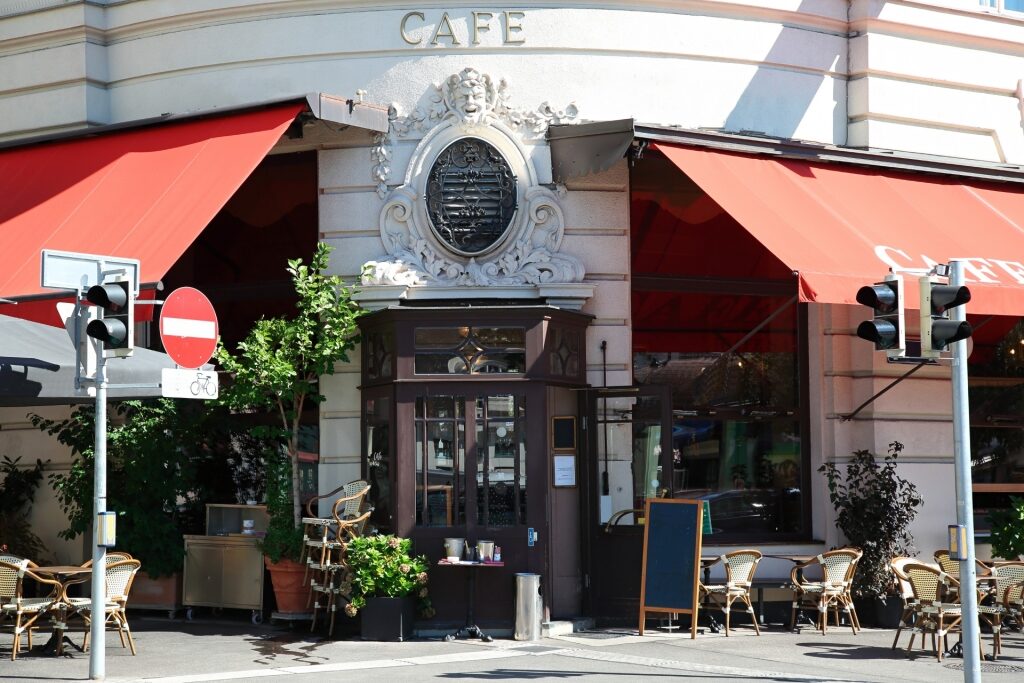
Coffeehouse in Vienna
Vienna coffeehouses radiate a distinctive vibe, characterized by their marble tables, refined wood paneling, Thonet bentwood chairs, and a sumptuous quiet that fosters conversation at a gentle simmer, rather than a boil.
Poetic descriptions really are apt here, given the fact that thinkers, poets, and revolutionaries have frequented these cafés over the centuries.
The Austrian term that describes the overall ambiance of Viennese coffeehouses is “Gemütlichkeit,” which is a combination of coziness and a feeling of good cheer.
The legend you’ll find in many guidebooks states that, after the 1683 Siege of Vienna, Turkish soldiers left behind some coffee beans, which were then roasted, brewed, and shared. While this legend may not be entirely accurate, it is often repeated and makes for a great story.
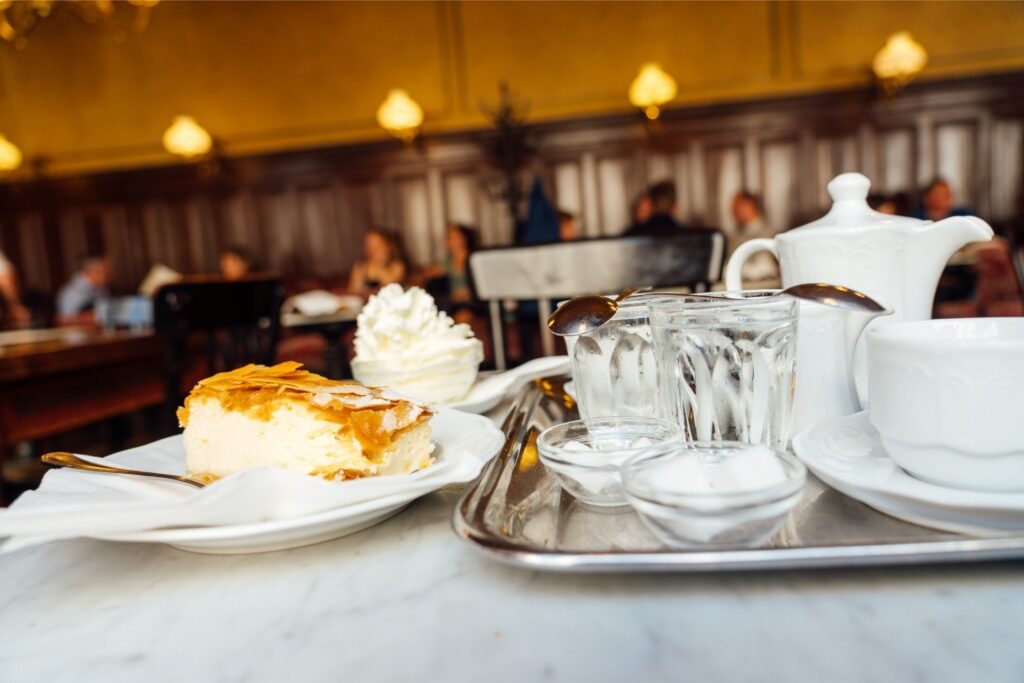
Café Sperl
An Armenian merchant—and perhaps spy—named Johannes Diodato opened the first licensed coffeehouse in the city in 1685.
Over the years, the distinctive marble-topped tables and the intellectual salon aspects of the public parlor in the Kaffeehaus evolved.
Patrons could sit for hours over a single cup, read the broadsheets, conduct business, argue about philosophy and various political manifestos, all while enjoying coffee and baked goods in a coffeehouse that nurtured community and conversation.
The Vienna coffeehouse became so intertwined with daily life that Viennese Kaffeehauskultur was acknowledged by UNESCO and incorporated into Austria’s programs for intangible cultural heritage in 2011.
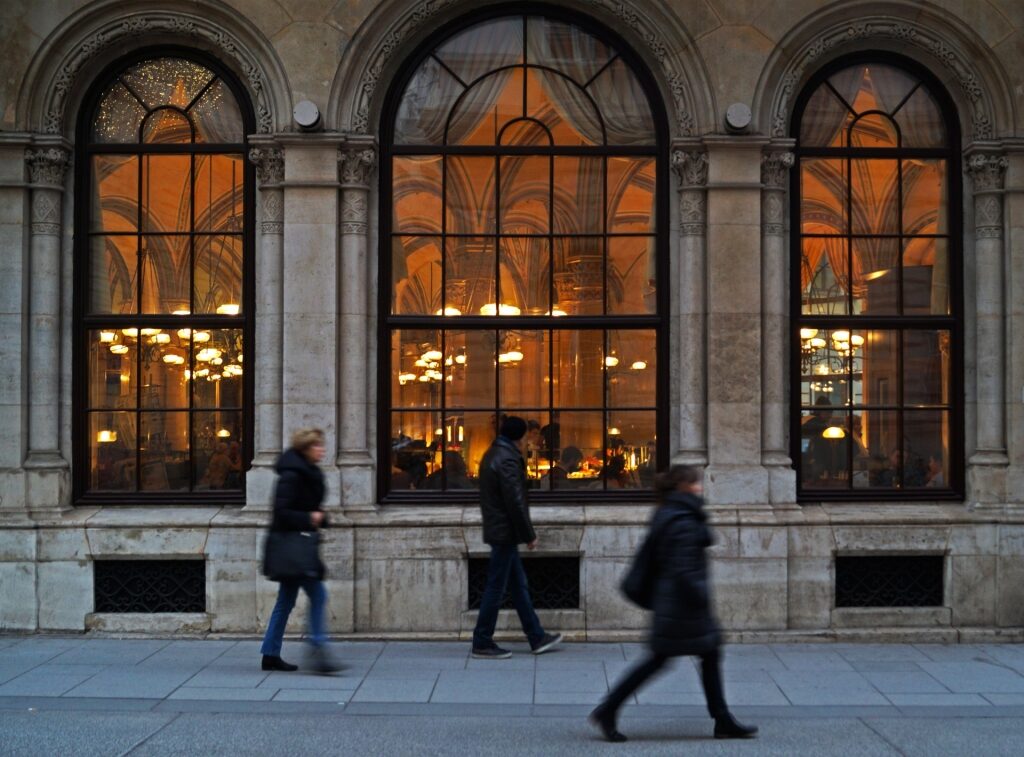
Café Central
Over the years, writers and cultural figures have made some specific houses more famous than others. At Café Central in Vienna’s Old Town, try to imagine Freud, Trotsky, or the writer Stefan Zweig passing the sugar, smoking cigars, and engaging in heated discussion across the same table.
Cafés were cultural amplifiers in their heyday—papers were read aloud, game after game of chess took up an entire afternoon, and entire literary movements like Jung-Wien, or Young Vienna, came to life between sips of coffee.
Viennese Coffee Culture
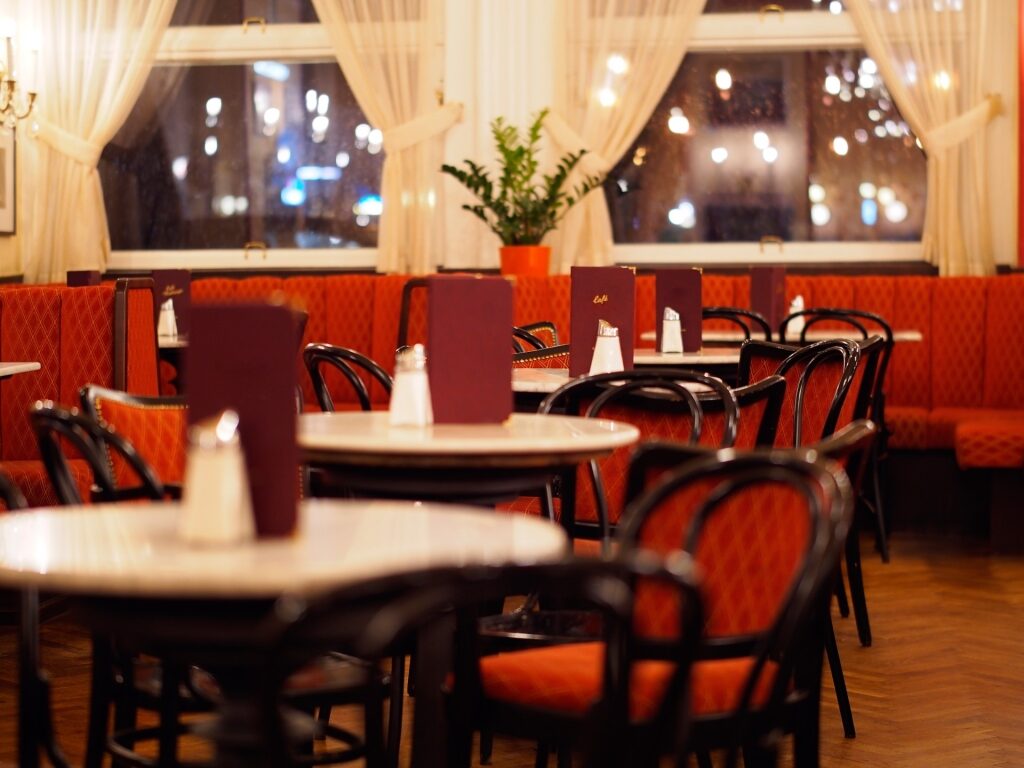
Coffeehouse in Vienna
Ordering coffee in Vienna is a ritual. And forget about to-go cups. The art of going out for coffee in Vienna has been perfected over the years, designed to take a bit of time.
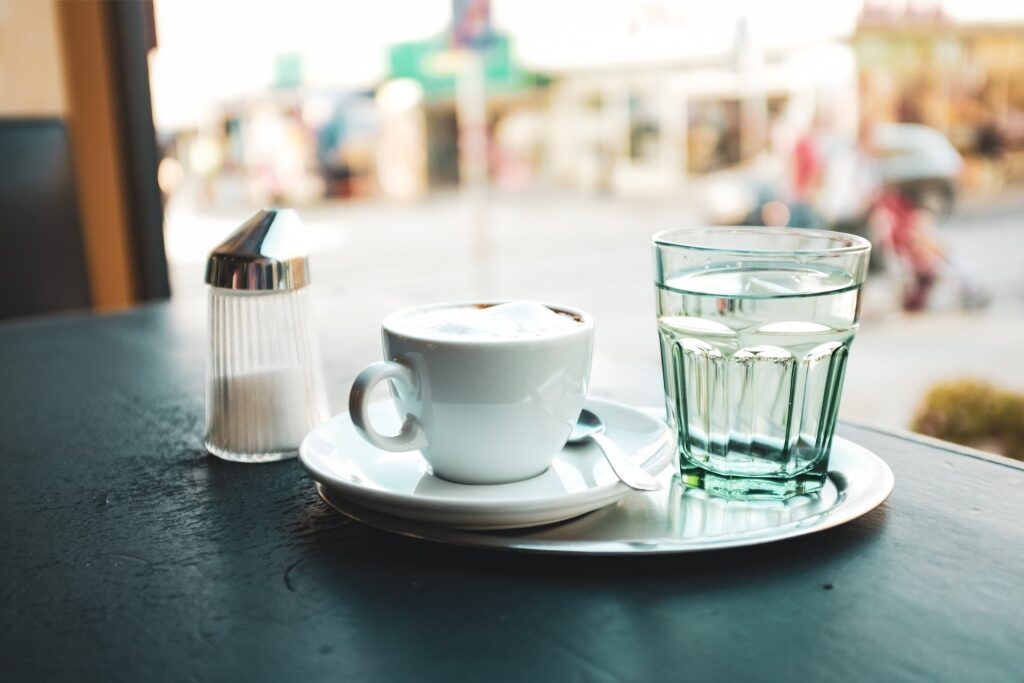
Coffeehouse aesthetics, from the silver salver tray and the glass of tap water accompanying your coffee to the laidback pace of service, invite you to stay as long as you desire.
When ordering, at a minimum, familiarize yourself with a Wiener Melange, which is a milder cousin of the cappuccino and a very typical drink order in Vienna. It’s usually served on a small tray with a glass of water.
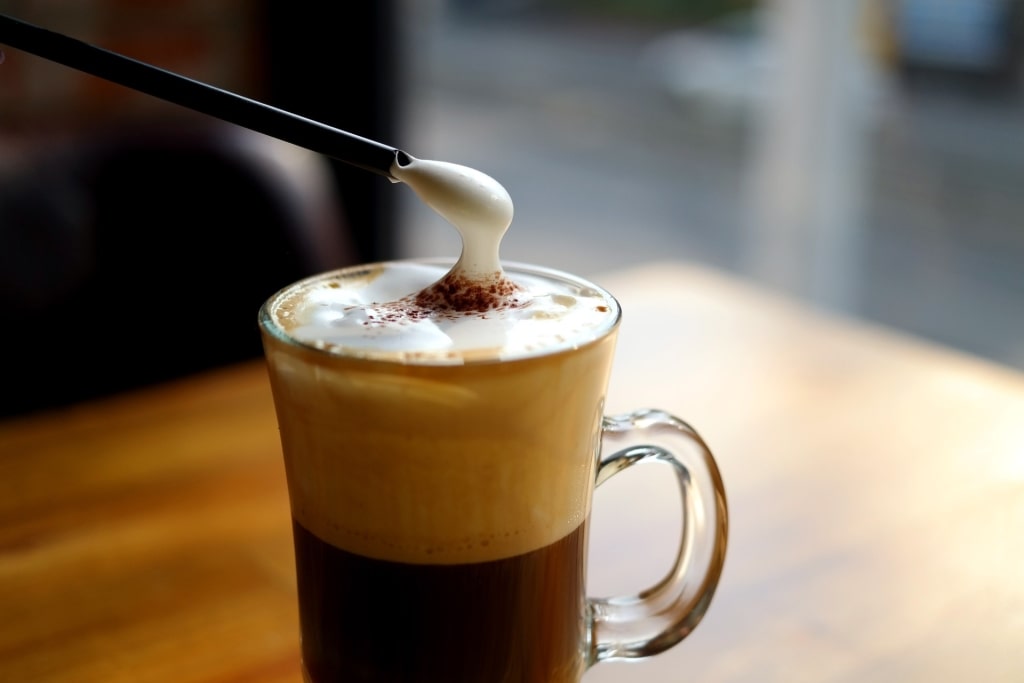
Einspänner
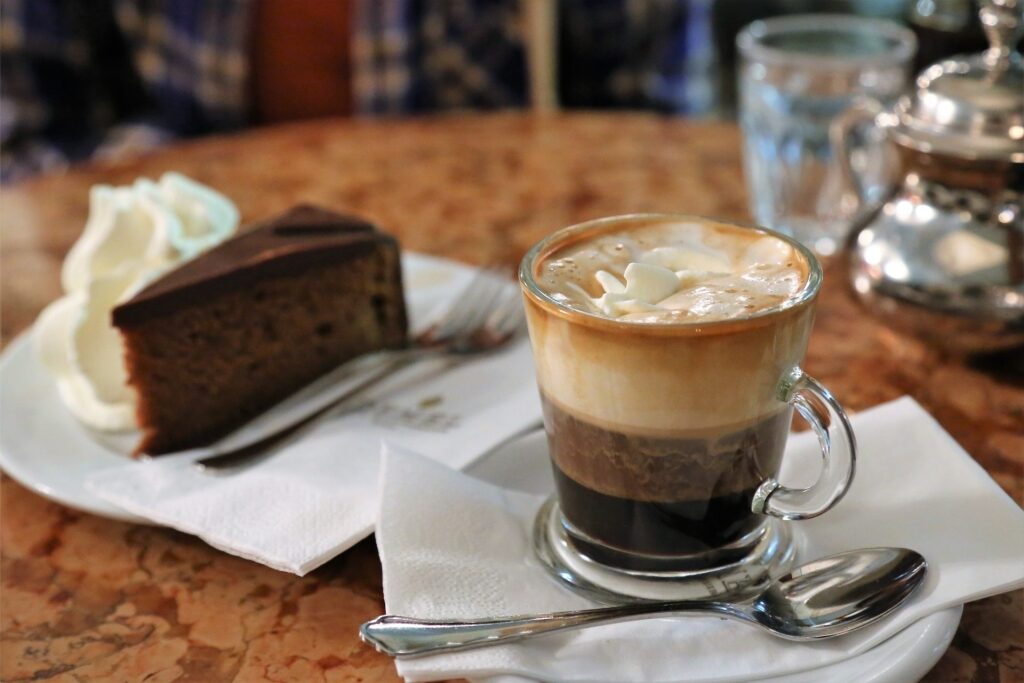
The menus of traditional houses offer a range of beverages, from an Einspänner, espresso served in a skinny glass with a generous helping of whipped cream, to a Verlängerter, an extended espresso with extra hot water added.
If you don’t speak German or are a novice to Austrian coffee etiquette, ordering might present a few challenges at first in historic spots like Café Landtmann or Café Sperl. Still, once you learn a few basic names in German, you’ll do fine—and you might even make your server smile.
Take your time when ordering, savoring your coffee, and immersing yourself in the entire experience, as the house is counting on you to do so. Once you take your seat and select your coffee and food, you can read a paper, offered on a wooden stand, peruse a book or magazine, converse with friends, or, if you have to, pull out your laptop and get some work done.
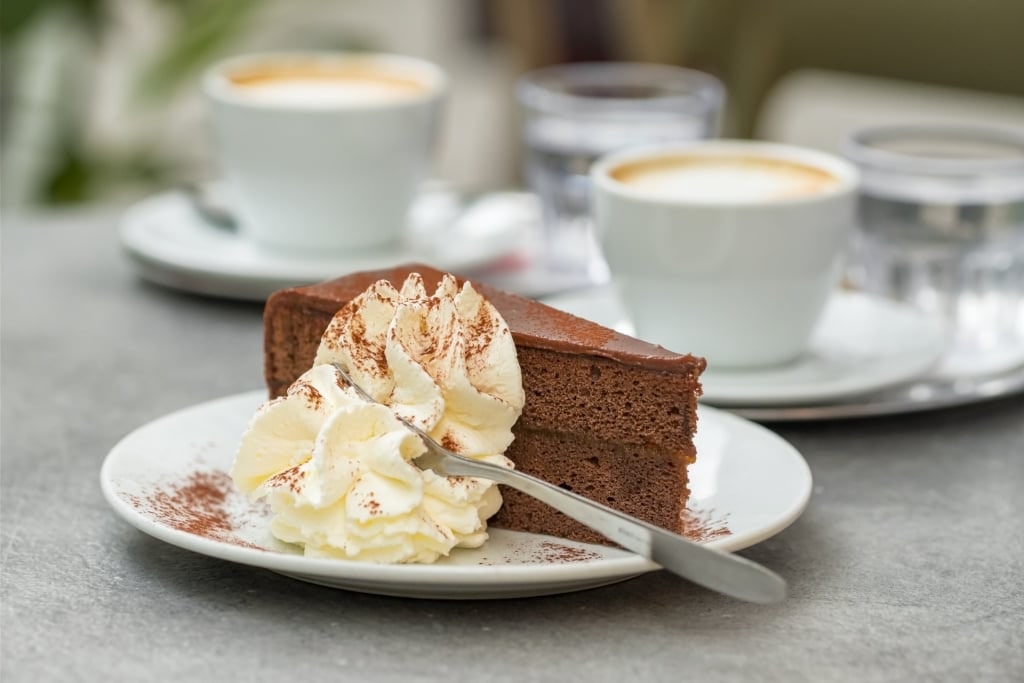
Sachertorte
If you stay for multiple hours, it’s polite to have another drink or a slice of cake; a Sachertorte or an Esterházy torte, the latter stacked with buttercream and nuts, could easily do the trick.
While traditional coffeehouse norms are well-guarded, you may also notice some modern specialty coffeehouses in the city, as well as some cafés with a more bar-like vibe or additional amenities designed for remote work.
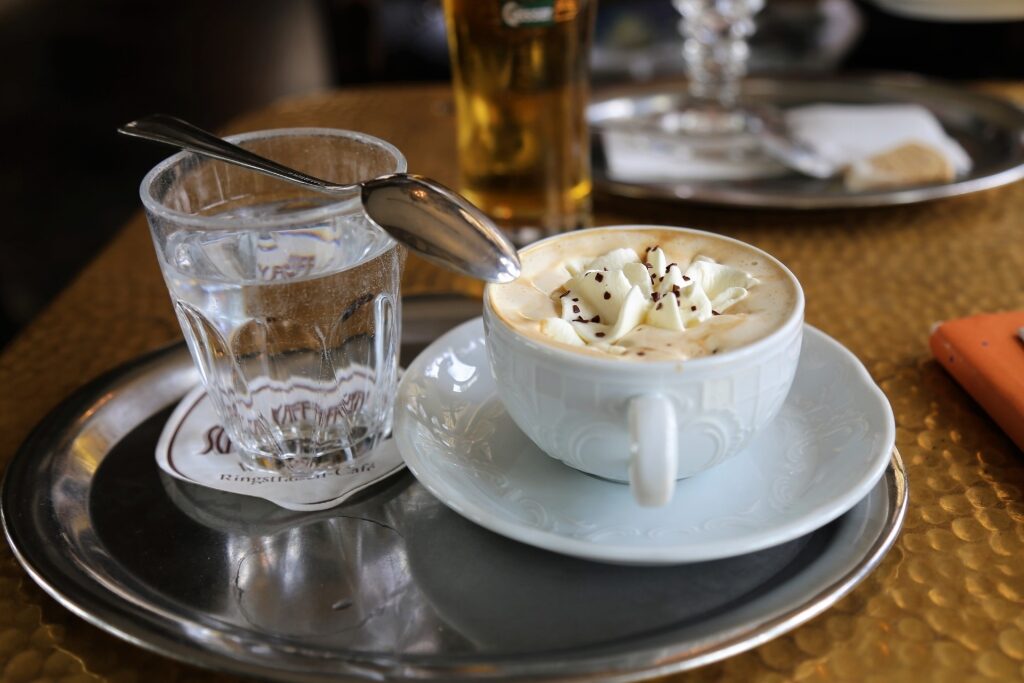
Coffeehouse in Vienna
You might come across social-enterprise cafés, too, such as Vollpension’s “Generation Cafés,” which use some of their profits to support worthy causes, including helping the elderly and combating poverty and loneliness.
You will also find hipster venues and single-origin specialty roasters, which don’t necessarily follow the Viennese traditions of the slow-paced coffeehouse. Some of these offer quicker service and a different menu—e.g., single-origin pour-overs—for a faster Kaffeehaus experience overall.
Vienna’s Best Coffeehouses
You could stroll from café to café in Vienna for days on end and still not visit all of them. Each Vienna coffeehouse has its own unique atmosphere; some are gilded and opulent, while others are more low-key or contemporary in their furnishings.
Café Central
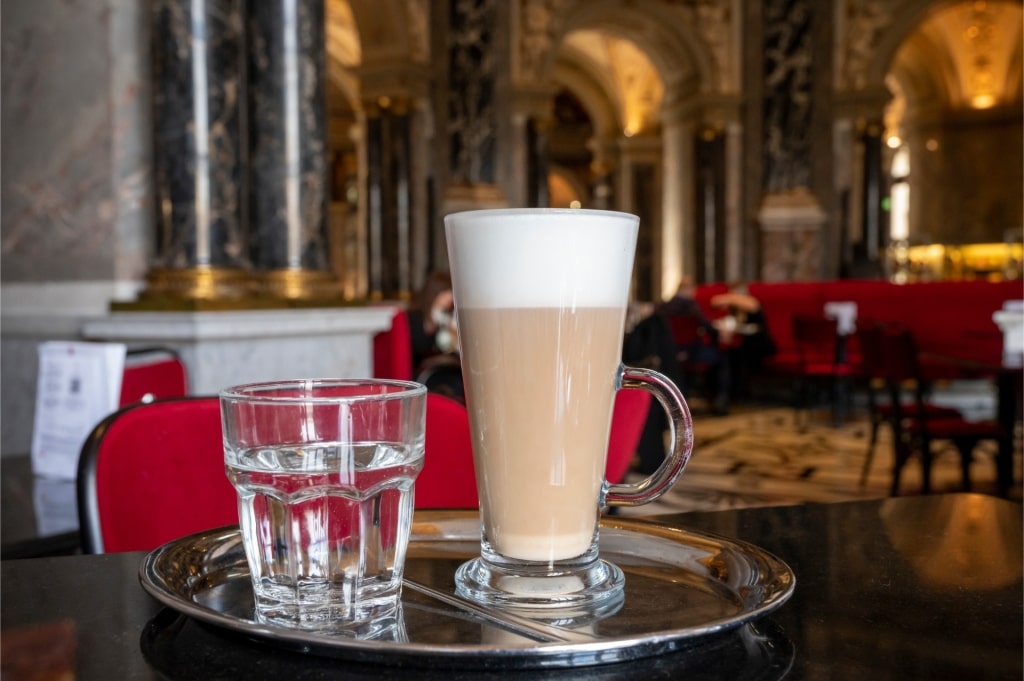
Café Central
When pondering some of the best spots for coffee in Vienna, a good place to start is Café Central, arguably the most famous coffeehouse in the city. Café Central features a lavish interior with marble pillars, arched ceilings, and chandelier.
Café Central was the stomping ground of Trotsky and Freud, as well as the Austrian poet Peter Altenberg, a vital figure in the Young Vienna literary movement, whose mustachioed statue still greets you by the door.
Café Sacher
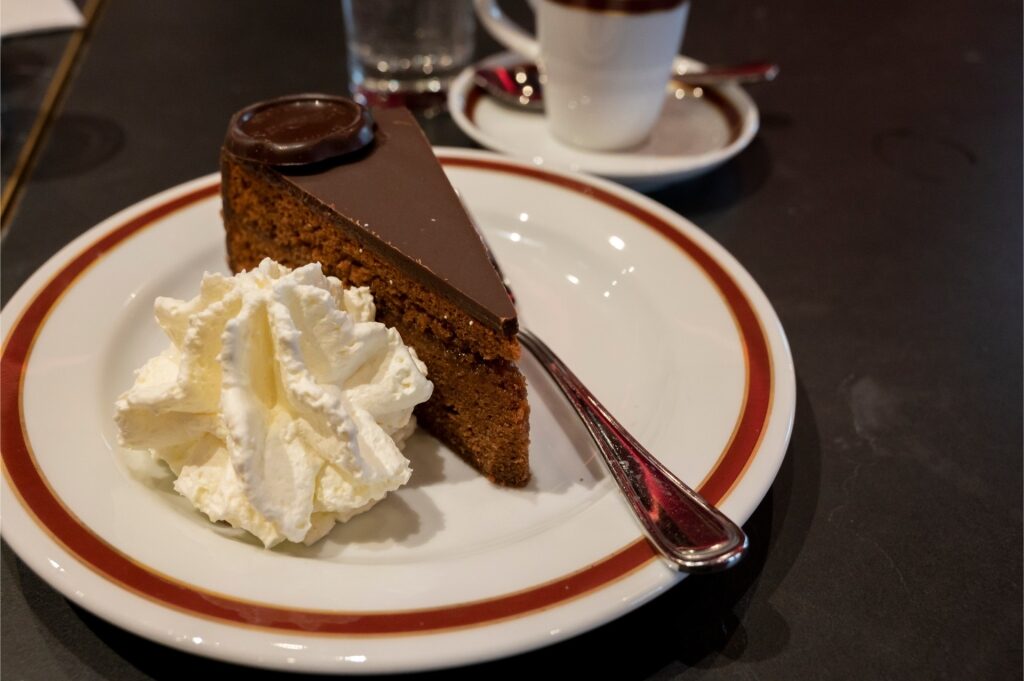
Café Sacher
Café Sacher, situated in the Hotel Sacher opposite the State Opera House, is the birthplace of the world-famous Sachertorte, a rich slab of chocolate cake containing apricot jam and topped with glossy chocolate icing.
Waiters here still weave between dark red banquettes, cups and plates poised on their trays. You’ll pay a little more, but it’s worth it for the historic setting, which features soft light from the chandeliers, the scent of dark chocolate and coffee, and a nostalgic ambiance.
Café Sperl
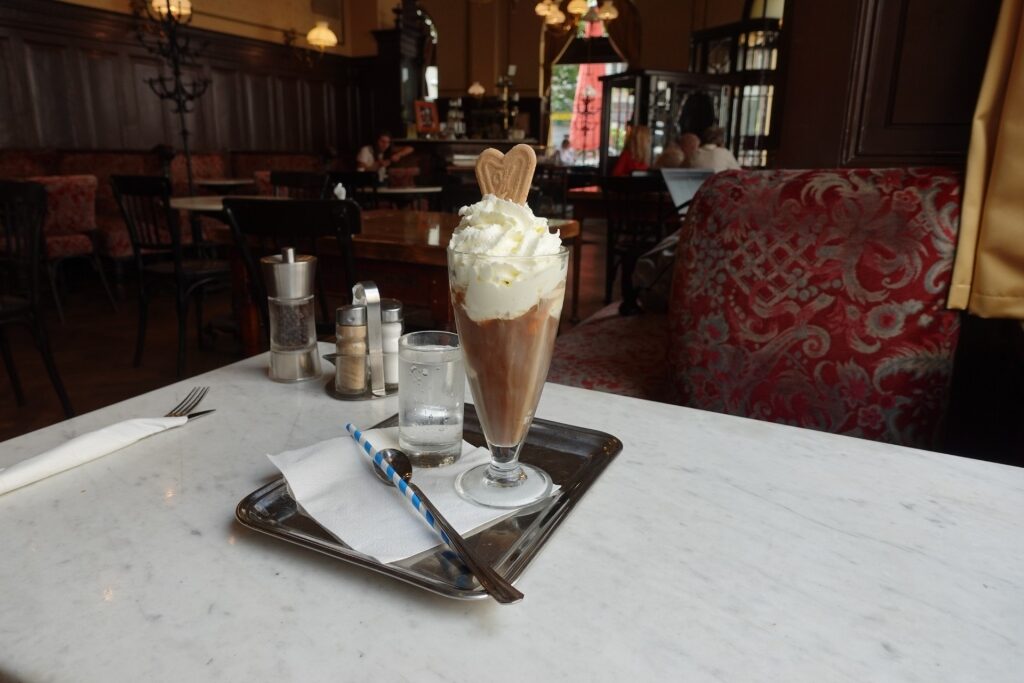
Café Sperl
Café Sperl, dating back to 1880, is a local institution in the city’s 6th district. The heavy wood paneling, billiard tables, and shiny parquet floors perfectly embody the essence of Old Vienna.
Artists, students, and professors linger at tables with newspapers and notebooks, and the waiters never rush you. Order an Einspänner and relax while listening to the background hum of conversation and the snap of pool cues.
Café Hawelka
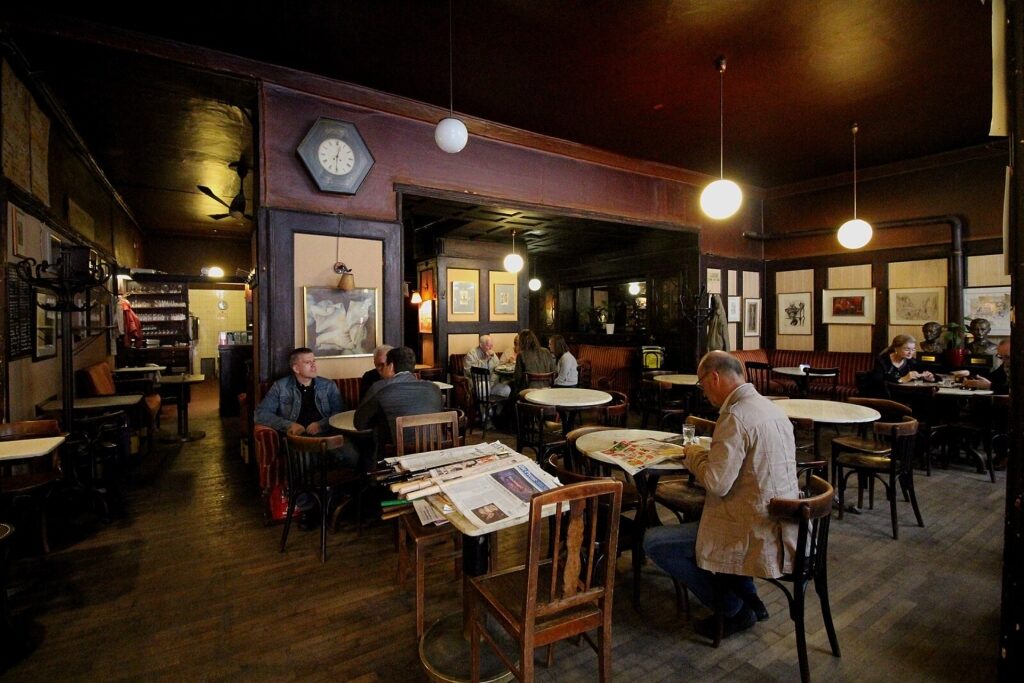
Café Hawelka Photo by Sniper Zeta on Wikimedia Commons, licensed under CC BY-SA 4.0
For a more bohemian experience, visit Café Hawelka, located near Stephansplatz. Established in 1939 by Leopold and Josefine Hawelka as a meeting place for postwar free thinkers and artists, this joint is still run by the same family.
The lighting is subdued inside Café Hawelka; the banisters and tables show their age and wear. If you visit, be sure to try some Buchteln, sweet yeast buns filled with plum jam and topped with powdered sugar, which come straight from the kitchen.
Café Landtmann
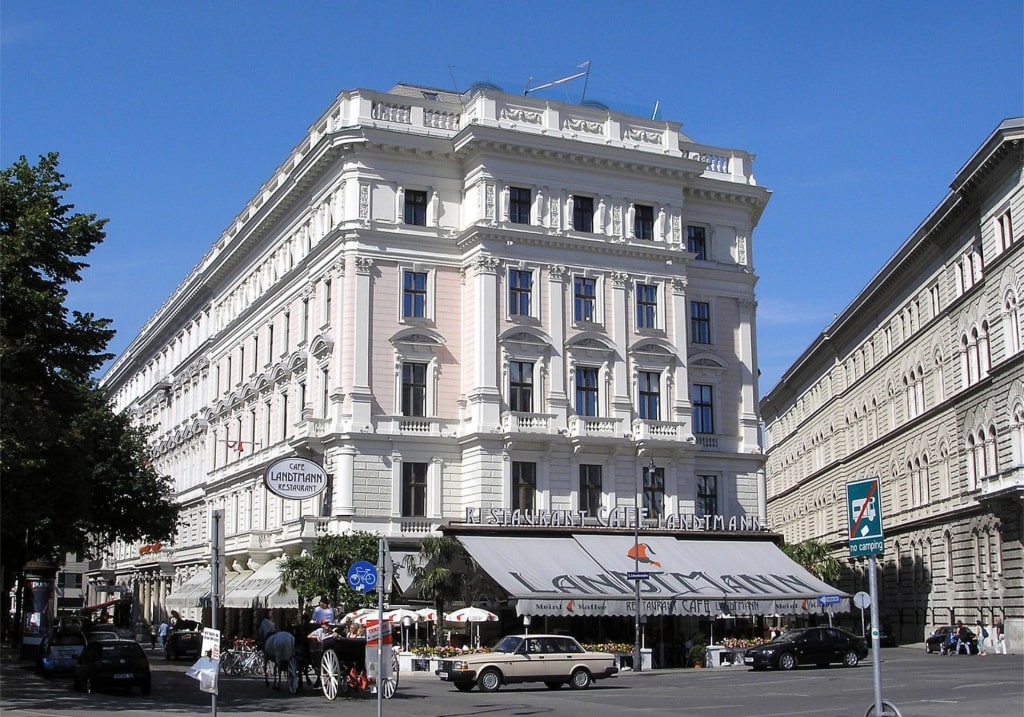
Café Landtmann Photo by Gryffindor on Wikimedia Commons, licensed under CC BY-SA 3.0
Café Landtmann, next to the Ringstrasse, has been operating since 1873 and remains one of the city’s most sophisticated Kaffeehäuser. It was Sigmund Freud’s preferred café; it was rumored that he always ordered the same coffee from the same waiter every time he visited.
If you order a Verlängerter, an extended black coffee at Landtmann alongside a slice of apfelstrudel, you’ll see why many Viennese choose to track their time in cups of coffee rather than minutes and hours.
Café Prückel
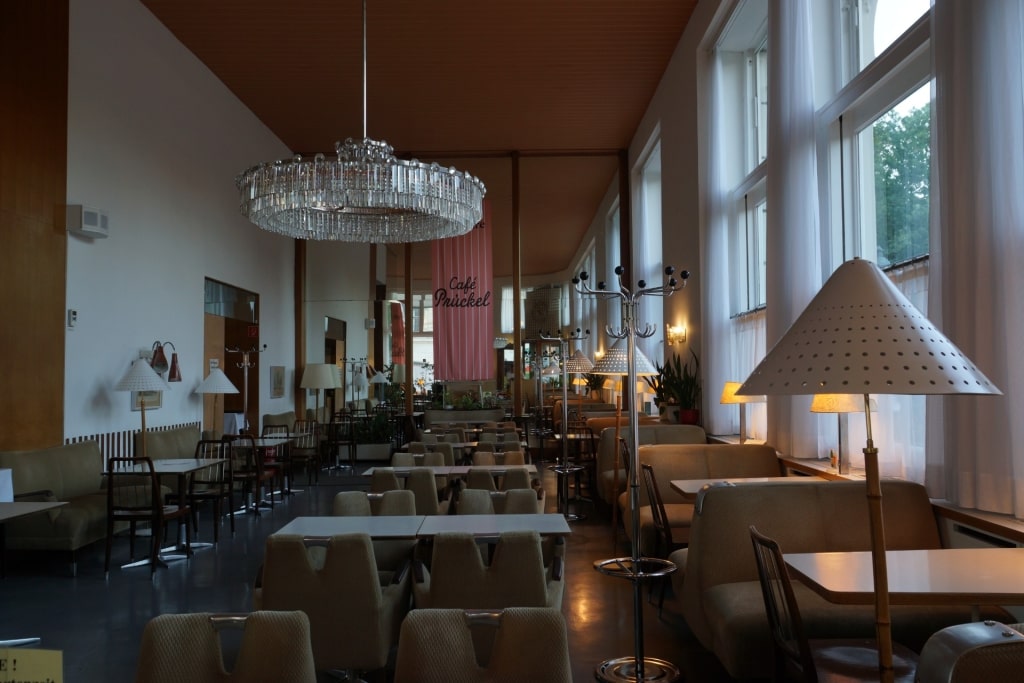
Café Prückel Photo by maherzog on Flickr, licensed under CC BY-ND 2.0
Café Prückel is a more modern spot with a 1950s-era interior and large windows that overlook the Ring road. It’s where tradition meets mid-century cool.
Café Prückel also hosts live piano music in the afternoons and evenings, adding a “musical score” to the Viennese coffee scene.
Demel
Demel
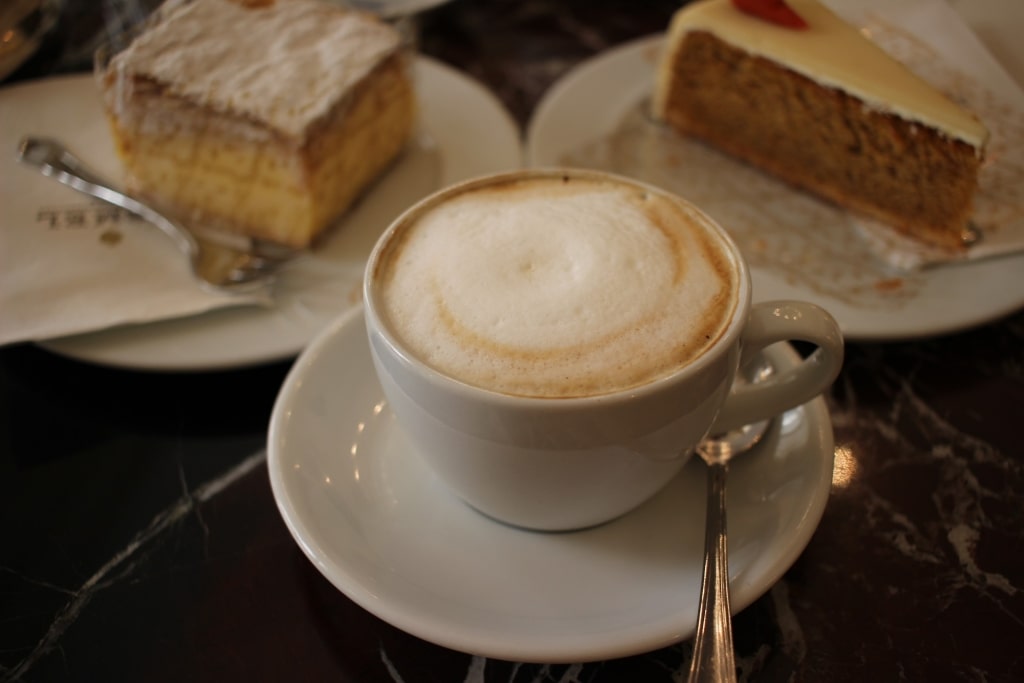
Demel was the official confectioner to the imperial court and is no less essential today. Founded in 1786, this establishment is part museum, part patisserie, and entirely Viennese in character.
Behind massive glass windows, pastry chefs assemble elaborate cakes and strudels with clockwork precision. Order something sweet here, like a Dobos chocolate buttercream sponge cake, and pair it with a good cup of coffee.
To see how Vienna’s coffeehouse traditions are changing, consider dropping by Vollpension, which hires grandmothers and pensioners as bakers and hosts.
Vollpension
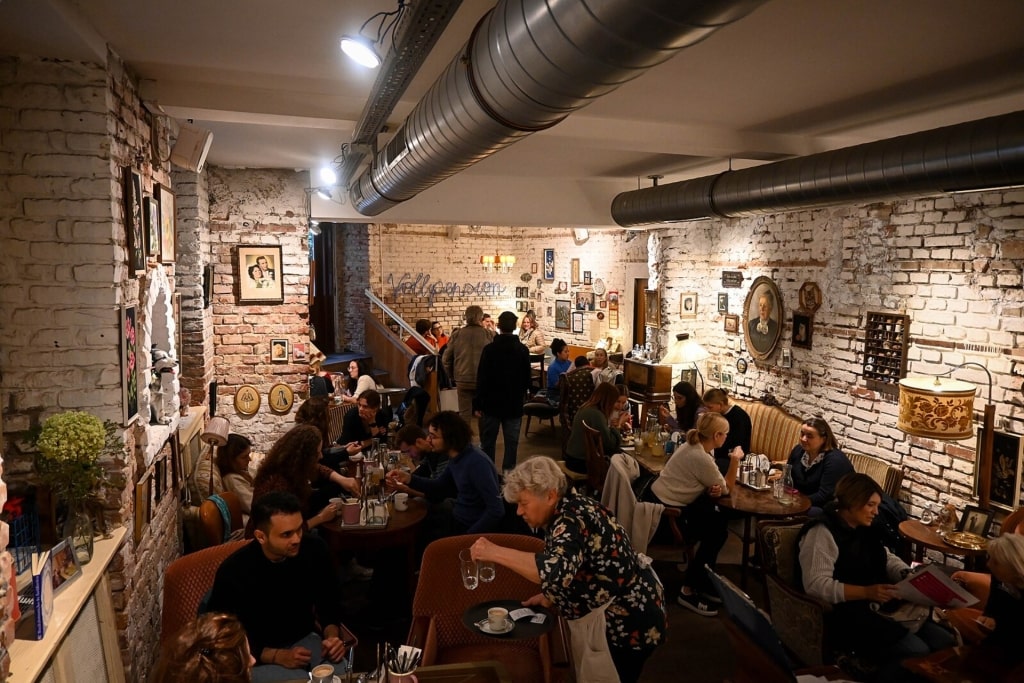
Vollpension Photo by R. Jason Bennion on Wikimedia Commons, licensed under CC BY-SA 2.0
Vollpension is a wonderful, nostalgia-infused social project, featuring delightfully mismatched decor, from crocheted doilies to family photographs, with cakes and service delivered with warmth and humanity. You’ll find one of its branches on Johannesgasse in the first district.
Understanding Viennese Coffees & Pastries
Coffeehouse in Vienna
If you’ve never been to a Viennese coffeehouse, ordering might be a little confusing. A “coffee” can mean dozens of things, really, some of which have been briefly covered.
Here’s a more in-depth look at coffee names and what to order in Austrian cafés to get you past simply saying “ein kaffee, bitte,” or “one coffee, please.”
Wiener Melange
The Wiener Melange is the city specialty—with a more or less equal mix of espresso, steamed milk, and foam—while a Verlängerter is similar to an Americano, making it a good choice if you prefer your coffee a little weaker.
A Kleiner Schwarzer or a Großer Schwarzer is a short single-shot or long double-shot of strong black espresso, respectively. The Einspänner, named for traditional one-horse carriages, comes in a tall glass with whipped cream, so carriage drivers could sip it without spilling their drink.
Pastries are also a big part of Vienna coffeehouse culture. The most celebrated, of course, is the Sachertorte, a chocolate sponge with a slender layer of apricot jam and chocolate glaze.
Apfelstrudel
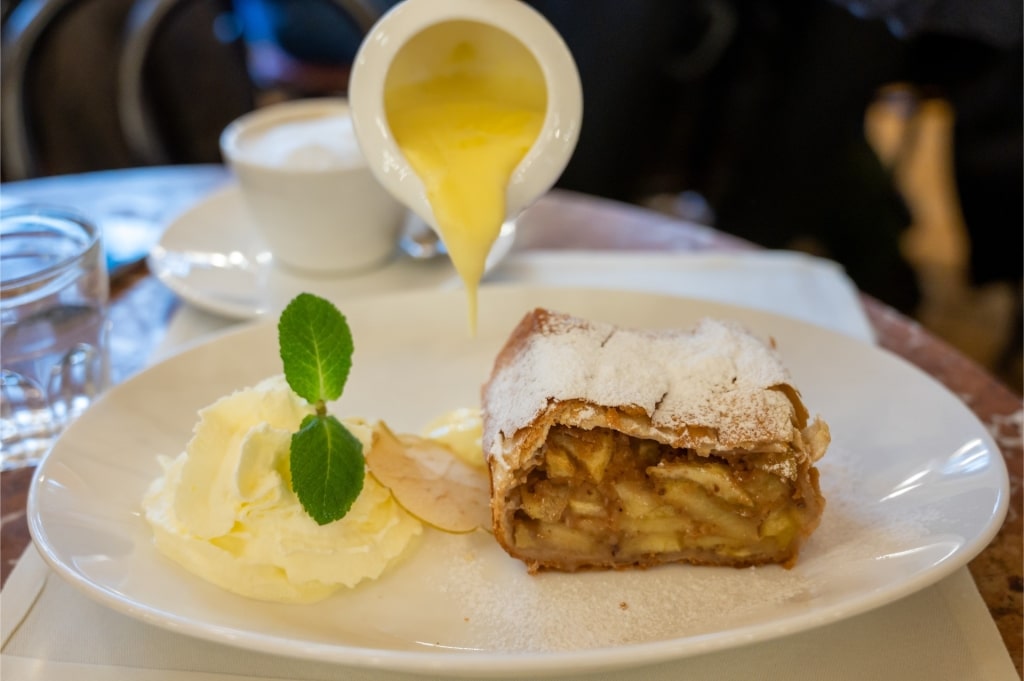
A lighter option is the Apfelstrudel, or apple strudel, consisting of flaky pastry and tart apples topped with cinnamon sugar. You can also try Topfenstrudel, made with a creamy quark cheese filling instead of apples.
If you’re going to an old-style venue like Demel or Landtmann, you can order the Kardinalschnitten; it’s an airy meringue sponge cake layered with coffee- or hazelnut-flavored whipped cream.
Viennese Coffee Culture Tips
Coffee house in Vienna
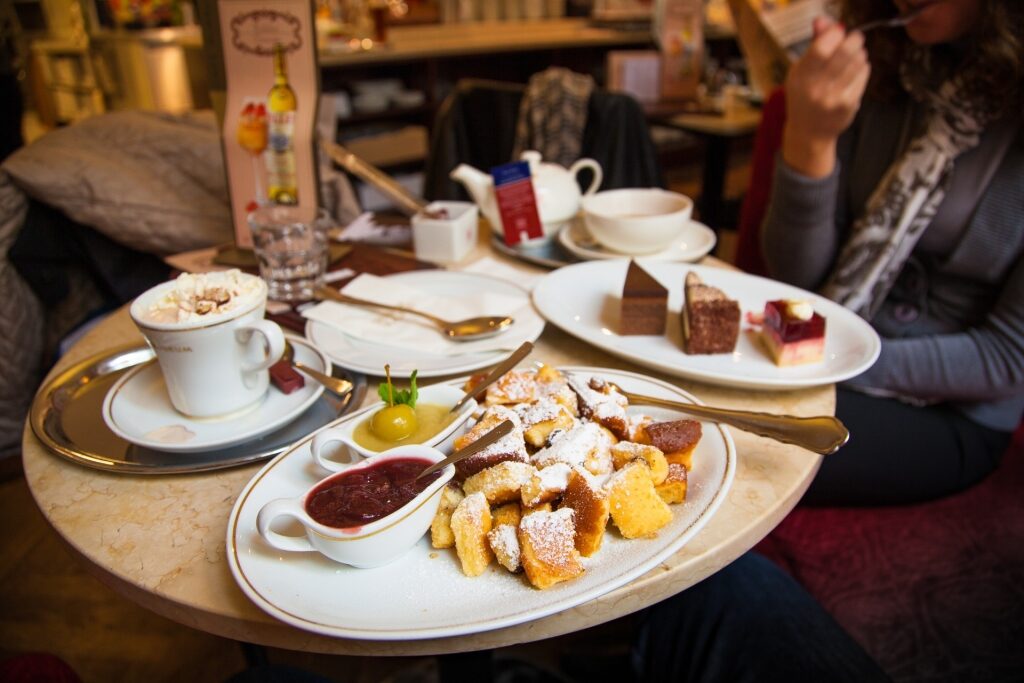
The first rule to follow in a Vienna coffeehouse is to sit back and relax; you can spend hours enjoying just one drink while taking in the setting or chatting with friends.
If you’re planning to stay awhile, however, it’s polite to order something else eventually, even if it’s just another coffee. These cafés are, after all, businesses that need to make some money. Table service is standard in most Vienna coffeehouses.
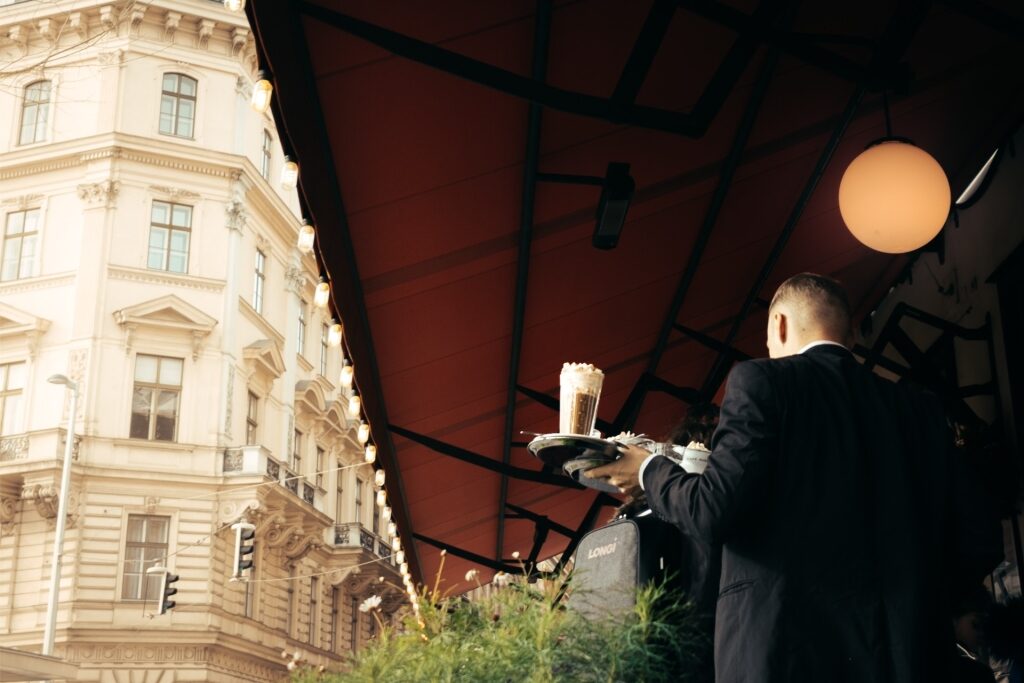
Coffee house in Vienna
Also note that many traditional cafés still prefer cash over credit cards, although contactless payments are often available as well.
Greet your server with a friendly “Grüß Gott”—pronounced roughly like “groose-got” and meaning “God greet you”—or “Hallo,” and they will likely respond with characteristic Viennese courtesy, which is always a nice way to start any interaction.
FAQs
What is special about coffeehouses in Vienna?
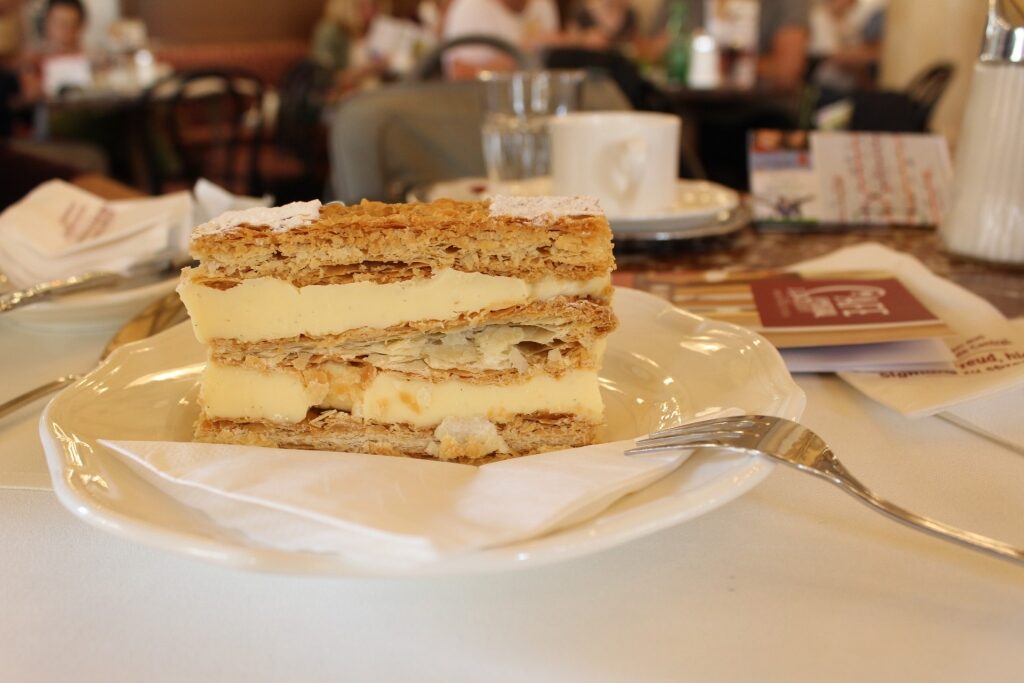
Café Central
Vienna is known for being a popular destination for coffee lovers, where you can read, write, and chat with locals, linger, and soak in the elegant, old-world interiors while enjoying unhurried service. Vienna’s coffee culture has been a go-to staple of the city for more than two centuries.
What is the oldest coffeehouse in Vienna?
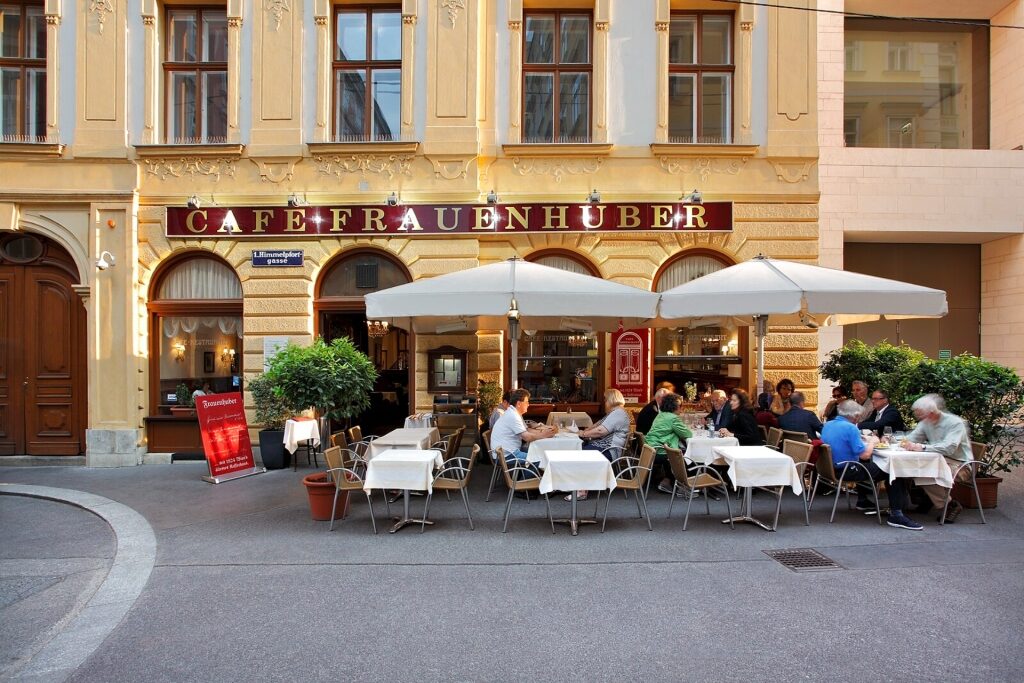
Café Frauenhuber Photo by Elisabeth 2502 on Wikimedia Commons, licensed under CC BY-SA 4.0
Vienna has a large number of coffeehouses, and many claim to be the “oldest” in the city. Café Frauenhuber, dating back to 1824, is the most likely candidate.
This coffeehouse also claims that Mozart and Beethoven performed here at a previous venue before it became a café, at the exact location, in the late 18th century, which adds another dimension.
What is the most famous café to visit and coffee drink to order in Vienna?
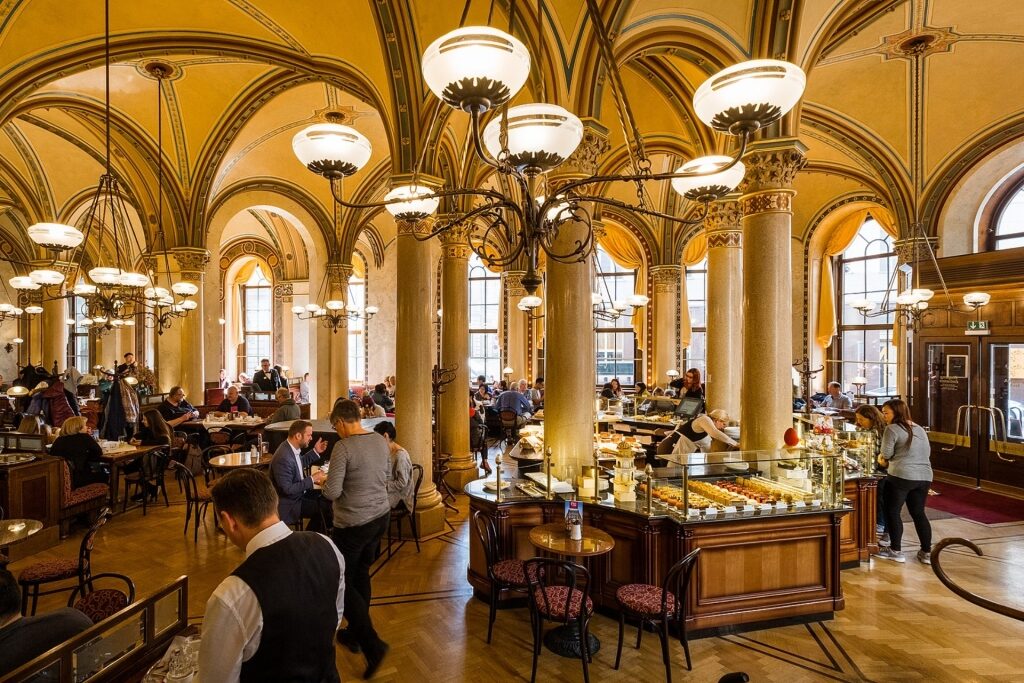
Café Central Photo by a.canvas.of.light on Wikimedia Commons, licensed under CC BY 2.0
Café Central is undoubtedly the most famous café in Vienna, popular with poets and revolutionaries for years. It still conveys an air of old-school glamor.
The Wiener Melange is Vienna’s most popular coffee drink. To order one, you can simply say, “Eine Melange, bitte.”
Vienna
Discover Vienna’s celebrated coffeehouse culture, one piping hot sip at a time. Browse Celebrity’s river cruises to Vienna and book your European adventure today.