What is Rome known for? The Eternal City is a frenetic capital of Europe that is essentially a living museum, famous for its wow-inducing cuisine, history, art, culture, and shopping.
Living in the epicenter of the Roman Empire, Romans were responsible for constructing incredible feats of engineering—aqueducts, roads, amphitheaters, bridges, and temples—many of which still stand in Rome today, including the Colosseum and Pantheon.
Rome might appear frenzied and energetic, but Romans also enjoy a slower pace, especially when it comes to savoring mouthwatering food and wine. From the cuisine to the catacombs, here’s everything that makes Rome famous.
Colosseum
Colosseum
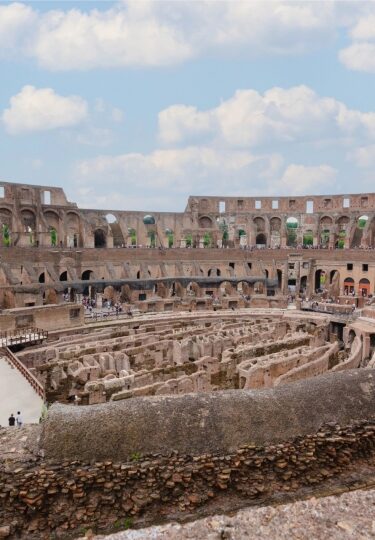
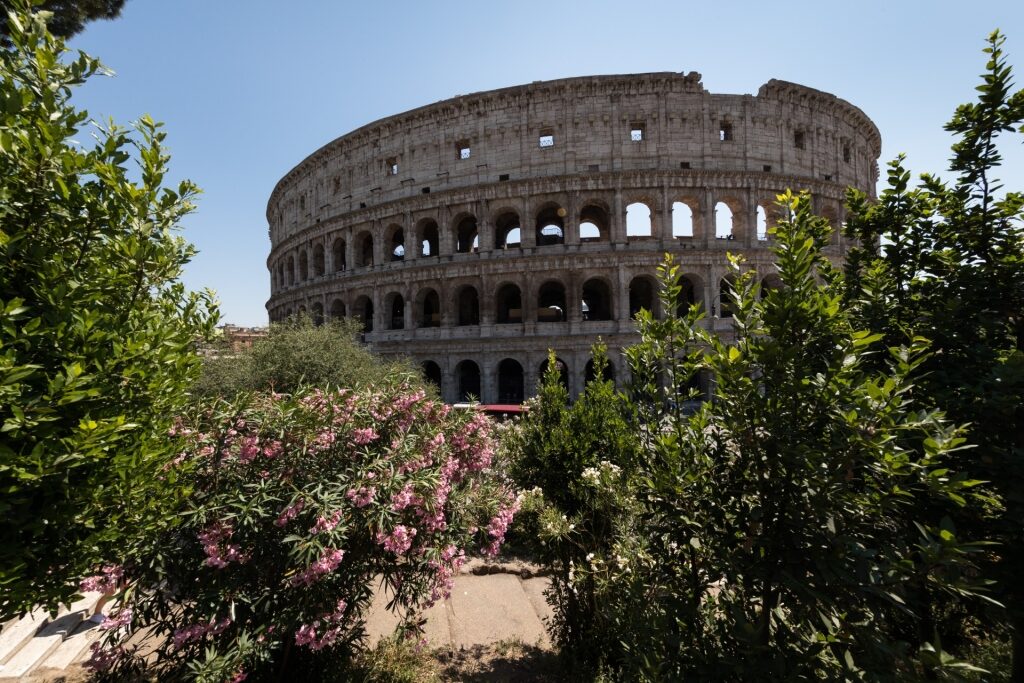
If you ask anyone around the world, “What is Rome known for?”, the answer will almost always be the Colosseum, a colossal amphitheater that personifies the drama of ancient Rome. Once the host to over 50,000 roaring spectators, including emperors of the Roman Empire, the Colosseum was used for gladiator battles, public animal hunts, known as venationes, public executions, and games.
The Colosseum’s 80 arches were designed to allow spectators quick and easy access to the theater’s tiered seating, while the subterranean levels include cages, cells, and trapdoors, where prisoners, animals, and gladiators were kept.
My biggest tip for visiting Rome and planning to go to the Colosseum is to pre-book your ticket and go early. Tickets also include the Roman Forum and Palatine Hill. You’ll need to upgrade your ticket for access to all areas of the Colosseum, including the lower ground and upper levels.
Delicious Cuisine
Cacio e pepe
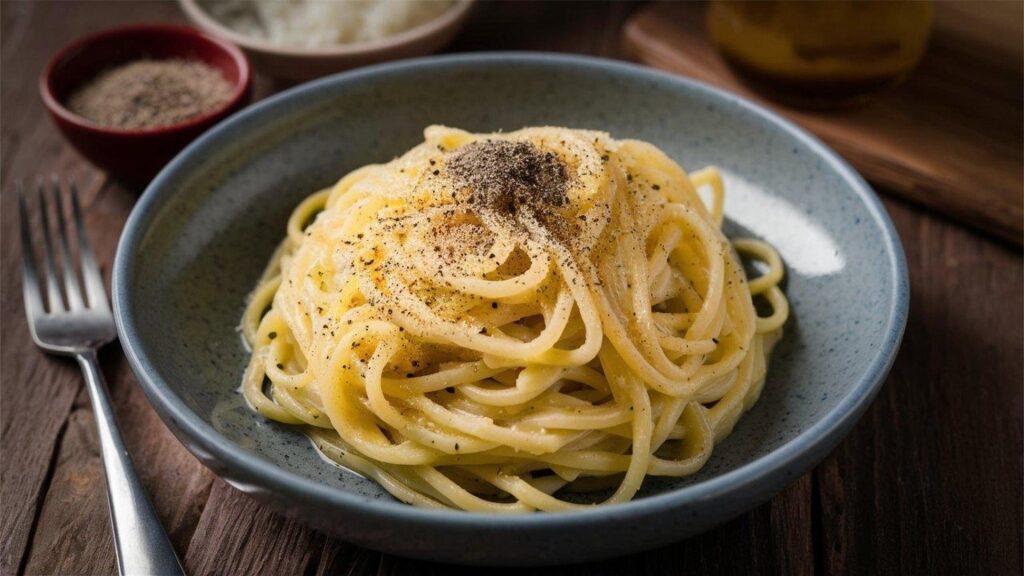
What else is Rome known for? Cacio e pepe, pizza al taglio, and gelato. From antipasti appetizers to coffee-laced desserts, Rome has some of the best cuisine on the planet.
Browse the fresh market stalls at Campo de’ Fiori market, near Piazza Navona, where you could order pizza by the slice and fried rice balls. Sample creamy buffalo mozzarella, juicy tomatoes, and jammy figs, or sit down for delicately fried zucchini flowers and plates of cured meat.
On one visit to Rome, I joined a small-group tour of Campo de’ Fiori, the Jewish Ghetto, and Trastevere that involved meeting local vendors at Campo de’ Fiori market and tasting delicious Roman cuisine, including fried artichoke, pizza with mortadella, various pasta dishes, and local wine.
Pantheon
Pantheon
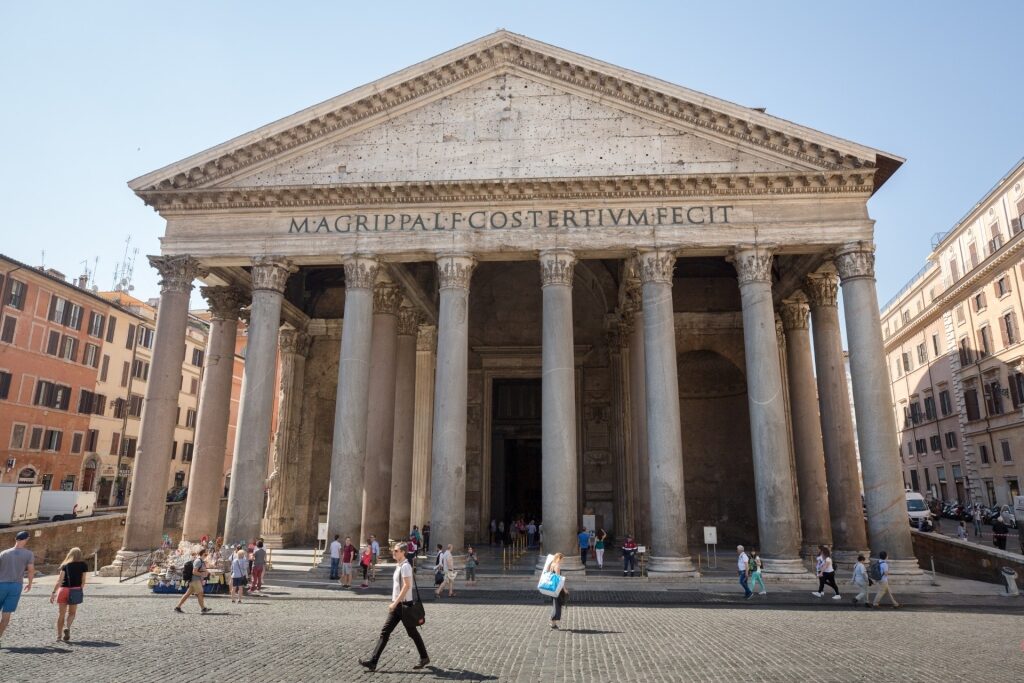
Officially the Basilica of Santa Maria ad Martyres, the existing Pantheon was constructed almost 2,000 years ago as a temple to Roman gods, before being converted to a Christian church in 609 A.D.
The best way to explore this extraordinary church—the resting place of Roman royalty and Renaissance painter Raphael—is on a guided tour.
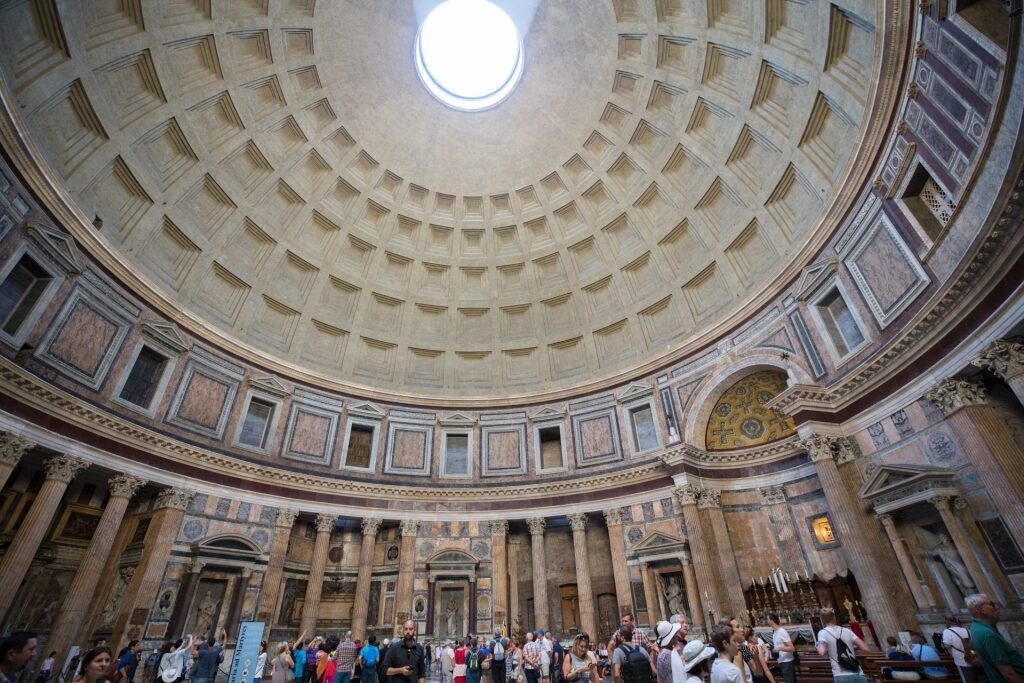
Pantheon
Wander beyond the 16 imposing Corinthian columns and onto the marble floor to marvel at the Pantheon’s famous domed ceiling. It’s the largest unreinforced concrete dome in the world, and visitors can witness an ethereal light flood into the church through a central opening at the very top.
After exploring the Pantheon’s tombs, stroll the cobbled Piazza della Rotonda outside. This picturesque square is a pastel palette of peach and amber with an Egyptian obelisk, referred to as the Pantheon obelisk or Obelisco Macuteo, right in the center.
Trevi Fountain
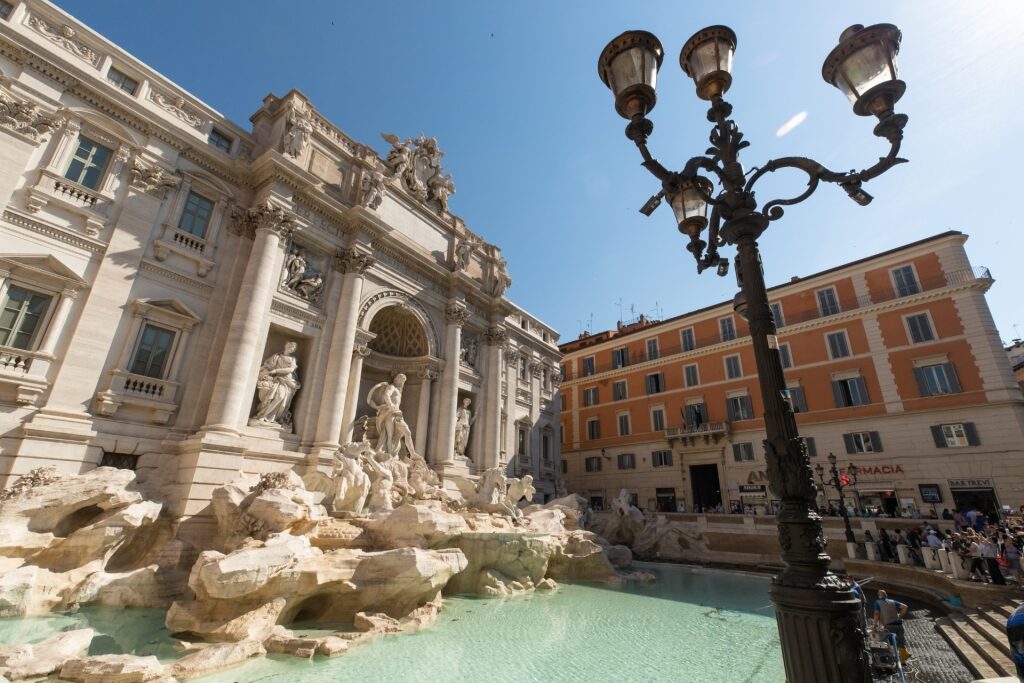
Trevi Fountain
Located in Palazzo Poli, the dazzling Trevi Fountain is one of the most famous landmarks in Rome, known for its elaborate Baroque statue of Oceanus, god of the sea, riding a chariot pulled by sea horses. One sea horse is wild and the other is calm, symbolizing the changing nature of the ocean.
You should expect crowds when visiting this landmark—after all, it is one of the major landmarks that Rome is known for. It’s worth a visit, just plan to go as early as possible. Make sure you’re carrying some loose change to join in with the ritual of throwing a coin into the water to ensure your return to the Eternal City.
Spanish Steps
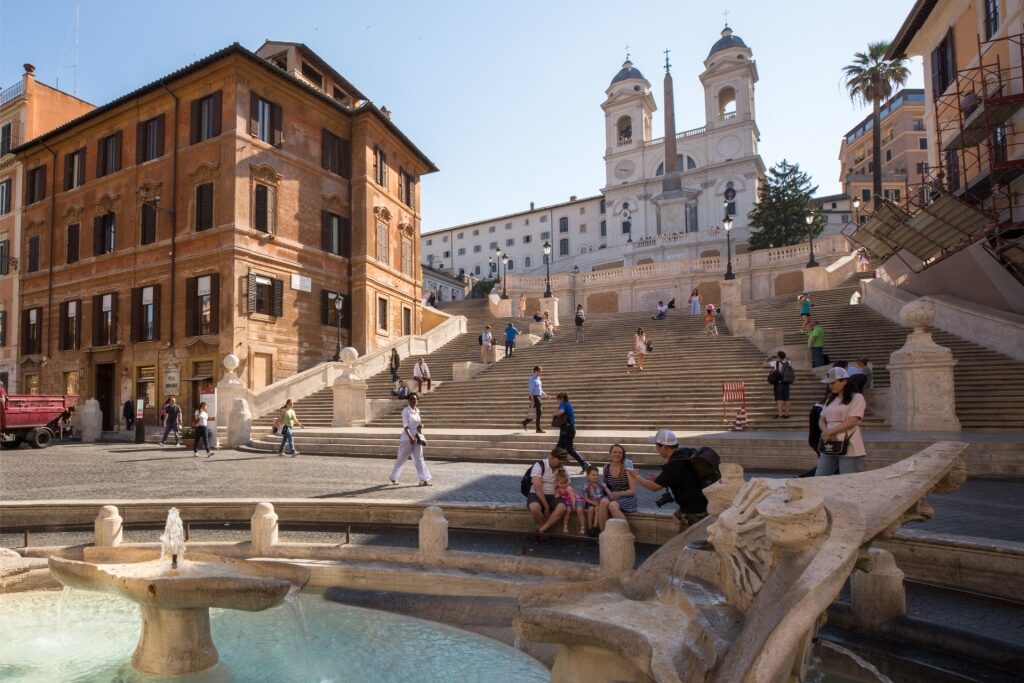
Spanish Steps
Built between 1723 and 1725, Rome’s elegant Spanish Steps are named after their location in Piazza di Spagna, which houses the Spanish Embassy to the Holy See—the world’s oldest permanent diplomatic mission.
Gaze at the square’s architecture before climbing the 135 steps, with towering palm trees and the Trinità dei Monti church, with its restored twin towers, at the top. If you’ve a generous Rome shopping budget, browse the designer boutiques—Missoni, Dolce & Gabbana, and Emilio Pucci—lining Piazza di Spagna.
Castel Sant’Angelo
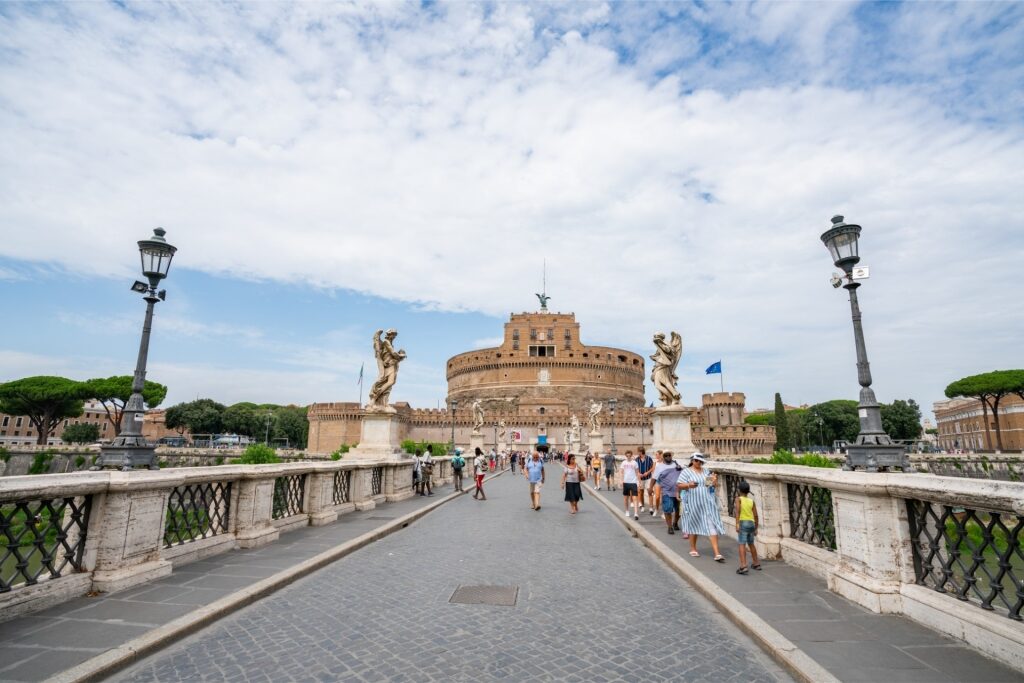
Castel Sant’Angelo
The best way to arrive at the legendary Castel Sant’Angelo is by crossing the cobbled Ponte Sant’Angelo over the River Tiber. This will give you the best perspective of Rome’s famous rotund castle, built in the second century upon the orders of Emperor Hadrian, to be used as his family’s mausoleum.
Castel Sant’Angelo has been somewhat of a workhorse for Rome, serving as a fortress, the pope’s residence, a prison, a military stronghold, and now a museum. Visit the rooftop viewing point for magnificent views across the city, including the dome of St. Peter’s Basilica and the Statue of the Angel, which stands atop the castle.
On a tour, I learned about the secret tunnel, Passetto di Borgo, which connects Castel Sant’Angelo with the nearby Vatican, built to offer an escape route for the pope, should he ever need one.
Circus Maximus
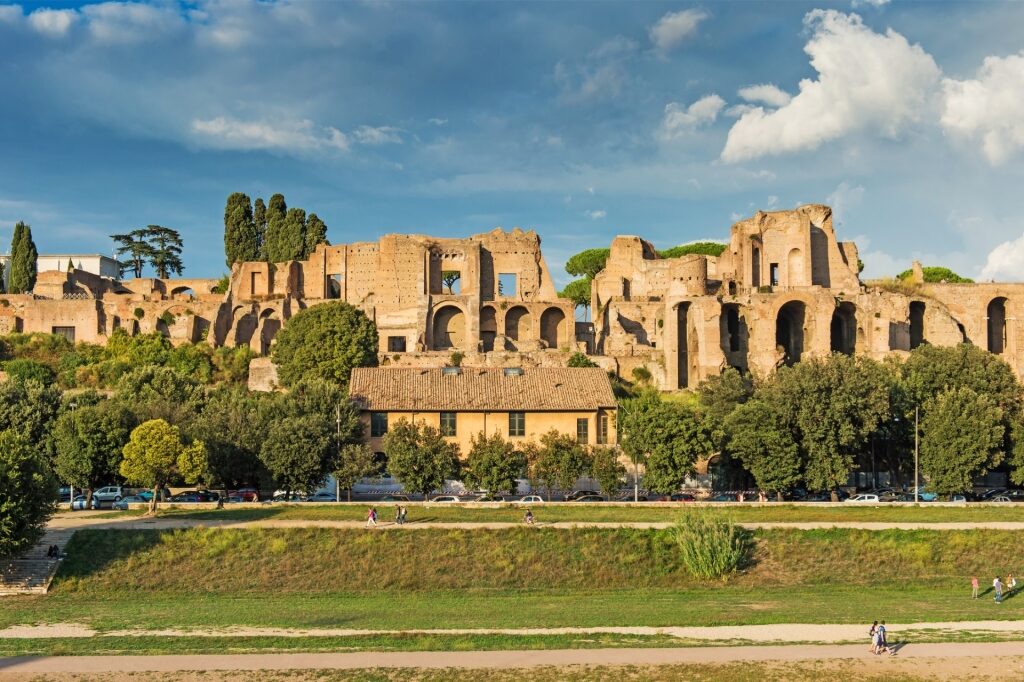
Circus Maximus
Dating back to the 6th century B.C., Circus Maximus was built around 600 years before the Colosseum. This spectacular stadium was the largest in ancient Rome, once drawing as many as 250,000 spectators.
Seating was arranged by social class for emperors, senators, and the general public to witness chariot racing, festivals, and public games.
Circus Maximus was expanded and restored many times, including during the reigns of Julius Caesar and Augustus. Today, it’s an open-air museum and archaeological site that offers visitors the chance to walk in the footsteps of charioteers and sporting competitors.
Catacombs of Rome
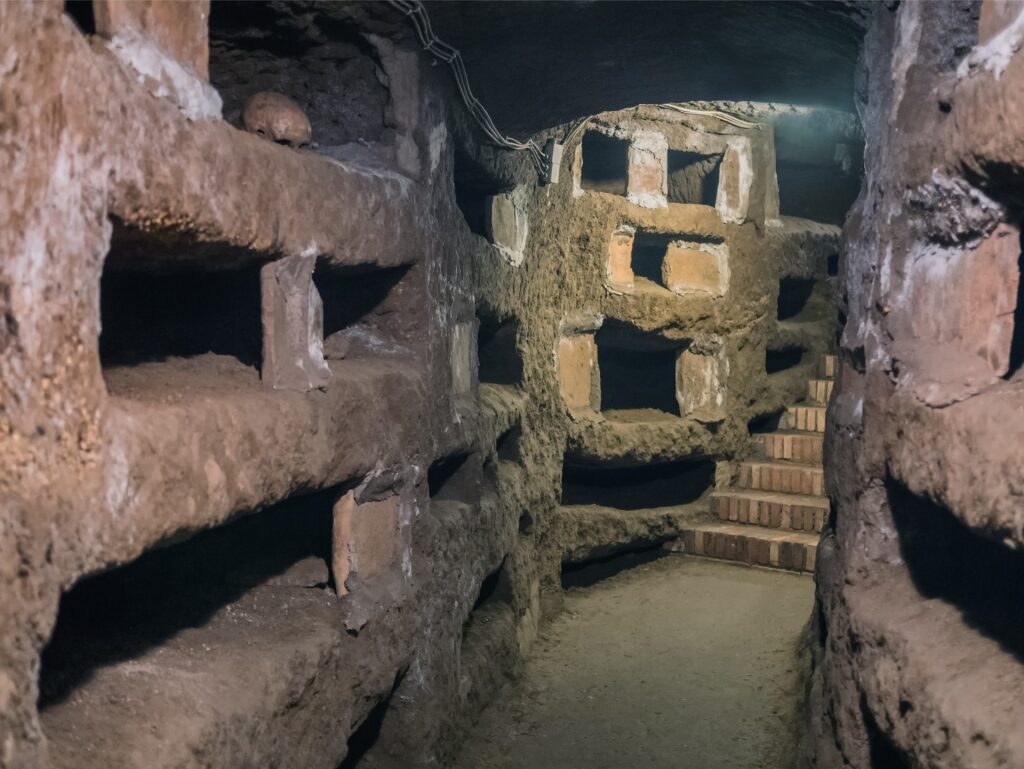
Catacombs of Rome
A labyrinth of subterranean burial chambers known as the Catacombs of Rome lies beneath the city. Miles of dark, narrow tunnels unfurl below ground, carved into Rome’s volcanic rock, established as early as the second century A.D., and used mostly as Jewish and Christian burial grounds.
The Catacombs of San Callisto is the largest in Rome and the resting place of popes and martyrs, while the neighboring Catacombs of San Sebastiano, on the edge of Parco della Caffarella, once housed relics of St. Peter and St. Paul. The Catacombs of Domitilla, also close by, are among the oldest in Rome and are home to ancient frescoes, mosaics, and family tombs.
People’s Square
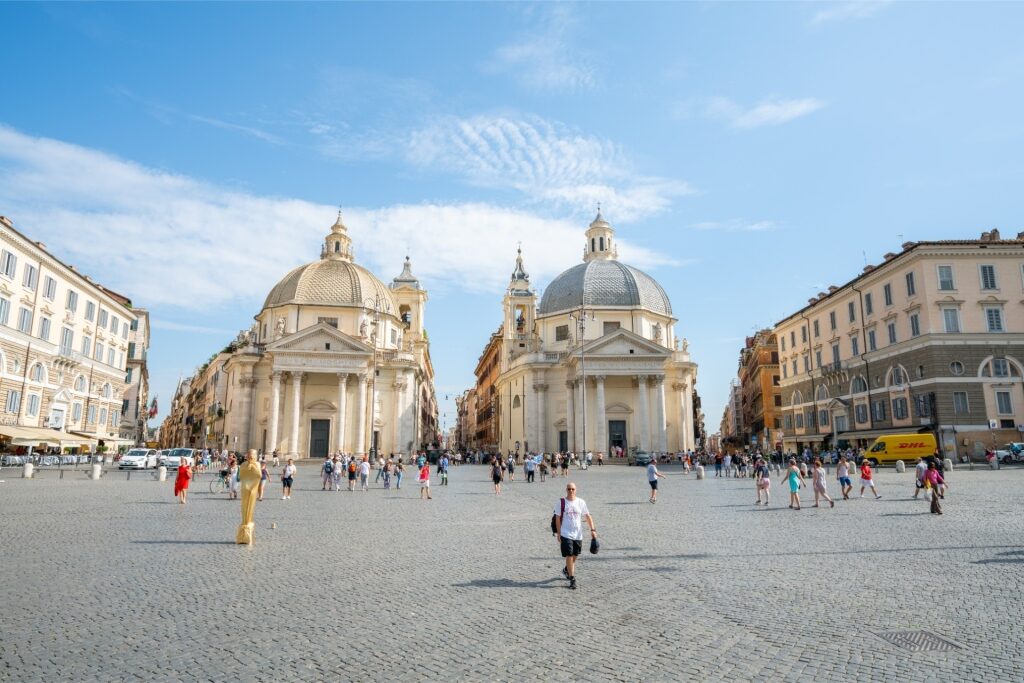
People’s Square
People’s Square, or Piazza del Popolo, is one of the largest in Rome. This sprawling, cobblestone piazza is centered on the Flaminio Obelisk, one of the oldest and tallest obelisks in Rome, with a storied past.
It was completed by Egypt’s long-reigning Pharaoh Ramses II and brought to Rome in the 1st century B.C. on the orders of the founder of the Roman Empire, Augustus.
The Flaminio Obelisk was first placed in Circus Maximus before being moved to Piazza del Popolo in 1589. Several landmarks, including the Museo Leonardo da Vinci, surround the square, so it’s worth dedicating plenty of time here.
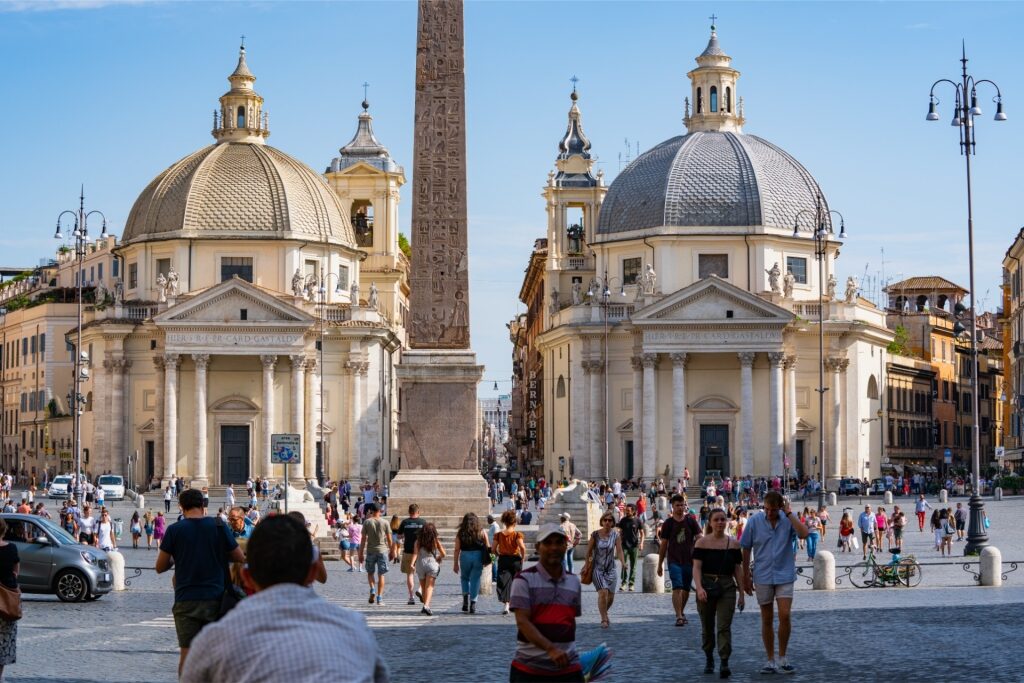
People’s Square
I always make a point of peeking inside historic churches when visiting Italian cities. The 17th-century Basilica Parrocchiale Santa Maria del Popolo, next to the museum, is one of Rome’s many decadent churches, home to brilliant works by Caravaggio, Raphael, and Bramante.
I also recommend stopping by Chiesa Santa Maria dei Miracoli and Santa Maria in Montesanto Basilica, two magnificent domed churches, at the southern end of Piazza del Popolo.
Via Veneto
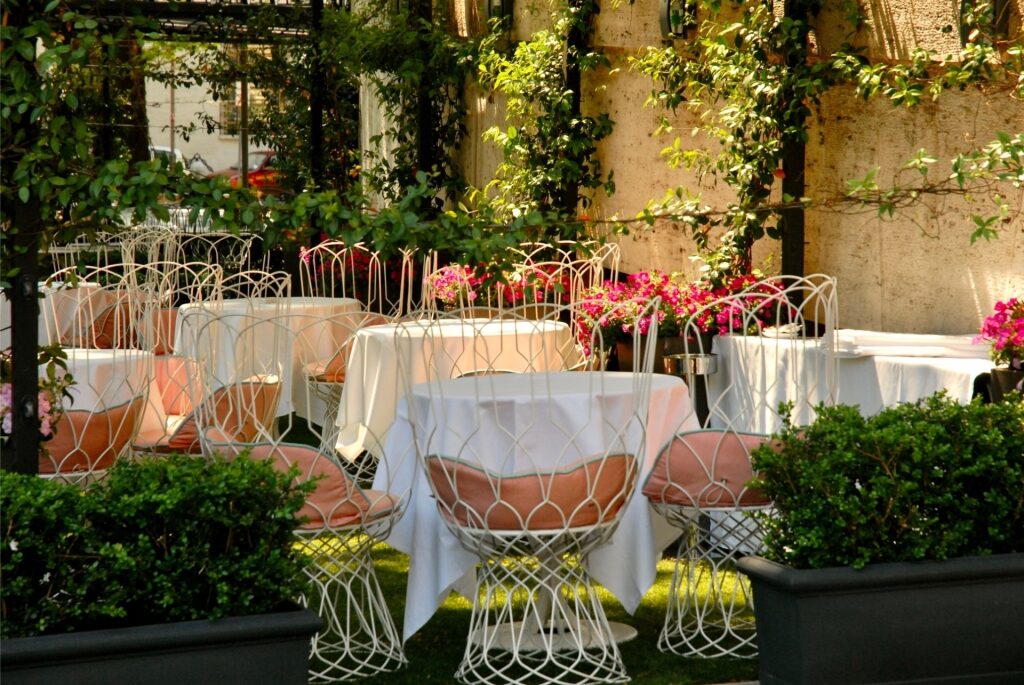
Restaurant on Via Veneto
This elegant, tree-lined boulevard has movie-star good looks. Indeed, it has been the backdrop of major Hollywood movies and has hosted some of the world’s biggest stars at legendary spots such as Harry’s Bar, where Bellinis and oysters are served on the menu.
Saunter along Via Veneto’s winding stretch, browsing the boutiques and stopping for a cappuccino or an aperitif. Don’t miss out on a visit to Via Veneto’s Santa Maria della Concezione dei Cappuccini, a 17th-century church and museum with a crypt containing the remains of 4,000 friars.
Vatican City
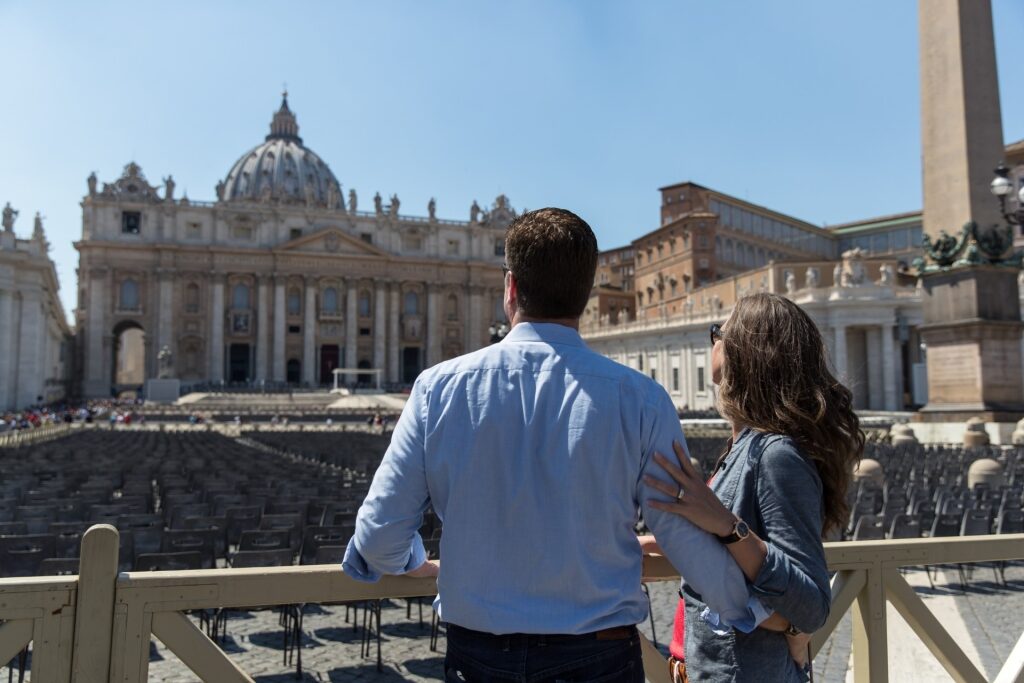
Vatican City
This postage-stamp sized country is the smallest in the world—roughly eight times smaller than New York’s Central Park. Lying inside Rome, on the west bank of the Tiber River, the Vatican is the home of the Catholic Church, with the Pope as head of state.
Home to scores of Rome’s best attractions, you could easily lose several hours to this UNESCO-listed city. Admire St. Peter’s Basilica, the world’s largest church, from St. Peter’s Square, and explore Apostolic Palace, the official Papal residence. Marvel at the Vatican Museums, including the extraordinary Sistine Chapel, with its ceiling by Michelangelo.
I’d recommend avoiding Vatican City on Sundays and Mondays; the Vatican Museums are closed on Sundays, and Rome’s museums generally are closed on Mondays. As such, the Vatican tends to be busier on Mondays.
Roman Forum
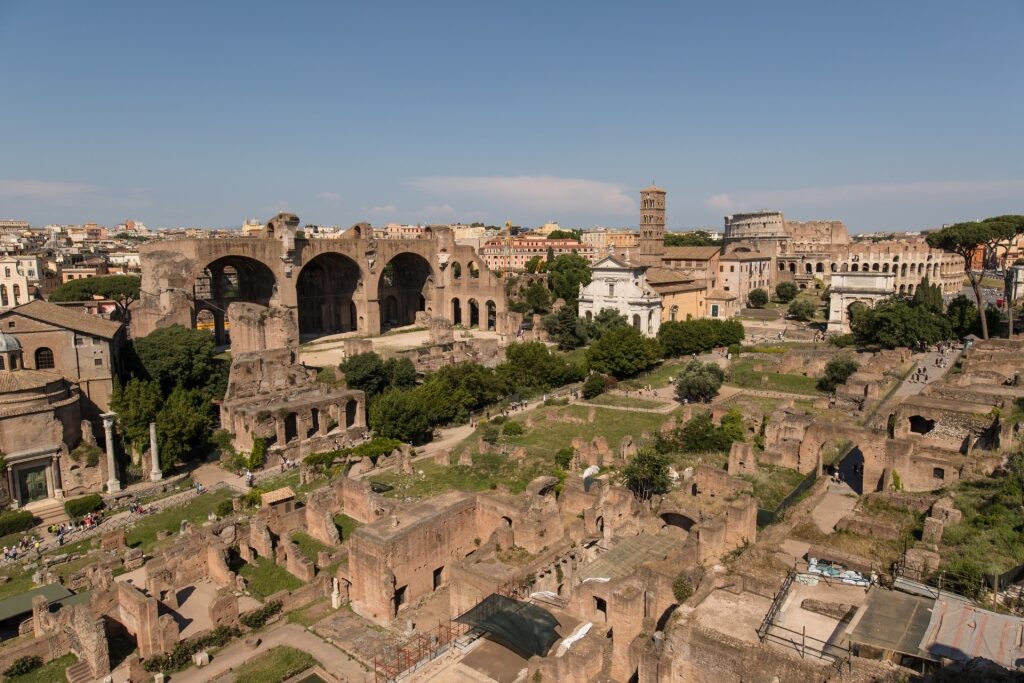
Roman Forum
A visit to the breathtaking Roman Forum, with its ruined temples, pillars, and columns, truly brings ancient Rome to life. Once the beating heart of the Roman Empire, the Roman Forum was where politics, trade, and religion converged.
Stroll the plaza and picture market traders who once exchanged their goods. The imposing columns of the Temple of Saturn, which was once the state treasury, still stand, as does the triumphal Arch of Septimius Severus, where military victories were celebrated.
Read: Three Days in Rome
FAQs
What is the most visited place in Rome?
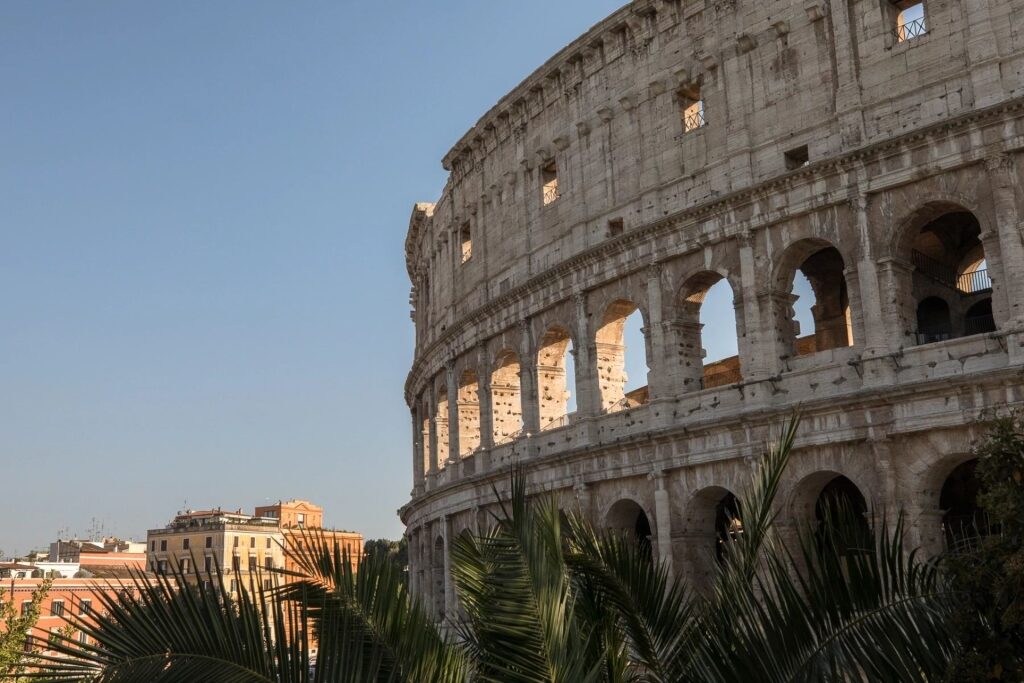
Colosseum
The most visited place in Rome is the Colosseum, followed by the Pantheon, the Trevi Fountain, and Vatican City.
Is Vatican City in Rome?
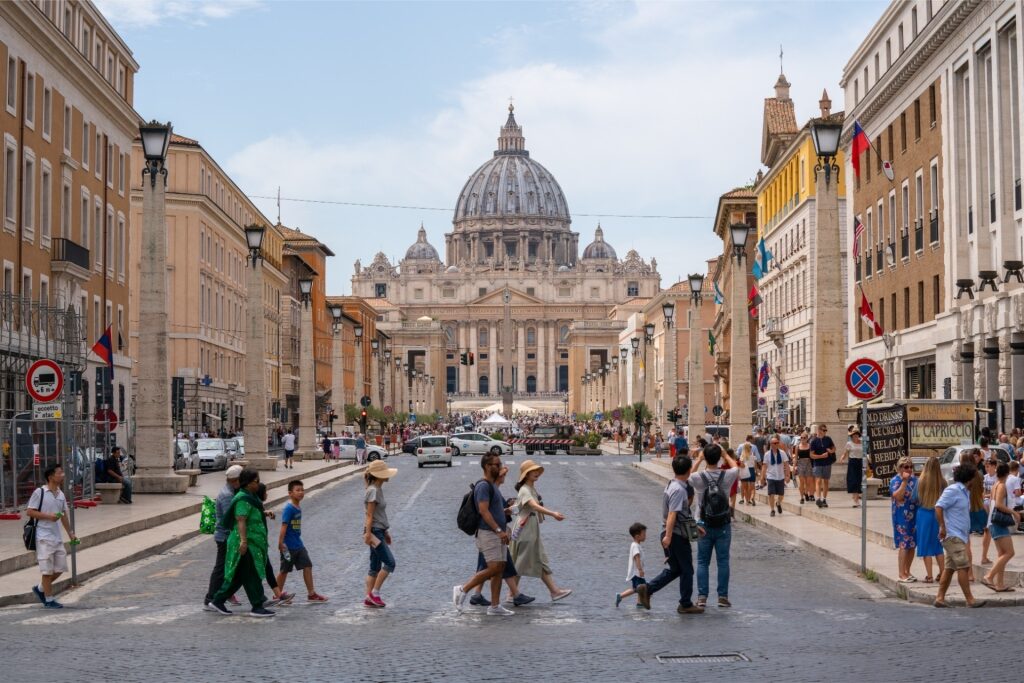
Vatican City
Yes, the Vatican City lies within Rome, though it is a sovereign state. The Vatican is walkable from Rome’s main sights, roughly a 35-minute stroll from the Pantheon and 15 minutes from Castel Sant’Angelo.
What is the best thing to do in Rome?
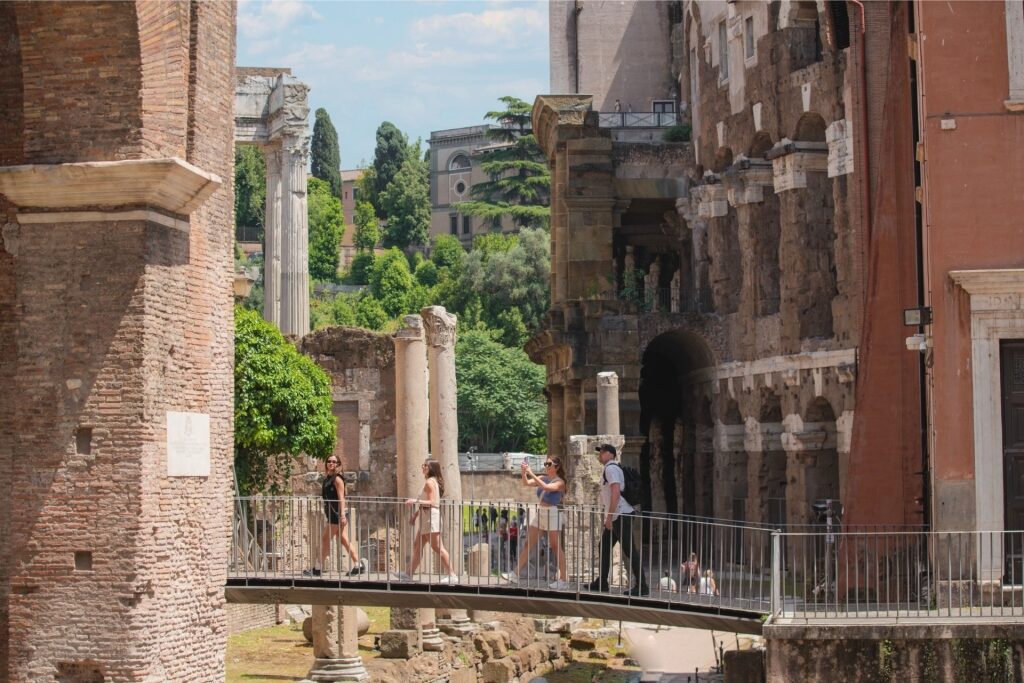
Roman Forum
If you’re a first-time visitor, the best thing to do is tick off the city’s main sights as early as possible. These include the Colosseum, the Roman Forum, and Palatine Hill. Similarly, the Vatican City and all of its historic landmarks should be high on your list.
If it’s your second visit, indulge in la dolce vita. Shop a little, visit a food market, take a cooking class, savor citrusy aperitivos, and dine at a charming Roman restaurant.
What food is famous in Rome?
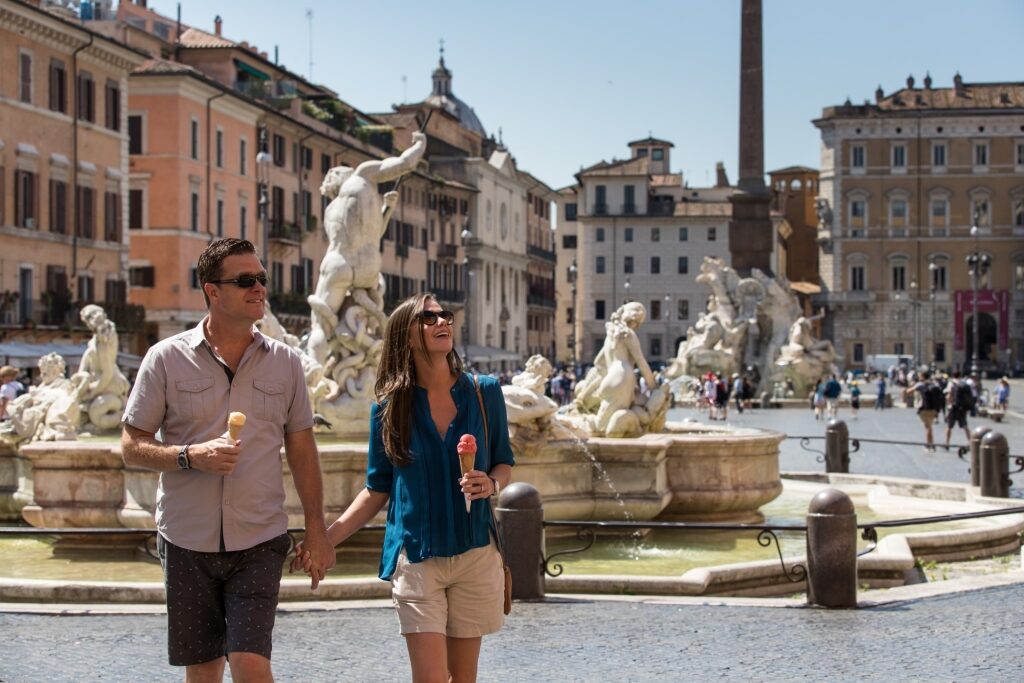
Piazza Navona
Rome is famous for rich and delicious Italian cuisine, including a variety of pasta dishes, such as creamy carbonara, peppery cacio e Pepe, and tomato-based amatriciana. The city is famous for a number of other dishes, including pizza, cheeses, porchetta—herb-stuffed, slow-roasted pork—and supplì, fried rice balls filled with ragù and mozzarella.
Romans are particular about how dishes are prepared, too. For example, though carbonara is creamy, cream is never used in a true carbonara preparation.
Rome is also famous for flavorful gelato and other sweet treats, such as maritozzo, a brioche bun filled with whipped cream, and crostata di ricotta e visciole, a delightful ricotta cheese and sour cherry tart.
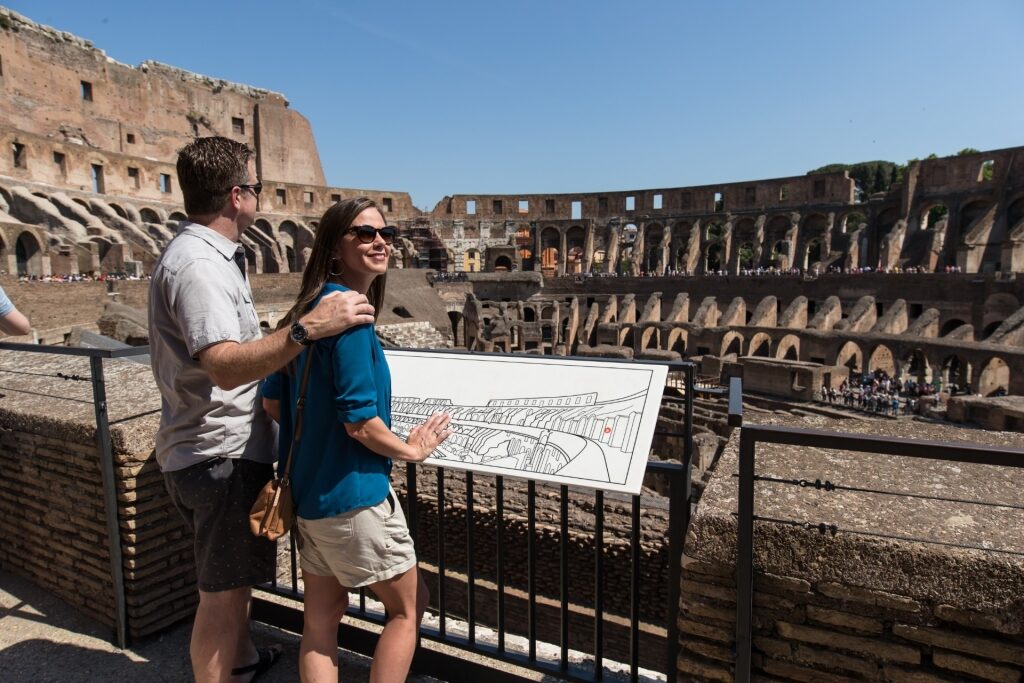
Colosseum
Discover Rome’s art, history, culture, and cuisine for yourself. Browse Celebrity’s cruises to Rome and plan your next European adventure today.