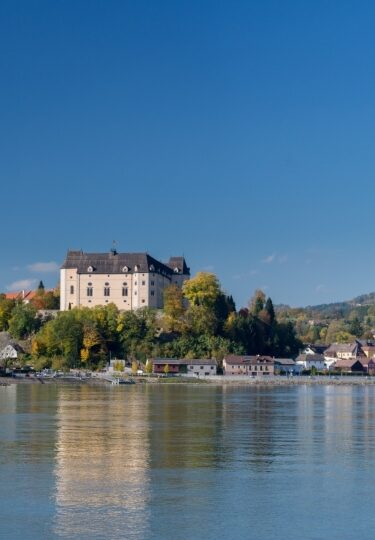
While Grein, Austria, was granted city status more than 500 years ago, many people regard it as a town, as it has fewer than 3,000 residents. Despite its diminutive size, it has some big claims to fame, such as having the country’s oldest residential castle and the longest continuously operating theater.
Here’s a look at what to expect in quaint Grein, and how to make the most of your time there.
Why Visit Grein?
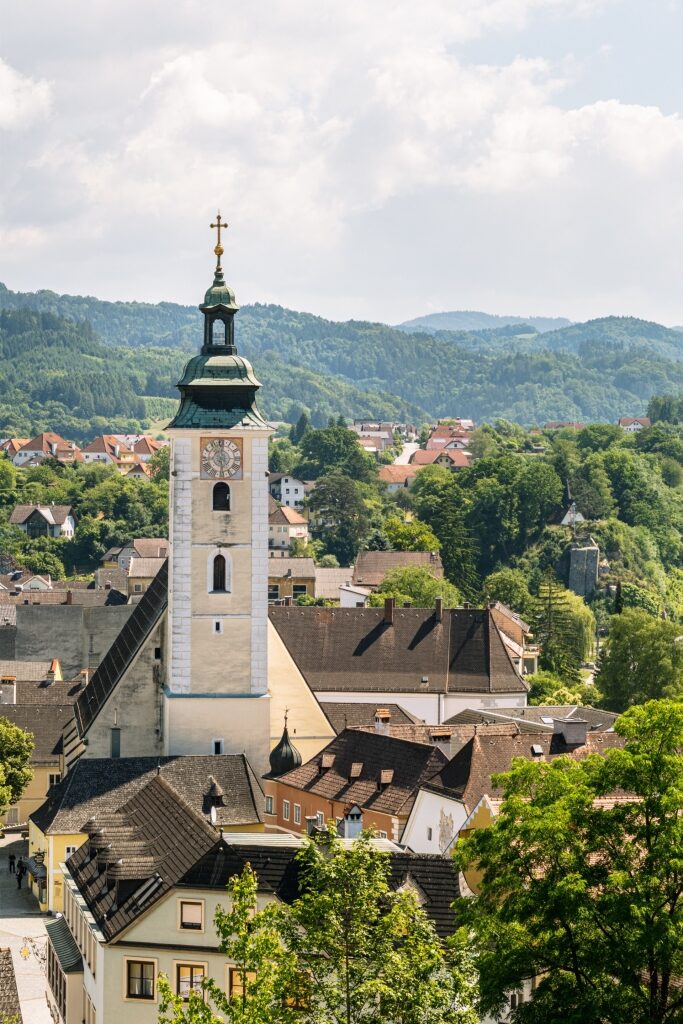
Grein
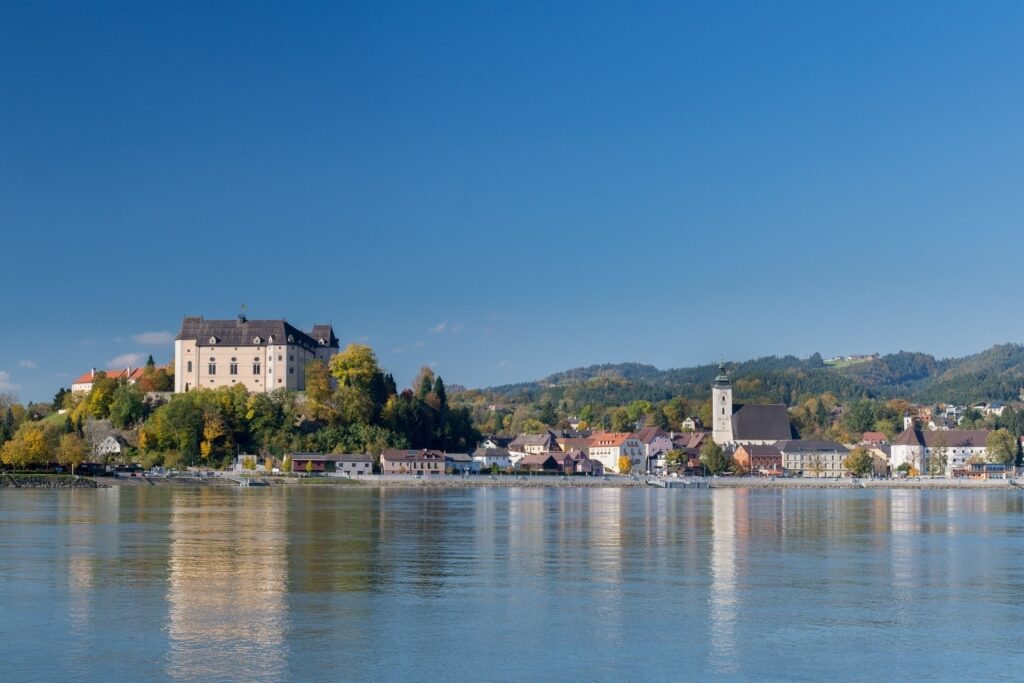
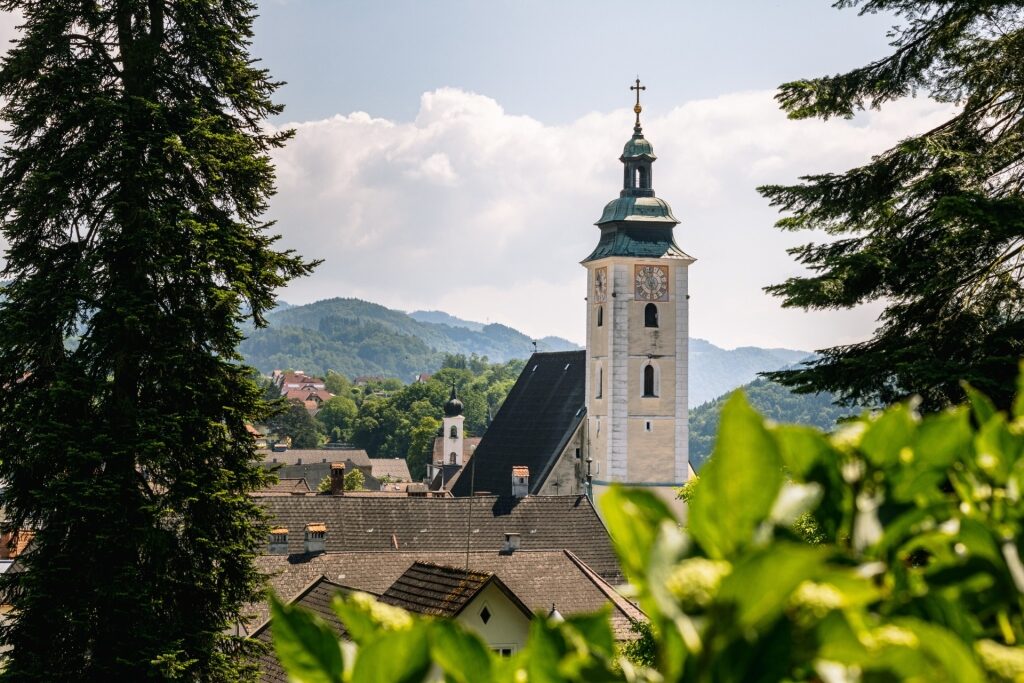
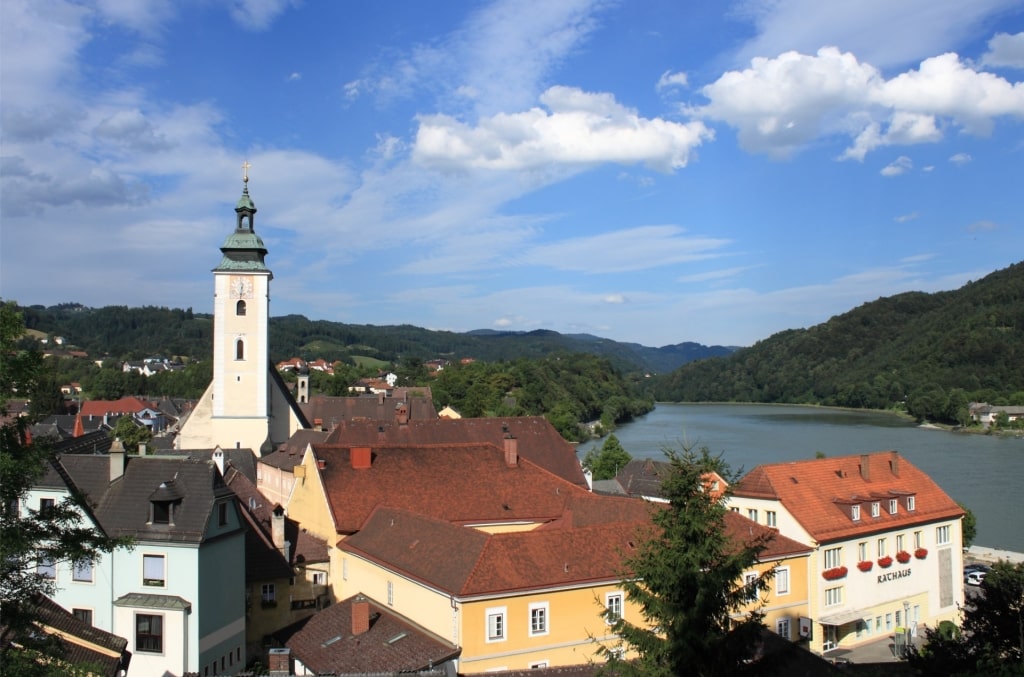
Tucked away on a bend of the Danube between Linz and Ybbs, this delightful city is situated in a beautiful region of Upper Austria. Crowned by a large castle—which has intriguing connections with the British royal family—and set against a verdant backdrop of rolling hills, Grein combines history, culture, and beautiful scenery.
Easily explored on foot, the narrow streets of compact Grein are centered around the central square, or Stadtplatz, lined with pastel-colored medieval buildings. Here you’ll find welcoming cafés and boutiques along with the Historisches Stadttheater Grein, which is one of Grein’s main attractions.
Continue uphill, and you will reach the landmark castle where you can explore centuries of history and a maritime museum. Alternatively, stay downtown and enjoy a gentle walk along the river, or rent a bicycle to venture a little further afield.
History & Culture
Grein
The city you see today was founded in 1491, and its history has been shaped by the Danube, shipping, and trade routes.
It’s difficult to believe Grein once occupied a very treacherous stretch of the Danube. These days, the Strudengau region is known for its historic towns and scenic landscapes. At one time, however, the river near Grein was feared for its dangerous rapids. In fact, the name Strudengau is said to come from the German word strudel, which means whirlpool, although it is now more commonly associated with the sweet pastry, apple strudel.
Cargo ships would stop at Grein to take on skilled pilots from the city who knew the turbulent river better than anyone. These pilots would steer vessels safely to the next port. If the river was deemed too dangerous to navigate, the city made alternative arrangements to transport goods by road.
Over the centuries, however, the river has been tamed; some of the most dangerous rocks were blasted away in the 19th century, and in the 21st century, sophisticated flood defenses were installed to protect the city from high water.
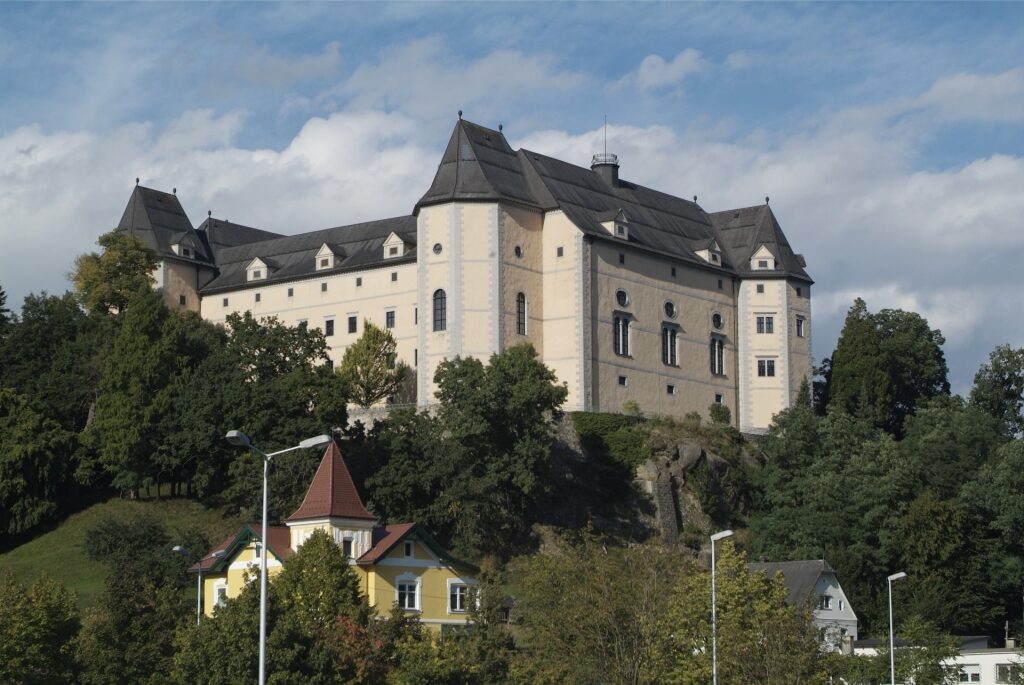
Greinburg Castle
Despite suffering damage from fire and floods over the ages, Grein remains remarkably intact. The imposing Greinburg Castle was constructed between 1488 and 1495, while a focal point in the town square is the Meggaubrunnen fountain. It’s dedicated to Count Leonhard Helfrich von Meggau, who bought the castle in 1621 and was well-respected by the local citizens.
Wildlife & Nature
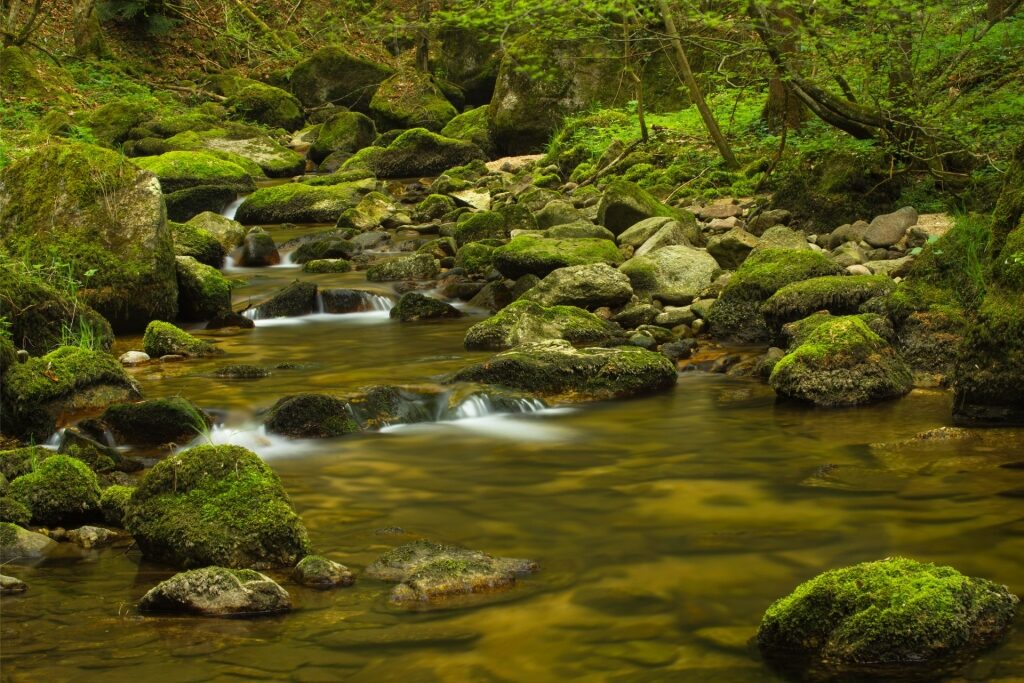
Stillensteinklamm
There are plenty of nature trails around Grein, Austria. One of them is a round-trip hiking trail to the Giessenbachmühle gorge, where waterfalls cascade down sheer, granite cliffs.
Part of the Stillensteinklamm-Wanderung hiking trail, it’s a loop of nearly eight miles, with some challenging ascents in places. If you don’t have time to complete it, you can still take a hike along the lower trail.

Eurasian jay
Look out for birds such as the Eurasian jay, with distinctive bright blue markings on its upper wing, and various members of the tit family. While you’re unlikely to see one, you can sometimes hear the rat-a-tat drumming of woodpeckers.
For a gentler stroll, take a walk along the riverside where your companions might be swans, mallards, and a passing heron.
Tips for Visiting Grein
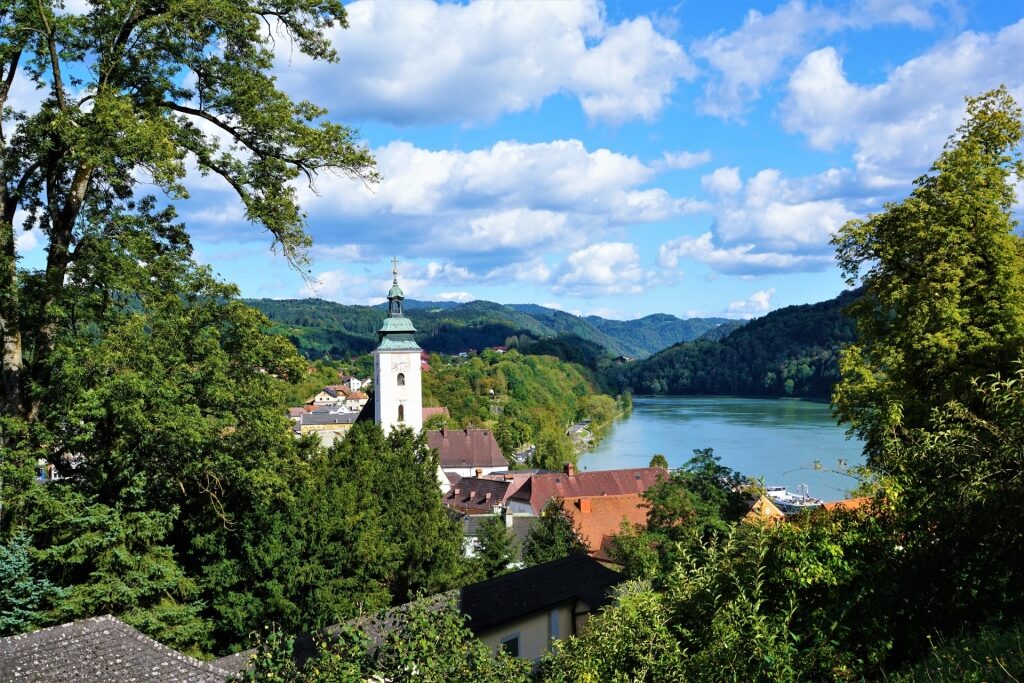
Grein
Grein may be tiny—it’s one of the smallest cities on the Danube—but you’ll likely be doing a lot of walking, especially if you’re heading to the castle.
From the main square, the uphill walk to the castle will take around 15 to 20 minutes. It involves more than 140 steps, plus a circular staircase inside.
Be sure to wear comfortable shoes to protect your feet and toes; you might find walking poles useful if you plan to tackle part of the Stillensteinklamm hiking trail. Also, bring suitable clothes if you want to take a bike ride.
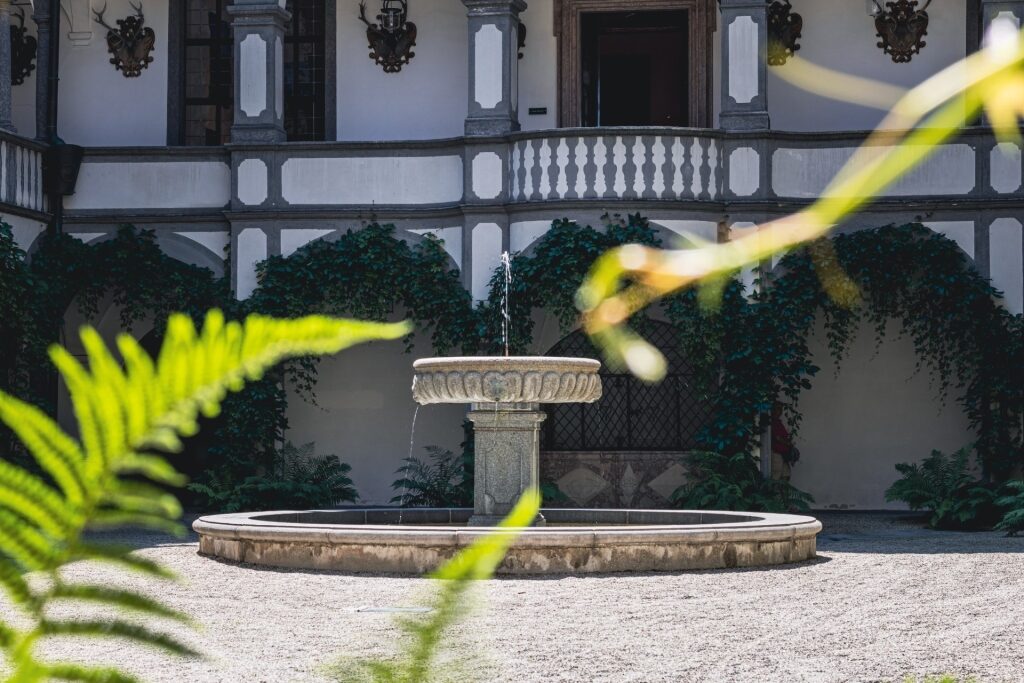
Greinburg Castle
If you are planning to explore the castle independently, schedule it as the first thing you do when you arrive in Grein. This will help you manage your time, as if you wander around the town first, you might end up having to rush around the castle.
Once you’ve done that, you can use up any spare time by strolling around the main square and the small surrounding streets. It’s impossible to get lost in Grein. All roads lead back down to the Danube, and it’s easy to find your way back to where you started.
Things to Do & Attractions in Grein
Greinburg Castle
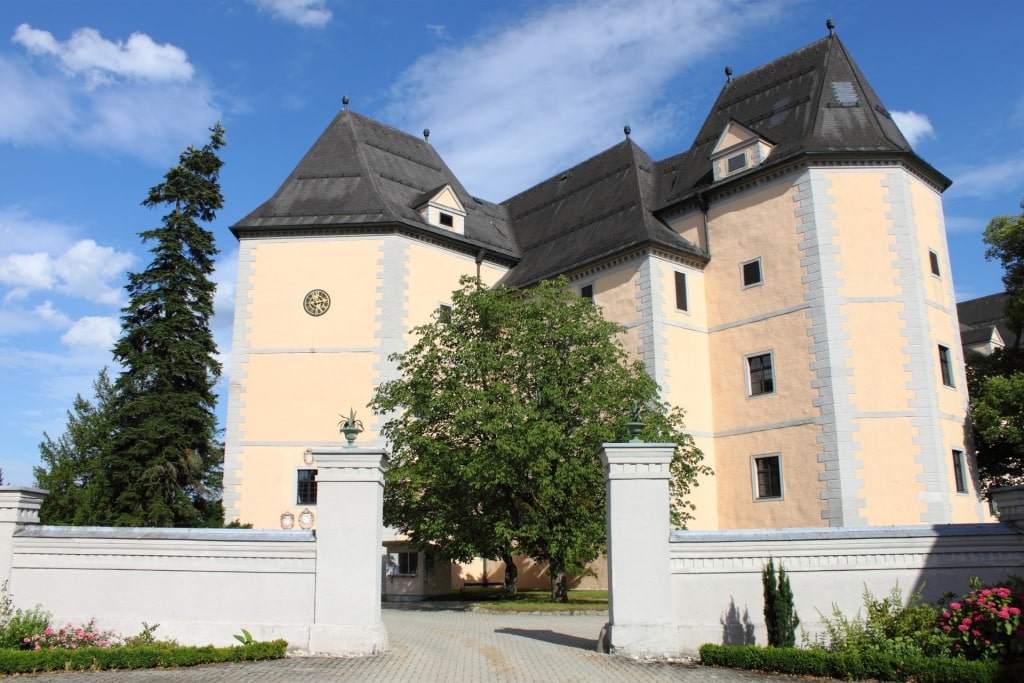
Greinburg Castle
Grein’s biggest draw, in every sense, is the castle built between 1488 and 1495 and continuously inhabited ever since. Among its many owners was Queen Victoria, the United Kingdom’s second-longest reigning monarch, who inherited the castle in 1893 after the death of her German-born husband, Albert, and his brother, Ernest II, who had jointly owned it.
Attractions inside the Austrian castle include the Upper Austrian Shipping Museum, which explores the history of the Danube in the region, and the Diamond Vault, with its vaulted ceiling of diamond-shaped patterns.
Another eye-catching area is the stone theater—or Sala Terrena—where the walls and ceiling are decorated with intricate mosaics created from stones from the river.
Historic Municipal Theater
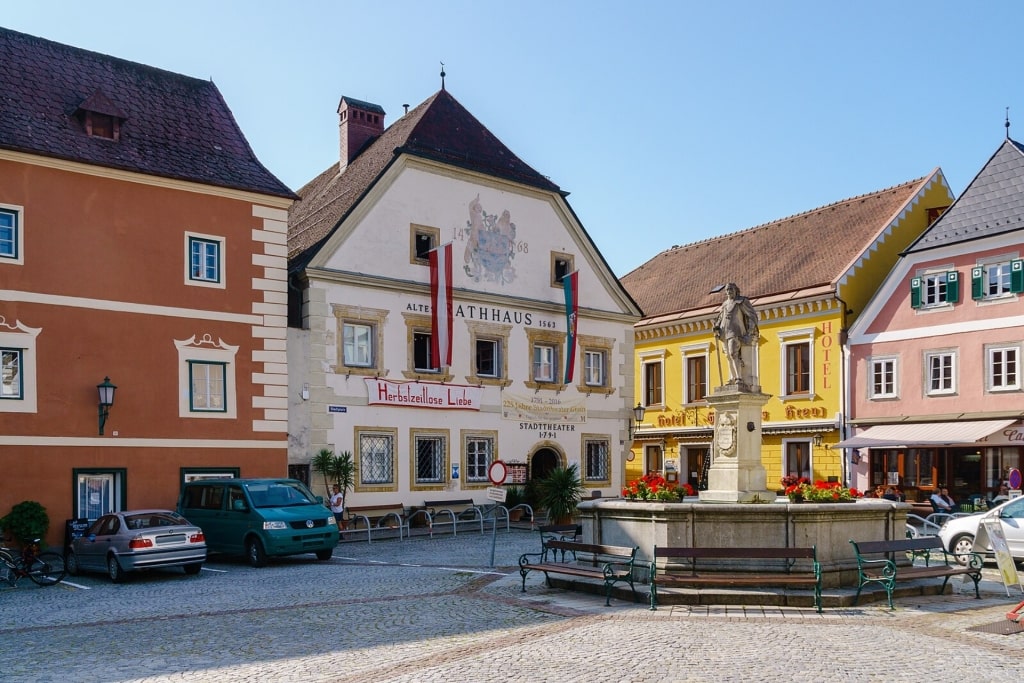
Historic Municipal Theater Photo by Radler59 on Wikimedia Commons, licensed under CC BY-SA 4.0
Get another intriguing glimpse of the past inside Austria’s oldest functioning theater, which you’ll find on the town square. Constructed in 1791 inside the town hall, the Historische Stadttheater Grein has space for just 130 people.
At one time, the best seats in the house were reserved for wealthy citizens and had to be unlocked with a key. The original bathroom only had a curtain for privacy, so users could still hear what was happening on stage.
Another curiosity is that the window was once shared with the old adjoining jailhouse. Inmates could watch performances and were sometimes given food and drink by generous members of the audience.
St. Giles Church
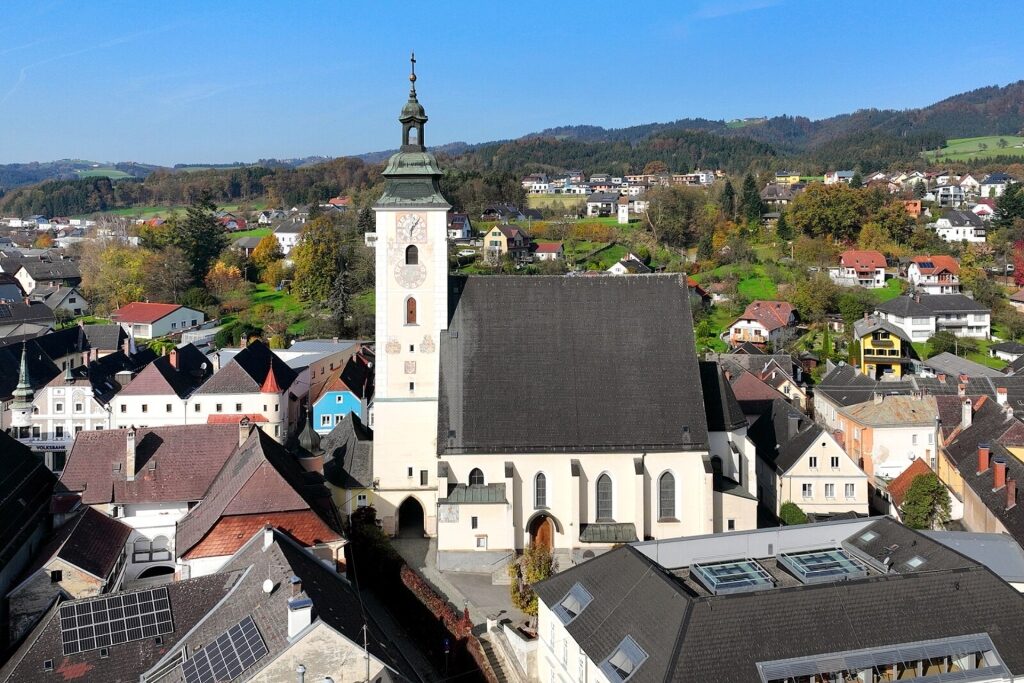
St. Giles Church Photo by or C.Stadler/Bwag on Wikimedia Commons, licensed under CC BY-SA 4.0
Next to the town square is St. Giles Church, which dates back to the 17th century. It is worth taking a peek inside to see the lofty vaulted ceiling, decorated altar, and stained glass windows.
Umi Uma Ferry
Take a trip on the small wooden ferry, the Schwalleck, which runs between Grein and the village of Wiesen on the opposite bank. Carrying up to 12 people, it operates between May and September and provides great views of Grein. You can buy a return ticket and stop off for a coffee and snack in Wiesen before heading back.
Go for a Bike Ride
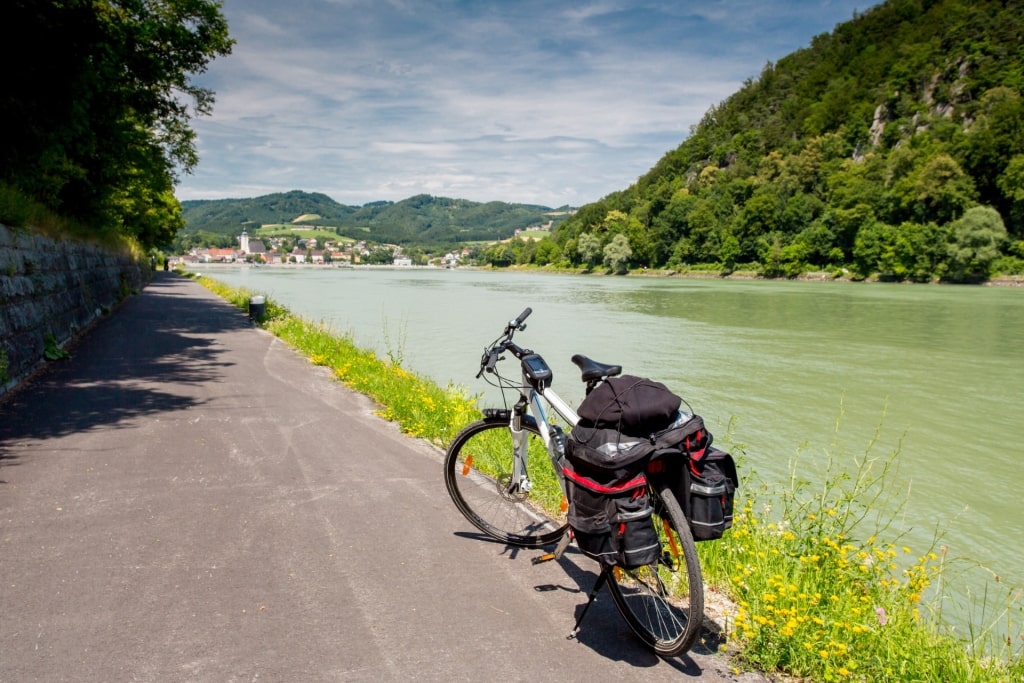
Danube Cycle Path
Grein is located on a scenic stretch of the Danube Cycle Path. If time allows, you can rent a bike for a few hours and take a leisurely out-and-back ride along the wide, flat path flanking the river.
Read: Best Places to Visit in Austria
A Hidden Grein Curiosity
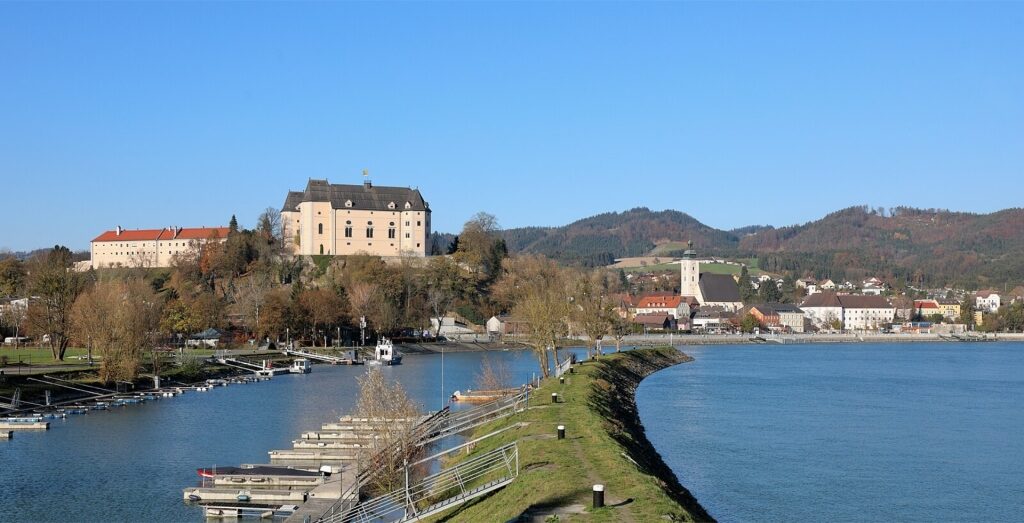
Grein Photo by C.Stadler/Bwag on Wikimedia Commons, licensed under CC BY-SA 4.0
While visitors never see it, Grein has a marvel of modern engineering to protect the city, its townsfolk, and its historic medieval buildings. Over the centuries, Grein has suffered flooding when the Danube has overflowed its banks after rapid snowmelt in the surrounding Austrian Alps or heavy rainfall.
The most severe catastrophe in recent history was during the so-called “once-in-a-century” floods in 2002. The week of unprecedented rainfall caused widespread devastation across large areas of Europe and left much of Grein submerged.
A number of creative, hidden flood walls were erected along portions of the Danube as part of continuous flood defense systems. The tallest, shared with the town of Saxen, was built in Grein. The wall, which rises to a height of 15 feet, is used only when a flood is imminent.
Unlike dams, levees, and other flood defenses, Grein’s concealed barrier does not detract from the picturesque waterfront. The foundations are embedded below ground level, and panels are slotted in to create a wall.
The system was put to the test in the summer of 2013 when the Austrian town was once again threatened by severe floods. The wall withstood the rising water, which stopped within two inches of the top.
Food & Drink
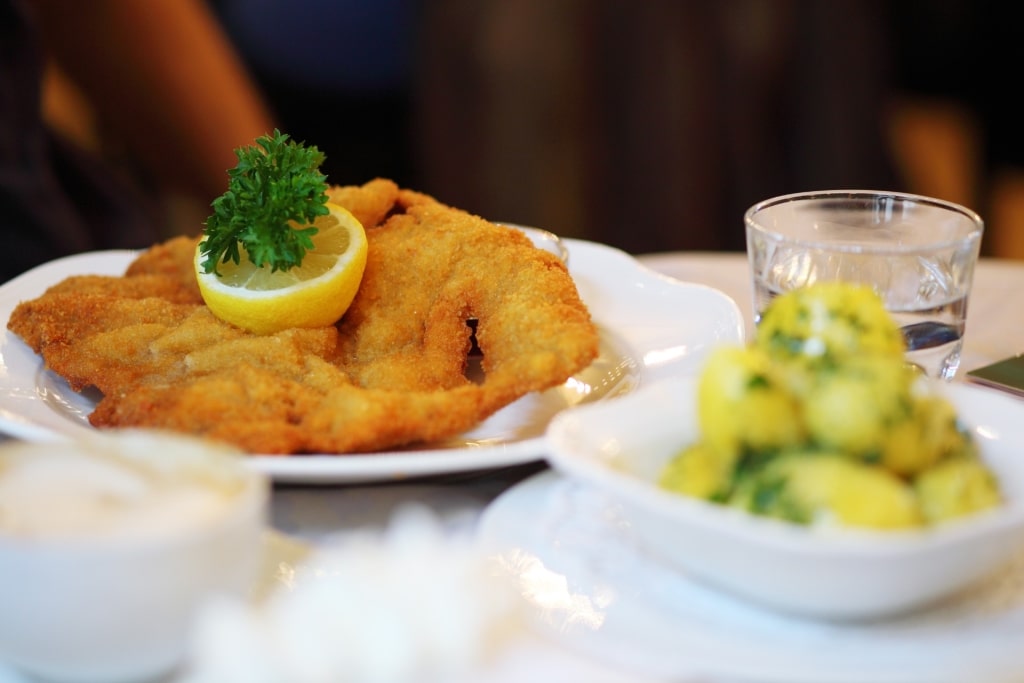
Wiener Schnitzel
Grein is located in Upper Austria, so you can expect to find plenty of tasty dishes associated with this region. As the town is a popular stop for cyclists on the long-distance Danube Cycle Path, many of the cozy, family-run restaurants sell hearty and filling meals, along with popular snacks including freshly-baked pizza.
While Wiener Schnitzel originates from Vienna, you’ll find it served in Grein, Austria, too. Wiener Schnitzel is made with thin slices of veal, which are breaded and fried to a crispy, golden brown, and served with a side of potato salad.
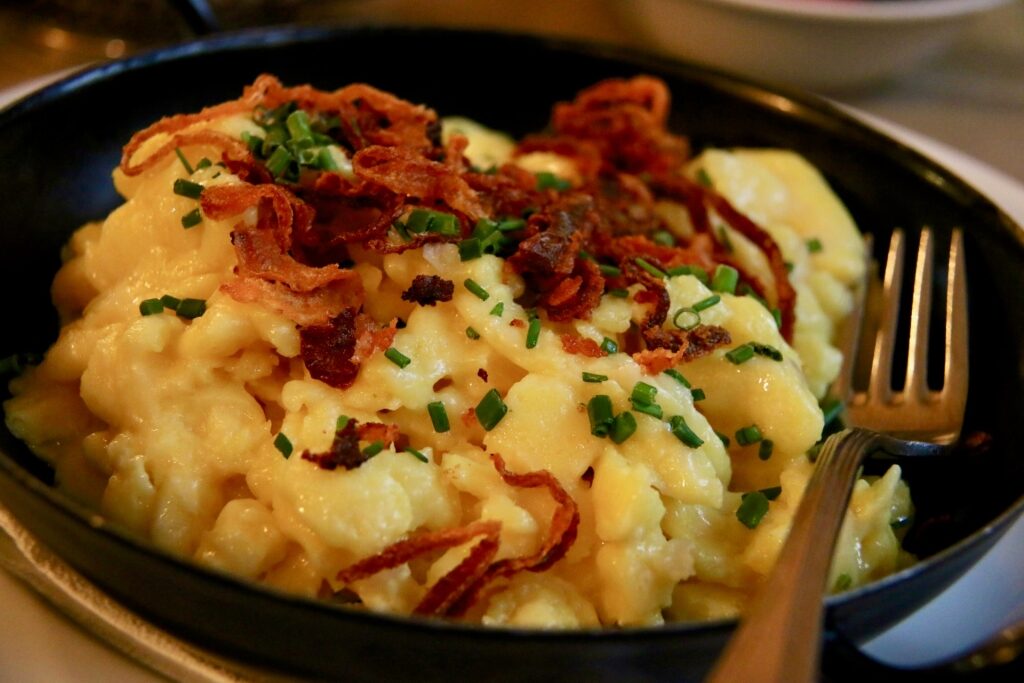
Kasnocke
Kasnocke is another tempting dish. Dumplings are cooked in a rich broth and topped with melted cheese and bacon. Also look out for tafelspitz, often considered to be Austria’s national dish. Flavorful slices of boiled beef are typically served with roasted potatoes, creamed spinach, and apple sauce.
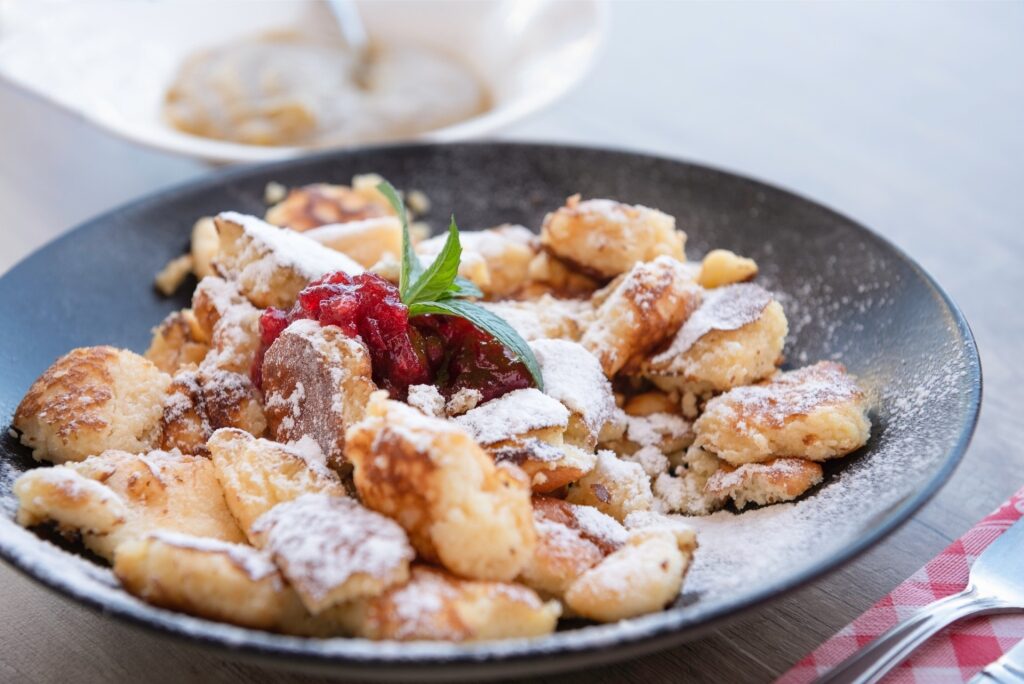
Kaiserschmarrn
Typical Austrian desserts include apple strudel along with kaiserschmarrn, which are fluffy pancakes sprinkled with icing sugar and often served with rum-soaked raisins and apple purée. They were beloved by the Austrian Emperor Franz Joseph I, which is how they got their name; “Kaiser” means “emperor.”
As Grein is just under 40 miles from Linz, you’ll find the city’s nutty Linzertorte cake served in many of the cafés, too.
Austrian cuisine is typically meat-heavy, but vegetarians and vegans will find good options at Café-Konditorei Schörgi, located across from the Historic Municipal Theatre and open every day except Tuesday. It also has a great ice cream stand.
Another nice spot for lunch, or a drink, is Café-Restaurant Schinakel, with a sunny terrace overlooking the river.

Riesling wine
While in Grein, try a refreshing Stiegl Goldbräu beer, brewed in Salzburg, or a glass of Most, a local pear or apple cider. There are crisp white Riesling wines, too, produced in the Wachau Valley region.
Best Time to Visit Grein
Grein
Late spring (April to May) offers pleasant weather and fewer visitors than summer. If you enjoy warmer weather and don’t mind a few more crowds, July and August are the hottest months with less likelihood of rain.
From late July to mid-August, the Donaufestwochen im Strudengau festival takes place at various locations in and around Grein, featuring live music and concerts at venues including Greinburg Castle.
Early fall, from September through early October, also offers pleasant weather, fewer visitors, and the chance to experience the changing foliage colors along the forested banks of the Danube around Grein.
Grein
Learn more about this small, charming, riverside town on the Danube. Browse Celebrity’s cruises to Grein and plan your dream vacation.