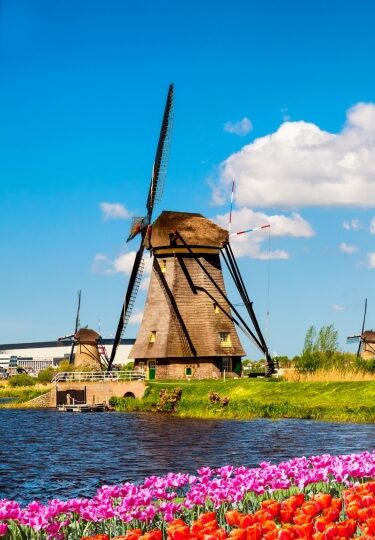
Dutch windmills are among the most iconic sights in the Netherlands, a country that might look small on a map of Europe but shouldn’t be underestimated. Right up there with cheese, clogs, and tulips, windmills are symbols deeply woven into Dutch culture. With more than 1,000 windmills scattered across the country, you’re likely to spot at least one on your trip, even if just in passing.
Many Dutch windmills are no longer in use, but they once powered several different industries and helped drain the polders. From the towering Schiedam windmills, which fueled Dutch gin production, to the polder mills of Schermerhorn, here are ten of the Netherlands’ most notable windmills.
Kinderdijk Windmills
Kinderdijk Windmills
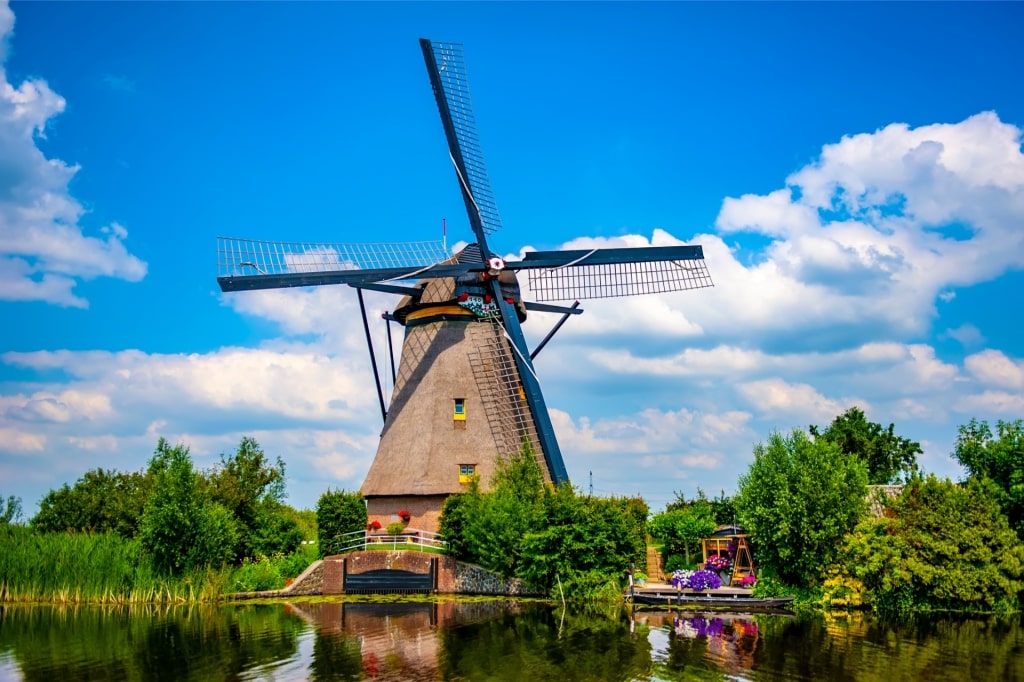
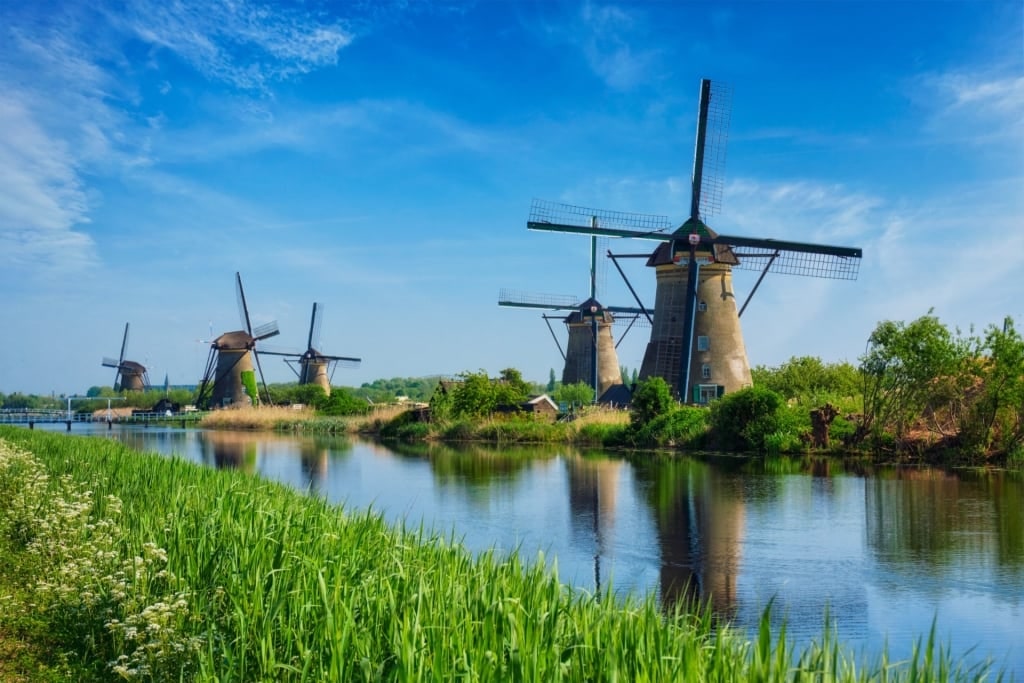
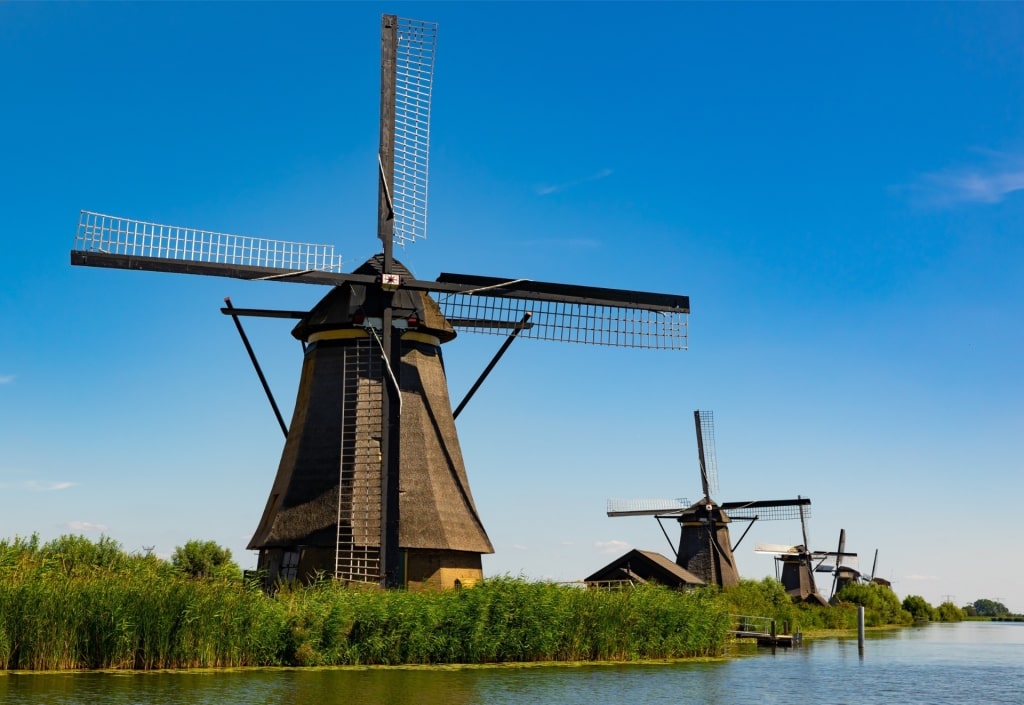
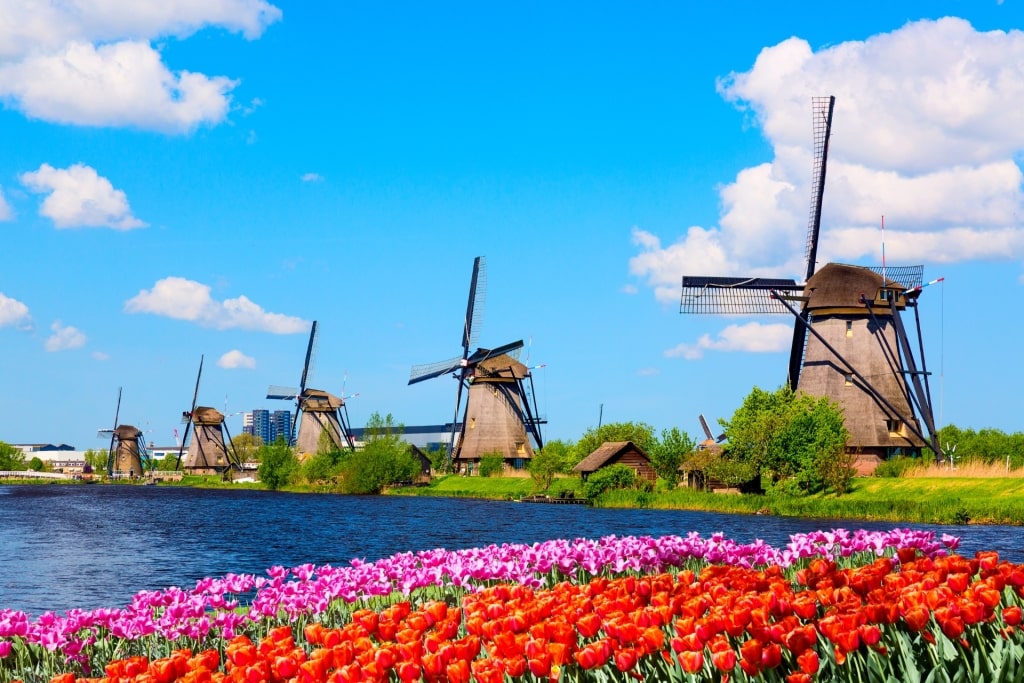
Easily one of the most famous collections of Dutch windmills and a UNESCO World Heritage Site, Kinderdijk features 19 preserved windmills set along the canals and footpaths. The windmills were built in the 1740s and were designed to manage water in the polder. Polders are very common in the Netherlands and refer to pieces of land that were once submerged under water but are now drained and protected from flooding.
Visitors can enter a few of the Kinderdijk windmills or take a guided boat tour and view the windmills from the water. The views are beautiful at any time of day but especially photogenic at sunrise or sunset.
Kinderdijk Windmills
Reaching Kinderdijk is fairly straightforward. Travelers can go by car or waterbus from either Rotterdam or Dordrecht. Some people even reach Kinderdijk by bike, although that does require a bit of advance planning.
If time permits, head to Dordrecht’s historic harbor district for insight into the city’s maritime past. A stroll through the harbor takes you past 17th-century merchant houses, warehouses, cozy cafés, and souvenir shops.
Windmills at the Zaanse Schans
Zaanse Schans
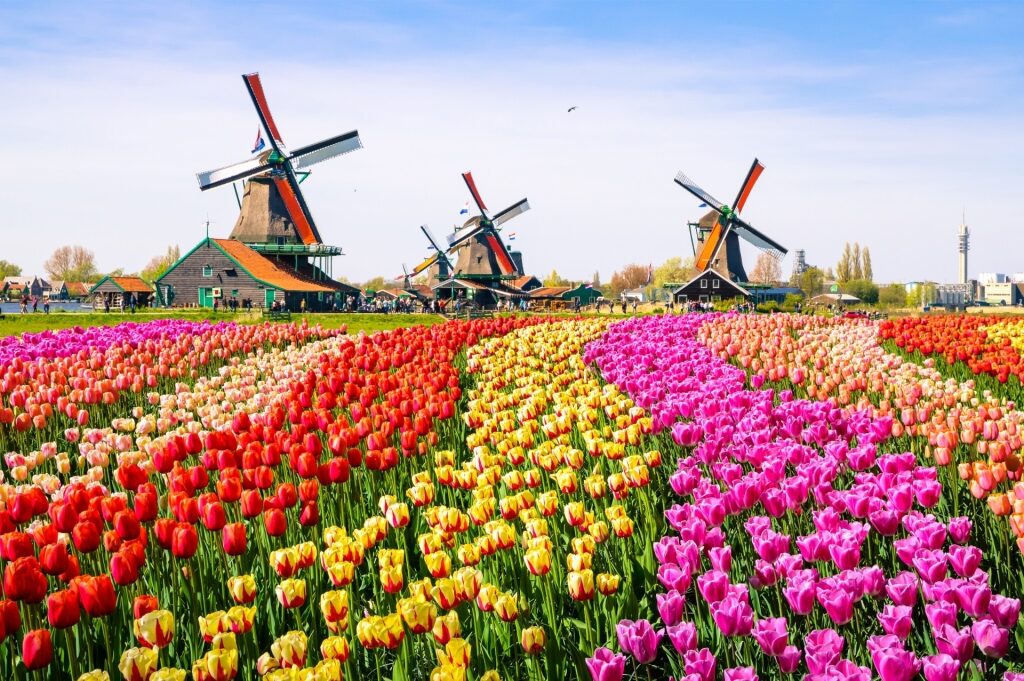
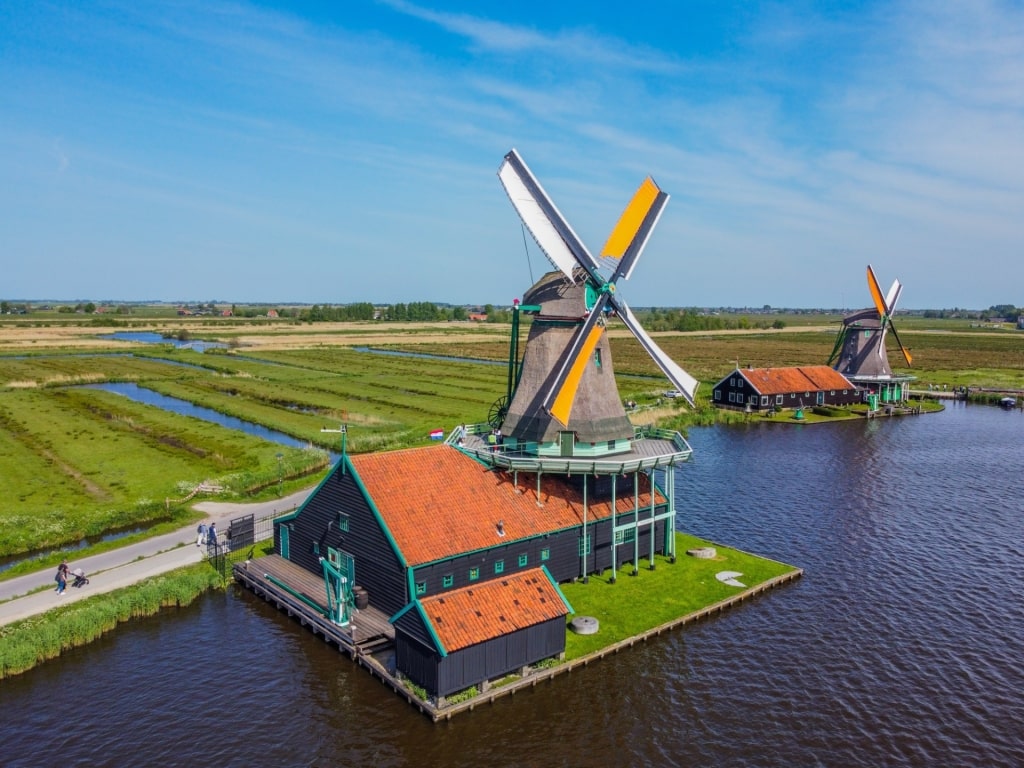
Located approximately 20–30 minutes north of Amsterdam, Zaanse Schans is an immersive open-air museum centered around showcasing Dutch history throughout the years. It’s one of the best places to see windmills in the Netherlands up close, with each windmill dedicated to a specific task—sawing wood, grinding spices, or producing pigments for paint.
Most of the windmills at the Zaanse Schans feature live demonstrations, offering a glimpse into how the Dutch craft clogs or produce cheese by hand.
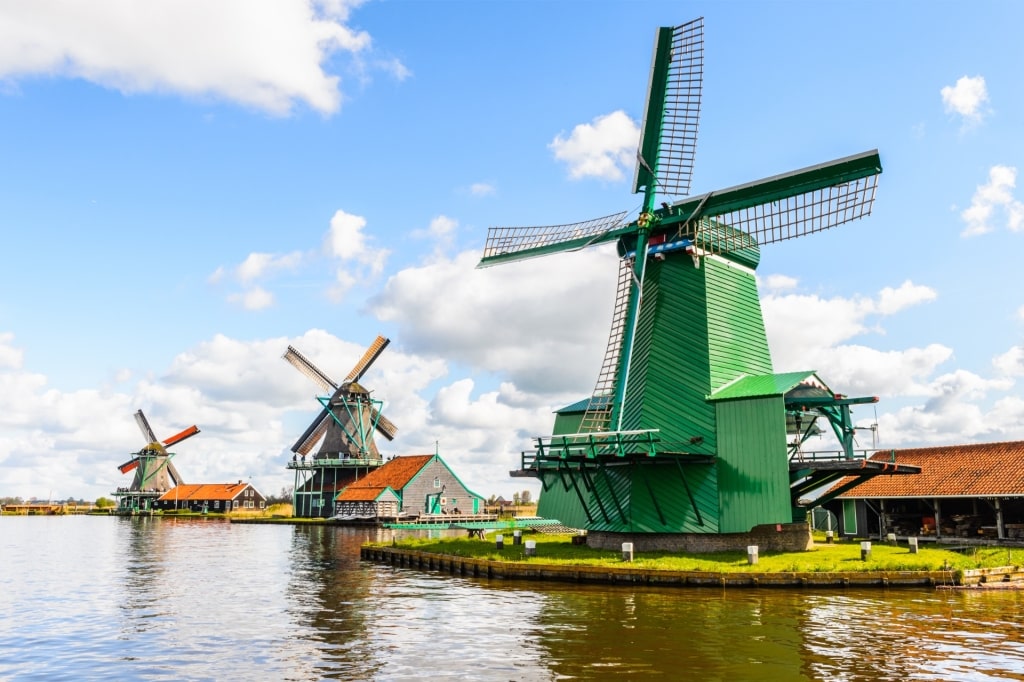
Zaanse Schans
After exploring the windmills, spend some time perusing the artisan shops, local restaurants, and green-painted houses nearby. The Zaans Museum delves into the region’s industrial past through immersive exhibits. The Verkade Experience recreates a 20th-century chocolate and biscuit factory, while the Residential Culture Collection showcases Zaan-style furniture.
The most direct way to reach Zaanse Schans from Amsterdam is by train. The journey to Zaandijk Zaanse Schans station is only 20 minutes, followed by a short walk to the mills.
Read: Best Tulip Fields in The Netherlands
De Museummolen
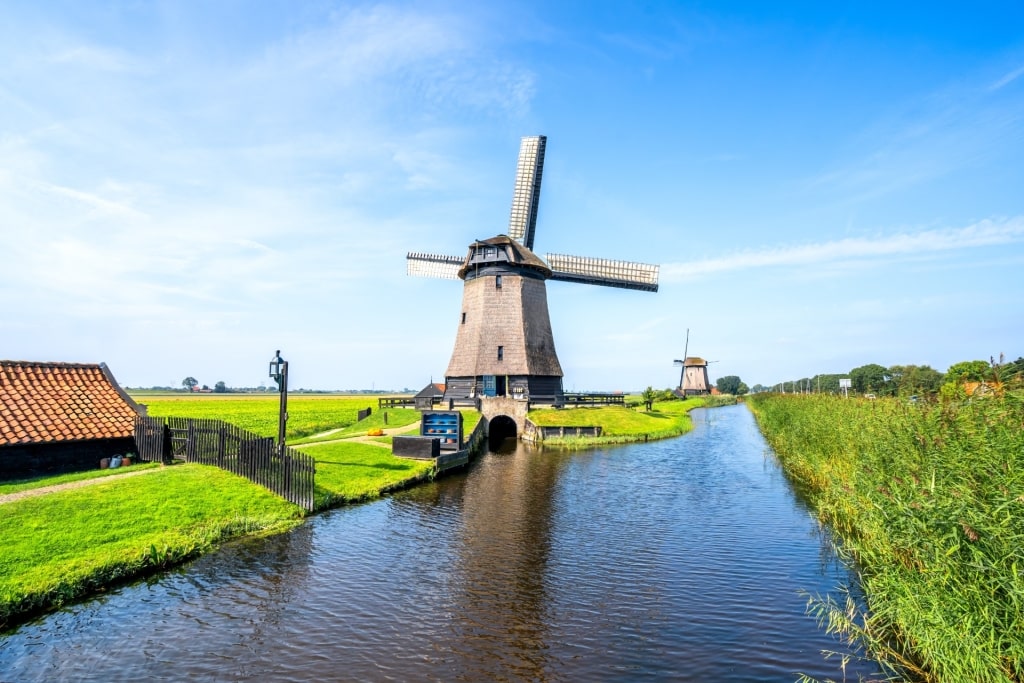
De Museummolen
Translated as the Museum Mill, this traditional Dutch polder windmill in Schermerhorn was constructed in 1635 to help drain the Schermer Lake so that it was easier to live on the land and farm. At the time, there were 52 windmills in all.
Today, the mill is fully restored and operates as a museum showcasing how this water management system worked. Because much of the Netherlands lies below sea level, controlling water has always been a crucial challenge. Visitors can take a guided tour inside the windmill to learn about its purpose and see how the mechanisms function to keep the land dry.
The museum is open seasonally from April 1 to November 1, Tuesday through Sunday. Most visitors drive, cycle, or take the train from Amsterdam, making the museum a popular day trip from the city.
De Gooyer Windmill
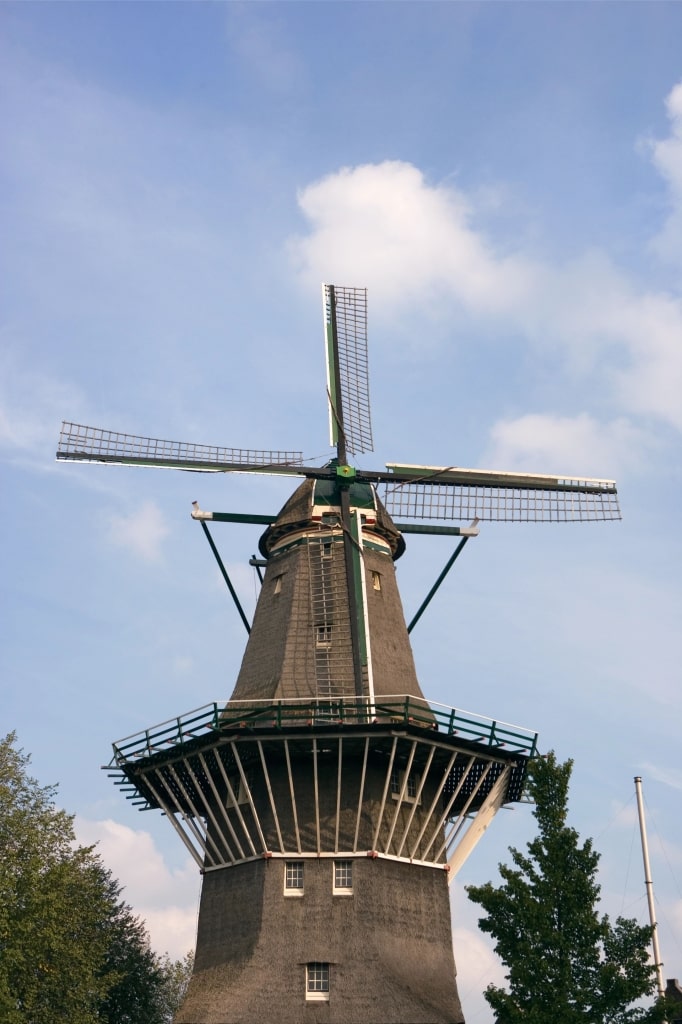
De Gooyer Windmill
Known for being the tallest wooden windmill in the Netherlands, De Gooyer, or the Mill on the Funen, is located in Amsterdam East—Amsterdam Oost—and was built in the 16th century. Today, it’s registered as a National Monument.
Photogenic as it is, the windmill is not open for interior tours, which is why many travelers opt to order a pint at Brouwerij ’t IJ next door. The beer menu is fairly extensive, with pours ranging from blondes to IPAs and stouts. Head to the tasting room to sample a few different pours or take a seat in the outdoor beer garden.
As a whole, the Amsterdam East district offers a mix of food markets, Turkish bakeries, and global cuisine. The Dappermarkt is always bustling and a great spot for shopping for clothing and accessories, as well as fresh produce and street food.
Molen De Valk
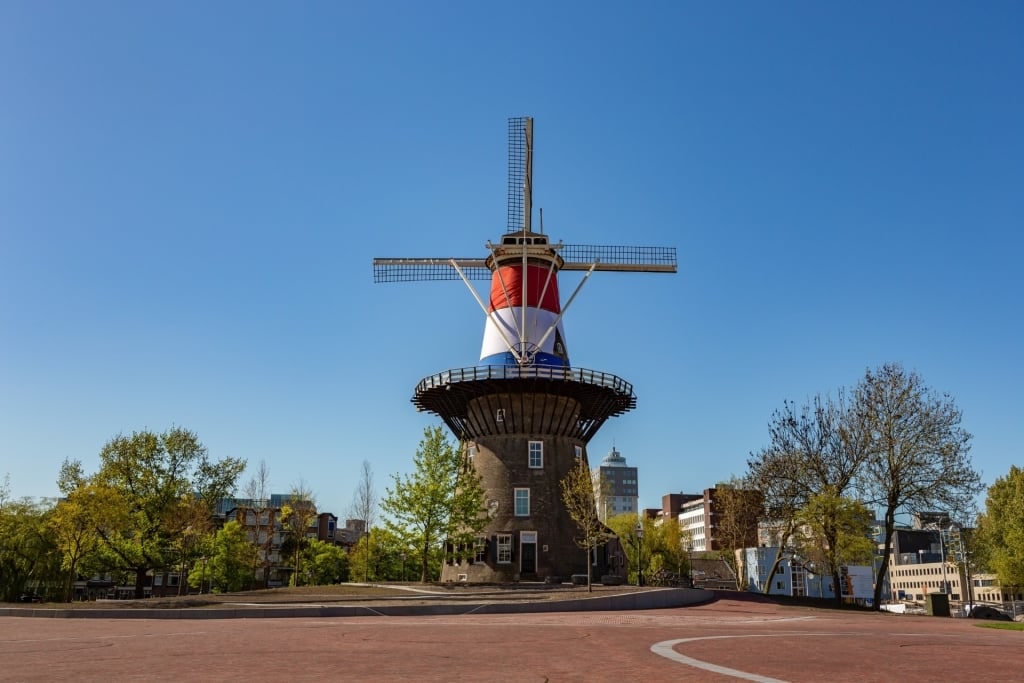
Molen De Valk
Just a 30-minute drive from Rotterdam and about 40 from Amsterdam, Molen De Valk is a traditional windmill that has been transformed into an interactive museum.
Built in 1743, Molen De Valk once served as a grain mill, and today it offers visitors a look into the life and tools of a historic Dutch miller. Though no longer operational, the original machinery and period furnishings have been preserved, making it one of the best-maintained examples of historic windmills in the Netherlands.
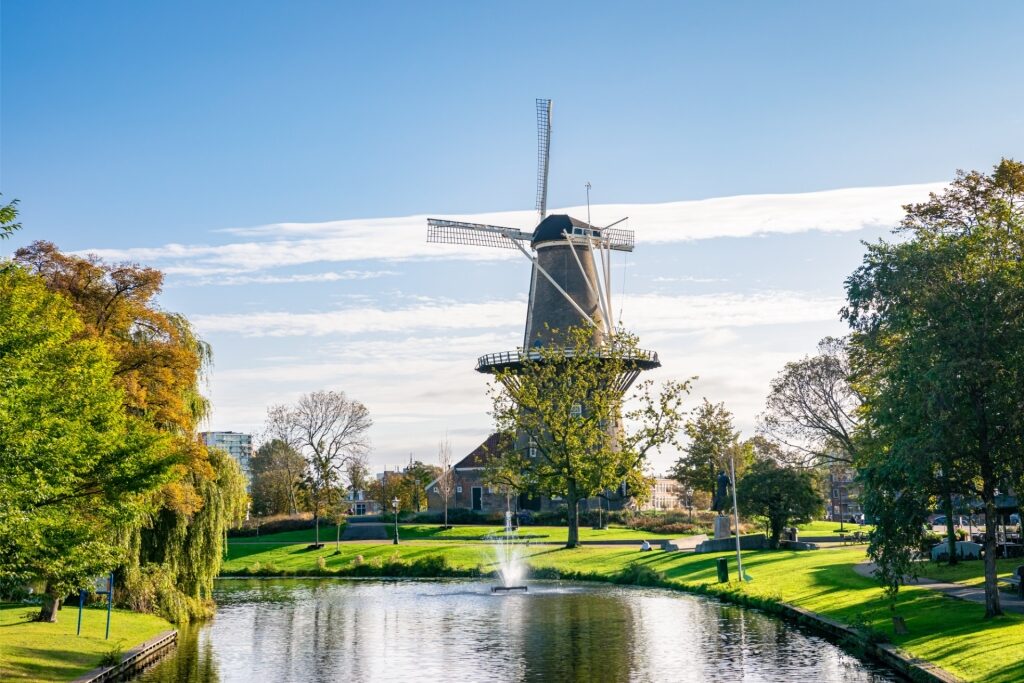
Molen De Valk
While there, take time to explore the rest of Leiden. The city is home to the oldest university in the Netherlands, as well as museums such as Naturalis Biodiversity Center and the National Museum of Antiquities.
Molen De Valk is almost equidistant from Rotterdam and Amsterdam, with Leiden Central Station being the closest station.
Schiedam Windmills
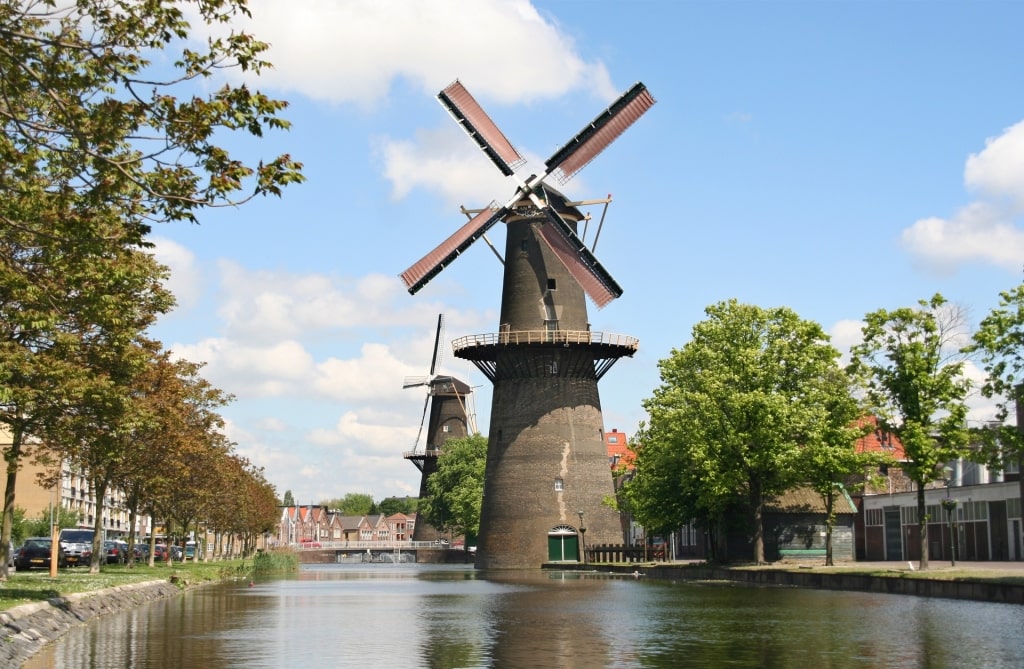
Schiedam Windmills
Towering more than 100 feet in the air, the Schiedam Windmills were built in the 18th and 19th centuries and played a major role in the Netherlands’ gin distillery industry. The mills were used to grind grain for jenever, which many consider the precursor to gin. Jenever is made from malted grain and neutral spirits, and many describe its taste as being more similar to whiskey than to classic gin.
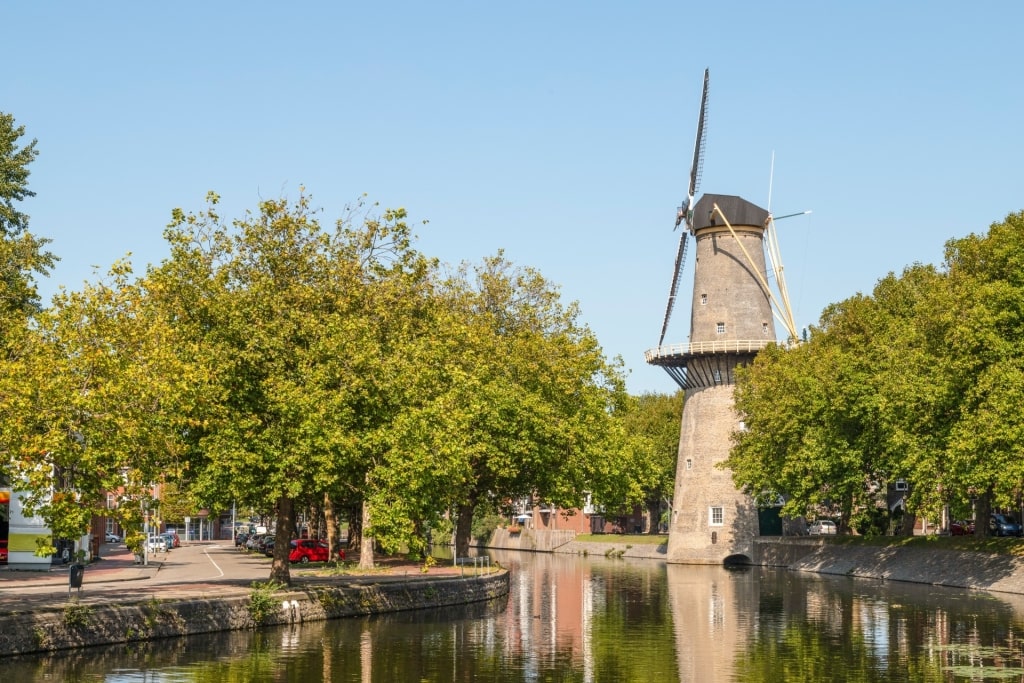
Molen De Walvisch
Several of the Schiedam windmills, such as Molen De Walvisch, have been restored and are open to visitors. As the tallest traditional windmills in the world, they’re well worth a visit. Most people take the 15–20 minute train or tram from Rotterdam to reach Schiedam. However, it’s also possible to walk from the Schiedam city center if you’re already in town.
Visitors can also stop by the Jenever Museum to learn more about the area’s distilling history. While the windmills are definitely the main attraction, it’s worth wandering the cobbled streets and soaking up the small-town charm.
Molen de Roos
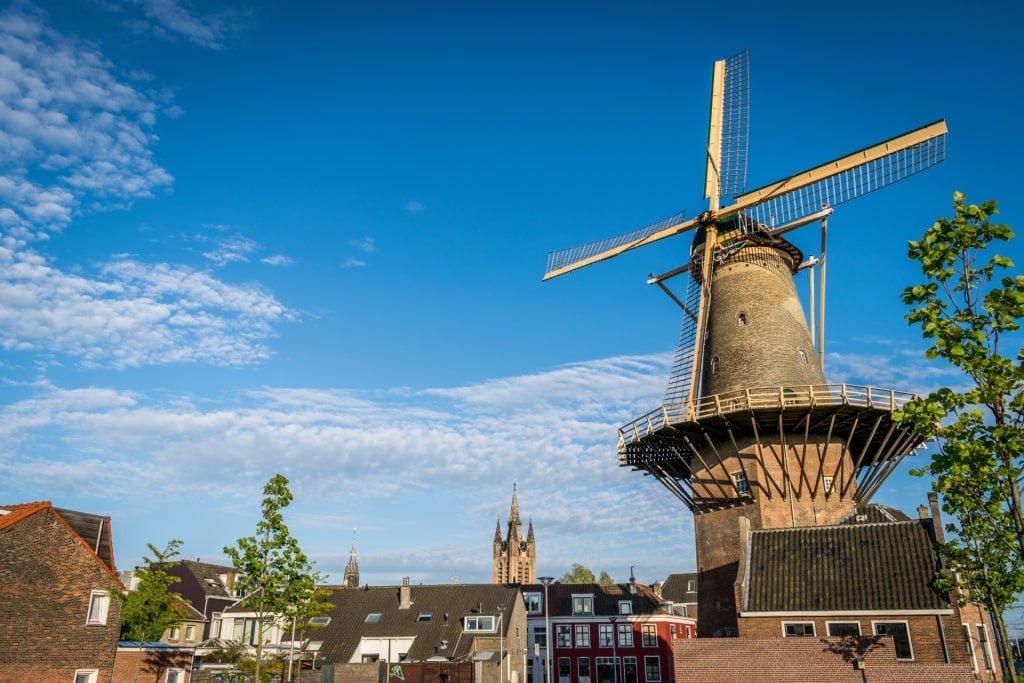
Molen de Roos
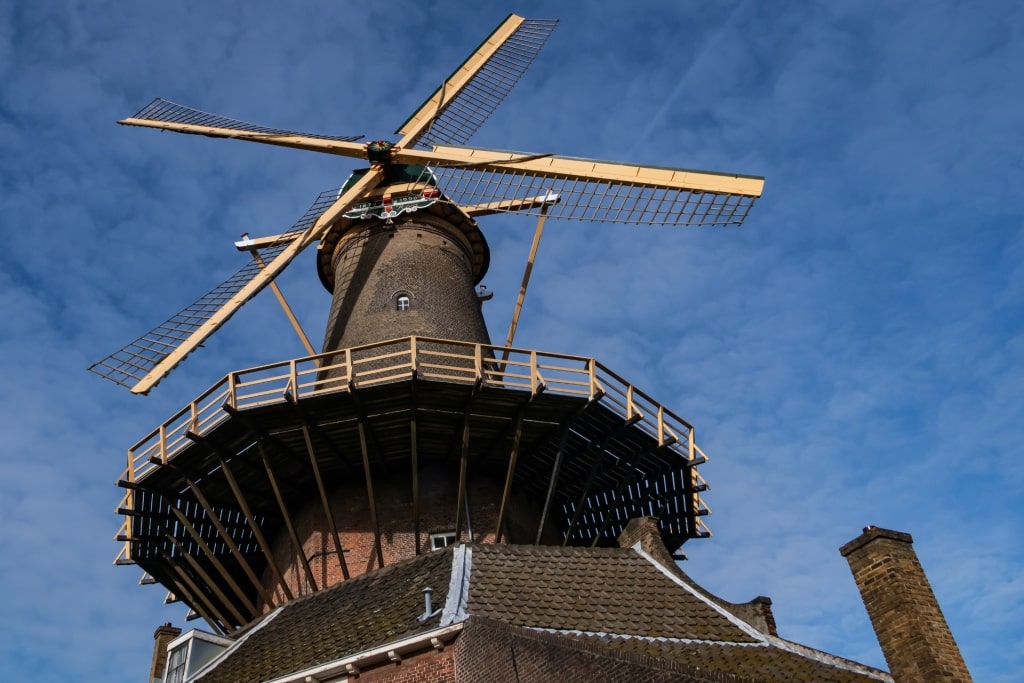
Standing tall in the heart of Delft, Molen de Roos, or the Rose Windmill, is the city’s last remaining windmill—there were once 18 in total. It dates back to the 17th century and was previously used to grind grain. Today, the mill is fully restored and operates three days a week, producing flour. Visitors climb a four-story staircase through the structure and watch firsthand as the mill grinds grain into flour.
Delft is a peaceful and quaint part of the Netherlands, making it an easy half-day trip from Rotterdam. Aside from Molen de Roos, visitors can explore Delft’s historic market square, shop for ceramics at local pottery workshops, or simply enjoy the calm canal views.
Molen De Vlieger
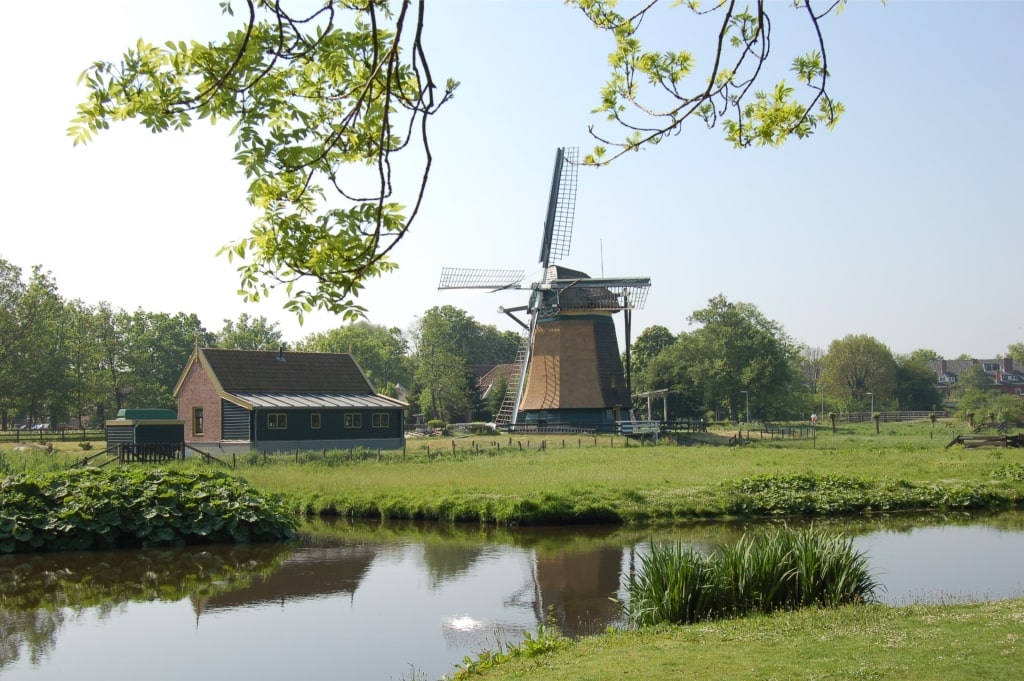
Molen De Vlieger Photo by Geschiedenis van Zuid-Holland on Flickr, licensed under CC BY 2.0
Built in the 17th century, Molen De Vlieger, the Flyer Windmill, is set in a green park in Voorburg, just outside The Hague. It’s much less known than Kinderdijk or Zaanse Schans, which means visitors often enjoy a peaceful setting with fewer crowds.
The mill is occasionally open for public tours, where visitors can see a traditional drainage windmill in action. Otherwise, it’s a lovely spot for a picnic or a quiet walk. Park Vreugd en Rust, which surrounds the windmill, is especially popular with locals and a perfect place to slow down and enjoy a break from the city.
Molen van Sloten
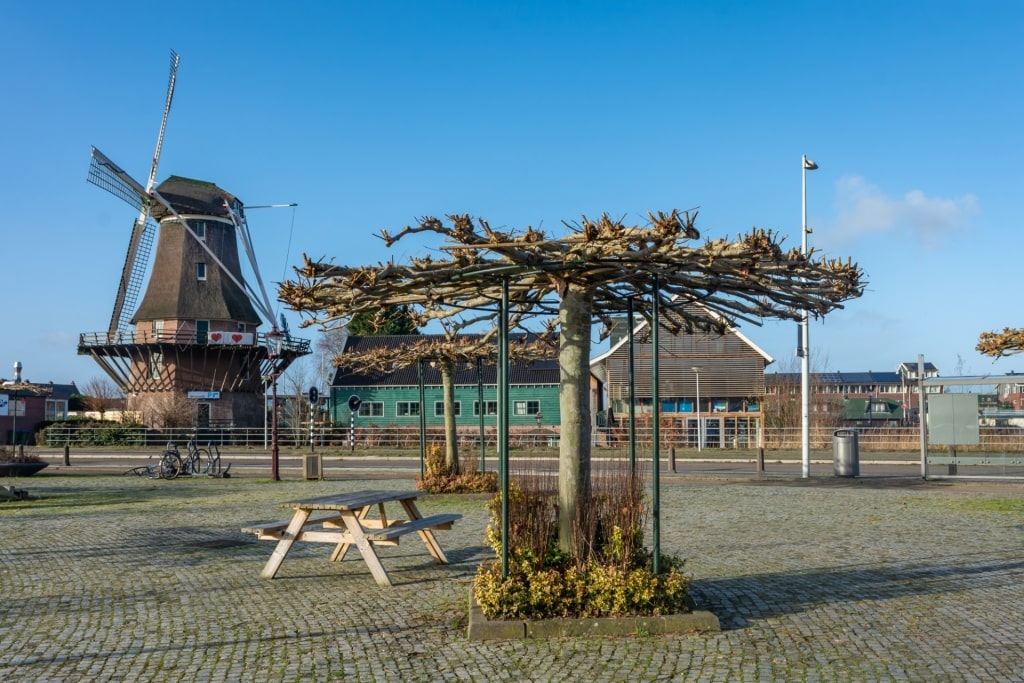
Molen van Sloten
Amsterdam is home to eight historic windmills, but Molen van Sloten is the only one open daily to visitors. It is a working polder mill that pumps excess water from the area. Initially built in 1847, the mill has undergone several rebuilds and maintenance over the years. Guided tours run every hour, starting at 10 a.m., and last about 45 minutes.
After touring the windmill, explore nearby neighborhood highlights such as De 7 Deugden, or The 7 Virtues, a Dutch brewery known for beers inspired by the seven virtues. Also nearby is the Henri Willig Cheese Farm Store, an excellent spot to sample and buy local Dutch cheeses.
Molen De Ster
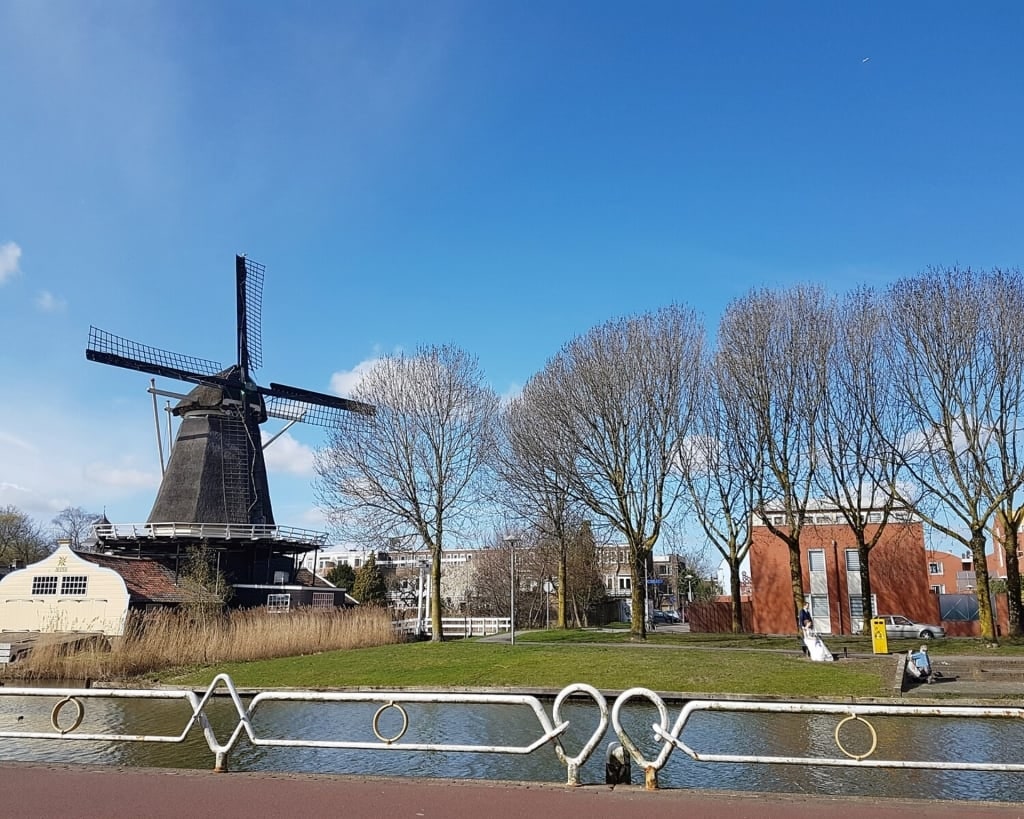
Molen De Ster Photo by Yustina M Puspitasari on Wikimedia Commons, licensed under CC BY-SA 4.0
If you’re traveling with kids, consider visiting Molen De Ster, the Star Mill, in Utrecht. It’s less than an hour from Amsterdam and Rotterdam by car or train, with frequent train departures between Utrecht and Amsterdam.
Located in Molenpark, the windmill makes for a fun family day trip. Start your visit with breakfast at Molencafé, which offers fair-trade coffee and Dutch favorites, including mini pancakes, alongside an outdoor terrace overlooking the waterfront.
Guided tours of the mill are available on Saturday afternoons, allowing visitors to see the saw mechanism up close. While tours are not always conducted in English, they offer a fascinating behind-the-scenes glimpse into how the mill operates.
Read: Best Places to Visit in the Netherlands
FAQs
Are Dutch windmills worth visiting?
Kinderdijk
Although this ultimately comes down to personal preference, visiting a Dutch windmill is one of the most unique experiences you can have on a trip to the Netherlands.
Windmills have been an integral part of Dutch life for many centuries, to the extent that several are still in operation today. Some are more historically important than others; for example, Kinderdijk is a UNESCO World Heritage Site featuring 19 windmills, all built in the 1740s.
Zaanse Schans
Sites like Zaanse Schans allow visitors to go inside working windmills and see what the process of grinding grain, sawing timber, and crushing spices entails.
There are more than a thousand Dutch windmills scattered across the country, many of which are located within an hour or two—sometimes even less—of major cities like Amsterdam and Rotterdam, as well as other port cities. That means it’s usually easy to fit a visit into your itinerary, and thanks to the Netherlands’ efficient public transport, many windmills are accessible by car, train, bike, or even on foot.
Why are the Dutch known for windmills?
Kinderdijk
While it might seem like windmills are just there for scenery, they actually helped shape the Netherlands into what it is today.
An important fact about the Netherlands is that most of the country lies below sea level. As such, windmills have been used for centuries to pump water out of low-lying areas—called polders—to make the land livable. A great example is the Kinderdijk windmills, which keep the Alblasserwaard polder from flooding.
In the 17th and 18th centuries, windmills took on a second role: powering early Dutch industries like grain and oil production. Grain milling produced flour, mustard, and oil, while sawmills helped produce timber for the Dutch navy. Oil mills created linseed oil used in paint production.
How old are the windmills in the Netherlands?
Molen de Roos
Most historians point to Molen de Roos in Delft as one of the earliest Dutch windmills, built in the 1670s. Even older is De Gooyer in Amsterdam, initially built in the 16th century and later rebuilt in the 18th century. The Schiedam mills, built in the late 1700s and early 1800s, played a significant role in grinding grain for jenever, the precursor to Dutch gin.
Amsterdam
Get to understand the vital role windmills have played throughout the centuries for yourself. Browse Celebrity’s river cruises and plan your European adventure.