Any Basel food guide faces a challenge simply in listing the vast number of local specialties. This lovely Swiss city’s position on the busy Rhine, as a trading center between France, Germany, and Switzerland, has brought many culinary influences.
Basel’s powerful guilds, with a prosperity based on extensive networks across Europe, also had a significant influence on its food. They traded spices from Asia and supported artisanal baking and religious festivals with unique flavors, which remain today.
Gipfeli
Gipfeli
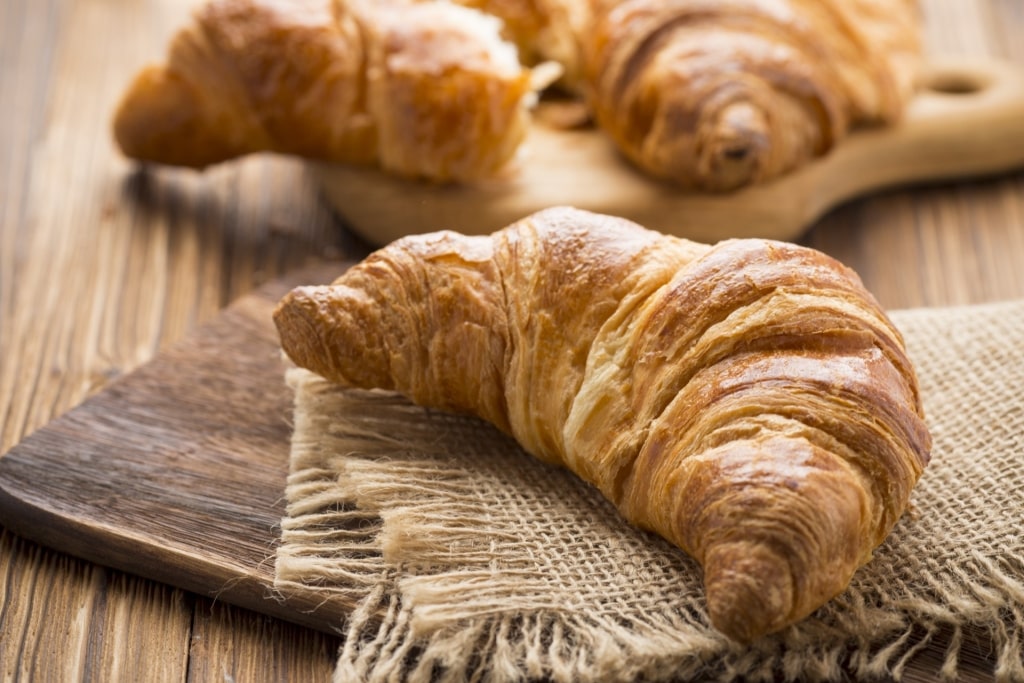
The Swiss version of the croissant is slightly smaller and denser than the French—or Austrian— original. Like a croissant, it’s made from flour, water, yeast, sugar, and salt, but uses less butter.
This gives it a milder flavor that goes well with the likes of ham and cheese. For breakfast, a traditional filling is apricot jam but many people eat it plain or with butter or cheese.
Fastenwähe
Fastenwähe
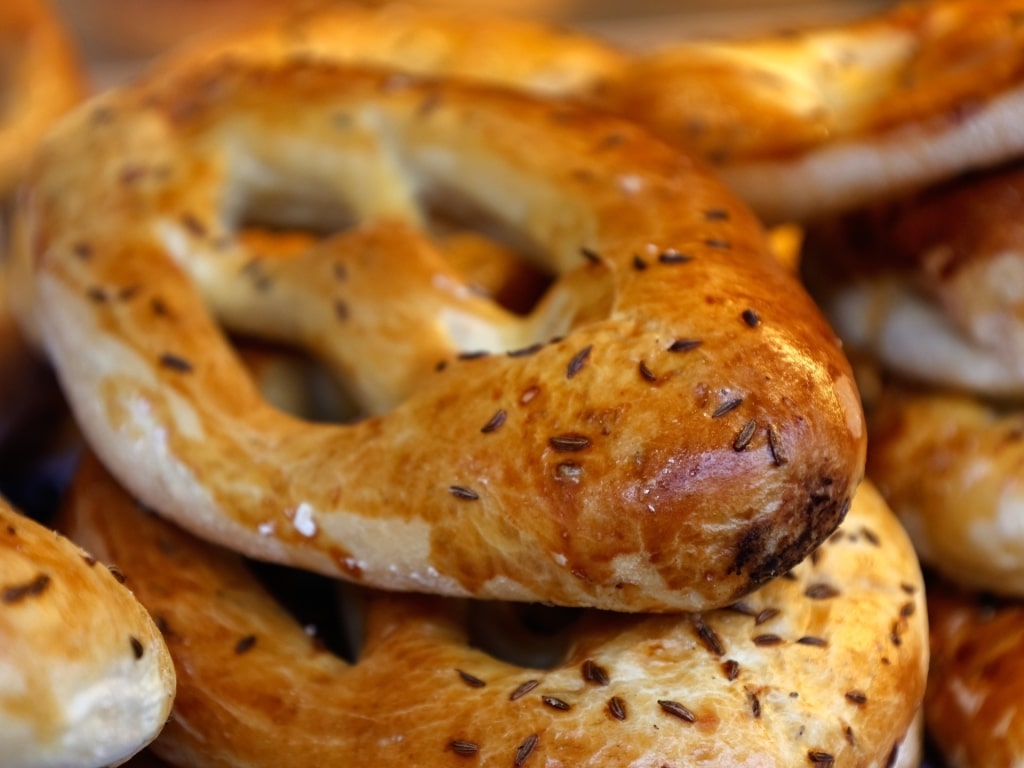
A pretzel-like bread associated with Basel’s Fasnacht season of Lent, Fastenwähe means “fasting pie”. Sprinkled with caraway seeds, they have four holes cut in them to form a cross-like shape.
The bread dates back to at least the 16th century and Lent is still the traditional time of year to enjoy it. You’ll now also find Fastenwähe in variations such as cheese or topped with salmon.
Salm
Salmon
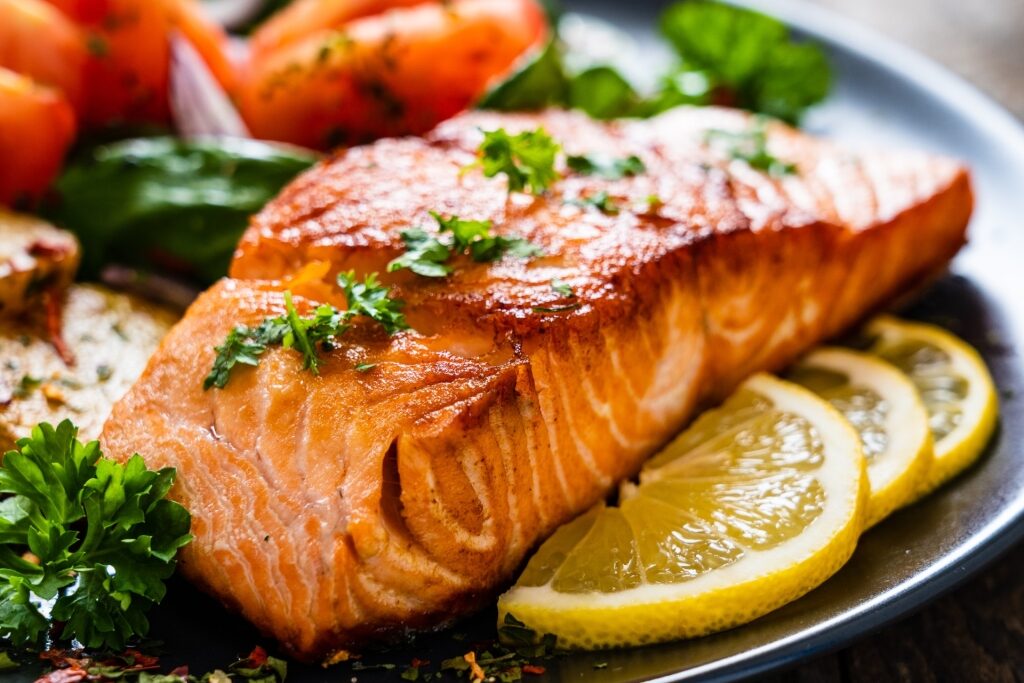
Salmon from the Rhine was a prized delicacy in Basel’s guild taverns as far back as the 16th century. While the wild fish have gone, more sustainable sources have now allowed salmon back on local menus.
The common way of serving it is lightly pan-fried in butter after a coating of flour and lemon juice. Fried onion rings, similarly dusted in flour, and boiled potatoes are the usual sides.
Rösti
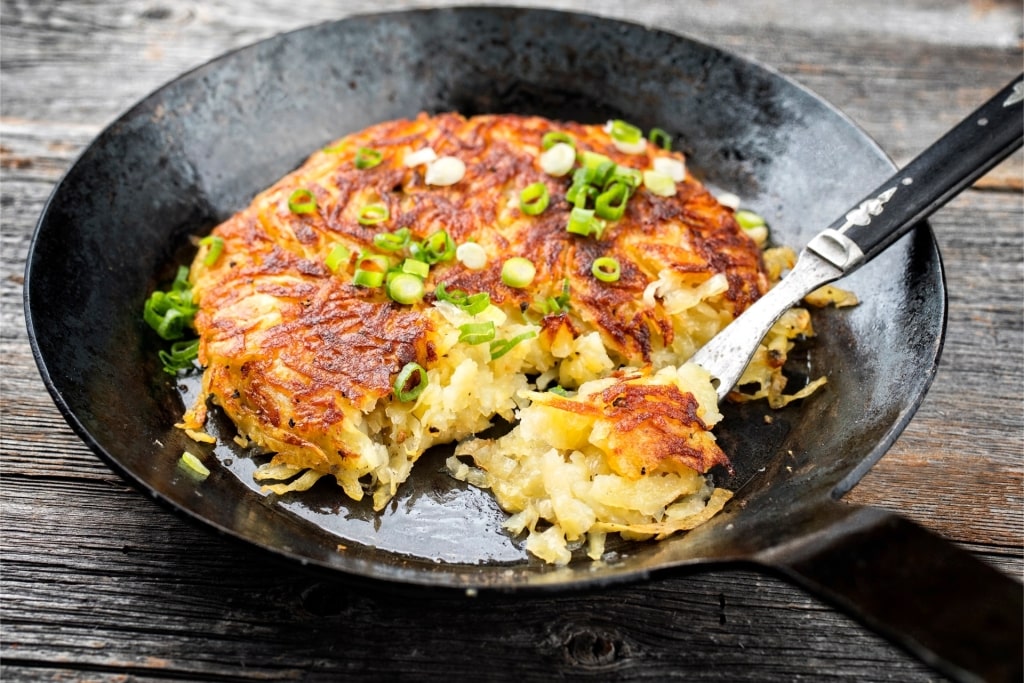
Rösti
Grated raw or par-boiled potatoes, fried until golden-brown, make a Swiss classic dish. While often seen as a side, they can also be a main when served with a fried egg or cheese on top.
Rösti were originally eaten for breakfast, particularly in the German parts of Switzerland such as Basel. “Röstigraben”—the rösti rift—is an expression used to describe the cultural divide between the country’s German and French-speaking regions.
Felchen
Being on the Rhine, Basel has a long culinary history with river fish. Wild fish have now been replaced by sustainable farmed species such as Zander—pike-perch—or Felchen.
Felchen is a delicate white fish from Lake Constance that is often simply pan fried in butter. Served with boiled potatoes and hollandaise sauce, it goes well with a crisp local Müller-Thurgau white wine.
Fondue & Raclette
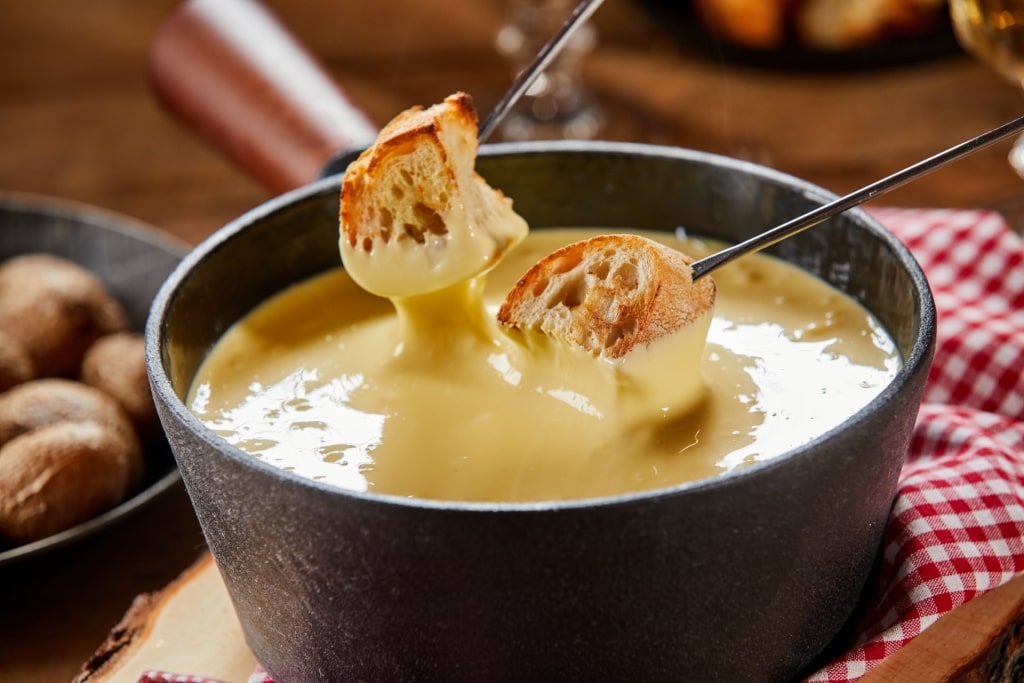
Fondue
Switzerland produces at least 450 different types of cheese. In the Basel region, the specialties are varieties such as Gruyère AOP, Emmental, and Appenzeller.
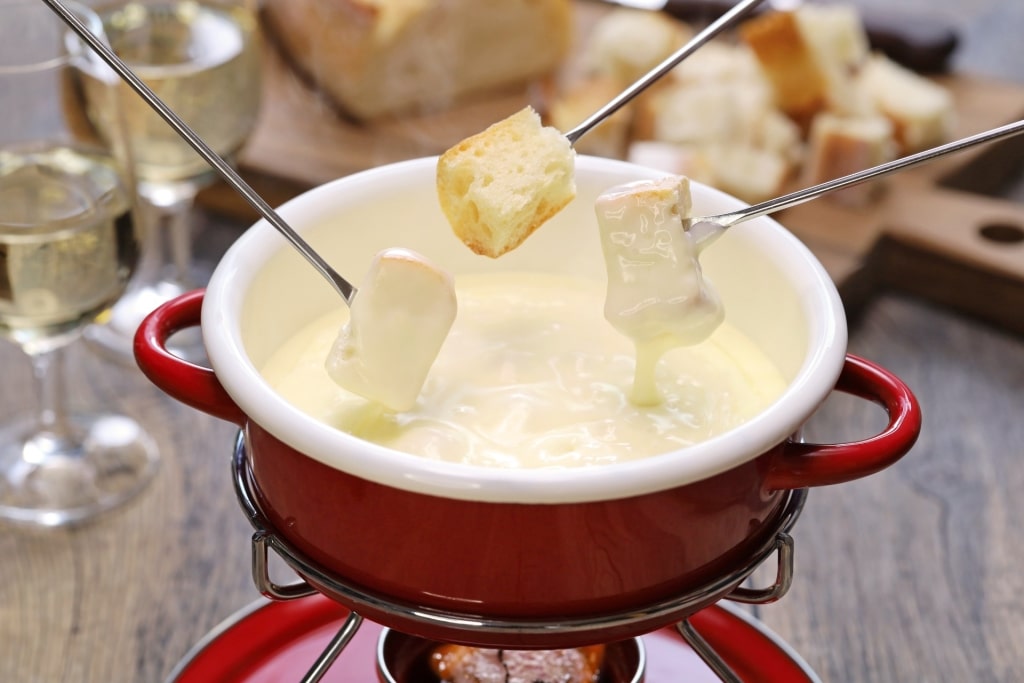
When looking for what to eat in Basel, you’ll soon discover Gruyère and Emmental in the form of a restaurant fondue. This is the classic Swiss national dish of a pot of melted cheese, shared with dipped bread among friends.
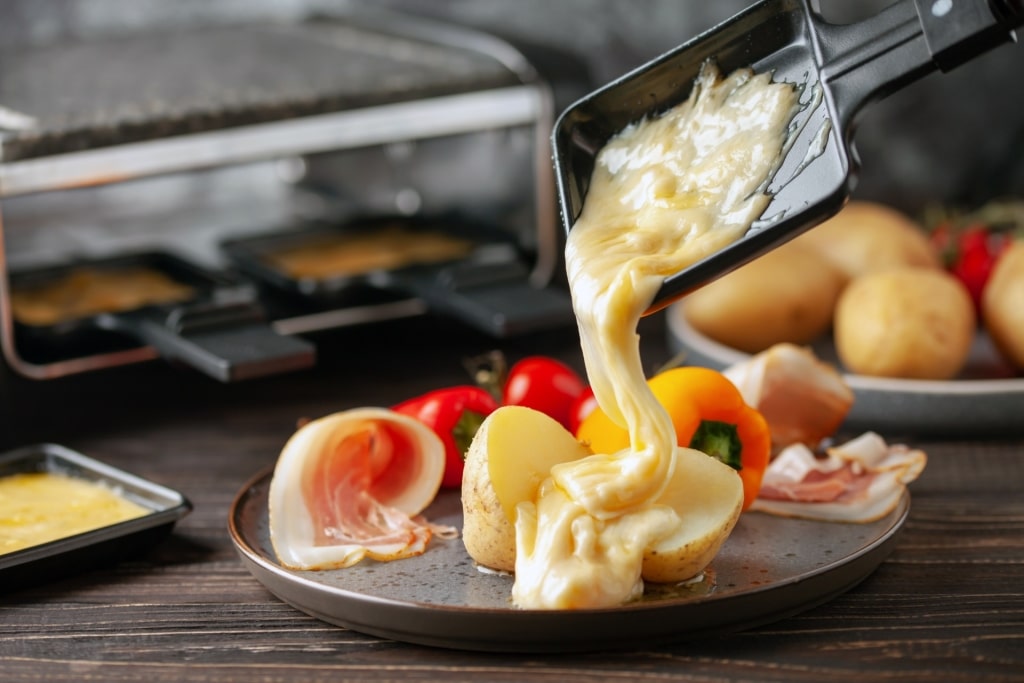
Raclette
Another cooked cheese favorite is raclette, where a half-wheel of cheese is grilled, then scraped off over a potato or meat. It’s a warming favorite in Basel’s winter markets.
Basler Brot
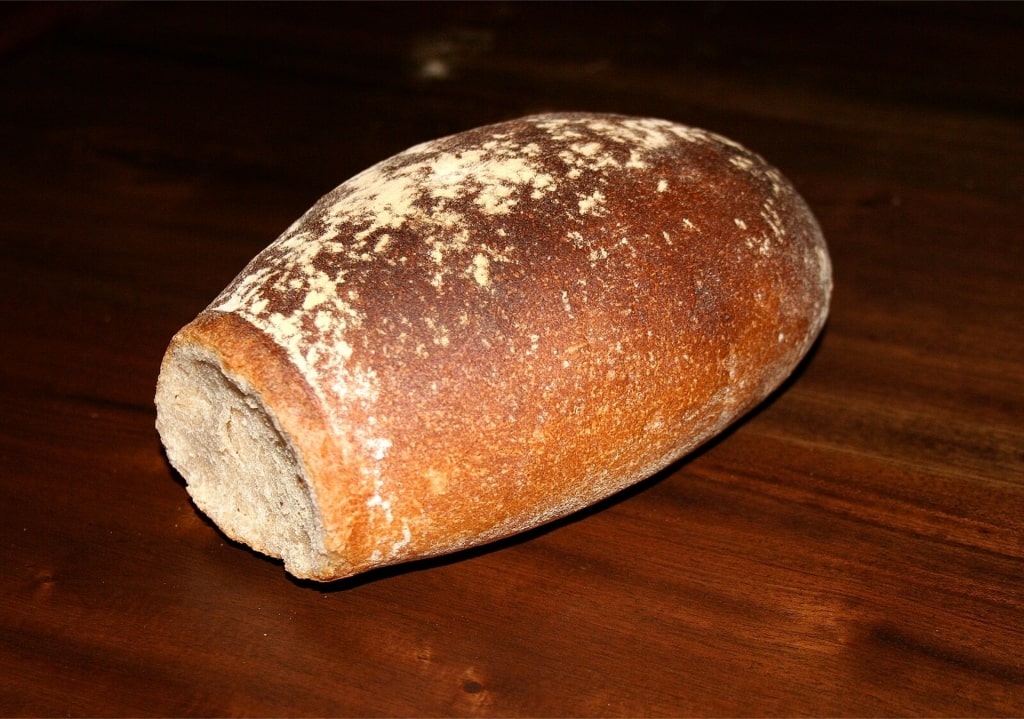
Basler Brot Photo by Adrian Michael on Wikimedia Commons, licensed under CC BY-SA 3.0
From Aargau to Zürcherbrot, every Swiss canton has its distinctive breads. Basel’s is an oblong sourdough rye loaf with a thick, chewy crust and airy interior.
A characteristic of this Basler Brot is that it’s baked in paired loaves, which are split before sale. It’s made with either dark flour or half-white for a lighter texture.
The crusty loaf has been a staple of Basel food since the Middle Ages, when it was prized for its long shelf life. Today it’s a favorite for sandwiches, paired with local cheeses or meats.
Cordon Bleu
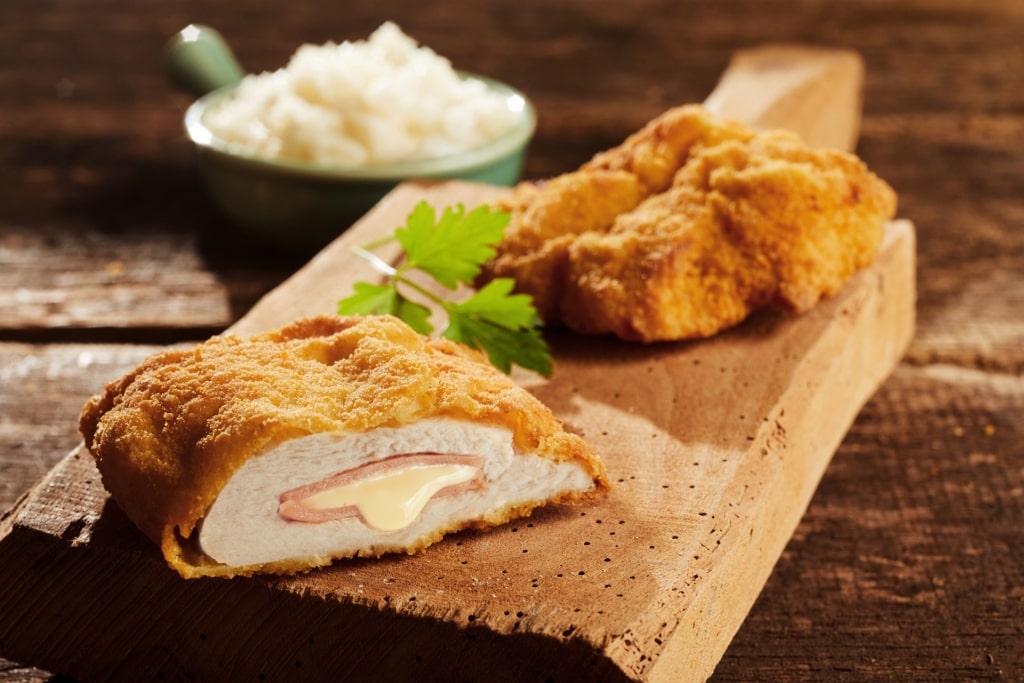
Cordon bleu
Cordon bleu is a meat cutlet filled with a thin slice of ham and cheese. Breaded, it’s either deep-fried in oil or baked and served with crispy French fries or a warm potato salad.
While its name reveals its French roots, this schnitzel dish has been enthusiastically adopted in Basel. Restaurant Gifthüttli has become famous for its veal cordon bleu.
Zwiebelwähe
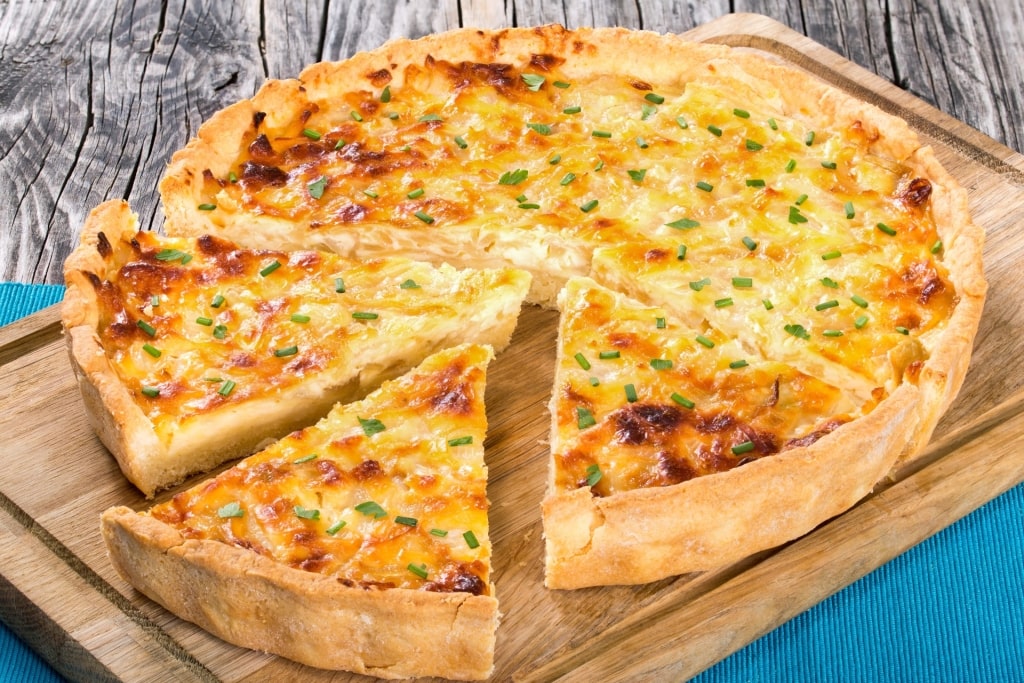
Zwiebelwähe
This onion tart is a hearty dish long associated with Basel’s Fasnacht carnival season. It’s simply made from onions fried in butter, then baked in a pie crust with an egg filling.
Besides carnival, it was typically served as a family dish on the meat-free Fridays of traditional Swiss Catholic homes. The onions were also considered very healthy, good for keeping off winter colds.
Nowadays, you might find it on restaurant menus with additions such as cheese, ham or bacon. This blurs the lines with Dünnele, Basel’s version of the German Flammkuchen, or the Basler Käsewähe.
Basler Käsewähe
It’s a tradition on the first morning of Carnival to eat flour soup, onion tart, and this cheese tart. It’s made with a simple butter pastry shell, filled with grated Gruyère topped with whipped cream and egg.
Once baked, it’s light and airy. Outside the carnival, it’s served as a starter or as a meal with a salad.
Zürcher Geschnetzeltes
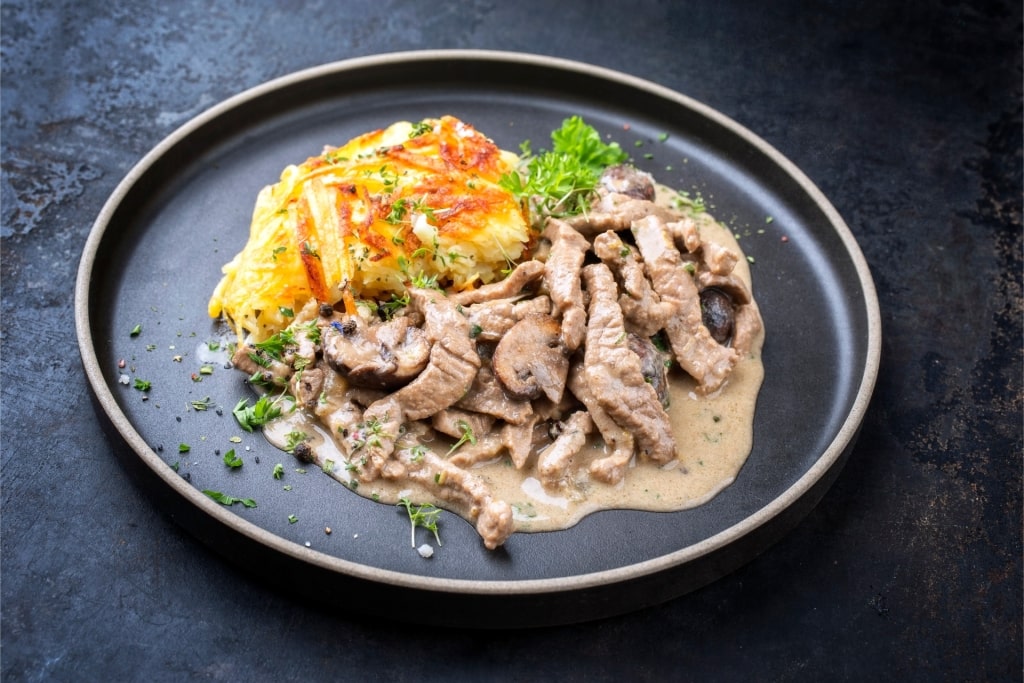
Zürcher Geschnetzeltes
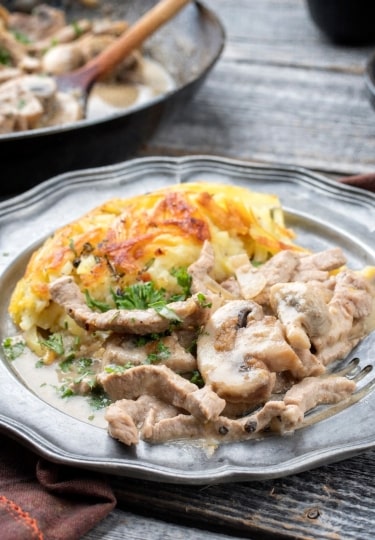
“Zurich-style sliced meat” is popular everywhere in German-speaking Switzerland. It’s a dish of veal strips in a white wine and mushroom sauce, usually served with rösti.
The sauce features lots of cream, onions, and often a touch of brandy to add some depth. In Basel, a regional white wine is often used instead for a local touch.
As well as veal, you will see versions using chicken or pork. Spätzle egg noodles make an excellent accompaniment, and some crusty Basler Brot to sop up all that tasty sauce.
Basler Laubfrösche
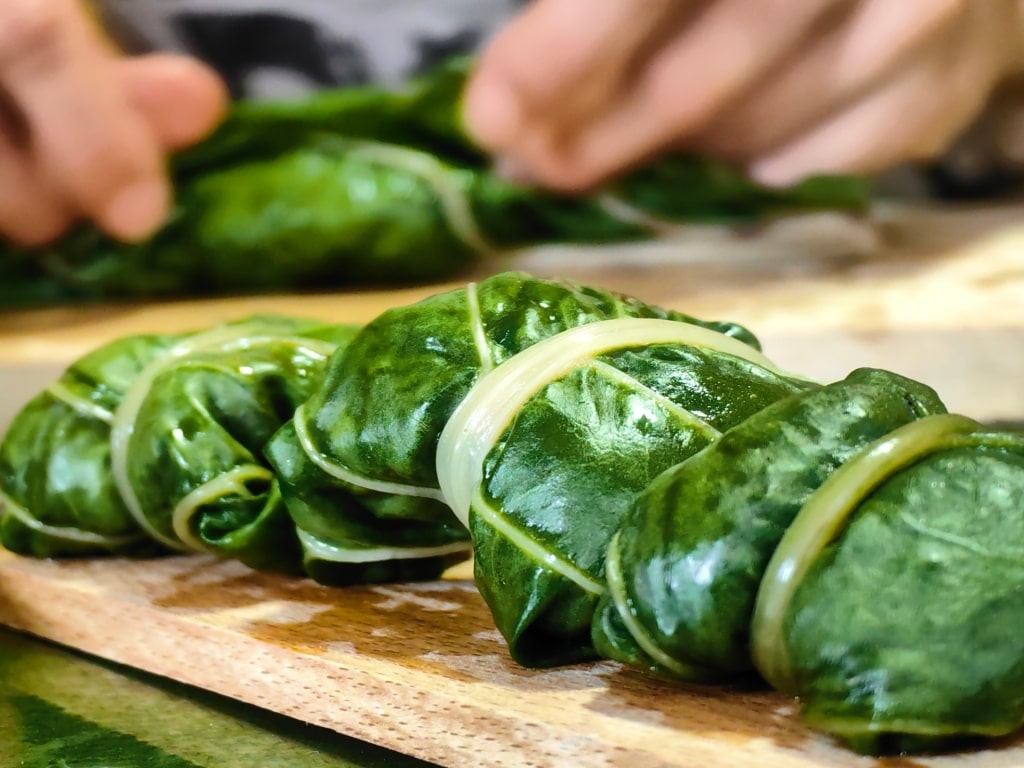
Swiss chard
Laubfrösche is minced pork wrapped into small dumpling style rolls of chard, spinach or cabbage leaves. They are fried in butter, then slow-baked in a broth.
Presumably the name—meaning “Treefrogs”—comes from the green color and the way the rounded rolls sit in broth. Lending themselves well to vegetarian dishes, Laubfrösche goes well with mashed potato and a rosé wine.
Basler Läckerli
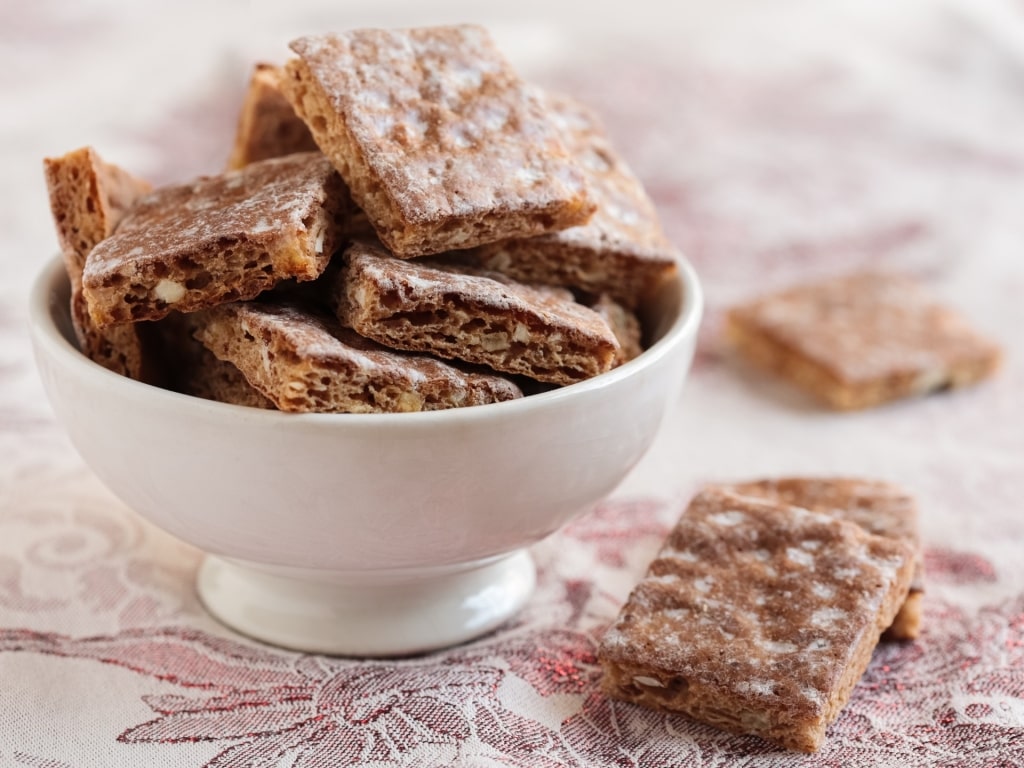
Basler Läckerli
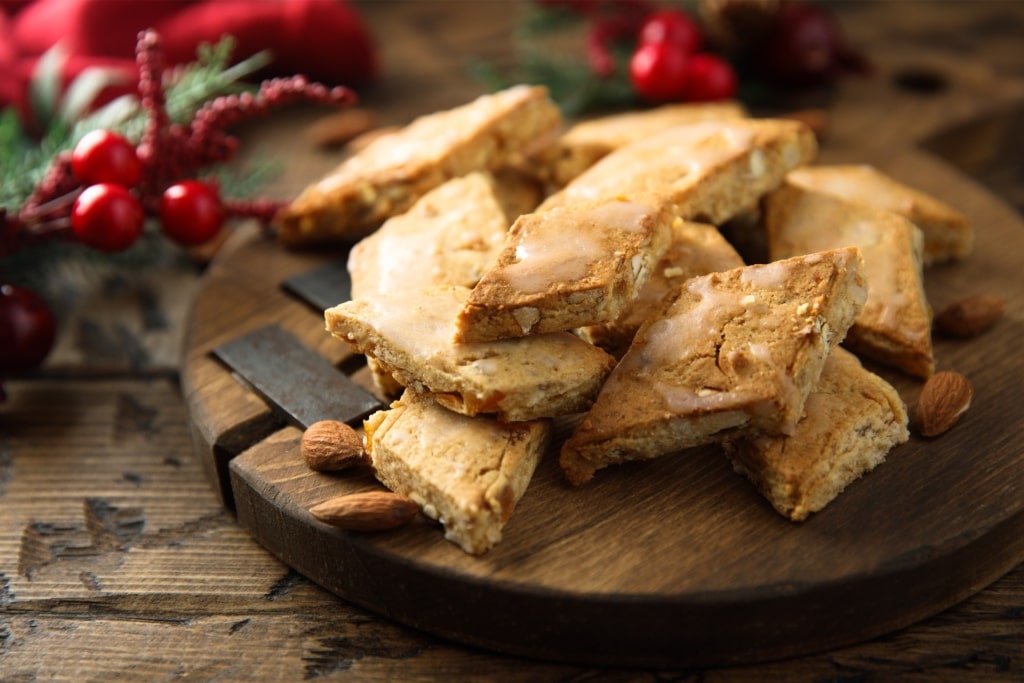
This spiced gingerbread-like cookie is made with honey, almonds, Kirsch, and candied citrus peel. A blend of cinnamon and cloves—rooted in the city’s medieval spice trade—is the base of its spiciness.
Particularly popular around Christmas and Fasnacht, it’s also eaten daily as a treat with a cup of coffee, or even cheese. You can find versions dipped in chocolate or in its original form of a simple sugar glaze.
Hefegugelhopf
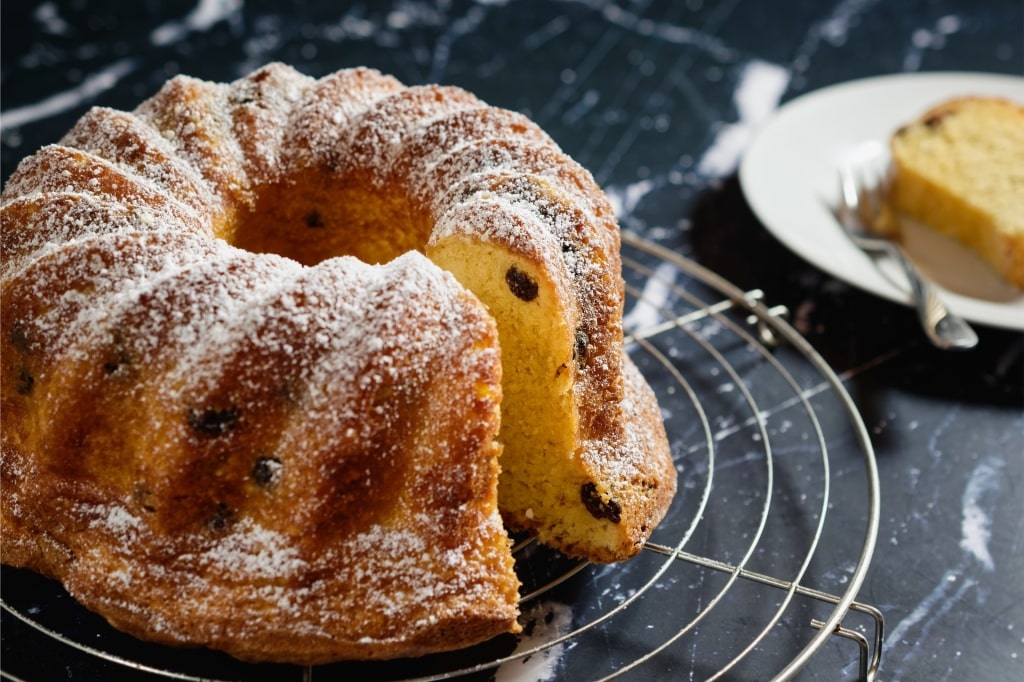
Hefegugelhopf
A tall, ring-shaped mold gives this yeast cake its distinctive fluted shape. Buttery and moist, the cake is rich with raisins and almonds.
Hefegugelhopf is usually reserved for celebrations, holidays, or Sunday afternoon tea or coffee. Common to Swiss-German baking culture, the Basel version is often flavored with kirsch or citrus zest.
Basler Brunsli
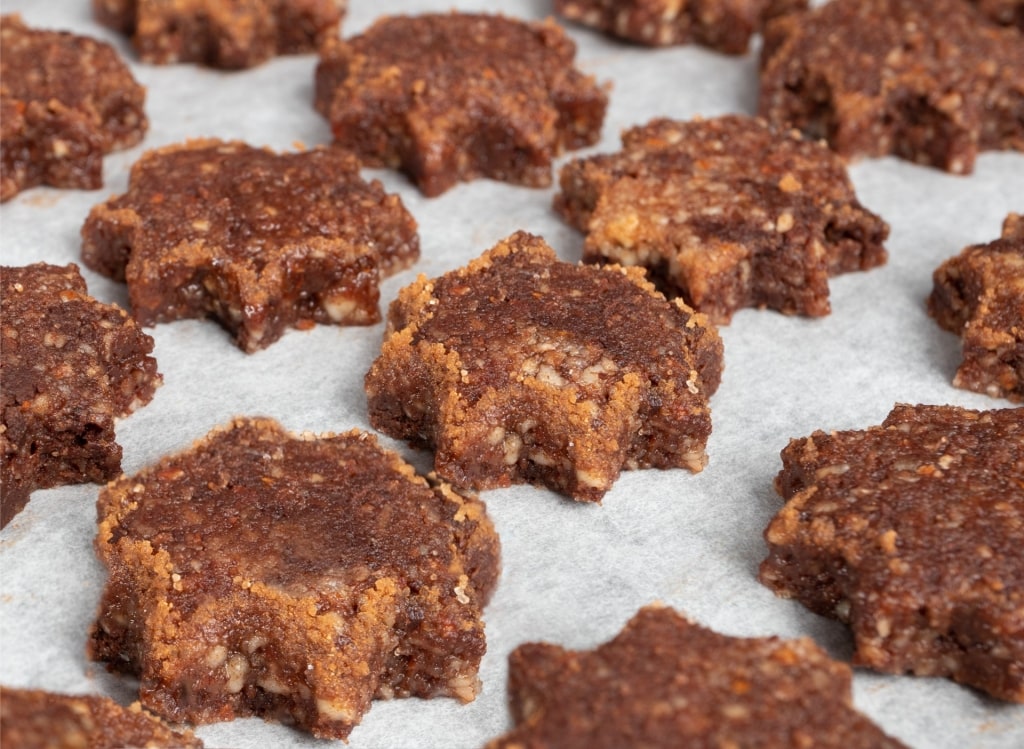
Basler Brunsli
Basler Brunsli are chewy, fudge-like dark chocolate and almond cookies, traditionally seen at Christmas. Instead of being baked, the dough is cut into shapes such as hearts and stars, and then allowed to dry.
They have an intense chocolate hit with a seasonal touch of cinnamon. You’ll find them year-round, and they go well with an espresso or a sweeter Swiss Vin de Glacier.
Rosekiechli
Basel’s seasonal variant on a donut, Rosekiechli have become a fixture at Basel’s Herbstmesse or Autumn Fair.
Made of dough formed into a rose shape, they are deep-fried, and immediately dusted with powdered sugar.
Anisbrötli
These anise-flavored hard cookies are popular around Christmas, shaped or stamped into seasonal designs. Their history in Basel goes back to at least the 17th century, when they were a cheaper option to marzipan cookies.
Basler Rahmtäfeli
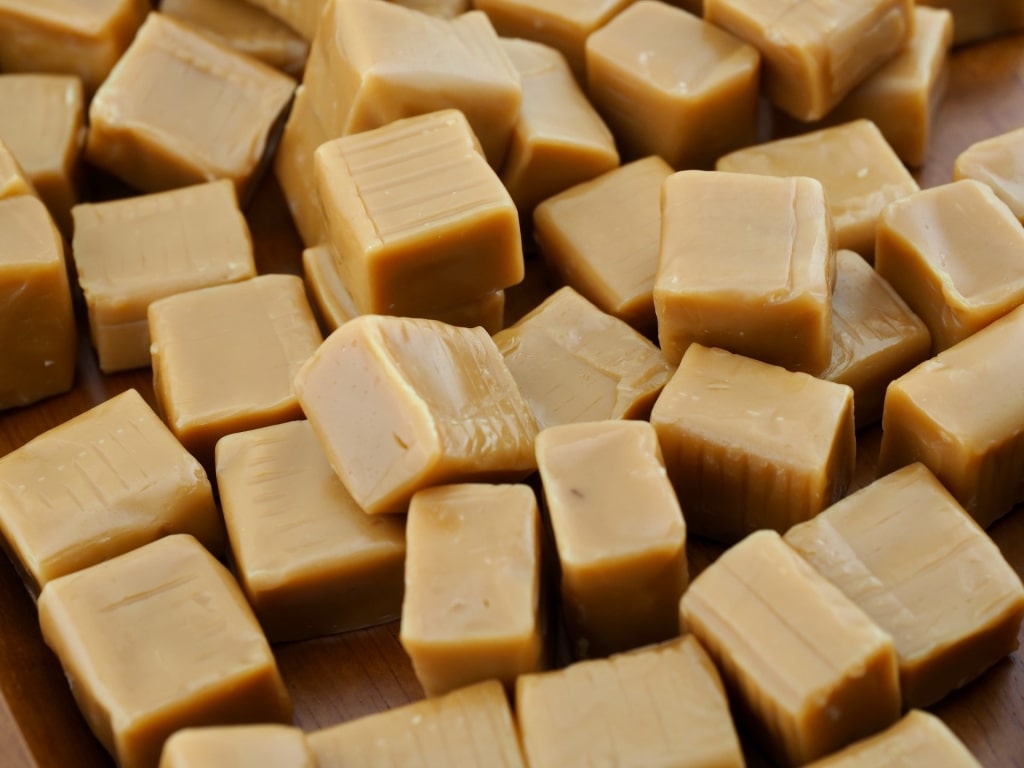
Caramel
Handmade soft caramel squares, made with slow-cooked cream, butter, and condensed milk, are another tasty Basel confection. They make a good souvenir, sold in elegant boxes by the likes of Läckerli Huus and Jakob’s Basler Leckerly.
Read: Best Things to Do in Basel
Suuri Lääberli
Much of Basel’s cuisine is associated with its historic guilds, of which 29 remain, and no dish more so than “Sour Liver”. Sliced calf’s liver is sautéed in a sauce of vinegar, onions, and spices, then served with Rösti fried potatoes.
You’ll see it as a fixture in bistros and guild taverns or Zunfthäuser. The most prominent of these, which are now open to the public, include Schlüsselzunft on Freie Strasse, and Safran Zunft on Gerbergasse.
Schoggiweggli
Schoggiweggli
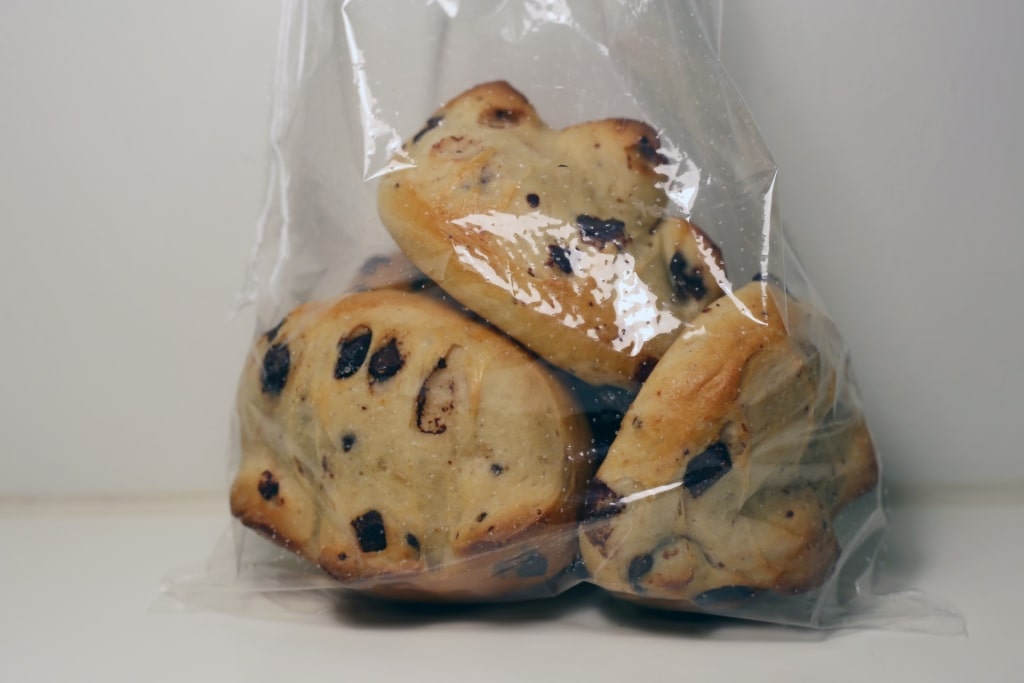
These crisp bread buns, filled with sweet chunks of chocolate, are a favorite breakfast, especially for children. Schoggiweggli are delicious, preferably still warm from the bakery, with a glass of creamy Swiss milk.
While similar to French pain au chocolat, you’ll find them more bread-like and with less butter. Another difference is the scoring of the top before baking to reveal a tempting glimpse of the chocolate interior.
Dark chocolate is the most classic but you can find milk or hazelnut chocolate versions. They were created in Basel in 1975 at Confiserie Bachmann, still the best place to try them.
Schlumbergerli
This small round bread roll, soft but with a crispy crust, has been made in Basel since 1872. It’s named for banker Amedée Schlumberger, who asked a local baker to recreate the petit pain of his French homeland.
The rolls, now spread beyond Basel, are called Semmeli elsewhere in Switzerland. Fresh daily, they are great for breakfast or with soup.
Basler Mehlsuppe
Basel’s flour soup does not sound that interesting but don’t be fooled. It’s made by slowly browning flour in butter before whisking in beef or vegetable broth until thick, smooth, and delicious.
This simple dish has been enjoyed in Basel for centuries, particularly in winter. It’s a wonderful communal tradition to enjoy a bowl at 4am to mark the start of the Fasnacht Carnival in February/March.
Mässmogge
Mässmogge Photo by Sandstein on Wikimedia Commons, licensed under CC BY 3.0
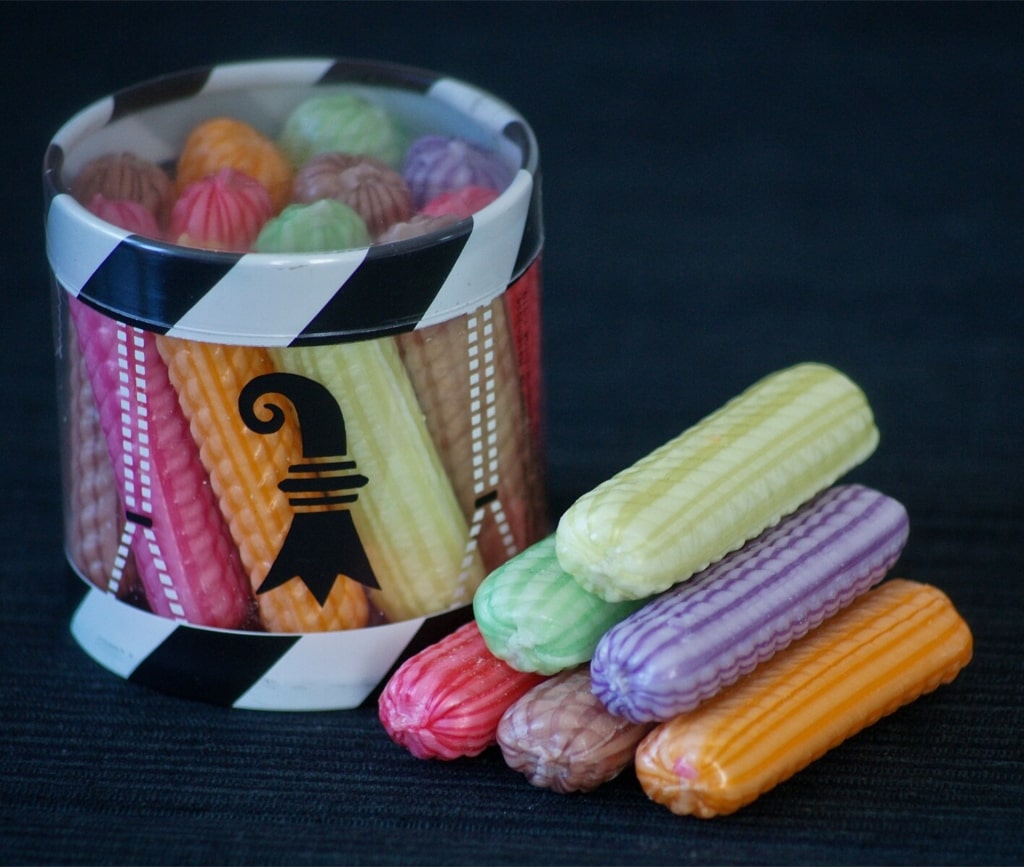
These chewy candy shells have soft centers filled with hazelnut praline. They are a tradition originally linked to the Herbstmesse or autumn fair but can now be found year-round.
You’ll recognize them by their vibrant, striped colors. These include pink for raspberry flavor, yellow for lemon, and brown for chocolate.
Their nostalgic associations with childhood visits to the fair make them an evocative memory for anyone from Basel. The handmade process is expensive and only one company still produces them, so they have become a popular gift.
FAQs
Is Basel a good food city?
Fondue
Yes, Basel’s position between France and Germany adds the best of both countries to its native Swiss cuisine. It’s also a place to find plenty of other international options, with everything from cozy pubs to Michelin-starred restaurants.
What dish is Basel most famous for?
Basler Läckerli
Basel has two famous dishes, both linked to its annual carnival, and offering quite a contrast to each other. Basler Läckerli is a spiced honey biscuit, while Basler Mehlsuppe is a flour soup.
What time does dinner typically start in Basel?
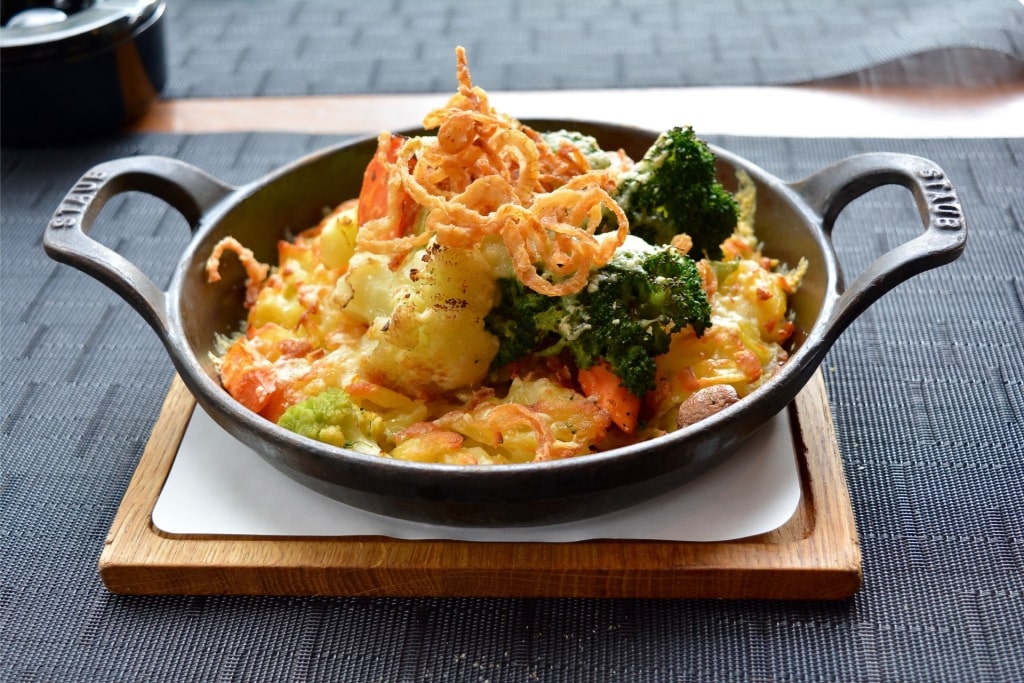
Rösti
Most restaurants serve dinner from 6pm, with the meal finishing up to 9:30pm. The peak times would be around 7:30pm.
Are there any food customs I should know about?
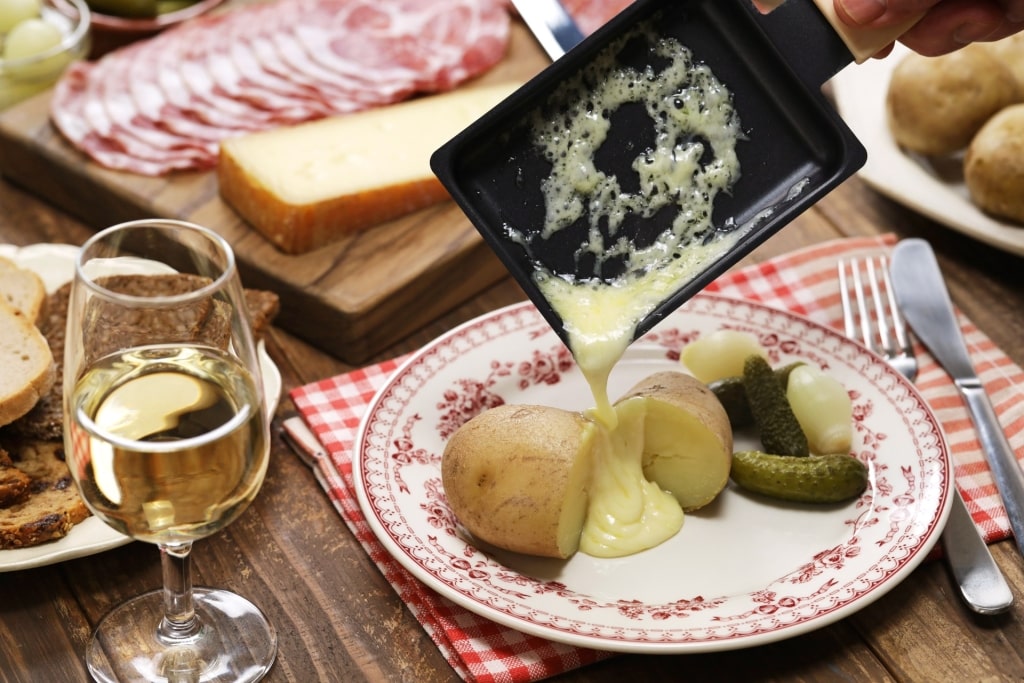
Raclette
It’s polite to say “En Guete”—“Enjoy your meal”—before you start eating. Tip by rounding up the bill, as a five-to-ten percent service charge is normally already included.
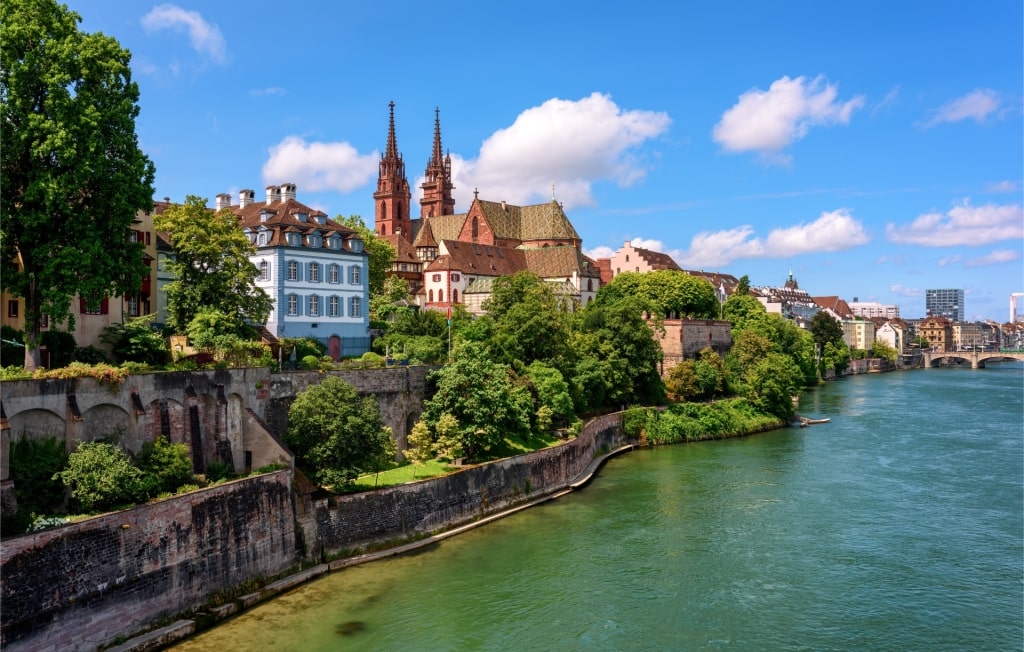
Basel
Has this guide to what to eat in Basel tempted you to explore its culinary delights? Browse Celebrity’s river cruises to Basel and you’ll find the perfect itinerary for a memorable visit.