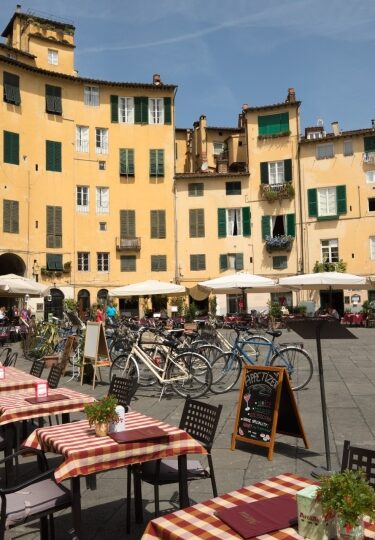
Lucca dishes up Tuscany’s true essence in a more intimate setting than some of the region’s bigger cities. Its Renaissance walls embrace cobblestone streets, and the unhurried atmosphere gives you time to soak up the Lucchese culture.
Best of all, you’ll never lack for things to do in Lucca. From the ringing of church bells in old cathedrals to the aromas of espresso and pizza wafting through the piazza, at every turn you stumble across the perfect mix of history, art, and refined Italian lifestyle aesthetics.
Why Visit Lucca
Biking in Lucca
Drop by Lucca for a different type of Tuscan vacation, where history surrounds you on all sides. Pass through the city gates, take in the ancient city walls, and notice the smell of clipped grass along the city’s tree-lined rampart promenade.
Inside the ring created by the fortified Renaissance walls, Lucca brims with narrow lanes opening onto sunlit piazzas and busy cafés, the drifting scent of baked goods such as buccellato and other Lucchese breads filling the air.
Basilica di San Frediano
You’ll find plenty of cultural things to do in Lucca, too. The city’s association with Puccini and its steady calendar of music events means there are plenty of concerts and festivals for you to enjoy throughout the year.
Everything in Lucca is concentrated and easily walkable, so there’s less time wasted in transit and more time for tasting, listening, and appreciating the beauty of this walled city.
History & Culture
Piazza dell’Anfiteatro
Lucca was founded by the Etruscans, then became a Roman colony in 180 BC, and later a Roman municipality.
For centuries, Lucca was a powerful city-state, and the silk trade and banking helped to make its fortunes. From the 12th to the early 19th century, the city existed as an independent republic until Napoleon’s sister, Elisa Bonaparte, annexed Lucca in 1805.
Rivalry among wealthy merchant families like the Guinigi during the 14th and 15th centuries led to political instability and some pretty incredible building projects.
Architecture and history came together in an intriguing mash-up, featuring Roman foundations, medieval towers that turned families into mini-dynasties, Renaissance palazzi, and Baroque churches.
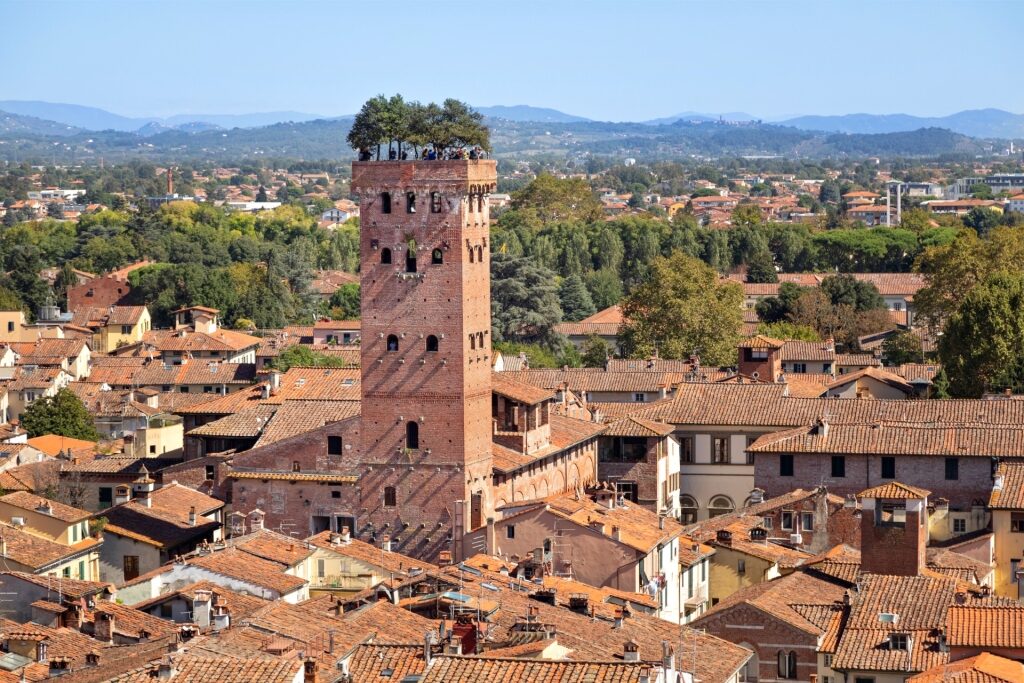
Torre Guinigi
Tower culture was emblematic, with medieval families, like the Guinigi clan, vying to build the tallest towers as symbols of their status; the surviving Torre Guinigi exemplifies this literal upward trend.
Another distinctive feature of Lucca is its city walls, built in the 16th and 17th centuries to defend the republic. Many festivities, street markets, and open-air concerts are held around these bastions, which have now been transformed into a beautiful garden and promenade.
Lucca was finally incorporated into the Kingdom of Italy during the mid-19th century.
Music plays a significant role in the culture here. Visit the Puccini Museum in the composer’s birthplace and see how operatic music truly is a part of Lucca’s identity.
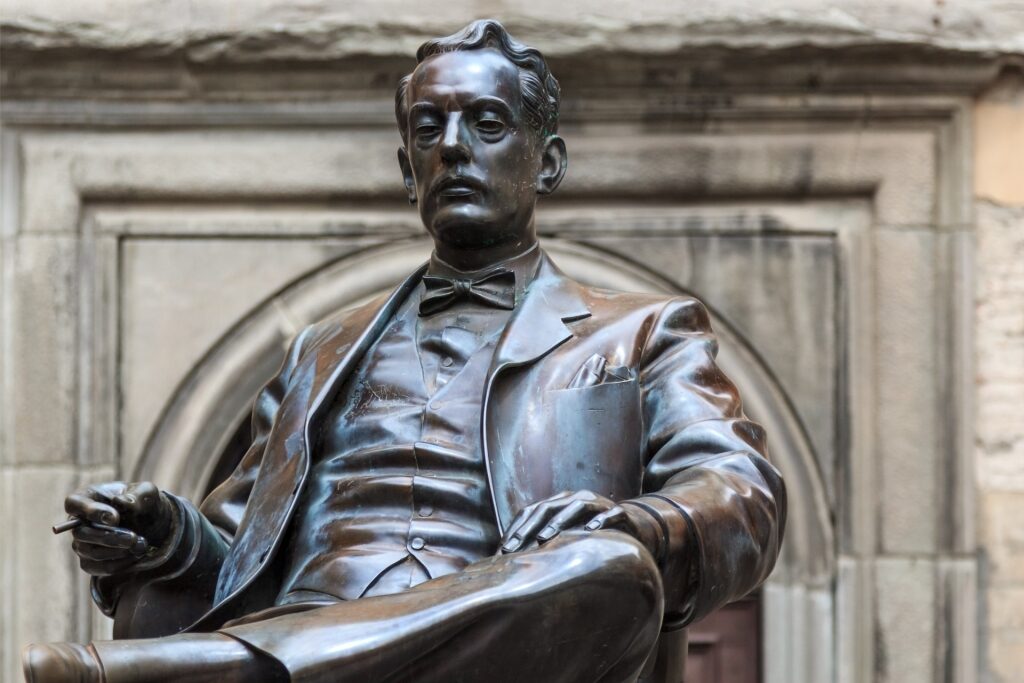
Giacomo Puccini statue
This walled city’s cultural elasticity makes it feel alive rather than museum-like, which is why you’ll always find interesting things to do in Lucca.
Tips for Visiting Lucca
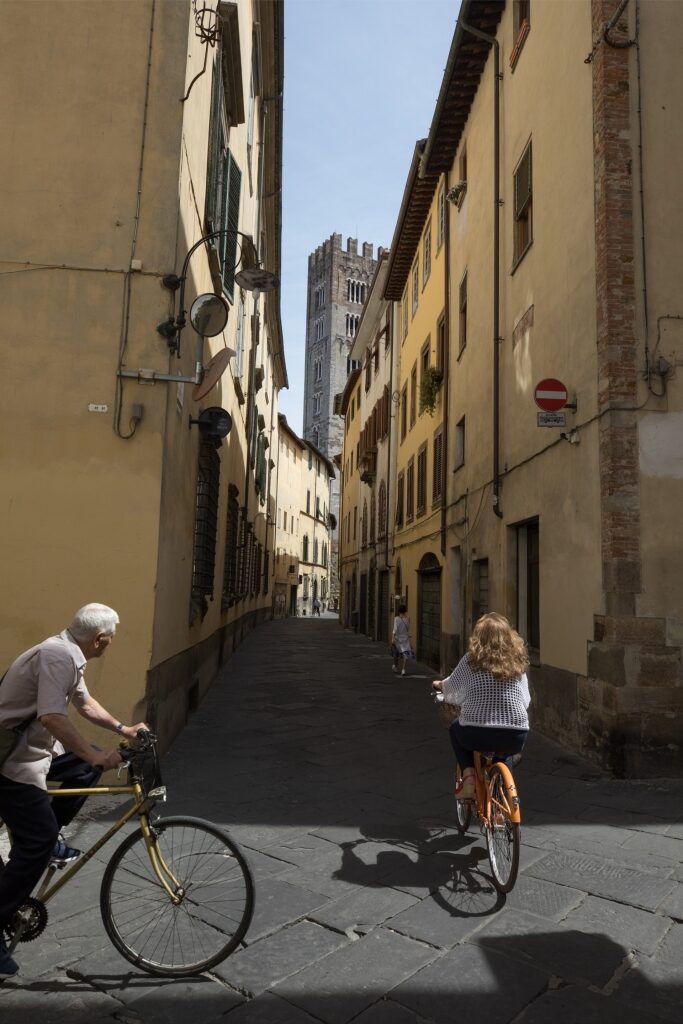
Biking in Lucca
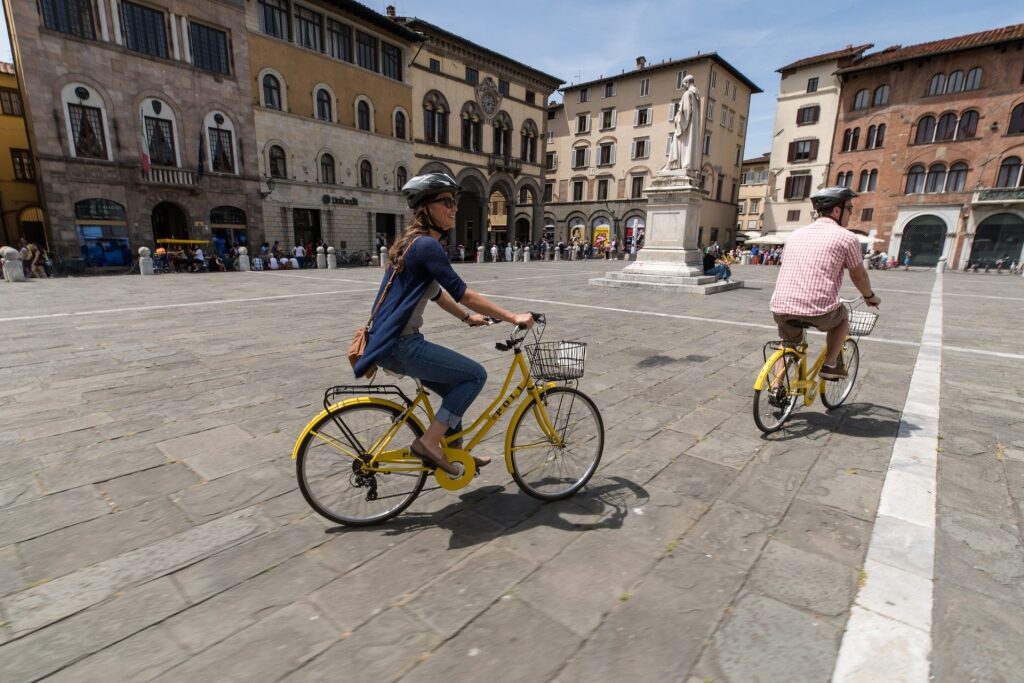
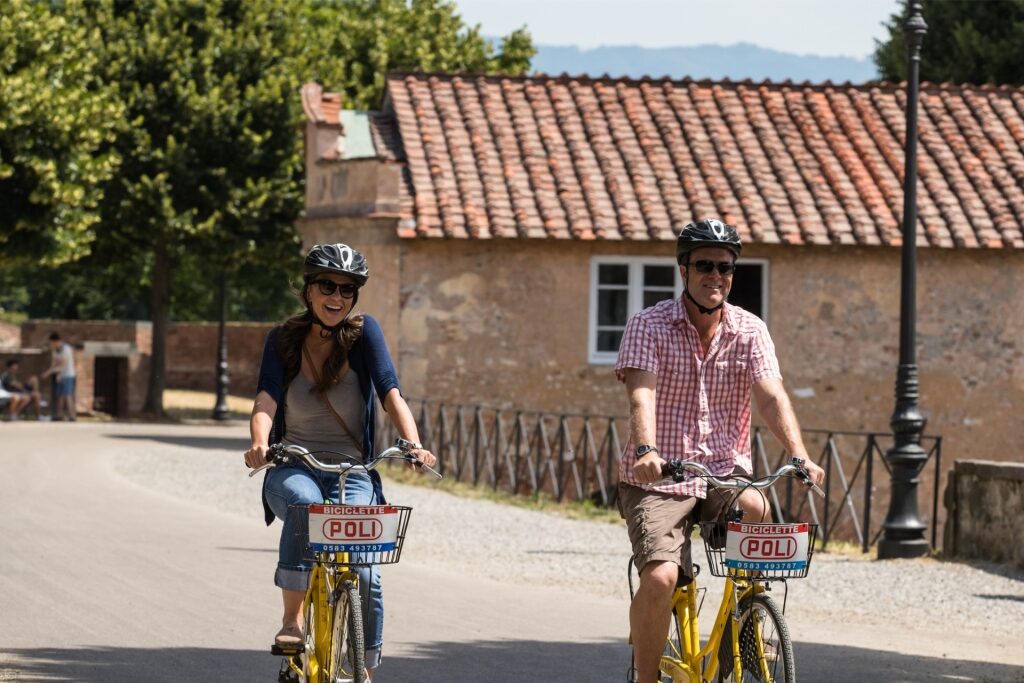
Get to know the walls first, as they are one of Lucca’s main draws. Spend the first part of your visit with a full circuit on foot or by rental bike if you can.
Trains to Lucca from Pisa and Florence are frequent, and Livorno on the coast is only about a 45-minute drive away, so even if you’re not staying in Lucca, it’s an easy day trip.
If you’re an opera fan, take note that the summer Puccini Festival is actually held in the nearby village of Torre del Lago Puccini on the coast, where the composer lived for many years. You can get there by car in about 30 minutes.
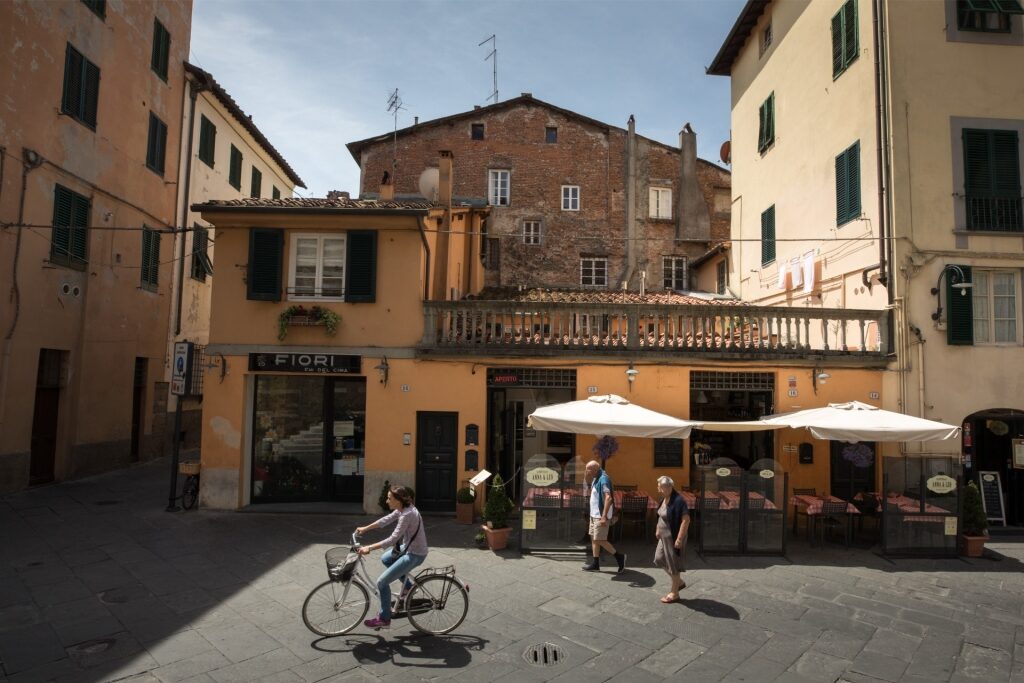
Street in Lucca
Try to eat away from the main piazzas, time allowing. It’s worthwhile wandering a block or two off the main drag to find a trattoria instead of a menu designed for tourists.
Tip modestly—round up or leave 5 to 10% if there is table service—and try to use some basic Italian courtesies, like a simple buongiorno as you enter shops or a grazie, which means, “Thank you,” as you leave.
Pack comfortable shoes for the cobblestones and a light layer for later in the day, as Lucca’s shaded alleys can feel cool even in the warmer months.
Things to Do & Attractions in Lucca
Walk or Bike the City Walls
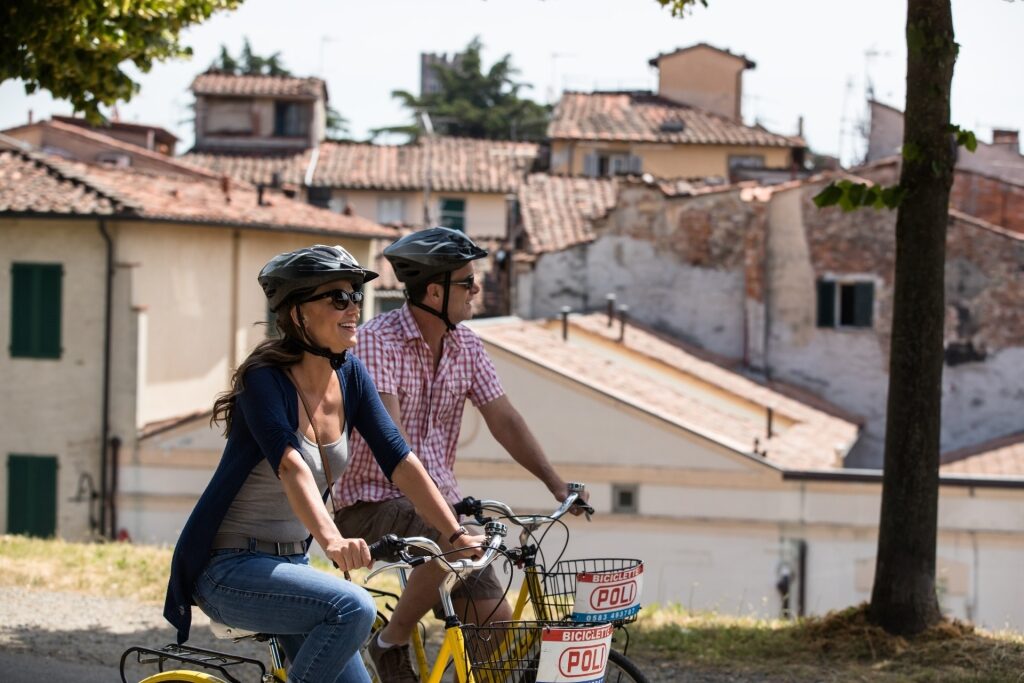
Biking in Lucca
One of the best things to do in Lucca is to walk or bike the Renaissance walls, or Le Mura di Lucca.
These 16th- and 17th-century fortifications encircle the original city and offer an elevated view, making the effort to stroll the entire four-kilometer circuit, or about 2.5 miles, worth it.
The long, broad walls, initially built for defense, are now topped by a tree-lined pedestrian promenade. You can bring along a small picnic of snacks and some of the wine that Tuscany is known for, and enjoy it in one of the little alcoves.
As you walk or cycle, take in the red rooftops and the domes of Lucca’s churches. The brick-and-stone walls, so full of shadows from the trees, are lots of fun to explore.
Climb Torre Guinigi
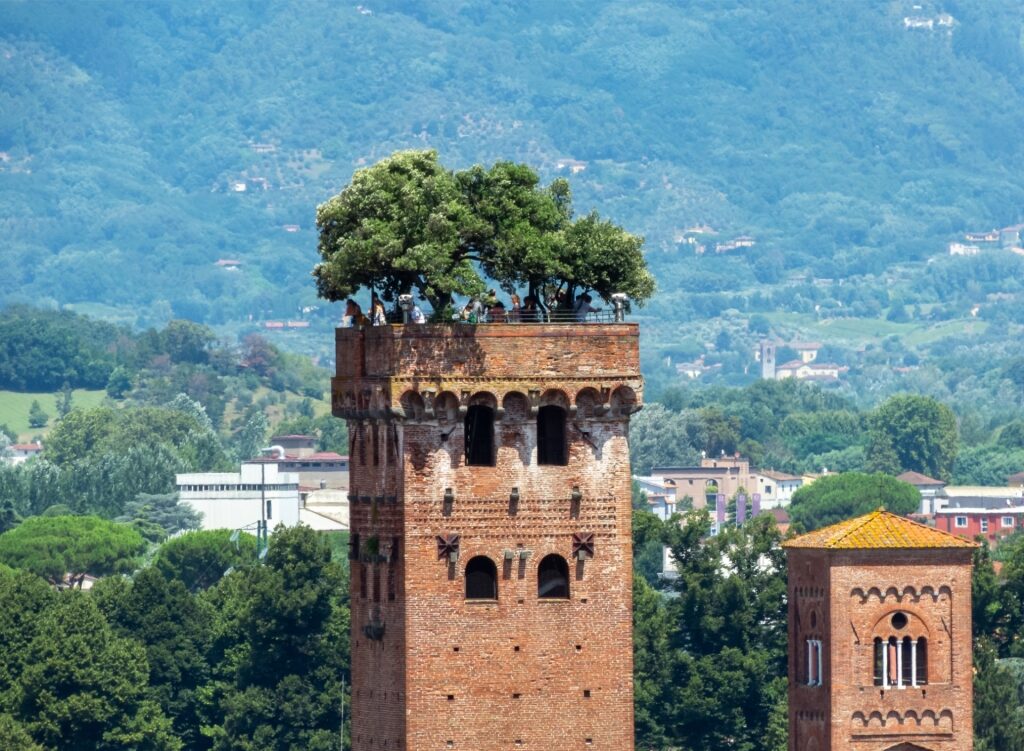
Torre Guinigi
The Torre Guinigi is a tree-covered tower with panoramic views of Lucca and the surrounding countryside. The tower, built in the 14th century, has a small collection of oak trees on top that gives it its distinctive appearance.
Climb to the top to enjoy the vistas. On a clear day, you’ll see the Tuscan hills in the distance, and even as far as the coast.
Other views include the walls, some of the town’s other surviving towers, and the red-tile sea of roofs, all spread out below you, making the climb around 230 steps worthwhile.
Visit Lucca’s Botanical Garden
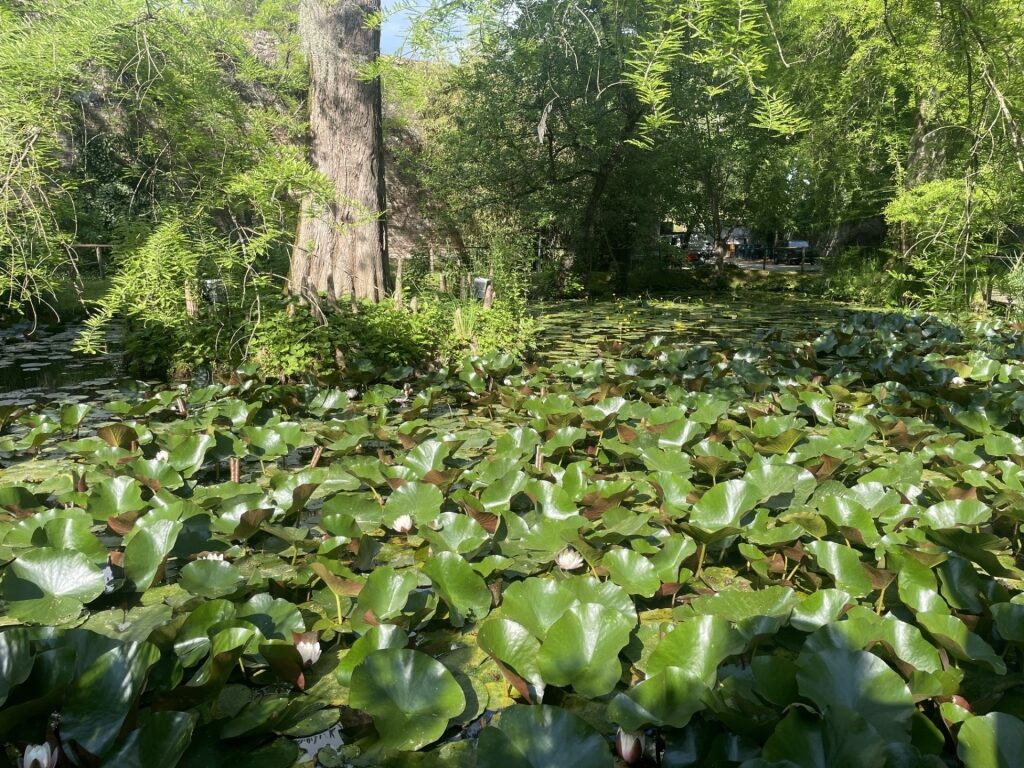
Lucca’s Botanical Garden
Tucked into a corner of the old city walls lies Lucca’s Botanical Garden, or the Orto Botanico Comunale di Lucca, a patch of shade and green at the heart of the city.
Established in 1820, this two-hectare garden, founded by Duchess Maria Luisa, is home to greenhouses, old trees, a small lake, and plenty of shade, making it perfect for cooling off on a hot day.
Stroll all the paths, admire the greenery and lake, then swing by the Botany Museum to learn more about the world of trees and plants.
Get to Know the Piazza dell’Anfiteatro
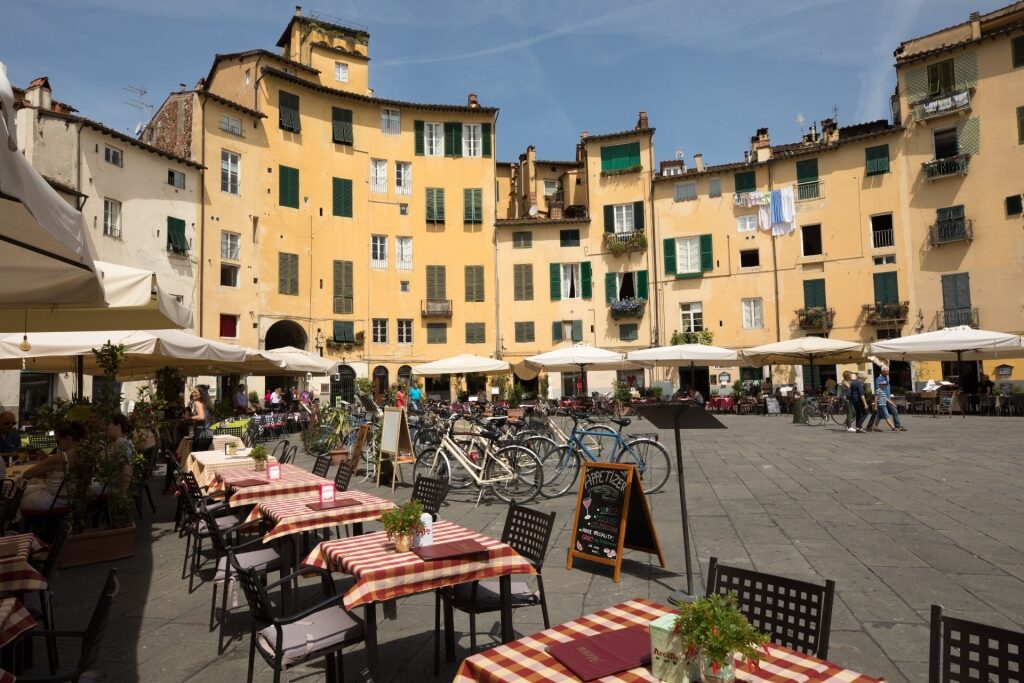
Piazza dell’Anfiteatro
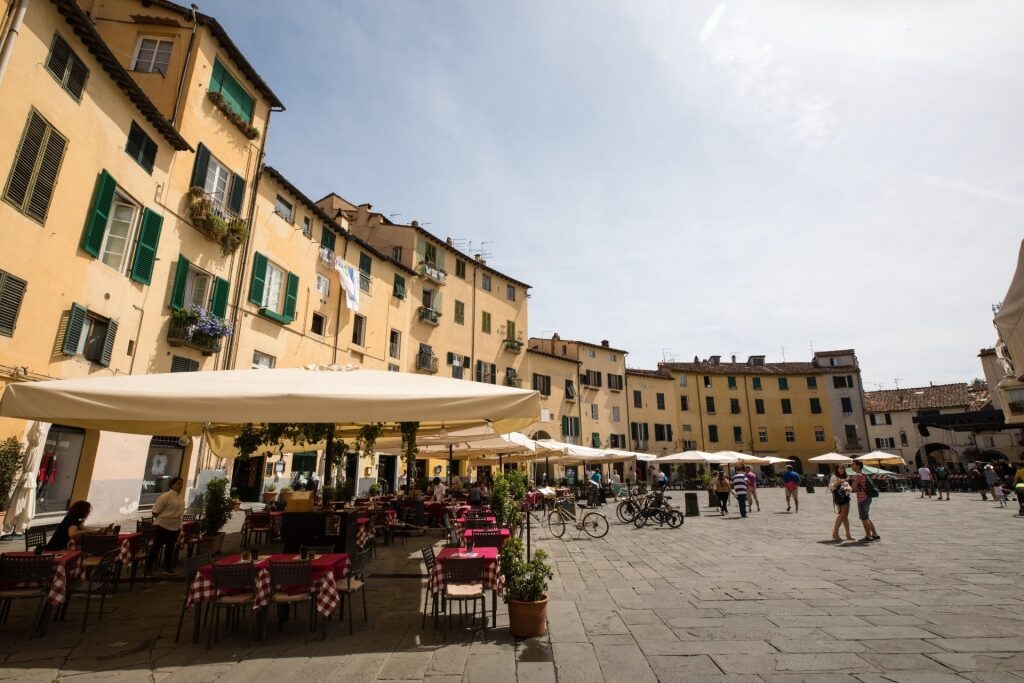
Head to one of Lucca’s most-frequented landmarks, the Piazza dell’Anfiteatro. This large, elliptical square, built on the remains of a former Roman amphitheater, follows the original structure’s general contour.
The square is instantly recognizable by its sweep of buildings, pastel façades, and the bustling café tables along its rim.
Pick a seat at a café, grab an espresso or a glass of wine, and soak in the piazza’s atmosphere as you observe people strolling in and out, speaking in different languages.
Aim for a late-afternoon arrival to bask in the sunlight that spills across the umbrella-covered tables to soak in the city’s pulse best.
Read: How to Order Coffee in Italy
Explore the Duomo di San Martino
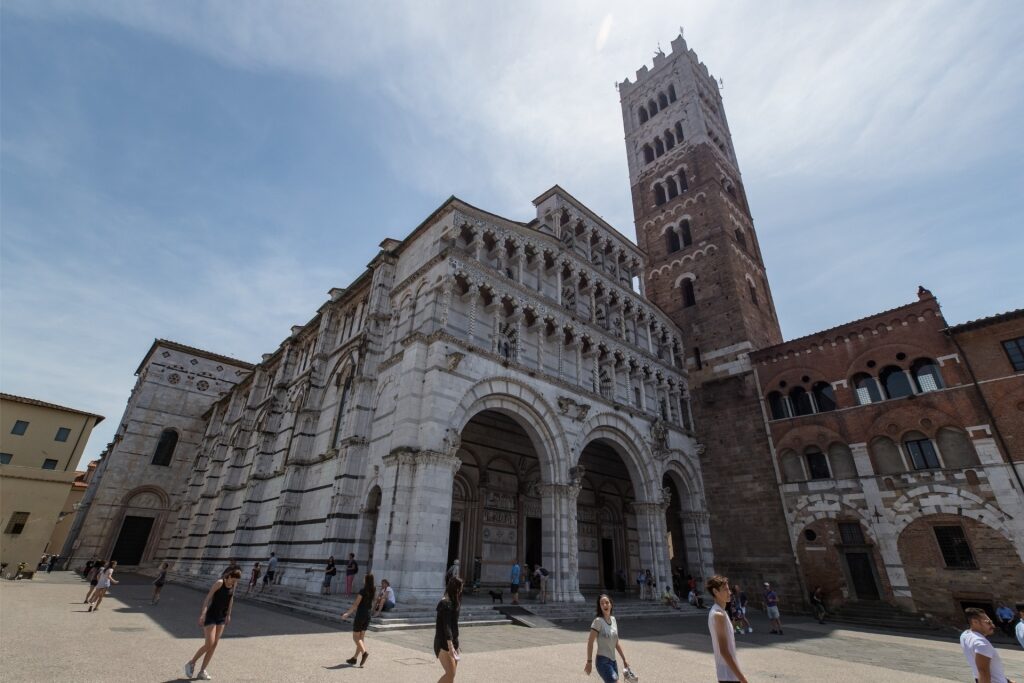
Duomo di San Martino
When visiting Lucca, stop by the town’s cathedral, the Duomo di San Martino. It dates back to 1060 and has been worked on over the centuries. When you enter, take note of the exceptional stonework and the sunlight streaming through the ornate stained glass.
The Romanesque and Gothic Duomo is home to the large wooden Volto Santo crucifix and the Ilaria del Carretto funerary monument, a tomb built for a noble lady by the sculptor Jacopo della Quercia.
If you so choose, you can climb up to the bell tower, huffing and puffing up the many steps for sweeping panoramas over Lucca.
Ramble Along Via Fillungo
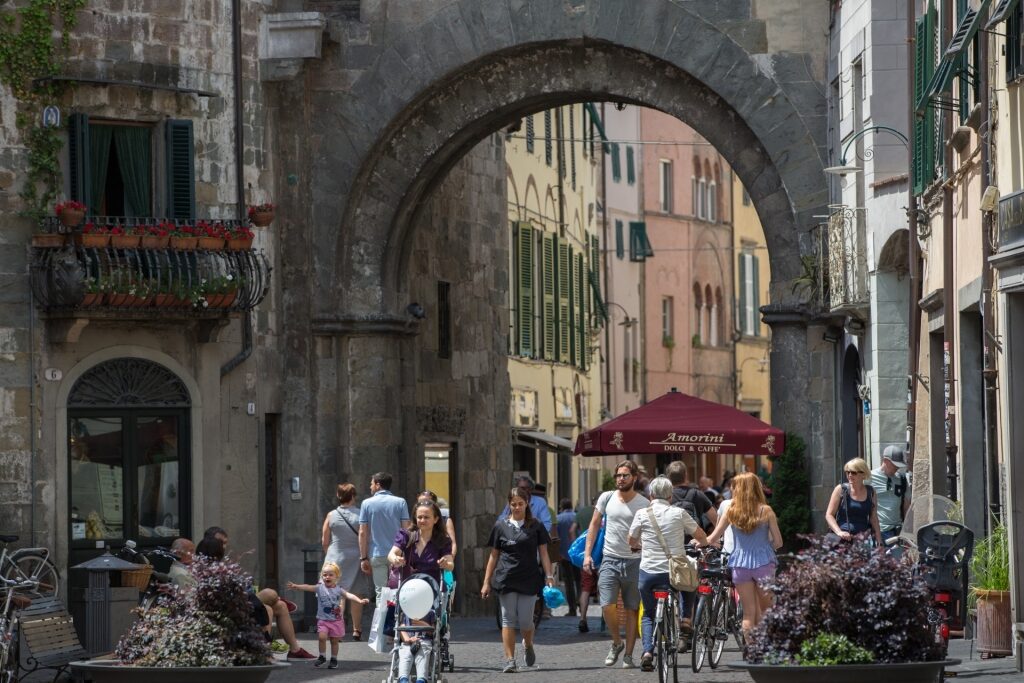
Via Fillungo
Via Fillungo is a long pedestrian street in the center, flanked by elegant buildings, and home to boutiques, gelaterias, and cafés.
You’ll find polished stone underfoot and the sweet scent of coffee from one of the nearby roasters. As you walk, stop by a local artisan store and browse: pick up a small Italian souvenir or let yourself get distracted by the ceramics and leather bags for sale.
Locals in this area are more accustomed to foot traffic and thus more relaxed, so a friendly greeting of “buongiorno” or a polite “grazie” just might earn you a kind smile.
Check Out the Giacomo Puccini Museum
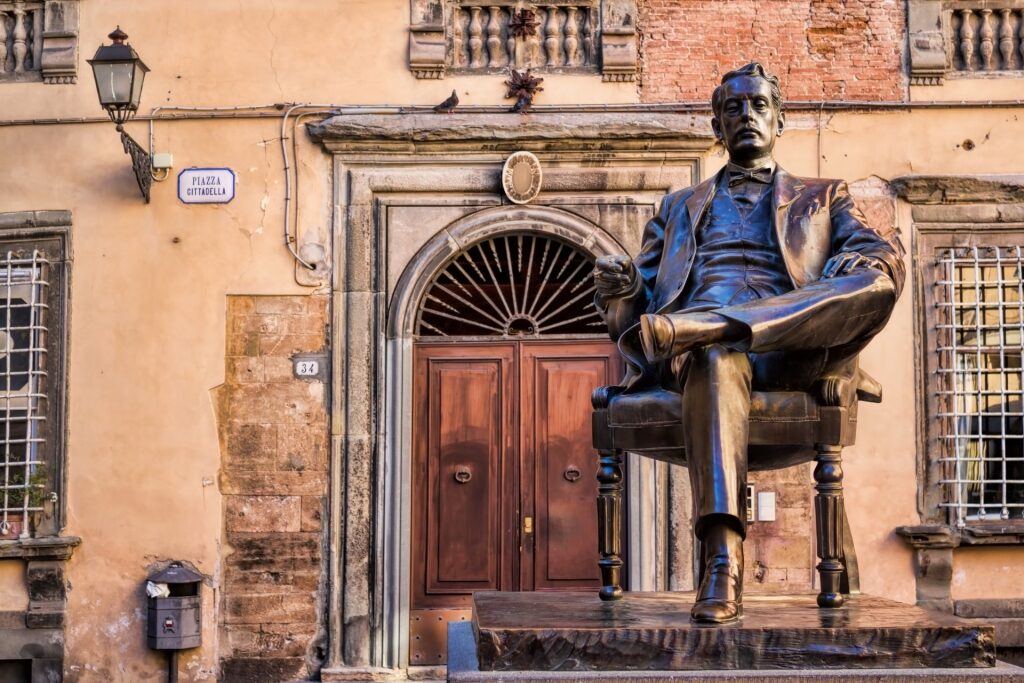
Giacomo Puccini Museum
If you’re interested in opera, be sure to visit the birthplace of Italian composer Giacomo Puccini and the museum dedicated to his life and work.
The house where he was born and spent his childhood is now a museum. Inside the home, you’ll find exhibits on Puccini’s family, his early life in Lucca, and his development as a composer.
You can see family letters, photos, Puccini’s early piano, a collection of his opera scores, and other musical manuscripts.
A visit to the Casa Natale di Giacomo Puccini is one of the best things to do in Lucca, especially if you’re musically inclined.
Food & Drink
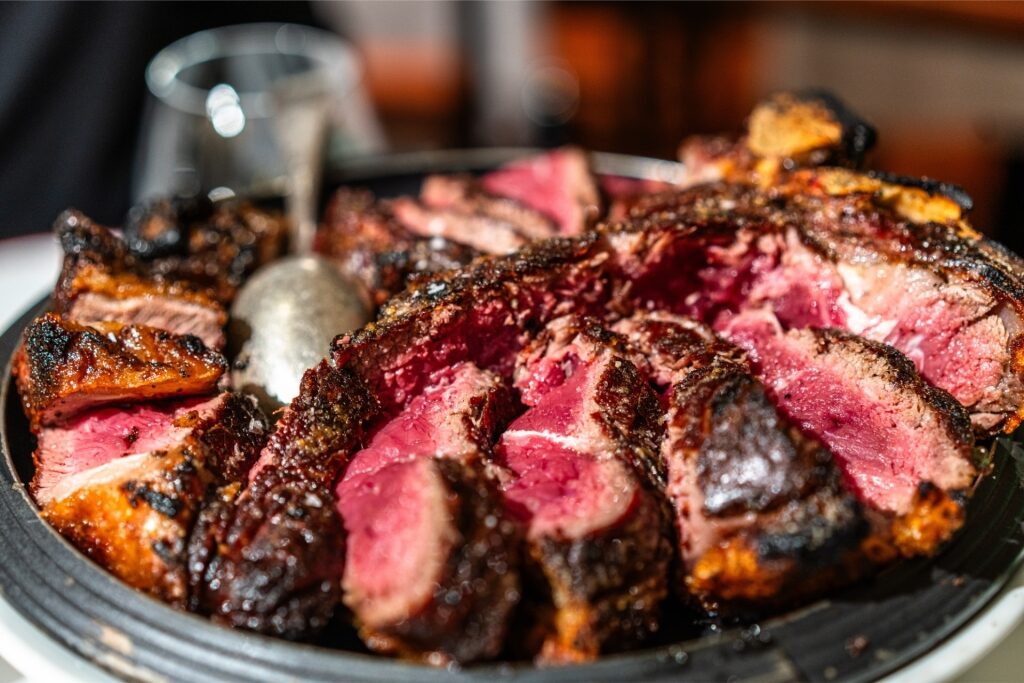
Bistecca alla Fiorentina
The rhythm of dining in Lucca is unhurried, with a focus on local ingredients. Tuscan specialties are well represented here, with lots of hearty pasta, slow-roasted meats, olive oil, and rustic bread. Lucca even offers up some culinary twists of its own.
Begin your exploration of Lucca’s dining scene at Buca di Sant’Antonio, a historic trattoria known for local cuisine and handmade pasta. Order the tordelli lucchesi, meat-filled pasta with ragù, or a grilled bistecca alla fiorentina for some tasty T-bone steak.
Continue your tour at Da Leo, another local favorite that features cinghiale wild boar ragù or, for lighter fare, dishes like vegetable soup.
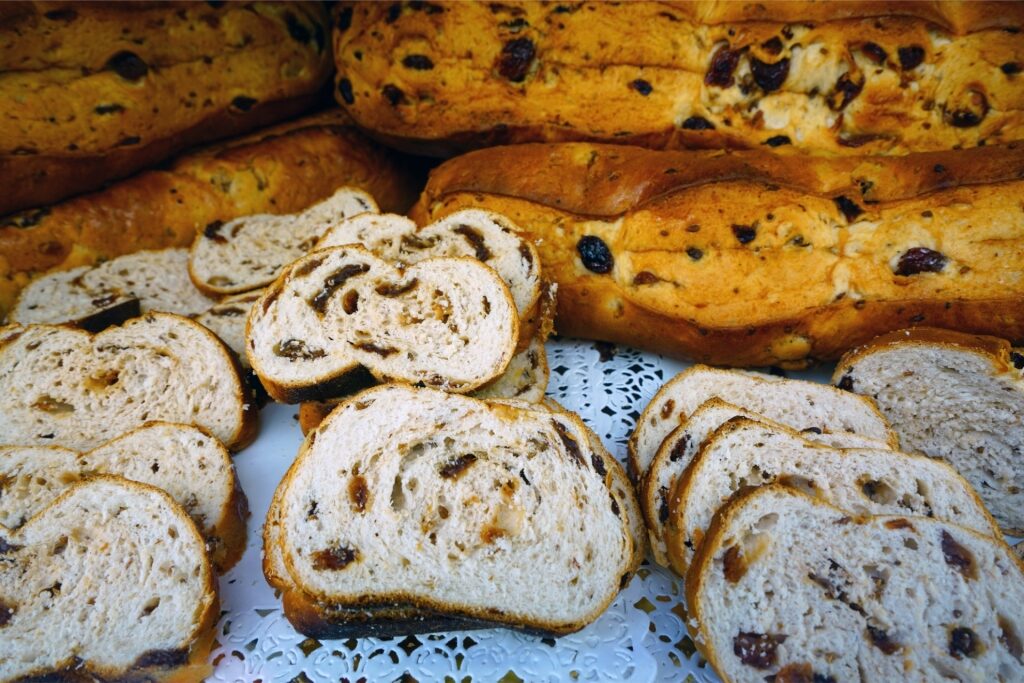
Buccellato
For sweets, check out Pasticceria Taddeucci, also known as Buccellato Taddeucci, filled with pastries and the scent of almond paste baking, which is used to make buccellato, a sweet bread, along with aromatic coffee.
If you prefer something more casual, Pizzeria da Felice is ideal for a relaxed lunch: the thin-crust pies are perfect for sharing, with fresh tomatoes, basil, and mozzarella from local producers.
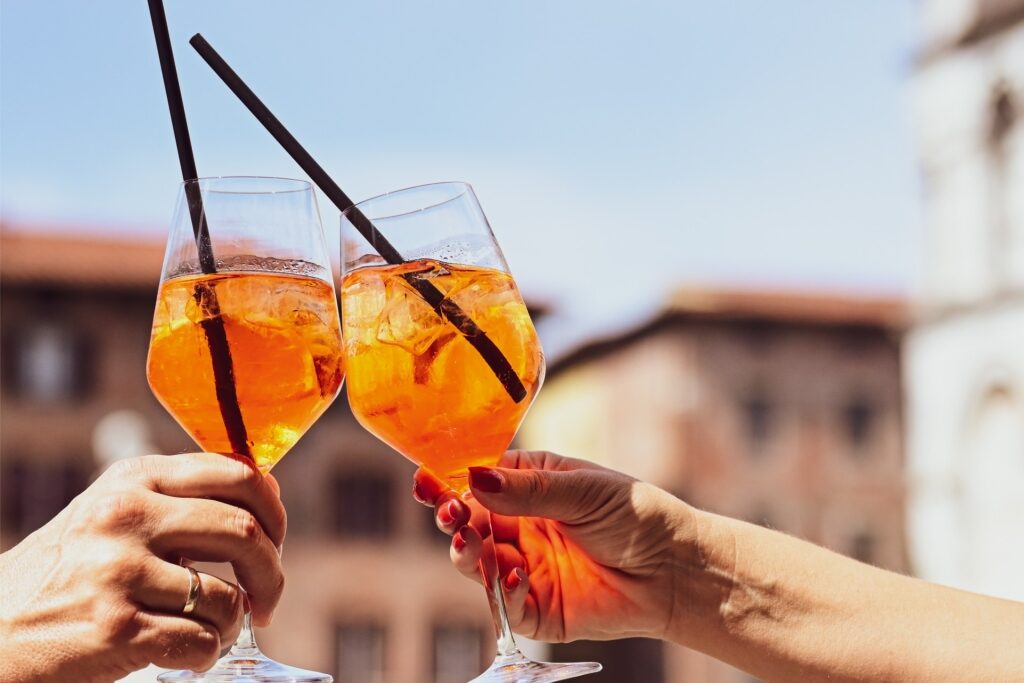
Bar in Lucca
You can also grab a drink at Franklin ’33, a speakeasy-style bar where the cocktails feature inventive takes, while you listen to blues and jazz. For a more Tuscan dining experience, try Locanda Buatino, with seasonal menus and a wine list that favors local vintages.
Gigliola is a laid-back eatery and wine shop serving dishes like beef tartare, fried chicken, and Italian- and Asian-inspired fare.
Best Time to Visit Lucca
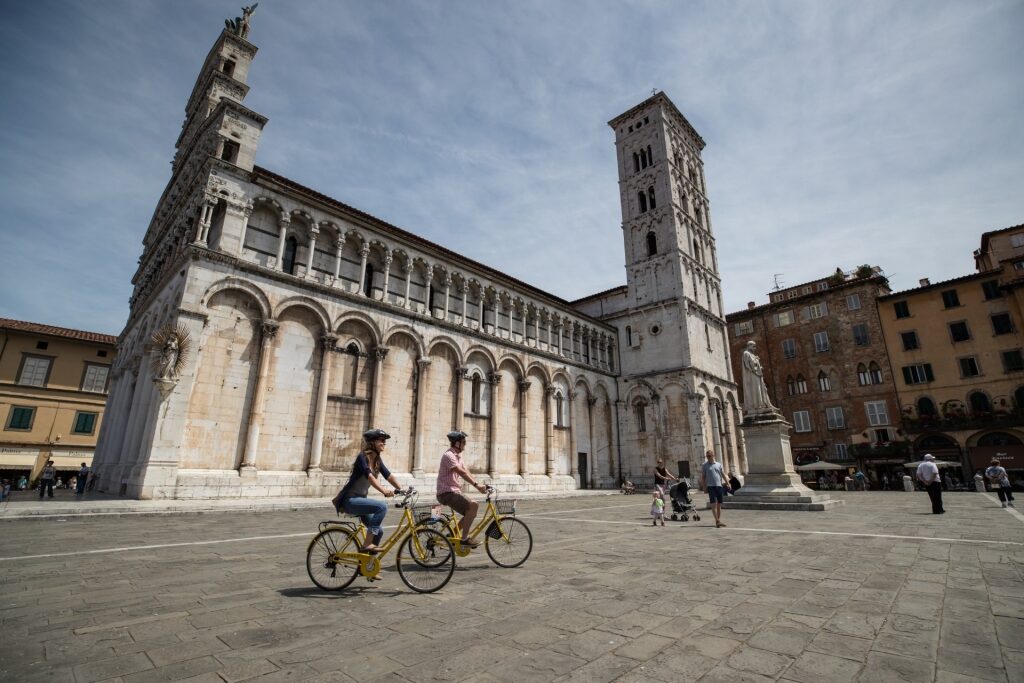
Biking in Lucca
The high-season window from mid-June through August brings sun, longer days, and livelier afternoons and evenings, but also many more visitors.
Aim for the weeks and months before or after, including April and May, early June, and September, to enjoy the warm weather with slightly fewer tourists and a more relaxed feel.
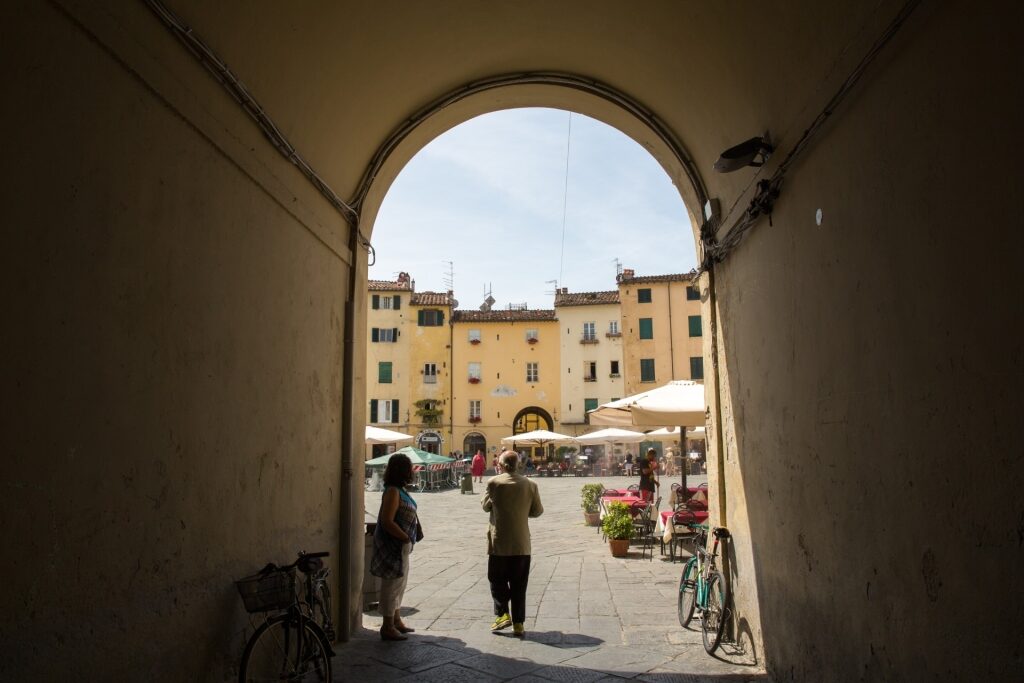
Piazza dell’Anfiteatro
If you’d like to experience less-crowded streets, schedule your main walking routes early in the morning or after lunch. Late afternoon and early evening are the most “local-friendly” hours.
For an even calmer vibe with mild temperatures, late October—just before the cooler days set in—is also an excellent time to visit, if you don’t mind a bit of rain. Some restaurants or attractions will have shortened hours in October as they prepare for the winter months.
FAQs
What is Lucca, Italy known for?
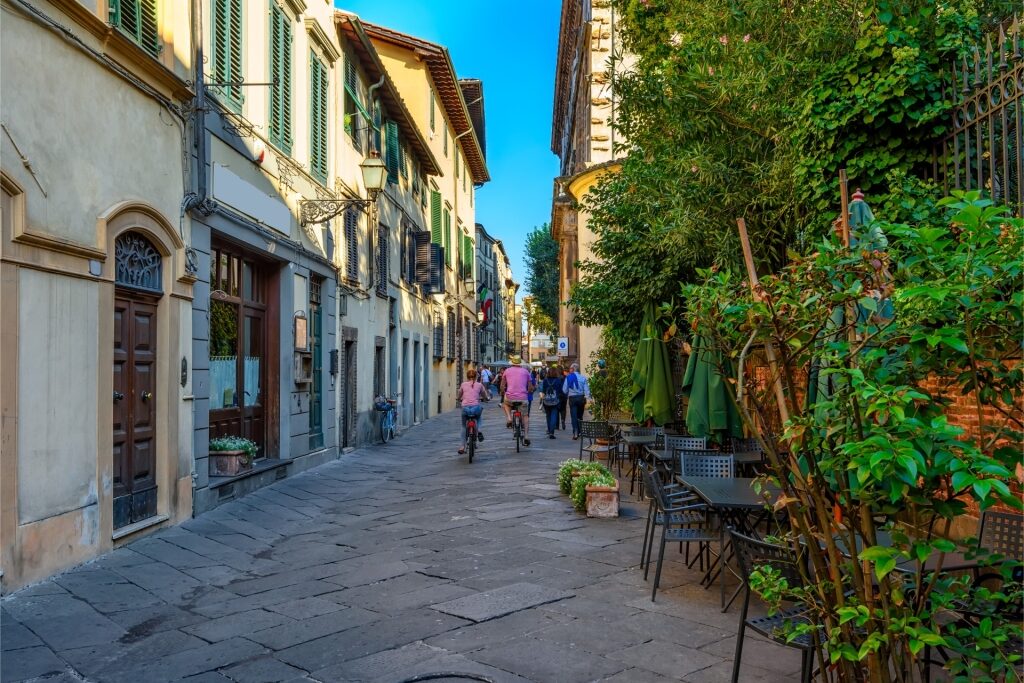
Lucca
Lucca is known for its intact Renaissance walls, picturesque medieval streets, and as the birthplace of the famed opera composer Giacomo Puccini.
What are the best things to do in Lucca?
Biking in Lucca
You can walk or cycle along the impressive city walls, climb the Torre Guinigi for outstanding city views, or enjoy a coffee in Piazza dell’Anfiteatro and people-watch for hours on end.
What food is Lucca known for?

Buccellato
The city is famous for tordelli lucchesi, homemade pasta stuffed with meat and herbs, and buccellato, a sweet, anise-flavored bread.
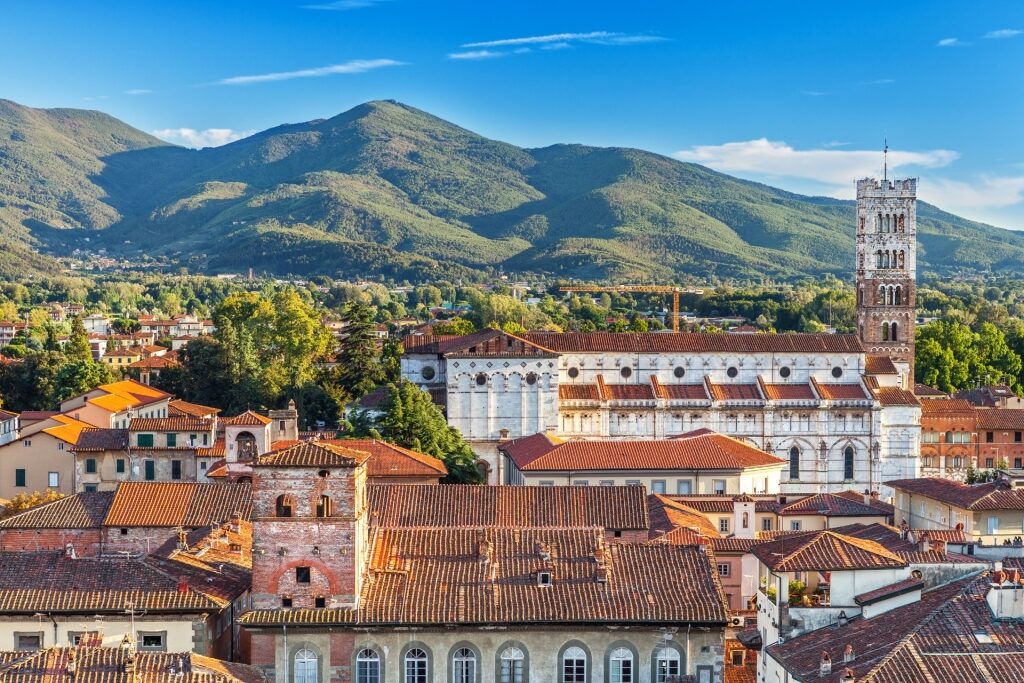
Lucca
Book a cruise to Tuscany and uncover the allure of Lucca, where every step, taste, and historic site offers an authentic slice of Tuscan life.