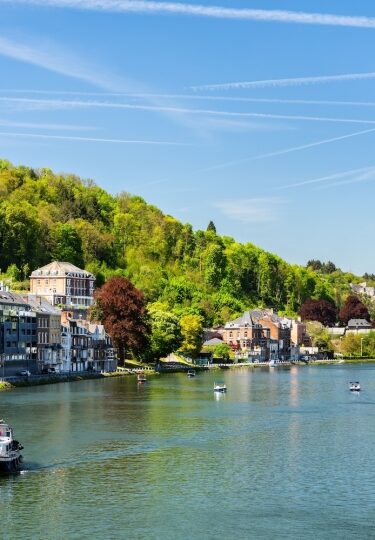
The Maas River is the Dutch name for the Meuse River, an important waterway in Western Europe that flows across France, Belgium, and the Netherlands. For those interested in visiting the area or exploring Dutch river cruise itineraries, understanding this nomenclature is key to grasping the river’s and region’s shared identity.
In predominantly Francophone Wallonia, you’re more likely to hear “Meuse.” In Dutch Limburg, “Maas” is more common. But it’s the same storied river, one that connects vibrant cultural capitals, medieval towns, and rural communities.
Sailing along the Maas reveals a landscape of soft hills, old stone bridges, and historic promenades. By weaving together different aspects of the landscape in the Low Countries, the Maas provides an enchanting gateway into the heart of Western Europe.
Quick Facts About the Maas River
Let’s set the scene with some basic information about the Maas:
- Names: Meuse (French), Maas (Dutch)
- Total length: Approximately 590 miles (950 kilometers)
- Countries traversed: Originates in France, flows through Belgium, and across southwest Netherlands up to the North Sea via the Rhine–Meuse–Scheldt Delta
- Key cities along the river: Verdun, Sedan, Namur, Liège, Maastricht, Venlo, and Rotterdam
If you look at a Maas River map, you’ll see its headwaters are actually in France, on the Langres Plateau in the northeast of the country. From there, the Meuse carves a northward path through the Ardennes highlands before entering Belgium. As it crosses into the southern Netherlands, the river continues under its Dutch name, Maas, winding through the province of Limburg. It then hooks westward toward the North Sea.
Terminology can be complex in this part of Europe because people and the history there are quite multilingual. If you’re in the Netherlands, people will call it “the Maas” River. And if you’re wondering about the difference between Holland and the Netherlands, check out this guide.
The Dutch portion of the Maas is bookended by two significant cities. It enters Dutch territory near Maastricht, in the far south of the country, before flowing past Roermond and Venlo and continuing westward toward the Hollands Diep. It ends in the Rhine–Meuse–Scheldt delta, near Rotterdam, one of the most important port cities in all of Europe. On a Maas River cruise, you can see both cities, with Maastricht acting as a cultural connection point anchoring itineraries that celebrate regional heritage.
The river’s moderate flow, well-maintained lock systems, and scenic banks make it an ideal water route. Its gentle nature is perfect for novice cruisers. If that’s you, you can check out this River Cruise 101 guide to learn what to expect.
Cruising the Maas River
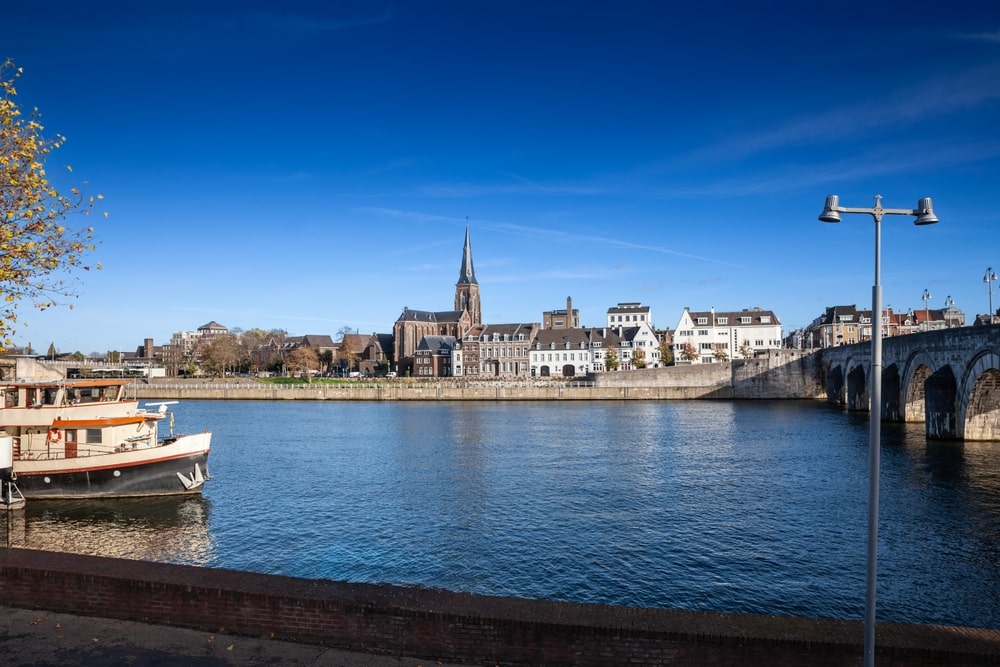
The medieval arched Sint Servaasbrug spans the Meuse (Maas) River toward the Wyck district and the spire of Sint-Martinuskerk in Maastricht, Netherlands.
Because of the many interesting cities dotted along its route, the Maas integrates well into a river cruise that offers select regional itineraries. A trip up the river allows guests to immerse themselves in numerous cultural treasures of the Netherlands and Belgium.
The river has plenty of scenic stretches that offer panoramic views of rolling limestone hills, manor houses, grazing cattle, and charming riverfront villages. You can meander along the river as it wends and winds its way through the Low Countries with tranquility and relaxation.
But of course, there are also port destinations where ships can dock for extended periods in historic settlements. Most notable is Maastricht, where guests step ashore to explore museums, historic squares, and local dining. Stretches of the Maas are included on several Dutch and Belgian Celebrity River Cruises℠.
Why Visit Maastricht?
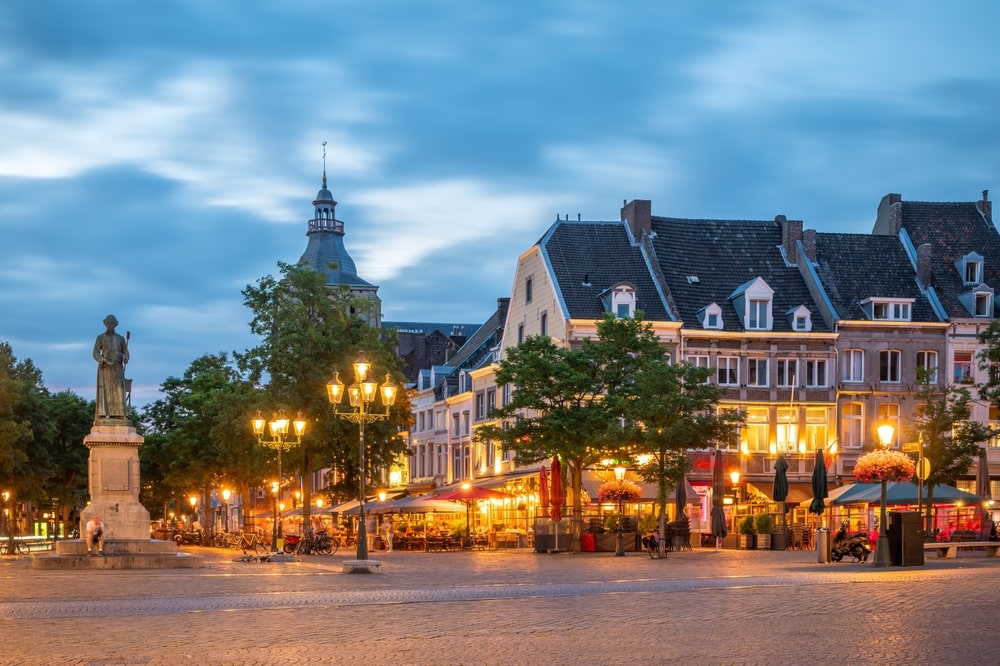
Warmly lit café and restaurant terraces glow across the Markt square at twilight in Maastricht, watched over by the statue of inventor Jan Pieter Minckelers and the spire of Sint-Matthiaskerk.
Maastricht blends a long history with a relaxed culture and architectural beauty. Tucked between the Belgian and German borders, the city has a distinct character that sets it apart from the canal-laced towns of the north. Its strategic position along the river made it a vital Roman river crossing over two thousand years ago, and its layer upon layer of heritage is still evident today.
Both Maastricht’s geography and social life emanate from Vrijthof, a sweeping cobblestone square that acts as the city’s epicenter. Flanked by centuries-old architecture and leafy trees, the square’s most notable sights are two churches. First, there’s the Romanesque Basilica of Saint Servatius (Sint-Servaasbasiliek), whose construction began way back in the 11th century. And there’s also the neighboring Gothic Saint John’s Church (Sint-Janskerk), recognizable by its vibrant red-painted bell tower. The terraces here provide a great ambience in which to enjoy a meal or a delicious coffee.
Maastricht has a pedestrian-friendly historic core that makes it easy to explore locales like the Stokstraat Quarter. This medieval neighborhood is now one of the city’s most charming districts, lined with restored 17th- and 18th-century townhouses, independent boutiques, and, best of all (in my opinion), several delectable chocolatiers.
Strolling toward the river leads to the Saint Servatius Bridge (Sint Servaasbrug). An arched stone bridge dating to the 13th century, it’s quite possibly the oldest standing bridge in all the Netherlands. Crossing the bridge grants views of the river and connects to the Wyck neighborhood, famous for its contemporary art galleries, antique shops, and trendy restaurants.
Maastricht’s profound but approachable history makes it an elite choice among river cruise cities.
The Maas River and Tulips
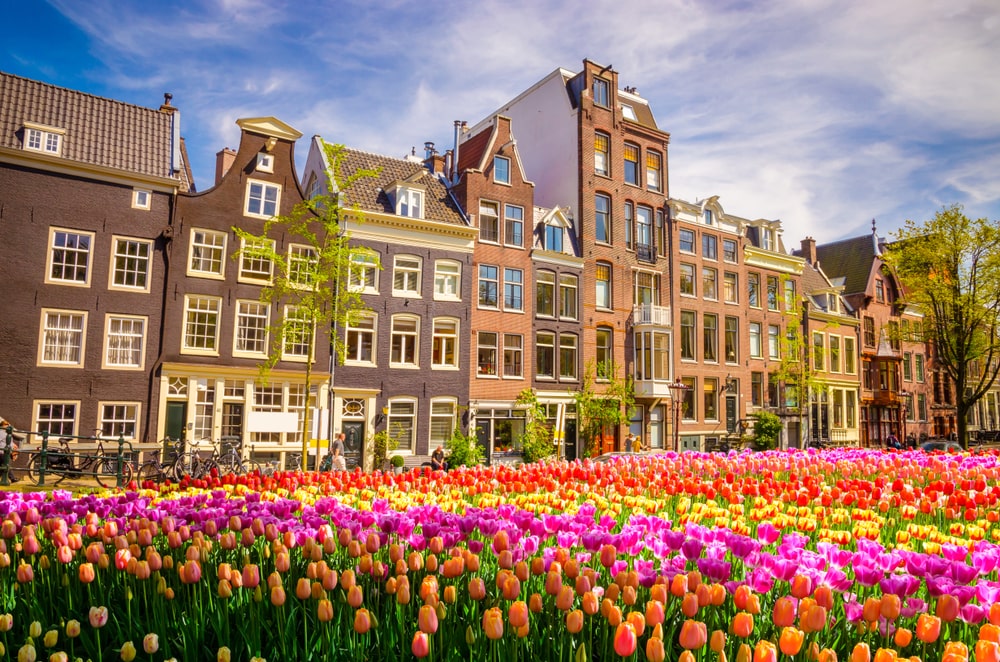
A vibrant bed of colorful tulip blooms in spring before a row of historic, gabled brick canal houses in Amsterdam, Netherlands.
When discussing travel to the Netherlands, it would be remiss not to mention what the country may be most famous for: tulips.
Spring in the Low Countries is a truly magical time, and the Maas River is no exception. As winter thaws, the Dutch countryside bursts to life with blooming bulbs, lush pastures, and more daylight. Sailing the southern stretch of the Maas in spring means you get to experience some truly iconic horticultural displays, from the famous flowerbeds of the western provinces to the orchards and gardens of Dutch Limburg.
Cruising the Maas makes it easy to pair trips to some of the best tulip fields in the Netherlands with peaceful sailing past the verdant hills and historic stone castles. And you can extend your time ashore in Amsterdam with Before and After Stays.
From its iconic colorful Dutch architecture to its shimmering canals and urbane locals cycling to and fro, Amsterdam offers the perfect environment for an extended pre- or post-cruise stay. Enjoy curated hotels, complimentary breakfasts, and Discovery Collection℠ tours, each led by a Local Storyteller℠. Explore all Before and After Stays and see what you can discover.
FAQs About the Meuse River
What is the Maas River?
The Maas River is a major European waterway flowing approximately 590 miles (950 kilometers) through France, Belgium, and the Netherlands before emptying into the North Sea. It has played an important historical, cultural, and economic role in Western Europe since the time of the Roman Empire.
Is the Maas River the same as the Meuse River?
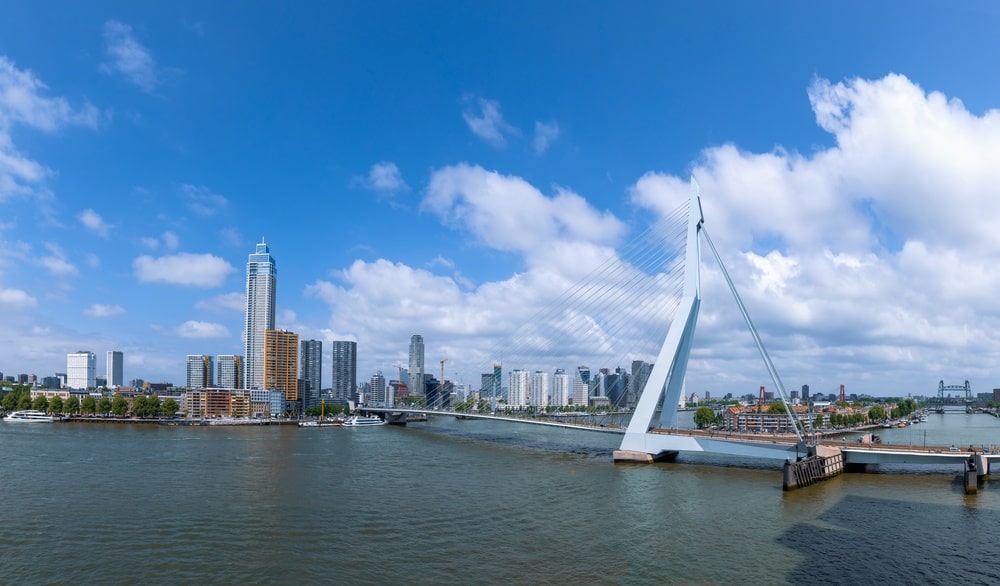
The sleek, asymmetric pylon of the Erasmusbrug spans the Nieuwe Maas river, framing the modern high-rise skyline of Rotterdam, Netherlands.
Yes, the Maas and the Meuse are the same river. “Meuse” is the French name. It’s used in France and French-speaking Belgium (Wallonia). “Maas” is the Dutch name. It’s used in Dutch-speaking Belgium (Flanders) and the Netherlands.
Where does the Maas River flow?
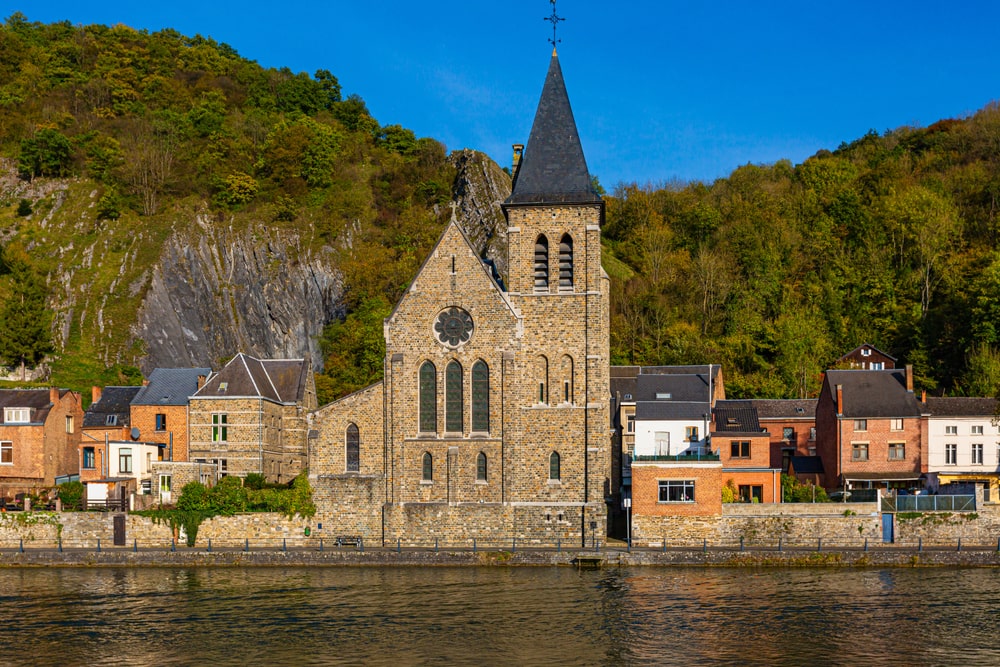
The stone facade and spire of the Church of Saint Paul (Église Saint-Paul) stand along the Meuse River against steep, wooded cliffs in Dinant, Belgium.
The headwaters are located on the Langres Plateau in northeastern France. From there, the river flows north through the Ardennes in Belgium, crosses the southern Dutch province of Limburg, and travels westward across the Netherlands to reach the North Sea via the Rhine–Meuse–Scheldt Delta.
Can you cruise the Maas River?
Yes, absolutely. Maas River cruises in the Netherlands are available as part of select European river cruise itineraries. Such trips often combine scenic cruising stretches along the river valley with extended port calls in historic destinations, such as Maastricht.
Which Celebrity River Cruises connect travelers to the Maas River?
Celebrity Cruises connects travelers to the Maas River through Dutch and Belgian itineraries sailing between Amsterdam and Brussels. These journeys feature dedicated scenic daylight cruising along the Maas corridor and full port days in Maastricht. Reviewing what’s included on a river cruise gives you an idea of how these river sailings operate and can help you plan your days on board and ashore.
Experience the Maas, Maastricht, and Europe
The Maas River offers a unique window into the heart of Western Europe. There aren’t many places in the world where you can experience ancient Roman foundations, peaceful river valleys, and vibrant Dutch culture. Maastricht itself, with its grand cobblestone plazas and limestone tunnels, is worth visiting all on its own. But getting there via the Maas means you also get to breathe in the serene beauty of the Dutch waterways. The Maas delivers an authentic travel experience that balances cultural depth with refreshing relaxation and, in spring, marvelous tulip displays.
Whether you’re motivated by colorful flowers, medieval architecture, or quiet coffee breaks along historic quays, Maas journeys provide a wonderful setting for discovery.
Explore Maas (Meuse) River cruises and discover the best of the Netherlands.