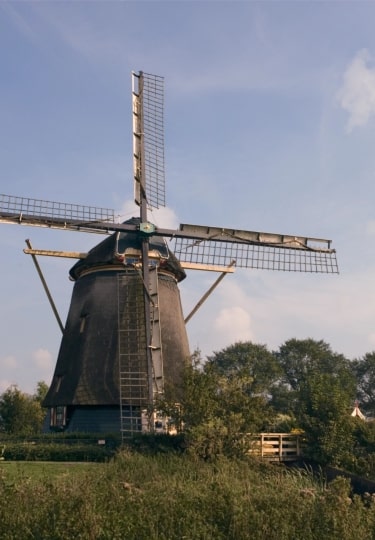
Amsterdam’s windmills are truly a sight to behold. Windmills have been central to the evolution and identity of the Netherlands since the 17th century. At one point, the country had more than 10,000 windmills. These sources of renewable energy were used for everything from grinding grain into flour to sawing wood for fleets of ships. Most importantly, windmills allowed the Dutch to reclaim a sizable amount of land from the North Sea.
Because of the capital’s dense population, there aren’t that many windmills in Amsterdam itself these days. Many were relocated or demolished over the centuries. Nevertheless, a few historic windmills still survive in the city proper. Many more are located within easy biking or driving distance of downtown Amsterdam, making for a perfect afternoon excursion.
Molen van Sloten

Molen van Sloten
Many of the windmills that travelers visit during their trip to Amsterdam are technically outside of the city limits. Molen van Sloten is one noteworthy exception.
When it first opened in 1847, Molen van Sloten was used as a polder mill. These days, however, it’s home to the Kuiperij Museum, which is all about the history of the city. There’s a model of what the city looked like in 1630, when much of the land you see today was still underwater. Visitors can also check out an informative film about the life of the painter Rembrandt.
Perhaps best of all, the windmill is located right next door to a local craft brewery. After taking in the exhibits inside the mill itself, make your way to Brouwerij de 7 Deugden for a beer. Not only are the drinks great, but they also benefit a worthy cause. The brewery doubles as a social enterprise, offering employment opportunities to individuals with disabilities.
Riekermolen
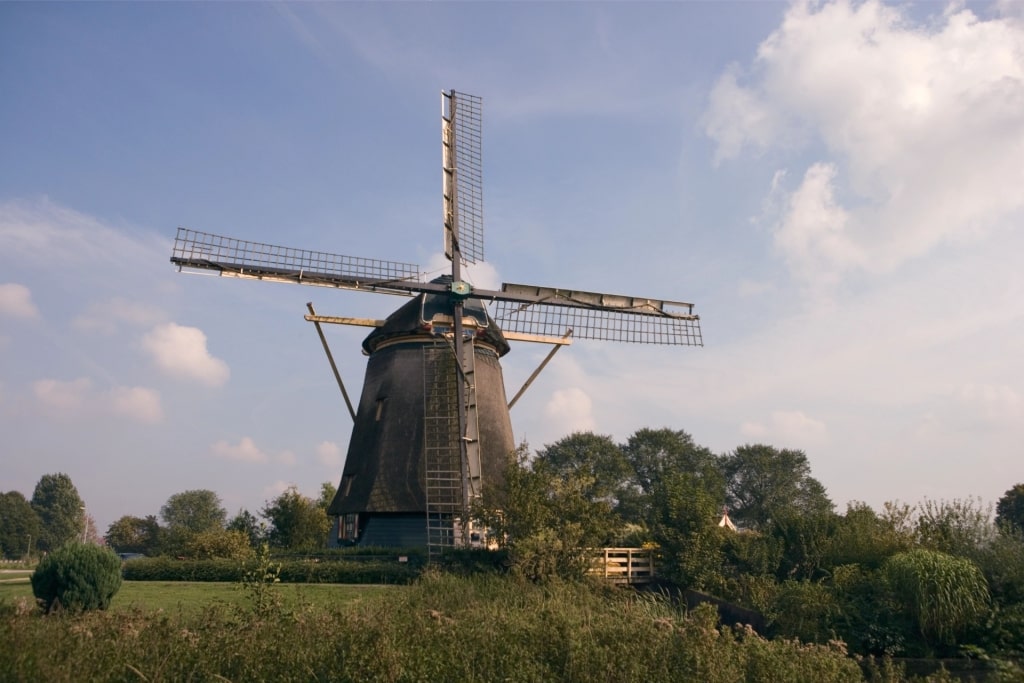
Riekermolen
The original Riekermolen was constructed in 1636 and used to drain the water from the Riekerpolder, an area of reclaimed land. Local officials decided to rebuild the mill in its current spot along the Amstel River in 1961. Be sure to check out the handsome statue of Rembrandt nearby.
The best way to visit the Riekermolen is to combine it with a trip to the nearby Amstelpark, the sprawling, lovely park toward the southern border of the city. The park is invariably a huge hit with kids, thanks to its small zoo and labyrinth. There’s also a beautifully maintained Japanese garden.
Read: Best Things to Do in Amsterdam With Kids
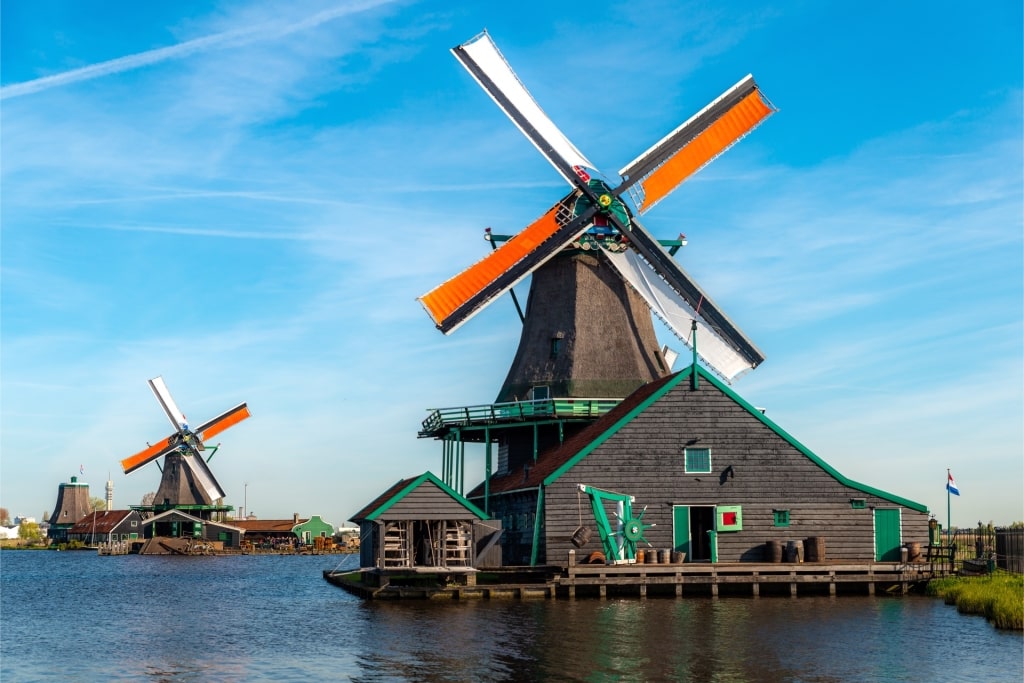
Zaansche Molen
Zaansche Molen
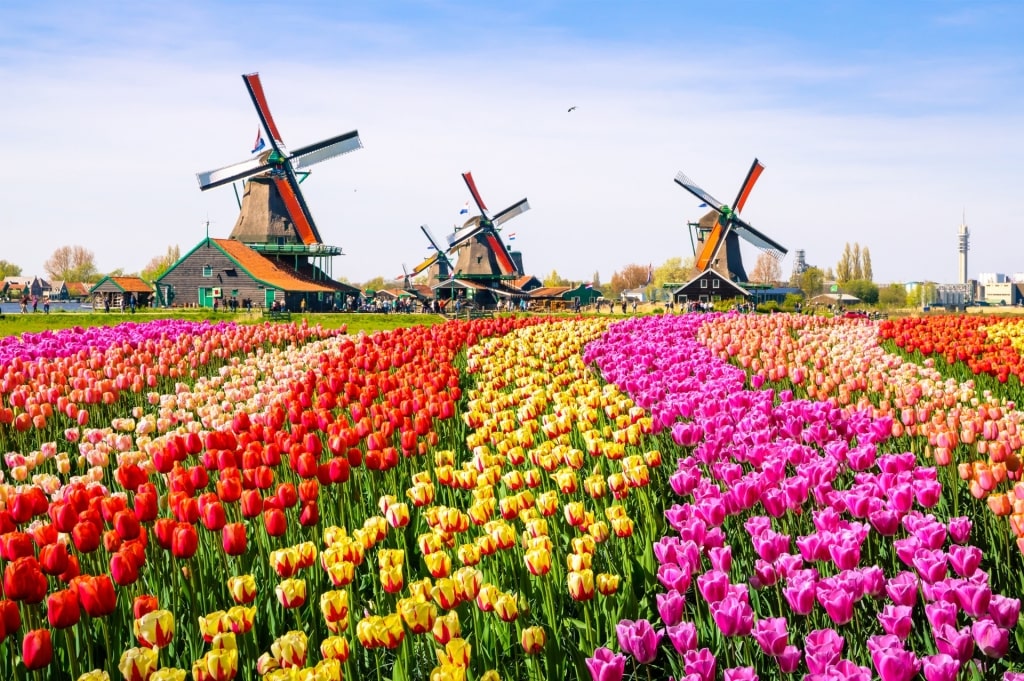
Located a 20-minute drive from Amsterdam, Zaanse Schans is essentially a walkable outdoor museum dedicated to Dutch culture. Visitors can learn how wooden klompen, or clogs, are made during a demonstration, or sample different Dutch cheeses. It’s a great option, particularly for parents with children in tow.
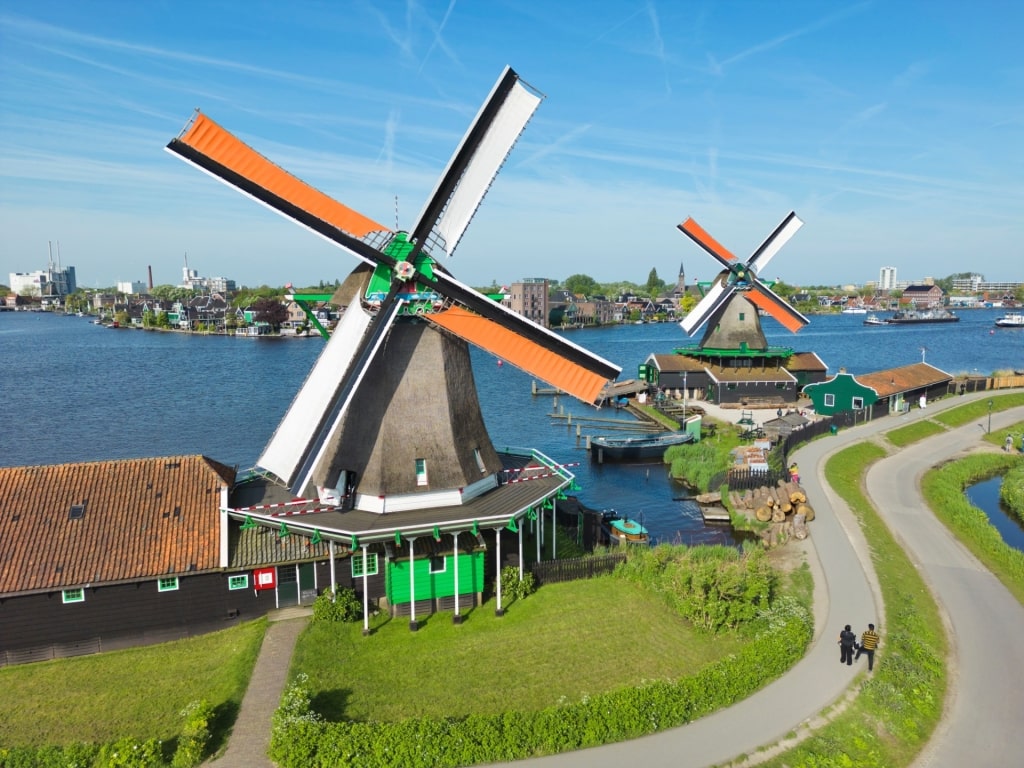
The highlight, of course, is the Zaansche Molen, a series of more than a dozen windmills located along the river. From April to October each year, visitors are allowed to go inside the structures to look around. The mills include De Kat, a former dye mill, De Zoeker, an oil mill, and De Schoolmeester, a paper mill.
Zaansche Molen
Although Zaanse Schans is easily accessible from downtown Amsterdam by bus, it’s more fun to bike. The area is on the designated Industrial Heritage Cycleseeing Route, which passes old shipyards and mills.
Keukenhof Mill
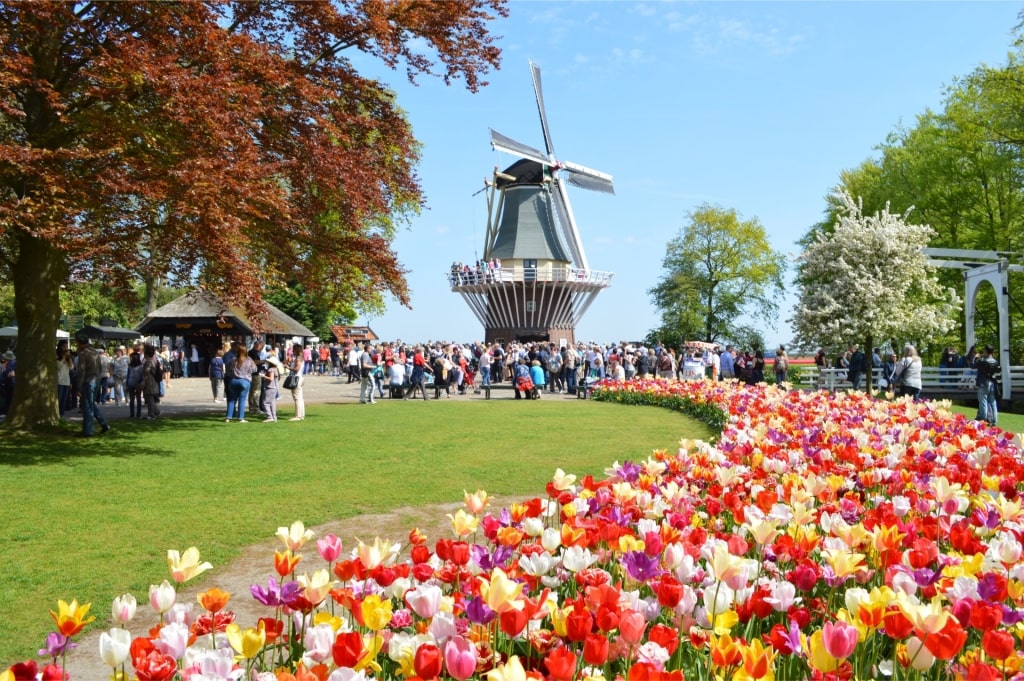
Keukenhof Mill
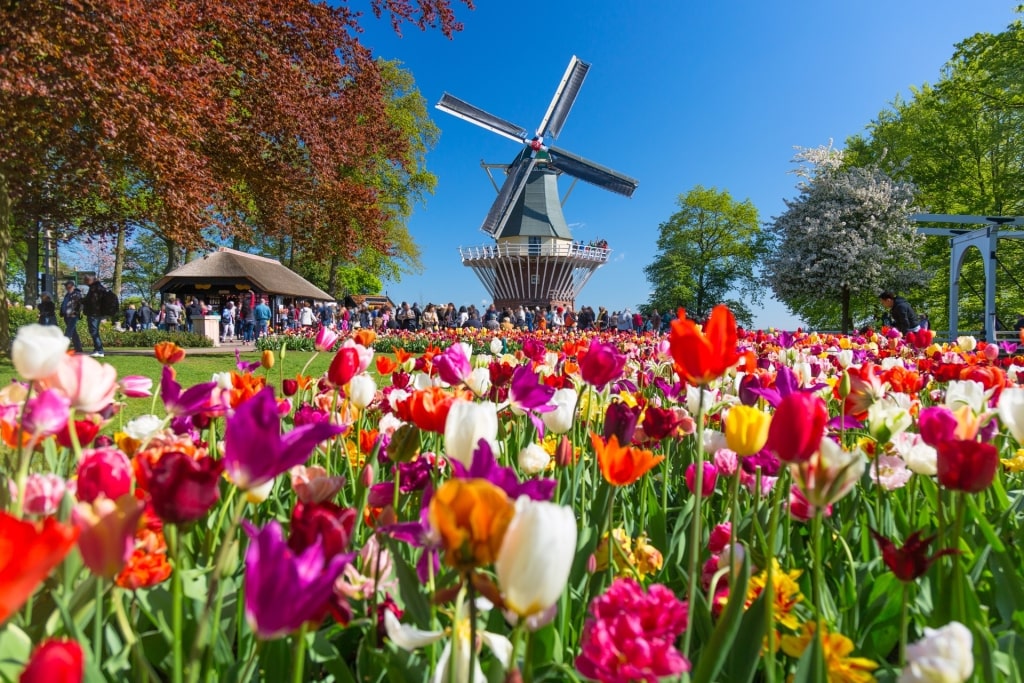
If you find yourself in Amsterdam between March and May, a visit to the Keukenhof is a must. Sometimes referred to as the “Garden of Europe,” this is one of the largest floral botanical gardens in the entire world. Each spring, around seven million flowers burst into bloom over the meticulously landscaped 79-acre grounds. Tulips are the stars of the show, naturally, but visitors can also admire roses, crocuses, lilies, and many other flowers.
First constructed in 1892, the Keukenhof’s windmill was moved to its current location in 1957. It stands proudly over a multicolored field of tulips, making for an incredible photo-op. Previously a polder mill, the structure is strictly decorative these days.
Note that the Keukenhof is one of the most popular attractions in the country, with as many as 26,000 visitors a day. For many Dutch families, a visit to the Keukenhof is an annual tradition. Be sure to reserve tickets well in advance in order to guarantee entry.
Read: Best Tulip Fields in the Netherlands
Molen De Vriendschap
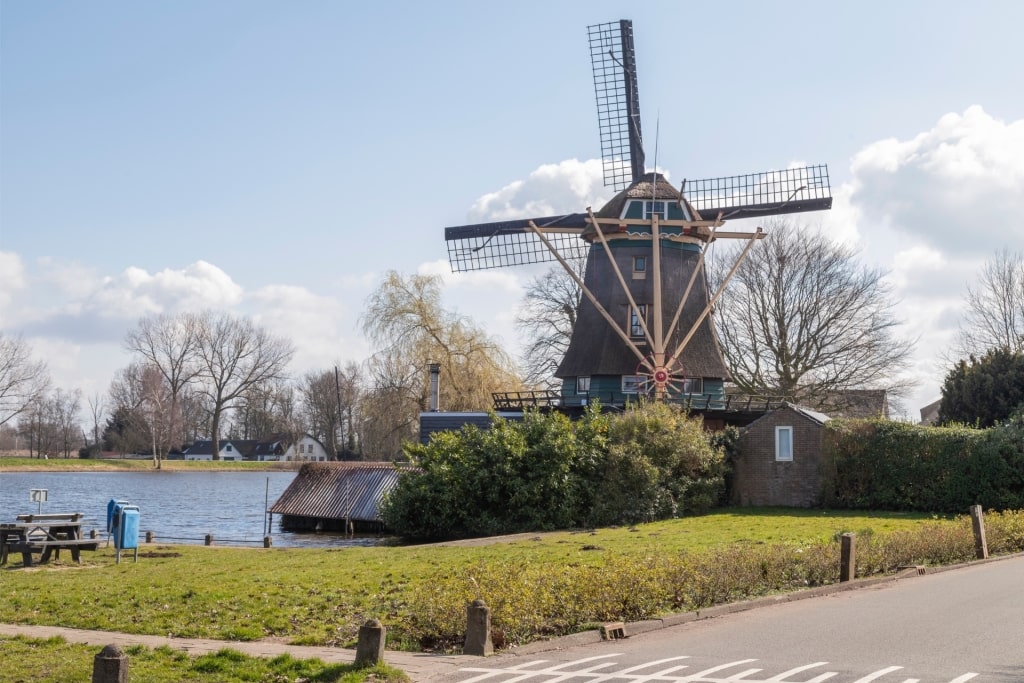
Molen De Vriendschap
Head to Weesp, a lovely area with heritage architecture located in the southeastern part of Amsterdam, to visit this volunteer-run grain mill. The Molen De Vriendschap is open to visitors on Saturdays from noon to 4 p.m. and has no entry fee.
The best part of a visit is the shop, where you can pick up flour milled on-site to take home for future baking projects.
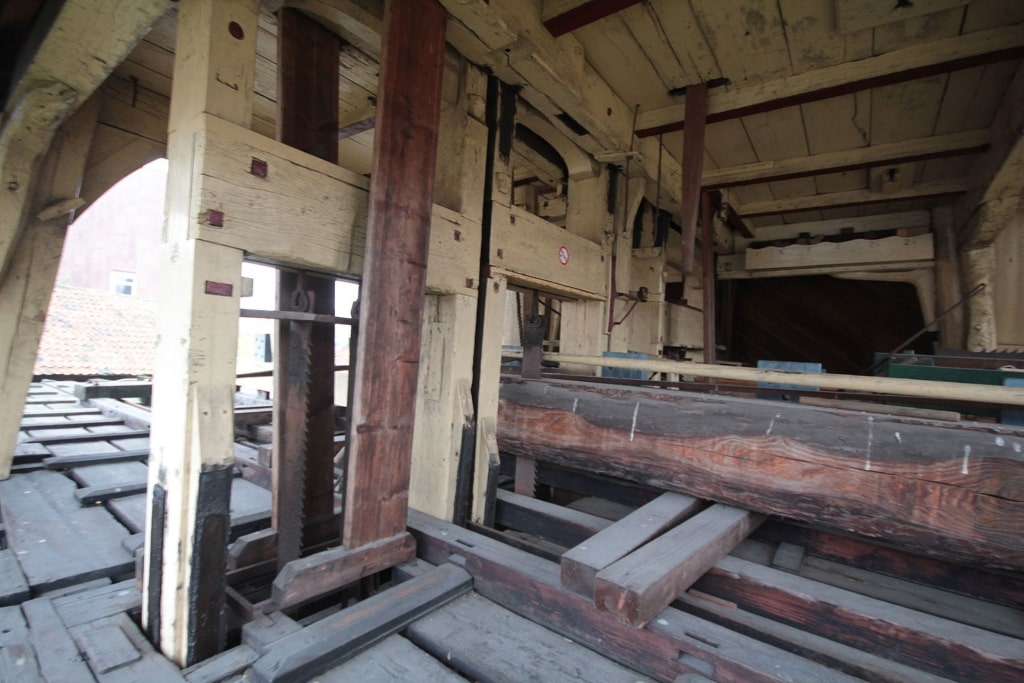
Molen De Otter
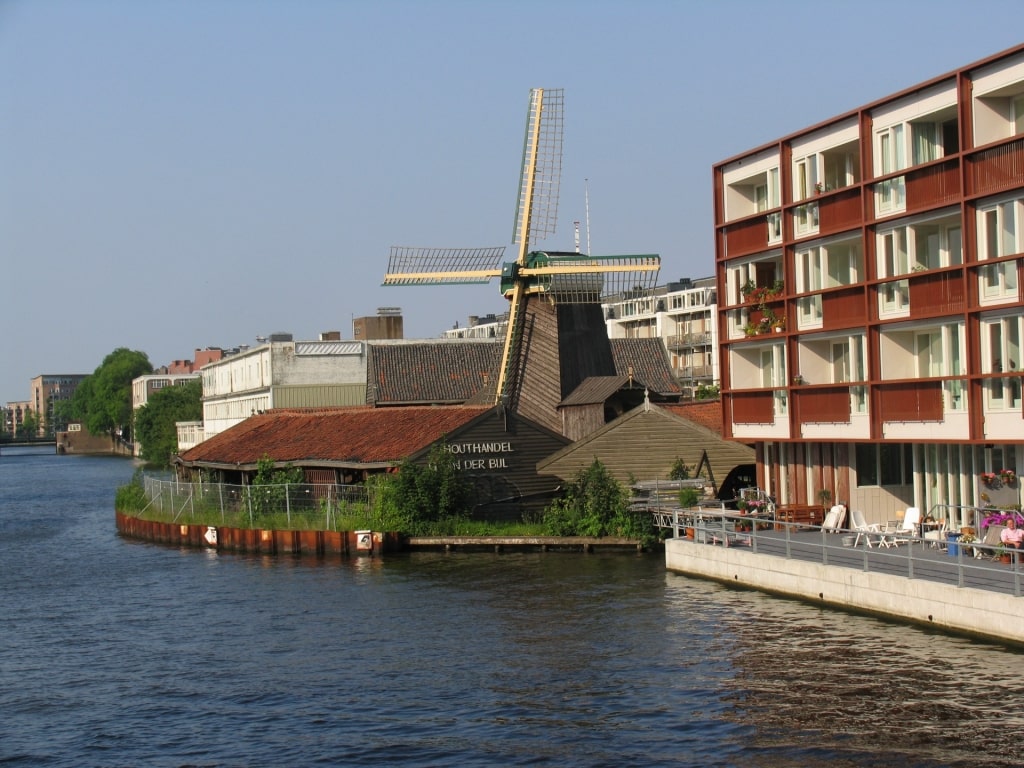
Molen De Otter Photo by
Antony Antony on Flickr, licensed under CC BY 2.0
First built in 1631, this National Monument bears the distinction of being the oldest windmill in Amsterdam. This sawmill was heavily restored in the 1990s, which is why it appears to be in such good condition today. De Otter simply means “The Otter,” although it’s believed that the full name used to be “De Kleine Otter” or “The Little Otter.”
These days, De Otter doesn’t see much action as a sawmill, but it does make for a fascinating place to learn about the history of the region. Visitors are only allowed inside on Tuesday afternoons from noon to 4 p.m., so plan accordingly.
De Gooyer
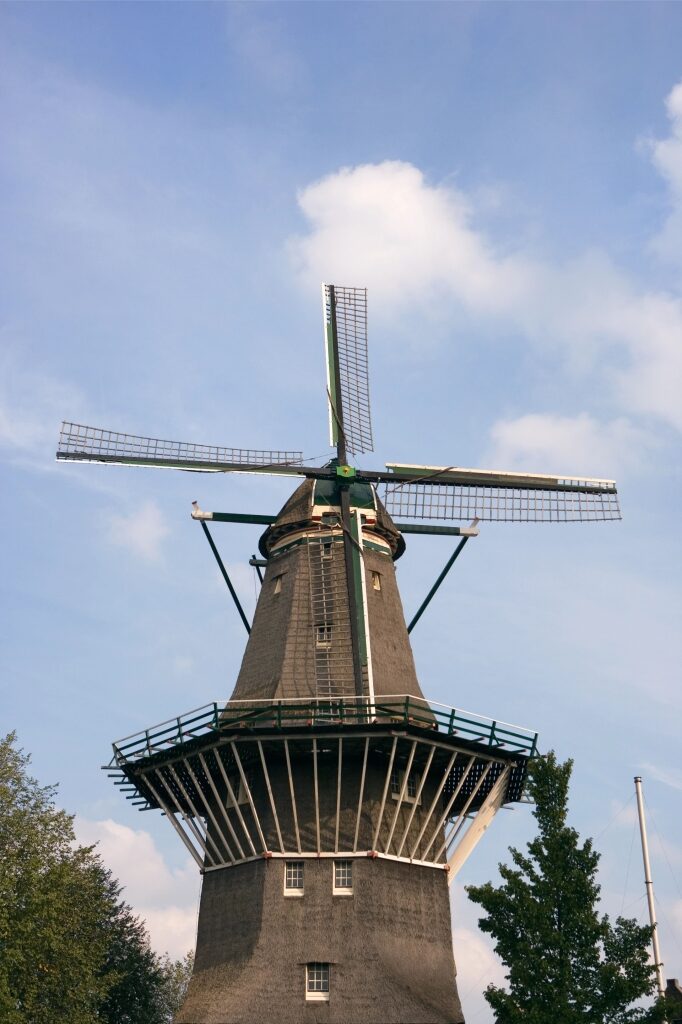
De Gooyer
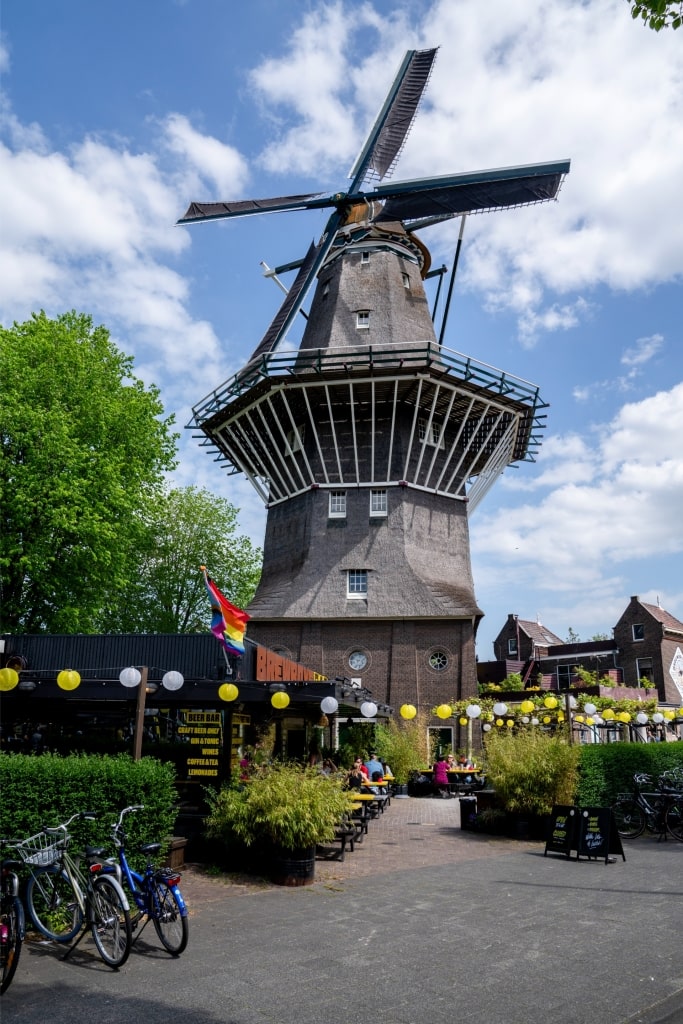
Situated right in the heart of Amsterdam Oost, this former flour mill cuts a striking silhouette over the city. At just over 87 feet high, this is the tallest wooden windmill in the Netherlands. It dates back to 1725, although it has only resided at its current location since 1814. Back then, it was used as a flour mill, although those days are long behind it.
This particular windmill is often associated with the Brouwerij ‘t IJ, a brewery located in a former bath house next door. Have a beer at the brewery’s outdoor terrace, which features a rather striking view of the mill.
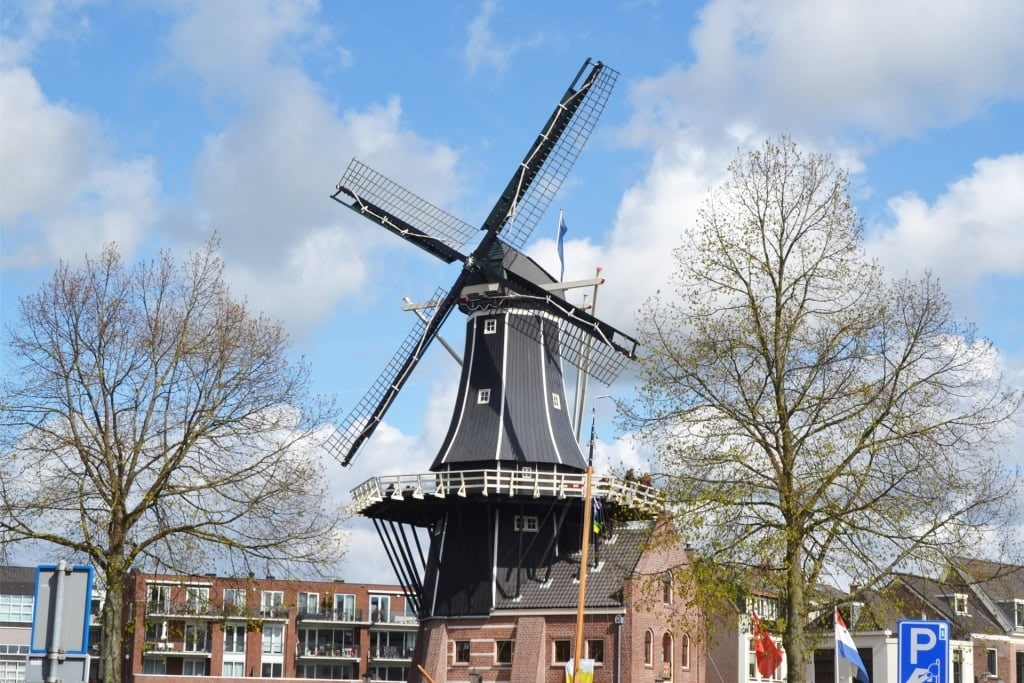
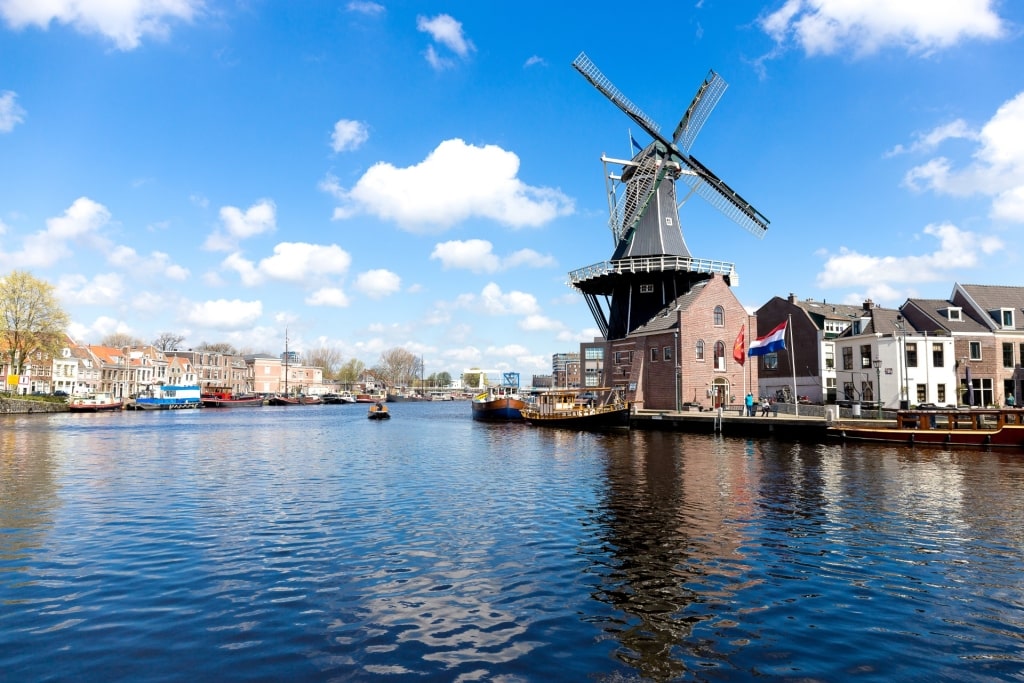
Molen De Adriaan
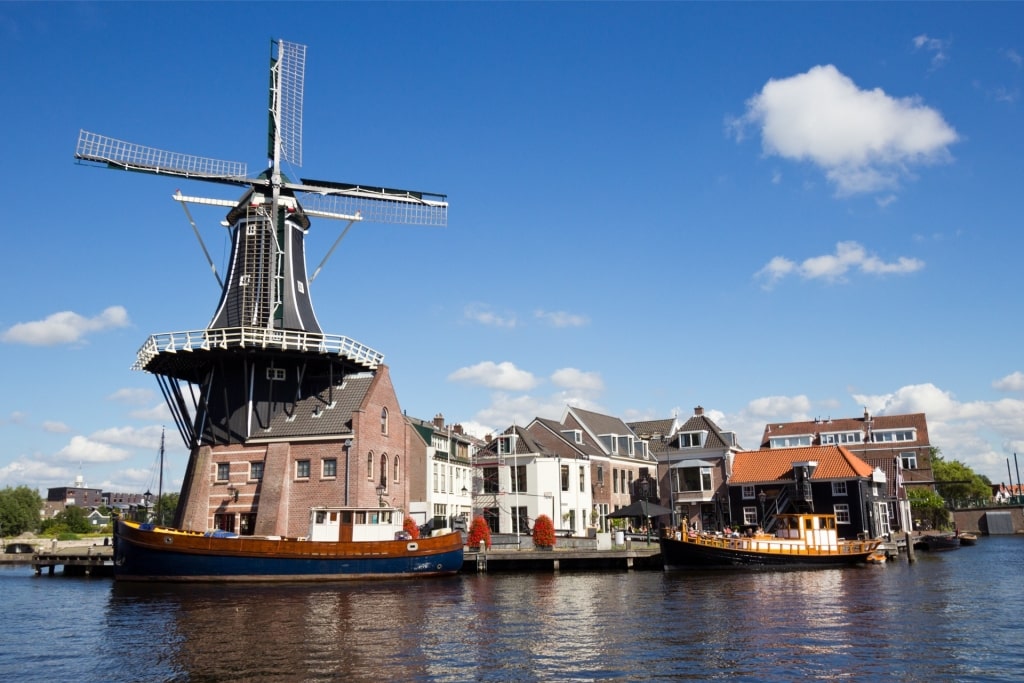
Molen De Adriaan
With its well-preserved historic architecture and picturesque streets, Haarlem makes for an ideal day trip outside of Amsterdam. It’s also only 15 to 20 minutes from Amsterdam Centraal by train.
Arguably the most iconic site in town is the Molen de Adriaan on the banks of the Spaarne. When the original mill burned to the ground in 1932, the people of Haarlem rallied to save it. Raising the necessary funds to rebuild took decades, but today, the Molen De Adriaan once again stands proud. There’s a spectacular view of the historic center from the mill’s terrace.
Krijtmolen D’Admiraal
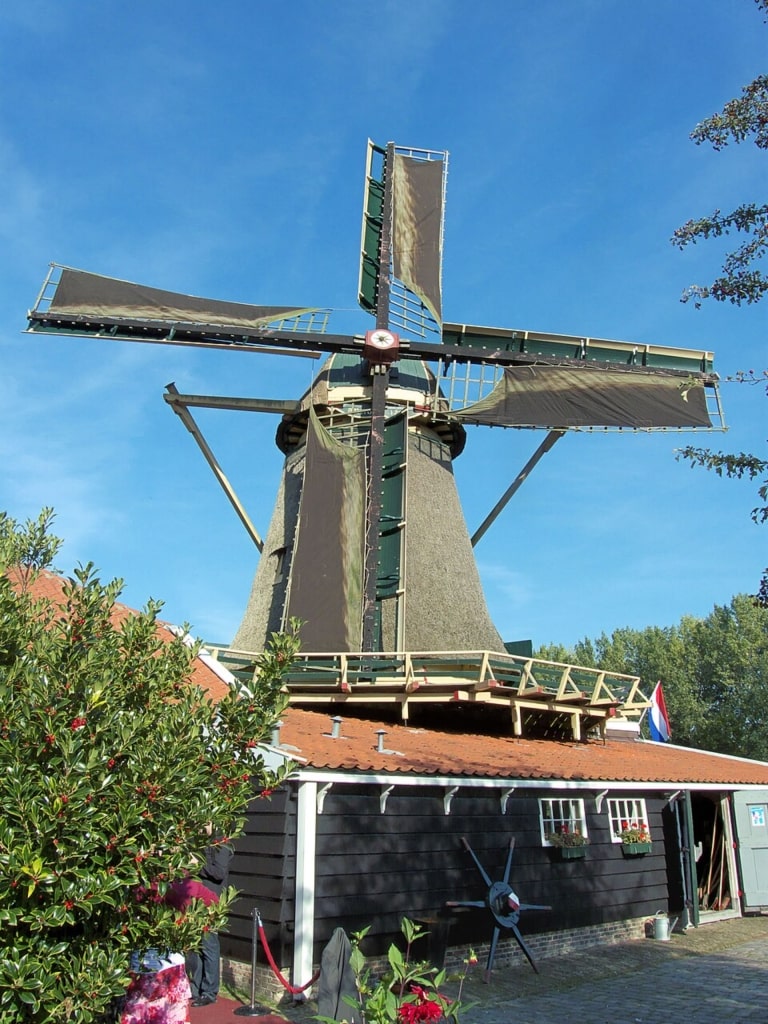
Krijtmolen D’Admiraal Photo by Rasbak on Wikimedia Commons, licensed under CC BY-SA 3.0
Built in 1792, the Krijtmolen D’Admiraal is the last surviving chalk mill in the country. You’ll find it up in the trendy area of Amsterdam-Noord, a formerly industrial area to the north of the city. The mill was once part of the village of Buiksloot, which has been absorbed into the rest of Noord.
One of the best parts of visiting the Krijtmolen D’Admiraal is the incredible view from up top. Note that the mill is only open to visitors at select times, which vary depending on the month. If possible, try to book one of the highly engaging tours in advance.
Twiskemolen
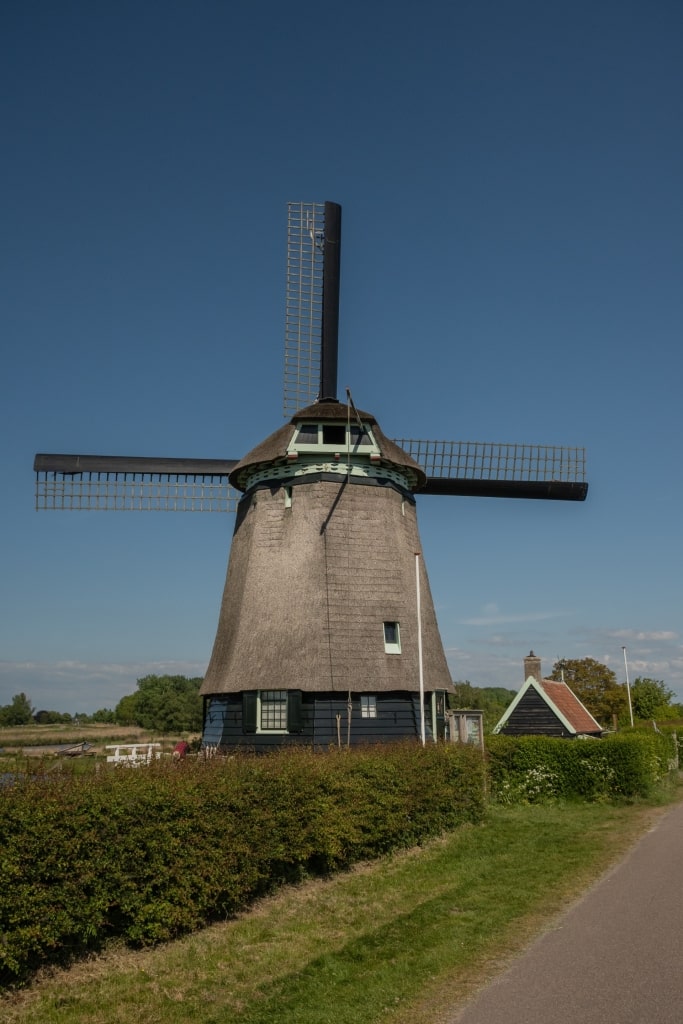
Twiskemolen
While this octagonal windmill is impressive on its own, what really makes it so special is its location. The Twiskemolen is surrounded by a vast nature preserve known as the Het Twiske. This protected area is just north of the city. Hop on a bicycle in Amsterdam-Noord and spend the afternoon exploring on two wheels.
The Twiskemolen has stood in its current location since 1974, although its history stretches back to the 16th century. It’s still used to pump water out of the surrounding reclaimed land to this day.
Read: Three Days in Amsterdam
FAQs
Are Amsterdam’s windmills worth visiting?
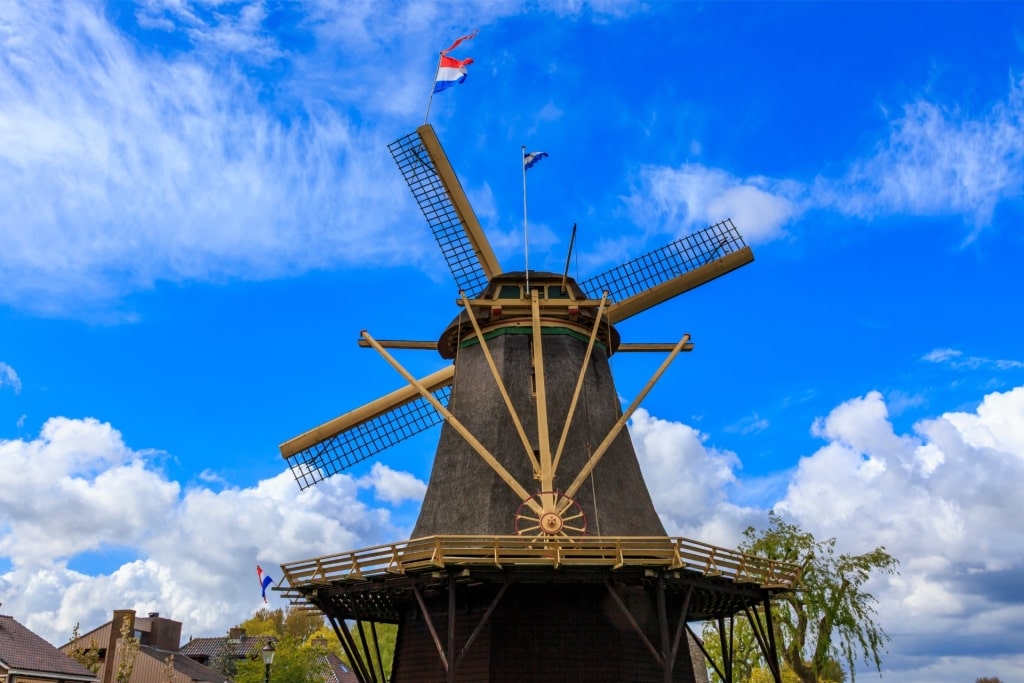
Molen De Vriendschap
Yes! Amsterdam has so many things to see and do that sometimes it can be difficult to choose how to spend your time. Visiting one of the historic windmills in the vicinity of the city is well worth the effort though. Do it for the history lesson as well as the photo-op.
Why is Amsterdam known for its windmills?
Zaansche Molen
It’s not so much that Amsterdam is known for its windmills as the entire country is. The Netherlands is home to more than 1,200 historic windmills, along with another 2,000 or so modern wind turbines. The country also owns vast offshore wind farms, which generate a considerable portion of the nation’s electrical power.
For the Dutch, the windmills carry both incredible practical and cultural significance. For centuries, a technically advanced system of canals, dikes, and pumps has staved off flooding. Windmills made it possible for the Netherlands to exist in the form that it currently does. The Dutch are also deeply committed to limiting fossil fuel consumption and carbon output. The country’s forward-thinking attitude toward wind energy is a point of national pride.
Molen De Adriaan
On a cultural level, windmills have long been a symbol of Dutch ingenuity and innovation. During the 17th century, the Netherlands had one of the most educated populations in all of Europe. Although the Netherlands is much smaller than many of its neighbors, the Dutch excelled in industry and trade, in large part because windmills provided them with abundant energy.
Through a sophisticated system of canals, dikes, and pumps powered by windmills, the Dutch reshaped their landscape. Windmill-powered sawmills were used to create a fleet of ships that was the envy of the Western world.
What is the history of Amsterdam’s windmills?
Molen De Adriaan
The topography of the Netherlands lends itself especially well to wind power. There’s a reason the Netherlands, Luxembourg, and Belgium are called the “Low Countries.” Much of the Netherlands is actually below sea level and very flat. That means that strong winds from over the ocean rip across the country.
Long before wind power became a prominent source of renewable energy in countries around the globe, the Dutch were already harvesting it. There’s strong archeological evidence that people were using windmills here as far back as the 12th century. They were most likely first used to mill grain into flour.
Much of the land that is now the Netherlands was reclaimed from the North Sea. In order to keep the water at bay, the Dutch needed a way to continuously pump it back. During the 17th century, which is widely referred to as the Dutch Golden Age, windmills flourished.
How old are the windmills in Amsterdam?
The oldest windmill in Amsterdam dates all the way back to 1631. Incredibly, Molen de Otter is still going strong as a working sawmill. Amsterdam also has windmills dating back to 1636 and 1725, plus a few from the 1800s.
Molen De Otter Photo by Milliped on Wikimedia Commons, licensed under CC BY-SA 3.0
When discussing the age of windmills, it’s important to bear in mind that many of their parts have been replaced or repaired over the centuries. A number of windmills have also been relocated out of the city center to make room for development. Nevertheless, it’s impressive to see these historic structures standing tall.
What are the best ways to visit them?
De Gooyer
The Netherlands has truly world-class transportation infrastructure, which means there are a number of ways to get out to the windmills both in and near the capital. Some, such as the one in the Keukenhof, are readily accessible by public trains or buses. Others are easily reachable with a rental car or an Uber.
If you really want to feel like a local though, do as the Dutch do and cycle out to the windmills. The Netherlands quite literally has more bicycles than it does inhabitants. A 2023 survey found that some 18 million people had roughly 24.1 million bicycles. Thanks to a well-maintained network of bike lanes spanning virtually all of the country, and the fact that the landscape is almost completely flat, it’s easy to see why.
Keukenhof Gardens
Many locals make a day trip out of cycling along tulip fields and between windmills. It’s also very easy to begin your journey in the heart of Amsterdam and venture outward.
Amsterdam
Historic windmills are just one of the many things to see in this compelling country. Browse Celebrity’s river cruises to Amsterdam and book your next voyage today.