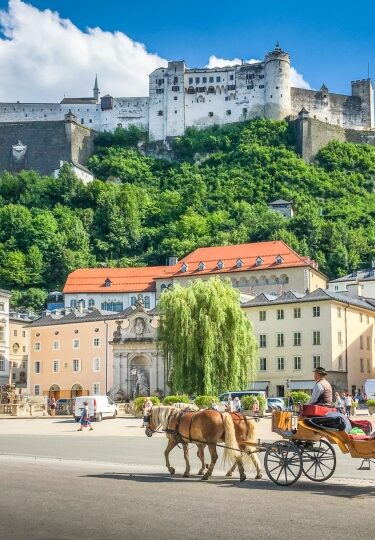
With its spectacularly preserved baroque architecture, it’s easy to see why the entirety of Old Town Salzburg has been a designated UNESCO World Heritage Site for decades. Strolling along Getreidegasse, it’s easy to imagine the days when the Prince-Archbishops reigned here. The Altstadt, as it’s known in German, packs an astonishing amount to see and do all within an easily walkable area.
You’ll find plenty of evidence of the city’s musical heritage in Salzburg Old Town, from the house where Wolfgang Amadeus Mozart was born to the site of his first concert. That legacy continues to this day in the form of near endless world-class concerts, music festivals, and cultural events.
Attractions
Mozarts Geburtshaus
Mozarts Geburtshaus
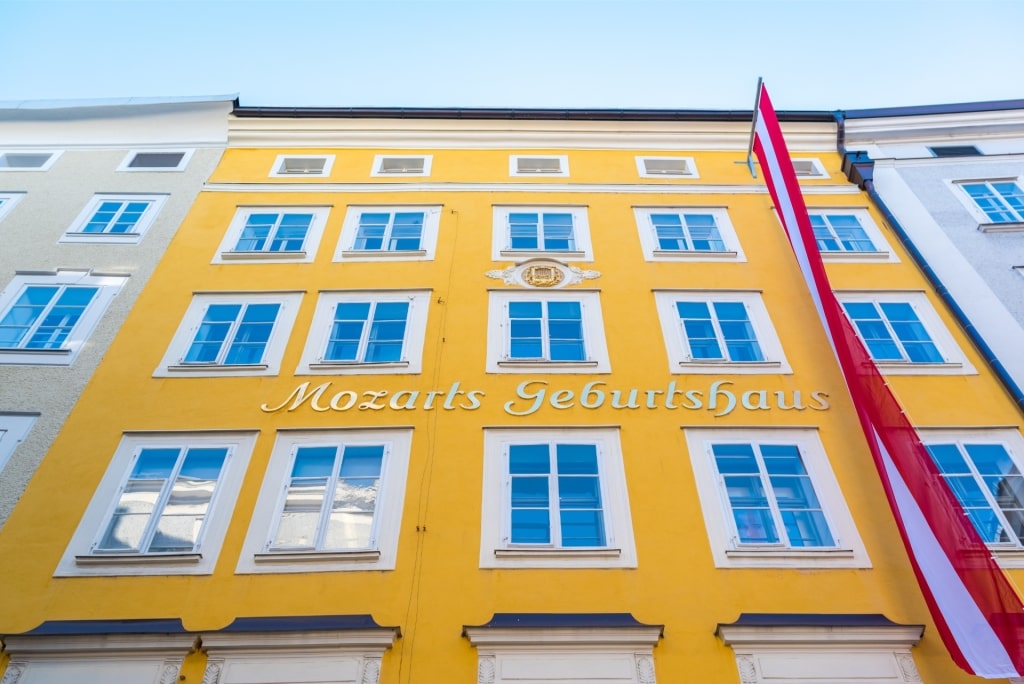
Salzburg is justly proud of its legacy as the birthplace of Mozart, one of the greatest musical prodigies who ever lived. At just five years old, the boy genius was already a capable violinist. Although he lived to be just 35 years old, he penned more than 800 musical compositions.
Mozart spent roughly half of his short time on the planet in this mustard-hued house on Getreidegasse. Visitors can pay their respects on a guided tour through the space, much of which is meticulously preserved with its 18th-century furnishings.
Alter Markt Square

Alter Markt Square
There’s serious history behind the Old Market Square in the heart of the old city. A market has stood on this space since the 13th century. It’s changed over the ages, of course, but not as much as one might think. A number of the handsome row houses here have foundations that go back to the times of knights and lords, despite their smart paint jobs.
Today, Salzburg’s weekly market is held in a different location, but there’s still much to take in here. The fountain in honor of St. Florian von Lorch in the center of the square has roots dating back to the Middle Ages, although the central sculpture is from 1734. See if you can spot a distinctive architectural oddity: the smallest house in Salzburg. This curious 19th-century construction is less than five feet wide.
Salzburg Cathedral
Salzburg Cathedral
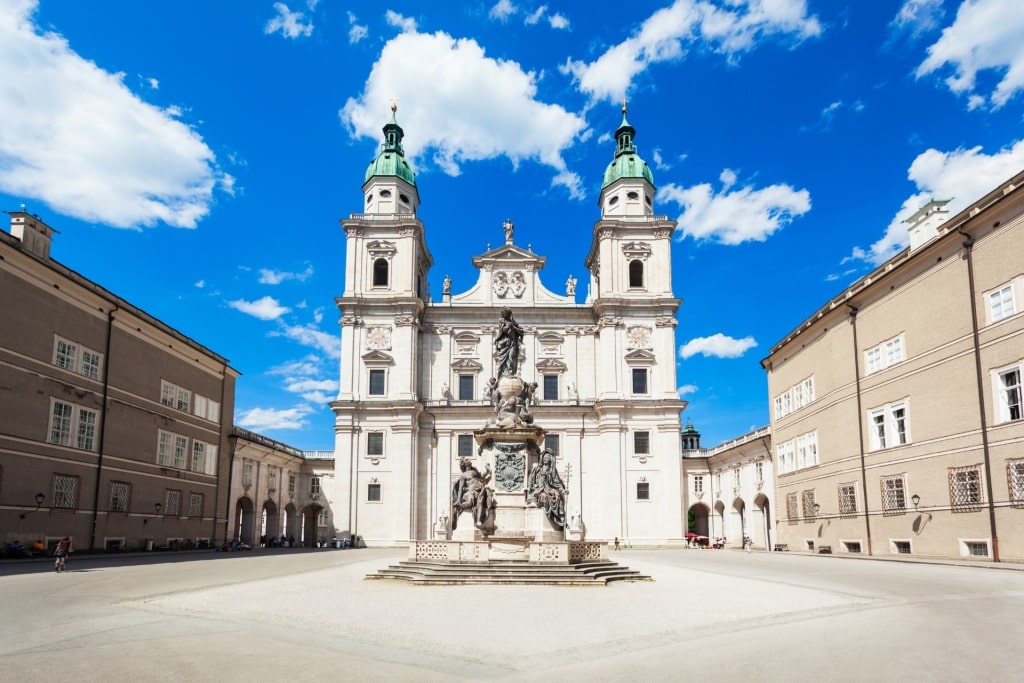
The DomQuartier is essentially three of the city’s most impressive sites rolled into one complex; Salzburg Cathedral, the Residence, and St. Peter’s Abbey. Your first stop is the Salzburg Cathedral, a baroque masterpiece of absolutely magnificent proportions. Mozart himself was baptized here, and the cathedral has long been the spiritual and cultural heart of the city.
As you enter the high-ceilinged basilica, the first thing that catches your eye is the Great Cathedral Organ—which is actually an interconnected set of five distinct pipe organs. Although repairs and restorations have been made over the years, one of the organs dates back to the 18th century.
The Residence
The Residence
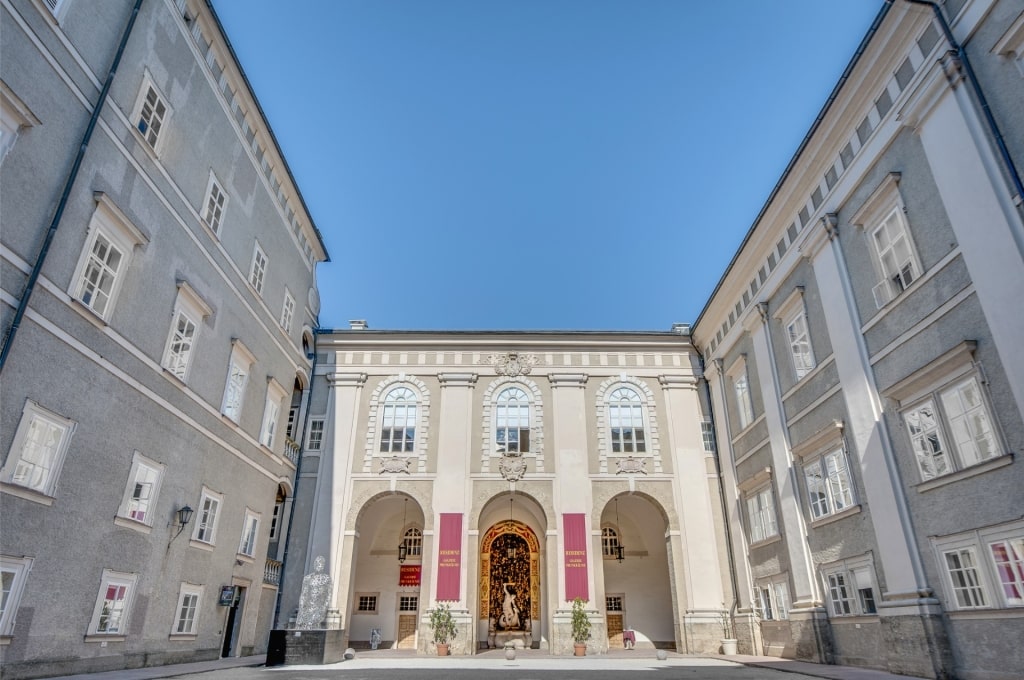
For centuries, the Prince-Archbishops ruled over Salzburg from this grand palace, which is also included in the DomQuartier ticket. Much of the interior still looks the way it would have when a precocious seven-year-old Mozart played his first court concert. Today, the public can enjoy the lavish Renaissance-era interior decorations and incredible collections of art. The Residence Gallery in particular is home to masterful oil paintings from the 1500s through the 1800s.
St. Peter’s Abbey

St. Peter’s Abbey
The final stop on your visit to the DomQuartier is St. Peter’s Abbey, which was founded all the way back in the seventh century. The church itself dates back to the 12th century, but the attached cemetery is much older. Many of Austria’s greatest luminaries, artists, and other distinguished characters reside in these crypts and catacombs.
Things to Do
Stroll Around the Gardens of Schloss Mirabell
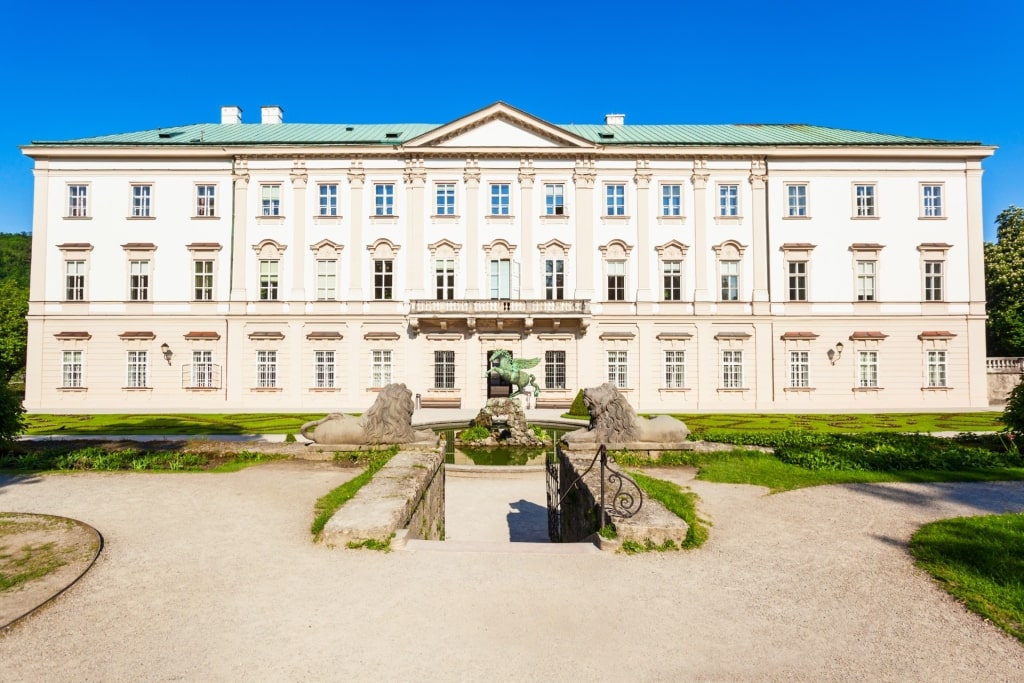
Mirabell Palace
First built in the early 17th century, the magnificent Schloss Mirabell, or Mirabell Palace, was designed for the Prince-Archbishop Wolf Dietrich Raitenau and his mistress. European aristocrats and royals from various countries have inhabited the space over the years. After a 19th-century fire ripped through the space, it was restored in grand neoclassical style. The Palace lies immediately across the river Salzach from Salzburg Old Town.
Wander through the spectacular Marble Hall, with its towering windows and gilded ornamentation. The space, which was once the site of many a ball, is now home to regular classical music concerts.
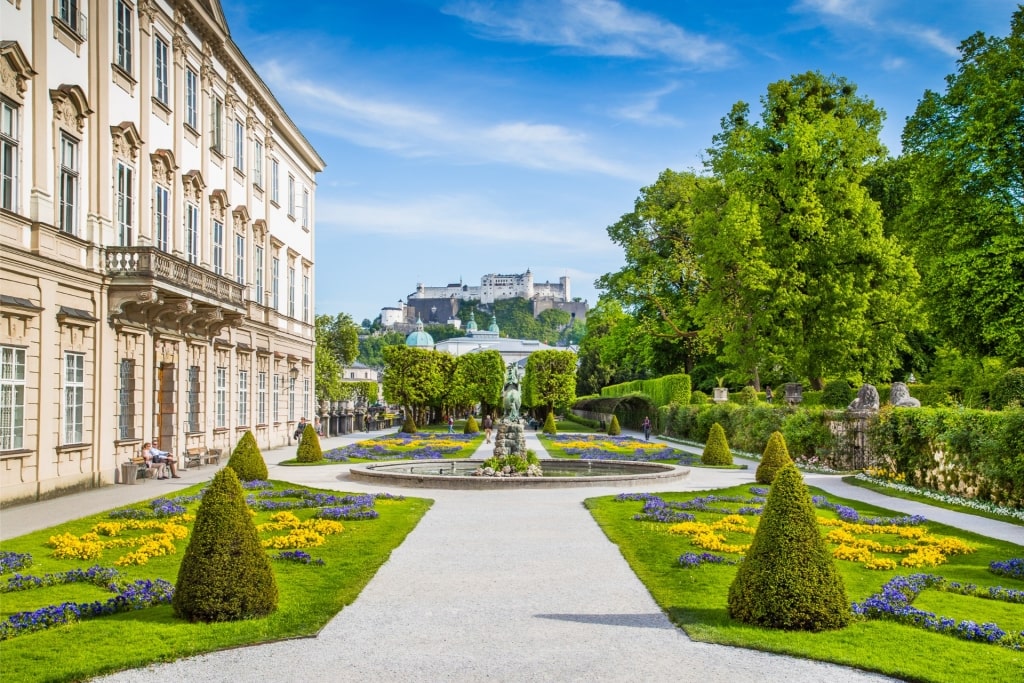
Mirabell Palace and Gardens
Afterwards, make your way to the beautifully manicured gardens outside. You’ll find distinctive statues, floralscapes, and fountains at every turn. It’s around the Pegasus fountain that Maria and the Von Trapp children sing Do-Re-Mi in The Sound of Music, making the Mirabell Palace a familiar backdrop to millions of fans.
Read: Salzburg vs. Vienna
Match Wits Over a Giant Chess Board
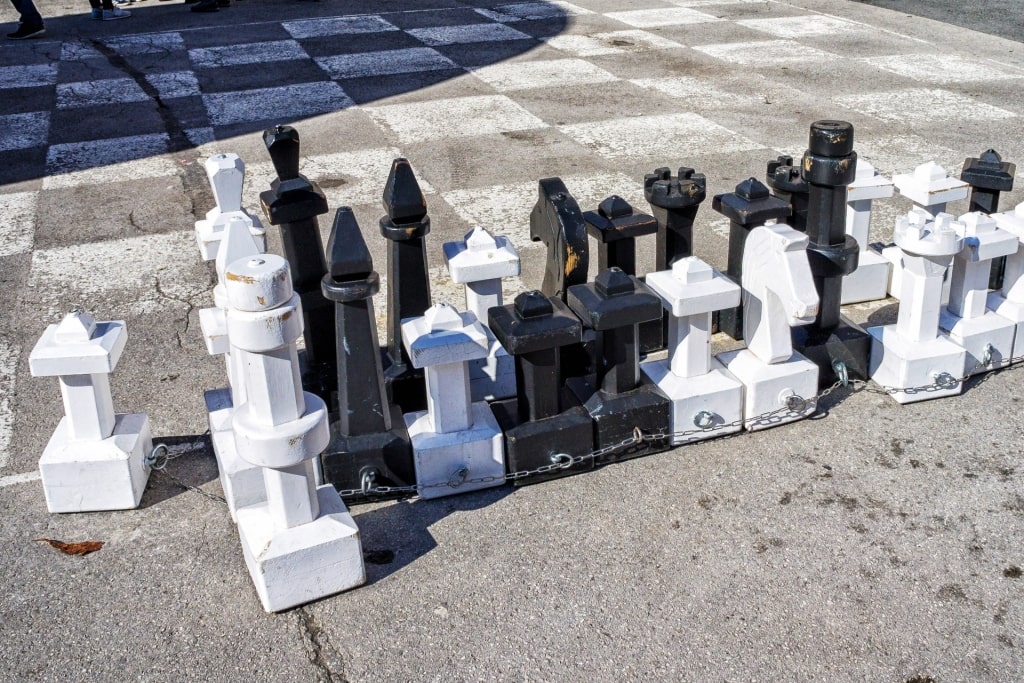
Giant Chess Board
If you’ve ever wanted to channel one of J.K. Rowling’s young wizards en route to the Philosopher’s Stone, here’s your chance. On Kapitelplatz by the cathedral, you’ll find an absolutely enormous chessboard adorned with giant bishops, knights, rooks, and pawns.
Far from a novelty piece, this chessboard has seen its fair share of serious competition. Local chess champions have often duked it out with these oversized pieces. After you’ve tested your mettle on the chessboard, be sure to check out the square’s impressive fountain. Named the Kapitelschwemme, the fountain depicts the sea god Neptune.
See a Classical Music Concert
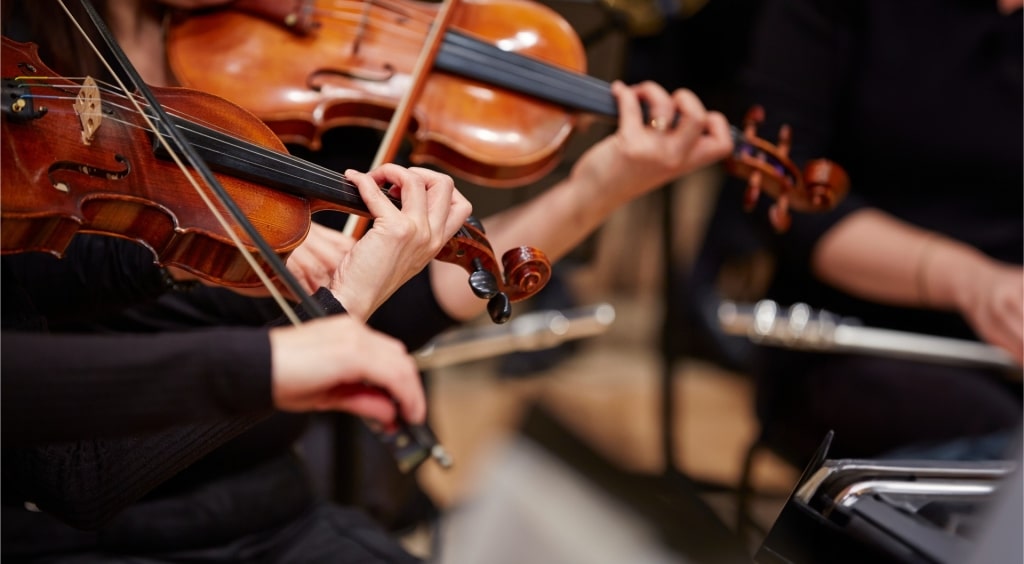
Musician
Since Salzburg is still a city of music, there’s no better way to honor both its history and present than by attending one of the many, many concerts here. If you happen to be in town for the Salzburg Festival in July and August, there’s a near endless lineup of world-class performers. But if you’re not, don’t worry—there’s always something on here.
Keep an eye out for the concerts in the Mirabell Palace and surrounding gardens, which are nothing short of magical. For more affordable—but still showstopping—performances, look for concerts by students at Mozarteum University.
Restaurants
Café Konditorei Fürst
The most renowned culinary invention Salzburg is known for is named after its most celebrated son. A Mozartkugel, or Mozart ball, consists of a chocolate ball filled with nougat and pistachio marzipan. You’ll find them all over the place, but no one does them better than this iconic confectioner.
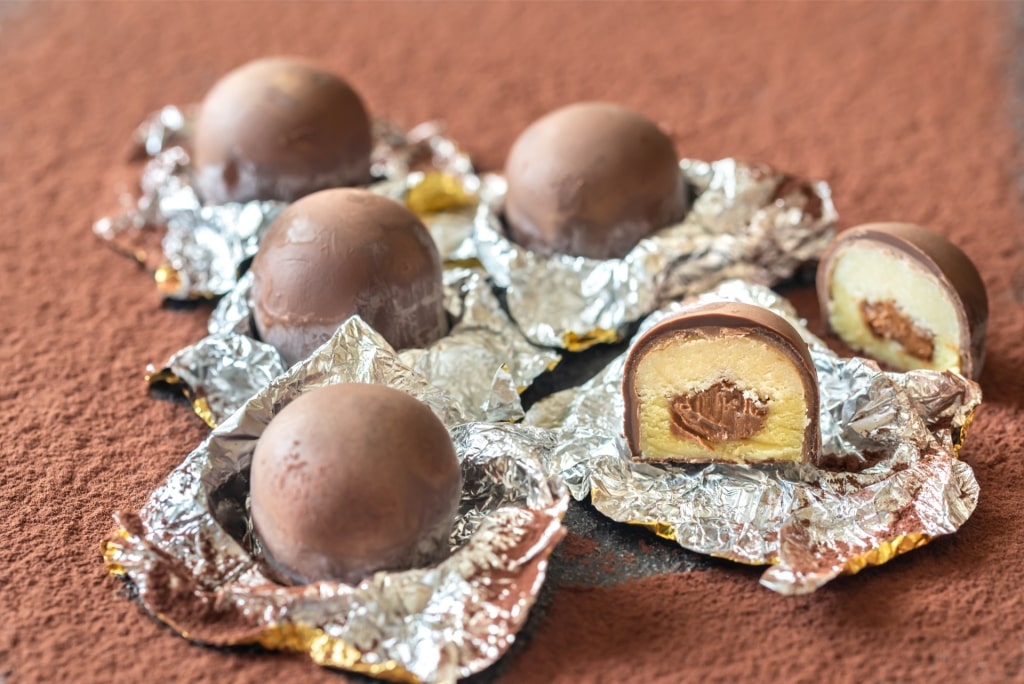
Mozartkugel
Café Konditorei Fürst invented these sweets and has been making them for more than 130 years. Each is wrapped in blue-and-silver foil printed with the composer’s likeness. They make for lovely gifts for friends and family back home.
Café Tomaselli
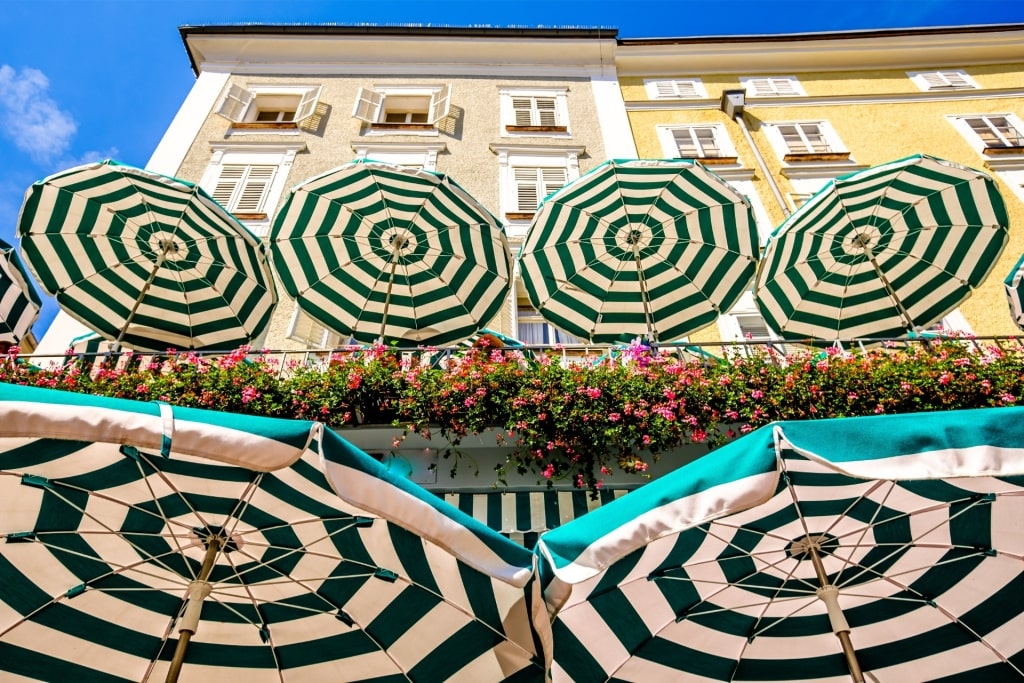
Café Tomaselli
Austria’s grand cafés are an experience unto themselves and the venerable Café Tomaselli, which was founded in 1700, is thought to be the oldest surviving one. This elegant establishment on the edge of Alter Markt has been in the Tomaselli family since 1852.
Walking into the dark-wood interior, with its leather banquettes and crystal chandeliers, feels like stepping back in time. It’s equally popular with visitors and local regulars who come by to read their morning paper. A glass display case shows off the housemade Sachertorte, strudel, and other treats. Try the Salzburger Nockerl, an airy, souffléd local specialty with three distinctive “peaks” thought to resemble Salzburg’s nearby mountains.
Travel Tips
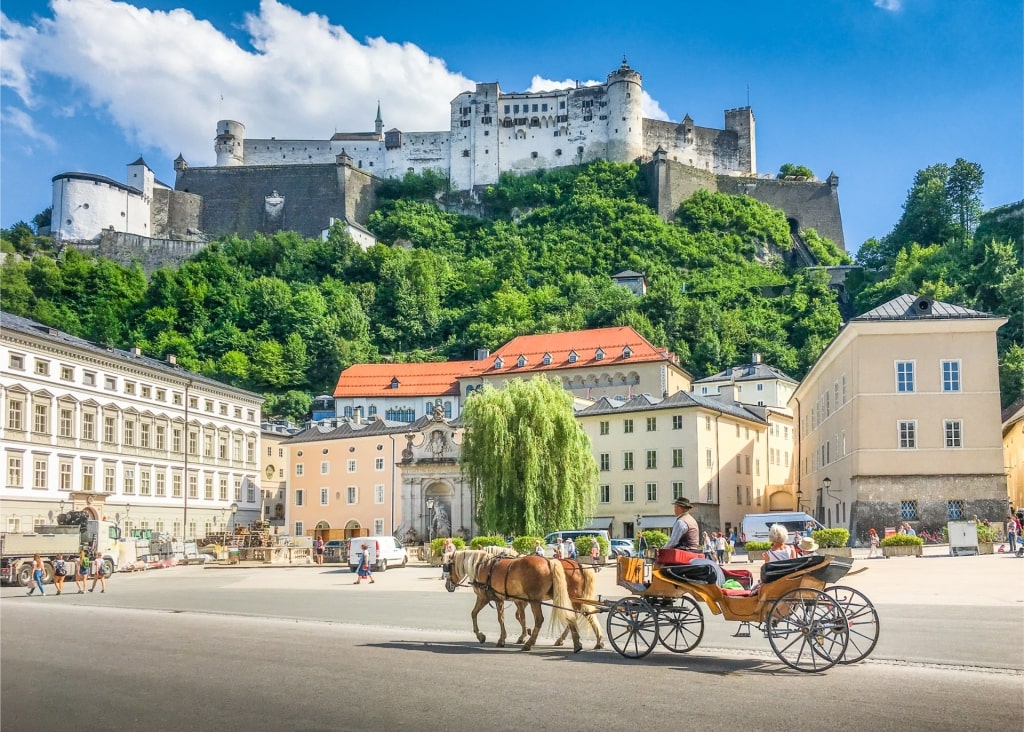
Old Town
For the most part, Salzburg, like other major Austrian cities, is a logistical snap to visit. There’s an impeccable public transportation system, plus bike lanes and pedestrian streets. Even the Old Town is fairly accessible, so everyone can visit.
Most signs are in two or more languages and most locals speak English, should you need directions. Virtually all establishments accept credit or debit cards these days—in fact, some may not take cash at all.
A few easy tips can help make your visit even more seamless. For starters, download the free SalzburgMobil app, which shows all public transportation options and times. It will also let you purchase tickets ahead of time online, so there’s less of a scramble.
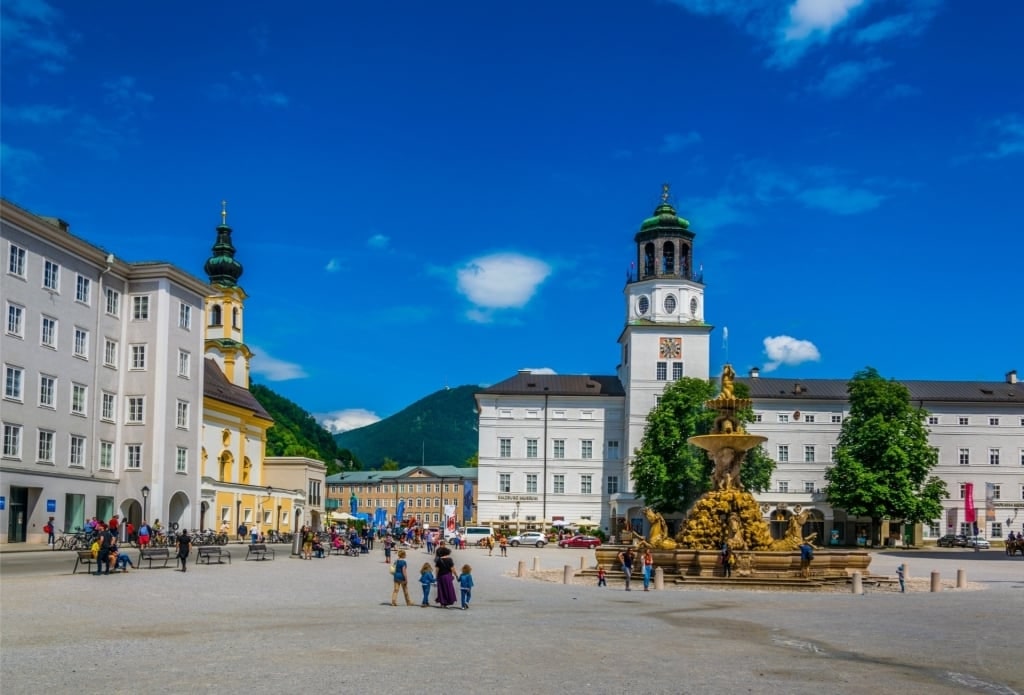
Old Town
You might also want to consider picking up the very handy Salzburg Card. Available either as a physical card or a digital one on your phone, it offers free access to museums, buses, and trolleys. You can opt for a 24-hour, 48-hour, or 72-hour option, depending on how long you’re in town.
In restaurants, tipping is customary, although not to the same extent as in the United States or some other destinations. In general, aim for 10 percent at restaurants, or 15 percent if the service is exceptional.
FAQs
What is the most beautiful street in Old Town Salzburg?
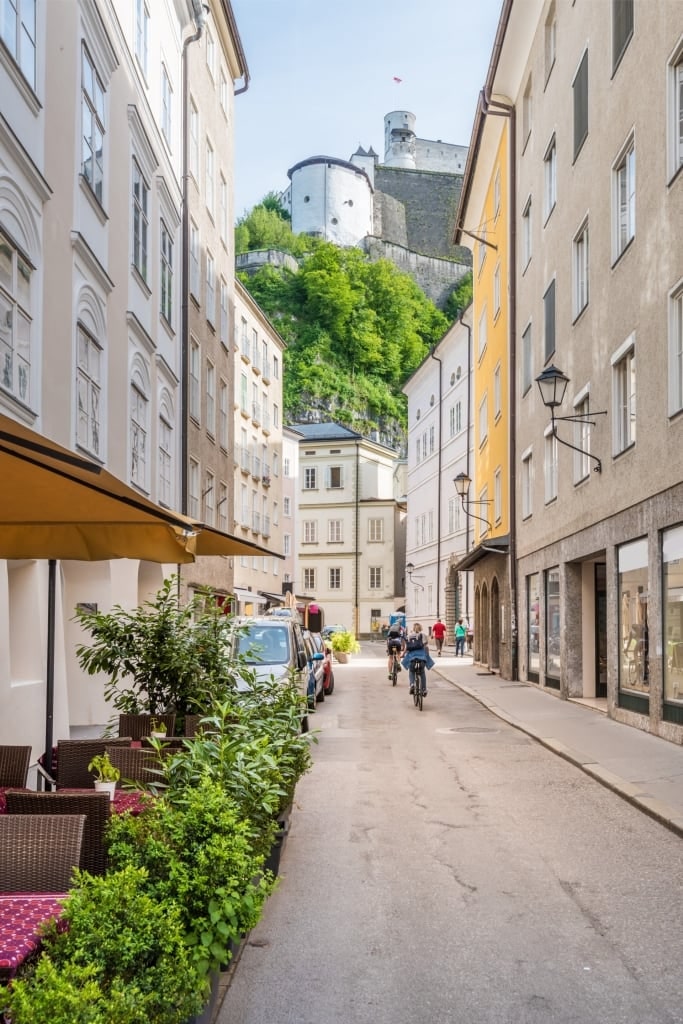
Getreidegasse
Getreidegasse, a grand, pedestrian-only thoroughfare, is often thought to be the most beautiful street in the Old Town. It’s great for both shopping, thanks to a mix of big-name international brands and smaller boutique stores.
Architecture buffs will appreciate all sorts of details on the UNESCO-protected street. Keep an eye out for the ornate passageways leading off the street to beautiful little courtyards.
What's the best way to get around Old Town Salzburg?
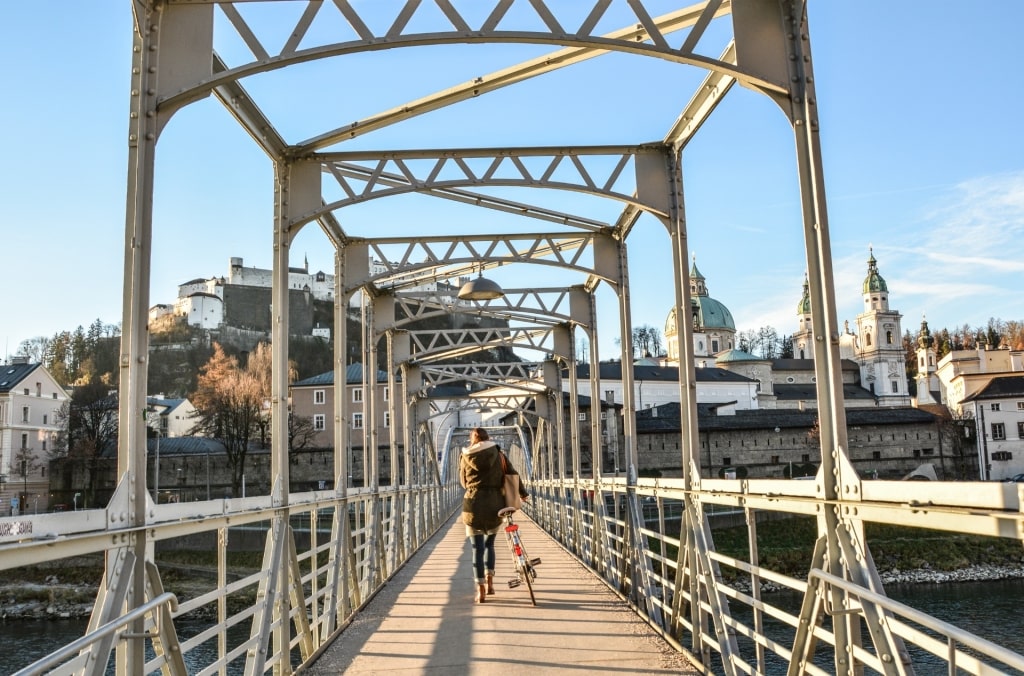
Old Town
Bring a comfy pair of sneakers or flats because the best way to get around Old Town Salzburg is on foot. Most of the Old Town is closed off to cars, making it easy to stroll around for hours. When you’re out of the pedestrian zones, cabs and rideshares are easily accessible, but are largely unnecessary.
As spectacular as the Old Town is, one of the best things about Salzburg is the number of easily accessible day trips. If you leave the Old Town to venture out to palaces in other parts of Salzburg, there are also well-maintained S-Bahn, trolley, and bus systems that will get you where you need to go. You might want to consider renting bicycles, as the city has well-maintained bike lanes all over the place.
Is it crowded in Old Town Salzburg?
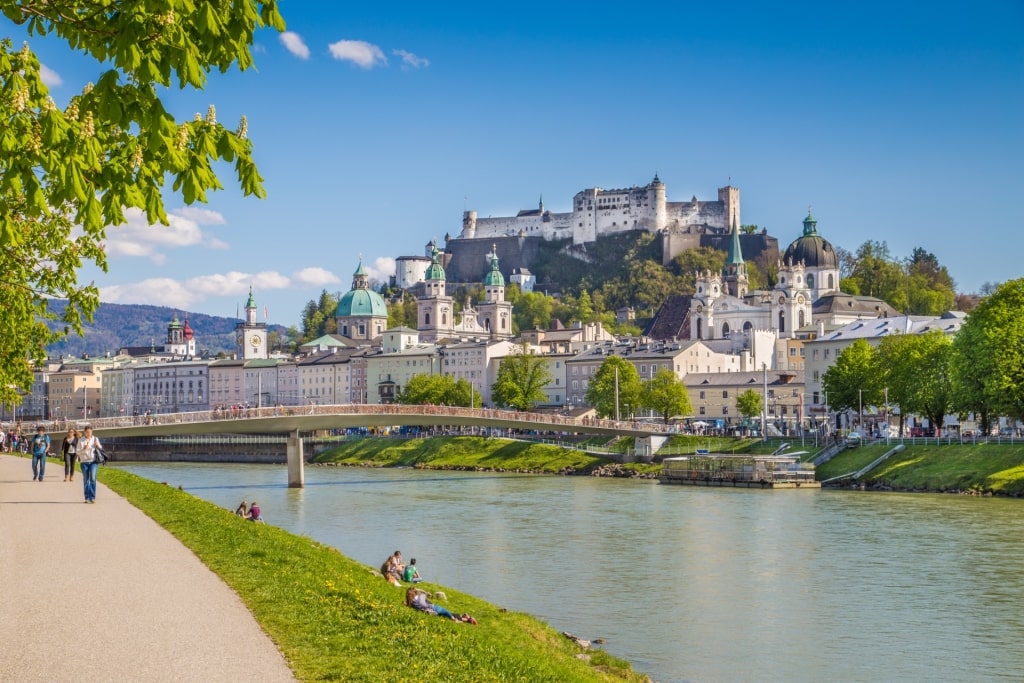
Old Town
While Salzburg gets less packed than quite a few other historic European cities, it still sees its fair share of tourists. How many fellow travelers you encounter during your time in Salzburg depends a lot on when you visit. Festive season also tends to be on the crowded side, courtesy of the city’s enchanting Christmas Markets. The shoulder seasons of spring and fall tend to be much quieter.
During July and August, locals largely clear out for Italian beaches, alpine lodges, and other escapes, while visitors from other nations flood the Old Town. It’s by far the most crowded time of year, but it’s also still a lovely time to visit. That’s because these months coincide with the Salzburg Festival, a celebration of classical music that’s been going strong since 1920.
Since so many visitors come in for the concerts, getting around the historic center can be challenging. Still, some would argue that it’s worth the extra hassle for one of the premier cultural festivals in all of Europe.
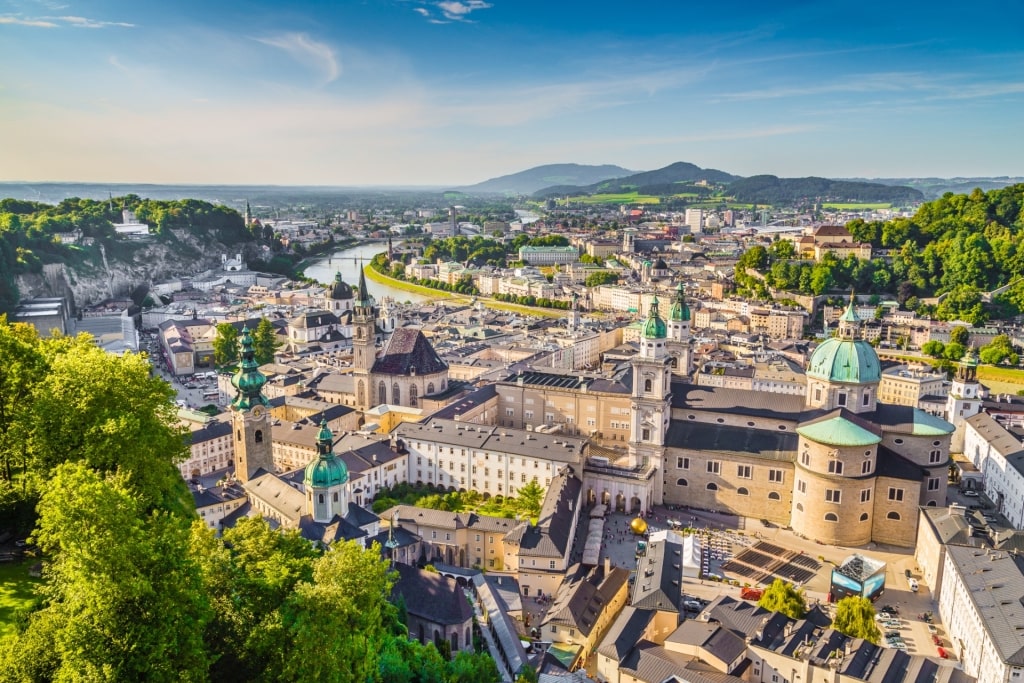
View from Hohensalzburg Fortress
Discover all that this culturally rich city has to offer on one of Celebrity’s river cruises. Browse itineraries and plan your grand European adventure.