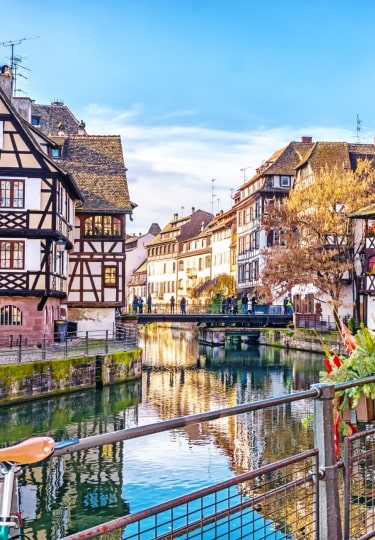
The capital and largest city of Alsace, Strasbourg is known for its blend of French and German culture. It lies on the Rhine, the border between the two countries, with the local cuisine, language, and architecture showing influences from both.
That fluidity is part of what makes Strasbourg so fascinating to anyone who visits. Europe’s abstract history comes to life in a place where medieval buildings sit beside hyper-modern European institutions.
Here are just some of the things Strasbourg is known for.
Living History
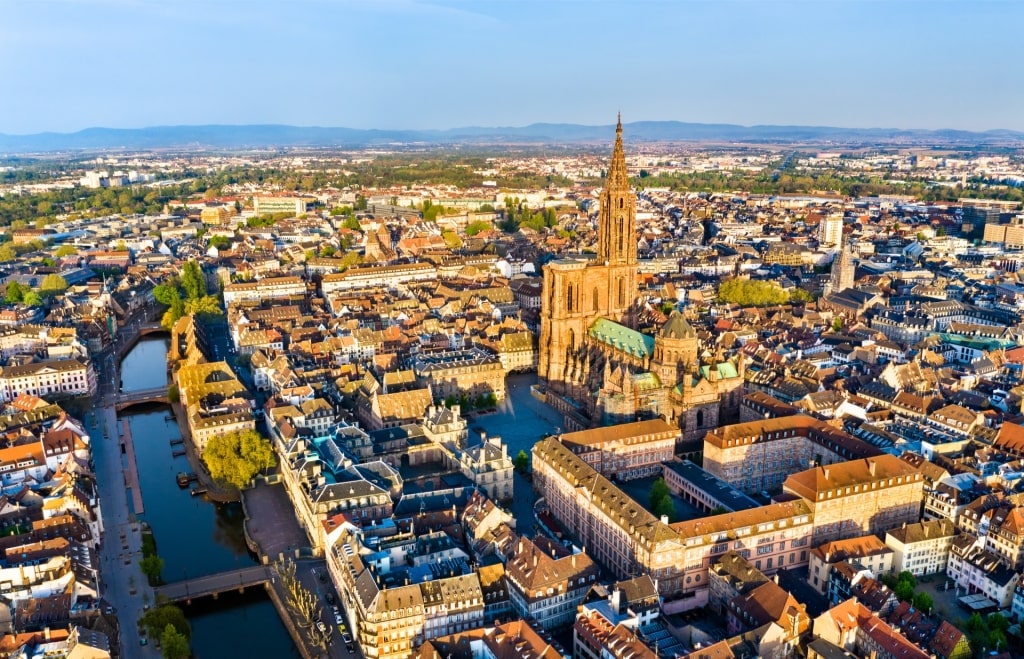
Strasbourg
Strasbourg has a unique culture as a city caught between France and Germany. Founded by the Romans in 12 BCE, it became a free imperial city of the Germanic Holy Roman Empire in 1262.
In 1681, Louis XIV’s France annexed Strasbourg to rationalize France’s “natural” border at the Rhine. During the Franco-Prussian War from 1871-1918, it was occupied by Germany.
Germany saw the predominantly German-speaking area of Alsace–Lorraine, with Strasbourg the capital, as an obvious part of its empire. Returned to France after World War I, the region was again temporarily seized by Germany during World War II.
Finally restored to France in 1944, Strasbourg is famous as a symbol of Franco-German reconciliation. As such, it is the perfect place for key European Union institutions.
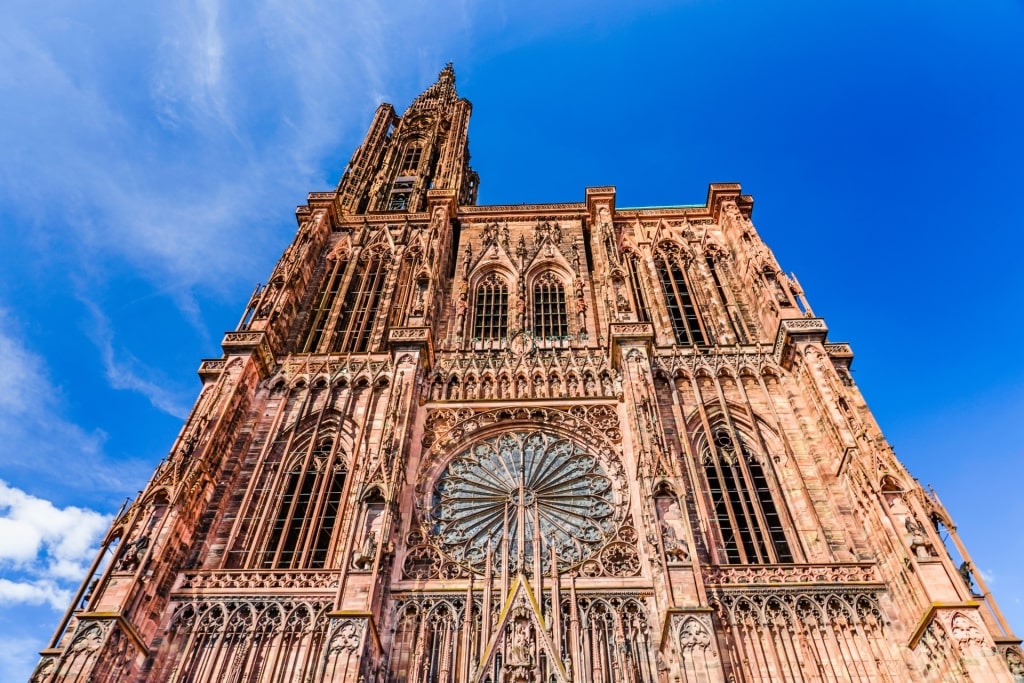
Notre-Dame Cathedral
Must-visit historical sites start with Strasbourg’s Notre-Dame Cathedral. This masterpiece of Gothic architecture, started in 1015, was only finished in 1439.
One of the best things to do in Strasbourg is to climb its solitary 466-foot-high spire, which makes it the sixth-tallest church in the world. Don’t miss the astronomical clock inside, with mechanized figures marking the hours.
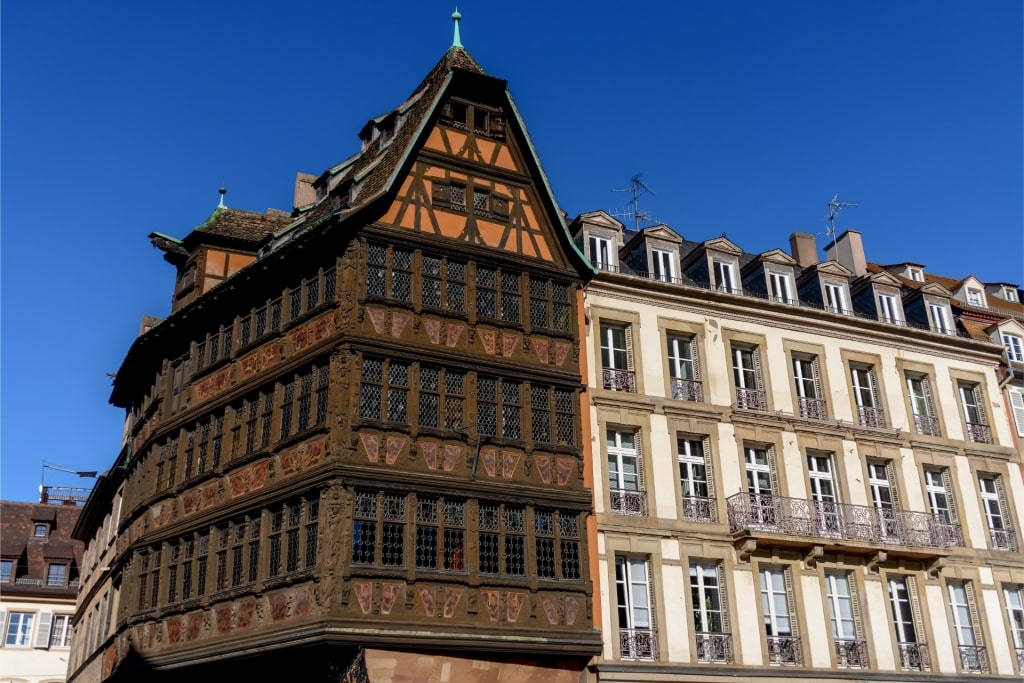
Maison Kammerzell
Maison Kammerzell, now a restaurant, is a beautifully preserved medieval half-timbered house. It’s decorated outside with a series of painted figures and with lavish frescoes inside.
Under the Musée Archéologique are the remains of the Roman military camp that became Strasbourg. You can see the foundations of thermal baths and many artifacts from everyday Roman life.
Rich Architecture
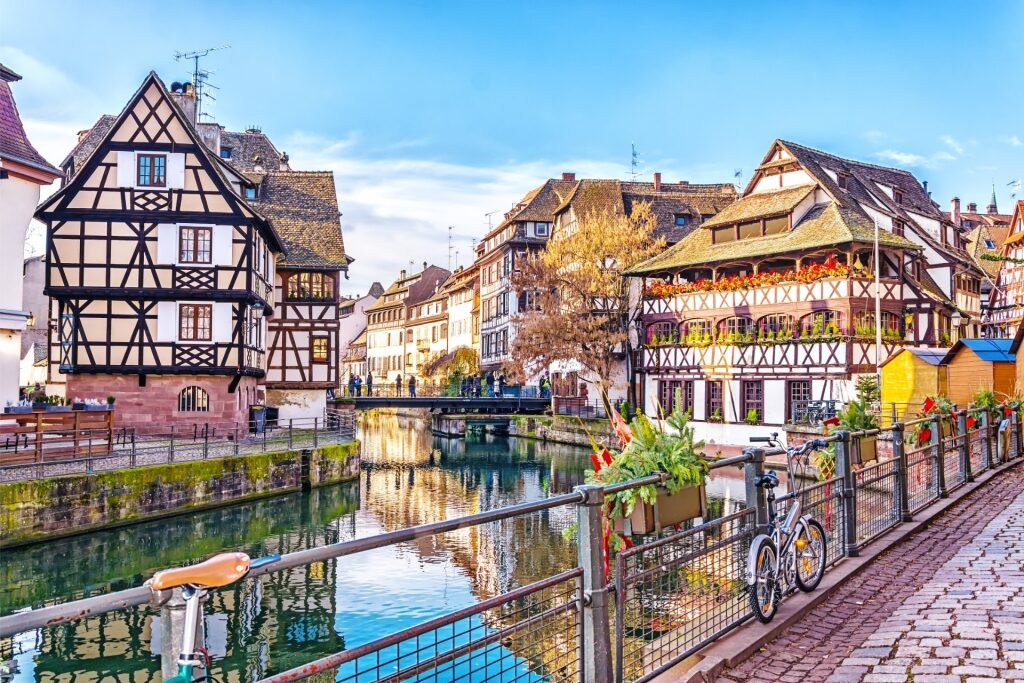
Petite France
Strasbourg is known for its impressive architecture, which reflects its mixed heritage. French and German buildings—and a mix of the two—can be seen all around the city.
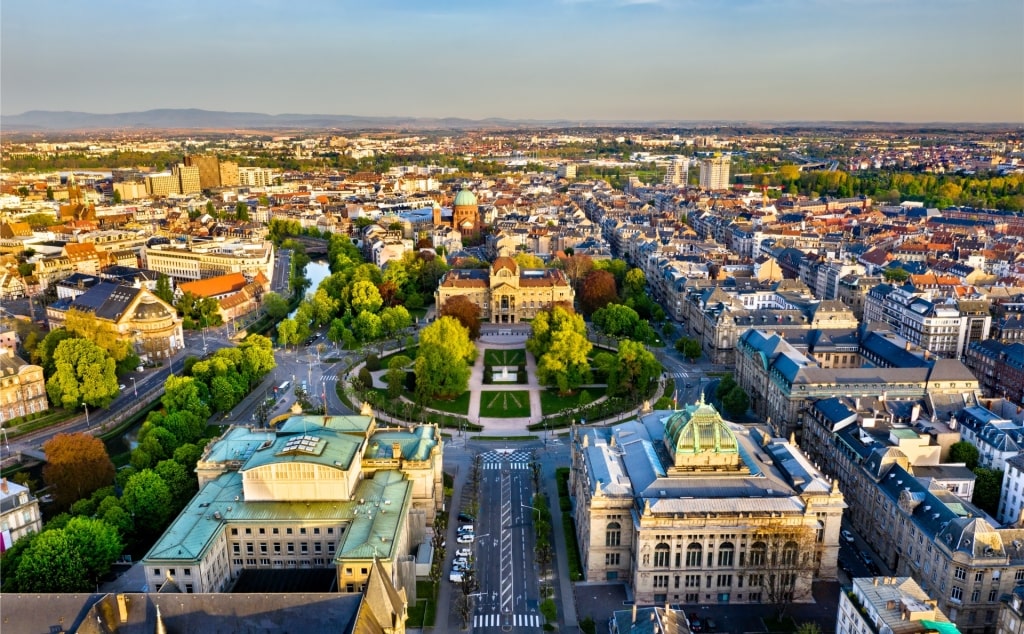
Despite its German name, the Neustadt—or New Town—District shows an underlying French influence in its grand boulevards and parks. Walk around and its urban planning may remind you of Haussmann’s Paris.
At its heart is Place de la République—formerly Kaiserplatz—with a poignant war memorial. This sculpture of a mother with two fallen sons symbolizes the dual loyalties of the city.
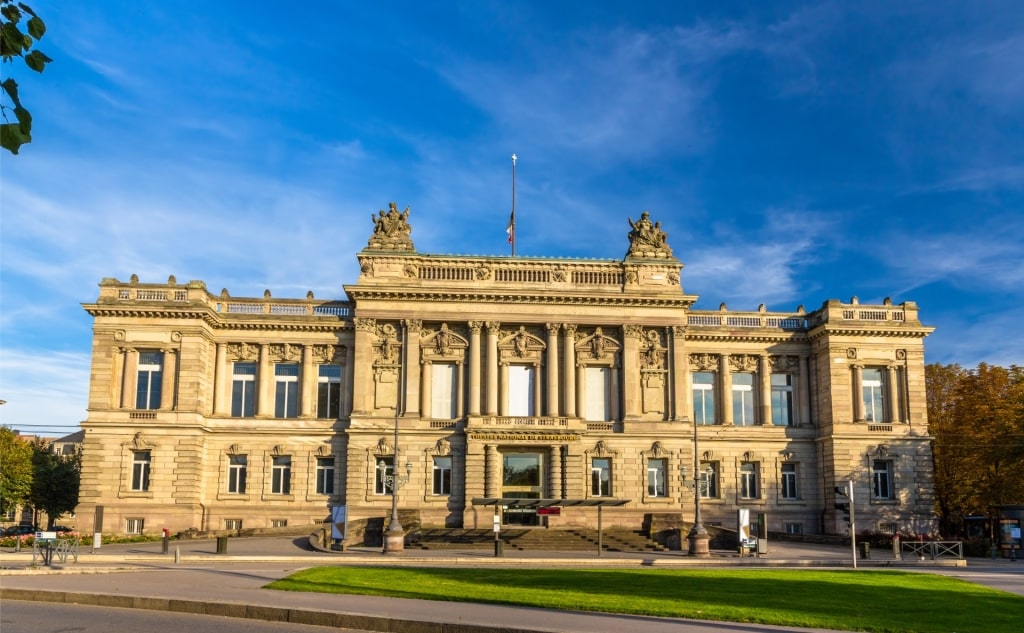
Théâtre National
In 1871, when Germany occupied the city, the Neustadt was laid out with imposing imperial buildings. These include the Palais du Rhin, Théâtre National, Palais Universitaire, and Strasbourg Central Station.
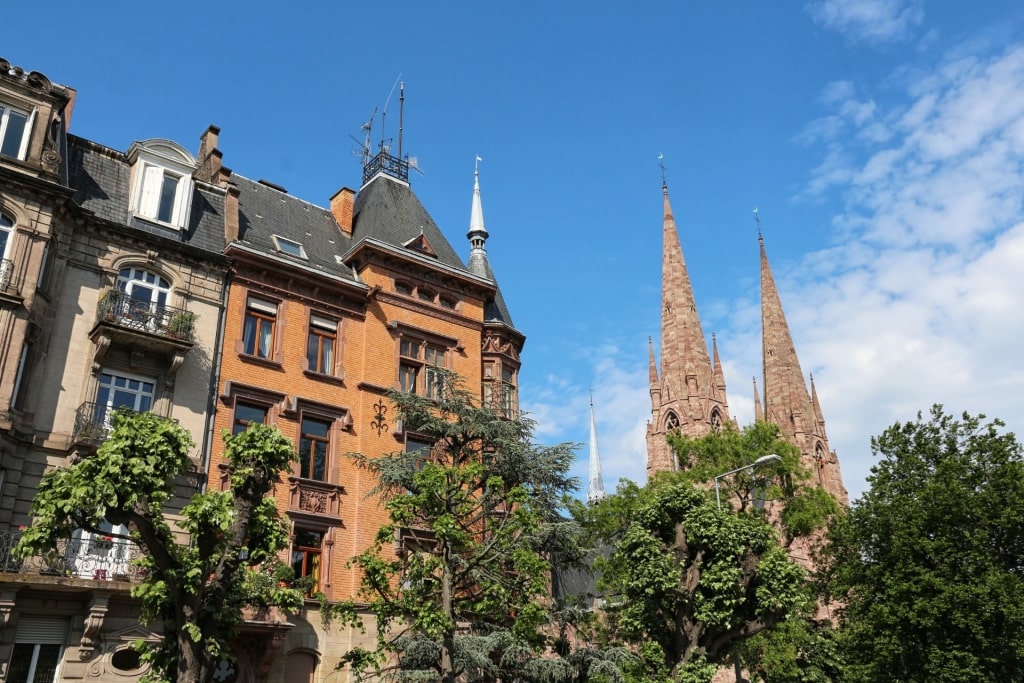
Neustadt
The Neustadt also has elegant residential areas with ornate apartments in Jugendstil—Art Nouveau—style. Look for these around Avenue des Vosges and Place de la République.
However, the most German area is the medieval quarter around the cathedral. Streets such as rue du Maroquin feature characteristic German-influenced half-timbered buildings with steep roofs and oriel windows.
These help make Strasbourg famous as one of the best-preserved medieval cities in Europe. The wood-framed style is common because rock is scarce in the low river valley of the Rhine where the city is built.
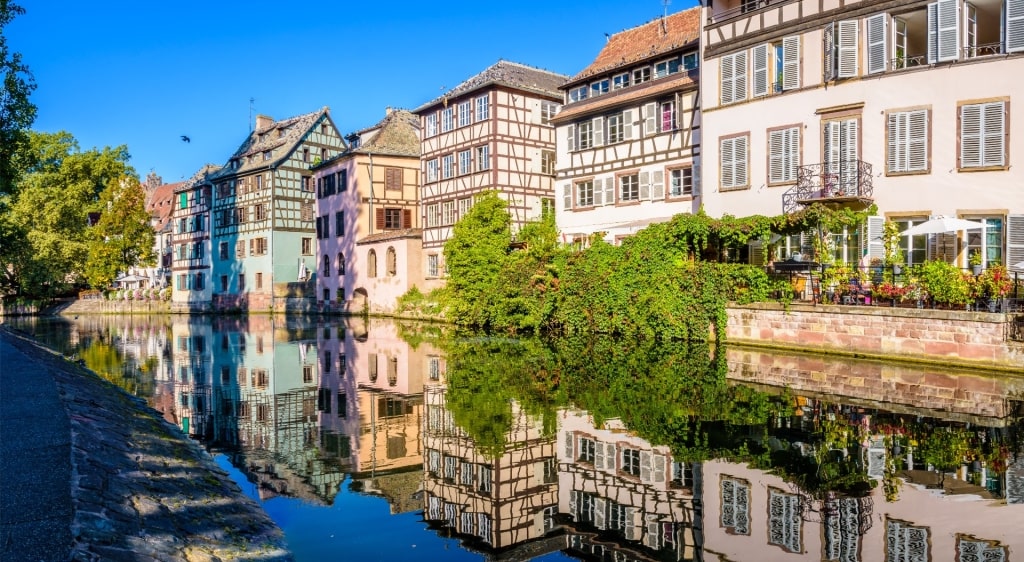
Petite France
The Petite France quarter also shows strong Germanic influences with similar half-timbered houses. Many also have a distinctive French decorative element, creating a blended, distinctly Alsatian style.
Petite France is actually named for a hospital, closed in 1687, that once treated those suffering from the “French disease”. Walk this former tanners’ and fishermen’s district to find cozy restaurants and interesting shops.
Strasbourg’s entire old town, Grande Île, is a UNESCO World Heritage Site filled with beautiful buildings. It includes the medieval “Covered” Bridges, although they have long lost the roofs that gave them their name.
St. Paul’s Church
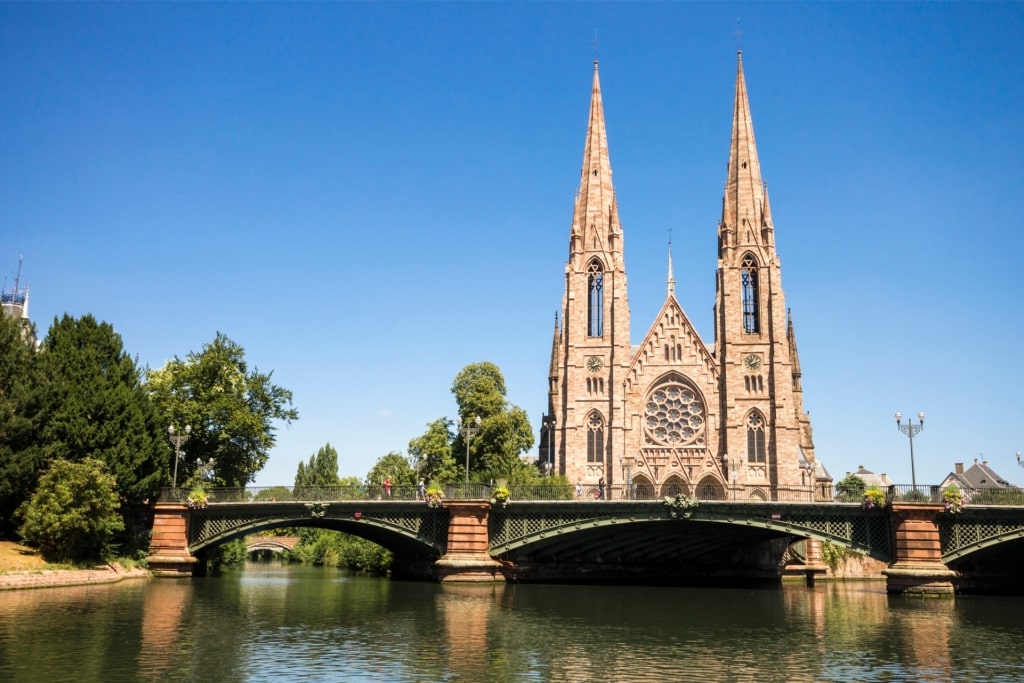
St. Paul’s Church on Place du Général Eisenhower is a neo-Gothic church from Strasbourg’s German period. It stands out for its 249-foot-high twin spires, massive rose window, and 19 doors.
In Place Kléber, L’Aubette is a 1772 building whose avant-garde interior has been dubbed the “Sistine Chapel of abstract art”. In 1926, artists Theo van Doesburg, Hans Arp, and Sophie Taeuber-Arp painted its restaurant, bars, and dancehall.
Food & Drink
Baeckeoffe
Alsatian cuisine is yet another delicious blend of French and German influences. A signature dish is choucroute, sauerkraut made with pork sausage or other meat, and often, potato.
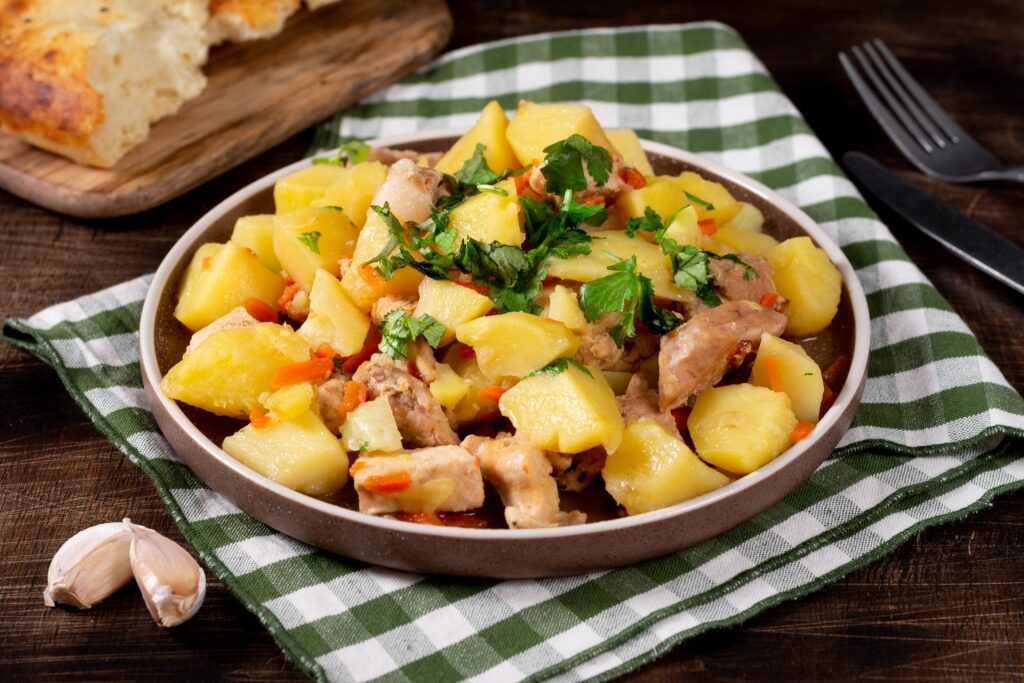
Baeckeoffe is a slow-cooked meat and potato casserole, perfect comfort food. Its name means “bake oven” as it was once traditional to leave this with the local baker to stew for Sunday lunch.
Tarte flambée
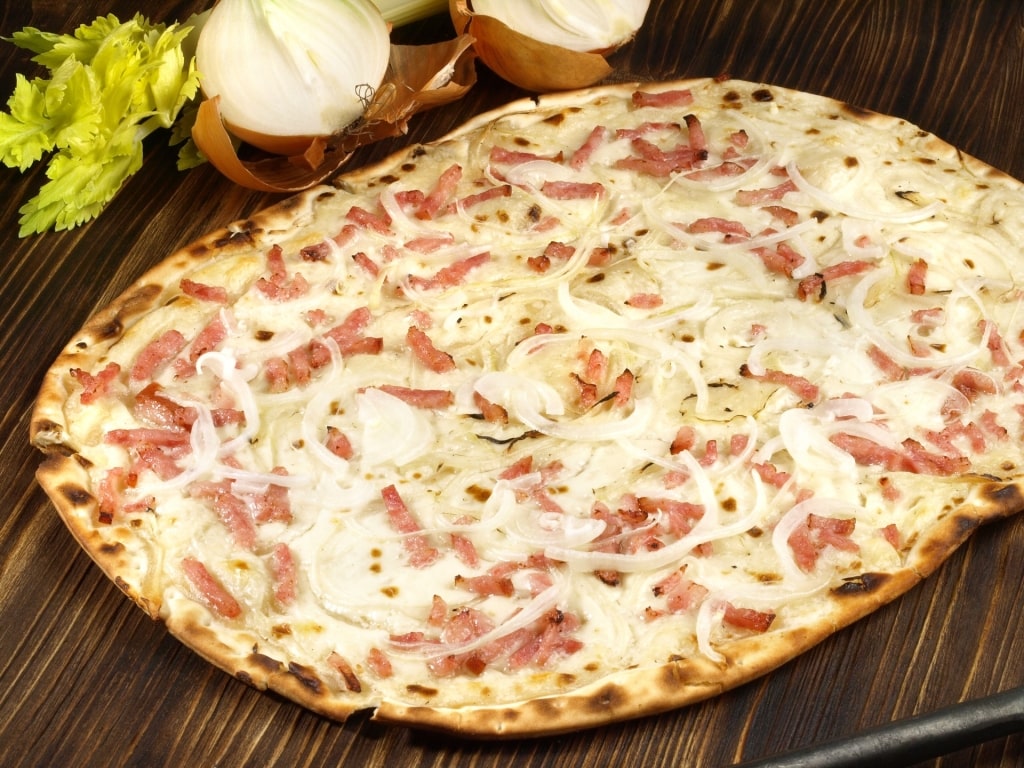
One delicious dish Strasbourg is famous for is tarte flambée, or flammekueche, a pizza-style thin, crispy bread dough topped with crème fraîche, onions, and bacon. Like pizza, it is best cooked in a wood-fired oven; “flambée” refers to the flames. You’ll see it on the menu of practically every restaurant.
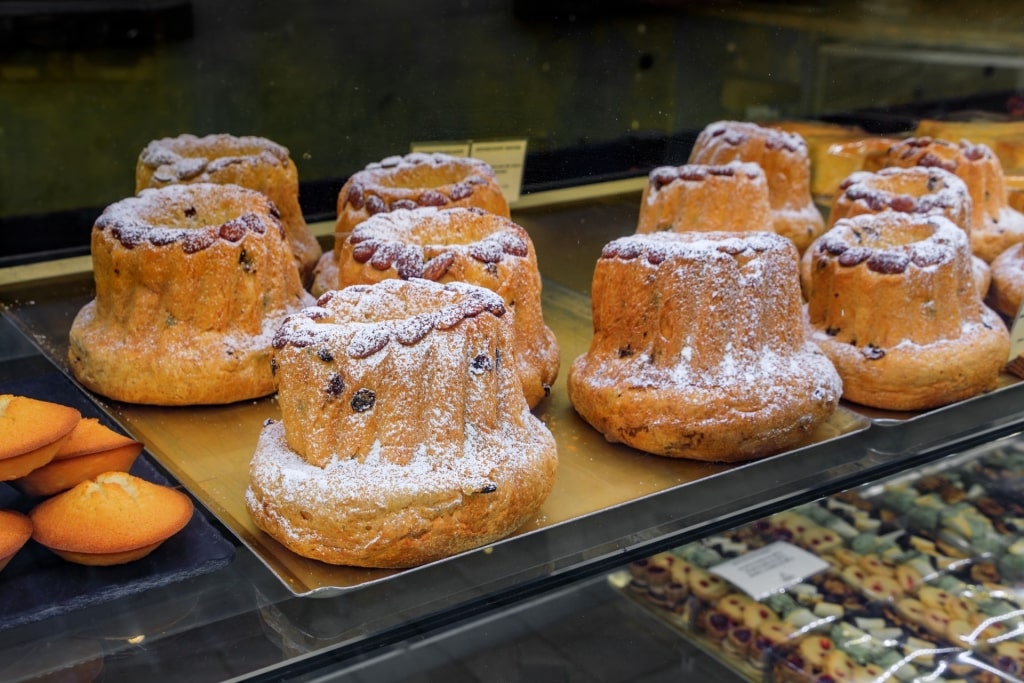
Kugelhopf is a ring-shaped brioche cake with almonds and raisins. Often eaten for breakfast, it’s equally good as a dessert.
Kugelhopf
Strasbourg has a strong pretzel tradition that has diverged from any German roots. The Alsatian version is topped with coarse salt or seeds and is great with beer.
Kronenbourg Beer deserves a mention—you’ll not go far without seeing the name of this local brew. The brewery was founded in 1664, when Strasbourg was still part of the Holy Roman Empire.
Wine
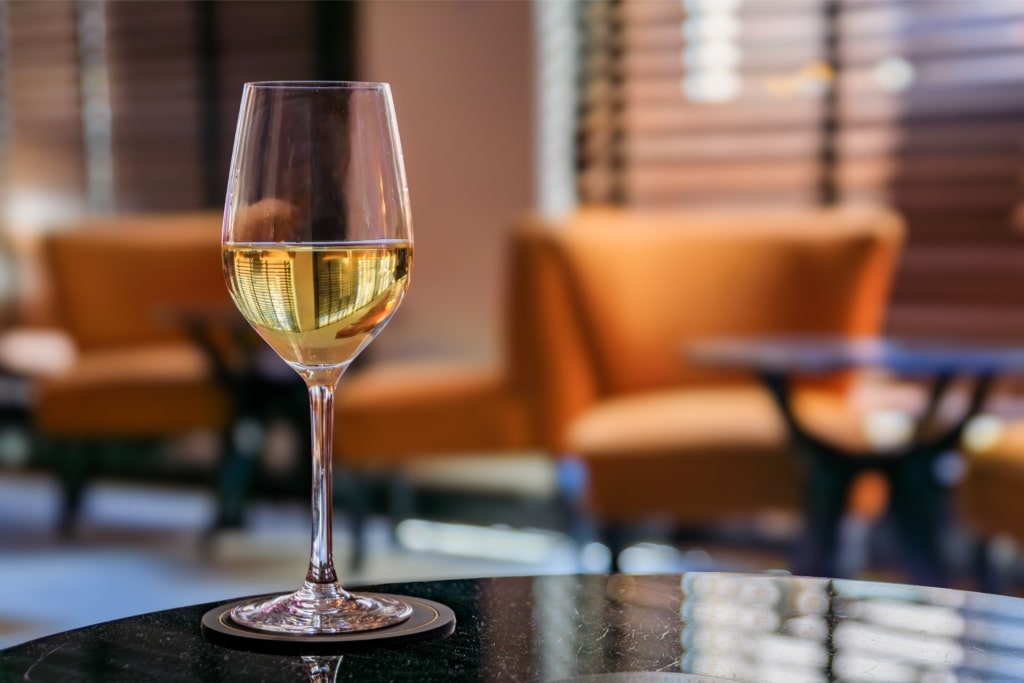
Alsace is well known for its aromatic white wines, particularly riesling, gewürztraminer, and pinot gris. Growing in popularity is a lovely sparkling wine, Crémant d’Alsace.
You’ll notice local wines are sold in tall, slender bottles with a very Germanic look to them. However, the emphasis on terroir and grape varietal rather than blending is very French.
Beneath Strasbourg Hospital, dating to 1395, there’s a wine cellar once used to store payments in kind. It holds a barrel of the world’s oldest wine, from 1472.
Museums & Culture
Palais Rohan
Visitors to Strasbourg are spoiled for choice in its museums, among the best in France. There is an equal range of other cultural experiences.
The Musée de l’Œuvre Notre-Dame covers medieval and Renaissance art from the Upper Rhine. Musée Alsacien covers folk art, costumes, and local domestic architecture.
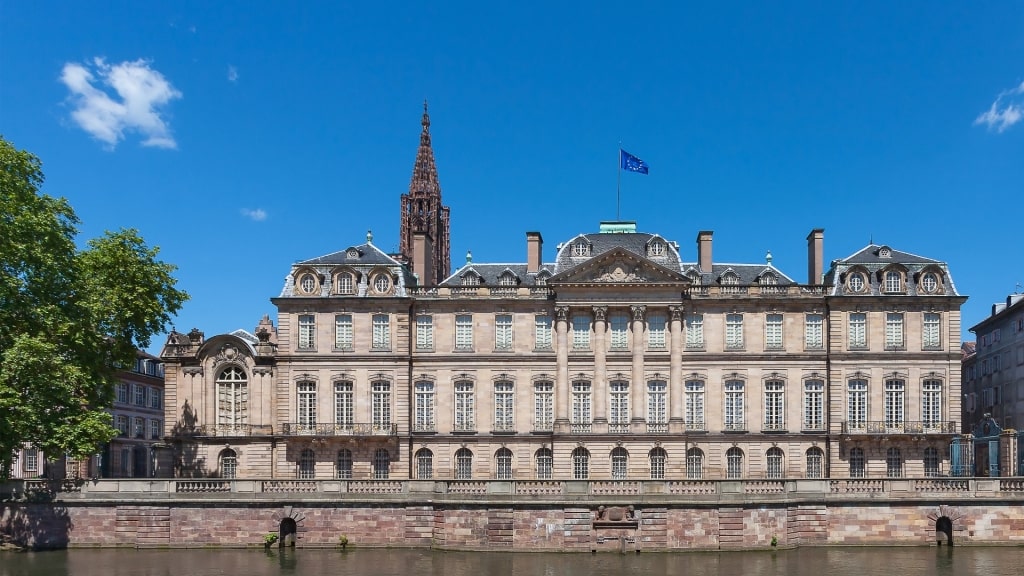
Palais Rohan houses three museums: the Musée Archéologique, Musée des Arts Décoratifs, and Musée des Beaux-Arts. Musée d’Art Moderne et Contemporain, or MAMCS, brings things right up to date with its impressive collection.
Musée Zoologique Photo by Ji-Elle on Wikimedia Commons, licensed under CC BY-SA 2.5
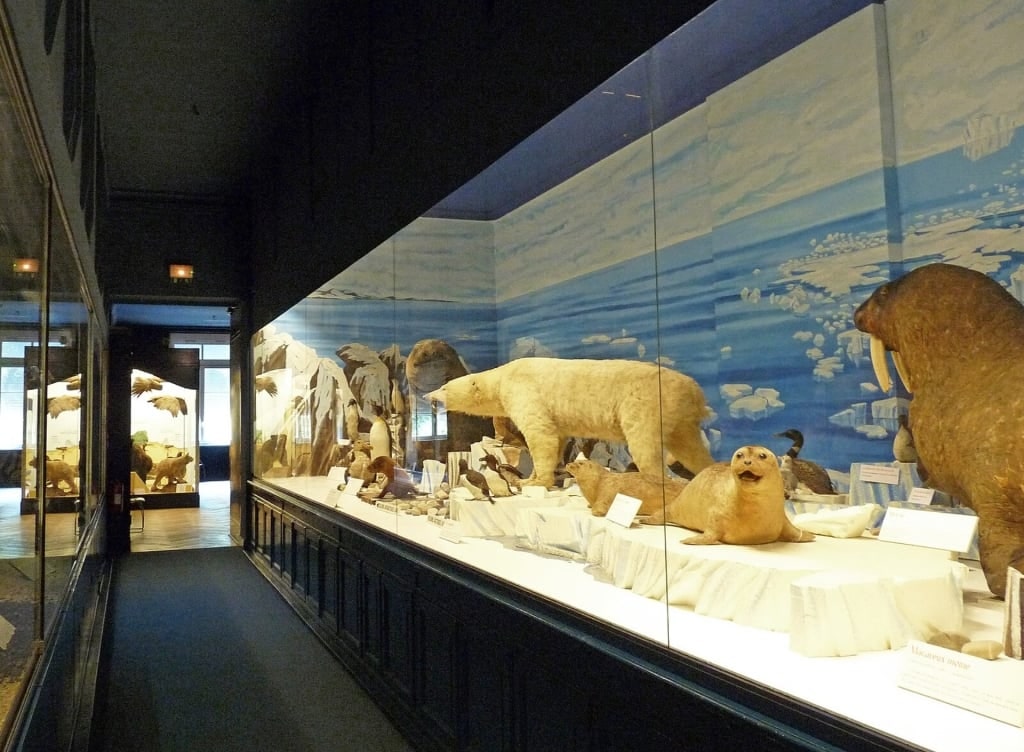
Musée Zoologique has one of France’s most comprehensive natural history collections, with more than a million specimens. It’s particularly strong on birds and insects and has plenty of interactive displays.
Opéra National du Rhin is a leading regional venue for opera and ballet. The Strasbourg Philharmonic Orchestra is one of France’s major orchestras. The Théâtre National de Strasbourg, meanwhile, is among France’s best drama companies. It has the country’s only drama school outside Paris.
University of Strasbourg
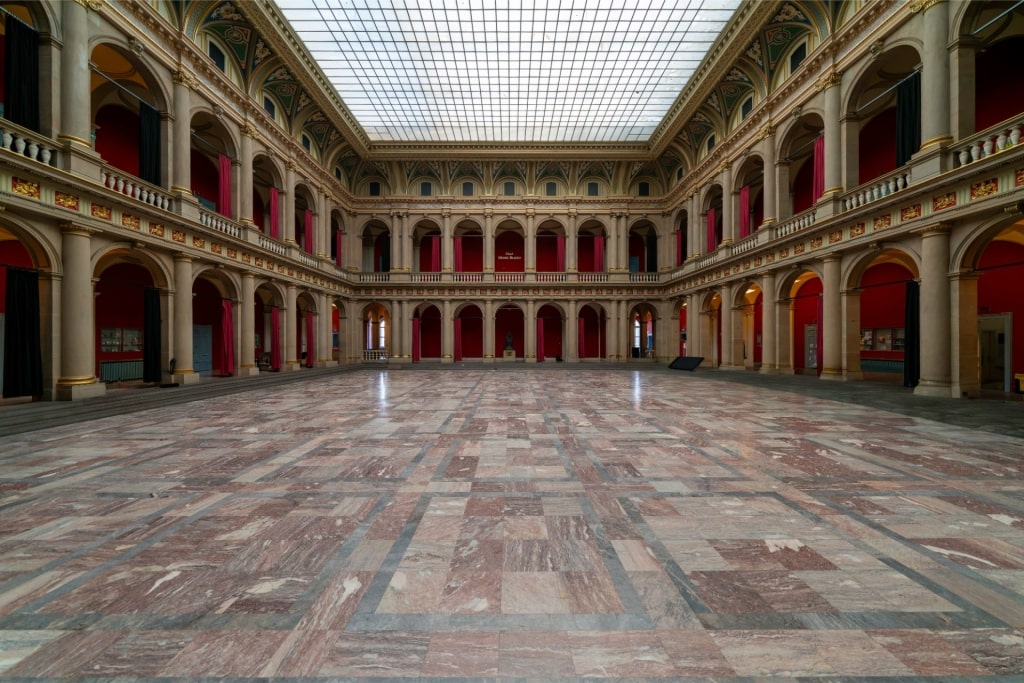
The University of Strasbourg is one of France’s largest universities. It has produced an amazing 18 Nobel Prize laureates to date.
European Institutions
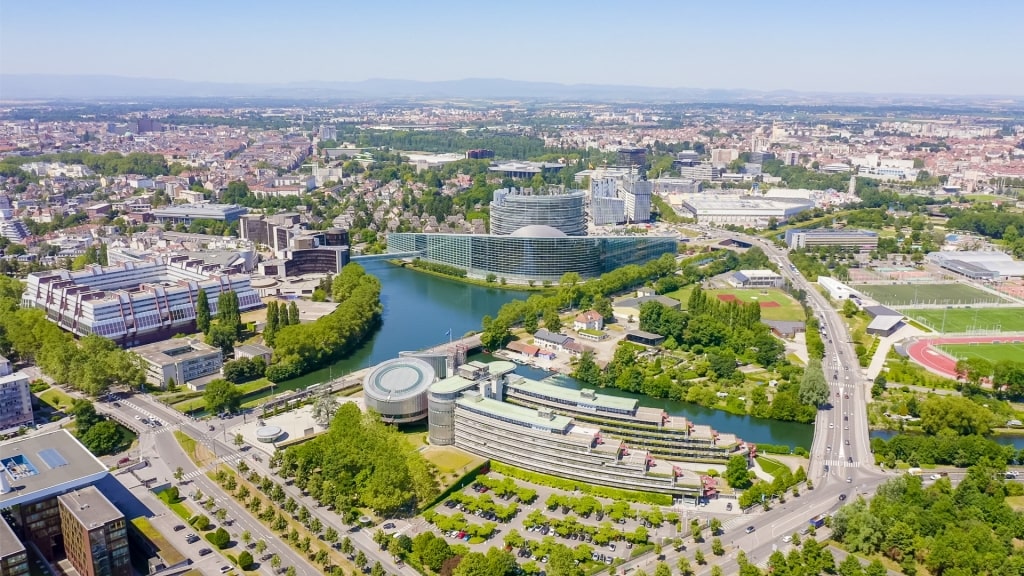
European Parliament
Strasbourg has been called the “Capital of Europe” for its key role in European politics. Home to the European Court of Human Rights, it also hosts the European Parliament and the Council of Europe.
The sleek architecture of the European District is a modern contrast to the old town. The European Parliament sits in a modern glass-and-steel building that represents democratic transparency.
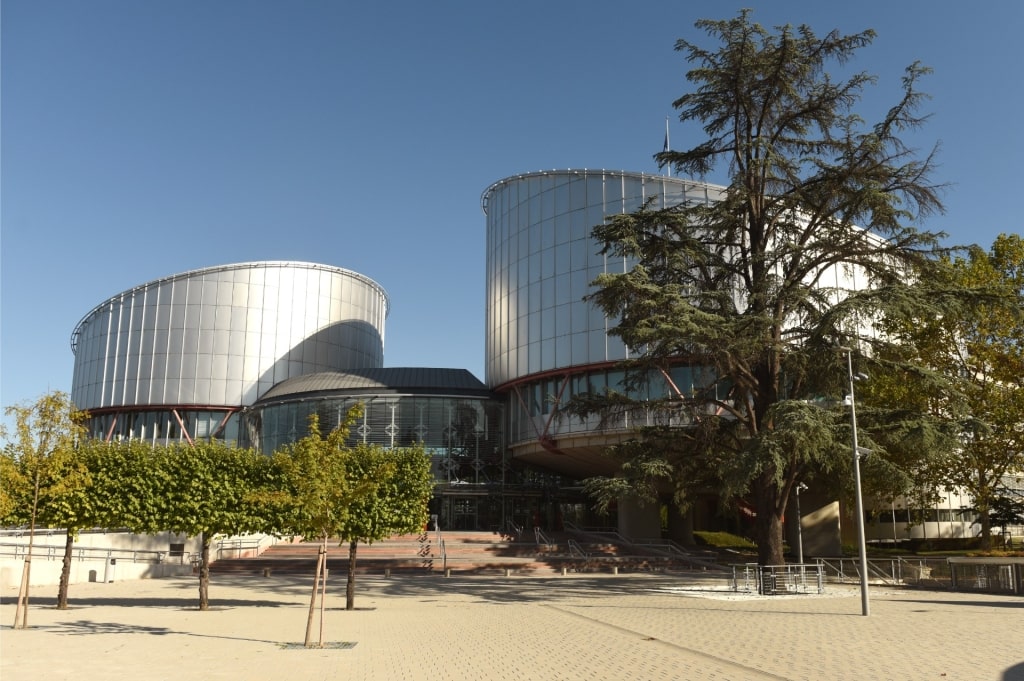
European Court of Human Rights
Its tower is designed to look unfinished, to show the ongoing process of European unification. It’s also said to be an acknowledgement of the many languages of the European Union, currently 24.
Book in advance to visit the building on free tours held six days a week, year-round. You can watch debates from a visitor gallery and find out more about how the EU works.
The panoramic Restaurant at the European Parliament has a great view of the European District. It’s also one of the best views of Strasbourg.
Christmas Market
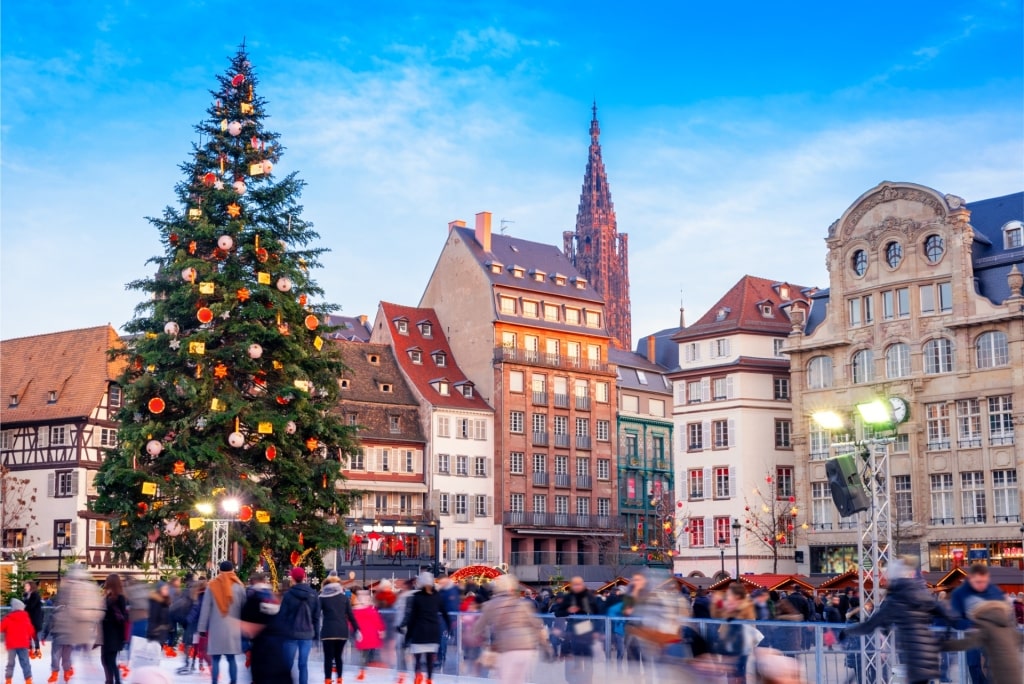
Strasbourg Christmas market
Strasbourg has a number of festivals throughout the year, but is best known for its Christmas market. The Christkindelsmärik is one of the largest and oldest in Europe, dating to 1570.
A giant Christmas tree and 300 chalets are the icons of a month-long event that attracts millions of visitors. The market spreads out across the city’s squares, each with its own specialties.
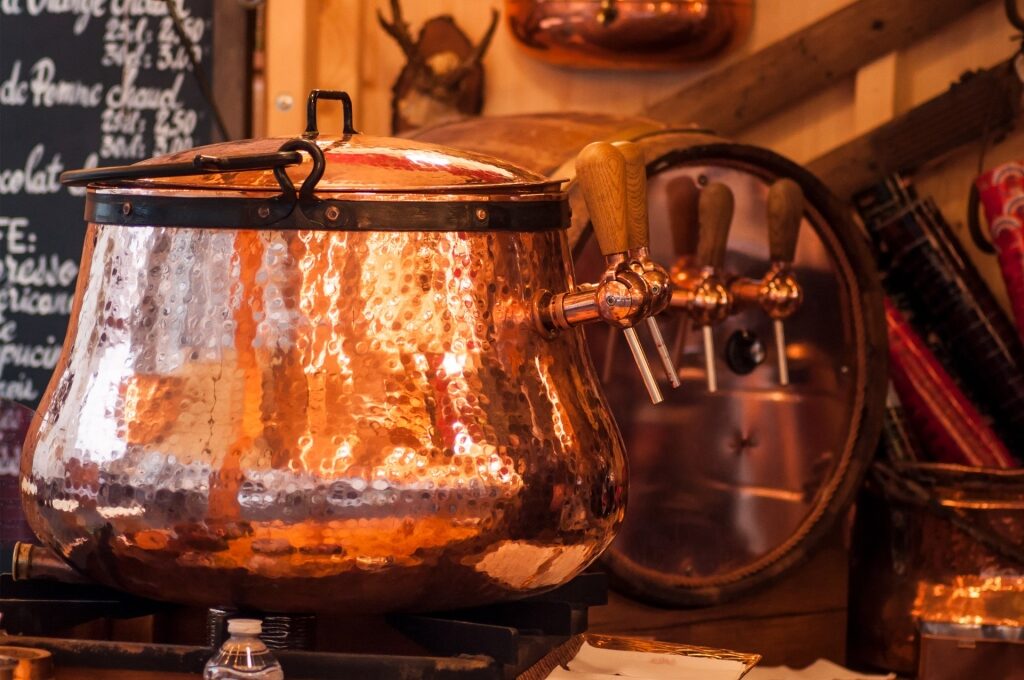
Mulled wine
Place Broglie, for example, offers many Alsatian food specialties. Mulled wine, or vin chaud, and mannele, miniature men shaped from brioche, make for a warming treat.
The cathedral is lit up for the season to add to the festive sense of occasion. While best at night for its atmospheric lighting, the market is less crowded during the day.
Gateway to Alsace
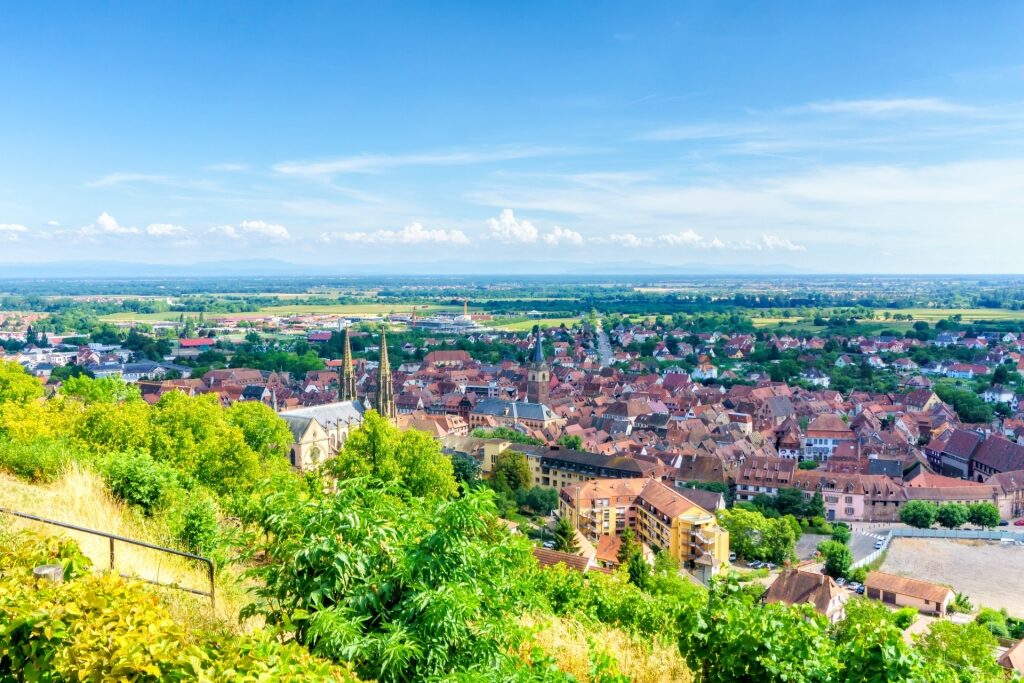
Obernai
Strasbourg is a perfect base for exploring the charming villages and vineyards of the Alsace region. It’s also a major port for the Rhine and its many attractions.
Only 30 minutes from Strasbourg, Obernai is one of Alsace’s prettiest towns. Its cobblestone streets, half-timbered houses, and views of the Vosges foothills are a photographer’s delight.
In the Vosges mountains, 90 minutes away from Strasbourg, you’ll find hiking, thermal spas, and local wines. You can also learn about its significant World War I and II history.
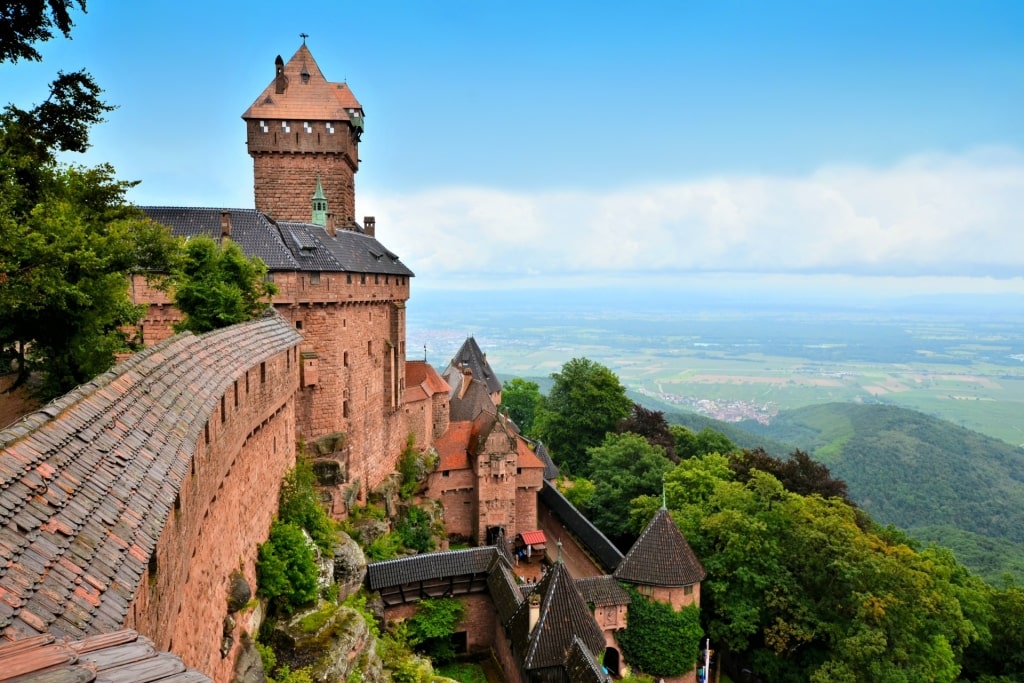
Château du Haut-Koenigsbourg
The medieval Château du Haut-Koenigsbourg enjoys panoramic views across the Rhine into Germany. Only 45 minutes from Strasbourg, its picturesque towers and winding staircases bring the Middle Ages to life.
The spa town of Ribeauville still has stretches of its old walls, as well as many pretty houses. Its forest has the largest giant sequoia outside of the U.S. at 150 feet.
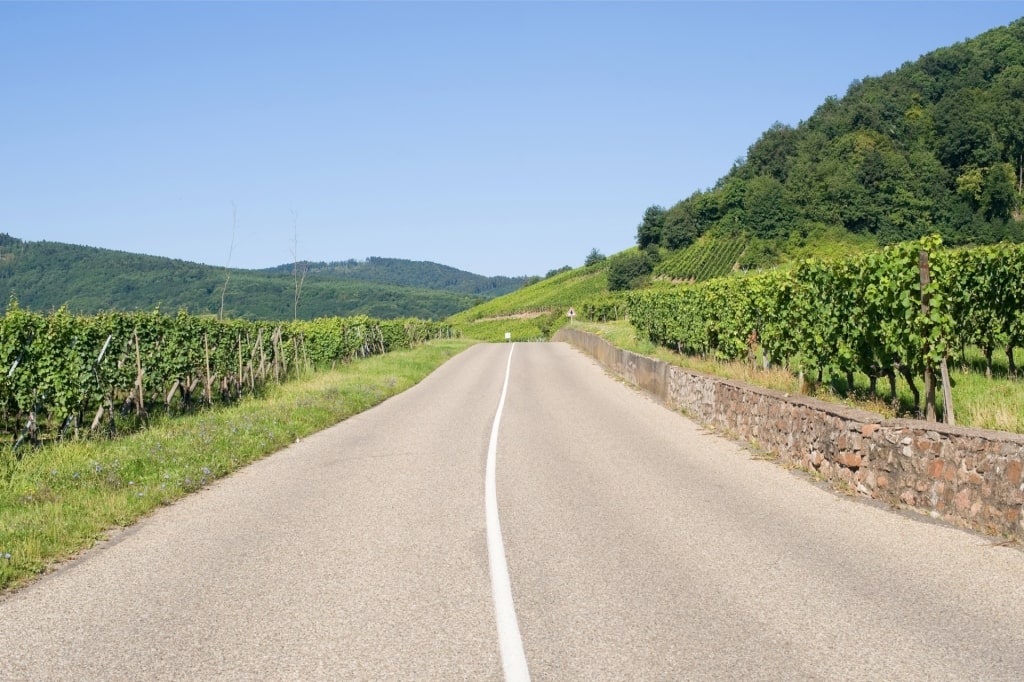
Alsace Wine Route
The small but characterful villages of Barr and Andlau are on the Alsace Wine Route. Less than an hour from Strasbourg, they have scenic vineyards, old churches, and forested walking trails.
Colmar is a fairytale town with colorful medieval houses, only 45 minutes from Strasbourg. Made wealthy by being at the heart of Alsace’s wine region, it’s full of wonderful restaurants and wine cellars.
Green Spaces
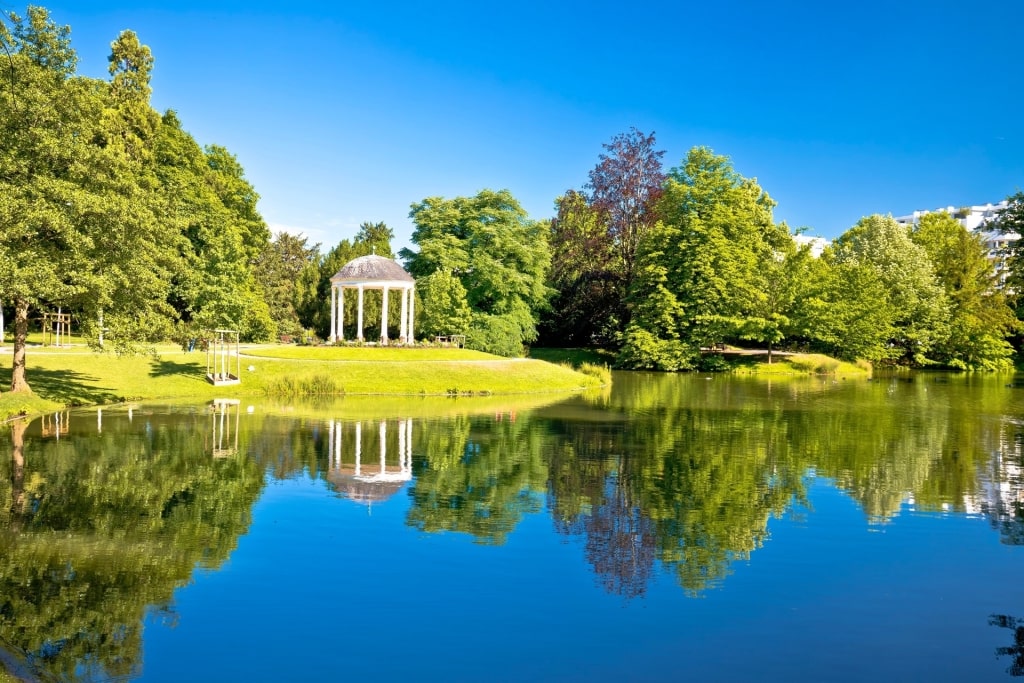
Orangerie Park
Jogger-friendly Orangerie Park is Strasbourg’s oldest green space, created in 1692. It has a mini-zoo with storks, the symbol of Alsace, as well as a boating lake and romantic bridges.
For history lovers, Parc de la Citadelle blends greenery with Vauban’s 17th-century military ruins. Moats, bridges, and fortress walls give it a unique character.
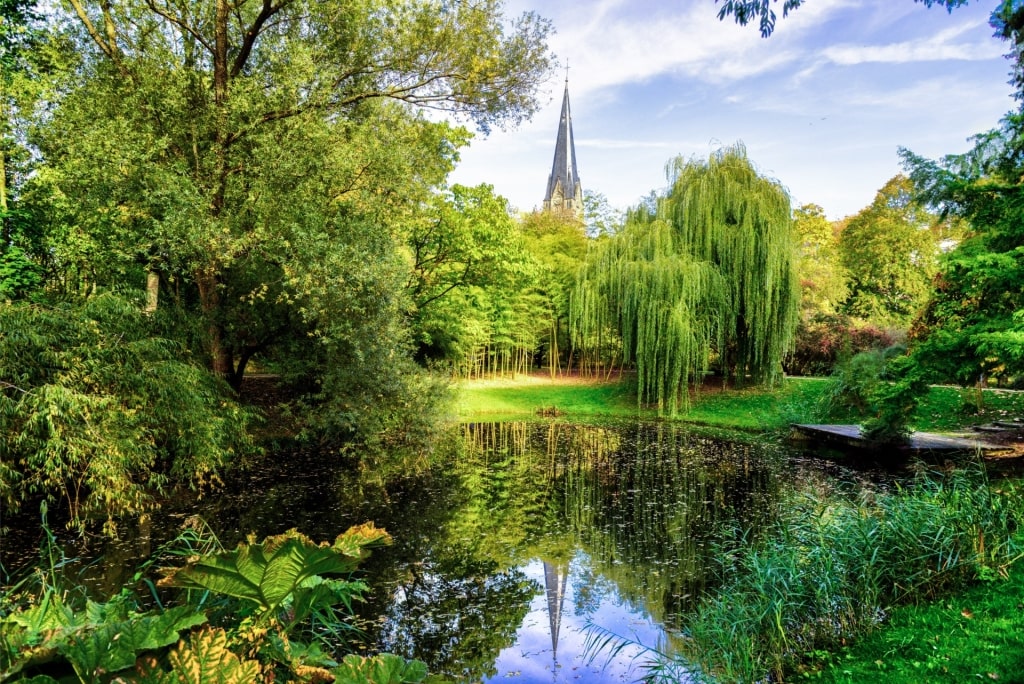
Botanical Gardens
The Botanical Gardens were laid out in 1619, making it one of France’s oldest such institutions. Particularly beautiful in spring and summer, there are some themed gardens, a lily pond, and historic greenhouses.
The European Quarter is a place where landscaped parks offer a natural counterpoint to the ambitious architecture. Jardin de la Place de l’Europe and Parc de l’Étoile are both contemporary green spaces to relax in.
Near the Neustadt area, Parc du Contades has wide lawns, shaded paths, and a relaxed atmosphere. It’s another popular spot for joggers and perfect for a quiet break after seeing the city center.
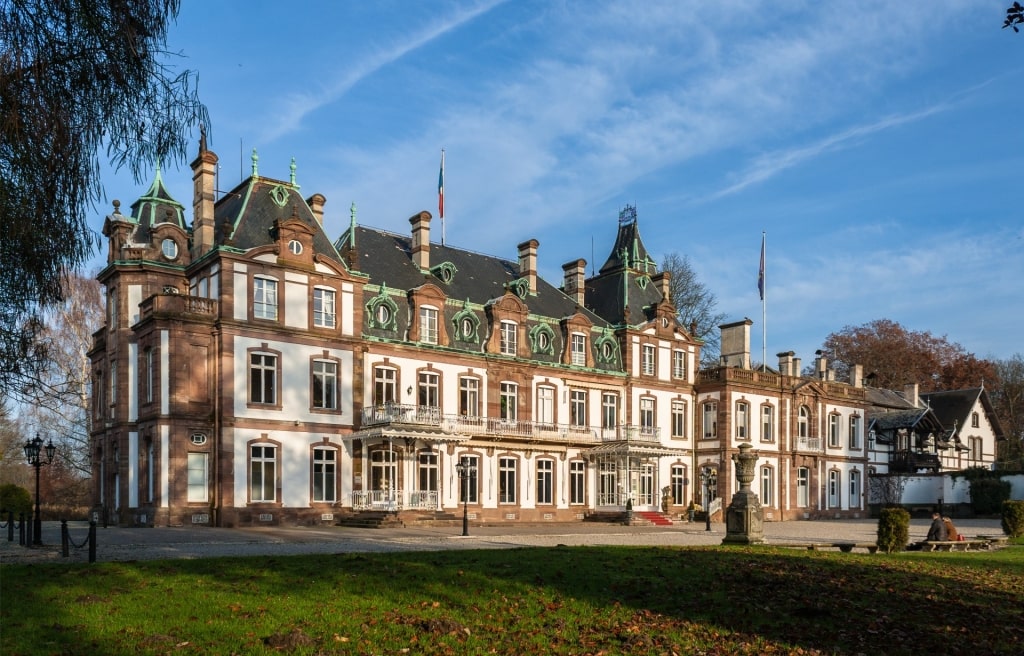
Château de Pourtalès
In the Robertsau district, Parc de Pourtalès is a large expanse around a château. Its woodland paths and shy deer give it a countryside feel.
Just across the Rhine, Kehl is an easy tram ride from Strasbourg. Its Jardin des Deux Rives straddles both France and Germany, and is ideal for a quiet walk with a unique view.
Famous Names
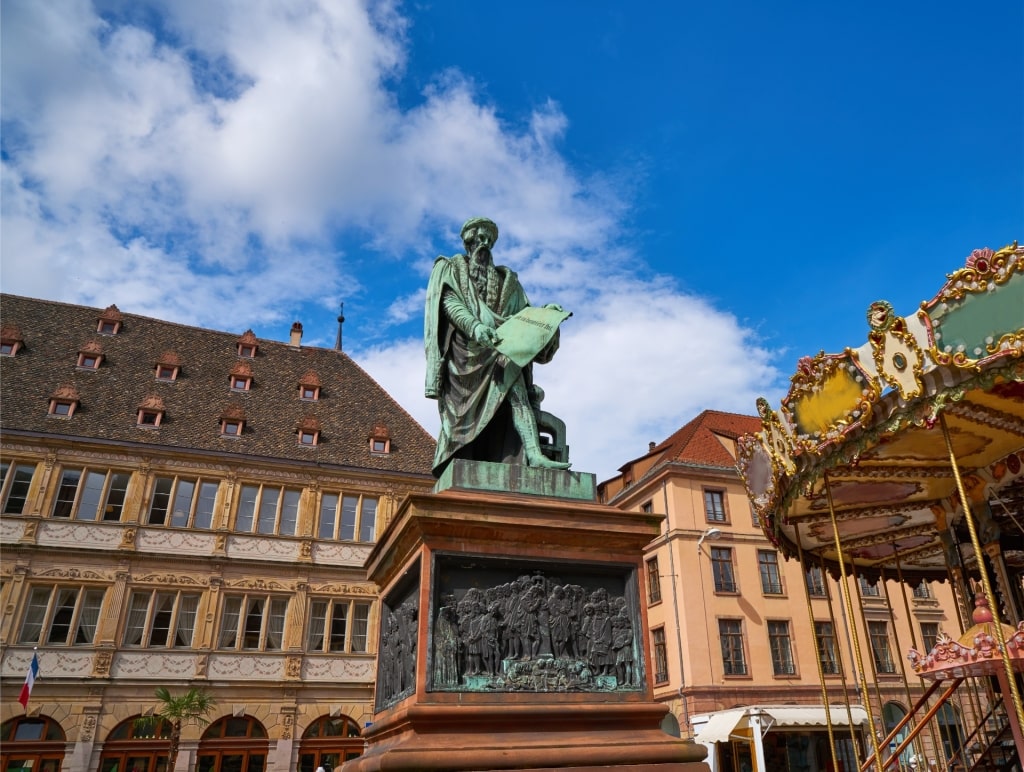
Place Gutenberg
A perhaps surprising number of famous people are associated with Strasbourg, having been born or been working there. As you walk around, you’ll find squares, streets, and other landmarks remembering them.
Johannes Gutenberg was living in Strasbourg when he developed the first moveable-type printing press. His statue in Place Gutenberg shows him with a depiction of his press.
The German literary giant Goethe studied law at the University of Strasbourg. In Alsace, he became interested in Shakespeare and folk poetry, his first awakening to literature.
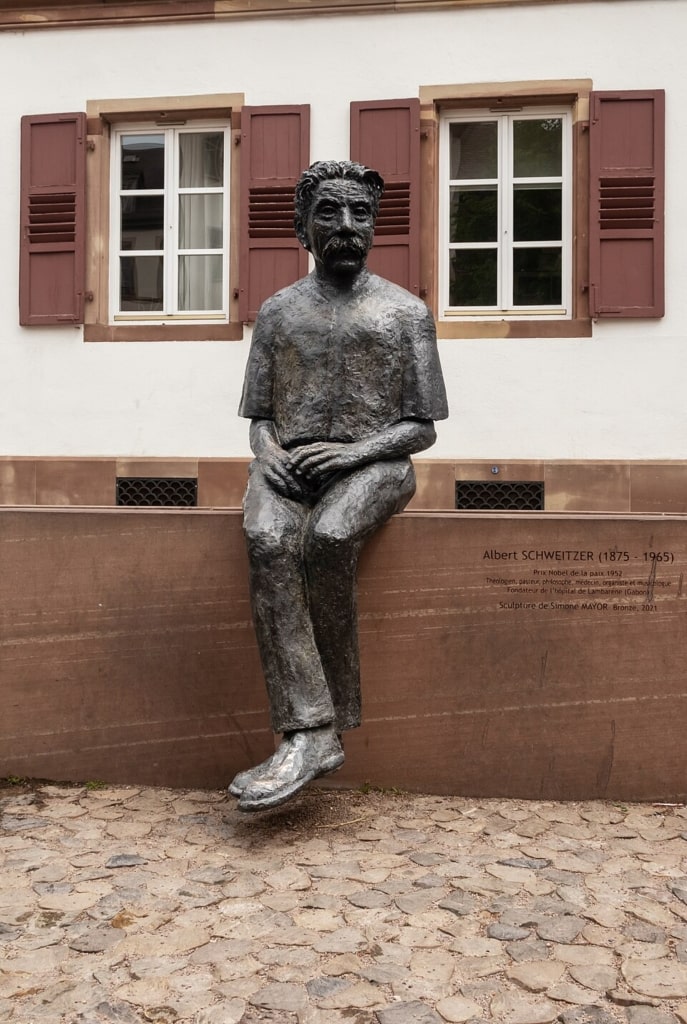
Albert Schweitzer Statue Photo by Michielverbeek on Wikimedia Commons, licensed under CC BY-SA 4.0
Theologian, philosopher, and musician Albert Schweitzer was born near Strasbourg and studied at its university. His statue is in Strasbourg’s Place Saint-Thomas.
General Jean-Baptiste Kléber’s statue dominates Place Kléber in the city of his birth. Napoleon Bonaparte said there was “no sight so splendid as watching Kléber go into battle”.
Influential journalist, feminist, and European unity advocate Louise Weiss was also born in Strasbourg. She has the European Parliament building named after her.
Chemist Louis Pasteur was a professor at the University of Strasbourg from 1848 to 1854. His statue is at Place Pasteur and the university has a small museum in his former laboratory.
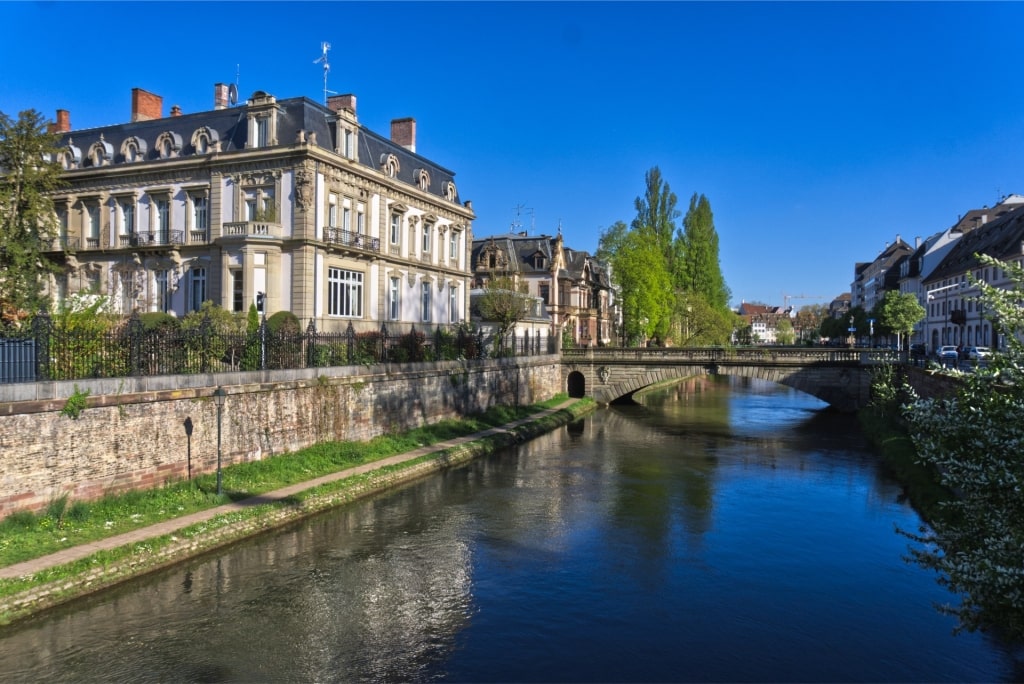
Tomi Ungerer Museum
Strasbourg-born artist Tomi Ungerer has a museum in the former Villa Greiner devoted to his work. It features many thousands of original drawings and manuscripts, including his children’s books and very adult satirical works.
Read: Best Things to Do in Strasbourg
Strasbourg
Discover the city on one of Celebrity’s river cruises to Strasbourg. Browse itineraries and plan your European adventure.