Christmas in Austria is less of a holiday, and more of a seasonal embrace of light, warmth, and tradition—a place where you can rediscover the original meaning of Advent. Candles glimmer with lights brought especially from the Holy Land, churches ring to the sound of bells and choirs, and family and community are celebrated and cherished.
Christmas here is certainly not about flash and frenzy. Even in more popular settings such as the many Christmas markets, things are done as they used to be. Chestnuts roast on open coals, mulled wine is homemade with local grape varieties, and stalls mostly sell hand-crafted souvenirs and gifts.
Glowing Advent Wreaths
Vienna
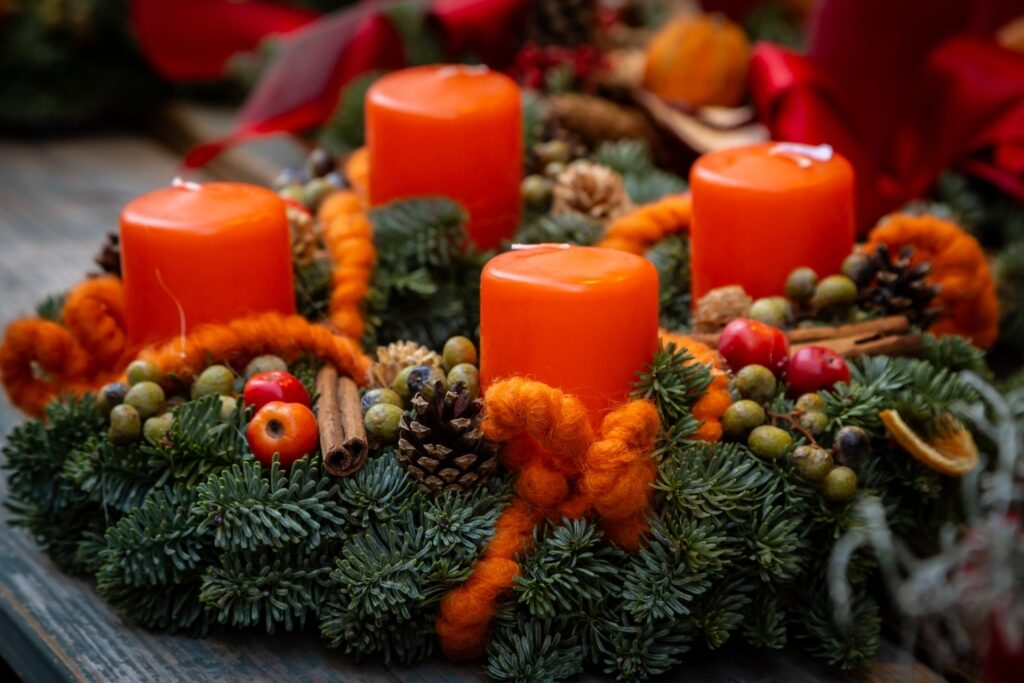
We’ve all seen festive wreaths before, but few match those you get when you spend Christmas in Austria. For here, the wreath is more than something someone just hangs on their door. In Austria, the Christmas wreath is laden with symbolism—the circle represents eternity, the evergreen foliage symbolizes hope, and the four candles that decorate it are a push back to the long nights of winter.
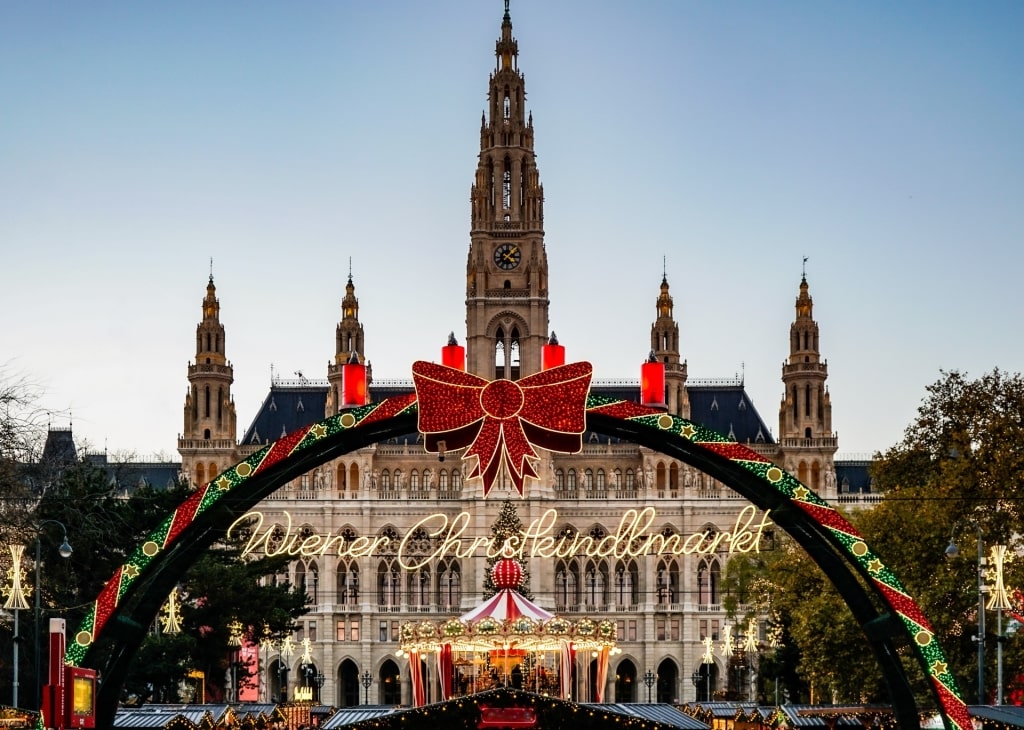
Those four candles are lit one by one on each Sunday in Advent, originally to mark the start of the festive season and then acting as a timer to build anticipation. Cities, towns, and villages will often display their own wreath—like the one at Rathausplatz Christmas Market—often oversized and usually at the local church.
Wreath
Oftentimes though, the best are located outside people’s homes; there’s a strong DIY crafting tradition here. You may even be able to catch a traditional wreath-making class if you visit just ahead of the festive season.
Presents from Christkind

While Austria does have a tradition of St. Nicholas at Christmas, there’s no jolly Santa figure bringing presents down chimneys here. Instead, the main Christmas gift-bringer is the Christkind or Christkindl, or the Christ Child, a golden-haired angel who drops them off sometime in the afternoon of Christmas Eve.
Parents then ring a bell to signal Christkind’s departure and presents are excitedly opened. The tradition in German-speaking Europe dates to the 16th century during the Protestant Reformation as a way of celebrating the birth of Jesus rather than St. Nicholas.
By the 19th century, it had become the accepted way of present-giving in the festive season. Many of the Christmas markets around the country are named after Christkind too, while in Vienna the city officially appoints a “Wiener Christkind” to lead the Rathausplatz Christmas market.
St. Nicholas & Krampus
St. Nicholas
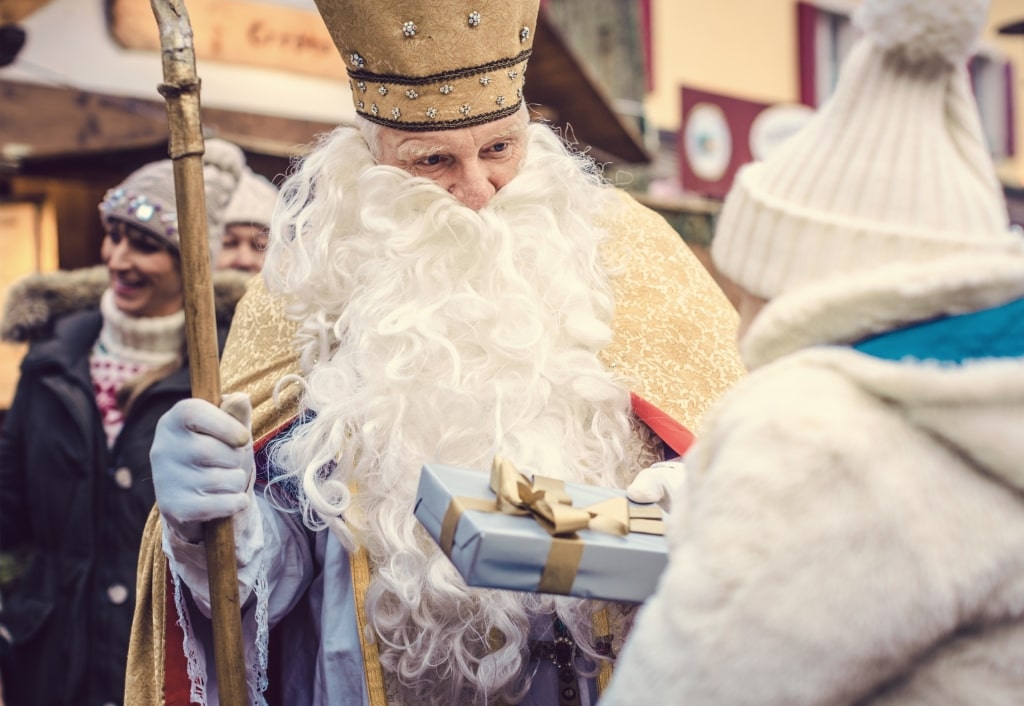
In Austria, Christmas traditions include an appearance by St. Nicholas. His bringing of small gifts is on December 6. His appearance also ties in with that of another local legend, that of the Krampus, a slightly demonic winter beast figure. This mix of pagan and Christian rituals originated as a way of keeping the kids in check, carrot-and-stick style.
Be good, and jolly old St. Nick turns up, otherwise the Krampus arrives as punishment. In modern terms, this all plays out like theater. On December 5, older teens and young men and women dress as Krampus and roam the streets in Krampus “runs”, terrifying locals with bells and chains as they go.
The following day, St. Nicholas appears in Austrian towns and villages—especially at Christmas markets—handing out candies, apples, and nuts. As a small aside, the Krampus should not be confused with another winter beast, the Perchten, which also appears in the winter months, but whose purpose is to ward off evil spirits.
Christmas Markets
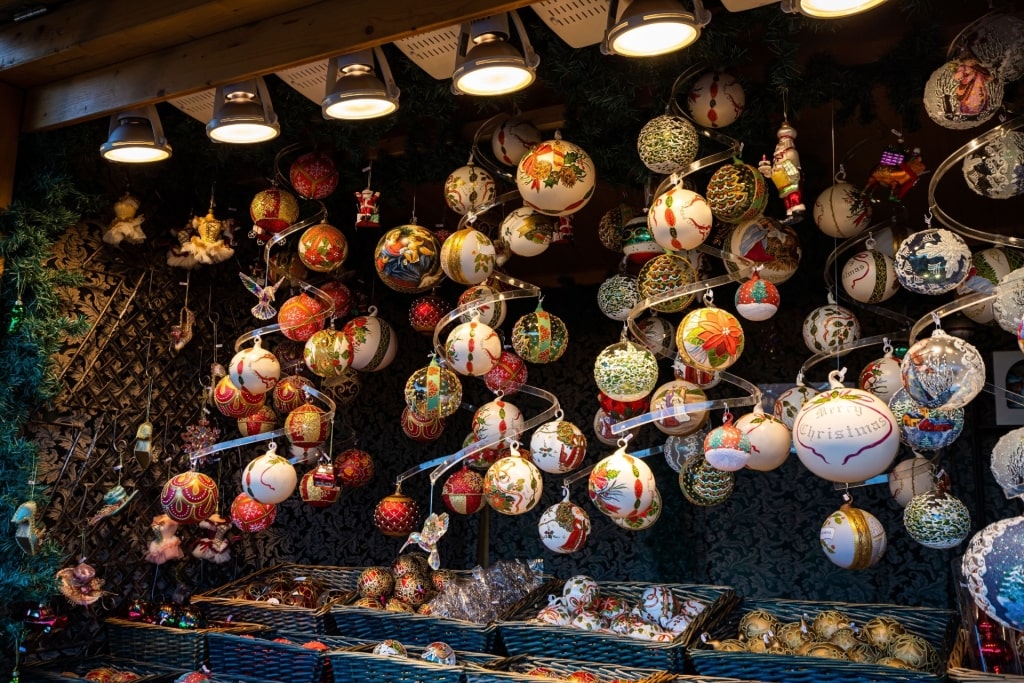
Christmas market in Austria
You can find Christmas markets, or Christkindlmärkte, across Central Europe with each country having its own spin on this particular festive tradition. Elsewhere they may be big and brash, but in Austria, they have more of a traditional feel.
Opening in mid-November and running through until just after Christmas, the markets feature a host of decorated stalls, usually outside historic buildings. Vendors sell a range of goods, from handcrafted gifts and ornaments, to treats such as roasted nuts, glühwein, and bratwurst.
One of Vienna’s most famous Christmas markets, the Christkindlmarkt on Rathausplatz is the national standard‑setter, offering more than 150 stalls, as well as ice skating, live music, ice‑carving, and an enormous lit-up tree.
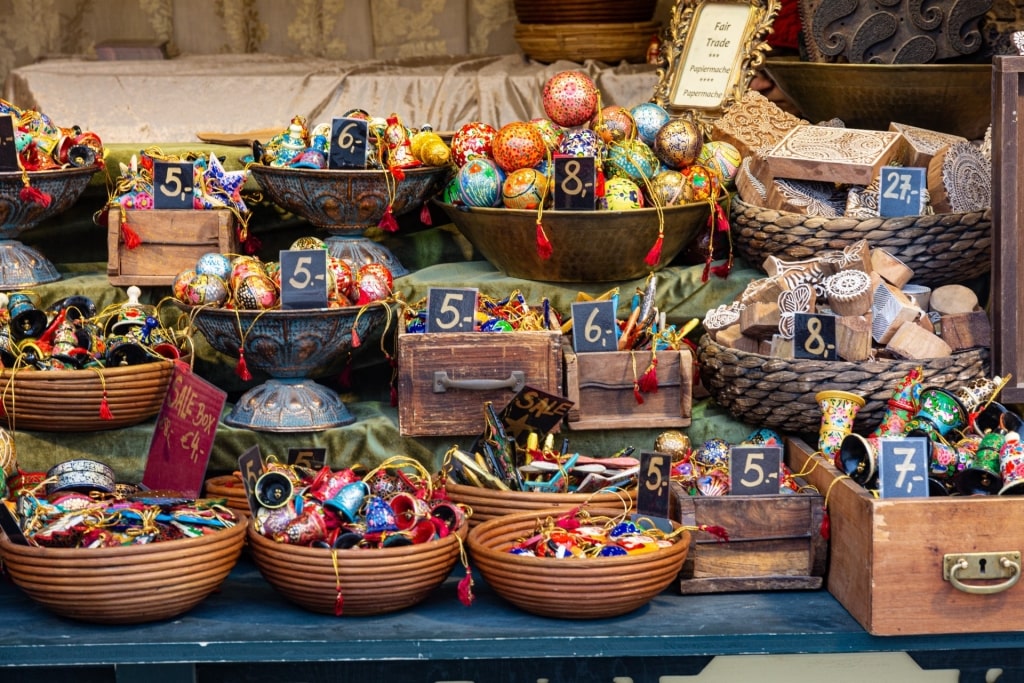
Schönbrunn Palace Market
The capital’s other market offerings include the intimate Alt‑Wiener Markt at Freyung, and the imperial Schönbrunn Palace market. Smaller markets also take place in Melk and Dürnstein.
Warming Mulled Wines
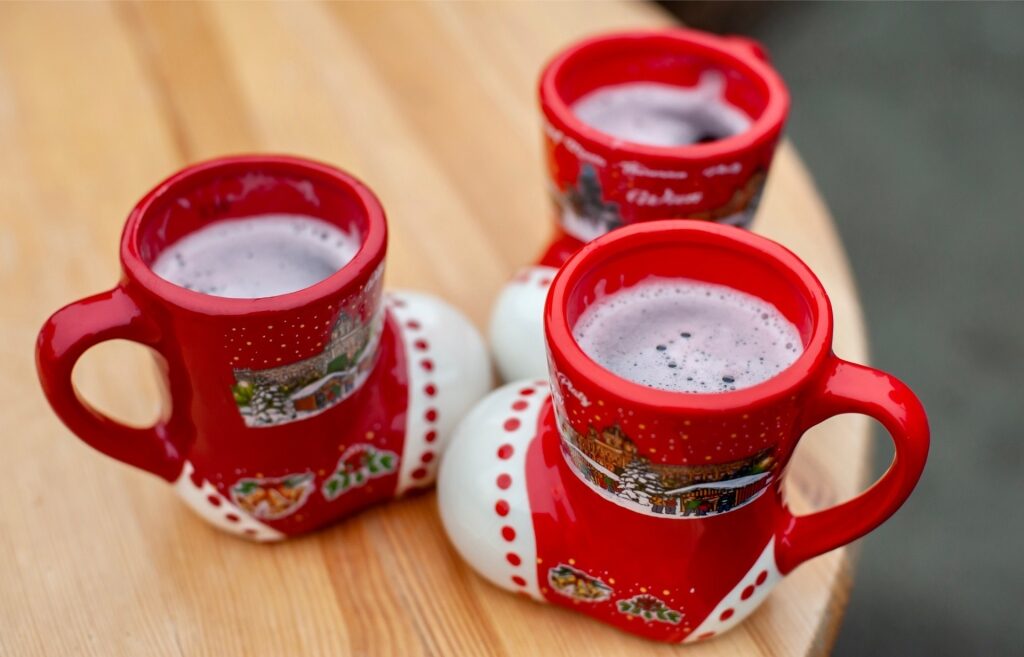
Mulled wines
Mulled wine—glühwein in Austria—is a fairly traditional drink at Christmas markets and the festive season in general. It’s thought to have its roots back in Roman times when soldiers would heat wine for warmth on cold Central European nights.
When it comes to Christmas in Austria, there are several things to look out for that make the local version stand out from other Central European offerings. First there’s the classic red version, made with cabernet, chianti or, for extra Austria points, the local Zweigelt. It’s often topped with a shot of rum or brandy for a little extra kick.
Then there’s white glühwein. Lighter and fruitier, it’s made with Riesling, or Grüner Veltliner grapes from vineyards by the Danube. In some of Lower Austria’s Danube towns, you may also come across Glühmost, which follows a similar recipe but uses pear or apple cider instead of wine.
Read: A Beginner’s Guide to Austrian Wine
Baked Treats
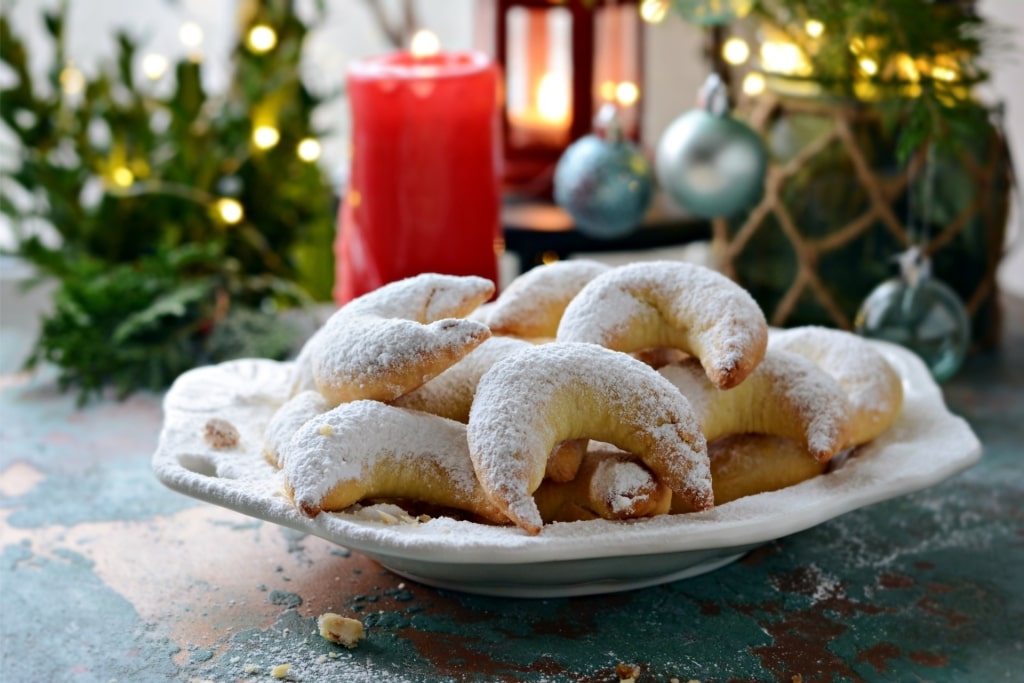
Vanillekipferl
If you’ve got the kind of sweet tooth that loves a cookie or a cake, you’re in for a treat when it comes to Austrian Christmas traditions of the baked kind.
During Advent, Christmas baking is a ritual, whether in someone’s home, a café in Vienna, or at a lower-key local Christmas market. Things to look out for include crescent-shaped vanillekipferl cookies, lebkuchen, which is a type of gingerbread, and kletzenbrot, or fruit bread, as well as the ever-popular apfelstrudel.
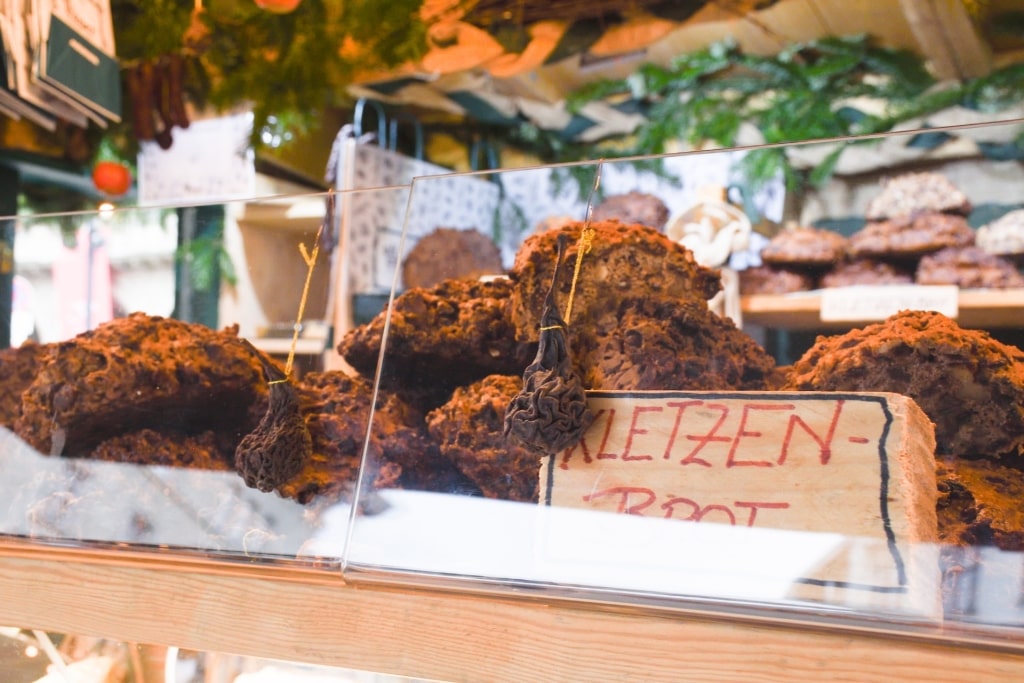
Weihnachtskekse—the collective name for Christmas cookies—make great gifts as well. Given the cookies can have a long shelf life, they are often sold in elaborately decorated tins on the markets.
Life-Size Advent Calendars
You’ve not seen an Advent calendar until you’ve seen one in Austria. Sure, they have the usual cardboard box ones where each window reveals a chocolate treat for kids. But in some towns here, they go big and even bigger, lighting the windows of historic buildings as giant real-life ways of ticking off the days until Christmas.
Steinbach an der Steyr—around an hour from either Linz, Grein, or Mauthausen— is actually known as the “Advent Calendar Village” thanks to the number of houses that light up. With the village also hosting its own Christmas market, there’s quite a festive feel to a trip here.
Likewise, for an architecturally dramatic version, Melk Abbey is the place to go. Set on a rocky outcrop overlooking the Danube, the Benedictine abbey tends to dress up its many windows to create a life-size, super-impressive countdown to the big event.
The Light of Peace
Vienna
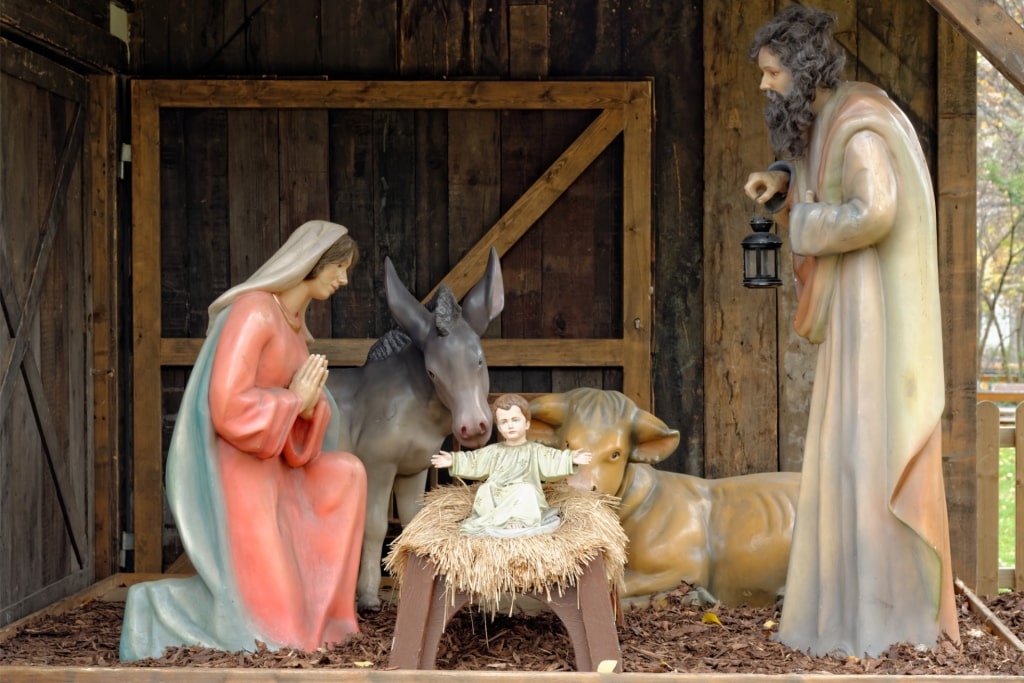
If you see flickering candles in Austria at Christmas, they’ve likely come a long way—all the way from the Holy Land, in fact. Each year, the Peace Light of Bethlehem is lit at the Nativity Grotto in Palestine and brought to Austria in a symbolic lantern that represents peace, warmth, and unity.
What happens next is pretty endearing—the flame is spread from one candle to another with the country’s network of Boy and Girl Scouts distributing the flame to churches, homes, and public spaces.
The tradition was started in 1986 by broadcaster ORF as part of a charity campaign and has continued ever since. Every year an Austrian boy or girl visits Bethlehem to bring the flame back on the country’s national airline, before it is shared around from either Vienna or Linz.
Sacred Spaces
St. Stephen’s Cathedral
Austria is not immune from the creeping commoditization of Christmas seen elsewhere, but at its heart it remains very much a religious festival when communities and families come together to celebrate.
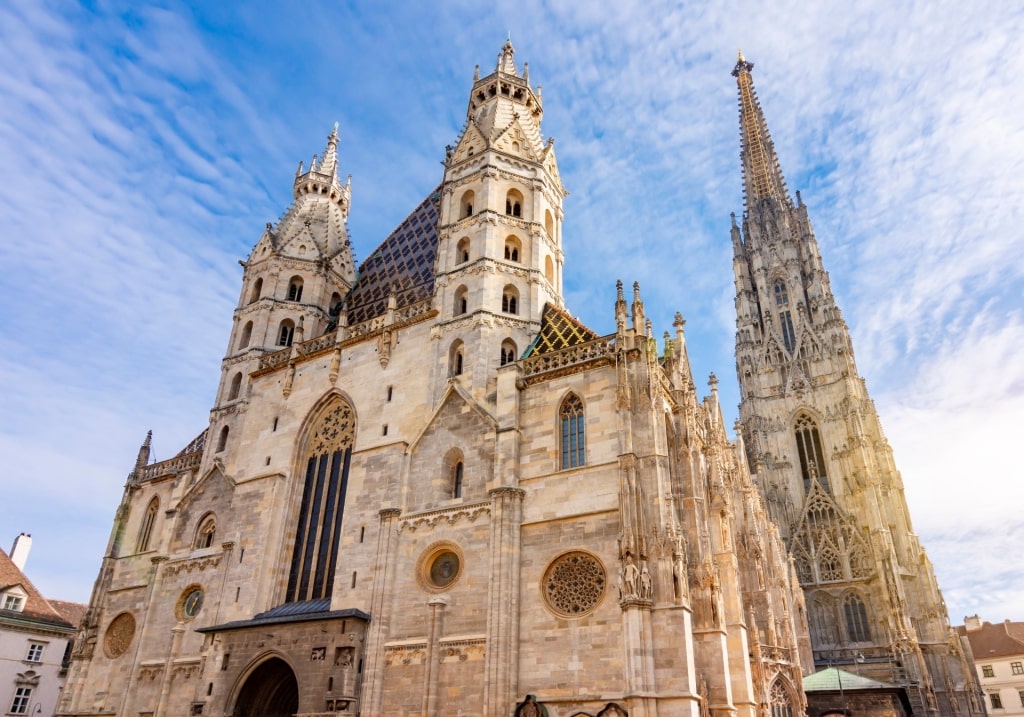
The country’s churches, abbeys, and cathedrals play a central role in the festive season—places for Midnight Mass, special Advent concerts, and quiet reflection. In Vienna, 16th-century St. Stephen’s Cathedral with its dominant 450-foot tower is at the heart of events, with masses and concerts. Likewise, Melk Abbey—one of the world’s most famous monasteries—provides similar within its Baroque walls.
The Benedictine Göttweig Abbey outside Krems is another key religious venue at Christmas, but wherever you are in the country, the local church will offer a warm welcome to visitors. It’s worth noting, however, that on Christmas Eve and Christmas Day, priority access may be given to those visiting for worship.
Gifts Worth Giving
Mozartkugel
If you’re spending Christmas in Austria, save the gift-giving for those you love at home until you get back. For Christmas here brings with it some lovely artisan items, packed with regional craftsmanship and character.
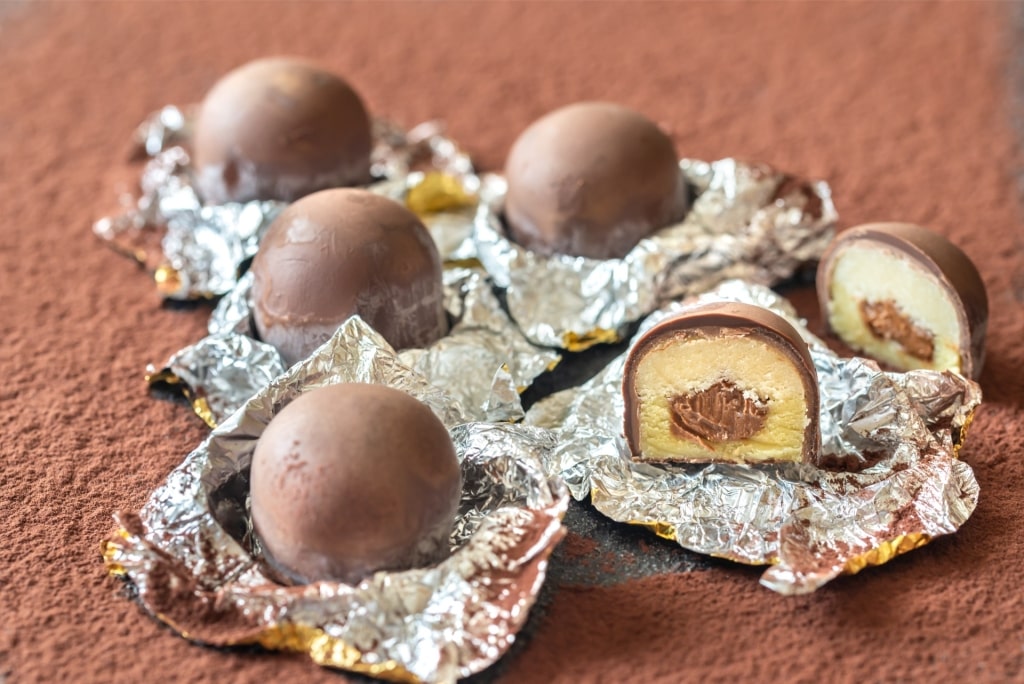
In Vienna there are all kinds of edible treats that can last a journey home. Mozartkugel—a small round truffle-style chocolate with pistachio, marzipan, and nougat—is popular, as are Manner Schnitten Neapolitan wafers.
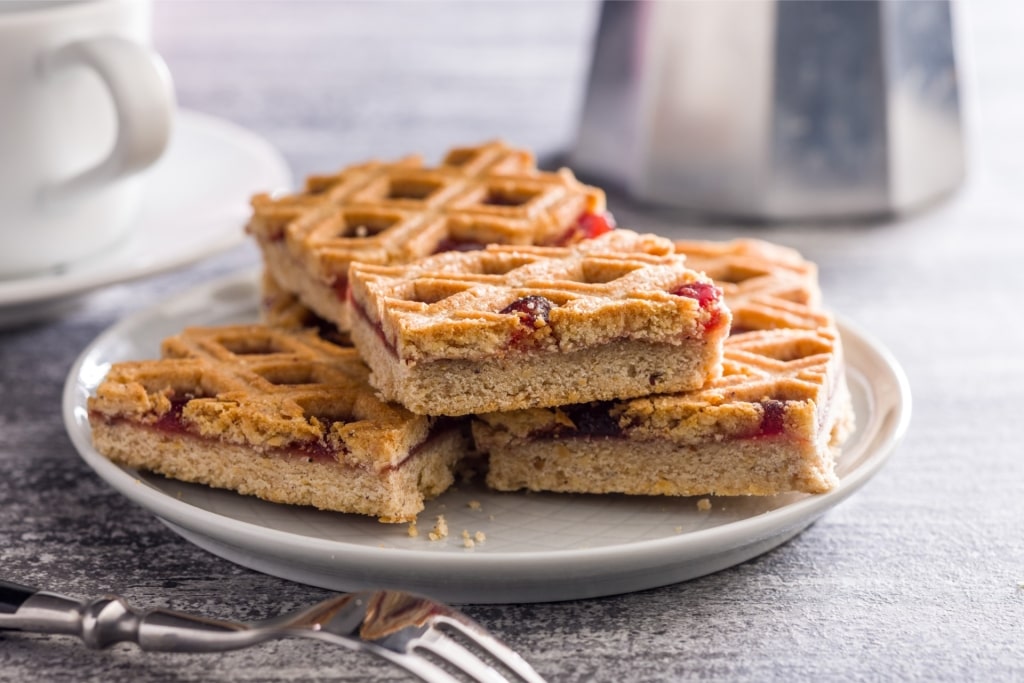
Linzer torte
For something more lasting, there’s Bohemian crystal from the famed store Lobmeyr, and fine porcelain at Augarten castle. Both can ship home to save on luggage space. In Linz, Melk, and Dürnstein look out for Linzer Torte, as well as jams, liqueur, or dried fruit from the local apricot orchards.
Engelhartszell, meanwhile, has some great beers brewed in the Trappist tradition. There’s also a brewing tradition in Mauthausen and Grein, only here there are some great ciders worth taking home. Make sure to check local legislation when transporting alcohol.
Opening Times
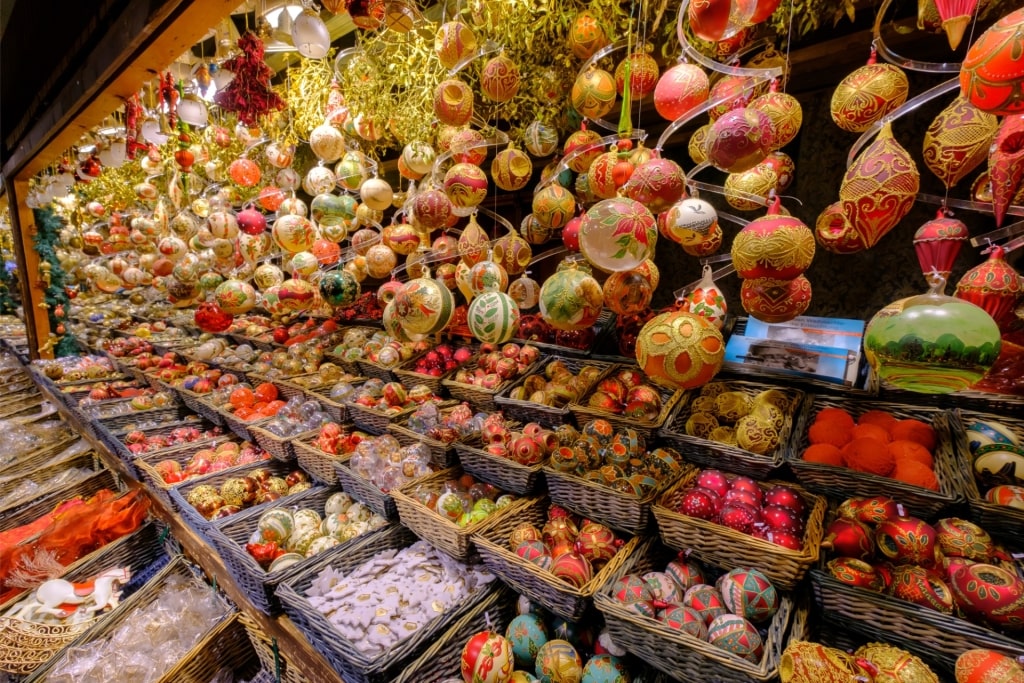
Christmas market in Austria
While Christmas in Austria is celebrated with great gusto, the fact that it remains a religious celebration enjoyed by families and local communities means there’s little 24/7 culture over the festive season. Christmas markets will typically open around 10 a.m. and close for the evening around 10 p.m., and in many places they will close early on December 24.
In some places, the markets may then close down, or take a short break before re-opening for New Year. Shops and supermarkets will close at 1 p.m. on Christmas Eve, although florists and sweet shops may remain open until 6 p.m.
Aside from essentials such as gas stations, most shops will be closed on both Christmas Day and December 26. Museums do likewise. If your trip crosses into the New Year, regular shops will close at 1 p.m., with New Year’s Day seeing many of them remain closed for the day.
It’s worth noting the reduced daylight hours during winter, too. Sunrise is around 7:30-8.00 a.m. and dusk starts to kick in at around 4 p.m. Days should be planned accordingly. If a place you’re visiting needs daylight to be seen, schedule a visit in the morning if possible. Leave the afternoons for markets and outdoor events where festive lighting adds to the atmosphere.
FAQs
How is Christmas celebrated in Austria?
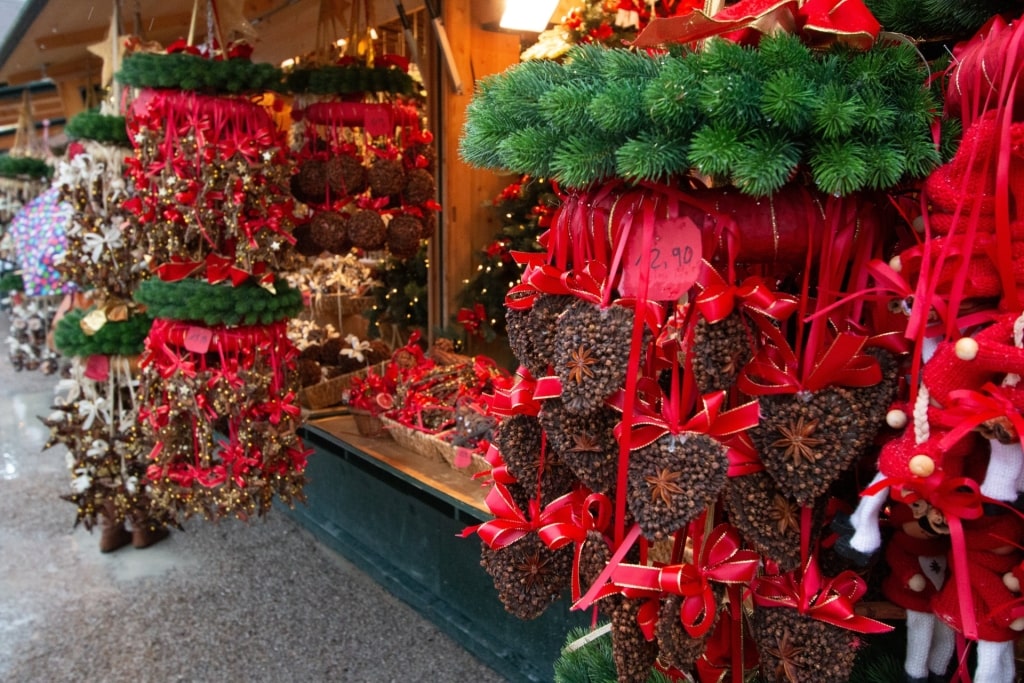
Christmas market in Austria
Christmas in Austria remains deeply traditional—a blend of religious customs and seasonal charm. Things begin with the start of Advent, although some markets may open a little earlier, in late November.
While the Christmas markets are popular with everybody, their focus is more on providing an atmosphere for visitors. Locals tend to spend a lot of time with their families at this time of year. December 6, when St. Nicholas and/or the Krampus visit, and Christmas Eve, when families exchange presents, are the two most important days.
Christmas Day is mostly celebrated in the home, and the atmosphere in smaller villages can feel very quiet.
Where is the best place to spend Christmas in Austria?
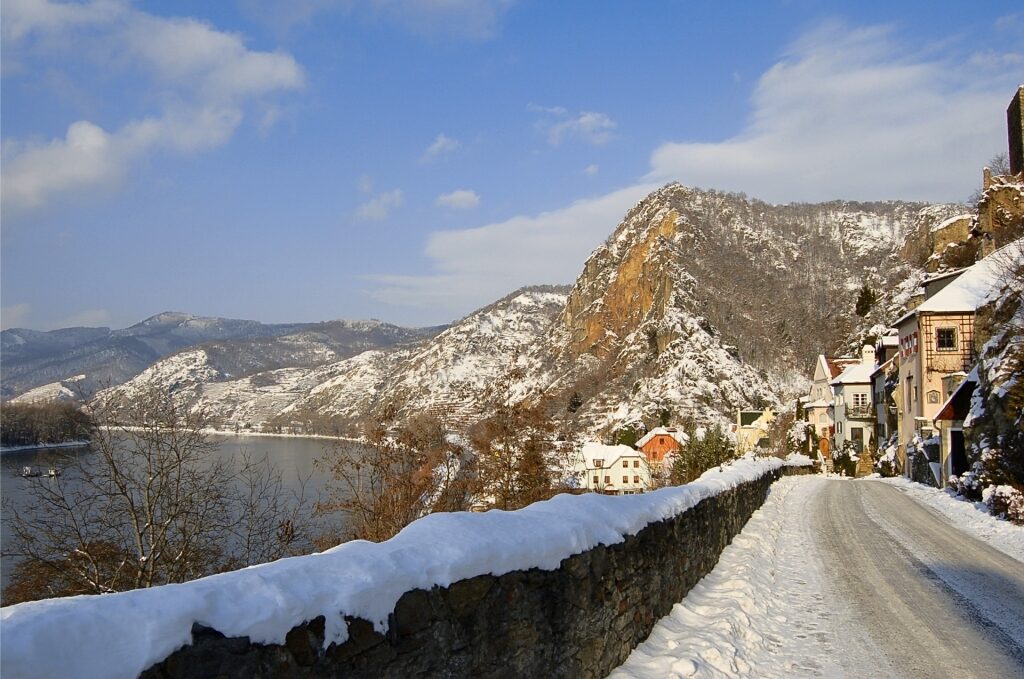
Dürnstein
The Danube is one of the world’s greatest rivers, winding its way through Austria for some 220 miles. Along its length are tiny villages such as Brandstatt and Dürnstein, as well as the magnificent capital, Vienna. While there are naturally quiet stretches in between, the riverside seems to be almost magically lit up during the festive season providing an enchanting background to the festivities. Where you choose to spend Christmas depends on whether you like the buzz of a big city or the intimacy of a small village. One thing’s for sure: wherever you are, Christmas will be embraced to the fullest.
What is a traditional Austrian Christmas dinner?
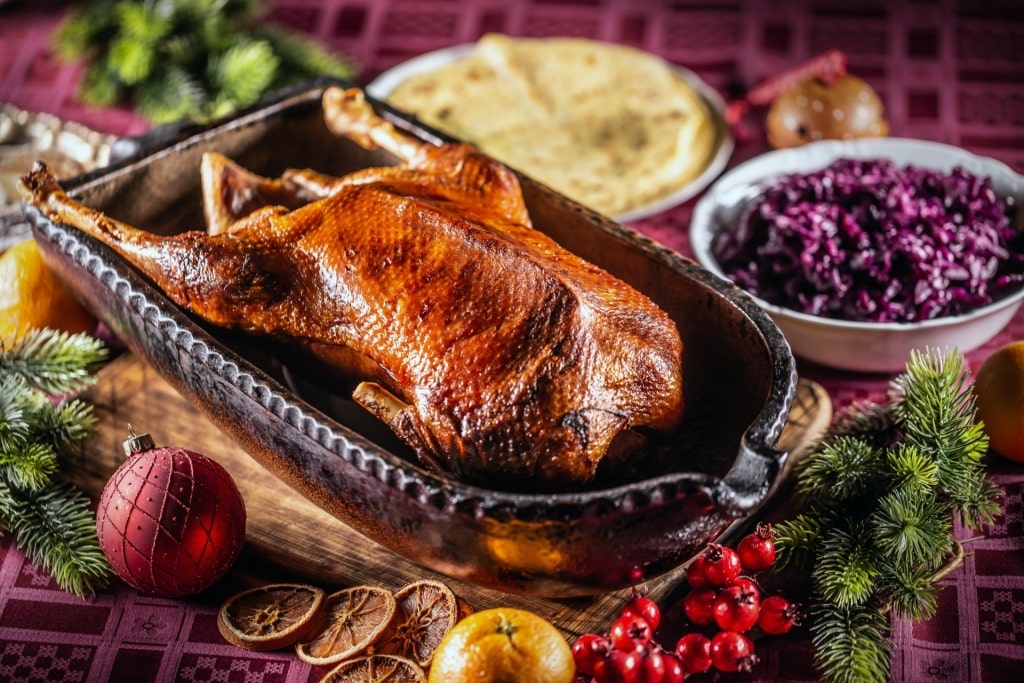
Roast goose
There are two significant Christmas meals in Austria. On Christmas Eve, the festive table can seem quite modest. Light starters may include a lentil or fish soup, with carp or regional sausages as the main meal.
Christmas Day can be a little more expansive with roast goose or duck served with vegetables. Desserts are cake-like with stollen—a sweet bread with dried fruit—and lebkuchen, a type of gingerbread, being the most popular choices.
What is the most famous Christmas market in Austria?
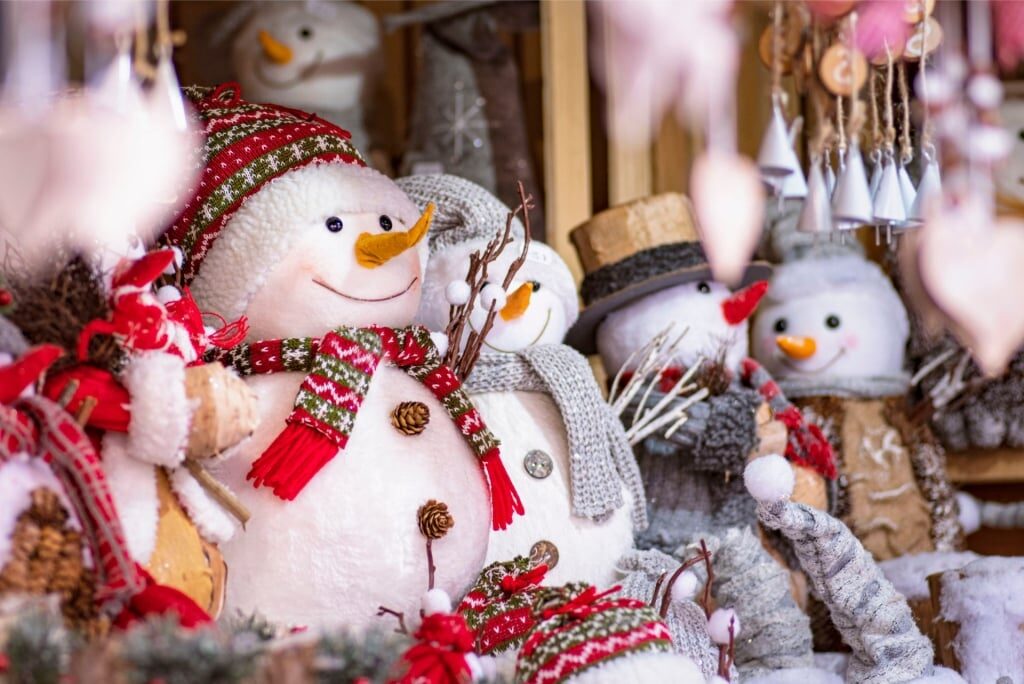
Christmas market in Austria
That title has to go to the Vienna Christkindlmarkt—Rathausplatz, held in front of the city’s neo-Gothic City Hall. Visitors can enjoy towering architecture, ice skating rinks, and more than 150 stalls. It dates from the 13th century, meaning it is one of the oldest festive traditions in Europe. Little wonder then that it is said to attract three to four million visitors a year.
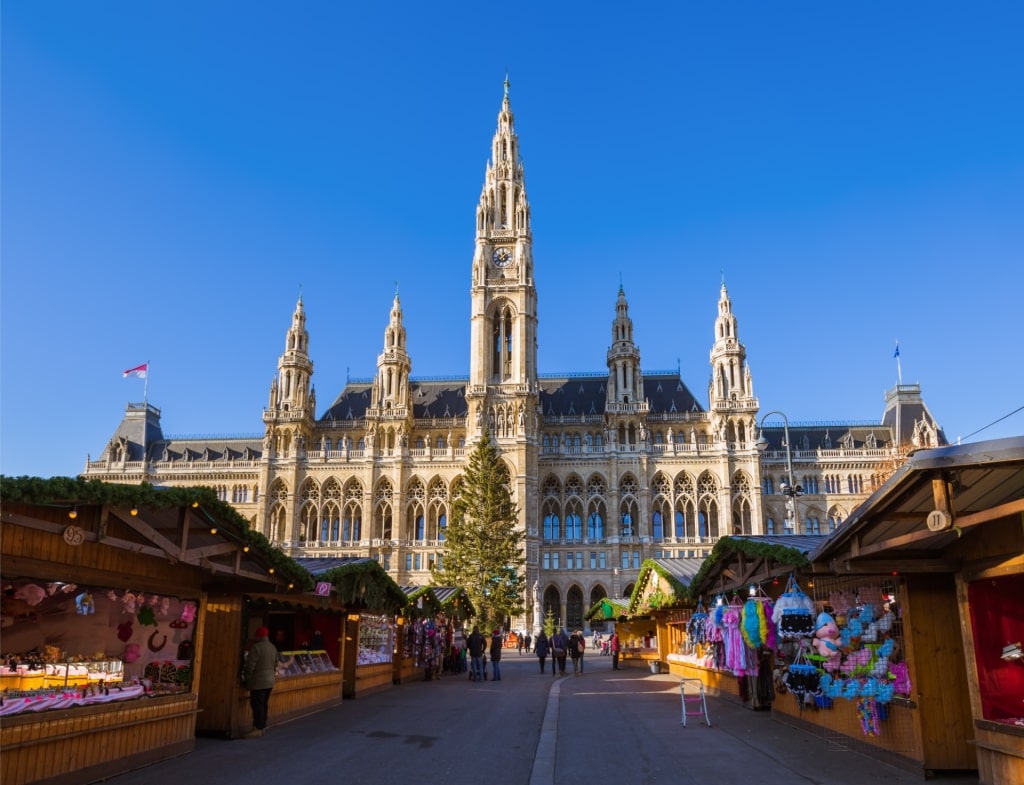
Vienna
Discover magical Austria at Christmas on a Danube river cruise with Celebrity. Browse Celebrity’s river cruises and plan your festive adventure.