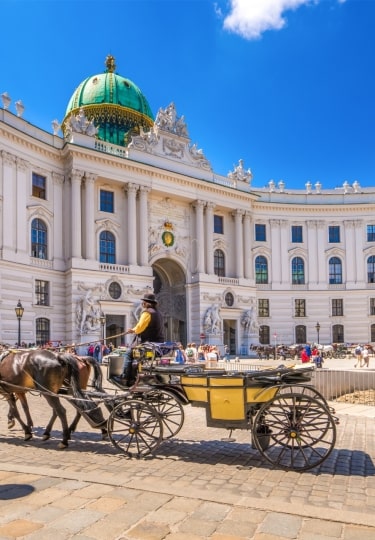
What is Austria known for? There are so many things: imperial palaces, glittering concert halls, snowcapped peaks, and storybook valleys are just the start. Don’t forget coffee served on silver trays in palatial cafés, or the flakiness of pastry when you first tuck into a slice of apple strudel.
Few places pack so much culture, beauty, and history into such a compact space. From the legacy of the imperial Habsburgs and the waltzes of Strauss to a glass of crisp white wine beside the Danube, Austria offers a masterclass in refinement without pretension. In the countryside, Austria’s landscapes feel picture-perfect—vineyards, abbeys, and mountain huts all playing their part.
Imperial Vienna
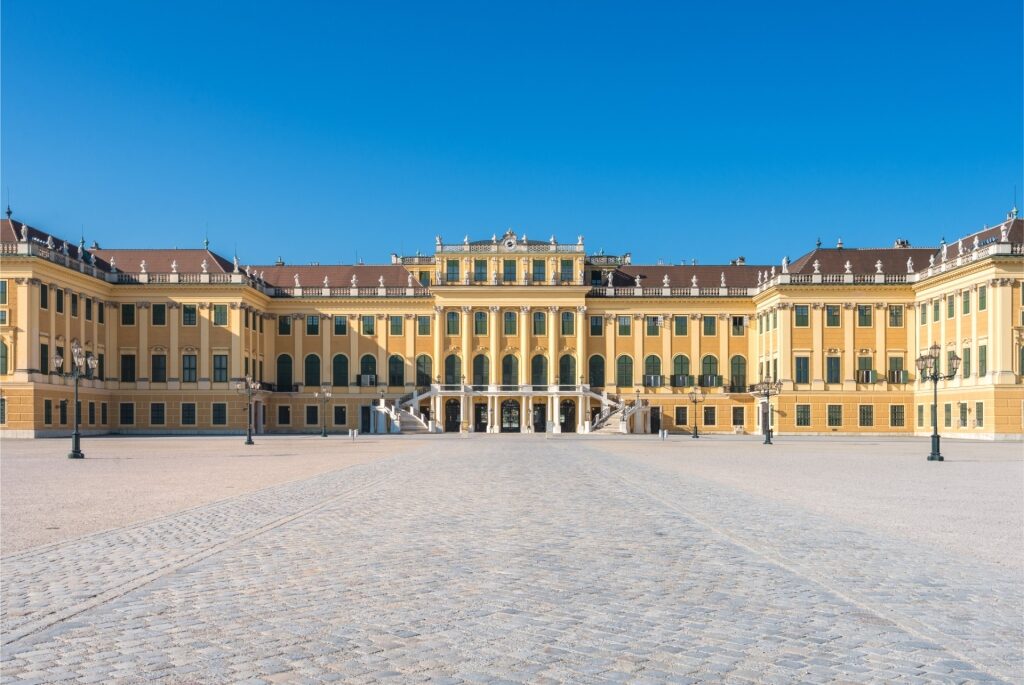
Schönbrunn, Vienna
For more than 600 years, Austria’s story has been synonymous with that of the Habsburg family. This great European dynasty ruled the country from the late 1200s to 1918, a reign that included a period allied with the Holy Roman Empire that ended with the advent of World War I.
Their influence was immense, their superpower “marriage diplomacy” so effective that their motto became, “Let others wage war; you, happy Austria, marry.” Under their rule, Vienna became a cultural magnet, shaping the country’s architecture, music, art, and more—a true Central European cultural capital.

Hofburg, Vienna
Their legacy lives on today in two magnificent palaces, both in Vienna. The Hofburg in Vienna’s Old Town was the winter palace and seat of power. Built in the 13th century, it was one of the largest complexes in Europe at its height.
Its warm-weather counterpart was Schönbrunn, a summer showcase with vast state rooms, private apartments, treasury, and gardens. For history buffs wanting insight into Austria’s power from the Middle Ages to the early 20th century, visiting both is a must.
Alpine Views
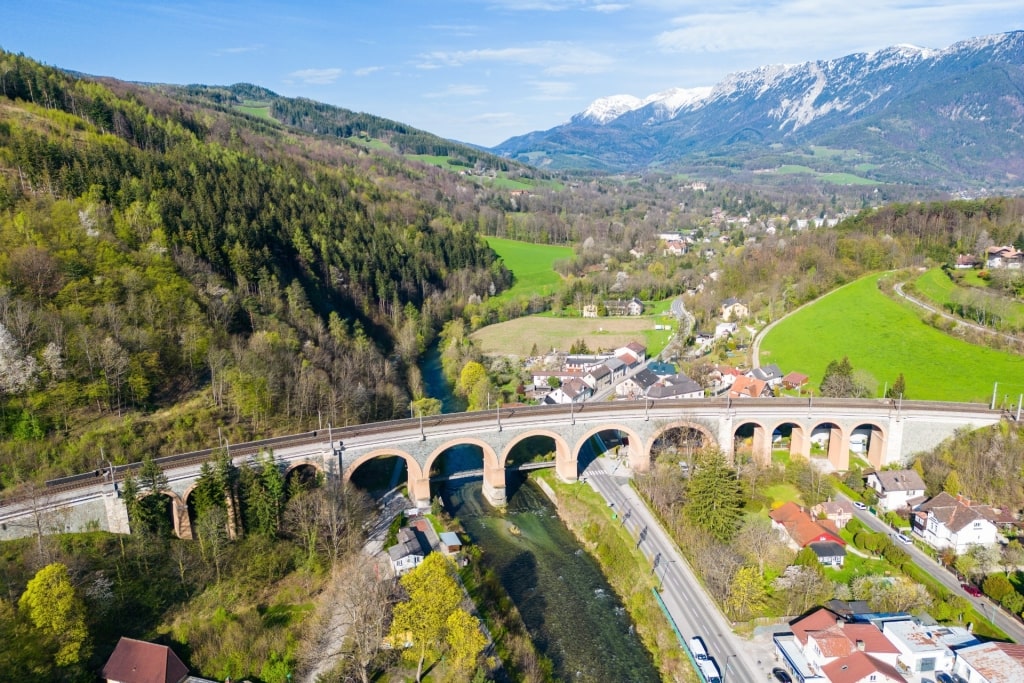
Semmering
Switzerland and France might grab all the glamour when it comes to the Alps, but the legendary mountain range is still one of the things Austria is famous for. They’re closer than you might think, too. You’re unlikely to see snowcapped peaks from the capital, but the nearest resorts—such as Schneeberg, Semmering, and Rax—are all reachable in less than 90 minutes by train.
Schneeberg is around 50 miles away with its Salamander cog railway, while Rax, just 60 miles south of the capital, offers a gondola lift onto the Rax plateau in only eight minutes. Semmering, meanwhile, is a 90-minute train ride away, with excellent walking trails just outside the station.
Coffeehouse Culture
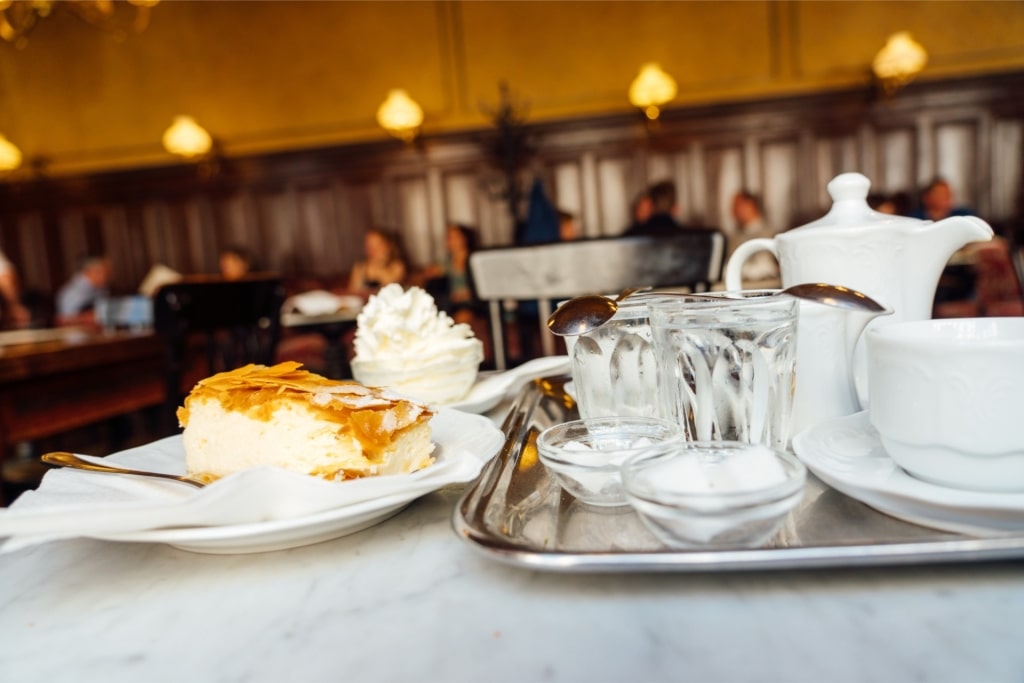
Coffeehouse in Vienna
Austria’s coffeehouse culture is the stuff of legend—quite literally. It’s said that the birth of the Viennese café dates back to the 1683 siege of Vienna. With Ottoman forces on the run after defeat, spy-hero Georg Franz Kolschitzky supposedly opened the first coffeehouse using sacks of beans that the invaders left behind.
Whether that story is true is open to debate—the first documented café actually opened two years later—but whatever the case, coffee culture soon exploded and became one of the main things Austria is known for.
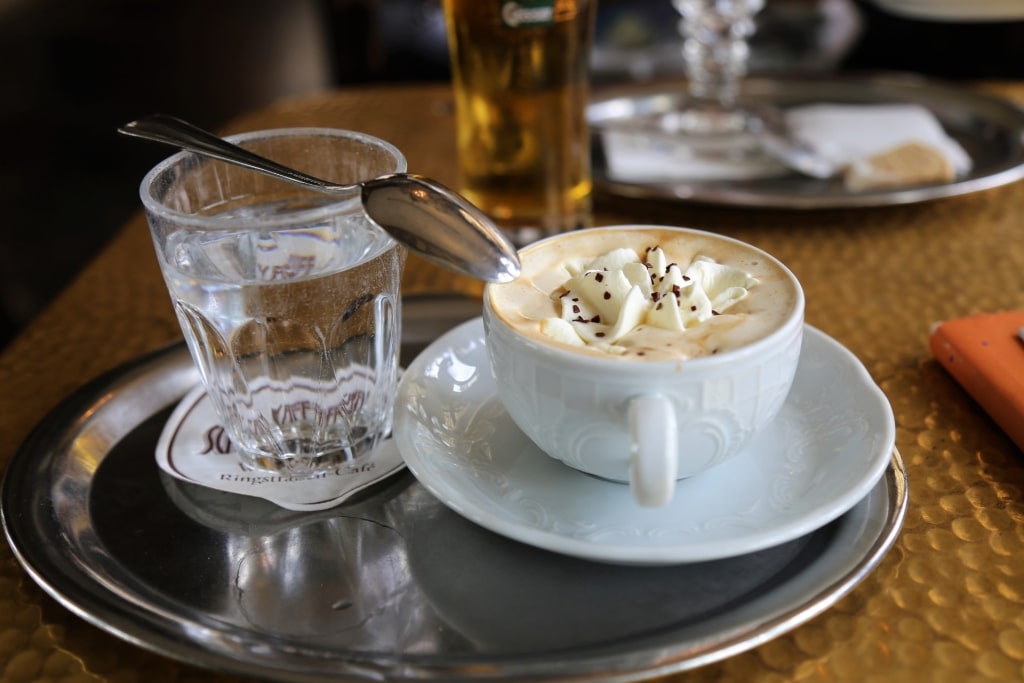
Wiener Melange
Sitting in one of the grand cafés, coffee becomes a ritual. It arrives on a small tray with a glass of water, the spoon resting upside down on the rim. Deep chairs, marble-topped tables, and stacks of newspapers invite you to stay as long as you like. Add in the people-watching and you’ll probably linger longer than planned, despite all the other sights competing for your attention.
The Wachau Valley
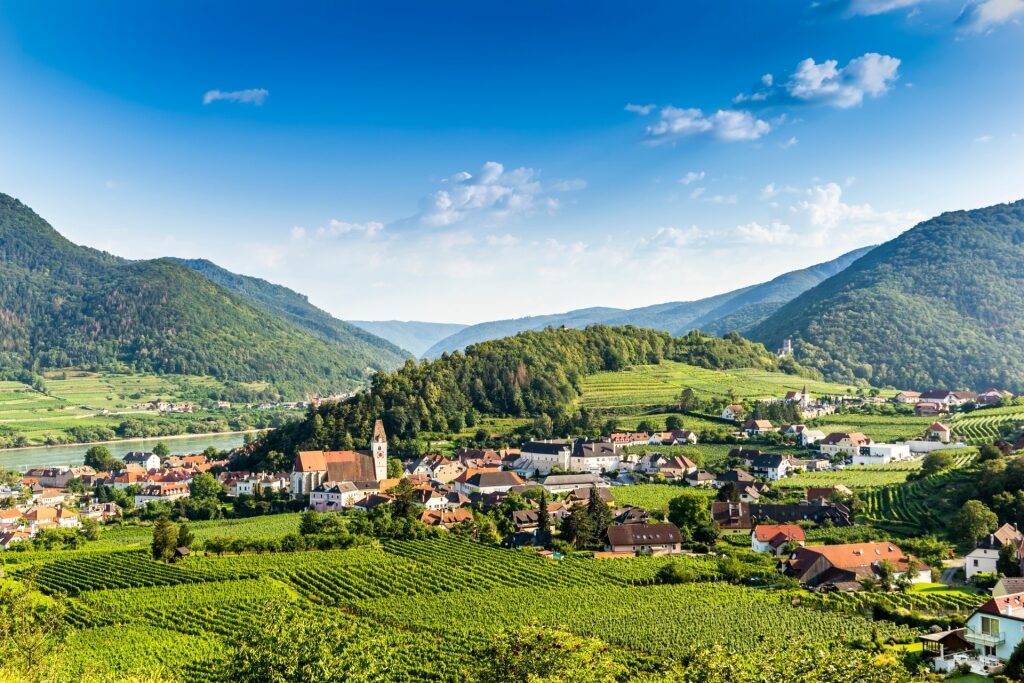
Wachau Valley
Classic Austria in a single hit? The Wachau Valley is one of the best places to visit in Austria. A trip here is as fairytale-like as they come. The valley is carved by the mighty Danube as it winds its way over a stretch about 25 miles long between Krems and Melk. It’s the kind of place where medieval towns and villages, ruined castles, and terraced vineyards appear at every turn—so beautiful that UNESCO granted it World Heritage status in 2000.
Depending on when you visit, you may find a different side of the Wachau each time. In spring, almond and apricot trees burst into blossom; in summer, the slopes are sun-drenched. Fall brings some of Europe’s best leaf-peeping, and in winter, laughter drifts from the region’s Christmas markets.
Classical Greats
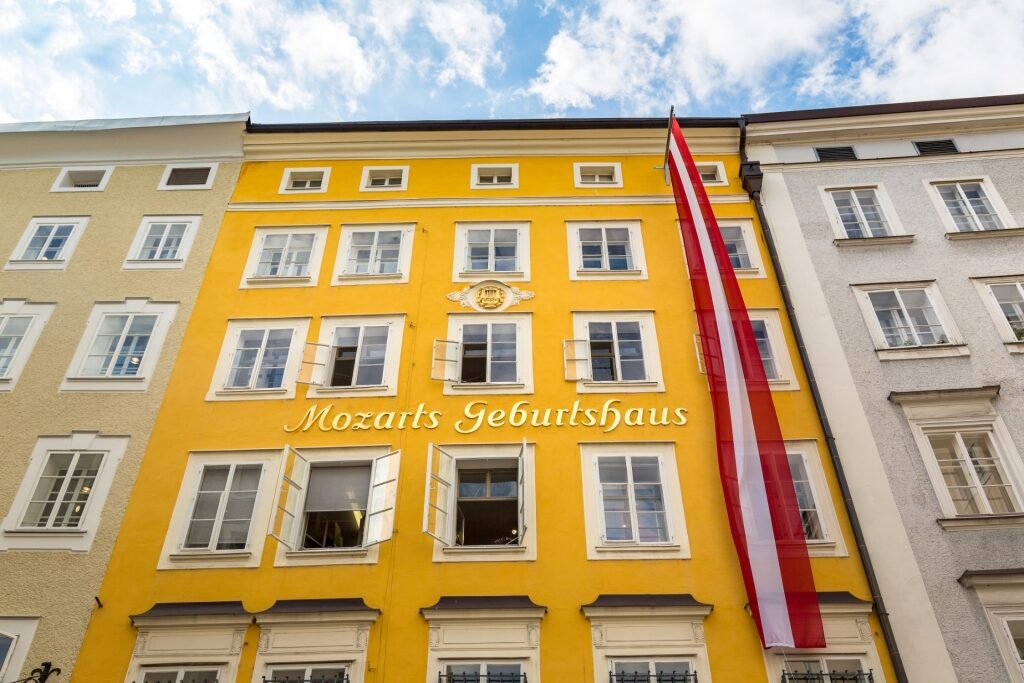
Mozart’s Birthplace, Salzburg
Mozart, Haydn, Schubert, Mahler, Bruckner, Strauss—the names of Austria’s classical composers read like a who’s who of music from the 18th to the early 20th centuries. Even Beethoven moved to Vienna to be at the center of it all.
Why so many masters were born here—or drawn here from across the Habsburg realms—is still debated. But generous court and church patronage, a dense network of choirs and monasteries, skilled instrument makers, and an educated audience all helped composers work full-time and refine their craft.
And refine it they did, producing works that still send a shiver down the spine centuries later. What makes a visit so special is the chance not just to hear the music in situ, but to step into the places where these greats lived and worked.
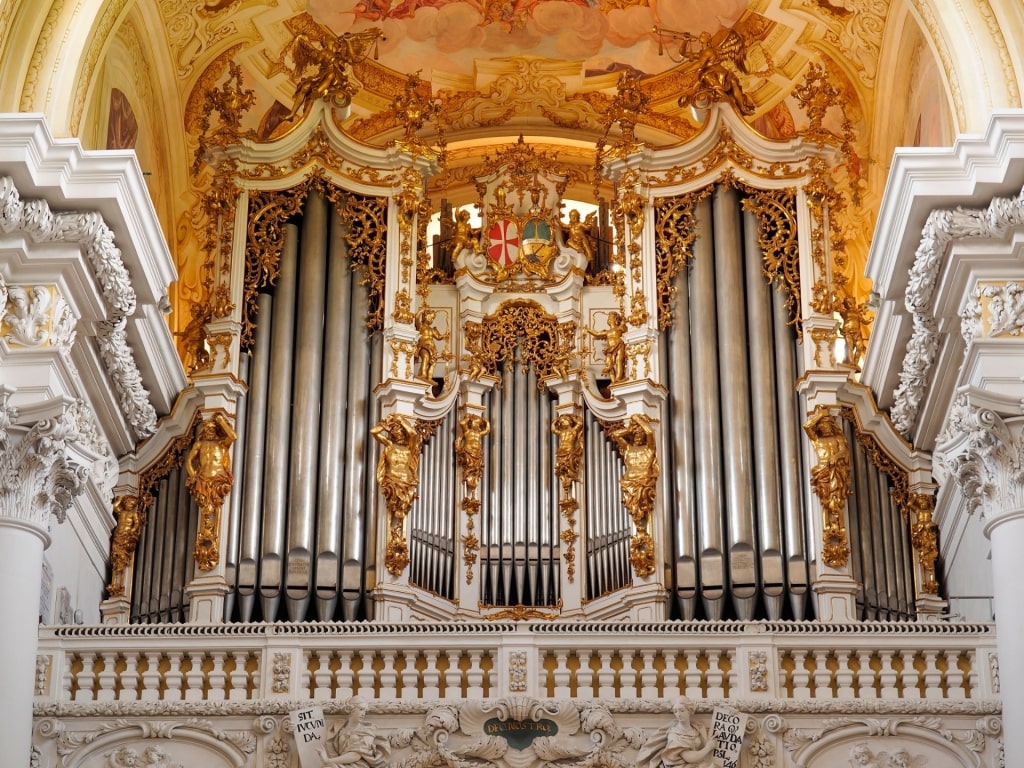
St. Florian Abbey
Mozart’s birthplace and later family home can be visited in Salzburg. Haydn’s thatched birthplace is in Rohrau, with his long working life centered nearby in Eisenstadt. Near Linz, Bruckner’s birthplace is in Ansfelden, while his tomb lies fittingly beneath the great organ at St. Florian Abbey, a short drive away.
Wiener Schnitzel
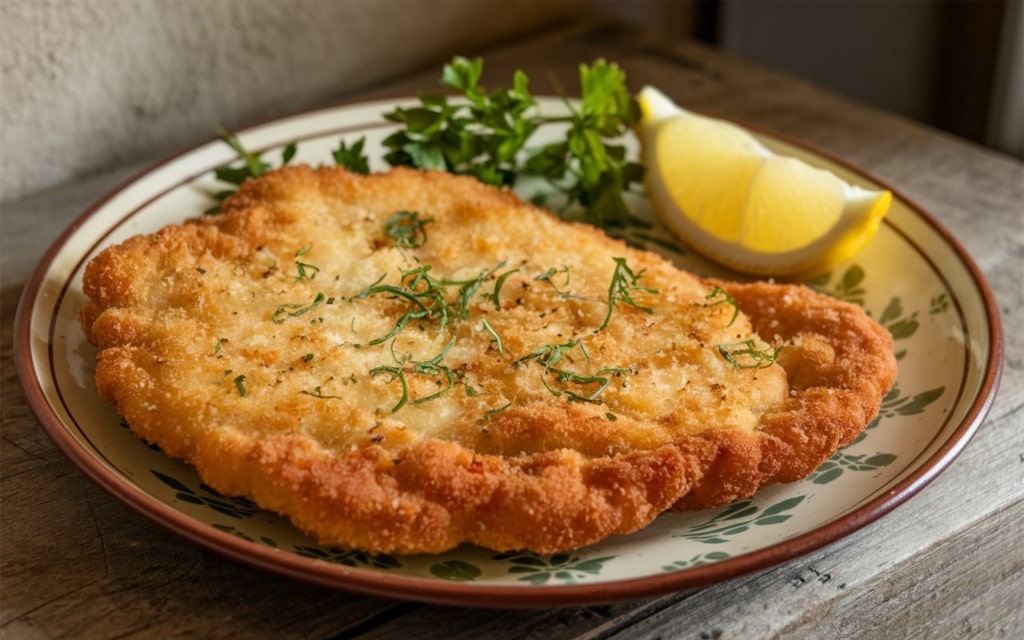
Wiener Schnitzel
What is Austria known for when it comes to food? Top of the list has to be the famed Wiener Schnitzel. The country’s iconic dish is a paper-thin, breaded veal cutlet fried in clarified butter until the crust puffs up, then served with potato salad or parsley potatoes.
It’s thought the recipe may have been inspired by a Milanese version brought here in the 19th century, before being adapted and adopted as the national dish. Whatever its origins, it’s undeniably delicious when done right. While Vienna may be its spiritual home, you’ll find excellent versions throughout the country, especially in traditional restaurants and small-town inns across Lower Austria.
Christmas Markets
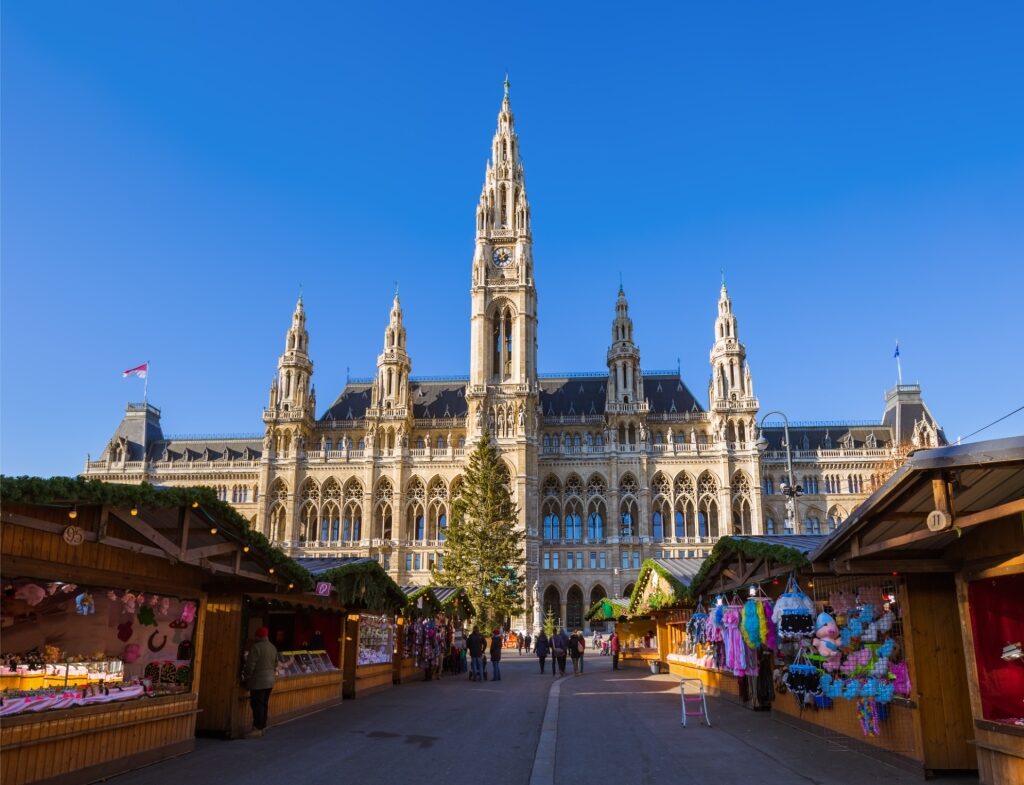
Christmas market in Vienna
You’ll find Christmas markets all over Central Europe, but nowhere does them quite like Austria, home to some of the oldest on the continent. Salzburg’s market, for instance, is said to date from 1491, while seasonal markets have been part of Vienna’s calendar since at least the 1600s.
As you might expect after centuries of tradition, Advent markets here have a distinctly old-world feel. Often held in historic squares and monastery courtyards throughout December, they’re filled with wooden stalls, mulled wine, the scent of roasting chestnuts, and beautiful local crafts.
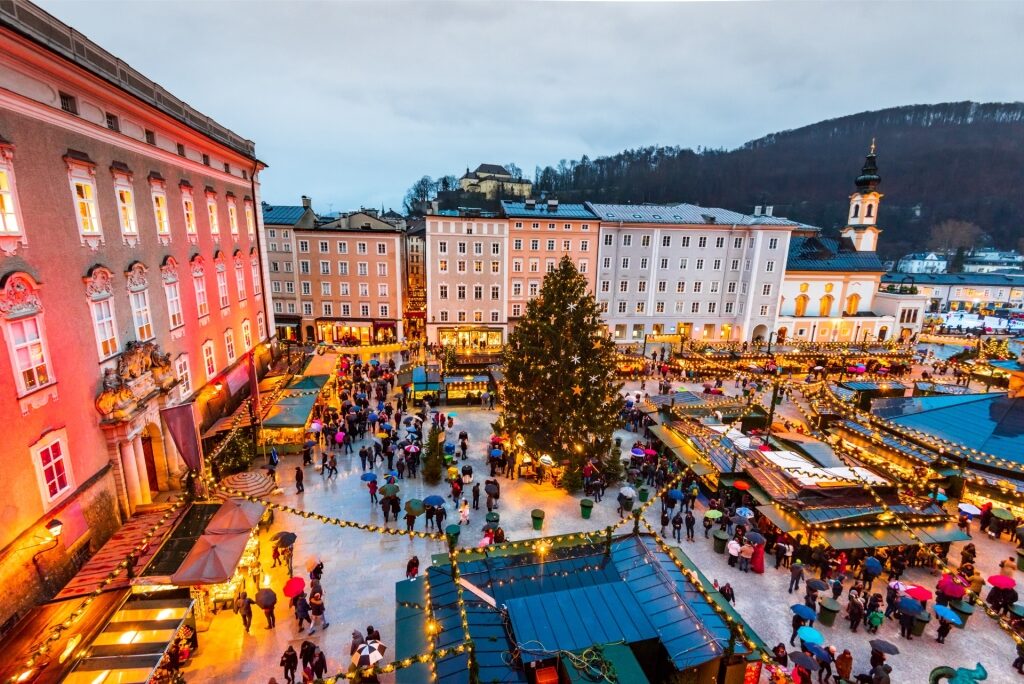
Christmas market in Salzburg
While the big markets in Vienna, Salzburg, and Linz draw most of the attention, some of the smaller ones—especially in the Wachau—are so charming they could double as movie sets. Keep an eye out for the markets at Schloss Dürnstein and in the Old Town of Melk if visiting over the holidays.
Apfelstrudel
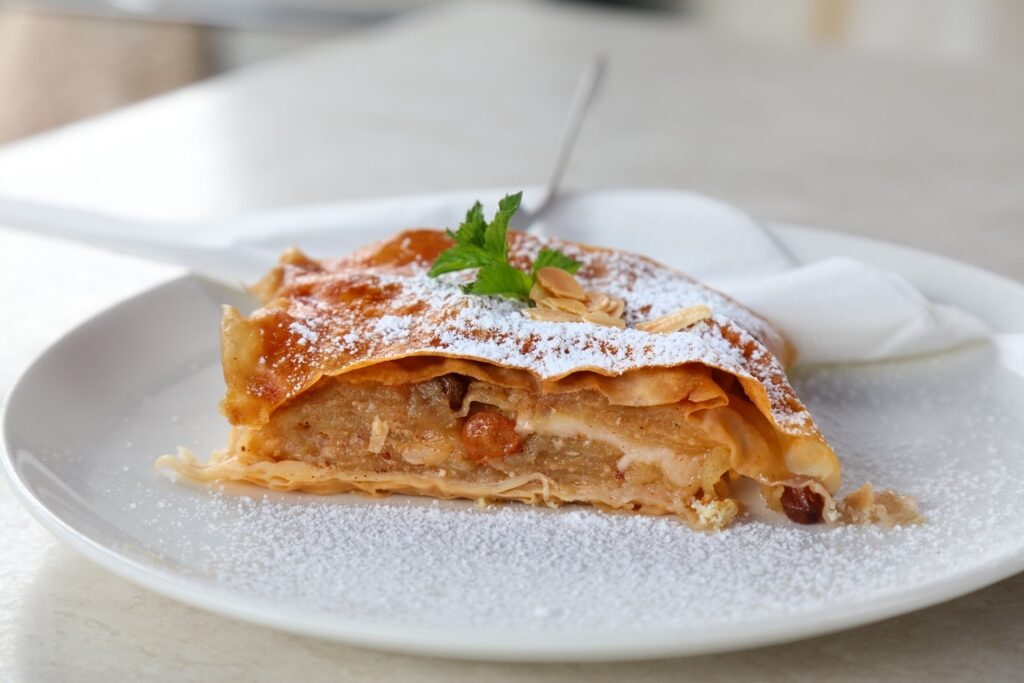
Apfelstrudel
Wiener schnitzel may be Austria’s most famous savory dish, but for those with a sweet tooth, nothing beats a classic apple strudel. Take wafer-thin, hand-pulled dough, wrap it around tart apples with sugar and cinnamon, top with breadcrumbs, and bake until the crust turns golden and flaky. Then serve the Austrian dessert with whipped cream or a warm vanilla custard-style sauce.
Like many Austrian staples, it arrived from elsewhere—its roots trace back to Ottoman-era pastries such as baklava—but it quickly became a beloved and fiercely protected favorite. Sadly, the theater of watching strudel prepared live at Vienna’s Café Residenz is no more since the restaurant’s closure, but you can still find excellent versions at Demel on Kohlmarkt and the elegant Café Central on Herrengasse.
Melk Abbey
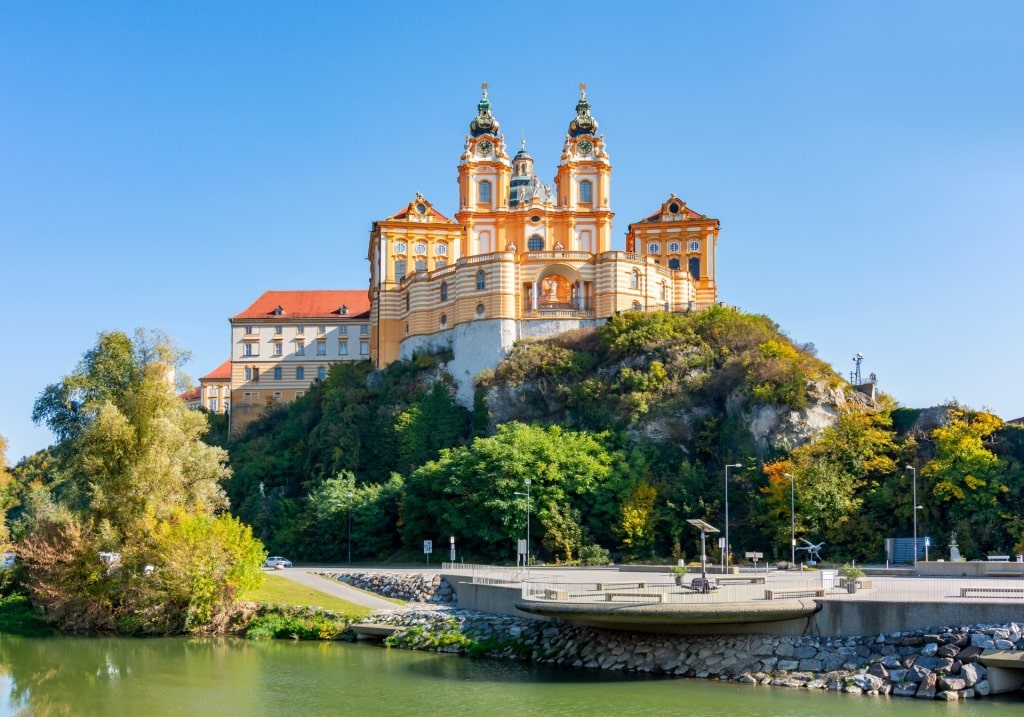
Melk Abbey
Melk Abbey stands majestically on a ridge in the Wachau, overlooking the Danube as it winds slowly below. Benedictine in origin, the original structure was built in 1089. The abbey was completely rebuilt in the 18th century by renowned architect Jakob Prandtauer, who transformed it into one of the foremost Baroque masterpieces in the world.
Touring it is a joy. Behind the impossibly elegant, orange-tinted façade lie marble halls, sweeping staircases, and an extraordinary library housing around 130,000 volumes.
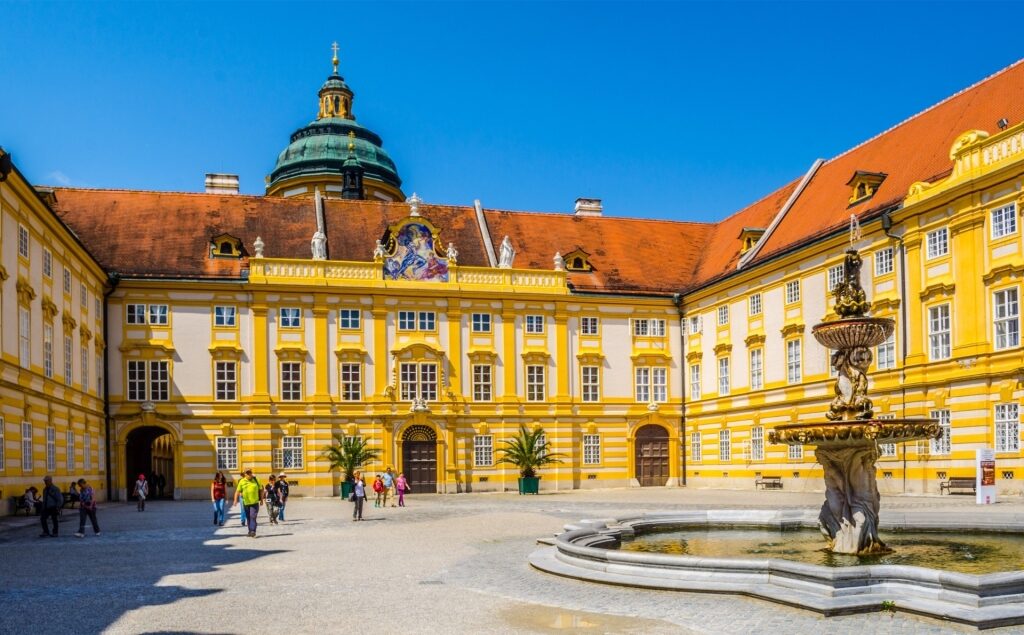
Melk Abbey
Not to be outdone, the church itself is unapologetically lavish—gold leaf curling around the altars, vast frescoes overhead, and windows perfectly positioned to flood the space with natural light.
Despite its grandeur, the monastery remains a working institution, home to a secondary school where students mingle with visitors, giving the place a distinctly lived-in feel. While you’re here, take time to explore the Old Town below, with its stepped lanes, pretty shops, and cozy cafés.
Klimt’s The Kiss
When it comes to Austrian art, one piece stands head and shoulders above the rest for being both instantly recognizable and incredibly popular: Gustav Klimt’s The Kiss.
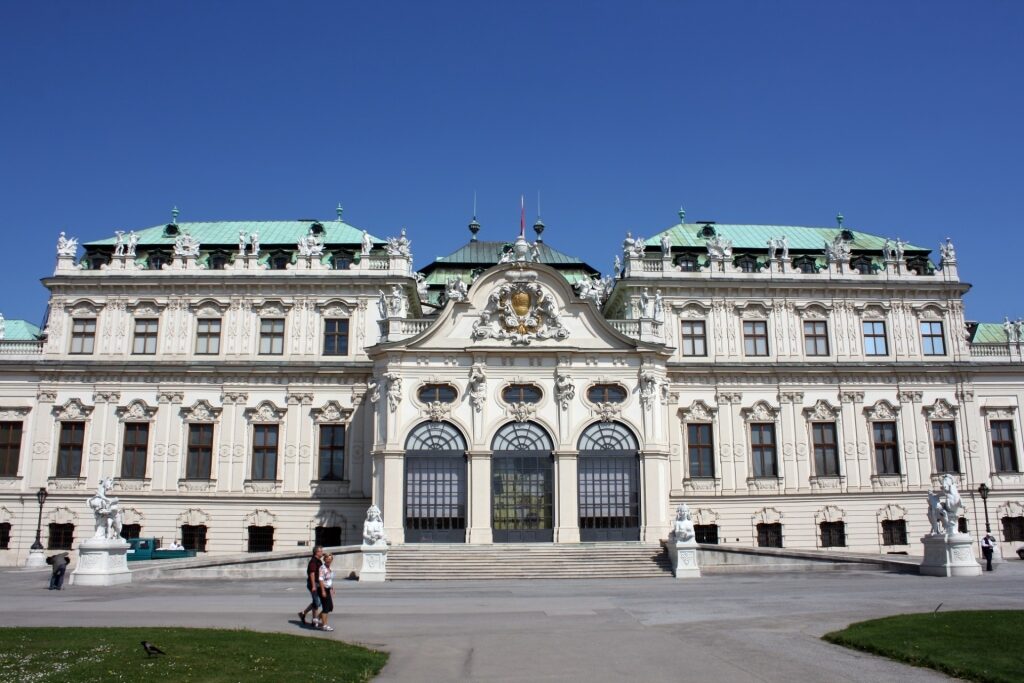
Upper Belvedere, Vienna
Painted between 1907 and 1908 and housed in the Austrian Gallery Belvedere, The Kiss depicts a life-size couple in a passionate embrace, wrapped in a shimmering gold-leaf cocoon. Said to symbolize eternal love and universal connection, it combines oil paint with real gold and silver leaf—a technique Klimt developed after being inspired by the Byzantine mosaics of Ravenna.
Dürnstein Castle
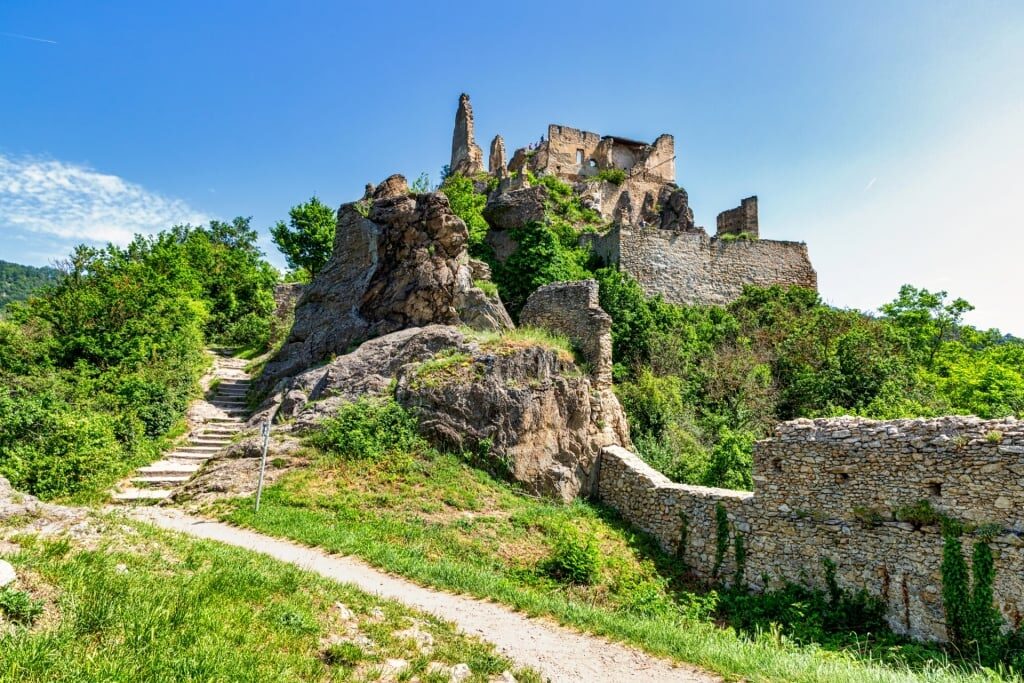
Dürnstein Castle
Sitting about 1,000 feet above sea level, the 12th-century Dürnstein Castle now stands as a proud ruin overlooking the Danube from its rocky perch. While little of the original structure remains—it was blown apart by Swedish troops in 1645 during the Thirty Years’ War—it’s steeped in medieval history and intrigue.
It was here that Richard the Lionheart of England was imprisoned from 1192 to 1193 after being captured by Duke Leopold V on his return from the Crusades.
The climb to the Austrian castle begins from the Old Town below and takes about 30 minutes, allowing time for photo stops and the rocky, uneven path that makes the ascent a bit of a challenge. The effort is well worth it: the sweeping views over the river and surrounding vineyards, framed by the castle’s weathered stone walls, are truly magnificent.
The Spanish Riding School
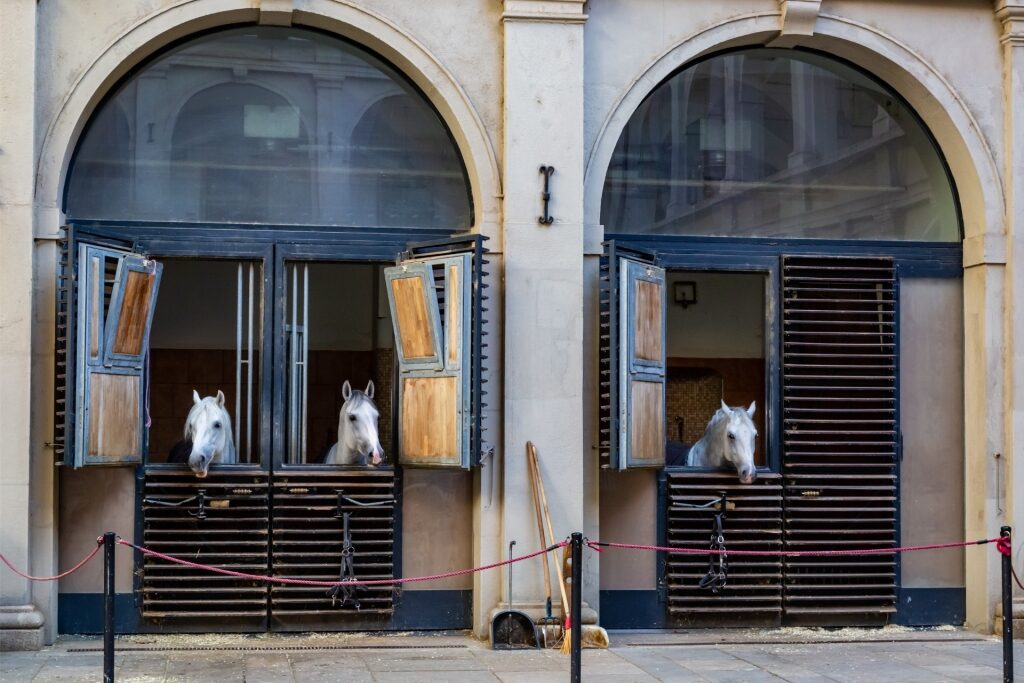
Spanish Riding School, Vienna
No, you didn’t read it wrong—one of the things Austria is best known for is the Spanish Riding School.
Named after the Spanish horse bloodlines the Habsburgs so admired, the school was founded in the 1500s to train horses and riders in the art of classical dressage. The legacy endures: more than 400 years later, crowds still gather to watch riders in tailcoats put white Lipizzaner stallions through their paces.
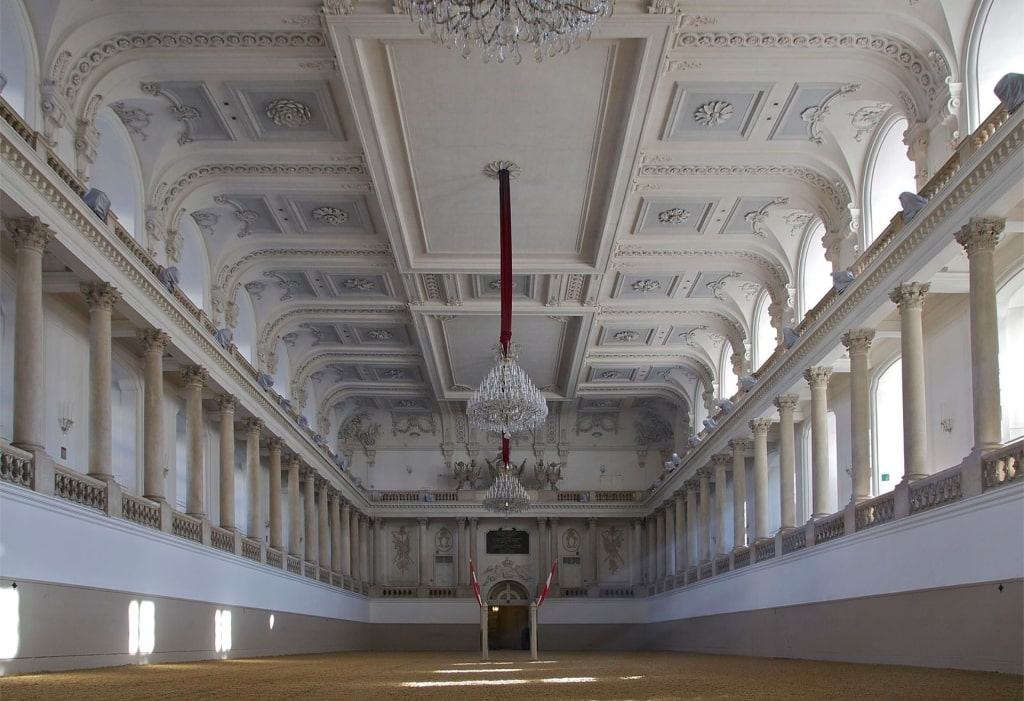
Spanish Riding School, Vienna Photo by Jebulon on Wikimedia Commons, licensed under CC0 1.0
The riding hall itself is almost as famous as the horses and riders. Completed in 1735, the Baroque Winterreitschule provides a majestic setting for the measured footfalls, pirouettes, and gravity-defying jumps of the Lipizzaners.
Evening performances are the most sought-after tickets for anyone staying overnight in Vienna, but visitors can also attend the morning training sessions to see the artistry unfold in a quieter, more intimate atmosphere.
Vienna
Discover what Austria is known for yourself. Browse Celebrity’s Danube river cruises and book your European adventure today.