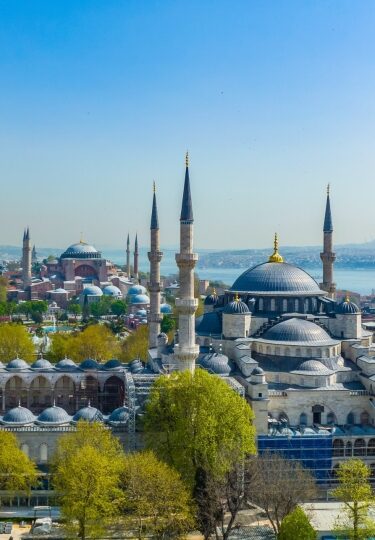
What is Istanbul known for? The first point to note when describing this dynamic city is that it straddles two continents. Connecting Europe and Asia, it has elements of both, which weave a rich tapestry from its varied history, culture, and cuisine.
Istanbul is also well known for its food, shopping, and major sights. From grand mosques to palaces and its several great bazaars, it’s a wonderland for visitors.
Historic Sights
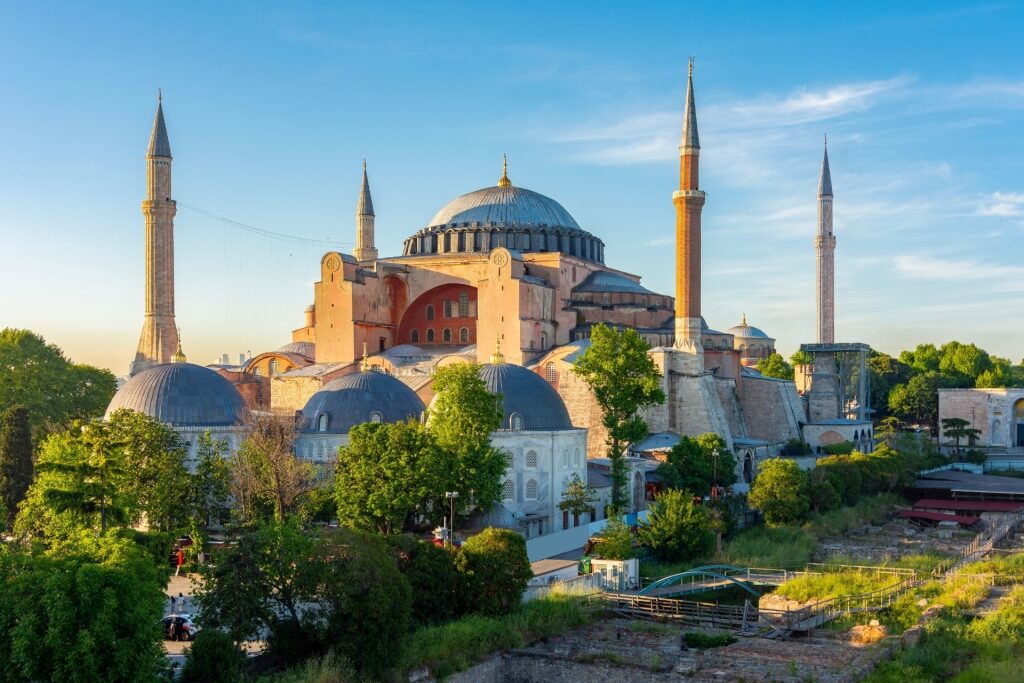
Hagia Sophia
Istanbul’s impressive skyline is a reminder of the great empires that have ruled from the city.
One of the best places to visit in Istanbul, the Hagia Sophia is a masterpiece of Byzantine architecture, built in 537 AD. It was the largest church in the world for nearly 1,000 years, then a mosque for another 482.
Its colossal dome, a wonder of its time, still dominates the heart of Istanbul. Converted back to a mosque in 2020 after becoming a museum in 1934, it’s still open to visitors and is a must-see.
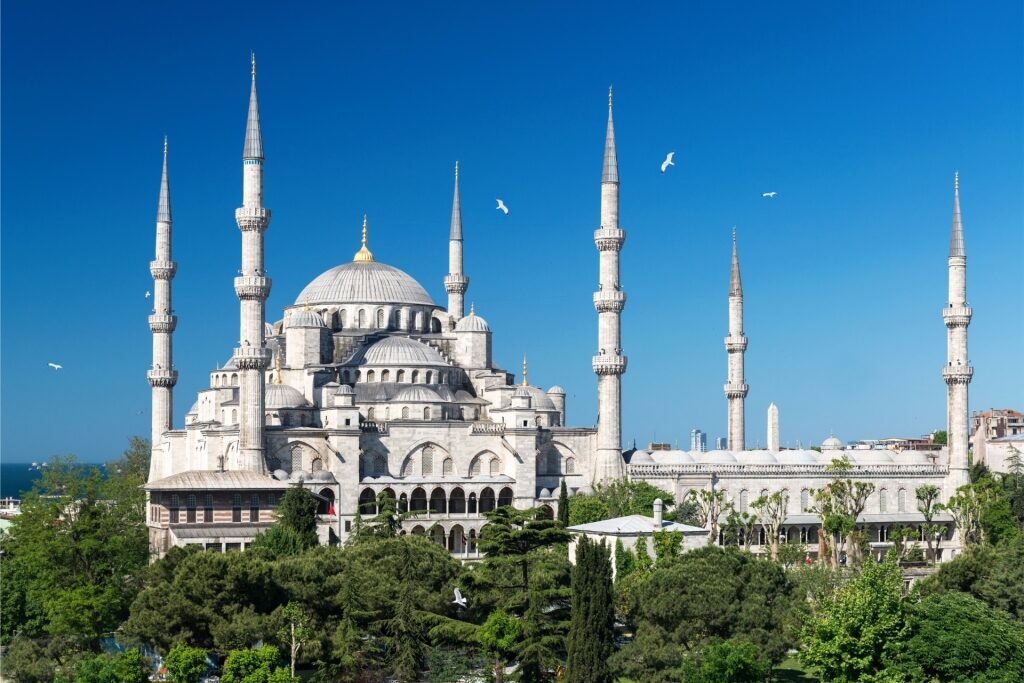
Sultanahmet Mosque
Built in the 17th century to rival the Hagia Sophia, the Sultanahmet Mosque is often called “The Blue Mosque” for its color. That comes from the exquisite blue Iznik tiles adorning its soaring interior.
One of the few mosques in the world with six minarets, it’s also still active. You’ll need to visit outside prayer times and dress appropriately.
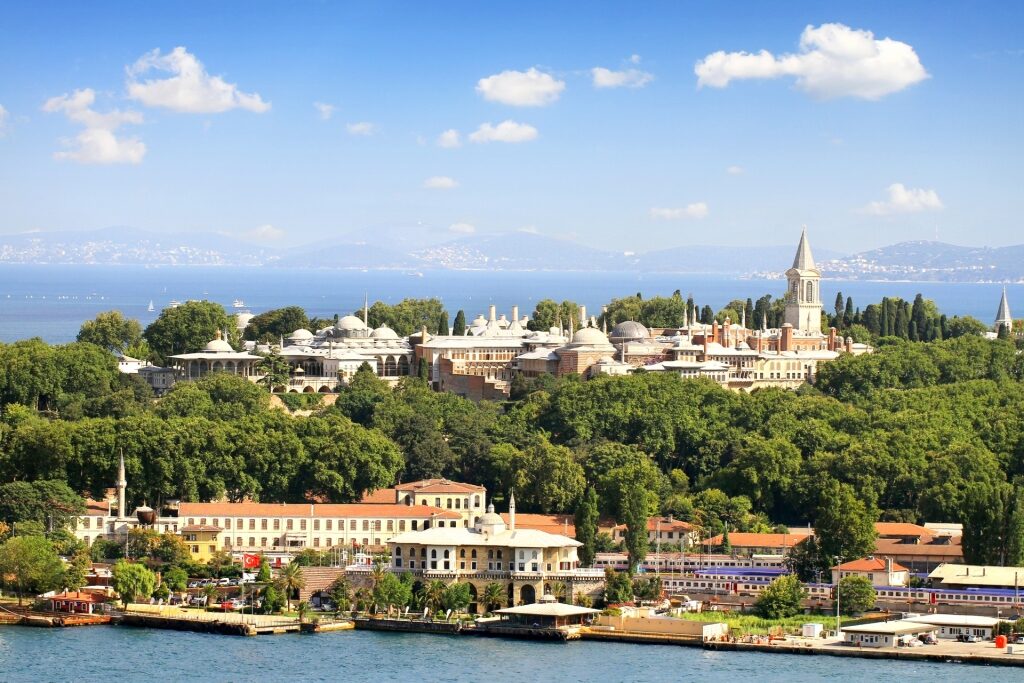
Topkapi Palace
The Topkapi Palace was the primary residence of the Ottoman sultans for almost 400 years. The sprawling complex gives a real feel for their wealth and opulent lifestyle.
There are beautifully decorated rooms, masterpieces of tiling and wood-carving, and lavish courtyards. Highlights include the Imperial Treasury and, of course, the Harem.
Plunge underground into the Basilica Cistern, a vast, 6th-century water storage cistern often described as a subterranean cathedral. Many of its forest of marble columns were repurposed from Roman palaces.
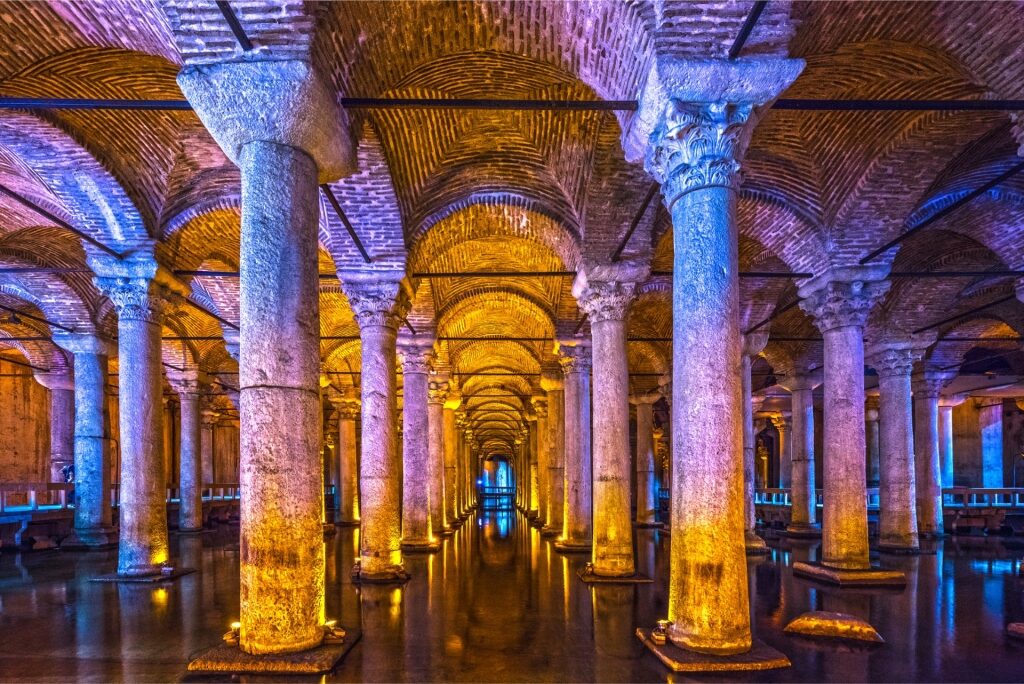
Basilica Cistern
The atmospheric lighting adds greatly to what is a magical experience. Look out for details such as the Medusa head capitals.
High on the city skyline, the Süleymaniye Mosque is away from the center but certainly worth a visit. Designed by the legendary architect Mimar Sinan for Sultan Süleyman the Magnificent, it has breathtaking views of the Golden Horn.
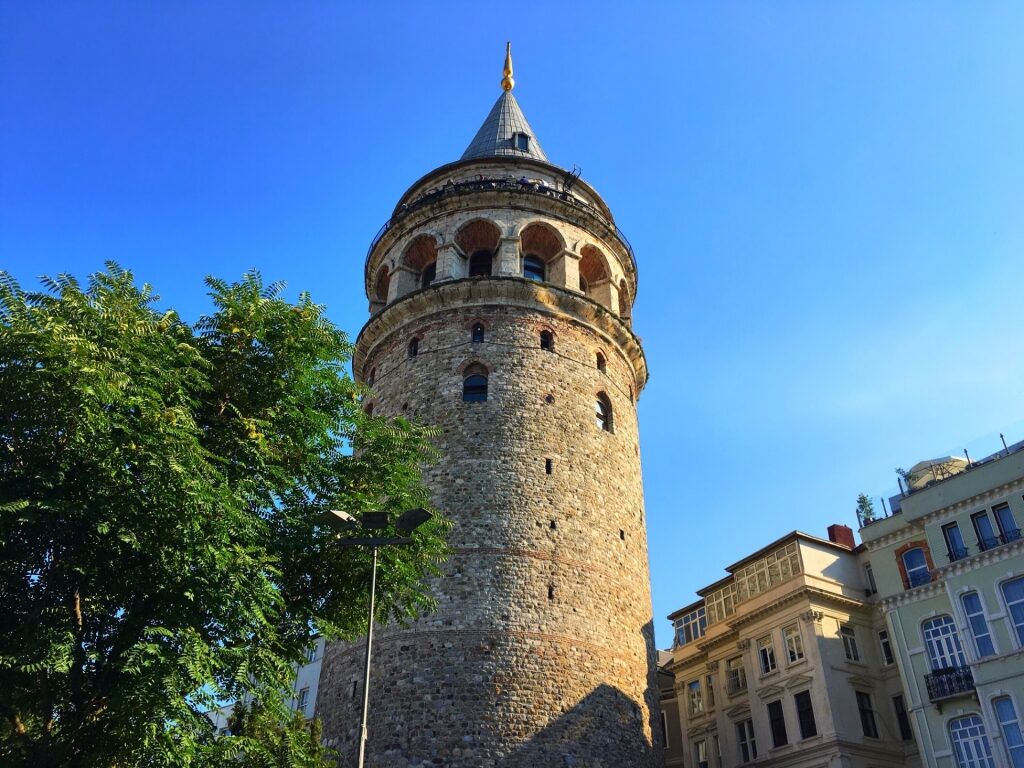
Galata Tower
One of the landmarks Istanbul is most famous for is the Galata Tower. This medieval stone tower, a remnant of the city’s defenses, has panoramic views of the old city and the Bosphorus from the top.
Spectacular Markets
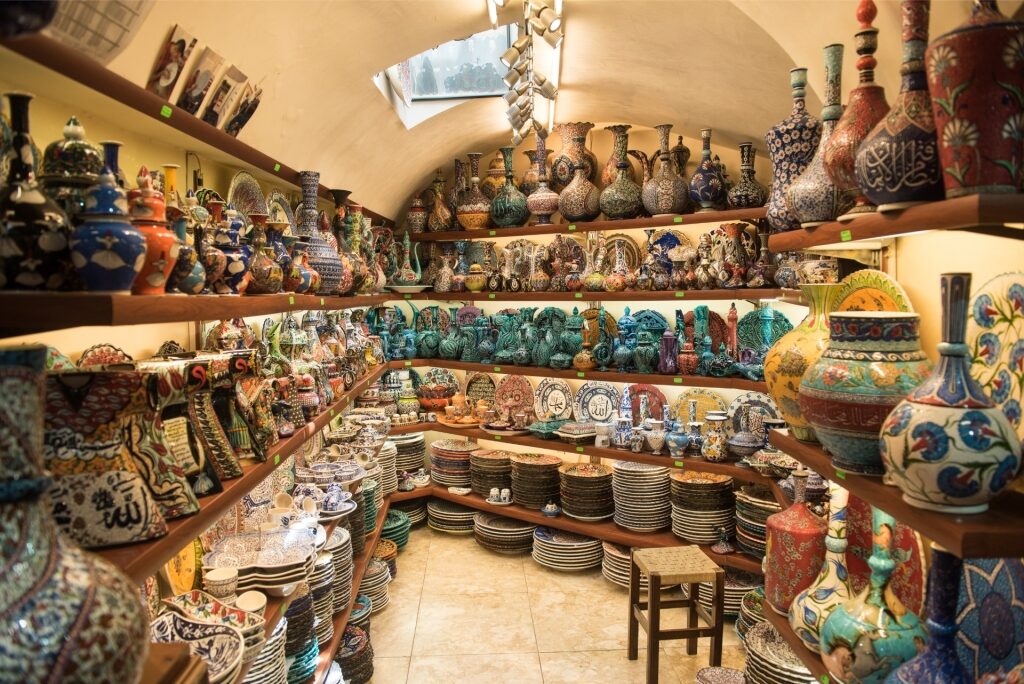
Grand Bazaar
What is Istanbul famous for? Shopping, for sure. The Grand Bazaar is one of the world’s oldest and largest covered markets, with more than 4,000 shops along its 60 streets. It’s a labyrinth where you will most likely find it hard to resist buying something from the mind-boggling choice of jewelry, ceramics, carpets, spices, and leather goods.
The smaller Spice Bazaar is a riot of color and smells. As its name implies, this Istanbul market specializes in spices, dried fruits, nuts, Turkish delight, and other such delicacies—although, sadly, other souvenir goods are gradually taking over.
Turkish Cuisine
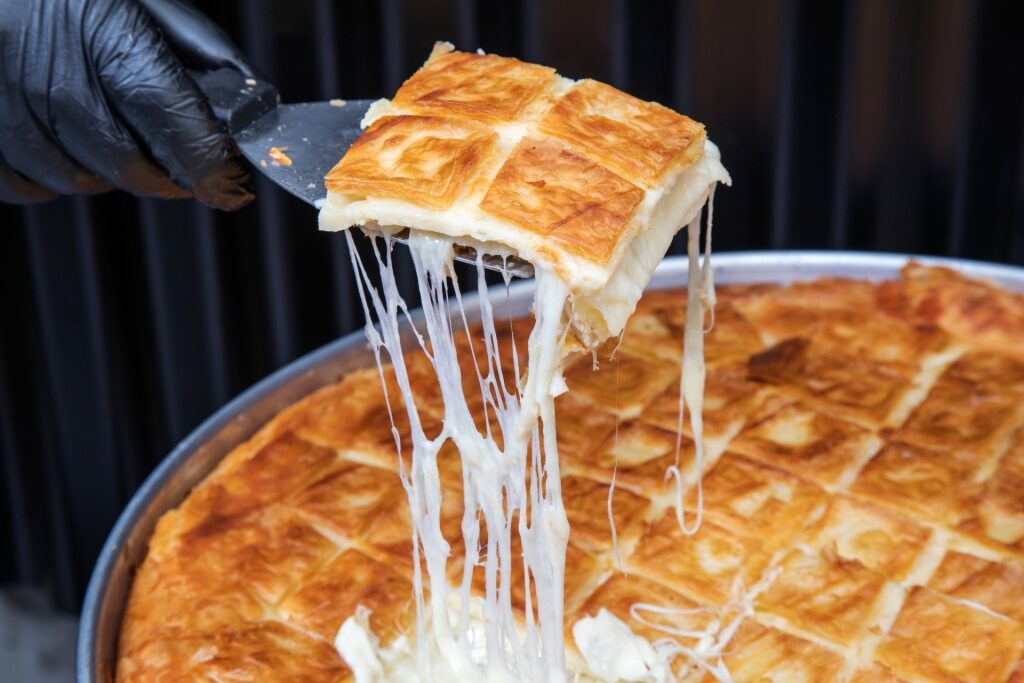
Börek
Istanbul’s food is a highlight for any visitor, ranging from its busy street food scene to its many world-class restaurants.
A Turkish breakfast isn’t just a meal; it’s a hearty feast that might tempt you to skip lunch. The spread includes various cheeses, olives, sliced tomatoes and cucumbers, börek savory pastries, scrambled eggs with peppers, spicy sausage, and lots of fresh bread.
Simit are circular bread rings covered in sesame seeds, a sort of soft, crusty bagel. Sold everywhere by street vendors, they are eaten plain or with cheese.
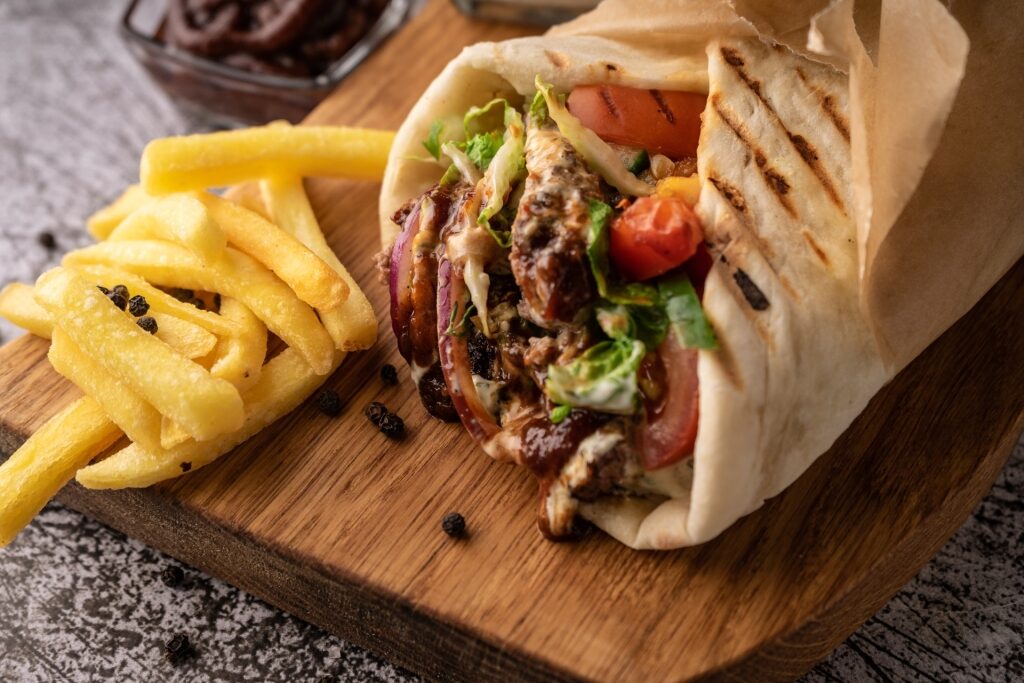
Döner Kebab
Döner Kebab has spread around the world, but there’s nothing like the taste in Istanbul. Shaved off a vertical spit, the lamb or chicken is served in bread, flatbread, or on a plate with rice and salad.
Put grilled fish in a bread roll and you have Balık Ekmek—literally “fish bread”. Popular around the Galata Bridge, it’s usually made with mackerel and is served with lettuce, onions, and a squeeze of lemon.
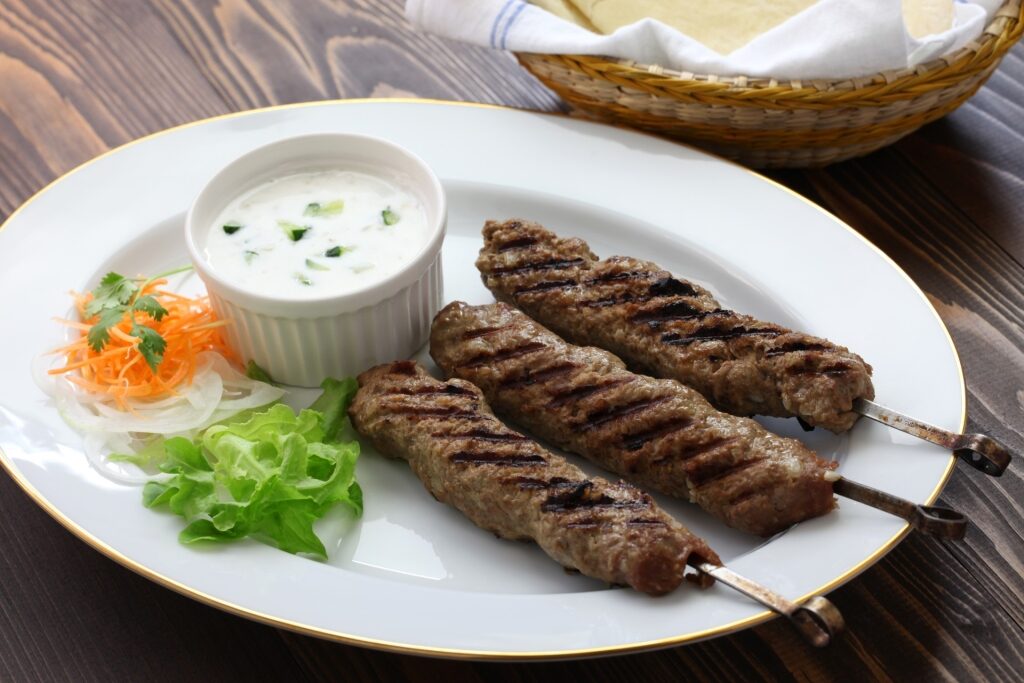
Köfte
Turkish meatballs, or Köfte, have endless regional variations, but the base is usually lamb or beef. Mixed with spices and onions, they’re grilled or fried and usually served in tomato sauce.
Pide is often called “Turkish pizza”, which does it a disservice. Thinner than Italian pizza, its toppings might include ground meat, cheese, eggs, or cured beef.
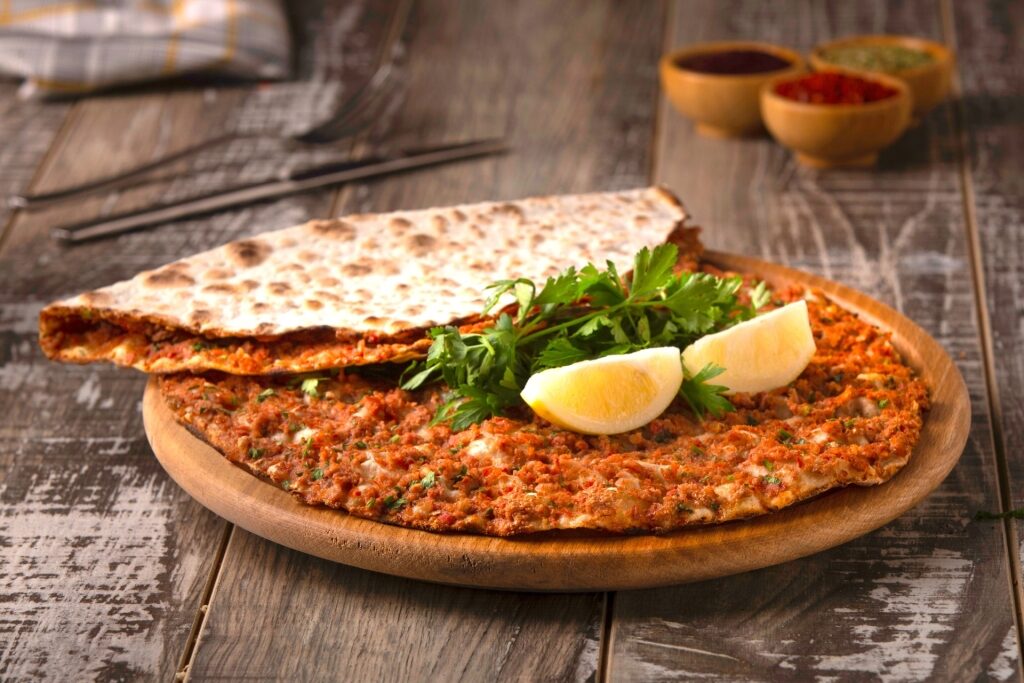
Lahmacun
Lahmacun is a thinner, crispier variation. The flatbread is topped with minced meat and vegetables, then rolled up and eaten as a wrap.
Mezze are small Turkish dishes served as appetizers or snacks in a style similar to Spanish tapas. Common ones include hummus, baba ganoush, yogurt with herbs and garlic, stuffed grape leaves, and fried calamari.
Börek is a very more-ish flaky pastry filled with cheese, spinach, ground meat, or potatoes. Sigara böreği is a cigar-shaped variation, filled with cheese and herbs before frying.
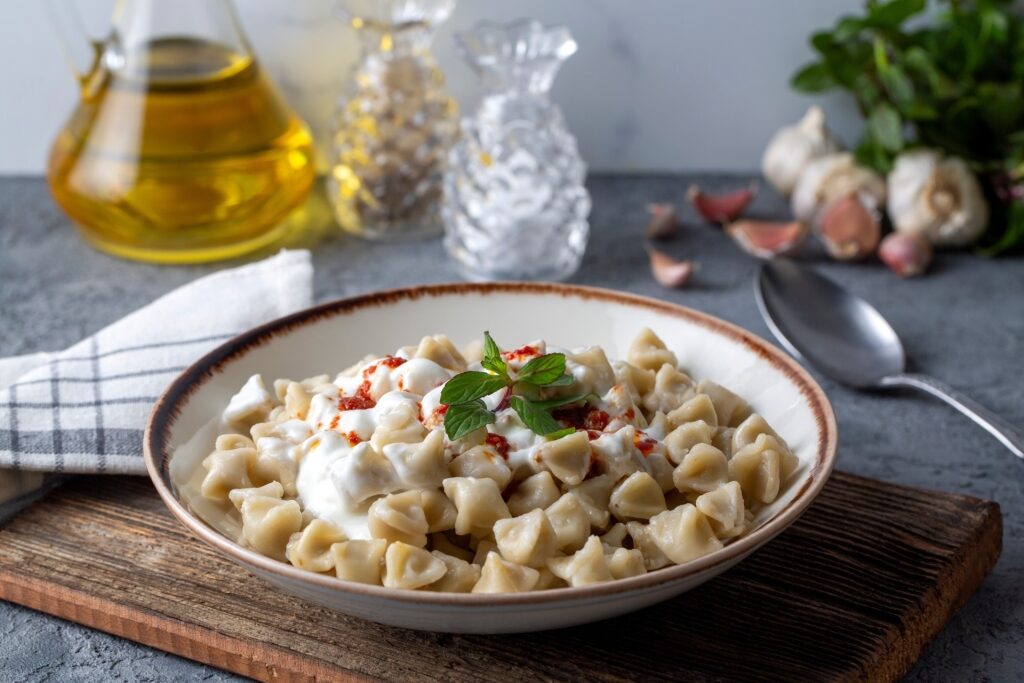
Manti
Manti are small Turkish dumplings filled with spiced meat in ravioli style. They are served with yogurt and melted butter with a touch of paprika or chili.
Stuffed mussels, or Midye Dolma, are a popular street food sold from carts by the ferries and elsewhere. The mussels are filled with spiced rice, pine nuts, and currants, then served cold with a squeeze of lemon.
Sweet Treats
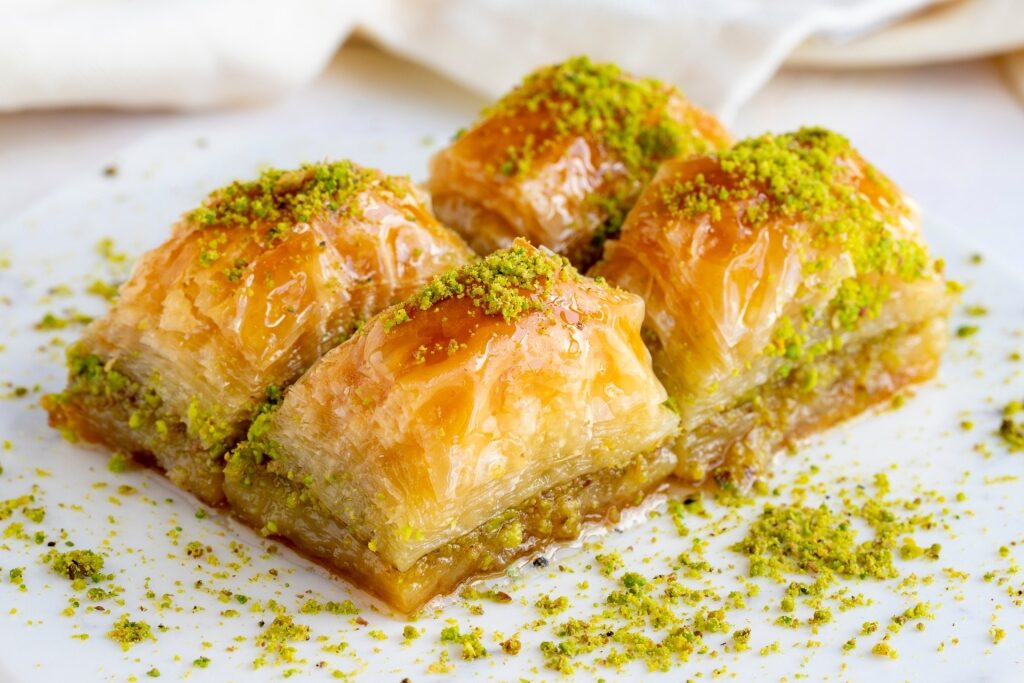
Baklava
Baklava has become a popular sweet treat worldwide, but it’s associated with the Ottoman Empire, where there’s evidence that it was enjoyed some 500 years ago.
Made of thin phyllo pastry filled with chopped pistachios or walnuts and soaked in sweet syrup, it’s best with a bitter coffee. You’ll find entire shops and market stalls dedicated to selling only baklava in different flavors and styles.
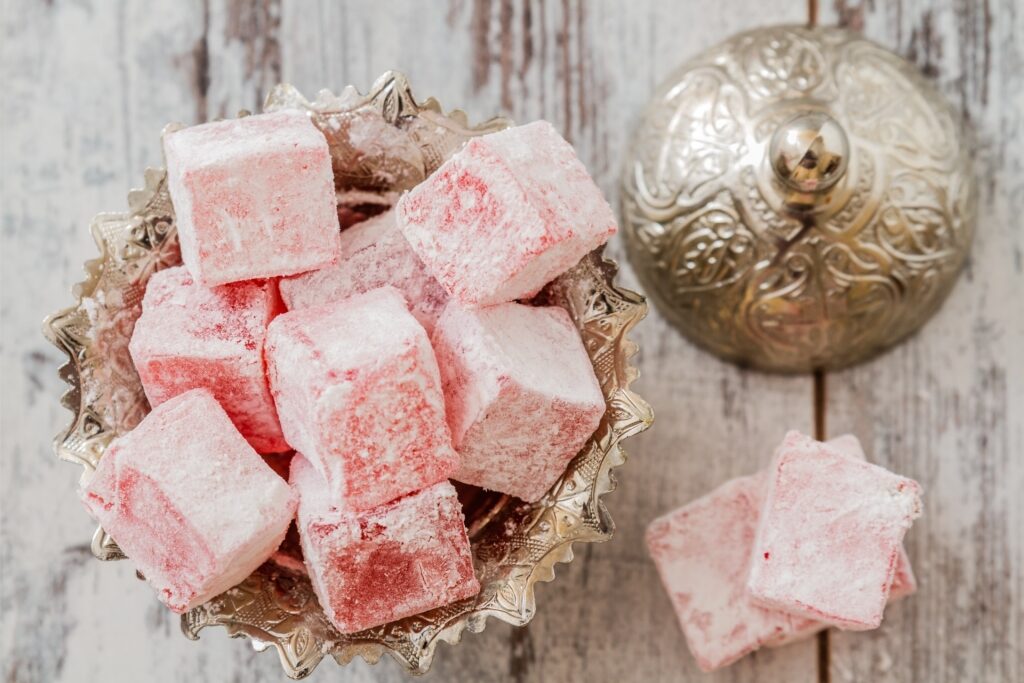
Lokum
Turkish Delight, or Lokum, is a revelation when you taste it in Istanbul. Light jelly, dusted with powdered sugar and flavored with rosewater, lemon, mint, or pomegranate, it makes a great Turkish souvenir.
A Rich Culture
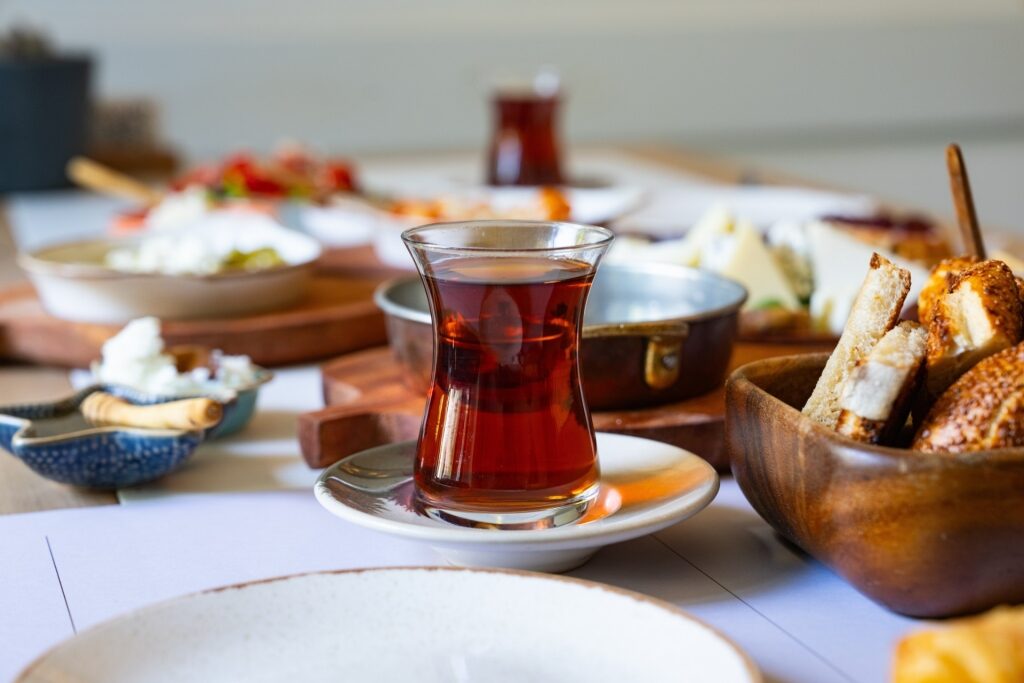
Çay
Its long history and position between Europe and Asia have given Istanbul a rich culture. Long a trading hub, it’s also famously welcoming to travelers.
What is Istanbul known for? Among many other things, tea. Çay—pronounced like “chai” and meaning tea—is the national drink and central to Turkish hospitality. It’s served in small, tulip-shaped glasses at all hours of the day, helping make Turks the world’s biggest tea drinkers.
The small cups are designed to make sure the tea is drunk hot. The teapot is paired with a hot water pot below so that tea can always be served at the strength you like—just ask.
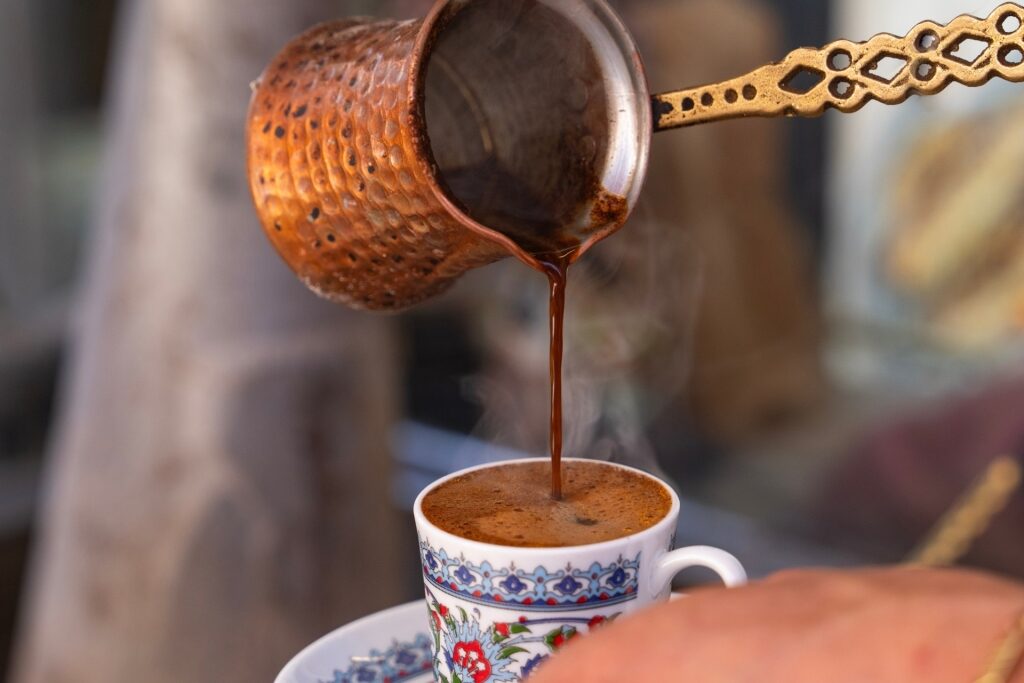
Turkish coffee
After tea, coffee is the next most important drink in this Islamic culture. “Turkish Coffee” is not a type of coffee bean but rather a ritualistic style of making it.
Prepared in a cezve, a small metal pot with a long handle and spout, coffee is served thick and strong. The grounds are often used for fortune-telling, which is part of the communal fun—there’s even an app for it.
The third pillar of Turkish hospitality is the Nargile, or waterpipe/Hookah, which is used to smoke flavored tobacco. This is a popular social activity, especially in the many cafés along the Bosphorus.
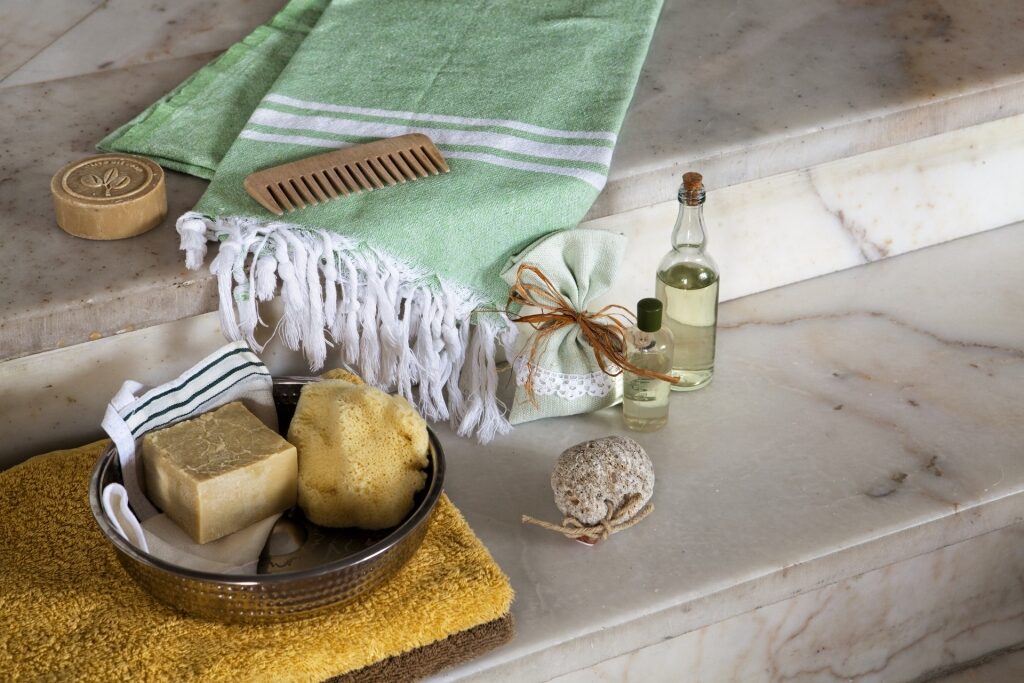
Hamam
The Hamam, or Turkish bath, is a quintessential cultural experience you have to try at least once. It involves steam, a deep scrub, and an even deeper massage—although you can opt for a gentler one.
Among its many other sights, Istanbul is known for its street cats. An estimated 125,000 cats are a beloved part of its culture. Originally encouraged in earlier times as a way to keep down vermin, cats now roam freely, even on city trams or ferries. You can even find vending machines that feed and water them.
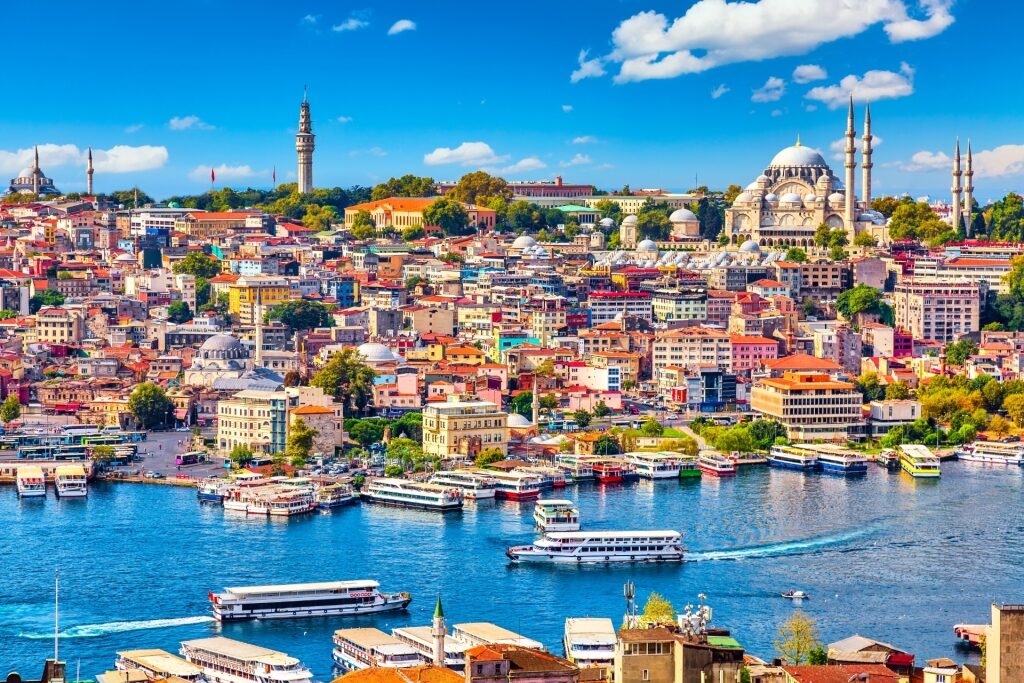
Golden Horn
Ferries also need a mention as a fundamental part of Istanbul’s culture, as well as being essential to its commuters. It’s a uniquely Istanbul experience to sit on a ferry with a glass of tea, watching the European or Asian cityscapes come or go.
A Long History
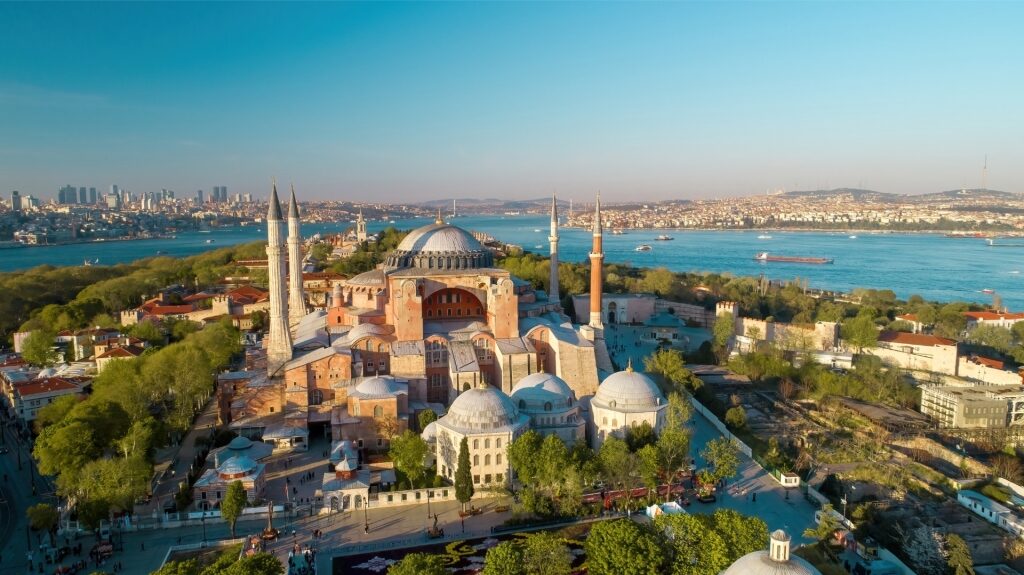
Hagia Sophia
During the past centuries, Istanbul has had three names and has been the seat of three empires.
Around 660 BC, the Greeks founded a trading colony called Byzantium at the only entrance to the Black Sea from the Sea of Marmara. Byzantium later conquered Chalcedon, across the Bosphorus on the Asiatic side.
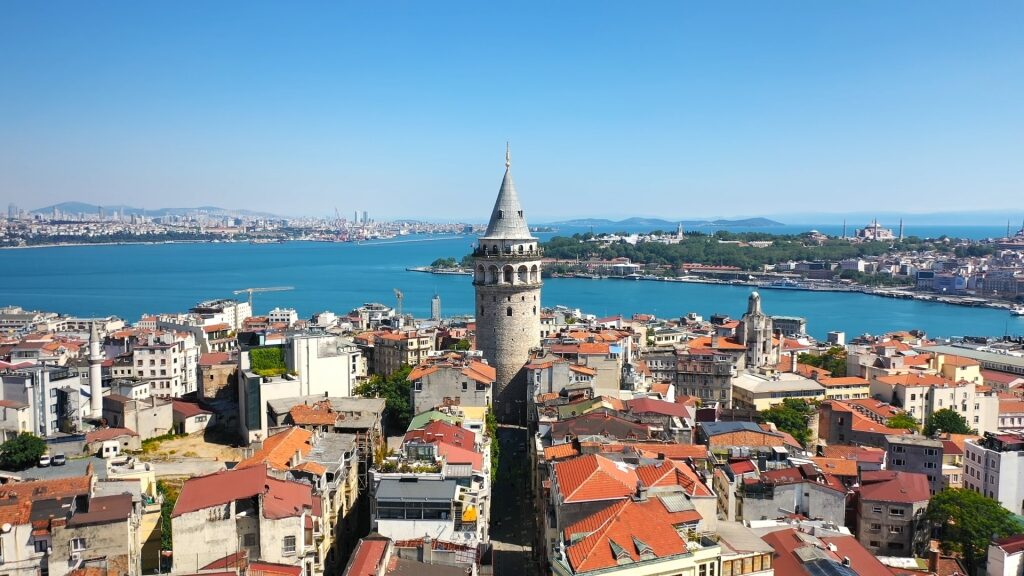
Galata
In 330 AD, Emperor Constantine the Great renamed the city Constantinople when it became the new capital of the Roman Empire. It was the seat of the Greek-speaking Byzantine Empire until 1453 AD.
In 1453, Ottoman Sultan Mehmed the Conqueror captured the city and informally renamed it Istanbul. It was the magnificent capital of the Ottoman Empire until 1922–23, when the empire was abolished. The name Istanbul was formally adopted in 1930.
Read: Two Days in Istanbul
Diverse Neighborhoods
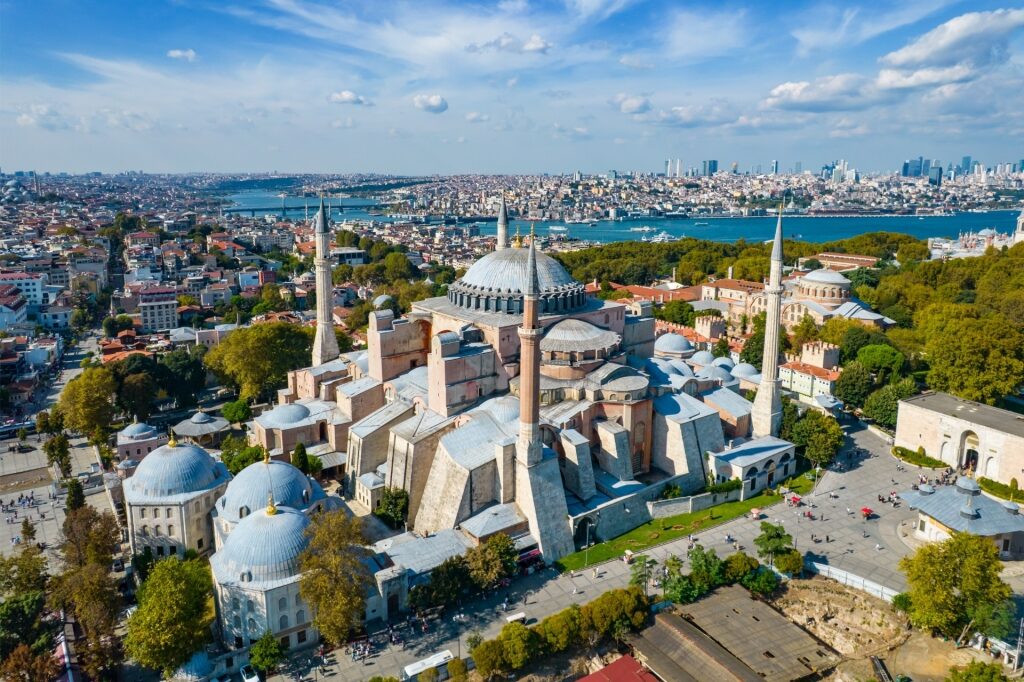
Sultanahmet
Like any major city, Istanbul becomes more humanized when you break it down into districts or neighborhoods, each of which has its own character.
The historic heart is Sultanahmet, the Old City that’s home to the majority of the ancient monuments. This is where you’ll find sights such as the Hagia Sophia, Topkapı Palace, Basilica Cistern, and the Sultanahmet or “Blue” Mosque.
Across the Golden Horn from Sultanahmet is Beyoğlu, a neighborhood of art galleries, restaurants, and shopping on İstiklal Avenue. Its historic tram, Taksim Square, and Galata Tower are other photogenic landmarks.
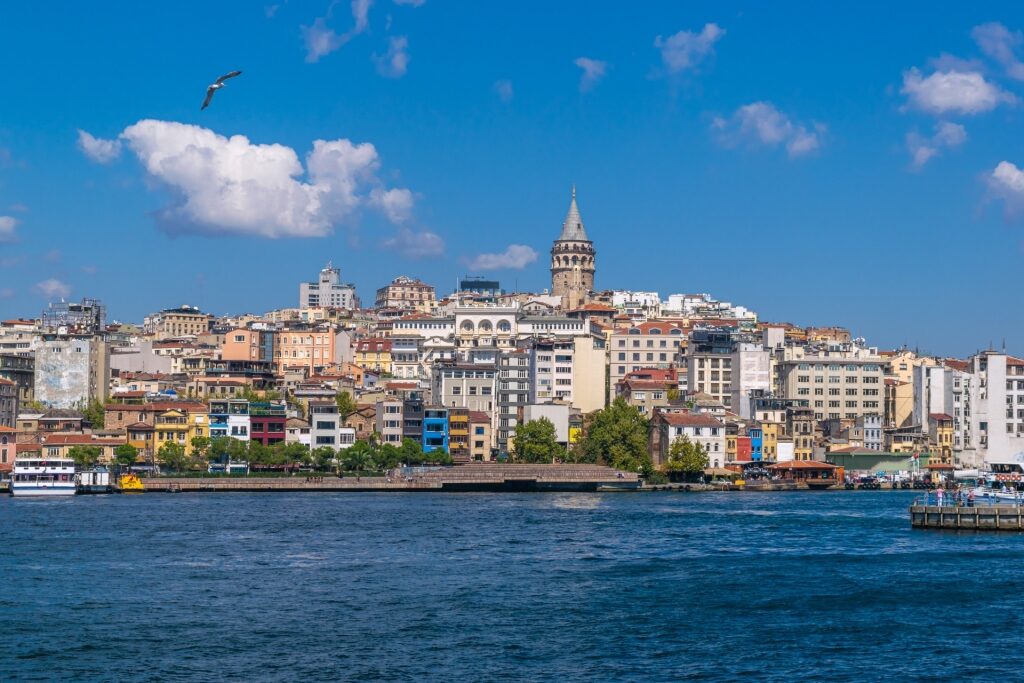
Karaköy
Karaköy sits at the base of Beyoğlu along the Golden Horn waterfront, anchored by the Galata Bridge. A former port district, it’s now a trendy area of specialty coffee shops, modern art galleries, street art, and boutique hotels.
One of the best things to do in Istanbul is to take the short ferry ride across the Bosphorus to reach the Asian side and the district of Kadıköy. Here you’ll find a different Istanbul, a place of busy markets, street food, and a youthful bar and restaurant scene.
Ortaköy follows the Bosphorus coastline beneath the first bridge connecting Europe and Asia. A popular spot for evening walks to watch the lights, it’s famous for its kumpir—stuffed baked potato—stands and weekend craft market.
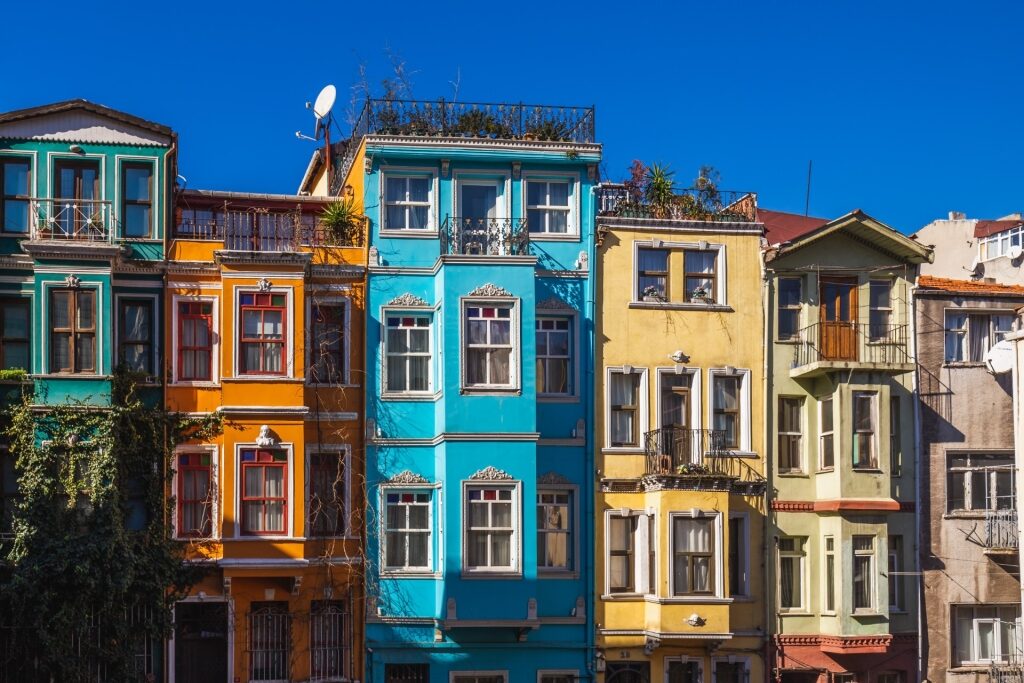
Jewish Quarter of Balat
The old Jewish Quarter of Balat is on the Golden Horn, with colorful Ottoman houses that climb steep, narrow streets. Popular with photographers for its historic looks, Balat is rich with antique shops, cafés, and a genuine neighborhood feel.
Beşiktaş is known for its ferry terminals, sitting along the Bosphorus. It has a massive weekend market and many popular fish restaurants.
FAQs
What food is Istanbul famous for?
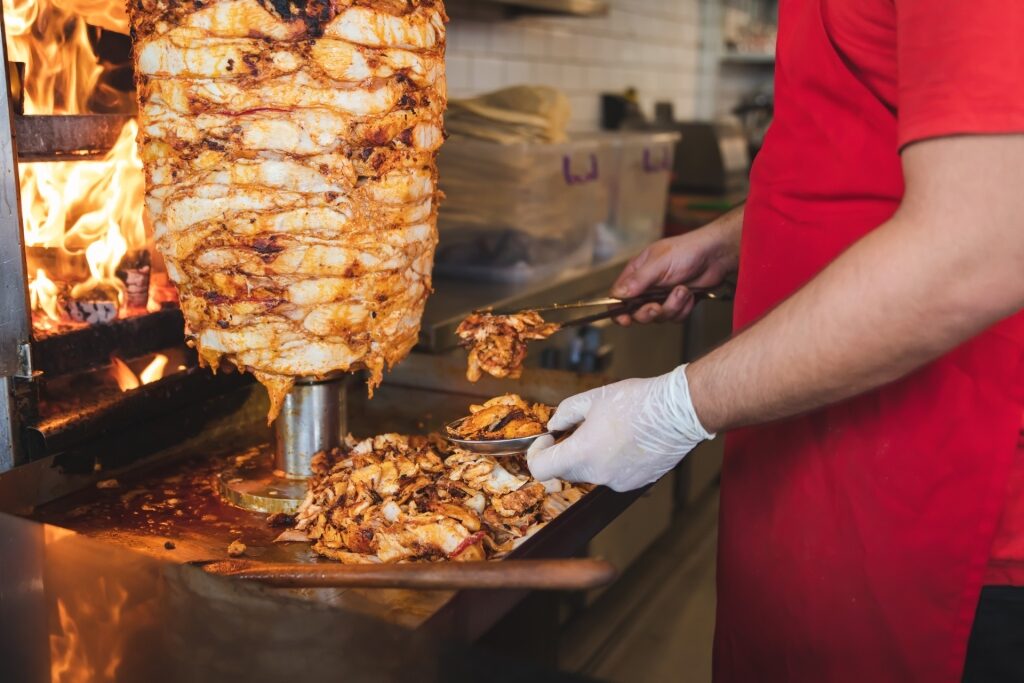
Kebab
The city is known for its cuisine. Dishes to try in Istanbul include kebabs, simit, or sesame bread rings, baklava, Turkish delight, döner, meze platters, and fresh seafood sandwiches by the Galata Bridge.
What landmarks is Istanbul known for?
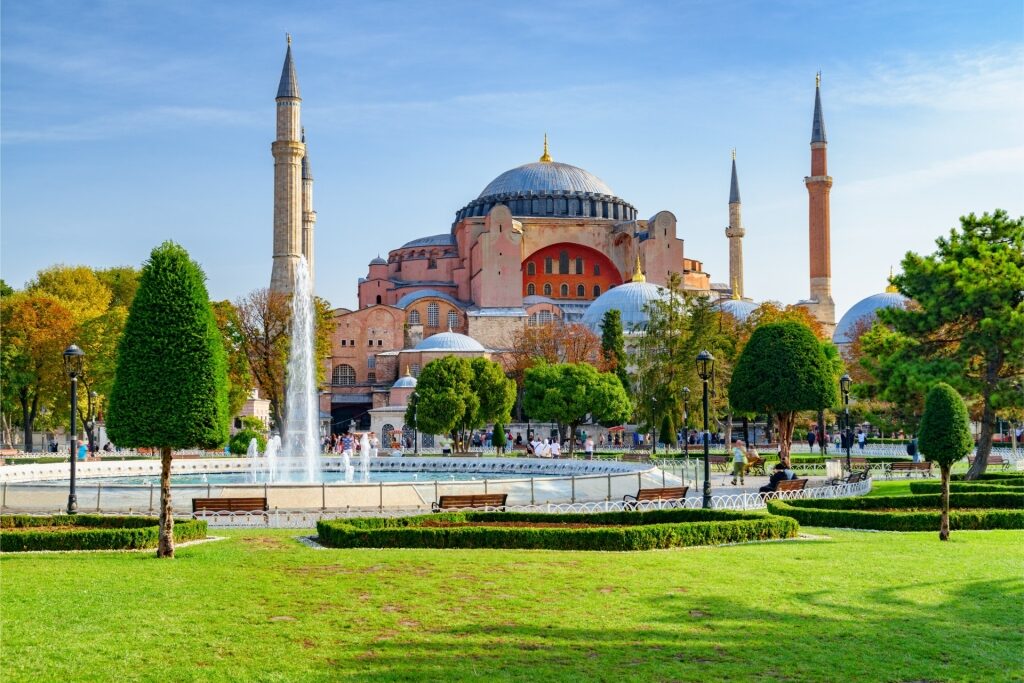
Hagia Sophia
The outstanding landmarks Istanbul is known for include the Hagia Sophia, Blue Mosque, Topkapı Palace, Basilica Cistern, Galata Tower, Grand Bazaar, Spice Bazaar, the Bosphorus Strait, and Dolmabahçe Palace.
What is Istanbul’s most famous area?
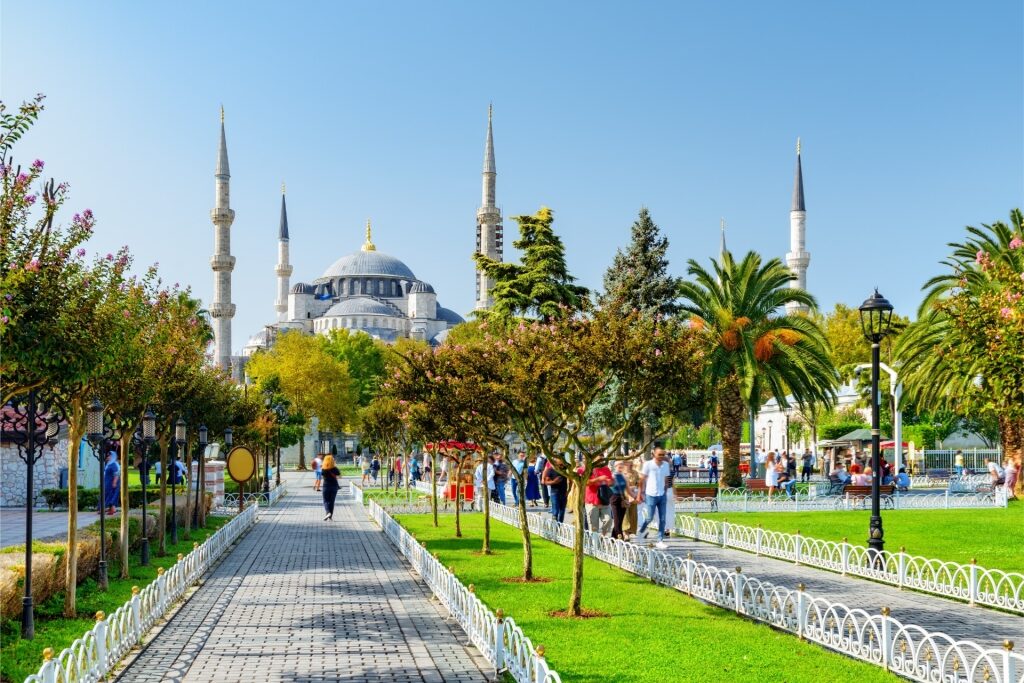
Sultanahmet
Sultanahmet—the Old City—is the most famous area of Istanbul, as it includes so many major historical sights. Beyoğlu and İstiklal Avenue do need a mention for showing off the best of modern Istanbul culture.
What souvenirs is Istanbul known for?
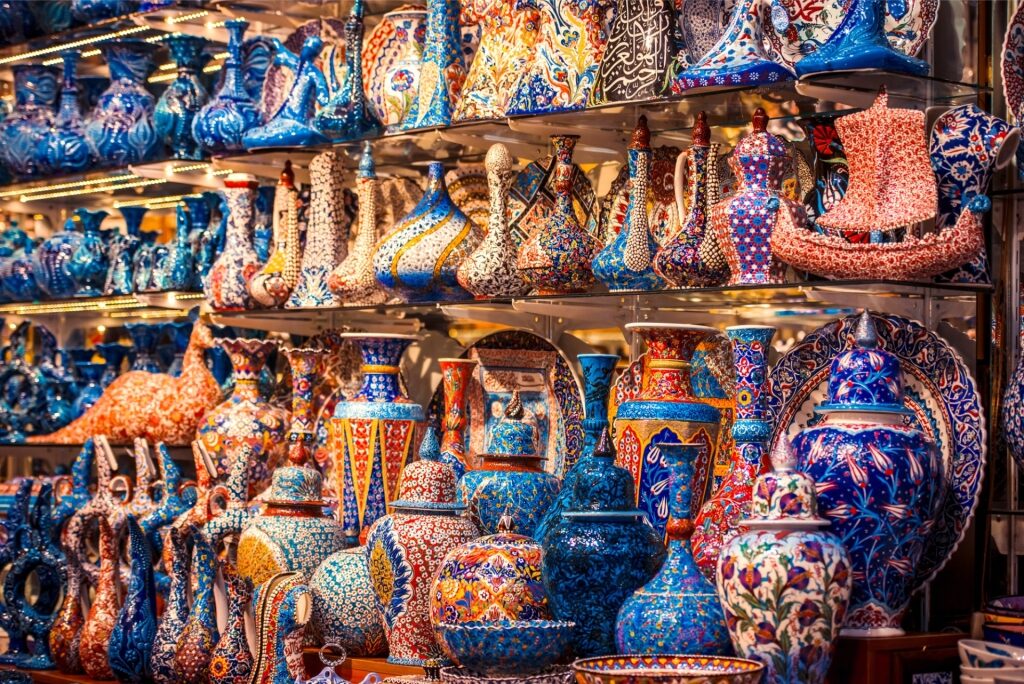
Turkish ceramics
Istanbul is known as a shoppers’ paradise for good reason. Look for Turkish carpets and kilims, hand-painted ceramics, Turkish tea sets, copper coffee pots, evil eye amulets, fresh Turkish delight, and handmade textiles.
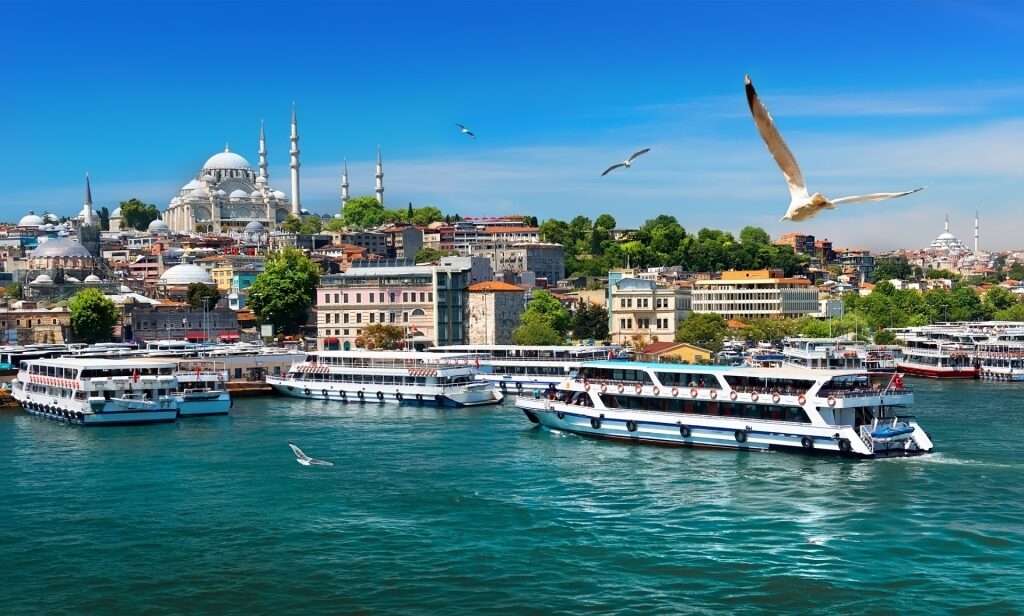
Golden Horn
Are you ready to discover Istanbul for yourself? Browse Celebrity’s cruises to Istanbul and plan your European adventure.