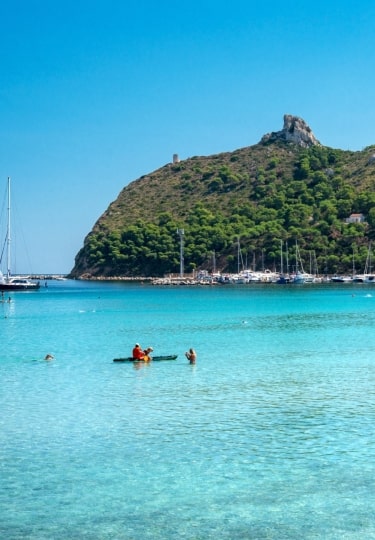
Sardinia, an autonomous region of Italy and the second-largest island in the Mediterranean Sea, is an enviable setting of distinct, isolated terroirs and dazzling sugar-white shorelines. Practically a stone’s throw from French Corsica and roughly halfway between continental Italy and North Africa, the island has been a civilizational crossroad and a much-sought-after location for centuries.
From the Bronze Age Nuragic civilization to the Roman Empire era, countless cultures have left their imprint on the island’s landscapes. Bundle all of this history, natural splendor, ancient archaeological sites, distinct provincial dishes, and ancestral traditions together, and you have the fascinating and far-ranging answers to what is Sardinia known for.
Italy’s Best Beaches
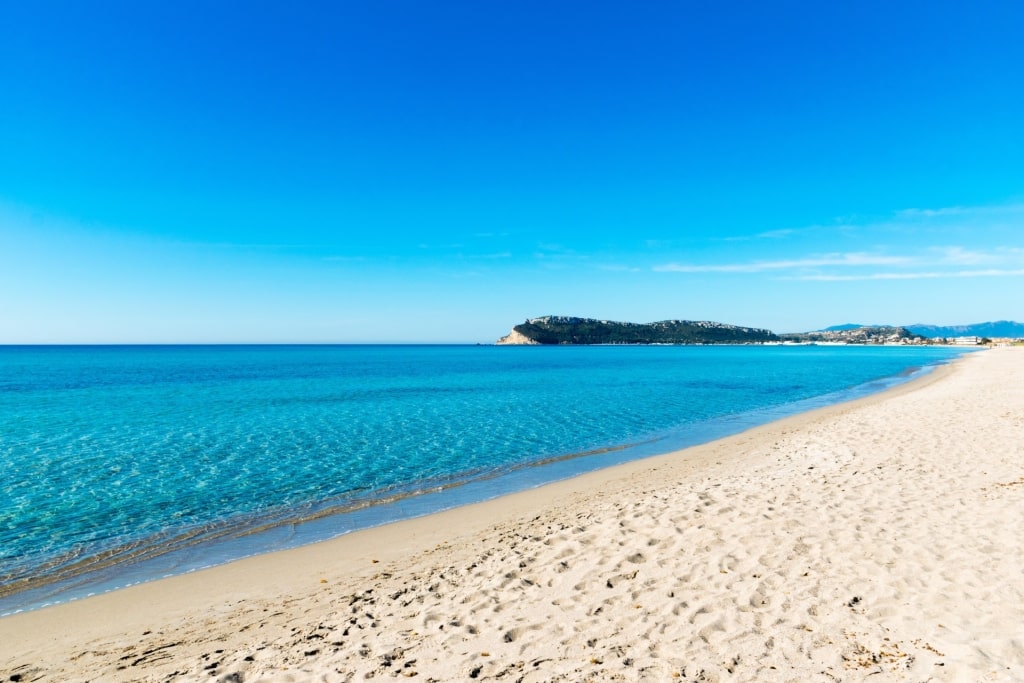
Poetto Beach, Cagliari
This is a bold claim in a country renowned for its sublime seaside escapes. Still, few would disagree that if you were to ask an Italian, “What is Sardinia known for?”, the coastline would be the most consistent response. Sardinia’s spiagge, or beaches, are ravishing and relatively underdeveloped.
Dune-ribboned soft sands, sensational spits backed by flamingo lagoons, and footprint-free coves framed by fragrant Mediterranean scrub mean most of Sardinia’s most sparkling shorelines are devoid of the umbrellas and beach clubs that overwhelm many of the mainland’s beaches.
On the southern coastline, just a short distance from Cagliari, you’ll encounter some of Sardinia’s finest seaside. Urban Poetto Beach, a striking, five-mile stretch of sand, is practically on the city’s doorstep.
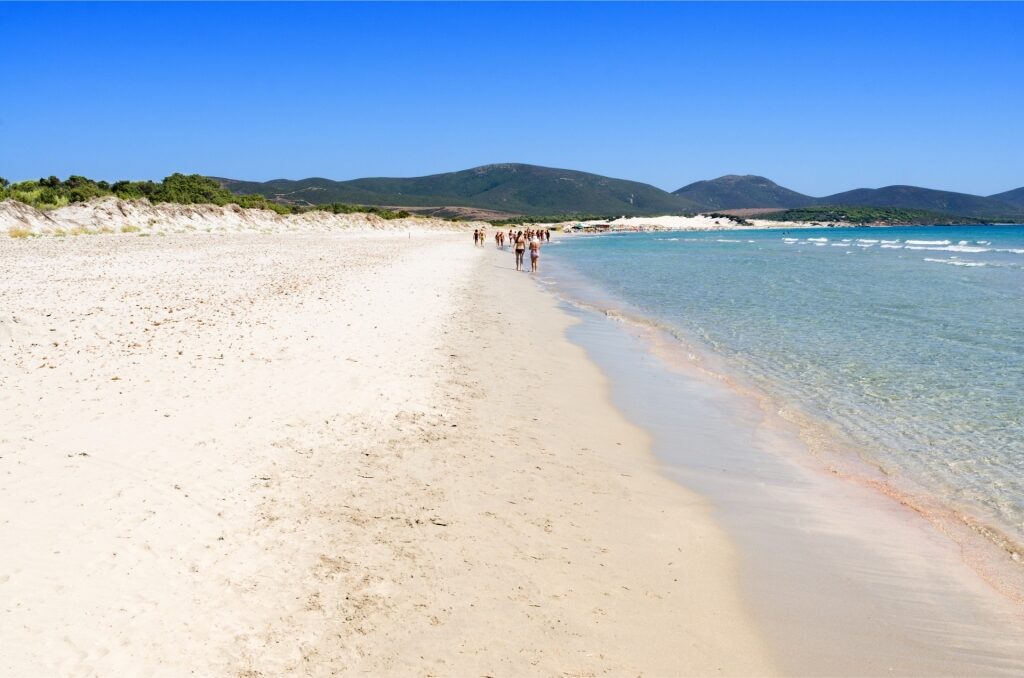
Spiaggia di Porto Pino
Stray a little further southwest to paper-white, dune-backed Spiaggia di Porto Pino, or southeast to the iridescent shallows of Spiaggia di Porto Giunco in the Capo Carbonara Marine Protected Area, and you’ll soon see why so many Italians opt to spend their summer vacations in Sardinia.
The Ancient City of Tharros
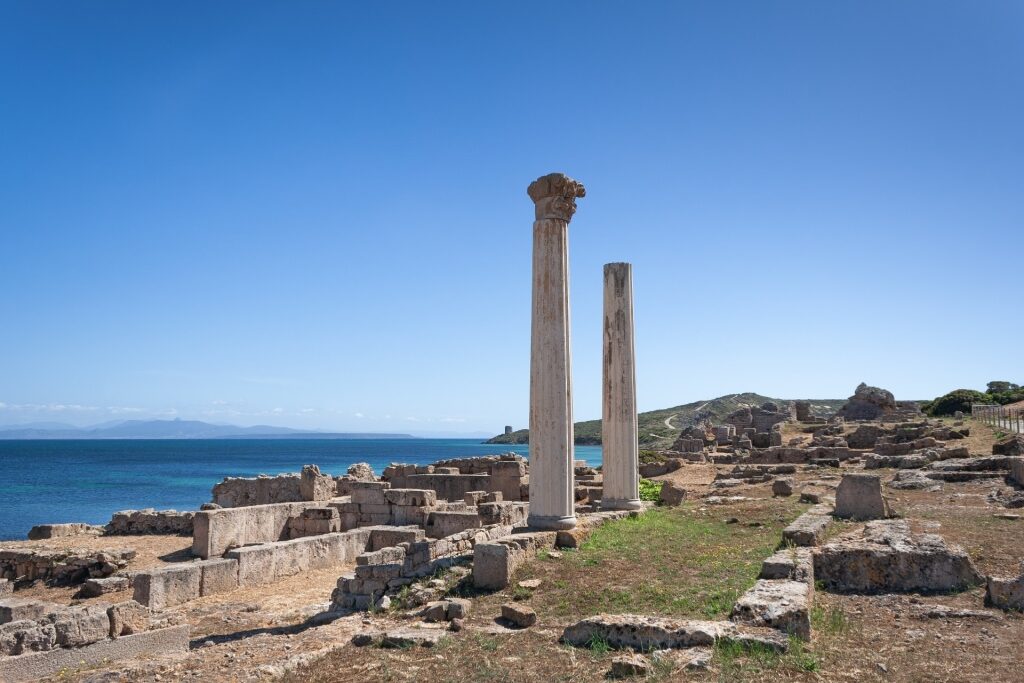
Ancient City of Tharros
You don’t need a history book to illustrate what Sardinia is famous for. This is a land that narrates its history through open-air museums, excavations, and age-old landmarks.
Nowhere are these millennia of chronology more intertwined than in the Ancient City of Tharros. Inhabited by the Nuragic, Phoenicians, Carthaginians, Romans, and Byzantines, this outstanding archaeological site stretches along a sinewy strip of land leading to Capo San Marco, overlooking the Gulf of Oristano.
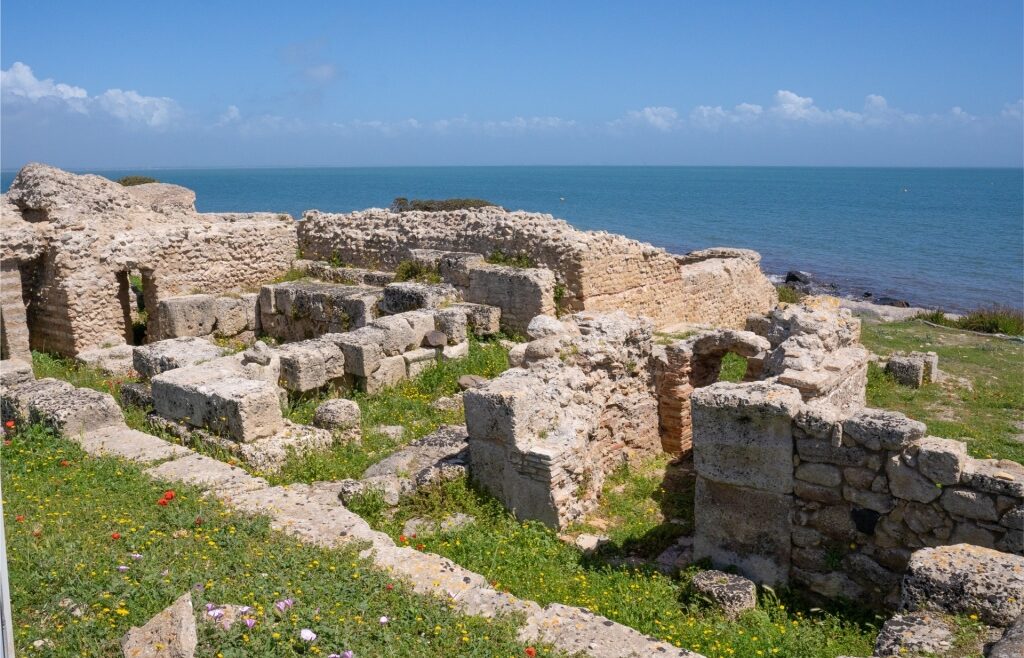
Ancient City of Tharros
It was here that the Phoenicians founded ancient Tharros in the 8th century BC. The city was later extended and adapted by subsequent occupiers.
Exploring the ample excavated areas, with their weathered, low-rise walls denoting Roman thermal baths, Punic necropoles and temples, and marveling at the Corinthian columns is engrossing. Older still are the peninsula’s two nuraghi, beehive-shaped stone towers.
Bronze Age Nuraghi
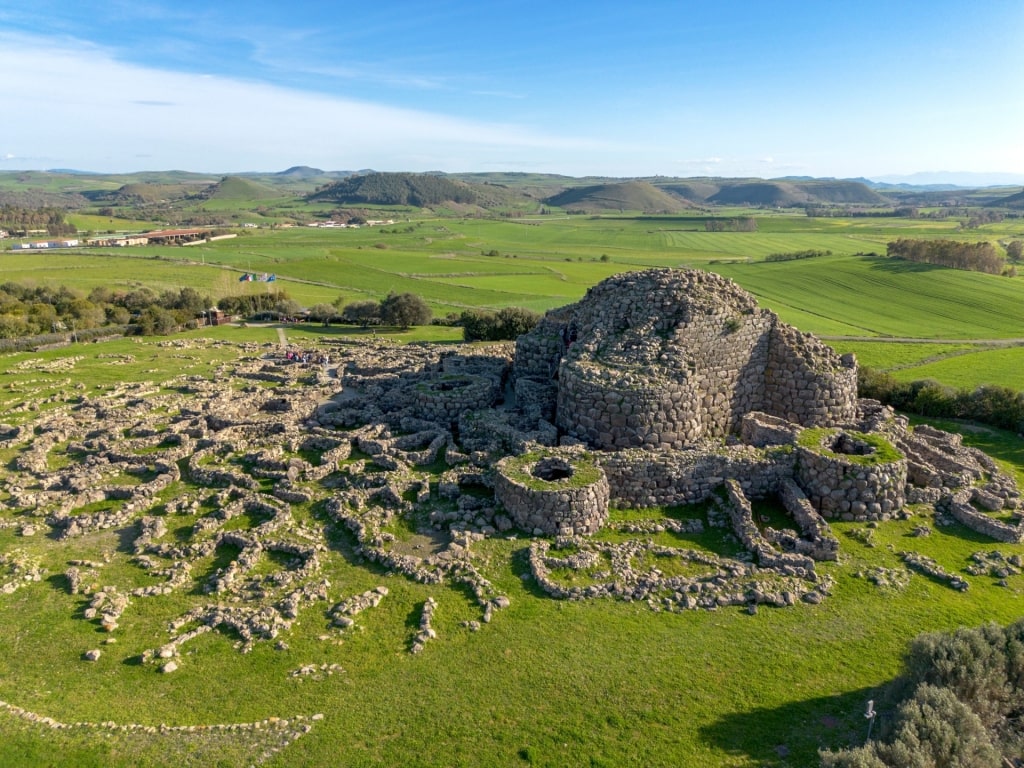
Su Nuraxi di Barumini
Between the Bronze and Iron Ages, Sardinia was shaped by the Nuragic civilization. A highly advanced society for its time, the Nuragic people were skilled craftspeople, metal and stone workers, and Mediterranean traders whose constructions remain Sardinia’s main archaeological draw to this day.
The Nuragic civilization was named for the numerous nuraghe, the singular of nuraghi, that they constructed across the island. These circular, cone-like stone defensive towers are unique to Sardinia, and were built either standalone, often in elevated positions, or as part of village complexes.
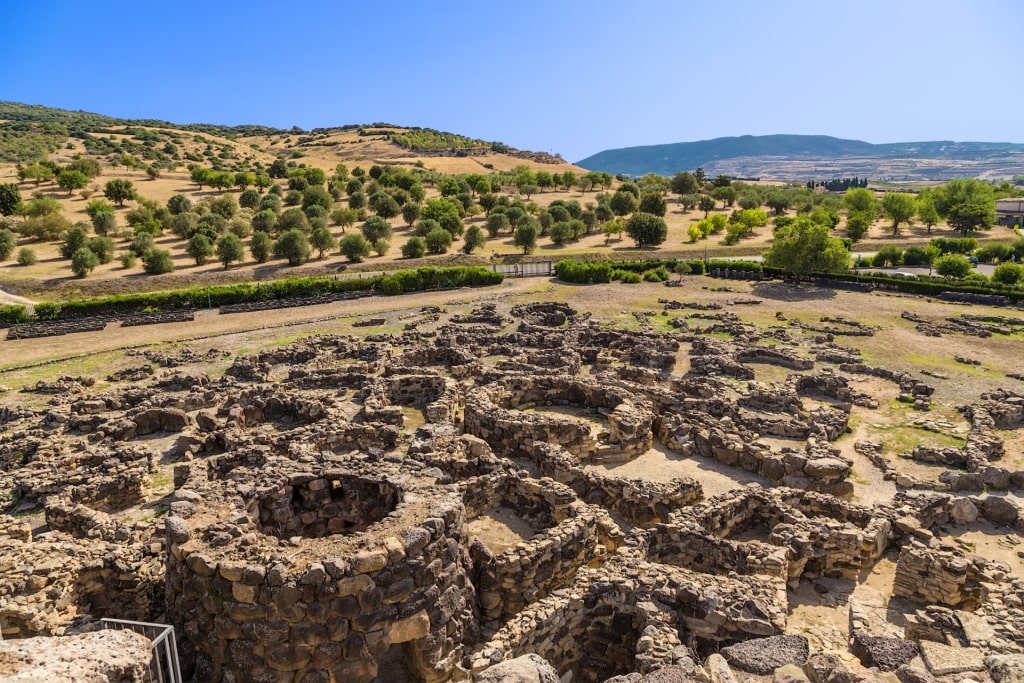
Su Nuraxi di Barumini
The best-known example is found at Su Nuraxi di Barumini, an hour’s drive inland from Cagliari.
A UNESCO World Heritage Site since 1997, in part due to having five nuraghi consisting of a central nuraghe surrounded by four smaller towers, it’s impossible to answer the question “What is Sardinia famous for?” without spotlighting Su Nuraxi. A guided tour is highly recommended when visiting the island.
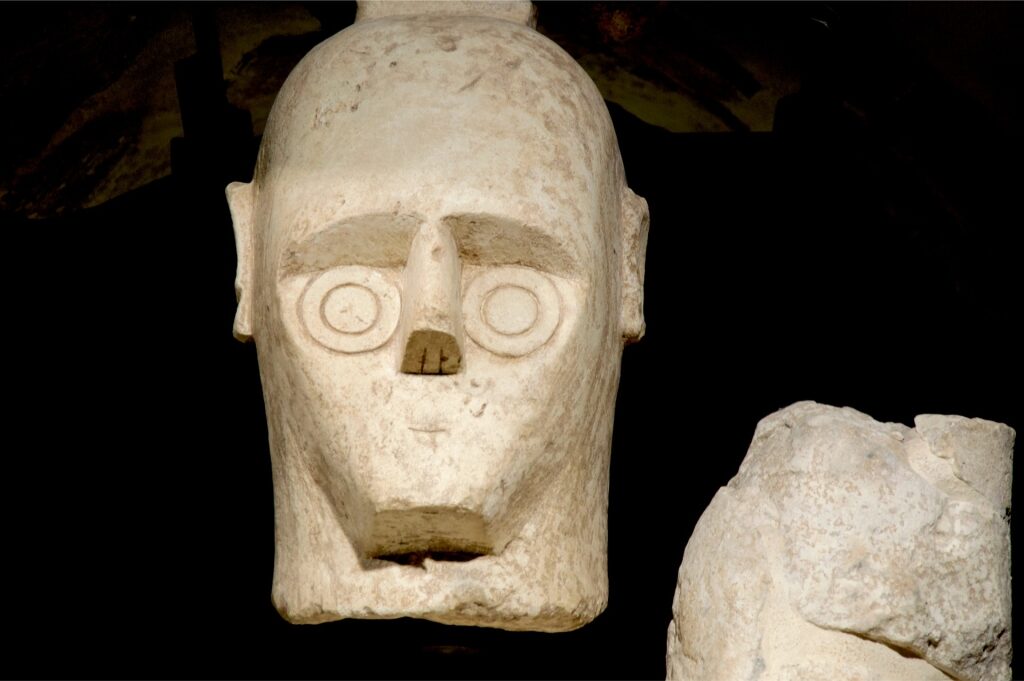
Giants of Mont’e Prama
Yet, even without leaving Cagliari, it’s possible to marvel at many of Sardinia’s most notable Nuragic artifacts. The Museo Archeologico Nazionale displays items excavated across the island, including bronze statues, pottery, and some of civilization’s most remarkable stone statues, the Giants of Mont’e Prama.
Cagliari’s Castello & Citadel of Museums
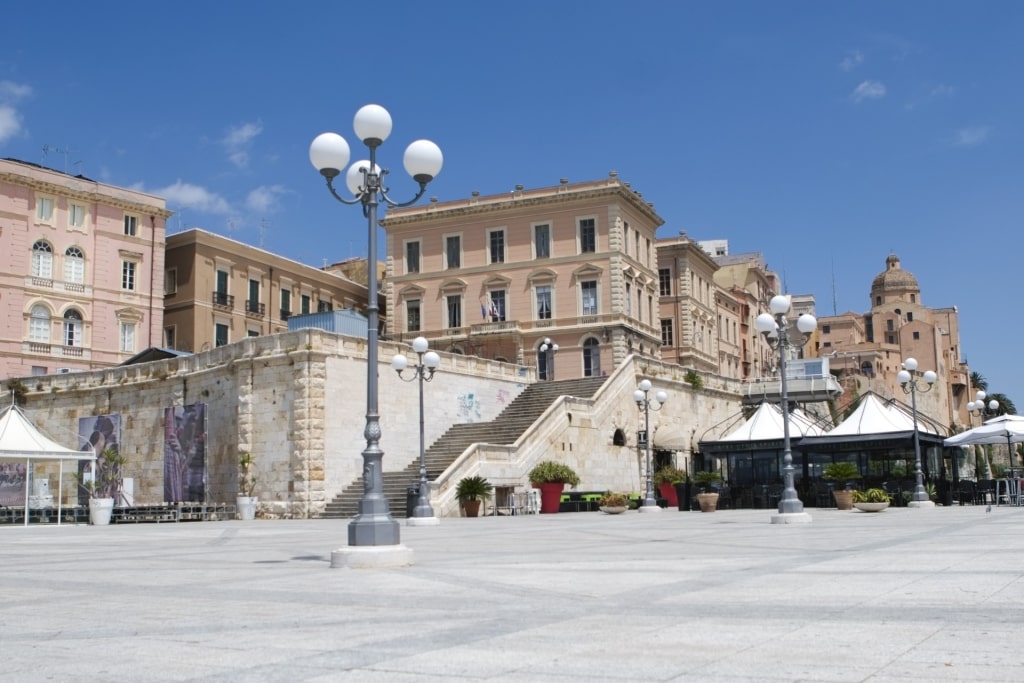
Castello District, Cagliari
Cagliari, Sardinia’s colorful, multi-layered, and culturally wealthy capital, is one of Italy’s best cities, especially with the medieval, hilltop Castello Quarter as its magnificent centerpiece.
After climbing Bastione di Saint Remy’s monumental staircase and crossing the panoramic Piazzetta David Herbert Lawrence—named in honor of the English novelist who wrote Sea and Sardinia—you can’t help but feel the shift in sense of time and place as you enter Castello, the city’s oldest, fortified district, founded by the Pisans.
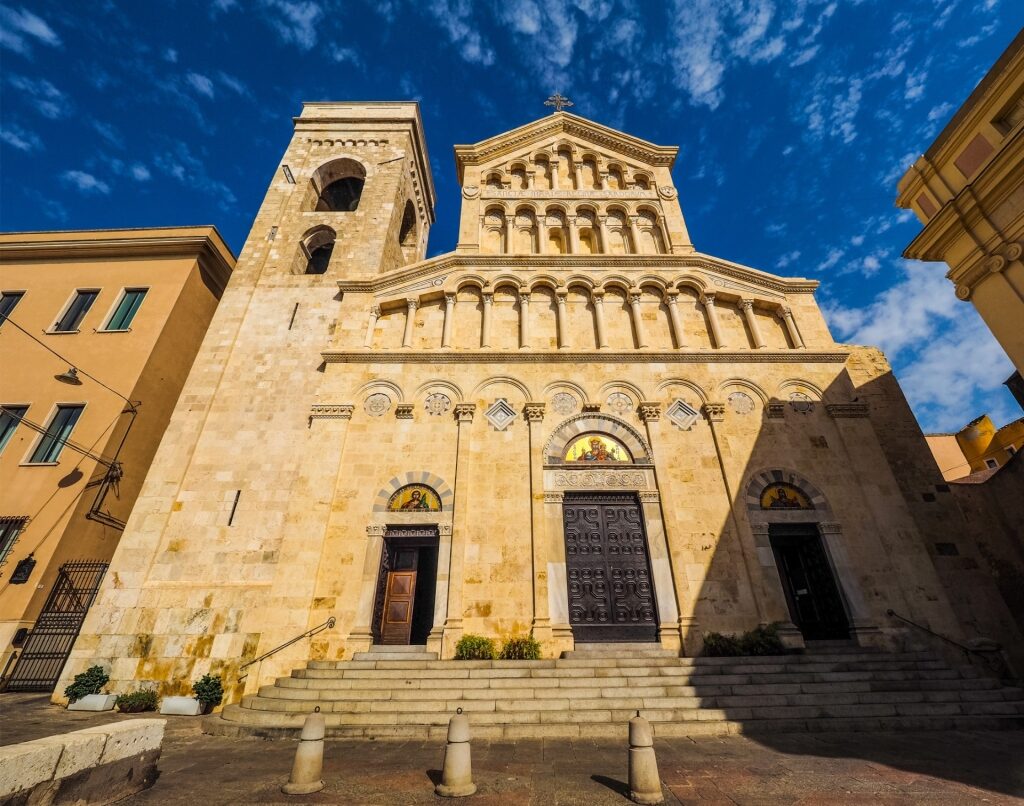
Cathedral of Santa Maria di Castello, Cagliari
A labyrinth of narrow, shady lanes strings together monumental landmarks, such as the mid-13th-century Cathedral of Santa Maria di Castello and the Viceregio, or Palazzo Regio, the elegantly decorated former residence of the King of Sardinia.
Most important for those with an interest in Sardinian heritage, history, and art is the Citadel of Museums. Set at the northern tip of the Castello, in the retired Royal Arsenal, this cultural district clusters together a handful of museums, including the acclaimed National Art Gallery and National Archaeological Museum.
Nora Archaeological Park
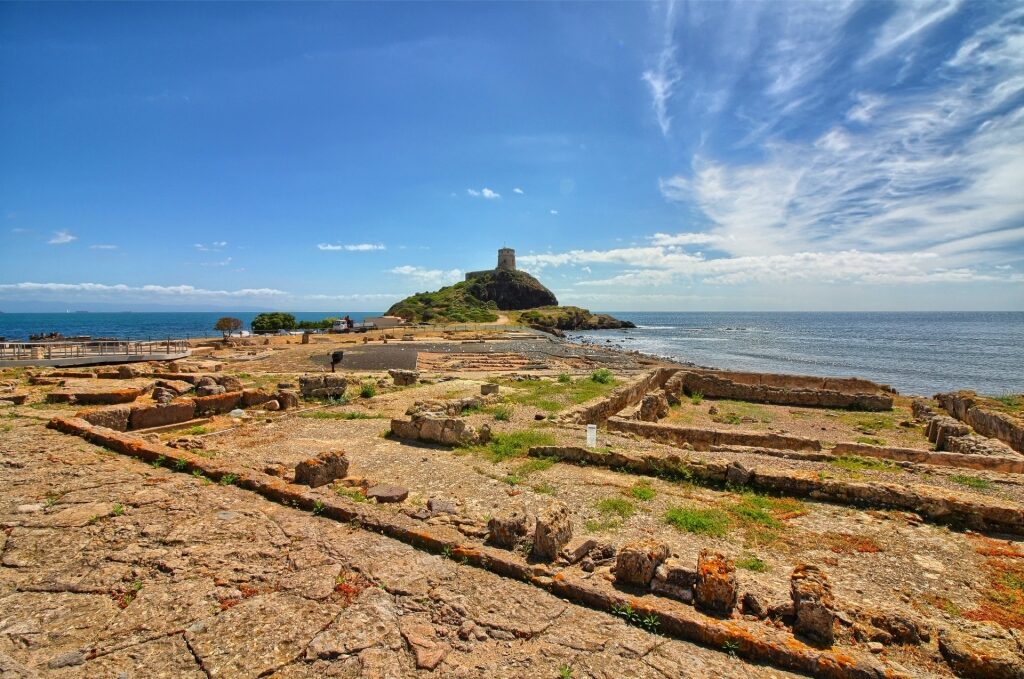
Nora Archaeological Park
For fans of Roman history, the most awaited response to “What is Sardinia known for?” is the Nora Archaeological Park.
Set on a peninsula some 40 minutes’ drive southwest of Cagliari, the Ancient City of Nora was founded by the Phoenicians, yet it fully flourished during its Punic and later Roman rule.
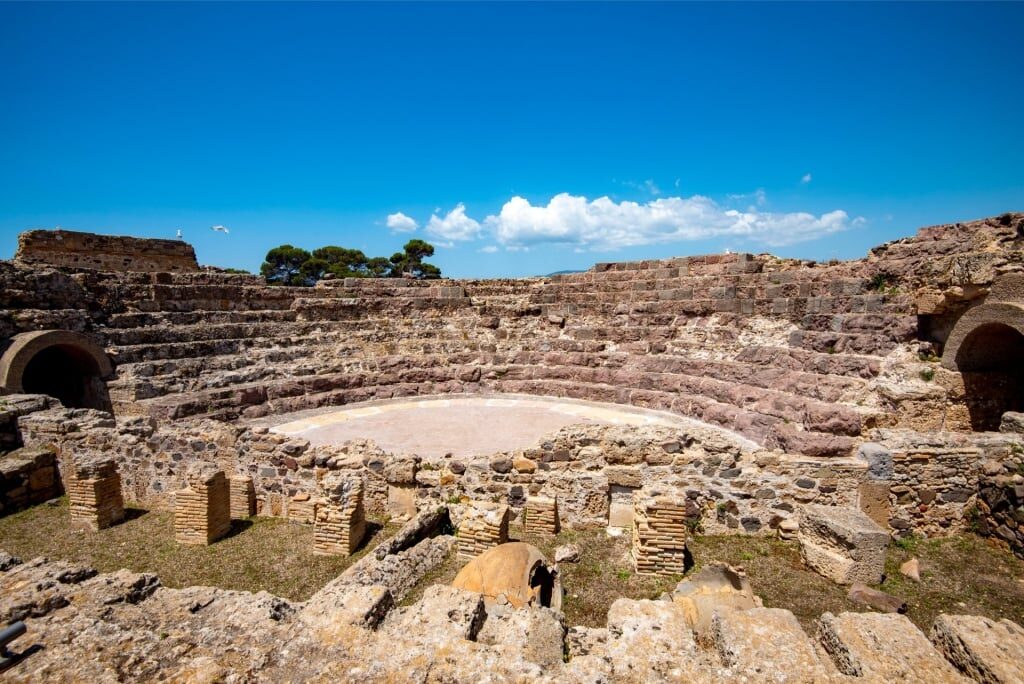
Nora Archaeological Park
For over two centuries, the Romans stamped their signature mark on the city, much of which is still visible in this open-air museum today.
Strolling through the site, you’ll cross the ruins of thermal baths, temples with still-standing columns, and an amphitheater. Marvel at well-preserved floor mosaics, too. The most noteworthy of these depicts mythical creatures including a nymph and a centaur. Perhaps fittingly, some of Nora’s mosaics, and part of the old Roman road, are now underwater.
Sardinian Cuisine
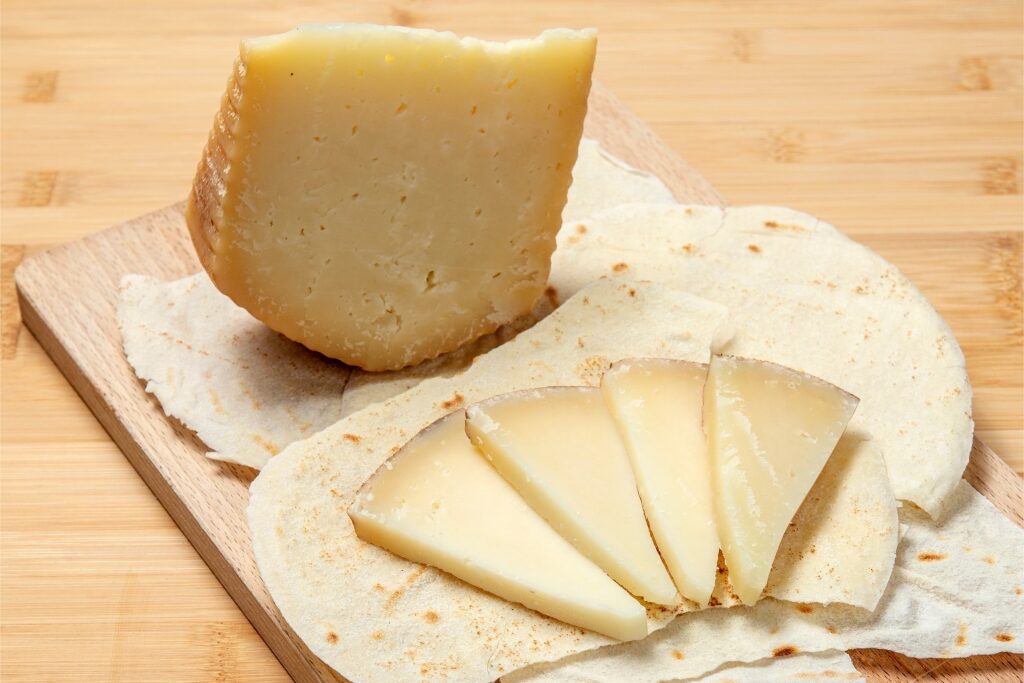
Pecorino Sardo
Simple, flavorsome, healthy, and high-quality, Sardinian gastronomy virtually guarantees eating well, and is also credited for Sardinia’s high number of centenarians.
From age-old hard cheese recipes, such as Pecorino Sardo, or the likely Nuragic-era Fiore Sardo cheeses to the numerous pasta recipes based on Sardinia’s centuries-old semolina fergulo, the island’s lean and largely plant-based Mediterranean diet is enviable.
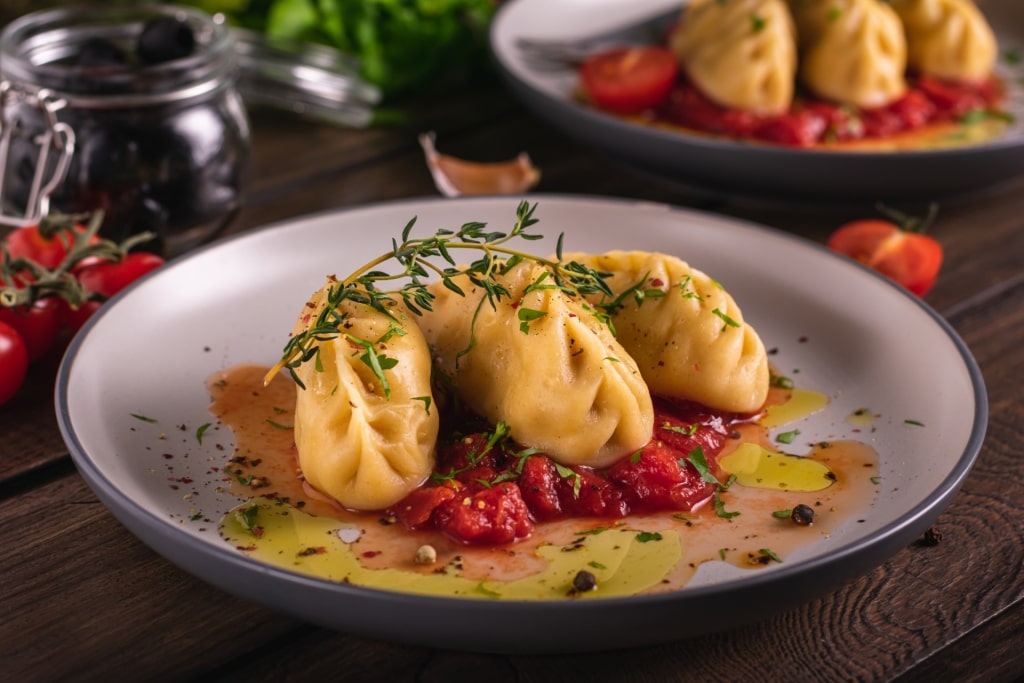
Culurgiones
Other Sardinian dishes worthy of mention include culurgiones, a potato, mint, and pecorino stuffed pasta, more similar to dumplings; pane carasau, an impressively thin and crunchy flat bread, and, for carnivores, porceddu, a slow-cooked suckling pig.
Sardinia’s fruits are frequently used in spirits, jams, and seasonal dishes. Myrtle berries, for example, are distilled to make Mirto, Sardinia’s most famous herbal liqueur, traditionally enjoyed as a digestif.
Ancient Wines
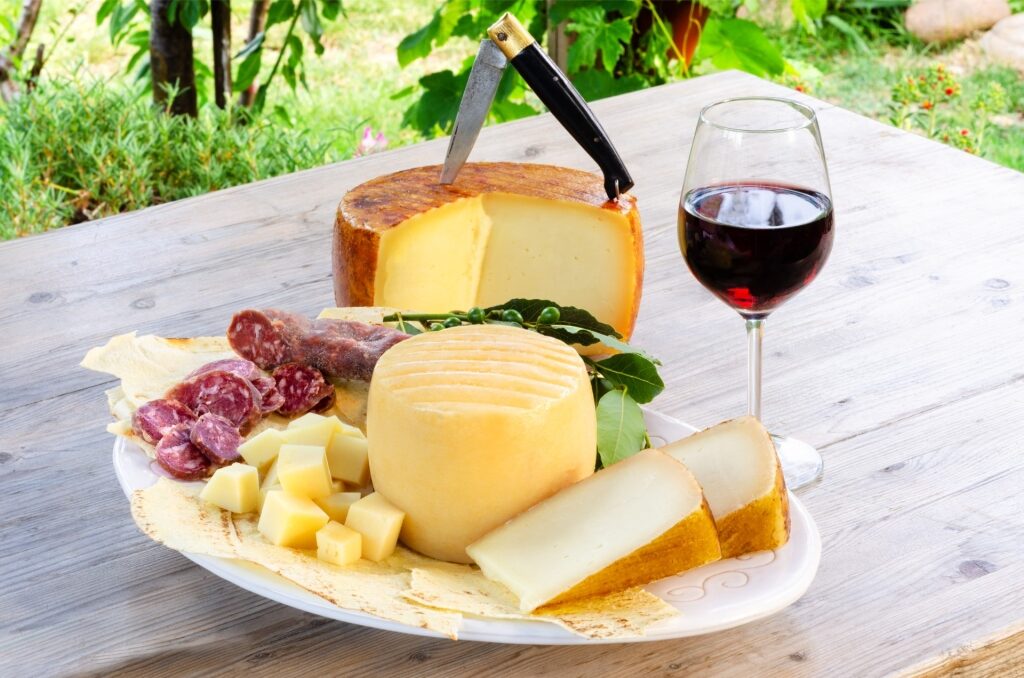
Cannonau
While not as internationally renowned as Italy’s more famous wine regions, such as Tuscany’s Chianti or the Veneto’s Prosecco, ask any in-the-know vintner, “What is Sardinia famous for?” and they will likely wax lyrical about the island’s unique terroirs and indigenous grapes.
With a wine production history dating back to at least the Nuragic viticulture of the 15th century BC—though the presence of the vitis vinifera, or European wild grape, makes it conceivably even older—Sardinia is one of the oldest wine-making regions in the Mediterranean.
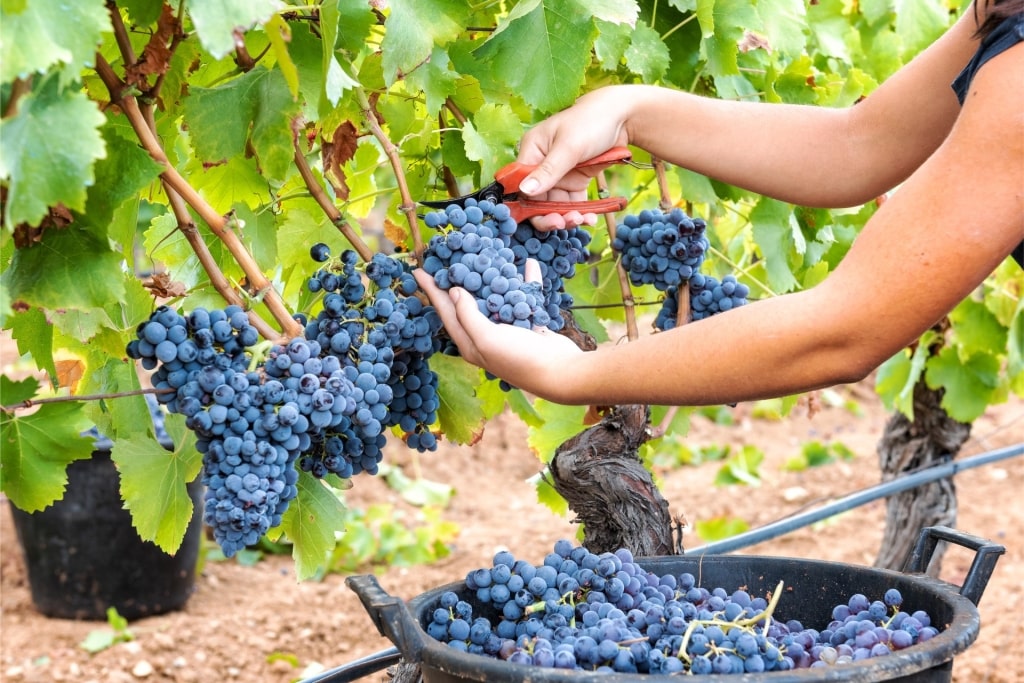
Cannonau grapes
Some of Sardinia’s indigenous grapes found exclusively on the island include Arvisionadu, Nuragus, and Semidano. However, the most ubiquitous and renowned wine Sardinia is known for is the full-bodied, ruby red Cannonau, nearly identical to Grenache.
It was long believed that the Spanish imported these vines during their rule; however, the archaeological discovery of millennia-old seeds in 2002 suggests that a distinct version of Cannonau was likely native to the island.
Vermentino
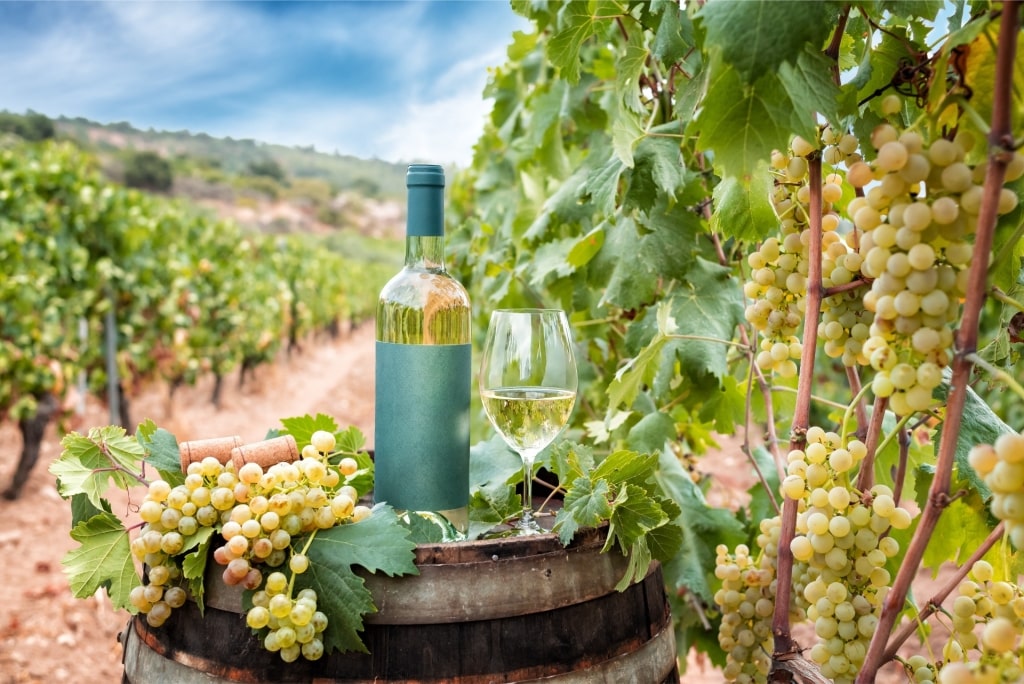
One of the most enjoyable ways to appreciate Sardinia’s rich wine heritage is on a winery visit. Cantina Argiolas, founded in 1938, is one of the closest wineries to Cagliari, producing Cannonau and other indigenous varietals, and offers insightful tours and tastings. If you prefer whites, be sure to sample the fresh, citrusy Vermentino.
A Blue Zone Mediterranean Mountain Lifestyle
Monte Arcosu
Sardinia is one of the world’s five original so-called Blue Zones, regions renowned for their longevity and higher-than-average centenarian populations.
Credited to a combination of genetics, isolated development, lifestyle, and diet—Cannonau wine is often dubbed the local “elixir of life” while Sardinia’s traditional diet is considered one of the world’s healthiest—the island’s clean living and clean air are another lifestyle layer that Sardinia is known for.
Sardinian deer
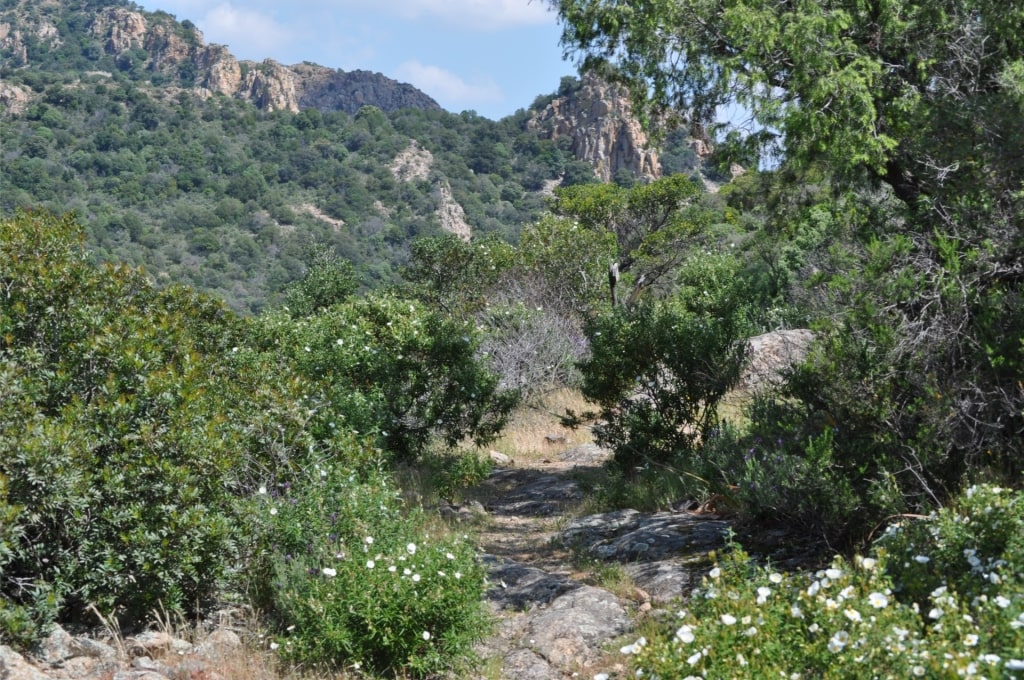
To sample this pristine side of Sardinia, venture inland on a 4×4 adventure into the wild and undisturbed mountains, such as Monte Arcosu, one of the nearest mountainous nature reserves to Cagliari.
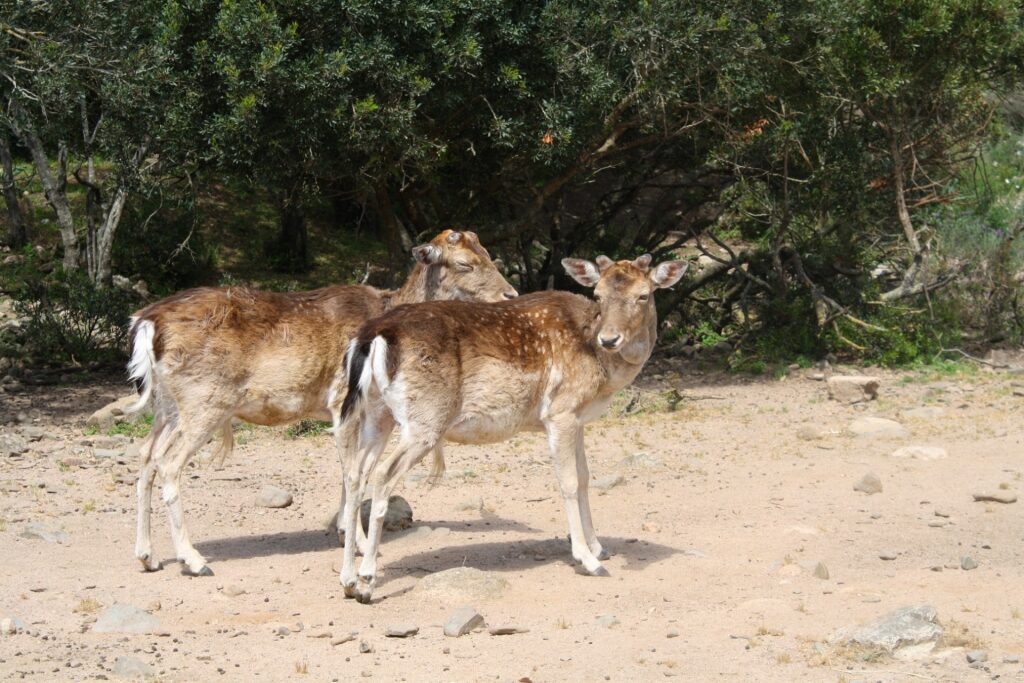
For nature lovers, little can beat an afternoon roaming this vast oak and cork forest that constitutes one of Italy’s most significant WWF reserves, spotting free-roaming Sardinian deer and breathing in the pristine air.
Read: Best Things to Do in Italy
Domus de Janas
Domus de Janas
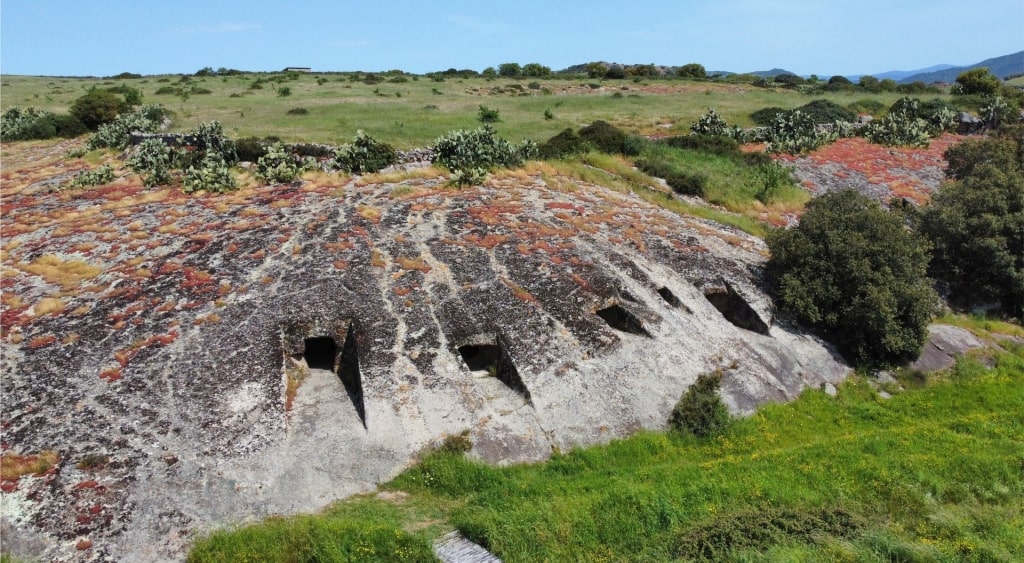
When questioning what is Sardinia famous for, it’s unlikely that ancient funeral customs would cross your mind. However, the island’s second World Heritage Site—only inscribed by UNESCO in 2025—celebrates precisely that: Sardinia’s Prehistoric Funerary Traditions.
Rather than pinpointing one particular location, the UNESCO listing spotlights 17 different Domus de Janas, the name given to these rock-hewn tombs constructed between the 5th and 3rd millennia BC, scattered across Sardinia.
Folk Traditions, Music, and Culture
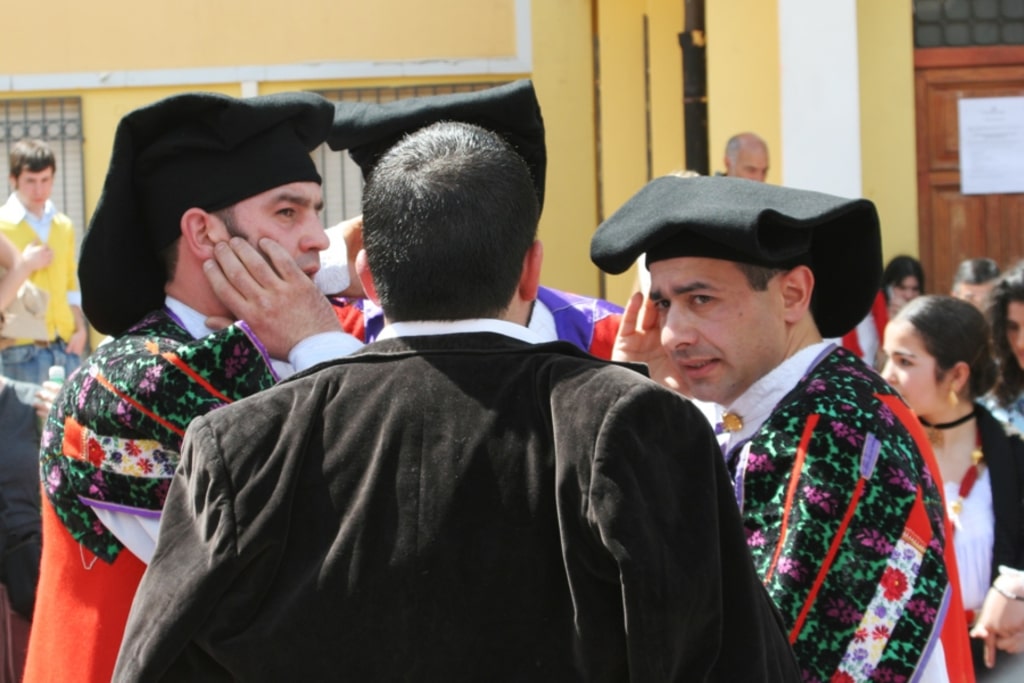
Canto a Tenore Photo by Rafael Brix on Wikimedia Commons, licensed under CC BY 2.5
Sardinia’s UNESCO recognition extends beyond its historically significant landmarks. In 2005, Canto a Tenore, the island’s polyphonic folk singing rooted in shepherding communities, was inscribed on the List of Intangible Cultural Heritage.
Traditionally sung by four men, the almost hypnotizing, harmonized sound has become Sardinia’s most famous folk music. Launeddas, the island’s long-standing wooden wind instrument, are equally celebrated, though both are now most commonly heard at cultural events.
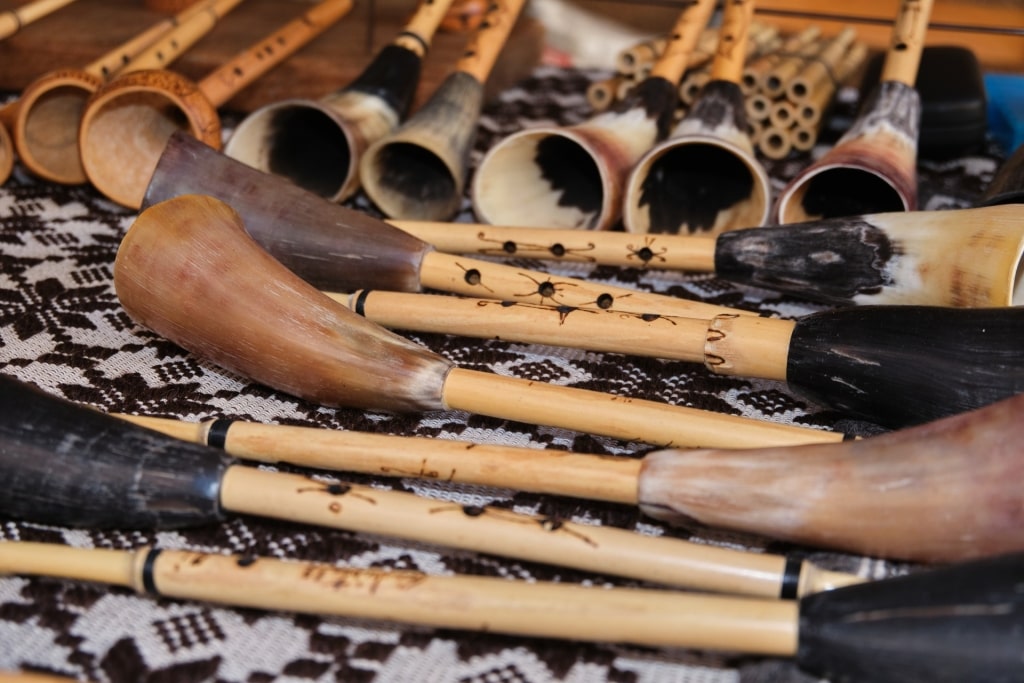
Launeddas
Easier to appreciate are the various Sardinian handicrafts on display at Cagliari’s Ethnographic Museum, the Luigi Cocco Collection.
Another interesting cultural element that differentiates Sardinia from the mainland is the development of the two dialects of the island’s local language, Sardo, though Italian is now the common tongue.
Birdlife and Pink Flamingos
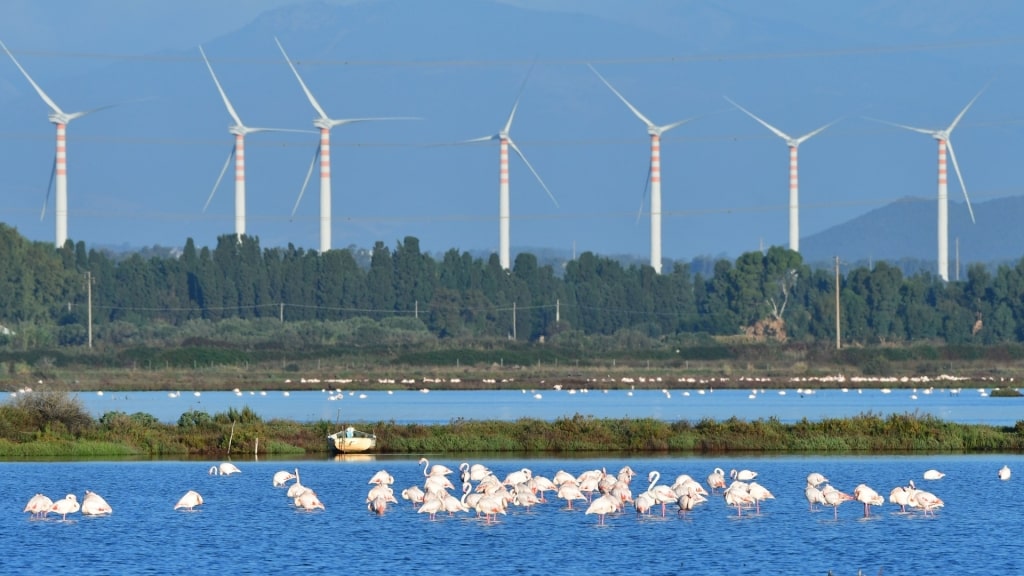
Santa Gilla Lagoon
Birders, like the feathered creatures they come to admire, flock to Sardinia in droves. The island is renowned for its breeding grounds and is an essential stop on migration routes.
The low-lying, marshy coastal plains around Cagliari are especially popular with those keen to spot a flamboyance of flamingos. So much so, the area has been dubbed the “kingdom of pink flamingos.”
While these wading birds were once only sighted during migrations, colonies now live in the wetlands year-round. Witness their elegance and grace at the urban Parco Naturale Molentargius Saline or the vast Santa Gilla Lagoon just west of the city.
Porto Flavia
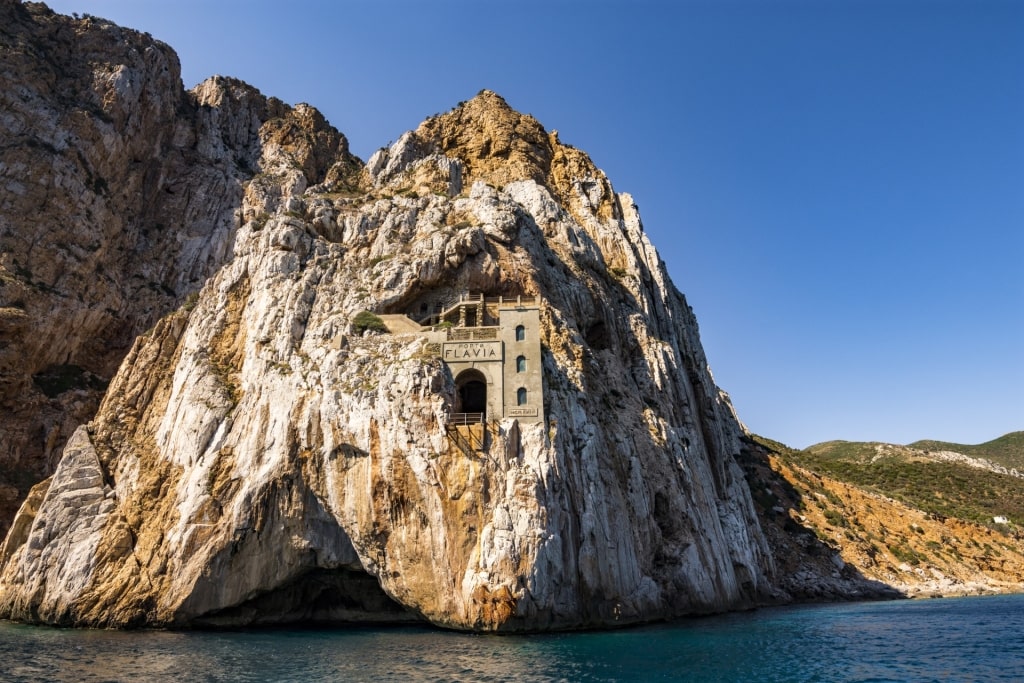
Porto Flavia
Porto Flavia, part of the Masua mining complex, is one of the more modern landmarks for which Sardinia is known. A wonder of early 20th-century engineering, the decommissioned seaport is situated roughly 160 feet above the waves below, constructed directly into the side of a limestone cliff.
This unique construction allowed for the mine’s extracted minerals to be easily transported from storage silos inside the mountain, via tunnels, to ships moored below.
Join one of the four-per-day English language tours to explore the historic galleries, conveyor belt, and tunnels. For a better view of the archway built into the cliff, opt for a short boat trip.
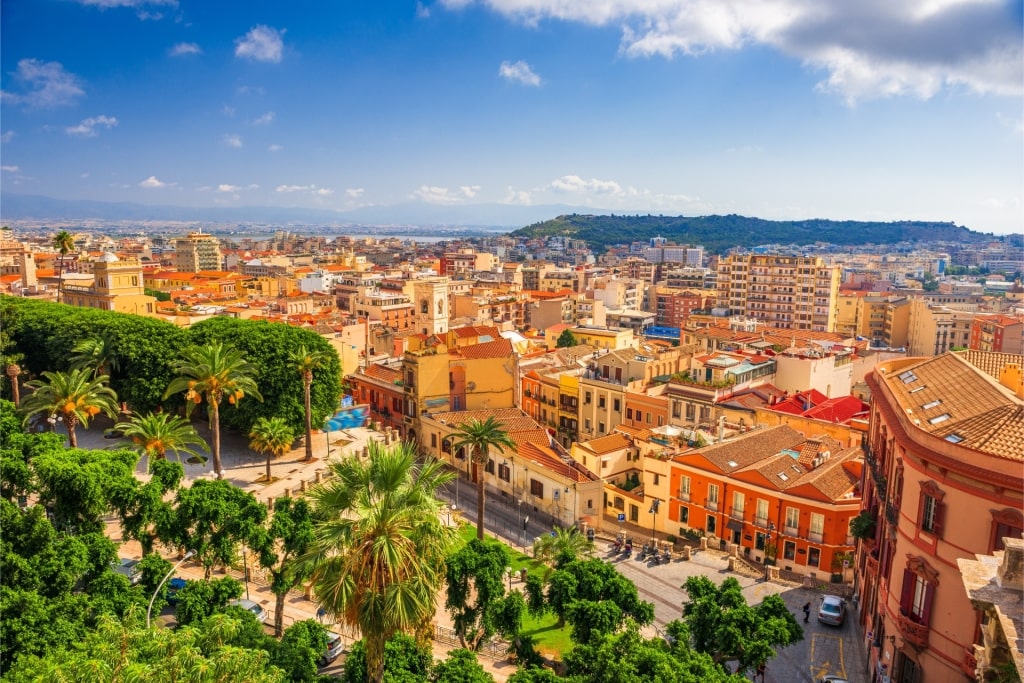
Cagliari
Now that you’re informed on what Sardinia is known for, let its natural and archaeological treasures unfold before your own eyes on one of Celebrity’s cruises to Sardinia.