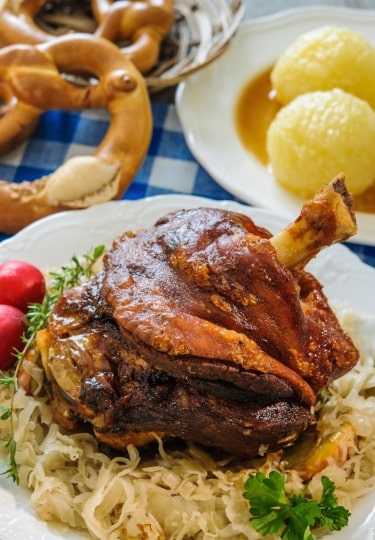
Bavarian food has a reputation for consisting of a whole lot of meat and potatoes. While it’s true that you’ll find massive pork knuckles and sausages in abundance, that’s only part of the story. Bavarian dishes rely heavily on local produce, both fresh and fermented, to last through the long winters. There’s sourdough bread made with ancient grains and cheeses from family dairies where the cows graze in the shadow of the Bavarian Alps.
Above all, traditional Bavarian foods require time and a dedication to craftsmanship. You’ll find a lot of sauces with a depth of flavor that only comes from hours of simmering. There are braises with wild boar and venison caught in nearby woods, or freshwater fish from Starnberger See. Locals here know how to enjoy life, which starts at the table.
Weisswurst
Weisswurst
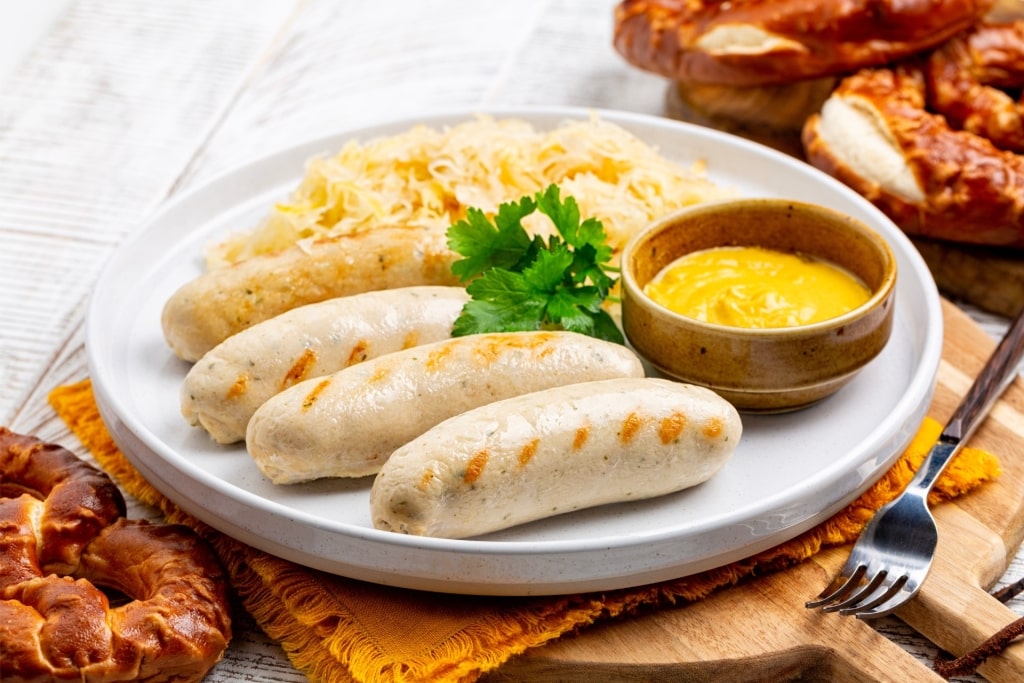
Start your day off like a Bavarian with this sausage made with a mix of pork and veal. These pale sausages are more delicately seasoned than bratwursts and, unlike many types of sausages, are never smoked. They also are not made with nitrates—which preserve the pinkish color in many cured meats—so they’re more perishable.
Most Bavarians prefer to eat their Weisswurst ohne Darm, or sans casing. Use your knife and fork to surgically extract the sausage from its exterior, then dip slices in sweet mustard.
If this feels too challenging, it’s perfectly acceptable to leave the skin on. Traditionally, Weisswurst were reserved for a late morning breakfast or lunch.
Bretzel
Bretzel
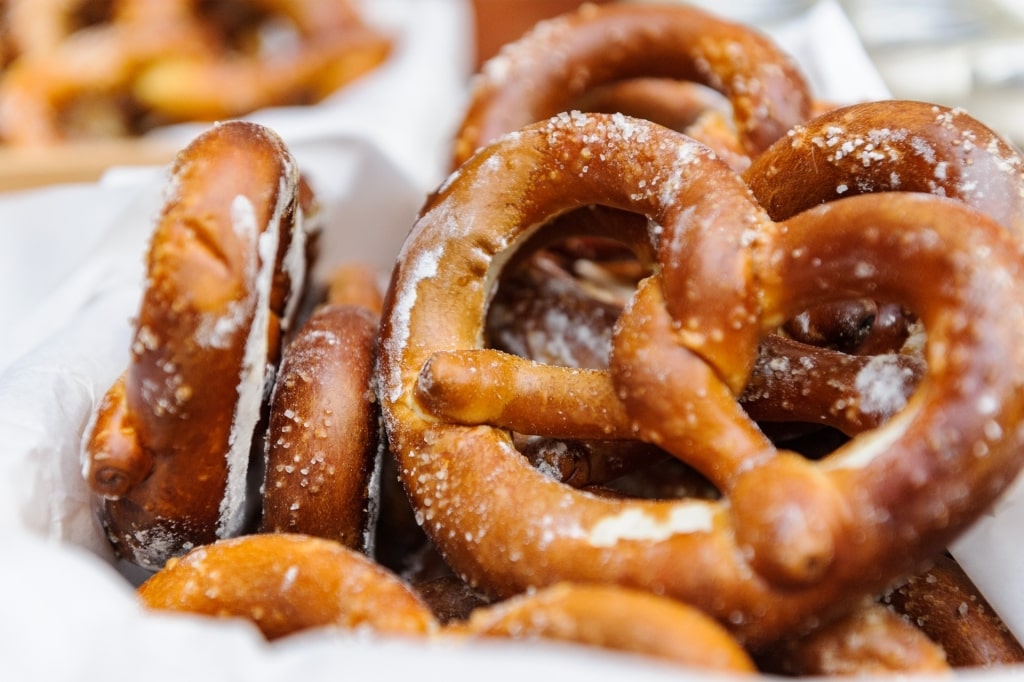
No visit to Bavaria is complete without a freshly baked Laugenbrezel. These twisted breads, which are thought to resemble a priest’s hands in prayer, come with a crunchy sprinkling of salt. Their deep mahogany coloring is the result of a quick bath in lye-water, which dramatically boosts browning.
In addition to the classic, you’ll find all sorts of pretzel variations. Just about any Bavarian beer garden or beer hall will offer positively enormous pretzels designed for the whole table to share. Plenty of bakeries in town will offer pretzels decked out with toasted pumpkin seeds, a mountain of melted cheese, or even just a smear of butter inside.
Obatzda
Obatzda
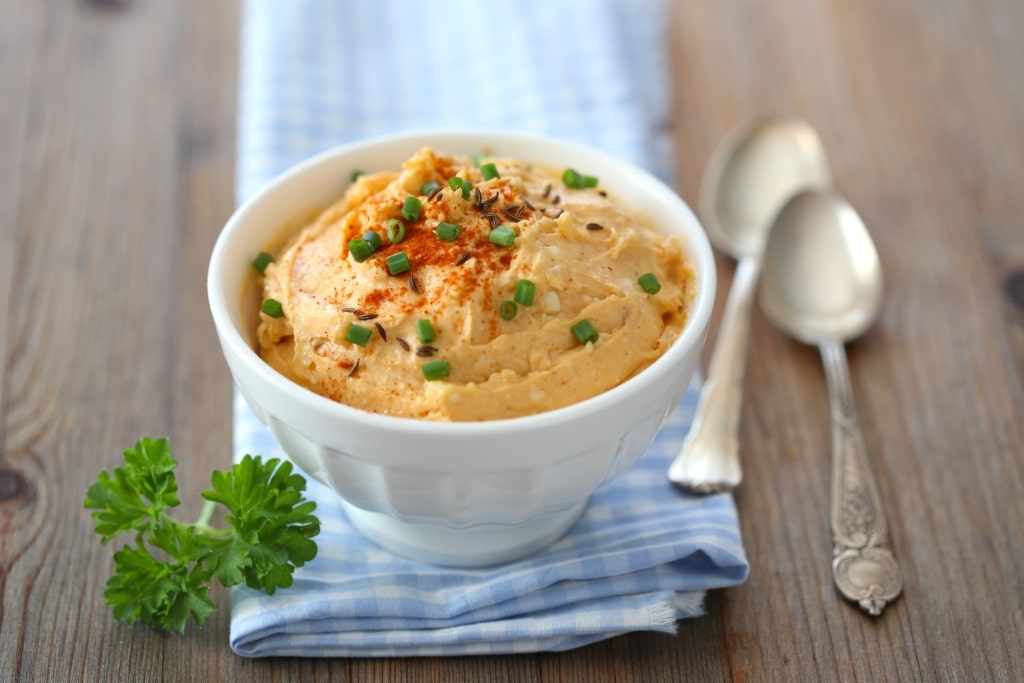
This rich, creamy spread is a pretzel’s soulmate. Obatzda was developed by a thrifty innkeeper roughly a century ago as a way to use up bits and bobs of cheese. These days, it’s a beer garden staple found all over Bavaria.
Recipes vary widely, although a ripe Brie or Camembert is typically the cheese of choice. It’s held together with softened butter and sometimes a splash of beer. Paprika gives it a gentle orange glow, while onions, chives, garlic, and other spices round it all out.
Schweinshaxe
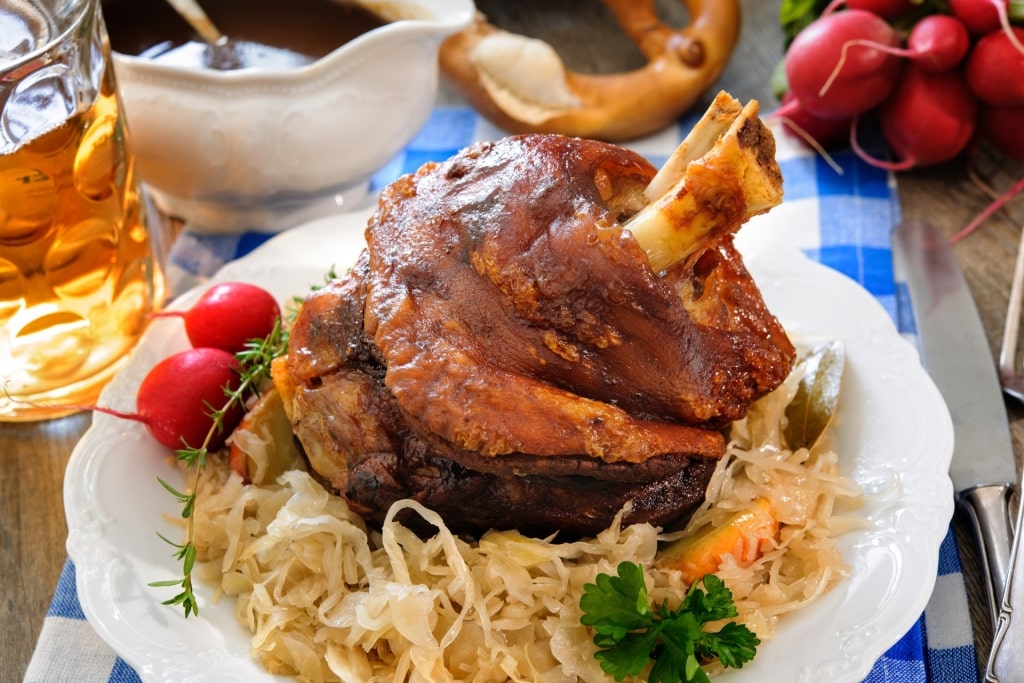
Schweinshaxe
Pork knuckles, or Schweinshaxe, are probably Bavaria’s most famous culinary export. In their homeland, these mammoth hunks of pork are reserved for beer halls and special occasions. When well-made, they’re worth both the staggering amount of time and effort required to make them and the calorific load.
A proper Schweinshaxe must be seasoned well in advance to allow the flavors to penetrate all the way to the bone. It’s then roasted slowly for hours, until the skin is handsomely lacquered and crisp. At the end, it’s served with a rich sauce, which is best sopped up by some form of potato and offset by sauerkraut.
Krustenbraten
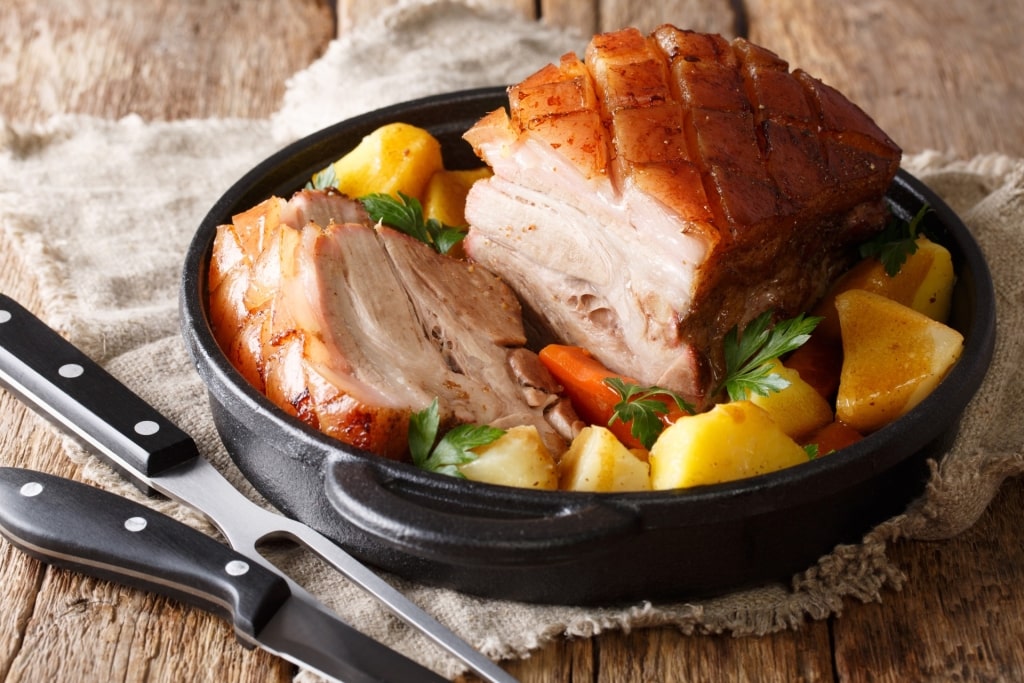
Krustenbraten
This majestic pork roast is served all over Germany these days, although its origins are Bavarian. More commonly called Schweinebraten, or roast pork, Krustenbraten refers specifically to the magnificent crackling that develops on the top. A Schweinebraten elsewhere may or may not audibly crunch, but this classic must.
Properly rendering the fat on top of a pork shoulder sufficiently to crisp up is a bit of a challenge. It requires scoring the skin, then rubbing with salt and spices and allowing it to partially cure before slow-roasting. The process requires patience, but the results are sensational.
Sauerbraten
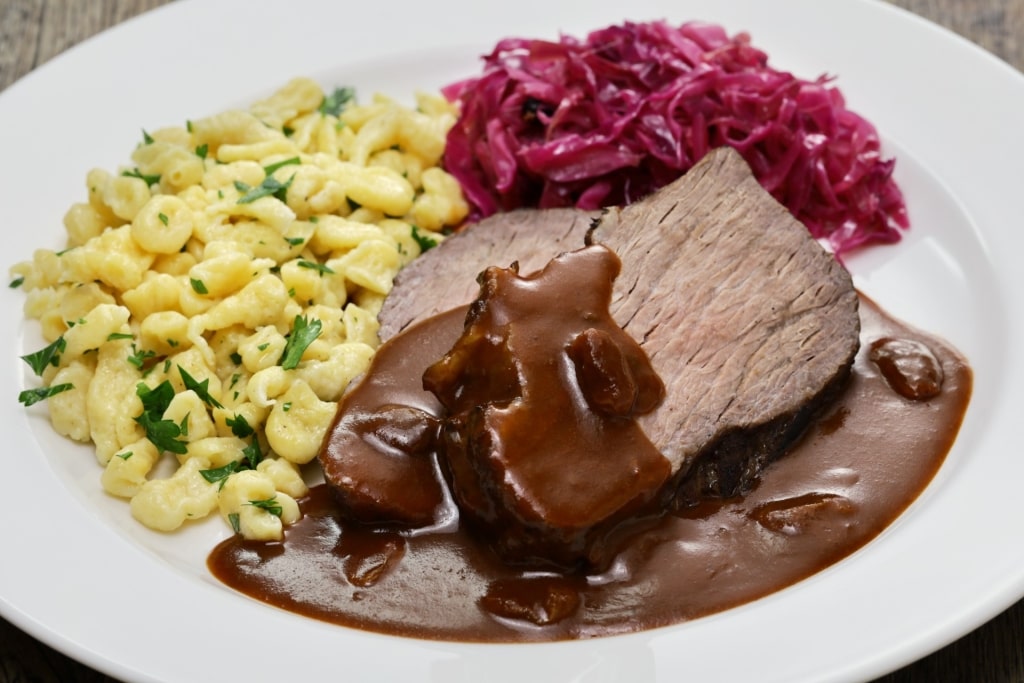
Sauerbraten
Sauerbraten, a sweet-and-sour roast, is yet another carnivorous feast that takes days to prepare properly. In Bavaria, it’s often made with pork, although in other parts of Germany beef or lamb might be the preferred protein.
What defines this dish isn’t so much the meat itself as the preparation, which entails marinating the whole roast for days until it’s practically pickled.
From there, the meat is braised with wine—either red or white, depending on the recipe—along with enough sugar to bake a cake and vinegar to balance it out. Juniper berries, black peppercorns, mustard seeds, cloves, and other spices are added. The final gravy is often thickened with crushed gingersnap cookies.
Brathendl
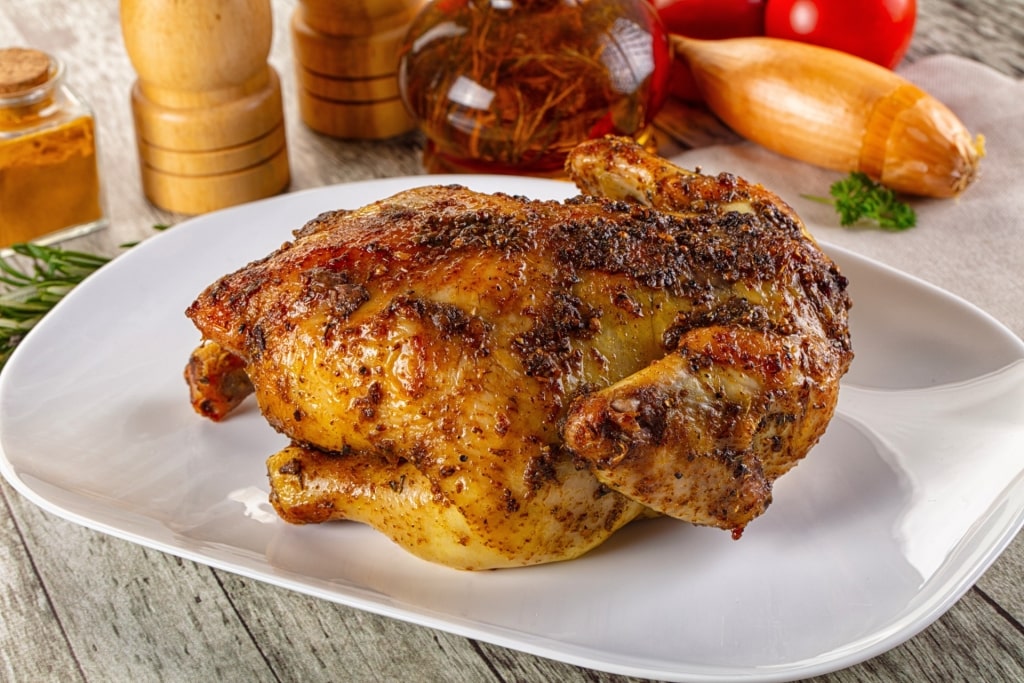
Brathendl
Anywhere from 500,000 to 800,000 of these roast chickens are devoured each Oktoberfest in Munich. That’s as much as 10 times the number of pork knuckles put away by revelers. Hendl is the Bavarian word for chicken and these birds are a common sight at beer halls.
The best are generously seasoned, with golden skin and moist meat. They’re often cooked rotisserie-style, although smaller restaurants don’t necessarily have the equipment for that. They’re typically accompanied by either roasted or boiled potatoes, along with a helping of sauerkraut.
Bratente
Bratente
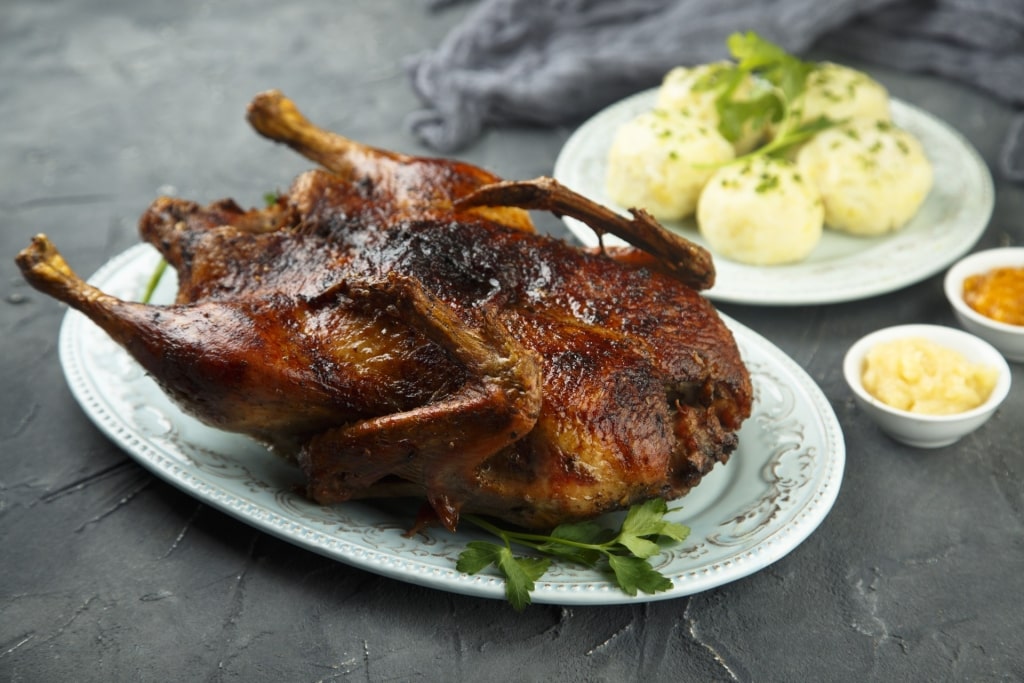
Along with roast chicken, roast duck is quite common at traditional Bavarian restaurants. Gebratene Ente, which is often shortened to Bratente, is a real labor of love that takes hours upon hours to make properly. The duck needs to be cooked carefully in order for the fat to render and the skin to crisp properly.
You can usually order either a half or a quarter duck, depending on your appetite. The classic accompaniments are red cabbage and a springy pair of Kartoffelknödel, or potato dumplings. The latter are essential for the rich jus that accompanies the dish.
Read: Tipping in Germany
Sauerkraut
Sauerkraut
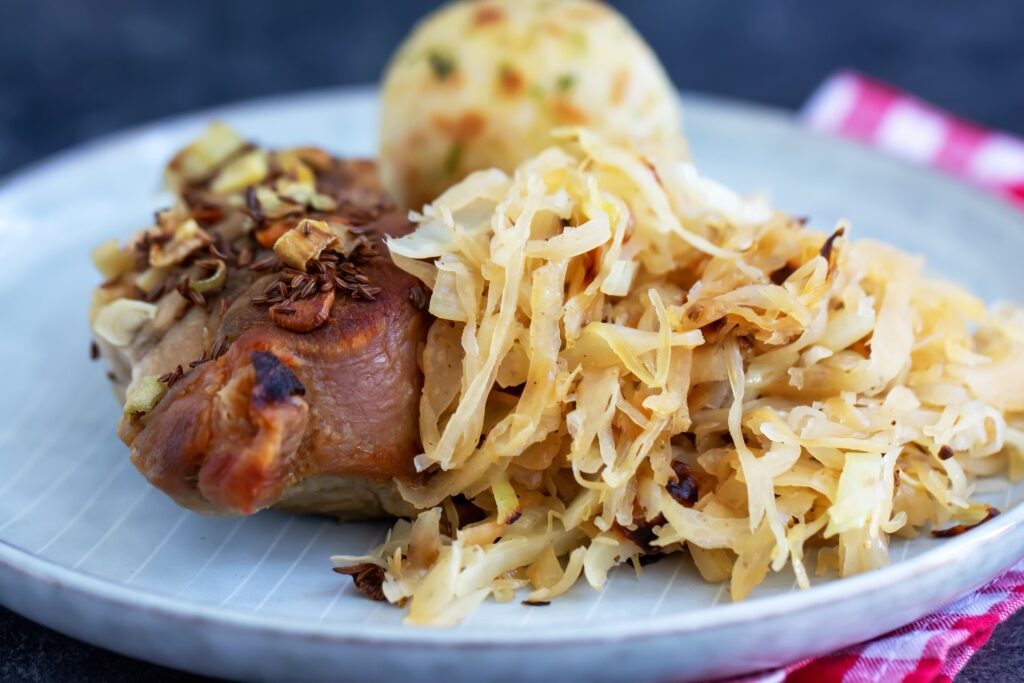
It is thought that the Mongols first brought lacto-fermented cabbage with them into northern Europe sometime around the 13th century, although there’s no solid proof of this. Either way, it’s been an essential foodstuff in Germany for centuries.
Historically, the pickled cabbage was one of the few things keeping locals from getting scurvy during the long, cold winters. Nowadays, sauerkraut and Rotkohl, a variation made with braised red cabbage, add a welcome note of acidity that helps cut through fatty Bavarian meat dishes with rich sauces.
Bratkartoffel
Bratkartoffel
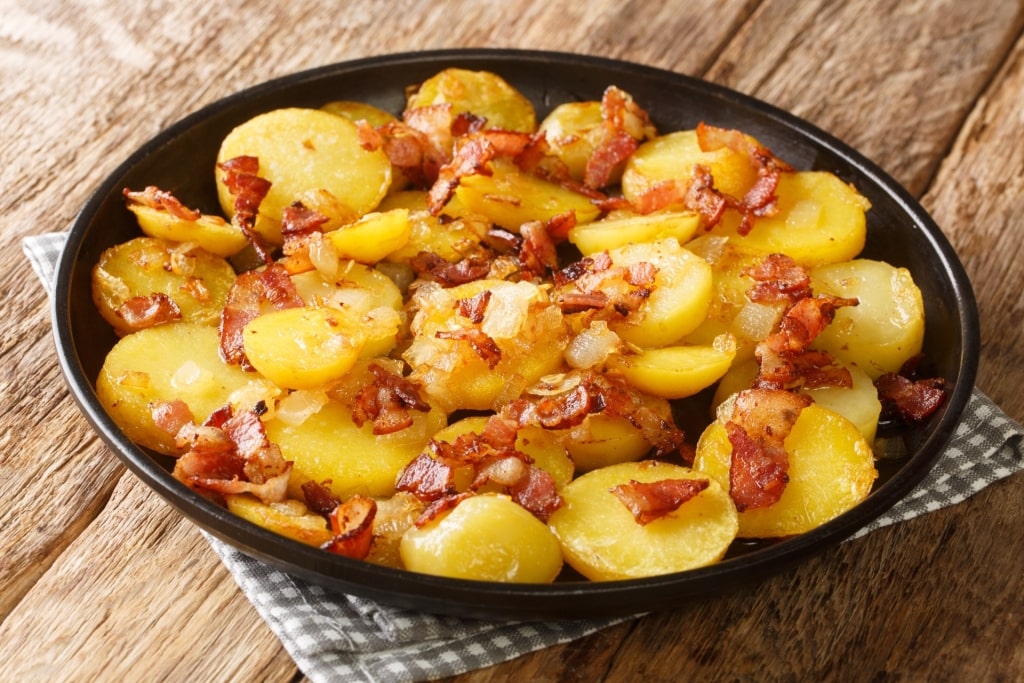
Potatoes in all their many permutations feature prominently in Bavarian cuisine. Bratkartoffel are pan-fried until they develop irregular crunchy bits and caramelized edges.
Onions are sometimes added, along with crumbled speck, which is often fried alongside them. Although hardly unique to Bavaria, they’re ubiquitous here.
Käsespätzle
Käsespätzle
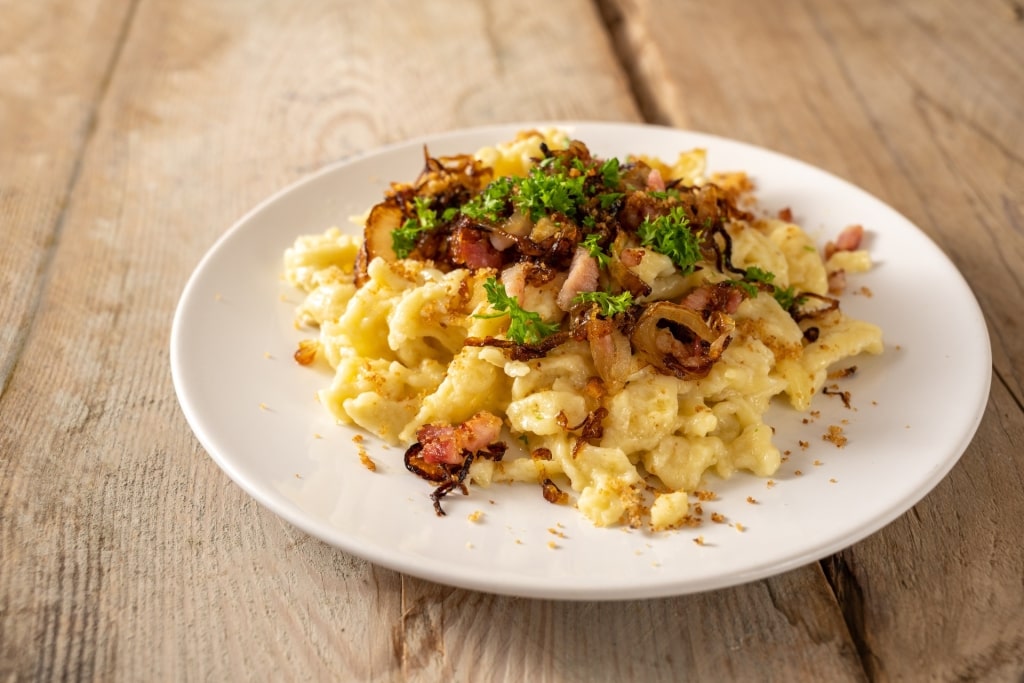
Spätzle walks the line between noodles and dumplings. They’re made by pressing an egg-rich batter through a kind of slotted grater or sieve into boiling water. The results are squiggly, bouncy nuggets in slightly irregular shapes that cling beautifully to all sorts of sauces. You’ll find them served alongside Rindergulasch, or beef stew, and other braises.
Perhaps the highest calling of these dumplings, however, is to be blanketed with Bergkäse, which is aged mountain cheese, crispy fried onions, and chives.
Käsespätzle is like mac ‘n’ cheese that’s taken a trip to the Bavarian and Austrian Alps. It’s got more funk and depth, plus serious textural contrast. It’s also one of the few reliable vegetarian options at many Bavarian restaurants.
Rahmschwammerl
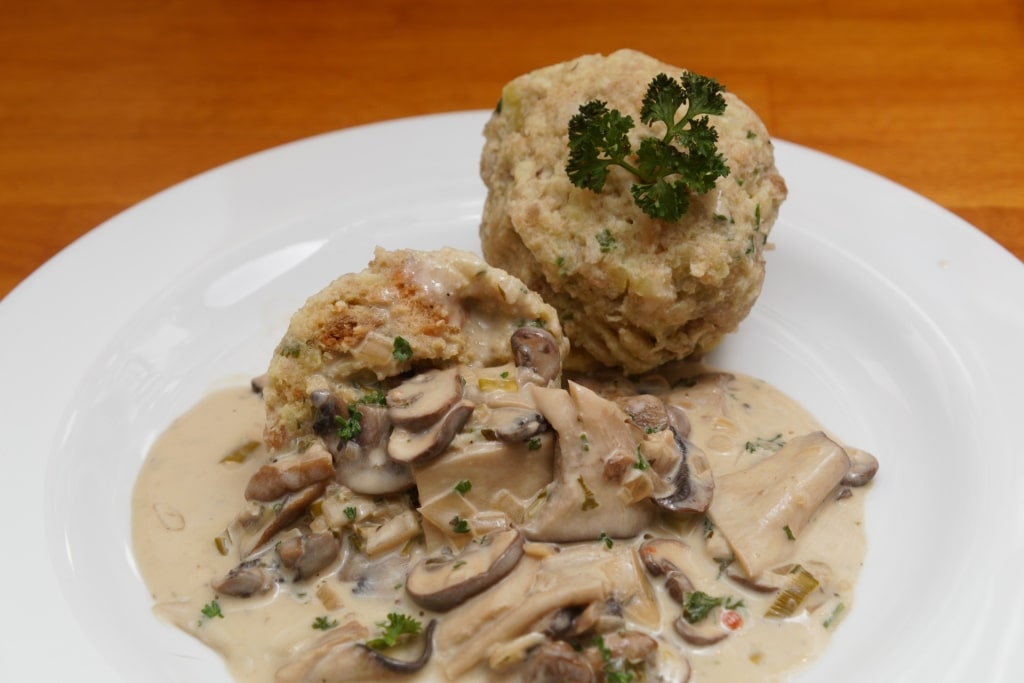
Rahmschwammerl
Foraging is an important part of life in Bavaria, particularly for those in the countryside or the mountains. During the fall months, the woods here are full of golden Pfifferlinge, or chanterelles, and costly Steinpilze, porcini. Restaurants often feature this bounty in the form of a Rahmschwammerl or Pilzpfanne.
Essentially, this is a rich stew of mushrooms and onions sautéed in butter and enriched with a healthy amount of cream or creme fraiche. When freshly foraged mushrooms are not available, less exotic crimini or other varieties are often substituted.
Note that while this is often an excellent vegetarian option, some renditions contain speck or bacon.
Knödel
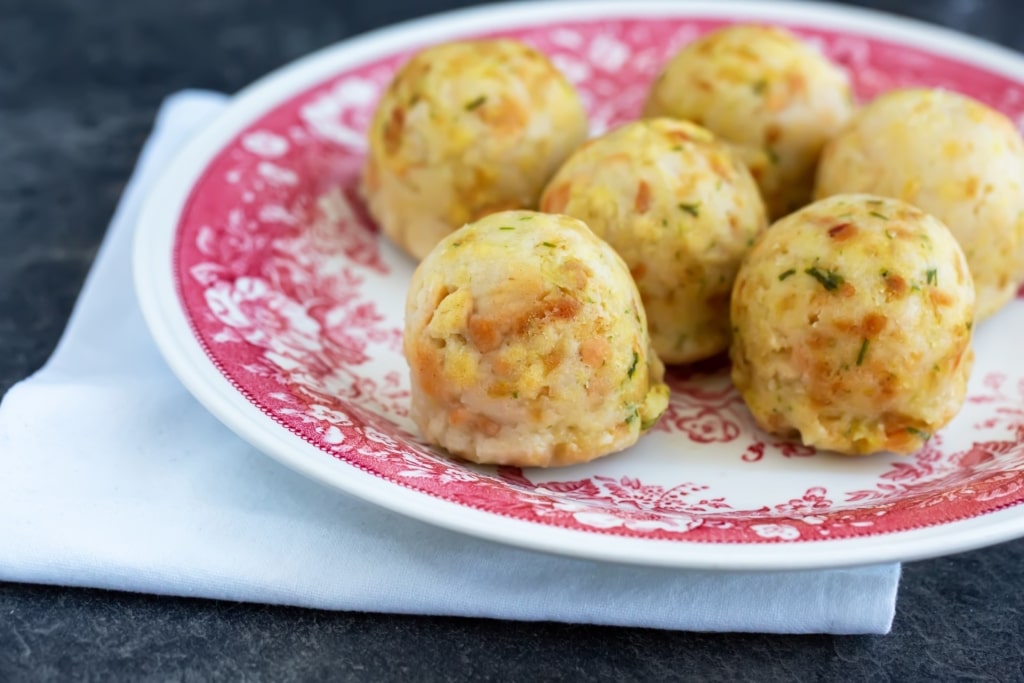
Knodel
The term Knödel refers to a whole family of spherical dumplings. Semmelknödel are made using stale pieces of leftover bread soaked in cream and bound with eggs. These softball-sized bread orbs are wonderful for soaking up sauces and gravies.
Kartoffelknödel tend to be closer in size to golf balls and are made out of mashed potatoes. They tend to have a lighter, bouncier texture. Both kinds of Knödel may be studded with speck, onions, or herbs, although they can also be served with more minimal seasonings.
Prinzregententorte
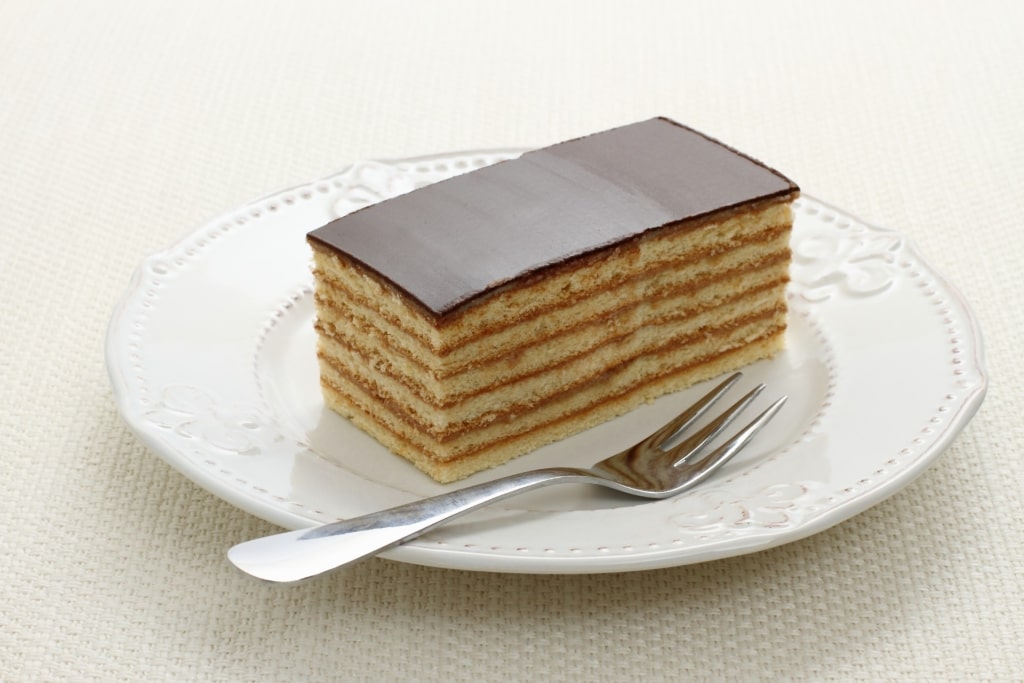
Prinzregententorte
Prinzregententorte, invented in honor of Luitpold, the 19th-century Prince Regent of Bavaria, is a stunning layered torte that’s available year-round. This decadent treat features layers upon layers of golden sponge cake spread with jam, then slathered in chocolate buttercream. The whole thing is encased in chocolate ganache.
Kaffee und Kuchen, or “coffee and cake” is still very much a way of life in Bavaria, which is why you’ll find such lovely homemade cakes here. You’re also likely to find Bienenstich, or “bee sting cake,” a yeasted marvel crowned with a layer of toasted, candied almonds, at a Konditorei. There’s also Zupfkuchen, which is essentially a lighter, quark-based cheesecake marbled with chocolate batter.
Geschnetzeltes
Geschnetzeltes loosely translates as sliced meat, but in practice refers to a hearty stew served in Germany, Austria, and German-speaking Switzerland. This is a highly personal dish and many cooks have their own renditions. Pork is usually the protein of choice in Bavaria and is often accompanied by onions, mushrooms, and sometimes speck. A generous amount of cream gives it a luxurious texture.
Wild game is particularly prized in Bavaria, where a considerable portion of the population hunts. When available, Wildschwein, or wild boar, or Hirsch—venison—may be substituted for the pork in this stew. Both types of game are also often braised into goulash, which generally does not contain cream.
FAQs
Is Bavaria, Germany a good food destination?
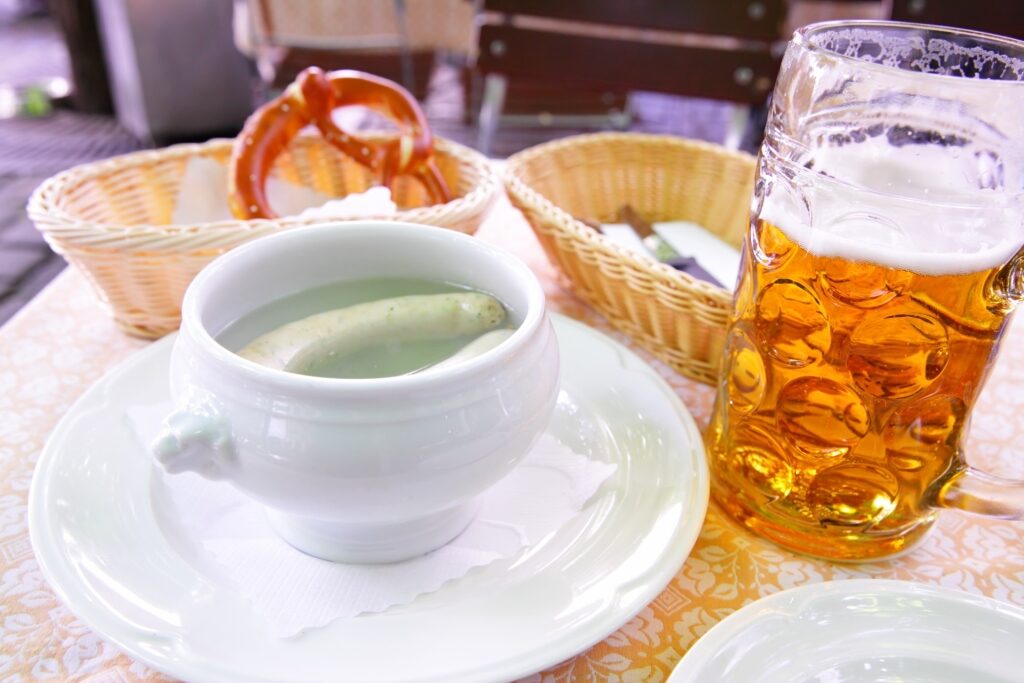
Traditional Bavarian meal
Yes! While the chances are high that you’ve had less-than-stellar renditions of Bavarian dishes at schlocky beer halls, the real deal is often great. Bavarian food is peak Slow Food, based around long-braised and roasted meats and painstakingly reduced sauces.
There’s also a great deal of pride when it comes to quality and artisanal techniques. Many of the small restaurants and bakeries in this region have been in the same families for generations.
Part of the reason Bavarian food is so much better at home is because this is historically an agricultural region. From the mountain cheeses produced by free-grazing cattle to the wild game and foraged mushrooms, just about everything on the tables is often local.
What dish is Bavaria most famous for?
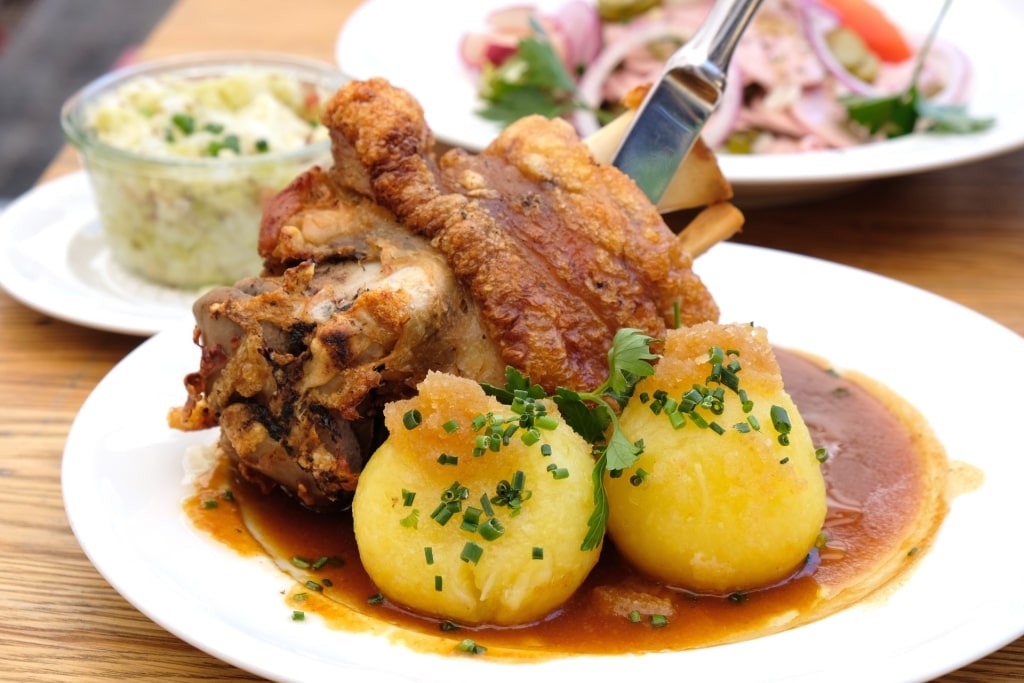
Schweinshaxe
Thanks to the global popularity of Oktoberfest traditions, Schweinshaxe, or pork knuckles, with sauerkraut are all but synonymous with Bavarian cuisine abroad. While this hearty staple is still popular at beer halls, it’s just the tip of the gastronomic iceberg here.
What time does dinner typically start in Bavaria?
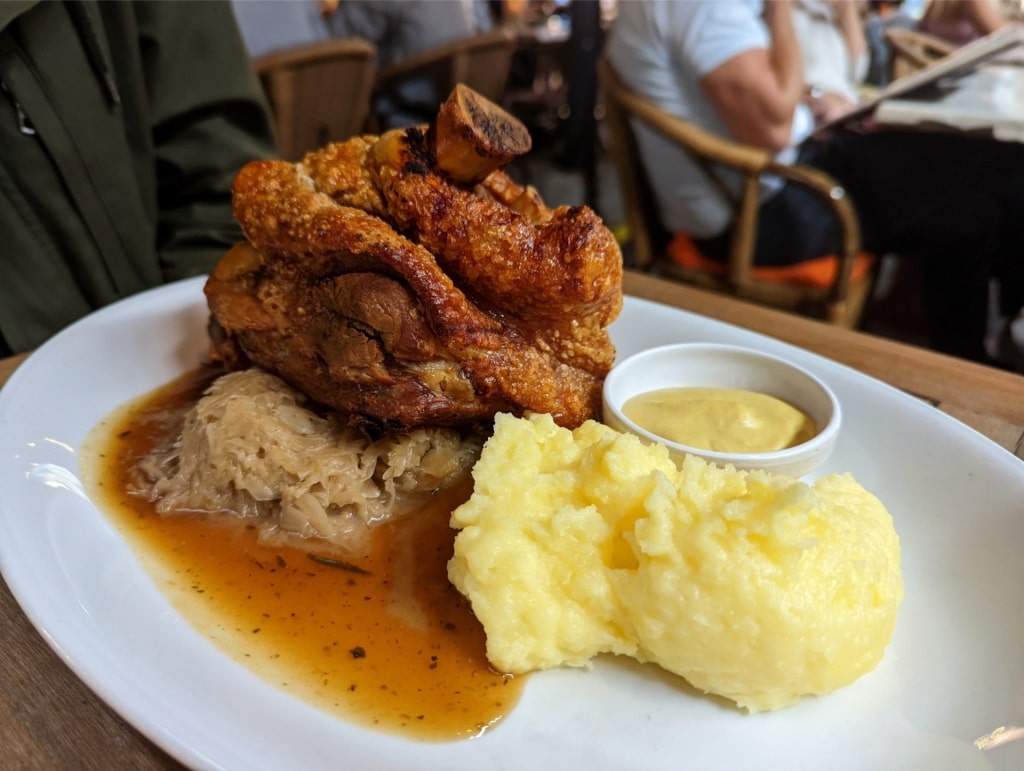
German restaurant
Dinner in Bavaria typically starts around 7 p.m., although you’ll find locals dining both earlier and later than that. During the darker winter months, when sunset is around 4 p.m., dinner often gets nudged a bit earlier in the evening. In the summer, when the skies stay light far later, many locals pause for an Aperol Spritz or a Hugo as an aperitif before dinner.
Are there any food customs I should know about?
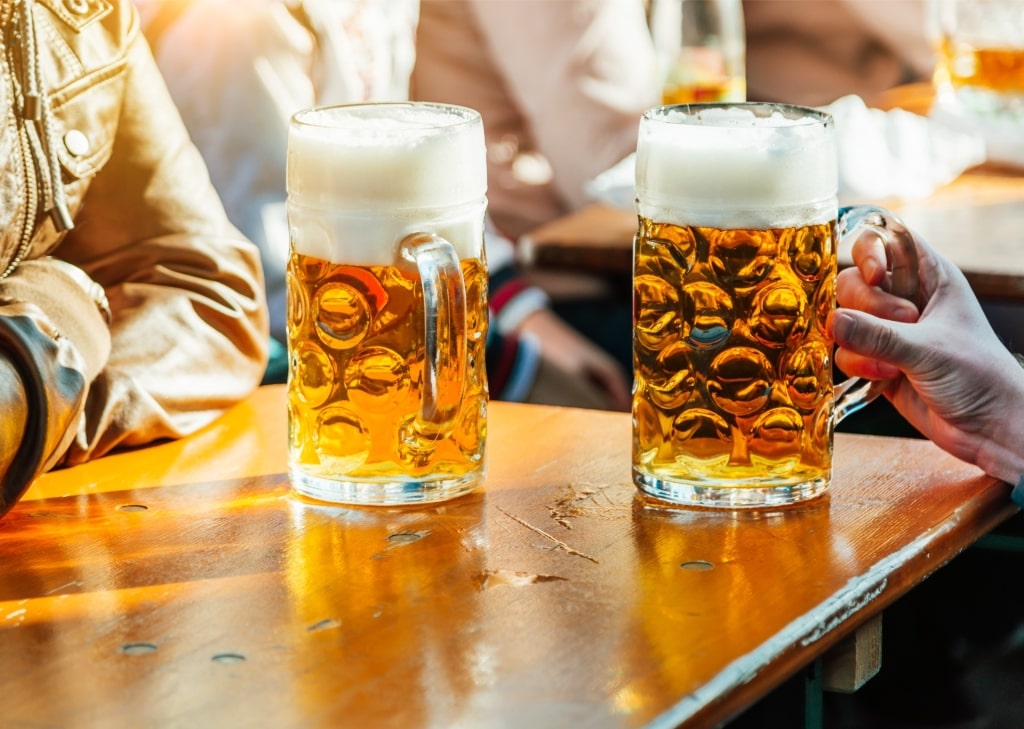
German beer
Never, ever give a toast in Bavaria without firmly making eye contact while clinking glasses. The superstition goes that failing to do so could lead to seven years of bad luck. It’s obviously somewhat playful, but locals take this one seriously. Raise your beer stein, lock eyes, and say “Prost!” when drinking in company.
Beer is still central to Bavarian culture, even if the younger German generation statistically drinks a bit less of it these days. In traditional Bavarian beer halls and restaurants, a Frühstucksbier, or “breakfast beer,” is still socially acceptable. Any beer is fair game, although locals often opt for a Weissbier.
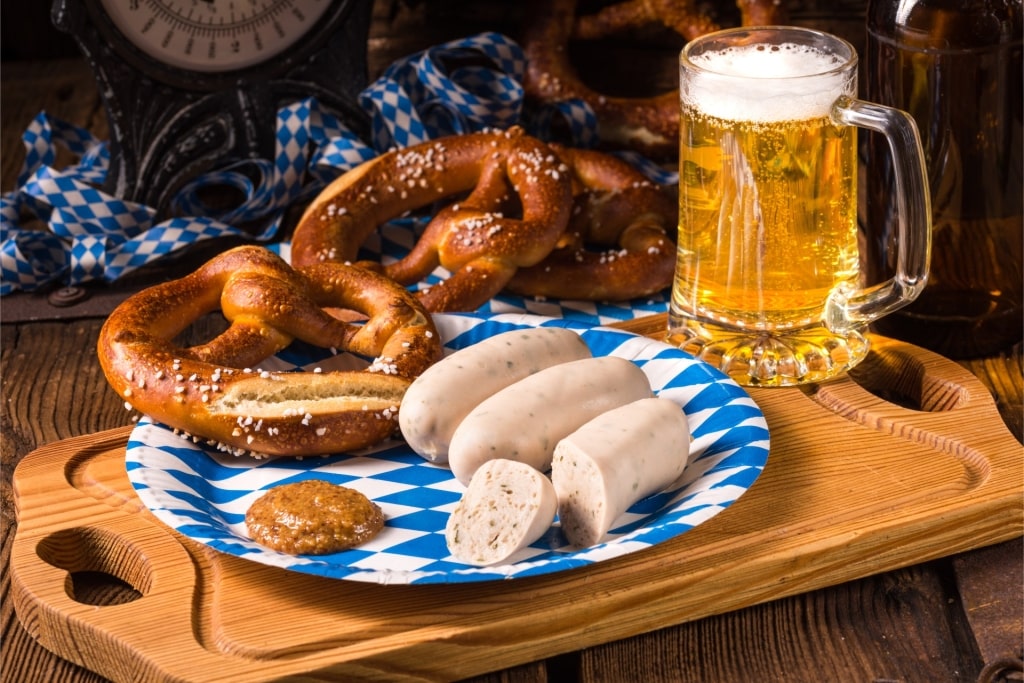
Weisswurst
The preferred accompaniment for your breakfast beer is a Weisswurst, always served with sweet mustard. This boozy breakfast is never consumed at the crack of dawn—coffee and usually muesli come first. Rather, think of this as a second breakfast of sorts, more akin to brunch than the first morning meal.
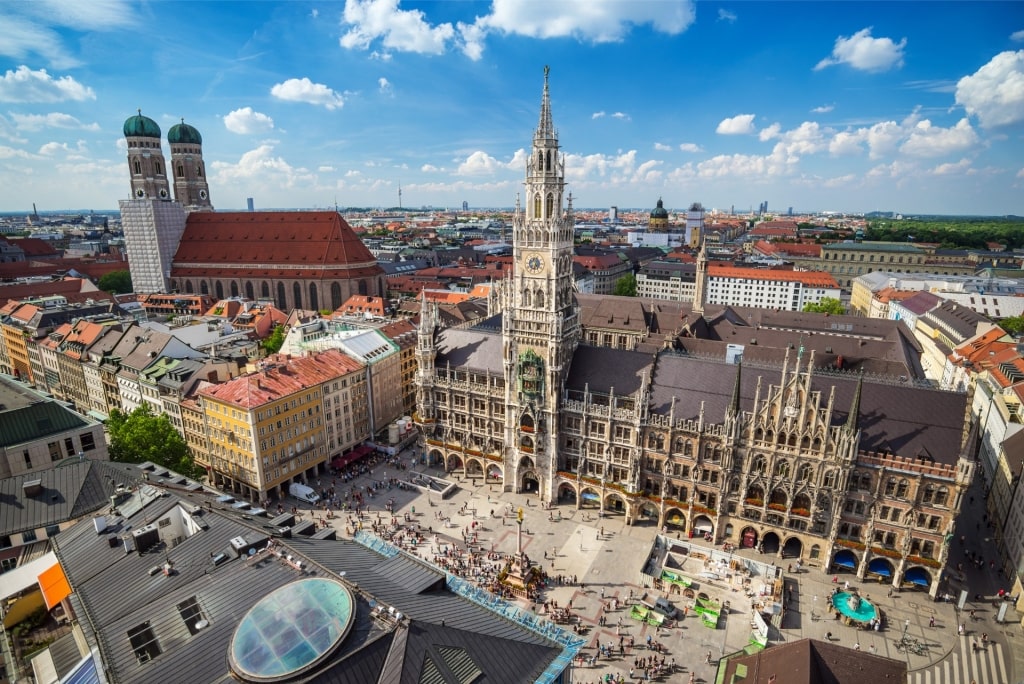
Munich
Bavaria belongs on the must-visit list for food-lovers of all stripes. Discover more about its cuisine on one of Celebrity’s river cruises. Browse itineraries and book your culinary adventure today.