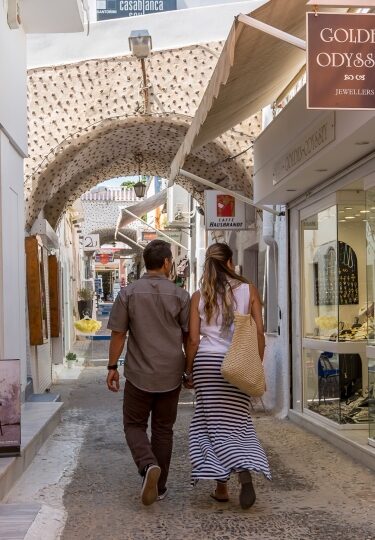
Fira, Santorini, is the island’s lively capital, known for whitewashed houses, blue-domed churches, caldera views, museums, boutiques, and cliffside restaurants overlooking the Aegean Sea.
Perched high above Santorini Old Harbor, Fira is often the first place cruise guests experience after tendering ashore and riding the cable car up the caldera cliffs. Once you arrive, the town is compact and easy to explore on foot, with winding lanes, scenic viewpoints, and cultural landmarks all close together.
Santorini is beguiling and mythic, with Fira at its modern-day heart. Here is everything you need to know about visiting on vacation.
What Makes Fira Special?
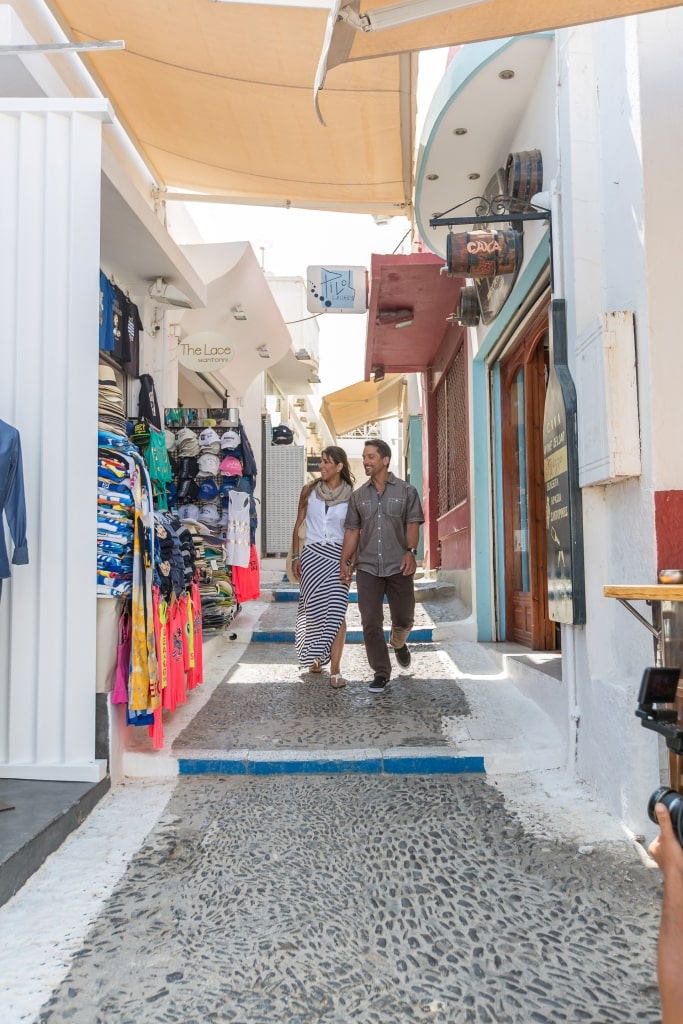
Couple exploring the shopping streets of Fira
Fira is special because it combines Santorini’s signature caldera views with the energy of the island’s capital. Here, whitewashed buildings, blue-domed churches, museums, cafés, boutiques, and cliffside paths are gathered in one compact town above the Aegean Sea.
The contrast of the sapphire-blue sea that surrounds the island with Fira’s dazzling white buildings carved into the volcanic landscape is hypnotic. It’s also a glamorous and lively base, with restaurants, bars, and cafés aplenty — all part of what Santorini is known for.
Located atop towering black cliffs that plunge into the sea, Fira offers travelers a wonderful dose of Mediterranean sunshine. There’s more, with beautiful churches and chapels, exceptional museums, and some of the island’s best shopping.
Another draw is Fira’s walkability. Compact enough to explore on foot, it’s easy to cover plenty of ground on a short visit. Fira is also angled over the wide-open caldera, offering dramatic views of the islands of Palaia Kameni and Nea Kameni.
History & Culture of Fira
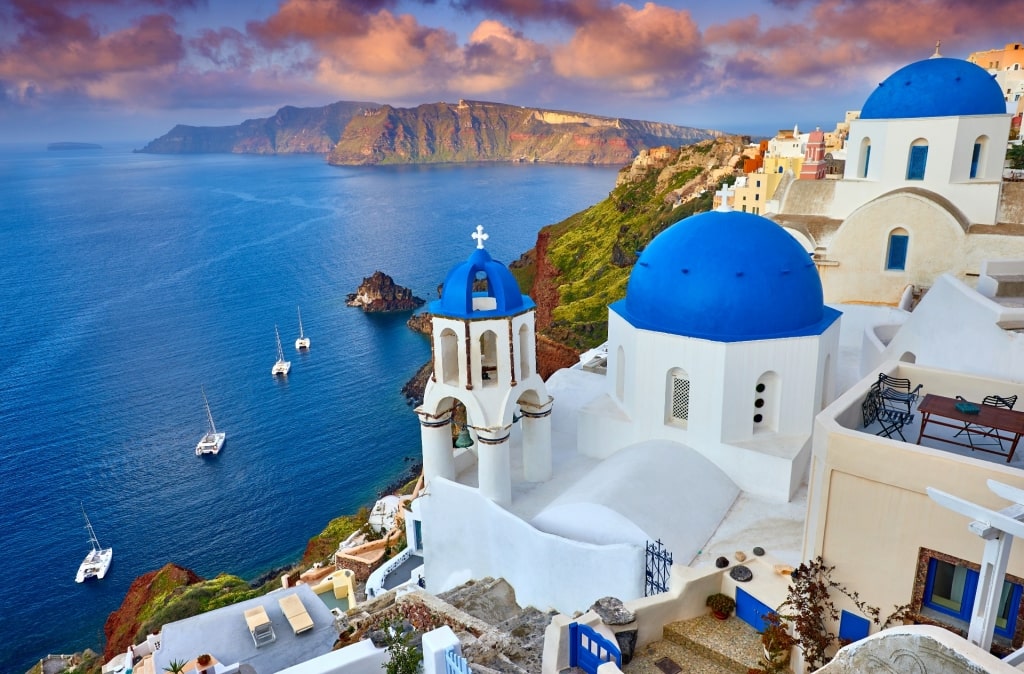
Scenic view of blue-domed churches overlooking the caldera in Fira.
Some 4,000 years ago, the sophisticated Minoan civilization lived on Santorini, an enormous volcano, before being driven away around 1600 BC by the cataclysmic eruption that caused the island to collapse into the caldera formation we see today.
In more recent times, the Byzantine Empire, the Venetian Republic, and the Ottoman Empire have all laid claim to Santorini, with the island’s capital previously at the fortified Skaros, a short distance north of Fira.
During the late 18th century, following a period of continued earthquakes, much of Skaros’ population moved south to Fira, which led to it becoming the island’s new capital.
Fira hasn’t been spared from the impact of Santorini’s earthquakes; many buildings were either destroyed or damaged as a result of the 1956 Amorgos earthquake. Following this, most of Fira’s buildings, including its churches and public buildings, were rebuilt or extensively renovated.
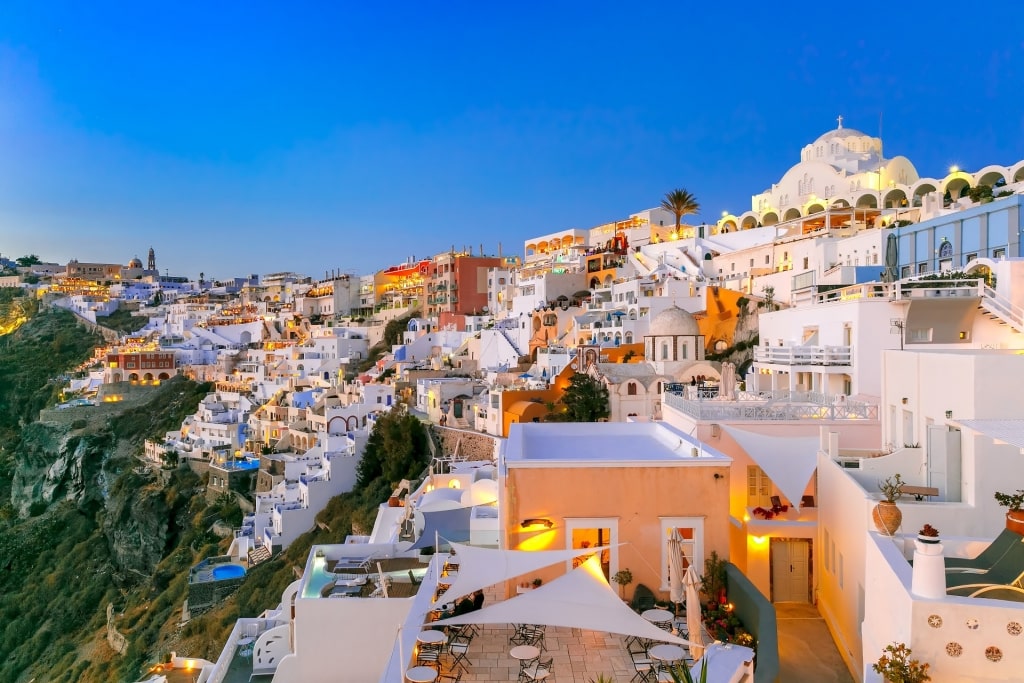
View of the caldera and coastline from the cliffs of Fira
Fira is peppered with cave houses, as seen at the town’s Folklore Museum. These inexpensive houses, built by the town’s growing population, were either dug entirely into the volcanic rock or partially into the rock and whitewashed.
The architecture of Fira is also dominated by its gleaming Greek Orthodox and Catholic churches, which are a symbol of the island.
The Ifestia Festival, taking place every August, celebrates the island’s volcanic landscape with fireworks, concerts, and dance performances, while religious festivals take place throughout the year with parades and other festivities.
Wildlife & Nature
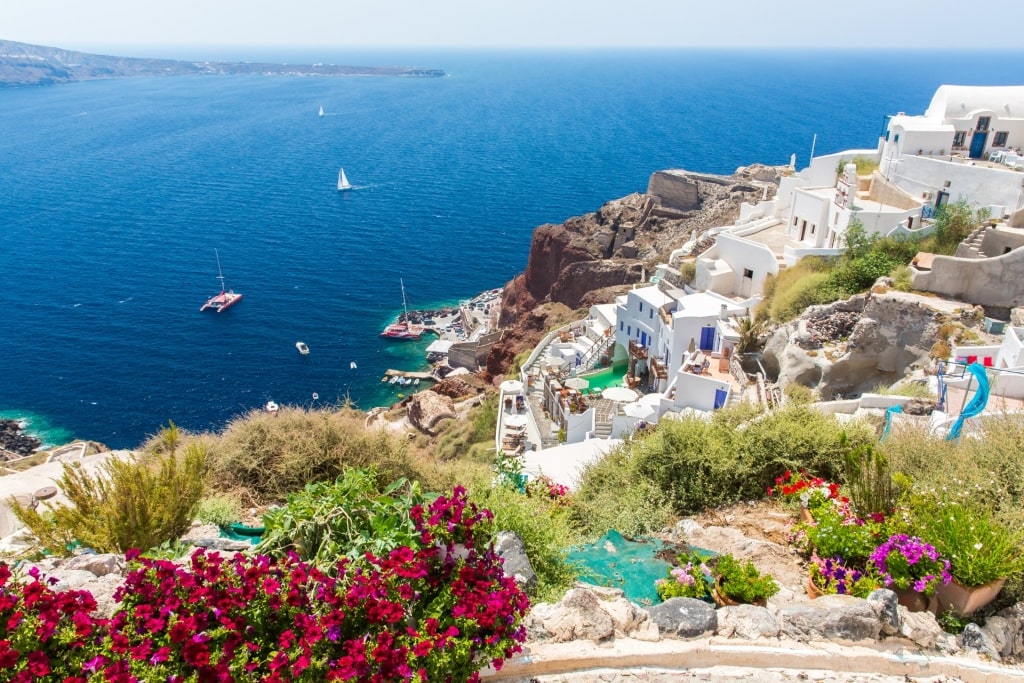
Fira town
Nature in Fira town itself is largely limited to the hot-pink bougainvillea and prickly pear that adorn the whitewashed walls. The surrounding landscape, however, is filled with an abundance of thrilling nature, centered around Santorini’s sunken caldera.
There are volcanic Greek beaches, leafy olive groves and vineyards, and deep-blue water filled with marine life. It’s possible to witness parrotfish, octopus, grouper, barracuda, sea urchin, sea horse, and swishy seagrass meadows among the sea life within the caldera’s vibrant reefs.
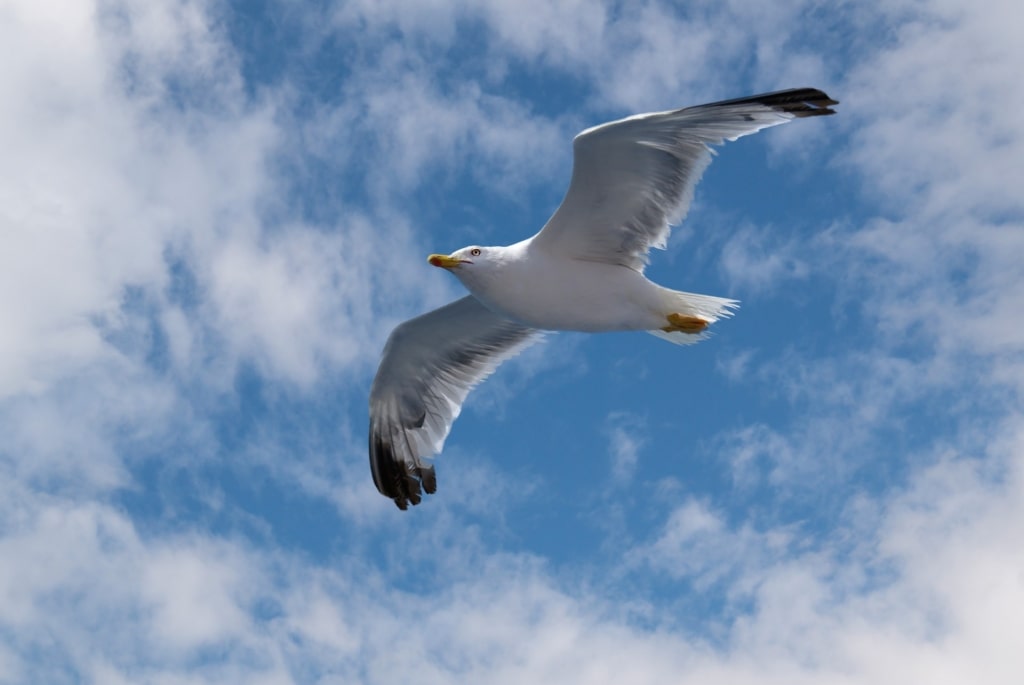
Seagull
On a mood-lifting springtime hike toward Oia in the north of Santorini, look out for swooping bird life such as rock doves, house sparrows, quails, seagulls, and swallows. With no designated bird-watching spots on the island, look for bird life near tall cliffs, away from more built-up areas.
Where Is the Fira Cruise Port?
Cruise ships visiting Santorini anchor offshore and tender guests to Santorini Old Harbor, also known as Skala or Gialos, below Fira. The harbor sits at the base of the caldera cliffs, with Fira directly above it.
Because the harbor is separated from town by the steep cliffside, guests typically reach Fira by cable car or by walking up the Karavolades Steps. The cable car connects the Old Port with Fira in about three to five minutes, while the walk up the steps is much more strenuous.
It’s helpful to distinguish Santorini Old Harbor from Athinios Port, the island’s main ferry port. Cruise guests usually arrive by tender at the Old Harbor below Fira, while ferries and many vehicle transfers use Athinios, farther south on the island.
For cruise visitors, Fira’s location is part of its appeal. Once you reach the top of the caldera, the town’s shops, museums, churches, viewpoints, restaurants, and bus station are all within reach.
How To Get From Skala to Fira
The fastest way to get from Skala to Fira is by cable car, which carries guests from Santorini Old Harbor up to the town in a few minutes. The ride is short, scenic, and often the easiest option after tendering ashore.
Guests can also walk up the Karavolades Steps, a steep route that zigzags from the harbor to Fira. The walk offers sweeping caldera views, but it can be challenging, especially in warm weather or during busy periods. Wear supportive shoes, bring water, and allow extra time if you choose this route.
Lines for the cable car can build when multiple ships are in port, particularly later in the day as guests return to the harbor. To make the most of your visit, plan your time in Fira around your ship’s all-aboard time and leave a buffer for the return trip down to Skala.
Fira Transportation Options
Most cruise guests use the cable car or walk between Skala and Fira. Once in town, Fira is easy to explore on foot, and local buses, taxis, and shore excursions can connect you with other parts of Santorini, including Oia, Imerovigli, beaches, wineries, and archaeological sites.
- Cable car: The ride between Santorini Old Harbor and Fira takes about three to five minutes. The listed fare is €10 for adults and €5 for children.
- Walking: The walk up the Karavolades Steps takes approximately 25 to 30 minutes and is free.
- Bus: Travel time varies depending on the destination, with fares typically costing a few euros.
- Taxi: Travel time and pricing vary based on the route, season, and availability.
6 Best Things to Do in Fira, Santorini
The best things to do in Fira combine Santorini’s famous views with history, culture, food, shopping, and easy access to the caldera. Since the town is compact, cruise guests can experience several highlights in one visit, especially if they plan around the cable car, walking time, and their ship’s departure schedule.
From the Old Harbor and caldera paths to museums, churches, tavernas, and boutiques, Fira offers a rewarding mix of scenery and local character.
1. Visit Santorini Old Harbor
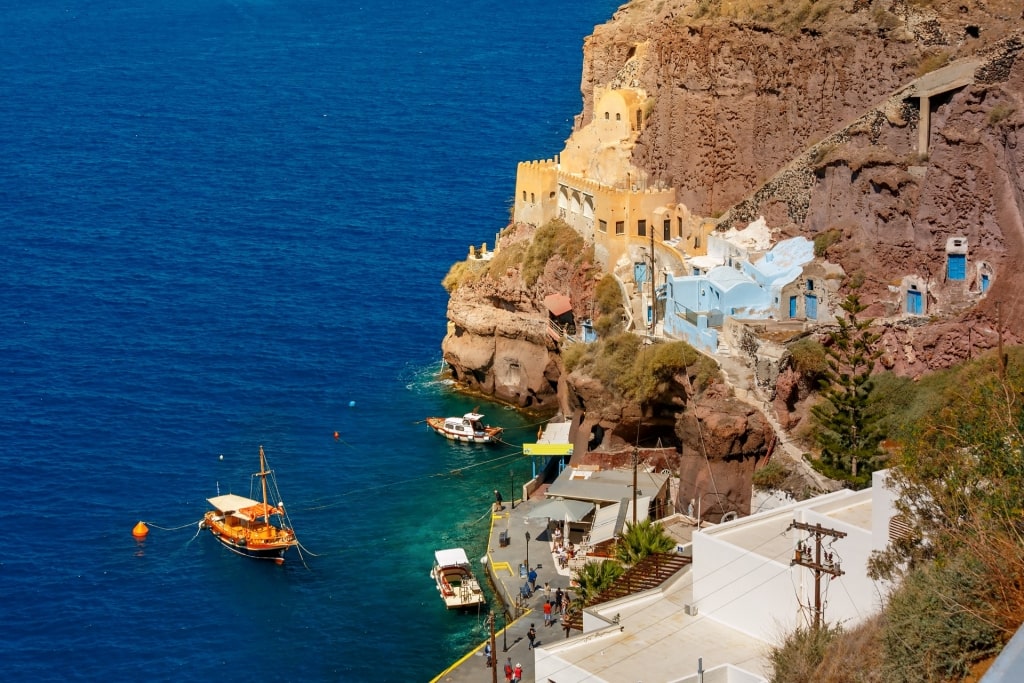
Santorini Old Harbor
Taking Fira’s cable car 722 feet down to the quaint Old Harbor is one of the best things to do in Santorini. If you’re more of an active traveler, consider taking the 588 steps, known as the Karavolades Stairs, which twist and turn up the side of the caldera.
Either way, you’ll be treated to extraordinary Cyclades views on the way up or down. Watch out for chains of mules and donkeys that clatter up and down the shallow steps; some people choose to ride rather than walk.
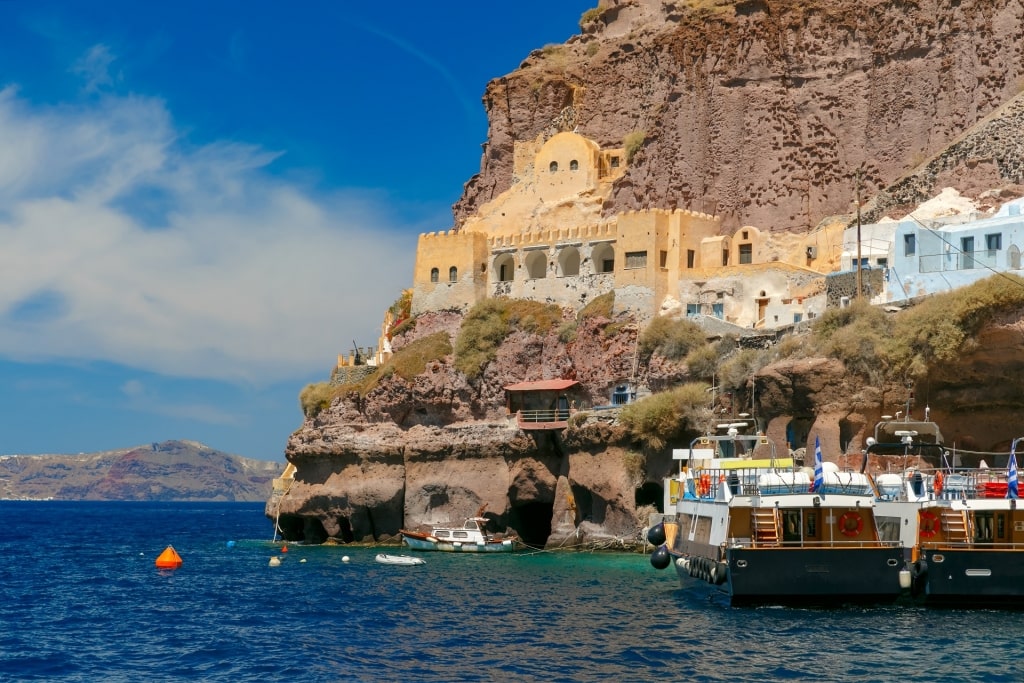
Santorini Old Harbor
Despite its tranquil image, all bobbing boats and a handful of tavernas, the Old Harbor is busy with travelers arriving on ferries and other ships during summertime. With this in mind, aim to go first thing to beat the crowds.
Down on the seafront, enjoy a relaxed wander along the harbor and stop for a cold beer in one of the tavernas, watching all the comings and goings.
2. Learn About the Island’s History at Fira’s Museums
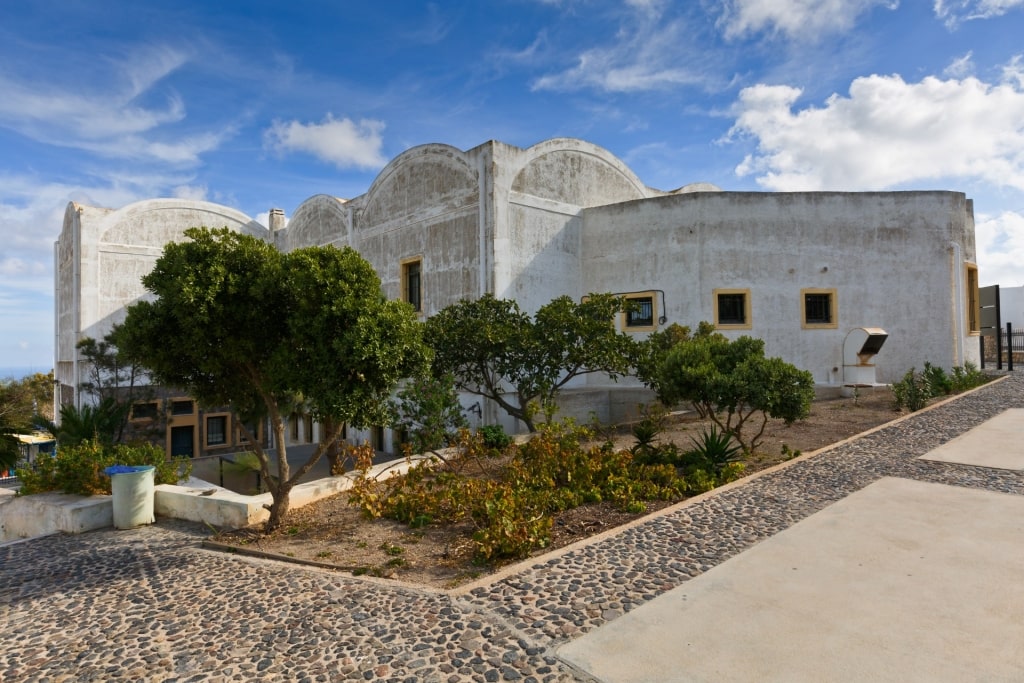
Museum of Prehistoric Thera
Trawl Fira’s small Museum of Prehistoric Thera to explore relics unearthed from Ancient Thera, known to have been inhabited by the Minoan civilization, much of which was wiped out by the devastating shape-shifting early volcanic eruptions, known as the Minoan eruption.
The Museum of Prehistoric Thera is divided into four exhibition areas covering different periods in the island’s history and its geology. Among the earliest artifacts on display is Neolithic pottery, including a remarkable 4,000-year-old vase.
A five-minute walk north will lead you to Megaro Gyzi Museum near Fira’s cathedral. Sixteenth-century drawings, folk dresses, and historic Cyclades maps help visitors delve into more of Santorini’s history and culture.
Don’t miss the photography collection, which explores Fira before and after the 1956 earthquake.
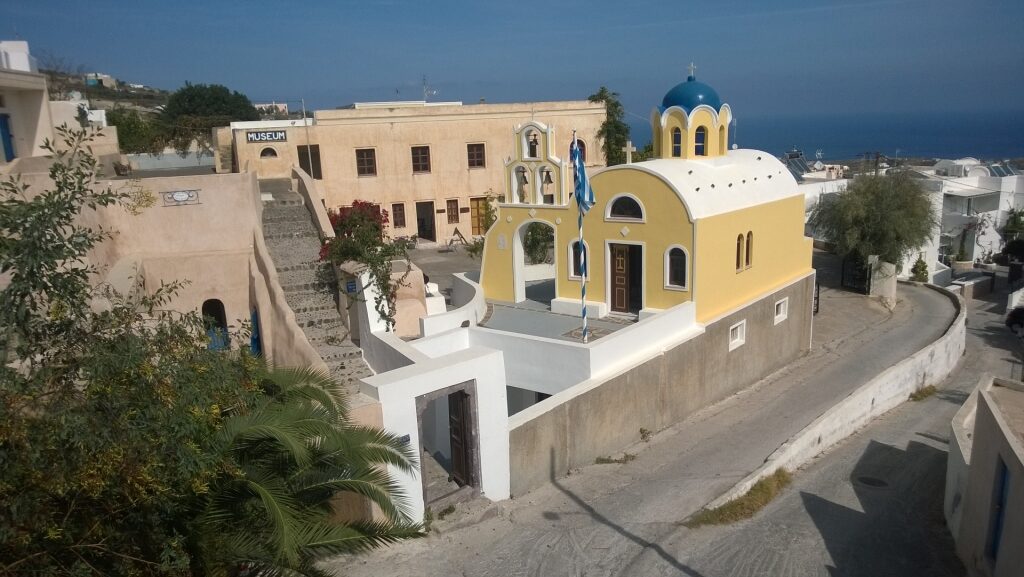
Emmanuel A. Lignos Santorini Folklore Museum. Photo by Jan M on Wikimedia Commons, licensed under CC BY-SA 3.0
Lastly, step inside the Emmanuel A. Lignos Santorini Folklore Museum, set within an unassuming two-story cave house that was built in 1861.
The museum showcases just how a traditional home once appeared, with art and antiques from Fira’s bygone era. There’s also an art gallery and workshop spaces for pottery and other crafts.
3. Sail in the Sunken Caldera From the Old Harbor
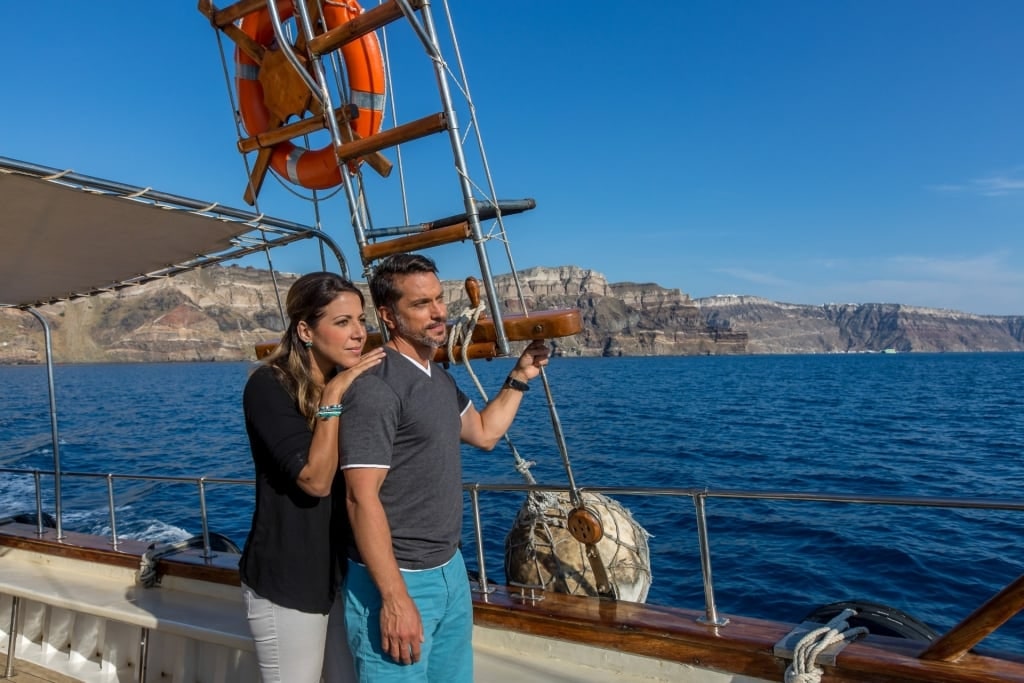
Boat to Palea Kameni
Join a boat trip from Santorini Old Harbor to discover the submerged caldera and volcanic islands of Nea (New) Kameni and Palea (Old) Kameni. Nea Kameni is an active volcano — some even theorize it as the site of the lost city of Atlantis.
Boats and ferries depart regularly from the seafront, taking you into the heart of the caldera and the islands’ steaming sulfur springs, where you can bathe in natural mud and swim in the deliciously warm sea. You could also hike the lunar-like Nea Kameni Volcanic Park to its crater.
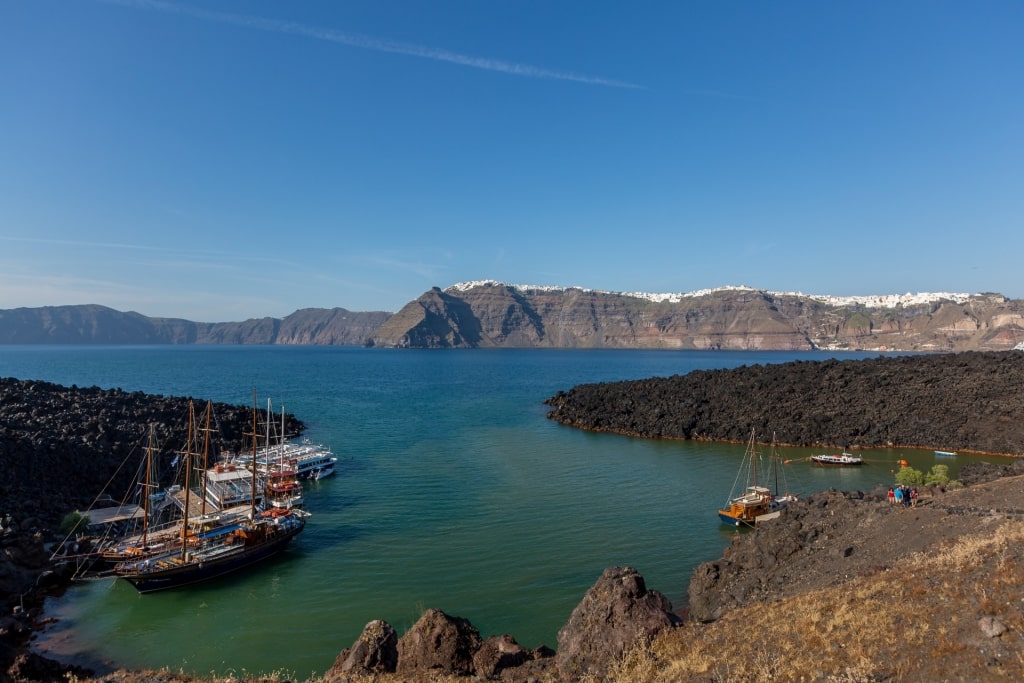
Palea Kameni
Some of the boat tours from the Old Harbor also continue to the inhabited island of Thirassia, also within the Santorini archipelago.
Both Nea Kameni and Palea Kameni remain uninhabited, though there is a tiny white chapel, St. Nicholas Church, on Palea Kameni.
Pack a picnic and water, as there are no restaurants on Nea Kameni or Palea Kameni.
4. Explore Glorious Churches
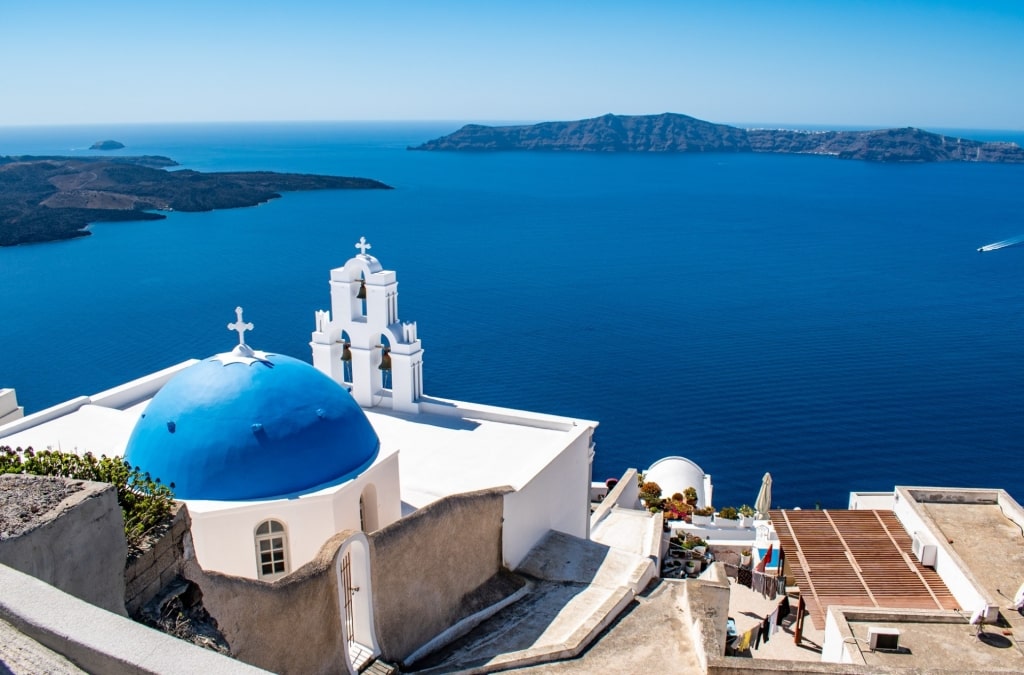
Church of Agios Gerasimos
Fira, Greece, is famous for its many cliff-hugging, chalk-white churches. One of the most famous is the Three Bells of Fira, with its gleaming blue dome and three bells adorning the front elevation.
Though the church dates back to the 18th century, it was renovated following the earthquake of 1956.
For the perfect cinematic shot of the Three Bells of Fira, head to the roadside above and behind the church. This is one of the popular locations where visitors gather to watch Santorini’s famous sunsets.
The town’s Church of Agios Gerasimos is another snow-white, blue-domed showstopper, just moments from the Three Bells of Fira.
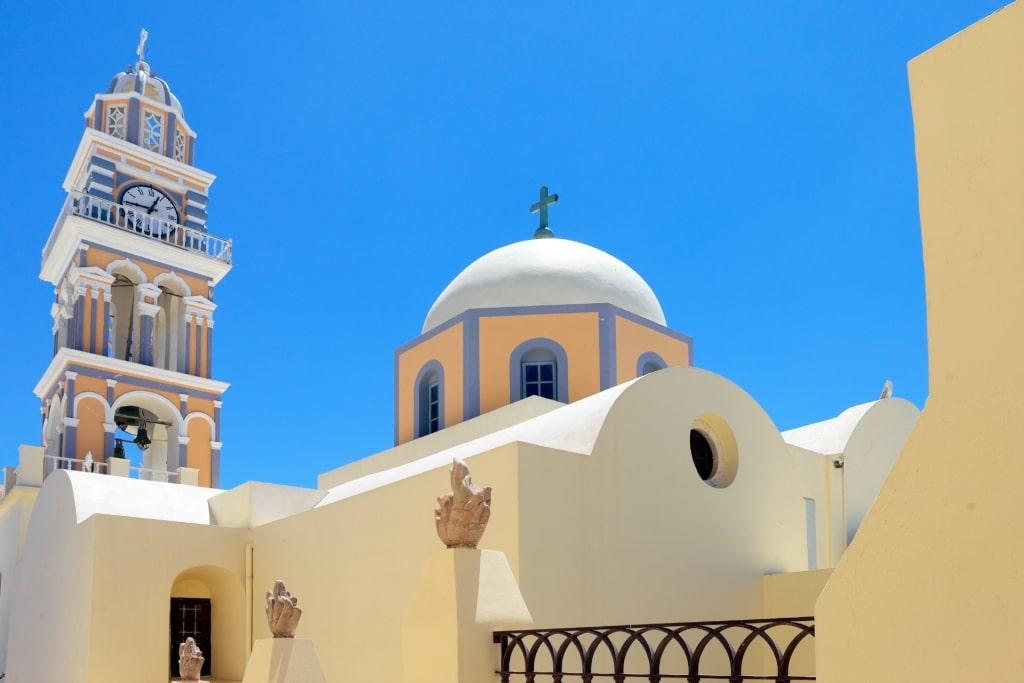
Cathedral of St. John the Baptist
In the center of Fira, the Catholic Cathedral of St. John the Baptist is another good-looking church. The exterior features an immaculate peach and baby-blue façade with a tall clock tower, while inside, there’s a lilac blue-domed ceiling and an elegant chandelier.
The 1827-built Orthodox Metropolitan Cathedral of Thira is another beautiful church sitting in a prime position to view the volcano. Its features include rolling white arches, a bell tower, and impressive mosaic detail on the outside. Step inside to marvel at the frescoes by local artist Christoforos Asimis.
5. Stroll Fira’s Picturesque Streets
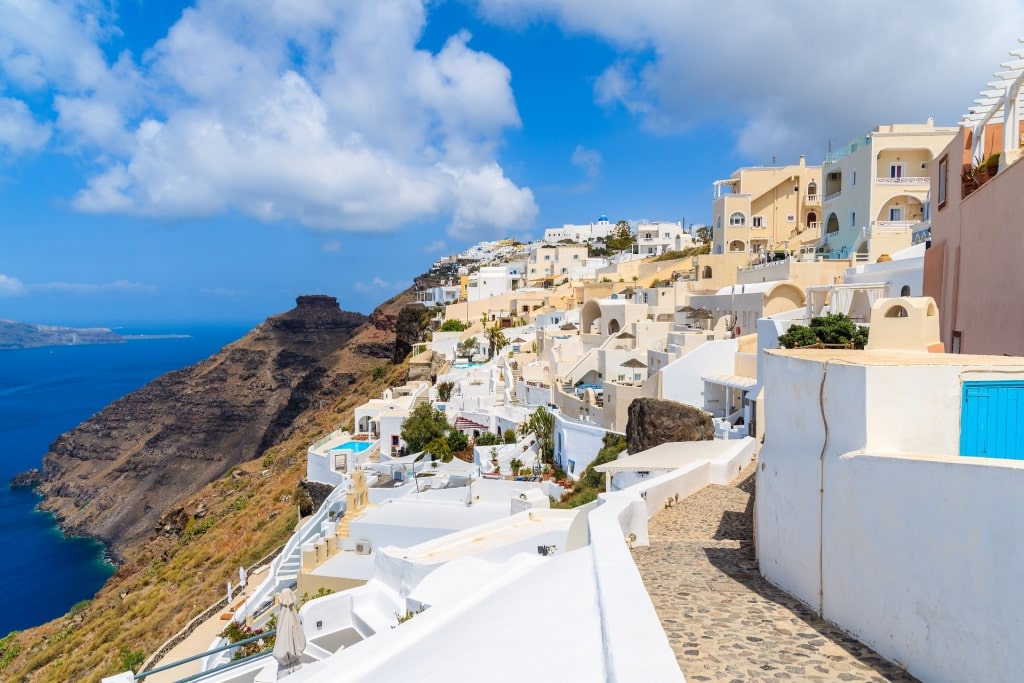
Firostefani
Wandering the narrow winding streets among the town’s uniform of whitewashed walls, blue-painted doors, and flowering cacti is one of the best things to do in Fira.
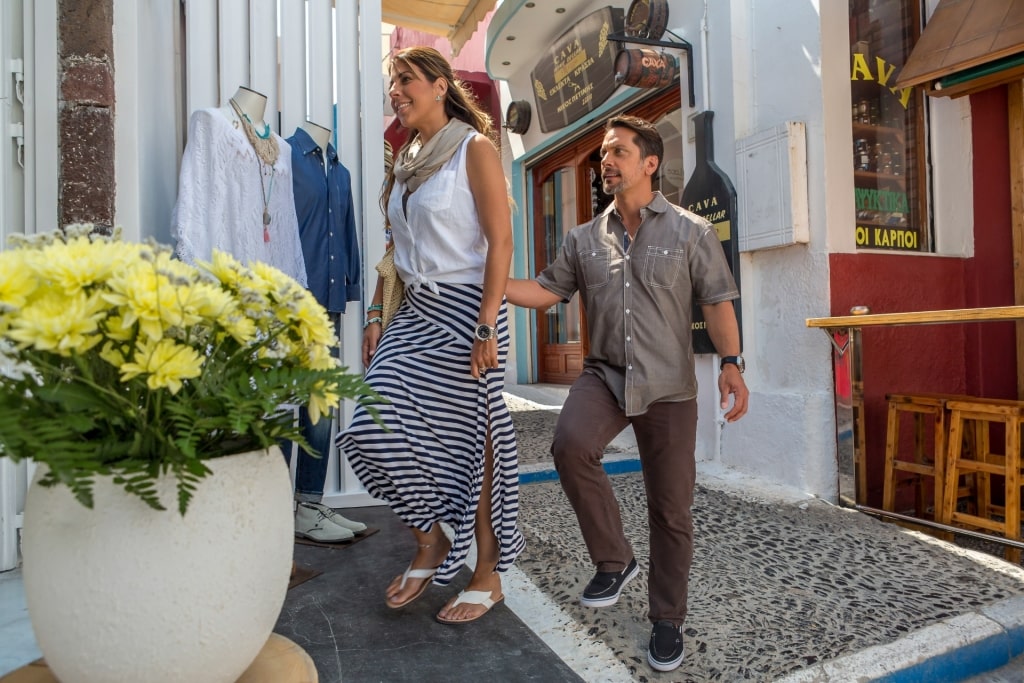
Couple walking past shops in Fira
Take in the town’s two main squares, Theotokopoulos and Firostefani Central Square. Peek at the dazzling Aegean Sea through gaps between buildings as you browse the town’s galleries and boutiques.
Enjoy a gelato from one of the many vendors before relaxing at a cocktail bar or restaurant. There are plenty to choose from that offer fantastic sea views.
Try Volkan On The Rocks, which serves frappés, cocktails, local wines, and beers, along with an excellent lunchtime menu of Greek cheeses, mezze, and fresh salads.
6. Shop for Local Souvenirs
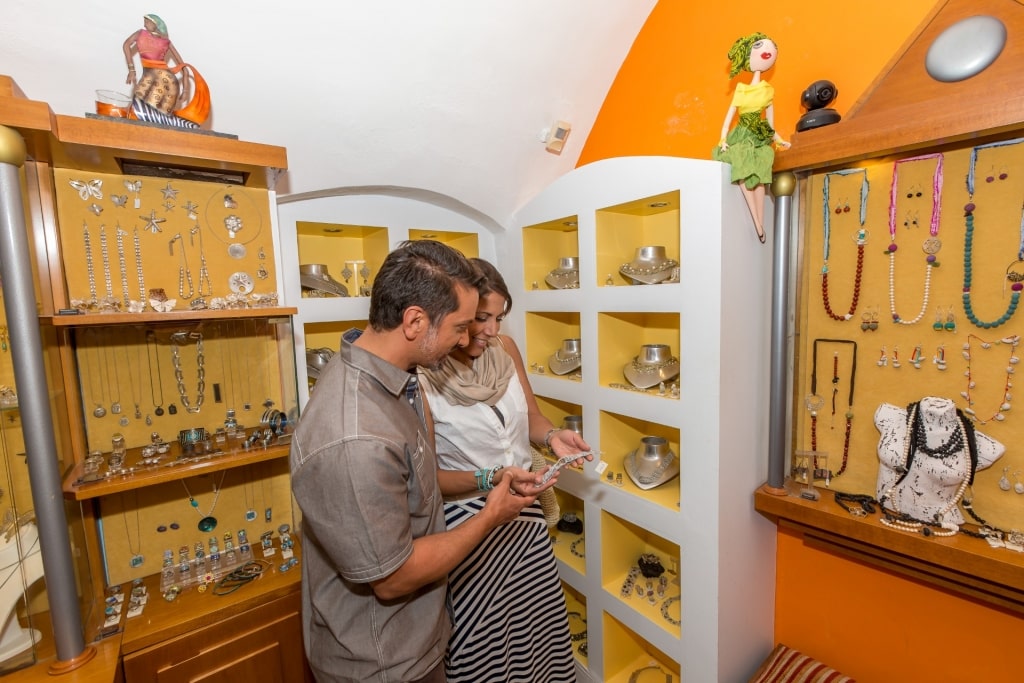
Shop in Fira
If you enjoy shopping for souvenirs on vacation, you’re in luck in Fira, a failsafe spot with fashion, jewelry, trinkets, ceramics, and local artwork on offer.
If you have a penchant for jewelry, take your credit card to Odos Ipapantis, nicknamed Gold Street, for its many jewelry stores. Several offer designs inspired by the styles of ancient Greece. La Bohème, sandwiched between the town’s buzzy cocktail bars, is a wonderful destination for homeware and fashion items.

Souvenir shop in Fira
Browse the fashion, swimwear, and accessories at Kisira and NOI, and pick up a beautiful summer dress at Spicy Boutique. Greek brand Harris Cotton is the go-to for beautiful linen and cotton pieces.
For prints, handmade jewelry, and small sculptures with a sea theme, browse Mati Art Gallery. For more one-off souvenirs from Greece for the home, explore the oil paintings, ceramics, glass, and bronze pieces at Art of the Loom.
Fira Shore Excursions
Shore excursions in and around Fira often focus on Santorini’s caldera views, volcanic landscape, whitewashed villages, wineries, beaches, and archaeological sites. Depending on your itinerary, available excursions may include guided walks through Fira, visits to Oia or Imerovigli, wine tastings, boat trips in the caldera, or tours to Akrotiri and other historic sites.
For cruise guests, a guided shore excursion can be especially helpful if you want to see more of Santorini beyond Fira. Since the island’s roads, viewpoints, and transportation hubs can get busy during peak season, an organized excursion can simplify timing and help you cover more ground.
Available excursions can vary by sailing, season, and port conditions. Check your cruise planner before you sail for the most up-to-date options, and leave enough time to return to Fira, descend to Skala, and tender back to the ship.
What To Eat in Fira: Local Food & Dining Guide
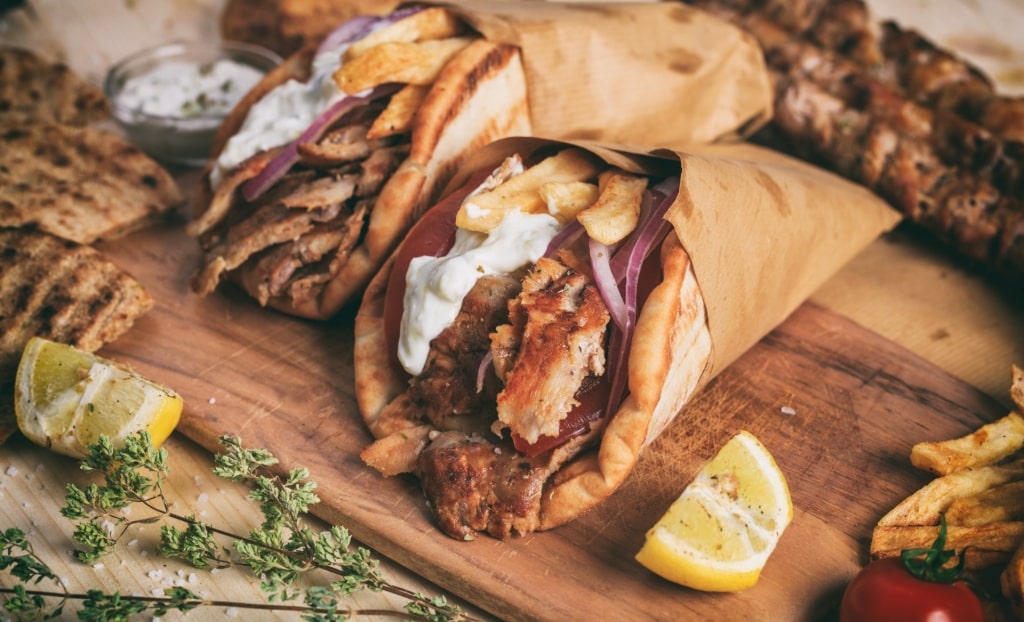
Gyro
Greece is known for its food, and pausing to enjoy Fira’s gastronomy is essential on a visit to Santorini. Dining in Greece is a leisurely affair designed to be savored with friends and family.
Fresh, just-caught seafood, including tuna, squid, octopus, mussels, and shrimp, is a common theme at Fira’s tavernas. Island-grown tomatoes, fava beans, and capers garnish seafood dishes and mezze platters.
Grilled eggplant, fresh feta salads, and plates high with pita bread and dips such as tzatziki (a garlic, dill, and cucumber yogurt dip) are satisfying lunch options.
A tasty gyro — grilled meat, such as lamb or beef, piled on pita bread with salad and yogurt — is a crowd-pleasing post-hike meal.
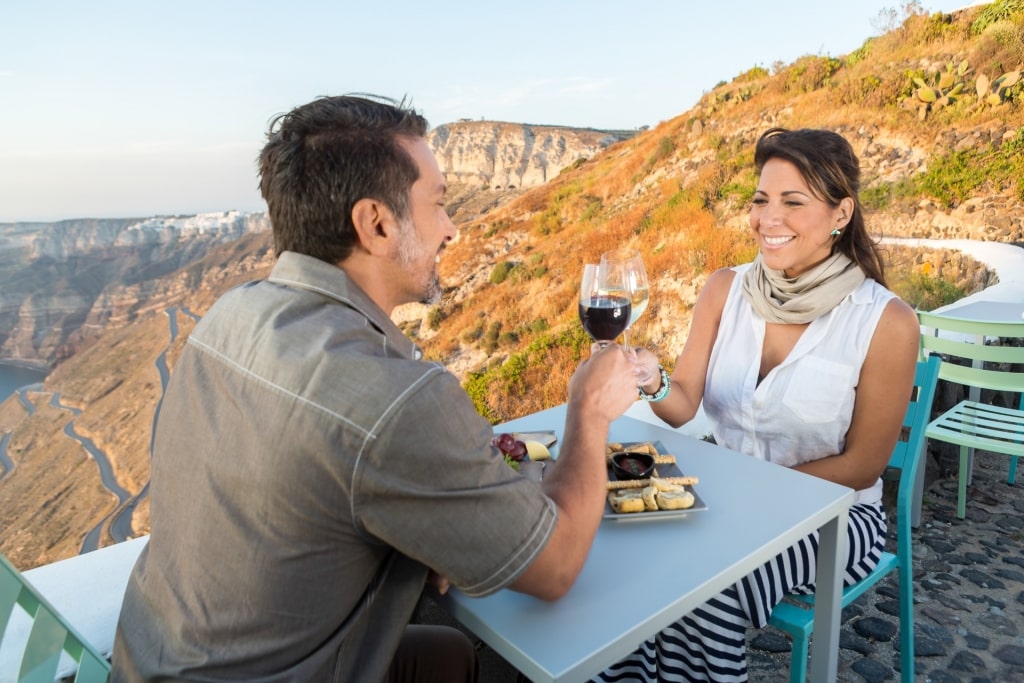
Wine tasting in Santorini
Santorini produces some exceptional wines, too, with the island’s grapes thriving on the volcanic soil. Try the nearby Santo Wines winery, where libations include the crisp and citrusy white Assyrtiko, the vibrant ruby-red Mavrotragano, and silky sweet Vinsanto.
For beer lovers, Ftelos Brewery Santorini produces six craft beers. Stop by the sleek brewery for a tour and tasting with cheeses, herb and caper pesto, potato salad, and a braised veal dish with apricot and truffle jelly paired with the different drinks.
For seafood with sea views, book a table at Fira’s Volcano Blue for dishes of fried feta cheese drizzled with honey, eggplant with sun-dried tomatoes, and smoked fava beans with octopus.
Practical Tips for Visiting Fira on a Cruise
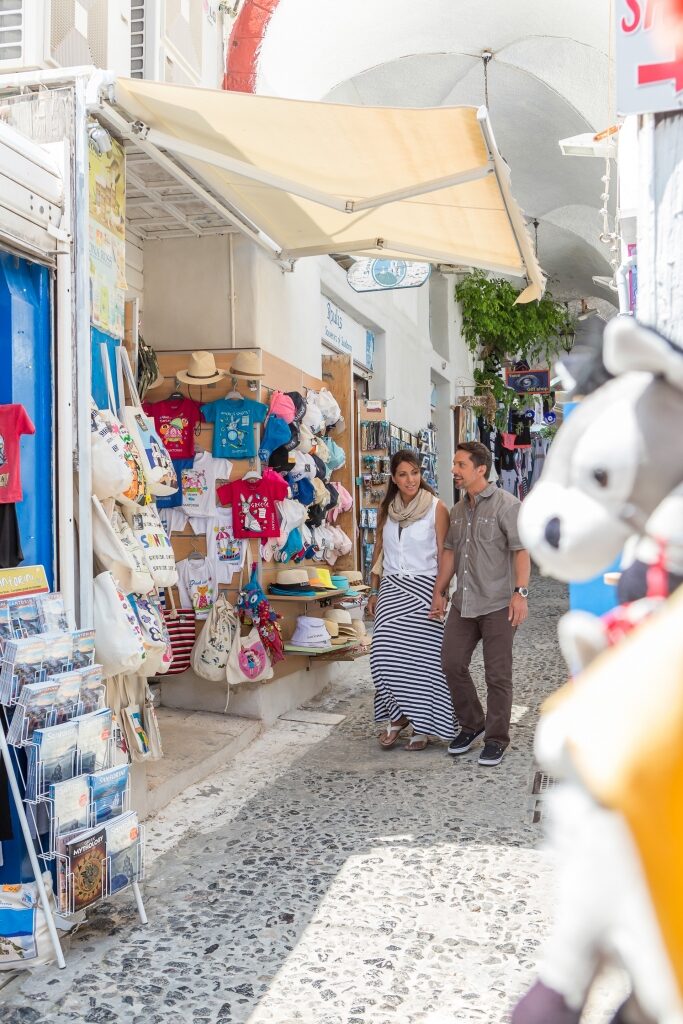
Window shopping along the cobbled streets of Fira
With some careful planning, it’s easy to loop in some of Fira’s famous churches, walk the town’s pretty streets, shop a little, and savor the region’s delightful gastronomy in one visit.
Visit Skaros Rock
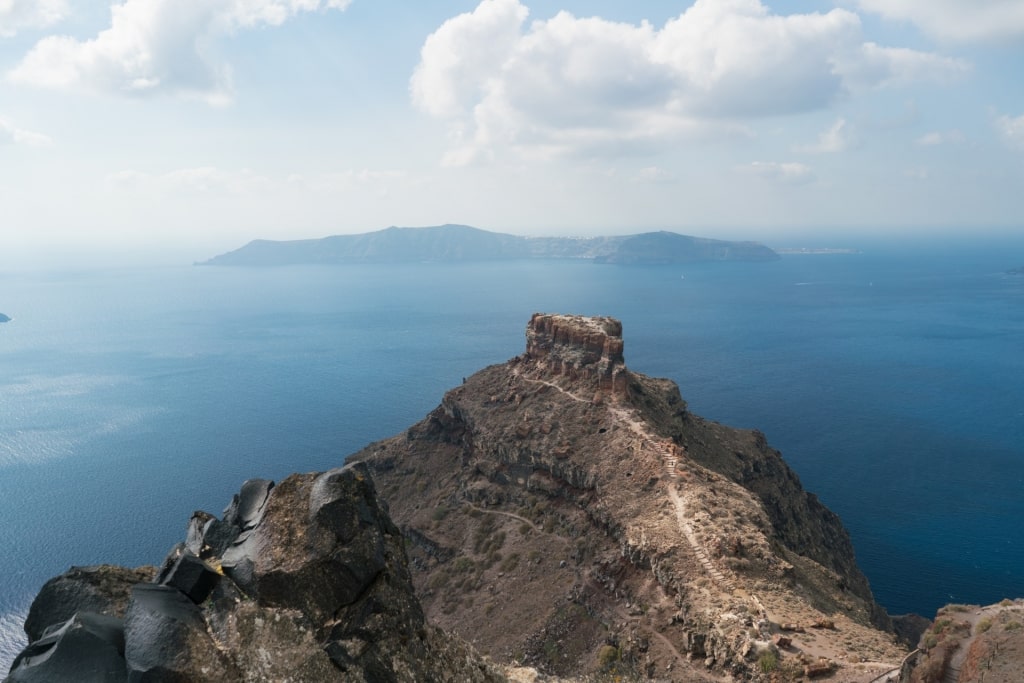
Skaros
For some of the best views of the azure sea and Santorini’s breathtaking volcanic coastline, plot a visit to Skaros Rock. It was the capital of Santorini until Fira took that role in the 18th century.
Jutting out into the Aegean Sea, this rocky headland in the village of Imerovigli is walkable from Fira in around 45 minutes. The former castle, which now lies in ruins, was devastated by of an earthquake in the 19th century. Follow the trail from Imerovigli’s quaint Agios Georgios chapel to reach Skaros.
Plan for Plenty of Walking
If you plan to visit out-of-the-way areas like Skaros Rock, you’ll need to be fairly fit since the final part of the walk involves climbs up steep steps. Additionally, you’ll want to wear comfortable footwear for navigating hilly paths in general, including the zigzag trail from Santorini Old Harbor to Fira’s town center, or to Skaros Rock.
You could go further and seek out the Church of Panagia Theoskepasti, tucked below the Skaros, carved into the cliffs. Hikers are rewarded with some of the best views of Fira and the surrounding landscape.
For one of the best hikes in Greece, extend your route further still along the Fira-Oia coastal path. This six-mile stretch is often challenging, though worth it for the spectacular scenery.
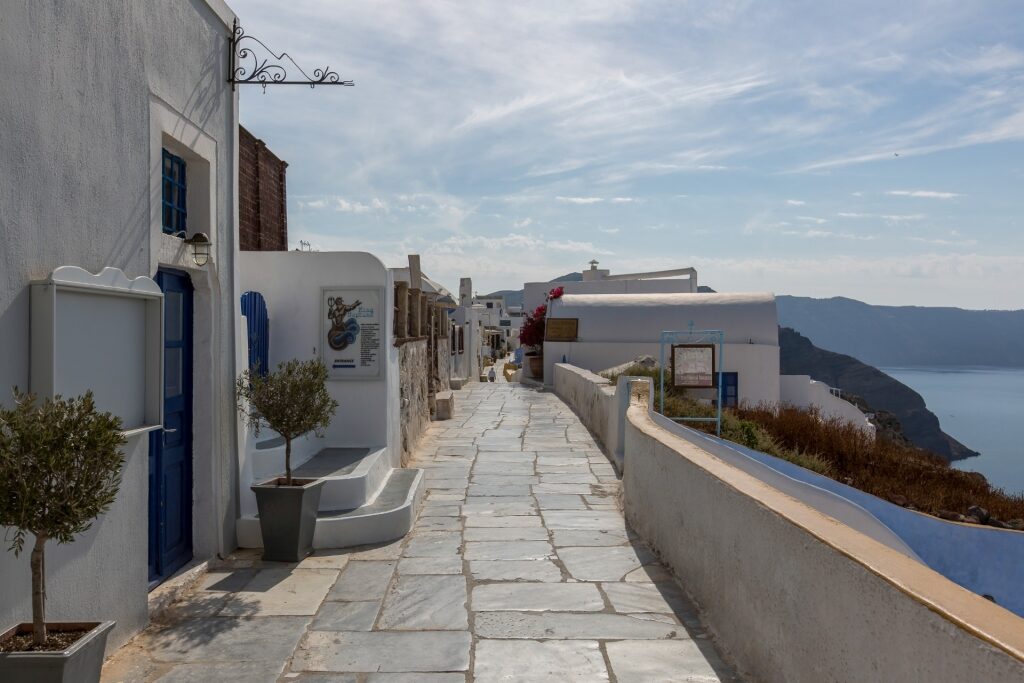
Oia
Use Local Transportation
If you don’t feel like walking throughout Fira and beyond, hop on the local Fira to Oia bus. It’s just four stops from Fira’s central bus station to Imerovigli and takes roughly 30 minutes. It’s always worth informing your driver of the stop you intend to get off at as you board the bus.
One of the most spectacular sights in Fira often happens at sunset, so visit one of the town’s many popular clifftop bars if time permits. Savor the sounds of classical music while you’re there, which adds to the relaxing atmosphere.
Bring Sun Protection
Santorini’s whitewashed buildings, open viewpoints, and volcanic paths can feel bright and hot in the middle of the day. Bring sunglasses, sunscreen, and water, especially in summer.
Plan One or Two Activities Beyond Fira
Fira alone can easily fill a short visit, but guests with more time may want to add Skaros Rock, Oia, a winery, a beach, or a caldera boat trip. Choose your priorities before you arrive so you can plan around transportation and return timing.
Leave Time for the Cable Car
The cable car ride itself is short, but lines can form when several ships are visiting Santorini. Plan your return to Skala with a generous buffer so you’re not rushing back to the tender area.
When Is the Best Time to Visit Fira?
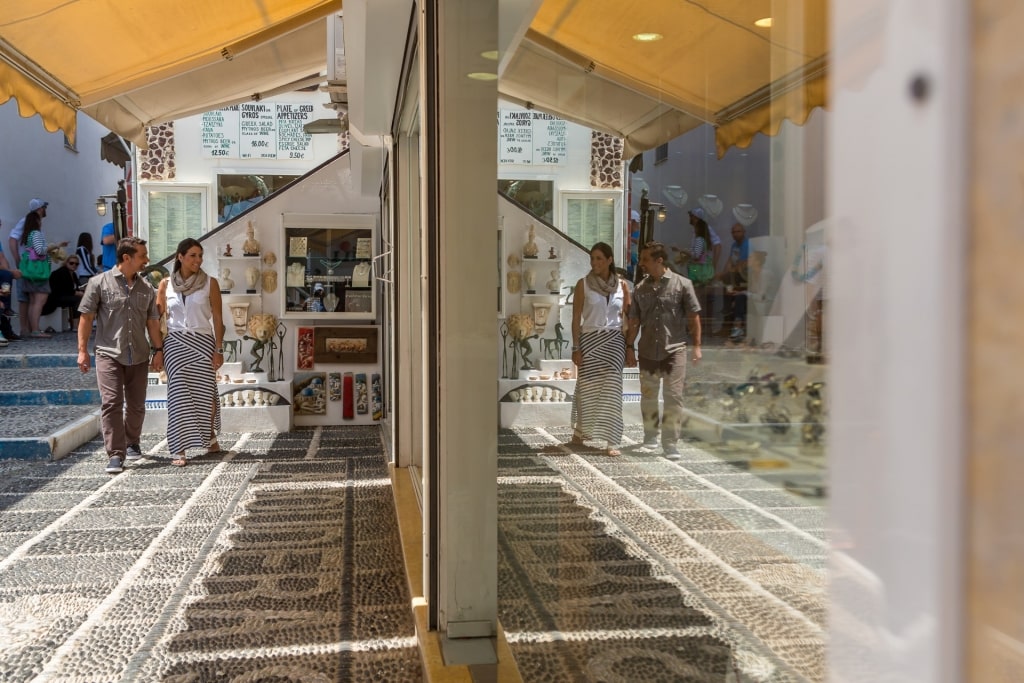
Fira
The best time to visit Fira for decent weather is between May and October.
With a long, drawn-out summer and sultry temperatures reaching as high as 90°F during the peak of summer, July and August are best suited to travelers who enjoy their vacations in hot weather.
If you prefer warm (but not too hot) days to enjoy exploring in pleasant temperatures, consider visiting in May, June, September, or October.
For quieter periods, May and October are advised. If you want to swim in the sea, the island’s red, gold, and black sand beaches are accessible from Fira by bus or taxi, and the water is warm right up until October.
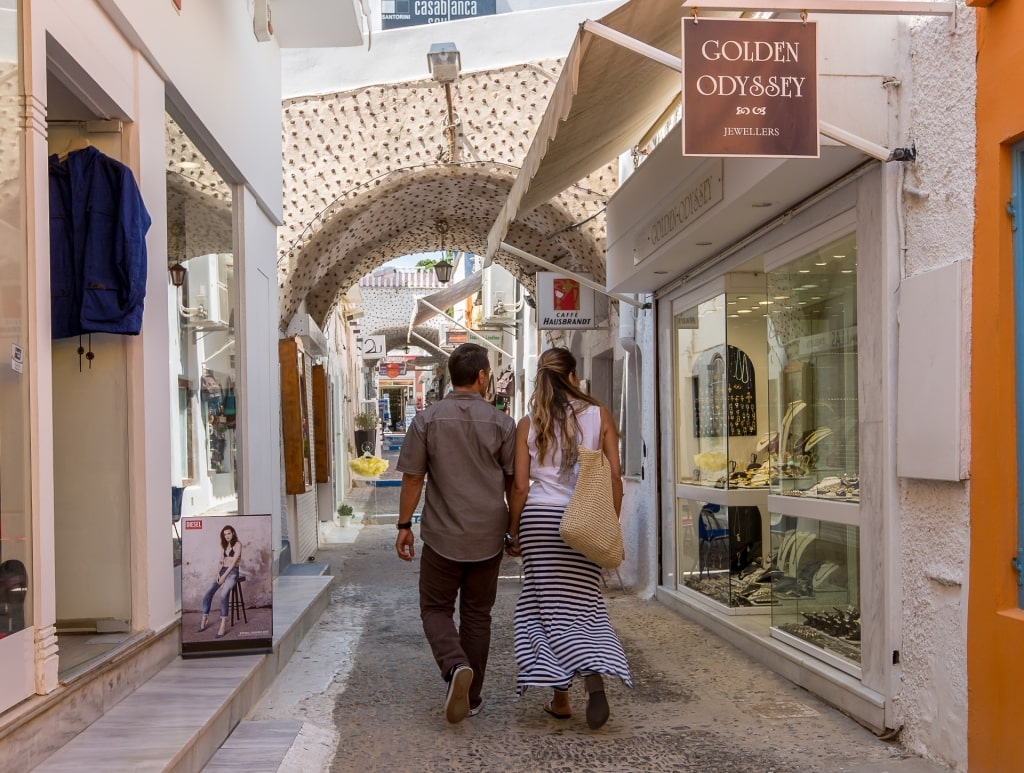
Jewelry shopping in Fira
Fira, Greece, is a wonderful destination that offers a blend of culture, history, sunshine, and scenery. Explore this stunning Greek town on a cruise to Santorini with Celebrity.
Fira Santorini FAQs
What is Fira known for?
Fira serves as the capital and cultural center of Santorini. Fira is known for its outstanding caldera views, whitewashed architecture, blue-domed churches, exceptional shopping experiences, restaurants, and vibrant atmosphere.
What language do they speak in Fira, Santorini?
The main language in Fira, like much of Greece, is Greek. With that said, many locals speak English, while hotel and restaurant staff may also speak French and German. The locals are pretty friendly here, so don’t be afraid to ask for help whenever you need it.
When is the best time to visit Fira?
May, June, September, and October generally provide the best balance of pleasant weather, warm seas, and manageable crowds.
How long should I spend in Fira?
If you’re wondering about how many days to spend in Santorini, you can typically spend half a day in Fira and enjoy many popular tourist attractions, including a cable car ride to the Old Harbor or visiting the Three Bells of Fira. Fira is in a prime location on Santorini’s western edge, making it quick and easy to travel to nearby locales such as Oia and Skaros Rock. You also have the option to stay in Fira for up to two days, which allows more time for museum visits, shopping, dining, and a memorable caldera cruise.
Do you need a passport to visit Fira, Greece?
Generally speaking, you need a valid passport to travel to most international destinations, including Fira and the rest of Greece. Visa requirements for Greece, on the other hand, are far more flexible, allowing most tourists to stay in Fira visa-free for up to 90 days.
What travel documents do cruise guests need?
Guests need to travel with their cruise ticket or contract, a valid passport, a visa (depending on their nationality), and cruise travel documents for minors in order to board and get off the ship and enter various international destinations without issue, including Fira and Santorini.
What currency is used in Fira?
The local currency in Greece, including Santorini and Fira, is the euro (€). If you bring cash, be sure to exchange foreign currencies like the US dollar to euros, as USD isn’t accepted in Fira.
Is Fira safe for tourists?
Fira is one of the safest Greek islands and destinations in Southern Europe, especially for women traveling solo. With that said, we still recommend that you stay vigilant while in unfamiliar surroundings. Keep any valuables (e.g., wallet, keys, etc.) in your front pockets and your bag or backpack zipped up and in front of you if you’re standing or walking in a big crowd.
Is Fira walkable?
Most attractions, viewpoints, restaurants, and shops in Fira are located within easy walking distance of one another.
Can cruise passengers walk from the port to Fira?
Visitors arriving at Santorini Old Harbor can reach Fira via the cable car or by walking up the Karavolades Steps, which traverse the caldera cliffs. It is a bit of a steep climb, though, so make sure you wear comfortable shoes for the trek.
What should I eat in Fira?
You can try common Fira specialties, including fava, tomato fritters, fresh seafood, gyros, local cheeses, and wines such as Assyrtiko and Vinsanto.
How much should I tip in Fira?
Tipping in Greece, including Santorini and Fira, isn’t mandatory, but you can give a 5-10% tip to show your appreciation for good service. Even though you can make electronic payments in most places across Greece, hard cash is readily accepted in Fira, especially for tips. If you’re feeling generous, we recommend carrying some small coins and bills in euros for this purpose.
Fira or Oia: which destination is better to visit?
Fira and Oia are both excellent destinations to visit. Fira offers more shopping, restaurants, and a vibrant nightlife, while Oia is known for its quieter atmosphere and iconic sunsets.