The Hungarian capital is famous for its many historic sights, but the chance to go shopping in Budapest shouldn’t be missed. The city has a great shopping scene, where you can find everything from quality hand-crafted souvenirs to high-end designer boutiques. Best of all, the main shopping streets are concentrated in a small area on the Pest side of the Danube in this very walkable city.
What to buy in Budapest? Whether you’re looking for souvenirs to take home, or want to treat yourself to something special as a memory of Budapest, you’ll find everything from smoked paprika to Rubik’s Cubes and Communist-era memorabilia here.
The Central Market Hall
Central Market Hall
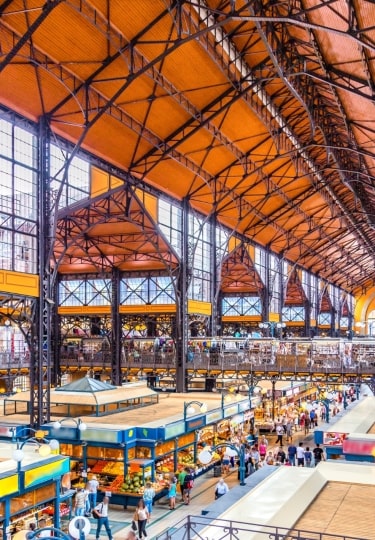
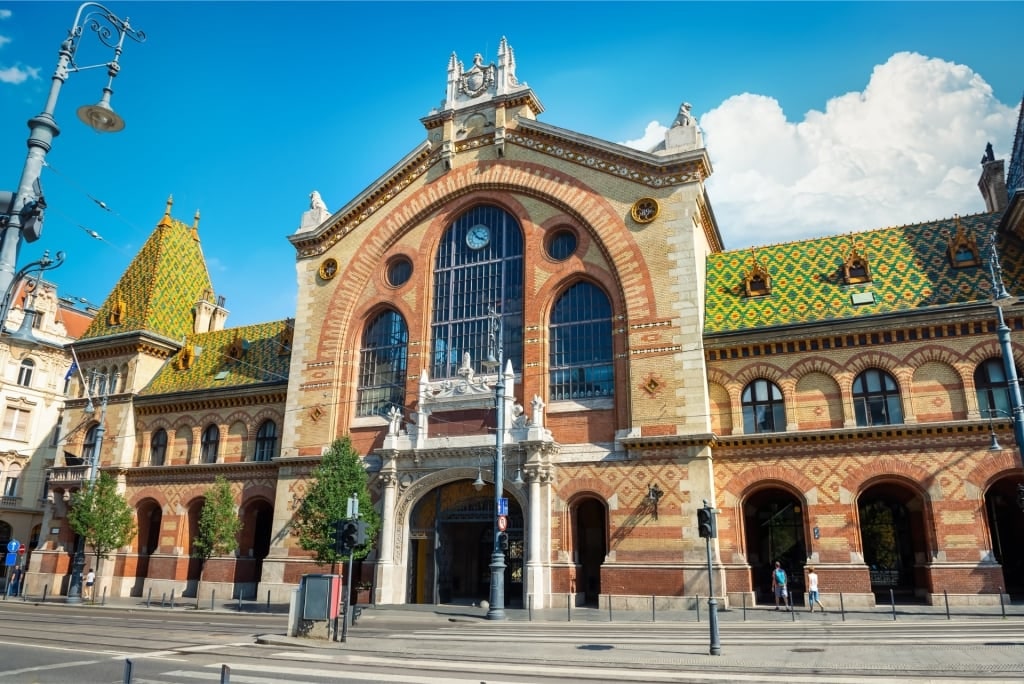
You can’t miss Nagyvásárcsarnok—the Central Market Hall—in more ways than one. Close to Liberty Bridge, one of eight bridges that span the Danube, the building—with its huge arched windows—resembles a grand railroad station or church and has a beautiful red, green, and yellow tiled roof. It’s also a must-see shopping destination.
Constructed in 1897 to supply the city and surrounding area with quality food, this is the largest indoor market in Budapest. While it is also a big attraction for visitors, it remains a place where locals shop daily.
Central Market Hall
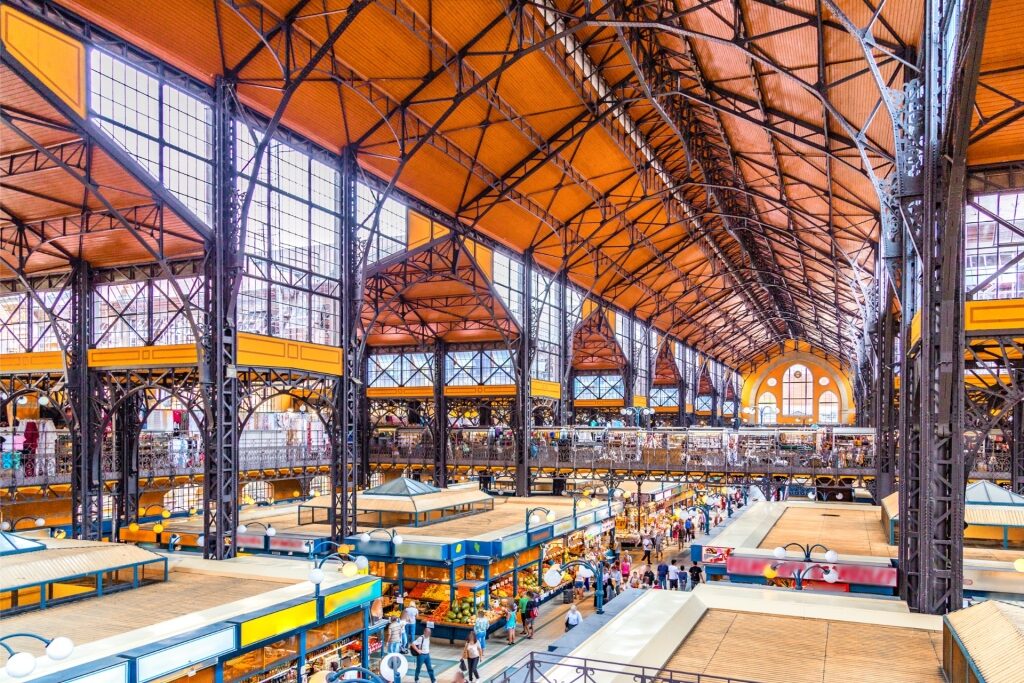
Step inside the cavernous building, with its light-filled roof and huge steel beams, to be greeted by colorful stalls piled high with paprika, cheese, honey, candies, and fresh foods. While you can’t take it home, it’s still fun to browse around counters with kolbász, Hungarian sausage, hanging in rows from the ceiling. Expect to be offered bite-sized samples to try.
Also look out for an amazing array of pickles. In Hungary, pickling is an age-old way of preserving vegetables, from the days when there were no refrigerators. Csalamádé, a multi-colored combination of cabbage, carrots, cucumber, and peppers, is popular and you’ll also find preserved beets, tomatoes, and even fruits such as grapes and plums.
Paprika
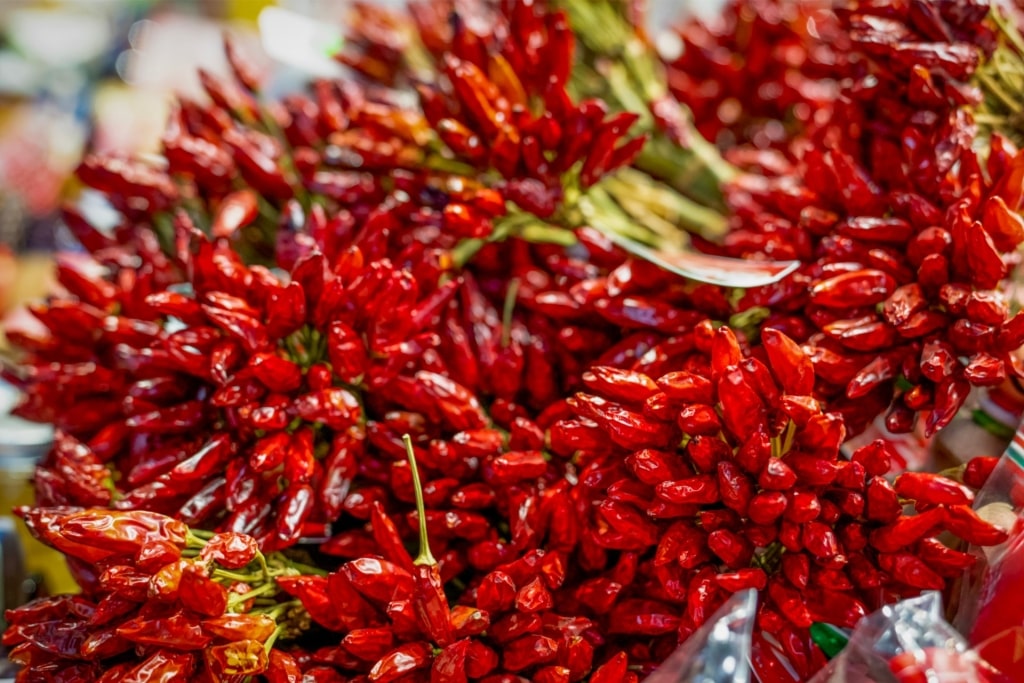
The most popular thing to buy—and the easiest to take back home—is dried paprika, which is the most famous Hungarian spice. Paprika sold in decorative bags and pottery jars makes a great gift. Just be sure to ask the vendor, or check the labels, to see how hot it is. Csipős means hot, édes means sweet, and there are different levels in between.
Upstairs from the main food hall is the place to pick up a multitude of Hungarian crafts and souvenirs, including lacework, traditional embroidered clothes, porcelain, folk art, and dolls. Look out for unusual Magyar kártya playing cards, which are divided into four suits—acorns, hearts, leaves, and bells—and only have 32 cards in a deck.
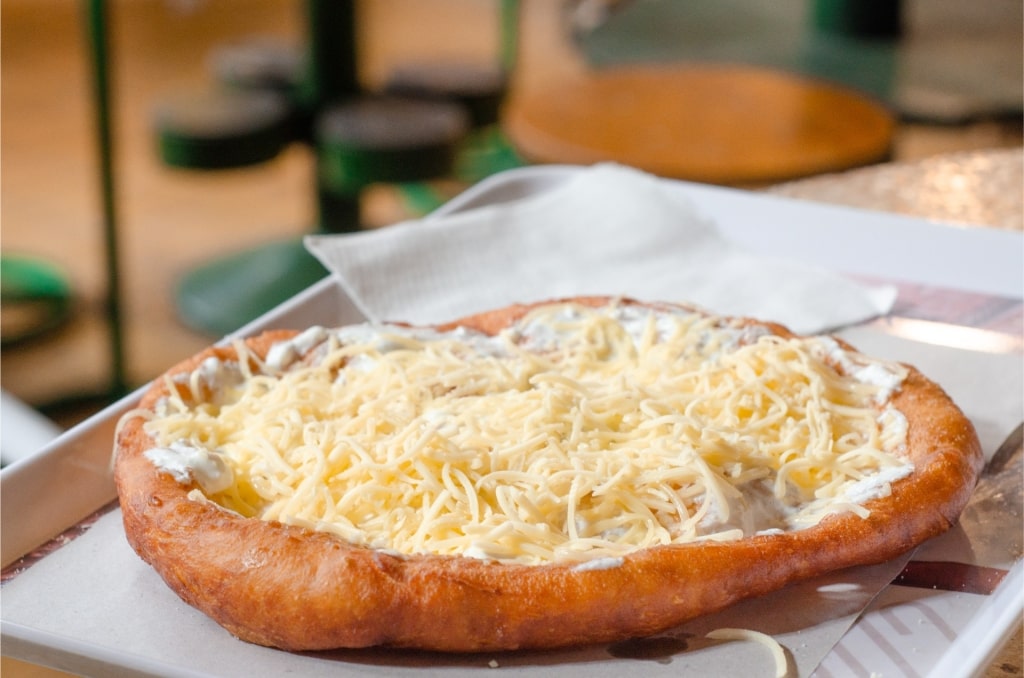
Lángos
Here, you’ll also find a food court where you can try lángos, a tasty deep-fried dough with sour cream and cheese, which is a perfect on-the-go snack.
The main entrance in Vámház Korut can get very busy, especially with visitors stopping to take photos. It’s better to walk around the building and go in through the quieter door—which the locals use—at the back of the market hall in Csarnok Tér.
Váci Street
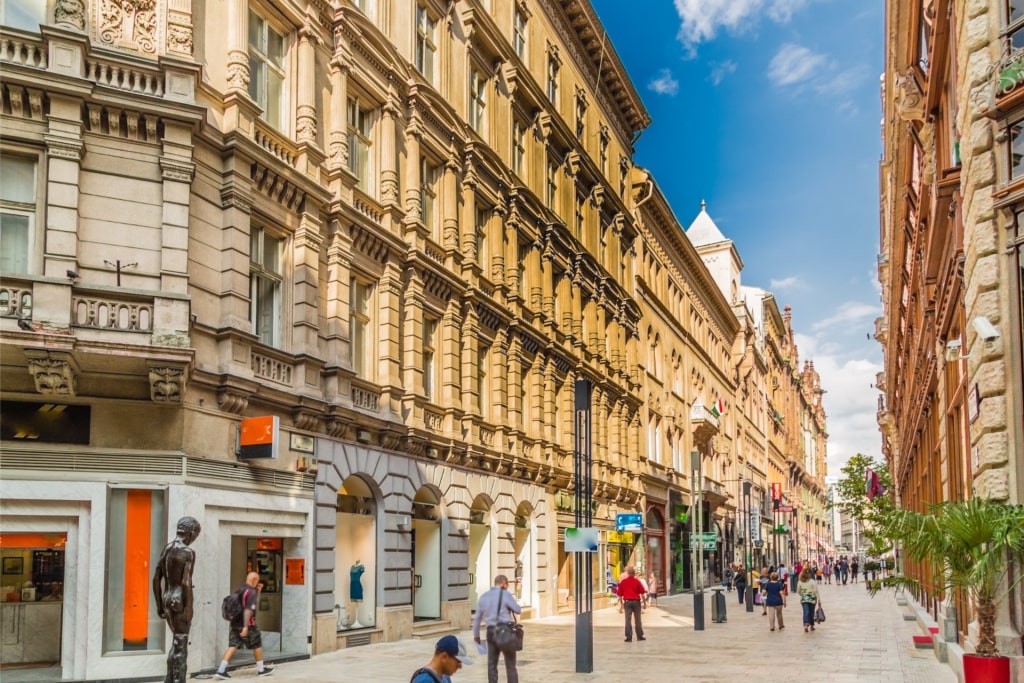
Váci Street
Right opposite the market hall is the entrance to the pedestrian shopping street Váci Utca—Váci Street—which is just under a mile long. It runs parallel to the Danube and ends in Vörösmarty Square, close to the Széchenyi Chain Bridge, which is the most famous bridge across the river.
In medieval times, Váci Utca marked the city limits of Budapest and the city was surrounded by a wall to protect against invaders. One of the main entrances was the Váci Gate, and if you look closely at the cobbled sidewalk near Vörösmarty Square, you’ll see a plaque marking the position of the old gate.
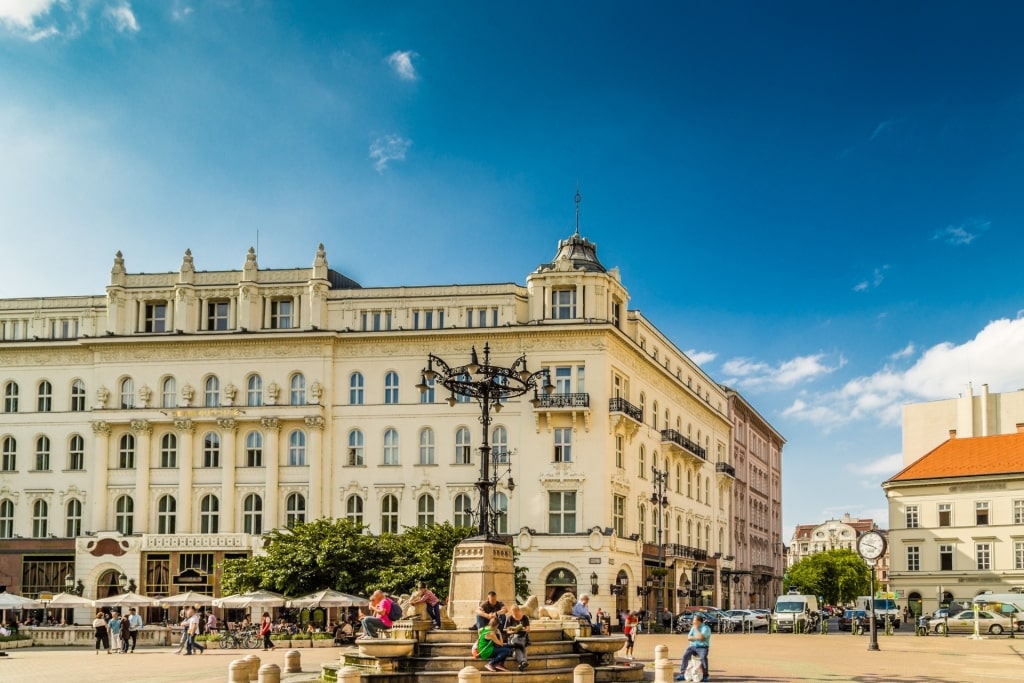
Vörösmarty Square
One of the best souvenir stores here is Memories of Hungary, which is an award-winning one-stop shop selling quality items. Whether you want clothes, crafts, art, porcelain, or novelty items, you’ll find them here. As well as traditional products based on artisan skills passed down over the centuries, there are plenty of contemporary goods, too. English-speaking staff are very helpful and knowledgeable if you need help deciding what to buy.
Be sure to pause by the Philanthia flower shop, which has been in business since 1906 and has a beautiful art nouveau facade and interior. The window displays are always stunning.
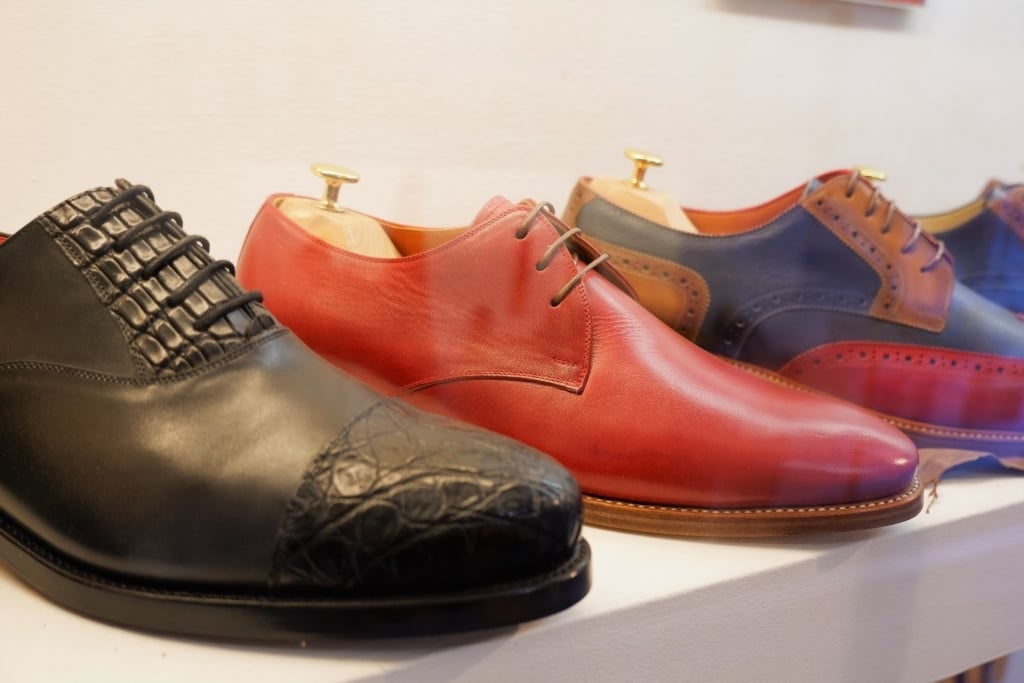
Footwear
If you’re on the lookout for some smart new footwear then take a walk down Haris Köz, one of the narrow lanes leading off Váci Street. It’s home to Vass Shoes and Buday Shoes, which both produce ready-to-wear collections of handmade men’s dress shoes.
You’ll also find plenty of familiar international brands including Zara, H&M, Mango, Hugo Boss, Lacoste, and Nike.
Andrássy Avenue
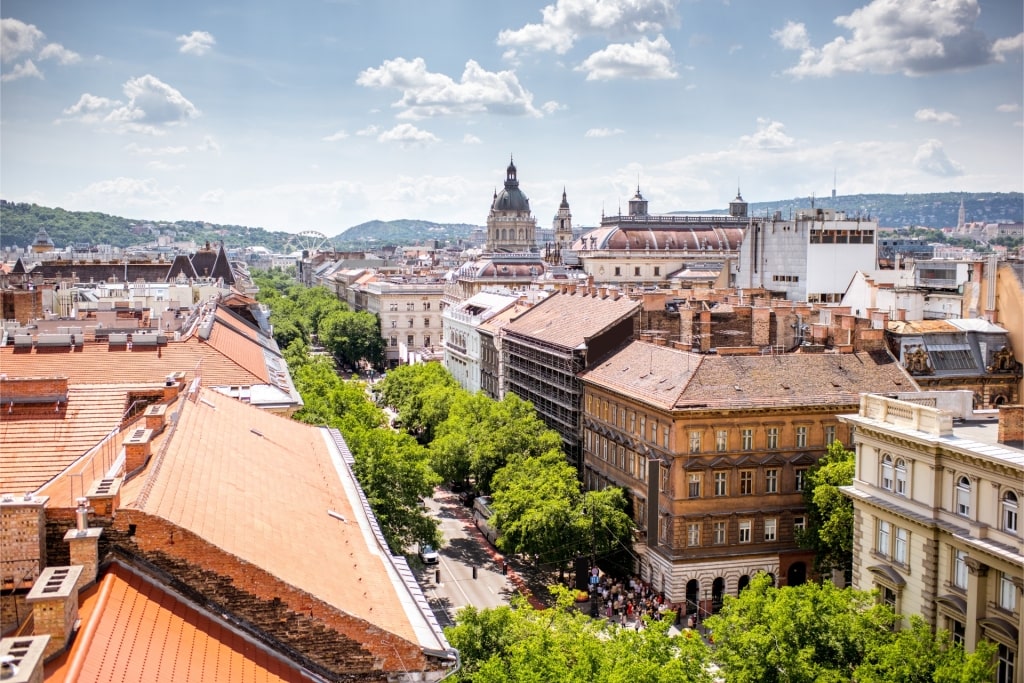
Andrássy Avenue
Shopping in Budapest doesn’t get more upscale than Andrássy Út, or Andrássy Avenue. Stretching almost two miles inland from Erzsébet Tér—Elizabeth Square—to imposing Hősök Tere–Heroes’ Square, is the leafy Fifth Avenue of Budapest. This grand boulevard is lined with some of the city’s most notable architecture, including the neo-Renaissance Hungarian State Opera House.
The avenue is part of the UNESCO World Heritage Site covering the historic center of Budapest, and here you’ll find the city’s most luxurious stores such as Louis Vuitton, Gucci, Burberry, Michael Kors, Jimmy Choo, Max Mara, Moncler, and Rolex.
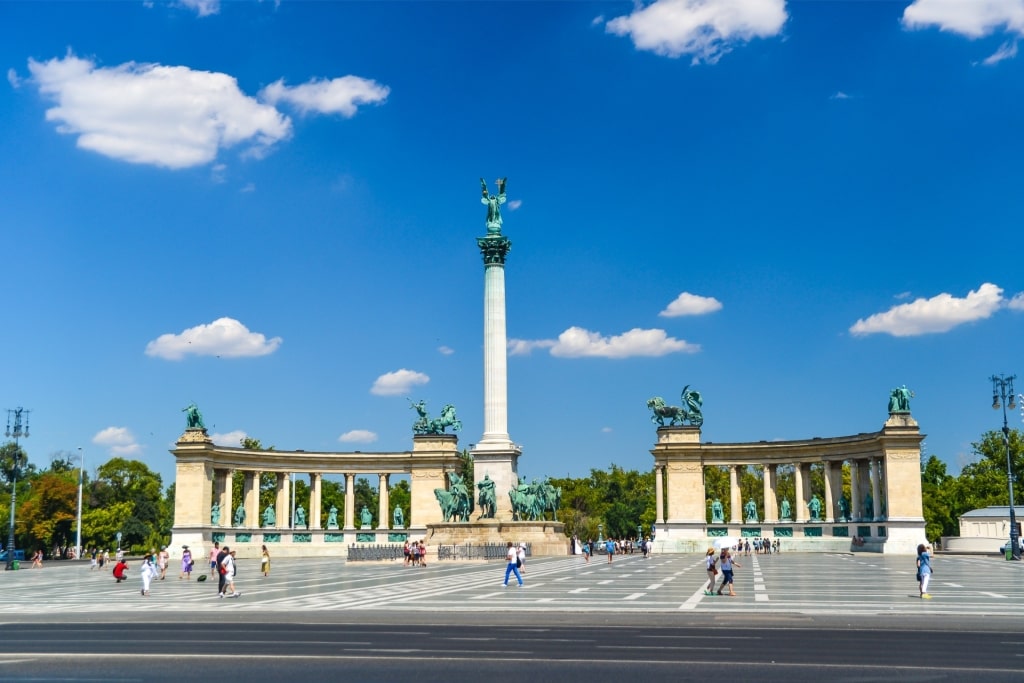
Heroes’ Square
The highest concentration of designer boutiques is in the lower section of the avenue. However, it is worth walking up to Heroes’ Square to stop at one of the many coffee shops Budapest is known for and admire the old villas that were once home to the aristocracy and Budapest’s richest citizens.
If you want to get from one end to the other, then use the M1 yellow subway line, which runs from Vörösmarty Square to Heroes’ Square with nine stops along the way. It’s interesting in its own right as it’s the second oldest metro system in Europe after the Underground in London, England. The historic tiled and wood-paneled stations are only a few feet below the highway.
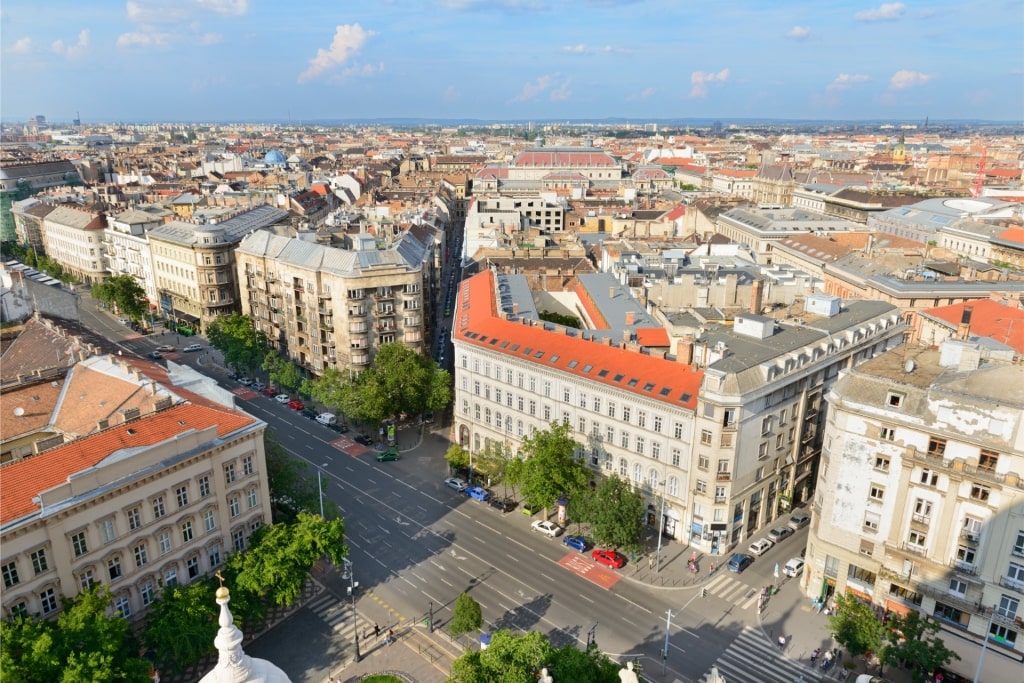
Andrássy Avenue
While it’s currently closed, it’s still worth stopping to take a look at one of the most beautiful buildings on Andrássy Avenue. Built as a casino in 1885, the former Párisi Nagy Áruház, or Paris Department Store, has a magnificent art nouveau frontage. Last used as a bookstore, it shut several years ago but the roof of the building has a new lease of life as the panoramic 360 Bar, which is accessed via a different entrance.
Westend
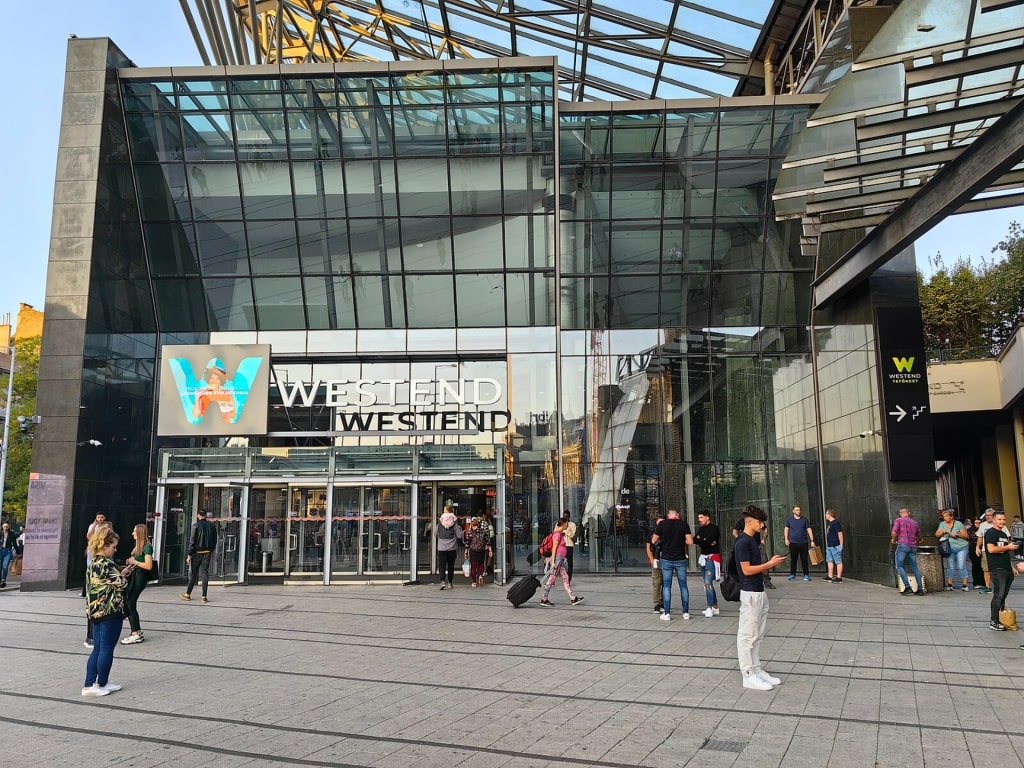
Westend Photo by Random photos 1989 on Wikimedia Commons, licensed under CC BY-SA 4.0
With a futuristic sloping roof, Westend was the largest mall in Central Europe when it opened in 1999. It remains the largest one in Budapest and is located halfway between the Danube and Heroes’ Square, next to Nyugati Pályaudvar, the city’s Western Railway Station.
With more than 400 shops, it’s got everything you’d expect in a mall including fashion, shoes, jewelry, and gifts. The H&M branch spans three stories, and is one of the largest stores in Budapest. You’ll find lots of other familiar names such as Converse, Boss, United Colors of Benetton, and Calvin Klein. There’s also a large food court with everything from Hungarian street food and burgers to Italian and Asian cuisine.
But that’s not all. When it’s time to take a break, head up to Westend’s roof garden. Spread over three acres, it’s the biggest in Budapest and a tranquil green oasis in the middle of the city. You can even take your own picnic. Maybe pick up some local specialties, such as smoked sausage, fluffy kalács bread, or a cylindrical chimney cake filled with whipped cream.
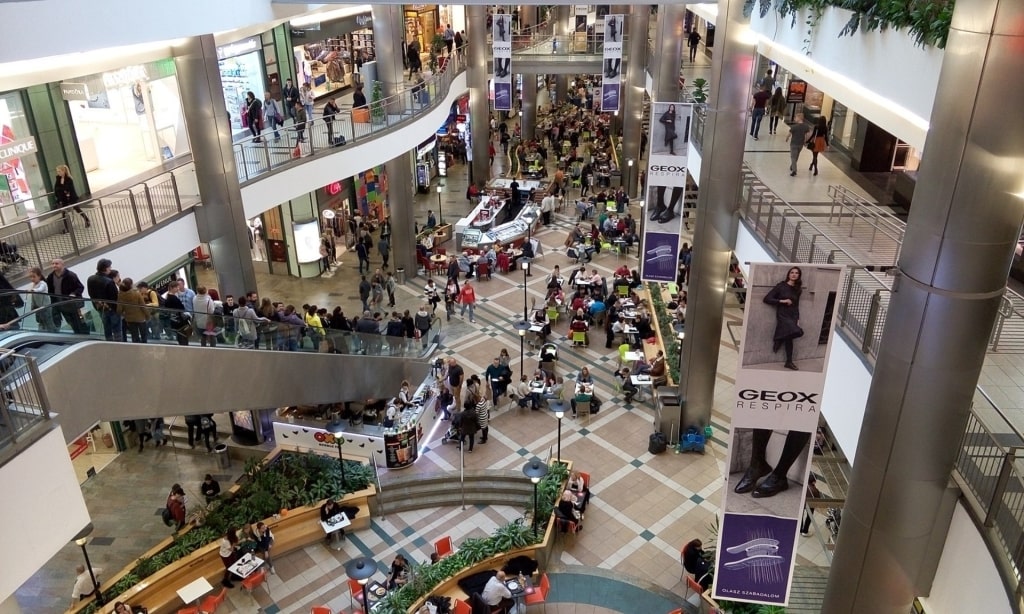
Westend Photo by Christo on Wikimedia Commons, licensed under CC BY-SA 4.0
The mall is typically open from 10 a.m. to 8 p.m., Monday through Saturday, and from 10 a.m. to 6 p.m. on Sunday. From downtown Budapest, you can get there on the M3 metro line from Deák Ferenc, which is close to Vörösmarty Square, and go two stops to Nyugati Pályaudvar.
While you’re here, it’s worth taking a short detour to take a look at the Western Railway Station, which was built in 1877 and designed by the company behind the landmark Eiffel Tower in Paris. This legacy can be seen in the ornate iron-framed interior. The former high-ceilinged restaurant, with decorative hanging lamps, is now possibly the grandest McDonald’s you’ll ever see.
Ecseri Flea Market
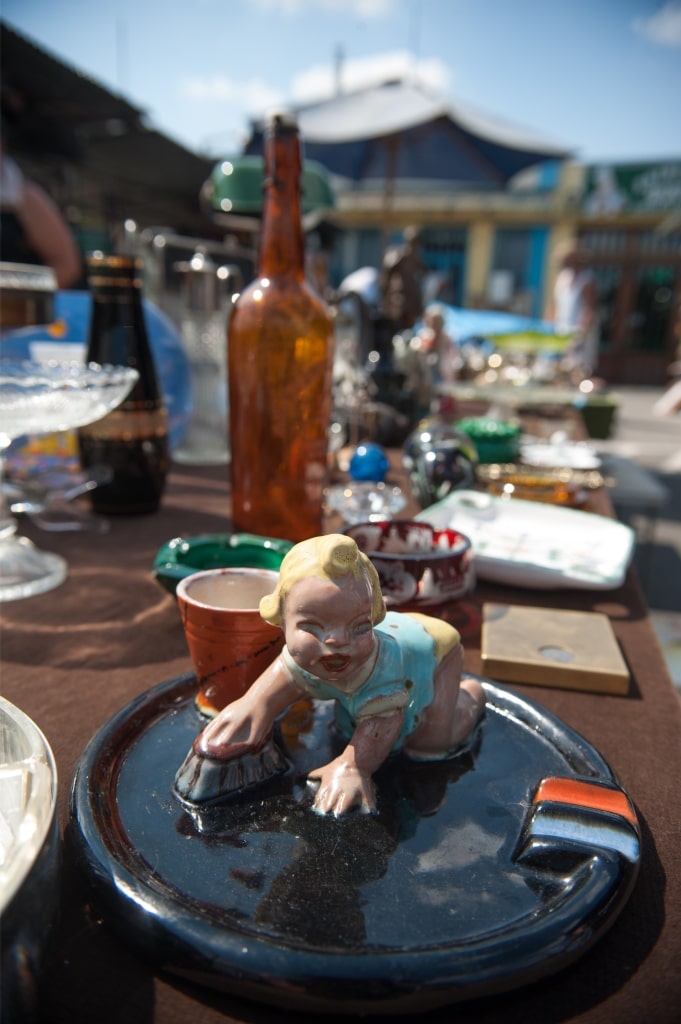
Ecseri Flea Market
No guide to shopping in Budapest would be complete without mentioning Ecseri Flea Market. If you love antiques, vintage items, and anything quirky and eclectic, it’s an absolute treasure trove and also a good place to find memorabilia from Hungary’s Communist era.
Located in the southeastern Kispest district, the indoor and outdoor market is open daily—the busiest times are Saturday and Sunday—and has grown into a popular visitor attraction. Bargaining is all part of the fun, so don’t be afraid to haggle. A good starting point is 20% less than the asking price.
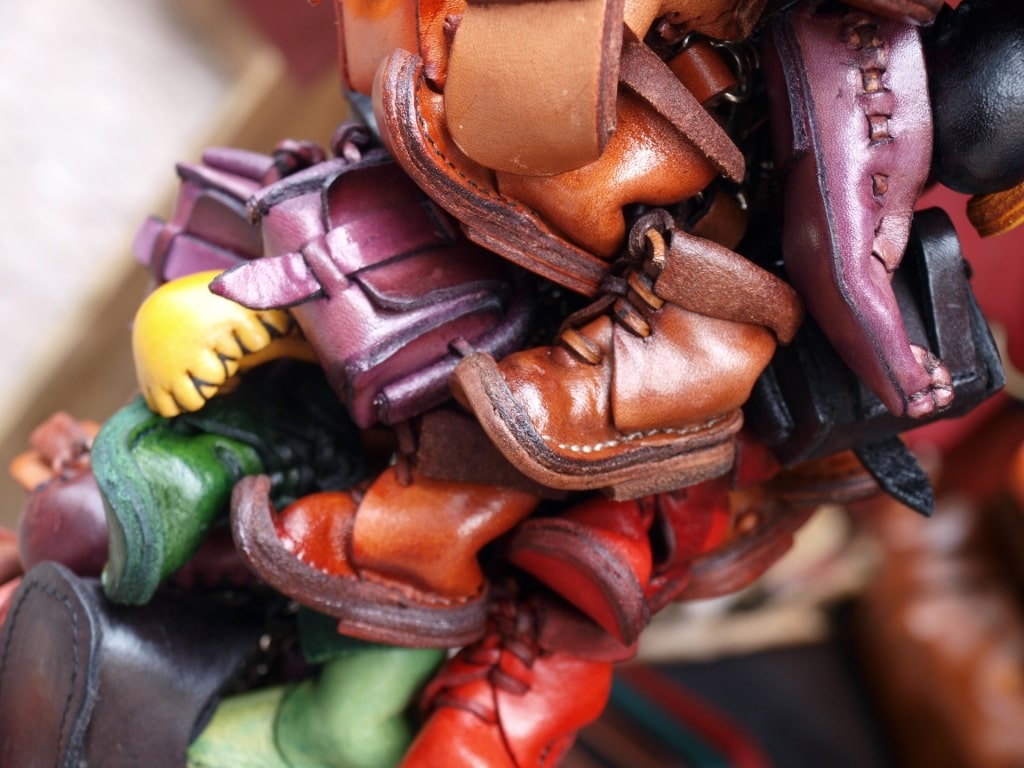
Leather souvenirs
Remember to bring local currency, as very few vendors take credit cards. It’s also a good idea to bring your own bags.
To get to the market, ride the M3 metro line from Deak Ferenc to Hatar Útca, and then take the 84E or 89E bus to Naszod Útca. It will take around 40 minutes. Alternatively, take a cab from downtown Budapest and you’ll get there in 20 minutes or so.
Read: The Ultimate Guide to Budapest’s Christmas Markets
FAQs
What is the best street in Budapest for shopping?
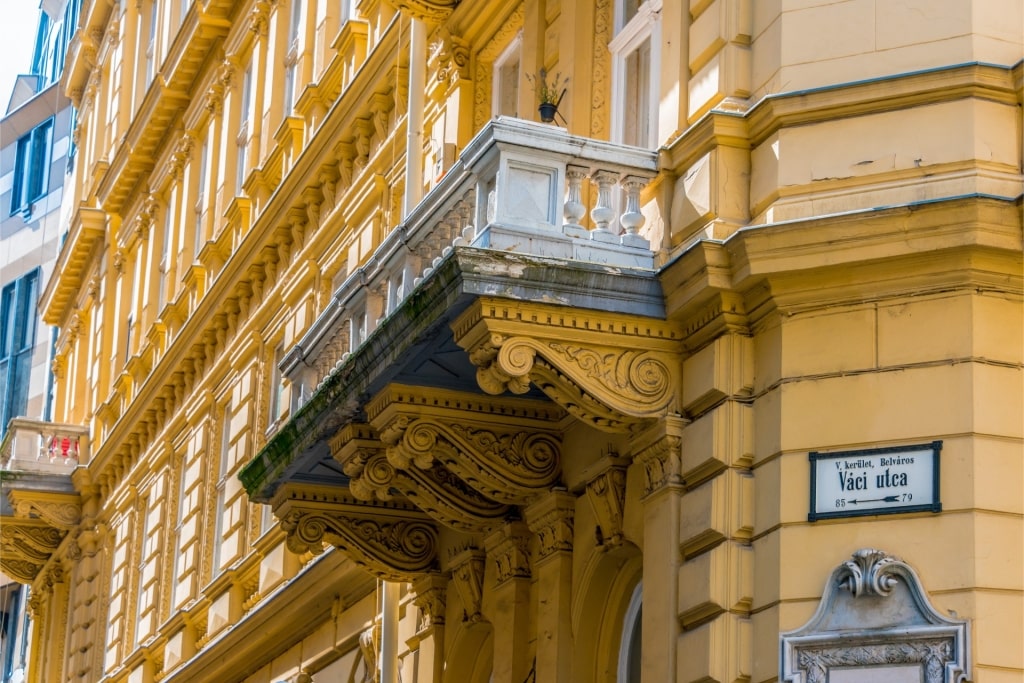
Váci Street
If time is short, head straight to the pedestrianized Váci Street. It’s easy to get around and has a wide range of shops.
What’s the best thing to buy in Budapest?
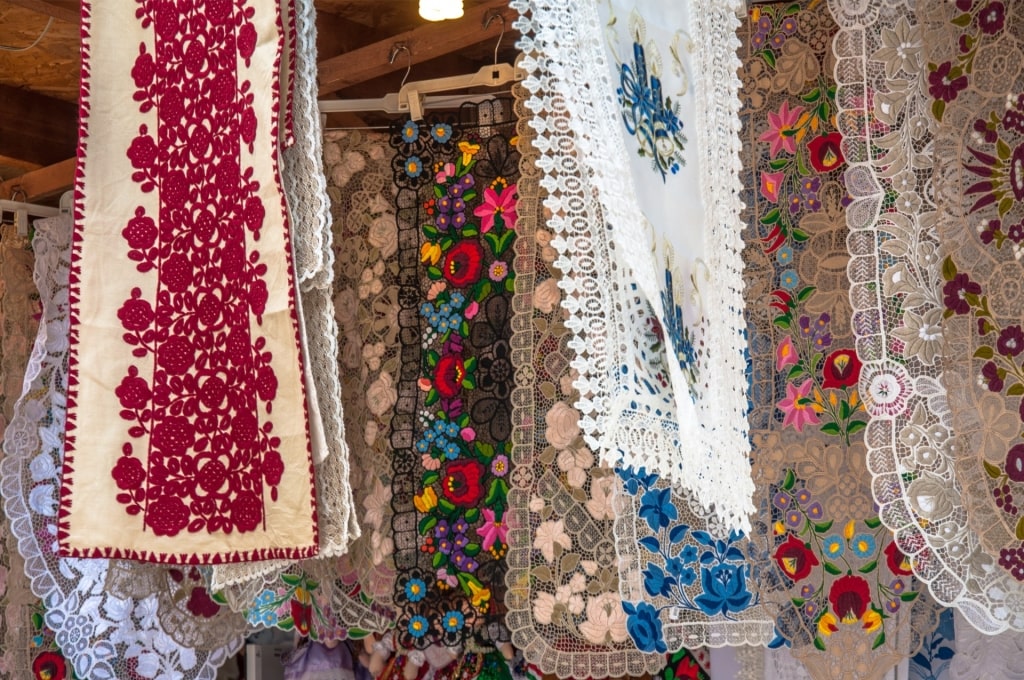
Embroidered souvenirs
Exquisite Herend hand-painted porcelain, which can be shipped, Tokaji wine, paprika, lacework, embroidery, and crafts are all good things to buy. And Rubik’s cubes; this fiendish puzzle became an international craze after it was created by the eponymous inventor Ernő Rubik in 1974.
Is Budapest cheap for shopping?
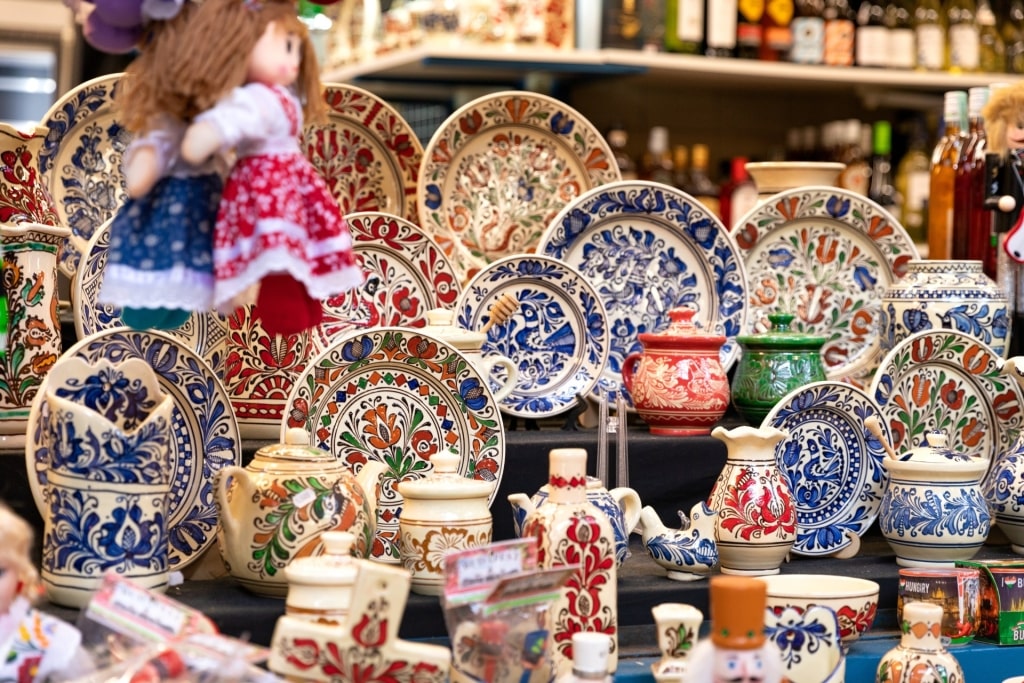
Central Market Hall
Although Budapest isn’t cheap, it is an affordable city and you’ll find the best deals on souvenirs and locally made products. Clothes in popular fashion chains such as Zara are a little cheaper than in some countries, but upscale designer boutiques are around the same.
What currency should I use for shopping?
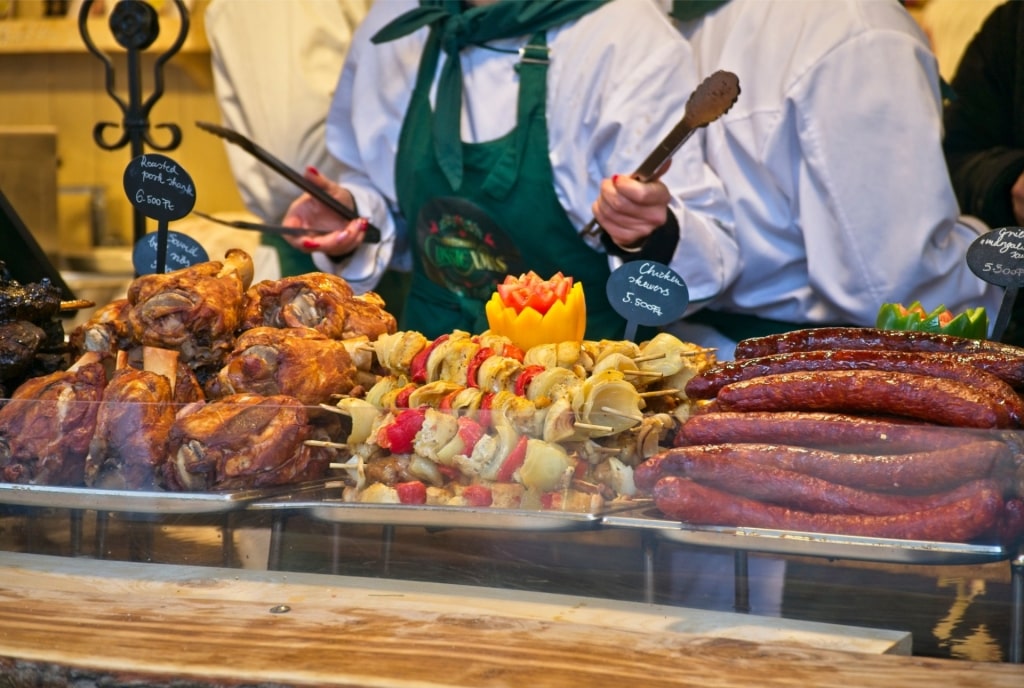
Hungarian food
While Hungary joined the European Union in 2004, it has not yet adopted the euro, which is widely used throughout Europe, including surrounding countries such as Austria and Germany. The official currency in Budapest and the rest of Hungary is the Hungarian forint (HUF), which interestingly takes its name from 13th-century gold coins—fiorino d’oro—minted in the Italian city of Florence.
A few market vendors in Budapest might take euros or dollars, but it is not advisable to use them as you will get an unfavorable exchange rate. Instead, withdraw forints from ATMs located inside or outside banks such as OTP, K&H, and MBH. Although you will find Euronet ATMs in and around the main tourist areas, it’s best to avoid them as they generally charge higher transaction fees.
For big purchases, it’s best to use any major credit card—but do withdraw a small amount of forints to use at market stalls for smaller souvenirs. Remember, once you leave Budapest you won’t be able to use any leftover forints anywhere else.
What are the opening hours for shops in Budapest?
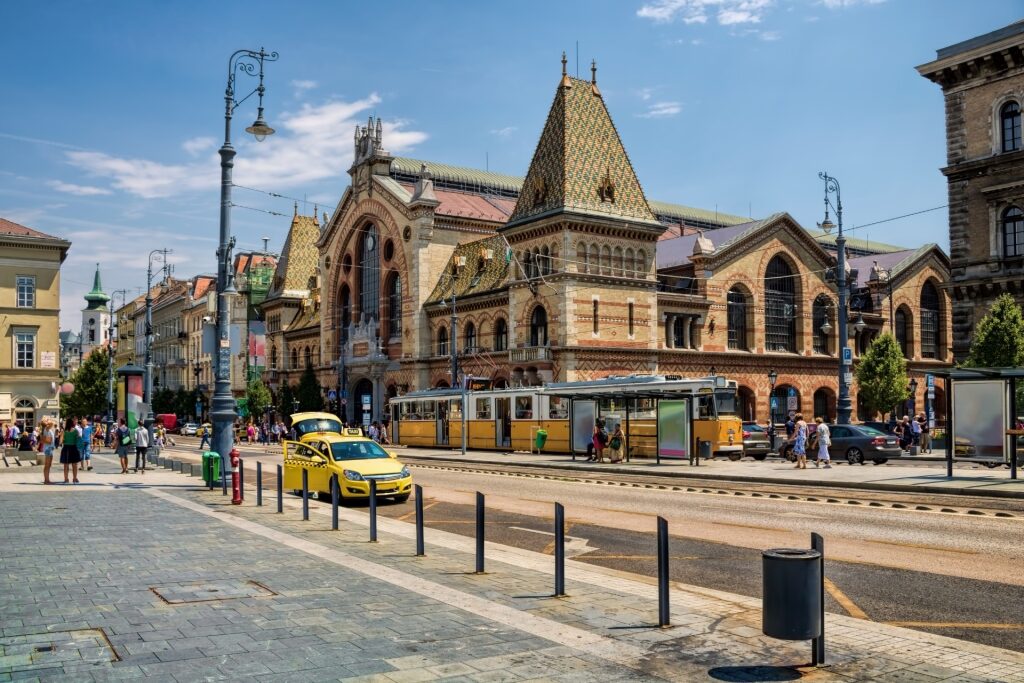
Central Market Hall
From Monday through Saturday, clothes shops and other stores open between 9 a.m. and 10 a.m. and close at 6 p.m. Supermarkets and food marts stay open longer. The Central Market Hall is open 6 a.m. to 6 p.m., Monday to Friday, and 6 a.m. to 4 p.m. on Saturday.
Budapest
Are you ready to enjoy some retail therapy? Now that you’ve read about shopping in Budapest, and what to buy in Budapest, take a look at Celebrity’s river cruises to Budapest and plan your dream European vacation.