
Narrowing down the best food cities in the world is an admittedly impossible task, since there are simply too many great contenders. Rather than a definitive lineup, consider this a jumping-off point to start your gastronomic adventures.
In these cities, you’ll find everything from mind-blowing ramen to chargrilled steaks and dainty tortellini. There are soulful bowls of laksa and crunchy cannoli, croissants and kaya toast. Here are some of the best cities to eat on the planet.
Tokyo, Japan

Tokyo, Japan
With a galaxy of Michelin stars that eclipses even Paris, Tokyo is often cited as one of the greatest places to eat on Earth. If you’re looking to splurge on a truly memorable meal, this is the place to do it.
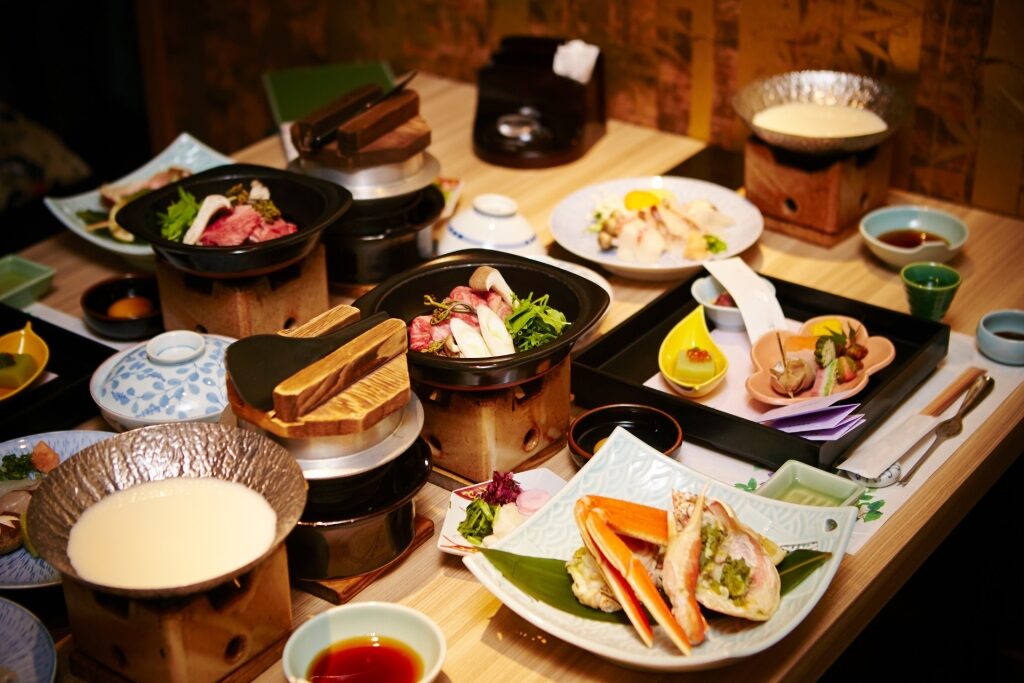
You might opt for kaiseki, a procession of small, exquisitely presented dishes showcasing seasonal ingredients. Or perhaps you’ll manage to score a coveted reservation for omakase, the dealer’s choice approach to sushi and sashimi.
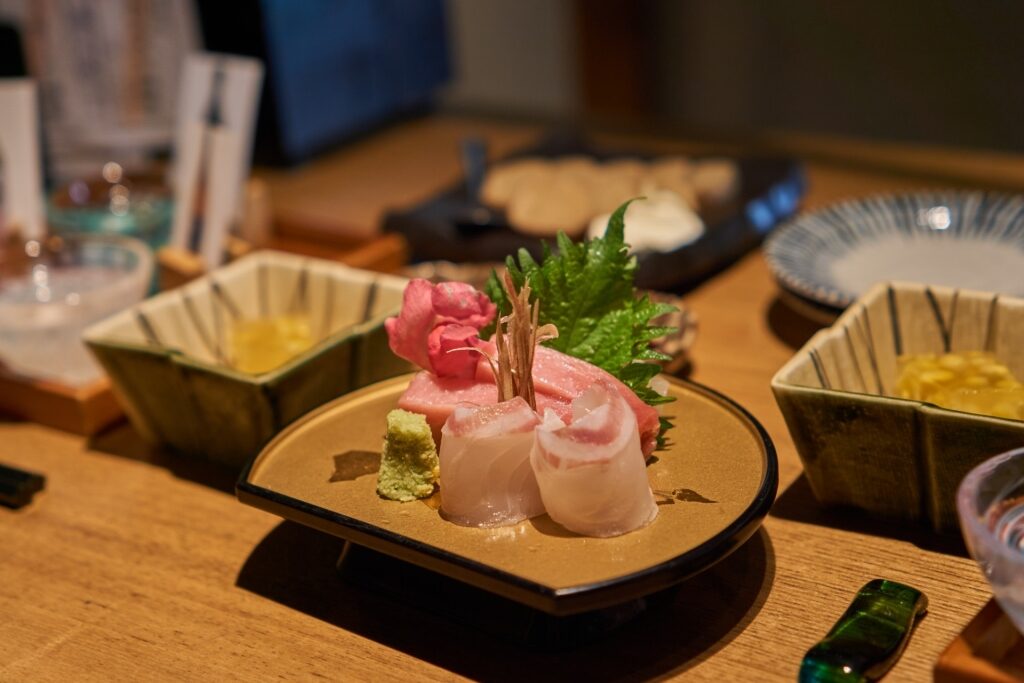
Izakaya
You don’t have to break the bank to dine fabulously here, though. The bar is sky-high for restaurants across the spectrum.
Some of the best Japanese food is often found in humble izakayas, drinking dens that often offer chefs room to experiment creatively. There’s also an excellent chance that you’ll stumble across a ramen shop—the city has more than 10,000—that will change your life.
Istanbul, Turkey
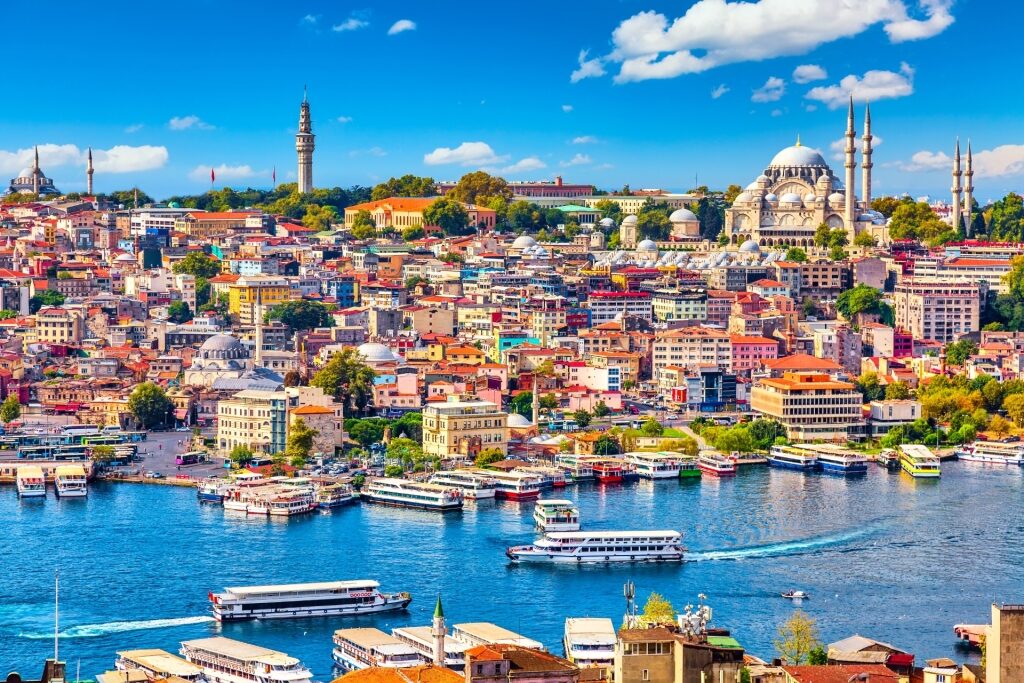
Istanbul, Turkey
Sprawled across two continents, Istanbul at times feels like an entire world unto itself. The city has changed hands and names a few times over the centuries. Both the Ottoman and Byzantine empires once claimed it as their seat of power. All that complicated history has resulted in a place truly unlike any other, with a remarkable food culture to match.
Start your Istanbul food journey with a menemen, a slightly scrambled omelet studded with various fillings, or çilbir, poached eggs on garlicky yogurt. Break into the yolk and watch it ooze all over, intermingling with the spiced butter drizzled on top. Strong Turkish coffee with sediment at the bottom is the perfect accompaniment.
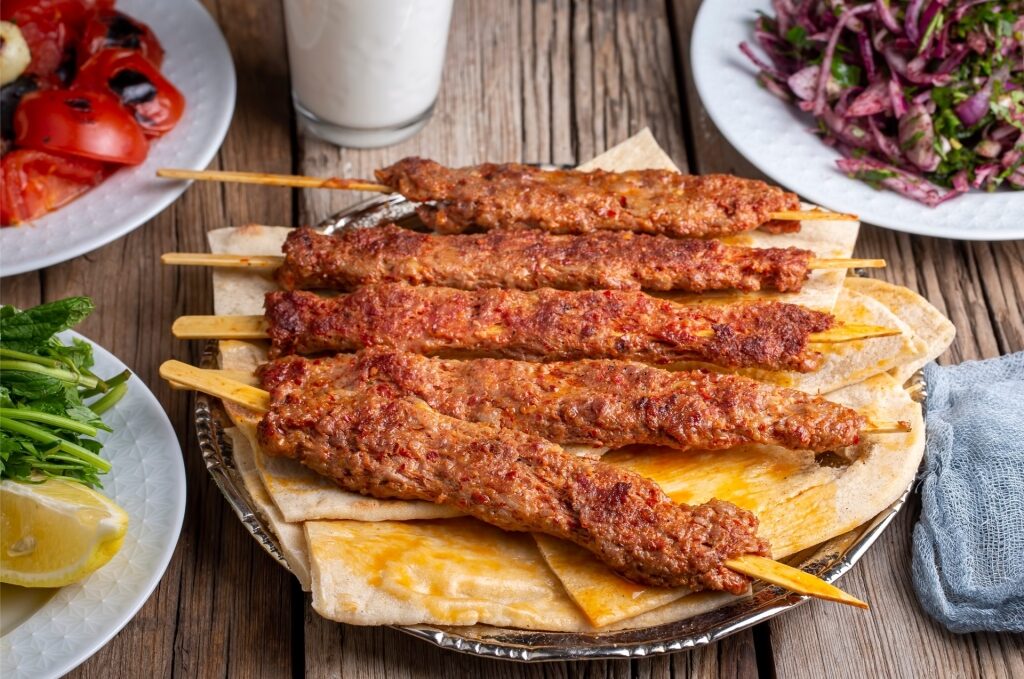
Adana kebab
At some point, you’re likely to find yourself at a kebapçi (kebab restaurant), where you’ll find all manner of carnivorous fare. Offerings might include Adana kebabs, made with minced lamb mixed with spices and pressed onto a skewer, as well as İskender kebabs, served in thin slices with sheep butter.
Bologna, Italy
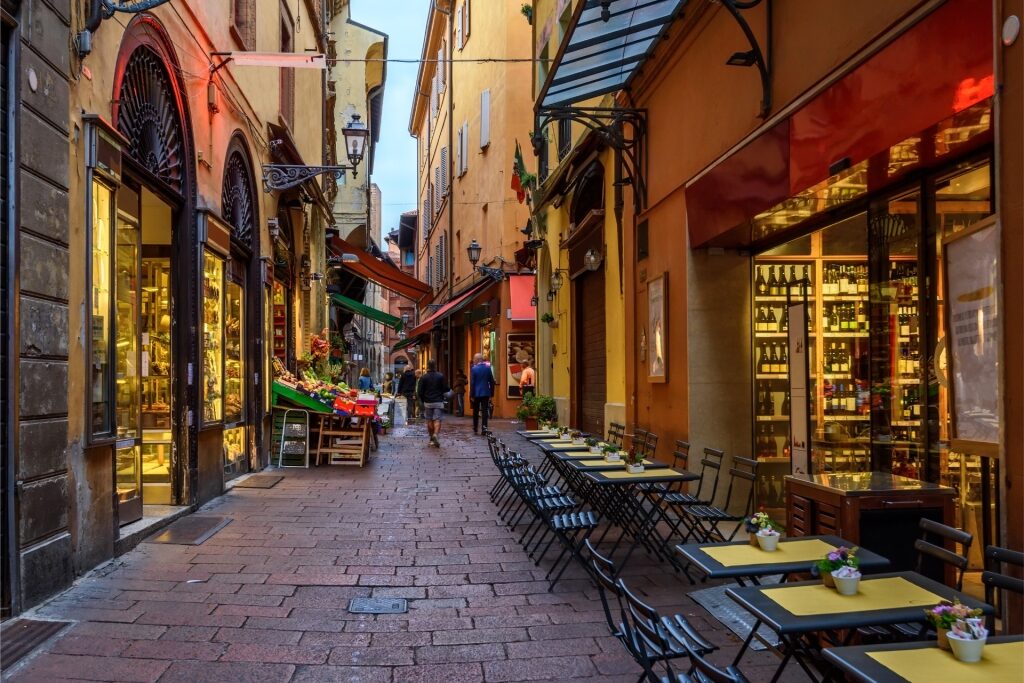
Bologna, Italy
The capital of Emilia-Romagna is famously nicknamed “la rossa, la grassa, la dotta,” or “the red, the fat, and the learned.” It’s a reference to the red-tiled rooftops, storied university, and unapologetically rich cuisine of Bologna.
While much of Italy celebrates la cucina povera, this historically wealthy city, surrounded by farmland, has long prized sumptuous, indulgent dishes. Butter, cream, wine-braised meats, cured pork, and luscious cheeses reign supreme.
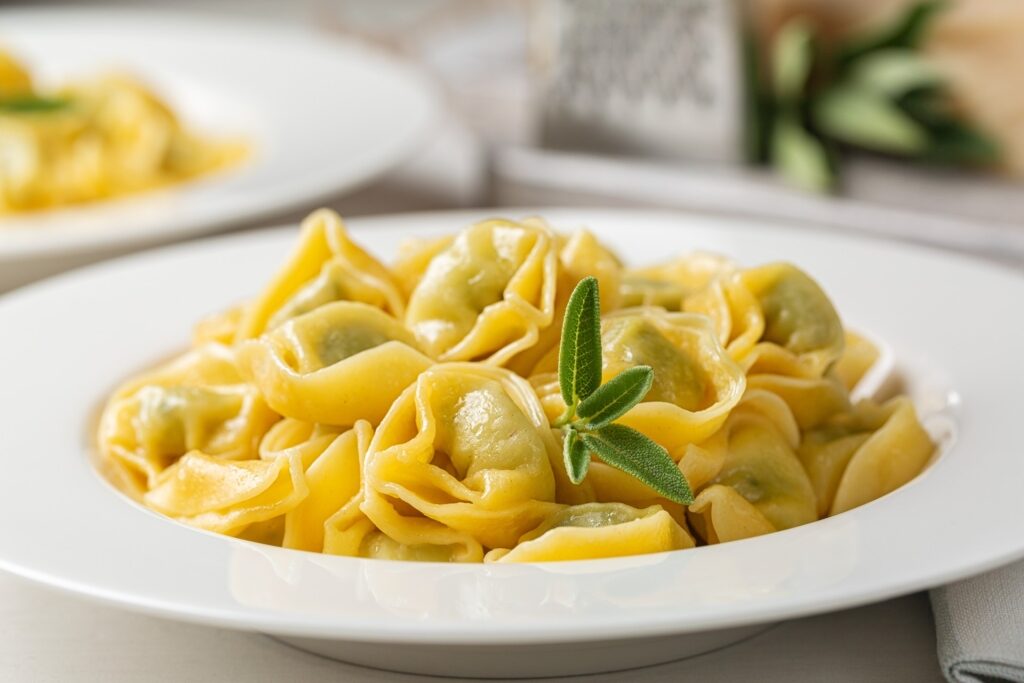
Tortellini
Parmigiano-Reggiano, prosciutto di Parma, mortadella, and balsamic vinegar were all invented in Emilia-Romagna, and you’ll find all of them on tables across Bologna. The city is also renowned for its fresh pastas.
Bologna invented the tortellini, thought to resemble Venus’s navel, as well as the marvelous lasagne Bolognese. “Spaghetti Bolognese” doesn’t exist here, but you will find tagliatelle al ragù with a slow-simmered sauce and silky, egg-rich noodles.
Bangkok, Thailand
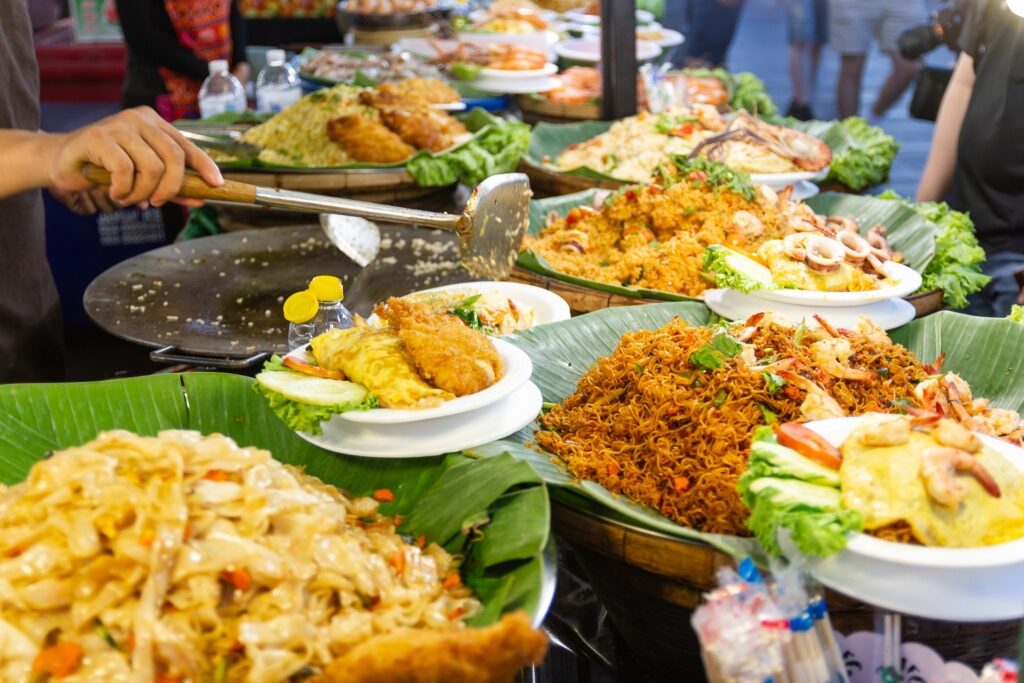
Street food in Bangkok, Thailand
There’s an almost dizzying array of incredible food in Bangkok. With a bevy of Michelin stars, the city’s fine dining is booming. Restaurants such as 80/20, Le Du, and Potong are reinterpreting Thai ingredients and recipes in innovative ways.
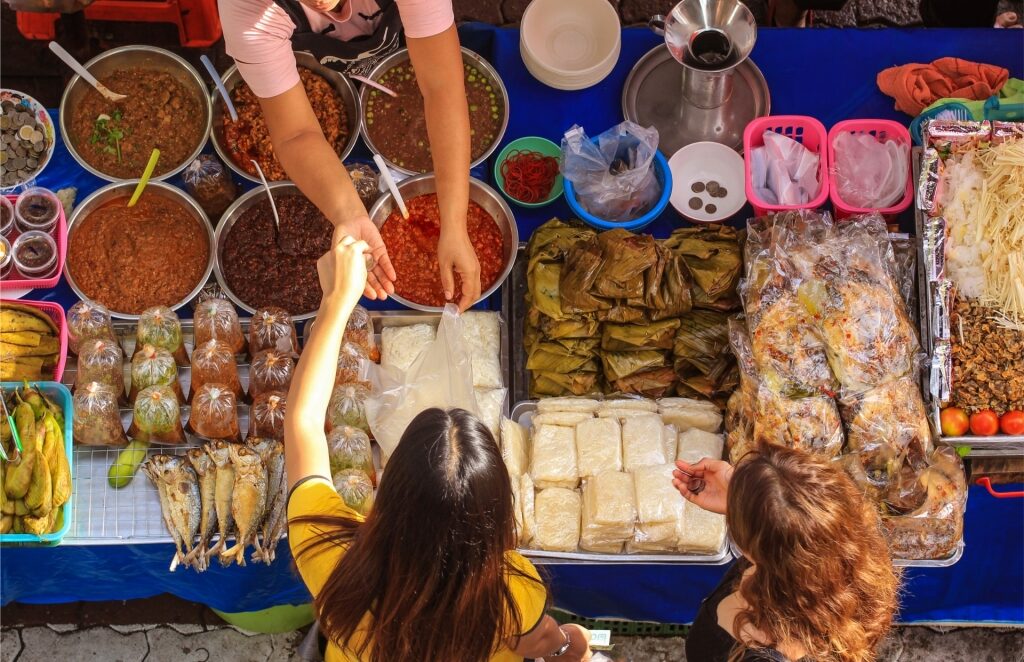
But you don’t need to splurge on a splashy tasting menu to eat well in the Thai capital. As in-the-know locals will say, some of the best food is found in the street. Head to Yaowarat Road in Chinatown for a full-on seafood feast, best washed down with a cold Singha beer.
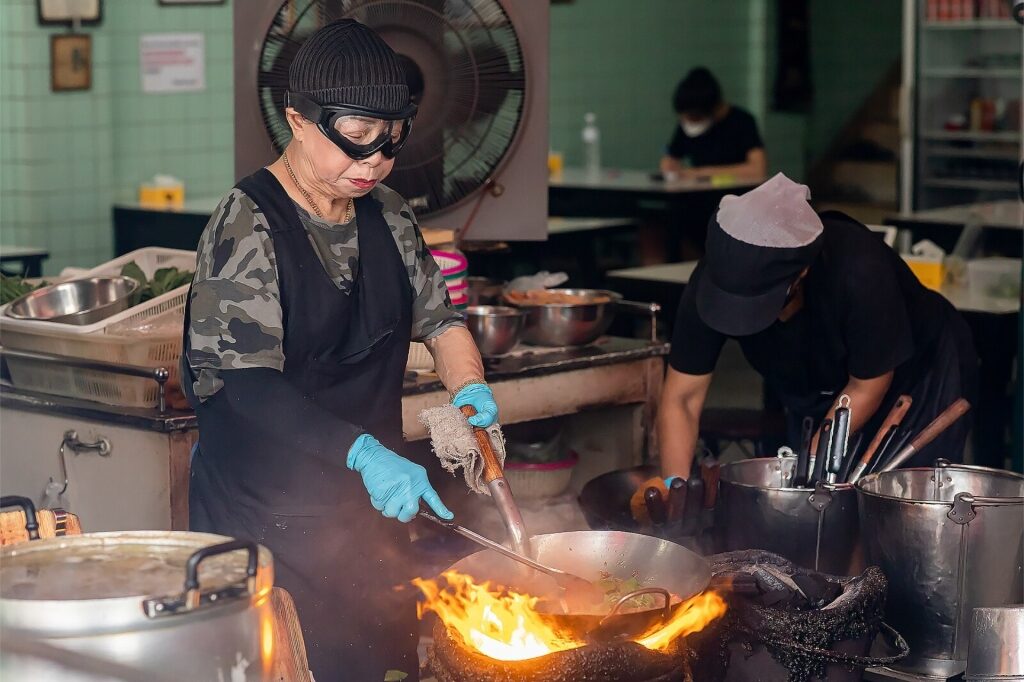
Jay Fai Photo by Streets of Food on Wikimedia Commons, licensed under CC BY 2.0
Some of the city’s most iconic restaurants are located in humble shophouses. Jay Fai, the eponymous eatery by a septuagenarian powerhouse, even bagged a Michelin star.
Her prices are higher than the restaurant’s modest interior might suggest, but that’s only because her ingredients are top-notch. The flaky lumps of crab in her omelet or the truly enormous prawns are from the same suppliers of many of the fanciest sushi spots in town.
New Orleans, USA
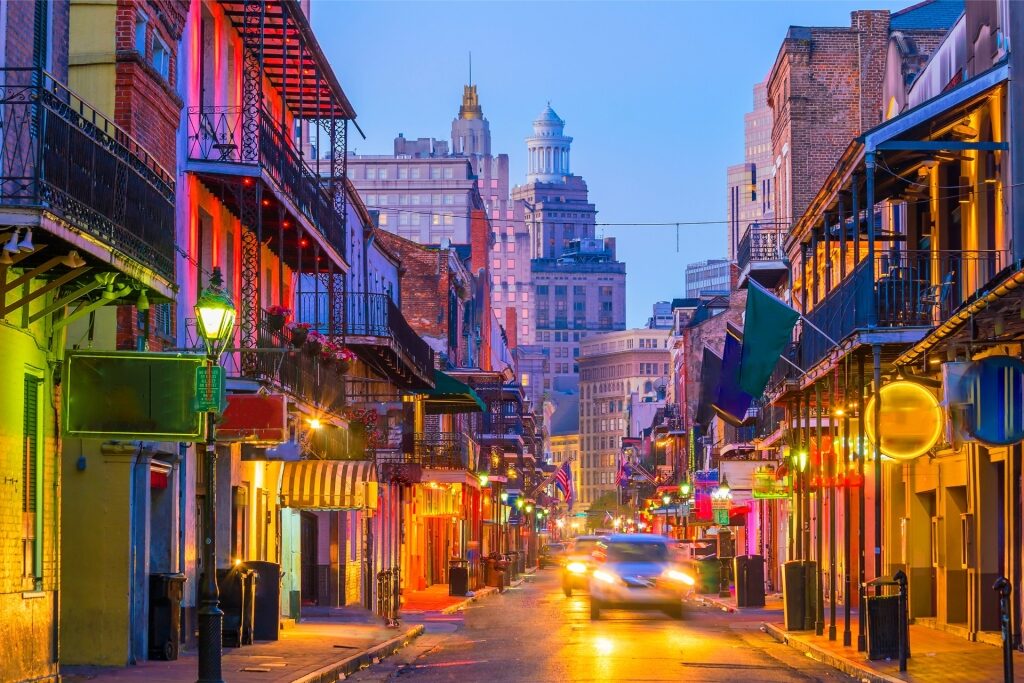
New Orleans, USA
New Orleanians know how to enjoy life, as evidenced by the sheer number of parades (the annual Mardi Gras festivities are just the tip of the iceberg). That joie de vivre carries over to the truly decadent cuisine.
At legacy stalwarts like Antoine’s and Commander’s Palace, the French-Creole dishes come loaded with butter, cream, and fresh seafood. Vibrant seasonings and a measured dose of heat help balance out all of that richness.
New Orleans is rightly proud of its unique food traditions, which were born out of a specific cultural melting pot. Both Creole and Cajun cuisines are a hybrid of West African, French, Native American, and Spanish ingredients and cooking techniques.
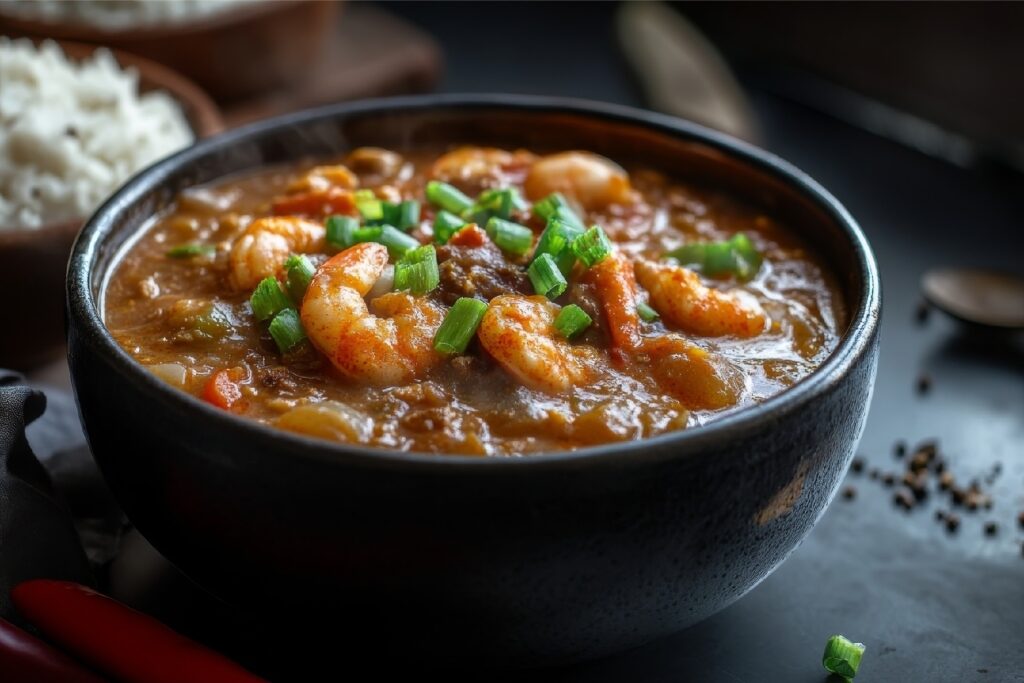
Gumbo
Dishes in New Orleans like étouffée and gumbo rely on a slow, precise layering of flavors. The roux, a mixture of fat and flour, must be cooked until brown and toasty, and the sofritto-like mix of bell peppers, celery, and onion cooked just right.
Ho Chi Minh City, Vietnam
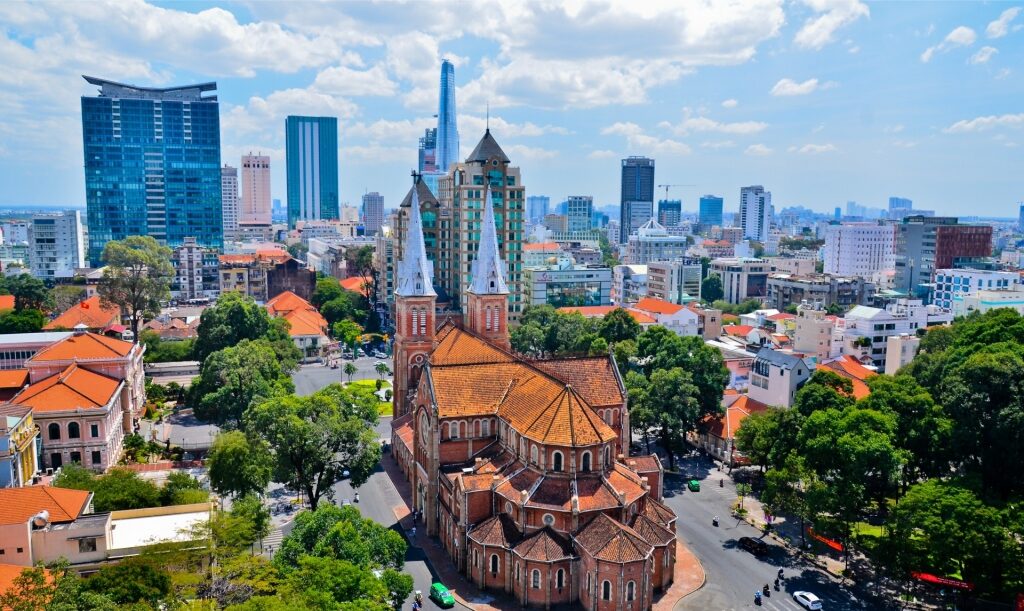
Ho Chi Minh City, Vietnam
Food in Ho Chi Minh City—or Saigon, as it’s still referred to by most locals—is exuberant, with bushels of fresh herbs and a bracing balance of acidity and umami in practically every dish.
While pho in the capital is an almost austere affair, here the rules feel more flexible. Garnishes are abundant, and individual cooks often put their own distinctive spin on the noodle soup.
For a more quintessentially Saigon dish, order a plate of cơm tấm, or “broken rice.” Historically a working-class dish, cơm tấm was a way to use up the cheaper broken grains. This hearty, lunchtime staple comes with all sorts of toppings, including pork cutlets, pork ribs, and steamed omelet.
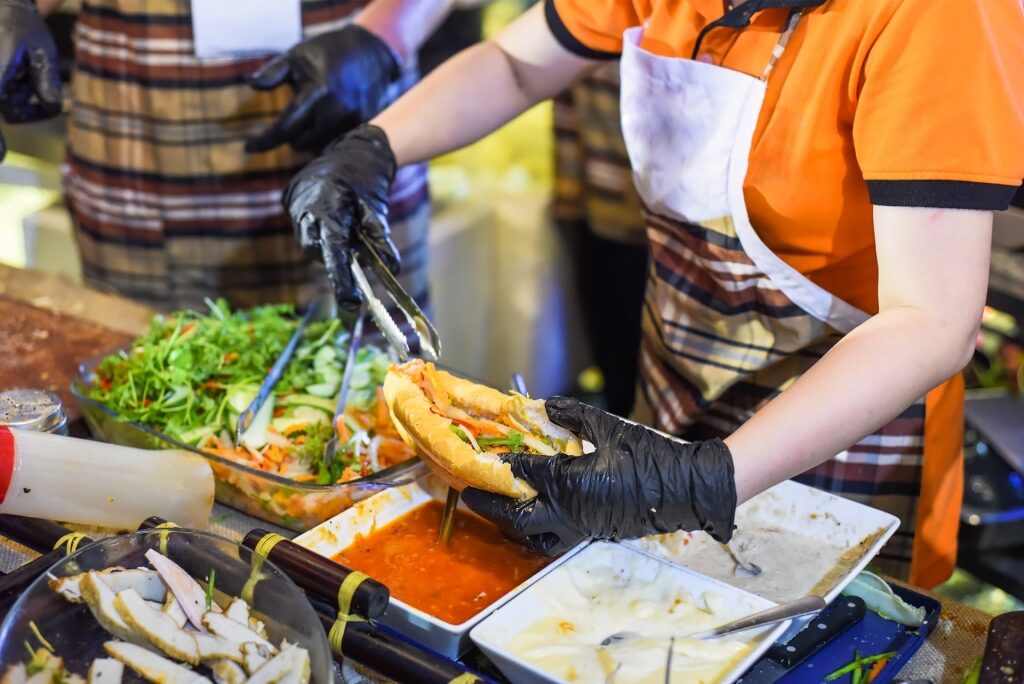
Bánh mì
Another essential Vietnamese dish to try here is bánh mì, which is beloved all over the world, but seldom executed with the level of finesse found here.
The key to a great bánh mì is the bread, which is airier than a French baguette, with a crackly crust. The best shops bake their bread on the premises, sometimes throughout the day to ensure maximum freshness.
Paris, France

Paris, France
We owe much of the modern Western concept of gastronomy to the French, from Marie-Antoine Carême to Georges Auguste Escoffier.
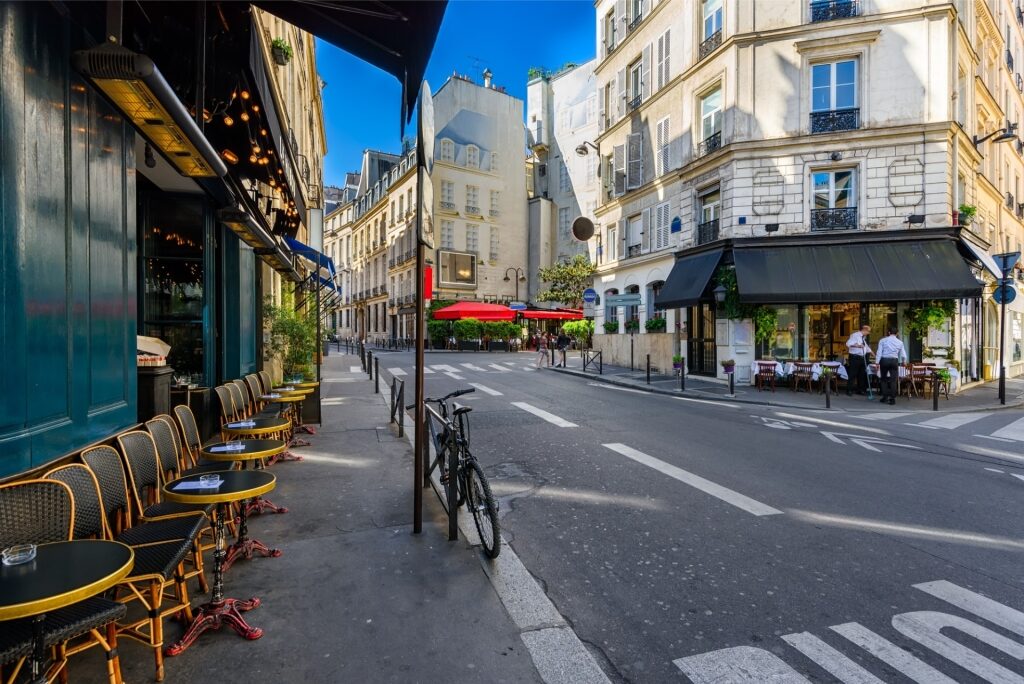
While Gallic cooking may no longer define “gourmet,” you can still eat astoundingly well in Paris. You’ll find everything from storied bistros and brasseries to modernist tasting menus.
For a quintessentially Parisian dining experience, head to a bouillon. First started in the 1800s, bouillons were “soup halls” serving affordable fare for the working classes. Today, these century-old establishments hold true to their proletarian roots. Think: unpretentious nose-to-tail French dishes at an affordable price.
Rome, Italy
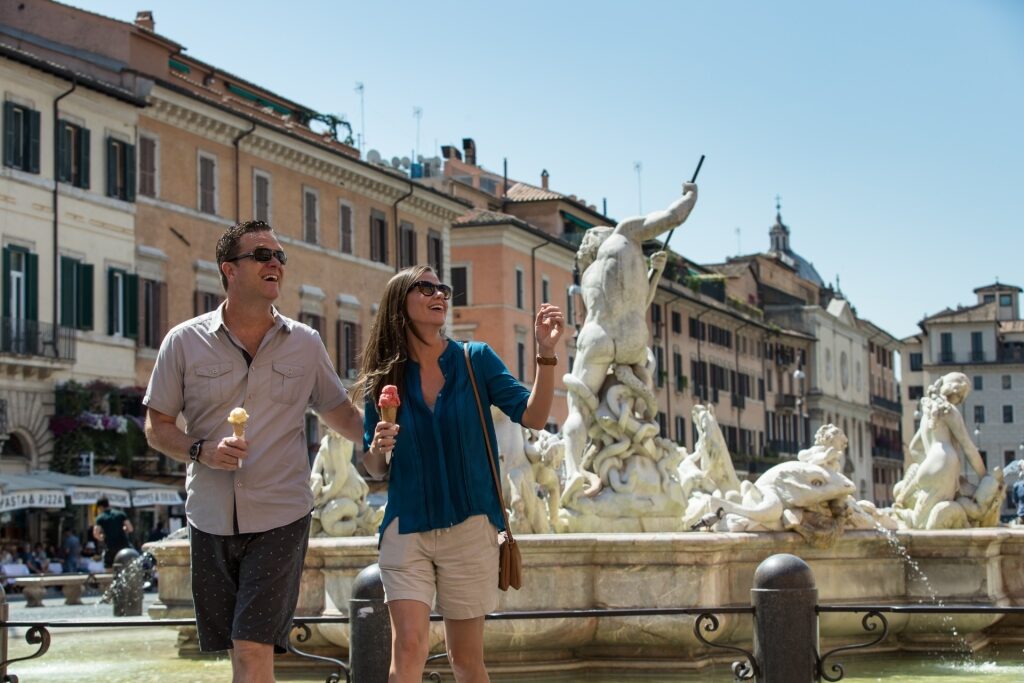
Rome, Italy
At its core, Roman food has long been about resourcefulness and simplicity, about making something astonishingly delicious from relatively few ingredients. For centuries, thrifty Roman cooks have been transforming the quinto quarto (fifth quarter) or offal into astonishing dishes.
While the rich dined on prime cuts, the working classes would feast on trippa alla Romana (braised tripe). Today, everyone in Rome dines on these dishes, not out of necessity, but rather because they taste great.
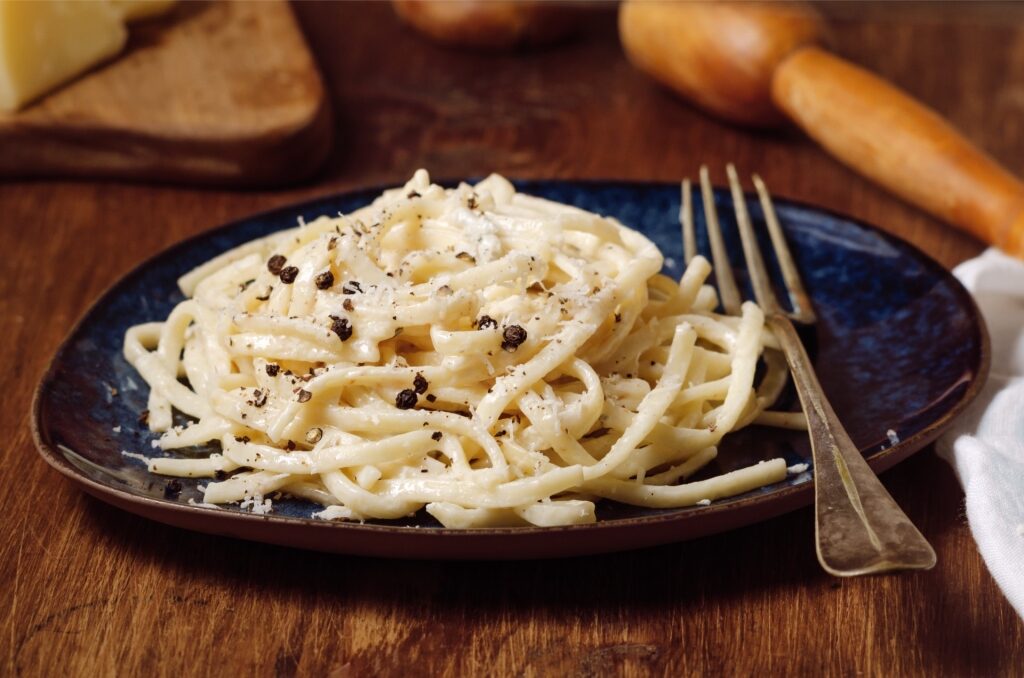
Cacio e pepe
Equally central in the local gastronomic pantheon are the four iconic Roman pastas, all of which are made with a number of ingredients you could count on one hand with fingers left over. There’s cacio e pepe, a creamy sauce of sheep’s milk cheese studded with cracked, toasted black peppercorns.
Carbonara is made with guanciale, or cured pork jowl, bound in an emulsified sauce of eggs and Pecorino Romano with black pepper.
Pasta alla gricia relies strictly on rendered guanciale fat and Pecorino Romano with black pepper to build the sauce. Finally, amatriciana features a chile-spiked tomato sauce with guanciale.
George Town, Penang, Malaysia
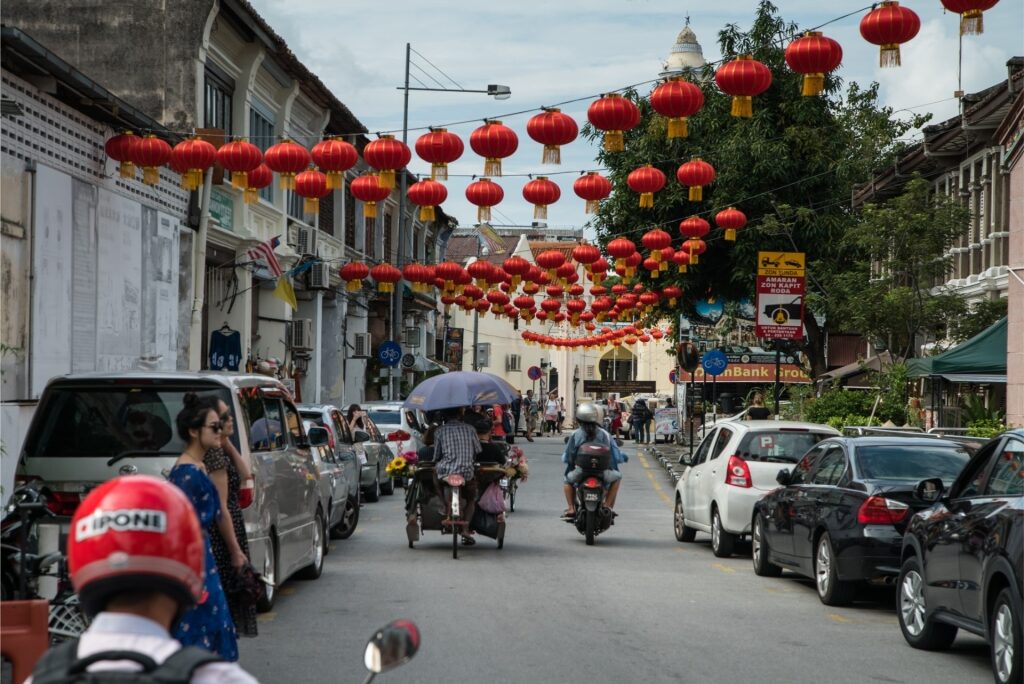
George Town in Penang, Malaysia
The capital of Penang packs in more phenomenal eats per square foot than just about anywhere on the planet.
With its picturesque colonial architecture and colorful street art, there are all sorts of excellent reasons to visit this historic trading port, but the food scene is the real star here. The hawkers in George Town are world-famous for a reason.
Be sure to start your morning off the Malaysian way at an old-school kopitiam (coffee shop). Order a white coffee and toast slathered with kaya (pandan-scented coconut milk custard).
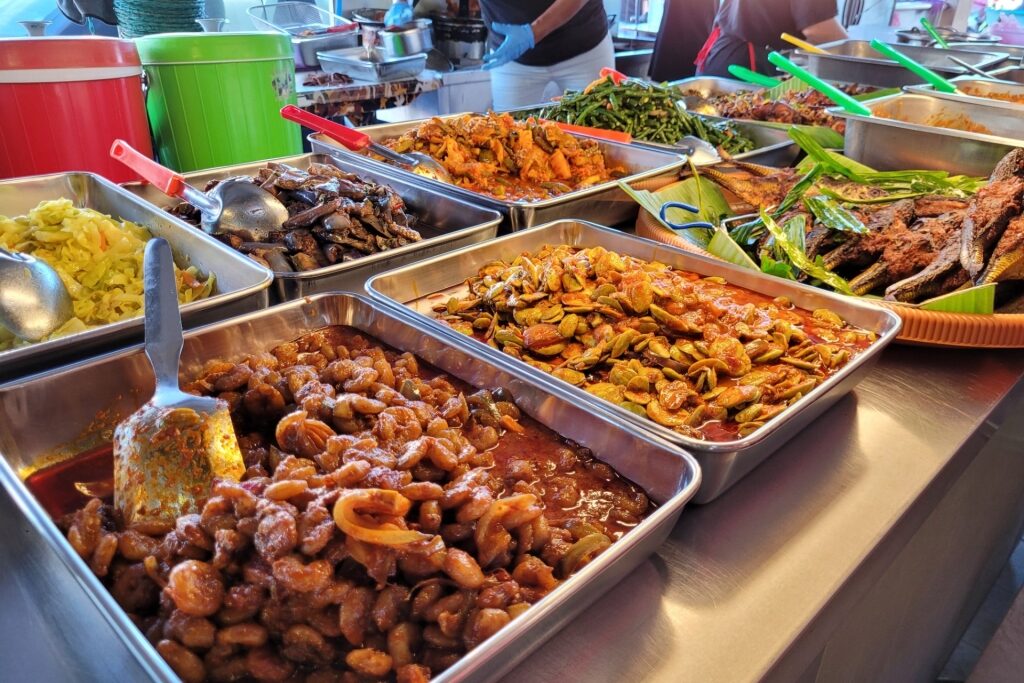
For lunch, consider the classic nasi kandar, or steamed rice with an array of curries. First brought over under British colonial rule by Penang’s Tamil Muslim population, it makes for a sumptuous, filling feast.
Barcelona, Spain
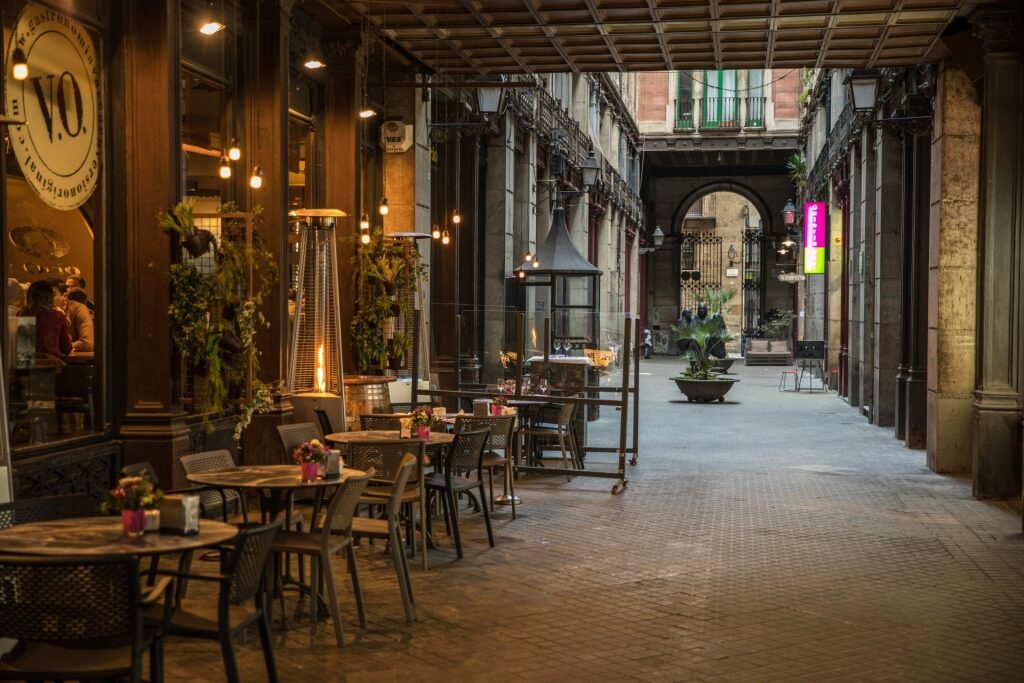
Gothic Quarter in Barcelona, Spain
In the early aughts, El Bulli, Ferran Adrià’s triple-Michelin-starred molecular-gastro restaurant, catapulted Barcelona to the center of the fine dining universe. Although the restaurant has been closed for over a decade, its legacy lingers in ambitious dining menus around the city.
From unfussy tapas bars to gastro-temples, there’s an almost unreasonable amount of great places to eat here.
As with every other corner of Spain, Barcelona prizes jamón Ibérico, the crimson-colored ham of prized Iberian pigs. The city also celebrates its seafood, which appears tinned, salted, dried, and fresh. It’s also the star of many a fideuà—the noodle equivalent to paella.
Taormina, Sicily, Italy
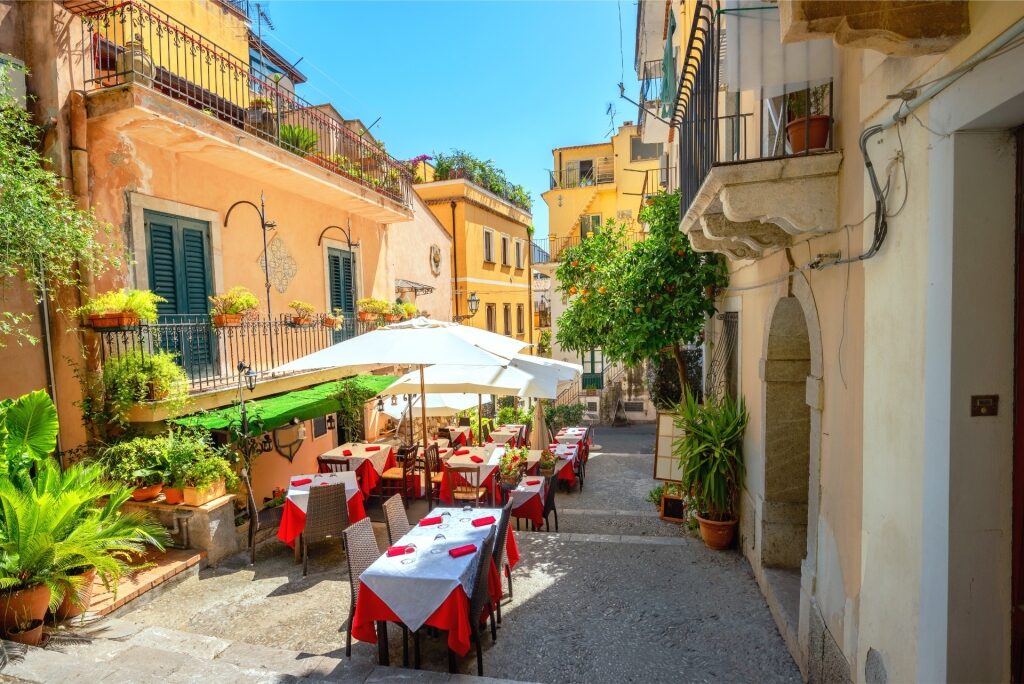
Taormina in Sicily, Italy
Officially, Sicily has been part of Italy since 1861, but as far as Sicilians are concerned, this island is still very much its own entity with its own cultural identity.
Sicilian dialect, which is still widely spoken, bears Greek, Vulgar Latin, Arabic, Catalan, French, and Spanish influences. The island has been ruled by many different powers, all of which left their cultural and culinary mark.
Much in the same way, Sicilian dishes are often radically different from those found in Piemonte or Emilia-Romagna. You won’t find eggy, whisper-thin fresh pasta noodles here, but rather dried pasta made with harder semolina flour.
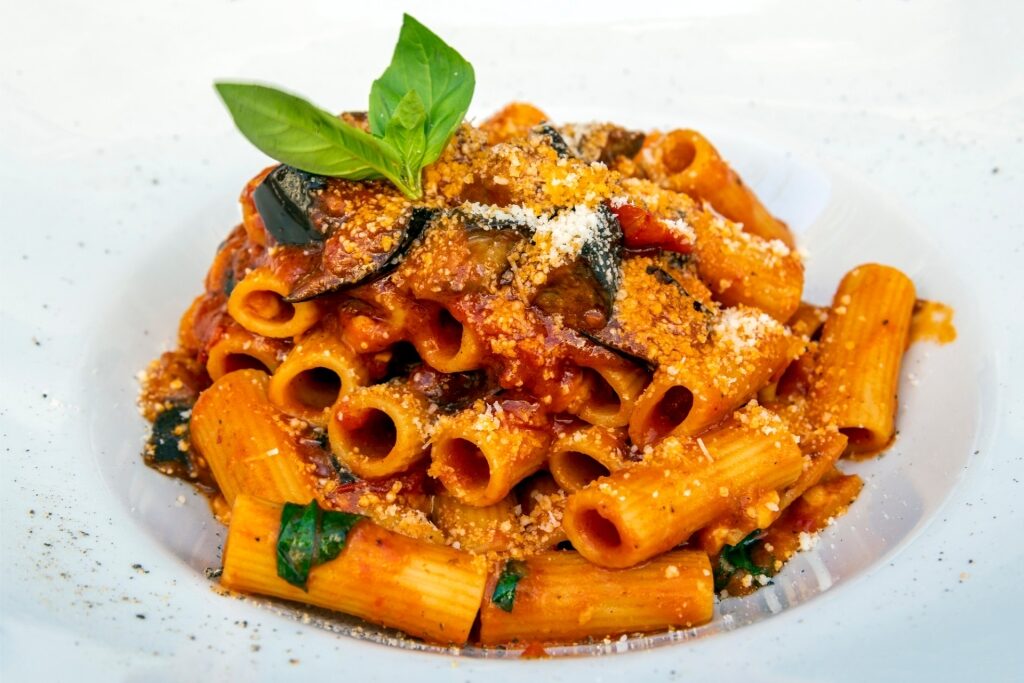
Pasta alla Norma
You’ll also find an abundance of sweet-sour flavors, along with spices like saffron, and plenty of dried fruits and nuts in savory dishes. Dining here is a real pleasure in part because some of these dishes exist nowhere else in the world.
Above all, Sicilian food is grounded in absolutely extraordinary ingredients. The volcanic soil here makes for spectacular wines and fresh crops of all sorts. And it almost goes without saying that the seafood is incredible. There are fragrant almonds from Noto, as well as rich sheep’s milk ricotta just about everywhere.
Singapore
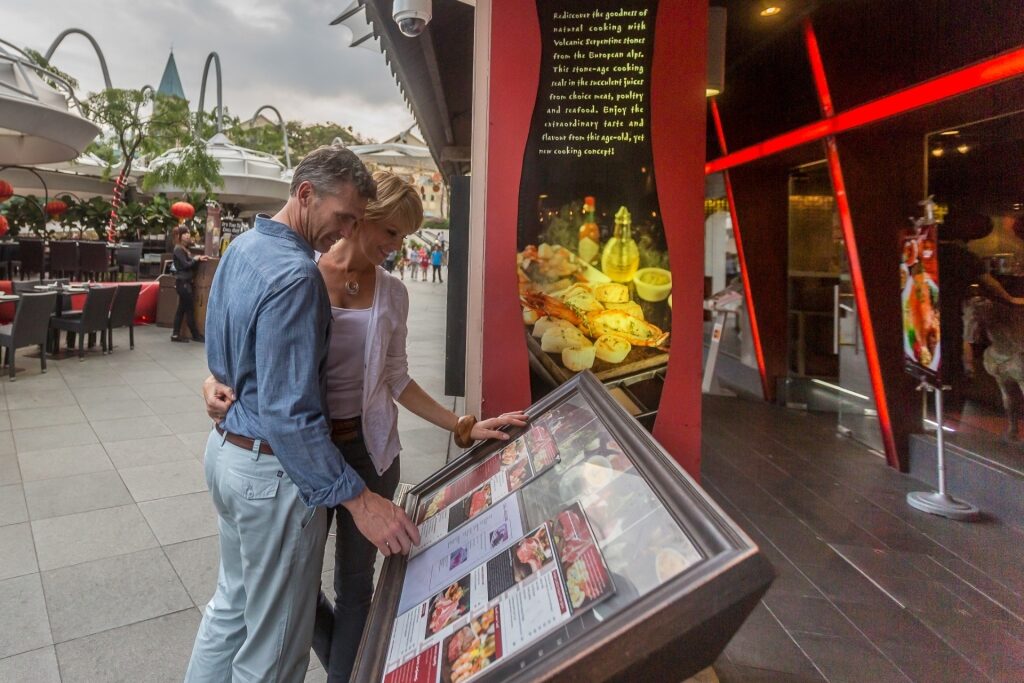
Restaurant in Singapore
Dining out is something of a national obsession in Singapore, where it often feels like some destination-worthy, Michelin-starred restaurant opens every other week.
In this truly global city-state, you can find just about any cuisine or dish your heart desires. Singaporean cuisine in and of itself is a cultural mash-up of Chinese, Malay, and Indian dishes.
Ask Singaporeans where to dine and they’re likely to tell you to head straight for a hawker center, where each vendor specializes in a specific dish. Seek out spicy bowls of laksa studded with prawns, fiery fish head curry, or freshly stir-fried char kway teow.
Be sure to try chili crab, a gloriously saucy Singaporean dish featuring a whole shell-on crustacean. Fluffy mantou (steamed buns) are perfect for soaking up the aromatic sauce.
Lisbon, Portugal
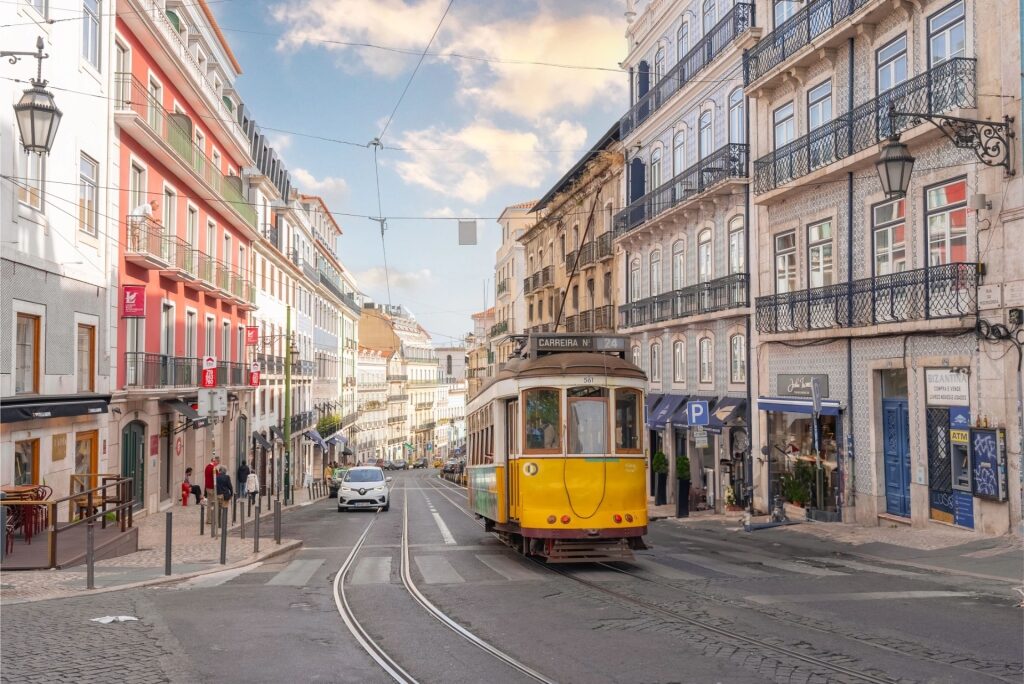
Lisbon, Portugal
Portuguese cuisine has been shaped by the country’s history as one of the most important trading hubs in the 15th and 16th centuries. During that time, seafaring merchants sailed from Mozambique to Hong Kong, along with all sorts of other destinations in between.
They brought all manner of spices and costly edible ingredients back to their homeland, which wound up in their cuisine. That’s how fierce African bird’s-eye chiles came to lend their distinctive kick to piri-piri chicken.
Restaurants in Lisbon serve absolutely incredible seafood, much of which comes in tins. For years, canned seafood carried a negative stigma in many parts of the world—not so here.
In Portugal, tinned seafood can be positively luxe, a real treat made with the finest ingredients. It also makes for a lovely souvenir or gift, thanks in no small part to the photogenic packaging.
Athens, Greece
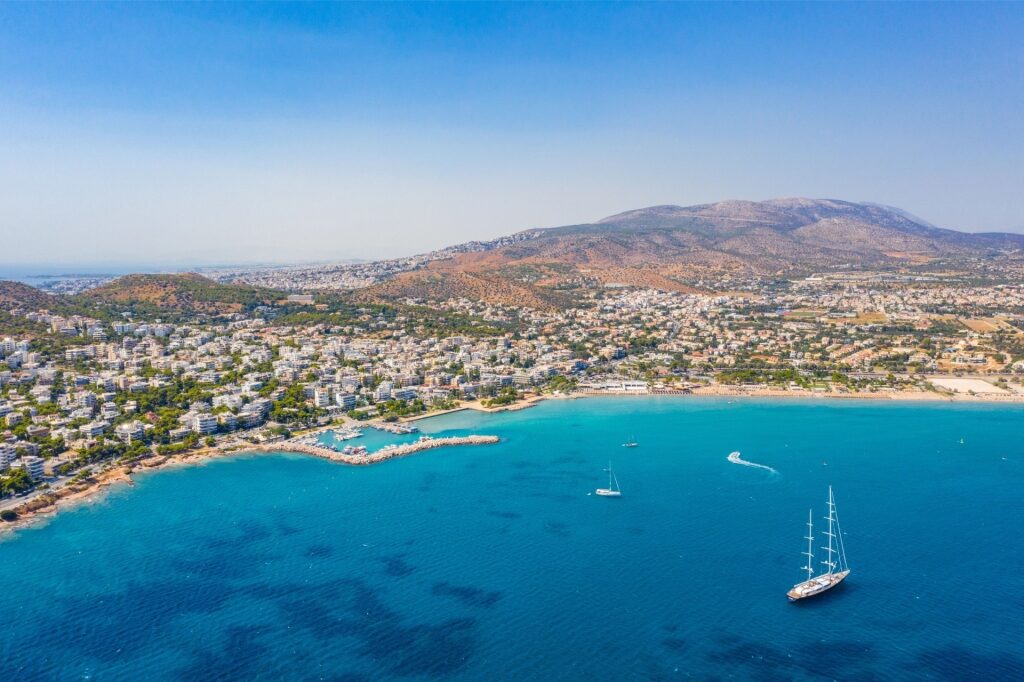
Athens, Greece
These days, slick, upmarket eateries pouring Greek natural wines seem to be opening in Athens every other day, yet the soul of the city still rests in its tavernas.
At these unpretentious establishments, the vibes are immaculate and the house wine is served by the carafe. Servers may tally up your tab on the paper tablecloth.
Greek cooking generally favors simplicity and celebrates the quality of the raw ingredients. Just-caught octopus, sea bass, or prawns often arrive at the table with nothing more than a squeeze of lemon, sea salt, and a generous glug of aromatic Greek olive oil. Lamb chops come bearing a hint of char from the wood-fired grill.
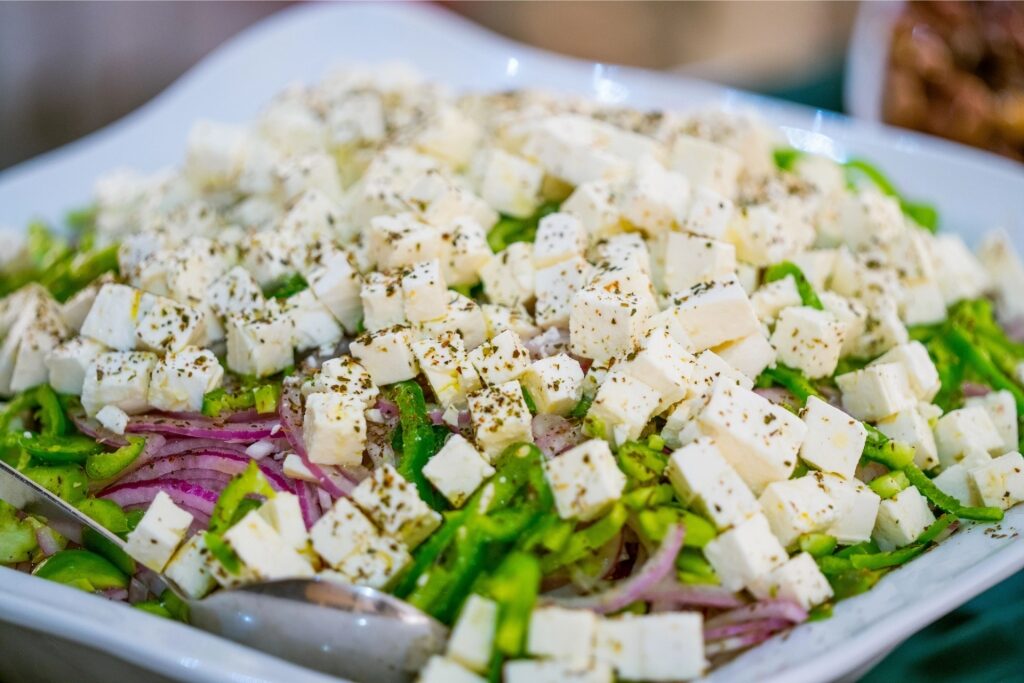
Greek salad
It’s easy to eat well here, as vegetables are an integral part of nearly every dish in Athens. Invariably, you’ll find a tangle of horta, or blanched wild greens dressed with lemon. A xoriatiki (village) salad is so ubiquitous that it’s often known abroad as simply a Greek salad.
In its home country, the tomatoes, cucumber, and olives come topped with a large block of feta. You might also keep an eye out for a Dakos salad, a Cretan specialty made with barley rusks, tomatoes, and cheese.
Hong Kong, China
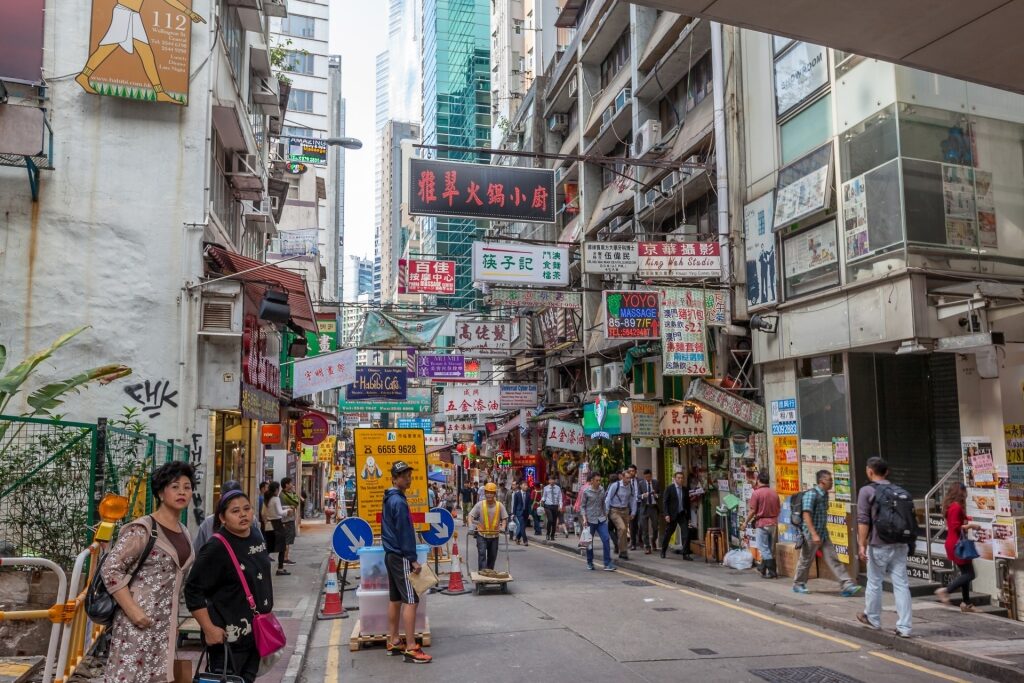
Hong Kong, China
Hong Kong could give New York a run for its money as the real city that never sleeps. There are exceptional things to eat and drink more or less around the clock.
The dining scene here errs wildly cosmopolitan. Anything from Lebanese mezze to Korean fried chicken to Punjabi curries is available and often top-notch.
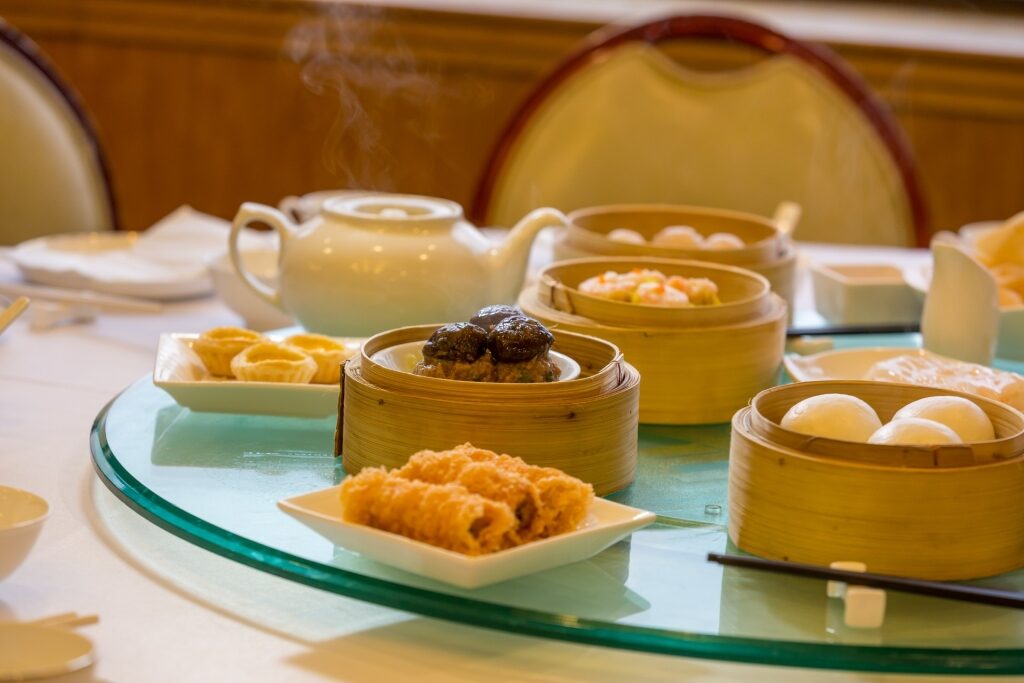
Dim sum
There are a number of dining experiences and dishes absolutely not to be missed here. Head to one of the few last dai pai dong, an old-school, open-air restaurant, for unpretentious Cantonese fare.
Visit a cha chaan teng, the local equivalent of a diner, for Western-influenced classics. Yum cha, a morning ritual of bite-sized dim sum accompanied by tea, is essential.
Copenhagen, Denmark
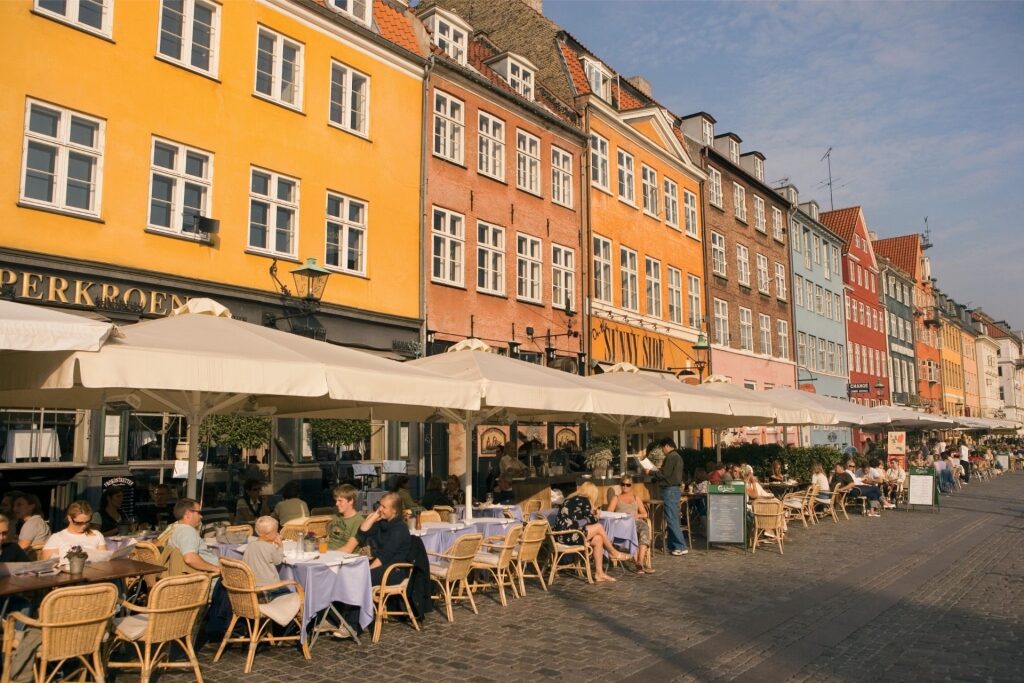
Copenhagen, Denmark
Few restaurants in recent memory have had the level of impact that René Redzepi’s Noma has. The experimental eatery made Copenhagen the epicenter of the New Nordic movement.
It also put the Danish capital on the global fine dining map in a serious way. All of a sudden, sea buckthorn and other foraged ingredients were on the menu.
More than a decade later, Copenhagen’s dining scene is still booming, although it continues to evolve in new and dynamic ways. Redzepi’s emphasis on hyper-local ingredients, fermentation techniques, and visually striking presentation continues to be a big influence.
But it’s hardly all about avant-garde tasting menus these days. More casual natural wine bars, artisan bakeries, and stellar seafood restaurants are thriving.
Although the Michelin-starred menus tend to hog the spotlight, don’t sleep on more traditional Danish dishes. All over town, you’ll find smørrebrød, open-faced sandwiches on buttered rye, exquisitely decorated.
New York City, USA

New York City, USA
More than 700 languages are spoken in New York City, and it often feels like nearly as many cuisines are represented. It’s often said that it’s possible to travel the whole world without ever leaving the five boroughs.
Head to Brighton Beach for Uzbek, Georgian, and Russian food, or hop on the ferry to Staten Island for Sri Lankan eats. There’s old-school Italian-American chicken parm up on Arthur Avenue in the Bronx and perfectly spiced Trinidadian doubles in Bed-Stuy.
Manhattan’s Chinatown is one of the largest and oldest in the U.S., but it’s far from the only one. You’ll find more Chinese enclaves with incredible restaurants in Sunset Park and Flushing. These days, the East Village and Long Island City also boast a wide array of regional Chinese dishes.
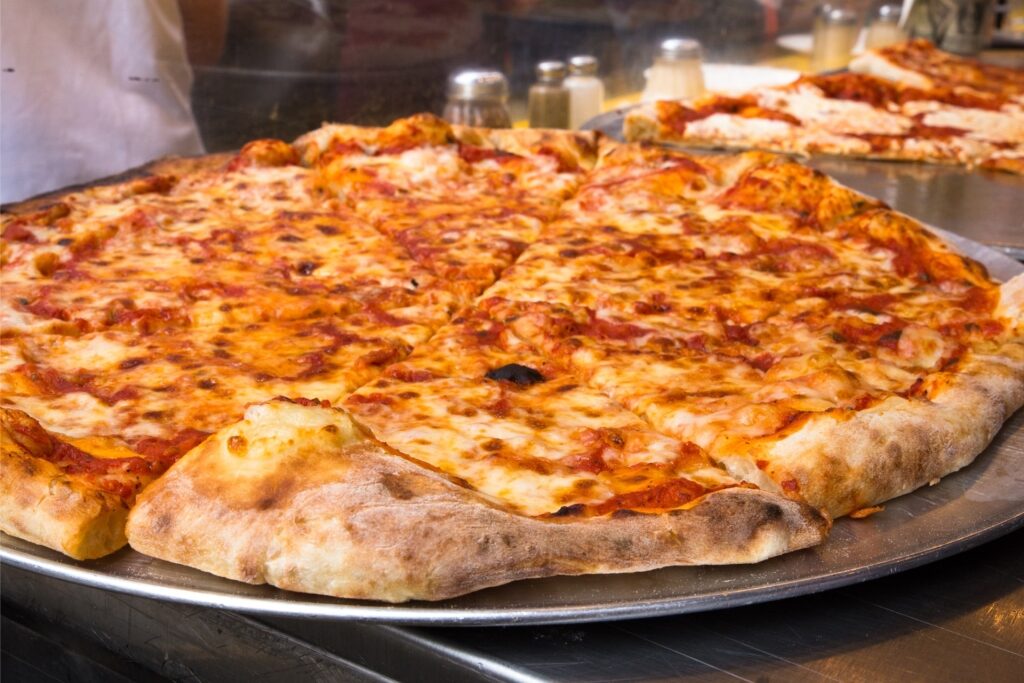
Pizza
Ask anyone what the city’s most iconic dishes are and they’re likely to point to two: bagels and New York-style pizza. Whether or not you believe the local water improves them, it’s undeniable that both are excellent here.
The New York slice, in particular, has been going through something of a renaissance in recent years, with increasingly sophisticated doughs and toppings. That said, you can never go wrong with a slice of Joe’s Pizza.
Naples, Italy
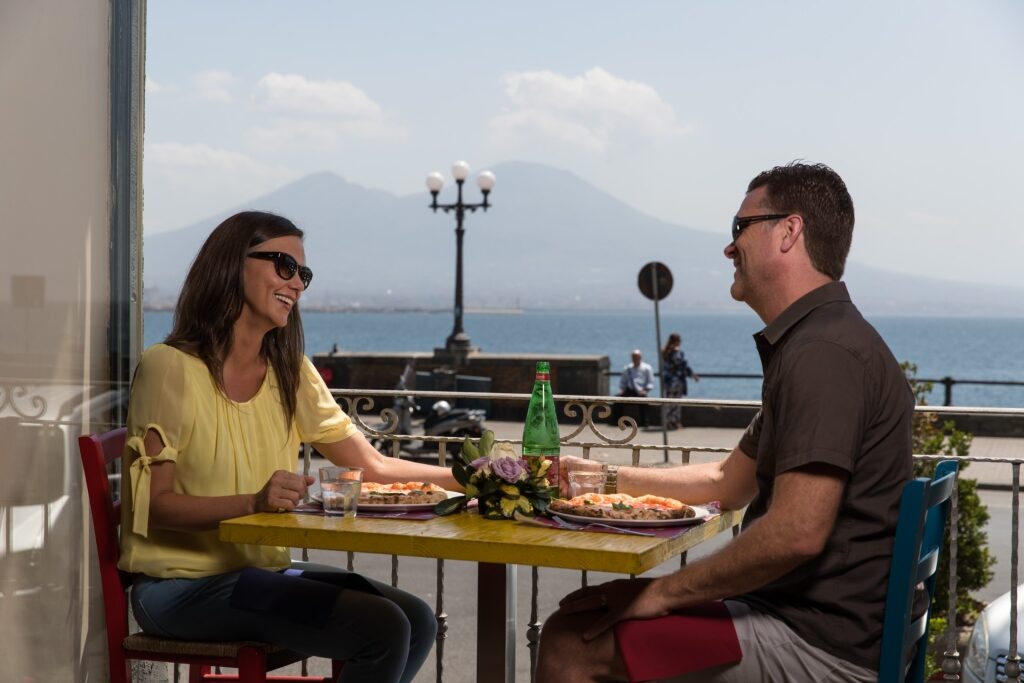
Restaurant in Naples, Italy
From pizza Margherita to pasta al pomodoro, many of the dishes now synonymous with Italian cuisine are thought to have originated in Naples.
While the exact origins of these classics are debated, what’s certain is that they’re very much celebrated in the city to this day. For aspiring pizzaiolos around the world, a visit to L’Antica Pizzeria da Michele is akin to a pilgrimage.
As pizza has migrated around the globe, it’s evolved into dozens of regional splinter variations, from extra-crispy Detroit-style squares to thin New York-style slices.
True Neapolitan pies are another beast entirely. The thin, sparsely topped interior is ringed by a puffy, leopard-spotted cornicione. These pizzas cook in blazing-hot, wood-fired ovens in less than a minute and a half.
Buenos Aires, Argentina
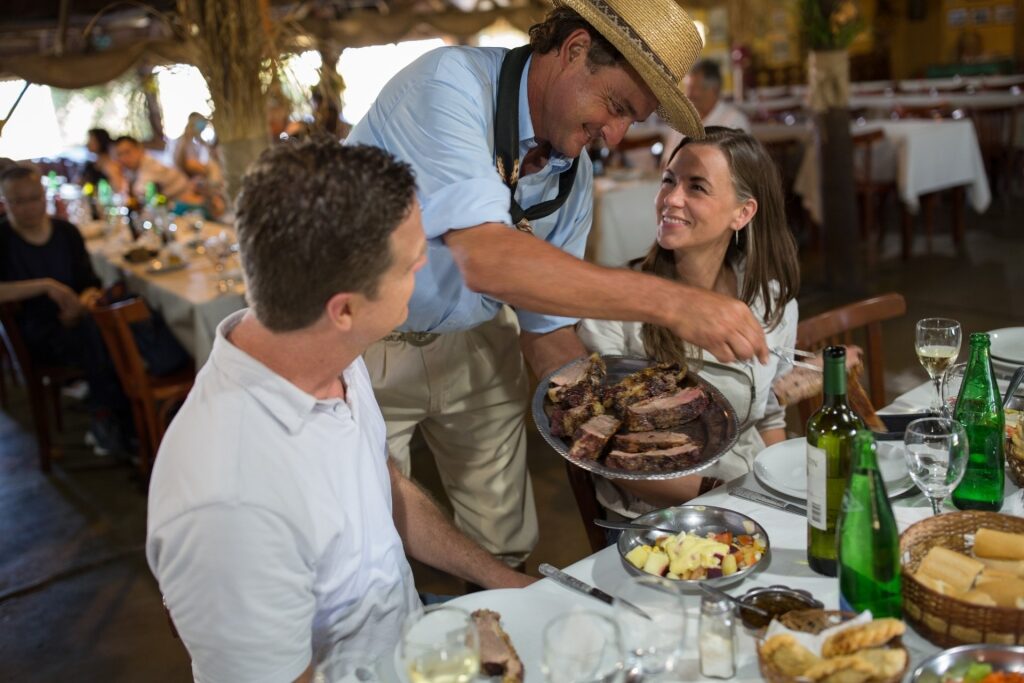
Restaurant in Buenos Aires, Argentina
The Argentine capital of Buenos Aires has a well-deserved reputation for serving some of the best steaks on the planet. The majority of the beef here is grass-fed, giving it a more nuanced flavor profile and slightly less marbling.
It’s hard to beat an indulgent feast of dry-aged steaks cooked over wood and accompanied by copious bottles of Malbec.
That said, there’s much more than just beef to the local cuisine. Argentinian food draws heavily on the country’s diverse population, which has been shaped by waves of immigration.
You’ll find Italian food here that rivals anything in Rome. In particular, there’s a highly ambitious pizza scene, with everything from textbook Neapolitan pies to innovative creations.
Hanoi, Vietnam
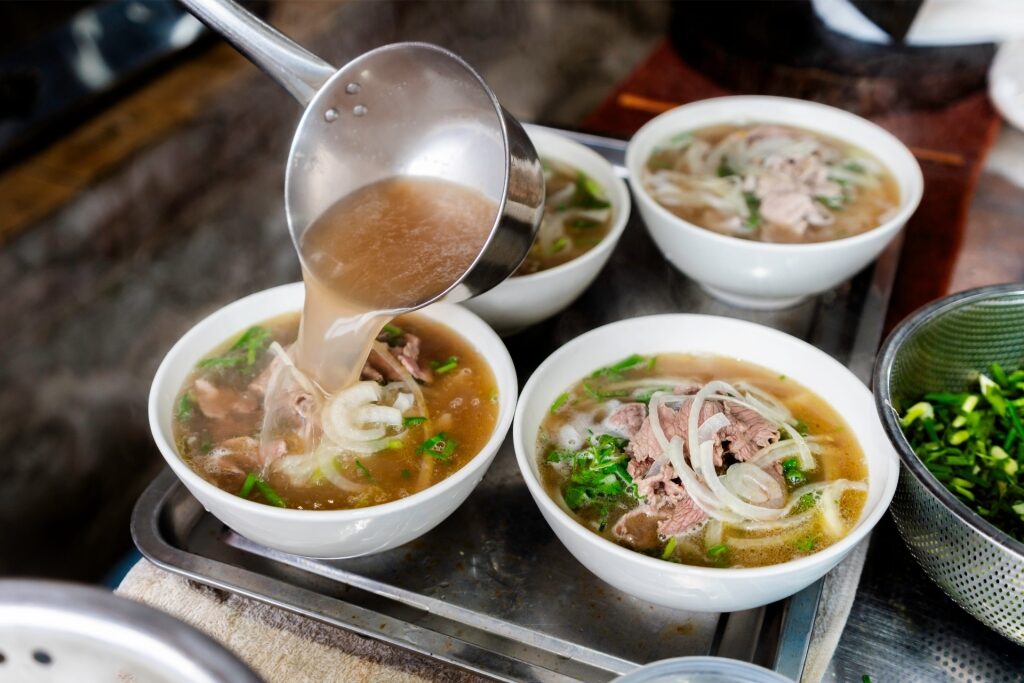
Pho
The late Anthony Bourdain famously declared his love for Vietnamese cuisine. That’s high praise from someone who traveled the world for years in search of great eats, but it’s warranted.
The capital is perhaps most famous for inventing pho, the soul-satisfying rice noodle soup. In its hometown, it typically comes with a fragrant beef broth and minimal adornment.
Another popular dish in Hanoi is bún chả, a textural riot of vermicelli noodles, grilled pork meatballs, and usually pork belly piled high with pickled vegetables and herbs.
Bún Chả Hương Liên, the restaurant where President Barack Obama dined while in town, is still serving. Also keep an eye out for chả cá Hà Nội, made with turmeric-tinted yellow catfish and loads of fresh herbs.
Sydney, Australia

Sydney, Australia
Much of the world now associates Sydney with avocado toast and flat whites, but there’s much more to this city’s diverse dining scene. These days, you’ll find outstanding Thai, Vietnamese, Lebanese, Chinese, Indonesian, and Indian restaurants here, among many others.
Quintessentially Australian dishes to try while in town include meat pies, a savory descendant of the British pub staple. Kangaroo meat makes regular menu appearances here. For the uninitiated, this marsupial is on the lean side, with a flavor somewhat akin to gamey beef.
Be sure to finish any Sydney meal with a pavlova, the airy confection of meringue crowned with fruit and whipped cream. Famously, it was named in honor of the Russian ballerina Anna Pavlova, as the billowing meringue is thought to resemble a tutu.
FAQs
What is the foodie capital of the world?
Paris, France
Ask a dozen different people what the best city for food is in the world, and you’ll get a dozen different answers. Old-school gourmands might say Paris, while others could insist on Tokyo or Bangkok. Some would advocate for smaller cities with their own distinctive culinary histories, such as Bologna, New Orleans, or Penang. The truth is that there’s no one right answer, but it’s a lot of fun searching for one.
What major city has the best food?

Tapas
There are so many major cities with incredible food on this list. Whether you opt for tapas in Barcelona or pho in Hanoi, it’s hard to go wrong here.
What city has the most Michelin-starred restaurants?
Kaiseki
The French may have invented the Michelin Guide, but for many years, Tokyo has had the most Michelin stars.
What city has the best street food?
Street food in Penang, Malaysia
While it’s impossible to pick one city with the best street food, Penang certainly has to be a strong contender. Although governments in some parts of Southeast Asia have cracked down on street hawkers, the Malaysian government has allowed Penang’s to continue to thrive. Here, you’ll find a diverse array of delicious eats all within the walkable historic center.
What are the best food cities in Asia?
Street food in Bangkok, Thailand
There are too many amazing food cities on the Asian continent to name all of them. From Bangkok to Hong Kong, Ho Chi Minh City to Singapore, there are some real heavy-hitters here.
What are the best food cities in Europe?
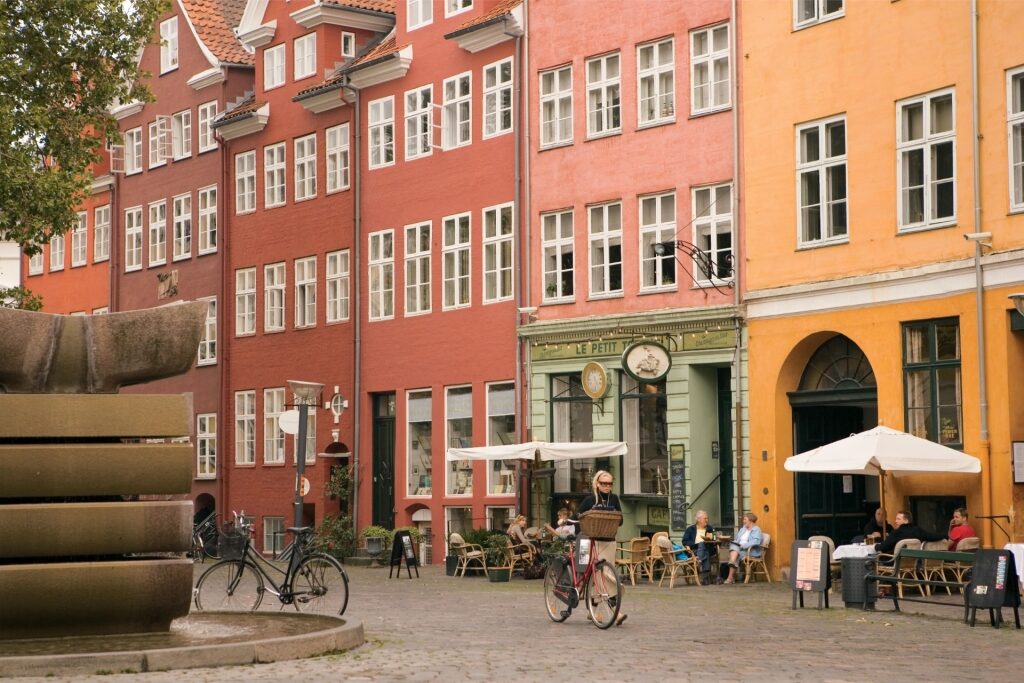
Copenhagen, Denmark
There’s a remarkable diversity of cuisines across the European continent. From Copenhagen to Paris, there are so many great food cities here.
Which city has the most diverse food scene?
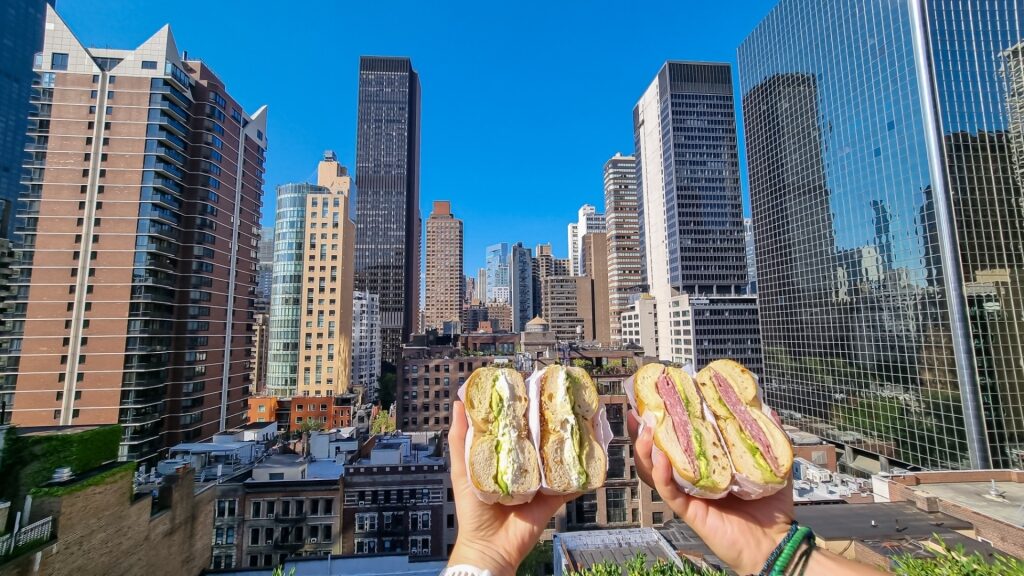
New York City, USA
New York City has one of the most diverse food scenes on the planet. More than 700 languages are spoken in the largest American city. Here, you can eat Uzbek, Guyanese, Tibetan, Nigerian, Japanese, Sri Lankan, and Brazilian dishes all in the same day.
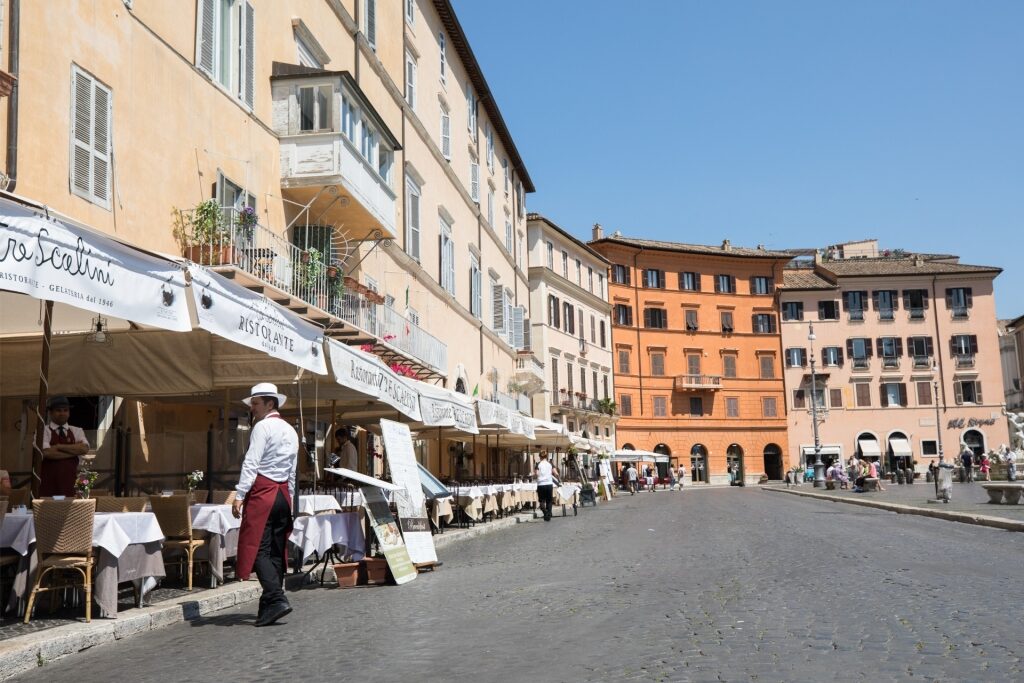
Rome, Italy
There are so many delicious places to explore. Browse itineraries and book your next culinary adventure with Celebrity Cruises today.