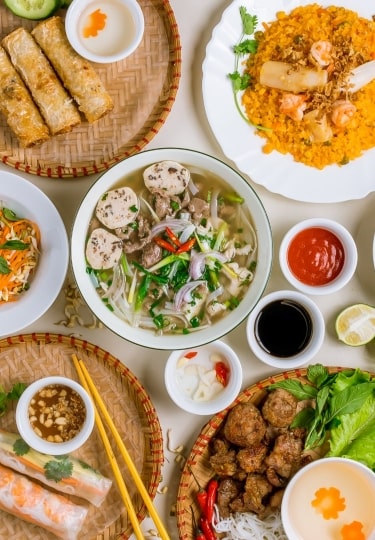
Vietnam is known for its rich culture and history, beautifully diverse landscape, and vibrant, bustling cities. Perhaps one of the top things it’s known for though, is the cuisine; an exciting street food scene, intriguing culinary delights, and world-famous dishes that dazzle hungry travelers.
The Southeast Asian country is a feast for the senses, with exotic flavors and scents woven into the exciting food culture. Dive into the best Vietnamese dishes through a cooking class, food tour, market meanderings, and street food grazing.
Indulge in unique spices, taste regional meals such as Hoi An’s banh bao vac, and Da Nang’s well-loved mi quang. Try famous favorites like pho or get adventurous with your taste buds, sampling trung vit lon (fertilized duck egg).
Get in touch with the country’s rich culture through some of the best food in Vietnam.
Pho
Pho
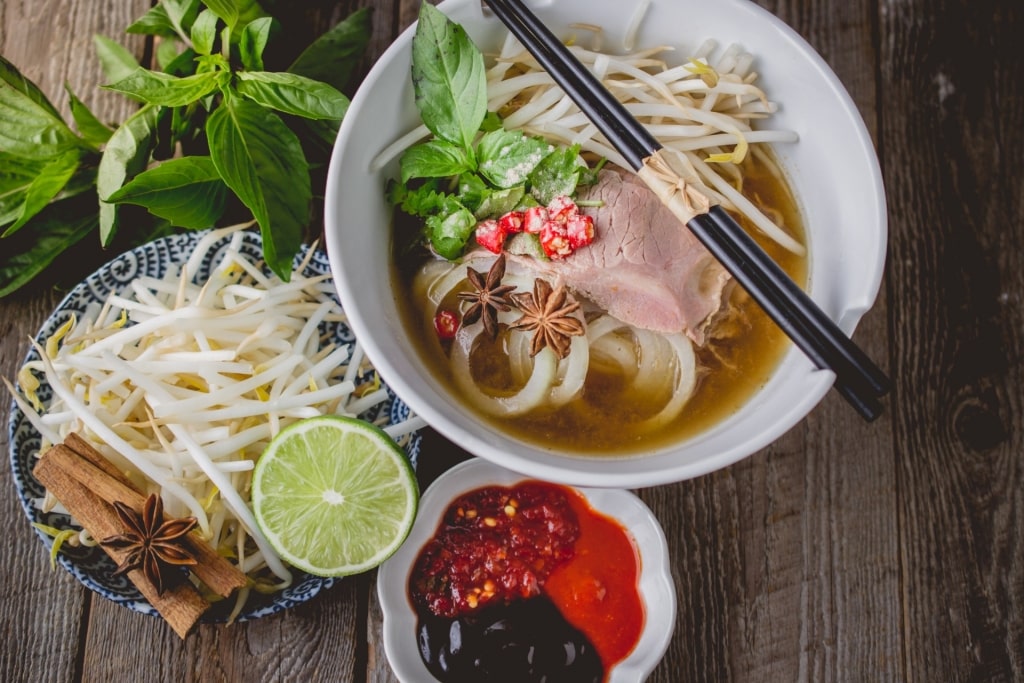
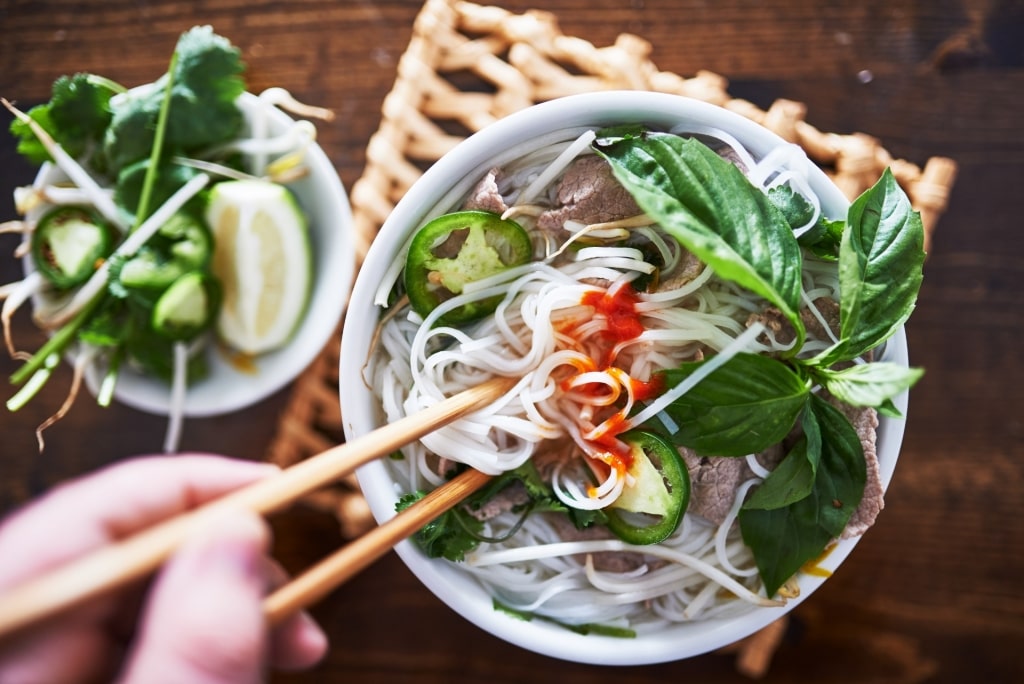
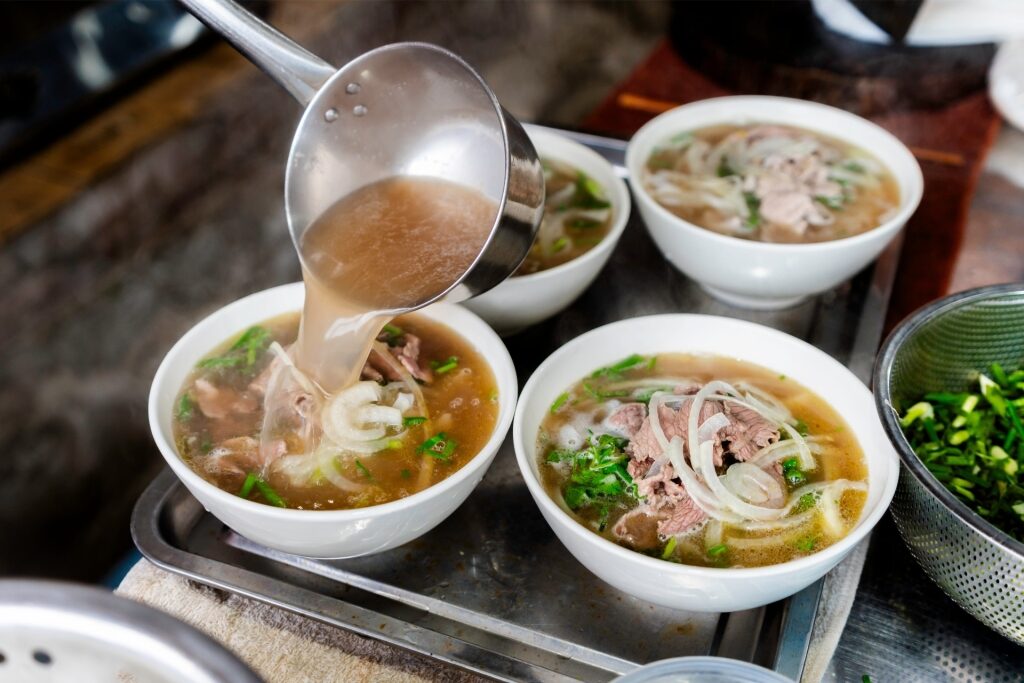
The comforting noodle soup of pho is known around the world as one of the best Vietnamese dishes. This traditional soup is found almost anywhere in the country and is a prime example of culinary beauty in simplicity.
A mixture of broth, rice noodles, fresh herbs like ginger and green onion, and either chicken (pho ga) or beef (pho bo) warms the stomach, and the soul.
Historically made popular as breakfast in the northern region of the country by rice field workers, this popular Southeast Asian dish has evolved to be well-loved globally, enjoyed any time of day.
From street food stands to higher-end restaurants, you’ll have no problem finding a delicious bowl of pho while visiting Vietnam.
Pho
Explore regional differences in spice and flavor, depending where in the country you travel; Saigon serves up a spicy-sweet version while the north uses wider noodles and has a spicier flair.
Banh Mi
Banh mi
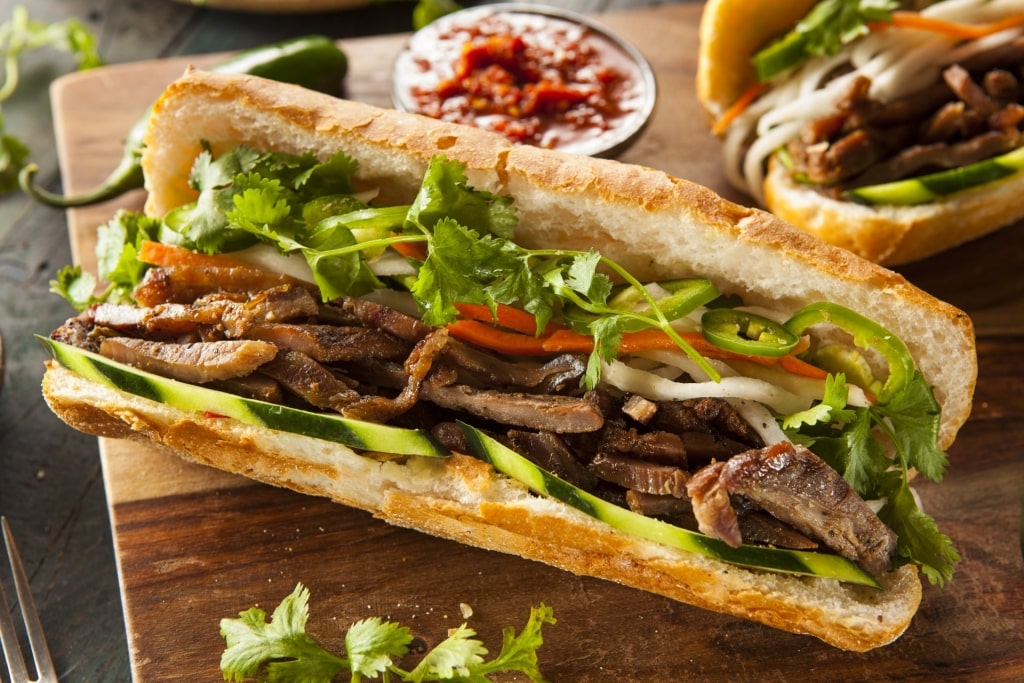
Another Vietnamese staple enjoyed around the world, banh mi is the country’s famous sandwich. With the beloved French baguette, it’s a blend of the two cuisines, originating in the city of Saigon (Ho Chi Minh City).
Served on crisp baguette bread, this is a versatile combination of meat, cheese, fresh and pickled vegetables, butter, and chili sauce. Creative variations are served throughout the country as a very popular street food item, ideal as a snack or a quick meal, any time of day.
In Hanoi, you’ll find a simple version of the banh mi, while in Ho Chi Minh City, the sandwich is a little heavier on the sauces.
Goi Cuon
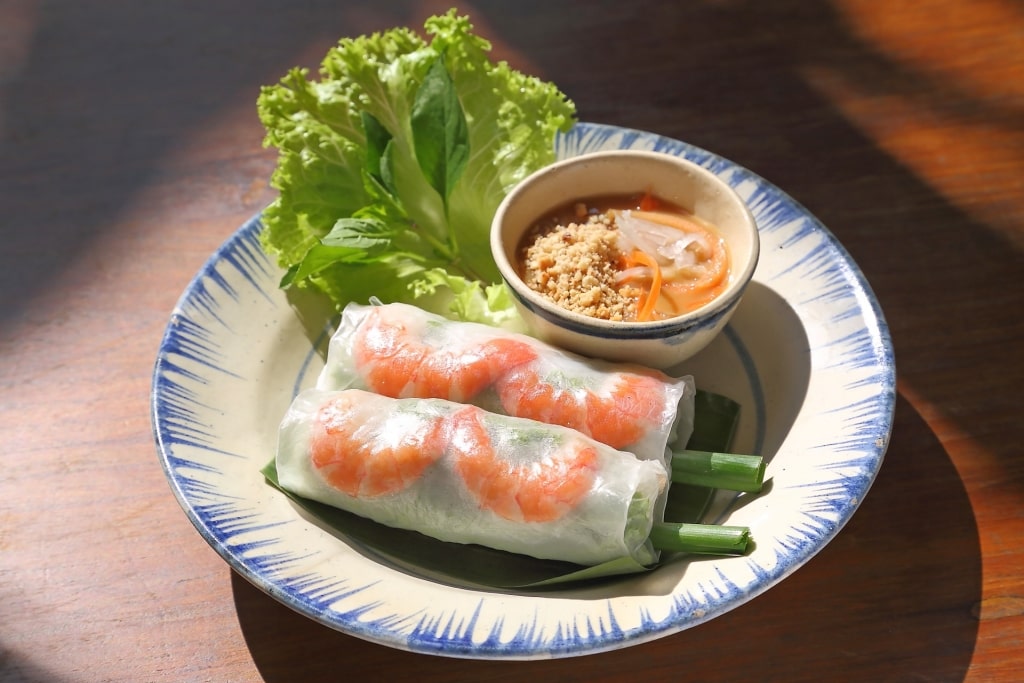
Goi cuon
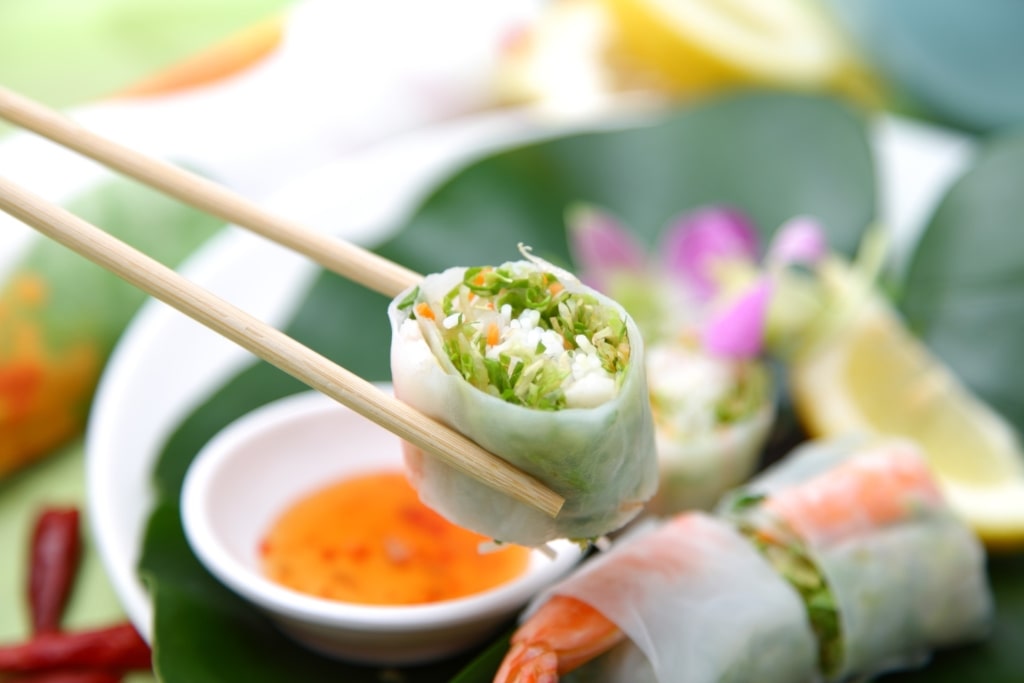
Also known as Vietnamese summer (or fresh spring) rolls, goi cuon is one of the most popular Vietnamese dishes and delicacies. This healthy snack or appetizer is satisfying without being too filling.
Fresh vegetables, shrimp, pork, thai basil, chinese chives, rice vermicelli, and lettuce are all packed into rice paper and rolled up.
Dip your spring roll in some mam nem (fish sauce) or tuong den (thick soy sauce) for the full experience. Goi cuon can be ordered almost anywhere in the country, from restaurants to market stands.
Some of the best are found in Ho Chi Minh City markets, such as Tan Dinh Market and the Ben Thanh Market.
Banh Xeo
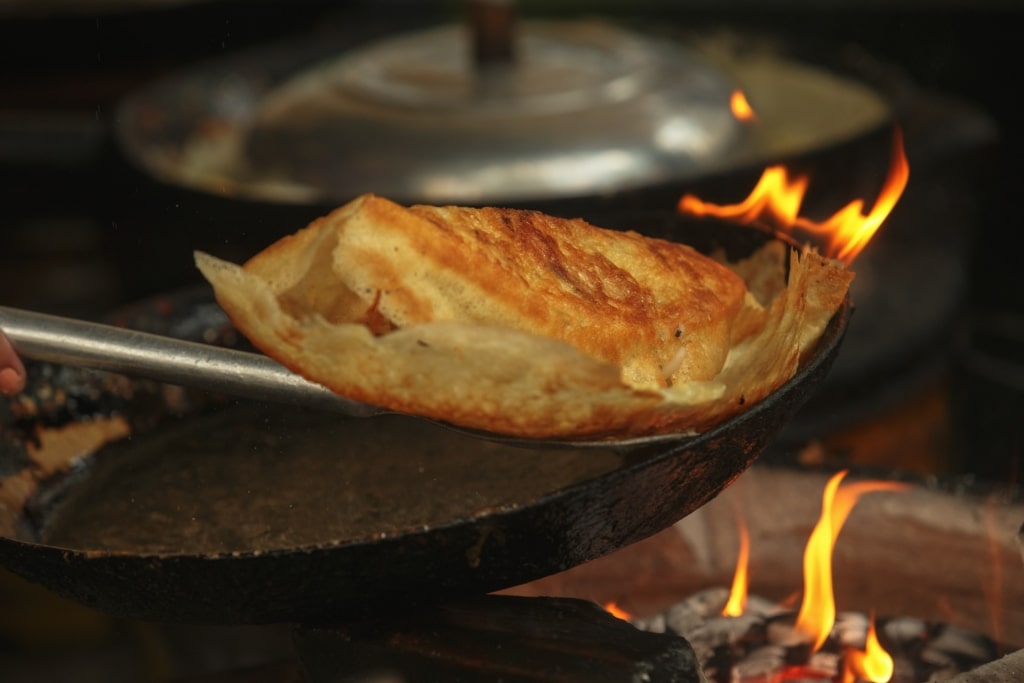
Banh xeo
Indulge in authentic, savory banh xeo, Vietnam’s crispy crepe or pancake-style dish stuffed with shrimp, pork, herbs, onion, and bean sprouts. Named after the sound emitted when the batter hits the hot pan, this “sizzling cake” is a treat considered one of the best foods in Vietnam.
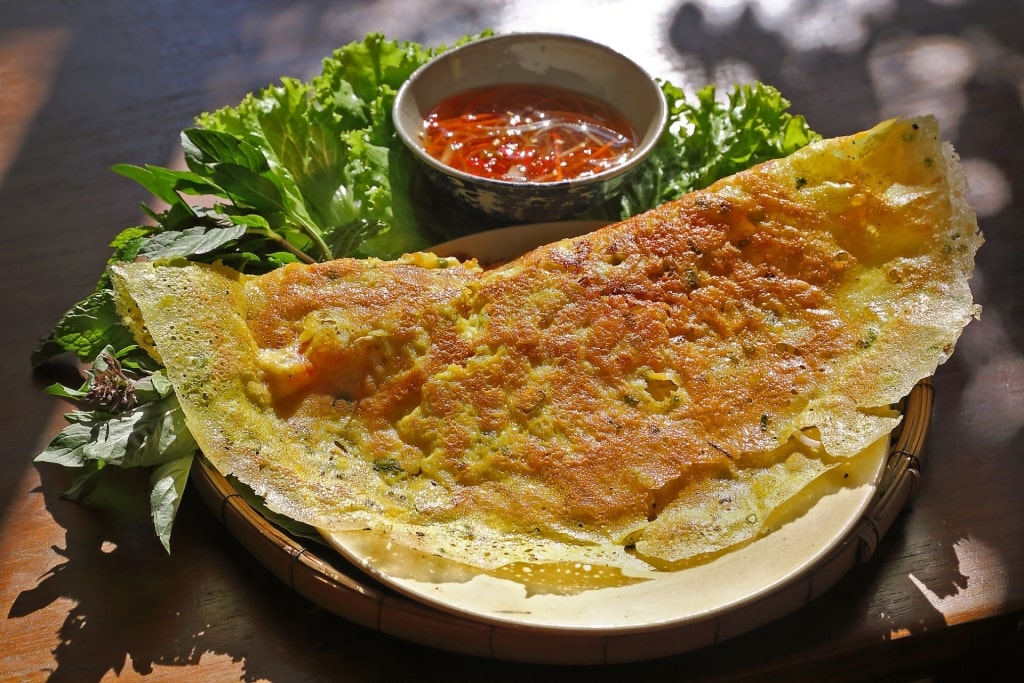
Banh xeo
The batter consists of rice flour, turmeric, coconut cream, and water, and when cooked, resembles an omelet, though it doesn’t include eggs. It’s usually cut into slices, wrapped in lettuce with herbs such as mint and cilantro, and dipped into nuoc cham, a special fish sauce that compliments the flavors perfectly.
Mi Quang
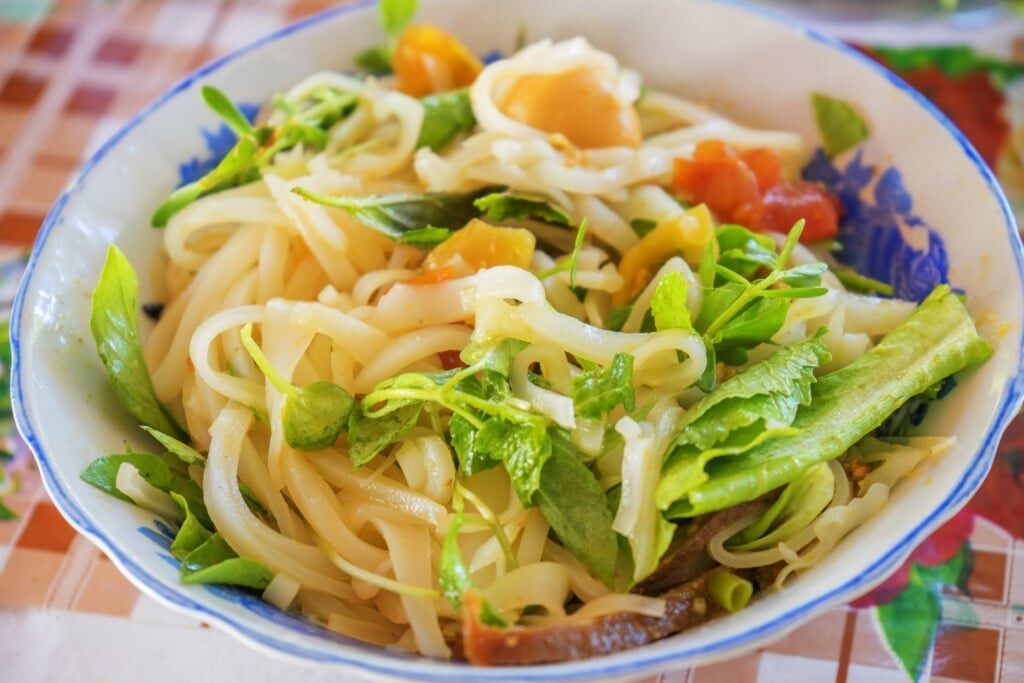
Mi quang
Originating in Central Vietnam, mi quang is a broth based dish with noodles, served as street food throughout the country.
The comforting meal rivals the ever-popular pho, consisting of ladles of pork broth, yellow-rice noodles, cu nen (a garlic-like vegetable), protein such as beef, pork, fish, or shrimp, and topped with turmeric, egg, peanuts, and/or rice crackers.
Mi quang manages to mix the best of both soup and salad for a deliciously satisfying meal. Variations are found throughout Vietnam, such as with sucking snails (oc hut), frog, or quail eggs.
Other toppings include mustard greens, scallions, lettuce, coriander, banana flower, and chili. You can tailor your mi quang to your liking, with a wide variety of choices.
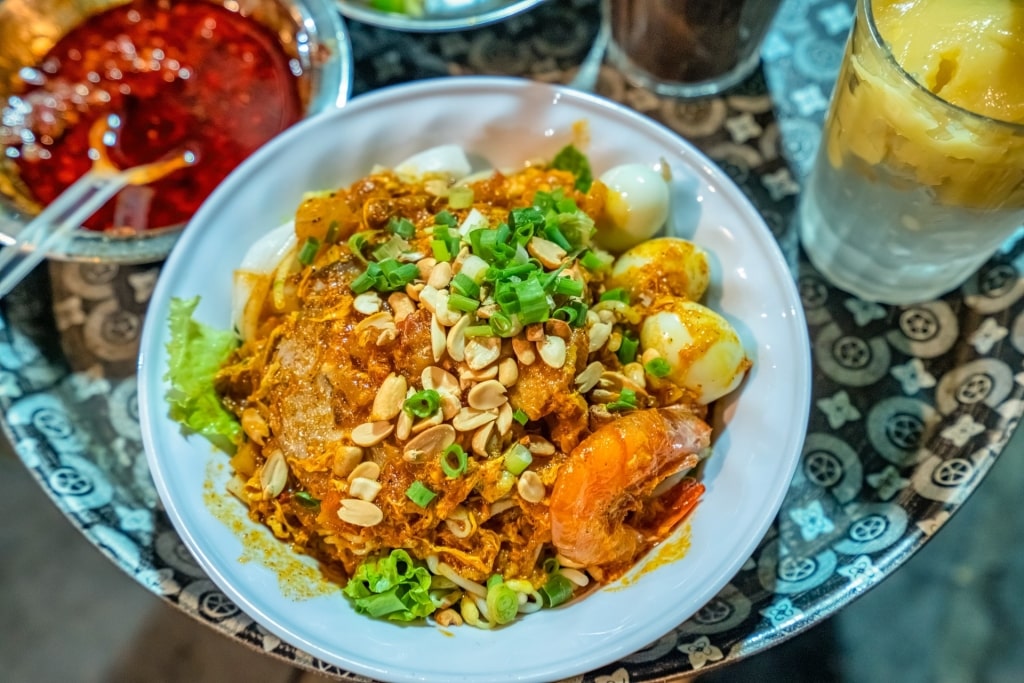
Mi quang
Noodle shops and street food vendors in Hoi An or Da Nang, as well as restaurants in Ho Chi Minh City offer mi Quang. But it’s such a celebrated meal that you shouldn’t have a problem finding it while exploring some of the best places to visit in Vietnam.
Cha Ca
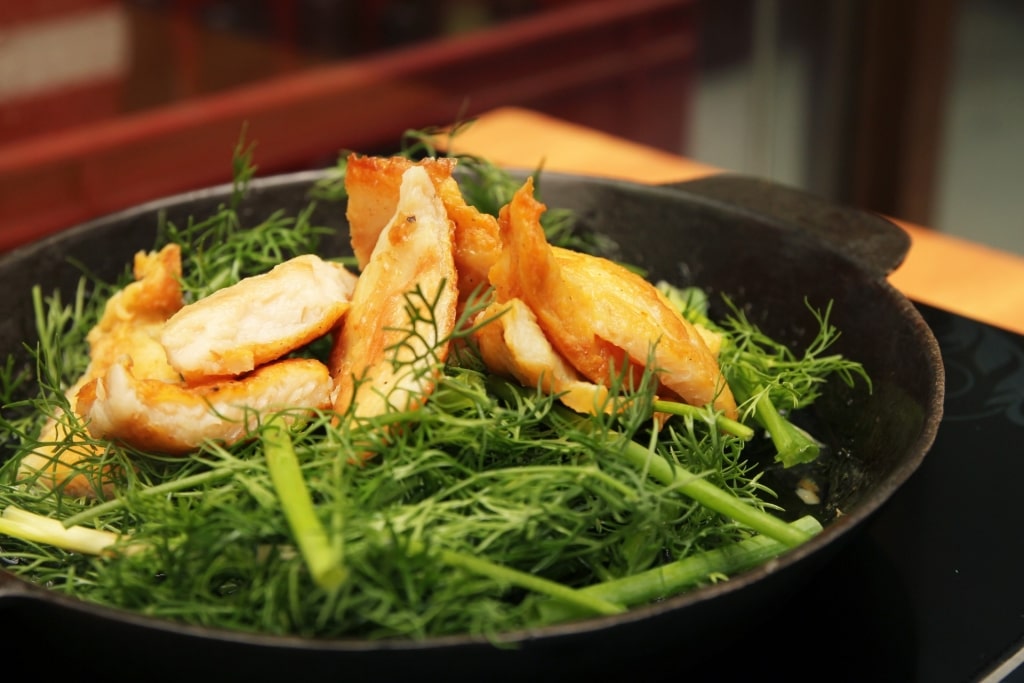
Cha ca
This fried fish dish from Hanoi is so popular that a street was named after it. Cha ca has historic importance in the Vietnamese culinary world as well, dating back more than 100 years.
It’s a fish similar to catfish that’s marinated in a sauce made with turmeric, garlic, dill, shrimp paste, chili, and ginger before being grilled. It’s then dished up in a hot pan and served at your table with vermicelli noodles, peanuts, and fresh herbs such as dill and basil.
Cha ca is more often found in restaurants, rather than as street food, and is a northern Vietnamese delicacy that can’t be missed.
Cao Lau
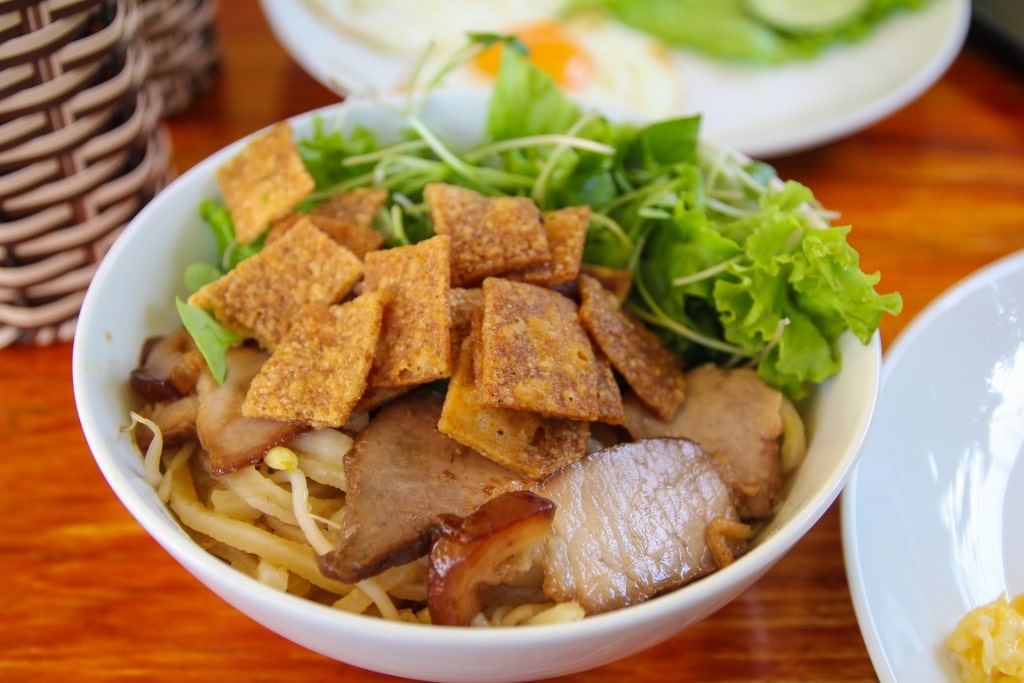
Cao lau
Hailing from the northern Vietnamese city of Hoi An, cao lau is a noodle dish with pork, adorned with wonton-style crackers. It’s the city’s best-loved meal; a historic culinary delight said to date back more than 100 years, tied to an ancient legend.
The story says that cao lau can only be cooked using water from the archaic Ba Le well in the city. This is, of course, not true. The dish is celebrated for the perfect balance of textures and flavors that complement each other in an ideal fashion.
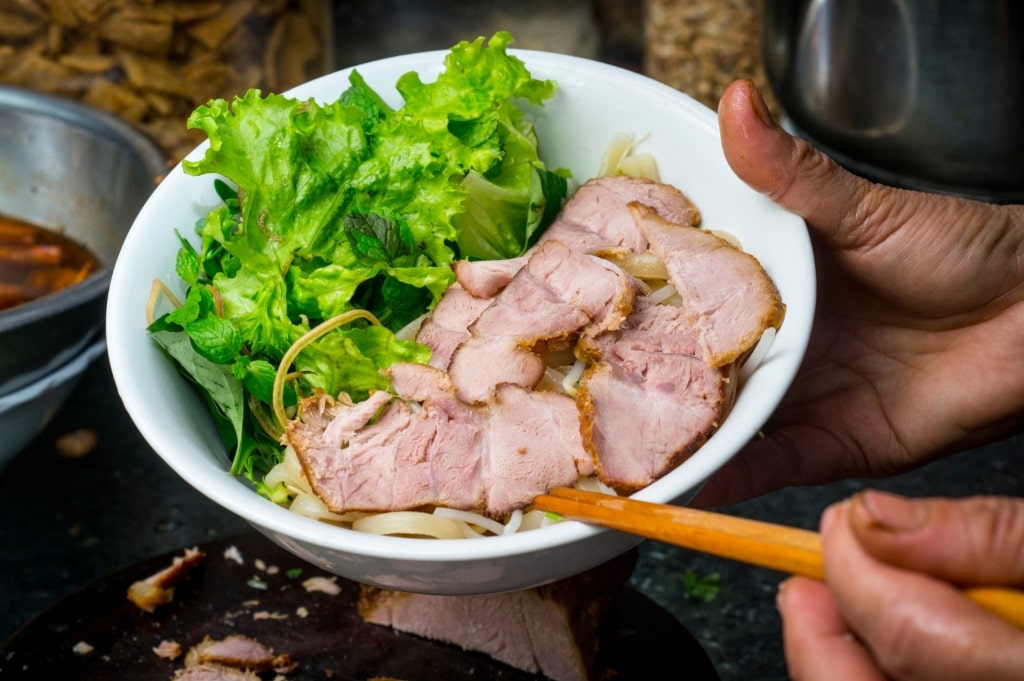
Cao lau with char siu
Char siu is the main ingredient, barbecued or roasted pork seasoned in spices that create a mouth-watering marinade. The unique but subtle smokey flavor of the noodles combines with herbs such as basil, mint, coriander, Vietnamese fish leaf, and more, creating a rich broth.
With thick noodles, warming broth, fresh herbs, and chili jam, this pleasing meal can be enjoyed from markets, street food stalls, and restaurants.
Bo Kho
Bo kho
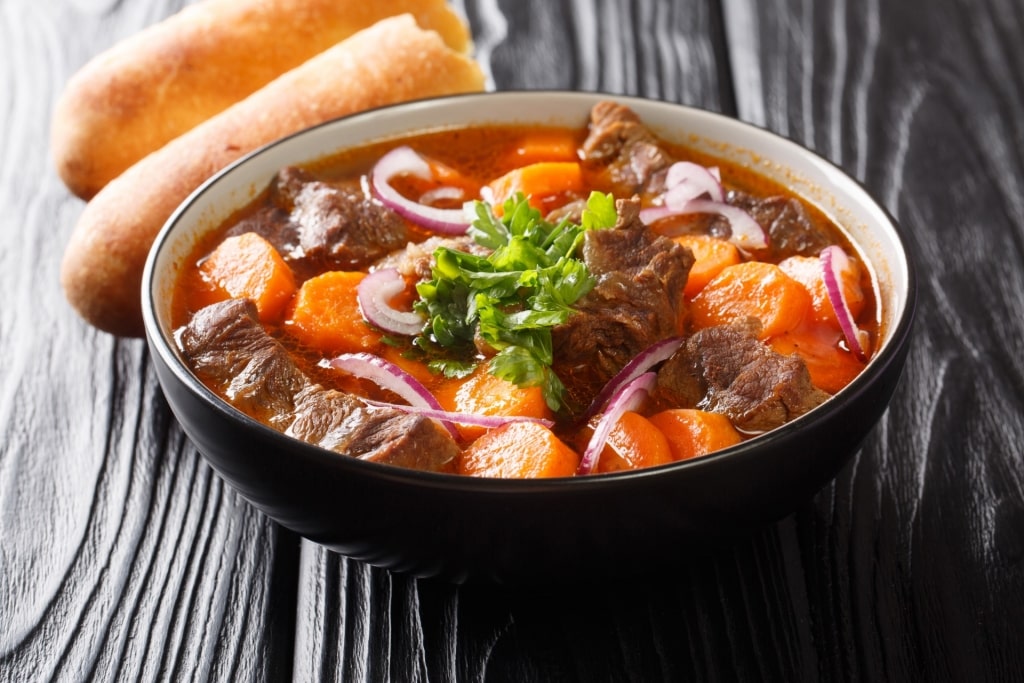
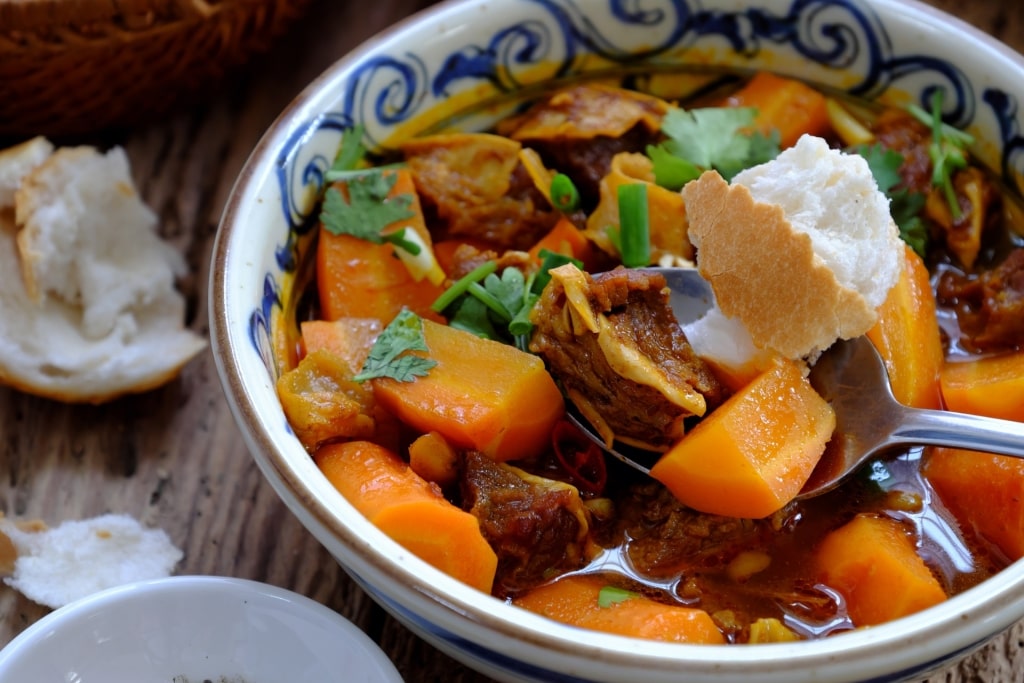
The ultimate comfort food, bo kho is one of the best Vietnamese dishes to try. The hearty beef stew pleases any appetite with pieces of meat and vegetables that are slow-cooked in Asian spices, causing them to fall apart easily.
Bo kho
Enjoy this satisfying meal with a Vietnamese baguette, sopping up the delicious broth made with fresh herbs such as lemongrass, star anise, cilantro, mint, scallions, and cinnamon.
Carrots, and sometimes turnips or potatoes are added to the simmering stew, before it’s served over rice or noodles, and of course, paired with a crusty baguette.
Travelers interested in sampling this soul-warming Vietnamese dish can expect to find it on restaurant menus all over Ho Chi Minh City.
Ca Kho To
Ca kho to
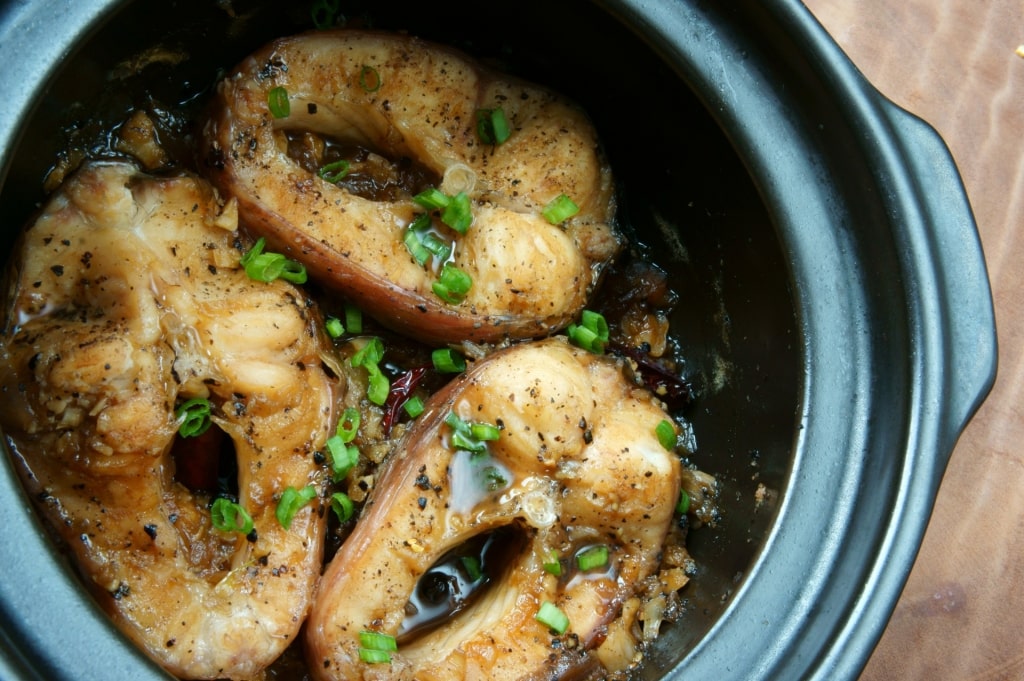
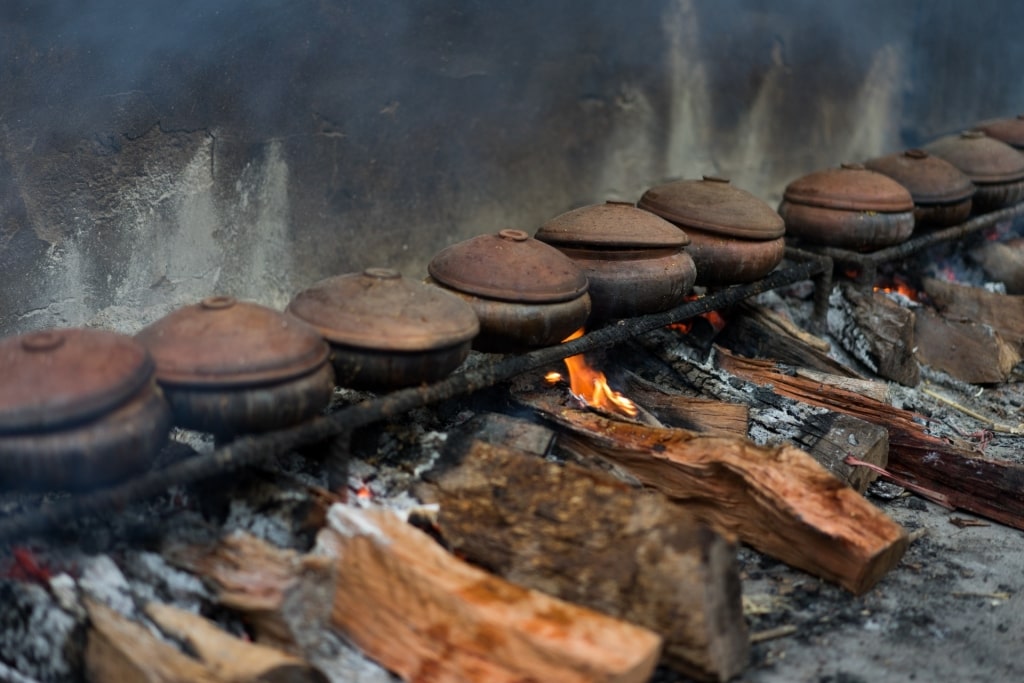
A quintessential Vietnamese dish, ca kho to is a caramelized and braised snakehead fish (or sometimes catfish) prepared and served in an authentic clay pot.
The fish is cooked in a rich caramel sauce called nuoc mau, where fish sauce, soy sauce, coconut juice, garlic, shallots, and white pepper are the main marinade ingredients.
Ca kho to
Served with steamed white rice and vegetables, the braised fish meal is both sweet and savory. Green onions top this dish, making it equally appetizing and visually appealing. It can be ordered at both restaurants and street food stalls; just look out for the clay pots.
Bun Cha
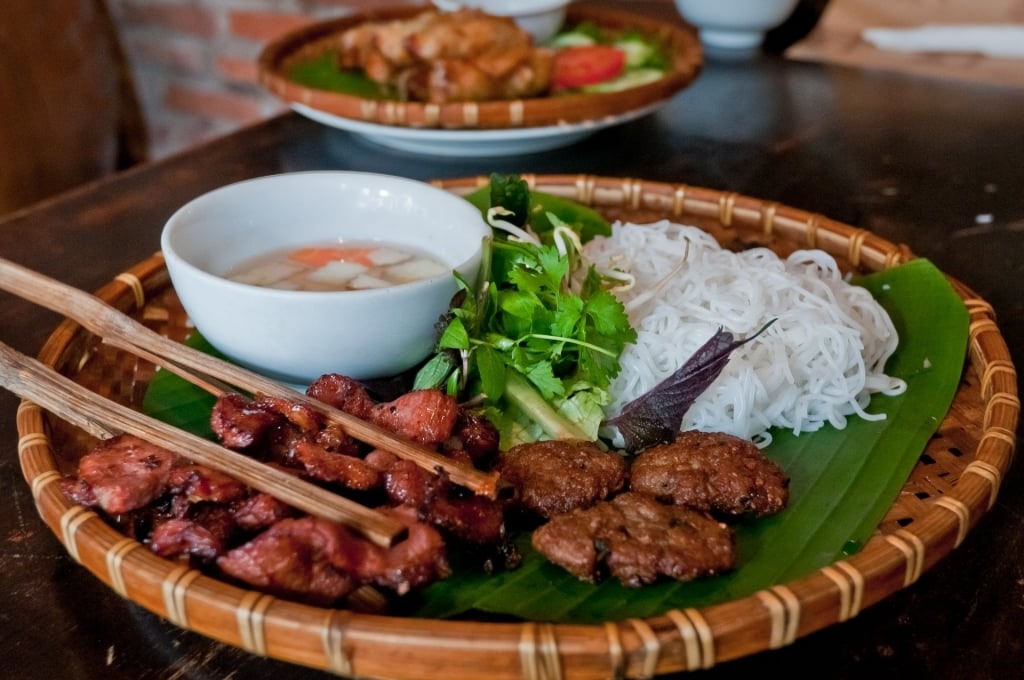
Bun cha
The pork dish of bun cha is a lunchtime favorite in Vietnam, particularly in the capital city of Hanoi, located in the northern region of the country. This comfort food combines seasoned and grilled pork patties (or pork belly), rice noodles, and herbs, completed with a tasty dipping sauce.
The crispy outside and juicy inside of the meatball-like patties are the perfect contrast to the fish sauce and lime broth, lettuce or cabbage, bean sprouts, basil, and rice noodles when eaten together. Although it’s typically eaten for lunch, bun cha is also a popular dinner meal.
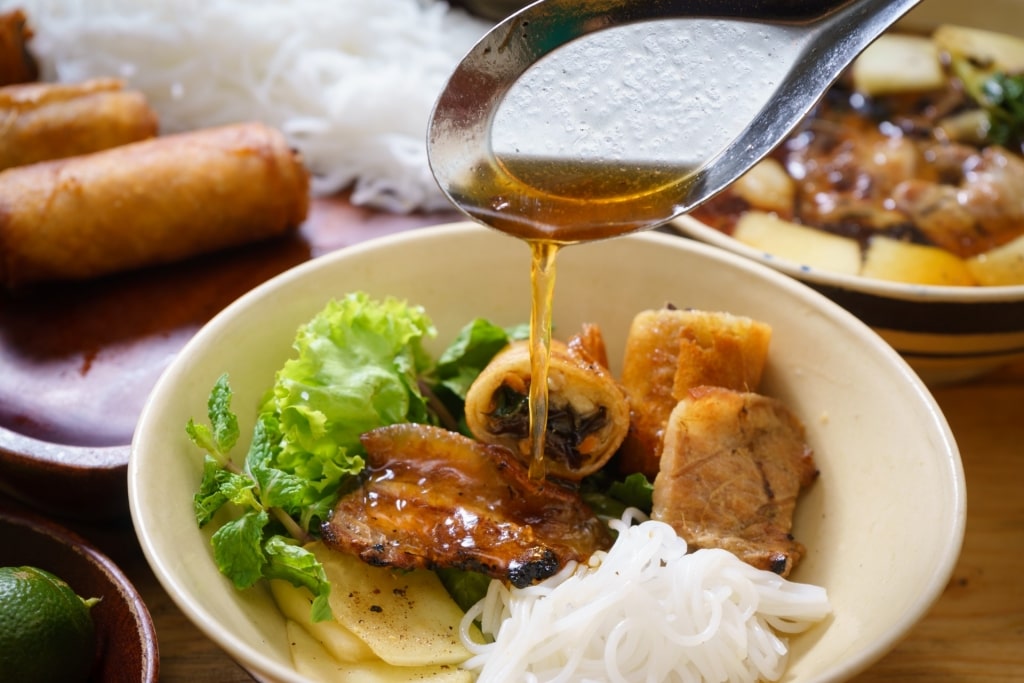
Bun cha
When visiting Hanoi, you won’t have to look too hard for this dish; street food stalls everywhere in the city will be serving it up. As a close second to pho, bun cha is something you must try when in Vietnam.
Read: Best Things to Do in Hanoi
Rau Muong Xao Toi
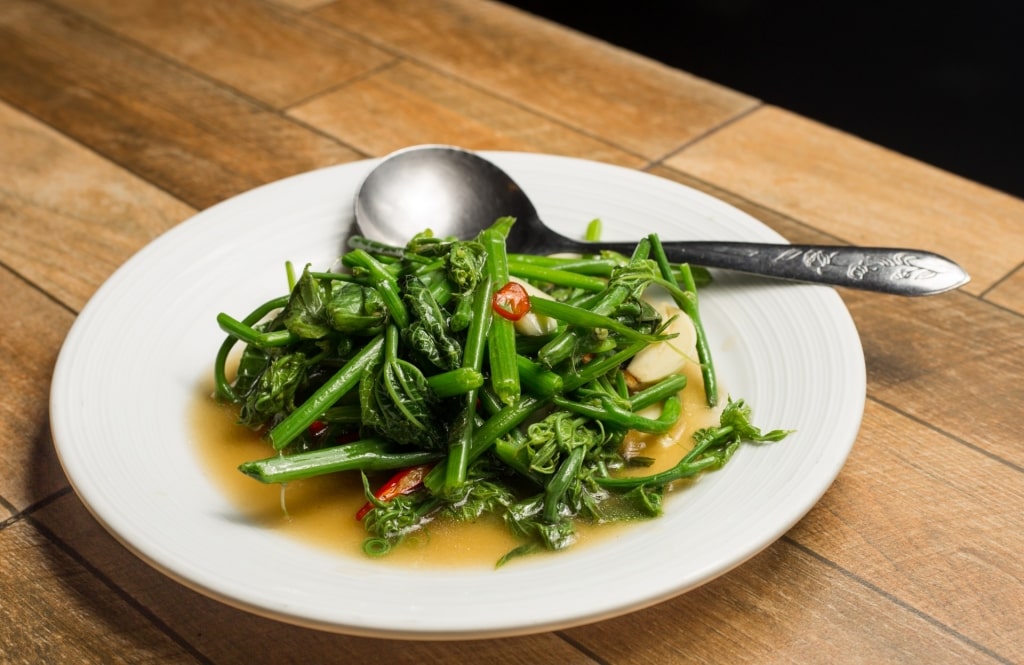
Rau muong xao toi
A well-loved healthy food option, rau muong xao toi is a traditional dish of stir-fried water spinach (morning glory), native to southeast Asia. The leafy dish is a favorite of vegetarians, but also makes a fantastic accompaniment to many meals, such as the beef version (rau muong xao thit bo).
Shoots from the water spinach are blanched (bathed in ice water) before hitting the stir-fry pan where plenty of garlic, sugar, salt, and fish sauce are added for extra flavor. It’s usually paired with white rice, and is also known to be the staple first part of a three-course meal.
Banh Bao Vac
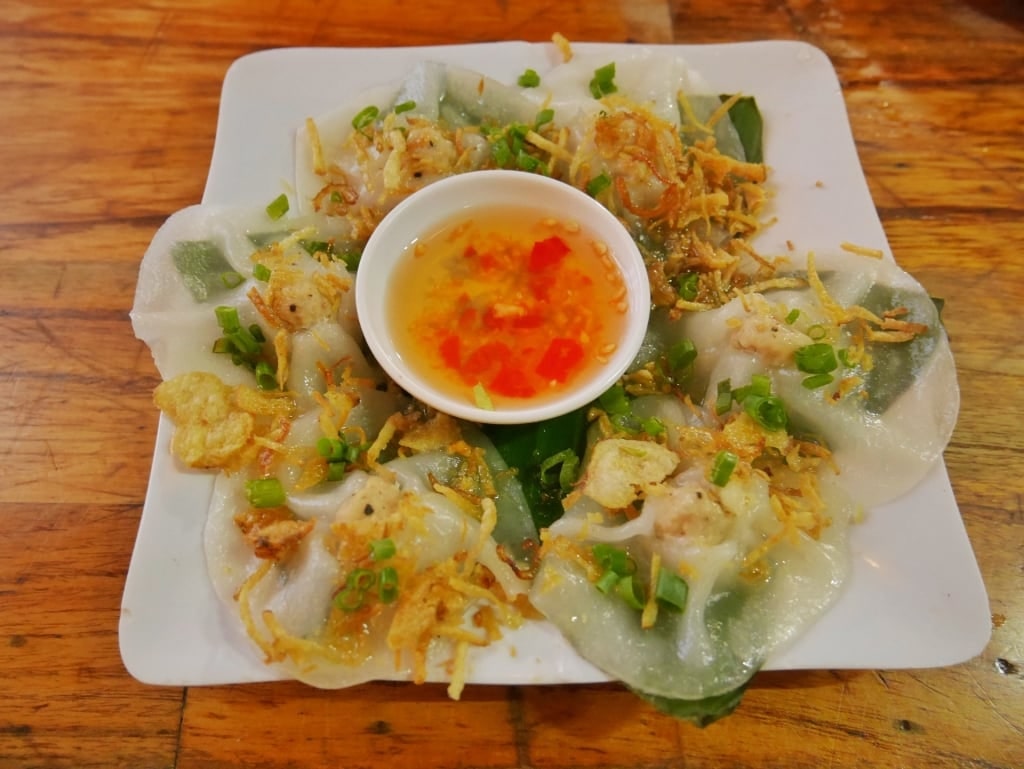
Banh bao vac
The northern Vietnamese dumpling banh bao vac (white rose dumpling) is a regional delicacy, originating in Hoi An. It’s one of the most famous dishes in the historic city, and it’s worth finding out why first-hand. The name refers to the plating presentation, which is said to resemble a rose.
Two types of dumplings are served together with a deliciously sweet dipping sauce. The first dumpling is banh vac, with shrimp, lemongrass, garlic, and spring onion. The second in the dumpling pair is banh bao, a pork and mushroom combination filling.
Once they’re plated, a garnish of fried garlic tops the dish for the perfect addition of crunchy texture. Order the white rose dumplings at most restaurants, markets or street food stalls while exploring Hoi An and prepare to swoon.
Che Ba Mau
Che ba mau
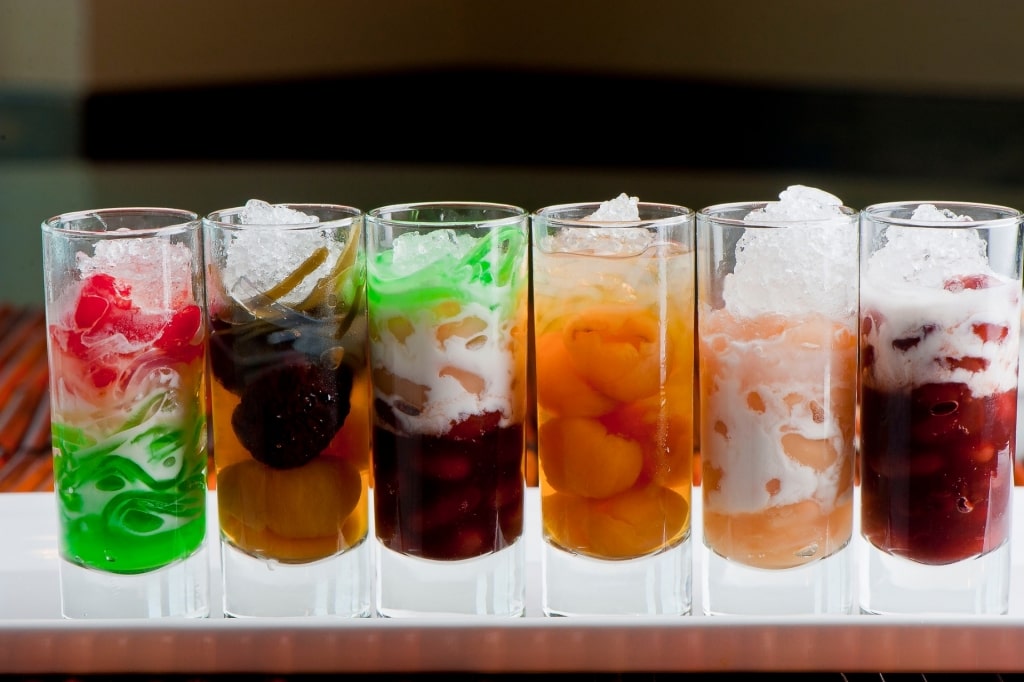
No culinary tour of Vietnam is complete without sampling some traditional dessert items. One of the most popular is che ba mau, meaning “three color dessert.” It’s a favored parfait-style dish with vibrant layers.
A tall glass is served with a long spoon, where colorful layers of yellow mung bean paste, red beans, and green pandan jelly are mixed with coconut cream and topped with crushed ice.
Mix it together for a chewy and crunchy dessert/drink blend that will surprise your tastebuds. The cold, refreshing sweet treat can be found in city markets and street food stalls to enjoy in the warm weather of the tropics.
Bot Chien
Bot chien
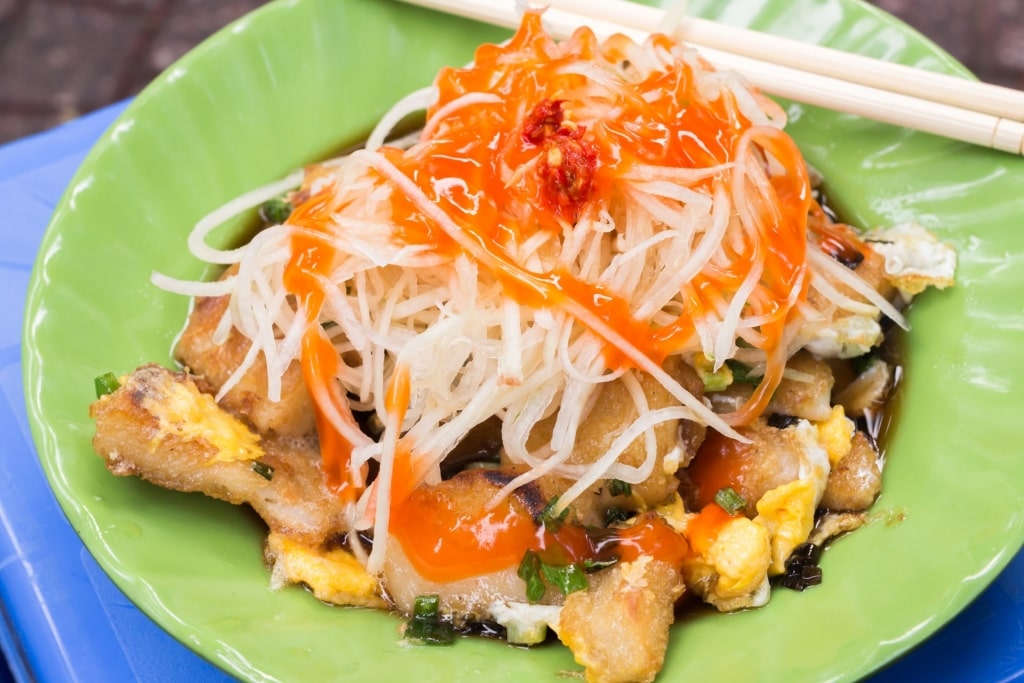
Another famous street food snack, bot chien is the Vietnamese version of fried dough. It’s usually a late-night treat, purchased while buying Vietnamese souvenirs at night markets, but also enjoyed by students on their way home from school.
Pieces of rice flour dough are thrown into a wok and fried to a crisp in hot oil before an egg is mixed in. It’s then served with sweet papaya slices, green onions, and shallots, and topped with rice vinegar and pickled chili sauce.
The result is a sweet and salty treat that will probably have you coming back for more.
Bun Bo Hue
Bun bo Hue
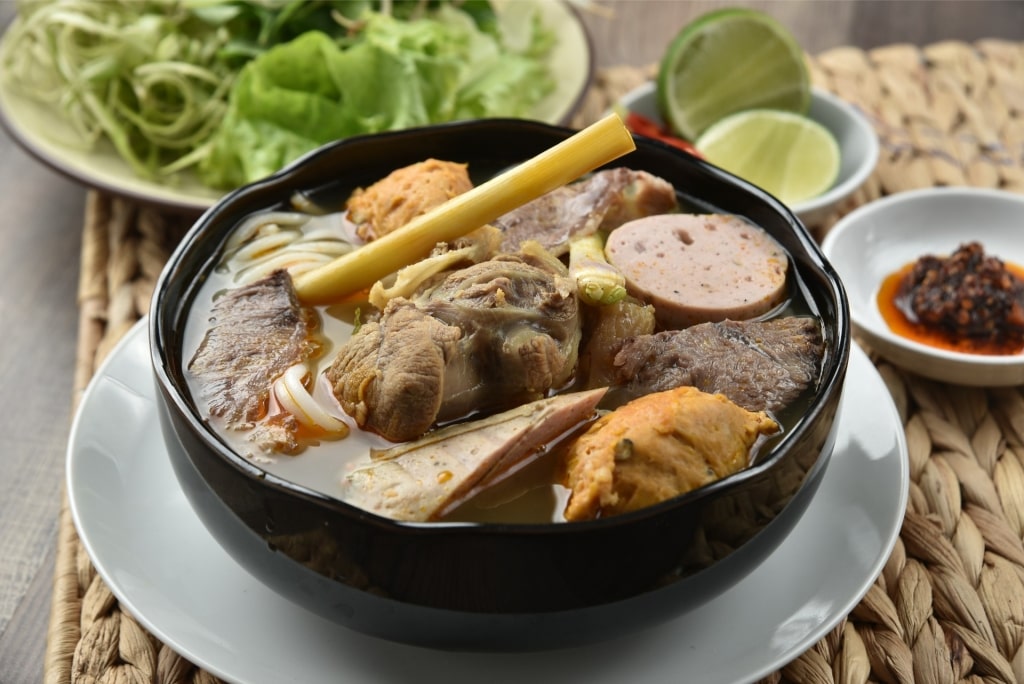
To this day, Hue, the former imperial capital, is heavily associated with its royal past. That extends to its cuisine, which features wonderfully layered flavors. The city’s famous noodle soup is an umami bomb built on a rich, slow-simmered beef broth. In its home city, it’s known simply as bun bo, while elsewhere in the country it’s referred to as bun bo Hue.
Traditionally, this soup includes several cuts of meat, which may include oxtail, pork knuckles, cha lua—a pâté-like sausage—or beef shanks. The broth is intensely aromatic, courtesy of hefty amounts of lemongrass, shrimp paste, and chili oil. In contrast to pho, it’s served with thin, cylindrical rice noodles.
Com Tam
Com tam
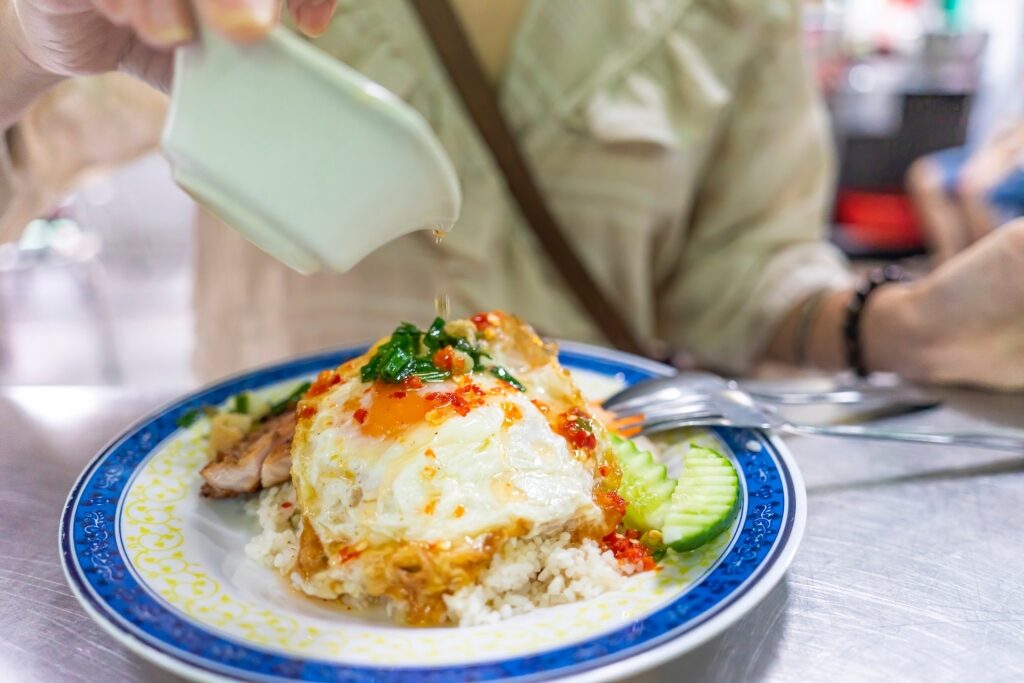
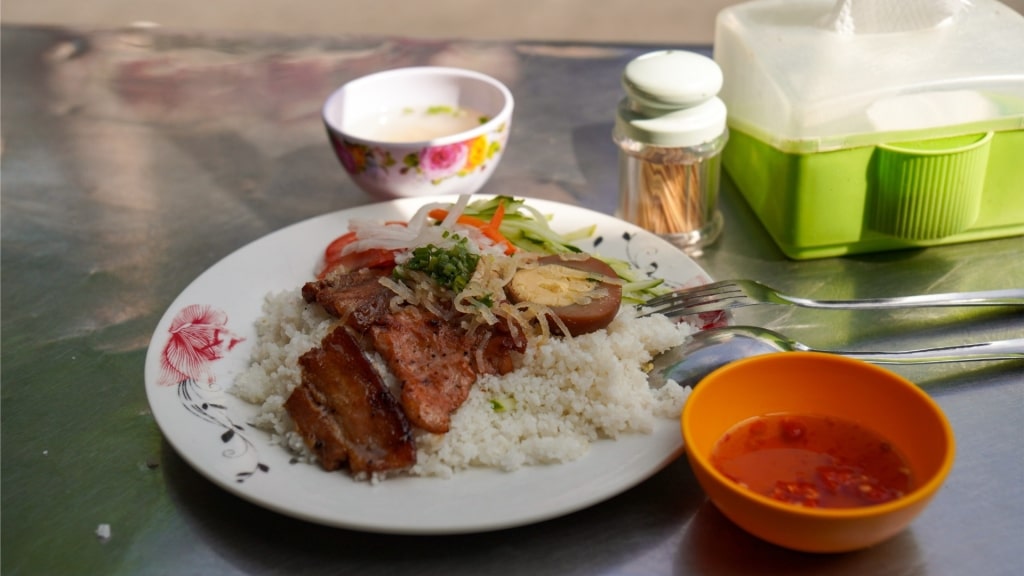
Pho may be the most famous Vietnam food, but to southerners, com tam carries just as much cultural resonance—if not more. Com tam, or “broken rice,” is still near and dear to the hearts of many in Ho Chi Minh City.
Historically, broken grains of rice were a regular byproduct of the harvest that farmers would use to sustain themselves on very little money. In the 20th century, enterprising cooks in what was then Saigon began offering plates of broken rice to workers on their lunch breaks. Com tam may come with all sorts of toppings. Some popular additions include grilled pork chops or ribs, pickled vegetables, steamed omelet, or a fried egg.
Bun Thang
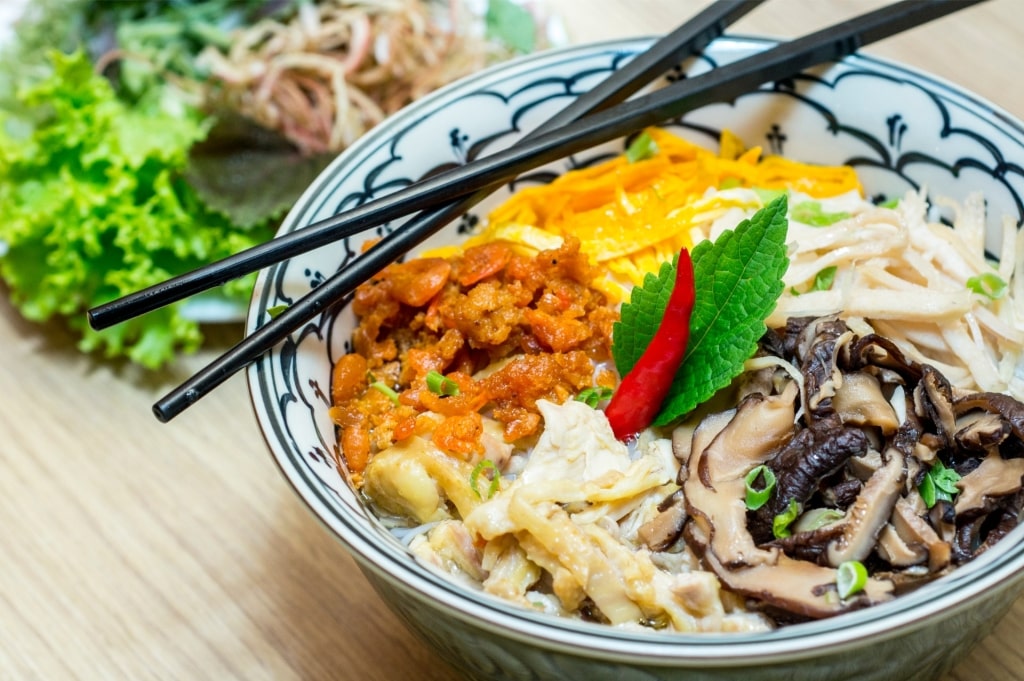
Bun thang
With its peppery chicken broth, bun thang, which roughly translates as vermicelli broth but is also colloquially known as “ladder noodles,” is peak comfort food. This Hanoi specialty comes with thin rice vermicelli adorned with an array of shredded poached chicken, julienned omelet, Vietnamese ham, and a scattering of herbs.
The final composition is both remarkably pretty and restorative. Like so many other chicken noodle soups around the world, bun thang is thought to have curative properties.
Banh Beo
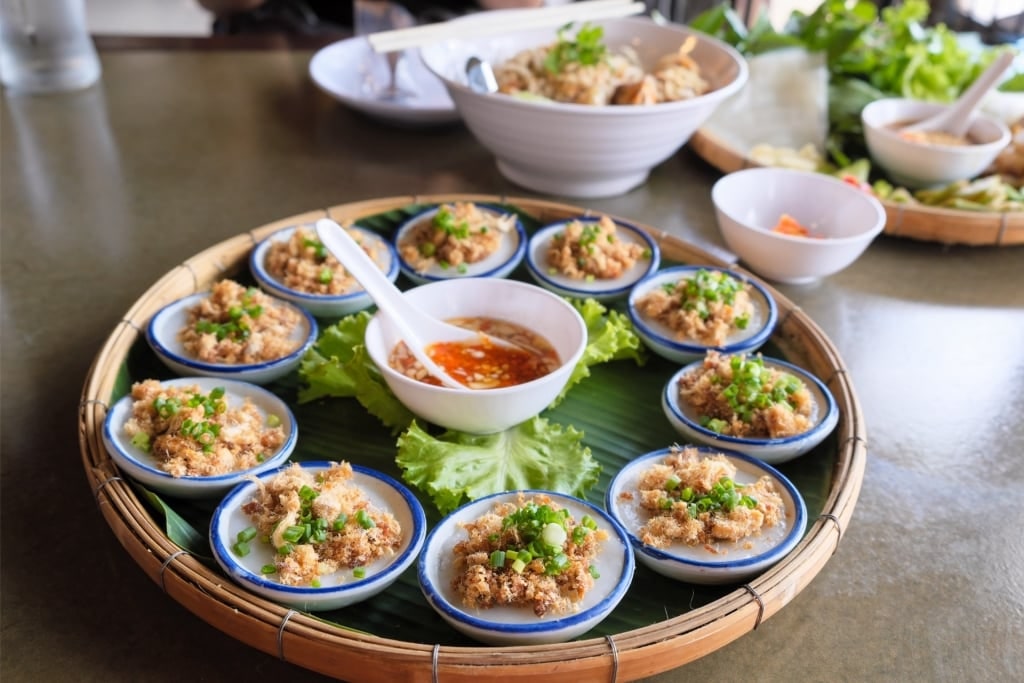
Banh beo
You’ll find this delicacy for sale throughout the streets of Hue. Banh beo, or “water fern cakes,” are bite-sized steamed cakes with various toppings. They owe their delicate texture to a combination of tapioca flour and rice flour.
Since banh beo are a relatively neutral foil, they pair well with nuoc mam, a zingy amalgamation of fish sauce, bird’s eye chiles, garlic, and sugar. Pork, dried shrimp, pork cracklings, or other savory additions round out this satisfying snack.
Hu Tieu Nam Vang
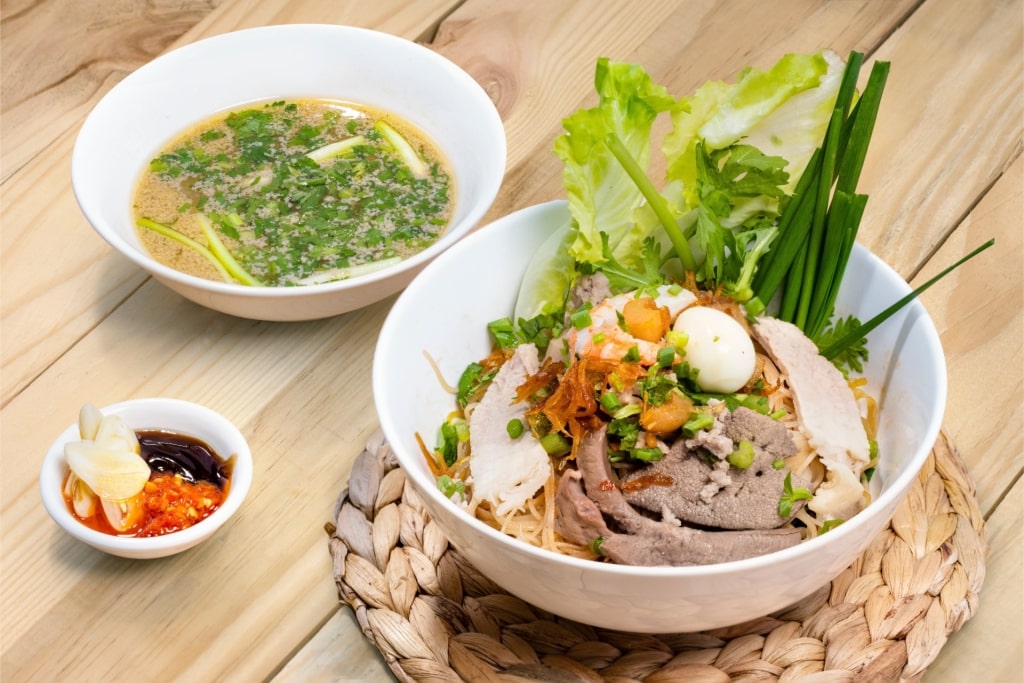
Hu tieu Nam Vang
This cross-cultural dish is peak culinary fusion. Hu tieu Nam Vang is a southern Vietnamese specialty that incorporates elements of Cambodian, Chinese, and Vietnamese cookery. It’s sometimes referred to as Phnom Penh-style hu tieu Nam Vang.
Like pho, this dish is made with flat rice noodles in an aromatic broth. You’ll also often find different cuts of meat in one bowl, although the protein of choice here is typically pork. Ground pork, crispy lard, intestines, and grilled, sliced pork are all fair game. Some vendors add prawns as well, along with quail eggs. Chrysanthemum greens, bean sprouts, and fresh herbs are common final flourishes.
Banh Pia
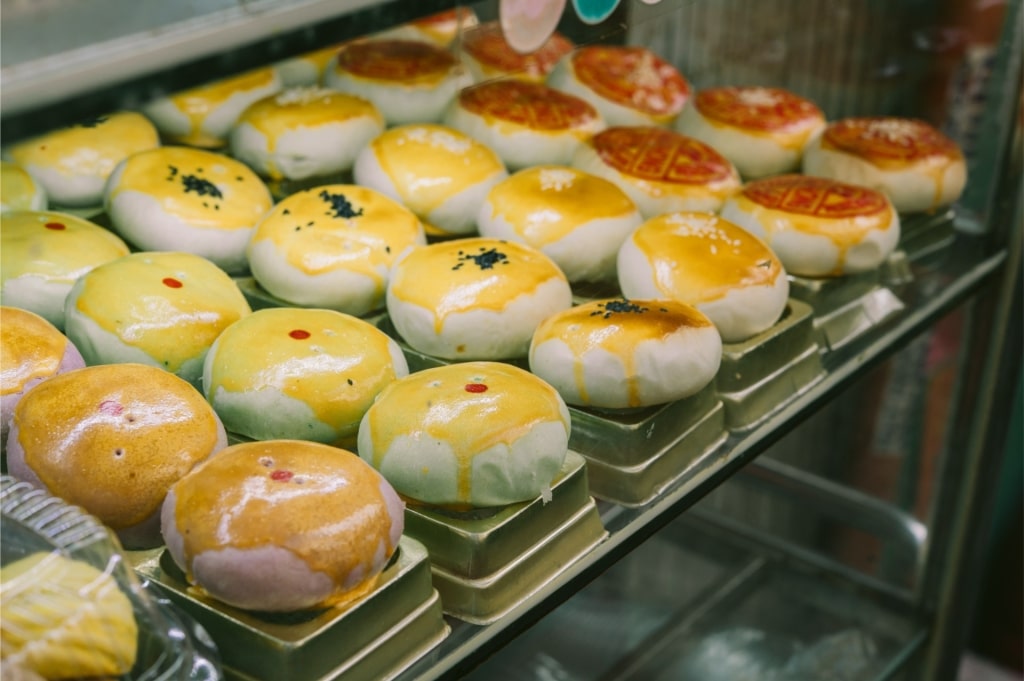
Banh pia
If you love mooncakes, you’ll love this similar Teochew treat. Banh pia are round biscuits often made with lard for a flaky texture. They often contain sweet fillings, such as durian or mung bean paste. Savory offerings with salted egg yolk or pork floss are commonly available.
Banh pia are an ideal celebration food. Much like mooncakes in other parts of the Chinese diaspora, they’re often served around the Mid-Autumn festival or the Lunar New Year. They pack well, making them great edible gifts to take home.
Banh Trang Tron
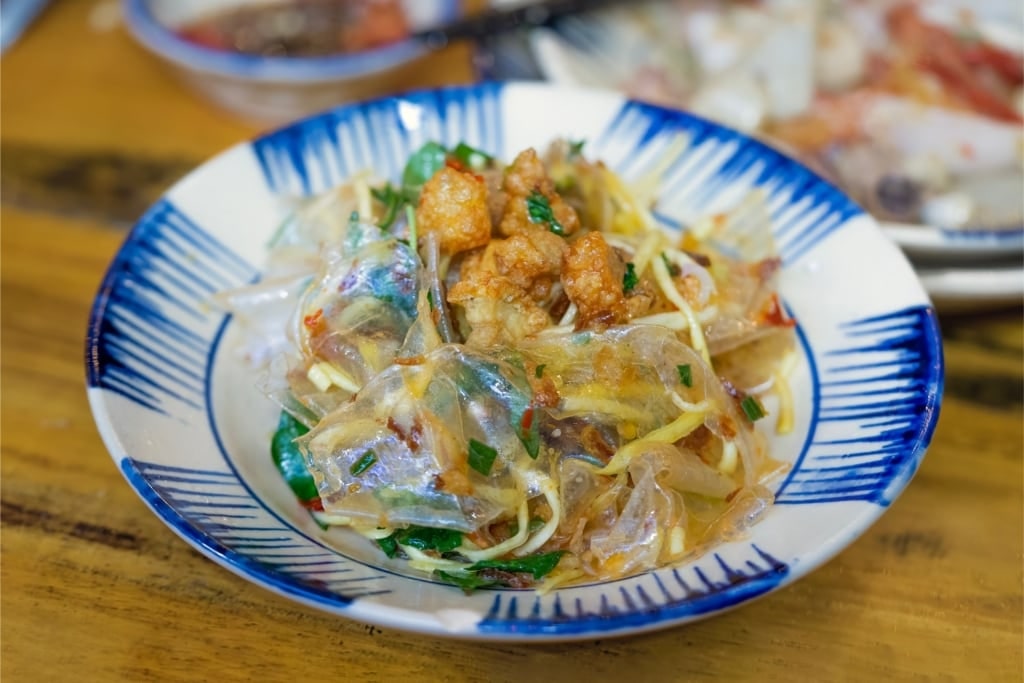
Banh trang tron
This confetti-like salad is a riot of different colors and textures. Banh trang tron is a classic street snack, often offered up to students on the go in plastic bags. There’s no real fixed recipe or hard rules here. All sorts of proteins, veggies, and flavorings are up to the individual cook and often vary quite a bit by region.
The defining ingredients are thin strips of rice paper tossed in a savory sauce, often with dried shrimp, chili, and fried shallots. Peanuts, green mango, quail eggs, fresh herbs of all sorts, and jerky strips are common. Many vendors will let you customize your own blend.
Read: Inspiring Things to Do in Vietnam
FAQs
Is Vietnam a good food destination?
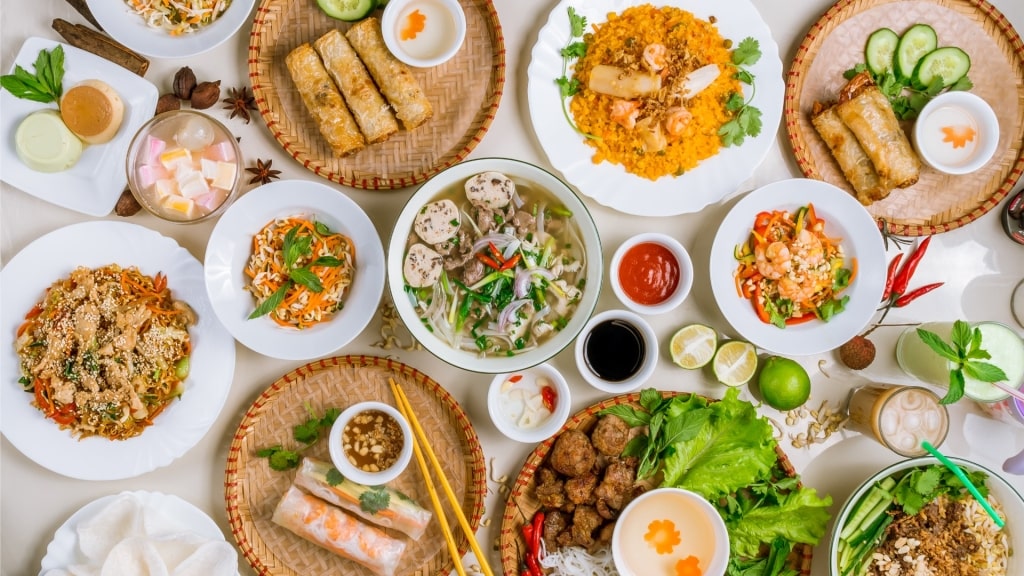
Restaurant in Vietnam
The late Anthony Bourdain famously declared Vietnam his favorite place on the entire planet to eat. That’s really saying something coming from a chef who traveled to dozens of countries over the course of decades.
After just a day or two here, it’s easy to see how he got to that conclusion. Vietnamese food marries bold, punchy flavors with excellent produce and seafood. Bushels of fresh herbs appear all over the place, along with dried spices, fresh bird’s eye chilies, and plenty of garlic. Fish sauce and soy sauce contribute umami, while acidity from lime juice or vinegar adds brightness.
Vietnam’s regionally diverse and perpetually evolving cuisine is a testament to the resourcefulness of the nation’s people. A number of the most iconic dishes Vietnam is known for were initially mash-ups of ingredients brought over during French colonial rule. Coffee, beer, wheat bread, and pâté have all become integral parts of the cuisine.
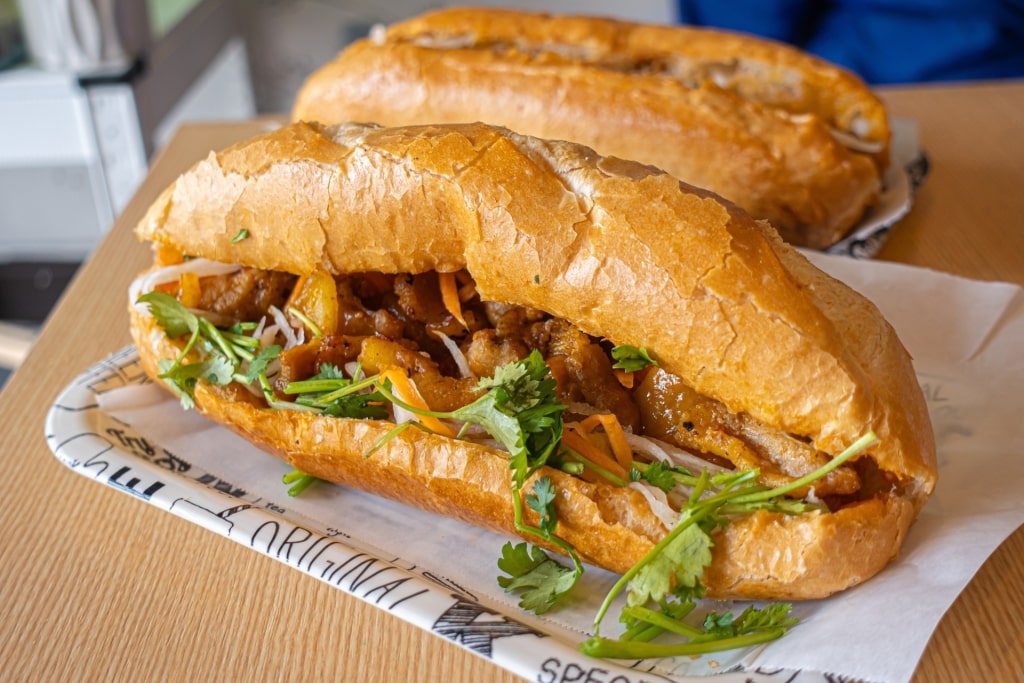
Banh mi
Banh mi, for instance, started off as French baguettes with cold cuts. Gradually, individual bakers tinkered with the bread recipe to get a fluffier interior with a crackling crust. Locally produced charcuterie, such as cha lua, were swapped for the imported hams. Bolder flavors from condiments and pickles were added to amp up the flavors—and a new classic was born.
What dish is Vietnam most famous for?
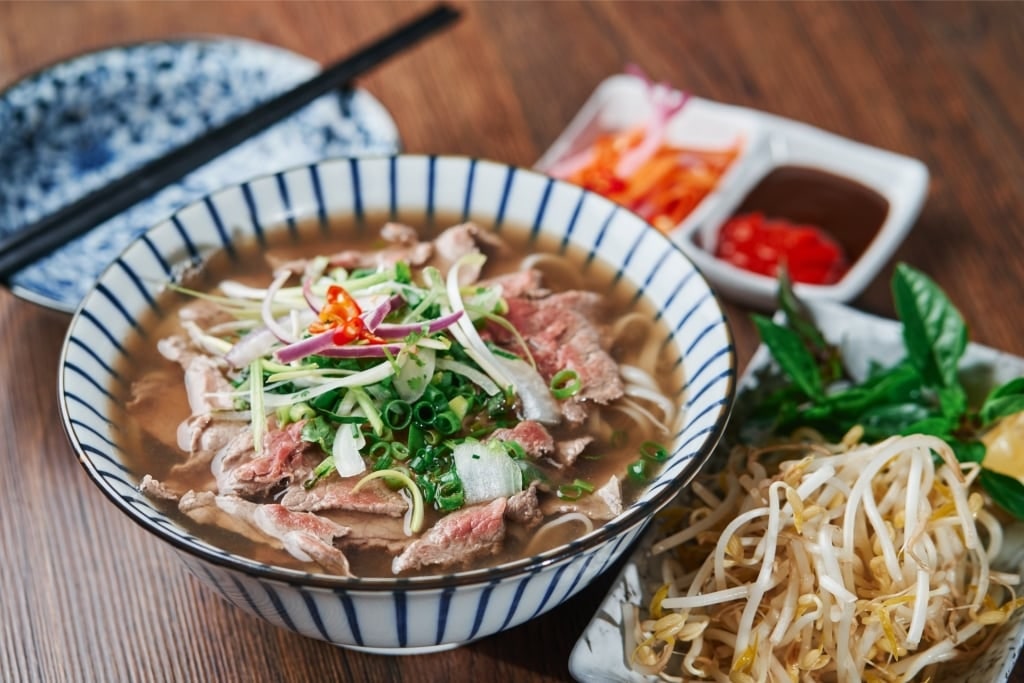
Pho
Vietnam’s most famous dish globally is almost certainly pho, although banh mi has to be a close second. Although pho can be found just about everywhere these days, it’s a bit different in its country of origin. For starters, it’s traditionally a breakfast food, although some restaurants catering more to international visitors will offer it at dinner these days.
Second, there are distinct regional styles of pho. In Hanoi, the city where it is thought to have been invented in the 20th century, pho is a more austere affair. Northern-style pho is all about the slow-simmered beef broth fragrant with star anise, cinnamon, and other spices. The intensely flavorful bowl of noodle soup is typically presented without garnishes.
In Ho Chi Minh City, pho is comparatively moreish, often crowned with a whole bouquet of fresh herbs. Condiments including chile sauce, fish sauce, and hoisin sauce may also be offered. There’s also a greater degree of improvisation among individual chefs here.
Is street food safe to eat in Vietnam?
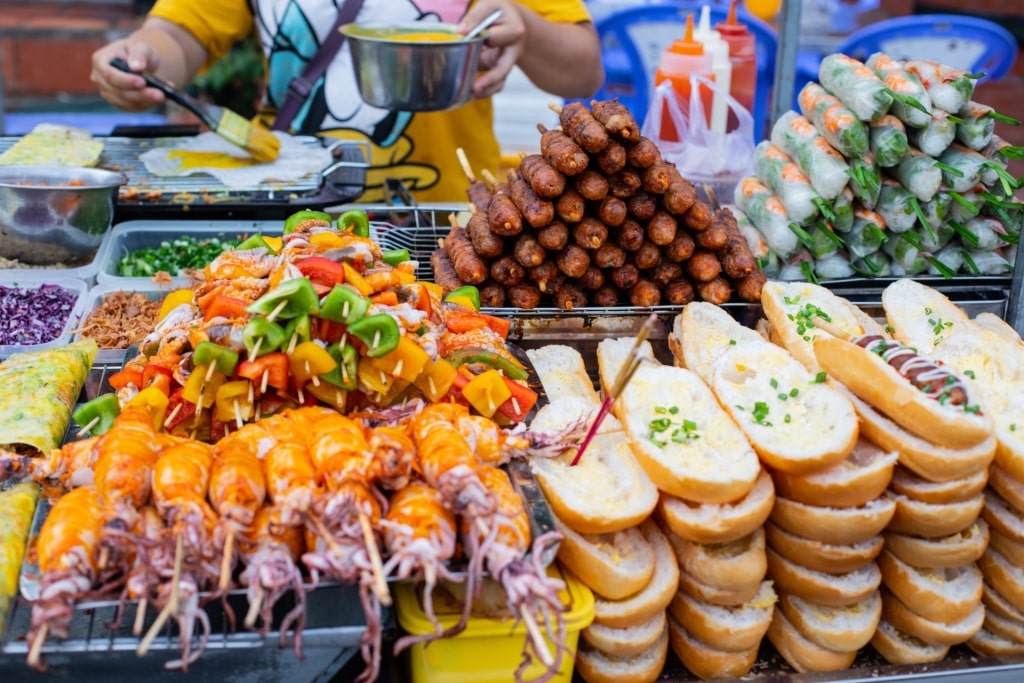
Street food in Vietnam
Yes! In Vietnam, food vendors tend to be well-organized and, despite the lack of a formal kitchen, maintain relatively high standards of hygiene. The street food scene here is somewhat self-selecting and vendors with a reputation for poor quality don’t last very long. Some of the best food in Vietnam is found in back alleys or mom-and-pop-run shophouse restaurants.
That being said, it’s always sensible to exercise common sense when traveling to any destination. Stick to bottled water, which is available just about everywhere. Take a quick glance at the set-up to check that utensils and ingredients appear to be clean.
Pho
Aim for street food vendors that appear to have longer lines and high turnover. The last thing you want is prepared food that appears to be sitting out for long periods in high temperatures. Plus, chances are high that if locals are willing to queue, the dish in question is worth the wait.
If you have a sensitive stomach, toss some Imodium and Pepto-Bismol in your carry-on as a precaution. You may very well not need it, but being able to feast with peace of mind is worth it.
What time does dinner typically start in Vietnam?
Restaurant in Vietnam
Dinner time is relatively flexible in Vietnam, although many people eat roughly between 6 p.m. and 8 p.m. Part of the beauty of Vietnam’s street food vendors and shophouse restaurants is that someone seems to be serving something delicious throughout the day.
Generally, people in Ho Chi Minh City opt to have dinner after the sun has set, although street food vendors will start prepping earlier. Restaurants tend to start serving dinner around 5 p.m., but often carry on late into the night. In smaller cities less known for their nightlife, restaurants tend to wind down a bit earlier.
That being said, it’s important to note that dinner is not necessarily the only meal to focus on here. Life in many Vietnamese cities starts early in the day, before the heat and humidity rise. Breakfast tends to be a hearty, savory affair that’s well worth an earlier wake-up call. Traditional pho restaurants only serve during breakfast and lunch hours.
Are there any food customs I should know about?
Goi cuon
Most meals in Vietnam are communal affairs, so it’s important to be mindful of etiquette for the sake of your fellow diners. Use your chopsticks to move small bites of food from the communal serving plates to your own dish. Avoid licking your chopsticks, since they’re going to go back to the shared platter. Never point your chopsticks at anyone and never, ever leave them standing upright in a bowl of rice, as this is considered bad luck.
Even if you’re sharing dishes, it’s both acceptable and encouraged to personalize the seasonings to your taste. While Western restaurants tend to stop at salt and pepper, Vietnamese restaurants give diners far more ways to customize.
Fish sauce and vinegar with garlic and bird’s eye chilies are essential. Some restaurants or vendors will offer shrimp paste, chile jam, bundles of fresh herbs, or house-made sauces or condiments. Because Vietnamese cuisine is all about a delicate balance of flavors, it’s important to tinker with the sweetness, spiciness, umami, and acidity levels to create your perfect bite.
What is drinking culture like in Vietnam?
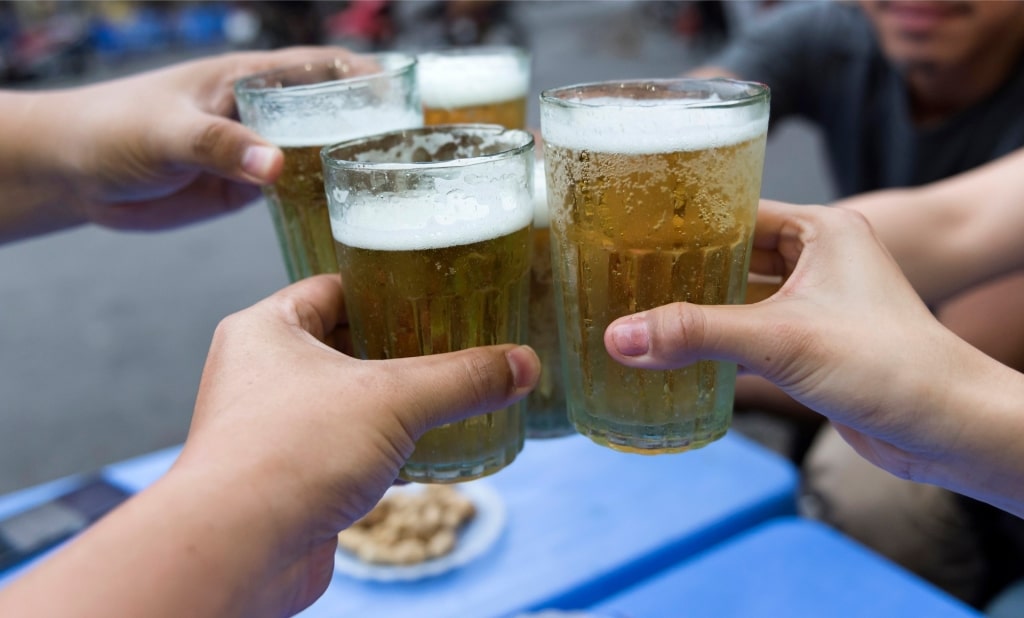
Vietnamese beer
The perfect accompaniment to most Vietnamese dishes is a bia hơi, a light, low-alcohol lager that’s brewed and served fresh. Cheap, plentiful, and icy cold, it’s the ideal antidote to both high temperatures and spice levels.
Unlike most mass-market lagers, there’s no brand associated with bia hơi. That’s because bia hơi was initially born out of necessity. Although it was around during the French colonial era, it was during the “war of American aggression in Vietnam,” as the conflict in the 1960s is known here, that it became popular. Proper glass bottles were in short supply, so vendors began serving draft beer straight from the keg. Warped, handblown glasses riddled with bubbles and imperfections became the de facto drinking vessels—which holds true to this day.
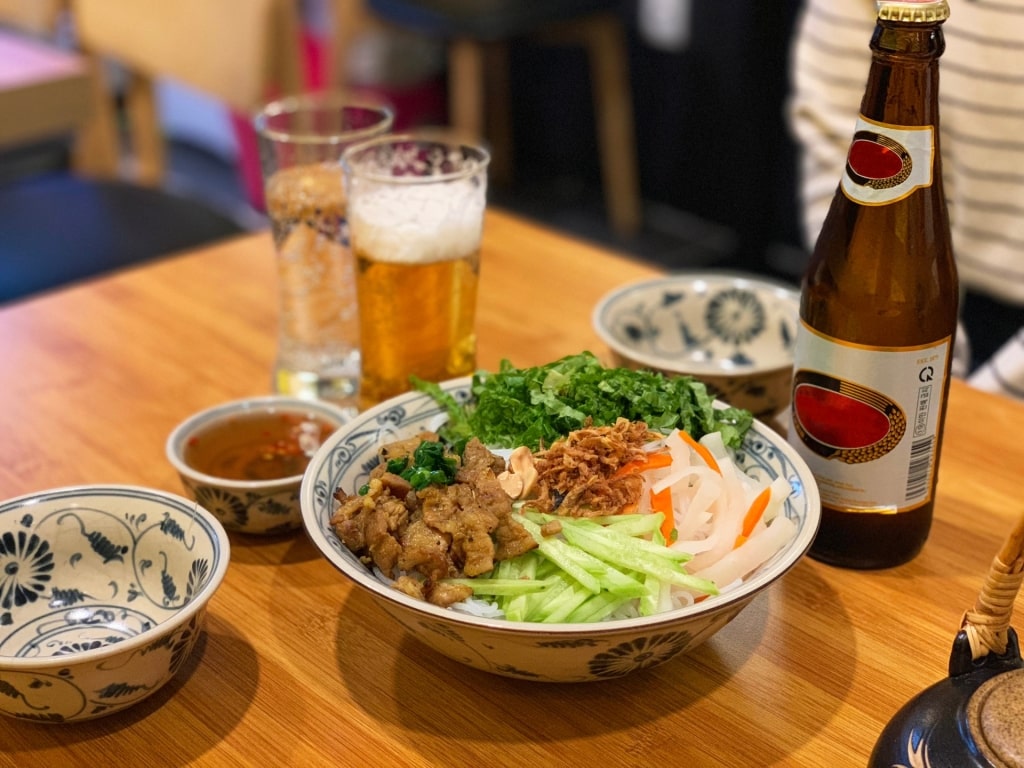
Restaurant in Vietnam
These days, both Ho Chi Minh City and Hanoi have a number of more Western-style craft breweries. The popular Pasteur Street Brewing Co., for instance, offers IPAs with pomelo or jasmine, along with a Cyclo Imperial Chocolate Stout with Vietnamese chocolate.
Yet bia hơi culture is still thriving, in part because of its inherently communal, convivial nature. The ideal way to enjoy these beers is with a group of friends perched on plastic stools at a streetside eatery. Order a few dozen dishes, wash them down with a refreshing round of bia hơi, then repeat.
What is coffee culture like in Vietnam?
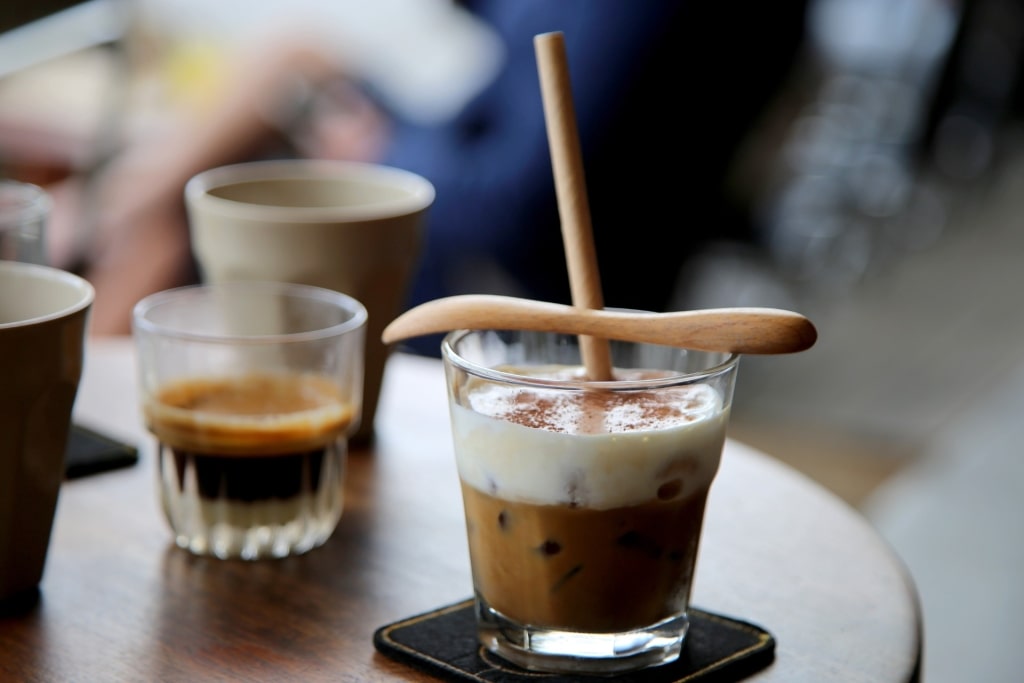
Vietnamese coffee
The French brought a love of coffee with them to Vietnam, which lingered long after the country declared independence. But while the missionaries and colonizers initially drank hot coffee, locals quickly adapted the beverage to better suit Vietnam’s hotter climate. Ca phe sua da, or Vietnamese ice coffee, makes for an incredibly refreshing pick-me-up.
Traditional Vietnamese coffee is brewed using a metal device called a phin, which produces a brew strong enough to stand up to a healthy dose of sweetened condensed milk. For an even sweeter, richer drink, be sure to try ca phe trung, or Vietnamese egg coffee, in Hanoi. This liquid dessert starts with raw egg yolks beaten into sweetened condensed milk to form a dense foam. This creamy mixture is then spooned atop very strong, hot coffee.
Today, café culture is an important part of life, especially in Hanoi and Ho Chi Minh City. There’s no lovelier way to refuel than spending an hour or so in one of the many stylish coffee shops.
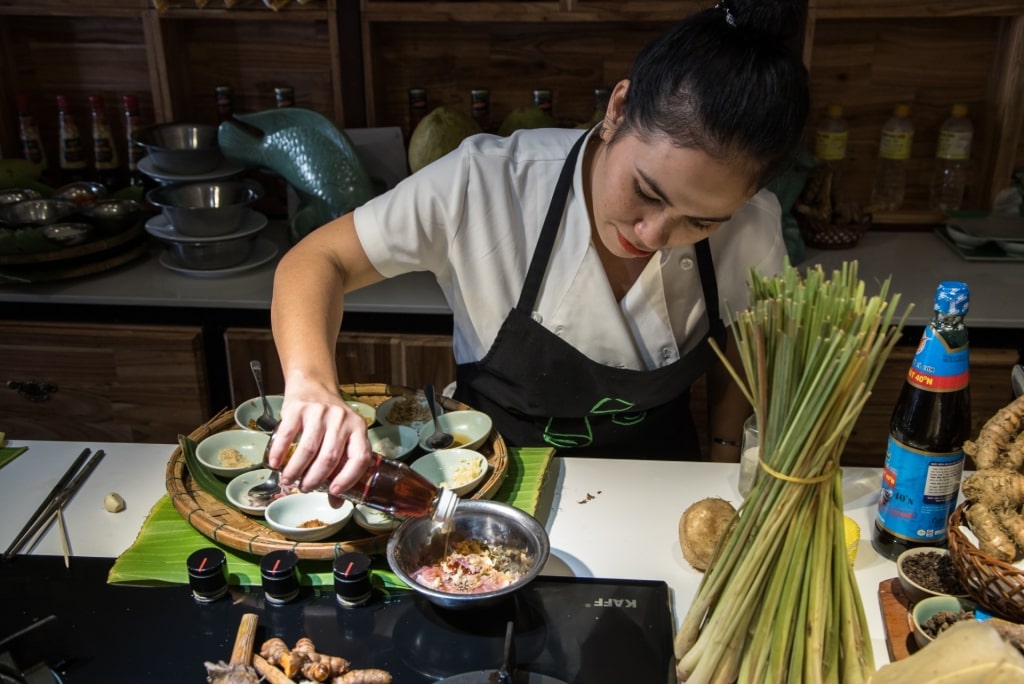
Cooking class in Hoi An
Embark on a culinary journey on a cruise to Vietnam. Browse itineraries and book your Vietnamese vacation today.