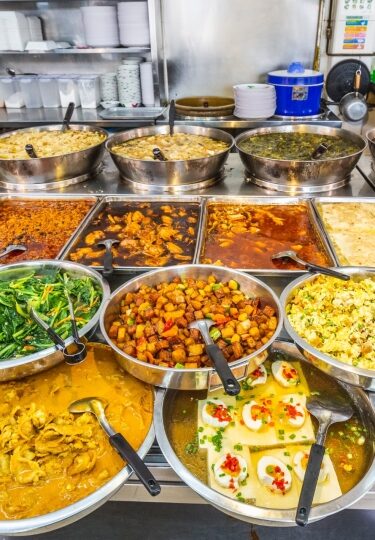
Hawker food in Singapore is both a source of fierce national pride and endless spirited debate. The Lion City is home to a galaxy of Michelin stars and restaurants representing cuisines from all corners of the globe. Nevertheless, ask most Singaporeans where to get the best meal in town and they’re likely to point you to one of the many hawker centers, which are essentially well-run street food courts. You’ll find a dizzying variety of delicious things at any of them.
A visit to a hawker center in Singapore is effectively a crash-course in the city-state’s cultural diversity. Here, you’ll find dishes with Malay, Chinese, and Indian roots. If you come with a large enough group of friends, you can easily pile all of them onto one sharing table.
Hainanese Chicken Rice
Hainanese chicken rice
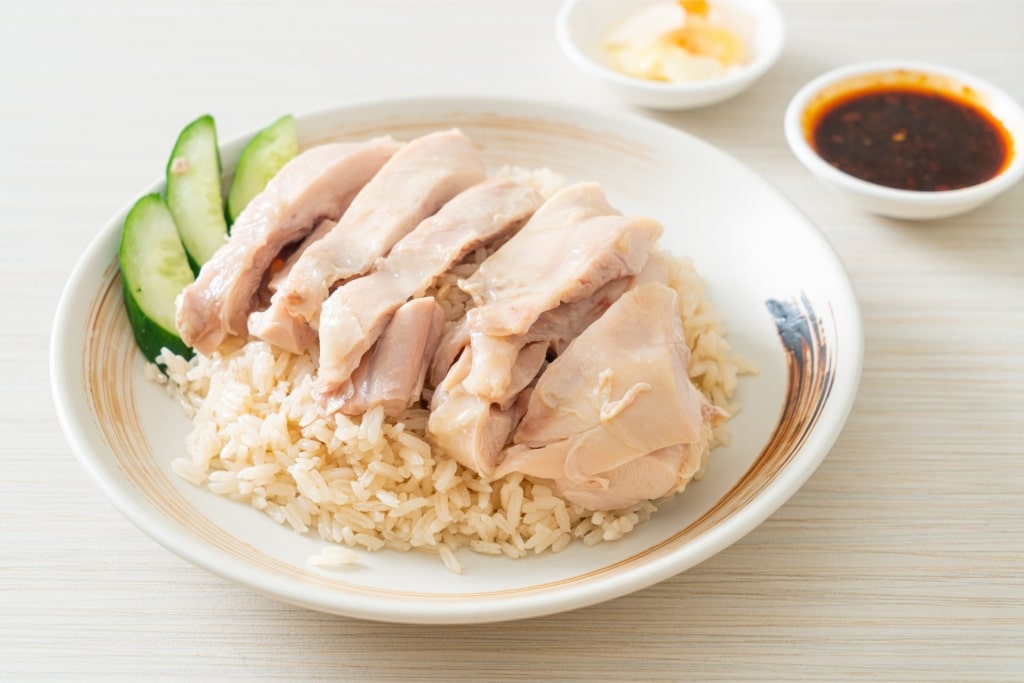
Southern Chinese immigrants brought this dish with them to many different parts of Southeast Asia. Today, it’s beloved in Thailand, Cambodia, Malaysia, Hong Kong, and, of course, Singapore, where it’s sometimes considered a national dish. Just about every hawker center in Singapore has at least one vendor serving it—some may even have a Michelin star.
In a dish this simple, the details are everything. The poultry of choice is a prized Wenchang chicken, which has particularly tasty meat and golden fat. These birds roam free for much of their lives in Hainan, pecking at coconut scraps, rice, and whatever else is around. They’re ever-so-carefully poached, then sliced and laid next to chicken fat-slicked rice. A zingy soy-based sauce with garlic gets drizzled on top.
Laksa
Laksa
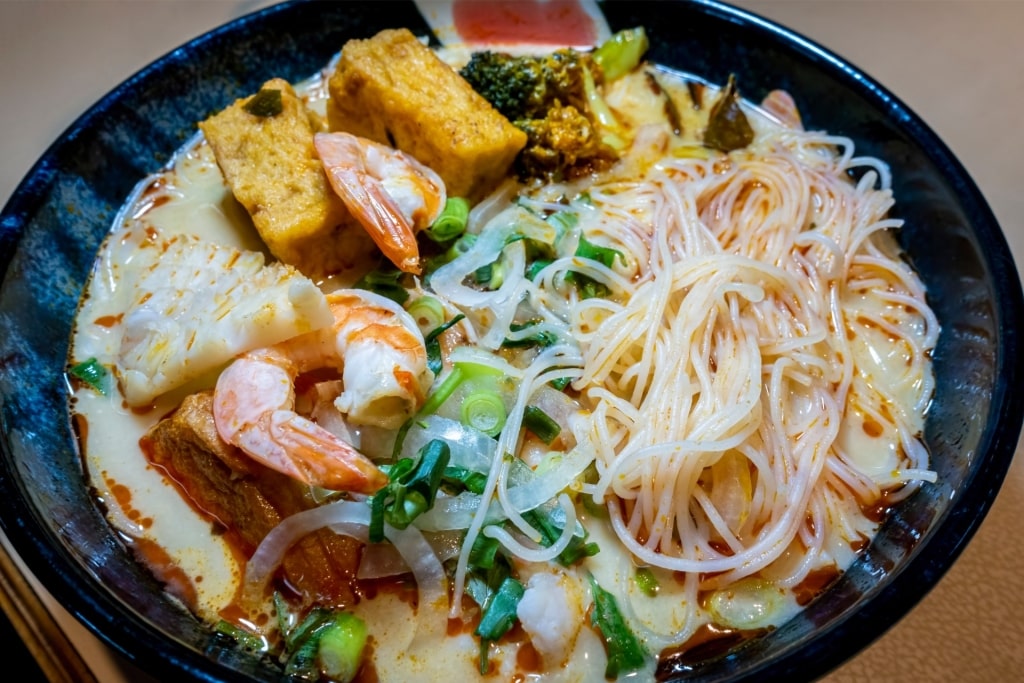
Laksa is not so much a single recipe as an entire genre of noodle soups popular in Malaysia and Singapore. Singaporeans tend to have strong opinions about which hawkers make the best renditions. There’s no definitive right answer, of course. The best thing to do is simply to slurp as many bowls as possible to make up your own mind.
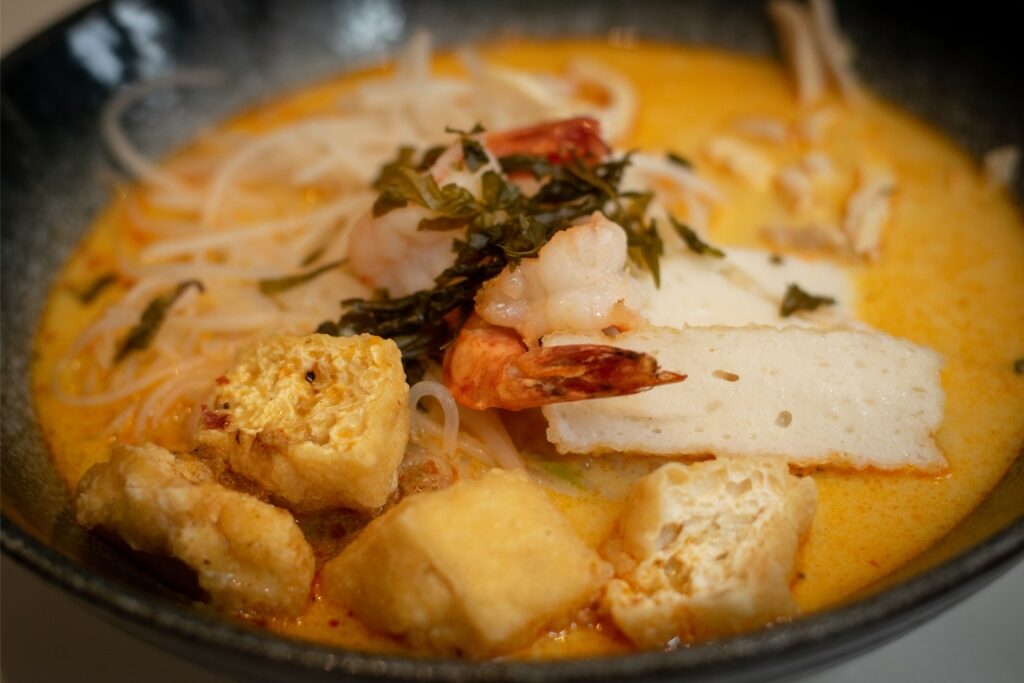
Prawns, squid, cockles, and other seafood are common additions, but bowls may also include jammy eggs, chicken, fried tofu, or a wide range of other ingredients. The broth is often—but not always—fish-based. Some cooks enrich it with a generous amount of coconut milk, while others prefer a thinner, spicier base.
Laksa
A few elements are essential. First, rice noodles are typically the preferred noodle here. Next, the soup itself is flavored with a highly aromatic paste. The best hawkers pound their own proprietary blends by hand. Lemongrass, galangal, candlenuts, garlic, chiles, dried prawn paste, and laksa leaves are all common additions.
Char Kway Teow
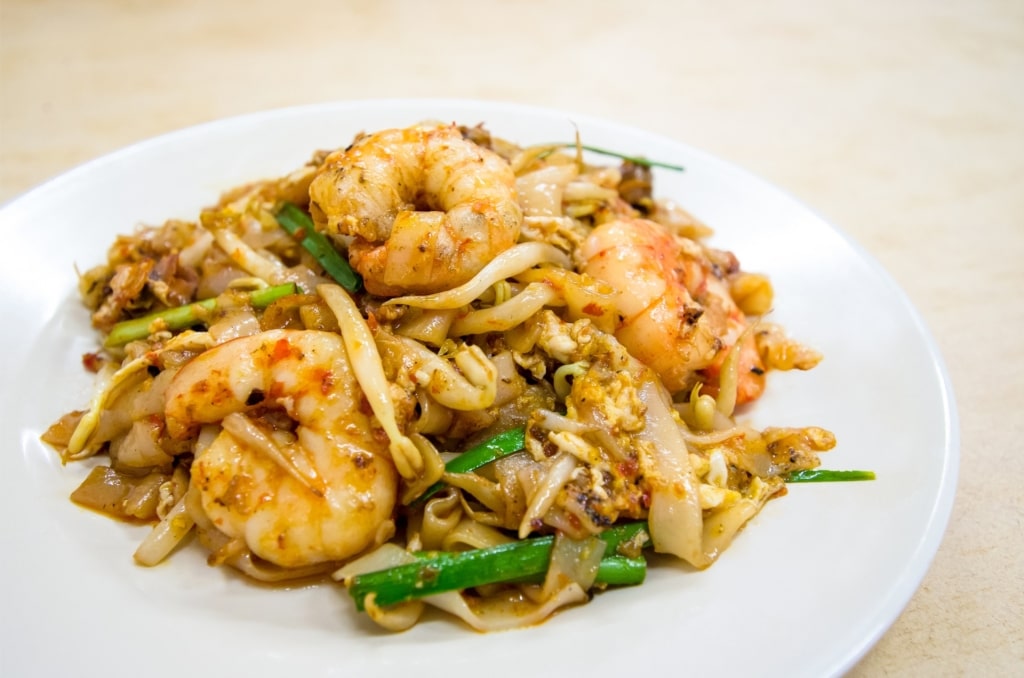
Char kway teow
Many of the most popular dishes in Singaporean hawker centers are Malaysian in origin, including char kway teow, or “stir-fried noodles” in Hokkien dialect. Picture bouncy, thick-cut rice noodles stir-fried in a blazing-hot wok in a sticky, savory soy sauce until caramelized. Garlic, beansprouts, eggs, chives, and sometimes greens add textural variety.
What goes in after that is somewhat up to the individual hawker. Sweet Chinese sausage is common, as are cockles, shrimp, or fishcakes. It all comes together in a flash and is best devoured piping hot.
Sambal Stingray
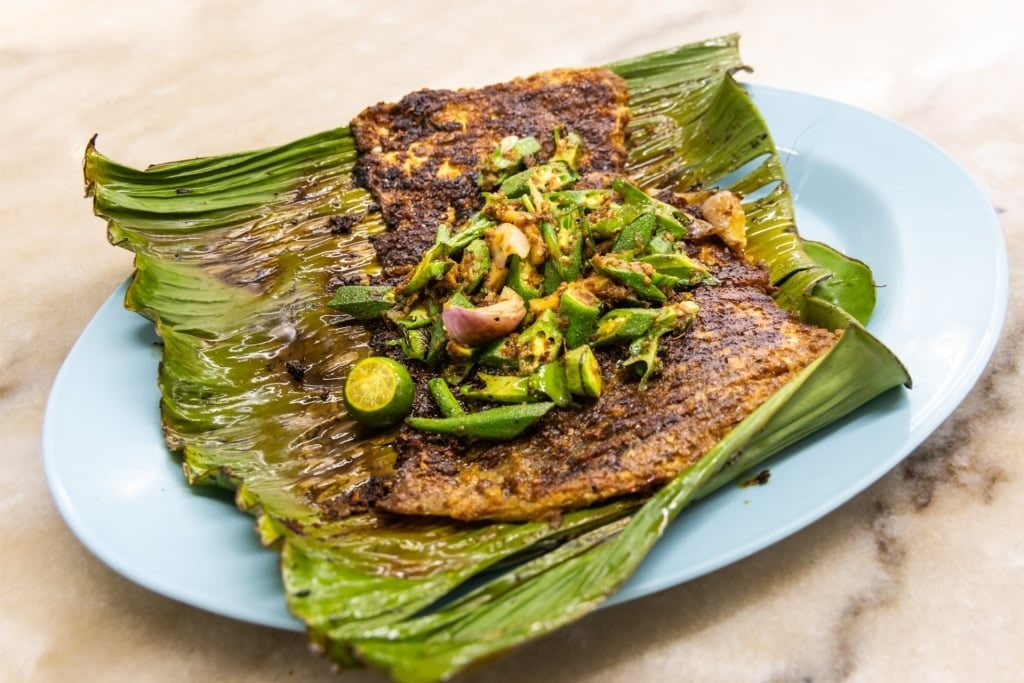
Sambal stingray
Ikan pari bakar, as it’s known in Malay, is a must-order item in just about any hawker center. This dish has humble origins, as stingray was once an inexpensive fish. These days it’s in high demand here, thanks in large part to this show-stopping preparation.
To make the dish, hawkers first pound up a sambal paste with garlic, lemongrass, fresh chiles, fermented shrimp paste, and other aromatics, then slather it all over the stingray fin. The whole thing is wrapped in banana leaves, which keeps the fish from drying out, then grilled. The result is smoky, flaky, and worth the price of the journey alone.
Chili Crab
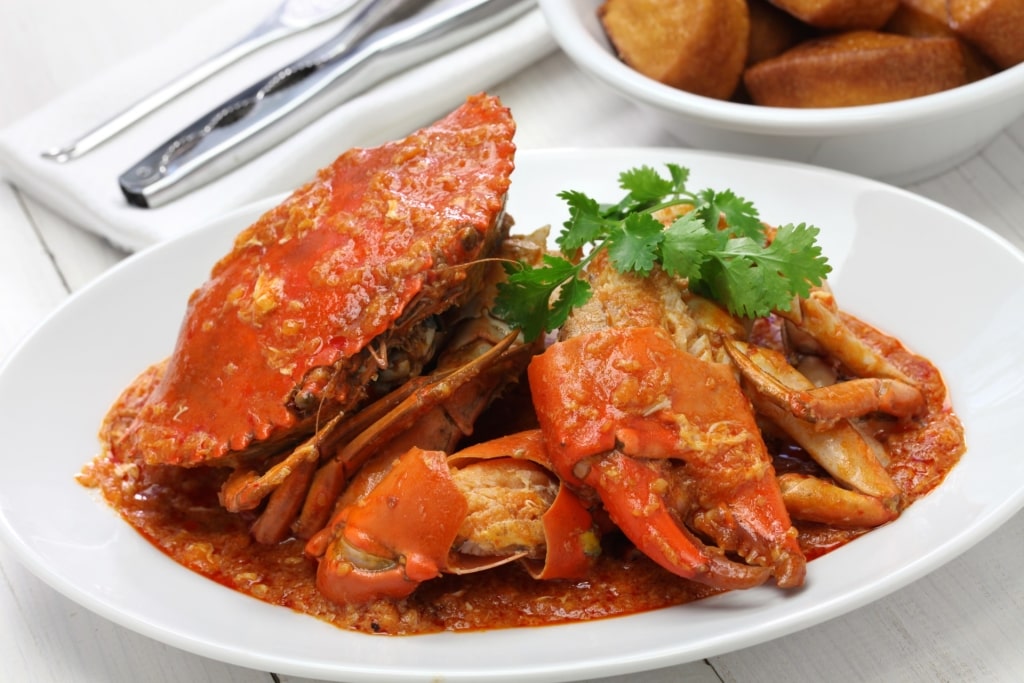
Chili crab
One of the national dishes of Singapore is quite literally a hot mess—in a very good way. Order chili crab at a hawker center and you’re likely to be handed plastic gloves and plenty of napkins. That’s because this shell-on seafood feast is seriously saucy, with bold, spicy, sweet flavors that perfectly complement the crab. You’ll want plenty of fluffy mantou, or steamed buns, for sopping it all up.
Singapore’s swankier establishments might use whole imported dungeness or even king crabs. At most hawker centers, however, mud crabs are the de facto crustacean, which keeps this dish a bit more affordable.
Satay
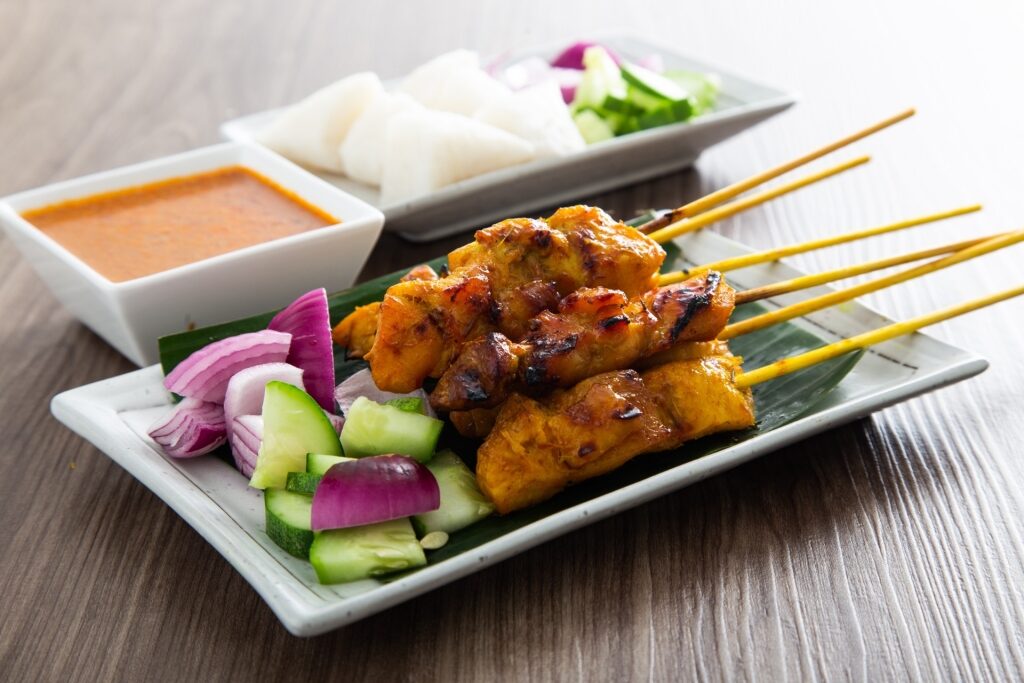
Satay
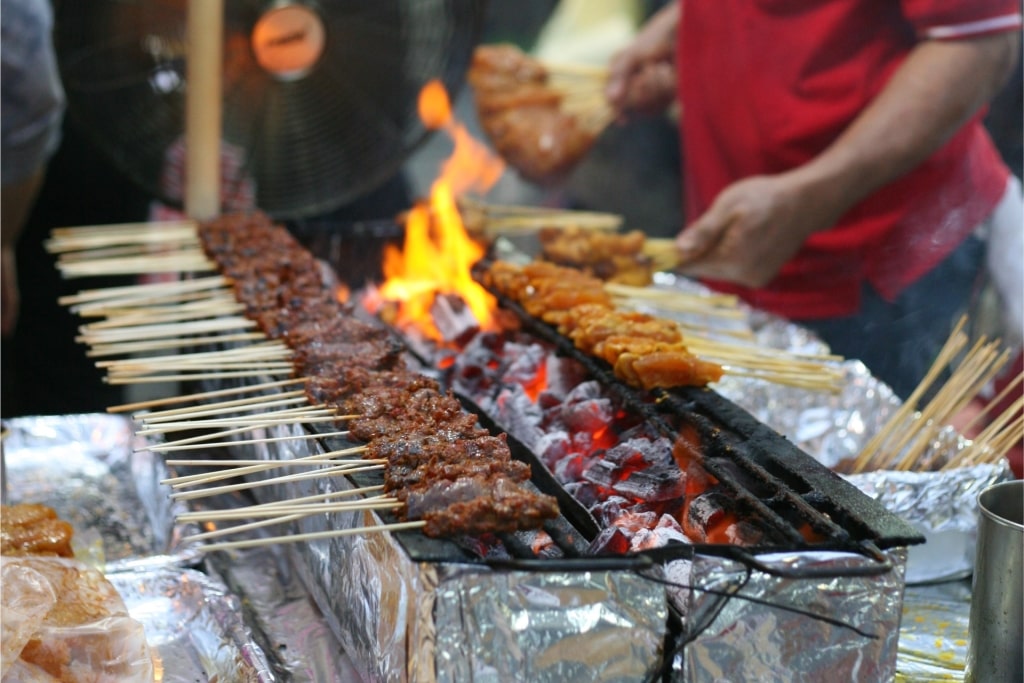
Plenty of cultures around the world have come up with the simple, ingenious idea of grilling meat on a stick over charcoal. Satay is thought to have been invented in Java, but you’ll find it in practically every Singaporean hawker center. It’s great for a quick on-the-go snack or an accompaniment to a larger hawker center feast.
Depending on the hawker, satay can be made with chicken, beef, lamb, or goat. Regardless of the protein, a turmeric marinade imbues it with a lovely golden hue. A sweet, chunky peanut sauce on the side is perfect for dipping.
Roti Prata
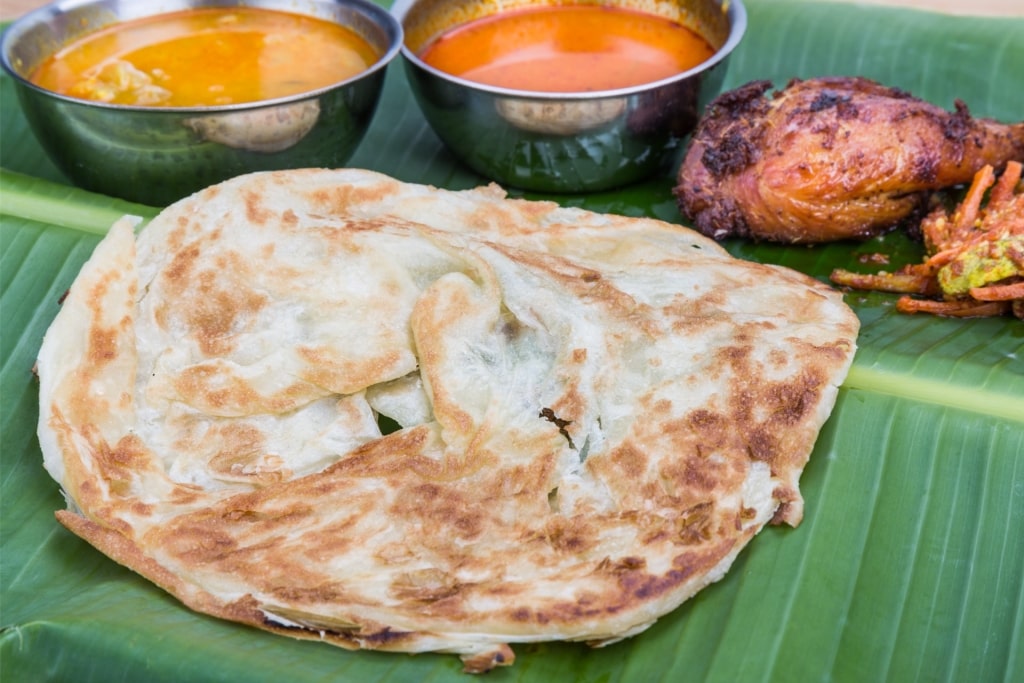
Roti prata
This hawker staple has its roots in Singapore’s Indian diaspora. These unleavened flatbreads are made by rolling and rerolling dough with ghee, butter, or margarine. The final result has a flaky texture and a rich, toasty flavor. You’ll find variations of roti around Malaysia, Thailand, and other places Southern Indian immigrants settled.
In Singapore, roti prata make for the perfect ingredient for mopping up rich curries and sauces. You can also order them by themselves in both sweet—with chopped banana and sweetened condensed milk—and savory—with a fried egg—version.
Fried Carrot Cake, or Chai Tow Kway
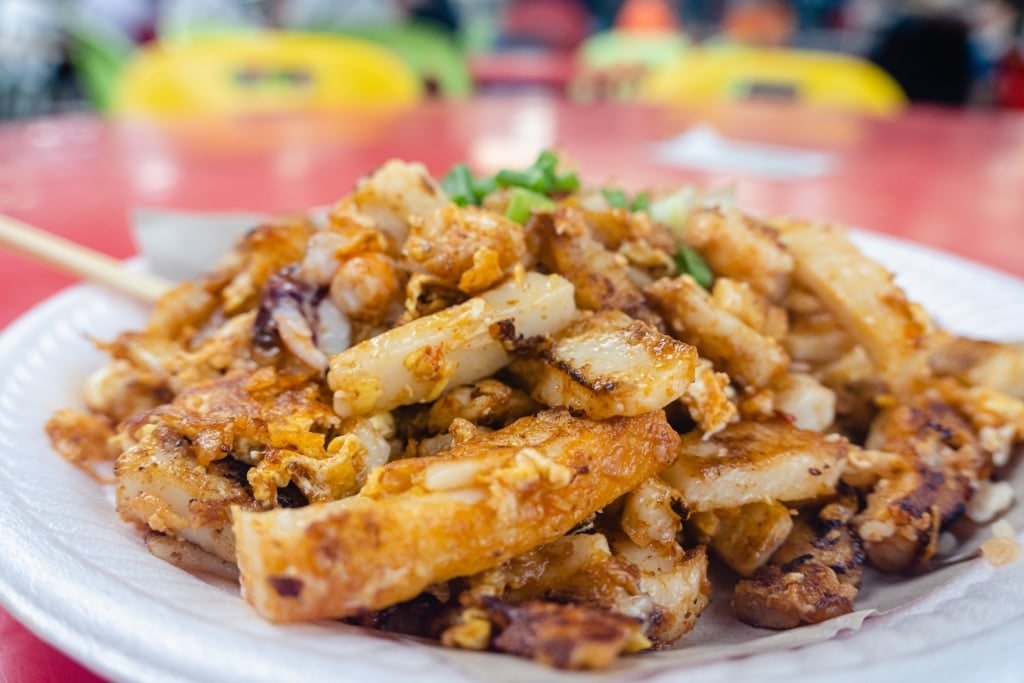
Chai tow kway
Despite the name, this “carrot cake” has nothing in common with the cream cheese-frosted American dessert. For starters, there are no carrots in chai tow kway, which is actually made with a type of shredded radish. No one quite knows how the mistranslation started, but the English name stuck.
It’s also not the same as the Hong Kong dim sum stalwart “carrot cake,” or lo bak go, a type of radish cake that’s steamed, sliced into neat rectangles, and pan-fried. Singaporean chai tow kway is more of a free-form, eggy stir-fry with caramelized cubes of radish cake embedded in it.
Read: Singapore vs. Hong Kong: Which Should You Visit?
Oyster Omelette, or Orh Luak
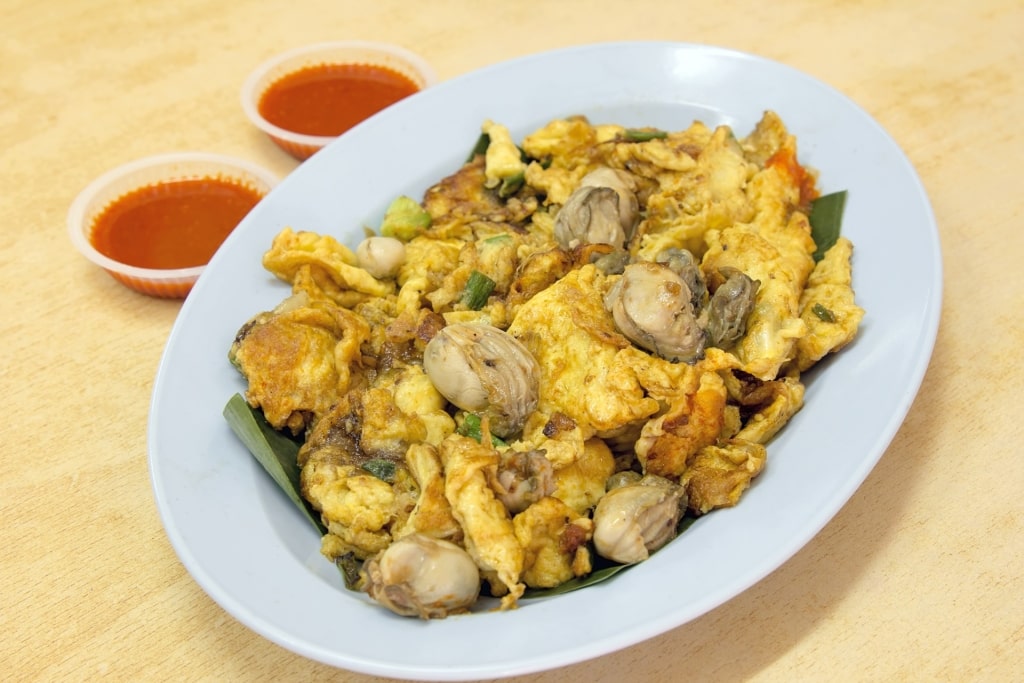
Orh luak
This beloved hawker staple is not an omelet in the Western sense, but rather a loosely bound eggy pancake bound with rice flour. Plump, briny bivalves are bound up in the mix, although variations including mussels or other seafood are also common. The dish has Teochew roots and is found in many places southern Chinese immigrants settled in Southeast Asia.
The magic happens when the batter hits a blistering-hot griddle. The edges form crispy, lacy bits that contrast beautifully with the barely-set interior. Some diners prefer an unctuous center, while others prefer theirs more deeply browned.
Popiah
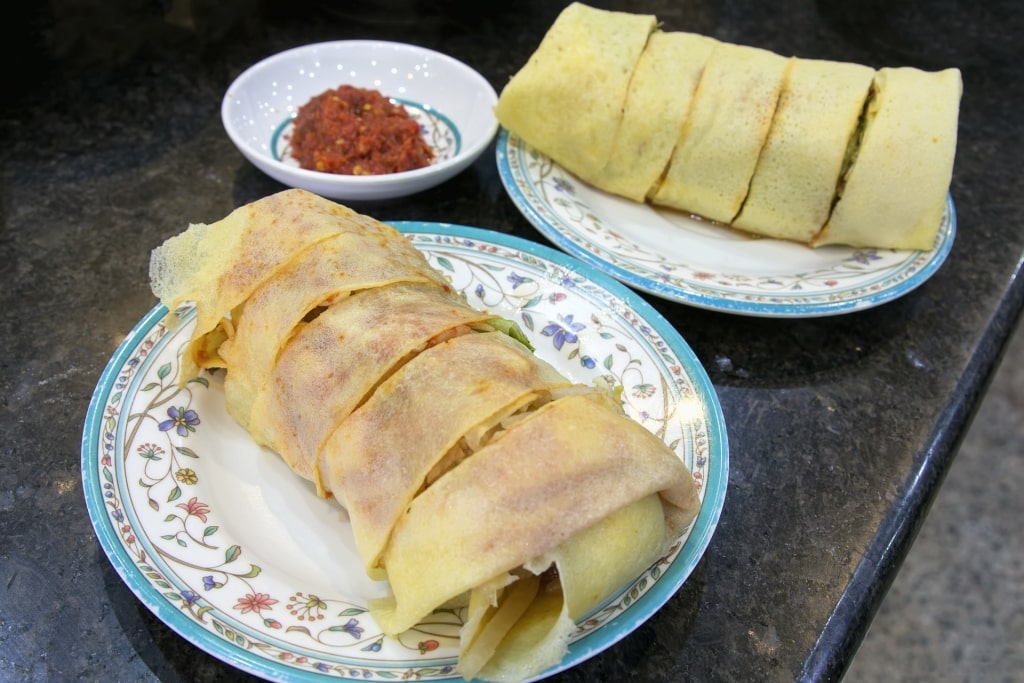
Popiah
Introduced to Singapore by Teochew and Fujianese immigrants, these fresh spring rolls feature a soft, crepe-like wrapper rather than a crunchy, deep-fried exterior. The name loosely translates as “thin pancake” in Teochew. They can be stuffed with all sorts of fillings, including crab or seafood, tofu, Chinese sausages, or thinly julienned vegetables.
Popiah are common fare both at hawker centers and home gatherings and parties. These little bundles are emblematic of Singapore’s cultural melting pot. Although they originate from the city-state’s Chinese community, they often incorporate other Southeast Asian flavors.
Kaya Toast
Kaya toast
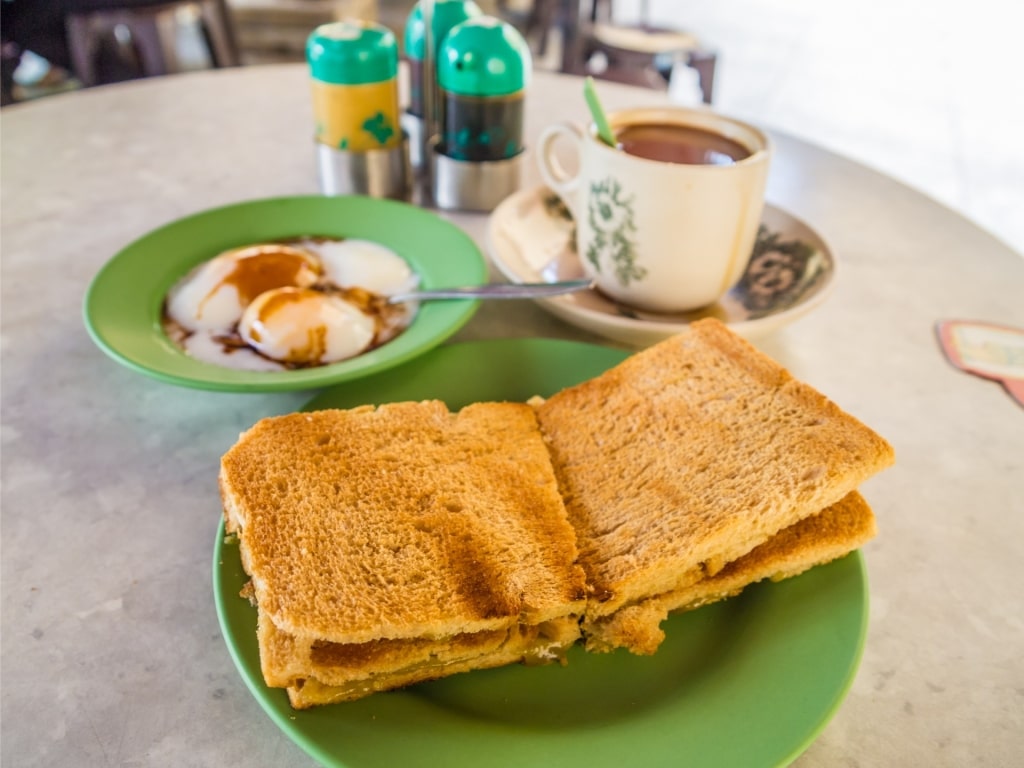
If you’re looking for an indulgent breakfast, it doesn’t get much better than kaya toast. Since there’s so few components, each one counts for a lot with this deceptively simple dish. For starters, the toast should be fluffy, slightly sweet, and cut thick. A generous smear of margarine or butter is traditional. It’s usually served as a dainty sandwich, although it can also be open-face.
The defining ingredient, of course, is kaya, a kind of ultra-rich, silky coconut jam enriched with chicken or duck eggs. The mixture is cooked slowly until the sugars caramelize. Pandan, a fragrant herb that tastes like a mix of vanilla and pine, is often the defining flavor. Depending on how much is used, the finished jam may have a lovely pale green color.
Kaya toast
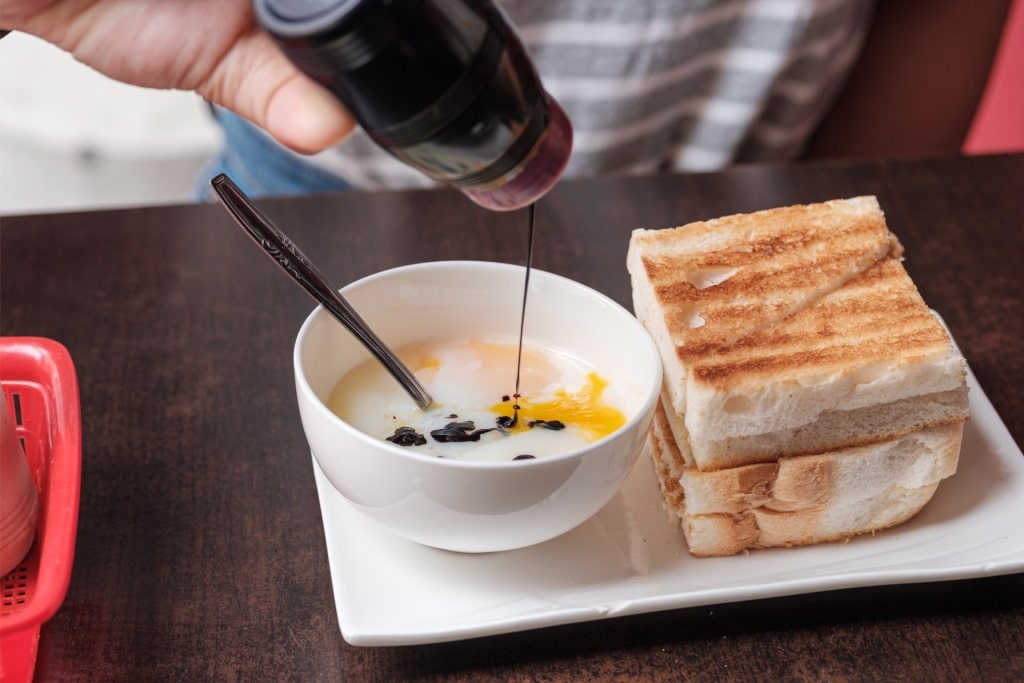
You’ll find it at hawker centers, as well as just about every kopitiam in town. These nostalgic coffee shops found in Singapore and Malaysia make for a perfect start to your morning. The pro move here is to order your kaya toast with a soft-boiled egg and dunk it in the yolk.
Nasi Lemak
Nasi lemak
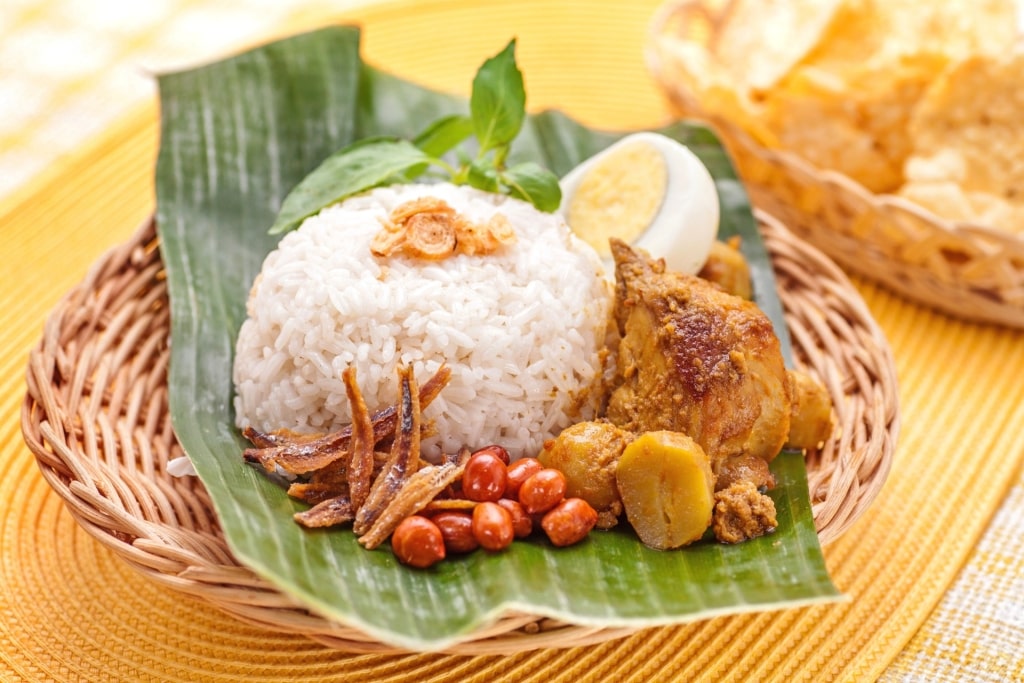
The national dish of Malaysia is also quite popular in Singapore. Nasi lemak, which is often served for breakfast but welcome at any time of the day, revolves around rice. In this case, the rice in question is often perfumed with pandan leaves and sometimes cooked in coconut milk.
Typically, a hard-boiled egg, crispy fried anchovies, sliced cucumber, and a spicy sambal are arrayed in a ring around the mound of aromatic rice. From that jumping off point, there’s quite a bit of room for variation. Additional dishes such as beef rendang, made by reducing a coconut milk mixture down until the meat fries in the fat, fried chicken, or sautéed squid are all common.
Pork Rib Soup, or Bak Kut Teh
Bak kut teh
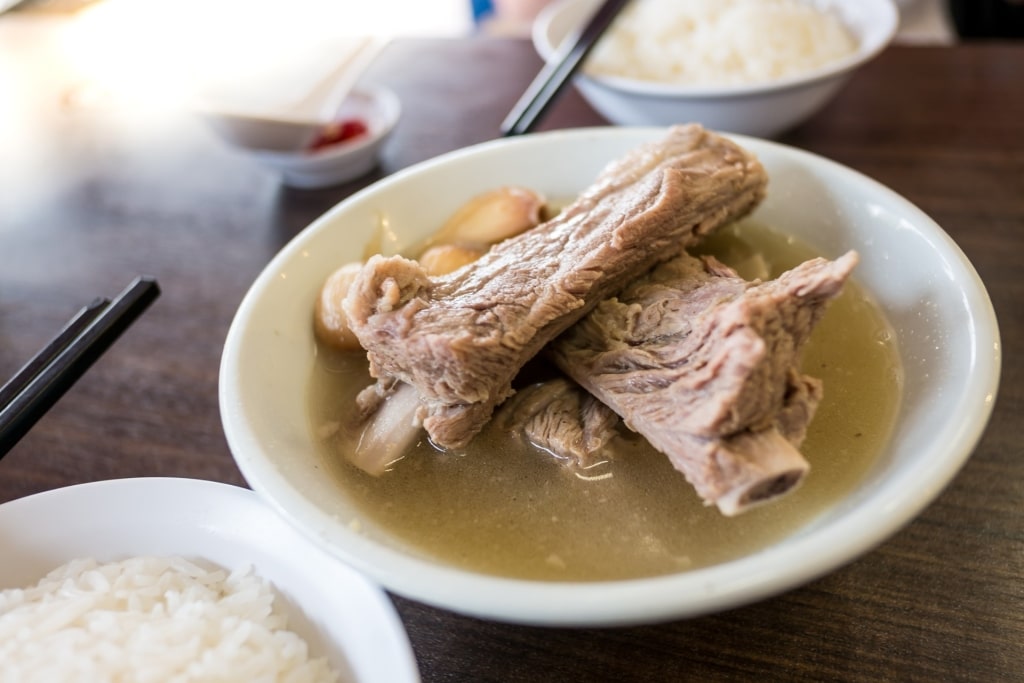
Just follow your nose to the nearest hawker serving bak kut teh, or white pepper pork rib soup. This dish can trace its origins back to groups who migrated to Singapore from southern China. The Hokkien-style version has a soy-darkened broth with complex herbal flavors, while the Teochew-style rendition is lighter and fragrant with white pepper.
Either way, the base of the dish is pork ribs simmered for hours to make a rich, aromatic broth. Offal, dried tofu, or the golden puffs of fried dough known as youtiao may all be added as garnishes.
Read: Three Days in Singapore
Hawker Food in Singapore FAQs
What is hawker food?
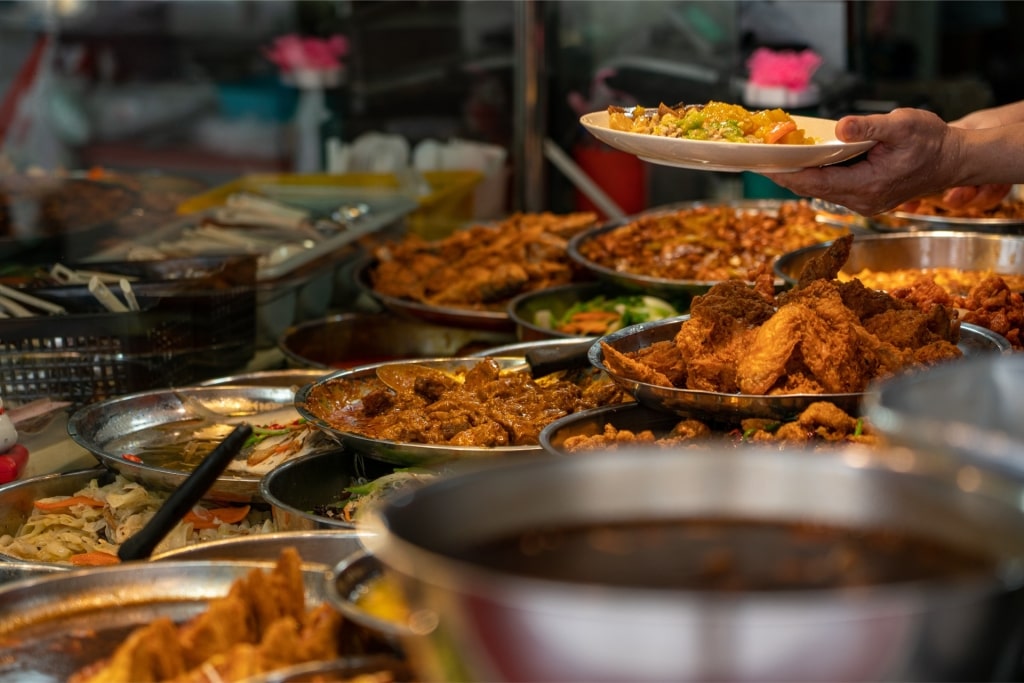
Hawker food
As with other Southeast Asian countries, Singapore has a long, proud tradition of street food. In an effort to clean up its streets while still preserving its culture, the Singaporean government moved all the hawkers to designated food court-type areas. At these well-maintained and regulated spaces, it’s possible to feast on all sorts of dishes.
What is the most popular hawker food in Singapore?
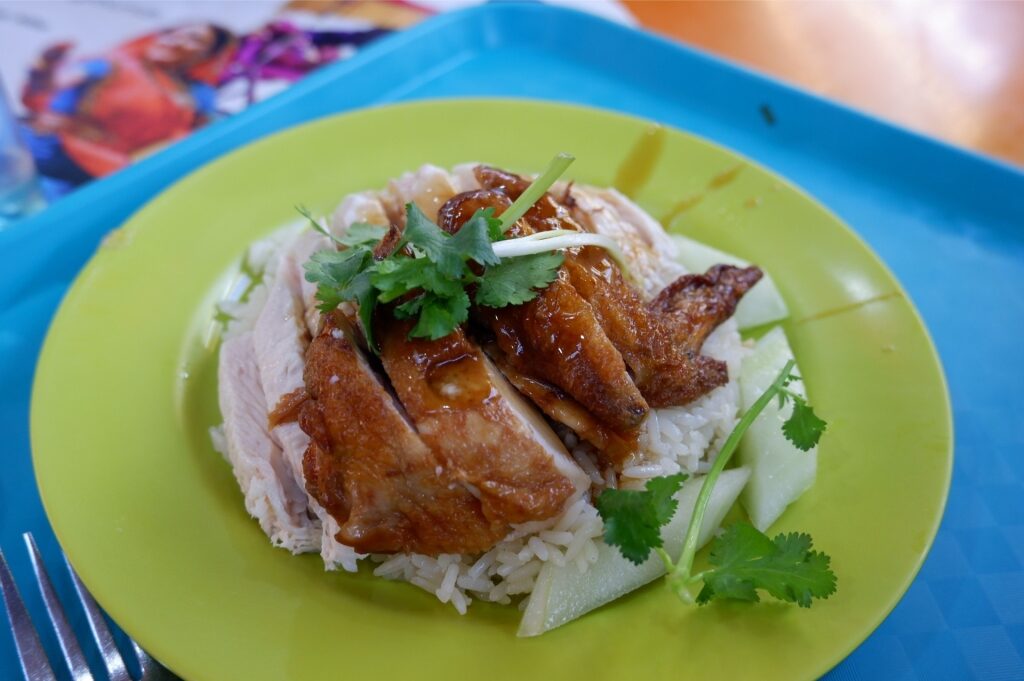
Hainanese chicken rice
Singapore is known for its food, so it would be impossible to single out just one dish. But there are a few heavy-hitters that you’ll find just about everywhere. Hainanese chicken rice is beloved and often the subject of considerable debate when it comes to who makes the best version. Laksa is also synonymous with hawker fare and is close to the hearts of many Singaporeans.
Where can I find the best hawker food in Singapore?
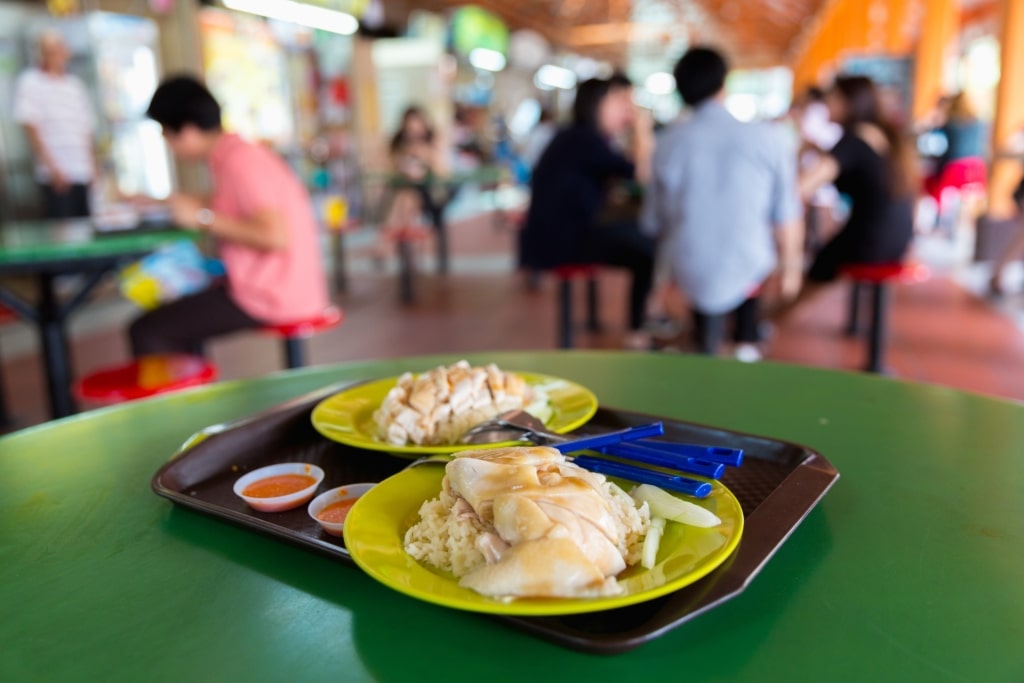
Maxwell Food Centre
Singapore has dozens of hawker centers and choosing which one to visit depends a lot on what dishes you’re hoping to try. For instance, Tiong Bahru Market is renowned for its chili crab, while Hong Lim Market & Food Centre has Michelin-lauded pork noodles. In general, you’ll find a great selection at Newton Food Centre, Maxwell Food Centre, and the Chinatown Complex.
Is hawker food safe to eat?
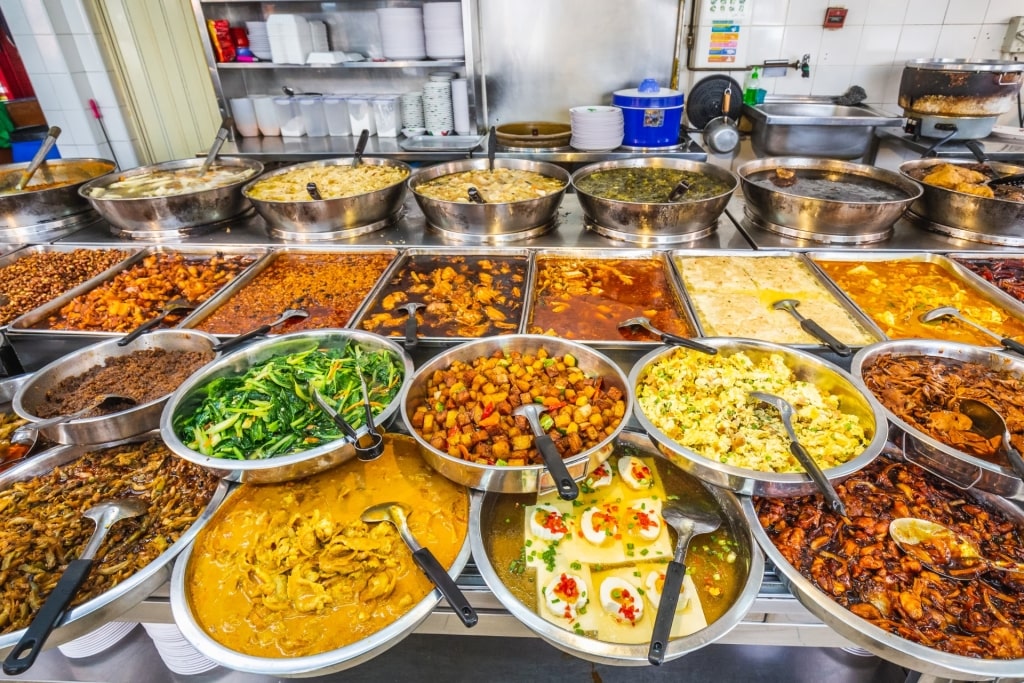
Newton Food Centre
Yes! Singaporean hawkers adhere to high standards of hygiene and are strictly monitored. You can dig into absolutely anything here with complete peace of mind.
Is it customary to tip?
Satay
Tipping is generally not expected at hawker centers in Singapore. A modest service charge is usually tacked on top of the price of the dish. Note that cash is still preferred at most hawker centers.
What drinks are commonly served?
Hawker food
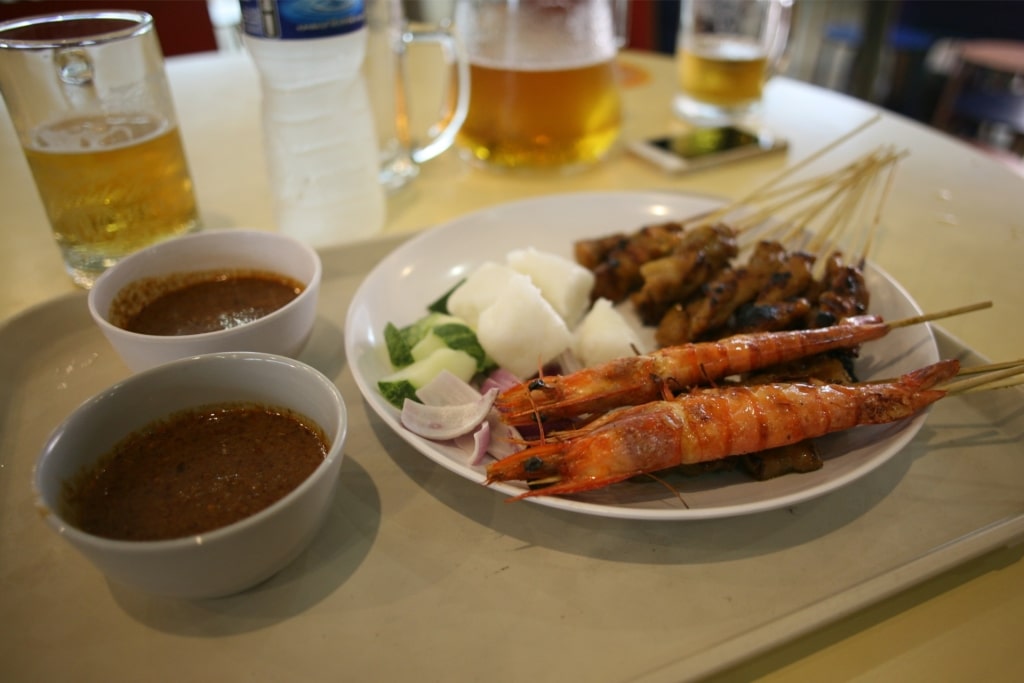
A crisp, cold lager is often the perfect way to cut through the spice of certain dishes. Craft beers have made inroads in Singapore in recent years, but don’t expect a heavy IPA here. You’ll want something light and refreshing. Many hawker centers are open-air and subject to Singapore’s humid climate. Alternatively, you can never go wrong with grabbing a bubble tea.
Singapore
Discover all of the edible marvels that Singapore has to offer on a voyage with Celebrity. Explore upcoming cruises to Singapore and book your next culinary adventure today.