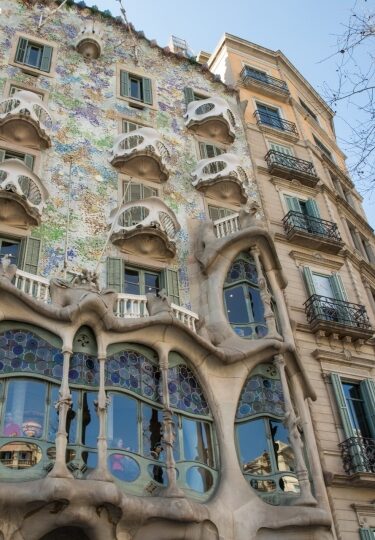
The Catalan capital brims with culture and style but what really sets the city apart is its architecture, most notably, the dozen feted and fanciful Gaudí buildings in Barcelona.
Applauded the world over for his characteristic signature style, architect Antoni Gaudí is considered an unorthodox genius. Drawing inspiration from his two devotions, faith and flora, alongside Art Nouveau and neo-Gothic styles, the bulk of Gaudí’s work is playful, unconventional, and kaleidoscopic—yet somehow, always soothing, rather than jarring.
From the heavy hitters, such as the soon-to-be-completed Sagrada Família and the mosaic-embellished Park Güell to lesser-visited sites and smaller installations, there’s such a wealth of Gaudí architecture in Barcelona that it can be hard to know where to start. Here are some of the best whimsical edifices to visit.
Brief History
Casa Vicens
Gaudí was born in Reus—a Catalan city around 90 minutes southwest of Barcelona—on June 25, 1852. Baptized the following day as Antoni Plàcid Guillem Gaudí i Cornet, he resided in his hometown until the age of 16, when he moved to Barcelona to study at the Escola Tècnica Superior d’Arquitectura.
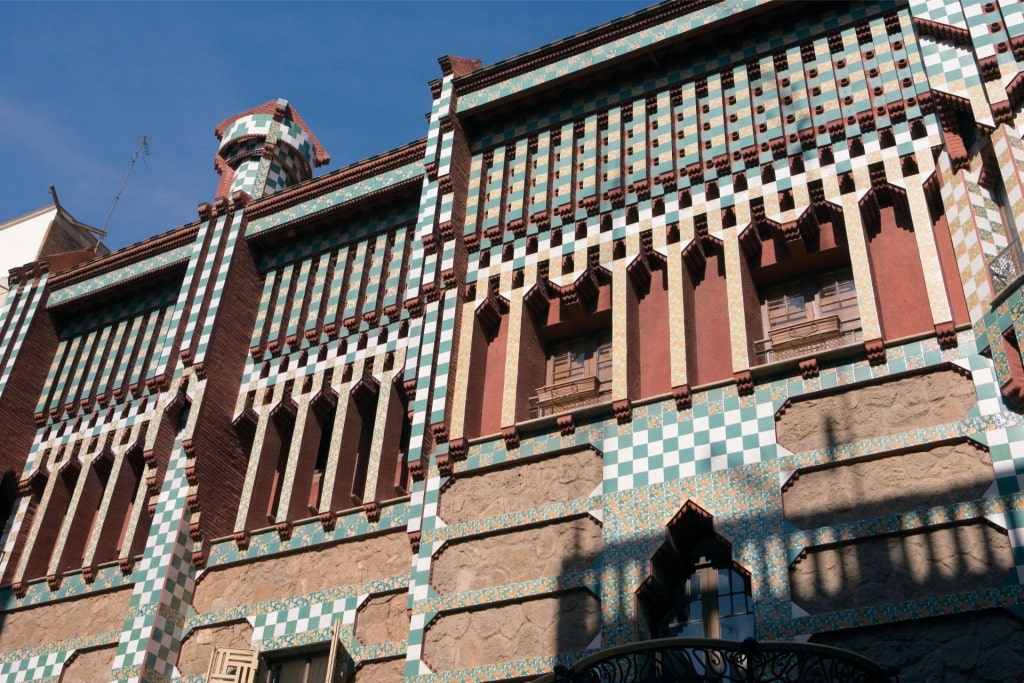
His eccentric artistic style continued to develop in the years following his studies, with floral patterns, ceramics, and Mudéjar-style elements appearing in his work. Gaudí’s first significant project was Casa Vicens, constructed between 1883 and 1885.
Pavellons Güell
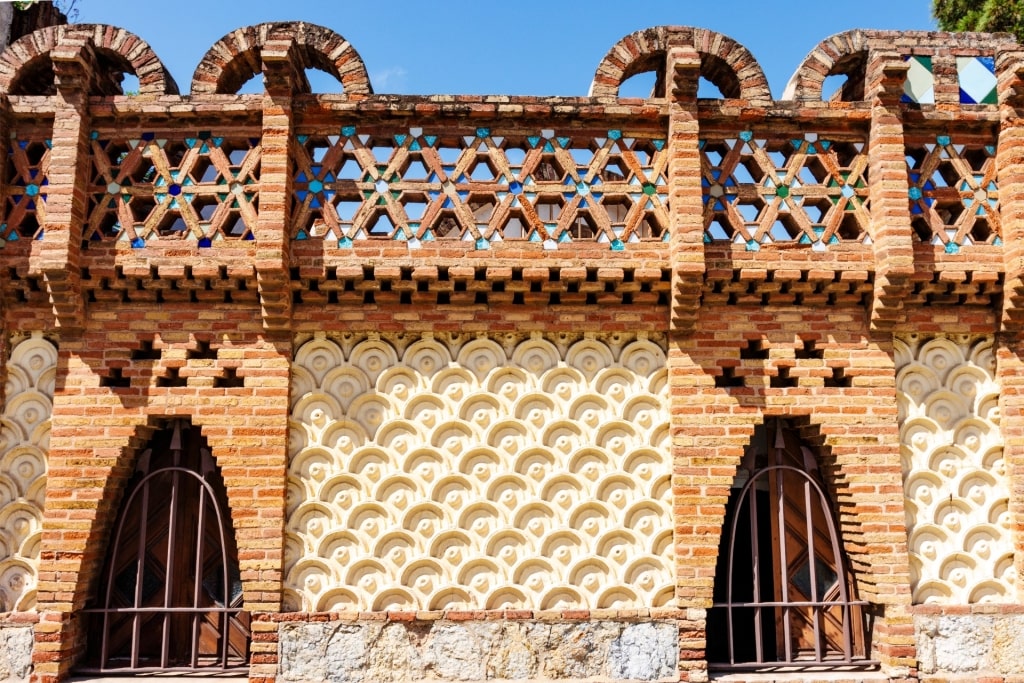
Many of his later commissions came from the Spanish entrepreneur Eusebi Güell. The pair first met in 1878, and in 1884, Gaudí designed the Pavellons Güell. More famous, but destined to fail—at least for its original purposes—Park Güell was commissioned in 1900.
Gaudí became a vital architect during the Art Nouveau period, locally known as Modernisme, and the Renaixença movement, which aimed to revive Catalan culture and language. His most famous and yet unfinished project, La Sagrada Família, embodies this Catalan Renaissance. Gaudí died in Barcelona on June 10, 1926, three days after a tragic tram accident.
Cultural Significance
La Sagrada Família
In Spain, especially Catalonia, the cultural significance of Gaudí was already undisputed in the late 19th century thanks to his contributions to the Renaixença movement. However, Gaudí’s international acclaim grew posthumously. In 1984, UNESCO inscribed three Gaudí buildings in Barcelona on the World Heritage List as a combined site. In 2005, four more constructions, including La Sagrada Família, were added to the “Works of Antoni Gaudí” listing.
Key events, such as the Barcelona Olympics in 1992, also helped to spotlight his unique and capricious designs to the world. The continual construction of La Sagrada Família’s iconic towers and glory façade—scheduled to be completed in 2026—has also drawn fascination globally.
As Barcelona has become one of the most visited cities on the planet, so has interest in Gaudí’s work. Still, the two are intricately linked. Without Gaudí’s buildings, many of which have now become Spain’s most visited attractions, it’s fair to assume the city wouldn’t have struck quite the chord with travelers.
Top Gaudí Landmarks in Barcelona
La Sagrada Família
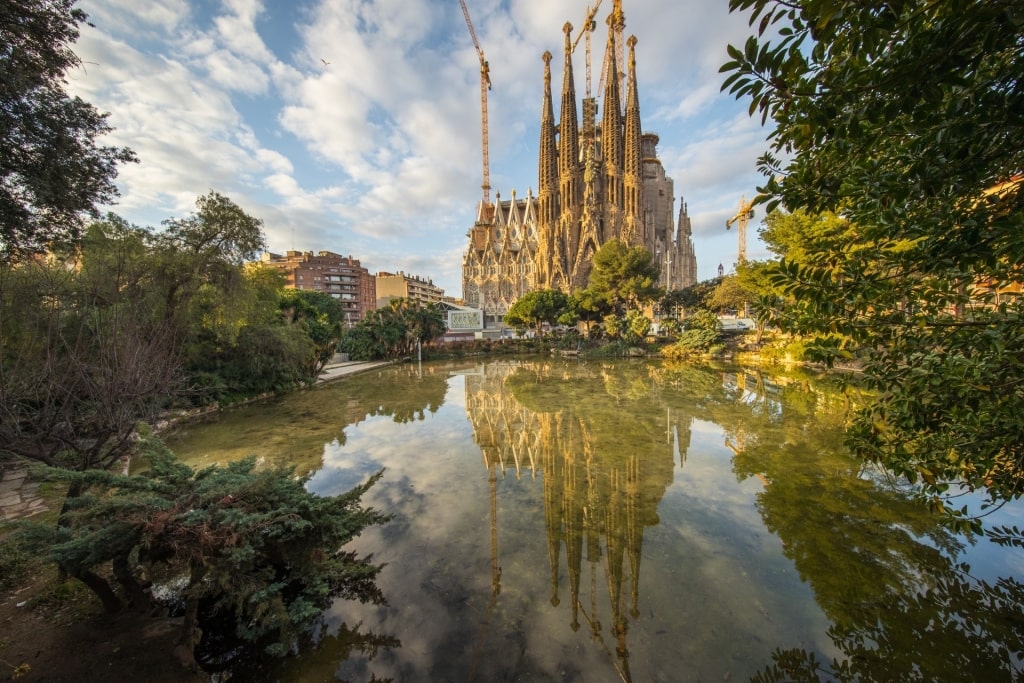
La Sagrada Família
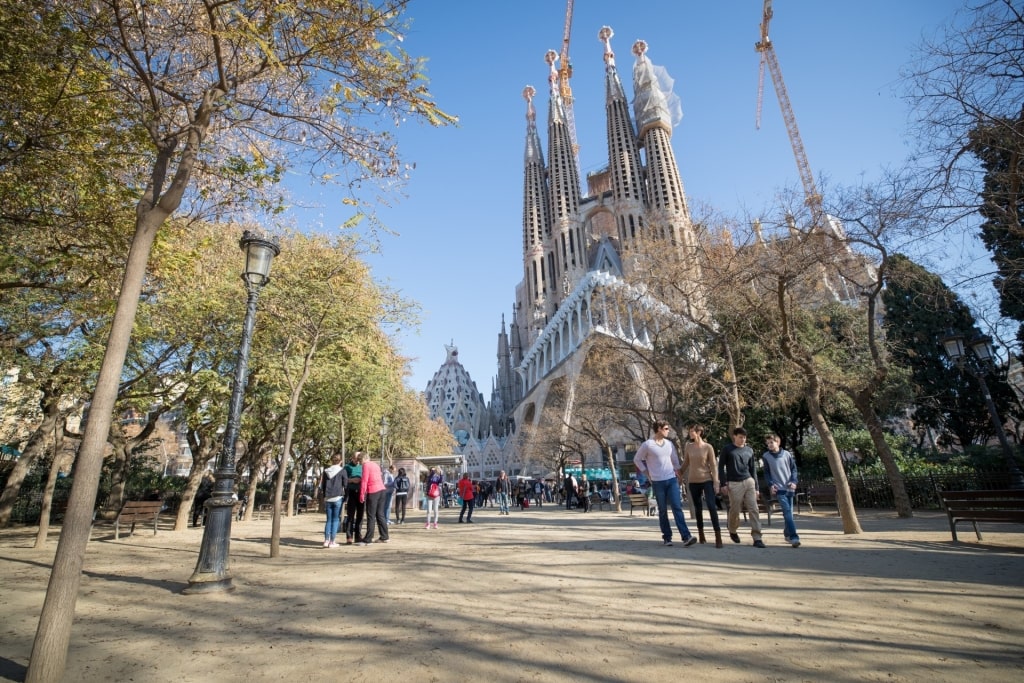
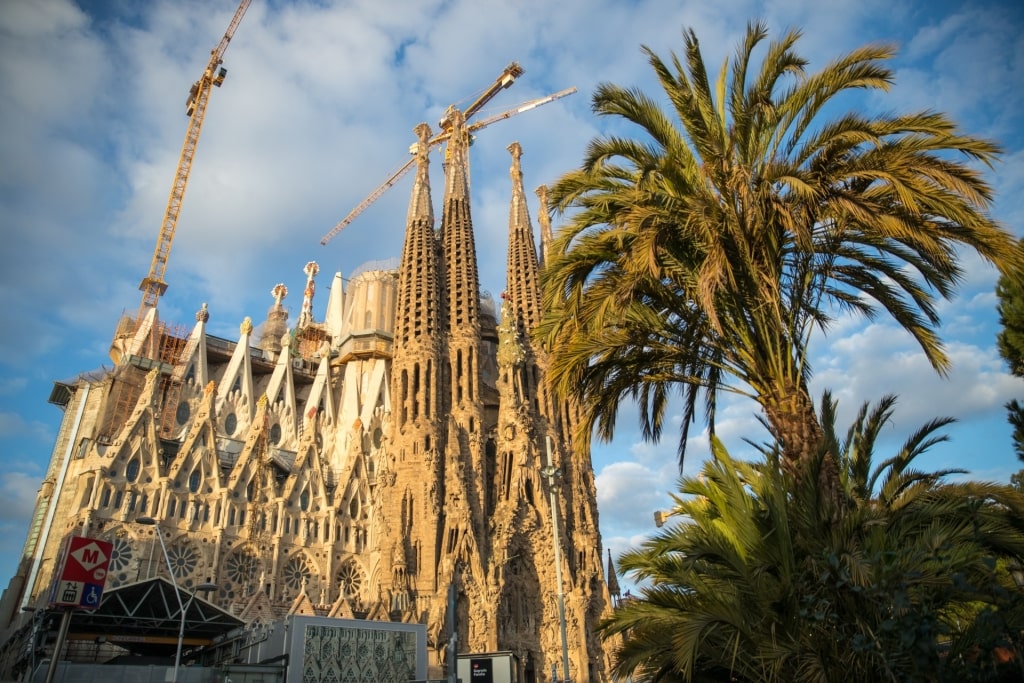
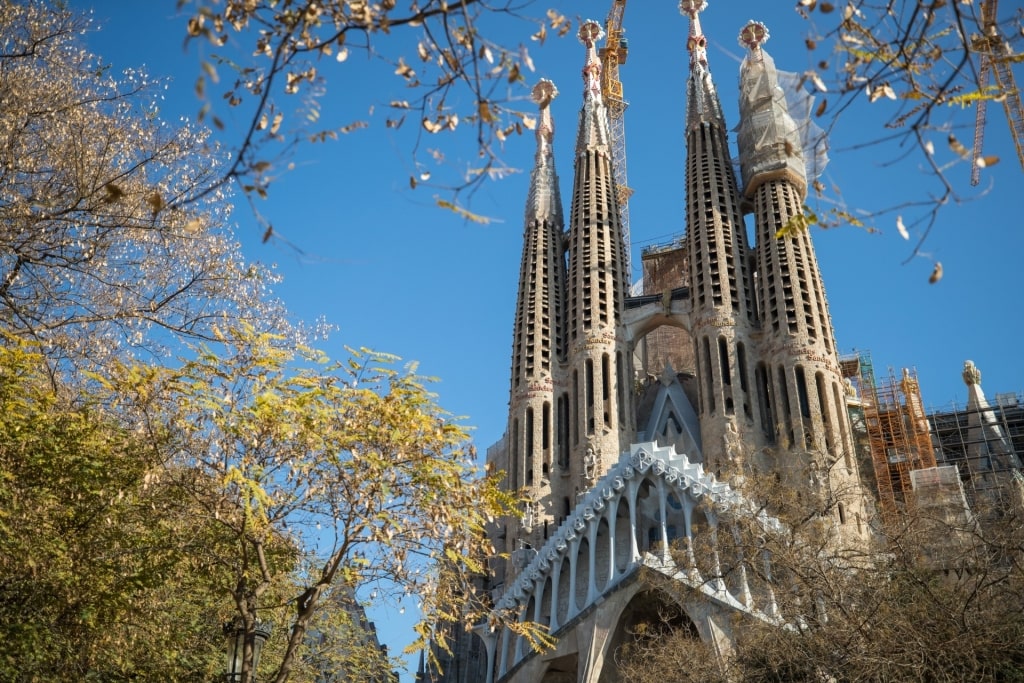
Of all Gaudí’s buildings in Barcelona, La Sagrada Família is the architect’s pièce de résistance. The hulking, heaven-reaching basilica has been under construction since 1882, and is only scheduled to be completed in 2026—a century after Gaudí’s death.
Interestingly, when the building’s first stone was laid, the project was led by a more classical architect, Francisco de Paula del Villar. In 1883, Gaudí took over and transformed the undertaking. The last 15 years of his life were solely dedicated to its construction; during his final months, he even lived on site.
Consecrated in 2010 by Pope Benedict XVI, the edifice is both a working basilica and Spain’s most famous landmark, welcoming close to five million visitors annually.
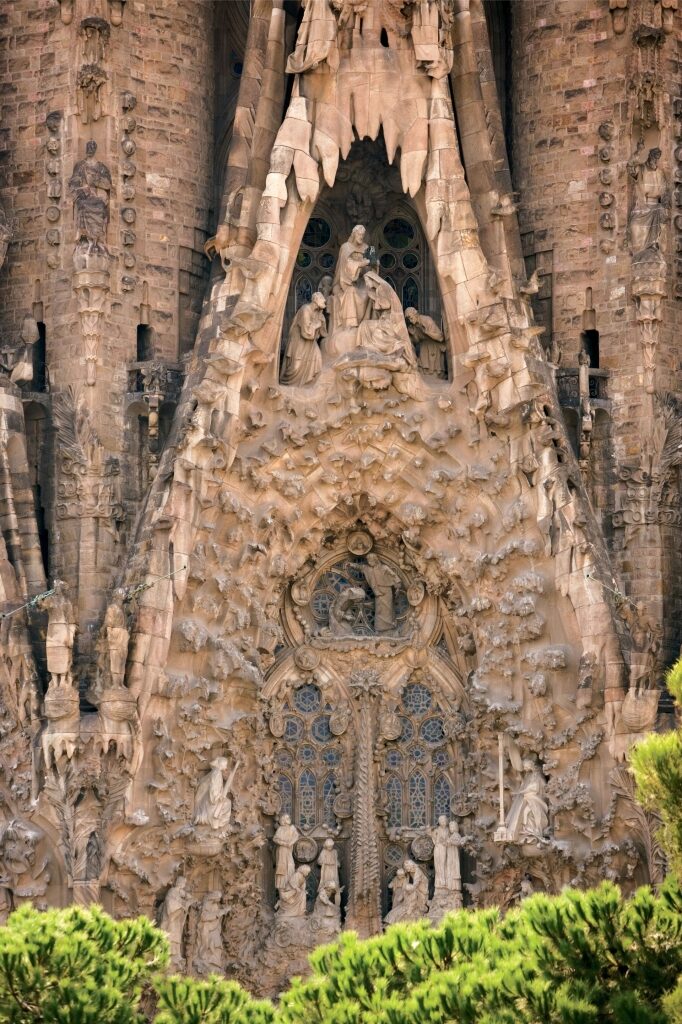
Nativity Façade, La Sagrada Família
Outside, the three distinct facades, including the UNESCO-listed Nativity Façade, depicting biblical scenes and worked on by Gaudí himself, are awe-inspiring. As are the five soaring, central towers already constructed—the tallest, sixth tower dedicated to Jesus, is set to be completed in 2026.
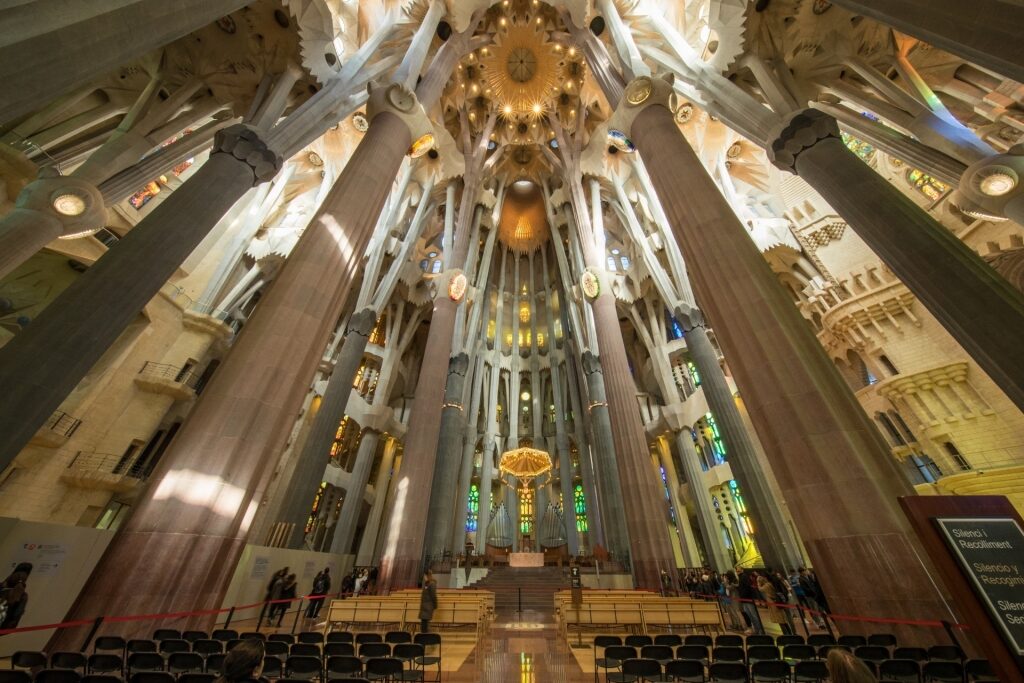
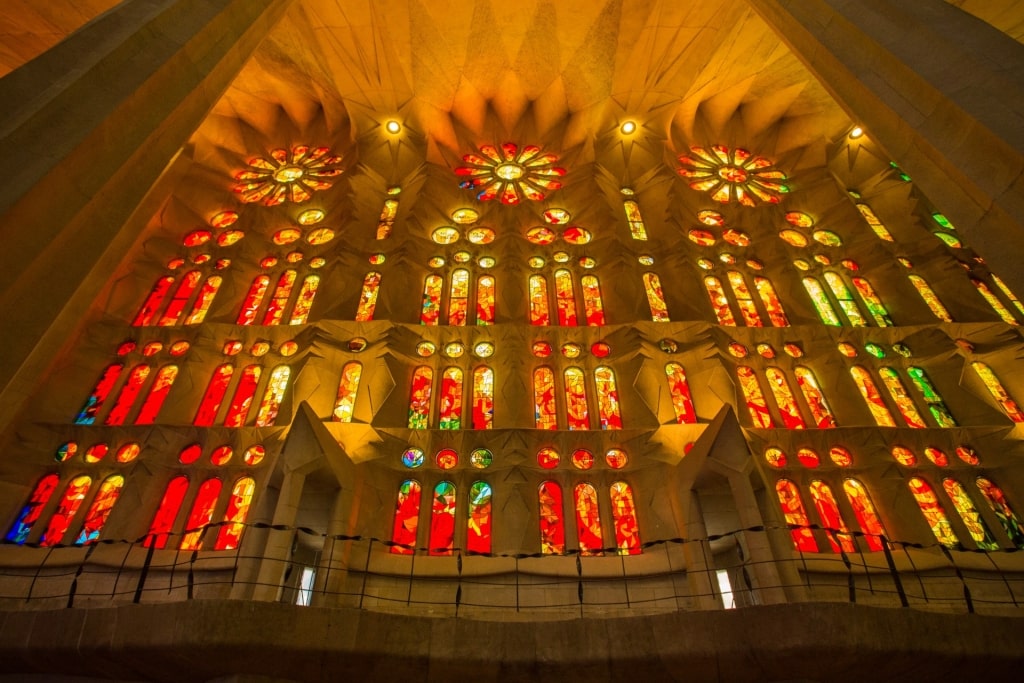
Inside awaits a masterpiece. Designed to have a forest-like feeling, twisted columns reach for the skies before branching out like trees on the embellished ceilings. Stained glass windows flood the space, illuminating the sandstone in a rainbow of colors. And below is Gaudí’s final resting place—the more traditional Crypt and oldest part of the basilica—only accessible during mass or on a guided tour.
Park Güell and the Gaudí House Museum
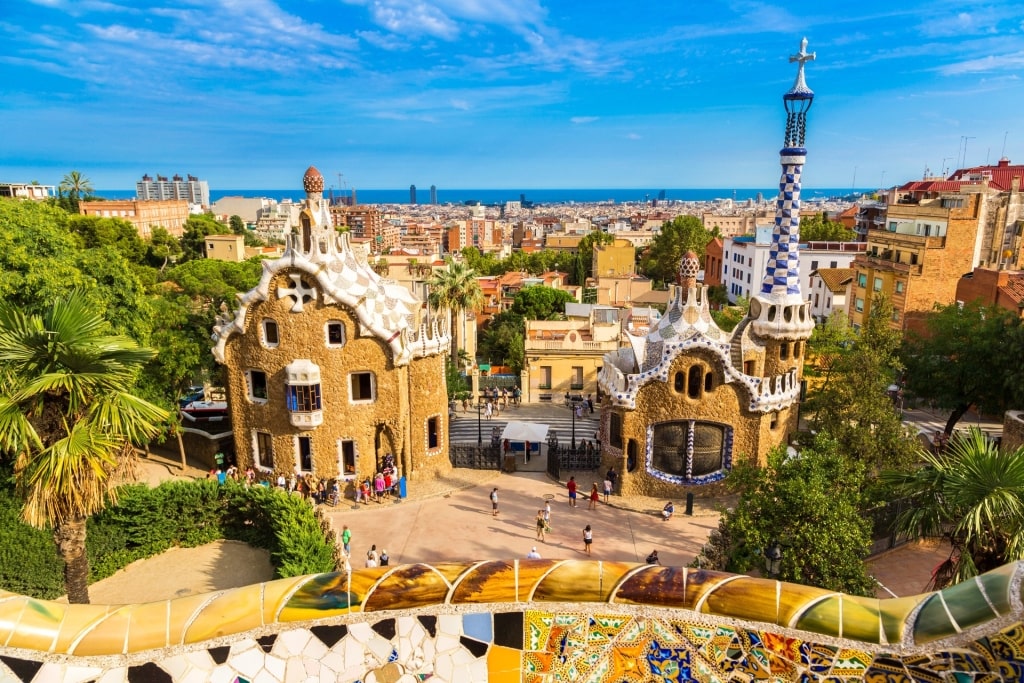
Park Güell
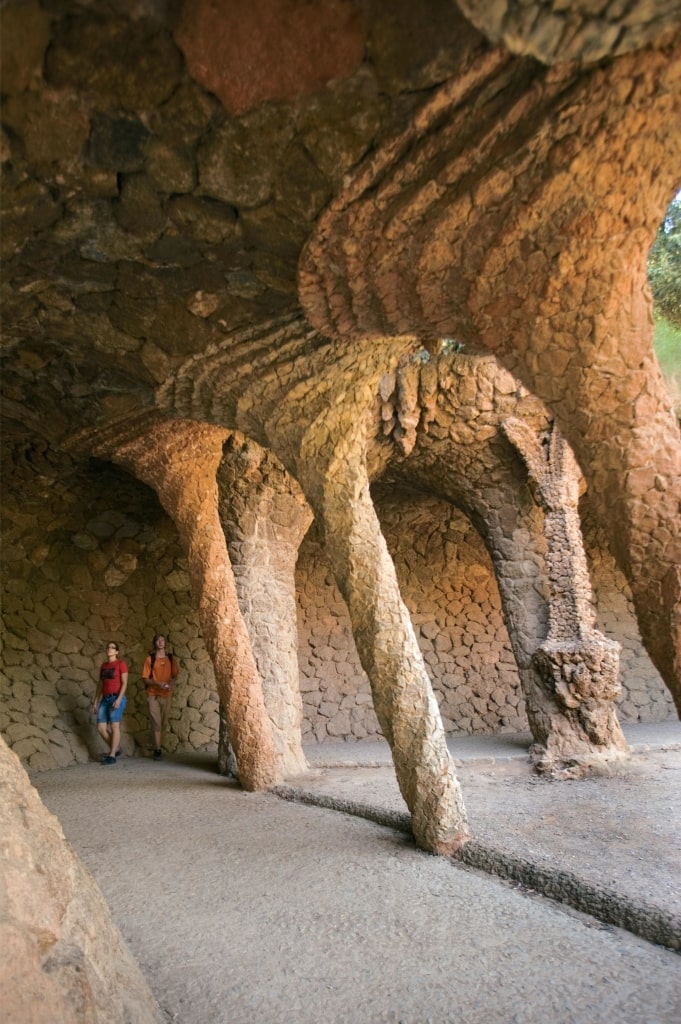
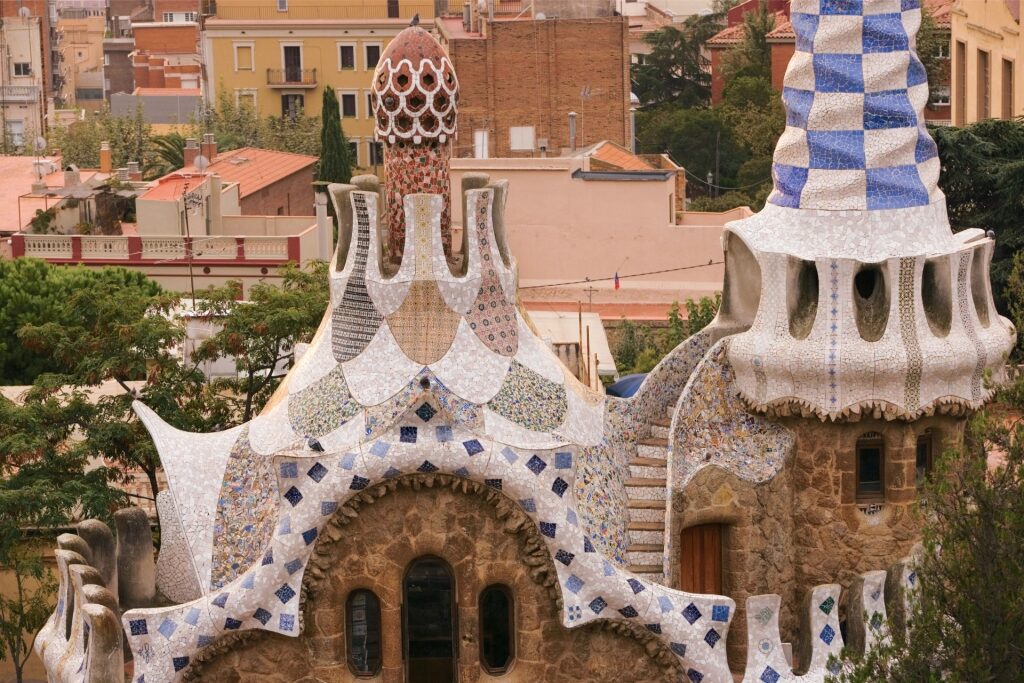
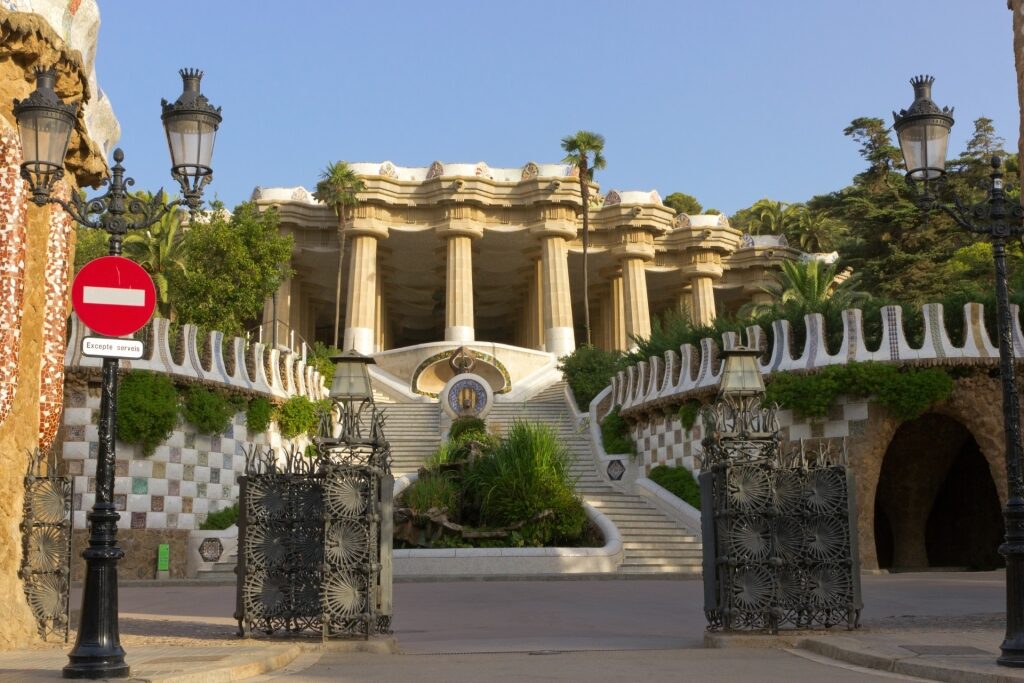
One of Gaudí’s many commissions for Spanish entrepreneur Eusebi Güell, the space now known as Park Güell was originally intended to be a luxury housing estate. Thankfully for all residents and visitors to the city, in 1914, the plan was abandoned after 14 years of development. The park, one of Barcelona’s largest green spaces, was opened to the public 12 years later.
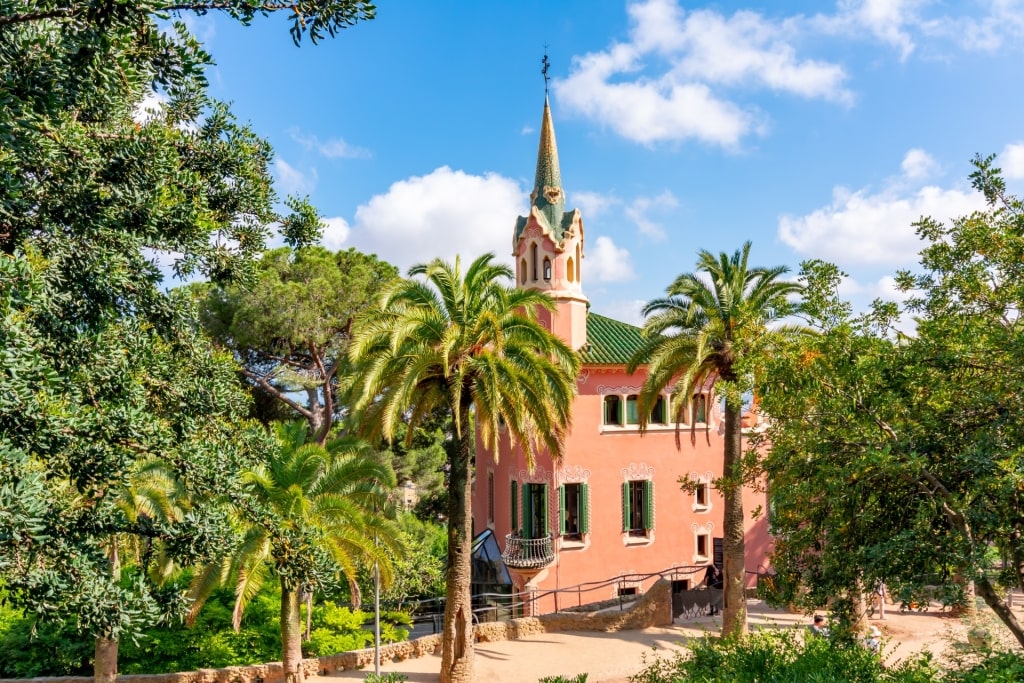
Gaudí House Museum
During this period, only a few buildings were completed on the expansive plot, including Eusebi Güell’s residence and the home Gaudí lived in until 1925, now the Gaudí House Museum.
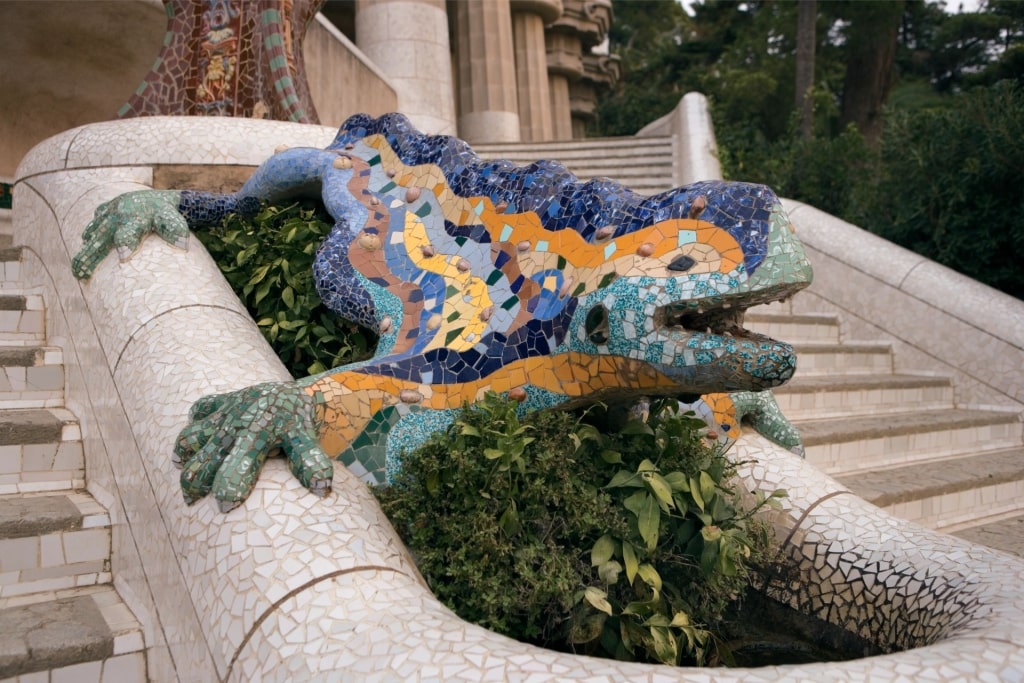
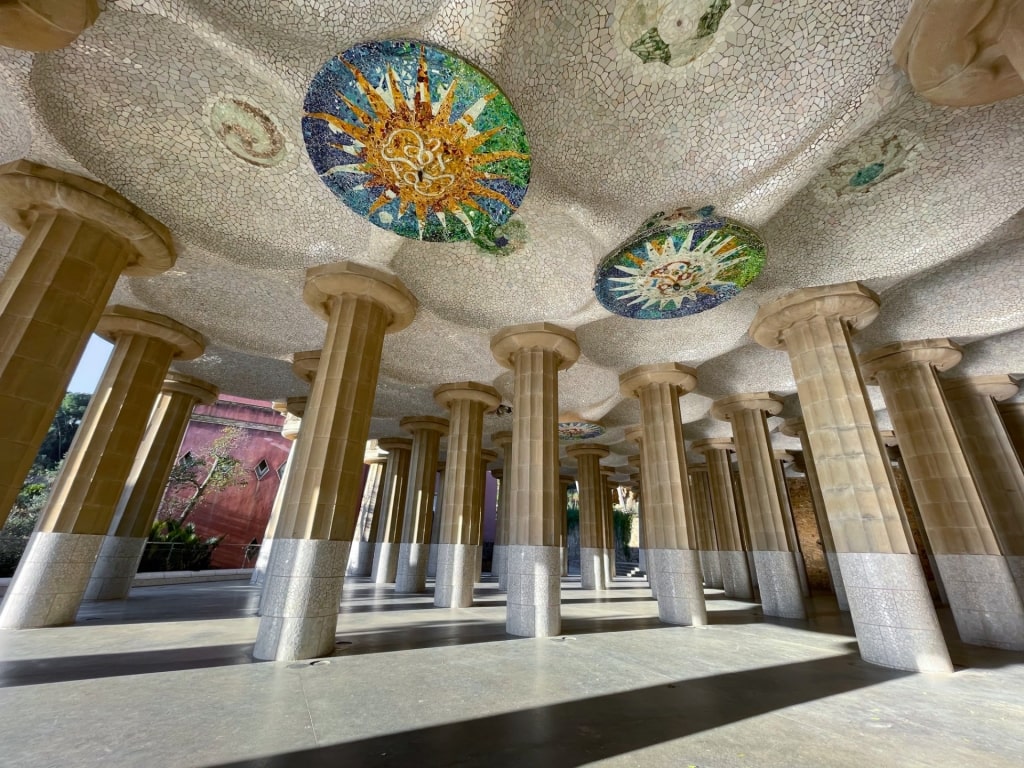
Many of the elements required for such a large housing project still stand, such as the rock-hewn stone viaducts for water transportation, viewable in the ticketed Monumental Zone of the Barcelona park. For the finest panoramic view over Barcelona, take a seat on the curving, elevated Serpentine Bench, embellished with trencadís mosaic using irregular glass and ceramic shapes.
Casa Batlló
Casa Batlló
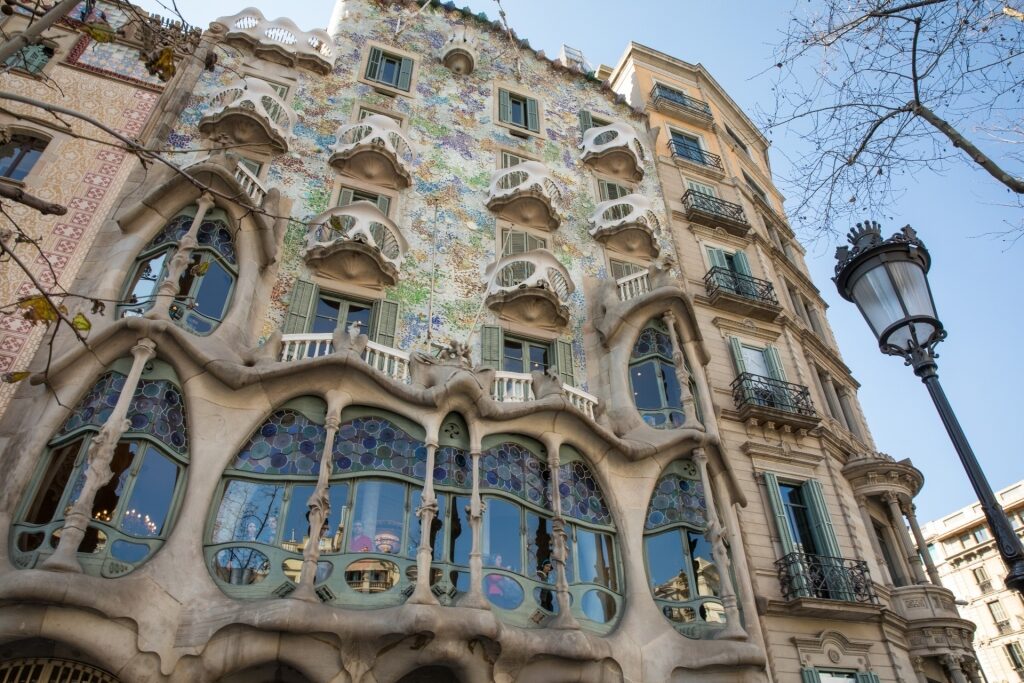
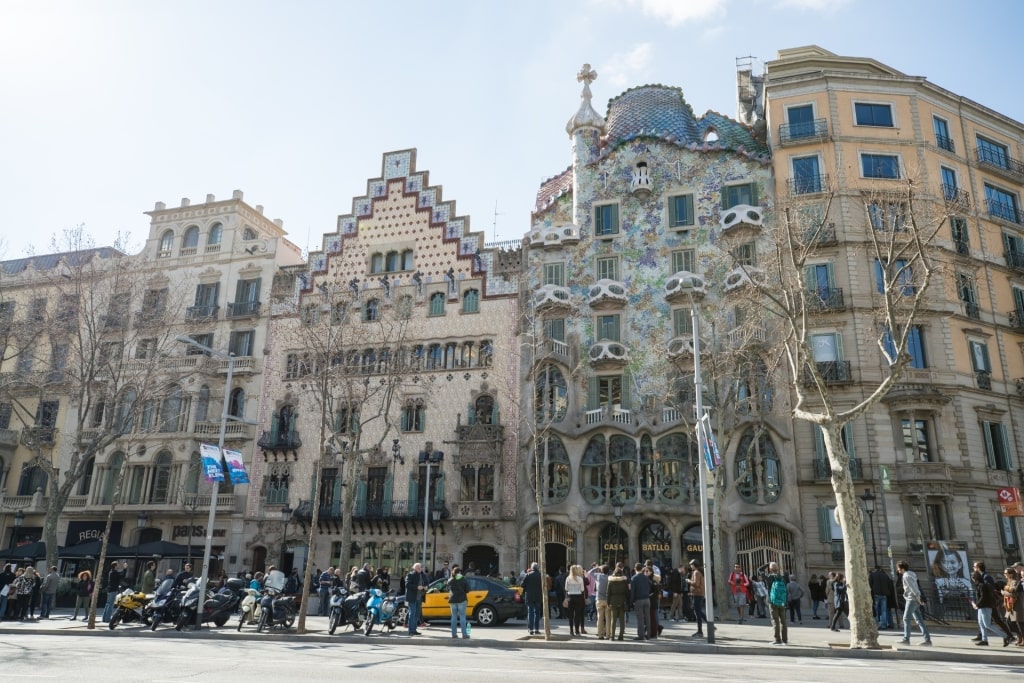
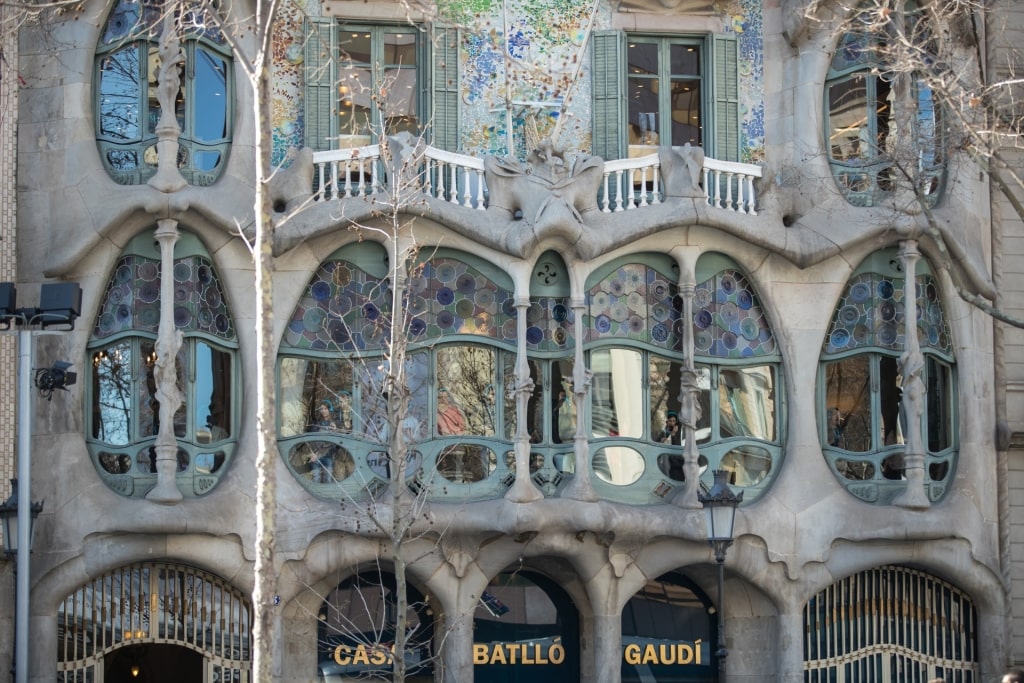
Casa Batlló is one of the most intriguing Gaudí buildings in Barcelona, as it was a renovation of an existing structure, rather than a new building. Not that you’d realize from the facade.
It’s nicknamed “the house of masks” due to the balconies appearing like eyes and skulls, all surrounded by kaleidoscopic glazed ceramics and trencadís mosaics, and topped with a small, cross‑shaped turret. It’s quite the sight to behold.
Casa Batlló
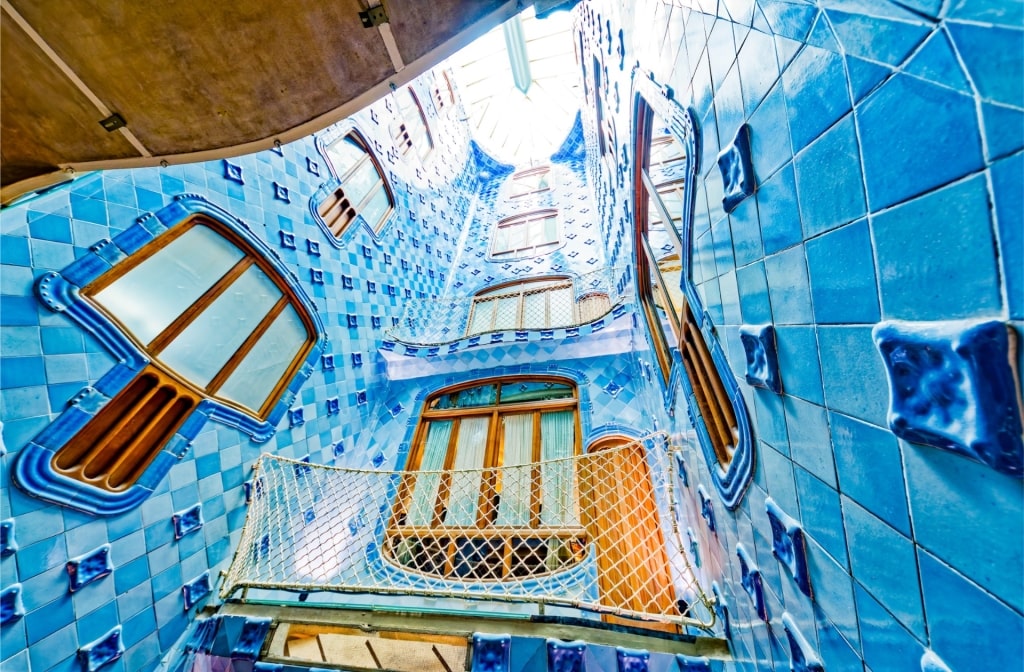
Inside is equally bewitching. Gaudí worked on the house between 1904 and 1906, but unlike many of his other designs, Casa Batlló has since seen significant changes.
While much of the design remains unapologetically Gaudí, such as the blue-hued tiled courtyard and the Noble Floor’s colored butterfly windows, significant renovations between 2018 and 2025 introduced some changes.
Casa Batlló
The new immersive experience “into the architect Gaudí’s mind” in the Gaudí Dôme, and the shimmering, aluminum chain basement staircase designed by Japanese architect Kengo Kuma, are two of the forward-thinking standouts.
Read: What Is Barcelona Known For?
Casa Milà
Casa Milà
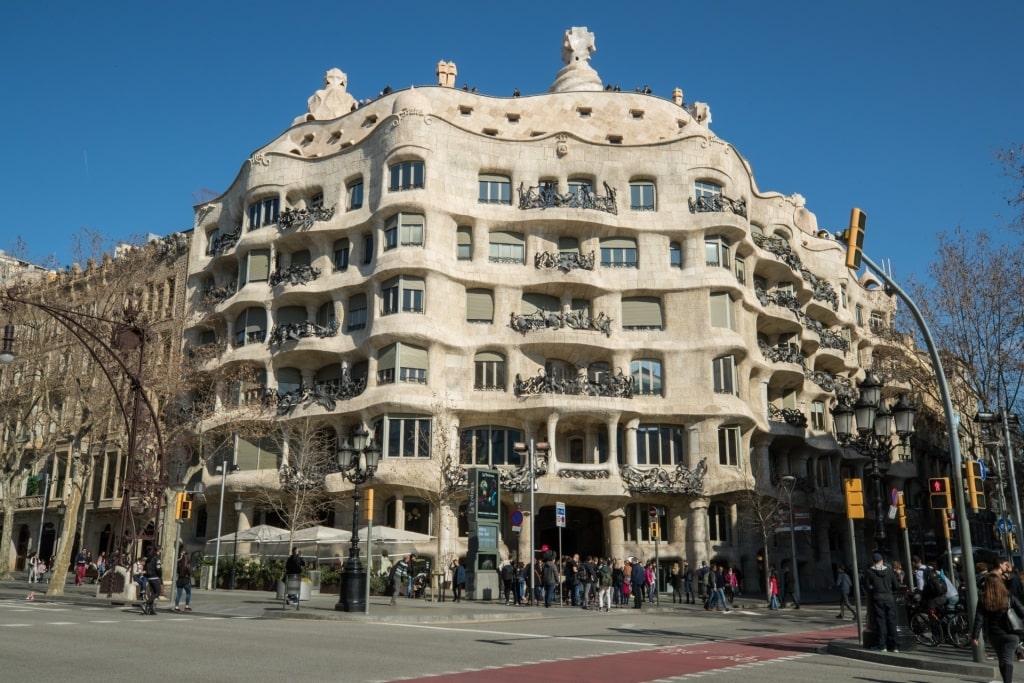
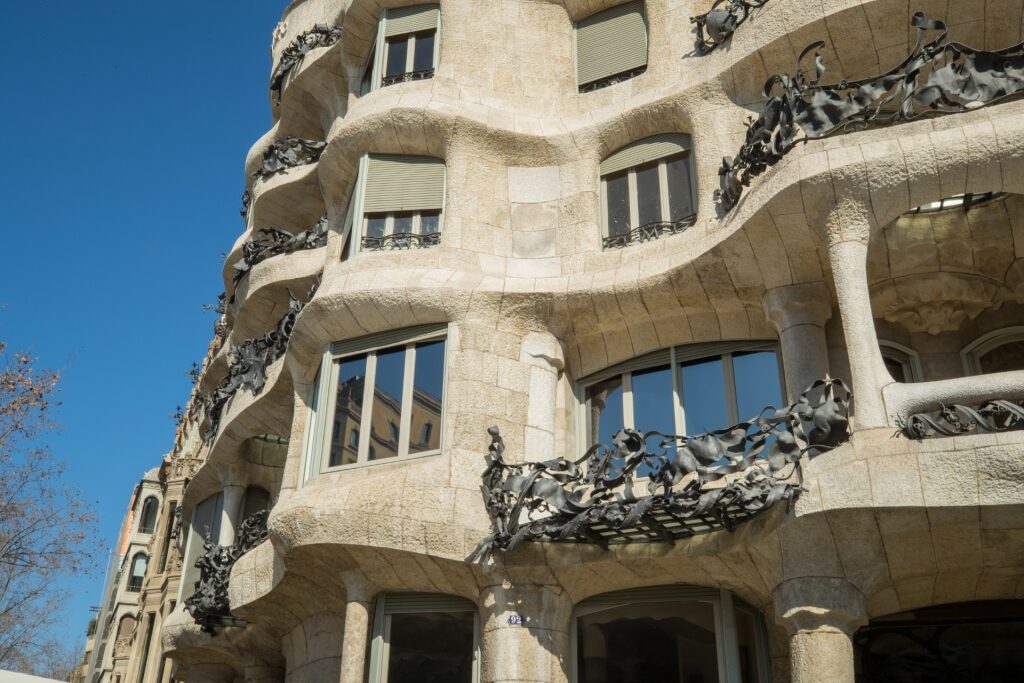
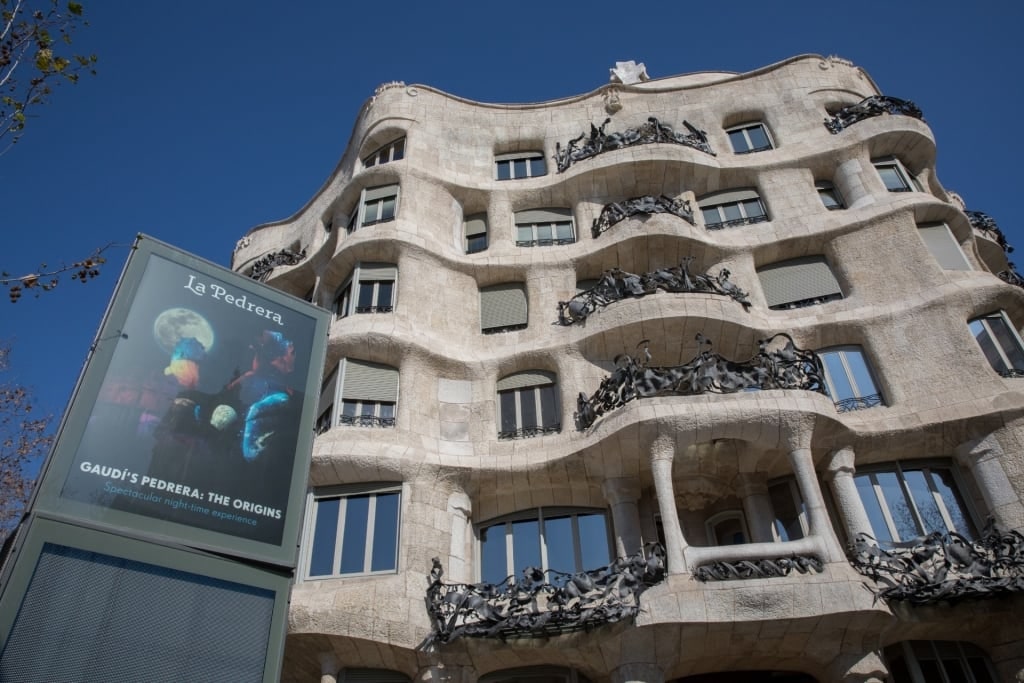
Casa Milà, commonly known as La Pedrera—meaning The Quarry, so nicknamed for its rough limestone aesthetic—is a wonder of waves, curves, and wrought iron balconies from the street.
These surreal shapes and meandering lines continue in the pair of open-air courtyards and onto the famous rooftop’s chimneys. Sculpted to appear like stone warriors, their “faces” seemingly stare back into your soul.
Constructed as an apartment complex between 1906 and 1910, parts of the extended property remain privately owned, limiting access.
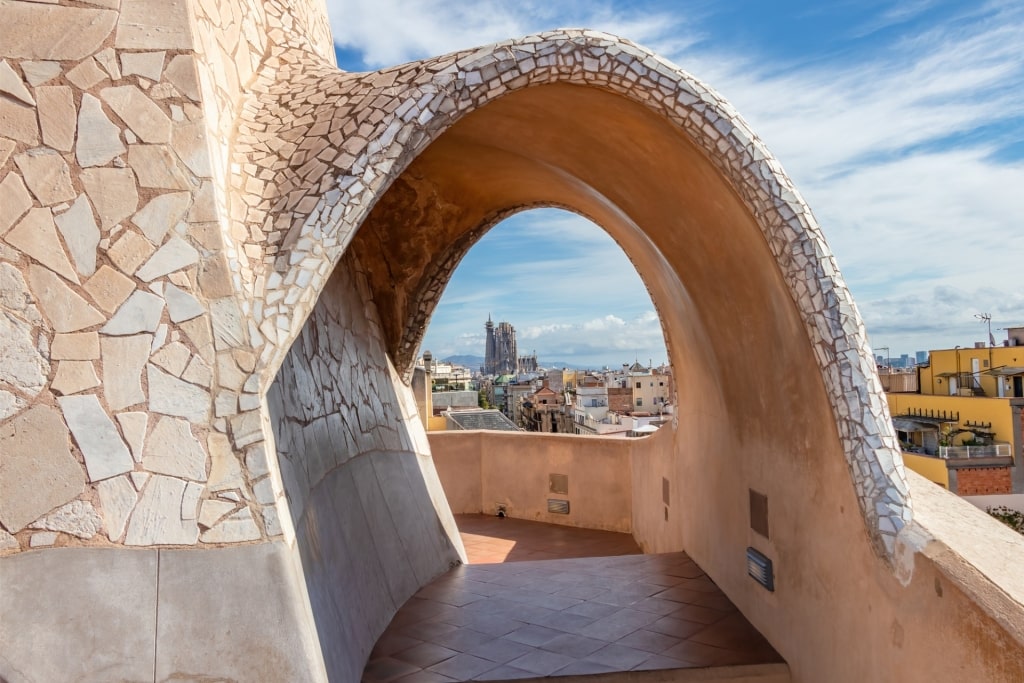
Casa Milà
Alongside the mural-decorated courtyards and roof terrace, it’s also possible to access the arched attic—housing the Gaudí Exhibition, covering his life’s work—and one of the fourth-floor apartments, still decorated as the bourgeoisie would have kept it a century before.
Casa Vicens
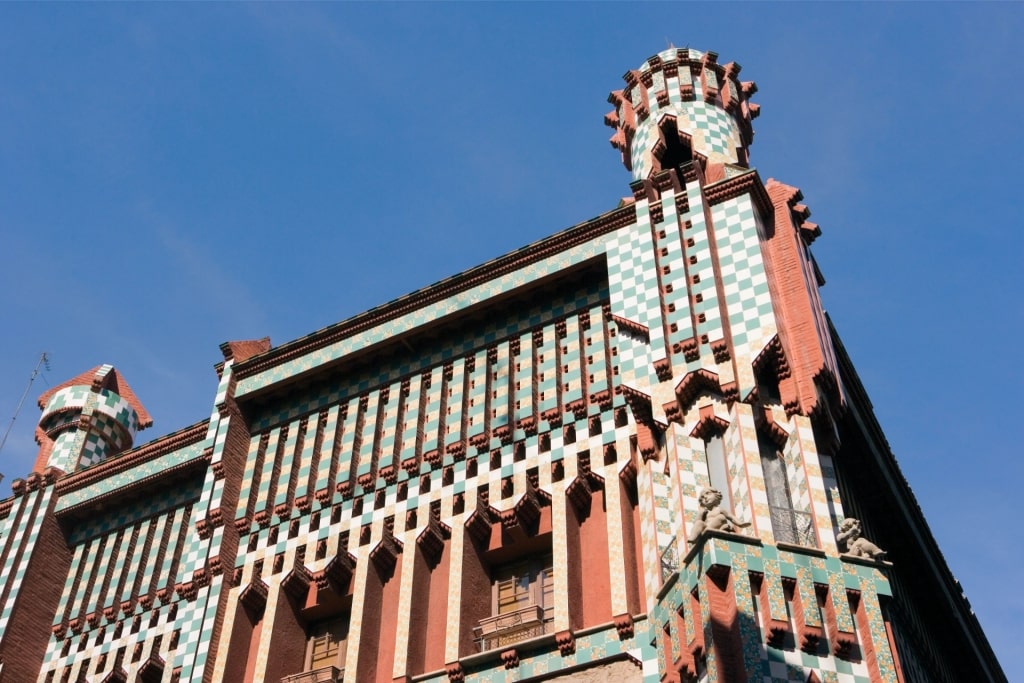
Casa Vicens
Built between 1883 and 1885, Casa Vicens was Gaudí’s first significant project in Barcelona. A flamboyance of ceramics, crimsons, teals, and gold, the neo‑Mudéjar residence put Gaudí on the map as much as the address.
While the vibrant, bold interior of Islamic-influenced Muqarnas ceilings and intricate lattice blinds holds its own against Milà and Batlló, Casa Vicens’ main draw is the exterior. The leafy and serene Mediterranean patio and garden highlight Gaudí’s passion for nature, with soothing water features and citrus fruits framing shaded seating spots.
Palau Güell
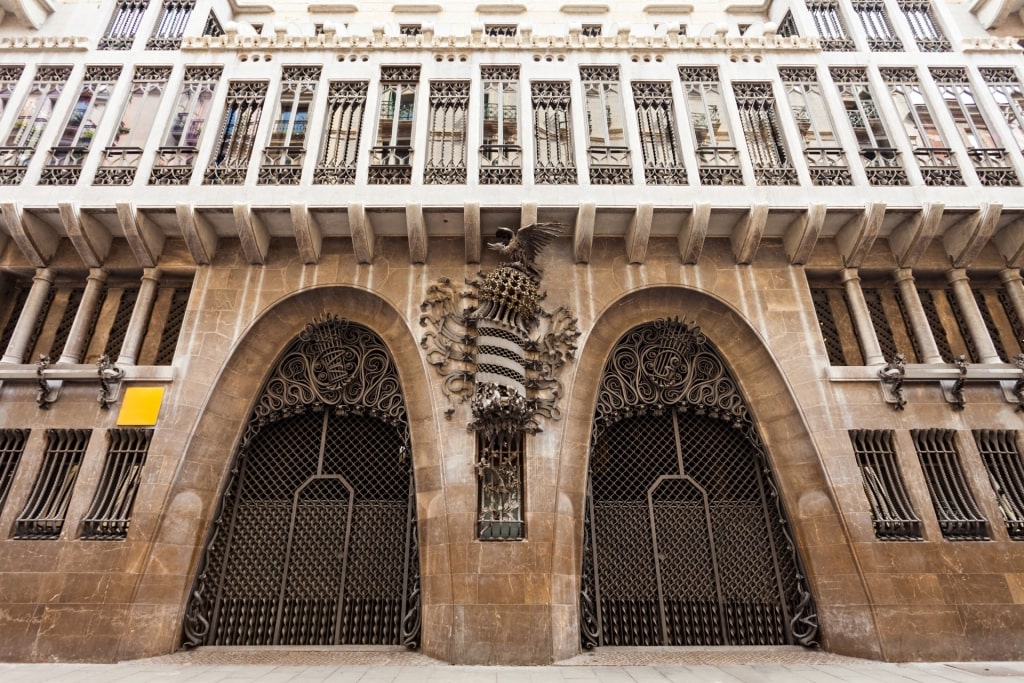
Palau Güell
The first project commissioned by Eusebi Güell, the Palau Güell is a lavish urban palace hidden behind a fairly ordinary facade—by Gaudí’s standards, at least. Completed in 1888, the palace blends Gothic and Art Nouveau elements in a slightly more classical way, with polished marble, heavy, striking doorways, and darker stonework.
Most impressive is the Central Hall. Designed acoustically due to Güell’s appreciation for live performances, the parabolic domed space soars three stories in a space where a courtyard might be expected. The rest of the building’s rooms are constructed around this centerpiece.
Other Gaudí Sites in Barcelona
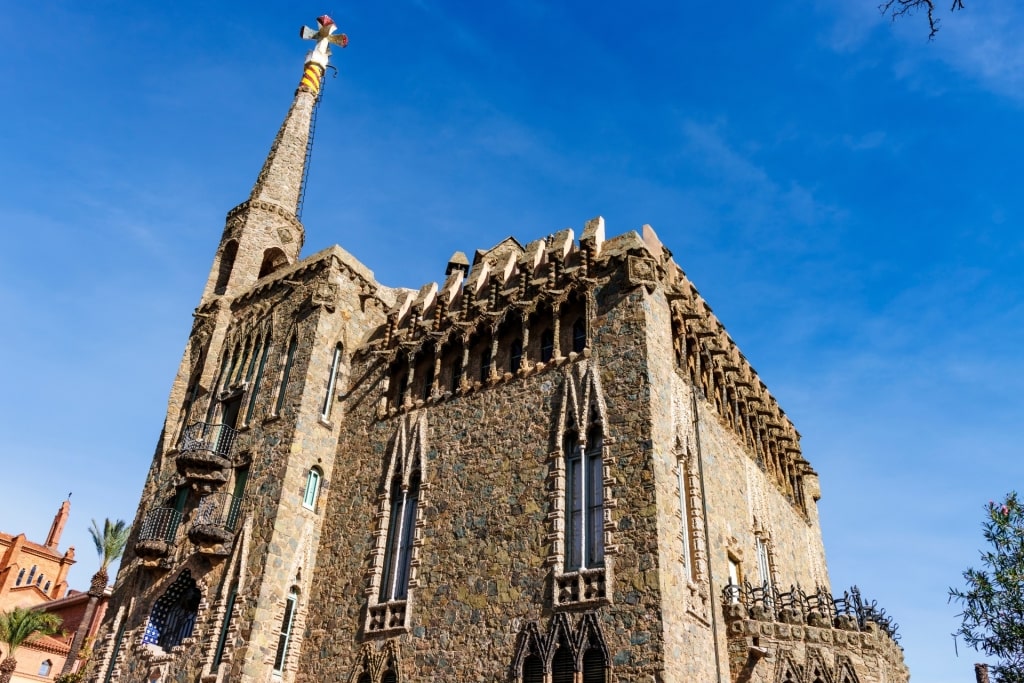
Torre Bellesguard
Alongside the most famous Gaudí architecture in Barcelona, there are other Gaudí buildings of note across the city. These include the cave-like crypt at Colonia Güell and the semi-Gothic Torre Bellesguard, both of which are visitable.
The College of the Teresians and the more conservative Casa Calvet are closed to the public but can be appreciated from outside. Güell Pavilions are currently closed for renovations.
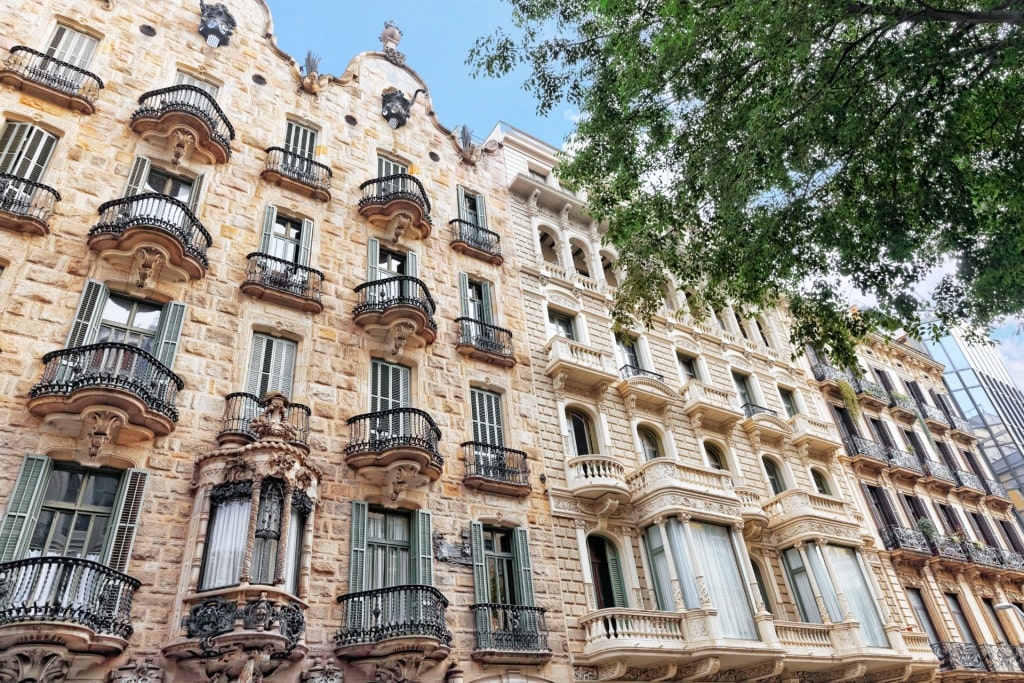
Casa Calvet
Smaller undertakings include the street lamps on Plaça Reial and a fountain in Parc Ciutadella. Gaudí also designed the Bodegas Güell winery complex, on the outskirts of the city toward the seaside town of Sitges.
Read: 3 Days in Barcelona
Gaudí Walking Tour Itinerary
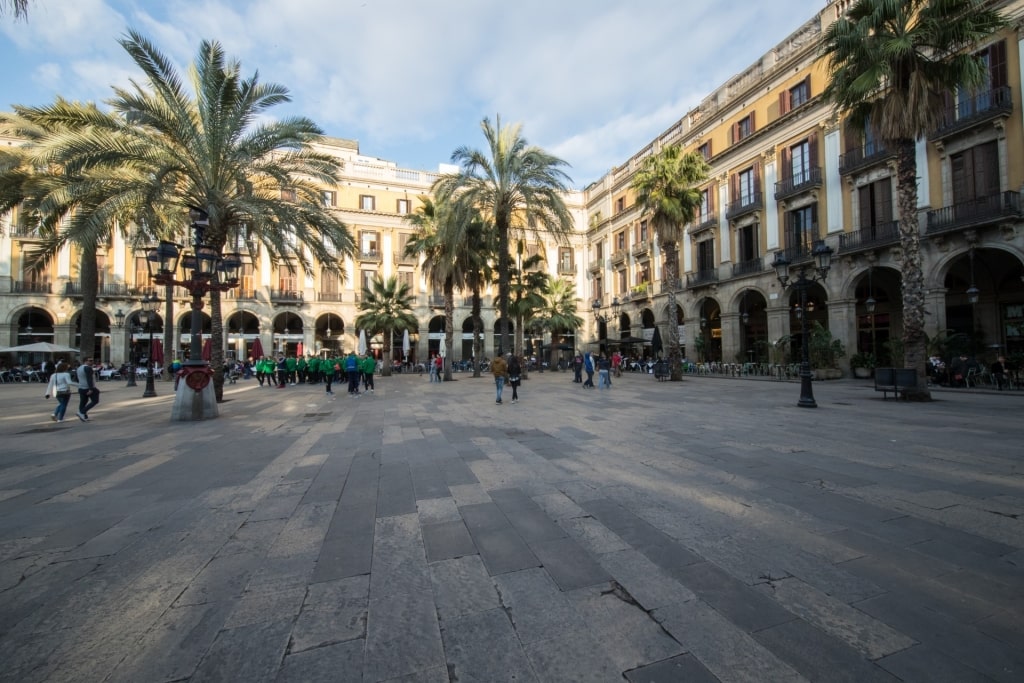
Plaça Reial
It’s possible to make a whirlwind walking tour of the six most famous Gaudí buildings in Barcelona in just one day. You may, however, want to be selective of which you appreciate from outside, and which to visit. This roughly five-mile route takes around two hours—excluding visiting time—and also passes a few of Gaudí’s other artworks en route.
Begin at Palau Güell, just off La Rambla, Barcelona’s most famous pedestrianized boulevard. Cross the broad, shaded avenue, and down Carrer de Colom, you’ll reach Plaça Reial, a large square in the heart of the Gothic Quarter, with a pair of Gaudï-designed, six-branched street lights, installed in 1879.
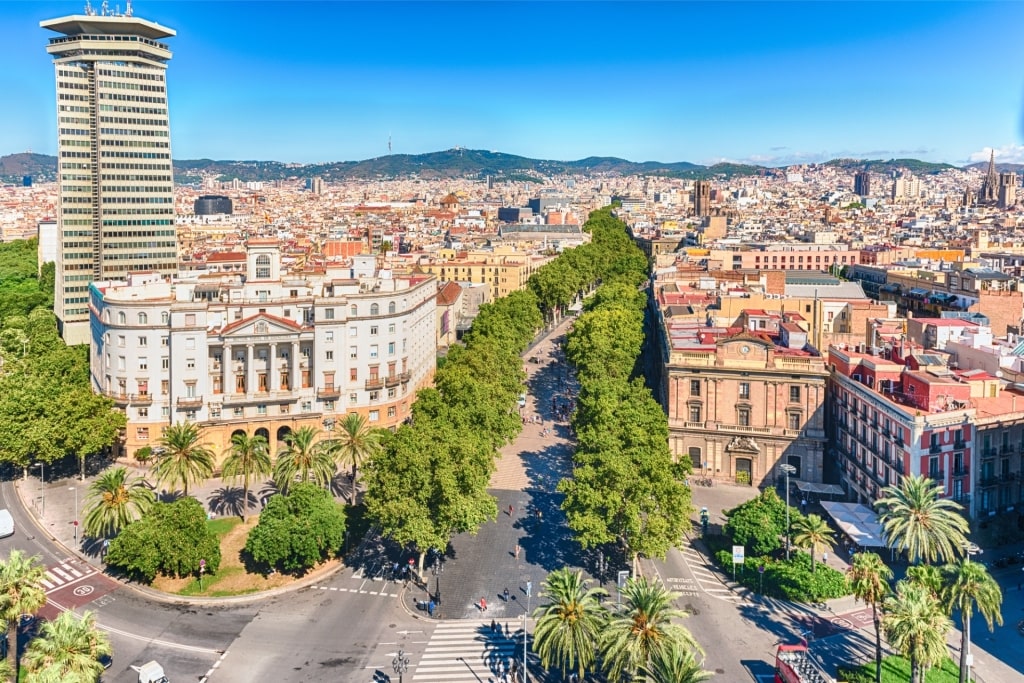
La Rambla
Return to La Rambla, and follow the boulevard inland for around 15 minutes, passing the Gran Teatre del Liceu and Mercat de la Boqueria, until you reach the monumental Plaça de Catalunya.
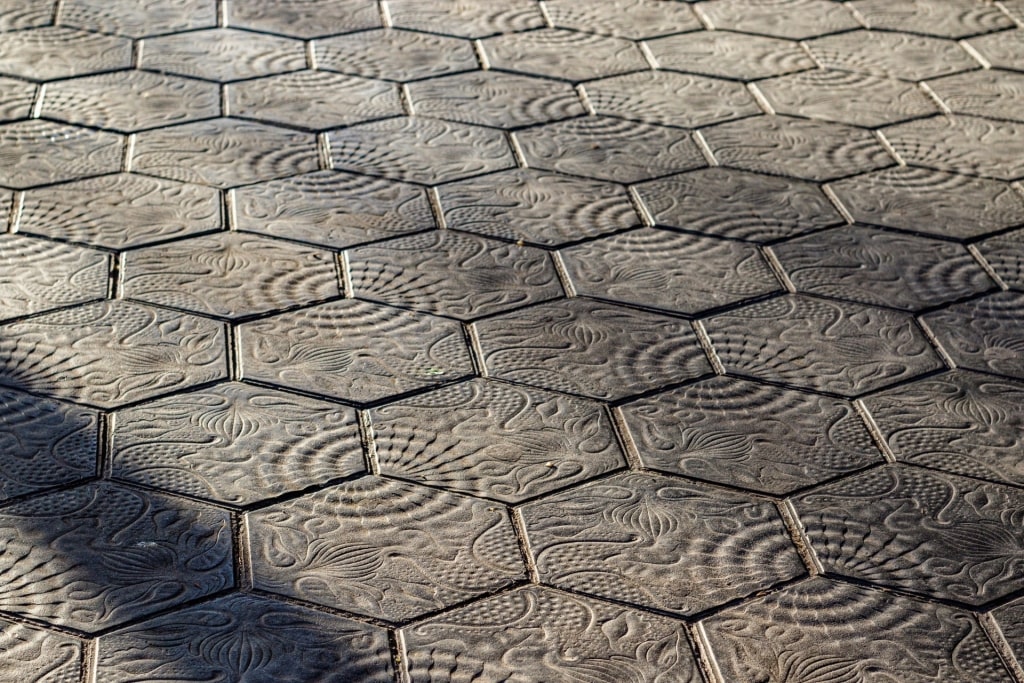
Passeig de Gràcia sidewalk tiles
Here, join Passeig de Gràcia, another of Barcelona’s most famed streets, the sidewalks carpeted with hexagonal tiles designed by Gaudí, imprinted with motifs including starfish and ammonites. After around 10 minutes, you’ll face the fanciful facade of Casa Batlló. It’s a further 10 minutes to the intersection where Casa Milà is located.
From here, it’s a slightly less scenic walk of around a mile to Casa Vicens. After appreciating the colorful exterior, it takes around another 30 minutes to reach Park Güell on foot, with a slight uphill ascent through a primarily residential area; the 24 bus is an alternative option.
After enjoying the park, end with the golden late afternoon light at La Sagrada Família, a roughly 30-minute walk mostly following Carrer de Sardenya.
Travel Tips
Park Güell
To guarantee access to the principal Gaudí buildings in Barcelona, always purchase tickets in advance. Many have a limited number of daily tickets, or timed-entry, which can mean on-the-day visitors miss out. Even if tickets are still available, booking online will avoid long lines. A color code on the tickets gives an insight into how busy a particular timeslot may be.
Always study the available ticket options and ensure you select the level of access you require. For example, Casa Batlló’s rooftop is only included with Silver and above tickets, while Park Güell can be visited with or without the Gaudí House Museum included. It’s also possible to purchase a combined ticket for La Sagrada Família, Park Güell, Casa Batlló, and Casa Milà.
La Sagrada Família
Aim for the earliest entry of the day, or a late afternoon time slot. Most have timed entry, but no limit on how long visitors can remain on site, which can lead to crowding by late morning. Always aim to arrive a little before your reserved time; there is only a very brief window of leeway for late arrivals.
For La Sagrada Família, review the seasonal sunset time for your travel dates; the late afternoon illuminates the stained glass wonderfully. When planning your outfit, consider that La Sagrada Família is a working church, so modest dress is required. Avoid purchasing any snacks or drinks before entering; only sealed bottles of water—which are not allowed to be consumed inside—will be permitted beyond the bag check. Buy a ticket for one of the towers for stupendous views over Barcelona—and leave time to visit the excellent gift shop.
FAQs
What is Gaudí best known for?
Park Güell
Gaudí is best known for his fanciful, colorful, and unique architectural style. He was the most famous architect of Catalan Modernism, a more local Art Nouveau movement. Though he worked in other parts of Spain, his buildings in Barcelona are the most internationally acclaimed.
What materials did Gaudí commonly use in his buildings?
Park Güell
Gaudí’s work used a wide variety of materials to create distinct patterns, design features, and embellishments. While stone was usually the base element, the most notable features of Gaudí’s buildings are generally wrought iron, ceramics, and stained glass, which furnish his signature, kaleidoscopic style.
What Gaudí building should I see first?
La Sagrada Família
If you only have time to witness one piece of Gaudí architecture in Barcelona, make your first stop La Sagrada Família. However, the basilica’s stained glass is best appreciated in the afternoon, so it’s advisable to make Casa Batlló your first stop of the day, saving La Sagrada Familia for later.
What are the most famous Gaudí buildings in Barcelona?
La Sagrada Família
The most visited and famous Gaudí buildings in Barcelona are La Sagrada Família, the unfinished, iconic basilica, the open-air Park Güell, and Casa Batlló and Casa Milà, two whimsical former residences.
How many Gaudí buildings are there in Barcelona?
Casa Milà
There are a dozen Gaudí buildings in Barcelona, alongside a handful of other locations and museums where the architect’s work is featured. Further Gaudí sights are found in Reus and Sitges, west of the city.
Can I visit all major Gaudí sites in one day?
Park Güell
Yes, it’s possible to visit the top four or five of Gaudí’s main sites in Barcelona in one whirlwind day by utilizing metro connections. However, due to timed entries, you may prefer to select three, for example, one “casa”, La Sagrada Família, and Park Güell for a more relaxing experience.
Which Gaudí site is best for kids or families?
Park Güell
The most kid-friendly Gaudí buildings in Barcelona are Park Güell, due to the ample outside space and Casa Batlló, where the interactive exhibitions help bring the architect’s vision to life.
Is Casa Batlló or Casa Milà better to tour inside?
Casa Batlló
Both Casa Batlló and Casa Milà are worth touring inside. For a more immersive visit, choose Casa Batlló’s augmented reality experience, while Casa Milà’s courtyards and murals afford a more “classic” visit. Both have roof terraces with sculpted chimneys.
Is it necessary to buy tickets in advance for Gaudí sites?
Casa Milà
Yes, it’s advisable to book tickets for the most significant Gaudí sites as soon as your travel dates are confirmed. Tickets to Casa Batlló, Casa Milà, La Sagrada Família, and Park Güell often sell out in advance; some Gaudí sites operate timeslot-controlled entry, making pre-booking and planning essential.
What is the best time of day to visit Gaudí buildings?
La Sagrada Família
The best time to appreciate Gaudí’s architecture in Barcelona, particularly at the most popular sites, is early morning, before crowds swell. However, La Sagrada Família is most impressive in the late afternoon, when the lower sunlight accentuates the stained glass windows.
Are Gaudí’s buildings UNESCO World Heritage Sites?
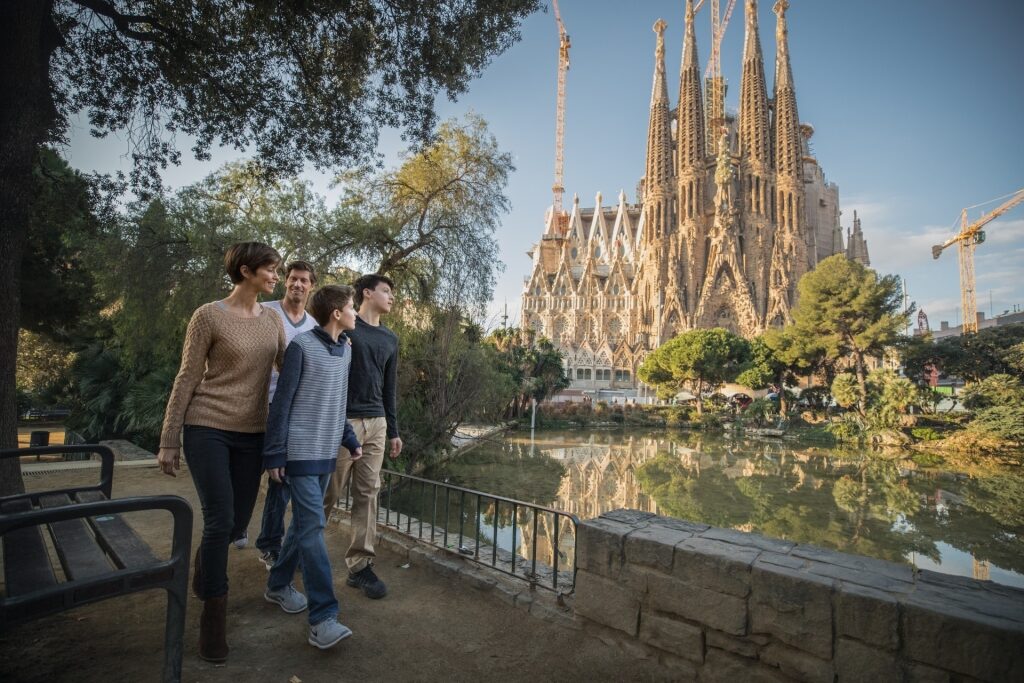
La Sagrada Família
Seven Gaudí buildings are UNESCO-listed under the combined “Works of Antoni Gaudí” World Heritage Site title. Three were inscribed in 1984: Casa Mila, Palacio Güell, and Parque Güell. Casa Batlló, Casa Vicens, Colonia Güell, and La Sagrada Família were added in 2005.
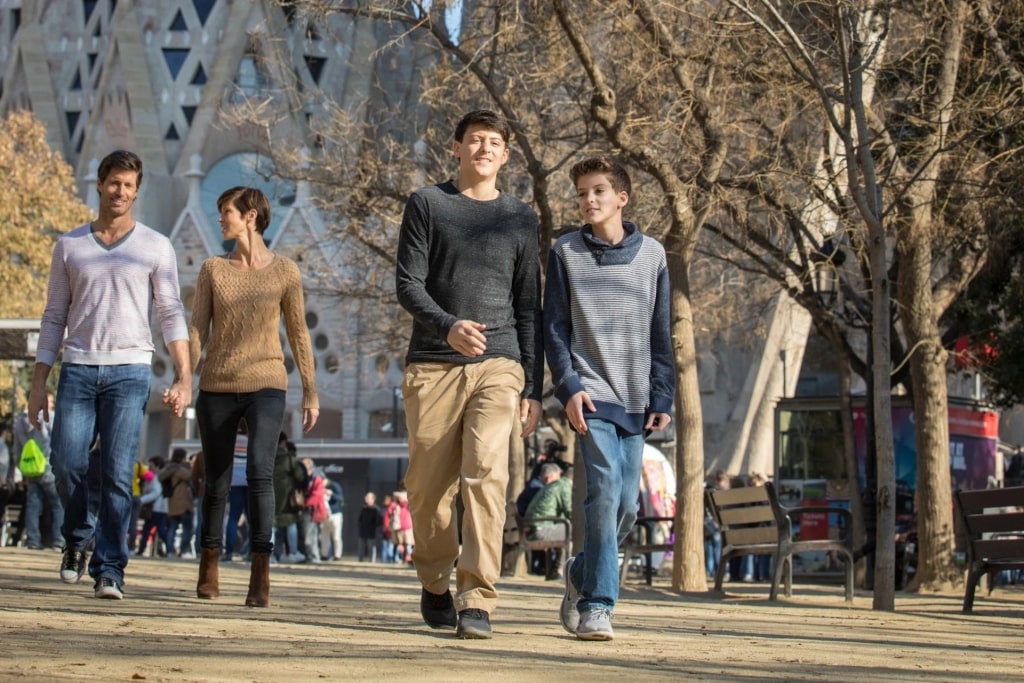
La Sagrada Família
Experience all Gaudí’s magic for yourself on a cruise to Barcelona with Celebrity. Browse itineraries to plan your perfect, architecture-filled Mediterranean vacation.