
One of the best parts of a Before and After Stay with Celebrity River Cruises℠ is a chance to try traditional food in Prague.
On your Danube River cruise, you can sample bratwurst in Germany, Linzer Torte in Austria, and langos in Hungary. But if Czech classics are on your culinary checklist, you’ll need to tack on a Celebrity Cruises® pre- or post-cruise land extension in Prague.
Curious travelers might be wondering: what is the best food to try in Prague for a traditional Czech meal? You’ve likely heard of schnitzel and goulash, but the country’s signature menu items—like svíčková na smetaně—are likely foreign territory. It’s all part of the river cruise journey, and Celebrity’s Destination Insider℠ guides are always on hand to point you toward authentic dishes to try and local restaurants that aren’t tourist traps.
Czech cuisine does have a reputation for being meat-heavy, but vegetarians won’t be left out of culinary immersion in Prague. Plenty of traditional Czech dishes are meat-free, and the range of desserts alone can keep you happily exploring the food scene for days.
Hungry yet? You can whet your appetite with this guide to traditional Prague food and the city’s culinary culture.
The Most Traditional Czech Dishes To Eat in Prague
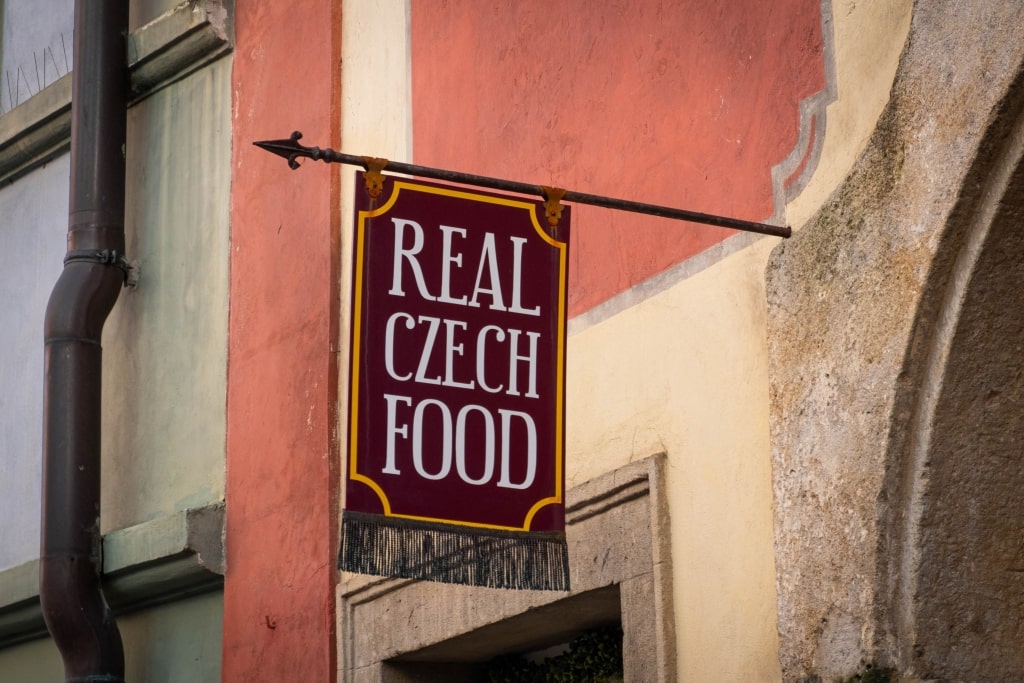
A distinctive Czech food storefront sign highlights traditional restaurant exterior architectural elements
For the most authentic food experience you can have in Prague, you’ll want to sample the national dish of the Czech Republic, svíčková na smetaně. The dish consists of braised beef sirloin topped with a sauce made from root vegetables and cream and served with bread dumplings. You will find it served in many restaurants in Prague, though locals will tell you it’s always best at grandma’s house.
A runner-up in the category of most traditional Czech dish is vepřo-knedlo-zelo, a dish made from roast pork, dumplings, and sauerkraut (stewed cabbage). One note about dumplings in the Czech Republic: Dumplings, called knedlíky, are unlike the filled Asian dumplings you’ve eaten at restaurants at home. Czech dumplings are made from bread or potatoes and are served alongside a meat dish to soak up the excess sauce or gravy.
This pork dish is most commonly served with bread dumplings. You can often find vepřo-knedlo-zelo in a traditional Czech pub.
Popular Czech Main Dishes
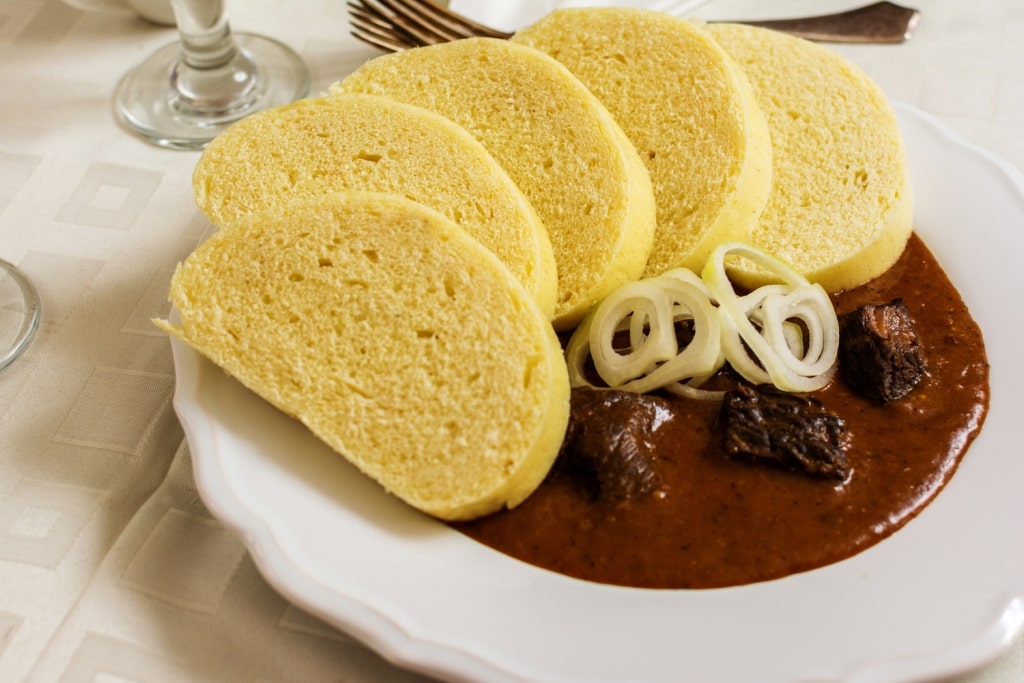
A hearty plate of traditional Czech beef guláš served with fresh onions and soft bread dumplings.
Other popular Czech main dishes are also meat-heavy. (Vegetarians, don’t worry; you can eat here!)
Guláš is a traditional Czech beef stew. You might be more familiar with the Hungarian version, goulash, especially if you started your river cruise in Budapest.
The difference is that the guláš you’ll eat in Prague features rich gravy and onions, while the Hungarian version emphasizes local vegetables. The Czech stew is typically denser and served as a main dish with bread dumplings. Hungarian goulash is thinner, more highly spiced with paprika, and presented as a soup, often with a side of bread.
Pečená kachna is another popular main dish. It consists of slow-roasted duck, seasoned with caraway seeds and plated with red cabbage and potato dumplings. Duck in the Czech Republic is often a holiday dish, served on Christmas Day and St. Václav’s Day on September 28.
Pub Staples and Casual Bites
Prague’s food scene revolves around more casual eats, including pub fare (to pair with the city’s thriving beer culture) and street eats.
One staple dish found in many Prague beer halls and beer cellars is řízek. It’s the Czech version of schnitzel, made from breaded and pan-fried pork or chicken cutlets. The dish has been adopted from its German and Austrian counterparts; Czechs prefer pork to the Austrian veal and serve their řízek with boiled potatoes or French fries rather than spätzle noodles or Viennese potato salad. Wash it down with a Pilsner Urquell, a pale lager that is one of the Czech Republic’s most popular beers.
Grilovaná klobása is a grilled sausage you can find not only at beer gardens, but also at streetside food stands. It’s Prague’s answer to the New York City hot dog. The sausage is typically made of pork or a pork-and-beef blend and served on dark bread, not a bun, with mustard. You can easily find grilovaná klobása at the food stalls in Wenceslas Square or in Prague’s Christmas markets (if you’ve booked a holiday season river cruise).
Tatarský biftek (also called tatarák) is another casual bite to try. It’s the Czech take on steak tartare featuring raw beef tenderloin, seasoned with spices. It comes with an assortment of mix-ins (sometimes already mixed in), such as onions, raw egg, and condiments (ketchup, mustard, Worcestershire sauce). To eat it, you’ll take a piece of topinky (sliced and deep-fried bread), rub it with raw garlic, and pile the spiced meat on top. It’s yet another example of pub grub that pairs well with Czech beer.
Another quintessential Prague food you’ll want to try during your Before or After Stay is chlebíčky. These multilayered, open-faced sandwiches were invented here by deli owner Jan Paukert in the early 20th century. The chlebíčky were meant to be party food, a cross between a typical sandwich and finger food. They’re made of a base layer cut from a baguette-style bread, topped with a spread (such as herb butter, egg, or potato salad), and garnished with anything from deli meat and cheese to slices of pepper and pickles.
You can find chlebíčky in delis and cafes as a lunch staple, ideal for a quick bite or takeaway snack. While Paukert’s deli closed, a local favorite for chlebíčky is Lahůdky Zlatý kříž.
Vegetarian Dishes To Sample in Prague
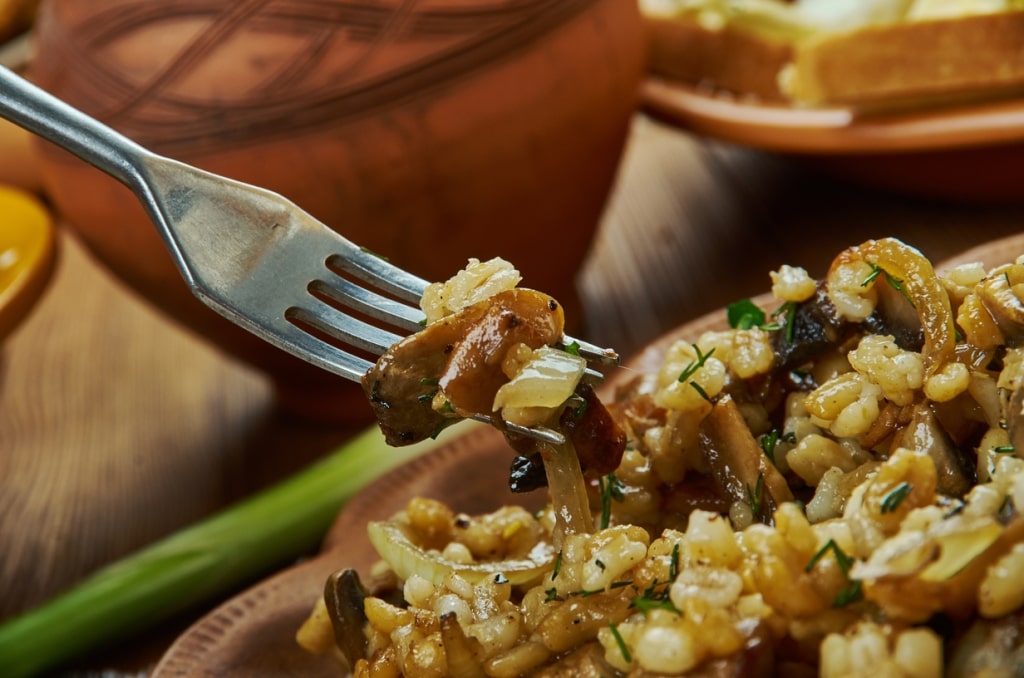
A comforting bite of houbový kuba, a traditional Czech dish made with earthy wild mushrooms and pearl barley.
Not every traditional dish is meat-forward, and vegetarians visiting Prague can definitely explore the local food scene before or after their river cruise.
A classic restaurant dish is houbový kuba, a meatless mushroom-barley casserole, flavored with marjoram and garlic, that hails from Southern Bohemia. It’s traditionally served on Christmas, but it’s available in Prague restaurants year-round. There’s one catch: the traditional recipe calls for lard. Many modern establishments substitute plant oils, but you’ll want to inquire before ordering.
While the meat eaters in the group scarf down sausages and raw beef in pubs and on the street, vegetarians can order bramborák, fried potato pancakes served in the same casual venues. They are kin to the latke, the classic Hanukkah food, but are typically much larger and more highly seasoned with garlic, marjoram, and caraway seeds. If it’s not obvious, bramborák is not the healthiest food choice you can make in Prague, but that doesn’t mean you shouldn’t try it.
If you love cheese, you’ll want to seek out two traditional Czech cheese dishes. Smažený sýr consists of a hard cheese (often Edam), breaded and deep-fried like a mozzarella stick. It’s meant to be a main dish and served with potatoes and salad; on the street, you can find it in a bun for more convenient eating. It’s meant to be comfort food and is especially delicious with or after a few beers.
Nakládaný hermelín is a marinated cheese that’s a popular bar snack in Prague. It’s made of a local soft cheese, hermelín, which resembles Camembert. The cheese is marinated in vegetable oil along with a selection of herbs. It’s served in pubs with pickled or raw vegetables and rye bread or topinky.
We’ve already established that the Czech people are fond of dumplings, but in addition to bread and potato dumplings, they also love fruit dumplings, called ovocné knedlíky. Dough balls filled with fruits like strawberries, plums, and apricots might sound like dessert, but they’re most commonly eaten as a sweet vegetarian lunch dish in Prague. Typical toppings include butter, sugar, and curd cheese (like cottage cheese). Look for them in cafes and bistros in the city.
Traditional Desserts and Sweet Treats
The traditional Czech medovník honey cake slice showcases alternating crumb-coated layers
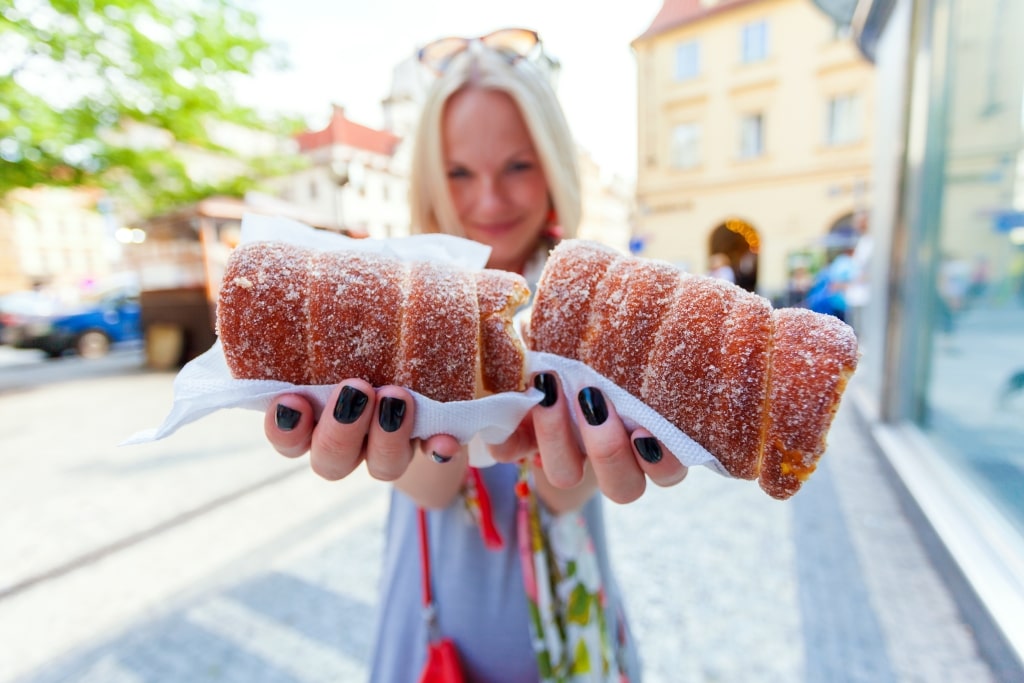
You might think that trdelník (chimney cake) is an authentic Czech dessert, given its prevalence all across Prague. The truth is that chimney cake was brought over from Hungary and traces its roots to Transylvania. It’s delicious, but it’s not traditional.
For more typical Czech desserts, you have plenty of options:
- Medovník: It’s a multilayered honey cake, inspired by Slavic recipes. The Czechs have added their own spin, without the staple Russian sour cream. They layer sponge cake, infused with honey and spices, with caramel cream, and then cover it all with walnuts and cake crumbs. It’s a tasty accompaniment to your morning or afternoon coffee.
- Koláče: Fans of Buc-ee’s are familiar with the Texan kolaches, but not many people know those southern U.S. treats hail from the Czech Republic, where they’re known as koláče. Koláče are open-faced, yeasted-dough pastries with a sweet filling and a streusel topping. Typical fillings include fruit, poppy seeds, or a sweet farmer’s cheese.
- Buchty: Another typical bakery treat is buchty, sweet yeast buns stuffed with poppy seeds or plum jam that also pair well with coffee for a Czech breakfast treat. Unlike koláče, the fluffy buns hide their fillings inside.
Buchty are so important within Czech culture that they play a central role in the classic fairy tale of Český Honza (Czech Johnny). In the story, Honza’s mother sends him out into the world with a bag of buchty to feed him on his journey. Perhaps some delicious buchty will also power you through a day of exploration in Prague before or after your river cruise.
The Logistics of Dining Out in Prague
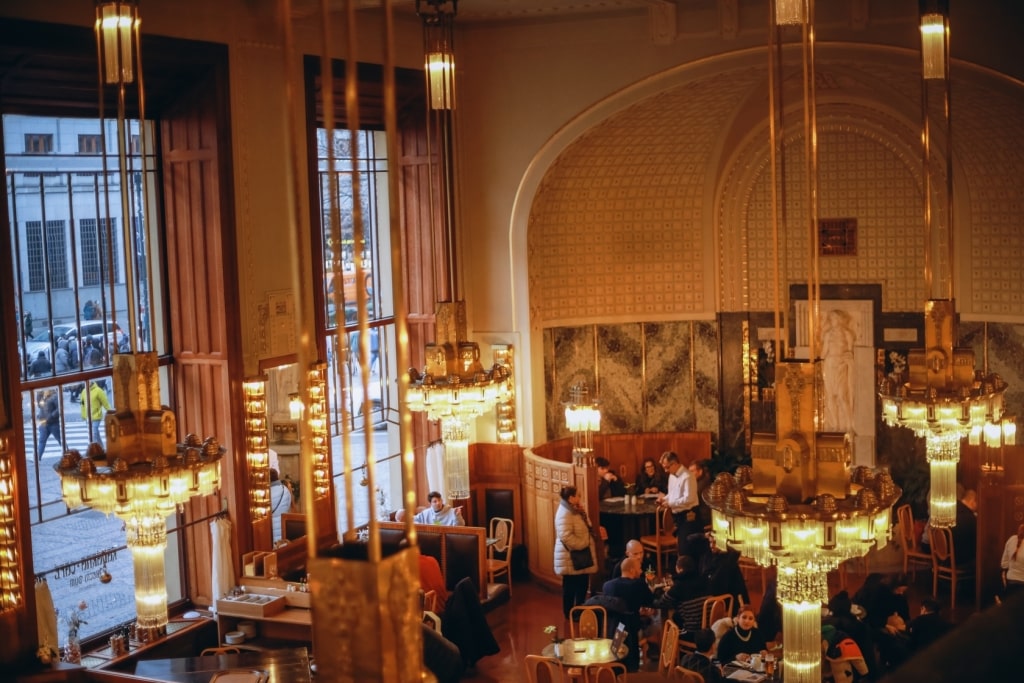
Guests relax beneath ornate Art Deco chandeliers inside a historic café in Prague, Czech Republic.
Now that you’re excited to try traditional Czech food, you should know a few key things about dining out in Prague.
- Etiquette: Restaurant etiquette is a bit different in Prague than at home. In the more casual venues, like pubs and beer halls, you will seat yourself rather than wait for a host or server to show you to a table. Tables are often communal. If the pub is packed, and the only empty spots are at tables occupied by others, it’s expected that you’ll ask to share the table.
- Water: Water is not free at a restaurant, as it is in the U.S. You will have to pay for water, whether it’s from the tap or a bottle, and you can expect that beer will be cheaper than a bottle of water. Any bread or pretzels on the table will also cost extra, whether you asked for them or not.
- Coasters: At a pub or beer garden, the coasters are essential in communicating with your server. Put the coaster in front of you to signal that you’d like a drink. The server will continue to refill your beer until you place the coaster on top of your glass, signaling you’re finished. Some servers will tally the number of beers consumed on the coaster, so don’t take or destroy it before you’ve paid.
- Signaling for the check: Meals in Prague are leisurely, and your waiter will leave you alone to chat rather than rush you out the door. When you’re ready to close out your bill, put your fork and knife together on your plate and make eye contact with the waiter to signal you’re finished with your meal.
- Tipping: When the server comes to take your credit card for payment, specify how much gratuity you’d like to add to the total. Do not leave money on the table for a tip. In Prague, large tips aren’t common like they are in the U.S. Instead, round the bill up to the nearest even number or add 5-10% depending on service.
But where to even find a place to eat? When you’re visiting Prague, you’ll want to avoid tourist traps and find authentic restaurants for your traditional Czech meal. The best thing to do is get a local’s recommendation; ask your Destination Insider guide for suggestions, or go online to Reddit or YouTube to get advice from Prague residents.
If you’re on your own in the city without a plan, you can use a few tips to rule out tourist traps. Restaurants with prominent pictures or multi-language menus are likely aimed at visitors, as are restaurants in tourist hotspots in the city center that position employees outside to lure diners into their establishment.
Instead, consider exploring residential neighborhoods outside the city center or look for restaurants that feature lunch specials, often written on a chalkboard only in Czech. Use a translation app on your phone, and you’ll get by just fine.
A Culinary Escape in Prague With Celebrity River Cruises
Prague’s rich culinary tradition is full of typical foods you must try when staying in the city for a Before and After Stay. Whether you wish to sample the national dish, svíčková, or enjoy pub fare with your Pilsner Urquell, you won’t struggle to find local dishes.
Celebrity River Cruises makes it easy to find authentic Czech cuisine because it partners with local experts who can give you advice on where to find the best food in Prague. Not only will you have an authentic dining experience, but Celebrity will ensure you make the most of your two- or three-night stay in the city and take care of all the hassles of travel planning for you. Cheers to that!
Discover Celebrity River Cruises’ Rhine & Danube itineraries with pre- or post-cruise extensions in Prague.