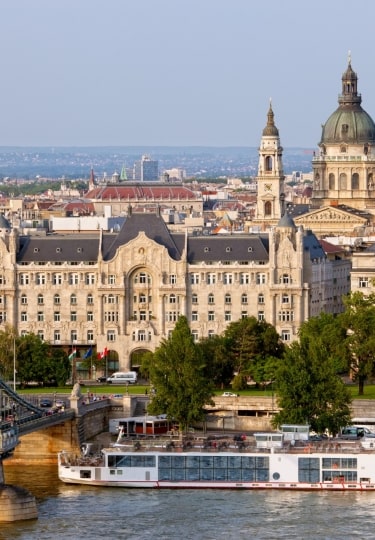
If you’re wondering what Hungary is known for, there really isn’t a single, simple answer. Is it the legendary River Danube that flows through the heart of the country and has, over the years, brought trade, people, and prosperity? Perhaps it’s the country’s long history: its setting at the cultural crossroads of Europe, bringing Roman, Ottoman, and Imperial influences.
Let’s not forget the cuisine either: hearty stews, crimson-red with paprika and washed down with piquant fruit brandy. Or the art and invention—classical composers among the very best, a team that redefined soccer, and a simple puzzle that took the world by storm.
The truth is, it’s all the above and much more.
Budapest Skyline
Budapest
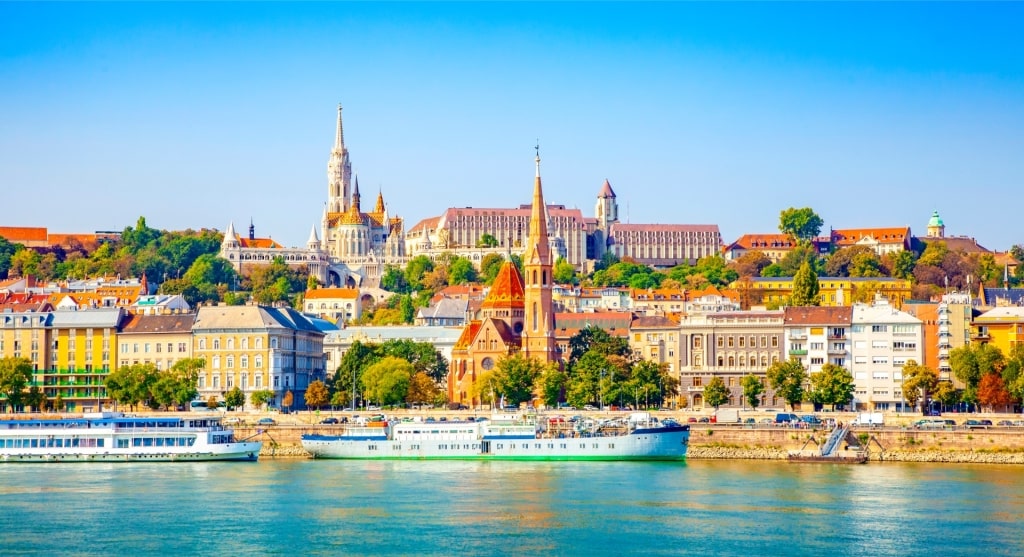
When people picture Hungary, most will think of the Budapest skyline. Not only is it an instant answer to the question “what is Hungary known for,” but it’s also one of the most instantly recognizable skylines in Europe.
To put it into historical context, the skyline was born after three different towns—Óbuda, Buda, and Pest—sitting on either side of the Danube River were unified in 1873. That kicked off a late-19th-century building boom that set the skyline we know today—think grand river views and ornate architecture rolled into one.
Buda Castle, Budapest
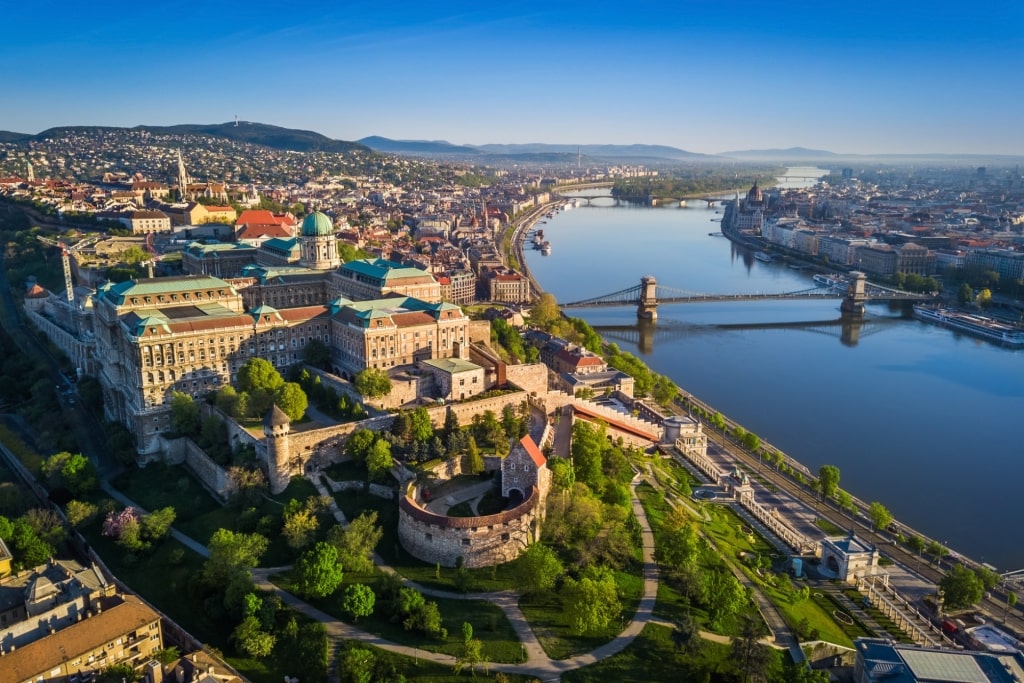
The most famous stretch runs between Elisabeth Bridge and Margaret Bridge and includes Baroque-era Buda Castle, fairytale Fisherman’s Bastion, and Gellért Hill’s Citadel along the Buda side.
Over the river in Pest, views are dominated by some of Budapest’s best places—St. Stephen’s Basilica, and the Hungarian Parliament Building, which resembles a larger version of London’s Palace of Westminster. Between the banks sits the Széchenyi Chain Bridge, which unified Buda and Pest in 1849 and was faithfully rebuilt after the original was destroyed in World War II.
Paprika

Paprika
For a spice that entered Hungarian cooking as “poor man’s pepper” during the Ottoman era of the 16th and 17th centuries, paprika has certainly come a long way. Made from dried and ground capsicum annuum peppers, paprika is now the backbone flavor of some of the country’s most classic dishes. These include goulash, chicken paprikash, halászlé—fisherman’s soup—and spicy sausages.
You’ll see paprika everywhere when wandering around: Budapest’s Central Market Hall, neighborhood delis, restaurants, and at Kalocsa’s Paprika Museum, about a 90-minute drive from the capital. You’ll recognize the good stuff: it’s vivid red, slightly oily to the touch, and not smoky like the Spanish version.
Paprika makes a great take-home souvenir as it’s high-value, unique to Hungary, and super portable. Look out for the different grades: különleges, or special; csemege, or delicate, édesnemes—noble sweet, the most popular—and erős, or hot.
Goulash
Goulash
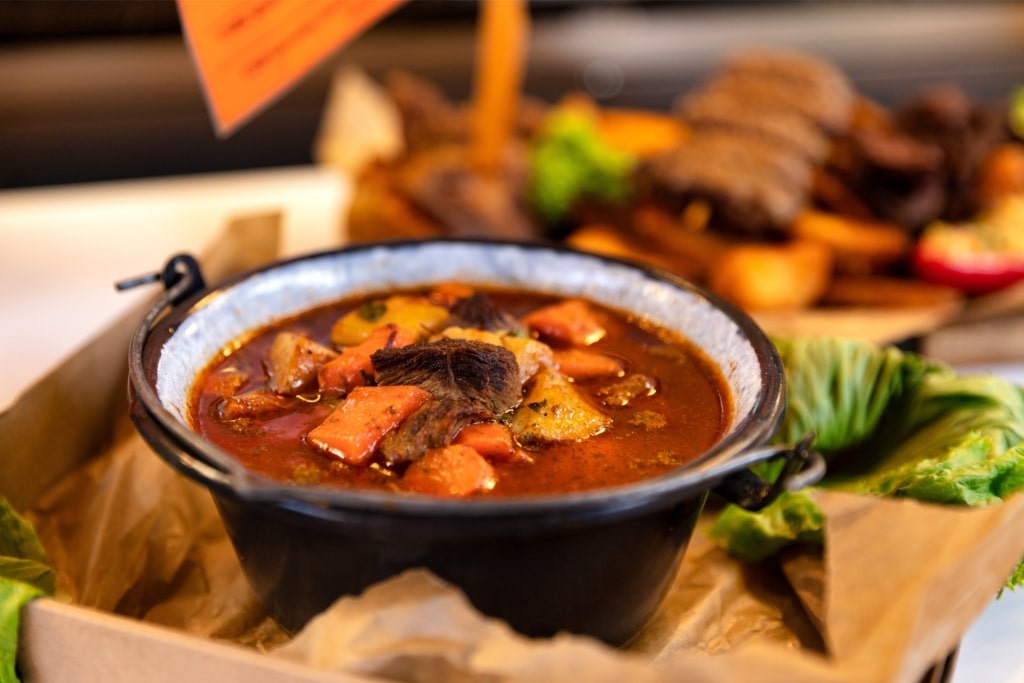
What is Hungary known for? When it comes to food, there’s one answer on everyone’s lips: goulash. The country’s signature soup-stew is a hearty mix of beef, paprika, onions, carrots, potatoes, and caraway, sometimes with small hand-pinched noodles called csipetke—a truly hearty one-pot.
The dish’s name comes from gulyás, or “herdsman”; cattle drovers traditionally simmered meat in iron kettles over open fires. Paprika became a standard addition in the 18th and 19th centuries. Proper goulash isn’t the brown, flour-thickened stew you may see abroad: it’s hearty and warming with a bright crimson color.
While the broth thickens naturally through reduction, it’s far from gloopy. You’ll see it listed as gulyásleves on menus, distinct from sister dishes pörkölt, a thicker stew, and paprikás, which is cream-enriched.
Thermal Spas
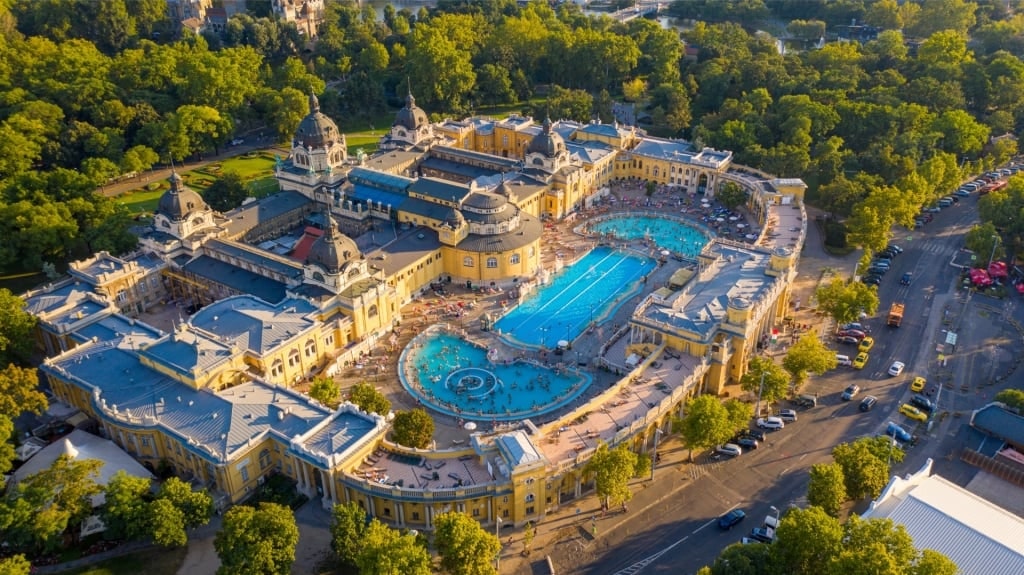
Széchenyi, Budapest
Hungarian capital Budapest became known as the “City of Spas” in 1934, but the Romans and Ottomans were soaking their worries here centuries ago. Budapest sits atop a web of thermal waters that feed a series of grand complexes and Ottoman-era domes, with spa culture now one of the main things Hungary is known for.
Expect steaming outdoor baths, indoor thermal tubs, cold plunges, and lap pools—all treated as part of a local wellness ritual and social time, rather than a luxury splurge. The city is packed with spas.
There are 123 natural hot springs and more than a dozen complexes, but there are three especially famous thermal baths in Budapest. These are Széchenyi in City Park, the Art Nouveau showpiece Gellért by Liberty Bridge, and Rudas, a 16th-century Turkish dome with a panoramic rooftop pool under Gellért Hill. Look out for locals playing floating chess at Széchenyi—they can be absorbed in a game for hours.
Lángos
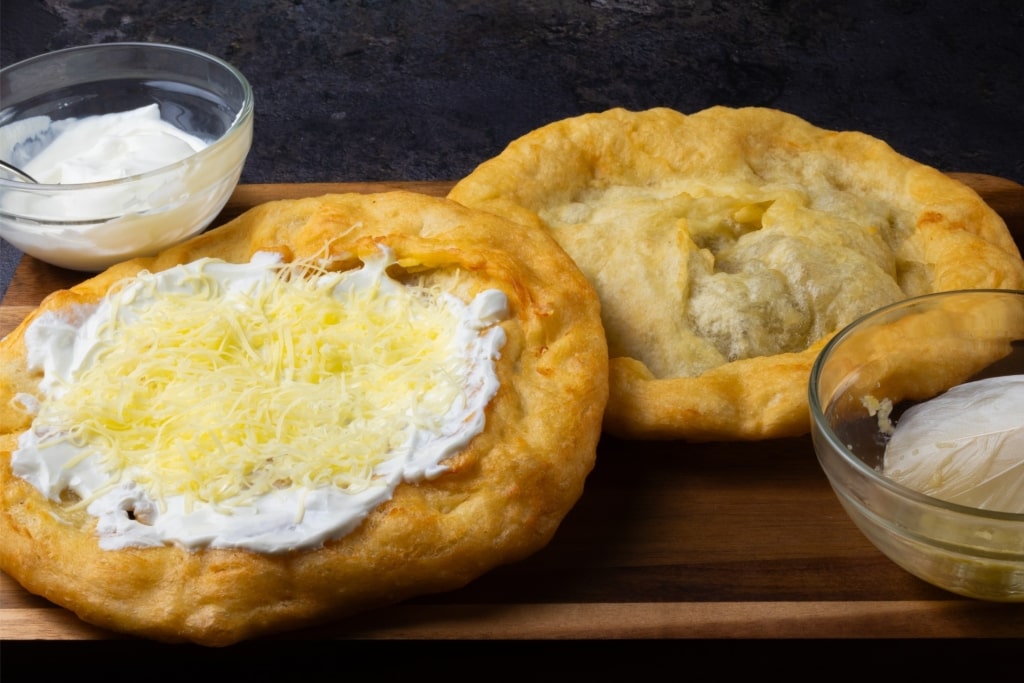
Lángos
If you’re looking for a “holy trinity” of Hungarian cuisine, add lángos to goulash and paprika. This much-loved dish is a street-food classic: a deep-fried flatbread, crisp at the edges with a chewy bite in the middle.
The classic version is topped with garlic oil, sour cream, and grated cheese, but you’ll also find options with ham or sausage, and even “pizza” styles with tomato sauce and cheese.
Dessert versions with powdered sugar or fruit jelly are increasingly popular. You’ll find lángos everywhere from the Great Market Hall in Budapest to street-food vendors, and stalls in many parks. Many smaller vendors are cash-only, so carry some forint. Portions run large—share as a snack—and eat immediately; they’re best fresh.
“Ruin Bars” in Pest
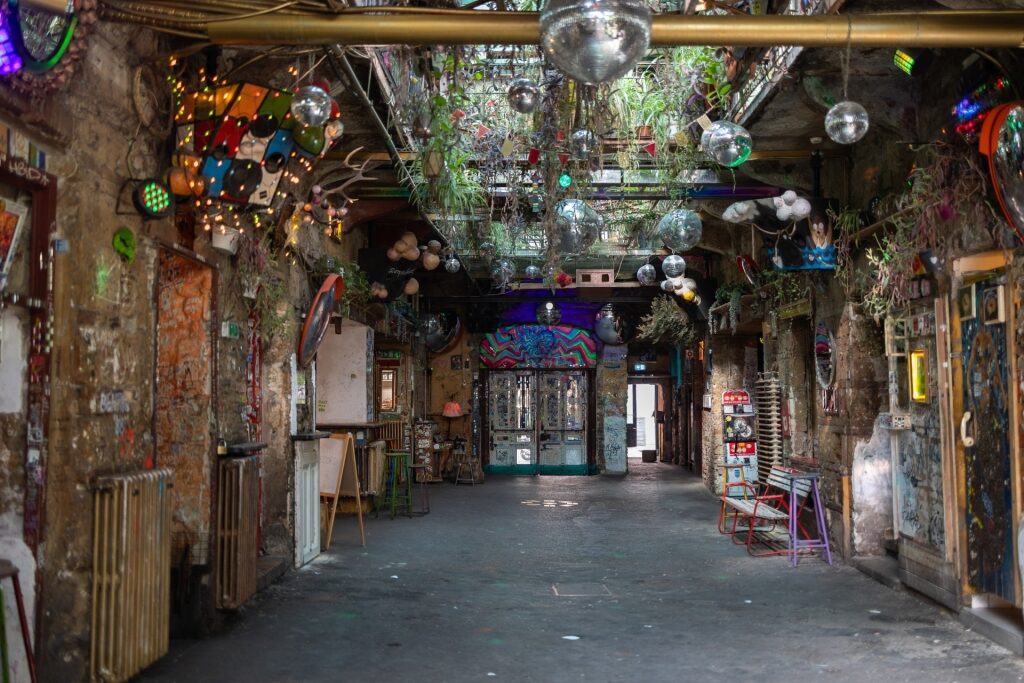
Szimpla Kert, Budapest
It’s tempting to think of Budapest as a city steeped in classic culture—and it certainly has a hefty dose of iconic historical sights. But there’s another side with a much more modern vibe. A great example is the “ruin bars” on the Pest side.
Born in the early 2000s as a creative reuse of neglected buildings, a series of eclectic bars and cultural spaces sprang up, mostly in the old Jewish Quarter, District VII.
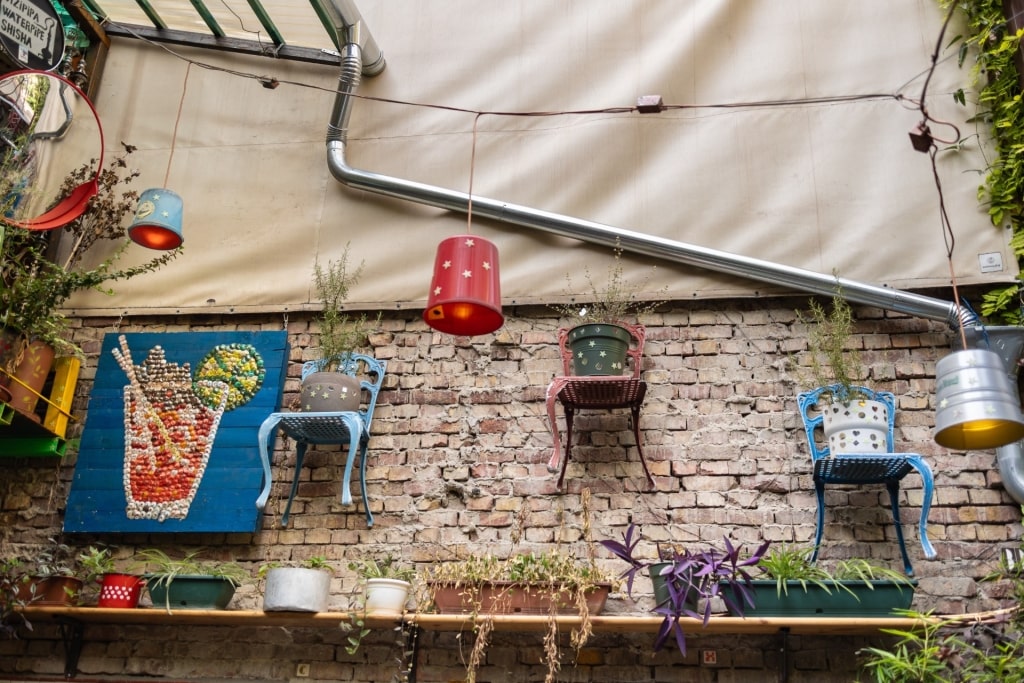
Szimpla Kert, Budapest
While many are hip hangouts by night, they’re well worth a daytime visit, too, when they shift from bars to café/gallery/community hubs. Think light bites, art installations, and design stalls, all backed by upcycled, deliberately mismatched furniture and laid-back soundtracks.
The flagship spot is Szimpla Kert on Kazinczy street, perfect for pictures to grace your social feed, and also with a popular Sunday farmers’ market. Look out too for Kőleves Kert just down the road, which has a fabulous garden vibe.
Pálinka
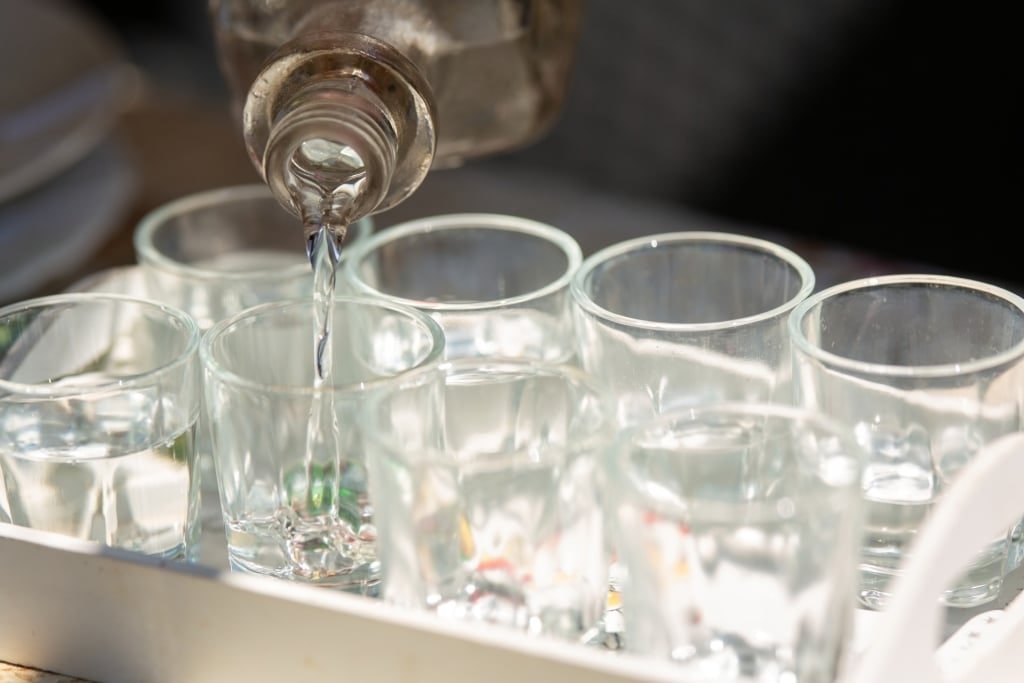
Pálinka
Pálinka is Hungary’s traditional fruit brandy, a potent blend that hits 40-50% ABV and is distilled purely from 100% fruit, with no added sugar. Different variations include apricot, plum, pear, cherry, quince, apple, and grape-pomace.
Despite the alcohol level, it’s aromatic rather than fiery and served in a small tulip-style glass, designed to be sipped and not downed in one. It’s protected by European Union legislation that states it can only be made in Hungary from fruit grown in Hungary, so there’s an element of national pride thrown into the mix, too.
Pálinka is sold all over: specialty spirits shops, market-hall delis, and restaurants—with many of the former offering tastings. It’s also another great portable gift to take home.
Lake Balaton
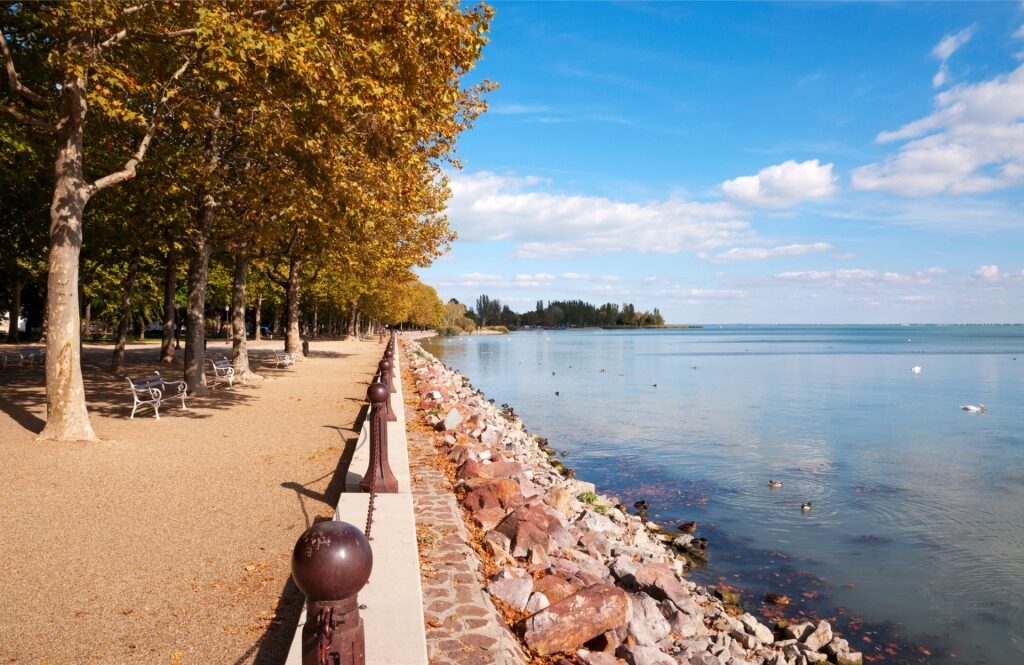
Balatonfüred, Lake Balaton
With Hungary being landlocked, Lake Balaton—Central Europe’s largest lake—is known as the “Hungarian Sea.” About 50 miles southwest of Budapest, it’s a favored weekend getaway from the capital. A long, shallow ribbon of milky-colored water, it’s ringed by beaches, promenades, and bike paths, and is backed by vine-clad hills.
The south shore is sandy and family-friendly, while the north shore is hillier and home to photogenic villages. It’s a perfect contrast to Budapest, with excellent day escapes. Csopak and Badacsony offer fine wineries. Tihany has a historic abbey dating from 1055, and Balatonfüred is fronted by an elegant promenade. Local pike-perch, or zander, is a staple, simply grilled with a dash of lemon.
Rubik’s Cube
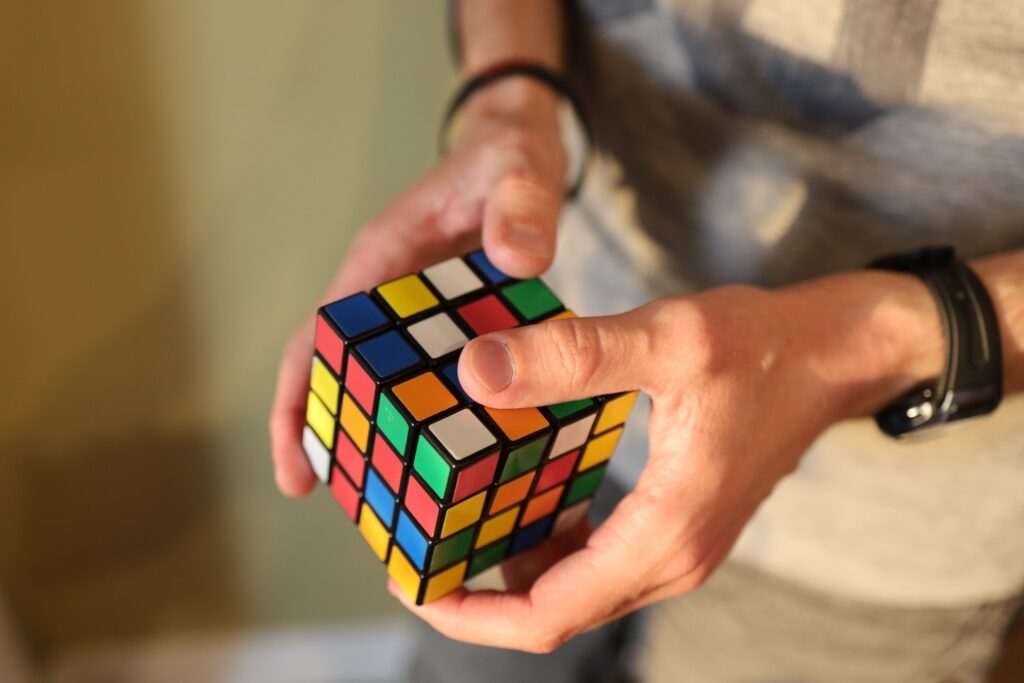
Rubik’s Cube
If you were around in the 1980s, you’ll surely be familiar with the Rubik’s Cube—a simple mechanical puzzle that became a global phenomenon and one of the things Hungary is most known for. Originally called the Magic Cube, it was designed by architect and professor Ernő Rubik, who created it to help students visualize 3D movement rather than as a toy.
The six-sided cube, with a color for each face and a 3×3 grid of movable squares, can scramble into a mind-boggling 43 quintillion combinations. The fiendish difficulty of returning it to solid colors caught the public imagination and sparked a craze to solve it in the shortest possible time.
You can find shops selling and exhibiting both the original and variations—4×4 and pyramid are popular—around the city. Two notable ones—Rubik’s Cube & SpeedCube Shop and Retro Cube—sit on Váci utca in central Pest, not far from the Central Market Hall, and are great places to pick up a bona fide original.
Thermal Caves
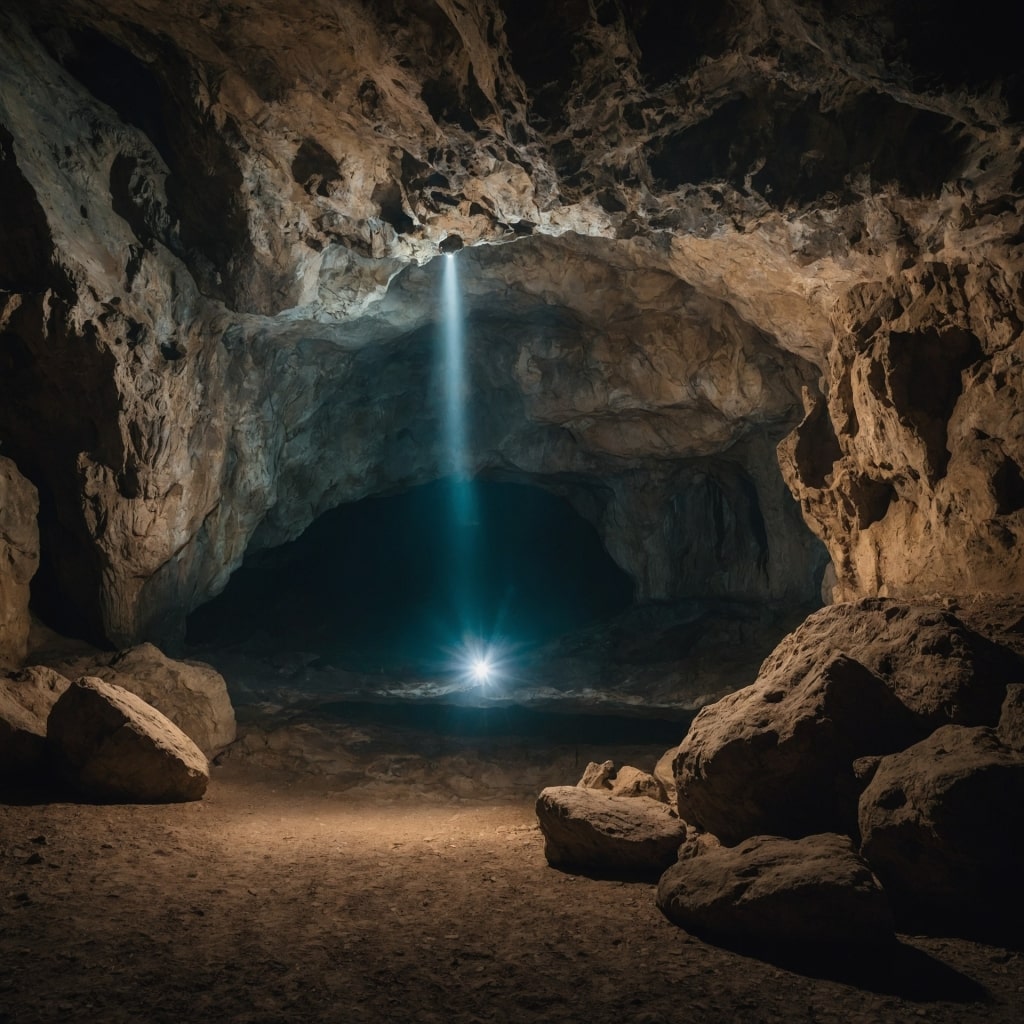
Pál-völgyi Cave, Budapest
Hungary’s thermal spas often grab the headlines, but there are also several thermal caves shaped by hot, mineral-rich waters in the Buda Hills surrounding the capital. Unlike classic rain-carved caverns, these were created by rising geothermal waters that dissolved and redeposited minerals, leaving coral-like formations, crystals, and bubbly cave walls.
There are two easy-access show caves: Szemlő-hegyi Cave, the most accessible option, and Pál-völgyi Cave, a longer route with ladders and steps suited to more active visitors. Those with a keen sense of adventure, high fitness, and diving certification can also explore the flooded Molnár János Cave, where cave diving is possible right in the heart of Buda.
Classical Composers
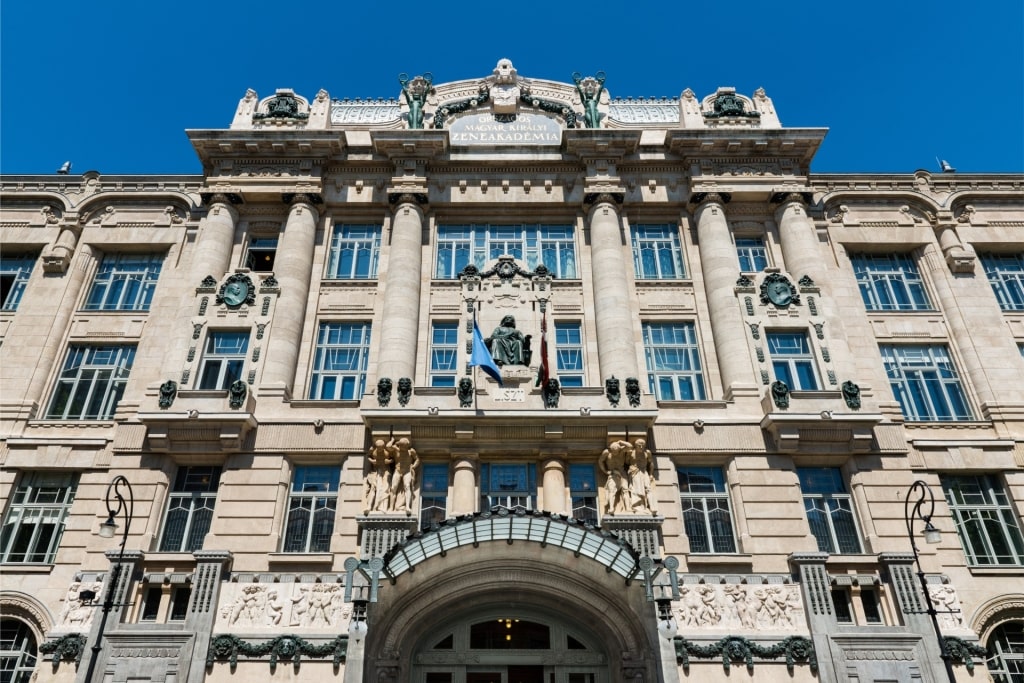
Liszt Academy, Budapest
Ask what Hungary is known for, and one answer is inevitably its composers. Three top the list: showman Franz Liszt; modernist Béla Bartók, who blended folk tunes into masterpieces; and Zoltán Kodály, whose teaching method is used worldwide. You can easily dive into their world in Budapest.
Start at the Liszt Ferenc Memorial Museum, a compact apartment filled with personal effects and instruments, then head to the Liszt Academy for a guided tour of its Art Nouveau halls. Over in Buda, the Bartók Memorial House offers an intimate look at his life.
If you’re keen on the educational thread, the Kodály Memorial Museum on Andrássy Avenue is the place to go. For a broader overview, the Museum of Music History in the Castle District is excellent, and you can also tour the Hungarian State Opera or visit Müpa’s Bartók National Concert Hall.
Soccer & The Pancho Arena
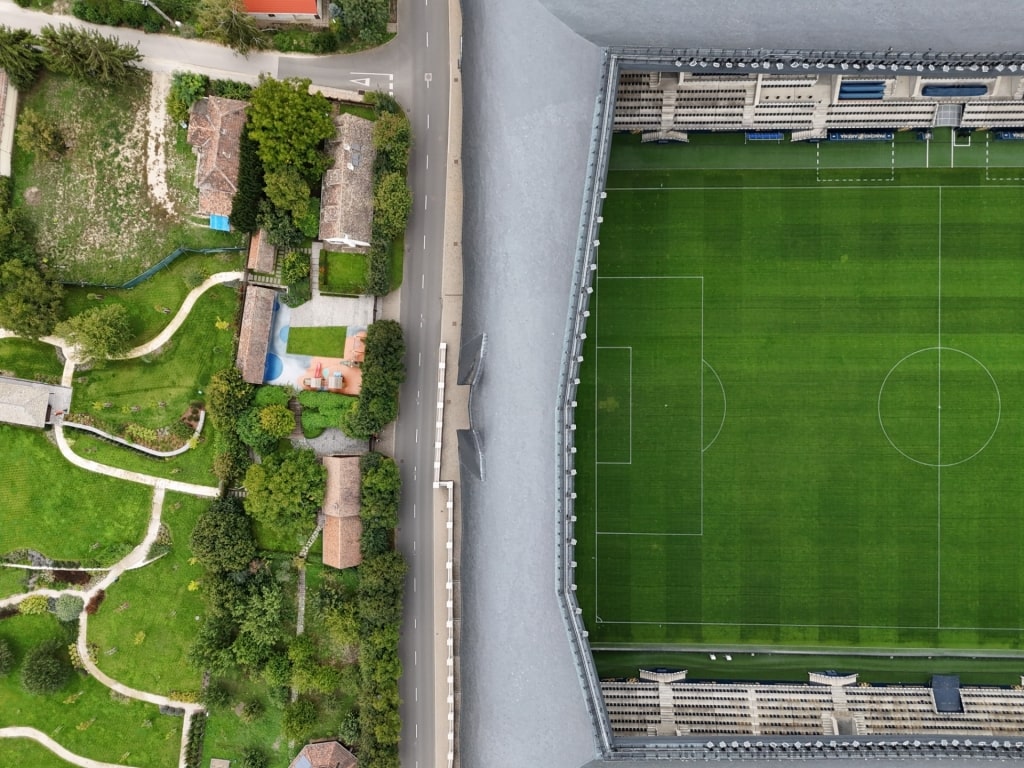
Pancho Arena
In the 1950s, Hungary dominated the world of soccer, revolutionizing the game with the Golden Team that included the legendary Ferenc Puskás, one of the best players in the sport’s history. While the national squad hasn’t matched those heights since, soccer remains a national passion.
In Budapest, the national stadium—Puskás Aréna—offers guided tours with on-site exhibits if you can’t catch a match. For even more insight, head to the Pancho Arena about an hour west of the capital in Felcsút.
Taking its name from Puskás’s Spanish nickname, it’s an intimate, architecturally striking stadium with soaring timber arches and organic lines—more cathedral than concrete bowl. It also anchors the Puskás Akadémia training complex, where coaches nurture the next generation.
FAQs
Why is Hungary unique?
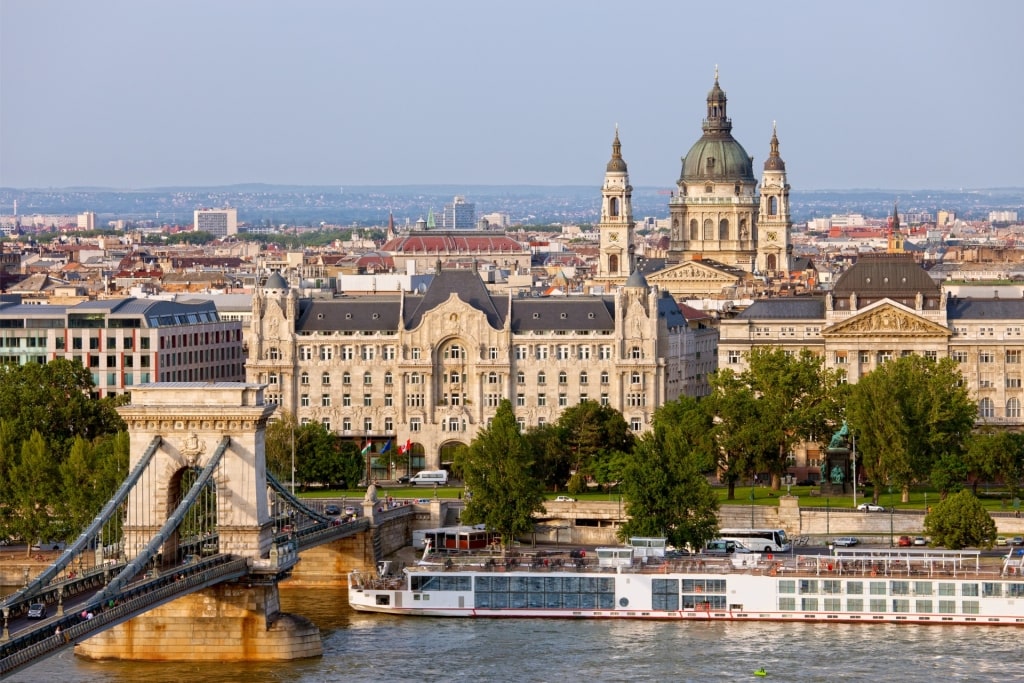
Budapest
Hungary sits at the crossroads of Europe, where Roman roads, Ottoman baths, and Austro-Hungarian grandeur overlap. There’s a strong cultural identity and palpable pride. Add thermal spas, hearty food, and a youthful buzz, and the result is unmistakably both old-world and inventive at the same time.
What are Hungarians most known for?
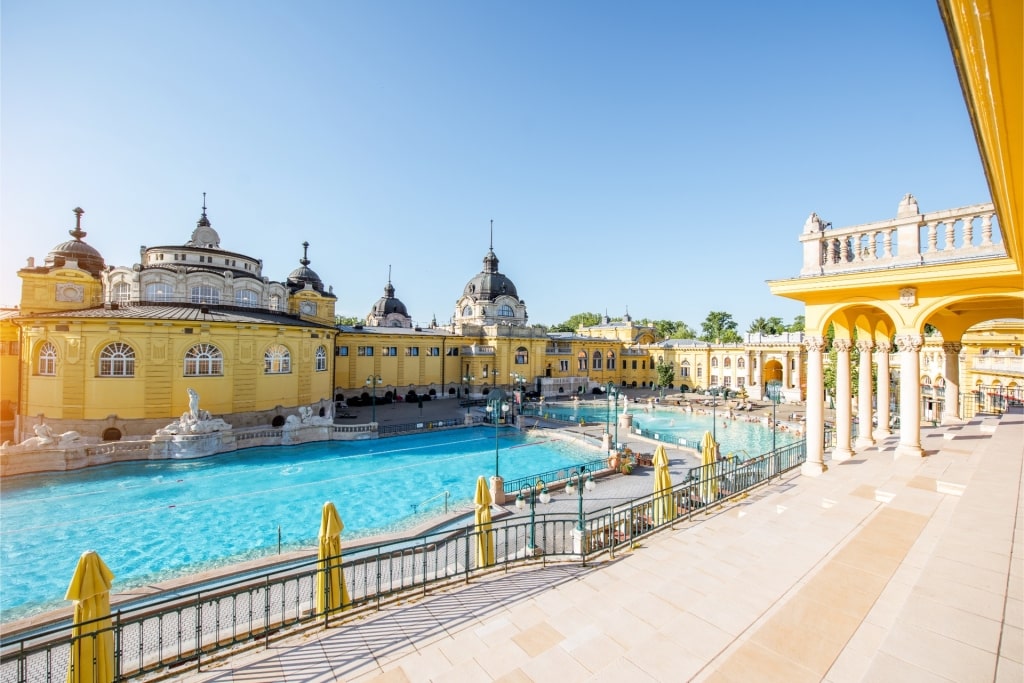
Széchenyi, Budapest
Striking architecture, inventiveness, a classical-music pedigree, and a world-class soccer heritage—closely backed up by bold, paprika-rich cooking and a relaxed spa culture.
What food is Hungary famous for?
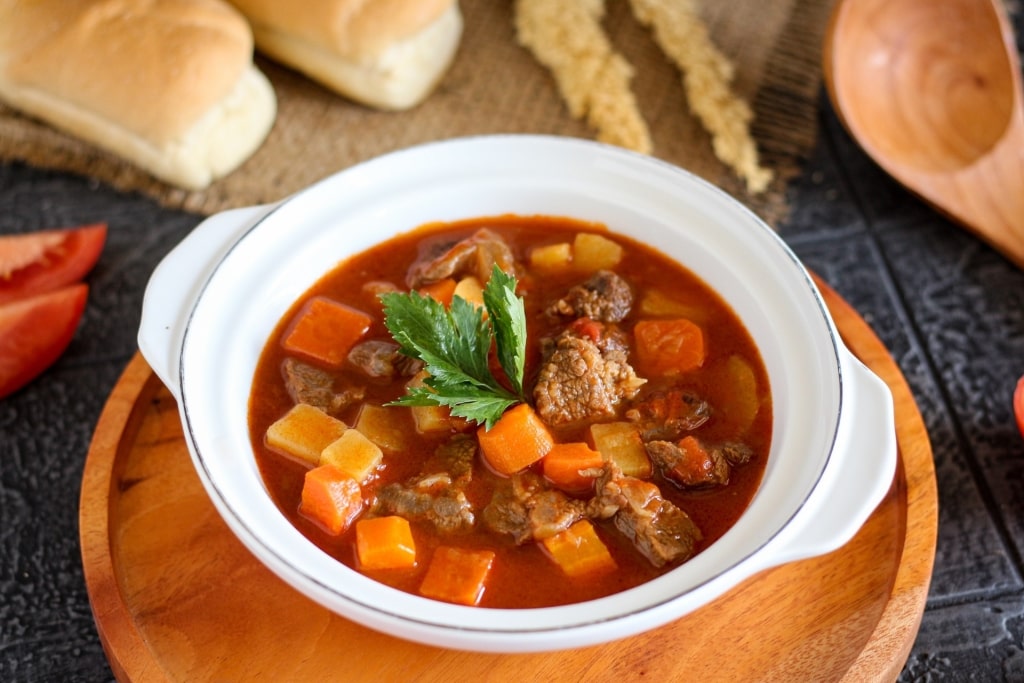
Goulash
Goulash—specifically gulyásleves—a paprika-bright beef soup with caraway, potatoes, and hand-pinched csipetke noodles.
What natural attractions is Hungary known for?
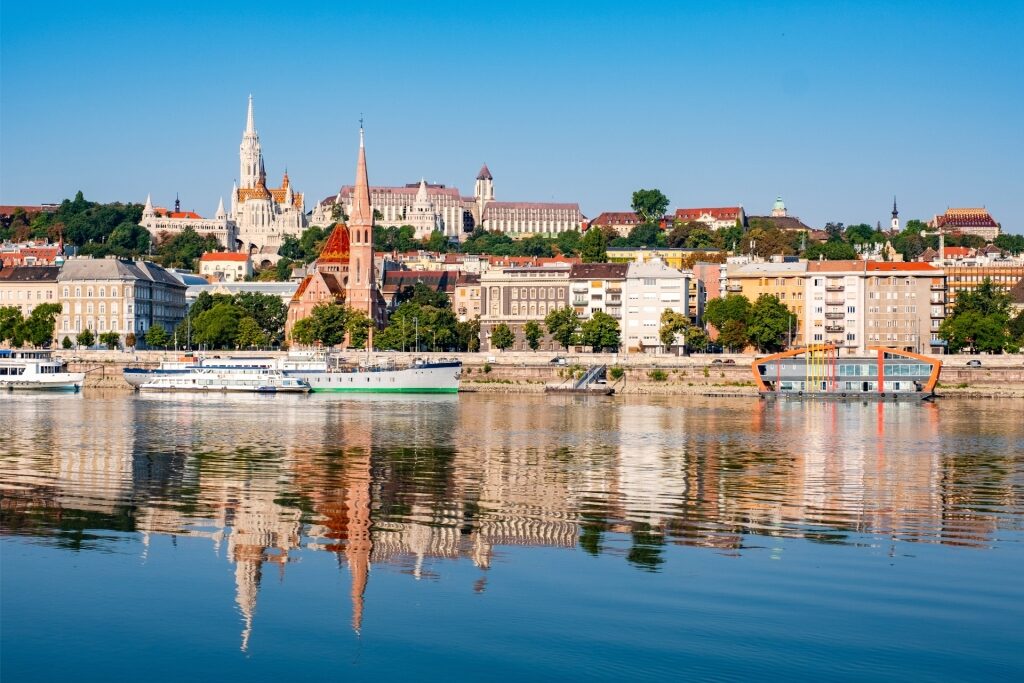
Danube River
The Danube River anchors life here as it carves its way east from Slovakia toward Budapest, where it turns sharply south and continues to Croatia and Serbia. Add thermal springs and thermal caves, plus Central Europe’s largest lake, Lake Balaton, and the lush, rolling hills around Gönyü to complete this bucolic picture.
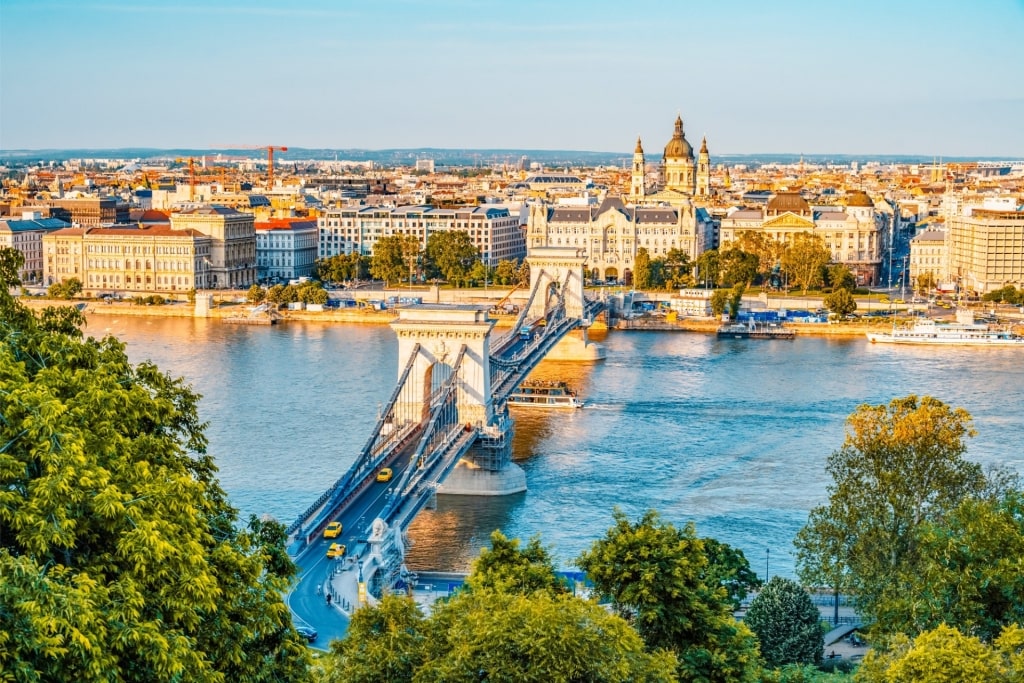
Budapest
Ready to discover what Hungary is known for? Browse Celebrity’s Danube river cruises and plan your European adventure.