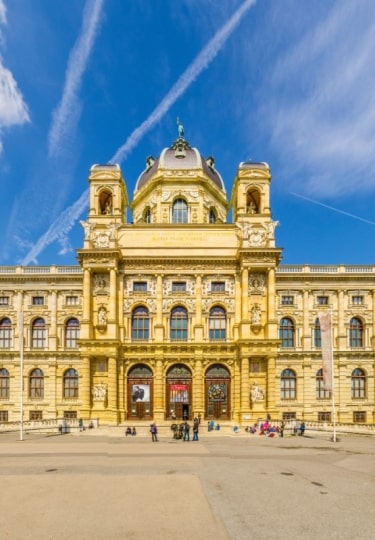
If you have a keen interest in art, history, and culture, you should add the best museums in Vienna to your travel “to-do” list. This elegant city is home to many world-class institutions that showcase creative innovations, imperial treasures, and modern art and science.
Vienna’s museums offer a diverse range of attractions, from Habsburg dynasty art to psychological discoveries and mind-bending interactive displays. These museums serve up a wealth of things to do and see related to this nation’s historical legacy, and each is a joy to explore.
Kunsthistorisches Museum
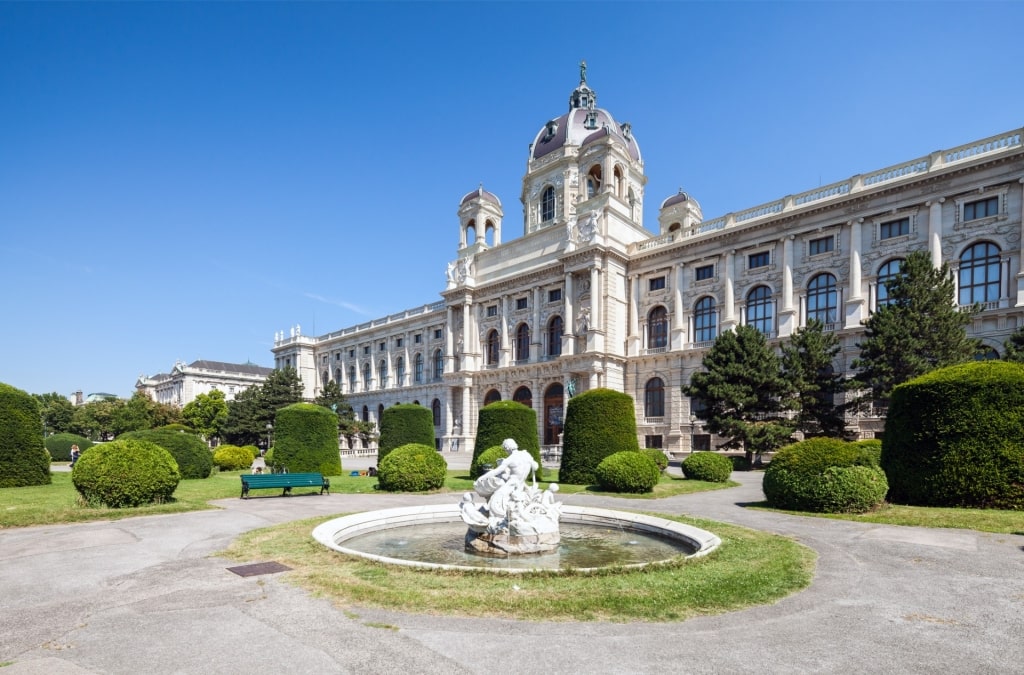
Kunsthistorisches Museum
Once you step inside the majestic Kunsthistorisches Museum in Vienna’s Old Town, on Maria-Theresien-Platz on the Ringstrasse, you will be instantly greeted by imperial splendor. Emperor Franz Joseph I established this grand art history museum in 1891 to show off the imperial art collection to the public—and what a show it is.
This art history museum is a work of art in itself, thanks to its intricate marble staircases and classical architecture, which together house an extensive art collection belonging to the Habsburg dynasty.
The Kunsthistorisches Museum displays Ancient Egyptian relics and masterpieces from classical antiquity in its galleries, along with rooms featuring paintings by Titian, Caravaggio, and Bruegel.
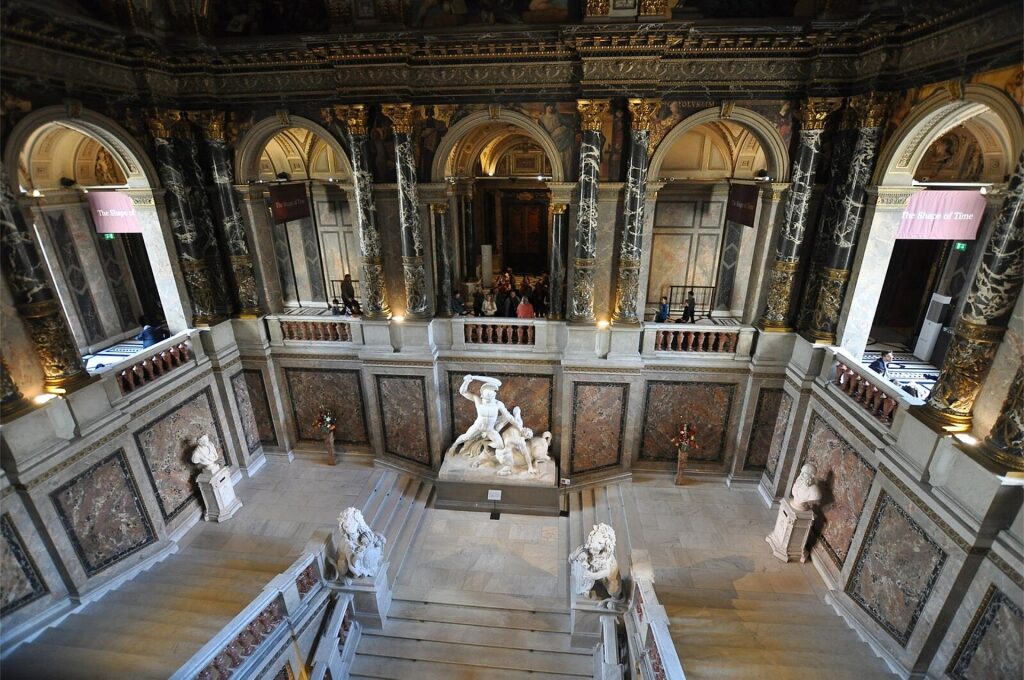
Kunsthistorisches Museum Photo by Herbert Frank on Wikimedia Commons, licensed under CC BY 2.0
The museum’s Renaissance and Baroque collections are magnificent, offering you an insightful journey through European cultural history.
The Picture Gallery is another one of the museum’s most esteemed exhibits, brimming with masterworks by Rubens, Vermeer, and Raphael.
The Kunsthistorisches Museum also displays ancient coins alongside Egyptian sarcophagi and Roman sculptures. If you love art and history, this is one Vienna museum you won’t want to miss.
Natural History Museum Vienna
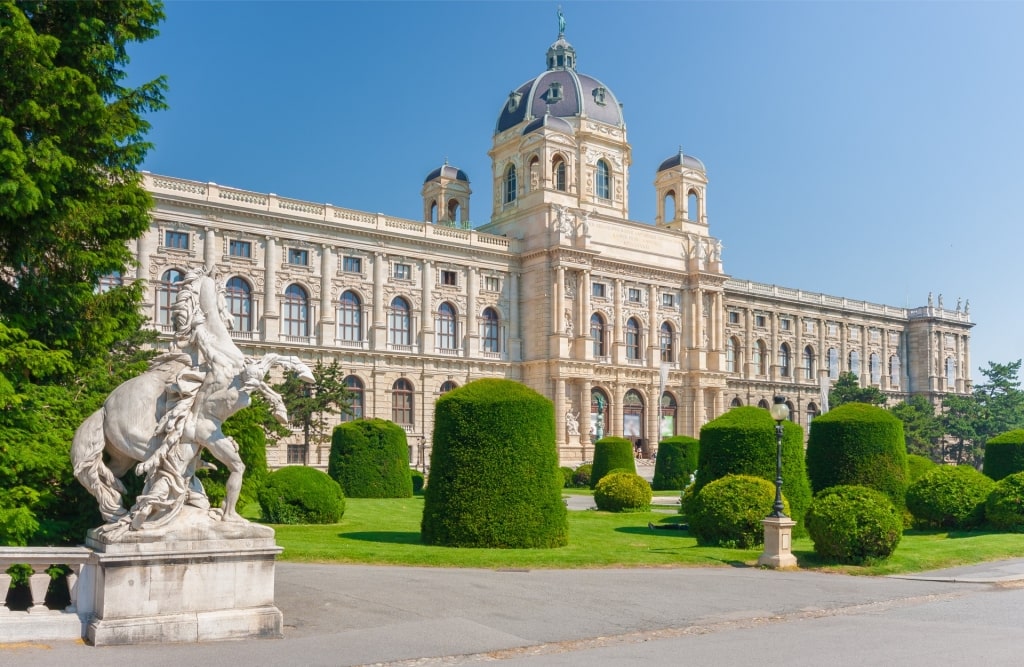
Natural History Museum Vienna
The Natural History Museum in Vienna will entice you with its many marvels, which include ancient fossils, sparkling gemstones, and, perhaps best of all, enormous dinosaur skeletons.
The grand building itself, situated in the Maria-Theresien-Platz square, is a prime example of 19th-century Viennese architecture.
In addition to bones and fossils, you will also encounter meteorites, preserved animals of all sizes, a vast prehistory collection related to early human evolution, a herbarium featuring millions of plant specimens, invertebrate and vertebrate collections, and much more.
If you have a passion, or even a passing curiosity for science and natural history, make sure you carve out some time to visit this impressive museum.
Hofburg Imperial Apartments and Sisi Museum
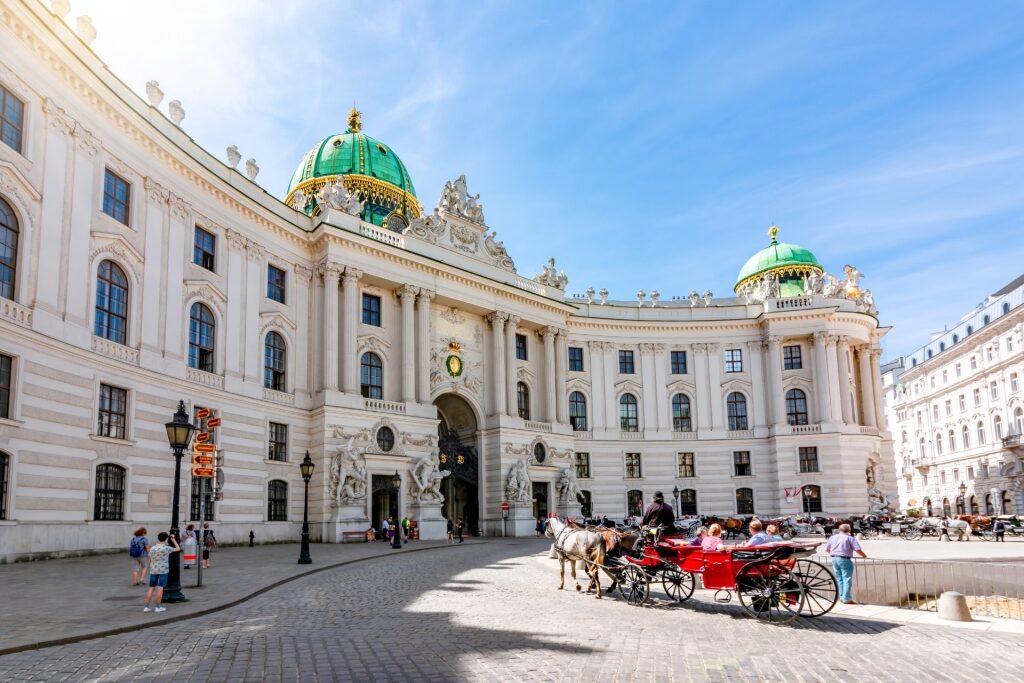
Hofburg Imperial Apartments
The lovely Hofburg Imperial Apartments offer an immersive experience into the private world of Emperor Franz Joseph and Empress Elisabeth, warmly known as “Sisi.”
Glittering chandeliers, antique furnishings, and complex Brussels and Gobelin tapestries reflect the peak of imperial elegance in the apartments here. Wandering around Franz Joseph’s study or the imperial dining room will let you experience the daily and ceremonial splendor of Austrian court life.
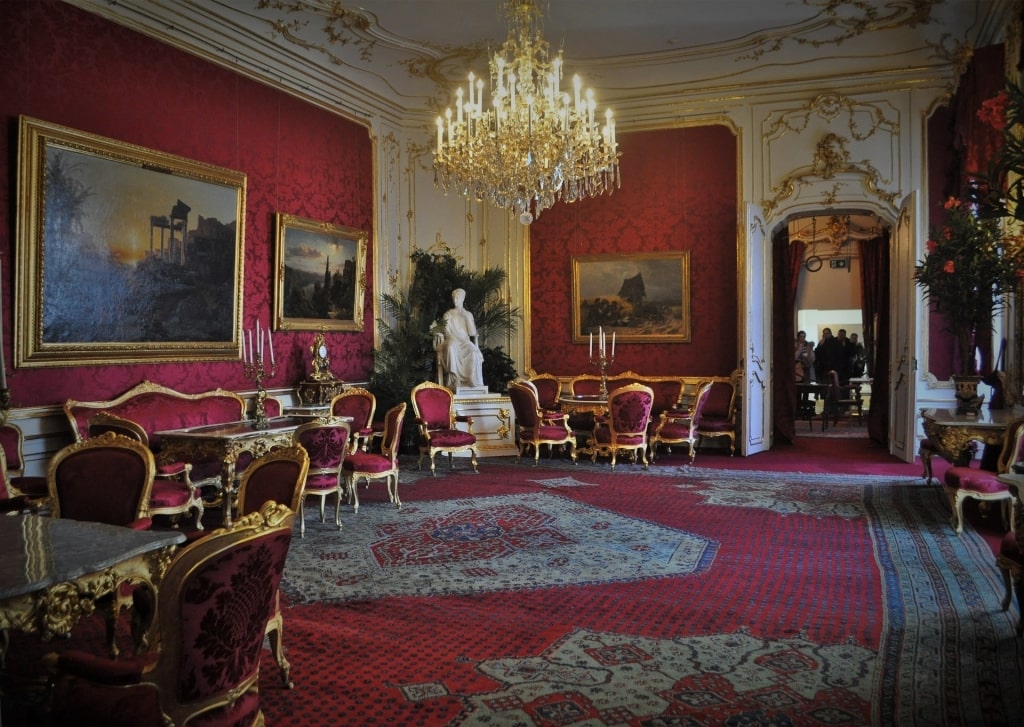
Sisi Museum Photo by young shanahan on Flickr, licensed under CC BY 2.0
The Sisi Museum, which displays the empress’s gowns, parasols, portraits, and beauty and exercise equipment, also offers a glimpse into Sisi’s multifaceted personality, revealing her defiant nature, tragic life, and enduring legacy. She cherished her individuality, bucked against court protocol, and was ultimately assassinated in Geneva.
Belvedere Palace
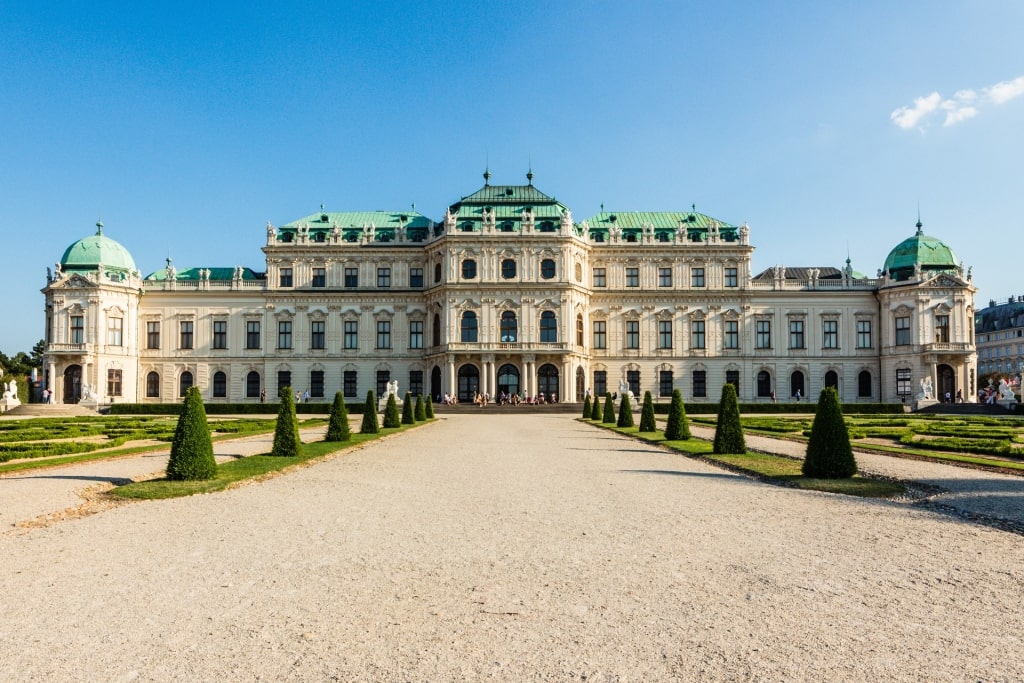
Belvedere Palace
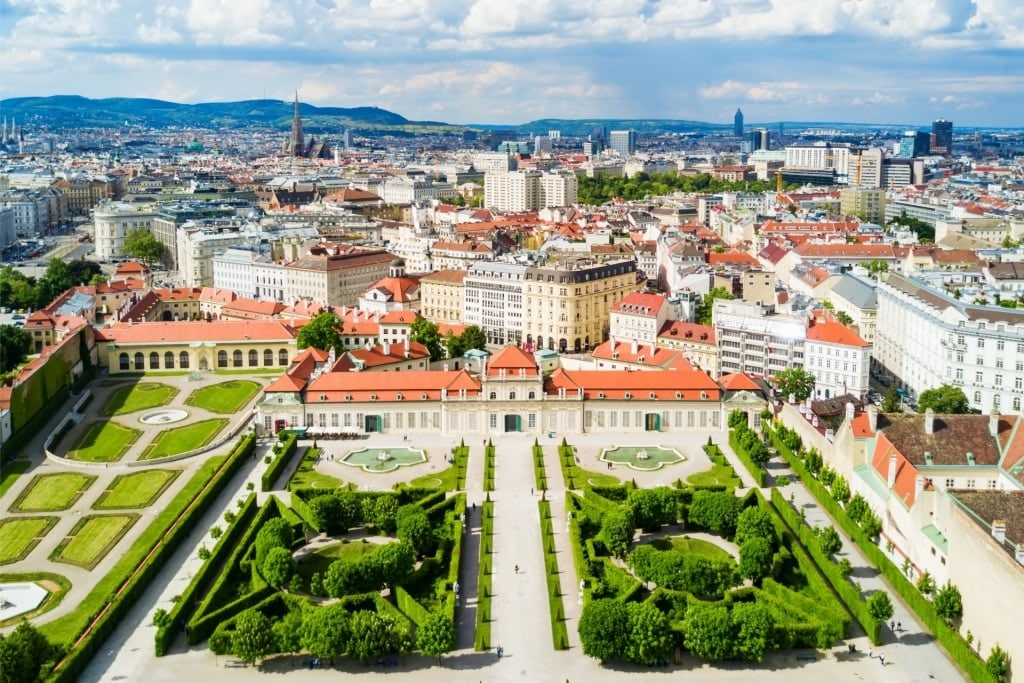
The Belvedere Palace, in Vienna’s third district, offers not one, but two exquisite Baroque palaces.
This complex features two separate core structures, known as the Upper and Lower Belvedere. Prince Eugene of Savoy commissioned Belvedere as his summer residence in the early 18th century.
The site now houses one of the most significant art collections in Austria, making it one of the best museums in Vienna to visit. In the Upper Belvedere, your gaze will land upon Gustav Klimt’s iconic painting The Kiss, with its shimmering gold leaf and romantic symbolism.
Discover works by Egon Schiele, Oskar Kokoschka, and other Austrian masters and paintings from medieval times to the modern day here as well.
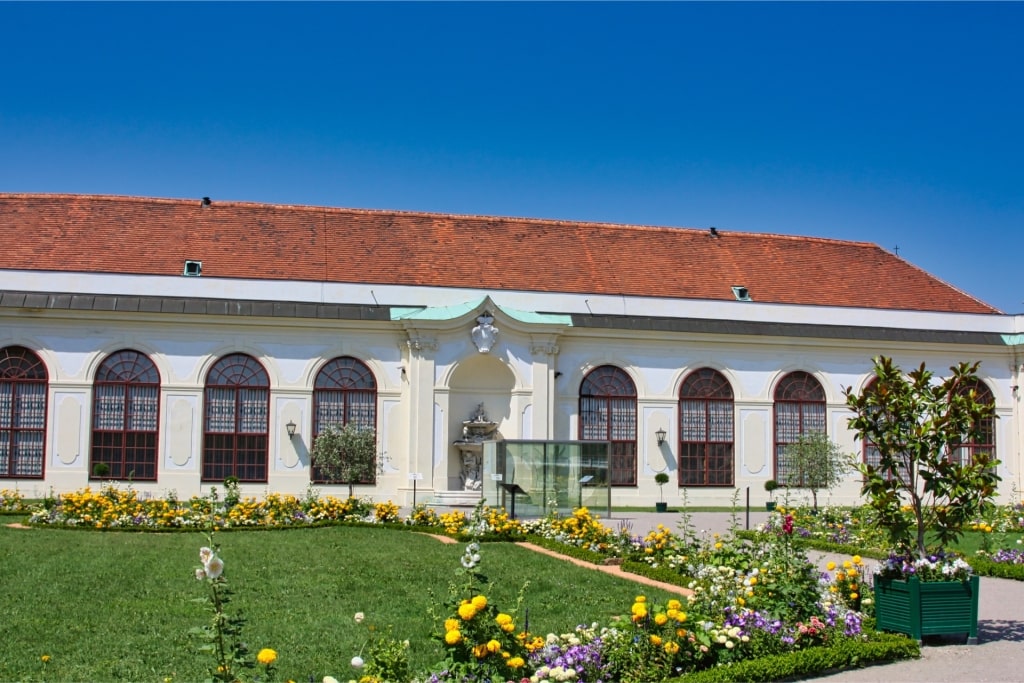
Orangery, Belvedere Palace
The beautifully restored halls of the Lower Belvedere, as well as the Orangery, which once sheltered orange trees, now serve as venues for temporary exhibitions.
Wander around the manicured gardens situated between palaces and try to imagine what life would have been back in the day, when Prince Eugene would host extravagant balls here.
Albertina Museum
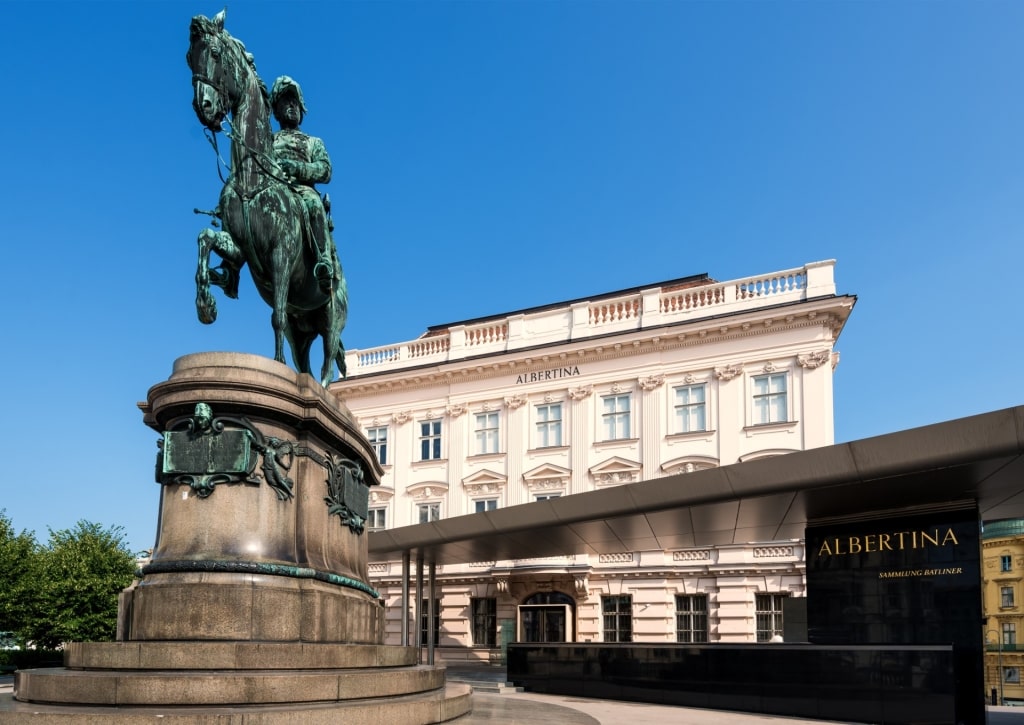
Albertina Museum
The Albertina Museum, on Albertinaplatz in the first district, is for art lovers, where you’ll discover sheets of paper transformed into poetic masterpieces. This celebrated museum boasts one of the most significant collections of graphic art on the planet.
Original pieces include drawings and prints from famous artists such as Albrecht Dürer, Rembrandt, Picasso, and Michelangelo. The exquisite Young Hare by Dürer remains one of the museum’s most remarkable works.
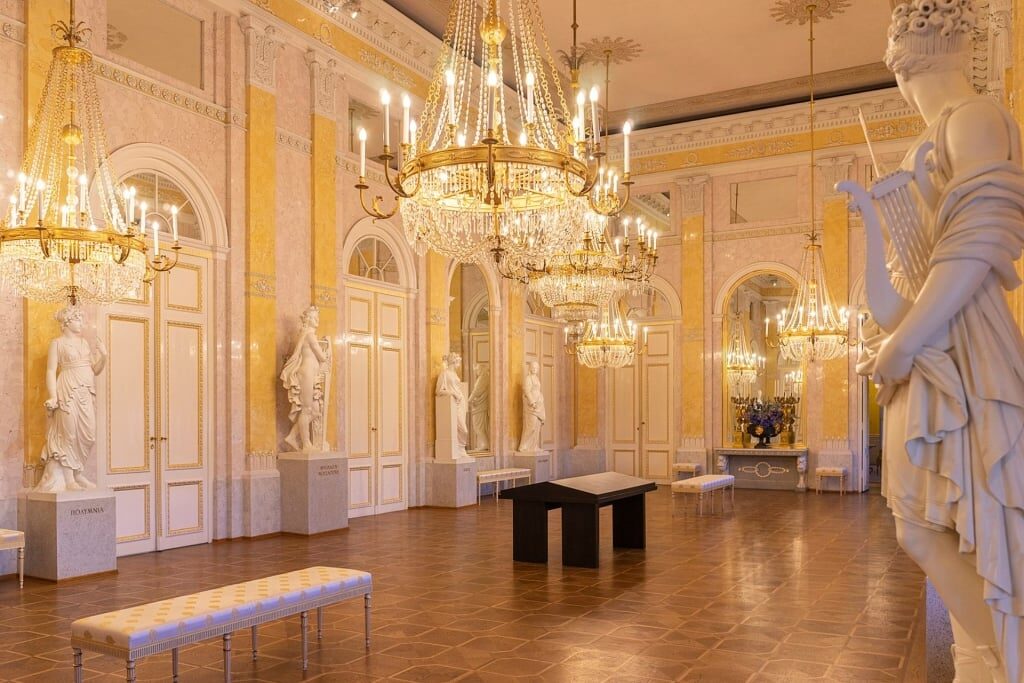
Hall of Muses, Albertina Museum Photo by Thomas Ledl on Wikimedia Commons, licensed under CC BY-SA 4.0
The Albertina Museum regularly showcases modern and contemporary art through exhibitions that include works by renowned artists such as Monet, Chagall, and Joseph Beuys.
You will find this fantastic museum, located near the State Opera, within one of the Habsburg palace buildings. It combines gallery displays with opulent 18th-century decorations, including stucco and gilded details, in spaces like the stately Hall of Muses.
Funeral Museum
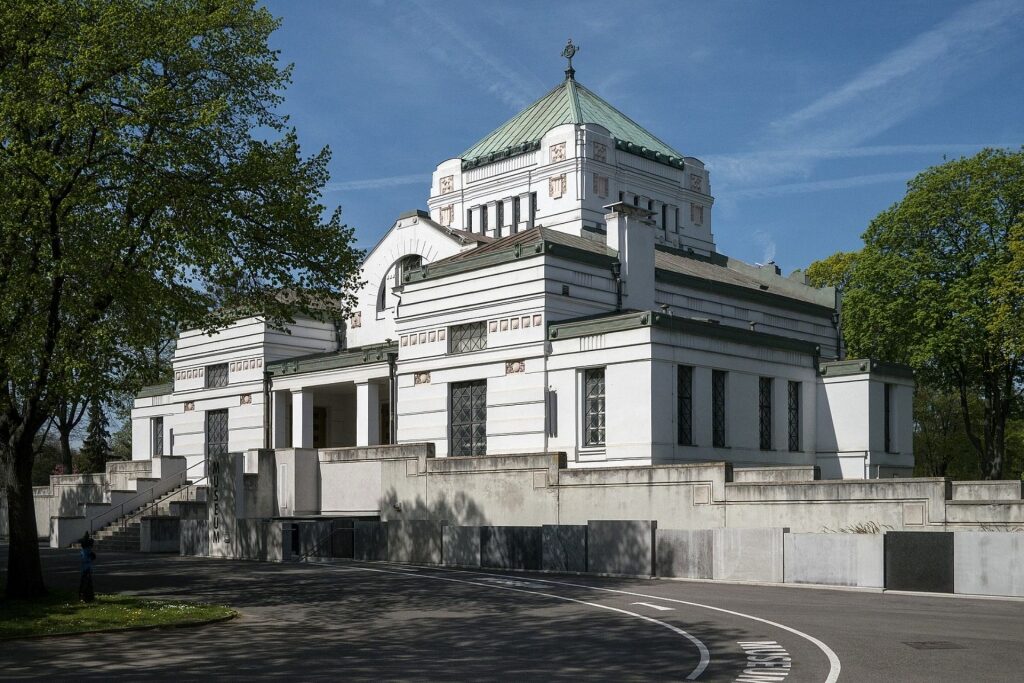
Funeral Museum Photo by Thomas Ledl on Wikimedia Commons, licensed under CC BY-SA 4.0
If you have a bit of a macabre side or a fascination with death, the Funeral Museum, located beneath Vienna’s Central Cemetery, will offer you an unusual journey connected to the Grim Reaper and his dark profession.
The Bestattungsmuseum presents Viennese customs related to death and burial, including mourning traditions, decorative hearses, antique caskets, and mourning attire.
You will also encounter unusual anti-premature burial inventions here, such as a cord attached to the hand of the supposed deceased, which they could ring from the casket to signal for help in case they were buried alive, as well as a heart palpitation knife to ensure that the heart had actually stopped beating.
This morbid museum reveals unexpected layers of detail that will fascinate anyone interested in the rituals surrounding death, offering a unique Vienna museum experience. After your visit, take time to wander around the beautiful cemetery, final resting place of Ludwig van Beethoven, Johannes Brahms, Franz Schubert, and various members of the Strauss family.
Original Vienna Snow Globe Museum
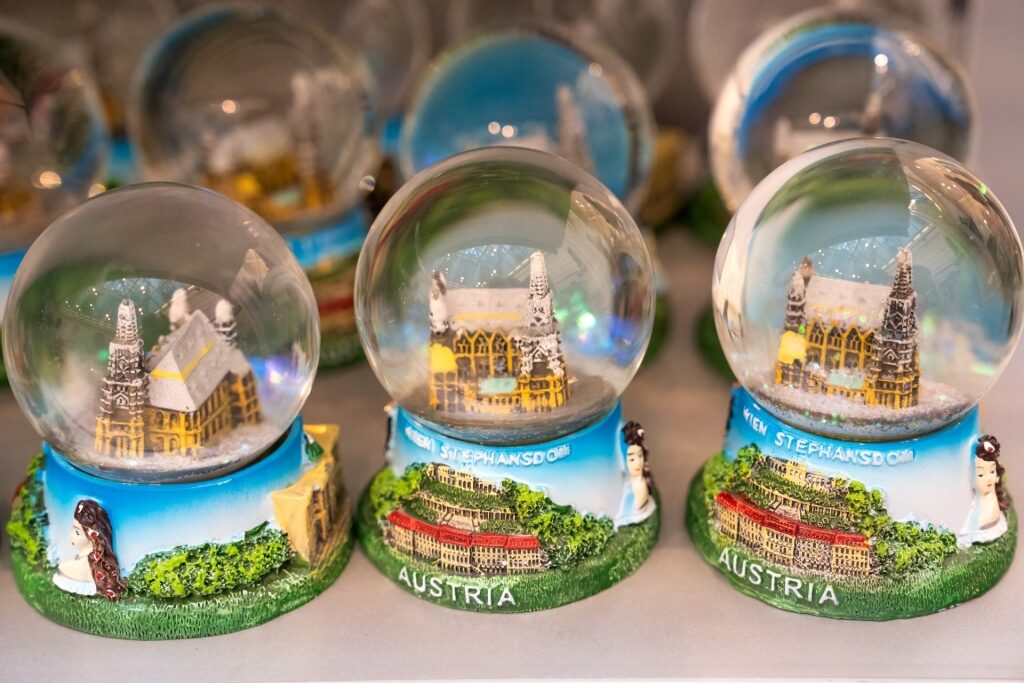
Original Vienna Snow Globe Museum
The Original Vienna Snow Globe Museum, situated in Vienna’s 17th district, will take you on a snowy journey into a whimsical realm of tiny worlds encased in glass.
This spot is the birthplace of the snow globe, where Erwin Perzy first began working on these playful creations in 1900. Upon arrival, check out the workshop, where the Perzy family has handcrafted miniature winter wonderlands for over 100 years.
As you explore this quaint little museum, which exhibits a collection of antique globe-making tools and vintage designs, you will discover the detailed processes that go into each globe, which involve casting figures and motifs and then filling them with “snow.”
MAK–Museum of Applied Arts
MAK–Museum of Applied Arts
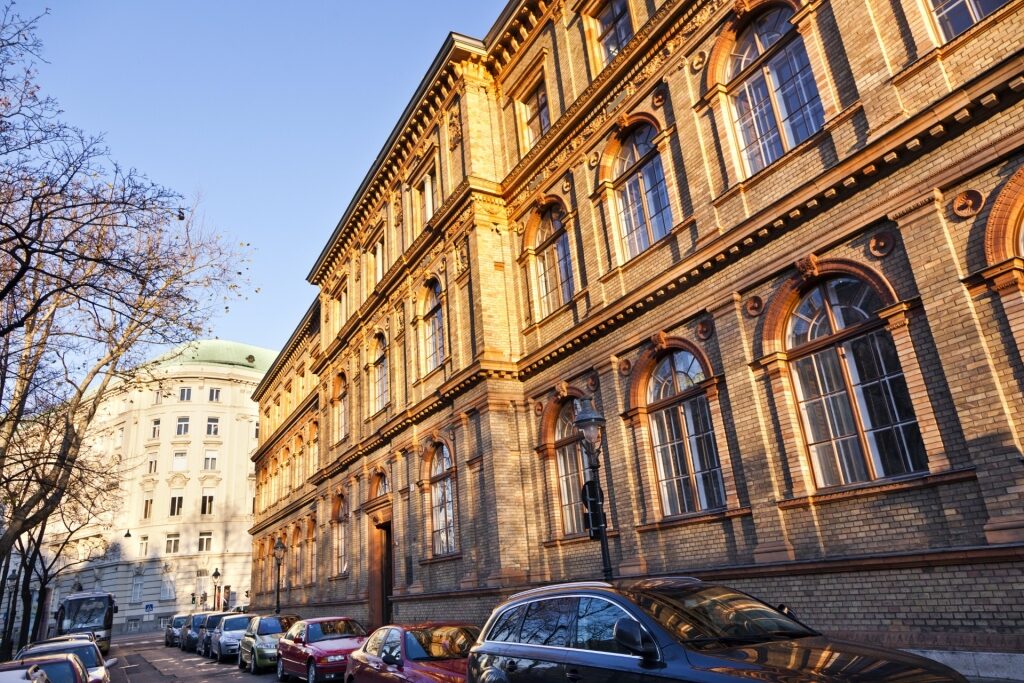
The MAK Museum of Applied Arts combines design excellence with functional beauty. It was the first museum to find a permanent home on the broad, circular Ringstraße boulevard in 1871, although other institutions followed suit.
The building, constructed in the Italian Early Renaissance style, features numerous columns and arches. Inside, you can enjoy a diverse range of exhibits from historical furniture and textiles to modern graphic design and contemporary installations.
This museum highlights Viennese design movements through displays featuring the Wiener Werkstätte designer and artist collective, as well as works by Josef Hoffmann and Koloman Moser. Temporary exhibitions showcase international architectural designs and digital art, inspiring visitors about the world of design and creativity.
Imperial Carriage Museum Vienna
Imperial Carriage Museum Vienna Photo by MrPanyGoff on Wikimedia Commons, licensed under CC BY-SA 3.0
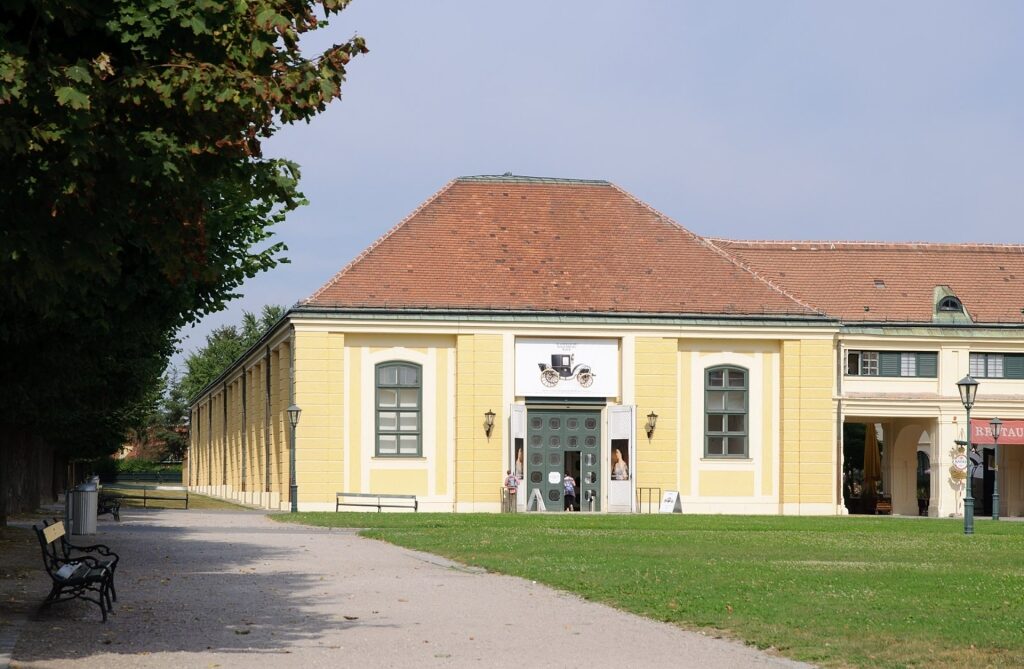
The Imperial Carriage Museum is situated on the grounds of Schönbrunn Palace, showcasing gilded carriages and ornate sedan chairs that once belonged to the Habsburg family.
Emperor Franz Joseph’s coronation coach, Maria Theresia’s golden Carousel Carriage, and the black hearse used for Empress Elisabeth’s funeral are some of the “star” carriage attractions you will encounter inside.
Informational panels accompany the displays, along with interactive audio and video, which will bring you up to speed on the history, construction, and use of the royal carriages in this once-mighty nation.
Schönbrunn Palace
Schönbrunn Palace
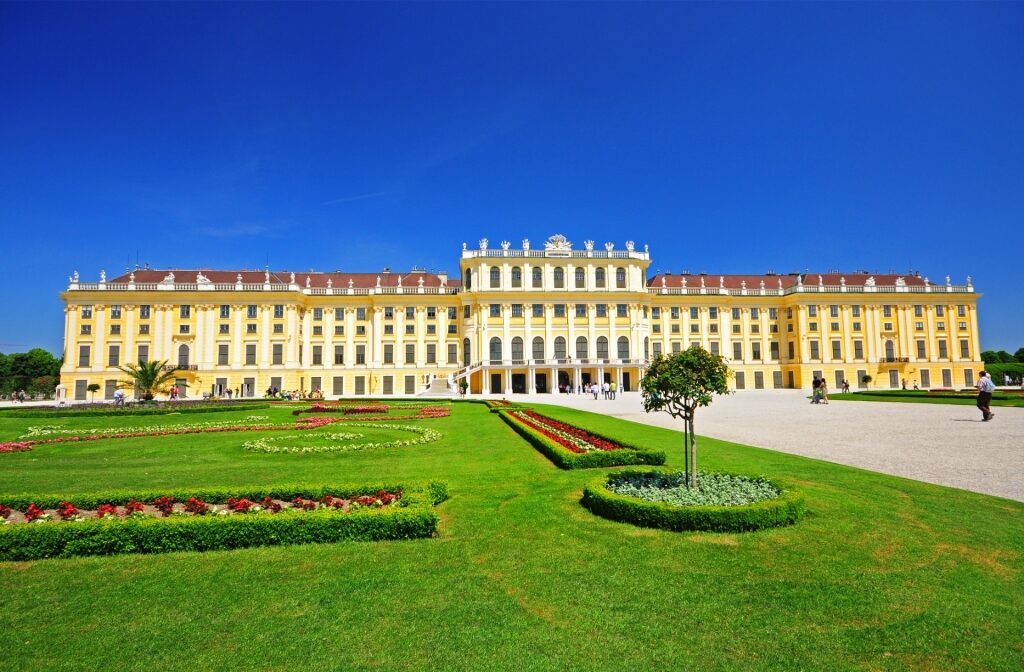
Schönbrunn Palace itself can be combined with a visit to the Imperial Carriage Museum.
This expansive and quite beautiful Habsburg summer residence is truly palatial in scale, featuring formal rooms and ornate salons, such as the Red Salon and the Great Gallery, as well as grand dining areas, and ultimately, Emperor Franz Joseph’s actual sleeping quarters.
The meticulous preservation of detail here will help you envision life at the Austro-Hungarian court. Also, don’t miss out on the opulent-looking Spiegelsaal Mirror Room, where a young Mozart once performed for the upper echelons of society.
The gorgeous palace gardens are also something to behold, occupying a vast area filled with fountains and statues, and accompanied by a hedge maze.
Globe Museum
Globe Museum Photo by Bahnfrend on Wikimedia Commons, licensed under CC BY-SA 4.0
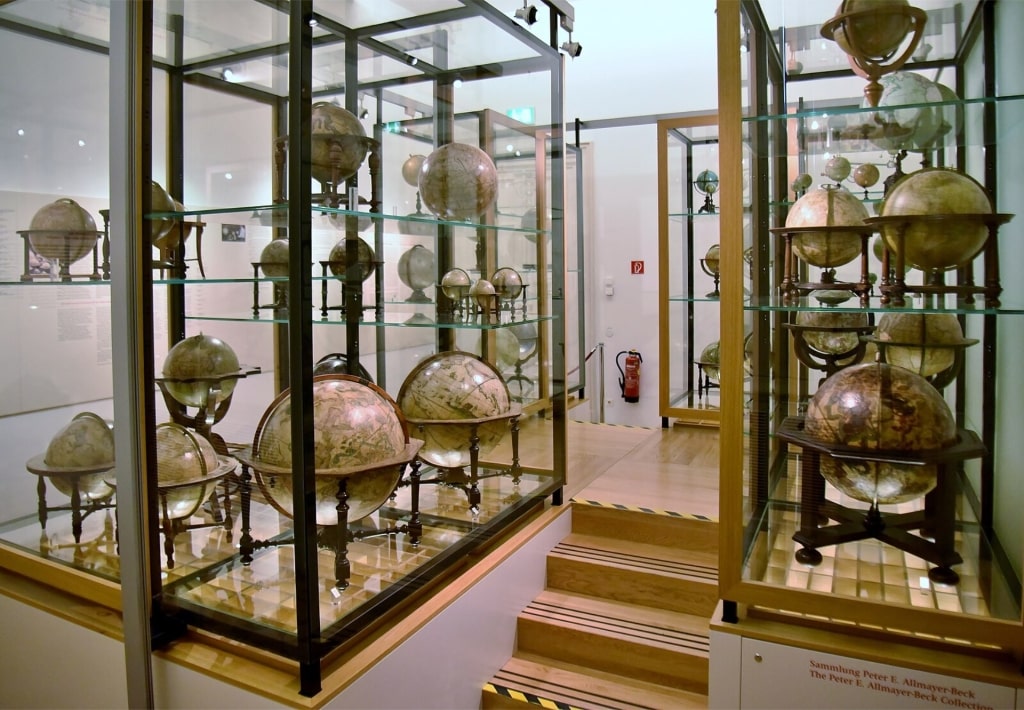
Within the Austrian National Library, located in the Palais Mollard, you will encounter the Globe Museum, offering an intriguing peek into humanity’s quest to understand this spinning blue planet everyone calls home.
The small, yet stylish galleries here contain hundreds of terrestrial and celestial globes. The history of exploration and scientific progress unfolds right before your eyes, as told by these beautiful globes, from Renaissance models to modern celestial spheres.
Detailed explanations and interactive displays will teach you about the uses of globes and how they were made, introducing the art and discipline of cartography.
Sigmund Freud Museum
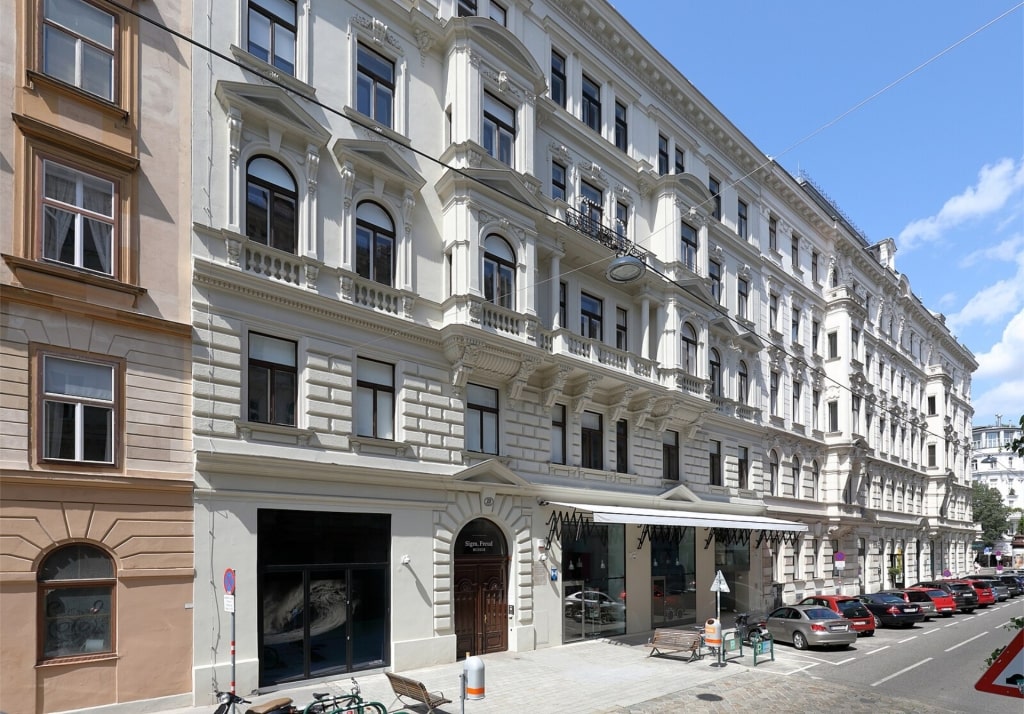
Sigmund Freud Museum Photo by C.Stadler/Bwag on Wikimedia Commons, licensed under CC BY-SA 4.0
Sigmund Freud was the founder of psychoanalysis and lived in Vienna for many years. This museum, at his home on Berggasse in the Alsergrund district, served as both Freud’s family residence and his psychoanalysis office.
Many of the original furnishings and personal belongings of Freud and his family remain intact in the rooms you will encounter here, along with Freud’s well-known waiting room, where he would invite patients to lie on his famous couch and discuss their feelings.
Gain an understanding of Freud’s intellectual world through the museum’s exhibits, which include rare photographs taken by Edmund Engelmann before Freud and his family fled the Nazis in 1938, as well as letters and original editions of Freud’s works. You can also learn about some of the groundbreaking case studies that redefined human psychology.
Haus der Musik
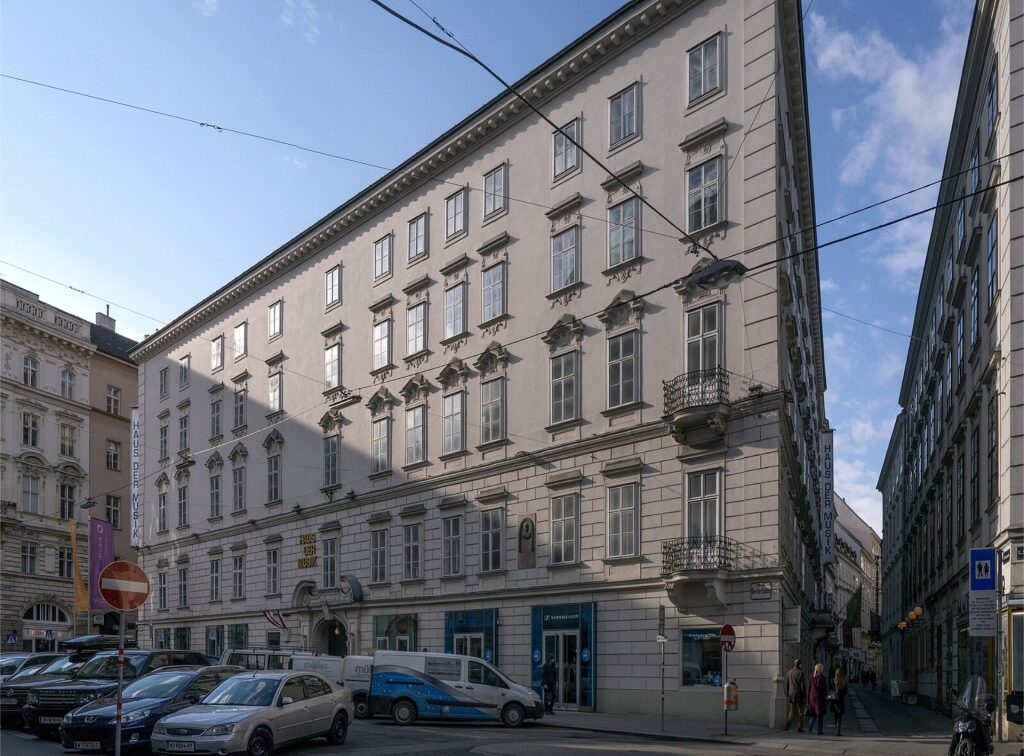
Haus der Musik Photo by Thomas Ledl on Wikimedia Commons, licensed under CC BY-SA 3.0
The Haus der Musik, or House of Music, offers an engaging experience of music and its history.
Waltz through this interactive sound museum to learn more about the art of making sound through engaging exhibits and interactive activities, including a sound staircase with musical stairs.
Vienna is known for its rich musical heritage, and here you can explore the lives of German and Austrian musical legends, including Mozart, Beethoven, and other great composers. The combination of historical documents and immersive displays reveals how these musical geniuses influenced Vienna’s cultural identity.
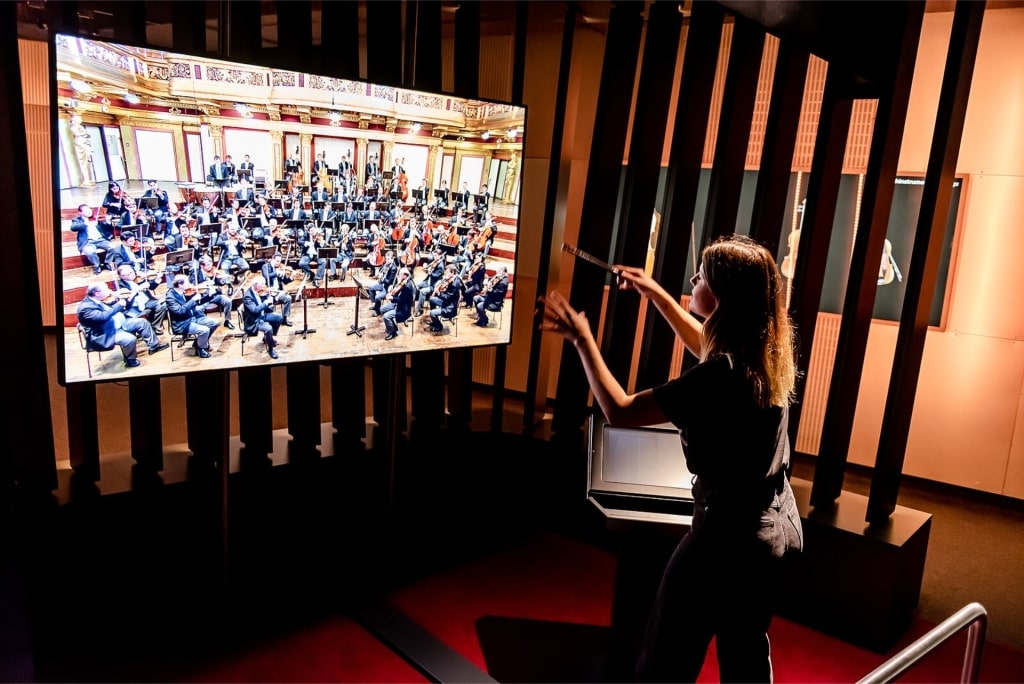
Haus der Musik Photo by Agathe Freischütz on Wikimedia Commons, licensed under CC BY-SA 4.0
One of the highlights of a visit here is a chance to “conduct” the Vienna Philharmonic Orchestra, virtually, of course. The orchestra in the video “reacts” to your conducting skills, speeding up, slowing down, and sometimes putting down their instruments in disgust. For this section alone, the Haus der Musik is one of the best museums in Vienna; it’s also great fun for families, with many of the exhibits aimed at younger visitors.
Leopold Museum
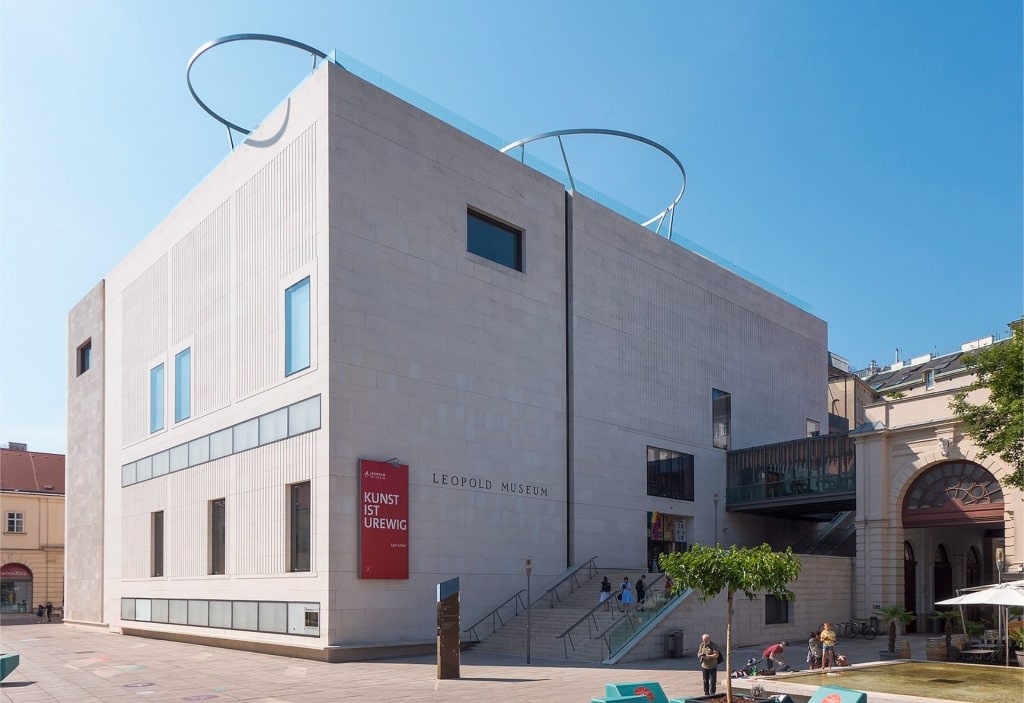
Leopold Museum Photo by Gugerell on Wikimedia Commons, licensed under CC0 1.0
The Leopold Museum, situated in Vienna’s MuseumsQuartier, is a must-visit if you appreciate bold yet straightforward lines and emotive expression with elements of modernism. The museum opened in 2001 to display Rudolf Leopold’s extensive private art collection, which he began to gather while still a medical student.
The building houses a comprehensive collection of works by the modern Austrian artist Egon Schiele, whose self-portraits and depictions of the human body reveal haunting themes and intense emotions that mesmerize viewers.
Leopold Museum’s cubic white structure presents a striking visual and somewhat contrasting backdrop to the vivid colors displayed inside. Masterpieces by Gustav Klimt and Oskar Kokoschka share space with Schiele’s work and other significant figures from the Viennese Secession movement.
Museum of Illusions
If you think your mind is playing tricks on you, you just might be roaming around Vienna’s Museum of Illusions, where reality bends and your perception shifts with every exhibit.
Upon entering this space, located in the city center, you will encounter optical illusions and interactive puzzles that challenge your day-to-day understanding of space and reality.
Experience your body shrinking to half its normal size inside the Ames Room, and then challenge your mental discipline while trying to keep your balance in the spinning Vortex Tunnel.
Despite its compact size compared to some of Vienna’s larger cultural institutions, the Museum of Illusions dishes out lots of interactive hands-on fun.
Vienna
Experience the city’s best museums on a river cruise to Vienna. Browse itineraries and plan your European adventure today.