
Valencia vs. Barcelona is not just a sports rivalry between these two neighboring Mediterranean port cities. They might share many similarities, but also have major differences.
While Barcelona is bigger and enjoys a higher profile, Valencia is more relaxed and livable. Barcelona’s strong Catalan culture and language are well known, but Valencia also promotes its own proud regional identity.
Here’s a guide to Valencia vs. Barcelona for visitors.
Weather
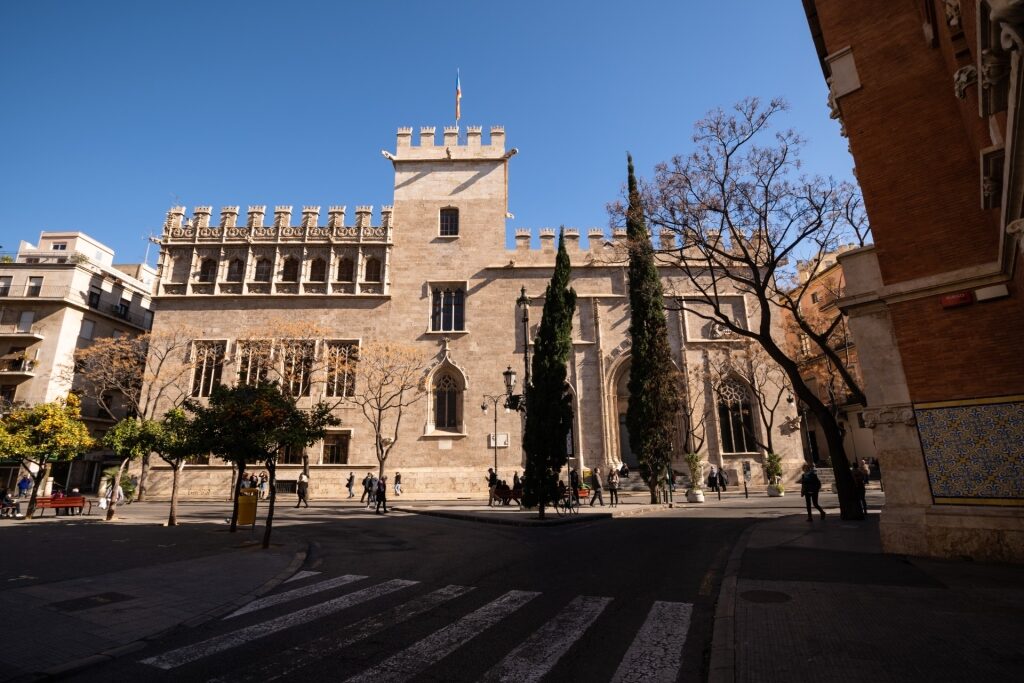
Old Town, Valencia
Valencia, being a little south of Barcelona, has slightly better, warmer weather. However, the difference is marginal, and both have a lovely Mediterranean climate.
The summer months, and in particular, August, can be uncomfortably hot for some visitors. The best time to visit is therefore May, June, or September.
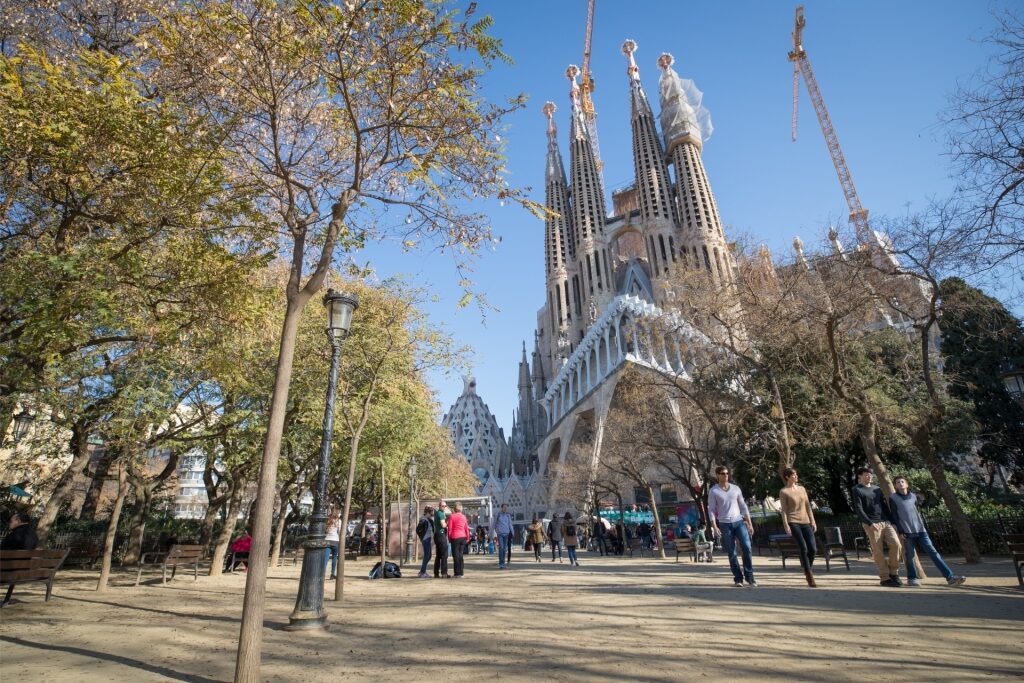
La Sagrada Familia, Barcelona
Spring and fall in Spain are sweet spots when temperatures are near-perfect and visitor numbers are lower than in summer. October, November, and December are the months that see the most rain, but that’s often just brief showers.
Either city is a popular winter destination for many Spaniards who live in the colder, wetter northern part of the country. Even in December through February, daytime temperatures on this Mediterranean coast still average 40-60°F.
Location
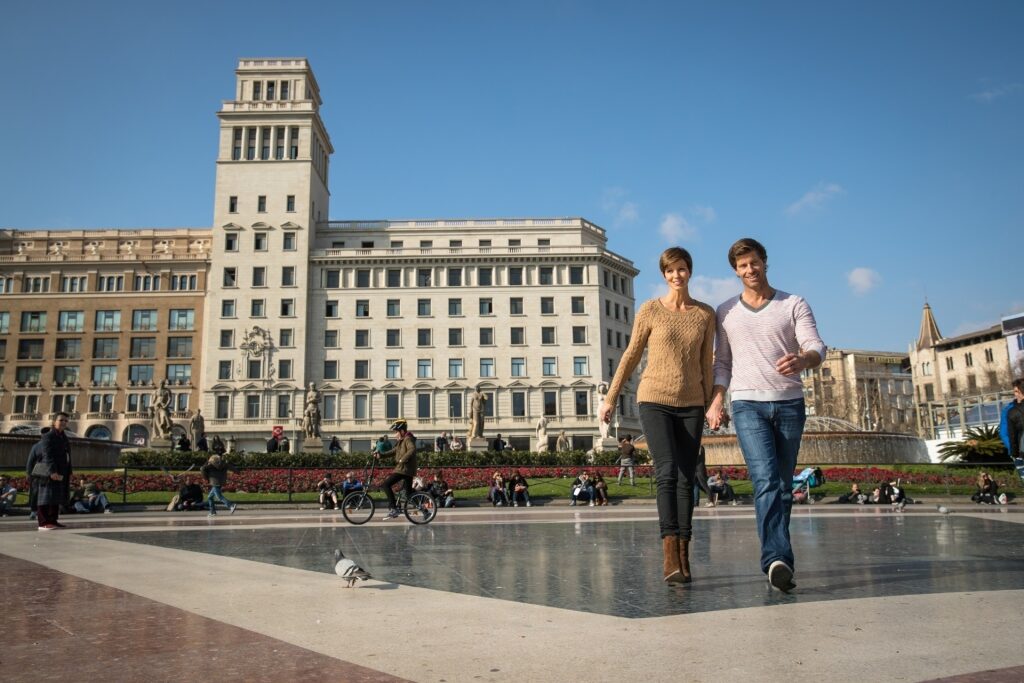
Plaça de Catalunya, Barcelona
Barcelona and Valencia sit 200 miles apart on Spain’s Mediterranean coast. As popular visitor destinations, they are well connected by air, rail, and sea.
Each city has its own metro system, vital in Barcelona, which is relatively spread out. Valencia is a more compact city, very walkable, and also great for cycling in the Turia Gardens.
History & Culture
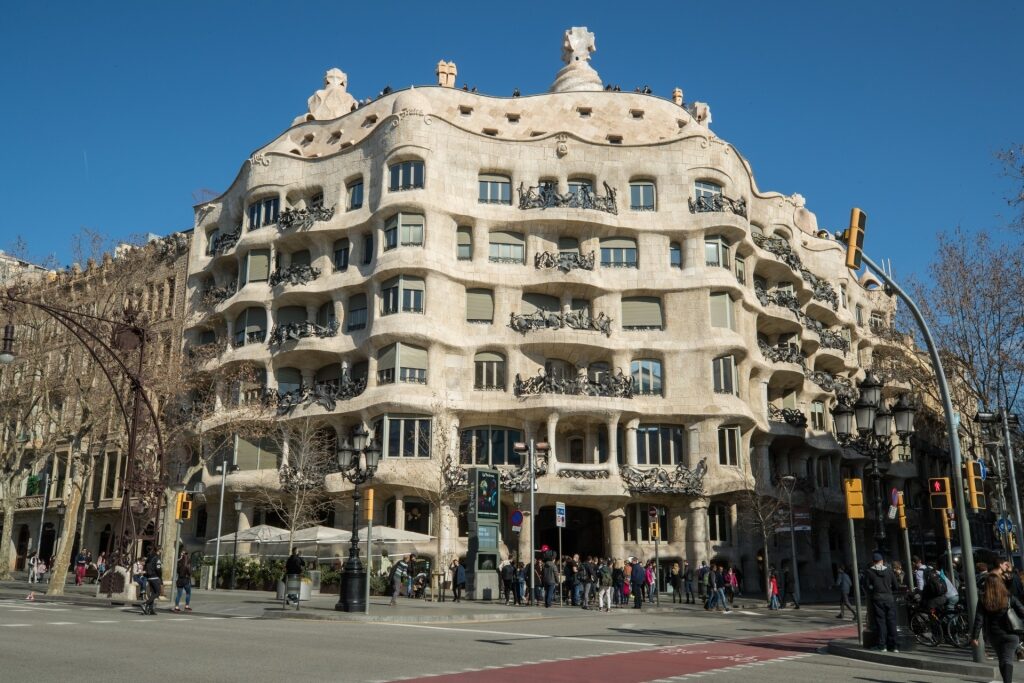
Casa Mila, Barcelona
Barcelona and Valencia were both founded by the Romans, each around a natural harbor backed by fertile agricultural areas. They later grew into major trading ports on the Mediterranean as part of the Kingdom of Aragon.
After Spain unified in 1492, and subsequently shifted its focus to the Americas, that Mediterranean trade mattered less. Barcelona bounced back by industrializing in the 19th century, an era that left its legacy of Modernista architecture—most notably with Gaudí.
While Valencia also industrialized, it did so more slowly and later, while staying true to its agricultural base. Like Barcelona, it supported the Republic during the Spanish Civil War and paid the price during the later rule of Franco.
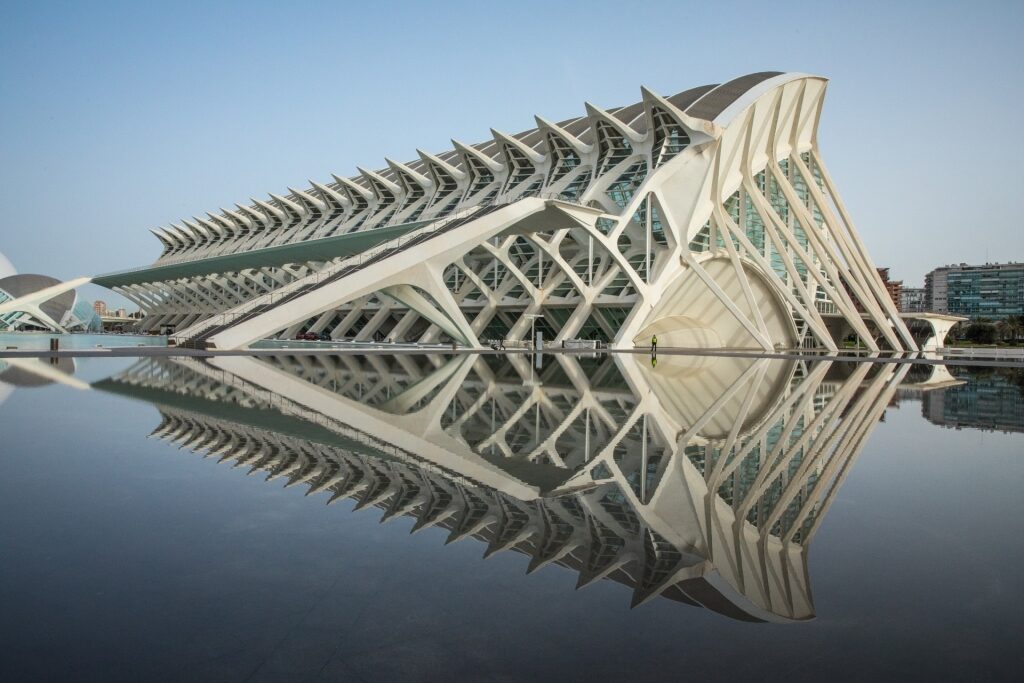
City of Arts and Sciences, Valencia
Post-Franco, both cities have thrived, with the no longer suppressed Catalan and Valencian languages and cultures blooming. Barcelona hosted the 1992 Olympics, while Valencia hosts the America’s Cup and has built striking new infrastructure such as the City of Arts and Sciences.
Barcelona vs. Valencia is a fascinating comparison. Both are very proud of their differences from the rest of the country. Barcelona is Spain’s second-largest city, politically assertive and often separatist-minded, while Valencia is quietly modest about being the third-largest.
However, a shared history means Barcelona’s Catalan language is not that different from Valencian. They are sibling dialects and mutually intelligible, with speakers understanding each other.
Beaches
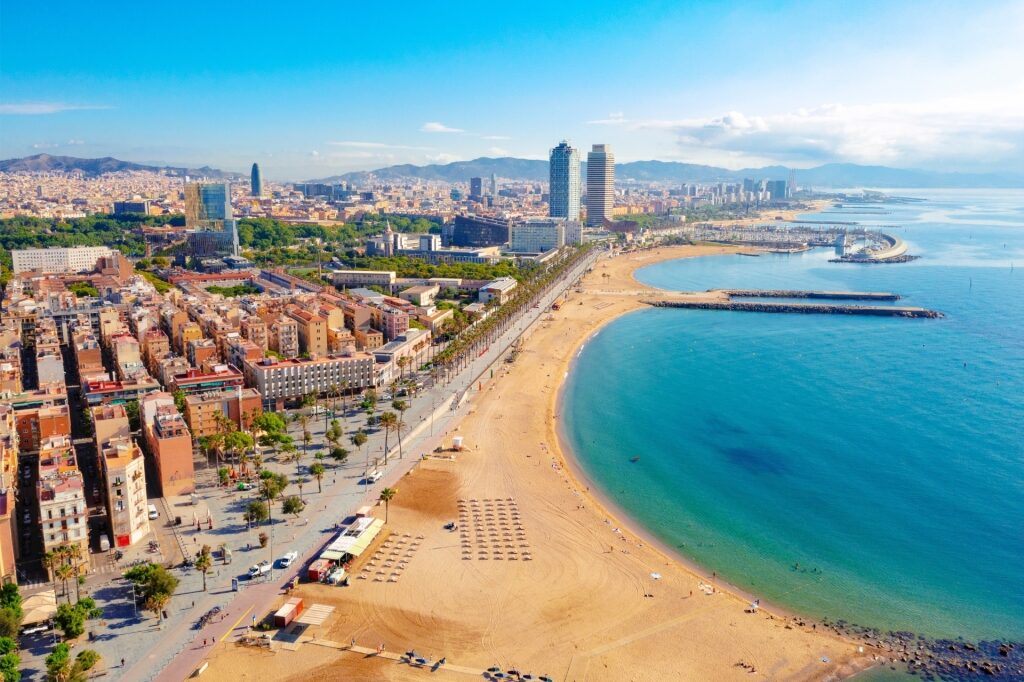
Barceloneta Beach, Barcelona
Barcelona is famous for its Barceloneta urban beach. Only a short distance from the city center, it’s a hive of activity on summer days and weekends.
Meanwhile, Las Arenas, Malvarrosa, and Patacona beaches in Valencia are farther out, but much larger than Barceloneta. Both those factors make them a much less crowded option.
Real beach-lovers will want to go even further afield and are spoiled for choice in both cities. Barcelona has the wild Costa Brava to its north, while Valencia lies within reach of beautiful towns, such as Canet d’en Berenguer.
Natural Wonders
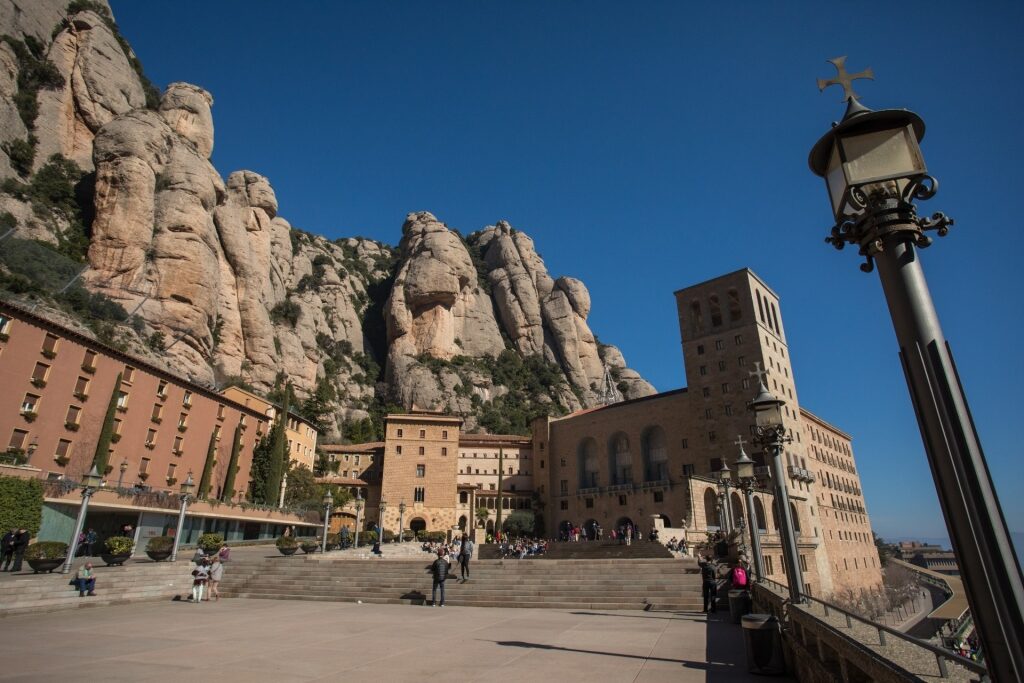
Montserrat
Barcelona’s closeness to the Pyrenees gives it the edge over Valencia in terms of natural wonders. The headline act is the spectacular Montserrat mountain range, beloved of hikers and sightseers.
Other attractions near Barcelona include the forested peaks of Montseny Natural Park. The extinct volcanic cones of Garrotxa are an unusual sight in Spain.
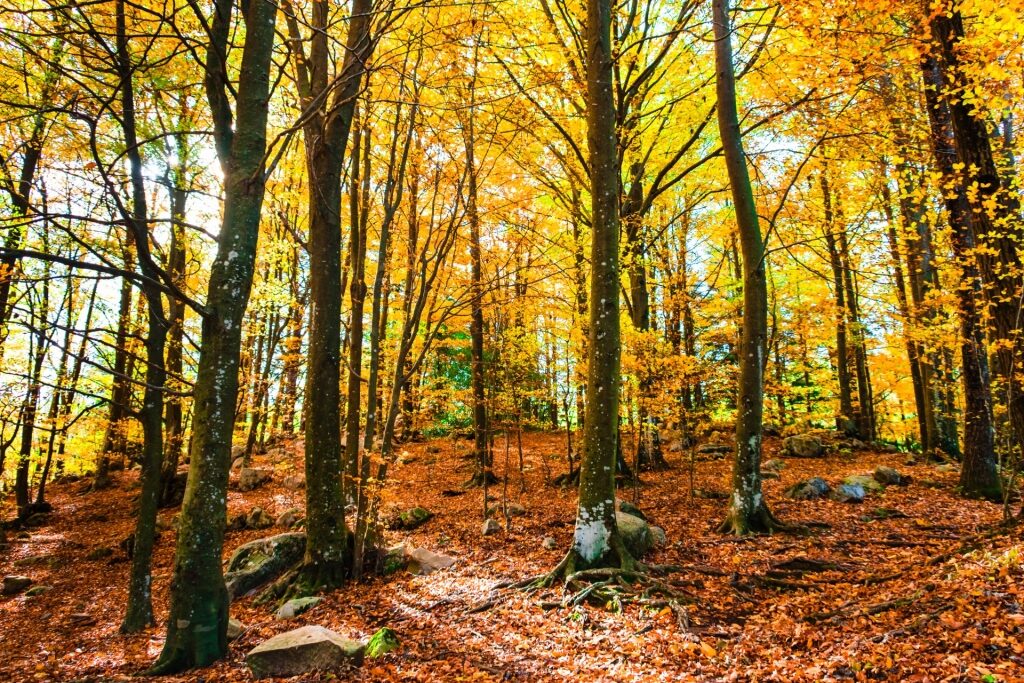
Montseny Natural Park
Valencia sits on a flat plain, so its natural wonders might seem less dramatic. However, if you love lagoons, rivers, and gentler walking, it has plenty to offer.
Key natural sights include the Albufera lagoon, famed as the home of paella rice. Take a boat ride through its rice paddies and wetlands to see plenty of bird life, including flamingoes that migrate from Africa.
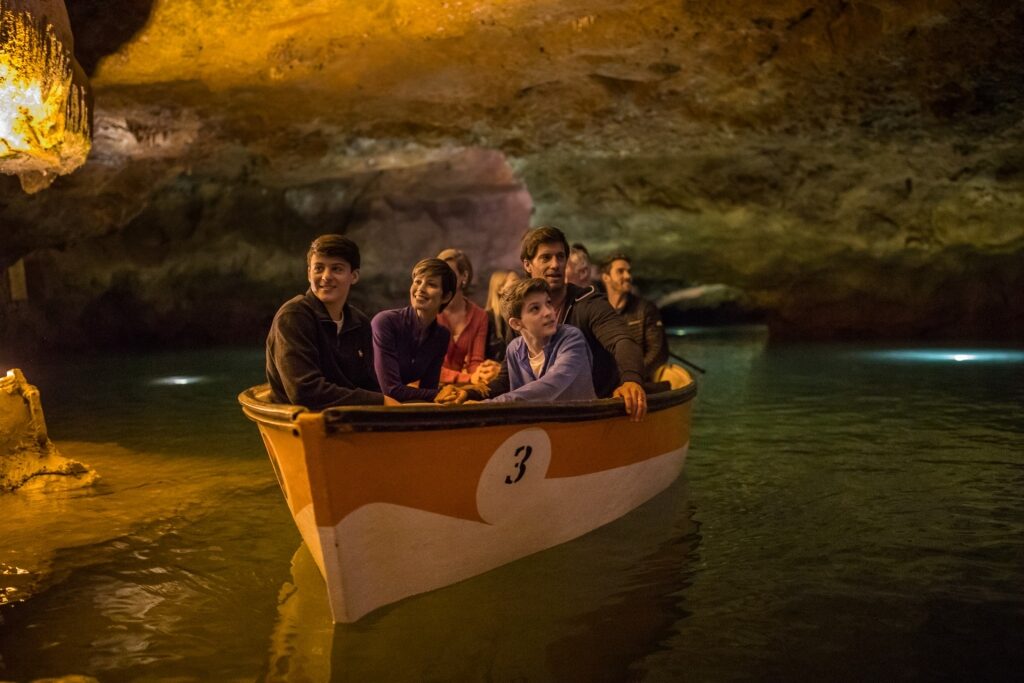
Caves of San José
At the Caves of San José, about an hour north of Valencia, you can take a boat along a subterranean river. Gliding deep underground for more than half a mile past stalactites, stalagmites, and large rock pools is a surreal experience.
Food
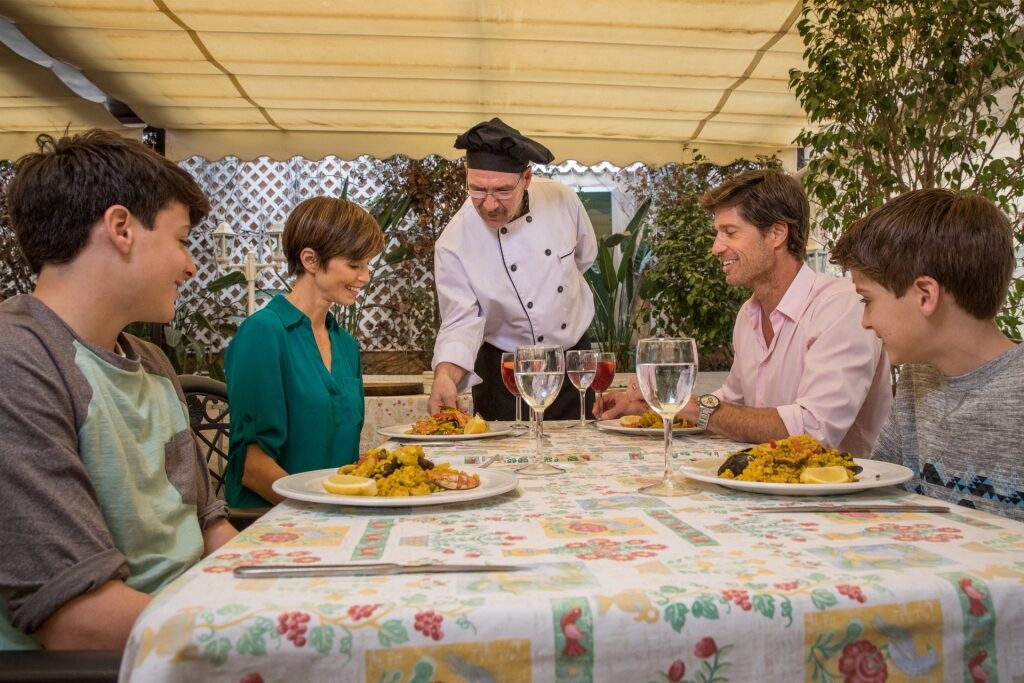
Restaurant in Valencia
When it comes to food, either Barcelona or Valencia will impress. Barcelona’s food scene brings a creative, modern twist to traditional Catalan dishes. You’ve heard of crema catalana—claimed as the original crème brûlée—but dishes such as escudella, botifarra, and calçots may be less familiar.
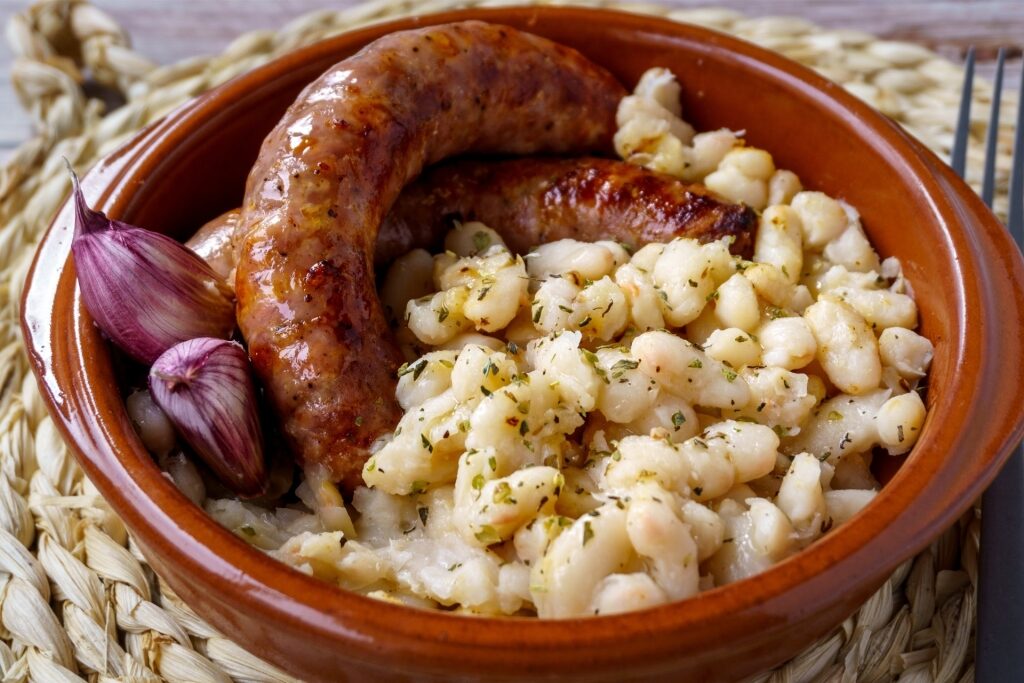
Botifarra
Escudella is a hearty meat stew, while botifarra is a spicy Catalan pork sausage. Calçots are a mild type of spring onion, eaten after charring on an open flame.
There’s also lots of fresh seafood on menus, often just grilled or served in Suquet de peix—a fish stew with potatoes. Salt cod also appears in Esqueixada, a summer salad with tomatoes, onions, peppers, and olives.
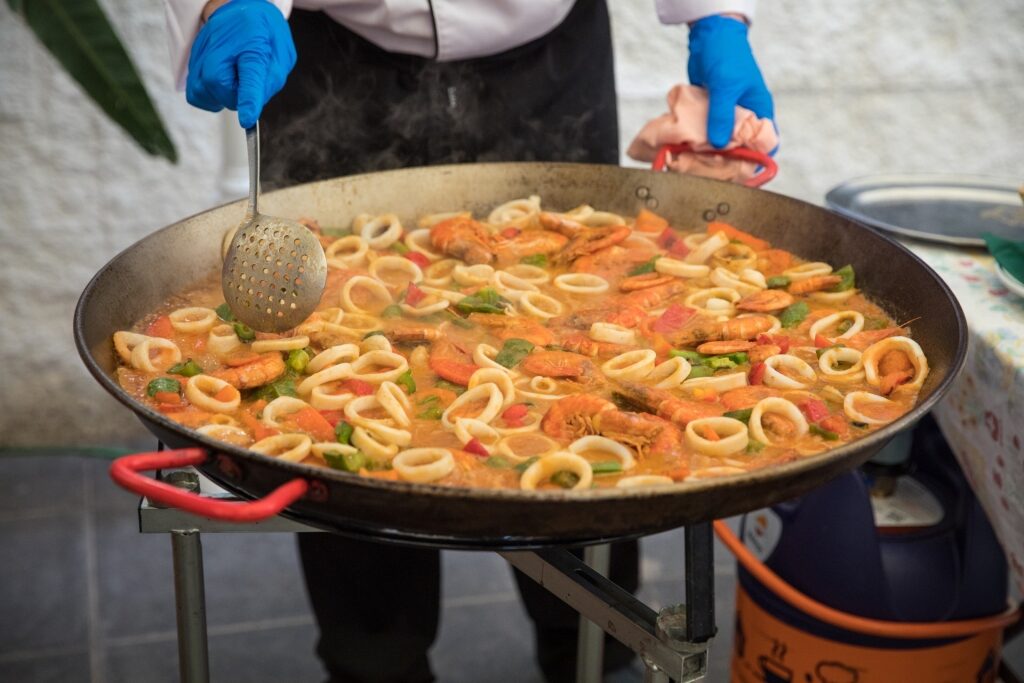
Paella
Valencia is the birthplace of paella, using rice from around the Albufera lagoon. Traditional paella is made with chicken or rabbit, green or white beans, saffron—and snails.
However, you’re more likely as a visitor to find menus offering paella with seafood. Fideuà, another popular dish in Valencia, is a variation made with short noodles instead of rice.
You’ll also see rice cooked in fish stock with the fish served afterwards. This is arroz a banda—with “a banda” meaning “on the side”.
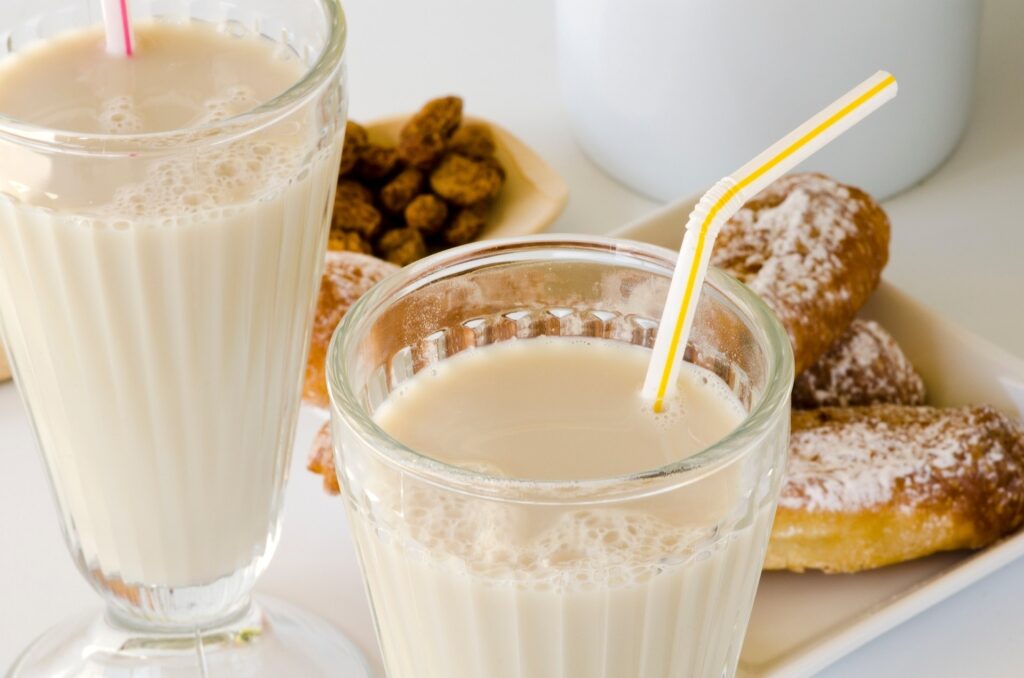
Horchata
A Valencian drink not to miss is Horchata: tigernut milk served ice-cold. Very different from the rice-based Mexican drink of the same name, the Valencian version is sweet, creamy, and popular with fartons—long glazed pastries you dip into it.
If you develop a taste for it, Els Sariers and Panach are two outstanding horchaterias among a cluster of such specialized cafés in the north of the city. The Alboraya district here is where the best tigernuts—actually small tubers—are grown.
Valencia is also famous for its oranges, with the flavor popping up often in desserts and sauces. Try some in Agua de Valencia, a popular cocktail of fresh orange juice, cava, gin, and vodka.
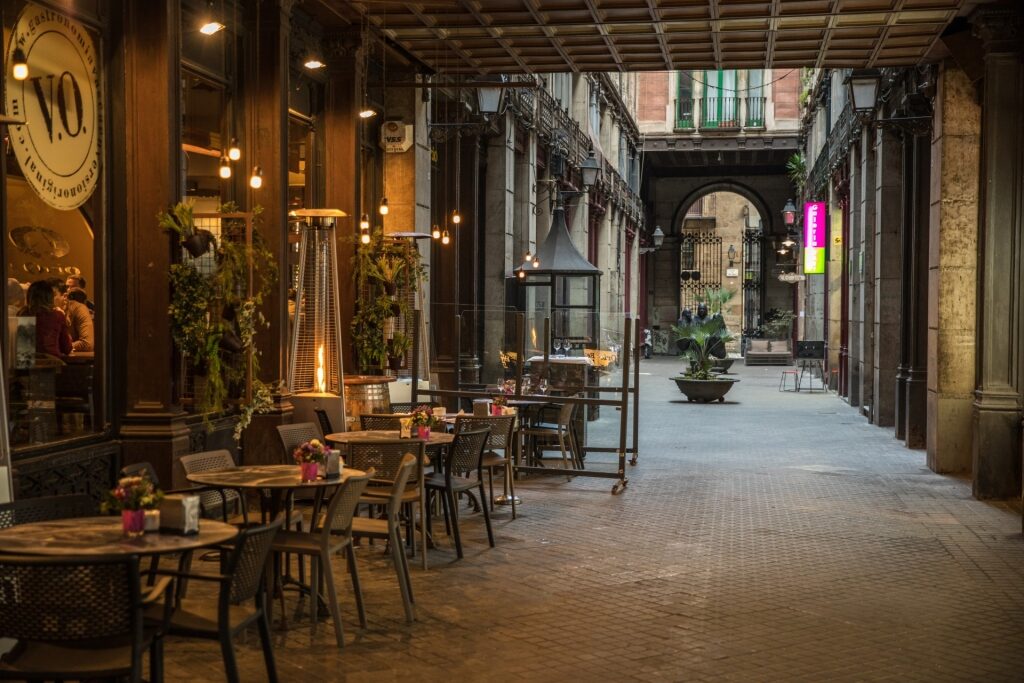
Gothic Quarter, Barcelona
In both Spanish cities, you’ll find everything from casual tapas bars to Michelin-recognized restaurants. Seasonal beachfront bars known as chiringuitos—“xiringuitos” in Catalan—are popular in summer for evening drinks while watching the sun set.
Major Sights & Attractions
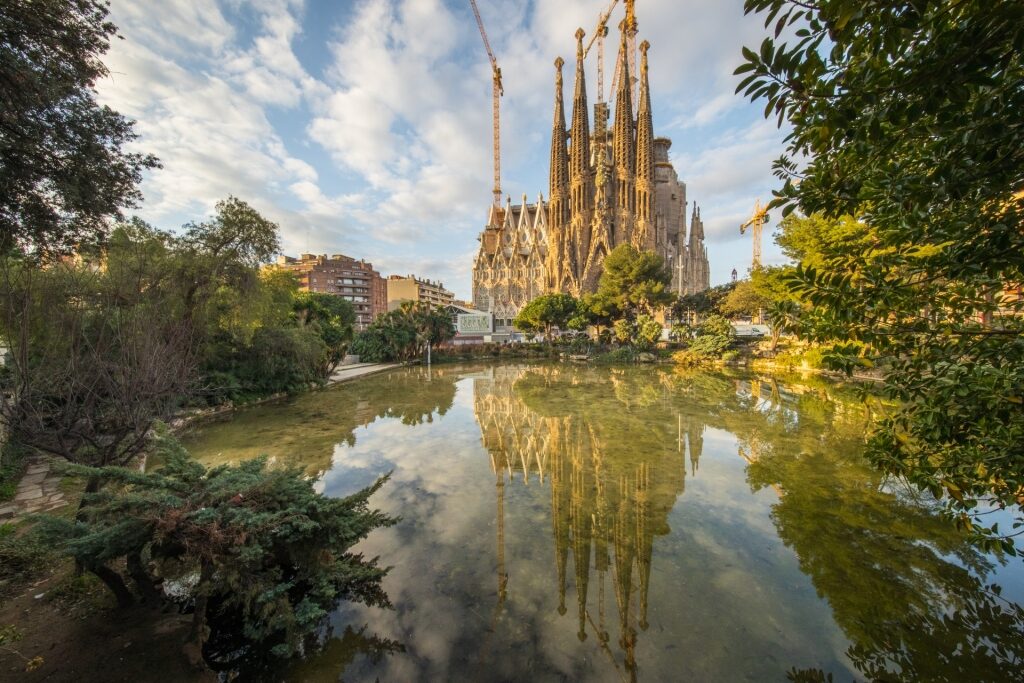
La Sagrada Familia, Barcelona
Barcelona is well known for the wild, exotic buildings of Antoni Gaudí. The dramatic La Sagrada Familia, curving Casa Batlló, and playful Park Güell are truly unusual sights.
The city’s Gothic Quarter is a labyrinth of narrow medieval streets. Stumble on hidden plazas and visit historic landmarks such as Barcelona Cathedral, its glories too often neglected in favor of La Sagrada Familia.
Boqueria Market, officially Mercat de Sant Josep, is a former 13th-century monastery. It’s a colorful sight with the mounds of fruit and vegetables, and many tapas stalls.
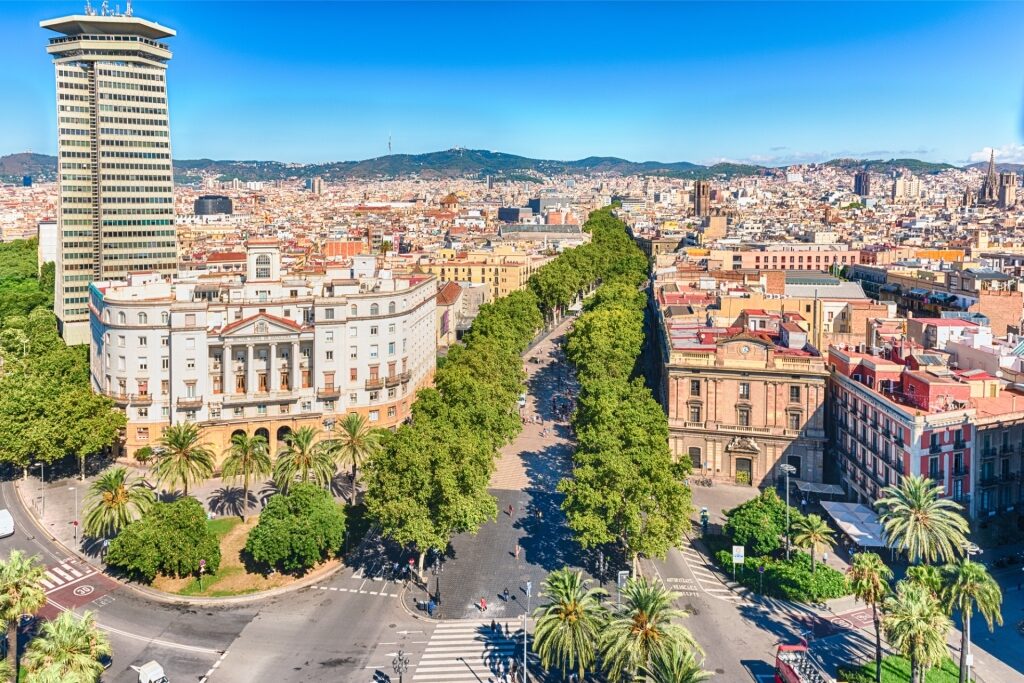
La Rambla, Barcelona
You’ll find it on La Rambla, a long pedestrian street on the edge of Barri Gòtic. Actually a series of shorter streets, it’s also called Las Ramblas because of that.
An unmissable stop for art-lovers is Museu Picasso, which holds thousands of the artist’s works. Although he was born in Málaga in 1881, Pablo Picasso moved to Barcelona at the age of 14, and spent most of his youth there.
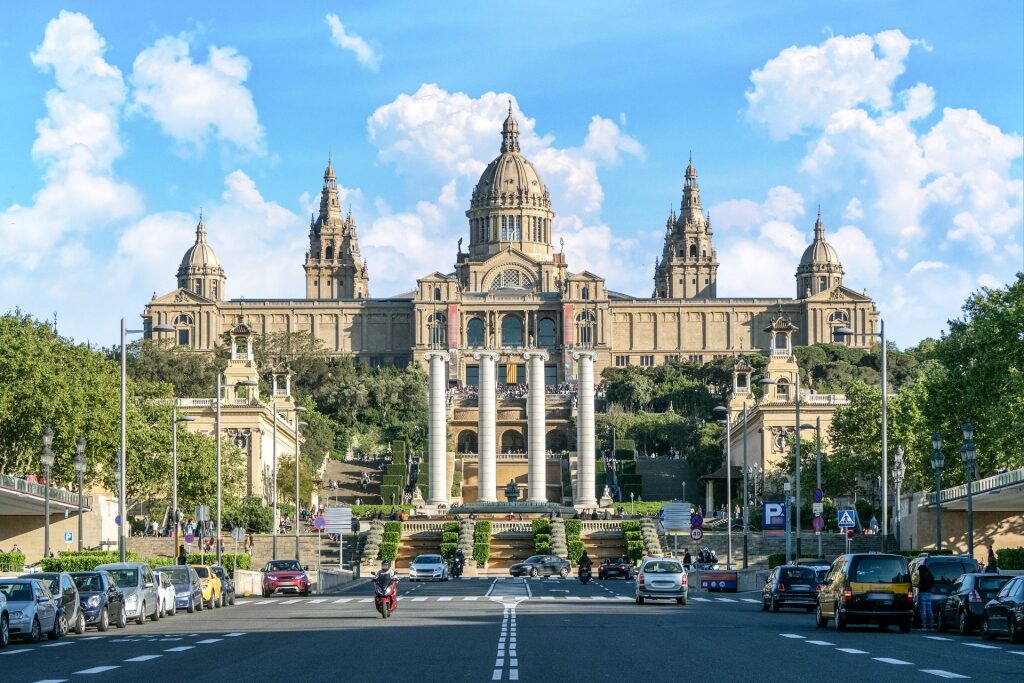
Museu Nacional d’Art de Catalunya, Barcelona
Picasso overshadows other local artists, but you can balance that with a visit to the Museu Nacional d’Art de Catalunya—MNAC. You’ll find wonderful works by names such as El Greco, Velázquez, and Dali, and some amazing Romanesque frescoes.
Antoni Tàpies and Joan Miró are two notable Catalan artists whose work you have to see. The Fundació Joan Miró stands on Montjuïc hill, while the beautiful Museu Tàpies is in the central Eixample district.
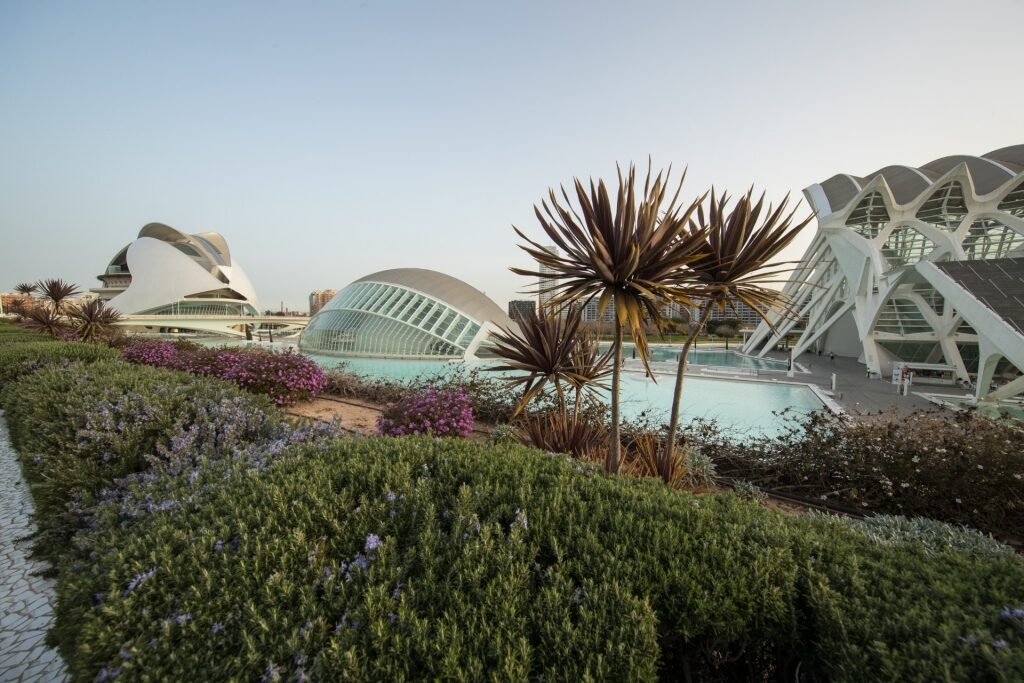
City of Arts and Sciences, Valencia
Valencia can feel like a smaller, more laid-back version of Barcelona. Its major architectural sight is the futuristic City of Arts and Sciences, built in the late 1990s and early 2000s.
Like Barcelona’s La Sagrada Familia, the project has helped the city throw off its dated image and look to the future. Highlights include the interactive Science Museum and L’Hemisfèric, combining an IMAX movie theater and a planetarium.
Other museums include the Institut Valencià d’Art Modern—IVAM—which focuses on 20th-century avant-garde and contemporary art. The Museu de Belles Arts holds works by artists such as Velázquez, Goya, El Greco, and major Valencian painters.
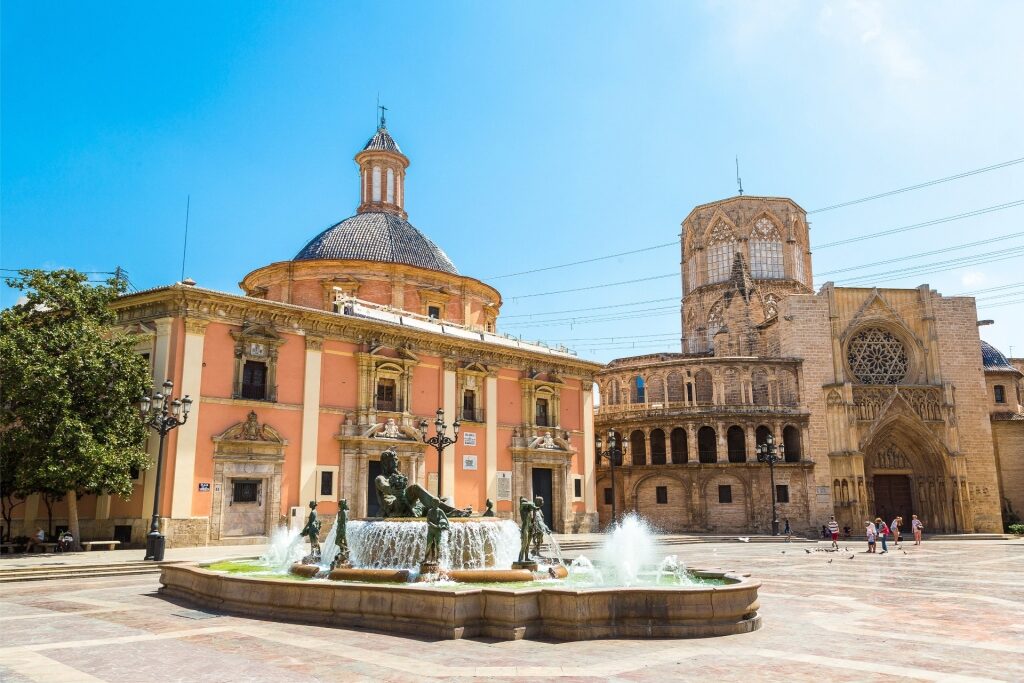
Old Town, Valencia
Valencia’s Old Town, the Ciutat Vella, features winding streets, plazas, and cafés. Highlights are the Gothic-style Silk Exchange, now UNESCO-listed, and St. Mary’s Cathedral, which claims to hold the Holy Chalice, or Grail, used at the Last Supper.
The Torres de Serranos is one of the old city gates, an impressive remnant of Valencia’s medieval walls. Built in 1392, these gates offer good views over the old city from their tops.
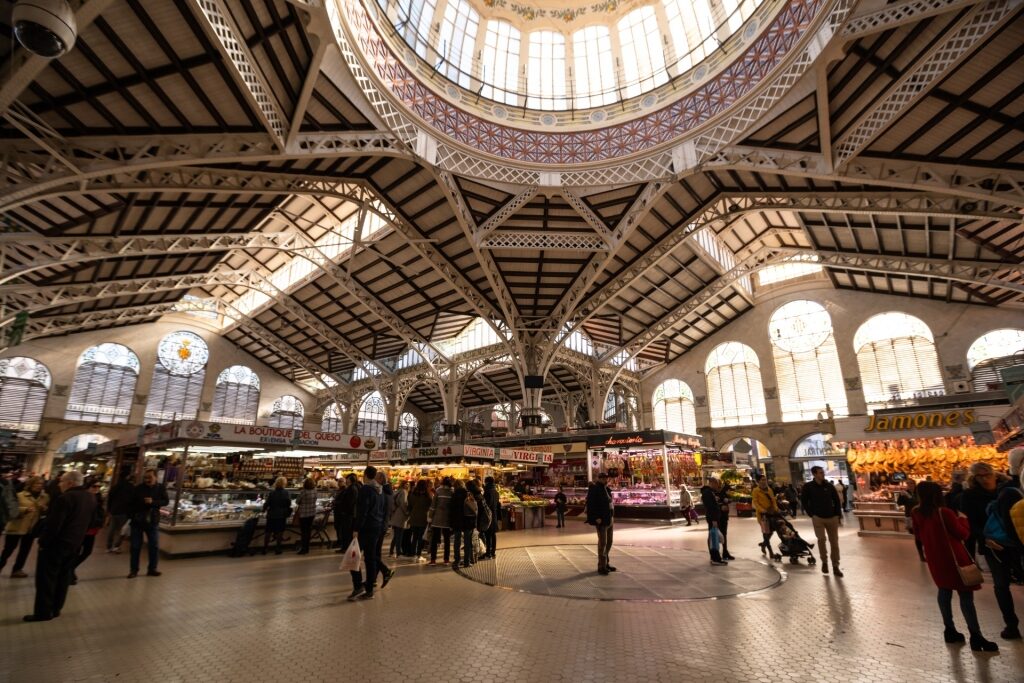
Central Market, Valencia
Valencia’s Central Market is one of Europe’s most beautiful, with a lattice of Art Nouveau ironwork. The massive Turia Garden is a five-mile-long urban park following an old riverbed across the city.
The many tiles decorating walls around the city might inspire you to visit the National Ceramics Museum, housed in the spectacular Marqués de Dos Aguas palace. Valencia has a long history of colorful tilework, and you can see that brought to life here.
FAQs
Is Barcelona or Valencia better to visit?
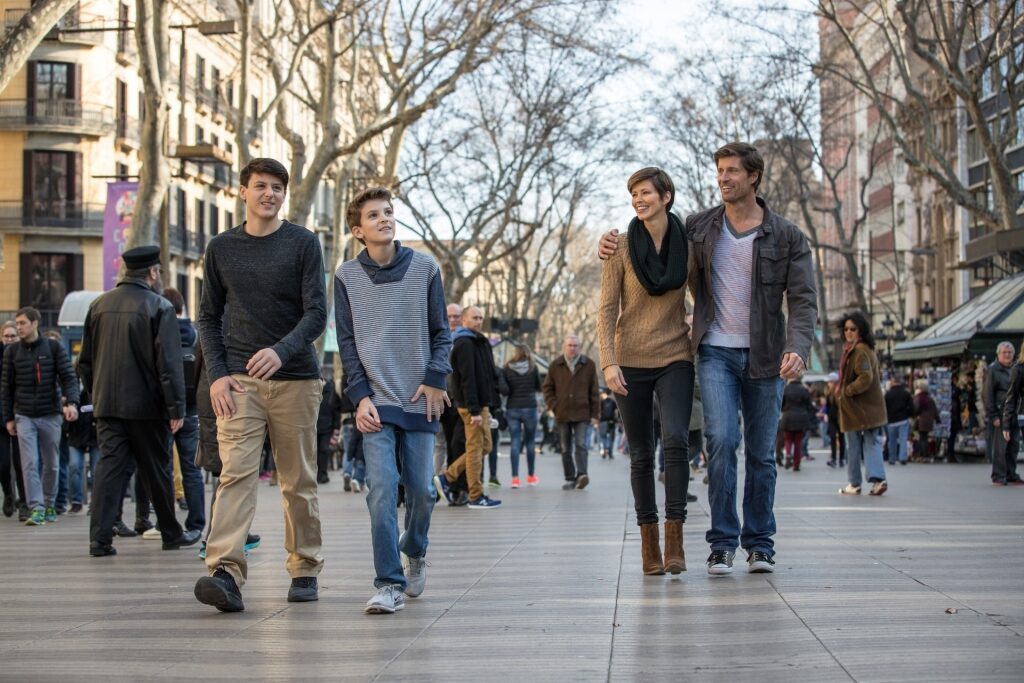
Passeig de Gracia, Barcelona
Barcelona is well known for its striking architecture, energy, and Catalan culture. Nearby attractions such as Montserrat, the Costa Brava, and the Pyrenees add to its appeal.
Valencia has a more relaxed, less crowded vibe, which also improves its food scene. However, its own major sights and attractions mean it is rapidly growing in popularity to match its northern neighbor.
Which has better beaches, Valencia or Barcelona?
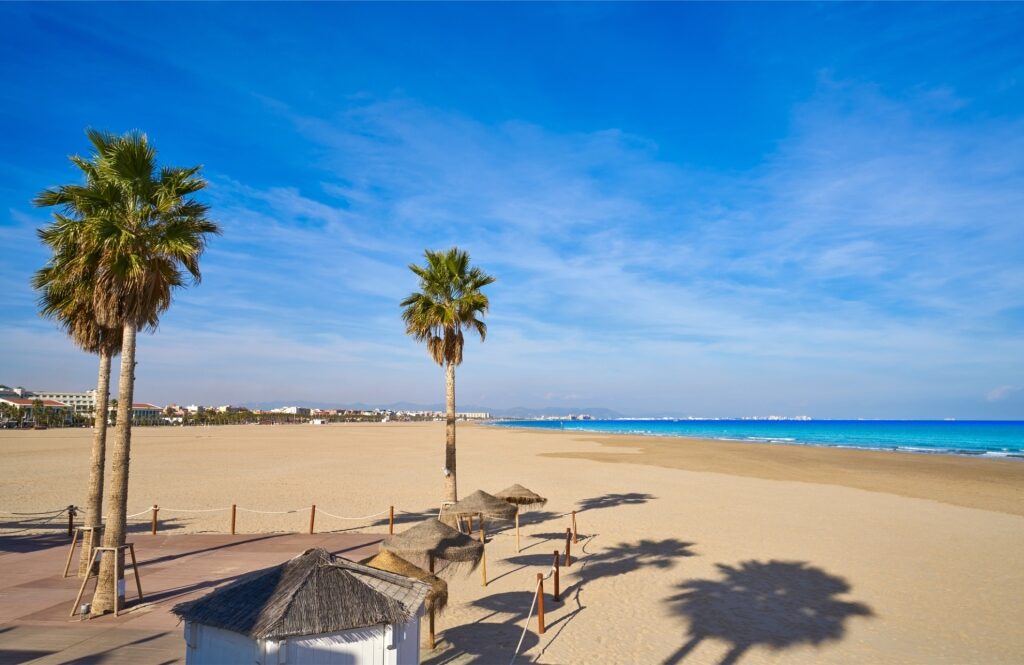
Playa de la Malvarrosa, Valencia
Valencia arguably has better beaches than the Barcelona region. You’ll find long stretches of golden sand, with fewer visitors and warmer water. However, the central location of Barcelona’s artificial beaches—created for the 1992 Olympics—makes them more popular, albeit often crowded.
Which city is safer, Barcelona or Valencia?
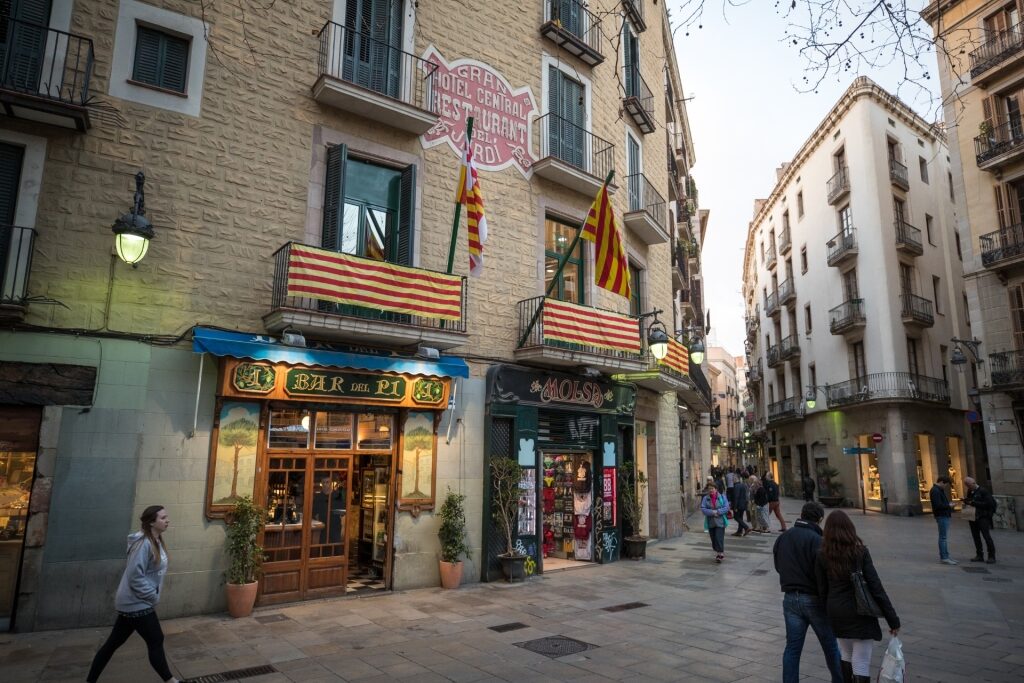
Gothic Quarter, Barcelona
Like many big cities, Barcelona has developed a reputation for street crime, including pickpocketing and petty theft. In busy areas such as Las Ramblas and the Gothic Quarter, guard your valuables wisely and use a crossbody bag. With fewer visitors, Valencia has less crime, but it’s always good to be street-wise.
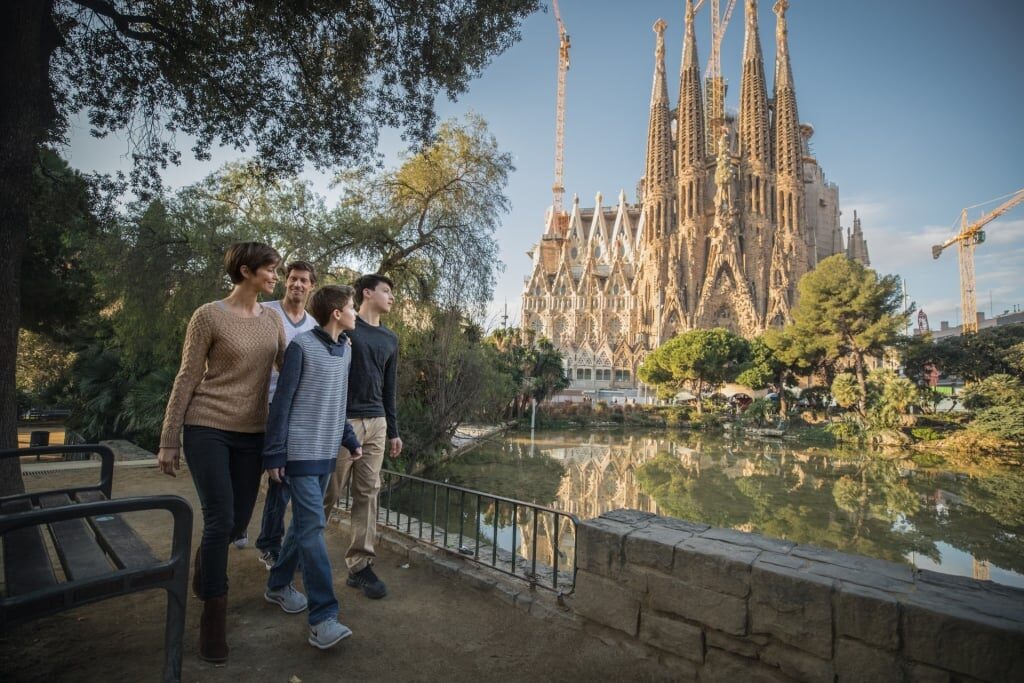
La Sagrada Familia, Barcelona
Has this comparison of Valencia vs. Barcelona helped you decide which to visit, or perhaps encouraged you to see both? Then browse Celebrity’s cruises to Spain to find the perfect itinerary.