Lepenski Vir is one of Europe’s earliest known planned settlements, dating back to about 9,500–6,000 B.C. This prehistoric site sits on the Danube River in eastern Serbia, where hunters and gatherers built trapezoidal houses and carved distinctive sculptures with human faces and fish-like features. The Danube’s fish-rich waters sustained the community, although the sculptures’ inspiration remains open to interpretation. In the 1960s, excavations of this site transformed archaeologists’ understanding of early settled life.
The archaeological remains were relocated to higher ground in the early 1970s ahead of the construction of the Iron Gates dam. Lepenski Vir sits in the Đerdap Gorge, also known as the Iron Gates Gorge, where a museum protects the remains of the prehistoric settlement.
It is a short drive from Donji Milanovac, where Celebrity River Cruises℠ docks. While it isn’t walkable from the port, it’s close enough to visit on a port day. For Celebrity River Cruises guests, a visit offers a closer look at the transition from the Mesolithic to the Neolithic period.
One of Europe’s Oldest Archaeological Sites: A Recent Discovery
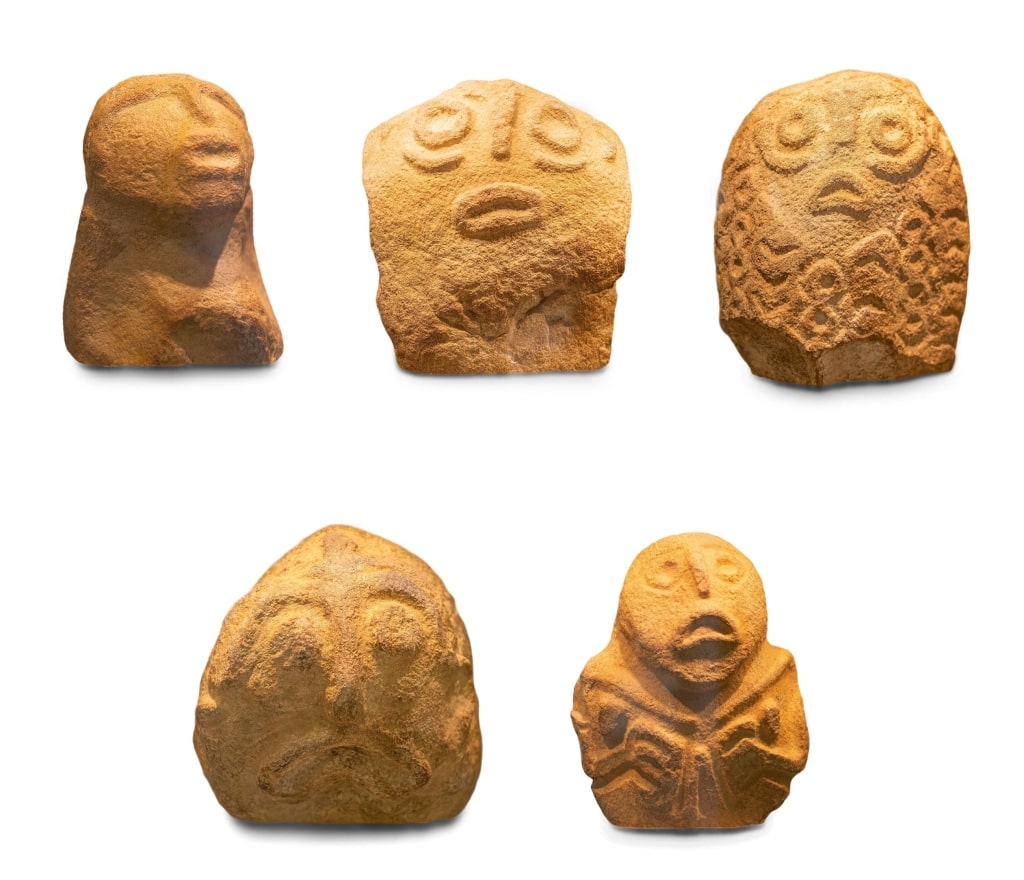
Carved stone boulders with distinct fish-like human features showcase the enigmatic Mesolithic art of the ancient Lepenski Vir culture in Serbia.
For a site that’s thousands of years old, Lepenski Vir was only discovered decades ago. A local farmer stumbled on it in 1960, and archaeologist Dragoslav Srejović’s team dug from 1965 to 1971, putting it on the map internationally. They uncovered seven successive settlements with roughly 140 buildings, most of them homes.
That work revealed one of the earliest examples of the Mesolithic-to-Neolithic transition from nomadic living to settled village life. The Mesolithic, or Middle Stone Age, was characterized by hunting, fishing, and gathering. The Neolithic, or New Stone Age, saw farming spread and settled communities develop in many regions. Lepenski Vir captures a community in the middle of that shift.
In the early 1970s, the site was relocated to higher ground so rising water behind the Iron Gates dam wouldn’t flood it. Now, it looks like an expansive stretch of earth where low stones trace the outlines of trapezoidal house foundations, with a large overhang protecting the space. There’s a room with a short documentary explaining what you see, and the museum displays reconstructed Lepenian burials.
Here’s a quick look at its history:
- c. 9,500–7,200 BCE: The first settlement formed with hunting and fishing camps along the Danube.
- c. 6,300–5,500 BCE: The village reached its peak with trapezoidal houses.
- 1960: The site was discovered.
- 1965: Archaeologists began digging and saw what else they could find.
- 1967: The first half-human, half-fish sculptures were discovered.
- 1968: Burials were discovered.
- 1971: The site moved to higher ground ahead of the Iron Gates dam.
- Today: It is a museum within Đerdap National Park.
A Village Unlike Anything Else From Its Time
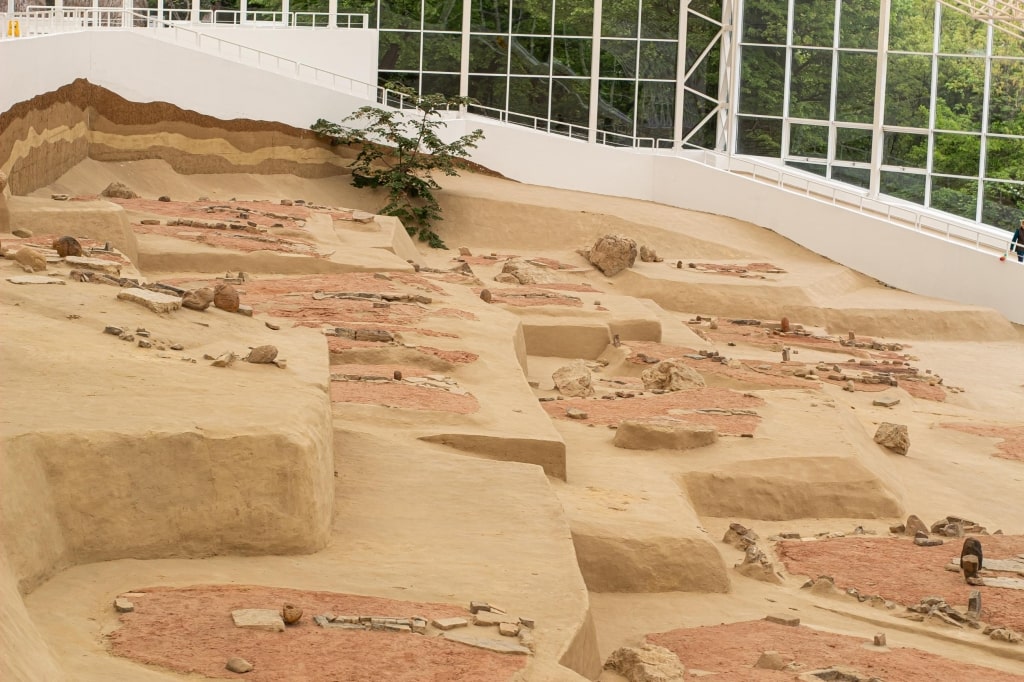
Preserved under a protective canopy, the trapezoidal foundations and central hearths of 8,000-year-old dwellings reveal the ancient settlement layout at Lepenski Vir, Serbia.
Lepenski Vir followed a plan. The people who settled here carefully constructed trapezoidal homes facing the Danube River rather than facing each other. Their horseshoe-shaped layout formed an open central space, which was a smart fit for a community that lived off the river’s aquatic life. The homes were wide at the front and narrow toward the back—visitors can still see the stone outlines at the site. Floors were made of lime plaster, a hardened mix of burned limestone and sand.
Each home was a single room, often with a stone table and a hearth, and some had a small shrine to ancestors. Archaeologists also found burials beneath the buildings, which suggests families kept their dead close. Some remains were placed toward the Danube, proving that the river played an important role for the Lepenians, even after death.
The most peculiar part of the village is the sculptures. Carved from river boulders, they show human faces with fish-like mouths, and archaeologists found them inside the homes near the red-stone hearths. Sites like this one are what you can expect on a river cruise, a sailing that gets you as close as possible along the Danube to see how the Lepenian people lived.
Why Lepenski Vir Matters to Humanity Today
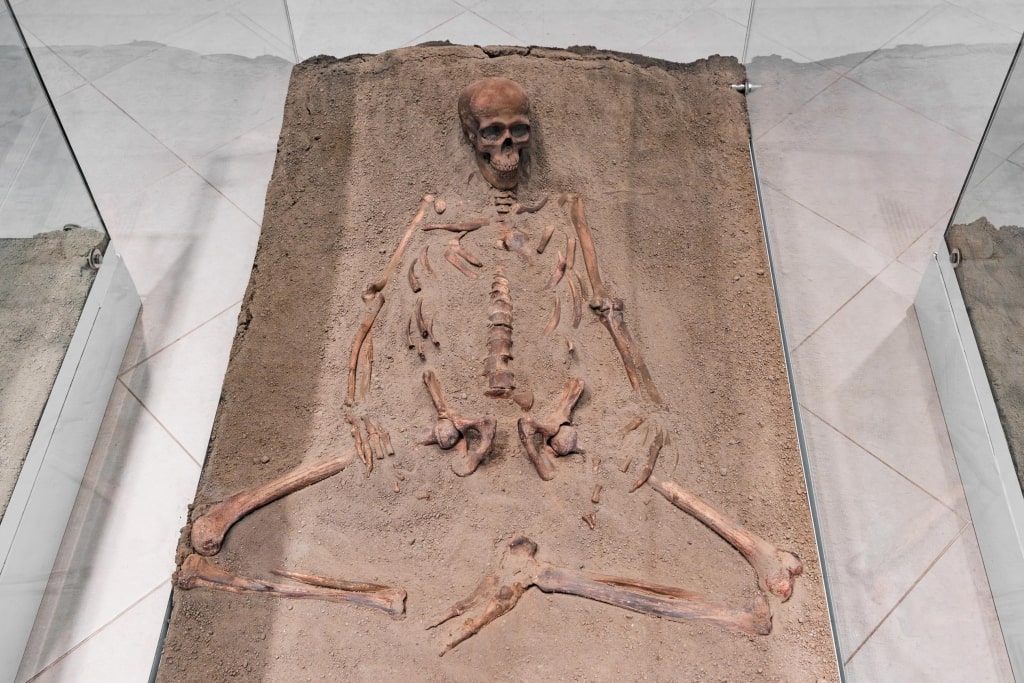
A prehistoric skeleton rests in a distinctive seated burial pose within its earthen grave bed at the Lepenski Vir archaeological site in Serbia’s Iron Gate region.
This prehistoric village changes how we understand early human society. It shows that planned, permanent settlements and carved art existed in Europe thousands of years ago and not just among farmers, but also among fishermen.
It’s a lesser-known chapter of the past—one most travelers would associate with Greece and Egypt when they picture early civilization. Beyond the Acropolis and the pyramids, far fewer know that one of Europe’s most remarkable early communities sat on the Danube in Serbia with half-human, half-fish sculptures instead. You don’t need to be a history buff to appreciate standing where people built homes and a way of life more than 7,500 years ago. It’s one more reason a river cruise to Europe can go deeper than the usual landmarks.
The Lepenski Vir Museum Experience
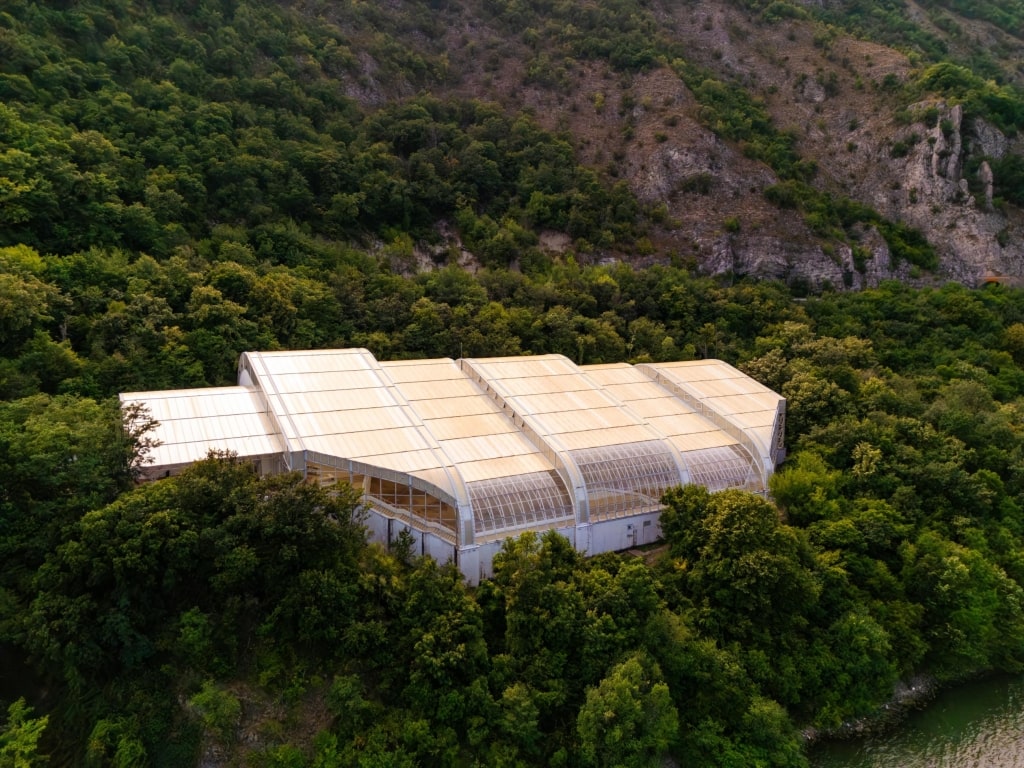
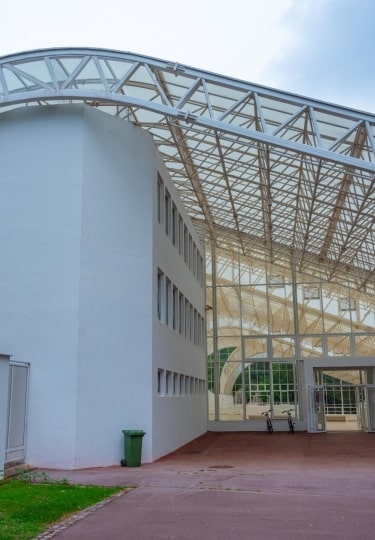
Tucked into the lush green slopes of the Iron Gates Gorge, the modern glass canopy of the Lepenski Vir visitor center protects prehistoric ruins along the Danube River in Serbia.
After disembarking from a Donji Milanovac river cruise, guests will need to travel along the riverbank toward the Lepenski Vir Mmuseum. It’s a short drive from the cruise port, making it an easy half-day trip. Its proximity to the cruise port is part of what makes it one of the most unique places to visit on the Danube.
Once there, you’ll head down through forested hills and pass traditional Serbian farmhouses until you find the settlement facing incredible mountainscapes and the Danube. Inside the museum, visitors can view the relocated archaeological remains beneath a protective roof, alongside exhibits explaining the settlement’s history. Look out behind the homes and get a glimpse of what the Lepenian community woke up to every day. Then, watch a short film that describes the settlement’s history, leading to the artifacts exhibit.
Look for Foremother, a red sandstone figure found intact inside one of the houses, and Progenitor, a carved head with deep lines under its eyes. Some researchers think the figures may represent a river deity. A deer-in-forest carving suggests the community ate more than fish. A small shop sells replicas of the sculptures if you want a souvenir.
Frequently Asked Questions
What is Lepenski Vir?
Lepenski Vir is one of Europe’s earliest known planned settlements. Hunters and fishermen lived here in planned villages of trapezoidal houses, and they carved the half-human, half-fish sculptures the site is known for.
Archaeologist Dragoslav Srejović led the excavations in the 1960s, which brought the site international attention. The archaeological site is on the Danube River in eastern Serbia, near Donji Milanovac. It is within Đerdap National Park, in the Iron Gates Gorge.
Why is Lepenski Vir significant?
Lepenski Vir shows how people in Europe moved from nomadic hunting and fishing toward settled village life. Its planned layout and carved art appeared thousands of years before ancient Greece or the pyramids, which challenged the idea that organized communities only came with farming.
It’s also one of the best places to see what the Mesolithic-to-Neolithic transition looked like on the ground.
How old is the Lepenski Vir archaeological site?
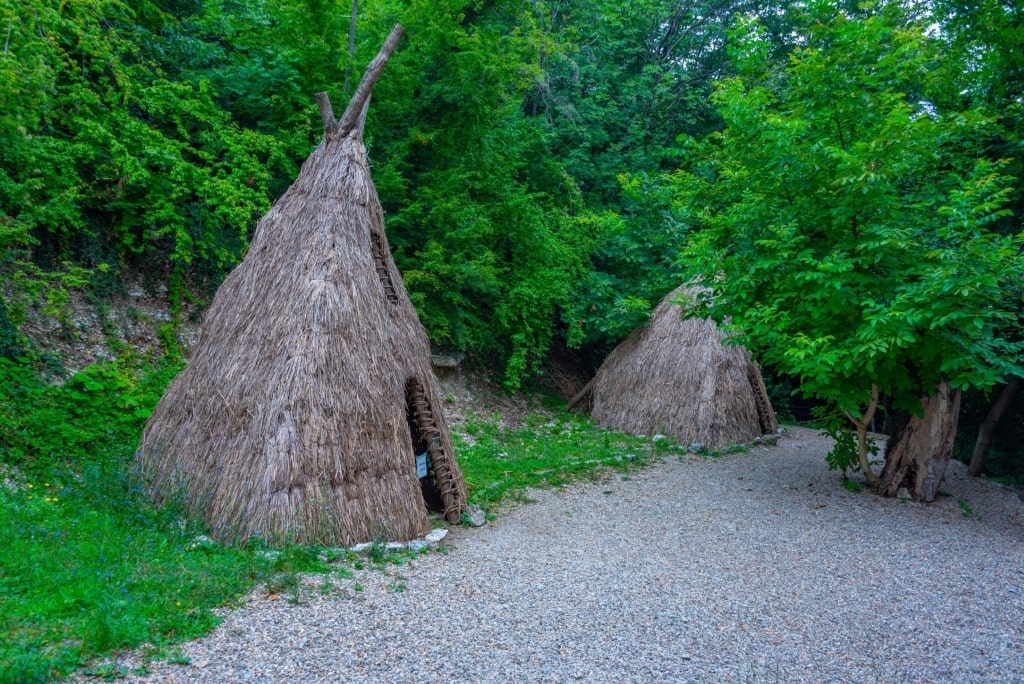
Thatch-covered reconstructed huts demonstrate the tent-like Mesolithic dwelling designs once used by prehistoric inhabitants at Lepenski Vir, Serbia.
The Lepenski Vir archaeological site dates to roughly 9,500-5,500 B.C., which is about 8,000 to 11,500 years ago.
What can visitors see at Lepenski Vir today?
Today, visitors can see the relocated remains of the settlement, replicas of its monumental stone sculptures, reconstructed burial practices, and museum exhibits featuring archaeological finds. A short documentary covers the excavation, and windows look out toward the Danube.
Can you visit the Lepenski Vir Museum today?
Yes, you can visit the Lepenski Vir Museum. It’s a short drive from the river cruise port. Check available excursions during pre-cruise planning, and confirm the museum’s hours and admission price.
How does Lepenski Vir connect to Donji Milanovac and Danube travel?
Lepenski Vir sits on the Danube, a short drive from Donji Milanovac, where Celebrity’s river cruises dock. Travelers extending their trip can also reach it from Belgrade, about two to three hours away.
Arriving in Donji Milanovac on a Danube River Cruise
On a Celebrity River Cruises℠ itinerary in Serbia, you can see the river the way the Lepenian people did. From the ship, you sail the waters that provided their food, and from the shore, you get a sense of how they lived their daily lives. An 8,000-year-old village comes to life about a 15-minute drive from Donji Milanovac.
The small Serbian town is your gateway to the site that tells the story of the Mesolithic-to-Neolithic transition, where archaeologists uncovered trapezoidal homes, carved half-human, half-fish sculptures, and burials. Along the way, the Danube winds past forested hills, which makes the setting as striking as the discovery itself.
Lepenski Vir offers a glimpse into the lives of early communities along the Danube. From the preserved house foundations to replicas of the monumental stone sculptures, the museum helps visitors understand the settlement’s place in European prehistory. For guests visiting Donji Milanovac, it adds an archaeological perspective to a day exploring eastern Serbia and the Iron Gates Gorge. The visit leaves time to walk the museum’s exhibits, see the original sculptures, and watch the short documentary, then explore Donji Milanovac before returning to the ship.
Explore Danube River cruises to Donji Milanovac, Serbia, with Celebrity River Cruises for an experience that will shift your perspective on humanity’s resilience.