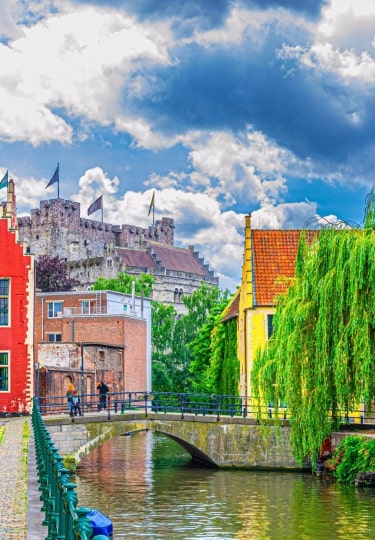
Gravensteen Castle, also known as the Castle of the Counts, is one of Ghent’s most iconic attractions. This rare, well-preserved 12th-century fortress is located smack in the middle of the Belgian city, and is the only remaining medieval castle in Flanders with a moat and largely intact defensive system.
Its preserved defensive character, multi-layered historical significance, and enviably central location all make it a must-see when visiting Ghent and experiencing a Belgium river cruise itinerary with Celebrity. Gravensteen Castle is more than an ancient stone fortress—it’s a testament to the rich history and political, cultural, and economic evolution of Belgium as a whole.
The History of Gravensteen Castle
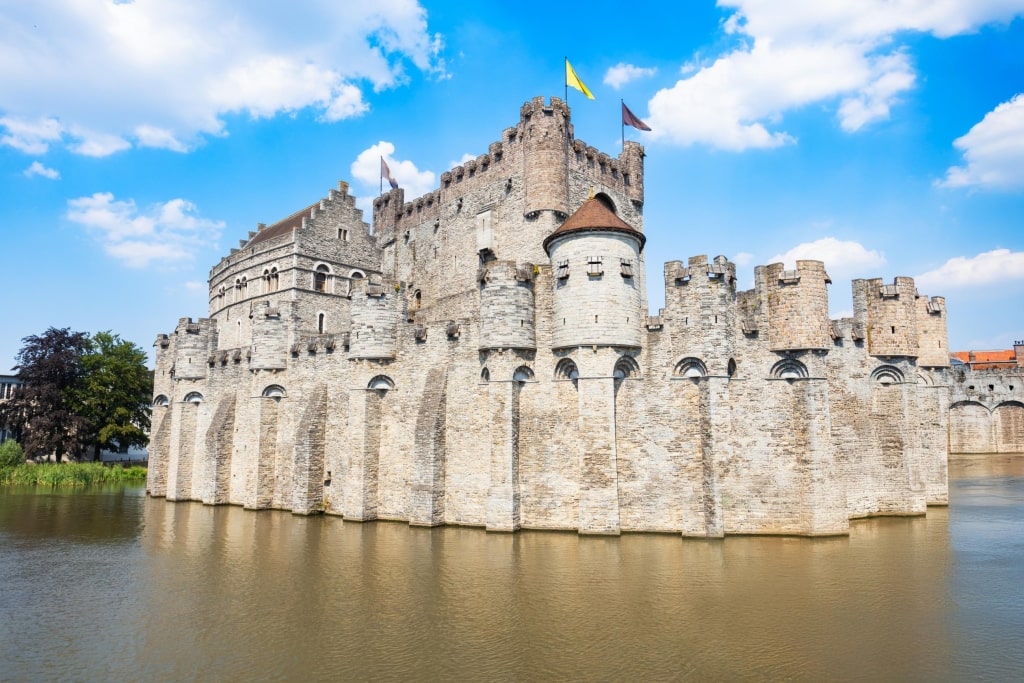
A grand stone keep and formidable battlements tower over the surrounding waters of Ghent’s Gravensteen Castle.
There are a few things Belgium is known for: its waffles and fries, Brussels serving as the de facto capital of the European Union, and Gravensteen Castle. The current structure was built in 1180 by Count Philip of Alsace, who likely modeled the structure after crusader fortifications he saw in the Middle East. This imposing structure was built as a show of force to project dominance and intimidate Ghent’s independent merchant class.
From the 14th century, the castle became the epicenter of justice in Flanders, and by the 17th century the structure was home to four different courts. During this time, the castle was also used as a prison, and its underground dungeons were infamously used for torture.
When the courts relocated in the 18th century, the castle was transformed into an industrial complex featuring cotton mills, a metal construction workshop, and workers’ housing. In 1907, the Castle of the Counts opened to the public, and the World Exhibition in 1913 cemented the structure as Ghent’s biggest tourist attraction, a title that still stands today, more than 100 years later.
What To See at Gravensteen Castle
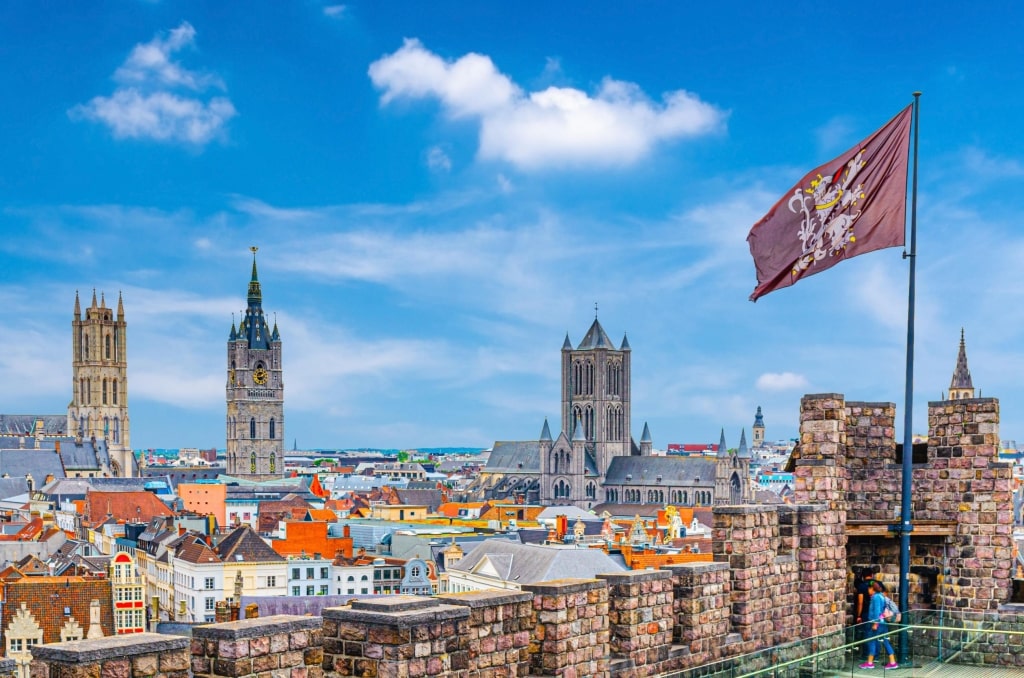
A proud banner ripples atop historic stone ramparts, surveying Ghent’s church-steepled horizon.
Gravensteen Castle’s gatehouse, ramparts, keep, count’s residence, and stables are open to visitors today. The structure features a small exhibition detailing its history as a prison, judicial site, and interrogation center. On display are also a few items associated with torture, including thumb screws (used to crush fingers), spike collars, and limb cleavers. Make sure to admire the structure’s ramparts, built entirely of stone and topped with 24 towers that stretch to the sky.
For a touch of humor, opt for the audio tour, voiced by Flemish comedian Wouter Deprez. The 60-minute audio tour, included for free with admission to the castle, uses humor, local anecdotes, and lively knightly background audio to immerse you in the history of the castle and Ghent—it certainly beats a dry historical lecture.
For a deeper, more immersive visit to the structure, consider climbing the castle’s stone spiral staircases to the keep and ramparts for 360-degree views of Ghent’s skyline.
What To Know About Visiting Gravensteen Castle
Gravensteen Castle is open every day from 10:00 a.m. to 6:00 p.m., excluding December 24, 25, 31, and January 1. It’s recommended to book tickets in advance, as they sell out quickly, and to plan for a roughly 90-minute visit. Remember, the audio tour alone lasts for 60 minutes.
Given the structure’s age, a visit to the castle typically involves traversing several steep, narrow steps, spiral staircases, and uneven stone surfaces. This unfortunately means that it’s not very accessible and may not be suitable for those with limited mobility.
Why Gravensteen Castle Deserves a Spot on Your River Itinerary
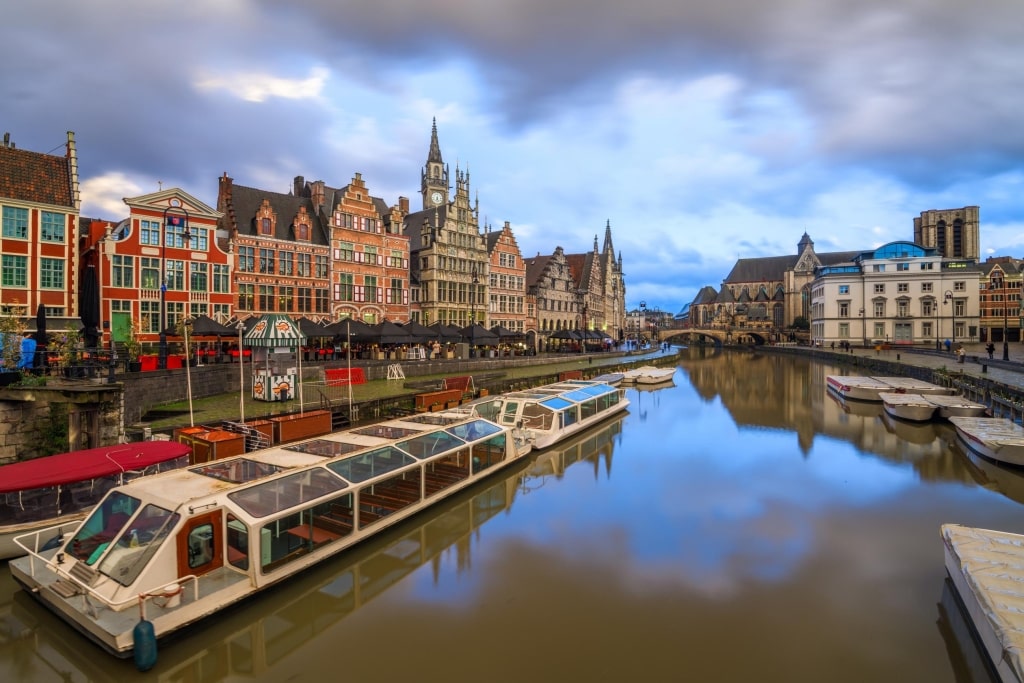
Tour boats line the historic Graslei waterfront in Ghent, Belgium, as the ornate façades of centuries-old buildings glow against the evening sky.
Gravensteen Castle is a monument that sheds light on Ghent and Belgium’s important feudal and medieval history. Beyond serving as the seat of the Counts of Flanders, the monument has a multi-layered past thanks to its repurposing over the centuries into a court, prison, and cotton mill. Gravensteen Castle evolved alongside Ghent, a legacy that is still preserved within its stone walls.
To understand Ghent is to understand the long, symbolic impact Gravensteen Castle has had on the city over the centuries, which is why the structure is a must-see for those seeking to add a new layer of cultural immersion during their European river itineraries.
Frequently Asked Questions
What is Gravensteen Castle?
Gravensteen Castle is a rare, well-preserved 12th-century medieval fortress located in the center of Ghent, Belgium.
Who built Gravensteen Castle and when?
The existing stone structure was built in 1180 by Count Philip of Alsace, who likely modeled the castle after crusader fortifications to project strength and dominance.
Why is Gravensteen Castle important in Ghent’s history?
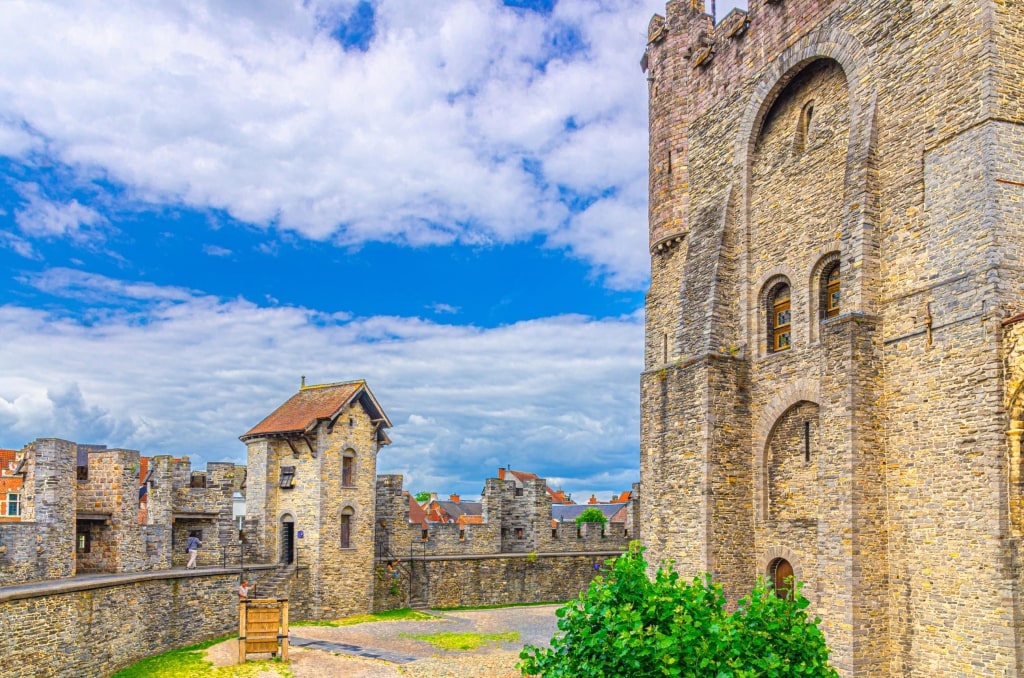
Crenellated stone walls border the inner courtyard of historic Gravensteen Castle in Ghent.
Gravensteen Castle is symbolic of Ghent’s long history. It served as a seat of power and authority for the Counts of Flanders and was later the epicenter of the Council of Flanders. Over the centuries, it was used as a prison, industrial mill, and finally a major tourist attraction.
How much time should you plan for a visit?
Visitors should plan for between 60 and 90 minutes of visiting time to fully take in the structure and its history. A comedy audio tour, included in admission to the castle, lasts 60 minutes on its own.
Where is Gravensteen Castle located?
Gravensteen Castle is located right in the center of Ghent, a city located in northwestern Belgium, in the Flanders region.
Dive Deeper Into Belgium and the Netherlands
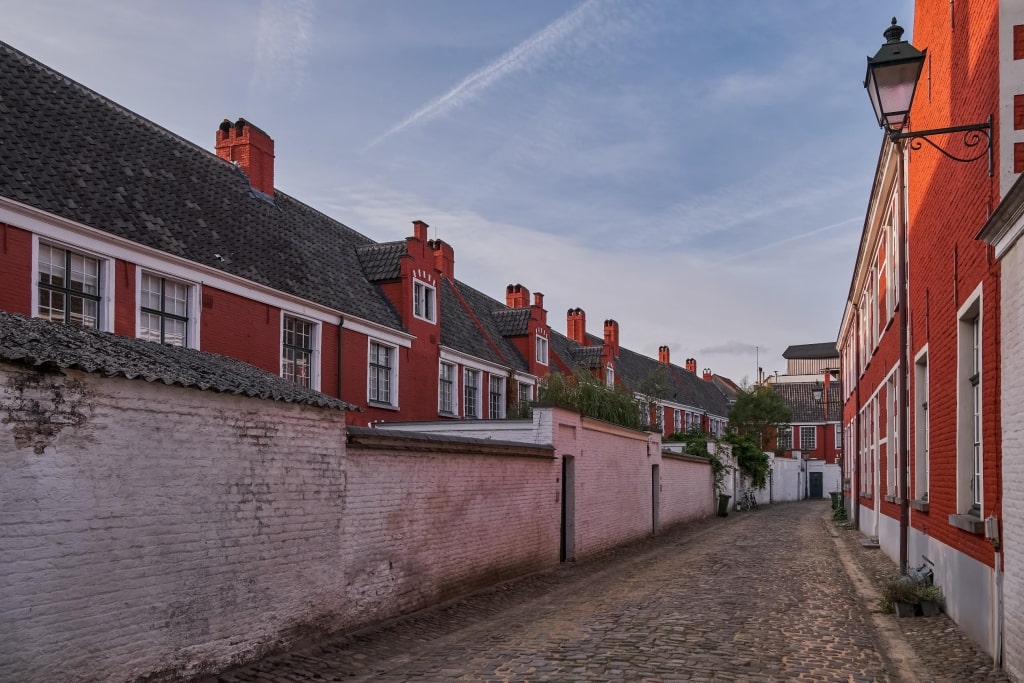
Historic red-brick houses line a narrow cobblestone lane in Ghent’s Small Beguinage, Belgium, creating a picturesque scene of traditional Flemish architecture.
A river cruise to the Netherlands and Belgium with Celebrity River Cruises℠ combines the intimacy of a small-ship voyage with the opportunity to explore major cultural cities, like Ghent. Here, guests can venture into the historic center to explore cobblestone streets and major historic monuments.