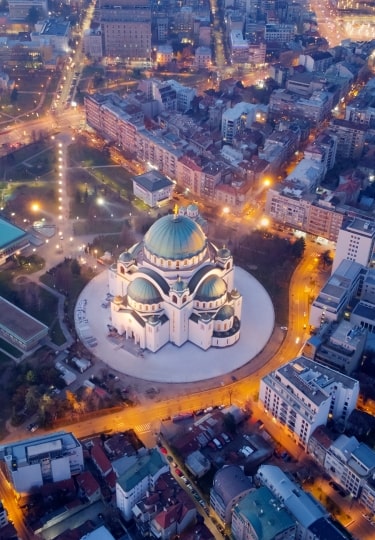
Historic and modern, gritty and full of culture, Belgrade offers more than enough to fill a day in port. Some of the best things to do in Belgrade include visiting Belgrade Fortress, strolling Knez Mihailova Street, exploring atmospheric neighborhoods, trying Serbian food, and learning about one of the world’s most influential inventors at the Nikola Tesla Museum.
Formerly part of Yugoslavia, Serbia has come into its own, with the Serbian capital offering glimpses into its distant and recent past as well as its forward-thinking residents. As a symbol of the city, a visit to Belgrade Fortress is a must. The unique neighborhoods of Zemun and Savamala offer distinctive architecture, street art, and interesting energy. And along pedestrian streets like Skadarlija and Knez Mihailova, you can sample traditional Serbian food and browse local shops.
After spending a month on a Balkans road trip last year, I can honestly say that Belgrade was one of my favorite cities in the region. With so many things to do in Belgrade, read on for some suggestions and routing to make the most of your day.
Belgrade Fortress, a Witness to Serbia’s Complicated History
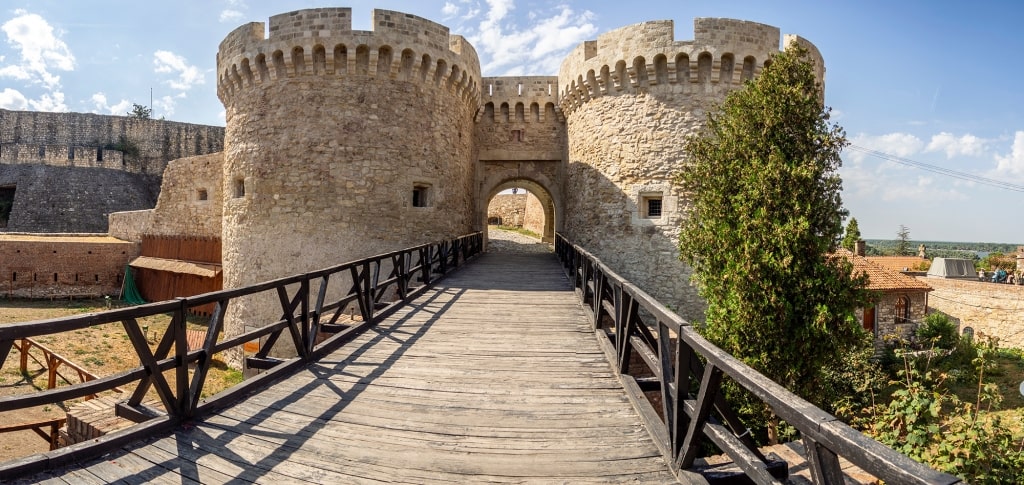
Rustic timber walkway approaching the historic Zindan Gate within Belgrade’s Kalemegdan Fortress
Without a doubt, Belgrade Fortress is one of the city’s top attractions. Located in Stari Grad, the Old Town area of Belgrade, the fortress is just steps from the river cruise dock, offering a wonderful chance to visit history on a river cruise.
Also known as Kalemegdan Fortress, this landmark has been built, rebuilt, and expanded over more than 2,000 years. It has been occupied by Goths, Huns, Romans, Ottomans, Austro-Hungarians, and Serbians, bringing the phrase “if these walls could talk” to mind. Spend a couple of hours here, and the walls will share some of their secrets.
The fortress is divided into two “towns.” Historically, the Upper Town was tasked with defending the city from inland invasions, while the Lower Town was the main urban center, where most residents lived, and business was done. Look out from Kalemegdan Park at the base of the fortress to see the confluence of the Danube and Sava rivers.
Here are some areas within the fortress that deserve a visit. Keep in mind that most rooms and displays have separate, though minimal, entrance fees.
Sahat Tower and Gate
You’ll enter the Upper Town through the Sahat Gate, which was built immediately following the 1688 Austrian conquest of the city. Built into the towering embankment, the vaulted passage houses a few side rooms, two of which, though walled up since the 17th century, housed guard accommodations.
Rising 90 feet above the gate is the 18th-century Sahat Tower. Though clock towers are commonplace at bazaars, they’re rarely found at forts. The Sahat Tower’s clock runs on a weighted mechanism, requiring weekly winding to ensure the two gongs chime regularly.
Nebojša Tower
The oldest and best-preserved tower in the fortress, the 15th-century Nebojša Tower, is actually the second defensive tower at the fort with that name, both built at the same time. The other tower, considered the strongest, safeguarded the Upper Town. After the original tower was destroyed by the Ottomans during the Siege of 1690, the name was transferred to this one, which defended the Lower Town’s port. Thick walls and multiple cannons ensured its success.
Beginning in the late 18th century, the tower served as a prison and dungeon, and was the location of executions of a Greek freedom fighter and the Metropolitan (Bishop) of Belgrade.
The inside of the tower now houses a museum that shares the history of the tower through interactive exhibits and multimedia displays, revealing the social and cultural progression to modern-day Serbia.
Roman Well
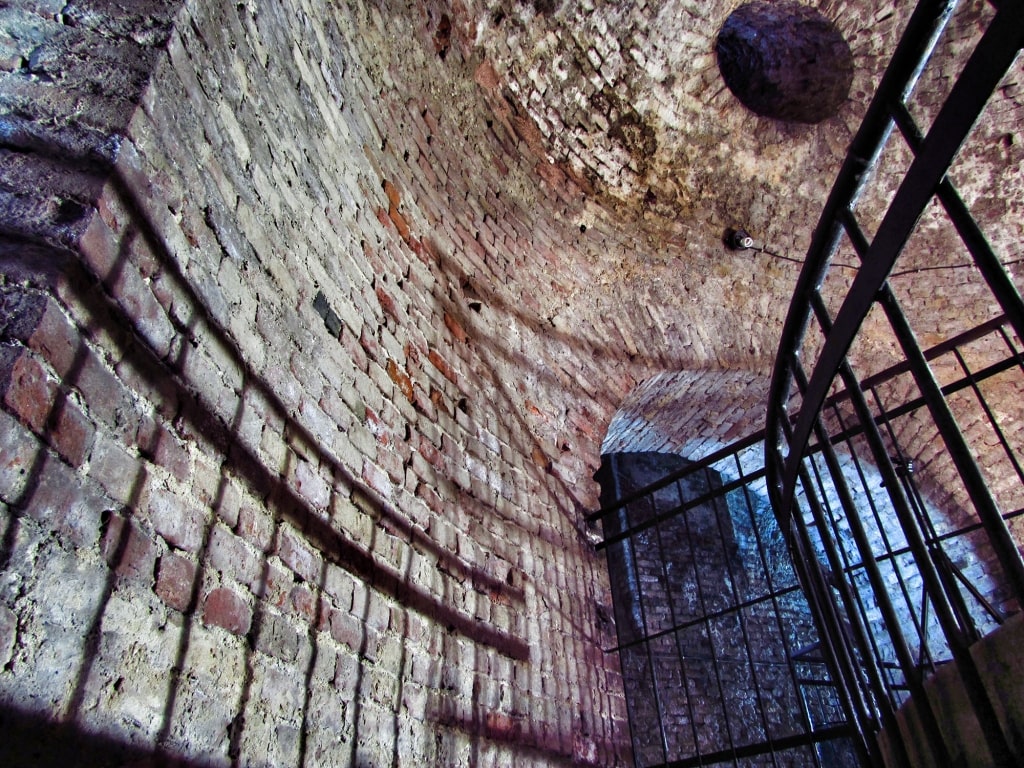
Underground masonry passageway deep within the Roman Well at Belgrade’s historic fortress
More legend than truly historic, the Roman Well was neither Roman nor a well. Though it was most likely dug as a well to gather water from the Sava River, it never reached the river. Legend also has it that it was used as a dungeon during the 1456 Siege of Belgrade, but this was most likely a different underground structure, since a 1940 detailed examination deemed it built by Austrians between 1717 and 1731. It’s since been determined that the 180-foot-deep “well” was actually used as a water storage tank.
Casemates (Medieval Torture Devices)
With the aforementioned locations of dungeons and torture, of course, there’s a room dedicated to the devices used. Step into the Casemates to see the darkest parts of humanity (not recommended for children). The “Iron Maiden,” the “Shame Violin,” and, of course, “The Rack” are just some of the more than 60 instruments and descriptions of torture devices housed in the Casemates.
Military Bunker
Not all of Kalemegdan Fortress was built centuries ago. Believed to have been built between 1948 and 1951, the building of the Military Bunker was a result of the Tito-Stalin split following World War II and entering into the Cold War era.
The 2,200-square-foot bunker was used to house military units and artillery as Josip Broz Tito—former president of Yugoslavia—worried about a Soviet invasion or a coup from within. Visitors are led through an exhibition called “Somewhere in Between,” which shares the stories of the Yugoslav army from the end of World War II through the Cold War. Also on display are authentic objects from the 1950s, including beds, water tanks, and ventilation units.
Big Gunpowder Magazine (Warehouse)
Originally built to store gunpowder, with even stronger protected walls constructed in the ensuing decades, it’s now used for an exhibition on Roman stone monuments, including sarcophagi and altars brought from sites around Serbia. Occasionally, visitors are treated to concerts and theatrical performances in the warehouse.
Neighborhoods To Visit
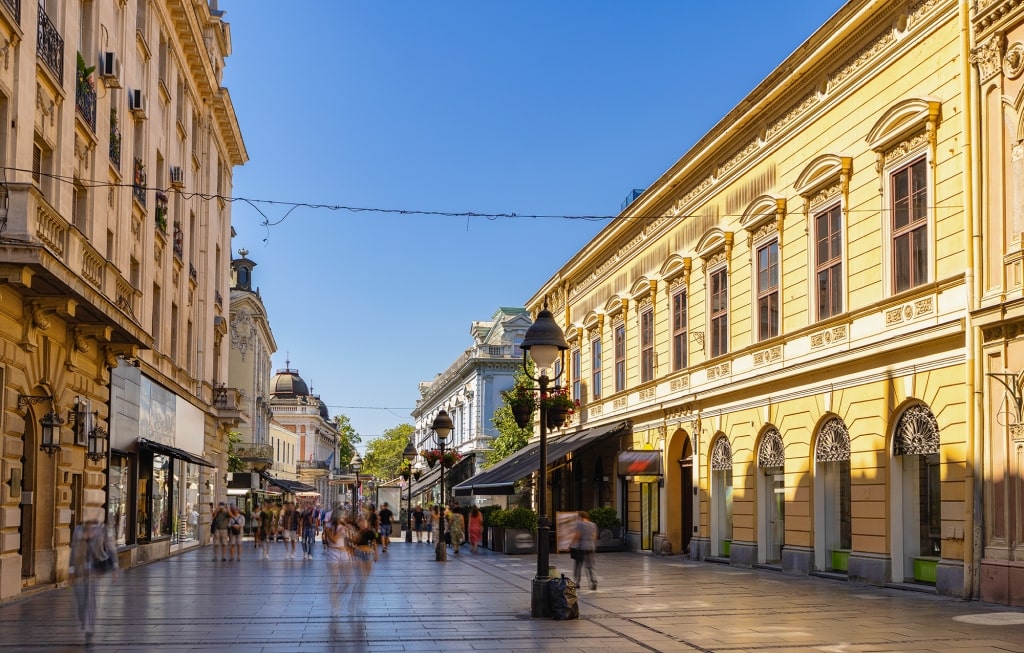
Belgrade’s historic Knez Mihailova Street bathed in sunlight, serving as a lively pedestrian corridor
Belgrade’s neighborhoods are unique and varied, from urban creative districts to historic cobbled streets, shopping corridors, and cultural areas. For visitors who want to experience more than one side of the Serbian capital, these neighborhoods are some of the best to explore in Belgrade.
Stari Grad, also known as Old Town, is a joy to visit. Besides housing the Belgrade Fortress, it’s the cultural, political, historical, educational, and business area of Belgrade. With 18 museums, six theatres, and a botanical garden, this area anchors the city center and offers an easy starting point for sightseeing.
My favorite part of Stari Grad is, without a doubt, Skadarlija Street. Often compared to Montmartre in Paris, it feels like walking back in time, when artists were active in this area in the early 20th century. Well-preserved buildings from the period line cobbled streets, urban folk music wafts from restaurants serving traditional Serbian cuisine, and people toast to their day with rakija, Serbia’s national drink. I loved this area so much that I returned a few times during my visit.
The former industrial district of Savamala has now been reimagined as an urban quarter. Walk through the wide streets while spotting Baroque and Art Nouveau touches on the buildings as you explore the vibrant arts and culture scene at local galleries and cafés, as well as the street art scattered throughout the area. Nearby, the Belgrade Waterfront adds a more contemporary contrast, showing how the city continues to evolve along the Sava River.
Unlike many typical shopping areas, Knez Mihailova Street offers not only retail stores but also cultural institutions, art galleries, and a library housing a Roman gate and aqueduct. While well-known chain clothing stores are present, smaller boutiques selling local goods are worth exploring. Visitors can also pause for a domaća kafa, or Serbian coffee, or try ćevapi, minced-meat sausages, in a café or restaurant along Mihailova Street.
Nikola Tesla Museum
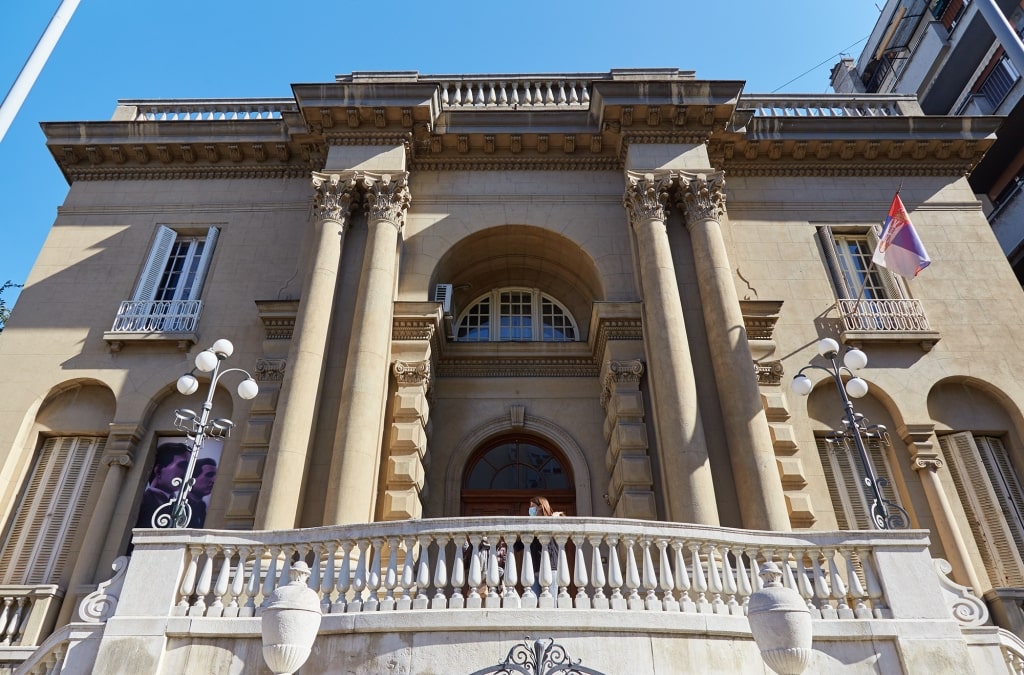
Elegant, Neoclassical exterior of Belgrade’s Nikola Tesla Museum
If you love your remote control, appreciate your washing machine and refrigerator, or are grateful for Wi-Fi and Bluetooth, you have Nikola Tesla to thank. All of these use technology originally developed by Serbia’s favored son.
During a visit to the Nikola Tesla Museum, visitors experience interactive demonstrations of inventions, including the Tesla coil, used in wireless technology, and the Tesla induction motor, responsible for today’s widespread use of AC electricity. Tesla’s personal items and documents, which have been named to UNESCO’s Memory of the World Register, are also included in a visit.
Wander through the Tesla Museum, one of the top attractions in Belgrade, or, for a small fee, reserve an English-language tour. This historical museum is a smart stop for travelers interested in science, innovation, and Serbian culture.
Important Note: The Tesla Museum doesn’t accept credit cards and only accepts Serbian dinar.
The Perfect Day in Belgrade
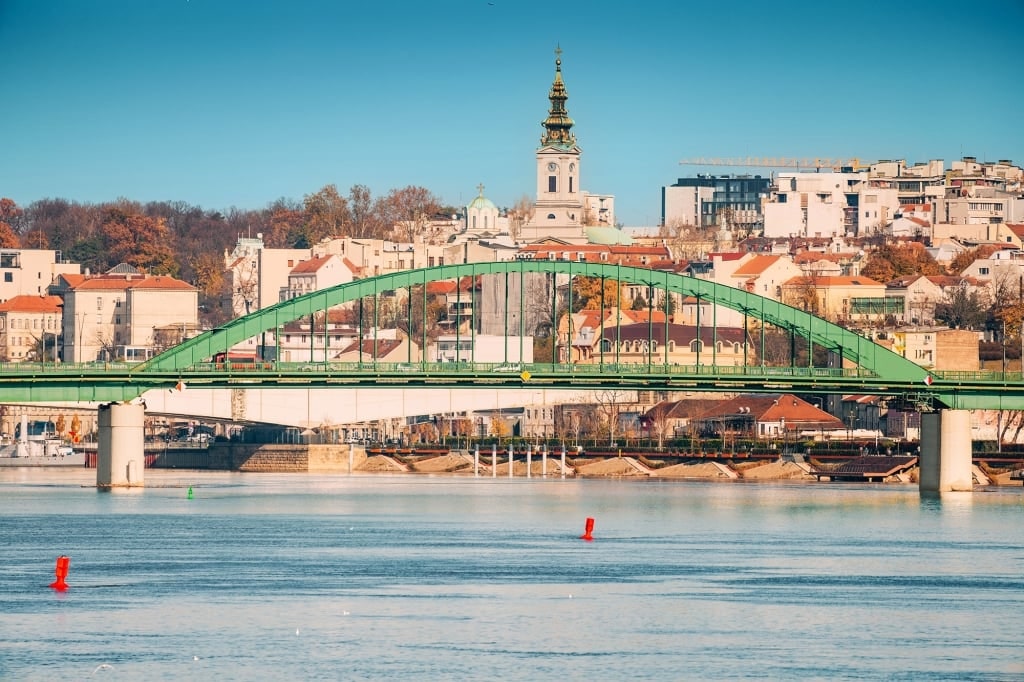
Emerald steel of the Old Sava Bridge stretches across the water against Belgrade’s urban backdrop
With so many things to do in Belgrade, Serbia, a little planning can help you make the most of your time in port. This route begins near where river cruises dock in the city center, then moves through the most convenient sights in a logical order.
- Start at Belgrade Fortress and Kalemegdan Park, both close to the riverfront and ideal for beginning your day with views over the Danube and Sava rivers. This is also a good place to explore the city’s layered history before moving farther into downtown Belgrade.
- Continue toward Knez Mihailova Street, Belgrade’s main pedestrian shopping and cultural corridor. From here, it’s easy to browse boutiques, stop for coffee, and continue toward nearby Republic Square.
- Detour toward Savamala for lunch, especially if you want to see a more contemporary side of the city. This former industrial district is known for galleries, cafés, street art, and proximity to the Belgrade Waterfront.
- If time allows, head to the Saint Sava Temple, also known as St Sava Temple or Saint Sava Church. This immense Serbian Orthodox Church is one of the city’s most important religious landmarks.
- Continue to the Nikola Tesla Museum for interactive exhibits dedicated to the inventor’s life, work, and legacy.
- End the day on Skadarlija Street, where traditional restaurants, live music, and classic Serbian cuisine make it a memorable place for dinner before returning to the ship.
If you have extra time, consider adding a few other Belgrade landmarks to your day. New Palace and Old Palace offer a glimpse of royal and political history near the city center, while the National Theatre, Hotel Moskva, and Ethnographic Museum are all useful stops for travelers interested in architecture, performance, and Serbian culture. Farther afield, Avala Tower, Gardoš Tower, and the Royal Palace are better suited to longer stays, guided tours, or return visits.
FAQs
Do they speak English in Belgrade?
Yes. While the official language is Serbian, most people you encounter will also speak English. Signs at Belgrade attractions are normally in multiple languages, including English. Still, a friendly “Zdravo” (Hello) is always appreciated.
What currency can I use in Belgrade?
Serbia’s official currency is the dinar. Money can be exchanged at banks, post offices, and official exchange offices. Credit cards are accepted in many places, but not all, so you’ll want to have some dinar with you.
How do I get around?
Here’s the great thing about Belgrade—all city and suburban lines, including buses, trams, trolleybuses, and the BG Train, are free. In fact, Belgrade is the first European city with a population over 500,000 to offer free transportation.
If you want to use a taxi, download the taxi app Yandex Go for the most reliable service. And since it’s similar to Uber, you can use your credit card through the app, so no cash is needed.
How does tipping work?
Since restaurant workers are paid a livable salary, tips are not expected, but a 10% tip is always appreciated if you enjoyed your service. Feel free to round up your bill to account for the tip. If you have the cash, tips are greatly appreciated in Serbian dinars rather than by credit card.
Step off the Ship and Into This Diverse City
Whether you’re fascinated by history, have a passion for science, or love a bohemian vibe, Belgrade will show you a good time.
Visit Belgrade on a Danube River cruise with Celebrity River Cruises℠.