Famous German artists have played an important role in defining and shaping Europe’s art movements, from as long ago as the Middle Ages until the present day.
From ancient cathedral frescos to abstract public art, thought-provoking creations will make you stop and stare across the country. Bavarian towns such as Regensburg and Nuremberg are cradles for religious Christian art, later becoming creative hubs for the intellectually charged Rococo and Baroque periods.
Germany’s kaleidoscope art world is ready for your exploration. But first, get to know a few of these significant names in art history, their significance—and most importantly, where you can see these famous German paintings today.
Northern Renaissance, 1400 to 1600
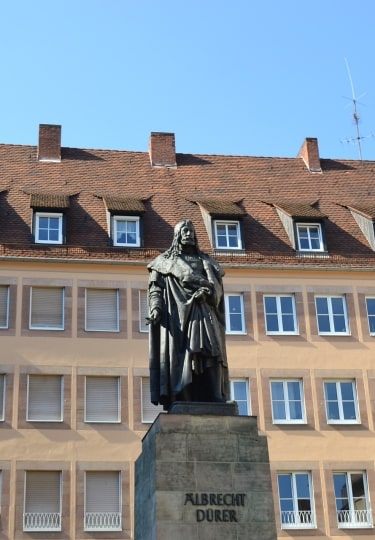
Albrecht Dürer
Albrecht Dürer is the “Father of the Northern Renaissance”. Famous German artists of the Renaissance and the later movements such as Baroque—Peter Paul Rubens and Rembrandt among them—were influenced by his 15th-century elaborate, religious paintings.
He was also highly regarded as a founding figure of printmaking. Through Dürer’s woodcuts, and engravings, northern Europe developed its own Renaissance movement, inspired by the Italian Renaissance though dealing with uniquely regional themes of history and identity.
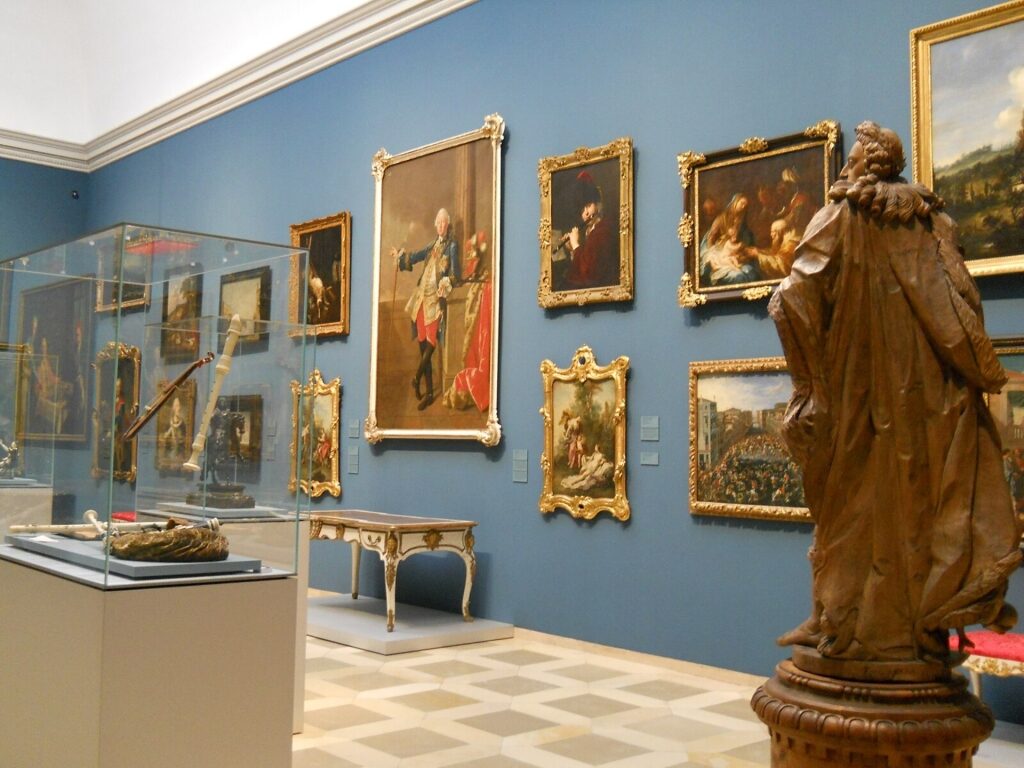
Germanisches Nationalmuseum Photo by DAVID HOLT on Wikimedia Commons, licensed under CC BY-SA 2.0
Nuremberg, where Dürer lived and worked, is the ultimate destination to explore his enormous influence. The Germanisches Nationalmuseum in Nuremberg houses an extensive collection of original drawings, sketches, woodcuts and engravings—including, most famously, parts of the Apocalypse series from 1498, inspired by the Bible’s Book of Revelation.
While Dürer’s most sought-after paintings are spread worldwide, Nuremberg’s Germanisches Nationalmuseum shows Hercules Killing the Stymphalian Birds, from 1500 and Lamentation of Christ, created in 1498. These oil paintings are excellent examples of the Northern Renaissance, and how Dürer and other painters recreated the Italian Renaissance artistic traditions with their own style, depth, and precision.
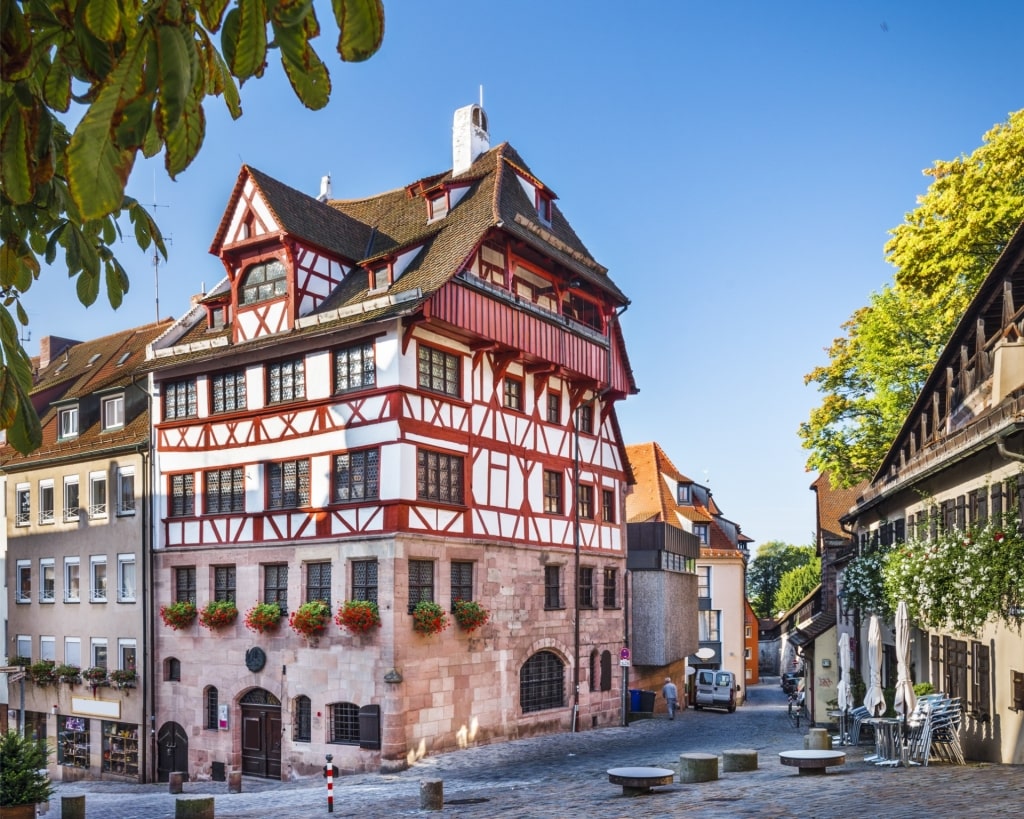
Albrecht-Dürer-Haus, Nuremberg
In Nuremberg, you can visit the Albrecht-Dürer-Haus. Across four stories where the Renaissance artist lived and worked, fascinating exhibitions abound. Digital media stations cover art year by year, while further highlights include a restored studio with hands-on demos, a print shop, and an attic gallery showcasing copies and original works.
Last but not least, Munich’s Alte Pinakothek—one of the world’s oldest art galleries holding a serious treasure trove of famous German paintings—has an entire Dürer’s Hall. Among its rotating collection of Dürer masterpieces, the famous Self-Portrait with Fur-Trimmed Robe is a show-stopper. Dürer depicts himself with a Christ-like presence in what is one of the most renowned paintings in Germany.
Hans Baldung Grien
The 16th-century German Renaissance painter Hans Baldung Grien was a student and contemporary of Albrecht Dürer. He played an equally important role in the Northern Renaissance movement, but certainly put his own spin on the style by blending religious allegory with unlikely, sometimes provocative, themes such as witchcraft and mythology.
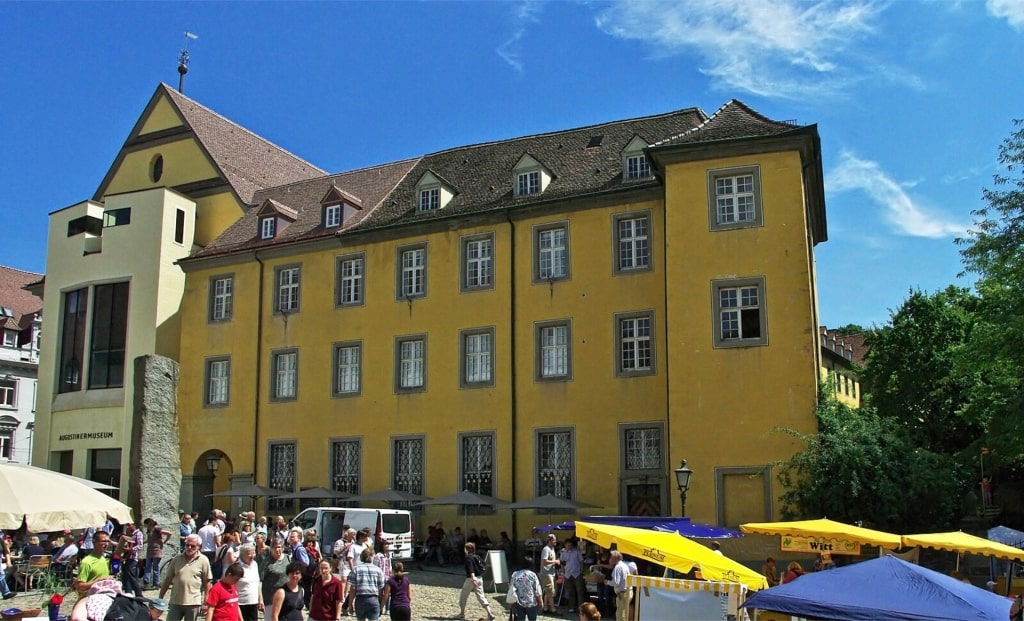
Augustinermuseum Photo by Joergens.mi on Wikimedia Commons, licensed under CC BY-SA 3.0
Grien was monumental in shaping the Upper Rhine region’s mark on the Northern Renaissance. In Freiburg’s Augustinermuseum, visitors can see several of his masterpieces, most notably the Freiburg Cathedral Altarpiece, Christ as Man of Sorrows, Mourned by Mary and Angels, and Madonna with the Sleeping Child. These paintings impeccably combine dramatic colors with complex detailing and emotional composition, a boldness and intimacy which religious art often shied away from.
The museum also holds a stained-glass window of St. Jerome designed by Grien, as well as several of his woodcuts, most notably The Three Parcae, or The Three Fates from Roman mythology.
Lucas Cranach the Elder
Court painter to the Electors of Saxony in Wittenberg for nearly 50 years, Lucas Cranach the Elder painted aristocracy for most of his life. His most fascinating works, though, are the portraits he made of Reformation-era leaders such as Martin Luther. These paintings were essentially visual propaganda, spreading Lutheranism across German regions.
These Reformation works are a stark contrast to the Catholic art of the time. The Augustinermuseum in Freiburg keeps Christ as the Man of Sorrows between Mary and Saint John, painted in 1524, a central panel depicting Christ with the solemn devotion which defined Protestantism’s theological rise.
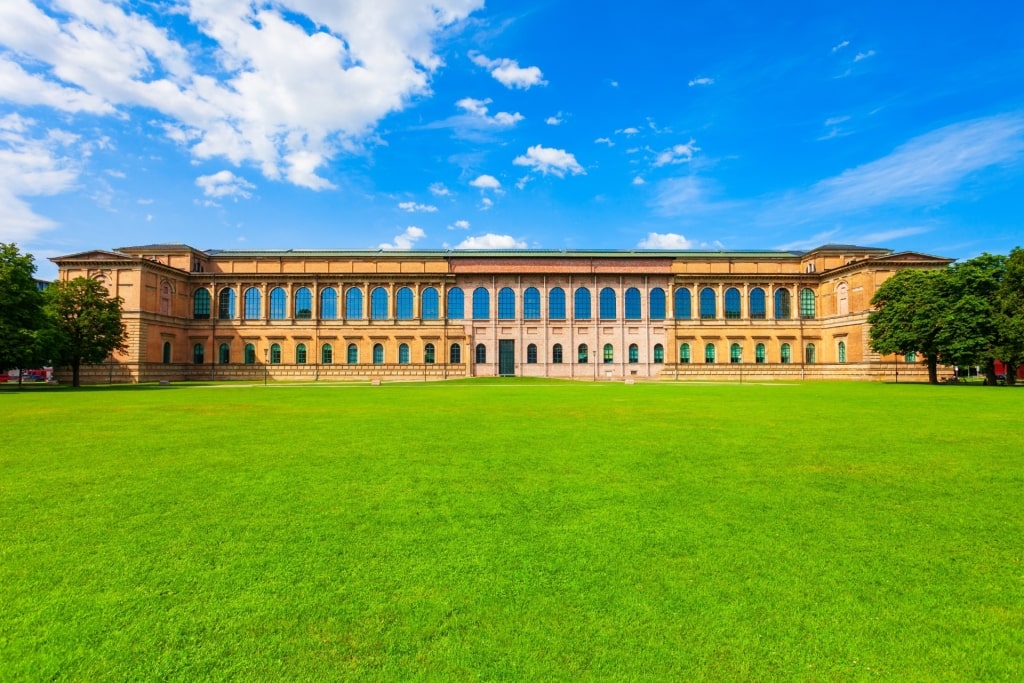
Alte Pinakothek, Munich
At the Alte Pinakothek in Munich, Bavaria—a region which was and still is predominantly Catholic —you’ll see elaborate medieval religious art and nobility in grand finery, up against Lucas Cranach the Elder’s Crucifixion and the Lamentation Beneath the Cross. These early 16th-century paintings are emotional and raw rendition of the suffering Jesus. Portraits of Martin Luther and reformer Philip Melanchthon are also displayed here.
Romanticism, 1780 to 1850
Casper David Friedrich
Caspar David Friedrich is known as the most important German artist of the 19th-century Romantic movement. The Romantic poster boy is known for some of the most famous German paintings depicting homeland scenery and rural life—a viewpoint which celebrated national patriotism after the Napoleonic Wars.
His moody, foreboding recreations of German scenery engaged with a soft, tender side. Friedrich’s works inspire tears and tug at the heartstrings as existential meditations on life and death, firmly referencing German literature and philosophy, from the Brothers Grimm fairy tales to Johann Wolfgang von Goethe.
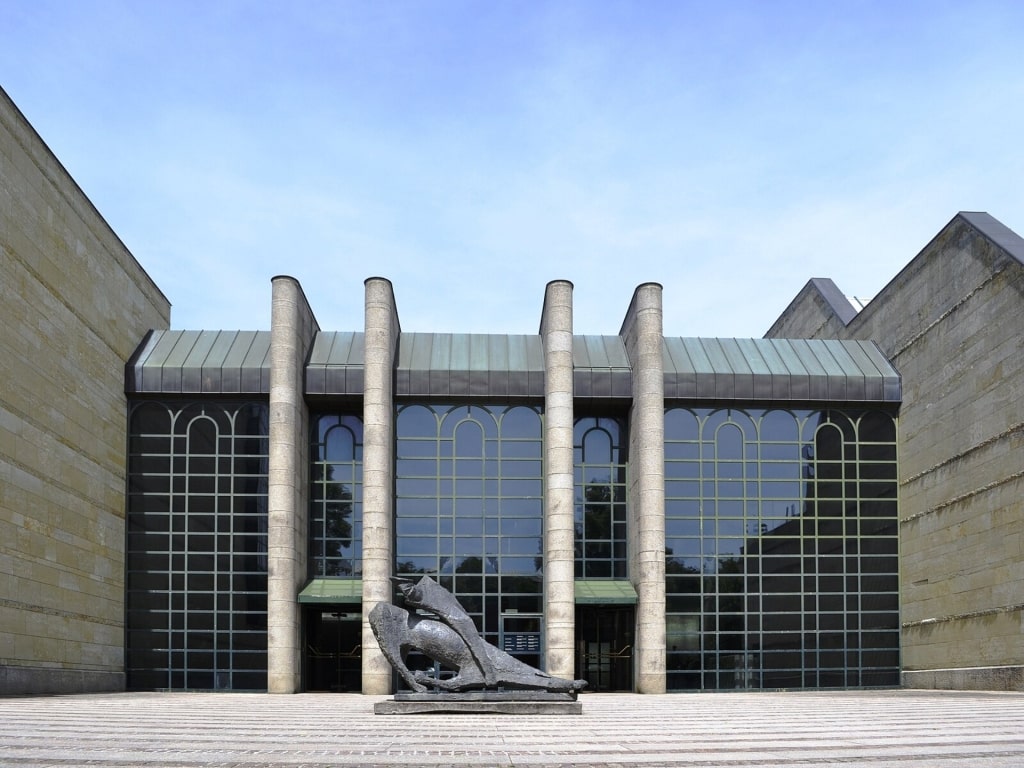
Neue Pinakothek Photo by High Contrast on Wikimedia Commons, licensed under CC BY 3.0 DE
The Neue Pinakothek in Munich holds a notable collection of German Romantic art. Of Friedrich’s in particular, a few lesser-known yet breathtaking landscape works—Fir Trees in the Snow and Giant Mountains Landscape with Rising Fog—will make you want to hop on the autobahn and head for the countryside.
Impressionism, 1860 to 1880
Max Liebermann
Max Liebermann significantly contributed to German art history as a leading figure of the Berlin Secession, an 1898-founded group of radical young artists who modernized 20th-century German art by rejecting conservative ideals.
His works are pragmatic yet light-hearted—which is really the perfect description of Germany’s cultural attitude today. The Neue Pinakothek in Munich holds several of Liebermann’s notable works of the everyday life of 19th-century Germans, both the bourgeoisie and working class.
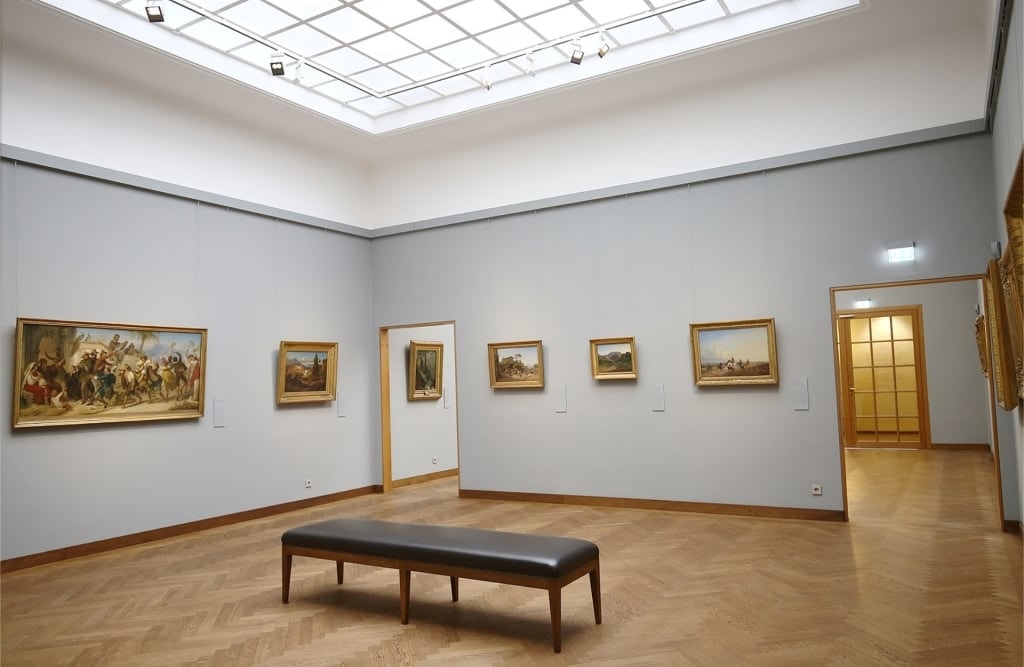
Sammlung Schack Photo by Henning Schlottmann on Wikimedia Commons, licensed under CC BY-SA 4.0
The Neue Pinakothek is undergoing significant renovations and remains closed until 2029. In the meantime, Liebermann’s works are being displayed in Munich at sister galleries, the Alte Pinakothek and Sammlung Schack.
Read: Best Places to Visit in Germany
Expressionism, 1905 to 1930
Max Beckmann
Expressionist darling and Neue Sachlichkeit, or New Objectivity hero, Max Beckmann was a powerhouse of 1920s Germany. His works emerged onto the scene after WWI, rejecting early Expressionism with sobriety and cynicism. Combining distortion with psychological intensity, Beckmann’s powerful critique of Weimar society and rising fascism remains a great legacy today.
Beckmann had strong ties to Frankfurt. He taught at the Städelschule art academy from 1925 until 1933, when he was dismissed by the Third Reich. Though the regime labeled his work as “degenerate”, he continued to create profound, resistance works in exile.
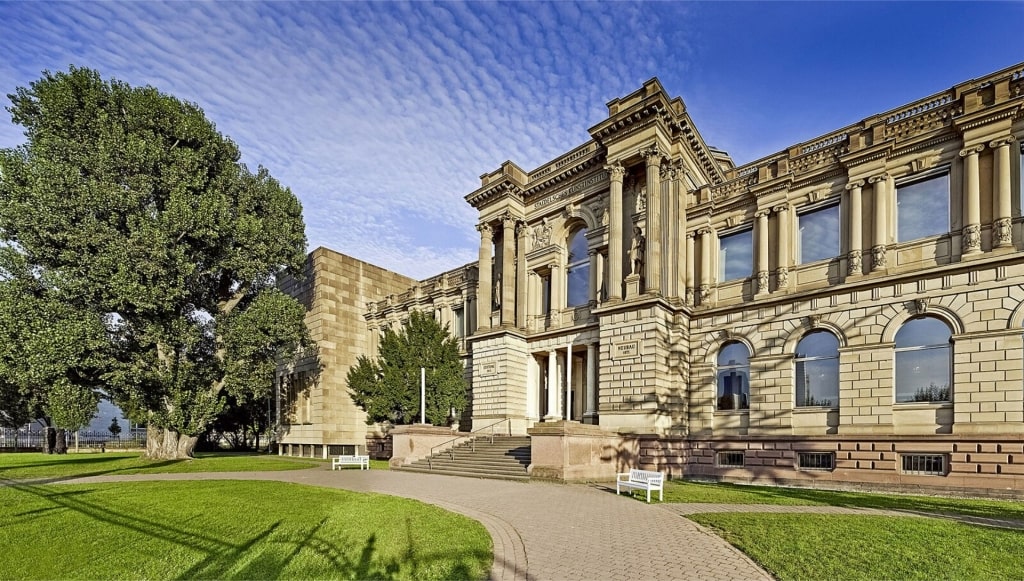
Stadel Museum Photo by Strandgut87 on Wikimedia Commons, licensed under CC BY 4.0
His influence on a generation of young artists and Frankfurt’s enduring reputation as a cultural hub can be felt today at Frankfurt’s Städel Museum. The renowned arts institution features one of the most extensive Beckmann collections worldwide with 80 pieces spanning paintings, prints, and drawings.
Notable holdings include Backstage, a recollection of Frankfurt’s vibrant cultural scene before the war, as well as Frankfurt Main Station, from 1943. The latter, painted after Beckmann’s exile, captures the bustling transit point with a sense of spirited nostalgia.
Additionally, the Städel Museum is preparing an exhibition focusing on Beckmann as a draftsman. Set to open in winter 2025, the exhibition will feature dozens of works, many of which will be publicly displayed for the first time, documenting his graphic oeuvre.
Read: What Is Frankfurt Known For?
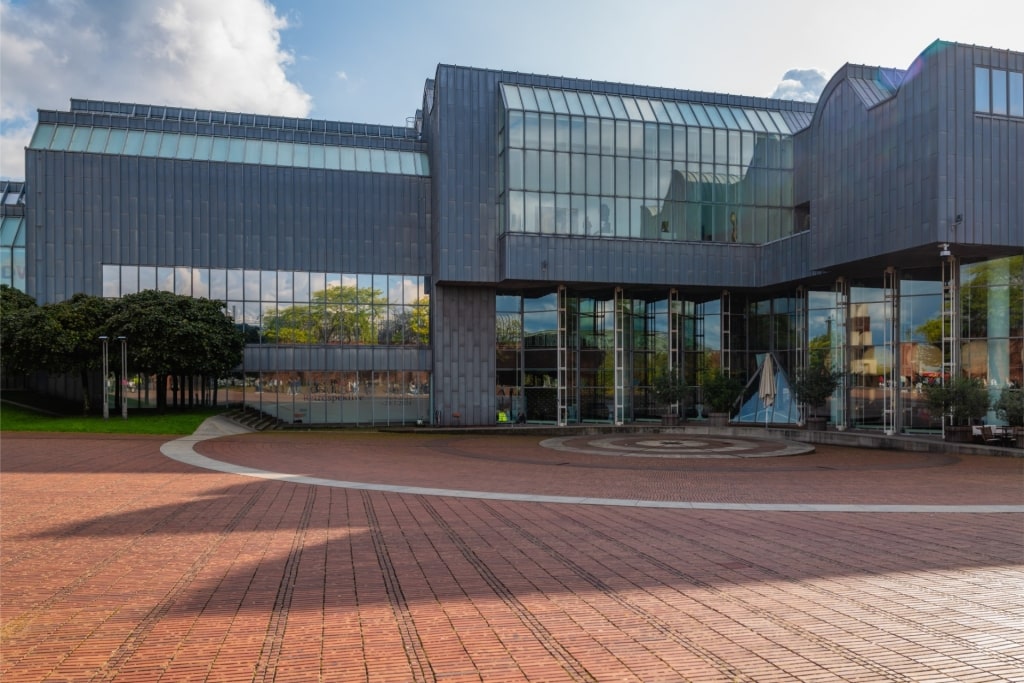
Museum Ludwig, Cologne
The Museum Ludwig in Cologne also keeps some of Beckmann’s major works, including Tango—created during Beckmann’s exile, an allegorical piece using theatre as a metaphor for fascist regimes—and View from the Window of the Eiffel Tower.
Franz Marc
Co-founder of the famous modernist Der Blaue Reiter, or Blue Rider, group, a cohort of expressionists in Munich in the early 20th century, Franz Marc was a master of colorful nature imagery. The leading German Expressionist painter was known for his vivid, symbolic depictions of flora and fauna, emphasizing spirituality and emotional depth through bold hues.
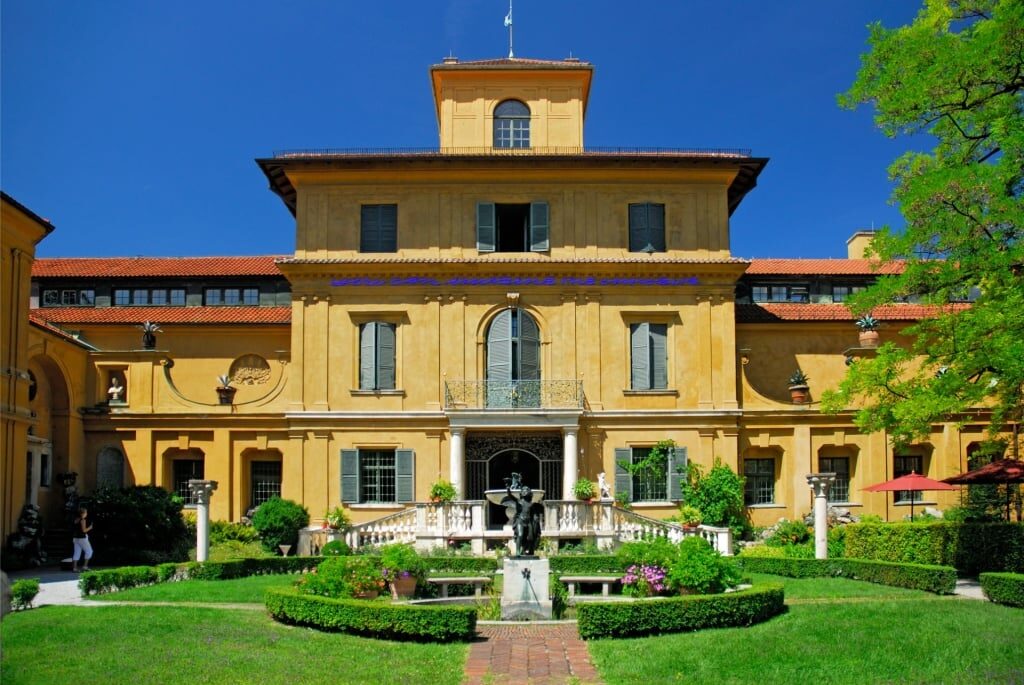
Lenbachhaus, Munich
Lenbachhaus in Munich is the go-to place to admire the vibrant canvases of Marc and other Blue Rider artists, such as Wassily Kandinsky and Paul Klee, who worked together in Munich from 1911. The gallery holds the world’s largest collection of Blue Rider works.
The Pinakothek der Moderne also has a strong collection of Franz Marc and Blue Rider artworks, including paintings of horses—the muses which these artists initially bonded over.
Surrealism, 1920 to 1950
Max Ernst
Max Ernst played a crucial role in founding and developing Dada and Surrealism, two key avant-garde movements of the early 20th century.
Known for his innovative techniques, including frottage—rubbing textures onto paper—and grattage—scraping paint off the canvas—Ernst’s artistic expression dove into a bizarre world. Drawing on themes such as fantasy, dream-like states, and irrational juxtapositions, he paved the way for Salvador Dali and others.
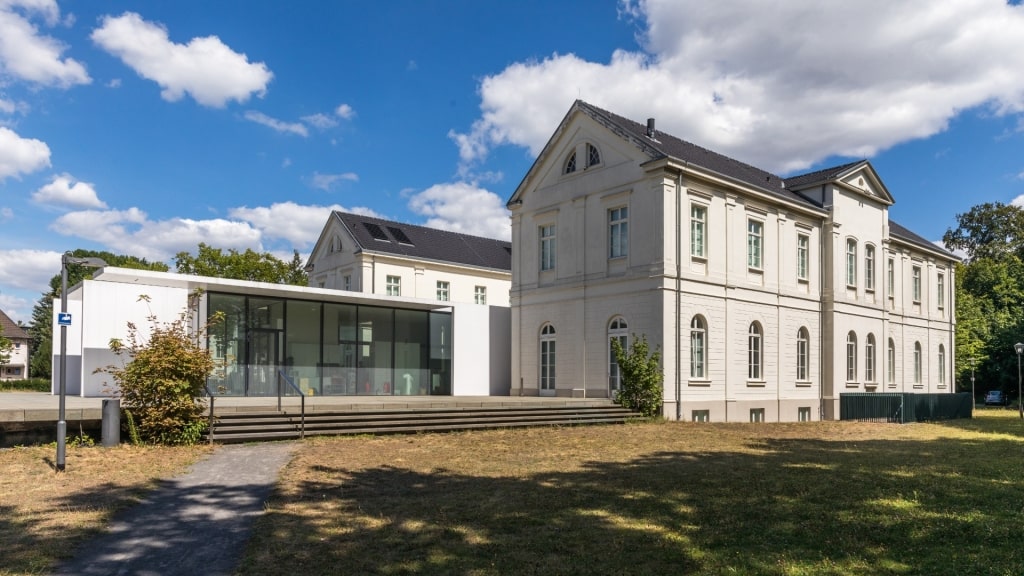
Max Ernst Museum Photo by Raimond Spekking on Wikimedia Commons, licensed under CC BY-SA 4.0
The Max Ernst Museum in Brühl, a one-hour drive from Cologne, is the most comprehensive and dedicated Max Ernst collection featuring over 2,000 works—paintings, sculptures, collages, and more. Some 250 are on display in the permanent exhibition. His bronze Capricorne sculpture is a standout.
Social Realism, 1920 to 1950s
Käthe Kollwitz
Käthe Kollwitz was a groundbreaking artist of Germany’s postwar period. Kollwitz was influenced by styles such as Expressionism and Realism, but her active years—the late 1890s to 1945—firmly grounded her work in a pivotal time of socially engaged art. Her prints, drawings, and bronze sculptures depicted wartime conditions, often with a focus on the working class, mothers, and children. By bringing their struggles to light, even under Nazi-era restrictions on free speech, Kollwitz aimed to bring change as an activist.
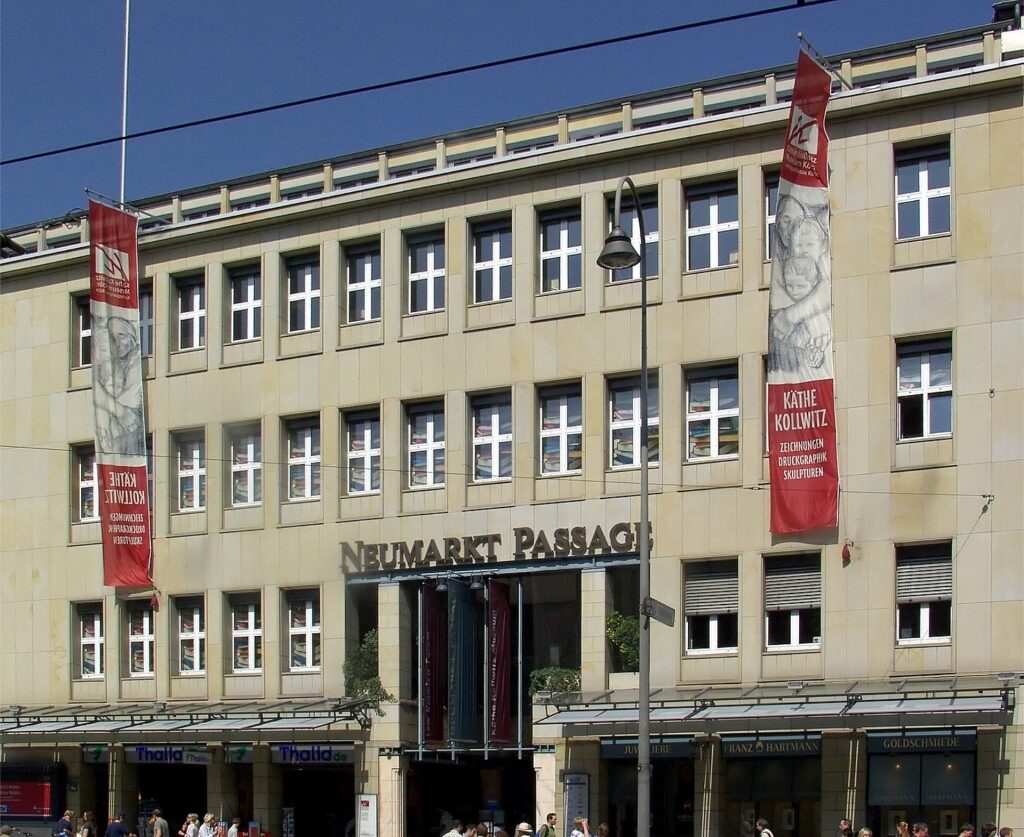
Käthe Kollwitz Museum Photo by Raimond Spekking on Wikimedia Commons, licensed under CC BY-SA 4.0
The Käthe Kollwitz Museum in Cologne is the foremost institution to see the largest collection of the artist’s work, housing more than 300 drawings, some 500 prints, and several of her famous bronze sculptures. The building is also focused on interactive, hands-on experiences, including a dedicated lithographic workshop.
Contemporary Art, 1970 to Present
Gerhard Richter
Gerhard Richter is considered Germany’s most important living artist. Richter is known for mixing mediums, breaking barriers between abstraction and realism. His works are vast and diverse in medium—most notably, photorealistic paintings based on blurred photographs, squeegee paintings, and glass work.
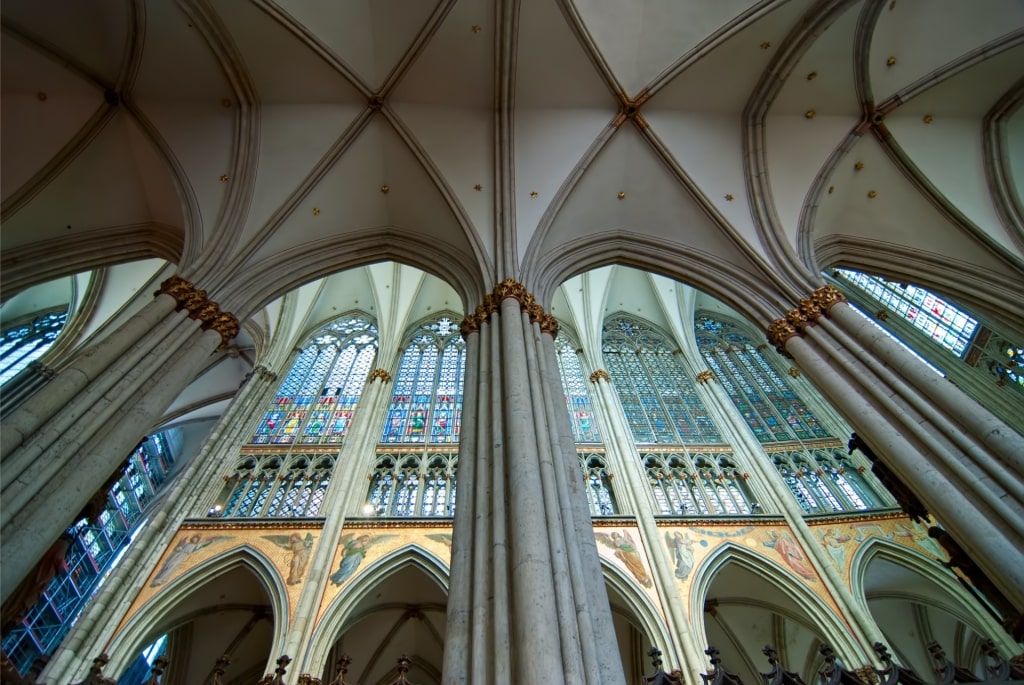
Cologne Cathedral
Importantly, Richter’s work has often grappled with the darkness of modern German history. You’ll find the Cologne-based artist’s most famous works outside of museums. Unveiled in 2007, the Cathedral Window is a stained-glass masterpiece in Cologne Cathedral. The window, inspired by Richter’s 4096 Colors, is a ground-breaking abstract masterpiece mosaic intermingling over 11,500 glass squares in 72 different shades.
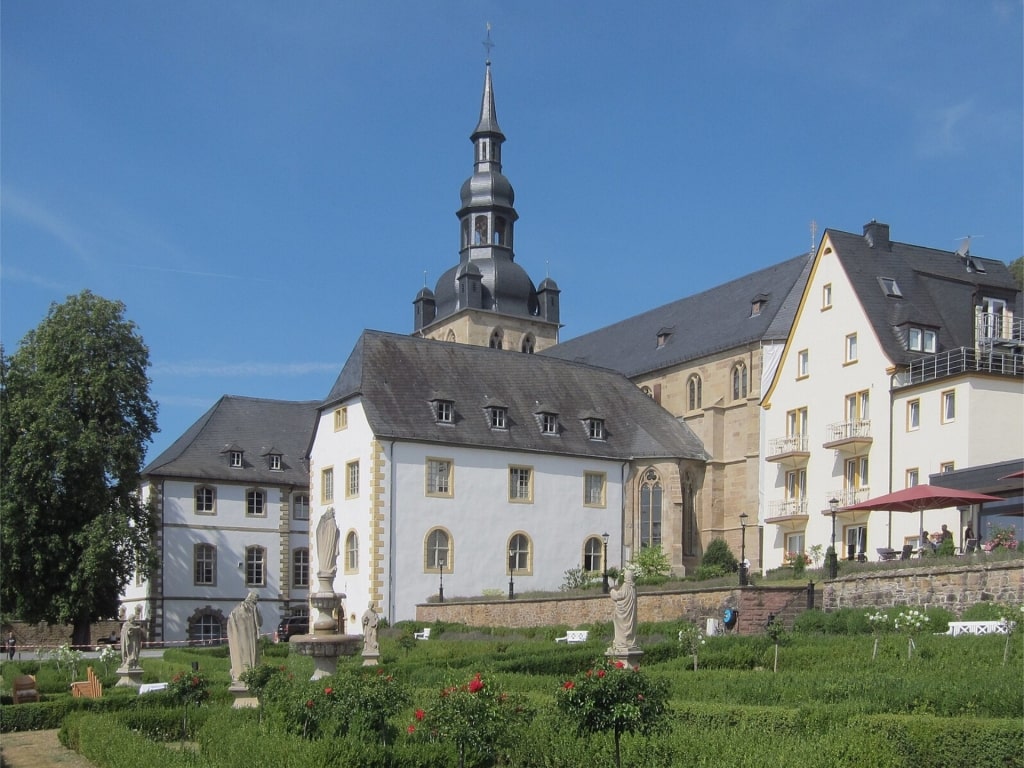
Tholey Abbey Photo by Stefan Oemisch on Wikimedia Commons, licensed under CC BY-SA 4.0
In Tholey, a one-hour drive from Speyer, view the Tholey Abbey’s stained-glass windows. Billed by Richter as his “last major work”, these 30-foot, stained-glass windows were inspired by Richter’s Patterns series from the 1990s.
In Cologne, pair a visit to the Cathedral with admission to the Museum Ludwig. While Richter’s works heavily rotate across Germany in special exhibitions, Uncle Rudi, from 1965—a photorealistic portrait of Richter’s uncle who died in WWII—is a rare and deeply personal work. Due to Richter’s strong connection with Cologne, such pieces show regularly at the Museum Ludwig, one of Germany’s foremost contemporary art museums.
FAQs
Which German artists influenced modern art?
Several famous German artists had a profound influence on modern art. Albrecht Dürer’s advances on printmaking and realism during the Renaissance inspired centuries of artists; meanwhile, early 20th-century innovators like the Blue Rider Group trailblazed abstraction.
Among them, Gerhard Richter’s influence on contemporary art is the most recent. Rejecting the idea of sticking to a “signature style”, his legacy today shapes the work of several active, big names in German art, including Neo Rauch and Wolfgang Tillmans.
Which female German artists contributed to these movements?
Portrait painter Louise Seidler and landscape painter Julie von Egloffstein were both contributors to the Romanticism movement. Meanwhile, Gabriele Münter was a key figure of Expressionism and a member of the Blue Rider Group. Maria Marc, the wife of Franz Marc, also participated in the movement to some degree.
Female contemporary artists from Germany today are highly active and regarded within the global scene. Notable names include Katharina Grosse for large-scale spray-painted installations, multimedia and kinetic sculpture artist Rebecca Horn, figurative and surreal painter Monika Baer, and multimedia artist Miriam Cahn.
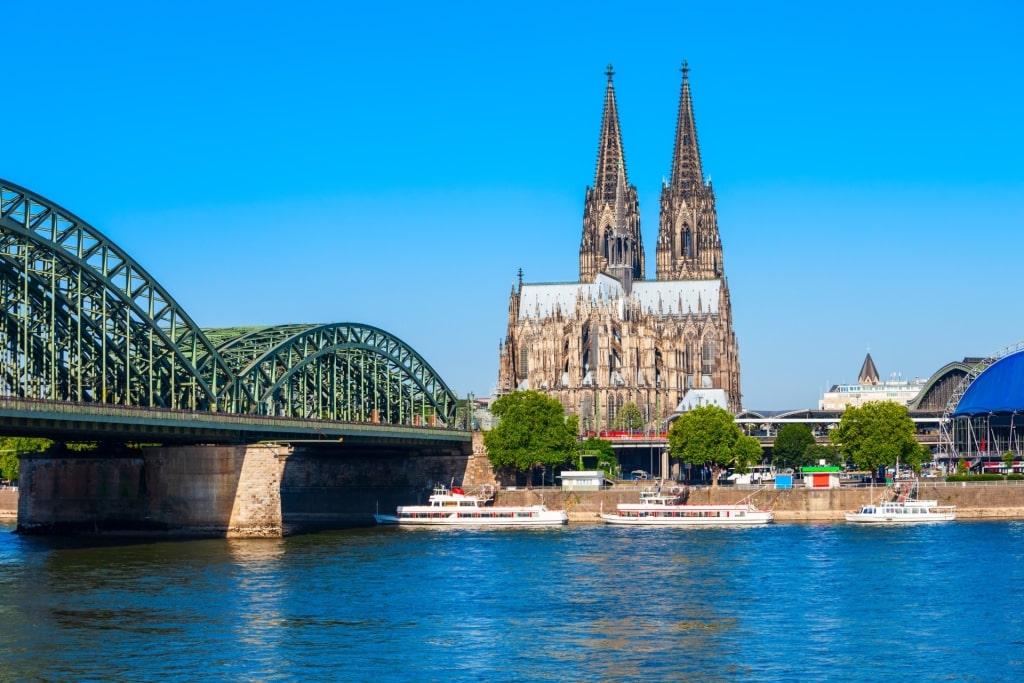
Cologne
Marvel at these German artworks and many more cultural treasures on one of Celebrity’s river cruises. Browse itineraries and plan your dream vacation today.