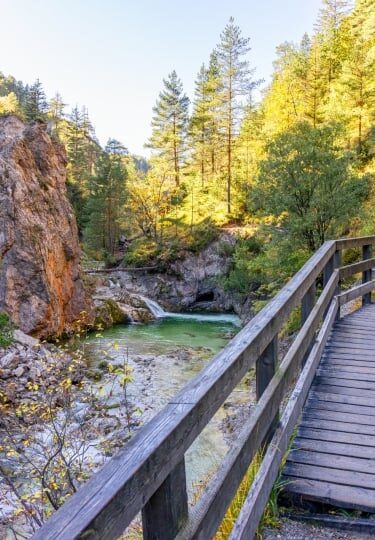
Hiking in Austria is easily the best way to explore this scenic, mid-European country. With its soaring alpine ranges, UNESCO wine country, and forested river valleys along the Danube, there’s a satisfying variety of experiences to be discovered.
Amid it all, you come across remnants of the country’s extraordinary history, its Baroque architecture, and hearty cuisine. Read on to learn about the best hikes in Austria.
Wachau World Heritage Trail
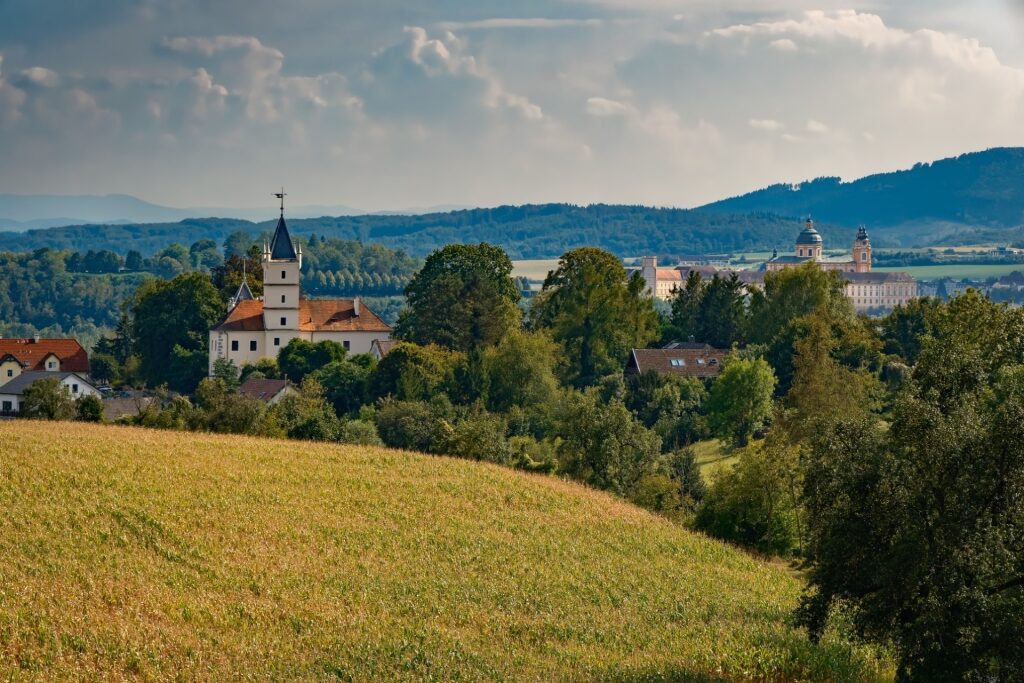
Wachau World Heritage Trail
One of Austria’s most famous—and longest—hiking routes, the Wachau World Heritage Trail rollicks through UNESCO-listed winelands and medieval towns, with plenty of snippets of history to uncover en route.
The 112-mile trail chases the Danube between Krems and Melk, and is typically divided up into 14 half-day sections. One of the most popular is between Spitz and Weissenkirchen, villages in the heart of the Wachau wine region, where rustic Heuriger taverns serve green-tinged glasses of Grüner Veltliner produced on the terraced hillsides that surround you.
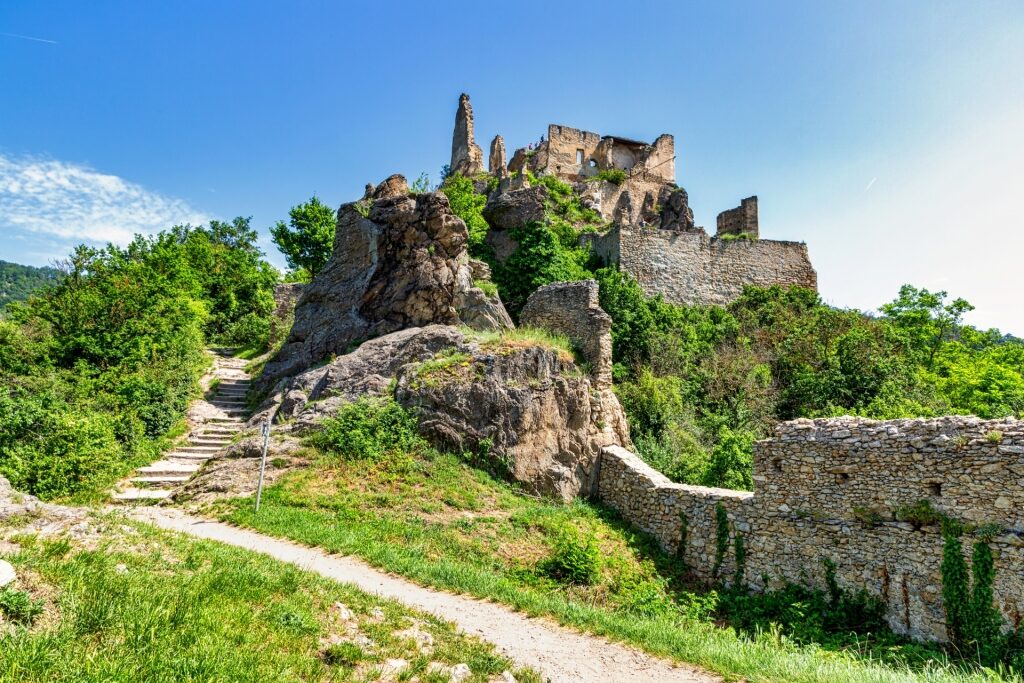
Dürnstein Castle
When you’re not stopping to imbibe, you’ll walk trails lined with nodding orchids and, in the warmer months, fragranced with wild thyme. Look out for Dürnstein—a dramatic castle ruin that once hosted King Richard the Lionheart in its dungeons.
For those on the Wachau Trail, it’s possible to pick up a hiker’s passport and collect stamps as you pass through towns. The stamping machines are often, helpfully, attached to wineries.
Jauerling Summit Trail
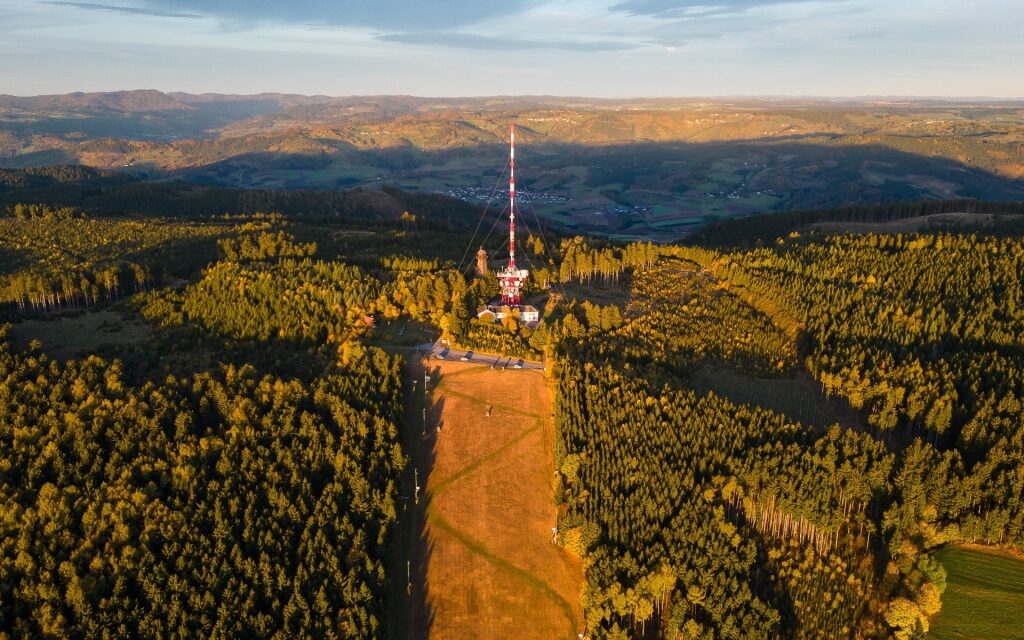
Jauerling Summit
For those looking to add a little verticality to their hiking in Austria, the Jauerling mountain rises to 3,150ft and delivers stunning views over the Alps and even as far as the Bohemian Forest on a clear day. It’s the highest point along the path of the Danube.
This 8-mile, moderately-rated loop takes in more than just a challenging ascent. You’ll pass farms, meadows bright with wildflowers in the spring, and serene woodland with red squirrels watchful on high branches.
This trail is generally quieter than others in the Wachau. The Gothic basilica of Maria Laach—a popular pilgrimage destination in the 17th century—is also en route.
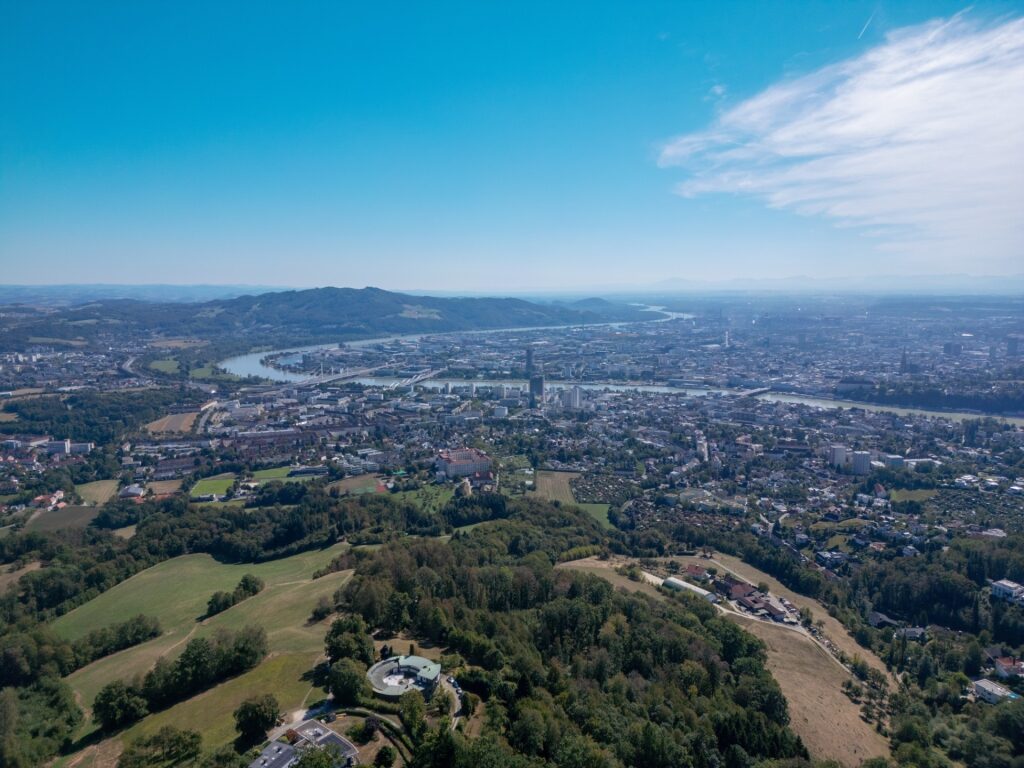
Pöstlingberg Hill Trail
Pöstlingberg Hill
One of the best returns in terms of viewpoint versus hike duration, the Pöstlingberg Hill Trail is a walk close to the city of Linz.
Steep but quick—the shortest version is about three miles—it’s possible to truncate the hike even further by hopping on the century-old Pöstlingbergbahn tram that clatters up and down the hill. If you’ve traveled by foot, you’ll eventually emerge from the chestnut-tree-lined streets to the Seven Sorrows Basilica on the hill’s summit.
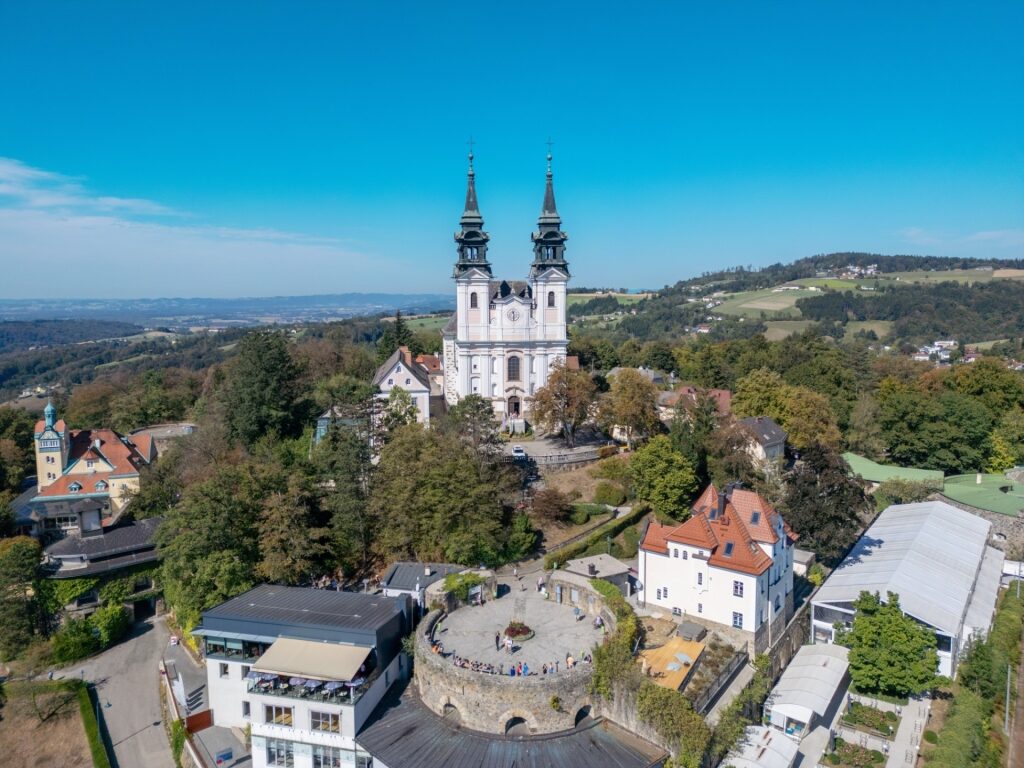
Seven Sorrows Basilica
The church has a lovely, ornate facade, but the views from the platform are even more breathtaking, taking in the Mühlviertel Hills as well as Linz and the sparkling Danube below.
Refresh yourself at Jindrak Cafe terrace with its Linzertorte, the local marzipan and jam cake, before wandering back down to explore more of Linz’s attractive Old Town.
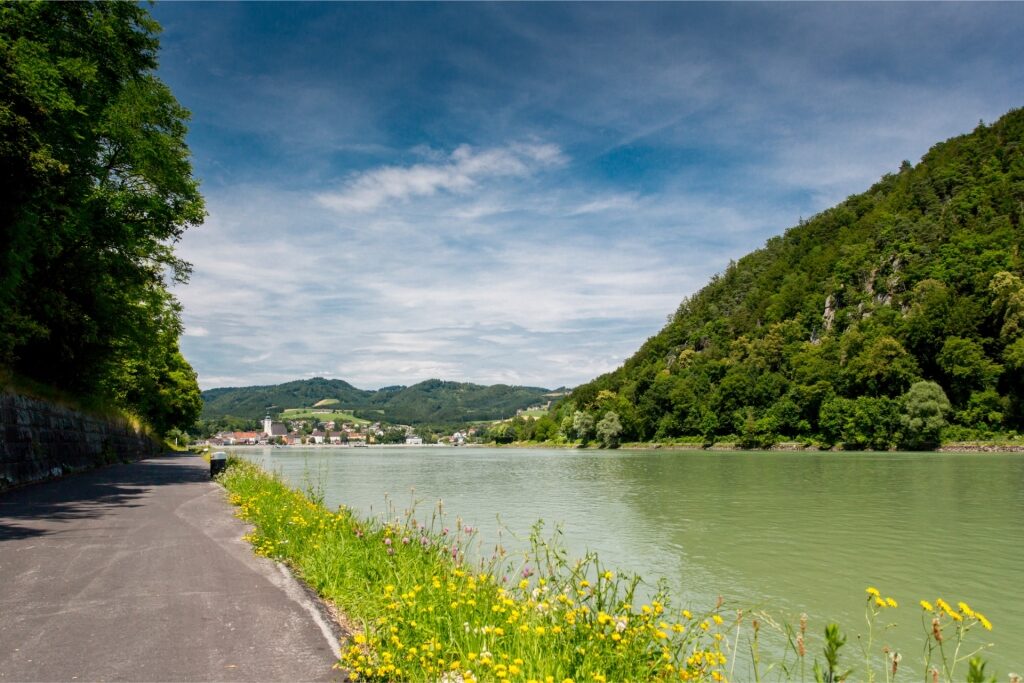
Donausteig Trail
Donausteig Trail
As the name “Donausteig”, or Danube Trail, suggests, this epic 280-mile hike, signposted with forest-green Danube symbols, meanders through the countryside between German Passau and Austrian Grein.
Along the way, you’ll encounter shy roe deer, wheeling kestrels, and helpful information boards, some with English translations, that expand on the region’s historic importance for medieval trade routes, among other nuggets.
One of the best sections to walk is between Grein and the Strudengau region, where the Danube twists through some of its most dramatic bends. The area also has a rich theatrical heritage—Grein is home to Austria’s oldest still-functioning theater, the 18th-century Stadttheater—which helped put this Baroque riverside town on the map.
Schlögener Schlinge Viewpoint Hike
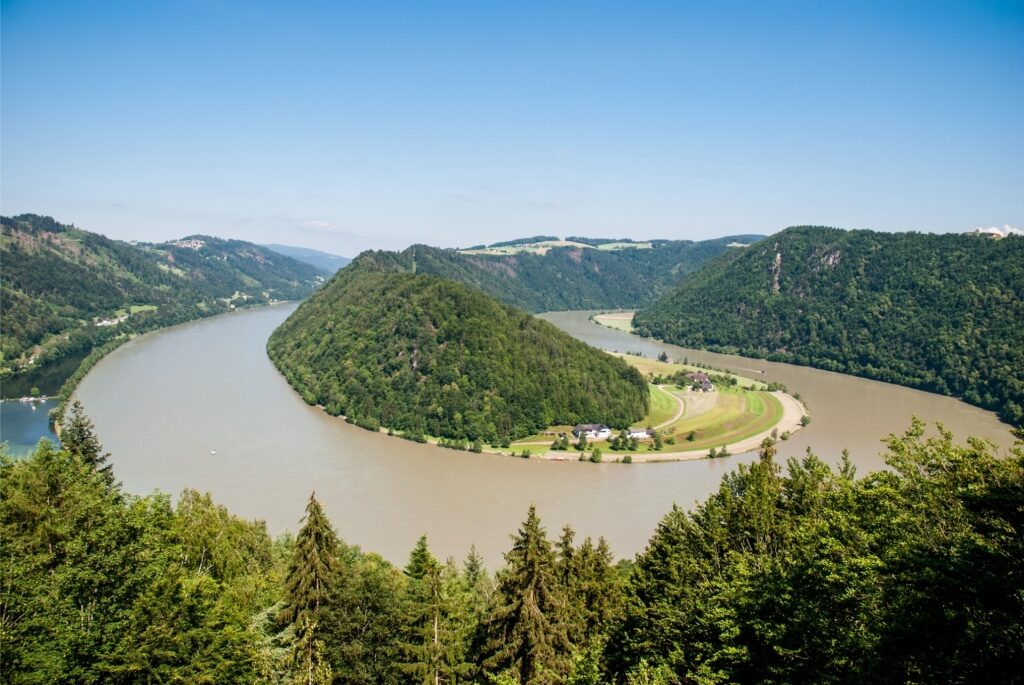
Schlögener Schlinge
Fun to say and to see, the Schlögener Schlinge is one of the Danube’s most charismatic maneuvers—a gigantic U-bend in the river between Passau and Linz that quickly snaps back to its onward course towards the Black Sea.
To reach the best viewpoint, you follow a just-under-two-mile trail up and through the woods behind Schlögen. While it’s a little steep on the way up, the climb through the woodland is straightforward enough and, after about 45 minutes, you’ve reached the fenced-in platform that floats above the tops of the firs.
After you’ve admired the “Danube’s Elbow,” as the locals like to call it, return to the water’s edge for a table on the terrace of the Gasthof Donauschlinge. Here you can taste-test the river fish that the grey herons are hunting—although they’ll forgo the herbal foam and celery cream.
Ysperklamm Gorge Trail
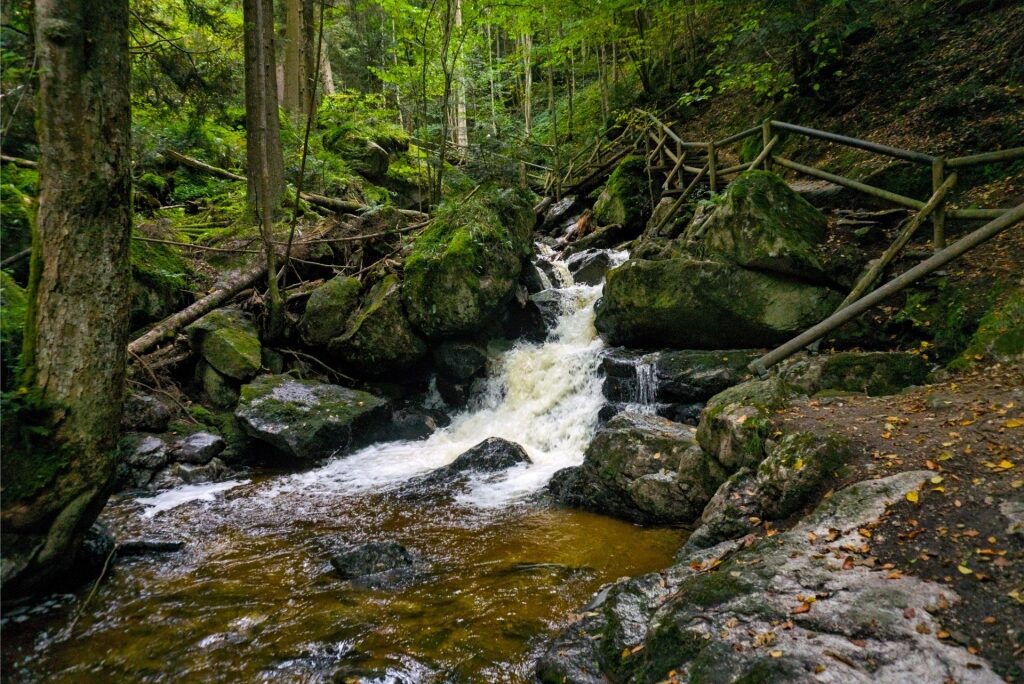
Ysperklamm Gorge
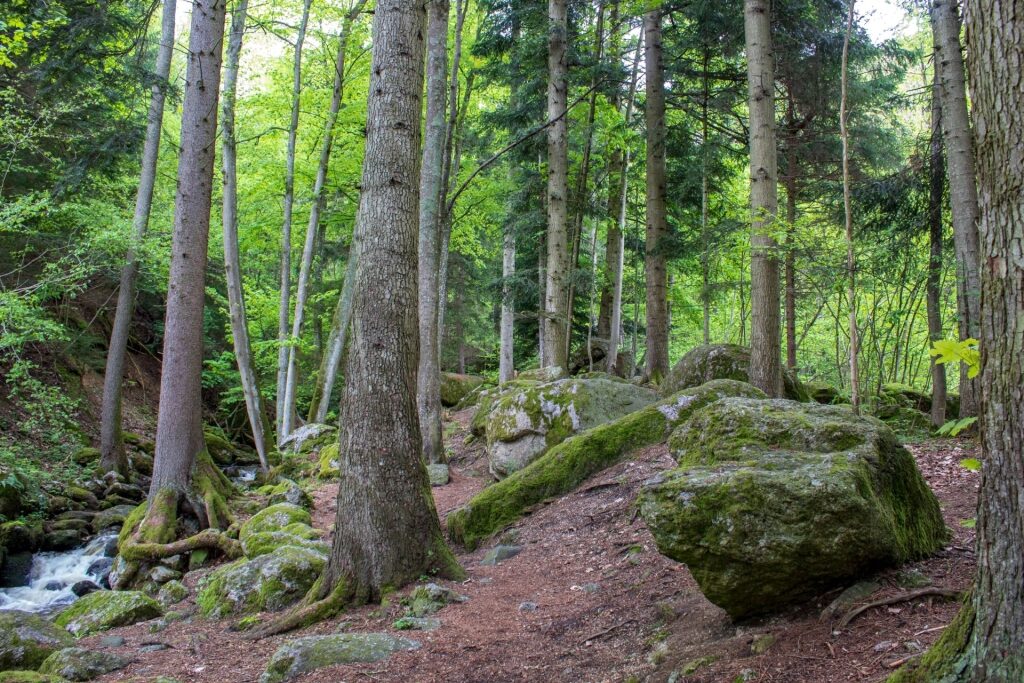
This moderately difficult, two-and-a-half-mile circular hike dips into the forested, mossy contours of the Ysperklamm Gorge in the Waldviertel region, northwest of Melk.
The gorge has that particular blend of timelessness, natural beauty, and sense of isolation that has inevitably attracted folkloric stories. The most repeated is that the water thundering through the gorge has helped to conceal the workings of elves who, naturally, hoard the riches of the Weinsberger forest.
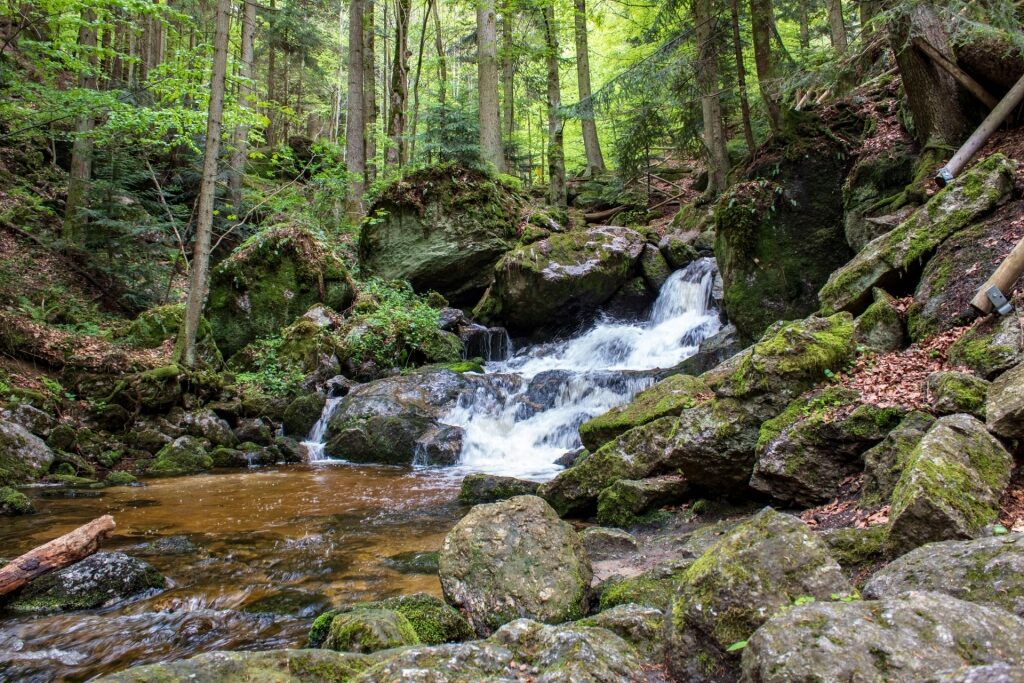
Ysperklamm Gorge
So keep your eyes peeled as you explore the little lichen-spotted bridges and stairways that take you around this roughly three-hour loop. The gorge was declared a protected natural monument in the mid-20th century, so it offers a chance to experience a more unvarnished side of hiking in Austria.
You’ll feel the mist on your face from the plunging Ysper river, spot rock formations with dramatic names like “Devil’s Cauldron,” and emerge from beneath towering beech trees to find the Forellenhof inn, known for its well-executed trout, which I can personally vouch for.
Ötschergräben
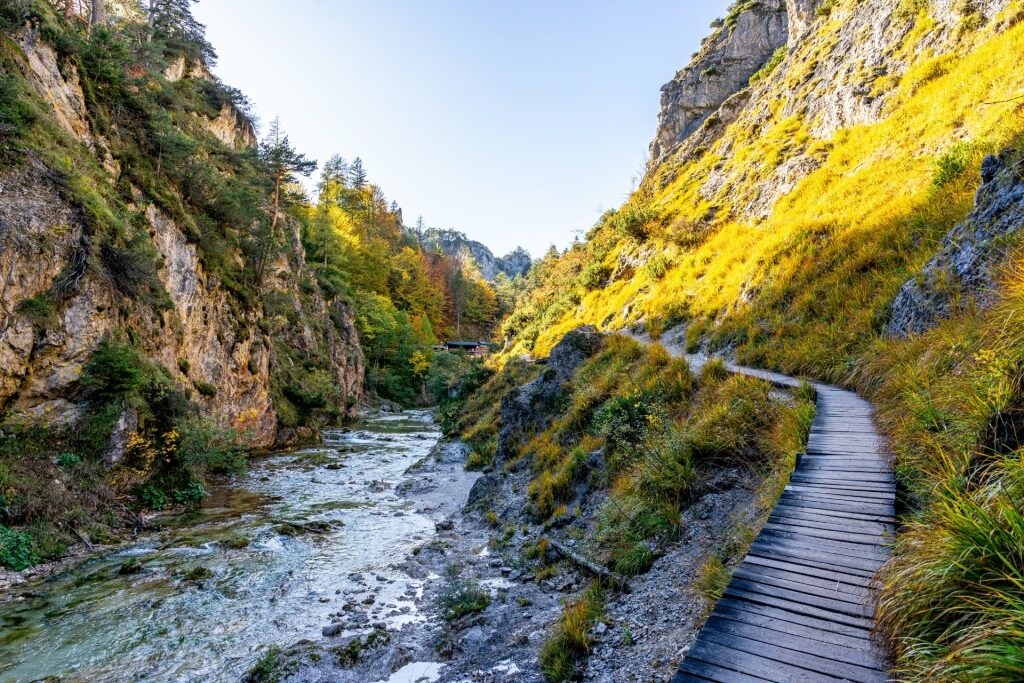
Ötschergräben
Hiking in Austria doesn’t get much more dramatic than the Ötscher-Tormäuer Nature Park, an hour or so south of Melk. Think plunging ravines, chamois peering from rocky perches, and the glacial blue Ötscherbach slipping beneath creaking suspension bridges.
This hike can be challenging, and, depending on your route, covers between five and nine miles. Most begin at Wienerbrück, which you can travel to on the quaint Mariazellerbahn narrow-gauge train.
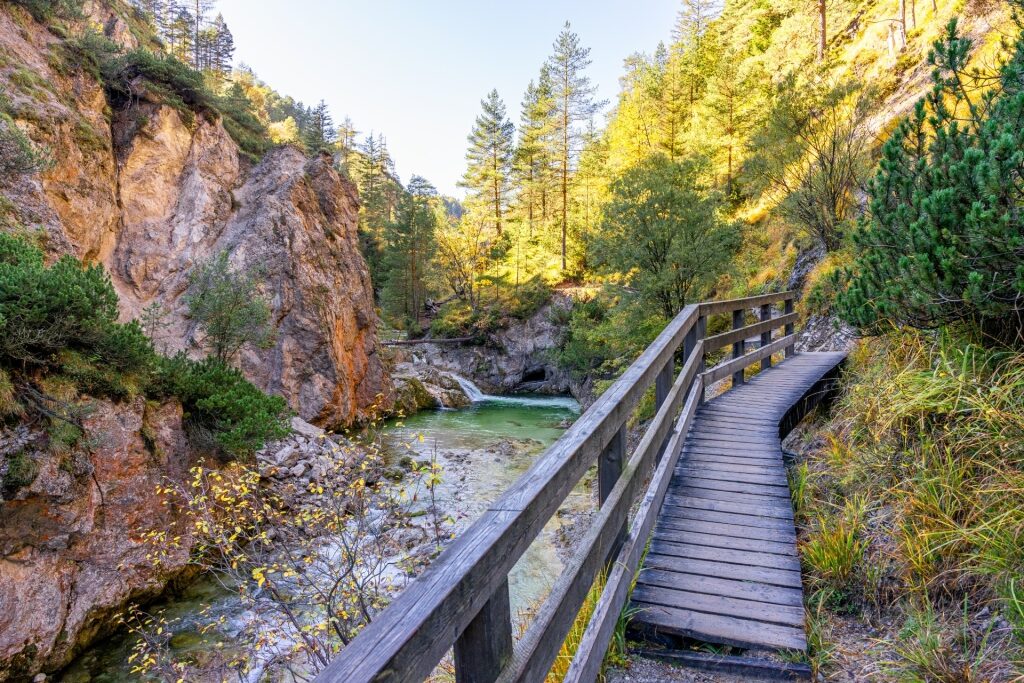
Ötschergräben
Following alongside the Ötscherbach brook, the route also passes a couple of dramatic waterfalls before the midpoint of the loop is announced by the presence of a café. After enjoying a poppy seed muffin—and the spellbinding panoramas—loop back to Wienerbrück.
If you’ve more time, you can hike on to Mitterbach am Erlaufsee and a refreshing dip in the crystal waters of Erlaufsee lake.
Wienerwald – Leopoldsberg & Kahlenberg Trail
Wienerwald
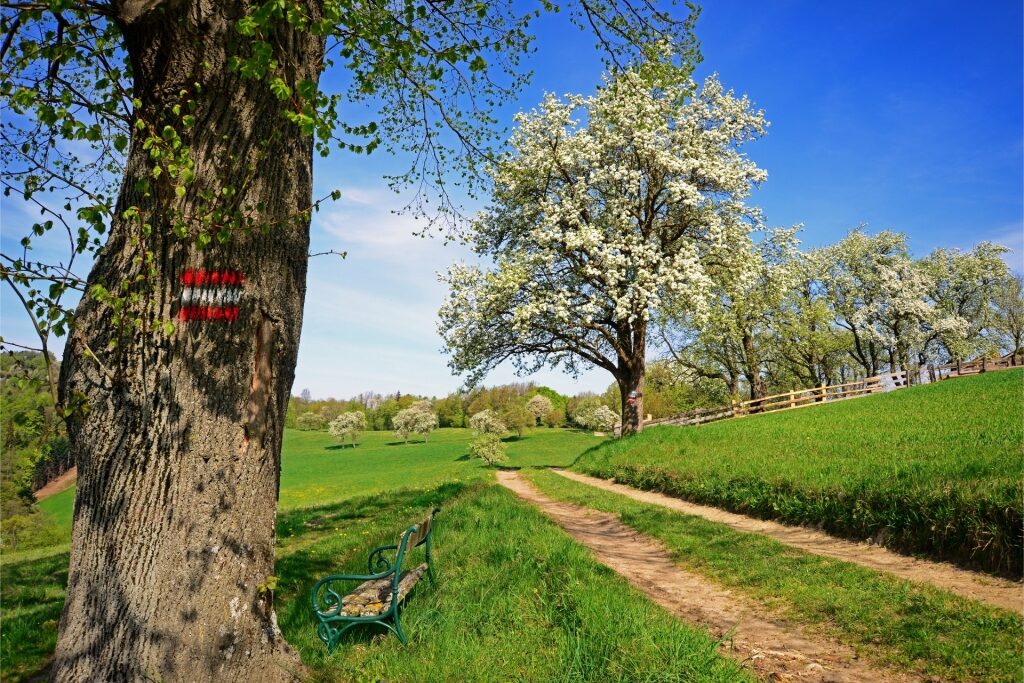
The Wienerwald is a UNESCO Biosphere Reserve, once a royal hunting ground, and today one of the first places that the Viennese think of when they want a slice of the great outdoors.
Its Leopoldsberg & Kahlenberg loop begins in the suburb of Nussdorf, and over the course of seven miles, passes through leafy vineyards, scales the heights of Leopoldsberg, and slips through ancient beech forest before arriving at Kahlenberg. From the terrace here, you have a stunning viewpoint over the Danube and the glittering city of Vienna.
There are also several cultural stops along the way. These include the 17th-century St. Joseph’s Church in Kahlenberg that was damaged during a 1683 battle between the Polish and the Ottomans. The eventual Polish success involved the largest cavalry charge in history.
Hainburg Castle Walk
Hainburg Castle
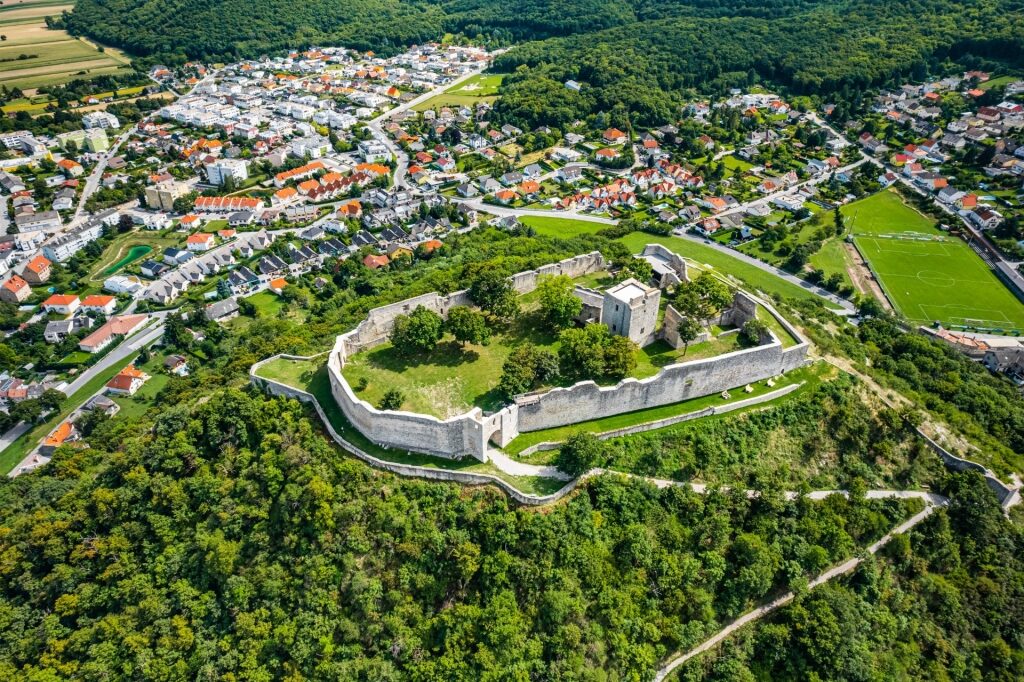
After exploring the antique center of Hainburg, including its original 13th-century town walls, visitors often ascend to the heights above the port for a short and scenic, history-accented stroll.
Following a path that takes you through the medieval Wienertor city gate—one of the largest intact examples of its kind left in Europe—you’ll eventually leave the old town cobblestones behind for a moderately strenuous climb through the forest.
Hainburg Castle
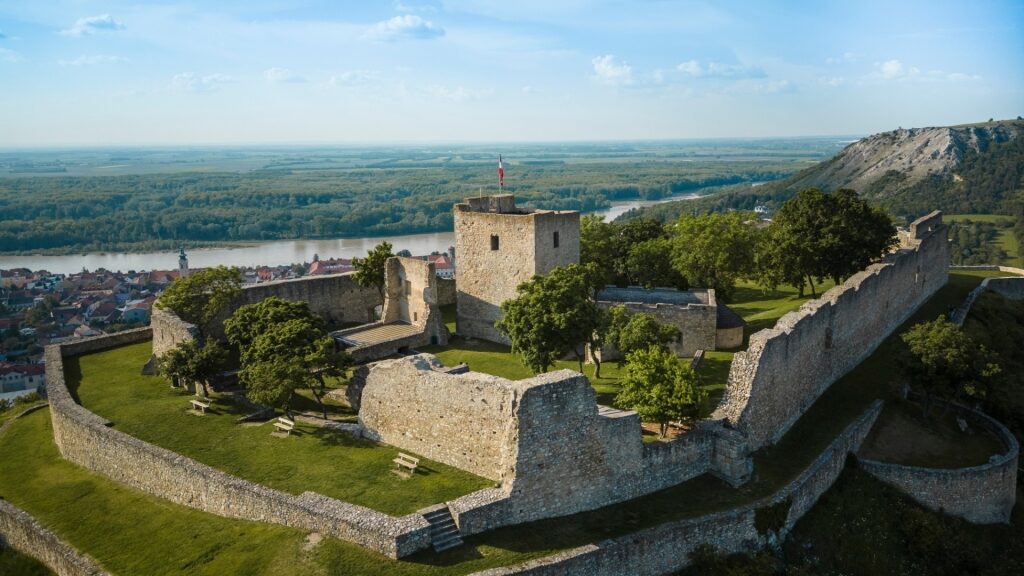
After a vigorous 45 minutes, you’ll arrive at the top of the Schlossberg and amid one of the largest castle ruins in eastern Austria, the Burg Hainburg.
This 11th-century fortification, built to defend the frontier from warlike Hungarians, is open to all comers these days, with the occasional picnic table set amid the grassy ruins. Also up here are views that take in the Danube Plain, the Little Carpathians, and the Slovak capital of Bratislava.
Kamptal Wine Trail
Kamptal
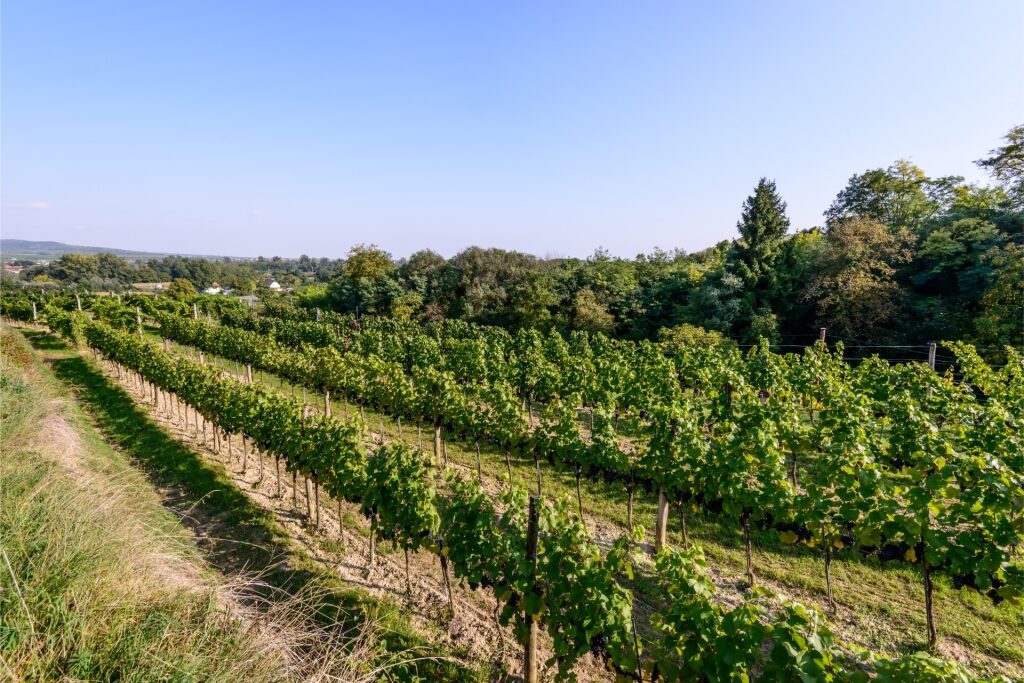
This four-mile stroll is a glorious reminder of how hiking in Austria is so often entwined with the country’s wine traditions. While on some hikes you’ll skirt the occasional row of vines, with the Kamptal Wine Trail, you’re really immersed among some of the country’s best Riesling and Grüner Veltliner producers.
This nearly four-mile stroll sets off from the wine-growing Austrian town of Langenlois, near Krems. The circular route passes through rolling wine country, along the Kellergassen lanes—rows of tiny houses intended for wine storage—and past tasting kiosks and the occasional bronze sculpture for inspiration.
It can be completed in half a day, but that’s entirely up to your pace and, presumably, your pace of drinking. The Loisium wine museum is also close to the route, and its 900-year-old wine cellars are well worth a tour.
Göttweig Abbey Forest Walk
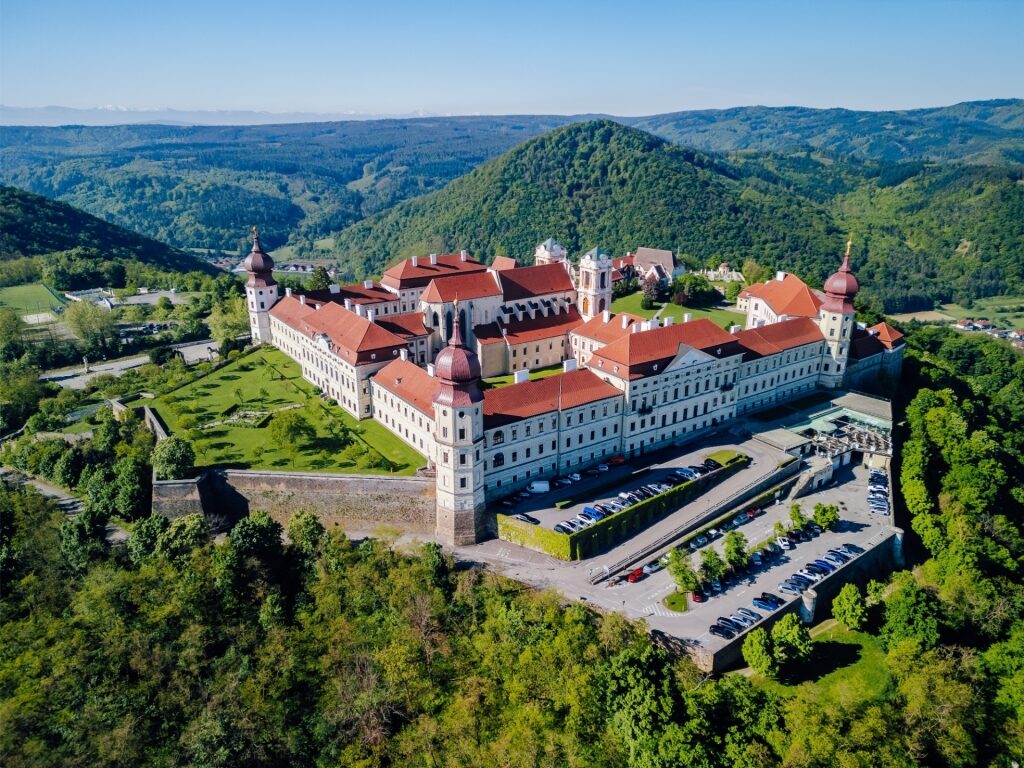
Göttweig Abbey
This gentle forest walk slips through a tranquil pine forest until you emerge from the trees to see the immense Göttweig Abbey, part of the UNESCO World Heritage Landscape of Wachau.
This Benedictine Monastery, founded in 1083, dominates a hilltop close to the Danube port of Krems. It’s been wrecked by fire twice over the years, although today it’s in perfect Baroque condition thanks to multiple renovations.
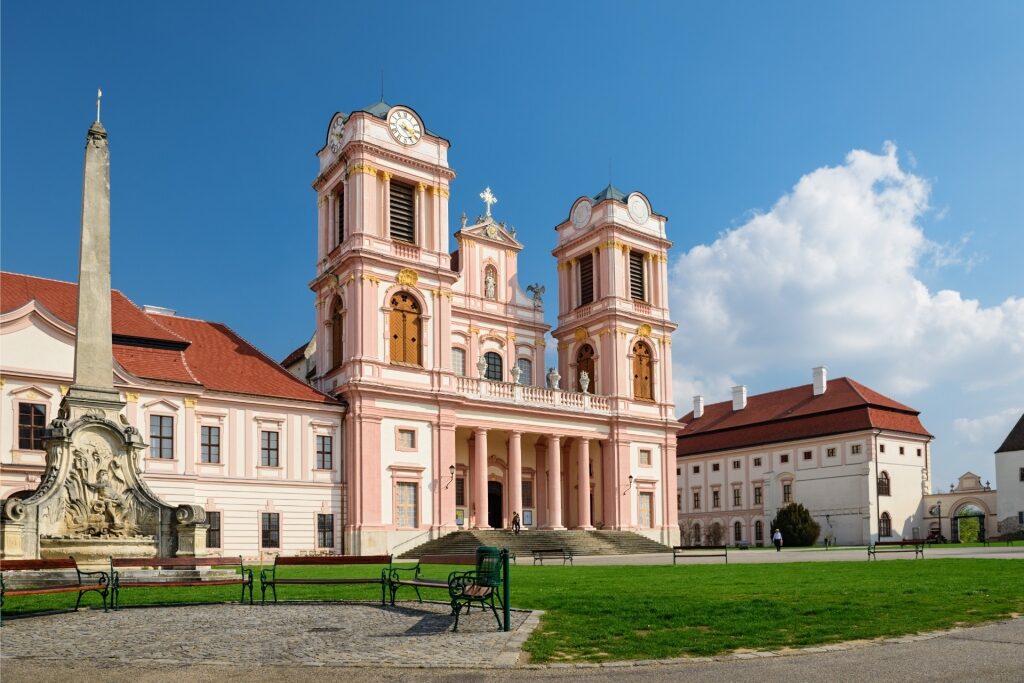
Göttweig Abbey
Echoing its past as a seat of learning in the Middle Ages, the abbey’s wood-paneled library today remains a draw for many, stuffed with antique treasures. The grand white and orange-tiled building is also known for having the country’s largest Baroque staircase, decorated with a significant Paul Troger fresco.
Afterward, sip some apricot nectar from the abbey’s café—apricots are a major crop in the Wachau—and admire the forested panoramas. Then return along the shady, well-graded walk through the pines, listening out for the rustle of deer.
Read: Best Places to Visit in Austria
Tullner Aubad Nature Trail
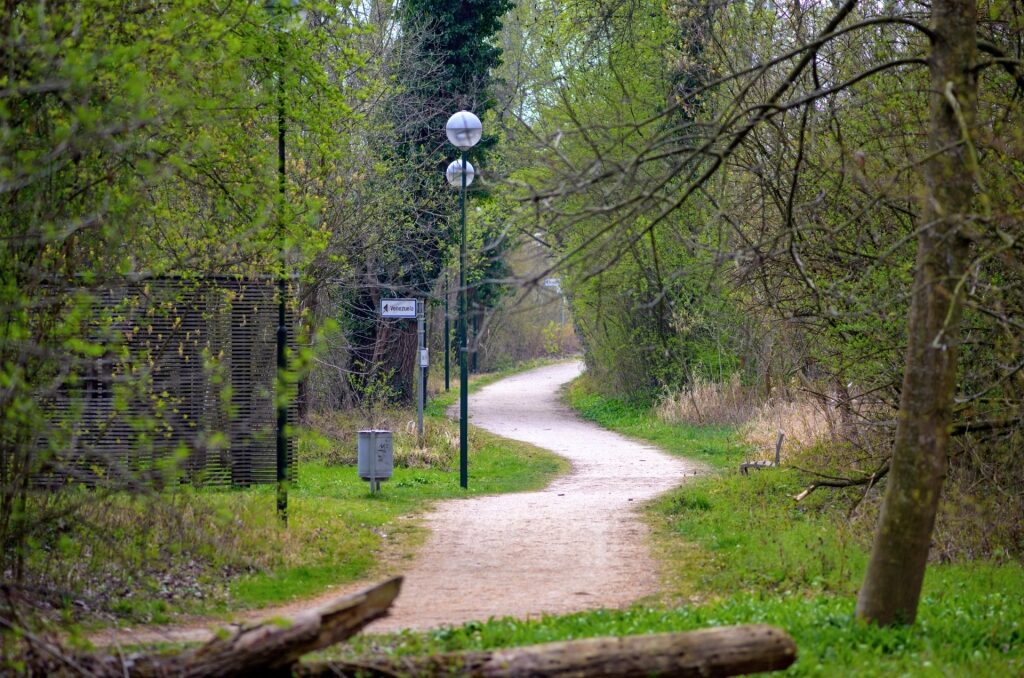
Tulln
This nature walk showcases the biodiversity found while hiking in Austria. This particular stroll, just a mile along the Danube promenade from Tulln city center, soon leaves behind the pretty streets of the “garden city” for the floodplain forest of the Tullner Aubad Nature Reserve.
You’ll follow wetland boardwalks while stopping to read occasional panels highlighting rare orchids or alerting you to the presence of beavers, storks, and kingfishers. This peaceful, easygoing loop is around three miles in total.
Afterward, return to Tulln and be awestruck by the saga statues on the riverside, or stop at the Egon Schiele museum for some post-walk culture.
FAQs
Is Austria good for hiking?
Ysperklamm Gorge
Austria is one of Europe’s premier hiking destinations. Close to two-thirds of the country is mountainous, meaning you can find everything from gentle vineyard walks to high-Alpine adventures. The trails are meticulously maintained, clearly signposted, and often with reliable links to public transport.
What is the most famous hiking trail in Austria?
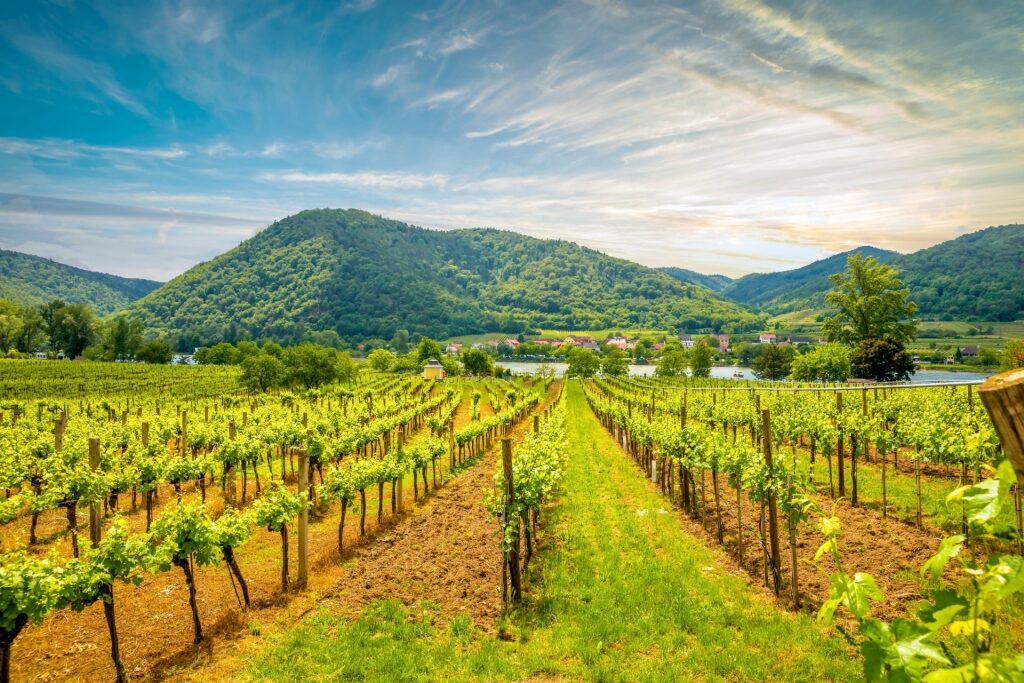
Wachau Valley
The Eagle Walk, or Adlerweg, stretching over 250 miles across the Alps, is Austria’s most celebrated long-distance trail. In eastern Austria, the Wachau World Heritage Trail offers a gentler but equally iconic experience through vineyard-covered hills and Baroque towns along the Danube.
Where are the best hikes in Austria for beginners?
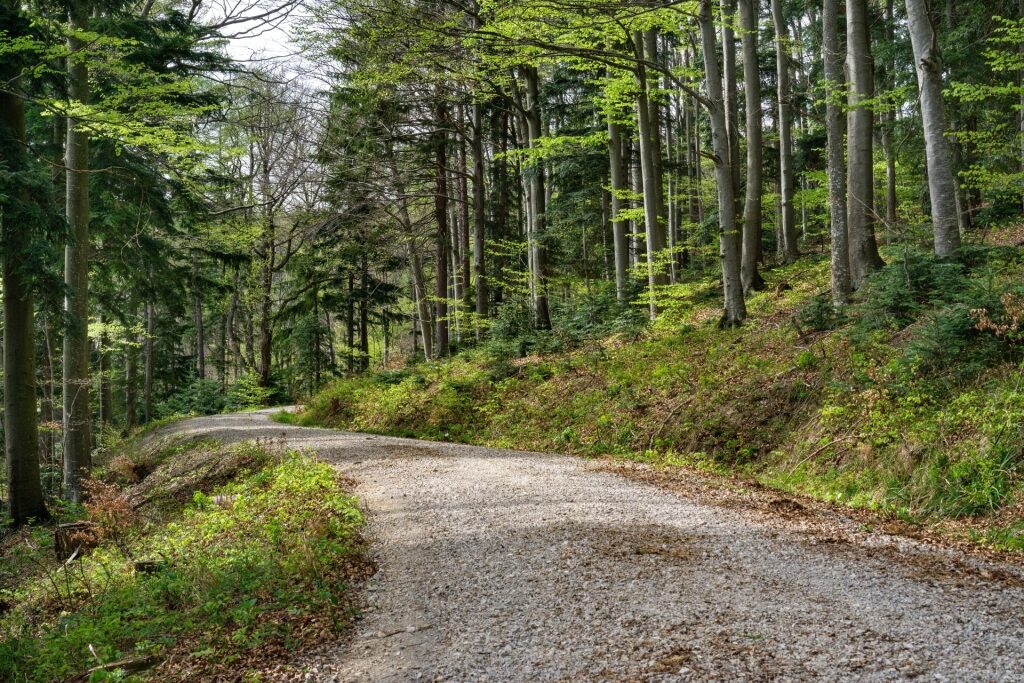
Wienerwald
Austria is a brilliant country for beginners. The Wachau Valley, Vienna Woods, or Wienerwald, and Salzkammergut Lake District all offer well-marked, lower-altitude routes with plenty of rest stops.
Trails such as the Pöstlingberg Hill in Linz or the Kamptal Wine Trail near Krems blend culture, cuisine, and countryside, perfect for those easing into hiking. Most routes have optional shorter loops, meaning you can enjoy a scenic morning walk before a plate of lemon-sharpened Schnitzel in a local tavern.
When is the best time for hiking in Austria?
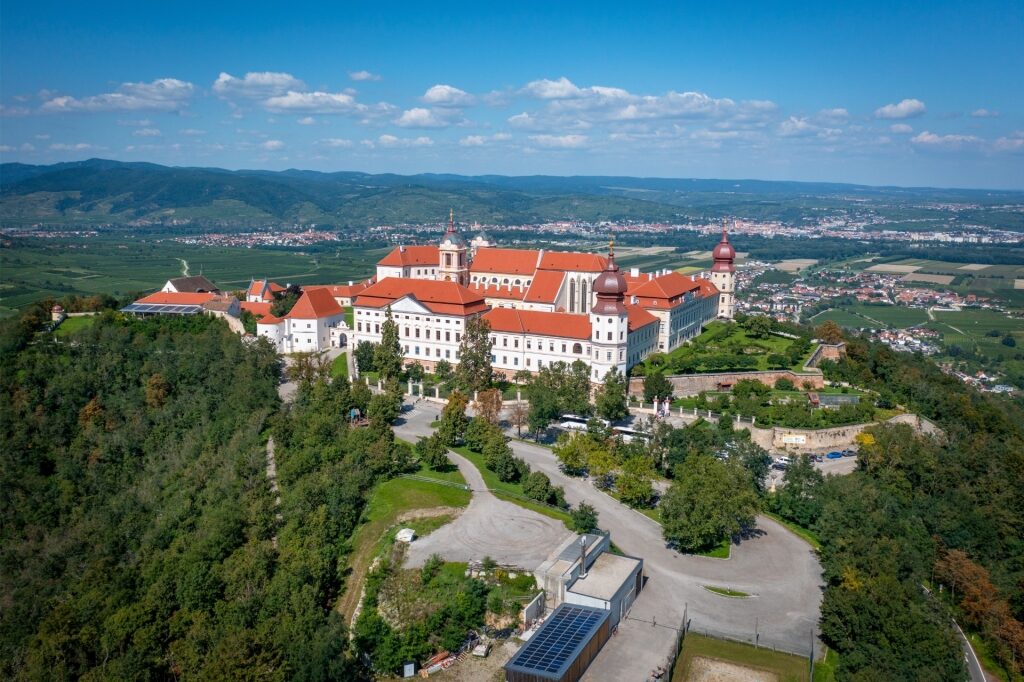
Göttweig Abbey
The main hiking season runs from May to October, when the weather is mild and the mountain huts are open. High season is July and August, while May, September, and early October are best for quieter trails.
Do you need a guide?
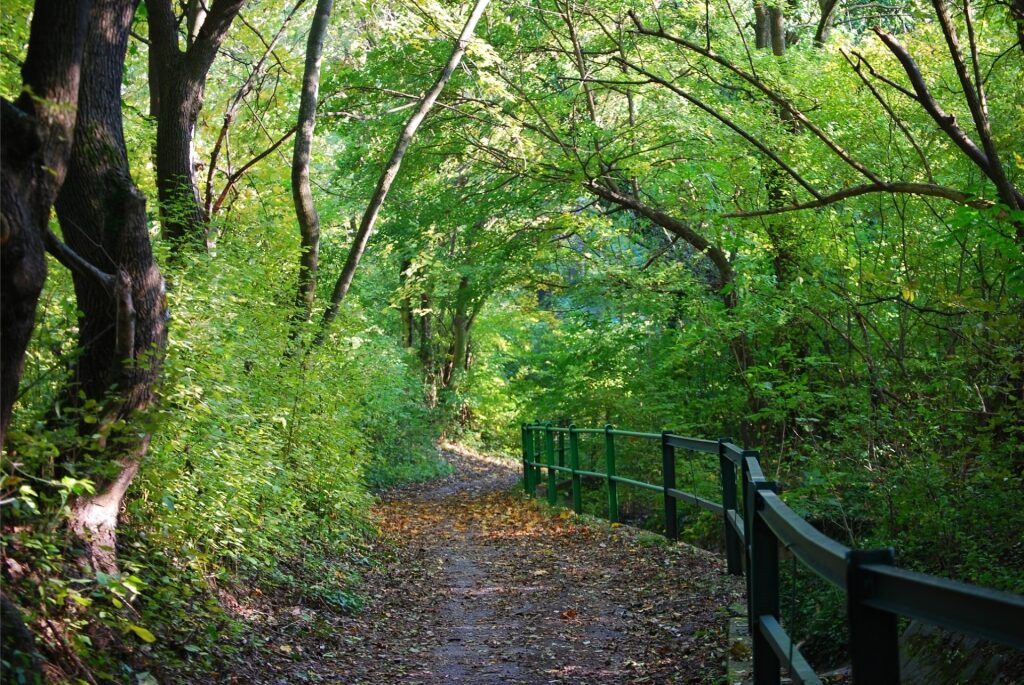
Wienerwald
Generally, no—Austria’s trails are very well marked, and detailed maps are widely available. However, the knowledge of a local guide always enriches the experience, especially when it comes to spotting wildlife or relating cultural stories along the way.

Wachau Valley
Discover the best hikes in Austria for yourself. Browse Celebrity’s Danube river cruises and book your European adventure today.