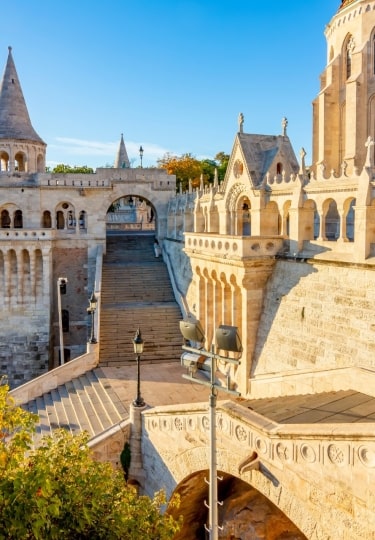
Choosing a list of the best places to visit in Budapest is no easy task, for the Hungarian capital is like no other. Straddling the legendary River Danube, it’s effectively two cities stitched together. On the one side you have Buda, with its castle, cobblestone lanes, and fairy-tale viewpoints; on the other you have Pest, all grand boulevards, cafés, and buzzing squares.
What makes a visit so memorable, and that choice of best places to see such a challenge, is the sheer variety of things on offer here. One moment you’re gazing up at Gothic spires, the next, you’re exploring Cold War bunkers. Later you might be soaking in a steaming outdoor thermal pool while locals play chess at the water’s edge or indulging in some of the continent’s best cakes in a historic café. Here, then, are some of the best places to visit in Budapest.
Buda Castle
Buda Castle
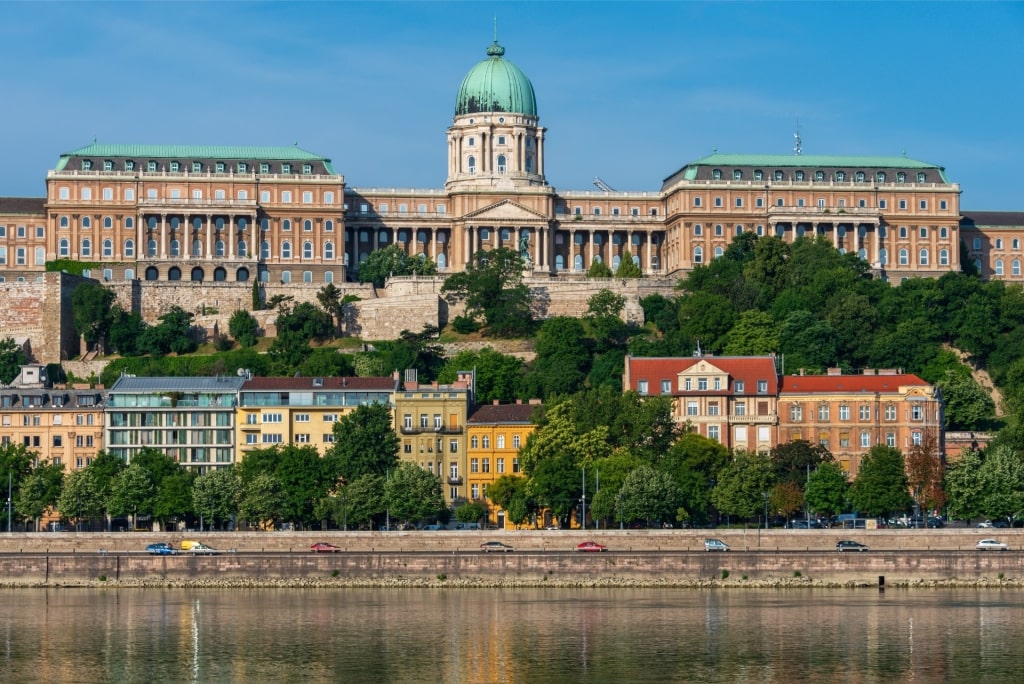
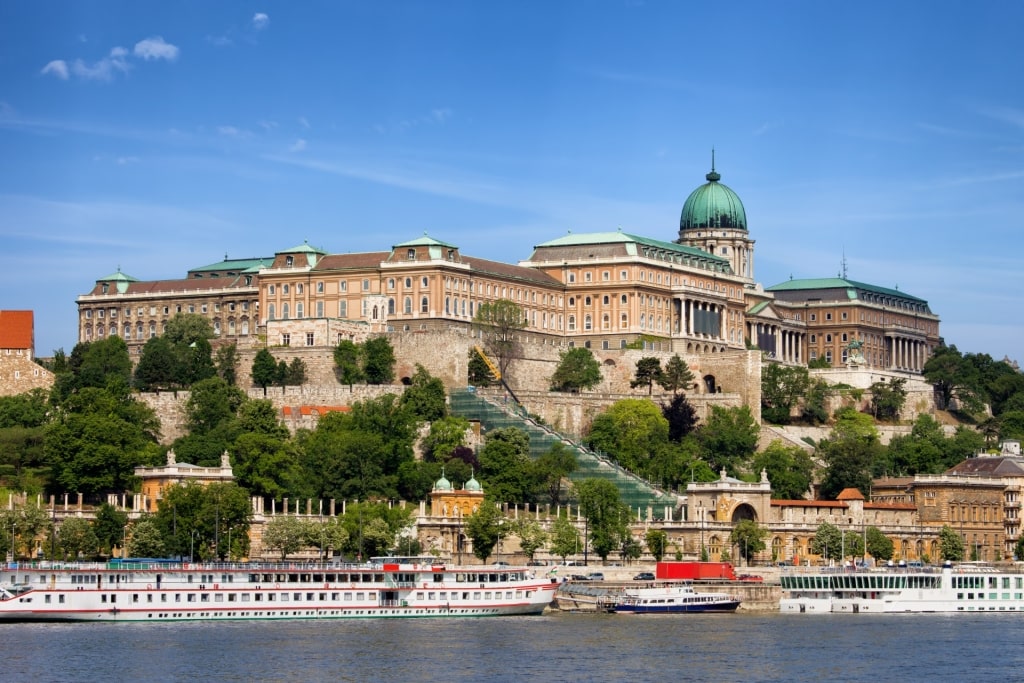
When it comes to the best places to visit in Budapest, one that’s high on everyone’s list is Buda Castle. Sitting on top of Castle Hill and with incredible views over the Danube, the site dates from 1265, although much of the current Baroque-style palace was rebuilt after extensive damage in World War II.
Host to numerous coronations, it also played a significant role in the 1541 Ottoman Siege of Buda but today, it is home to the Hungarian National Gallery and Budapest History Museum. Even if you don’t go inside, it’s worth the climb up the hill for the lovely gardens and incredible views. Get there on foot via the twisting medieval streets from the riverside, or let the funicular railway take the strain.
Fisherman’s Bastion
Fisherman’s Bastion
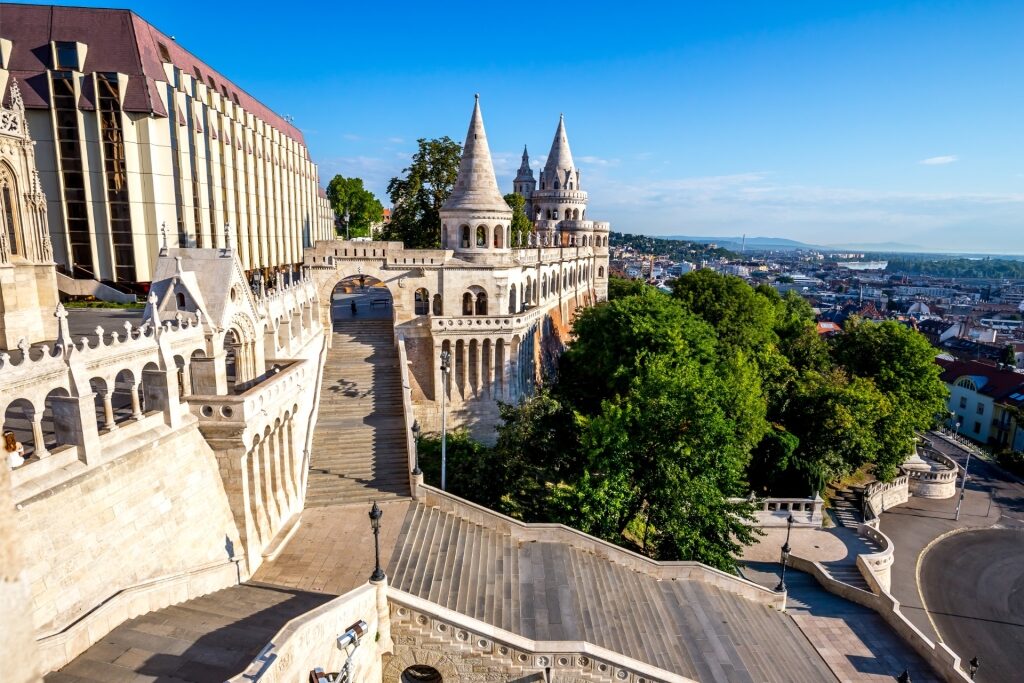
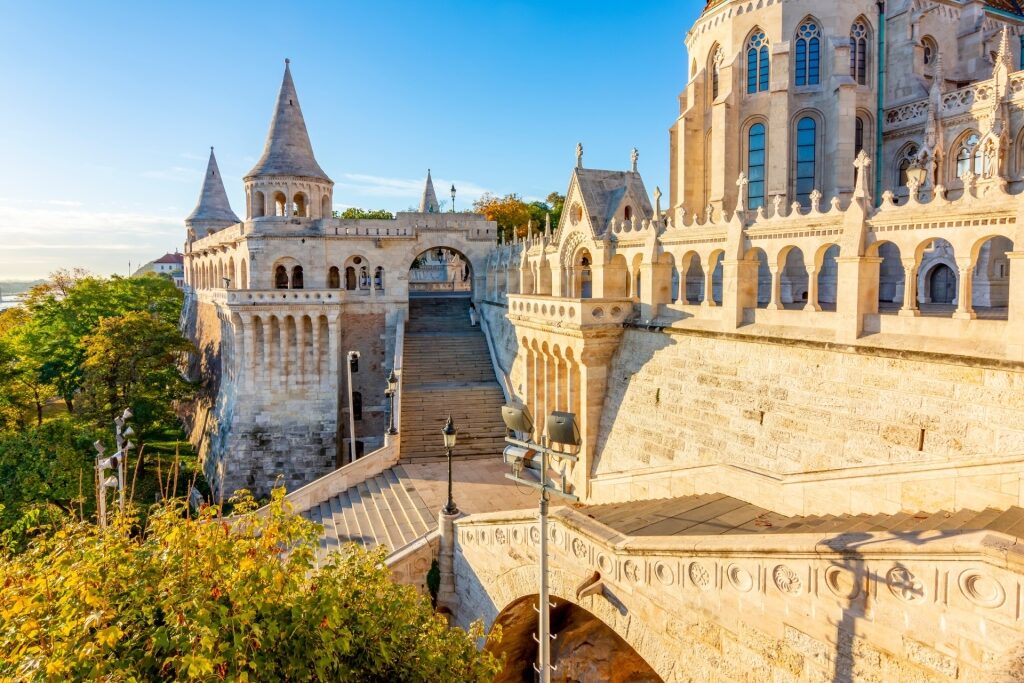
Just below Buda Castle and also set on Castle Hill sits another of the best places to see in Budapest: Fisherman’s Bastion. This neo-Romanesque terrace and viewing platform was constructed between 1895 and 1902 as part of the celebrations marking the city’s 1,000th anniversary and is steeped in history and symbolism.
The seven towers represent the seven Magyar tribes that first settled here, while the name is inspired by a medieval fishermen’s guild that once defended this stretch of the city. Walking around the bastion—all stone towers, turrets, and covered walkways—is a fairytale-like experience that makes it one of the most photographed spots in the city.
Read: What Is Budapest Known For?
Matthias Church
Matthias Church
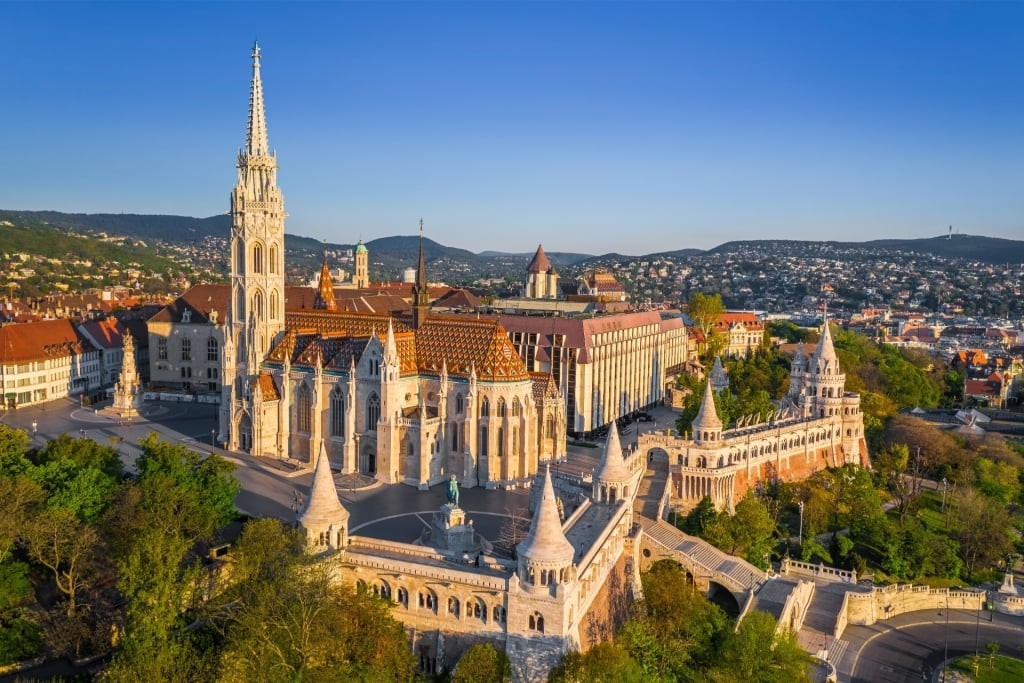
Matthias Church—officially the Church of Our Lady—is the third big-ticket item on Castle Hill. With roots in the 13th century and sitting between the Castle and the Bastion, its Gothic spires, intricate stonework, and iconic kaleidoscopic tiled roof combine to make it one of the best places to visit in Budapest.
Inside it feels a little like an ornate art gallery, a fitting spot for the many coronations that have taken place here. The building was converted into a mosque during the Ottoman era but it was regally restored as a Catholic place of worship in the 19th century.
Széchenyi Thermal Baths
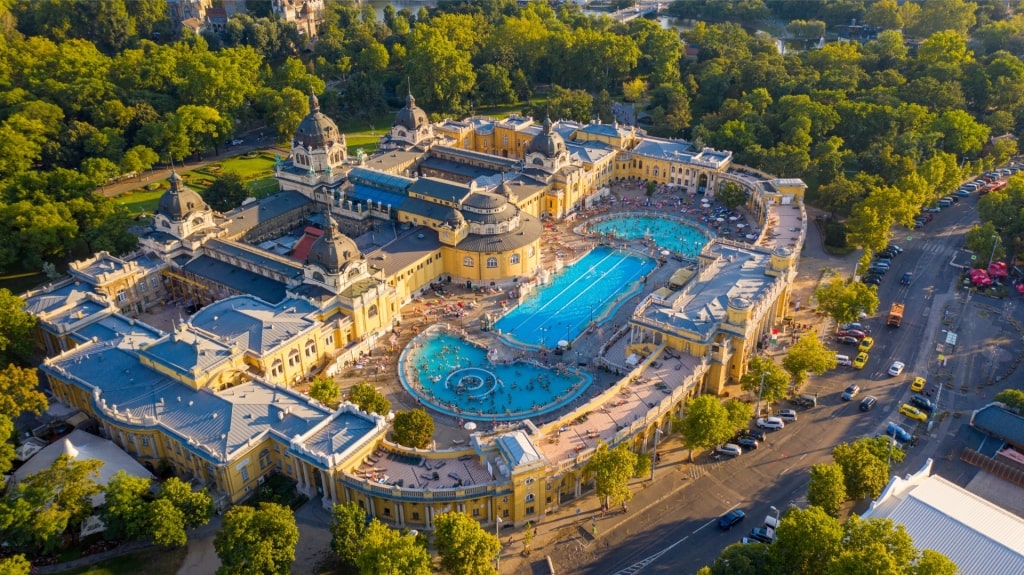
Széchenyi Thermal Baths
With Budapest built around a vast network of thermal springs, taking a communal dip has been a popular activity here since Roman times.
There are a number of spa and wellness centers with thermal baths around the city with several vying for the title of city favorite. Probably the most famous of these is Széchenyi, thanks to its huge size and maze of indoor and outdoor pools. Set in City Park on the Pest side of the river, it’s been offering group bathing experiences since 1913 and is open year-round, even in the cold of winter. Look out for the locals who love a game of chess here, playing by the side of the pools for hours on end.
Parliament Building
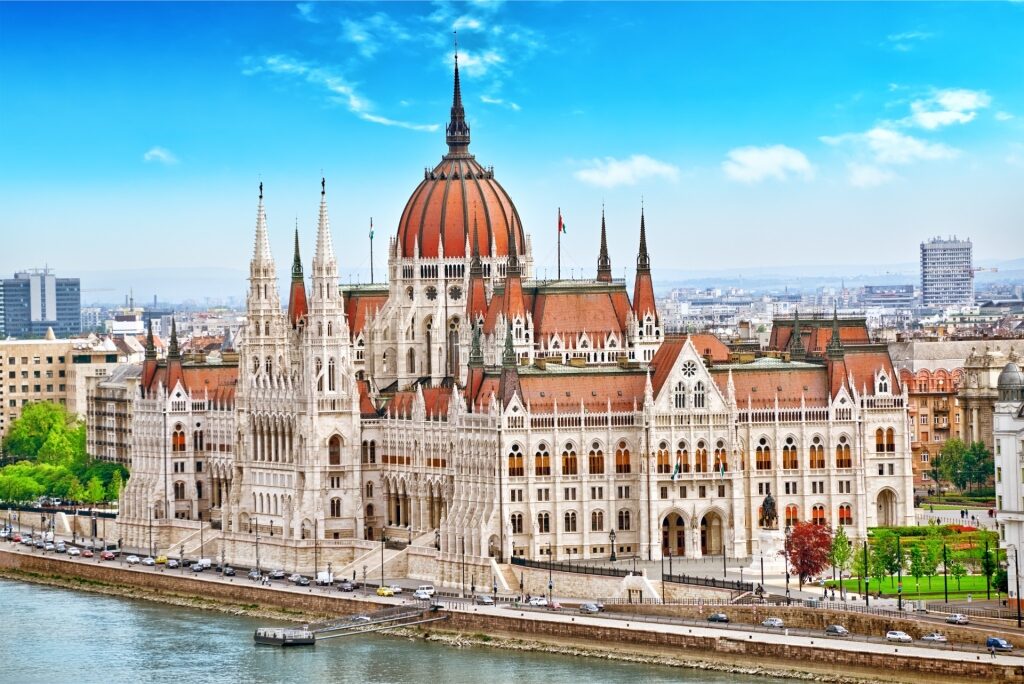
Parliament Building
Not all the big attractions are on the Buda side of the city. Over the Danube in Pest lies one of Budapest’s true showstoppers, the sprawling neo-Gothic Parliament. Said to be one of the largest legislative buildings in Europe, it was completed in 1904 after a 20-year construction, and the result was worth the wait.
Its imposing façade topped with spires and arches provides for some incredible images, especially when taken from the river itself. Up close it’s perhaps even more impressive, especially in the vast central square that gives a sense of its grandeur.
Tours of the interior are available, and visitors get to see one of the country’s most important relics, the Holy Crown of Hungary that was used in the coronations of the Hungarian royals.
St. Stephen’s Basilica
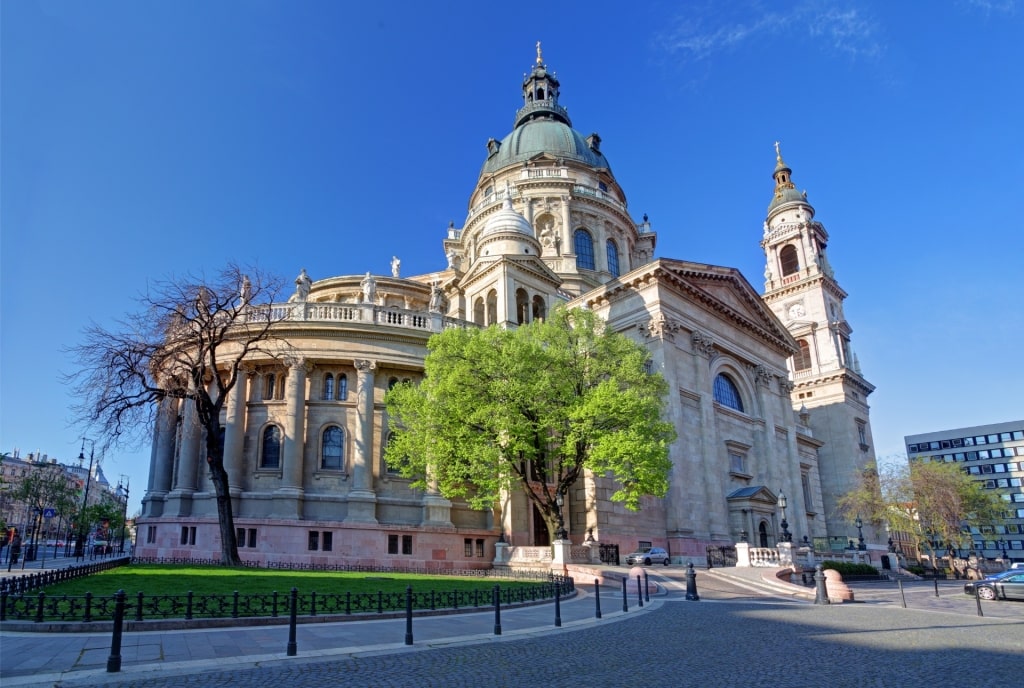
St. Stephen’s Basilica
A devastating 1838 flood that saw many residents saved by fleeing to higher ground kickstarted the building of what went on to become Budapest’s largest church.
Construction didn’t begin until 1851 and more than five decades passed until it was finally opened in 1905, but the result is quite magnificent. The church is a neoclassical showpiece complete with twin bell towers, ornate façades, and a central dome that simply dominates the Pest skyline.
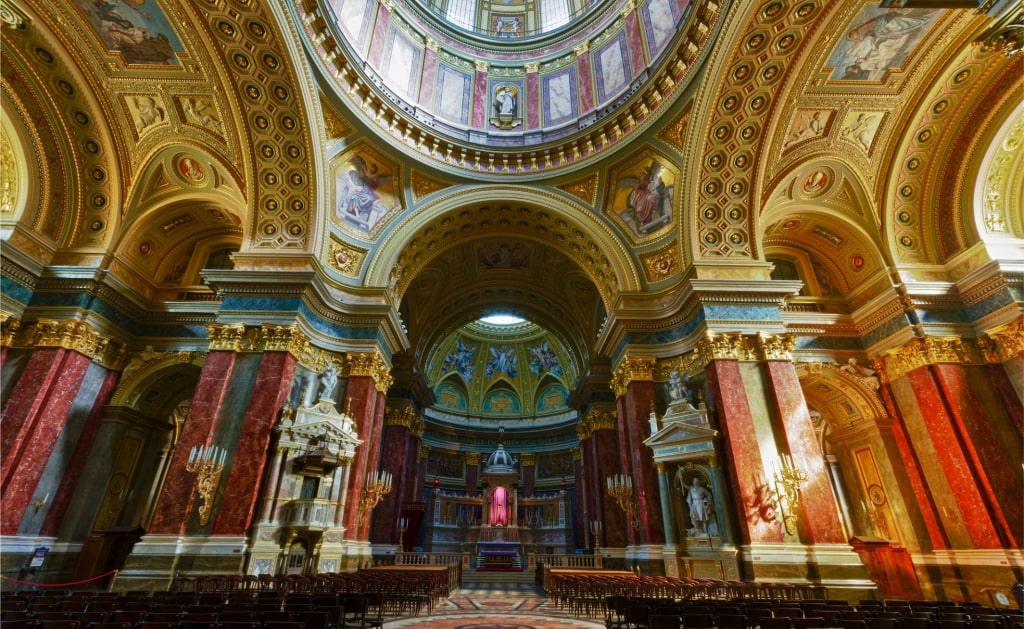
St. Stephen’s Basilica
Named after Hungary’s first king, St. Stephen, it’s also a place of pilgrimage—his preserved right hand is housed in a side chapel and is one of Hungary’s most sacred relics.
Hungarian National Museum
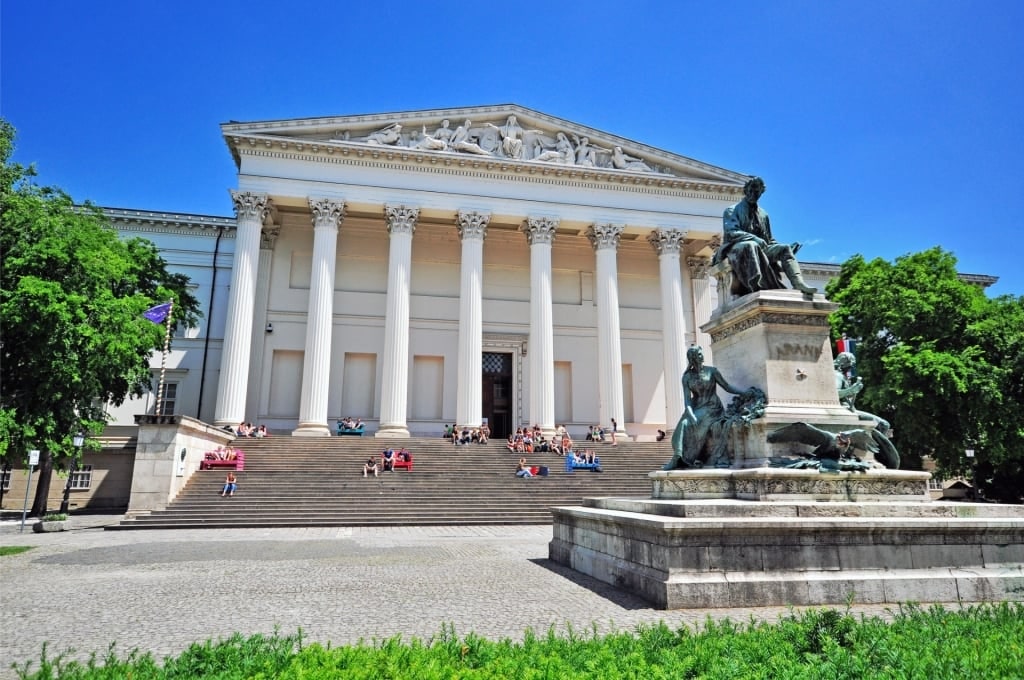
Hungarian National Museum
If you want a great overview of Hungary’s history and wider role in the events that shaped Europe, the National Museum is the place to go.
Founded in 1802, it sits on a leafy square on Múzeum körút in central Pest, another handsome building with an elegant Neoclassical façade. Collections stretch from Roman-era relics to coronation mantles, with particular emphasis on the 1848-49 revolution against Habsburg rule. St. Stephen’s coronation cloak can also be found here, as can exhibits from the Ottoman era, the Austro-Hungarian Empire, and the mid-20th century communist years.
House of Terror Museum
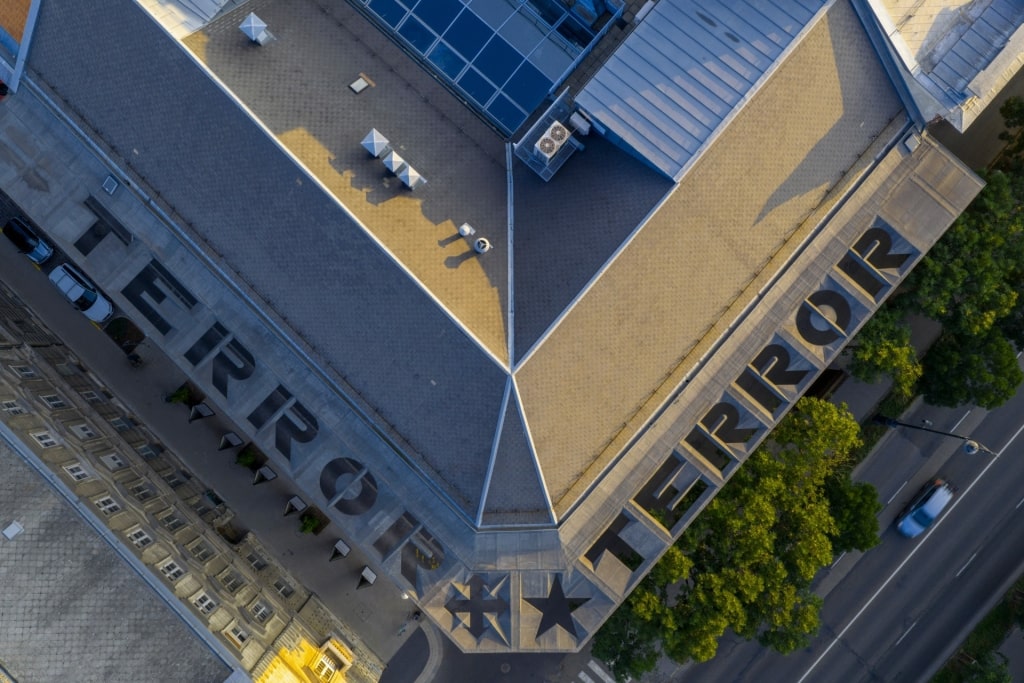
House of Terror Museum
Hungary is one of the few places in Europe that went from a fascist regime in World War II to a Communist one during the Cold War era. These stark extremes that shaped the country in the mid-20th century are told in great detail in this evocative museum in central Pest.
The museum is set on Andrássy Avenue in what was the headquarters of the Arrow Cross Party, Hungary’s Nazis, and later the Communist secret police. Visitors move through dimly lit rooms that tell stories of forced labor camps and political persecution.
The basement’s reconstructed prison cells, where interrogations and executions once took place, are particularly chilling. It’s both heavy and confronting but offers a great insight into Hungary’s often murky past for anyone wanting to go deeper than Budapest’s architecture, thermal baths, and cafés.
Hospital in the Rock Museum
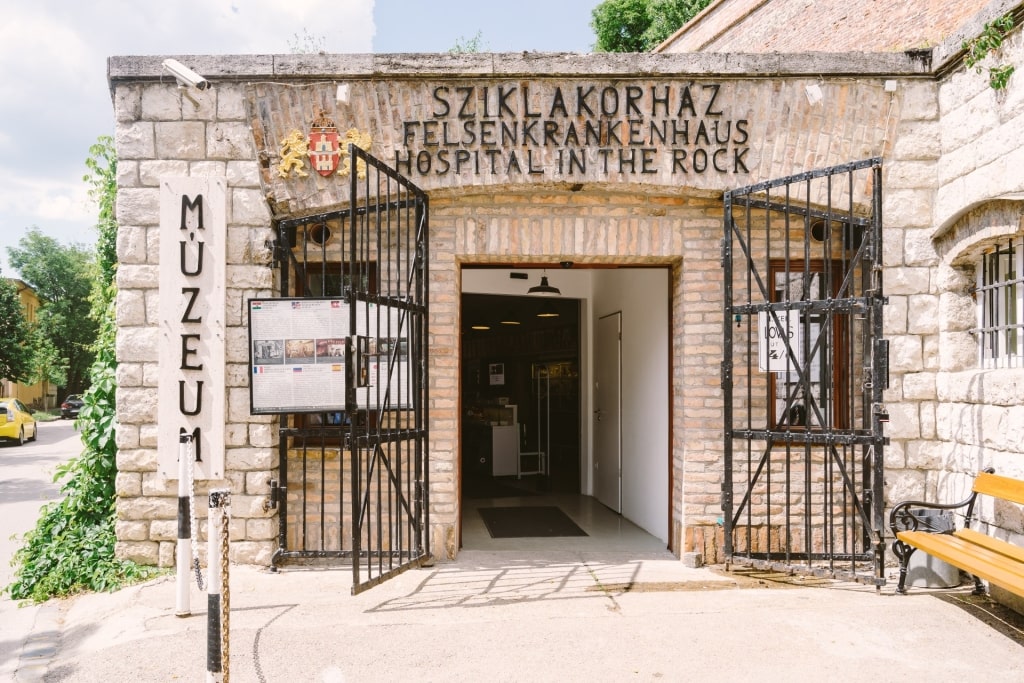
Hospital in the Rock Museum Photo by
Wei-Te Wong on Flickr, licensed under CC BY-SA 2.0
The Hospital in the Rock is both one of Budapest’s quirkiest sites, as well as being one of the best places to visit in the Hungarian capital.
Now a museum, the hospital was carved into the rocky caves beneath Castle Hill in 1939 as Europe prepared itself for war. During the following six years it fulfilled its task to great effect, especially during the 1944-45 Siege of Budapest when it was tasked with treating both civilians and soldiers.
During the Cold War, it was converted into a top-secret bunker with facilities to both save and house 200 doctors and nurses in the event of a nuclear war.
The museum, which opened in 2008, now offers another fascinating insight into some of Europe’s darker days with mannequins and preserved equipment recreating scenes of crowded wards, operating rooms, and command centers.
Heroes’ Square
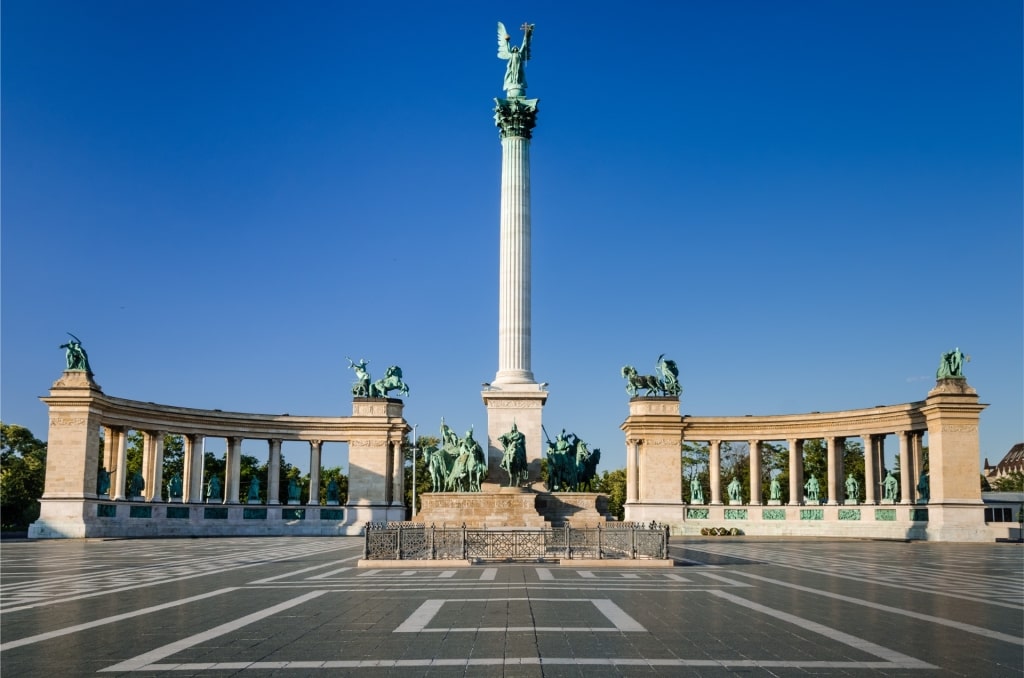
Heroes’ Square
One of the recurring themes of a visit to Budapest is the number of monuments created for the 1896 millennial celebrations, and Heroes’ Square, or Hősök tere, is among the grandest.
At the end of Andrássy Avenue on the Pest side of the city, this vast plaza is dominated by the Millennial Monument, a towering column crowned by a statue of the Archangel Gabriel and flanked by statues of Hungary’s founding fathers. The Tomb of the Unknown Soldier is at its base.
The square is more than a symbol of national pride—it’s also home to the Museum of Fine Arts, with masterpieces by El Greco and Rembrandt, and the Palace of Art, which champions contemporary exhibitions.
Városliget, or City Park
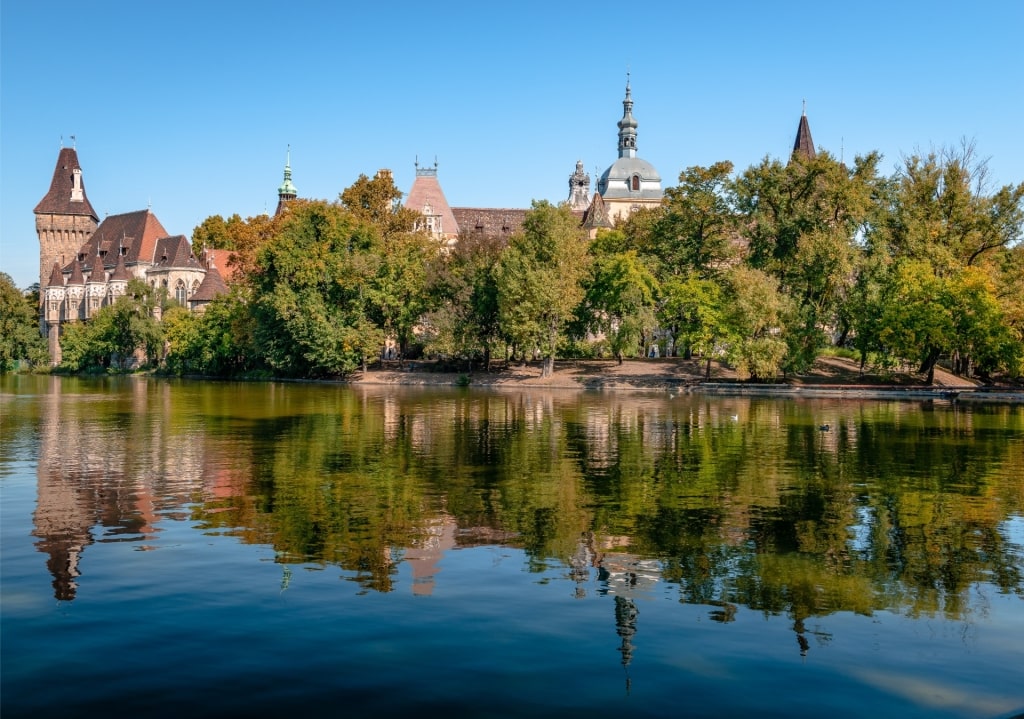
Városliget
Heroes’ Square also acts as a gateway to Budapest’s largest and most popular green space, City Park. Stretching across some 300 acres, the sprawling park mixes lawns, lakes, and woodlands, with some of the city’s most-loved attractions.
Széchenyi Thermal Bath, Vajdahunyad Castle, and Budapest Zoo & Botanical Garden can all be found here. There’s also a boating lake that turns into an ice rink in winter, and plenty of shaded walkways that provide welcome respite in the heat of summer.
Margaret Island
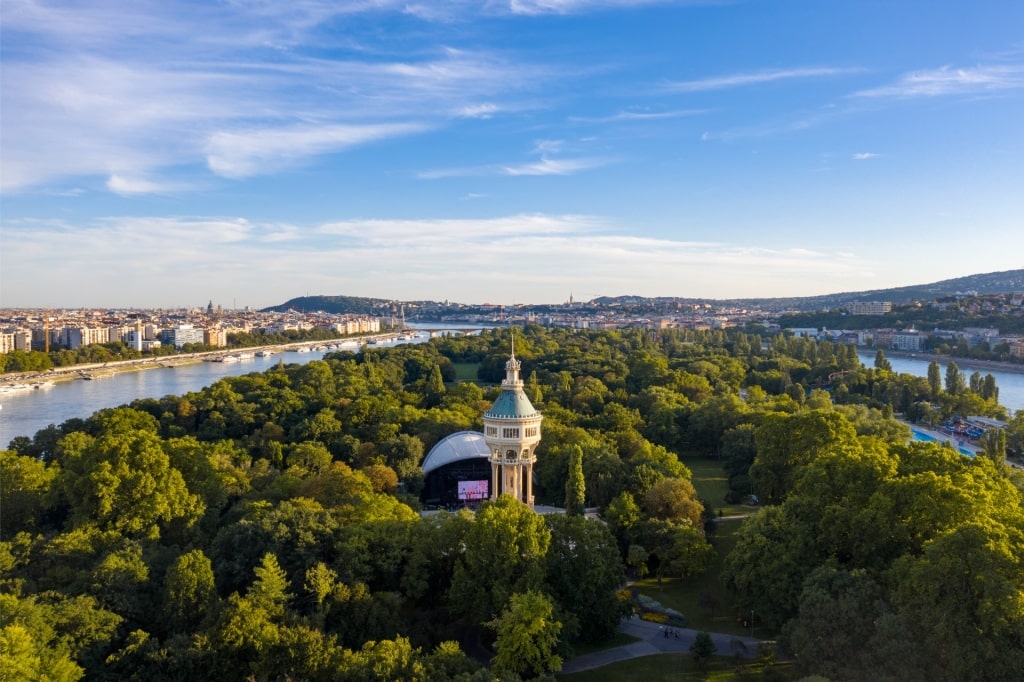
Margaret Island
If you’re looking for the perfect retreat right in the heart of the city, they don’t come much better than Margaret Island. In the Danube River and accessed by the Margaret and Árpád bridges, the 1.6-mile island was transformed from woodlands into an elegant city park in the 19th century.
A favorite escape of locals, the car-free spot offers a wealth of things to see and do, including the remains of a 13th-century convent, a musical fountain, and thermal spas. In summertime it plays host to open-air concerts and festivals, and for anyone looking for a spot to walk, jog, or cycle, it has some great trails, too.
Great Market Hall
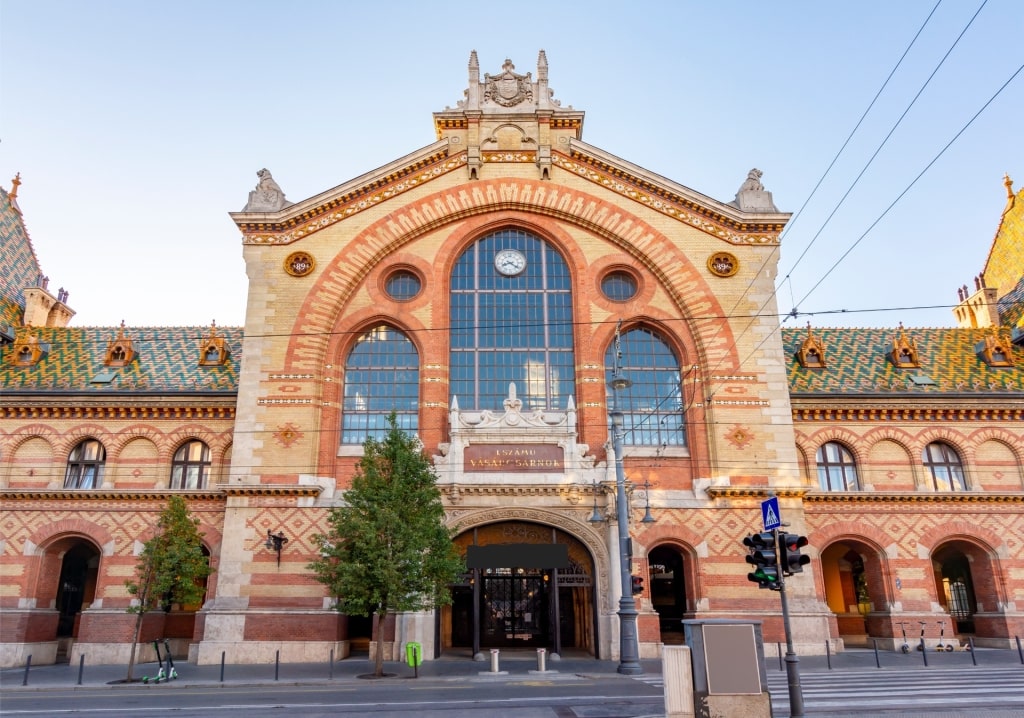
Great Market Hall
If you’re a foodie, head straight to the Great Market Hall, Nagycsarnok, the largest and most famous indoor market in Budapest.
Constructed as part of the city’s late 19th century “modernization”, it is home to food stalls, spice vendors, and souvenir shops, all set over two floors plus a basement, and housed under a soaring steel-framed roof.
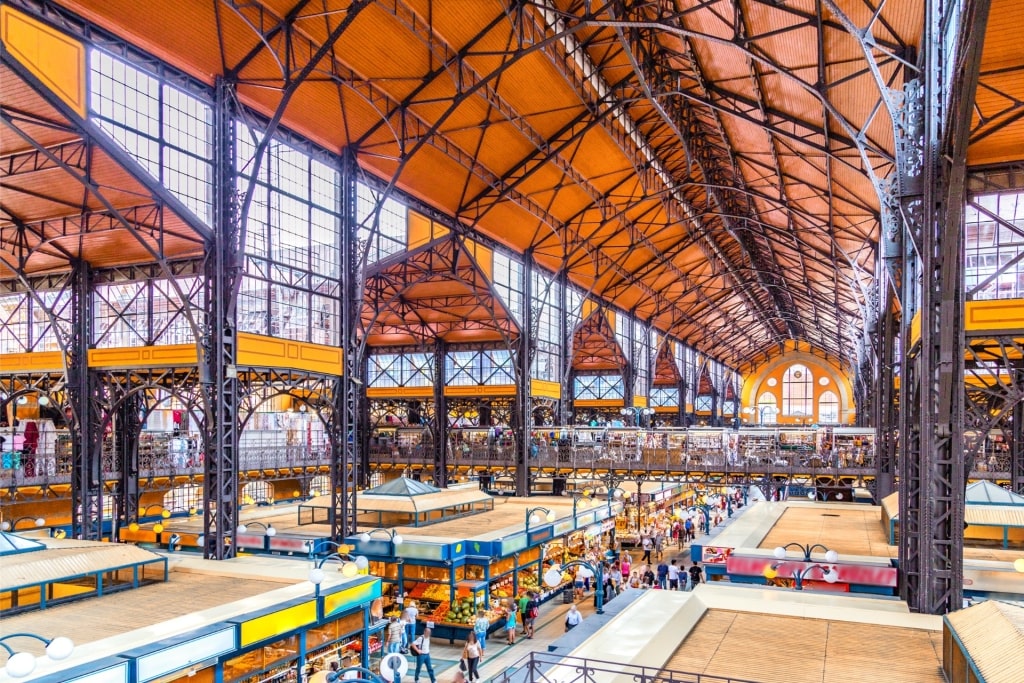
Great Market Hall
Most of the produce—including pastries, candy, and spices—are located on the ground floor, with the basement home to fishmongers, vegetable stalls, and a few specialized butchers. The upper level, meanwhile, is the place to pick up handmade lace or wooden crafts to take home.
Read: Shopping in Budapest
Dohány Street Synagogue & Jewish Museum
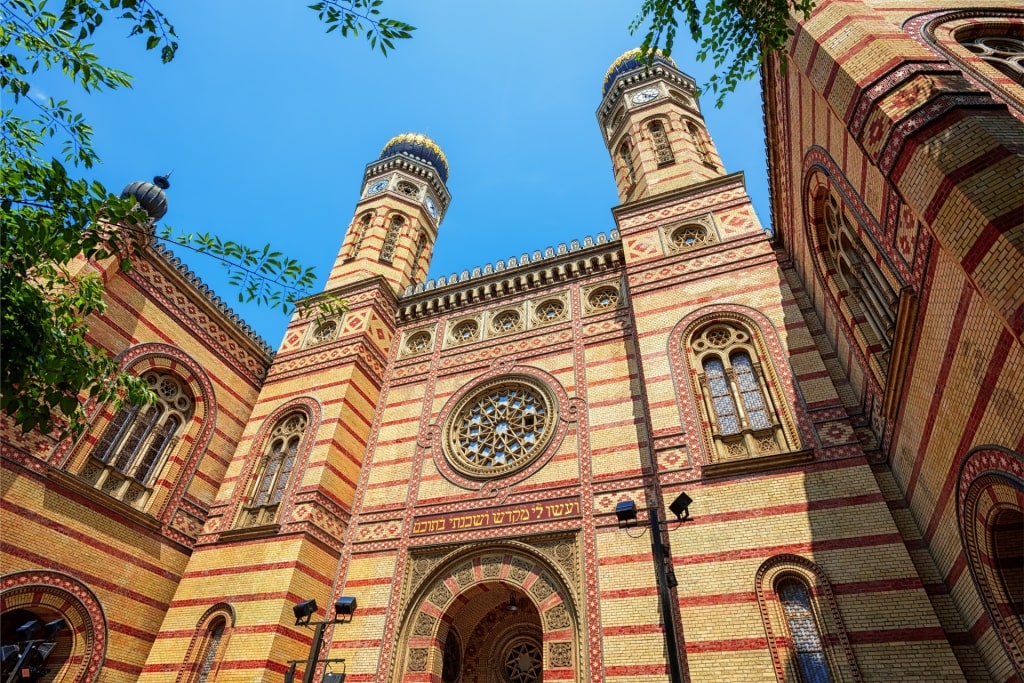
Dohány Street Synagogue
At the heart of Budapest’s old Jewish Quarter in central Pest lies the Dohány Street Synagogue, the largest in Europe and the second-largest in the world. Housed in a Moorish-revival building, complete with onion domes, when first built in 1859, it could host up to 3,000 worshippers at one ceremony.
Beautifully decorated inside, the synagogue is both impressive and incredibly moving. The Holocaust Tree of Life is a metal weeping willow whose leaves are inscribed with the names of Nazi victims, while there’s also a memorial to Jewish soldiers who lost their lives in World War I.
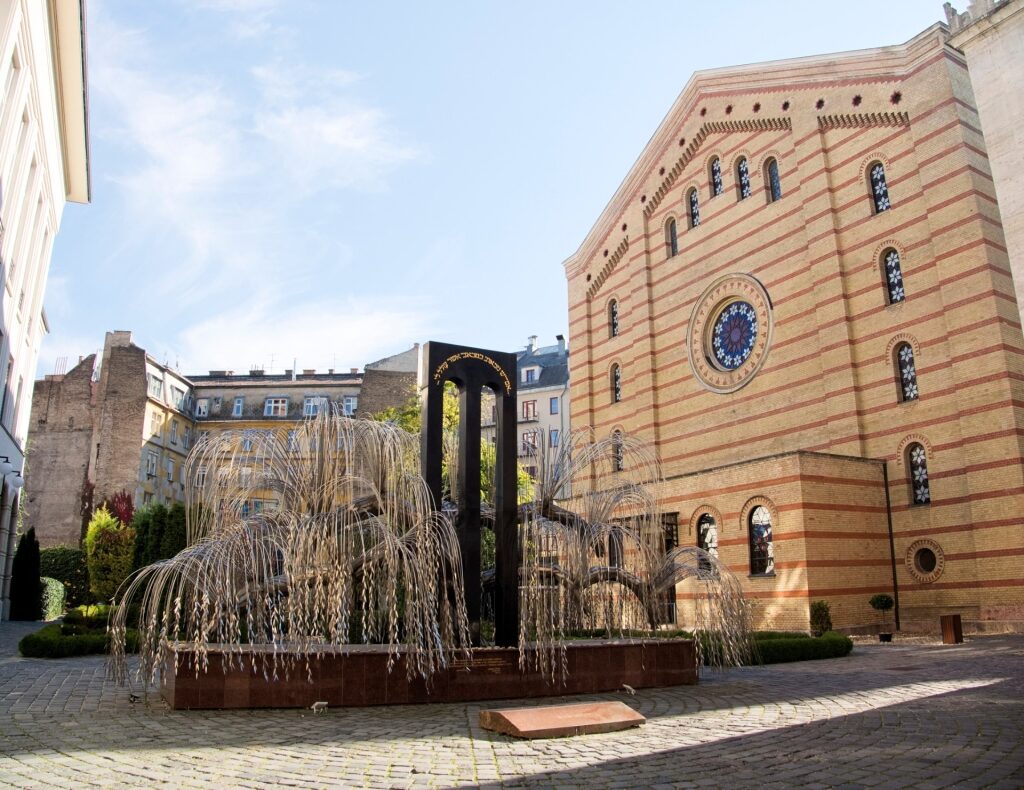
Holocaust Tree of Life memorial
The adjacent museum houses religious artifacts, manuscripts, and everyday objects that tell the story of Jewish life in Hungary from medieval times to today.
Café Gerbeaud
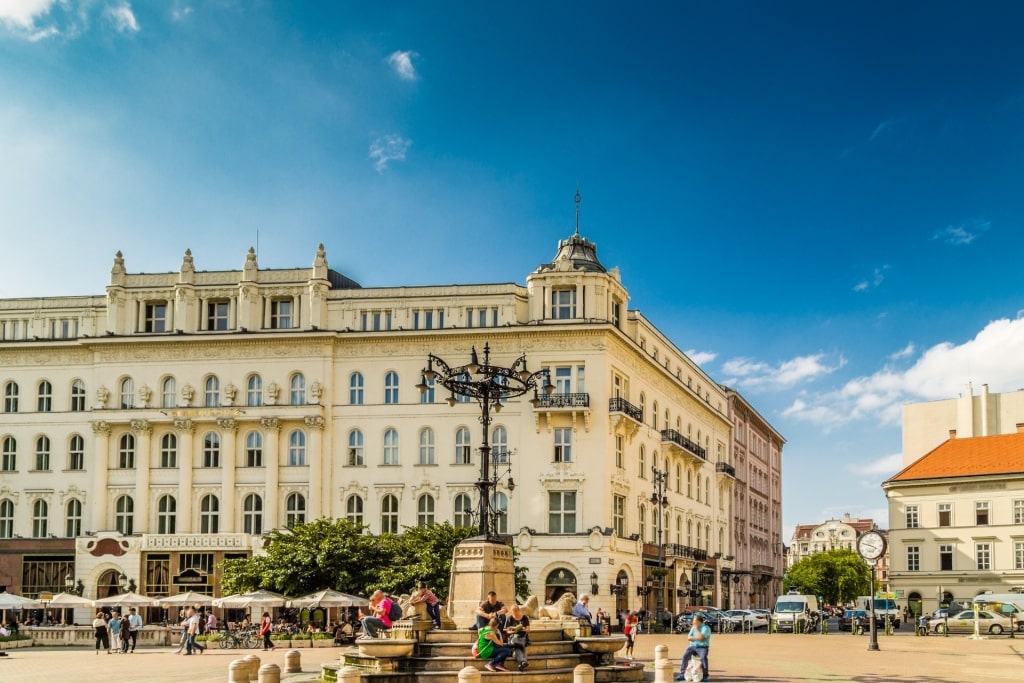
Café Gerbeaud
Budapest’s café culture is legendary but if you only have time to visit one while here, make it Café Gerbeaud. One of Europe’s great historic coffee houses, it’s been serving up coffee, cakes, and pastries since the 19th century.
Set on Vörösmarty Square in central Pest, it’s a perfect place to stop after an afternoon taking in the shops on Váci Street. Inside, it’s all chandeliers, marble tables, and gilt edging; an elegant setting matched by the elaborate confections on offer.
FAQs
What is the best area of Budapest?
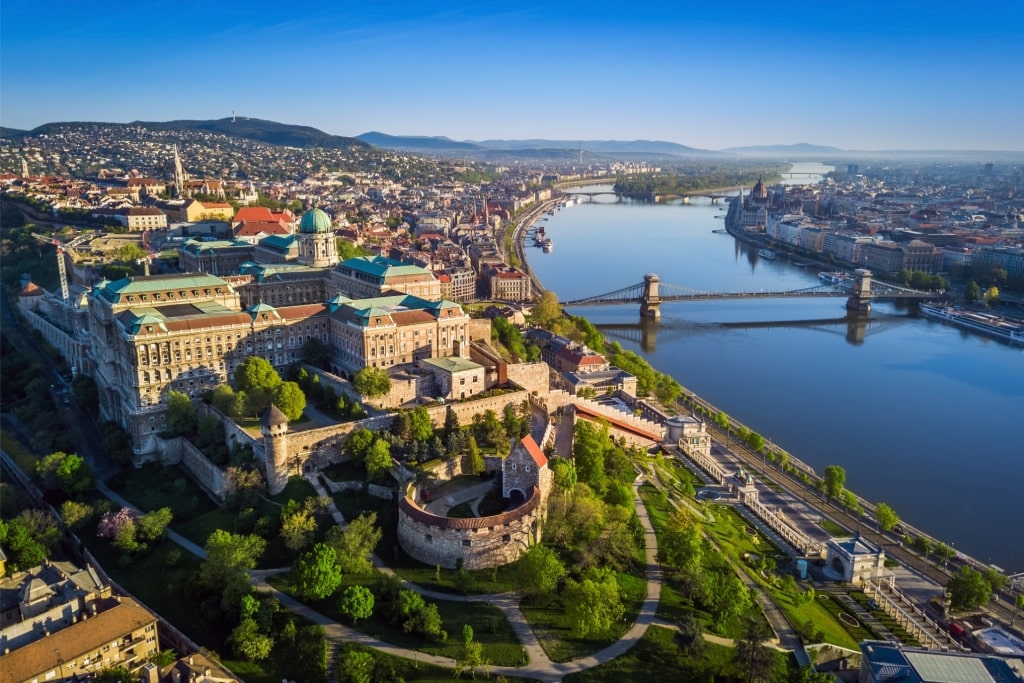
Castle Hill
To make the most of a visit, especially for first-time visitors, the central districts around the river are ideal. Castle Hill is packed with icons, history, and great views. Over the river in Pest, the areas around the Parliament, Basilica, and Andrássy Avenue are lively spots with museums, cafés, and shops.
What are the must-see attractions in Budapest?
Fisherman’s Bastion
The best places to see in Budapest include Buda Castle, Matthias Church, Fisherman’s Bastion in Buda, and Parliament and Heroes’ Square over in Pest. If you have time and want to live like a local, don’t miss Széchenyi Thermal Baths.
Is two days enough to visit Budapest?
Castle Hill
You won’t hit everything in two days, but it’s enough to catch the highlights. Allow one day for Castle Hill and Buda, and the other for the highlights of Pest. If time permits, Margaret Island is a nice bridge between the two sides of the city.
Budapest
Discover the Hungarian capital for yourself. Browse Celebrity’s river cruises to Budapest and book your dream vacation today.