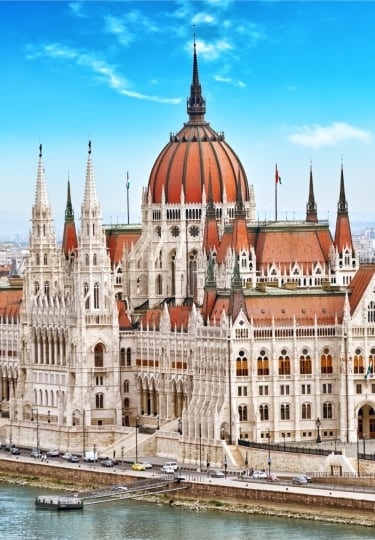
In Budapest, architecture speaks eloquently to Hungarian history. It’s a visual record of eras such as that of the grand Austro-Hungarian Empire or the time when the city succumbed to Ottoman conquest.
With its unique two-in-one blend of the once-separate towns of Buda and Pest, a visitor can find concentrations of a particular style of architecture in various districts. Or simply take it in while soaking in a grand public bathhouse, whether Turkish-style or Art Nouveau. Here are some of Budapest’s famous buildings to visit.
Matthias Church
Matthias Church
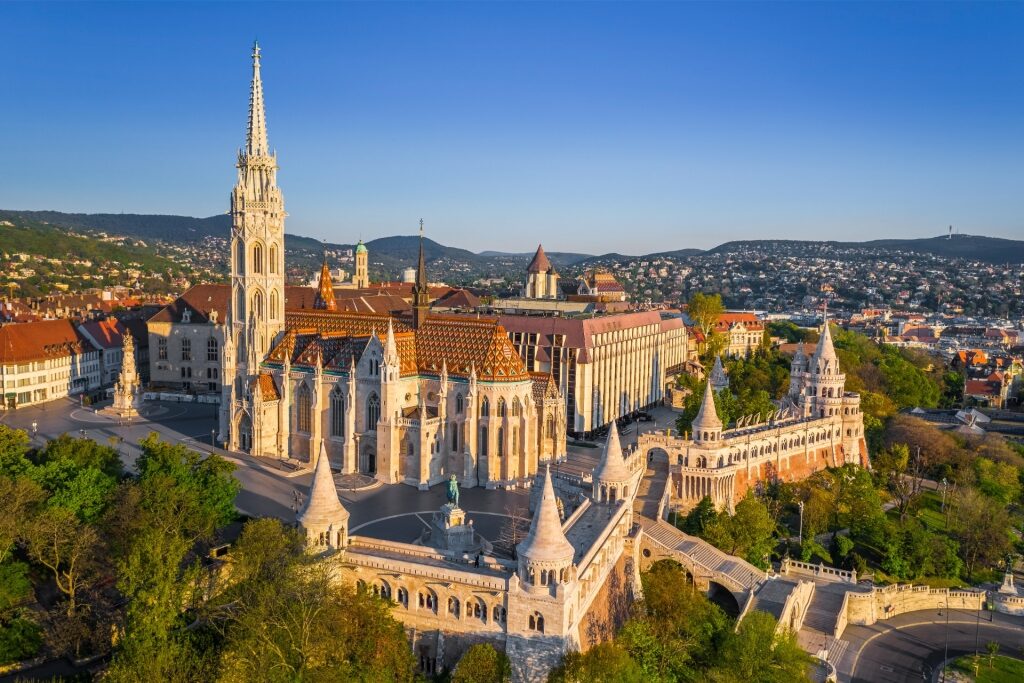
The magnificent neo-Gothic Matthias Church, Mátyás-templom, can be seen as symbolic of the layered architectural styles Budapest is known for. A church was first founded on the summit of Castle Hill by King Stephen in the 11th century; the earliest known structure on this site was built in the Romanesque style.
Tastes change, however, and the church was given a Gothic glow-up in the medieval period. During the city’s century and a half under Ottoman rule, it was converted into a mosque.
Matthias Church
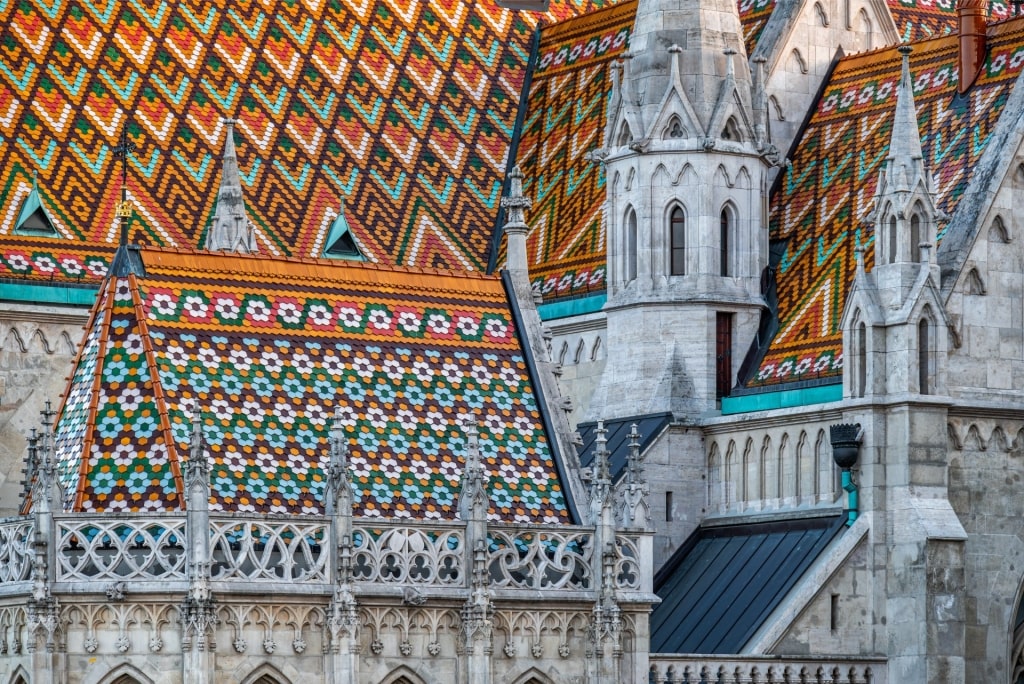
In the 19th century, it was transformed into the majestic neo-Gothic structure you see today. And so it has stayed, a symbol of the city’s shifting yet enduring nature, its exquisite Zsolnay ceramic roof tiles like a floating flower garden.
Within its ornate interior, the light is refracted onto the floor by the church’s original stained glass, which was removed and safely stowed during WWII.
Hungarian Parliament Building
Hungarian Parliament Building
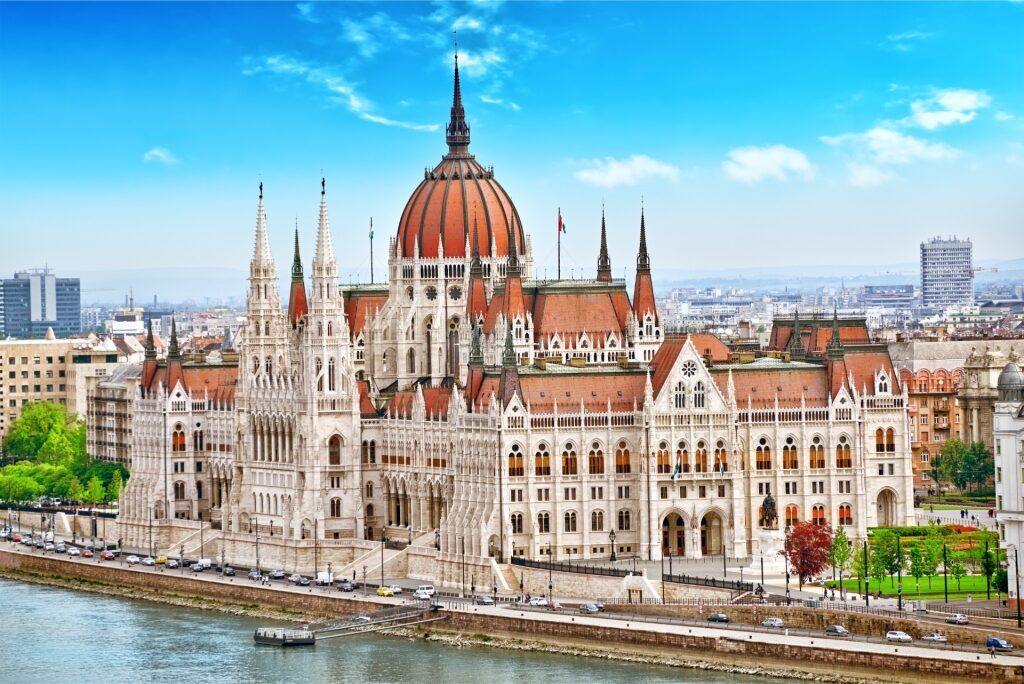
Tragedy hangs over the architectural story of the Hungarian Parliament. An icon of Budapest architecture, the building was designed by Imre Steindl, who went blind and died only two years before he could witness the completion of his masterpiece in 1904.
If you’ve seen London’s Palace of Westminster perched on the side of the Thames, there’ll be something about this parliament that’s familiar. But while Steindl drew inspiration from the stoic British original, this more flamboyant version is intended as a statement of Hungarian national pride as well as the heart of government.
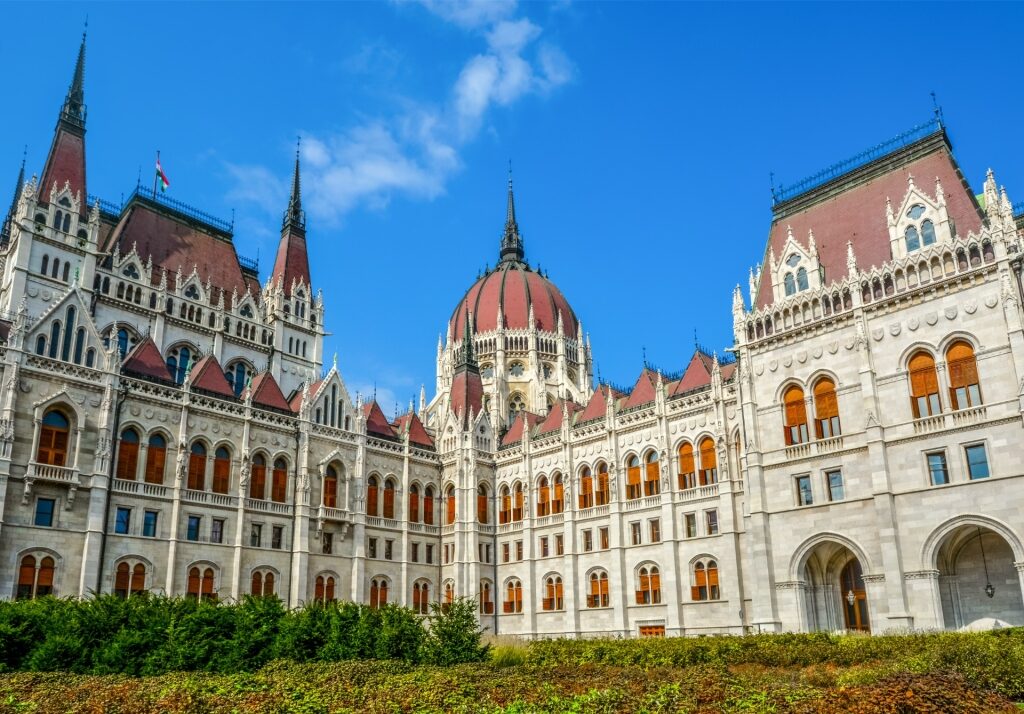
Hungarian Parliament Building
This Gothic revival palace is the country’s largest building and it’s a dazzling place to visit with its numerous courtyards, the Holy Crown of Hungary set within, and a huge 315-foot dome. This height—96 meters in metric measurement—relates to the year 896 and the arrival of the Magyar tribes into the Carpathian Basin.
Royal Hungarian Ministry of Finance
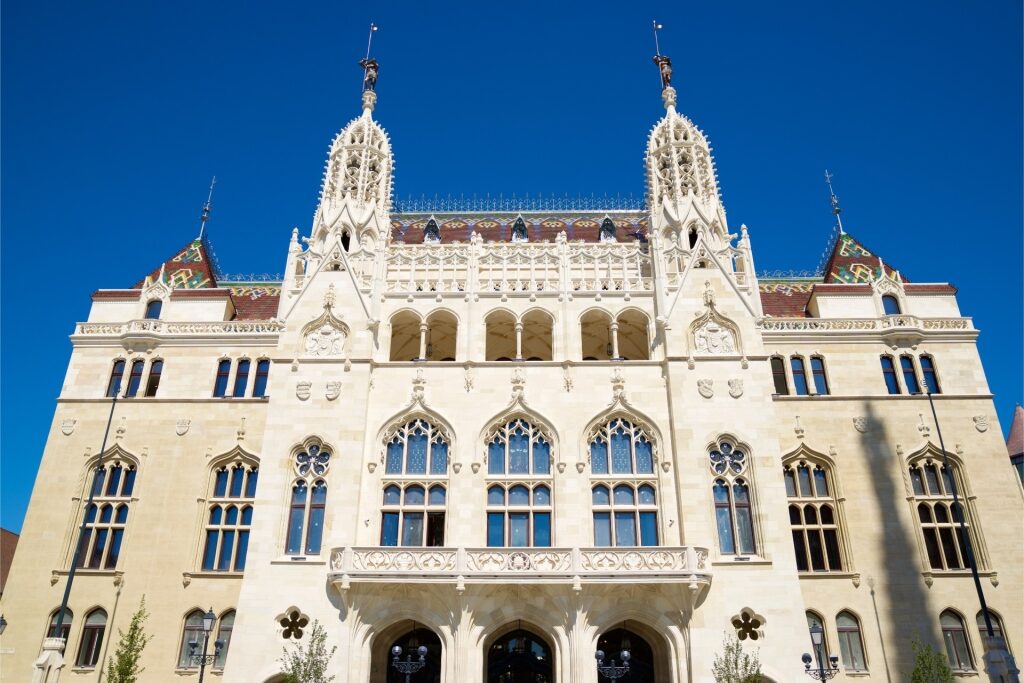
Royal Hungarian Ministry of Finance
Among the haughty gathering of buildings in Buda’s UNESCO-listed Castle District, the Royal Hungarian Ministry of Finance, in central Szentháromság Square, is an imposing neo-Gothic palace.
A gem of Budapest architecture, it was gravely damaged during WWII before being looted for useful materials by the Hungarian Communist Party. The building was restored to its early 20th-century grandeur during the present decade, with the romantic pyrogranite statues, oak leaf folk motifs, and terracotta gargoyles painstakingly revived.
Fisherman’s Bastion, or Halászbástya
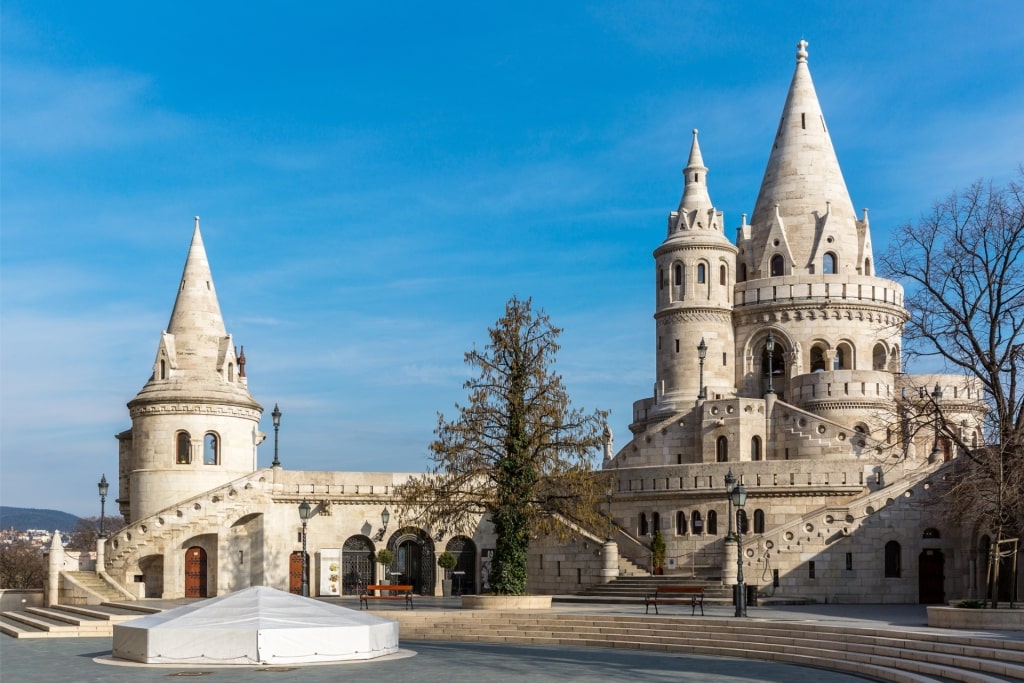
Fisherman’s Bastion
Like a Victorian folly, the Fisherman’s Bastion is one of the strangest pieces in the Budapest architecture jigsaw.
At first glance, a medieval fortress, the bastion actually dates back to the end of the 19th century. It was created by the same architect, Frigyes Schulek, who restored the Matthias Church.
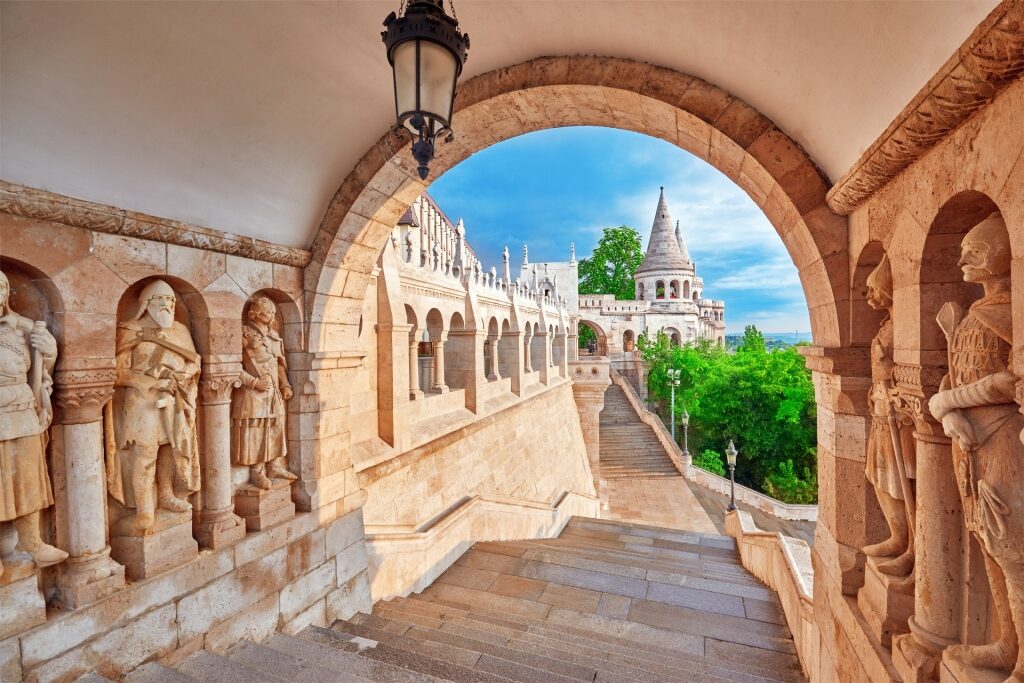
Fisherman’s Bastion
Part of the ostentatious celebrations that surrounded 1,000 years of Hungary’s existence, this fairytale confection is balanced on Castle Hill for maximum urban panoramas from its viewing terrace.
Look out for its seven turrets, representative of the seven founding chieftains who swept into the Carpathian Basin to claim the land for the future Hungarian state. Having endured damage in WWII, it was returned to its romantic majesty in 1953 and today is included within the endlessly photogenic UNESCO-listed Castle District.
Church of Mary Magdalene
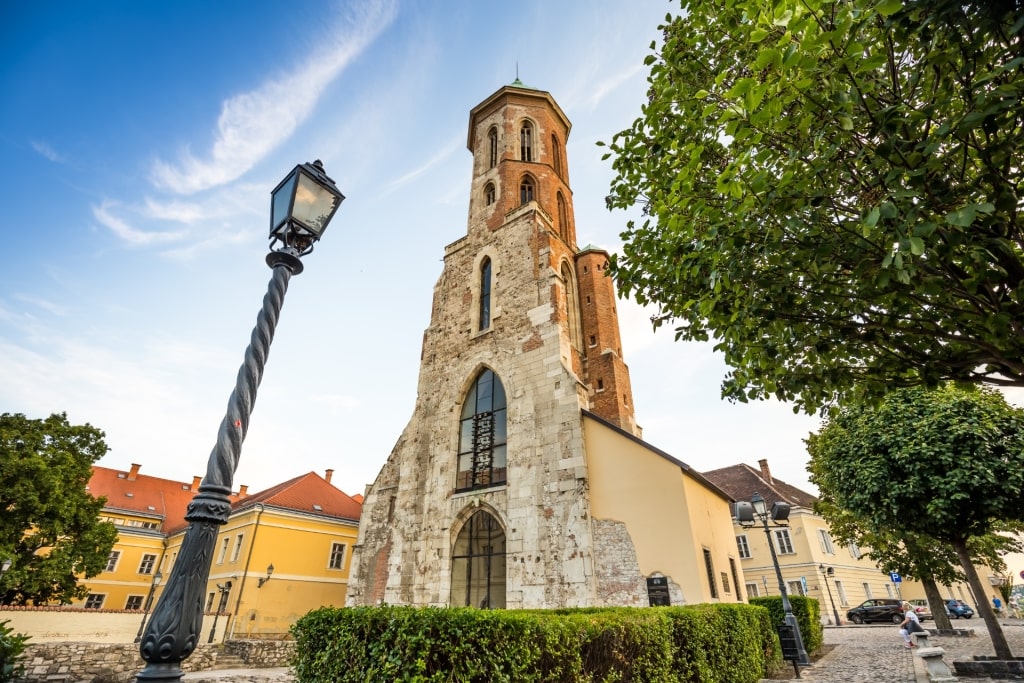
Church of Mary Magdalene
Whereas some buildings, such as the Fisherman’s Bastion, were restored after WWII, there were others that weren’t.
The Church of Mary Magdalene is probably the most significant of these, reduced to a lonesome medieval tower with a scattering of fragments on Castle Hill after the Hungarian Communist Party decided it wasn’t worth restoring.
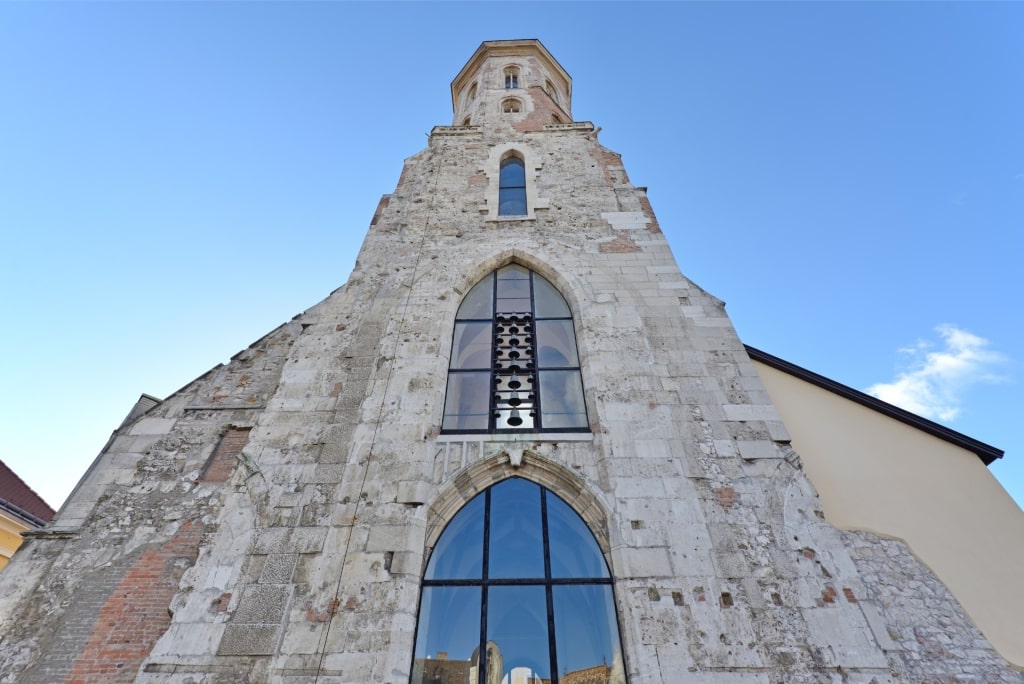
Church of Mary Magdalene
In its pomp, a Gothic behemoth of a basilica with a trio of naves, the church was originally intended as a symbol of medieval Buda’s rising wealth and influence. Over the centuries, it was transformed into a mosque, acted as a place of dual worship for both Christian denominations, and was suitable as a place to crown a king, Francis I, in 1792.
It is possible to ascend the remains, now referred to as “Buda Tower,” with the 200 steps bringing you up to stunning views over Pest.
Geological Institute of Hungary
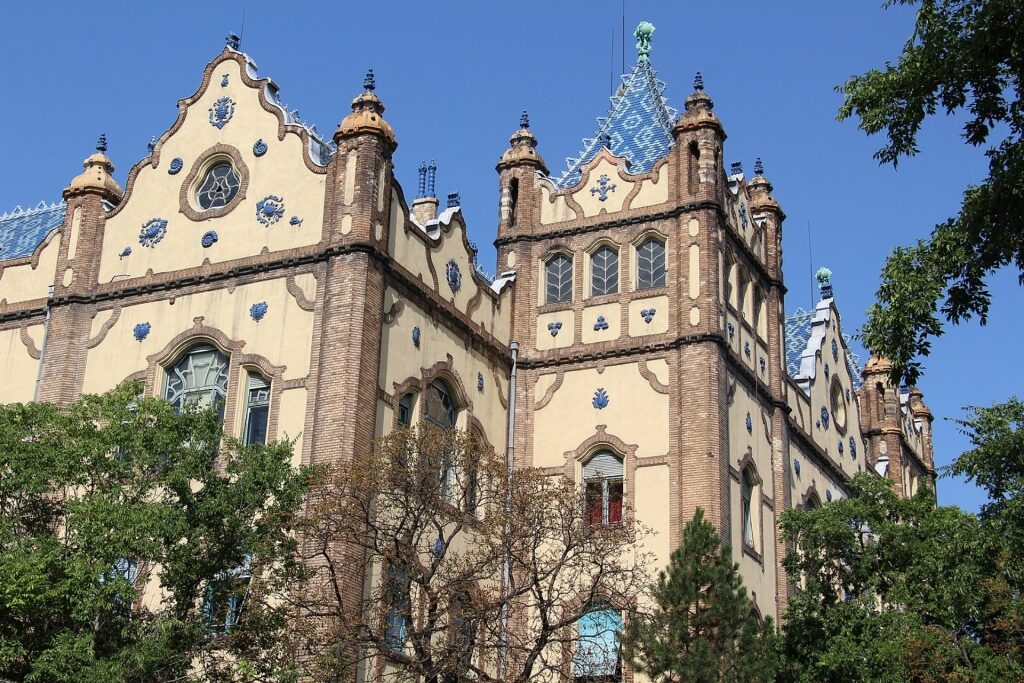
Geological Institute of Hungary
The Geological Institute of Hungary might not sound like one of the most exciting buildings in the city, but, in this case, judge a book by its extravagant Art Nouveau cover.
Designed by Ödön Lechner towards the end of the 19th century, the institute, intended as a visibly Hungarian structure, is an icon of Hungarian Art Nouveau, or the Szecesszió movement, as it’s known in Hungarian.
There’s also a mingling of the building’s purpose with its design. The gorgeous ceramic Zsolnay roof tiles are a sky-reflecting light blue, referencing an ancient ocean. The mingling of design and geology continues within, with mosaics and fossils embedded throughout the structure.
As you marvel at this visionary building, you can also browse its nearly 200,000 geological specimens within, as well as exhibits exploring the country’s geological history.
Liberty Bridge
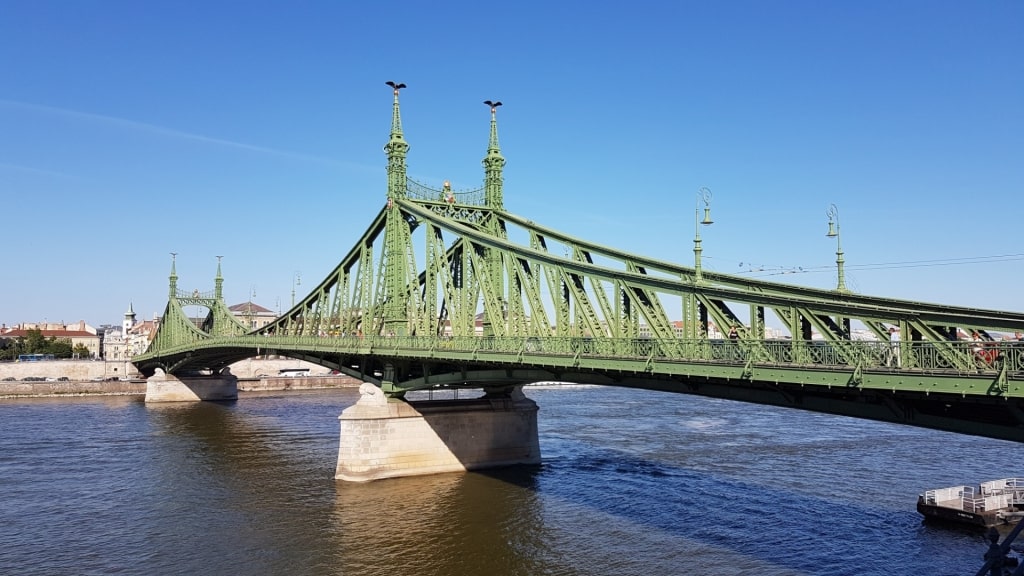
Liberty Bridge
The Liberty Bridge might be the city’s most concise crossing over the broad blue Danube, but this Art Nouveau treasure casts a long shadow in terms of its historical importance.
The bridge was another of the structures, along with the Fisherman’s Bastion, created to celebrate the country’s first thousand years of existence. Finished in 1896, it features statues of the Turul bird—the Hungarians’ mythical falcon that acted as a kind of national spirit guide—as well as the country’s coat of arms.
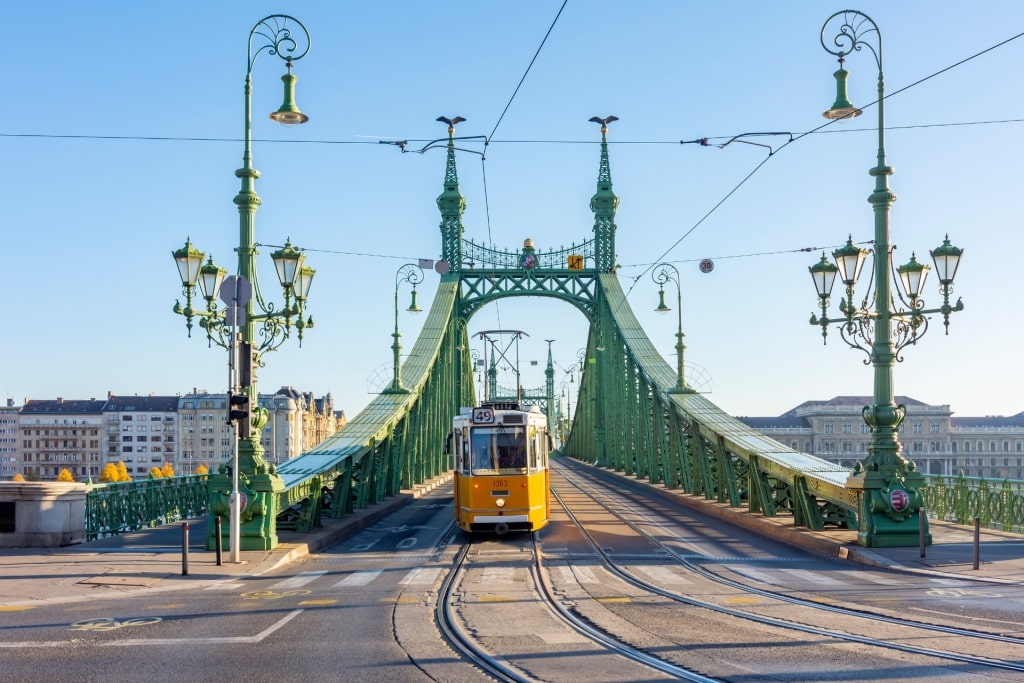
Liberty Bridge
During the bridge’s inauguration, Emperor Franz Joseph I, for whom the bridge was originally named, symbolically knocked in the last silver rivet. After its destruction by the Germans in 1945, the bridge was rebuilt and reopened a year later as “The Liberty Bridge”, to symbolize the country’s postwar hopes.
Museum of Applied Arts
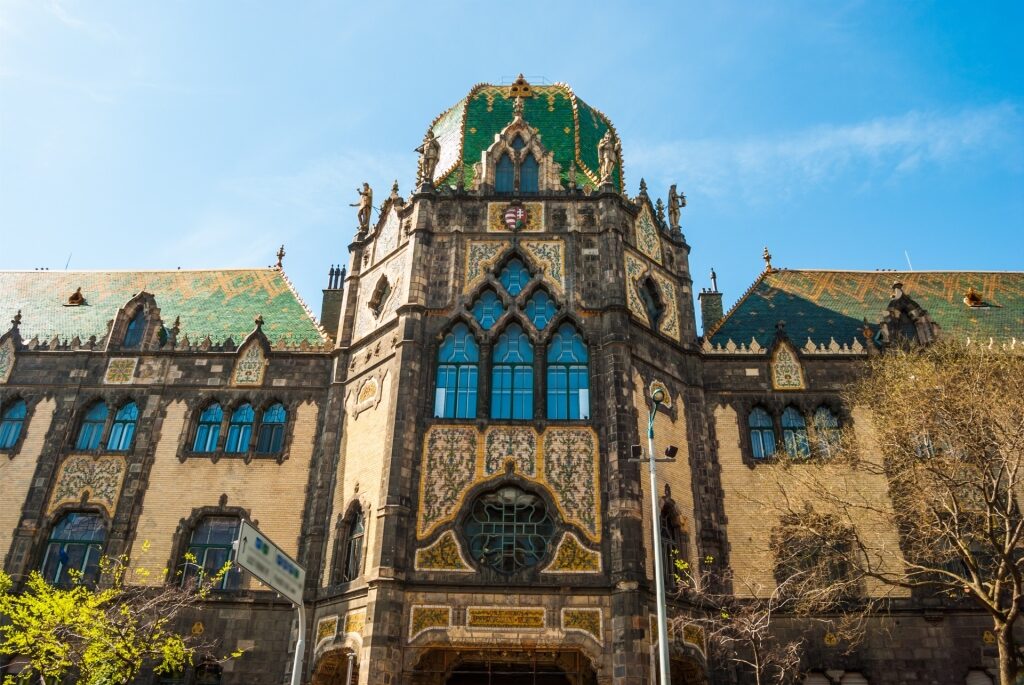
Museum of Applied Arts
Taking up about an entire block of the Ferencváros district in Pest, the Museum of Applied Arts is hard to miss.
An Art Nouveau palace capped with a rich green-and-gold Zsolnay roof, the Budapest museum was another of the buildings commissioned as part of Hungary’s triumphant Millennium celebrations in 1896. It’s another effort by architect Ödön Lechner to establish an architectural language unique to Hungary.
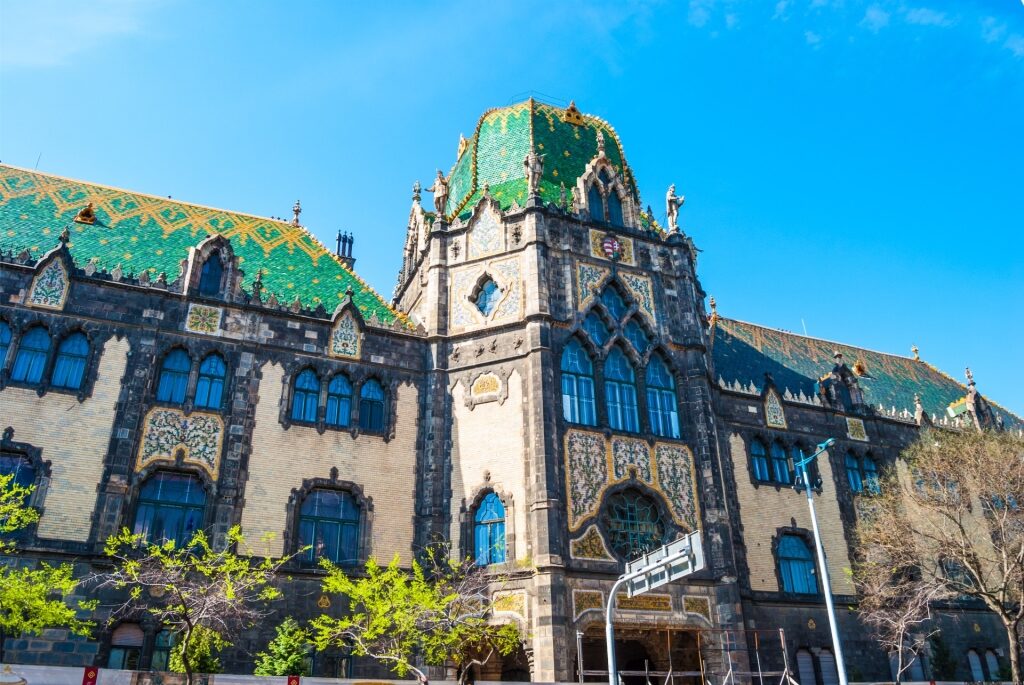
Museum of Applied Arts
Unlike the Postal Savings Bank, Lechner takes his vision further by introducing Mughal and Islamic elements amid his fever dream of folk motifs. Inside, natural light cascades into the atrium through a glass roof.
A kind of temple to the national craft industries, this museum is the third-oldest of its kind. While it’s currently closed for renovations, there’s lots to discover in this district, including the quietly astonishing neo-Baroque Ervin Szabó Library.
Hungarian State Opera House
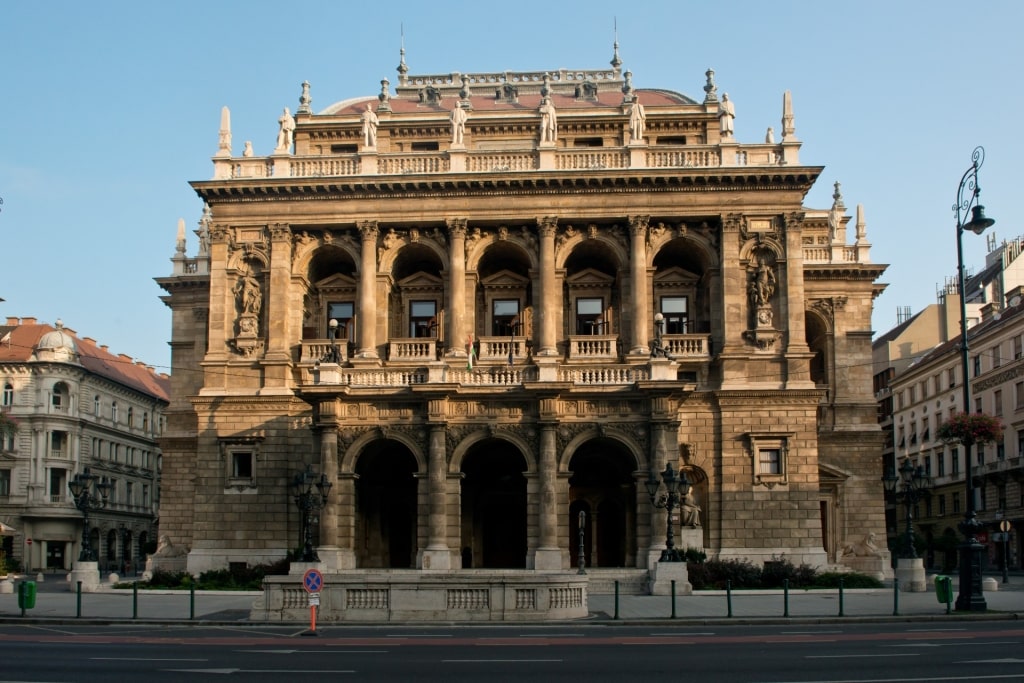
Hungarian State Opera House
A building that speaks to the grandeur of Hungary’s imperial past, the Hungarian State Opera House presides over Andrássy Avenue, with its luxury boutiques and bookstores.
Commissioned by Emperor Franz Joseph, the brief for this neo-Renaissance masterpiece was to create an opera venue that could be measured against the finest in Europe.
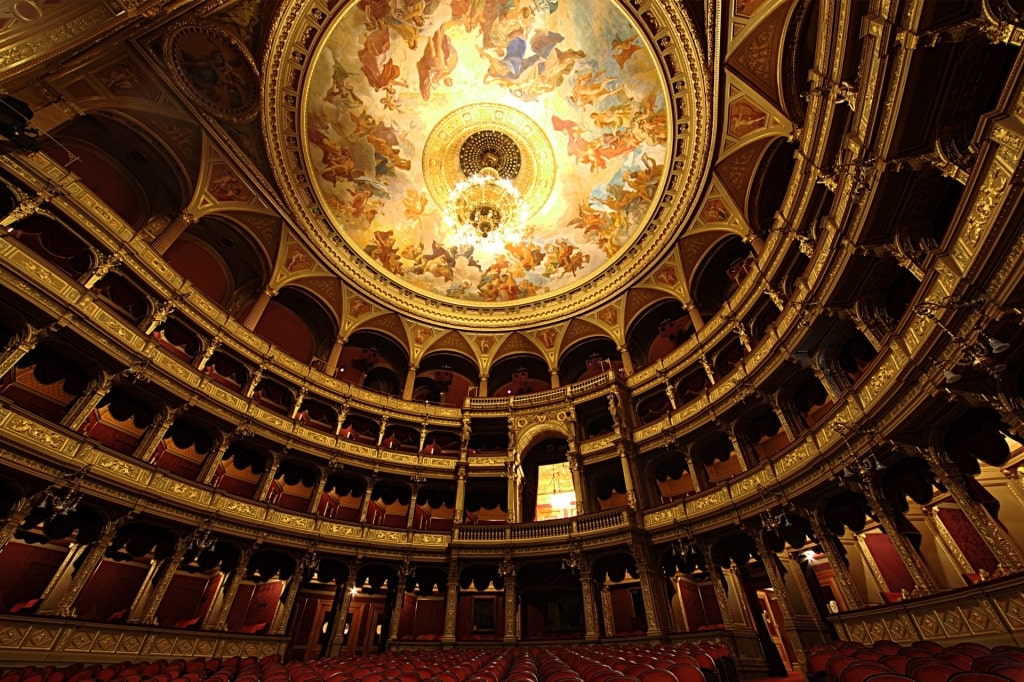
Hungarian State Opera House Photo by Jason DeRose on Flickr, licensed under CC BY-SA 2.0
Its interior is a glorious horseshoe auditorium of red velvet and over 15 pounds of gold.
A bronze chandelier about the same weight as a small truck hangs amid the swirling mythological frescoes overhead. The vivid colors speak to its recent renovation, completed in 2022.
Visually, it’s a feast. And acoustically, the brief was also met: it remains among the top three opera houses on the continent.
Postal Savings Bank
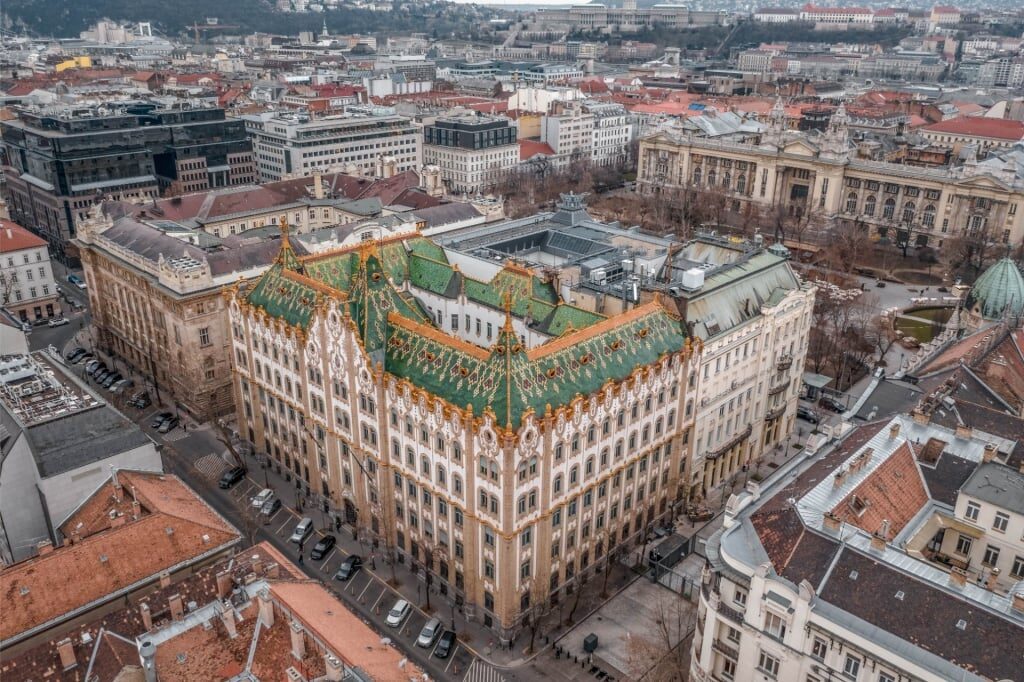
Postal Savings Bank
The Postal Savings Bank, also the Hungarian State Treasury, is a fine example of the kind of extroverted building that Hungarian architect Ödön Lechner excelled in.
While elements of the ornamentation on this many-windowed edifice—such as the ceramic bees buzzing skywards to golden-yellow beehives—are intended to project an idea of thriftiness, it’s clear no expense was spared on this Art Nouveau icon of Budapest architecture.
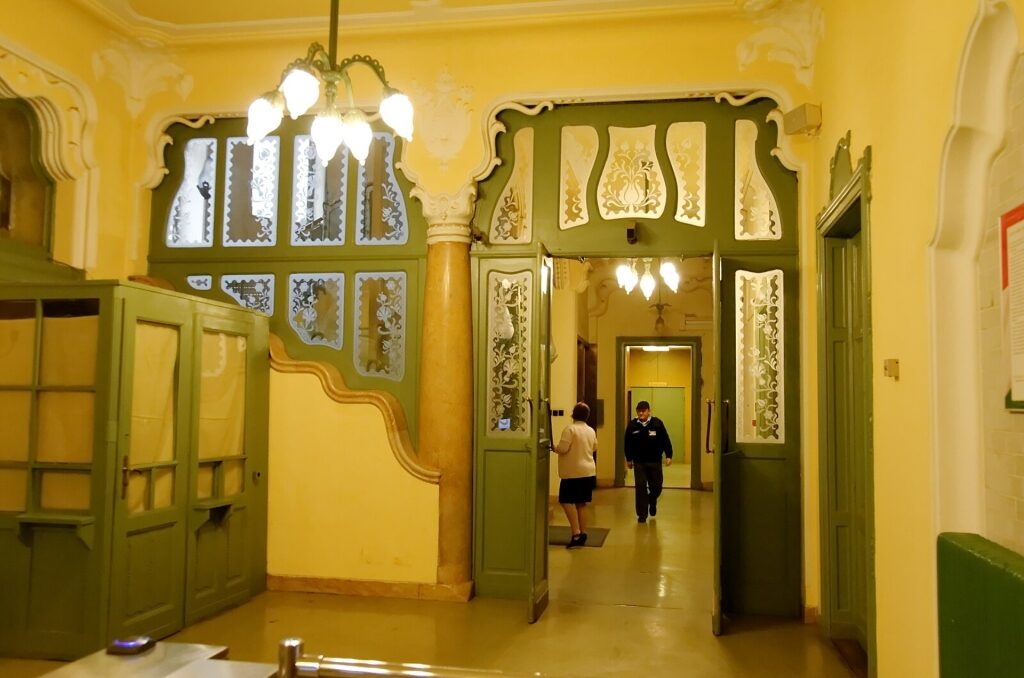
Postal Savings Bank Photo by Yelkrokoyade on Wikimedia Commons, licensed under CC BY-SA 3.0
Etched glass windows and colorful Zsolnay tiles, as green as a freshly mowed lawn, ensure this financial institution is far from gray.
Typical of Hungarian Art Nouveau, national folk motifs are woven into the design, with floral patterns and the heads of bulls as the exterior’s crowning glory, their taurine designs copied from ancient treasure hoards from Hungary’s past.
Rudas Baths
A 16th-century Turkish bathhouse, the Rudas Baths are a vivid reminder of the city’s period under Ottoman rule.
Located in Buda, at the base of Gellért Hill, this atmospheric thermal bathhouse is characterized by a 32-foot dome that rests on eight pillars. A striped octagonal pool lies beneath, reminiscent of Turkish hammams. Despite the ravages of war and communist-era neglect, the baths’ core structure remained relatively intact over the years.
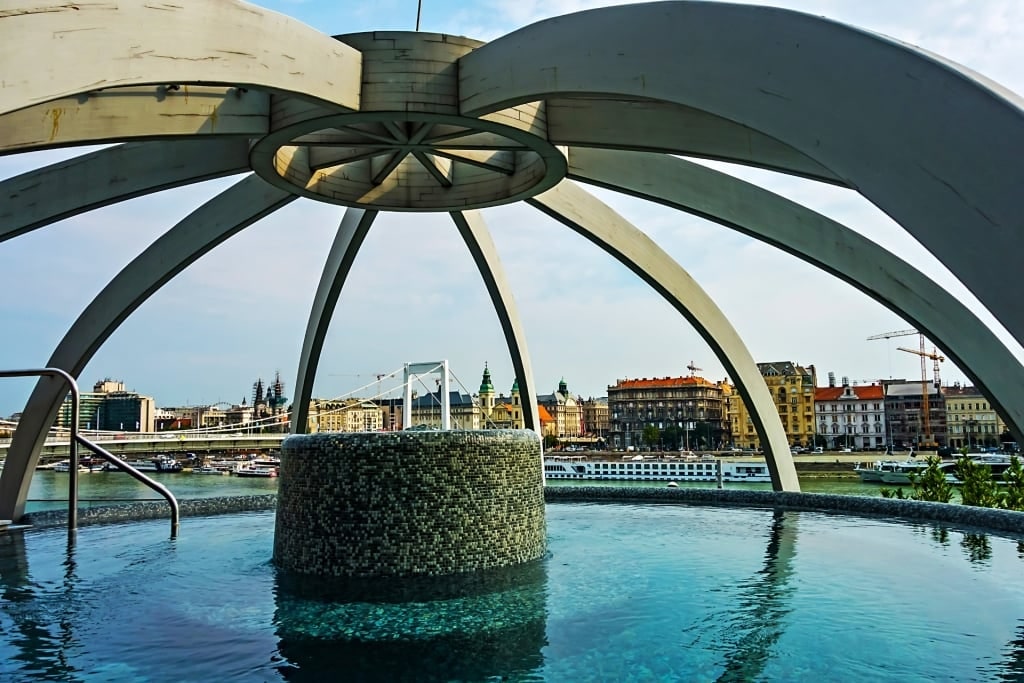
Rudas Baths
Numerous renovations have spruced up and augmented the building, and the Rudas Baths are popular with the Budapesters of today. Its thermal waters, drawn from several springs, carry a rumored element of reputedly medicinal radioactivity.
The almost sci-fi rooftop pool is an obviously modern addition, as are the late-night bathing sessions with unmissable views of the waterfront buildings lit up beside the Danube.
Bedő House
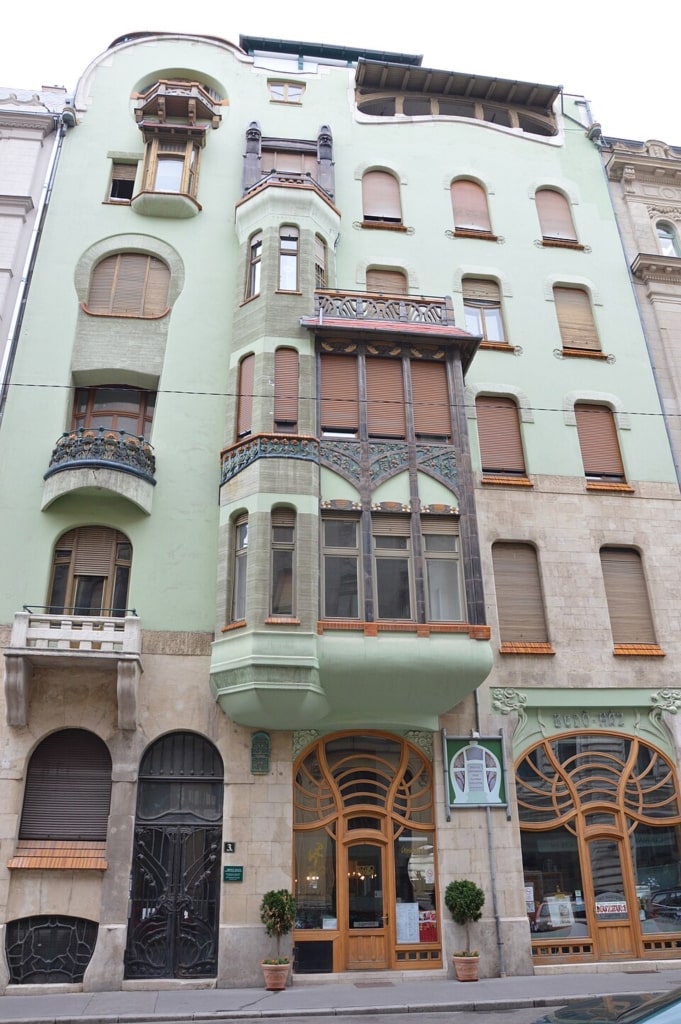
Bedő House Photo by Illustratedjc on Wikimedia Commons, licensed under CC BY-SA 4.0
A treasure of Hungarian Art Nouveau that’s undergoing renovations, the Bedő House is a gorgeous piece of the city’s architectural history.
After decades of rough handling—even moonlighting as a carpentry workshop at one point— this house, created for a Hungarian industrialist, was restored to its former grandeur in 2007. A showcase of an architectural style taken to the nth degree, it seems natural that it also became a museum dedicated to Hungarian Art Nouveau.
When it was first created, architect Emil Vidor intended both the house and its furnishings to fuse as one. While its glorious interior and the museum within are currently closed to visitors, the dusky green facade, with Zsolnay flowers and organic lines, is well worth a perusal.
FAQs
What type of architecture is found in Budapest?
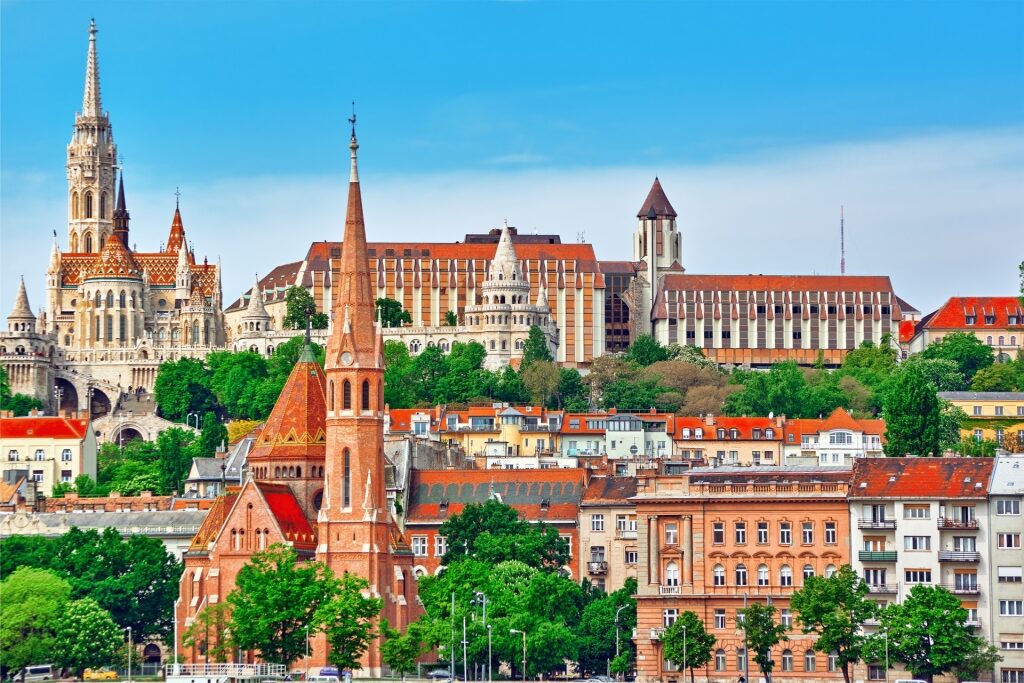
Budapest
There’s a surprising variety of architecture in Budapest. There’s the stark utilitarianism of the Communist period, contrasting with the effusive ornamentation of the Hungarian Art Nouveau. As you wander the streets, you’ll also come across Gothic, Romanesque, Baroque, Bauhaus, and more.
Is Buda or Pest better for seeing historic architecture?
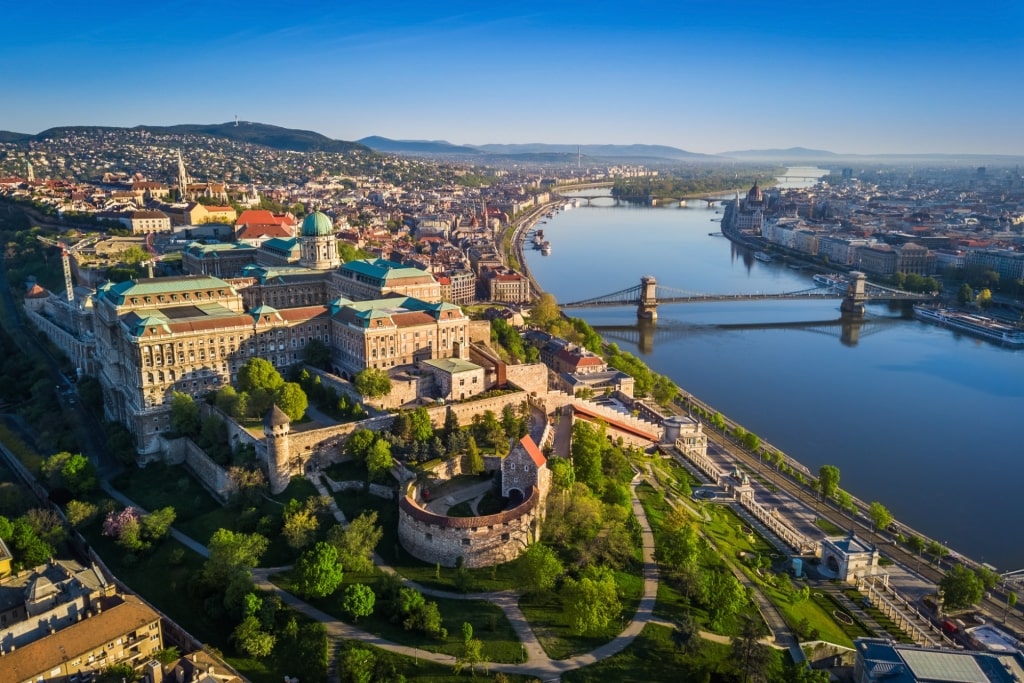
Castle District
Both are wonderful. Buda and Pest showcase the two sides of this city, neatly divided by the calm waters of the Danube. Hilly Buda in the west offers the Castle District. It’s regal, medieval, neo-Gothic, and peaceful.
Across the water to the east is more modern Pest, with its neo-Renaissance boulevards, glittering Art Nouveau rooftops, and restless urban energy.
Can I photograph historic architecture in Budapest freely?
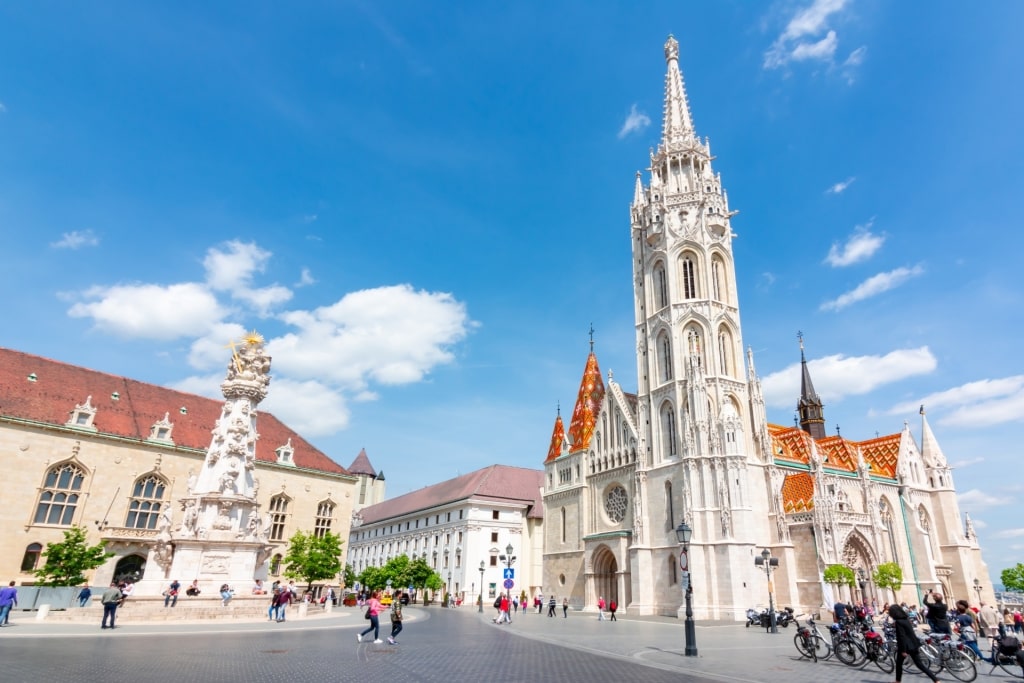
Matthias Church
For the most part, there are absolutely no restrictions on what you can photograph.
However, be aware that with the interiors of certain buildings, you might need to have permission. It’s best to check at the ticket desk as you enter. Additionally, the use of tripods in particularly busy areas, such as the Castle District, might require the use of a permit.
You’ll also find, in Hungary and elsewhere in Europe, that flash photography in churches is usually prohibited.
If you’re considering drone photography of the stunning Zsolnay tile rooftops, be aware that drones are regulated in Budapest. There will almost certainly be restrictions on where you can fly, especially near government buildings, such as the many-pinnacled Parliament.
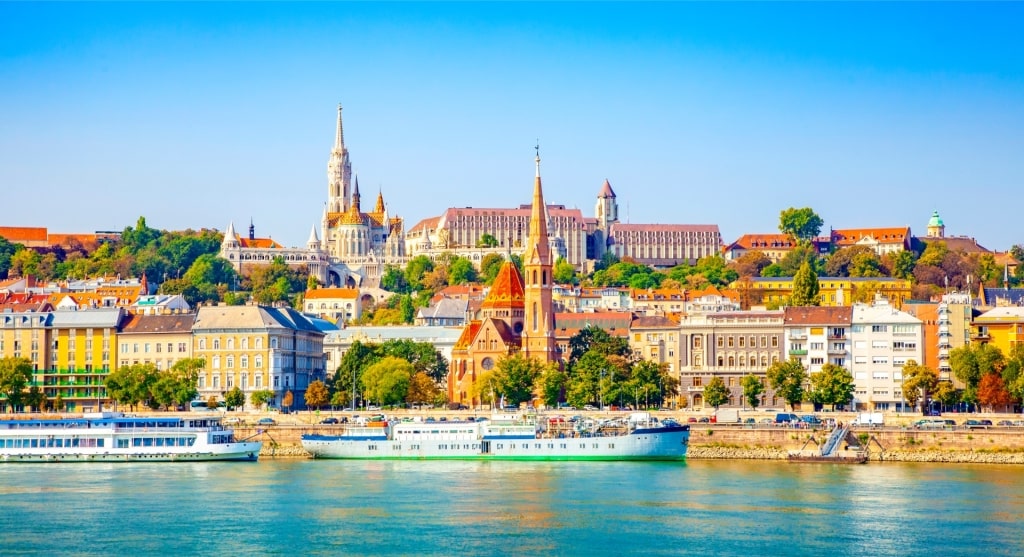
Budapest
See Budapest’s famous buildings for yourself. Browse Celebrity’s river cruises to Budapest and plan a vacation to some of the most evocative destinations in Europe.