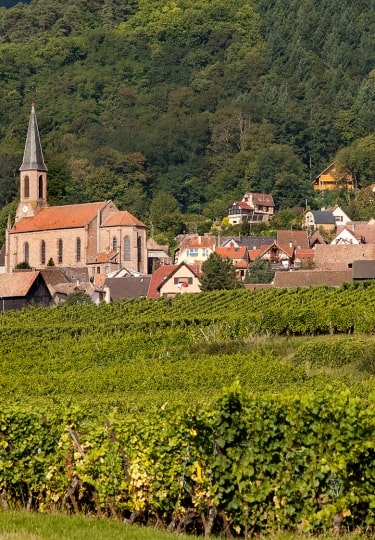
Strasbourg, perched on France’s eastern border along the banks of the Rhine River, is the gateway to French-German Alsace wine country. Guests arriving at this river cruise port enjoy easy access to urban convenience and an immersive entry to Alsatian food and wine culture.
Pan-de-bois facades, Gothic architecture, and canal-side wine bars sit within walking distance from the cruise port, but the region’s deeper character flows, like its wines, through the rolling vineyard-lined hills.
Here’s how to taste Alsace wines when visiting on a river cruise, which varieties you’re likely to find in the glass, and which regional dishes are best paired with them.
Alsatian Wine Varietals, Characteristics, and Growing Conditions
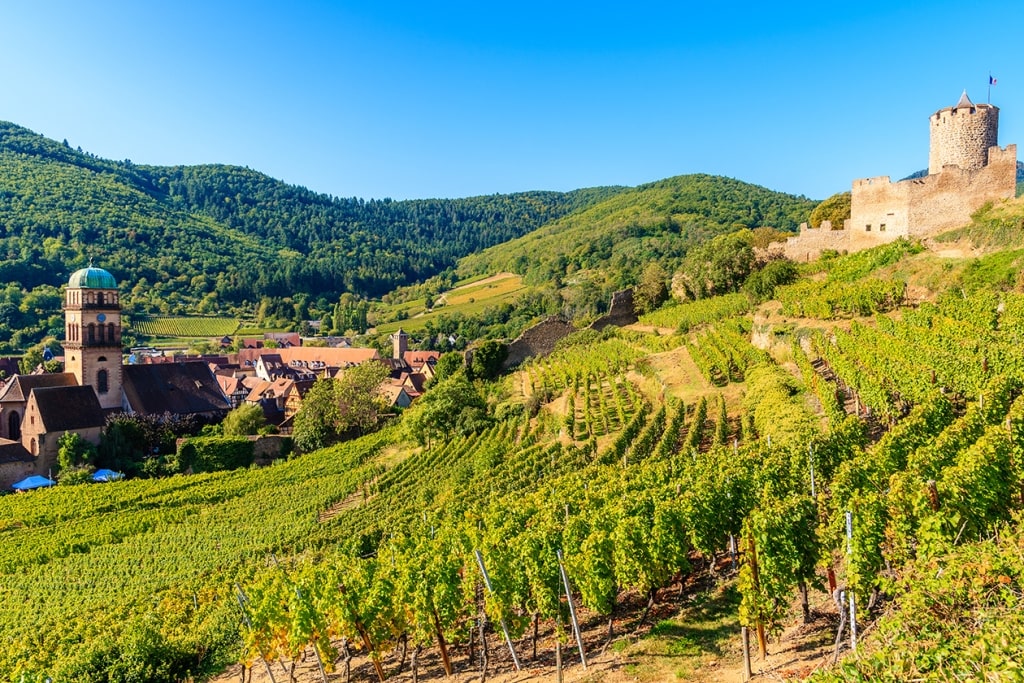
Vineyards in Kaysersberg village on Alsatian Wine Route
Alsace is a wine-producing region that stretches across the eastern French border into Germany. The local wine identity results from its distinct terroir, influenced by a temperate climate, sun and water exposure, and soil composition, as well as heritage-protected regional winemaking traditions.
Alsace’s Terroir
With a climate akin to Marlborough, New Zealand, it’s no wonder why white wines, including riesling, gewürztraminer, muscat, and pinot gris, make up over 90% of Alsace’s regional production. As you move through a flight, you’ll notice the limestone, clay, and marl soils offer a light acidity and notably less sweetness than the likes of New Zealand rieslings.
Appellation d’Origine Contrôlée Alsace
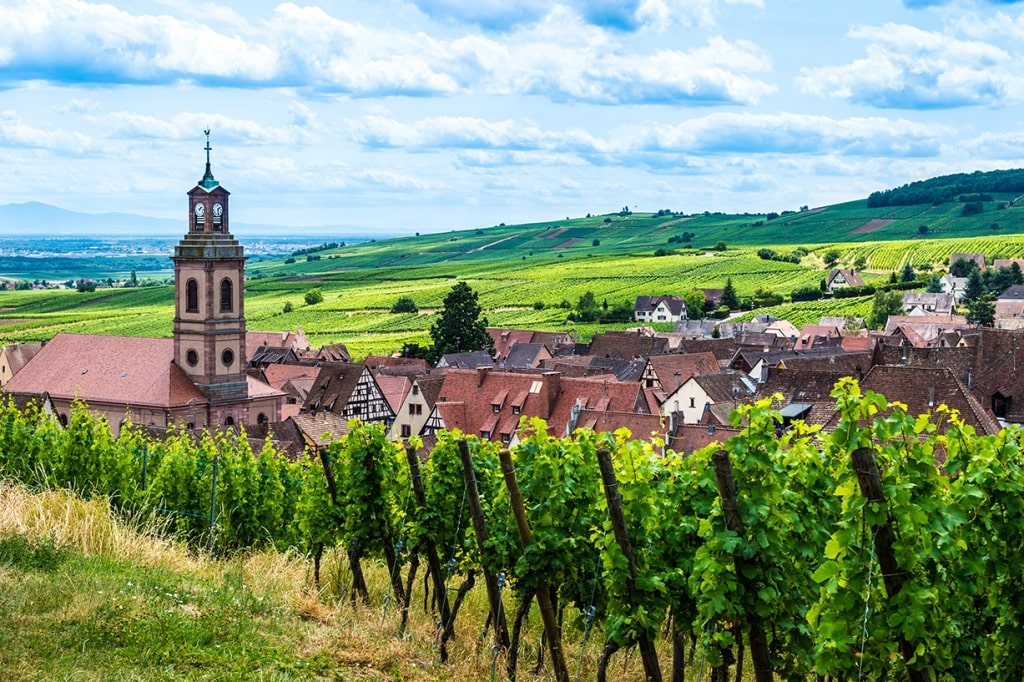
Riquewihr village at sunset, Alsace, France
You may also see Appellation d’Origine Contrôlée, or AOC, stickered on tall, distinctive flute bottles. This national certification guarantees the wine is produced within Alsatian territorial confines, using traditional, approved methods and with specified grape varieties:
- AOC Alsace: This Appellation accounts for about 70% of Alsace production and consists primarily of single-varietal white wines.
- AOC Alsace Grand Cru: Grand Cru in the French wine market represents premium-tier wines, accounting for about 4% of regional production.
- AOC Crémant d’Alsace: Crémant is made throughout France using the same grapes and traditions as Champagne, but cannot be named Champagne due to AOC Champagne restrictions.
How To Taste Alsace Wines Locally
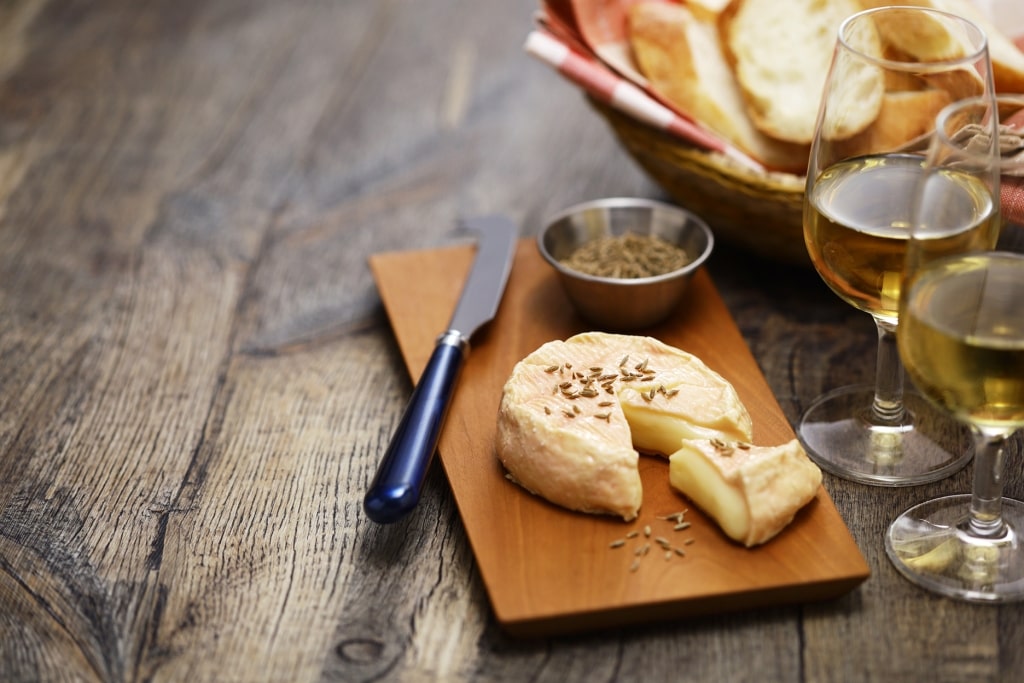
Alsace wine tasting paired with cheese
Once you’ve arrived safely at port, there are three ways to taste Alsatian wines: head to a local wine bar in the city, take an excursion around the Alsace Wine Route, or rent a bicycle and navigate the countryside on a self-guided tour.
Strasbourg In-City Tastings
Within the city’s confines, you’ll easily find a range of venues, from sultry wine bars to merchant-led tasting rooms and historic cellars. These offer advance-booking or walk-in tasting experiences.
If you’re short on time, grab a taxi and head to Oenosphère, just a 10-minute drive from the port, for a selection of flights, casual pours, and shoppable bottles. At a similar distance, the Cave Historique des Hospices de Strasbourg invites you to step back in time and stroll through the 14th-century underground brick cellar. To taste the wines here, be sure to book a guided tour in advance.
Alsace Wine Route
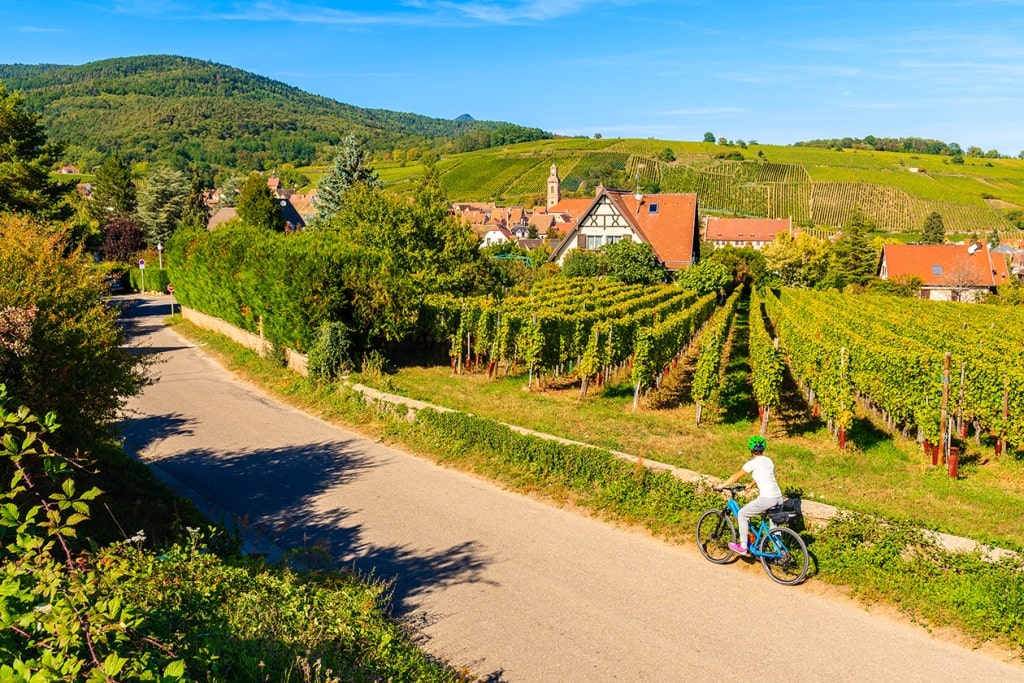
Young woman cyclist on road along vineyards near Riquewihr village, Alsace Wine Route, France
The Alsace Wine Route runs 106 miles from north to south, linking 119 storybook villages and medieval castles with vineyards forming long agricultural threads between them. The trail was created in 1953 to showcase the region’s pronounced winemaking heritage and attracts 7.7 million visitors each year.
The full route usually takes three to five days, but in a single port day, you can still experience the breadth of Strasbourg wine traditions. Vineyard tours, flight tastings, and a slow walk through the cool, dark medieval wine cellars are among the best things to do in Strasbourg.
Self-Guided Wine Tour
For independent discovery of the picturesque Alsatian villages associated with local wine outings, rent a bike and cycle to vineyards near the city, or take the TER train to nearby townships. This route places you closest to the source, where you can experience the genuine hospitality Strasbourg is known for—amid earthy roads, working vineyards, and friendly village locals.
Many caves are not formally fitted with a tasting room, but wine producers are often more than happy to offer you a glass of wine and chat about their history and wine-growing practices if you knock.
What To Taste on a Wine Tour in Alsace
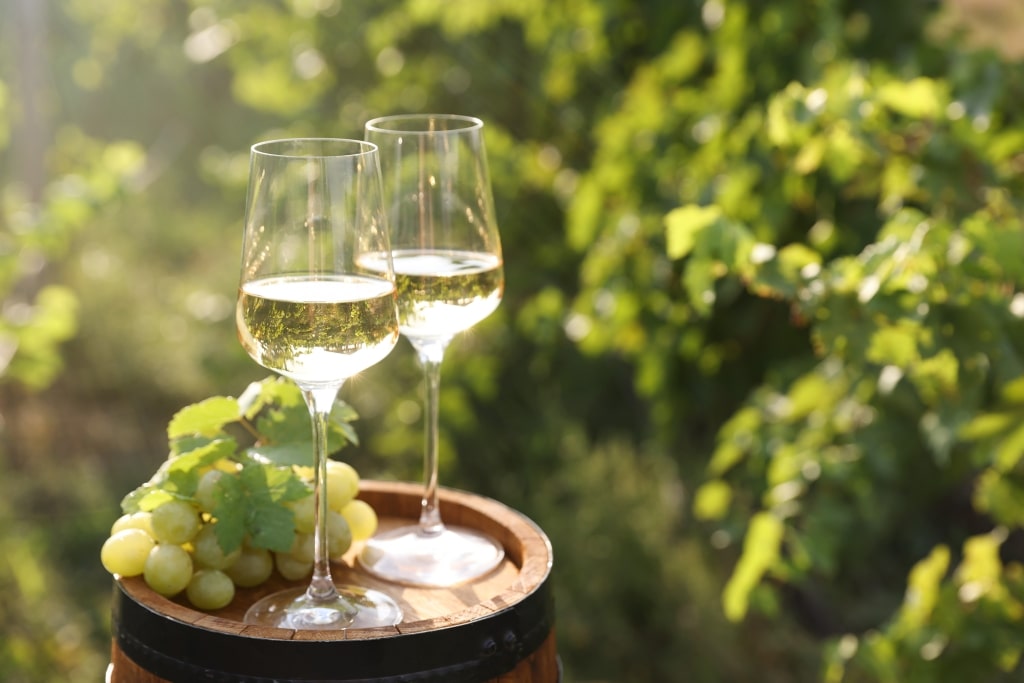
Two glasses of white wine catch the sunlight beside lush vineyards in Alsace.
Strasbourg is famous for its white grape varietals, which predominantly fall under the umbrella of Alsatian noble grapes. In a single flight during your European river cruise, you might find all of the below, or a single one presented in a vertical tasting:
- Pinot gris: Typically a light, neutral white, an Alsatian pinot gris has a full body and rich texture. Its aroma is bursting with stone fruits and pear, and a gently smoky undertone.
- Riesling: Unlike its typically sweet profile, riesling in Strasbourg is bone-dry and lightly acidic, with a creamy mineral finish attributed to local clay soils.
- Gewürztraminer: This intensely aromatic grape in standard and Grand Cru productions leans toward dry, off-dry, or occasionally semi-sweet. Taste for the lychee and slightly spiced undertones, and expect a thick texture in the mouth.
- Muscat: Strasbourg winemakers vinify this naturally sweet grape into a completely dry wine. Locally, this is a fresh, crisp pour, best drunk young between one and three years from the vintage date.
- Pinot noir: Making up around 10% of Alsace wine production is the pinot noir grape. You’ll find two styles locally: the traditional, tart and lightly crisp pour, contrasted with a more modern, full-bodied style, aged in oak barrels to rival neighboring Bourgogne wines.
Alsace Wine and Food Pairing
Strasbourg’s culinary identity is equally rewarding as its wines. The region fuses French sophistication with German heartiness, shaped by centuries of border fluctuation. Strasbourg dishes predominantly feature local agricultural staples, such as pork, cabbage, potatoes, dairy, and the buttery Munster cheese—not to be confused with the American “Muenster” cheese.
Here’s how to pair them with your wine of choice:
- Choucroute garnie: This dish combines sauerkraut with sausages, pork belly, and ham. Pair it with Riesling, whose dry acidity cuts through the richness of the pork while its mineral finish balances the tangy sauerkraut.
- Baeckeoffe: A slow-cooked casserole of beef, pork, lamb, and potatoes pairs well with Pinot Gris. The wine’s full body and rich texture stand up to the meats, while its smoky notes complement the rustic bake.
- Tarte flambée: This thin, crispy flatbread is topped with crème fraîche, onions, and bacon lardons. Muscat works well here because its crisp, dry, fresh character cuts through the rich cream and salty bacon.
- Fish choucroute: Sauerkraut topped with regional fish such as trout and salmon pairs with traditional-style Pinot Noir. Its lighter, tart, crisp profile balances the fish without overpowering it.
- Kougelhopf: This classic fluted brioche cake, baked with raisins and almonds, pairs naturally with Gewürztraminer. The wine’s thick, off-dry texture complements the sweet raisins and warm baking spices.
It’s common to finish a meal in France with a digestif, often calvados or eau de vie (water of life), the latter being a strong fruit brandy made from orchard fruits such as pears, mirabelle, or raspberries.
Best Time To Visit Strasbourg Wine Country
If it’s your first time cruising to Strasbourg, note that the region sees all four seasons in full bloom, which drastically shape the temperature, ambiance, and aesthetic throughout your journey.
- Autumn feels like stepping into a vignette, with lightly misted skies, warm afternoons, and a splay of autumnal colors in the vineyards and tree foliage lining the canals.
- Summer and spring are fresh and generally warm, excellent for cycling through wine country and alfresco tastings.
- Winter brings an electric current through the air as locals prepare for Christmas traditions, but expect cool temperatures. The vineyards are bare as they await pruning; however, it’s also an excellent time to try Alsace’s heavier, cheese-infused dishes—and you can pair a wine tasting with the local Christmas markets.
Rest assured that both the Rhine River and the surrounding wine country, while morphing with the seasons, remain phenomenal year-round.
Planning Your Day in Port
As you plan your Strasbourg river cruise, you could easily book in advance or wake up and decide what to do on the day. The latter approach works well if you haven’t got your heart set on a particular experience. However, some attractions in the local wine culture require advance booking or planning.
Here’s what to think about as you decide between activities:
City vs. Countryside
Those stopping for just a few hours will find it easier to taste local wines from the city and make it back to the ship in time for departure. If your river cruise port stop is a half or full day—especially between late spring and early autumn—venturing on an excursion or self-guided tour becomes more accessible.
How Much Time To Allow for Activities
In the city, you can experience local wine tastings in as little as one to two hours. Planned excursions typically last anywhere from three hours to a full day. Those navigating the Rhine River environs independently should account for at least half a day, and ideally a full day, to make the most of the visiting opportunities.
FAQs: Wine Tasting in Strasbourg
How much time do you need for wine tasting in Strasbourg?
Allocate two to three hours for a dedicated tasting session at a local Strasbourg wine bar or cellar. If you want to explore nearby Alsace vineyards, plan a half-day or full-day trip.
Is wine tasting in Strasbourg worth it for first-time visitors?
Absolutely. Tasting local varieties like riesling or pinot gris offers first-time visitors an essential introduction to Alsace’s unique culture.
Do Strasbourg wine tastings need reservations?
Reservations are highly recommended, especially for popular wine bars in the city center and peak weekend evenings. However, many casual Strasbourg wine bars do accommodate walk-ins during the daytime hours, space permitting.
Cleanse Your Palate for Strasbourg Wines
From the historic, pan-de-bois edifices lining Strasbourg’s canals to the rolling hills of the Alsace Wine Route, discovering the region’s signature pours is an unforgettable highlight of the river cruise experience.
Regardless of your palate, you’ll find that Strasbourg wines served alongside wholesome regional culinary traditions will remain in your heart long after the journey.
As the French often say, life is indeed too short for bad wine.
View Rhine River cruises to Strasbourg, France, and start planning your tasting experience with Celebrity River Cruises.