
While many of us associate the euro with broader Europe, traveling through the continent on a river cruise can present a different reality. Europe doesn’t operate on one currency, and an itinerary through the Rhine or Danube can take you to destinations that use three or four different currencies in one vacation.
Knowing what to carry before you land saves both hassle and hefty exchange fees once you’re at your destination. This guide breaks down which currencies you might encounter on a river cruise, when to use cash or card, and how to plan your money before you depart.
European Currencies at a Glance
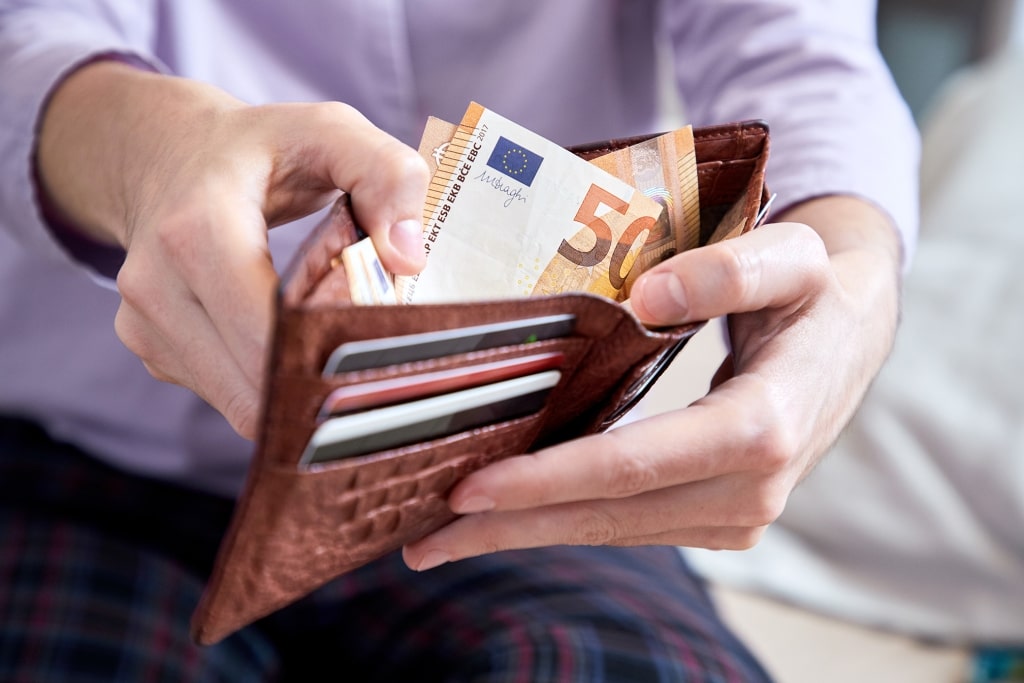
Hands slip a crisp 50 euro (€) note into a leather wallet—a quiet, tactile moment of shore-day prep before stepping off the ship onto historic European ports.
Europe does not use a single currency. The euro is the most widely accepted currency and is used across much of Western and Central Europe. However, several countries along popular river cruise routes use a different national currency.
Sailing on the Rhine or Danube, you may encounter the following currencies in Europe:
- Euro (EUR): The euro is the primary currency in countries like Germany, Austria, France, the Netherlands, Bulgaria, and Slovakia. These destinations are largely card-friendly, although smaller merchants and markets may require cash.
- Swiss franc (CHF): Switzerland uses the Swiss franc. The country is extremely card-friendly, with euros occasionally accepted near the border.
- Czech koruna (CZK): If you’re sailing through the Czech Republic, you’ll need to prepare some koruna. Prague is generally card-friendly, but smaller rural towns use cash.
- Hungarian forint (HUF): In Hungary, locals use the forint. Similar to the Czech Republic, cities are card-friendly, but you’ll need cash for rural areas and markets.
- Serbian dinar (RSD): Serbia spends in the dinar. Major cities like Belgrade accept card payments, while smaller vendors and rural stops rely on cash.
- Romanian leu (RON): Romania is card-friendly in Bucharest and tourist zones, but bring some cash for the rural towns you’ll stop in.
During your vacation, you can use a card for ship transactions and in major riverside cities. Still, you’ll need to prepare a little cash for shore excursions, gratuities, kiosks, small cafés, and taxis in each country you plan to visit. This is especially the case in smaller, more rural areas.
Countries That Use the Euro
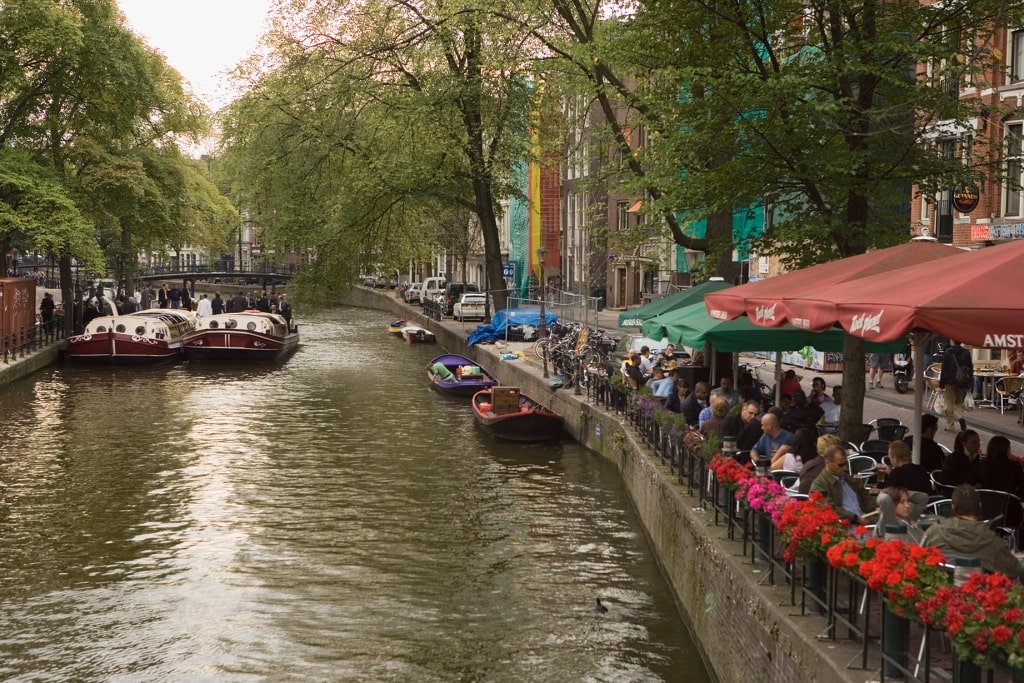
Patrons gather along the flower-lined canal terrace in Amsterdam, capturing the leisurely cadence of water, shade, and sidewalk dining that defines northern European city life.
You can use the euro in many of the countries you’ll likely visit on a Danube or Rhine River cruise, including:
- Germany
- Austria
- France
- The Netherlands
- Slovakia
- Bulgaria (as of Jan. 1, 2026)
For regular daily expenses, like settling a restaurant bill in Vienna or shopping in Amsterdam, you’ll be able to rely on cards across major cities in all six countries. Regardless of how card-friendly the country is, however, do carry a modest amount of euros at all times. You’re almost guaranteed to come across scenarios that require petty cash along your journey, such as public restrooms, local tipping, or taxis.
Germany is a minor exception to the rule. Despite its size and being a major economy, Germany is still more cash-fluent than most of its Western European neighbors. Bring cash to smaller bakeries, local German markets, and older, family-run restaurants in case they don’t accept digital payments.
Other Currencies You May Encounter on a River Cruise
Danube River cruises will often cross more currency borders than the Rhine River, sometimes moving through four or five countries, each with its own money. Here’s what to expect at each destination:
Swiss Franc (CHF)
Switzerland is one of the most card-friendly economies in Europe—you can use your card for virtually everything. Euros are occasionally accepted near the border or in touristic areas, but don’t count on it. If you do pay in euros, expect change back in Swiss francs.
Czech Koruna (CZK)
Prague is card-friendly, with most restaurants, shops, and attractions set up for contactless payment. Outside the capital, the Czech Republic still uses cash more than most of Western Europe, so it’s worth carrying koruna if you’re heading into smaller towns or rural areas. Prague has some of the best markets I’ve had the pleasure of visiting in in Western and Central Europe. If you’re in the market for artisan goods, bring extra cash.
Hungarian Forint (HUF)
Budapest and other major Hungarian cities accept card payments without issue, but that thins out quickly beyond city port stops. Rural stalls and markets generally operate on cash, so carry a small amount of forint with you when visiting.
Serbian Dinar (RSD)
Belgrade is set up for card payments in places like restaurants and shops, but smaller vendors and more remote stops along the river tend to be cash-only. Keeping a modest amount of dinar on you covers any potential spending outside the capital.
Romanian Leu (RON)
Bucharest and Romania’s more touristic areas generally accept cards, but rural towns along the Danube favor cash. Carry a small amount of leu as you move between the city and the countryside.
Depending on your itinerary, you might only cross paths with one of these currencies, or find yourself using several in the same week. Check your route against each port city ahead of time to know exactly which currencies you’ll need.
When To Use Cash and When To Use a Card

A warm exchange over a slice of cake in a local bakery illustrates how small, cash-in-hand transactions build intimate connections with the faces behind Europe’s culinary traditions.
How much you’ll want to bring in cash versus card will change from country to country. Carrying a reasonable buffer of both covers you for the unexpected.
Depending on your bank, buying currency before you leave, withdrawing cash at your destination, and paying by card abroad can all incur fees, which are not always obvious until after the fact.
Many first-time river cruisers invest time researching the best way to obtain foreign currency for the trip. Planning helps avoid poor-value exchanges at destinations (or in airports). It can also help to check what’s included on your river cruise, so you know which expenses are covered throughout the trip, and where you may want a few extra bells and whistles.
When You’ll Likely Need Cash

A couple strolling through a soaring hall with paper-wrapped street food captures the tactile joy of local markets—where physical cash effortlessly translates into immediate, authentic flavor.
A few scenarios often call for cash across Europe:
- Public restrooms
- Local tips
- Taxis (although some accept cards)
- Kiosks
- Street food
- Market stalls
Public transport can err on either side. Many systems accept cards, but some local buses, boats, or taxis still expect coins or notes, so it pays to keep some at hand.
When a Card Will Usually Cover You

Credit cards will easily cover pre-booked activities like hands-on cooking classes in Budapest, saving your local cash for tipping your chef or buying ingredients at the local market.
Across your European river route, cards tend to work without a hitch in major cities for transactions like:
- Restaurants
- Organized activities and excursions
- Supermarkets
- Pharmacies
- Theaters and performances
Even so, no destination guarantees that either cash or card will work everywhere. Most major economies along the Rhine and Danube are extremely card-friendly, but a small cash reserve is indispensable.
Tips for Planning Currencies on a European River Cruise
A little strategy ahead of time means you’ll barely have to think about currencies once you arrive. Keep these tips in mind as you plan your Danube or Rhine River itinerary:
- Exchange or withdraw cash in larger cities: If you know you’ll need local currency for an upcoming stop, you’ll usually find better rates in a major city. In smaller riverside towns, exchange counters and ATMs are harder to find and may offer worse rates.
- Airport currency exchanges: Airport kiosks offer some of the weakest exchange rates, so use them only in emergencies.
- Dynamic currency conversion: When paying by card or withdrawing cash abroad, some machines ask if you’d like to pay in your home currency or the local one. Home currencies typically have poor exchange rates, so it’s usually better to choose the local currency.
- Carry only modest amounts of cash: Bring small amounts of cash off the ship, replenish as needed, and distribute your cash across your luggage and travel companions. This limits what you’d lose in case unexpected situations arise.
- Check a live currency converter: Exchange rates change regularly, so confirm current rates before your trip to budget accurately.
- Treat digital wallets as a backup: Mobile payments are increasingly accepted across Europe, but there are limitations. Rely first on a physical card and some cash rather than counting on your phone.
- Bring a small amount of each currency you’ll need: Since currencies change as you cross borders along the Rhine or Danube, carrying a small amount of the local currency keeps purchases simple.
- Bring a backup card: I’ve had a card swallowed at an ATM in Greece, and a bank that flagged foreign transactions as potentially fraudulent before blocking the card. Let your bank know which countries you’re traveling to, and bring a backup just in case.
FAQs: European Currencies
Can I use U.S. dollars in Europe?
No. European businesses operate on local currencies, so U.S. dollars aren’t generally accepted.
What currency should I bring on a European river cruise?
Bring euros for most stops, plus small amounts of any other local currency, like Czech koruna or Hungarian forint, depending on your itinerary.
Do I need cash on a European river cruise, or can I use cards?
Both. Cards cover most restaurants and shops, but you may need cash for tips, taxis, kiosks, and smaller vendors.
How much cash should I bring for a trip to Europe?
Bring a modest amount per country for tips, transport, and small purchases. Top it up as needed rather than carrying one large sum.
What is the best way to exchange money before or during a trip to Europe?
Exchange in larger cities or at your bank back home before departure rather than at airports or small riverside ports. Check a live converter beforehand to confirm current rates.
Which countries on Rhine and Danube itineraries use non-euro currencies?
Switzerland, the Czech Republic, Hungary, Serbia, and Romania each use their own currency, unlike Rhine and Danube stops within the eurozone.
Should I exchange money in the U.S. or after arriving in Europe?
Either works, though exchanging a small amount before departure and the rest in larger European cities usually offers better overall value.
Plan Currencies Early for a Seamless, Convenient River Cruise
When traveling across a continent, it’s common to plan ahead for how you’ll use your money at your destination. Most of Western Europe uses the euro, but there are absolutely exceptions, especially along the Rhine and the Danube. Some light preparation now means one less thing to think about once you’re on board.
Explore European river cruises and start planning your route with Celebrity today.